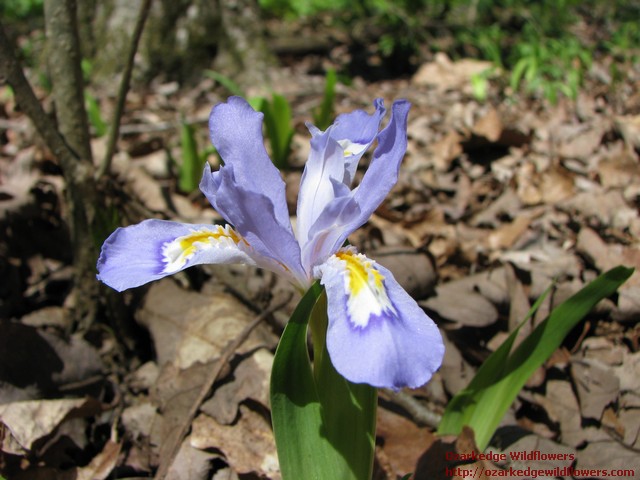
Iris cristata is a very special plant to me- so delicate, fleeting in bloom and such a brilliant and rare flower in the wild. I first discovered Iris cristata on a creek bank when I was on horseback. They were growing by a crossing place and I was surprised and excited to find them. Now, I’ve put that crossing off limits, except for walking, so they are not trampled by the horses or the off-road vehicles we sometimes use to traverse the trails.
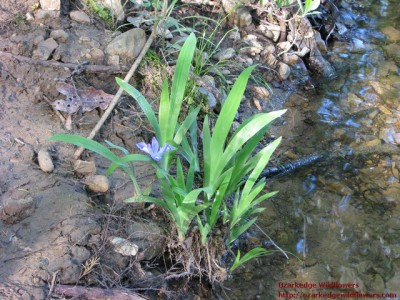
These are the first group of iris I discovered, but they were past bloom when I found them.
It was already past their bloom time when I first discovered the iris by the creek and it took me two years to catch them in bloom! Last year, they didn’t bloom (or I missed them); I suspect it was due to the drought. This autumn, I was so excited to find another stand of iris in the rocky woods. To my extreme delight, I found these in bloom this April. Just gorgeous–take a look.
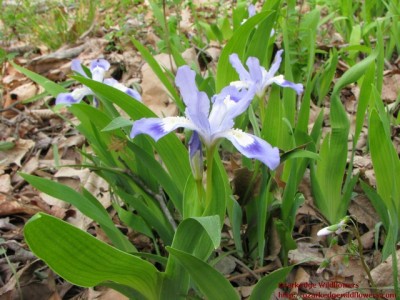
Group of Iris cristata in woodland
Latin Name/Common Name- Iris Cristata is the Latin name. It is commonly known as crested iris or dwarf crested iris, because of the small size and the yellow crest.
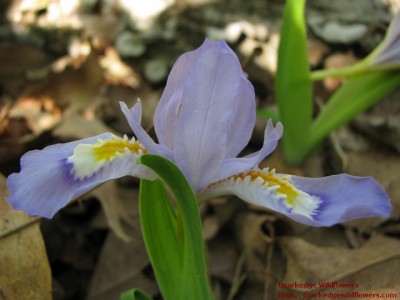
This picture highlights the interesting crest
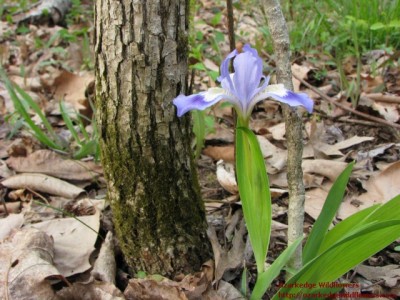
Bloom Color- The lavender blooms seem huge compared to the slight foliage. They have a golden-yellow crest on the fall, surrounded by a small, white field–truly beautiful. Occasionally, white blooms are reported, but I haven’t seen any on Ozarkedge. There is nothing like a group of these in bloom. They usually bloom in unison, with a few strays that are early or late. This results in just a spectacular sight. It is almost shocking when you see a group in peak bloom, not because the color is vibrant, but because it is unusual. To me, the flowers remind me of looking through a kaleidoscope.
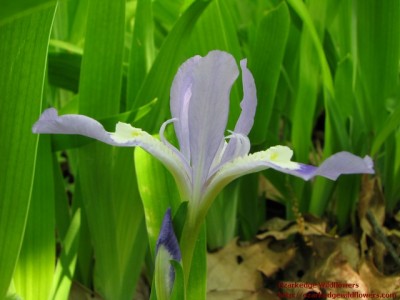
What a beautiful combination of lavender and green
Description- The sword-like leaves are only about 4-5 inches tall. The shape is like a domesticated iris, so you will recognize the leaves if you find them outside of their bloom time. The leaf color is a pale green with a slight yellowish cast. The rhizomes may be visible and close to the surface. I’ve seen them on a creek bank with the rhizomes nearly completely exposed, and some rhizomes even below the water level when the creek is overflowing. The rhizomes are whitish yellow and slender with visible root tips. The thick roots grab onto the soil and can hold the plant in place on slopes and the banks of streams.
Iris cristata tends to grow in stands and in the garden will spread as a ground cover (if happy). I grew them in my Memphis shade garden and found them to be surprisingly tough! Please grow them in your garden. Their foliage adds year-round interest and their flowers are so beautiful in spring. Please don’t dig any from the wild! As you will see below, these delicate beauties are imperiled in much of their native range. They are readily available at specialty garden centers selling native plants.
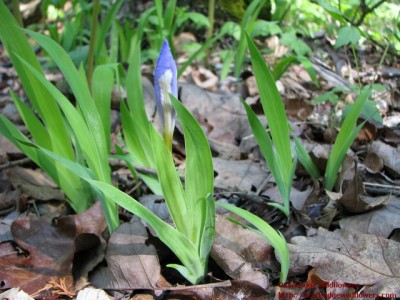
The graceful bud is shielded by the sword-like leaves
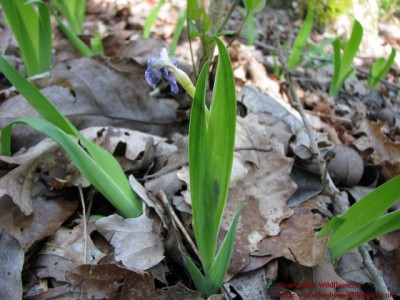
Still graceful once the flower is spent
Bloom Time- The iris bloom in early April on Ozarkedge. Their bloom time is fleeting, so you have to be at the right place at the right time to catch them.
Habitat- On Ozarkedge, I’ve only found four stands of Iris cristata. Two stands are on the edge of a creek. Another is in the rocky woods on a western slope and the final is in a low, moist wooded area. They are typically reported to live on rocky, wooded slopes, on bluffs and along streams.
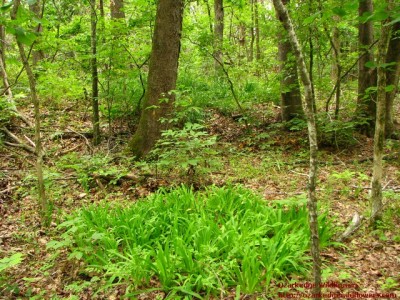
What’s Growing Nearby? On the edge of the creek, they are not far from Dodecatheon meadia (Shooting star), which bloom close to the same time. In the woodlands, they are surrounded by May Apples.
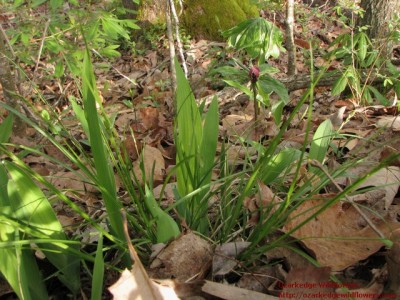
Iris cristata with Purple trillium and May Apples 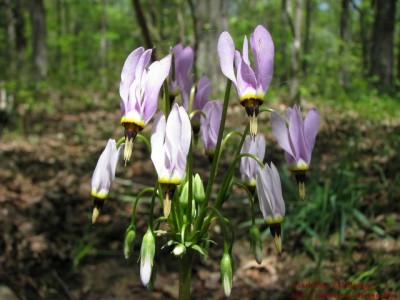
Shooting stars share a similar habitat and bloom time with Iris cristata
Interesting Tidbits- The deer seem to enjoy the taste of iris. I’ve noticed that several in the woodland patch on Ozarkedge have been bitten half through, so no blooms from them this year.
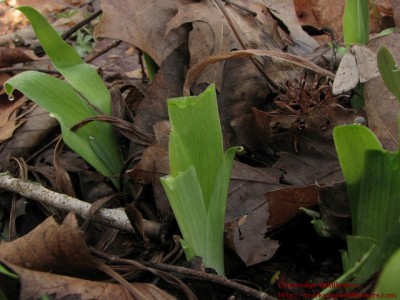
Deer feasted on the tender leaves of Iris cristata before bloom
Endangered List- Iris cristata’s native range extends from the eastern coast of the United States westward to Missouri, Arkansas and Oklahoma. It’s northern range extends to Pennsylvania and possibly Maine. It can be found as far south as Mississippi and Alabama but not Florida, Lousiana or Texas.You can see a picture showing the native range below.
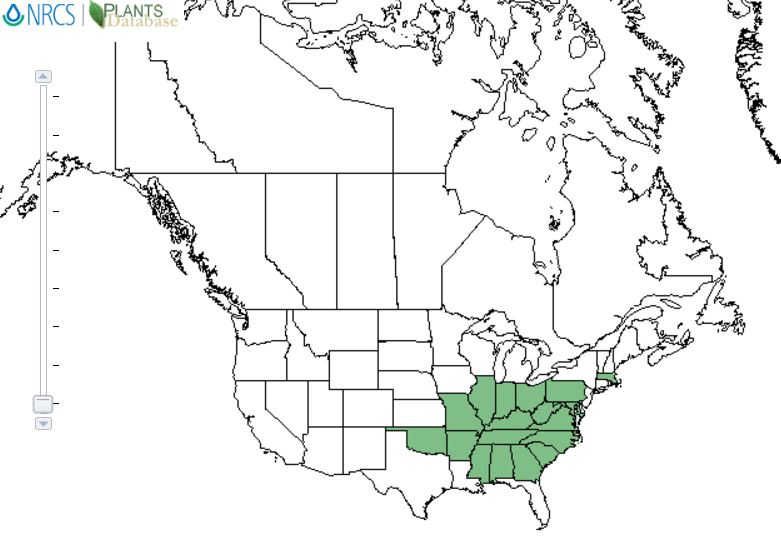
The USDA site lists Iris cristata as endangered in Maryland and Pennsylvania.
Sadly, NatureServe lists Iris cristata as Critically Imperiled in multiple states- Ilinois, Pennsylvania, New Jersey and Maryland. In Oklahoma, it is listed as Imperiled. Unfortunately, many states within its range remain Not Ranked/Under Review. These include Missouri, Arkansas, Mississippi, Alabama, South Carolina, Tennessee, Indiana, and Ohio. Only Kentucky shows Iris Cristata as Apparently Secure and West Virginia, Virginia, North Carolina and Georgia list it as Secure.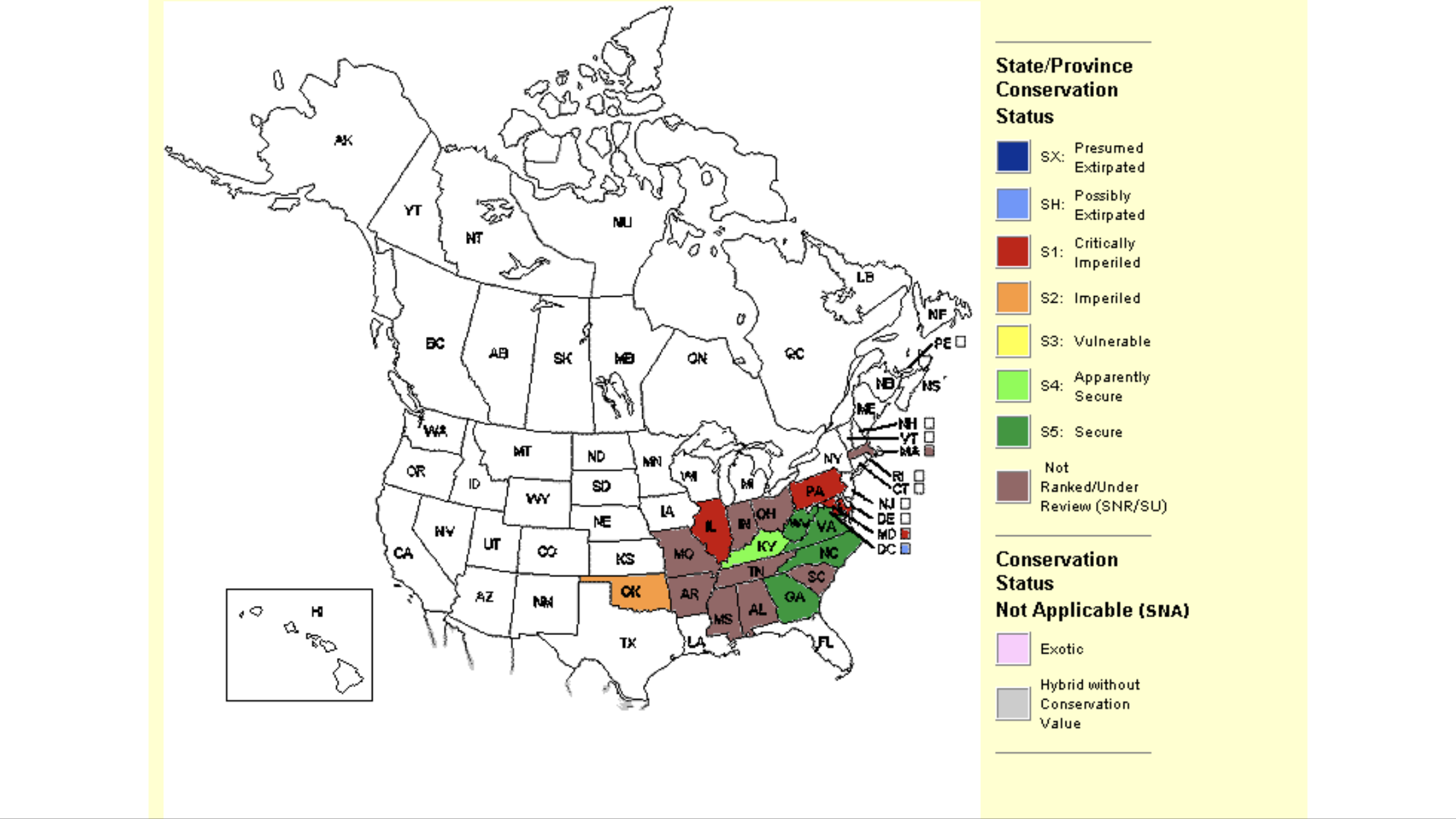 *NatureServe. 2018. NatureServe Explorer: An online encyclopedia of life [web application]. Version 7.1. NatureServe, Arlington, Virginia. Available http://explorer.natureserve.org. (Accessed: March 9, 2019 ).