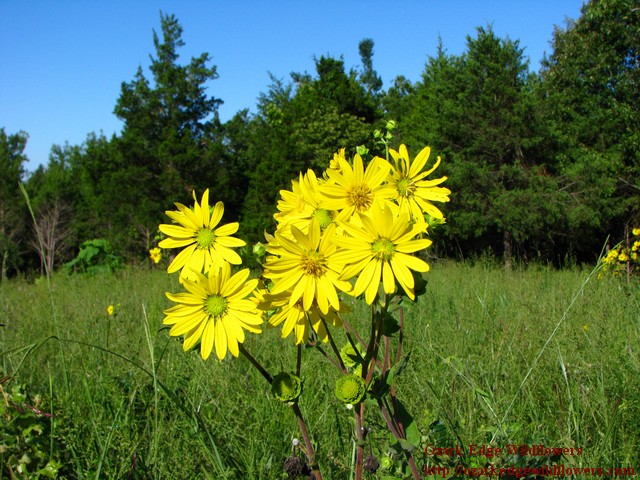
Silphium integrifolium–the name doesn’t seem to do the flower justice. Silphium is a standout plant for many reasons. It blooms in sun and shade. There are many flowers on each plant. It’s one of the few plants that blooms all summer and into fall. As a bonus, the large sunflower-like flowers attract butterflies, hummingbirds, yellow finches, bees and all kinds of interesting insects. If that is not enough, Silphium integrifolium is drought tolerant. She managed to open at least some of her flowers in the heat and drought of summer 2012. For all of these reasons, she is in my top 10 wildflower list!
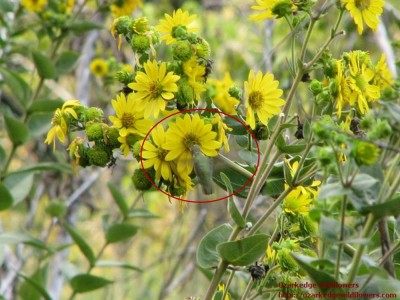 Hummingbird enjoying the nectar from Silphium integrifolium
Latin Name/Common Name– The genus name, Silphium, has a Greek origin and refers to the resinous juice that oozes from a stem if broken. The species name- integrifolium, refers to the “entire or uncut leaves”. The common name- Rosinweed comes from the resin produced during blooming. The resin was used similar to chewing gum by some Native Americans. I haven’t tried it–maybe next year.
Bloom Color– Many flowers of lemon yellow adorn this plant. The yellow is a stunning contrast against the deep blue summer sky.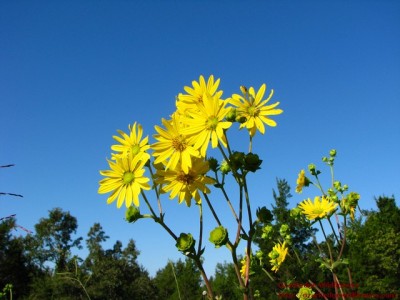
Description- With a height of 3-5 feet, Silphium integrifolium is the shortest of the towering Silphium family. She has a stout central stem covered with stiff hairs giving the stem a fuzzy appearance. I’ve noticed the color varies depending on habitat. Plants growing in a partly shady habitat tend to have green stems. Plants growing in a sunny habitat tend to have reddish stems. The reddish stems are quite attractive next to the large green leaves. Rosinweed grows from a single stem that branches near the top to support numerous flower heads.
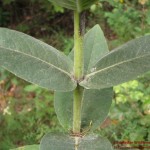
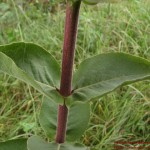
Green stem in shade Red stem in sun
Each set of leaves is rotated in direction 90 degrees as they ascend the stem. You can appreciate this in the picture above.
The leaves are opposite in orientation and sessile (lack petioles). The shape is lanceolate or ovate. Leaf margins vary from smooth to lightly toothed.
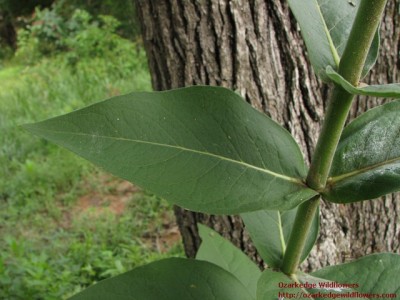
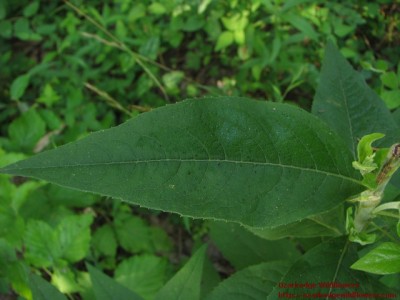
Leaves may have smooth (top) or toothed (bottom) margins
The leaves are covered top and bottom with stiff hairs. This gives them a sandpaper-like, rough texture and they cannot be rubbed between the finger and thumb.
The large flowers are about 2 -3 inches across. I’ve noticed flowers are smaller in years of drought. The flower is composite, meaning it has both ray florets and disk florets. Typically, the ray florets number about 12-25. Each has a single notch at the tip.
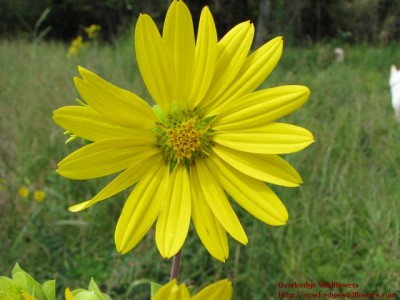 Note the tiny notch at the tip of each ray flower
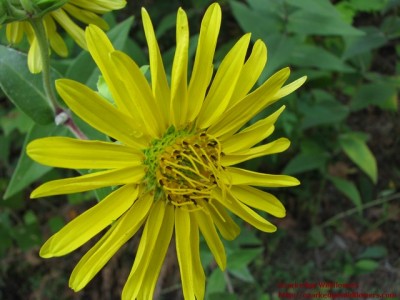 Yellow, undivided styles are prominently visible
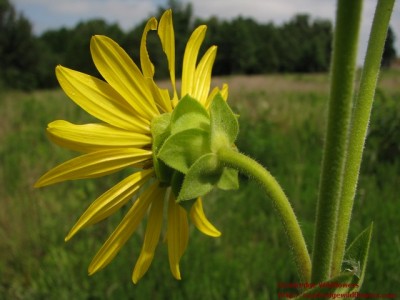 The involucre (bracts at the back of the flower) are broad and pubescent
Bloom Time- The long bloom time is just one of the wonderful attributes of this lovely plant. On Ozarkedge, I’ve seen it in bloom from early July through mid October.
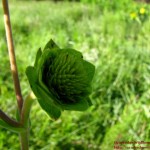
Early flower bud, slightly open bud and spent blossom
Habitat- Growing well in both full sun and shade, Silphium integrifolium is not a picky plant. It is found in prairies, limestone glades and at the edges of rocky forests. It is one of our most drought tolerant plants. I’ve noticed in extreme drought, some buds will turn black and drop in order to preserve others for blooming.
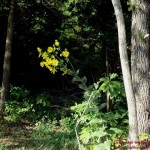
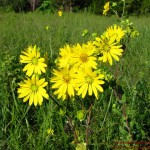
Woodland and prairie habitat
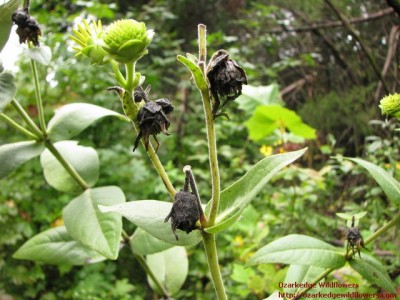 Buds may turn black and drop in severe drought
What’s Growing Nearby? In the woodland habitat, I find Silphium integrifolium growing near Coreopsis tripteris, Coreopsis grandiflora, Rudbeckia submentosa and Cirsium altissimum. In the sunny habitat, I often see Euphorbia corrolata, Strophostyles umbellata, Rudbeckia hirta and Pycnanthemum tenufolium.

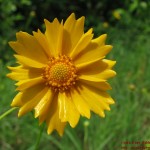
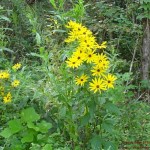
Coreopsis tripteris Coreopsis grandiflora Rudbeckia submentosa
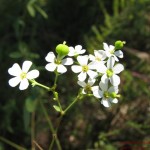
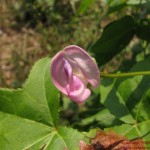
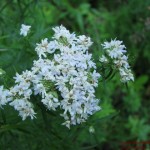
Euphorbia corollata Strophostyles umbellata Pycnanthemum tenufolium
Endangered List- Silphium integrifolium is listed on the USDA Plants Database as Threatened in Michigan.
The NatureServe site lists Silphium integrifolium as Imperiled in Maine, Possibly Extirpated in Colorodo, and Critically Imperiled in Wyoming. See the map below. 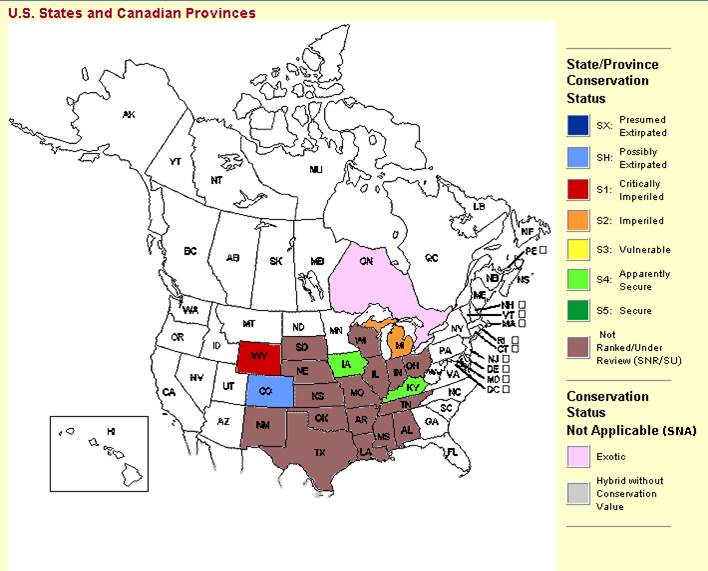
Interesting Tidbits- Many insects, bees, butterflies and birds are attracted to the lovely flowers, nectar and seeds of Silphium integrifolium. Take a look at a few below.
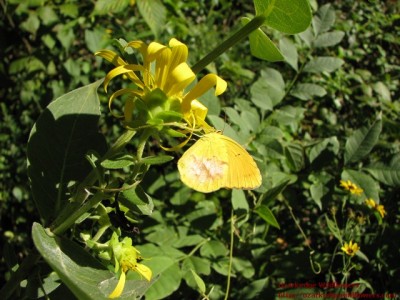
Sulphur butterfly enjoying nectar from a Silphium blossom
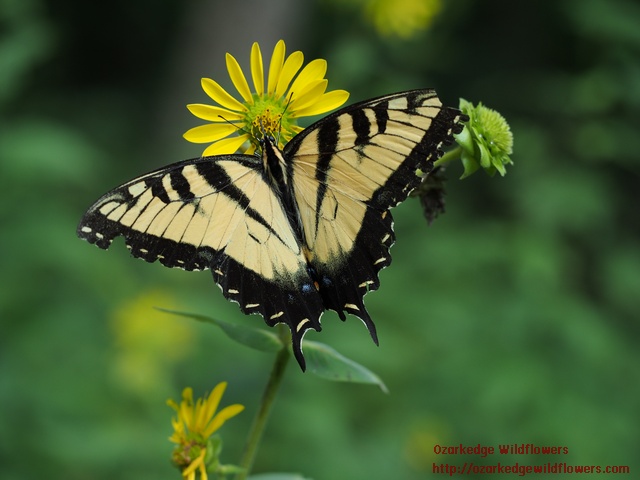 Eastern Tiger Swallowtail (Papilio glaucus) often visits Silphium integrifolium
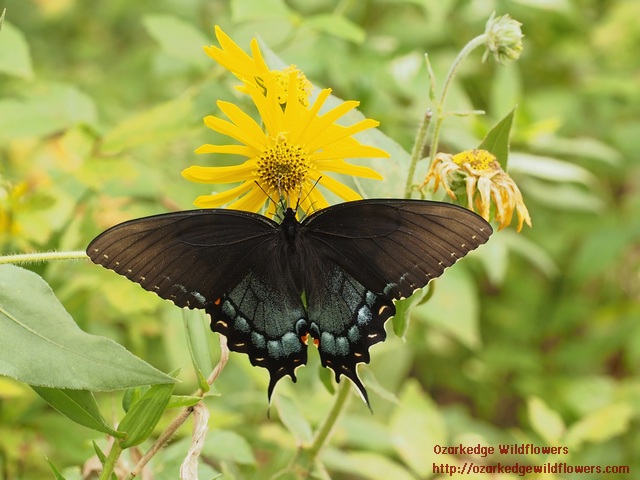 Eastern Tiger Swallowtail female dark form