PLANT NAME
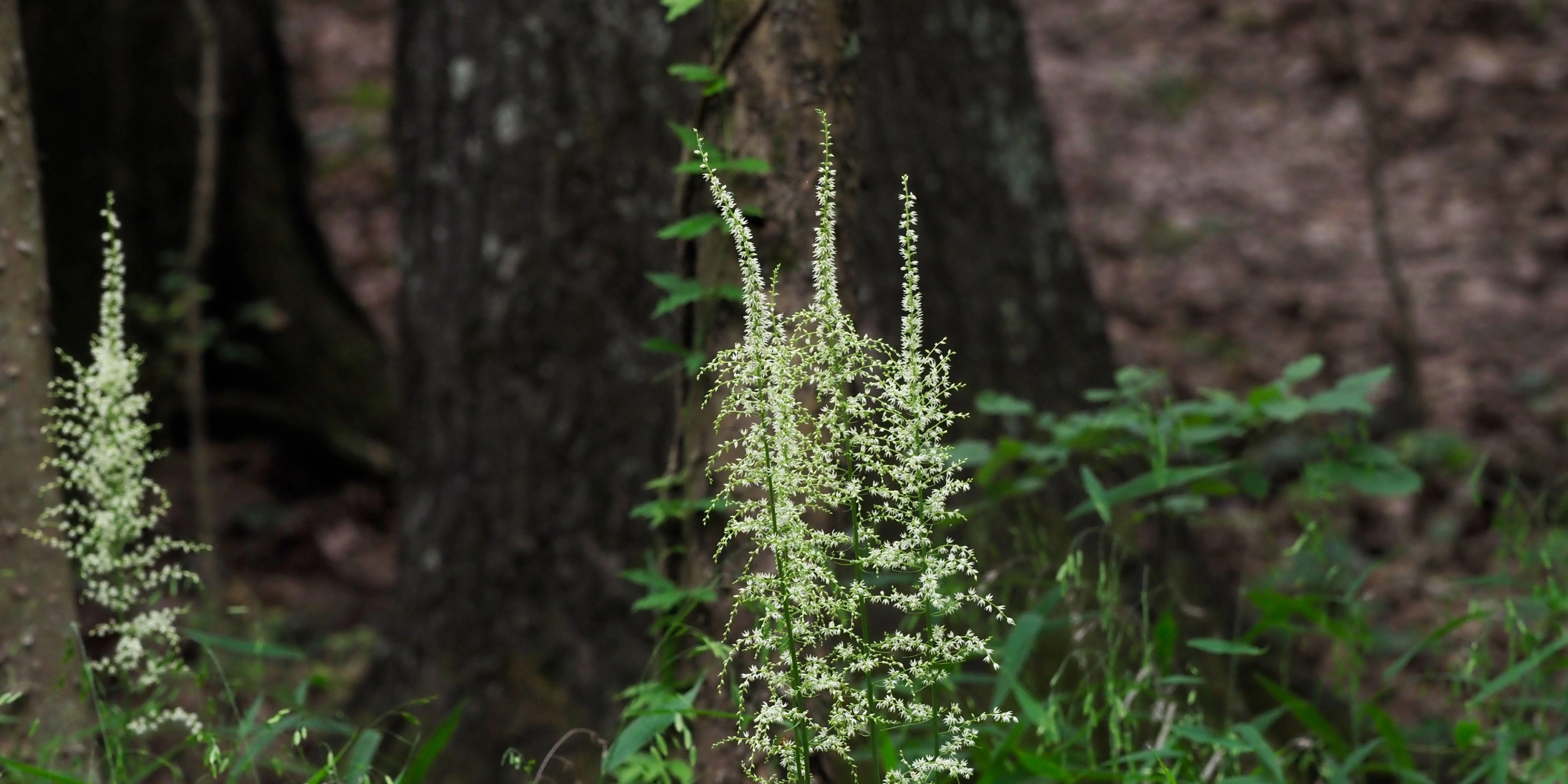
Featherbells are in the Melanthiaceae family. The latin name is Stenanthium gramineumit. The word 'stenanthium' is derived from two Greek words–stenos meaning “narrow” and anthos meaning “flower”. Gramineum means grasslike and is very appropriate. If you see this plant in early spring, it would be easy to mistake it as a type of grass.
Featherbells is the most used common name in my experience. Other common names include Eastern Featherbells and Grass-leaved lily.
BLOOM
The long raceme (or wand) bears a multitude of mostly nodding, tiny white flowers. Before maturity, the star-shaped flowers have a greenish cast, which returns after the blooms peak. The flowers on the lowest branches are staminate (male reproductive parts only). The rest of the flowers are mostly pistillate (female reproductive parts only) or perfect flowers (having both male and female parts).
The flowers have short stalks and a small bract. There are 6 stamens and 3 styles.
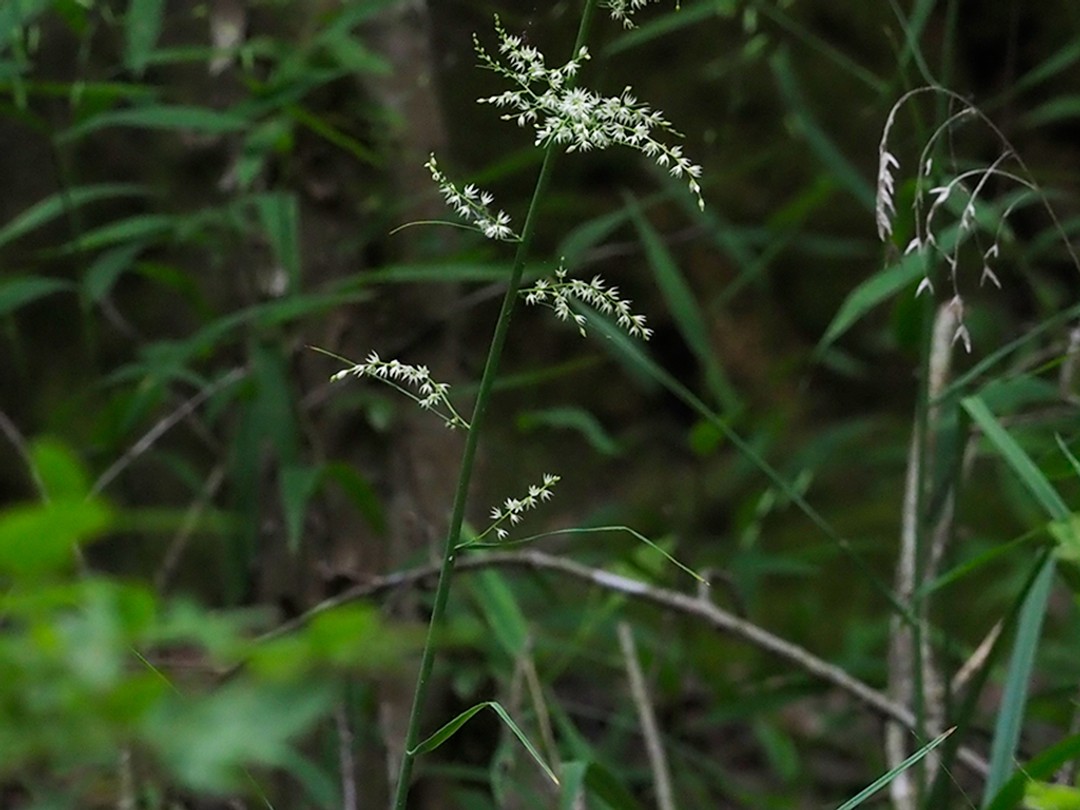
Flowers and bract 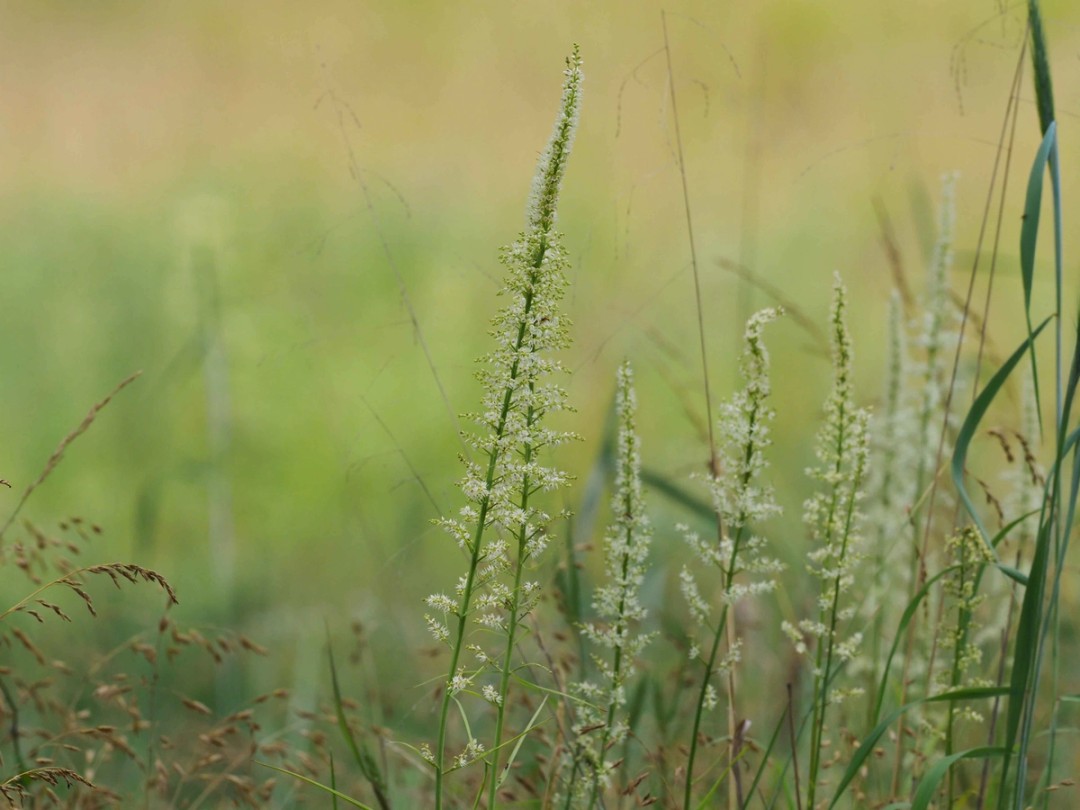
Spikes of white flowers 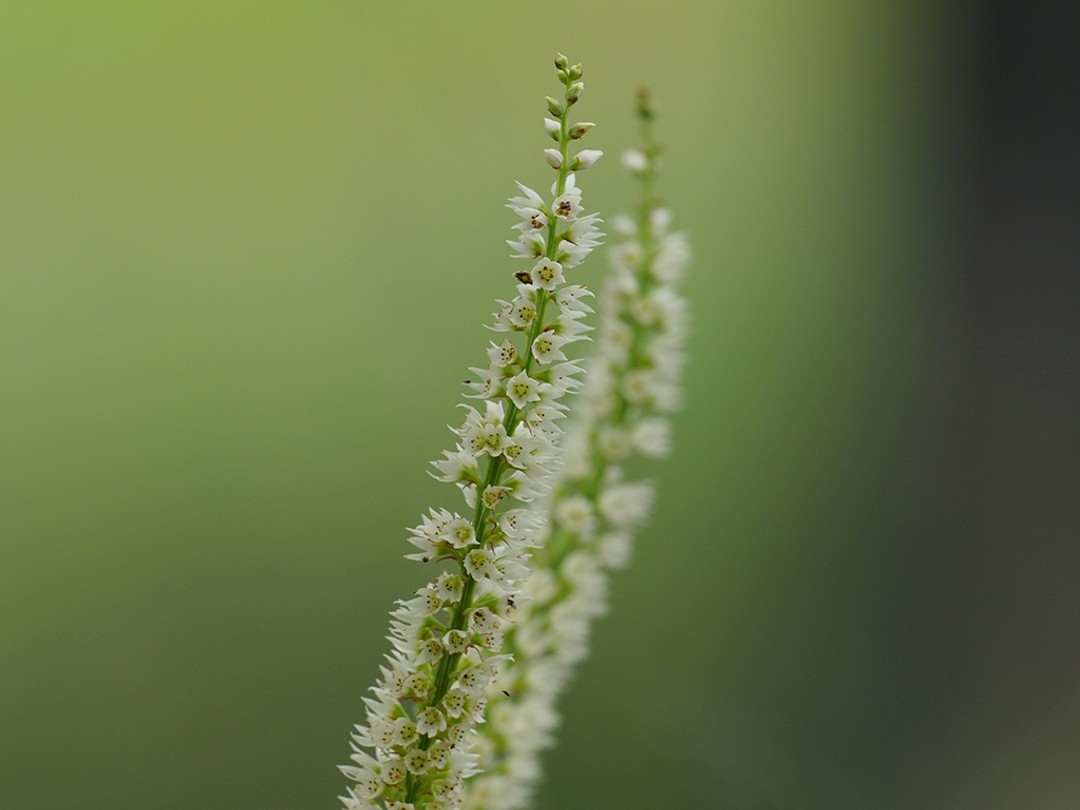
Close look at flowers 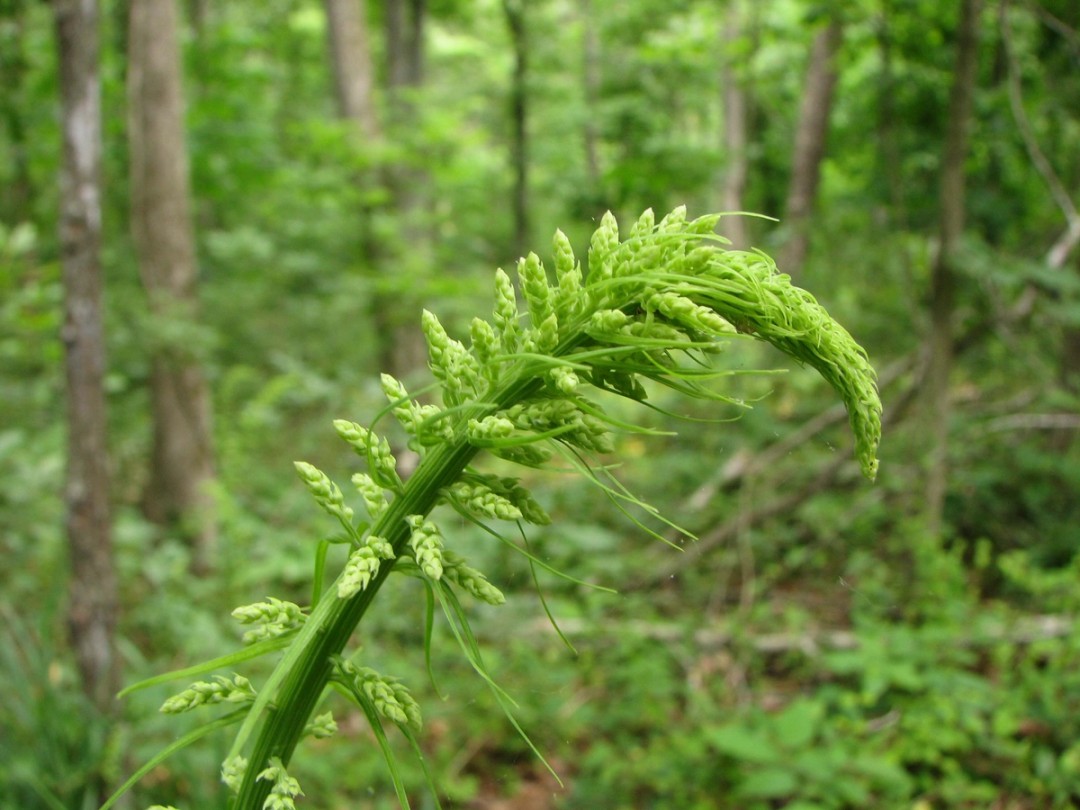
Buds 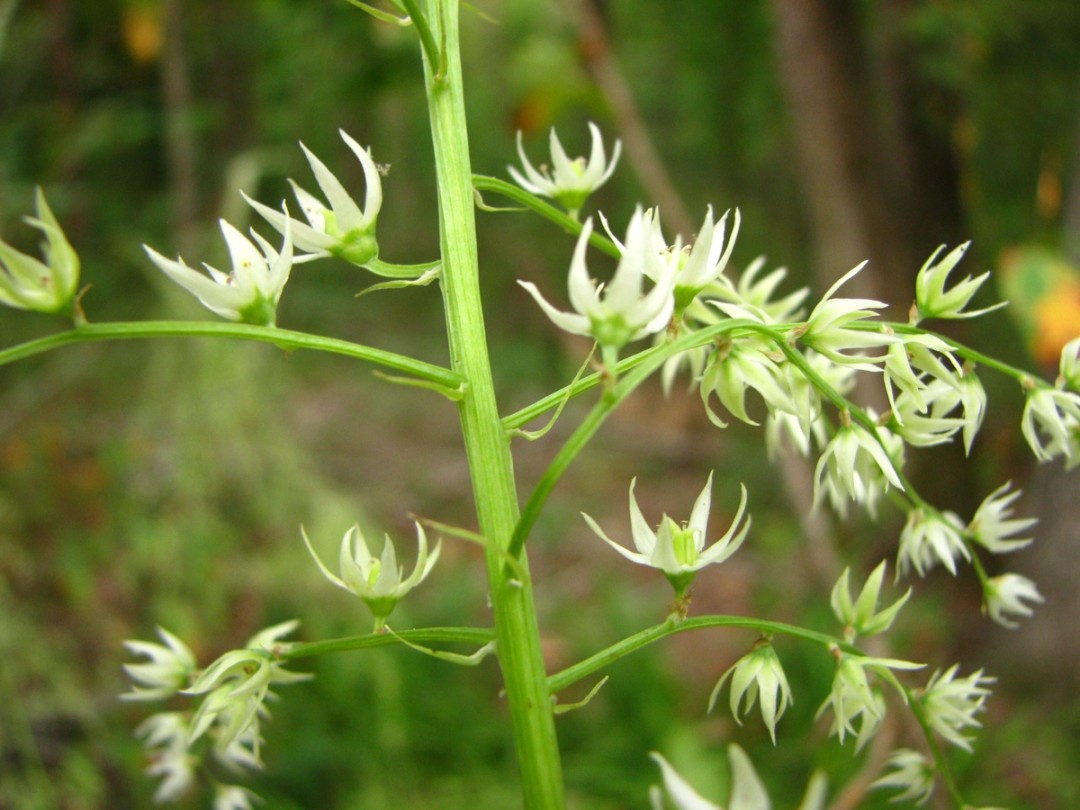
Bracts 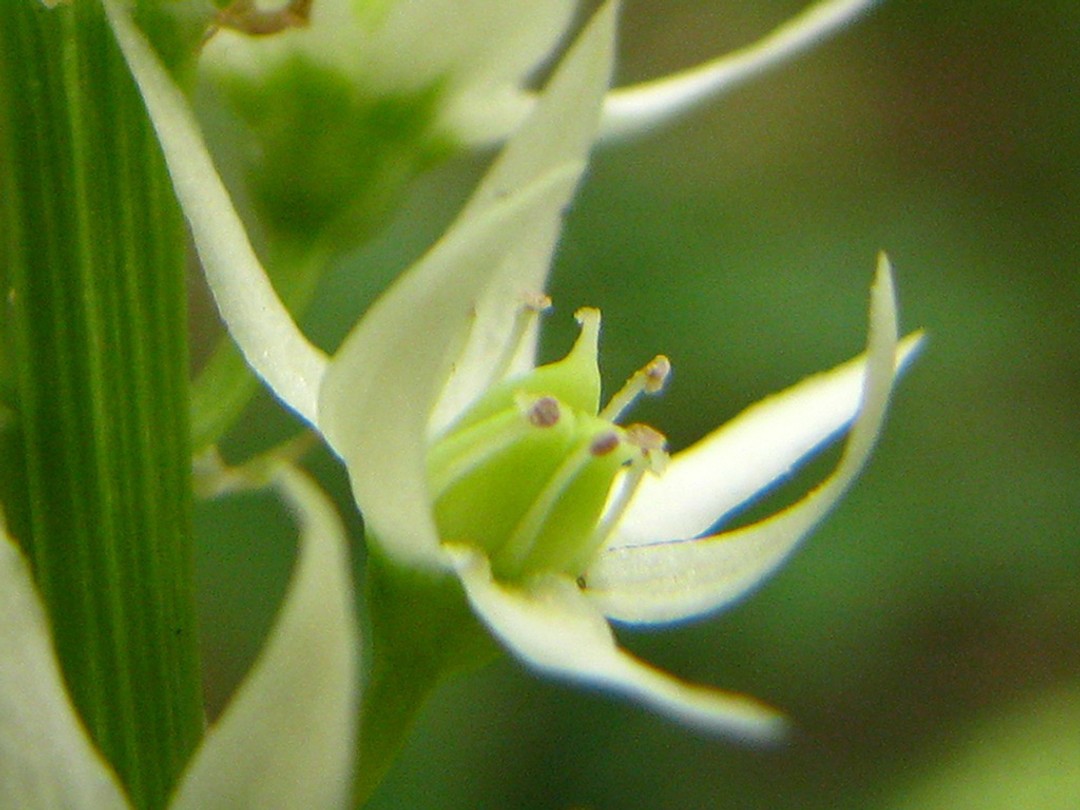
Stamen
DESCRIPTION
Stenanthium gramineum is a tall perennial plant growing up to 6 feet. The basal leaves have a central crease that would allow one to neatly fold each leaf in half lengthwise. A magenta sheath can be seen at the base of the basal leaves.
Stem leaves are small, somewhat resembling bracts. The smooth stem rises above the basal leaves up to 6 feet. It seems to dance and sway with any slight breeze. After blooming the seed pods are beak-like and turn from green to almost black as they fall to the earth.
A stand of Featherbells in bloom is truly a wonder to see in nature.
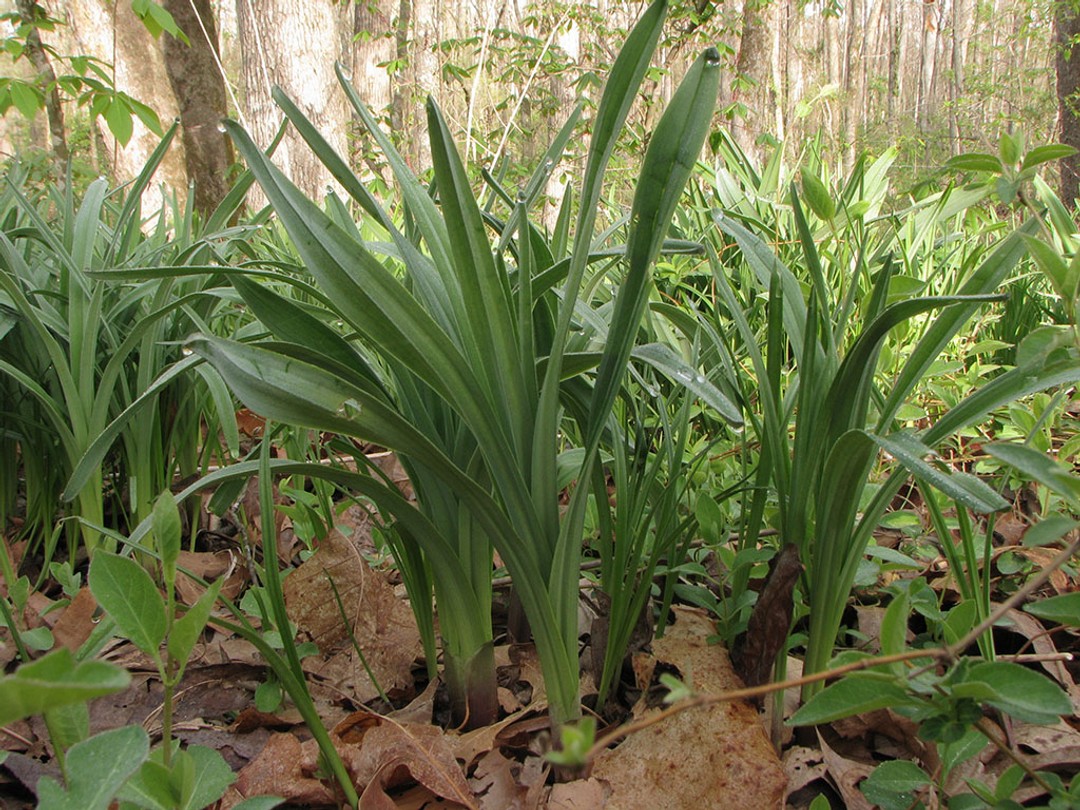
Basal leaves 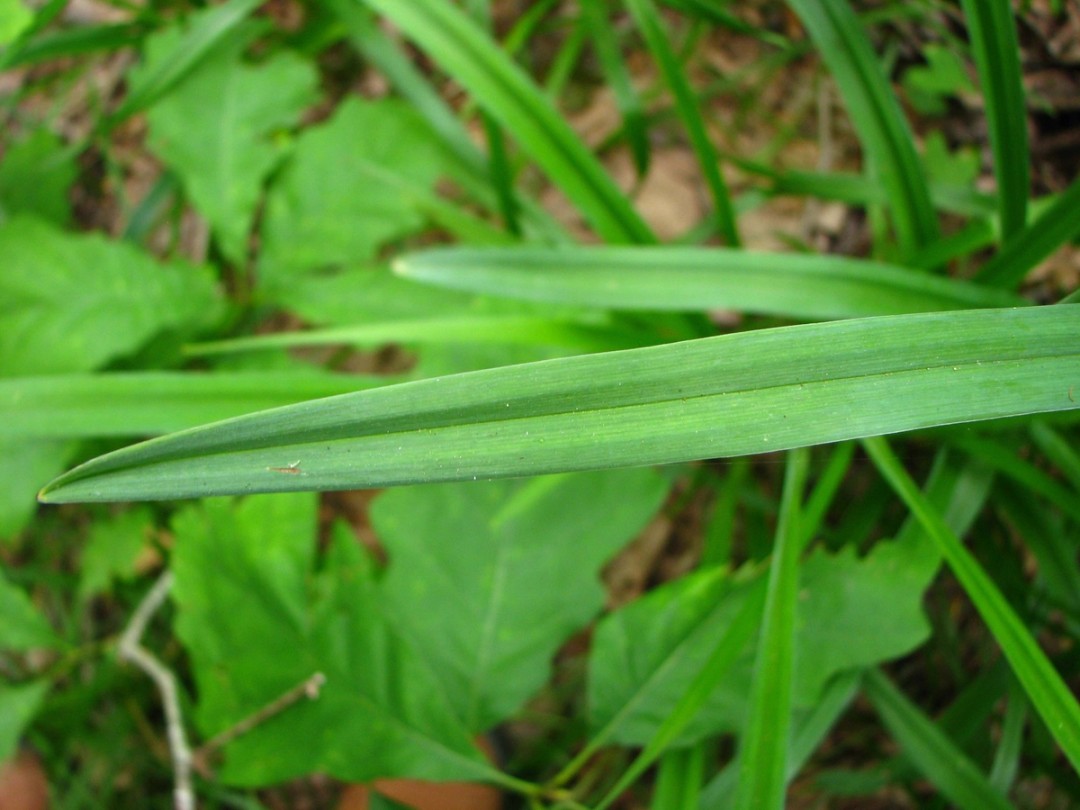
Leaf with central crease 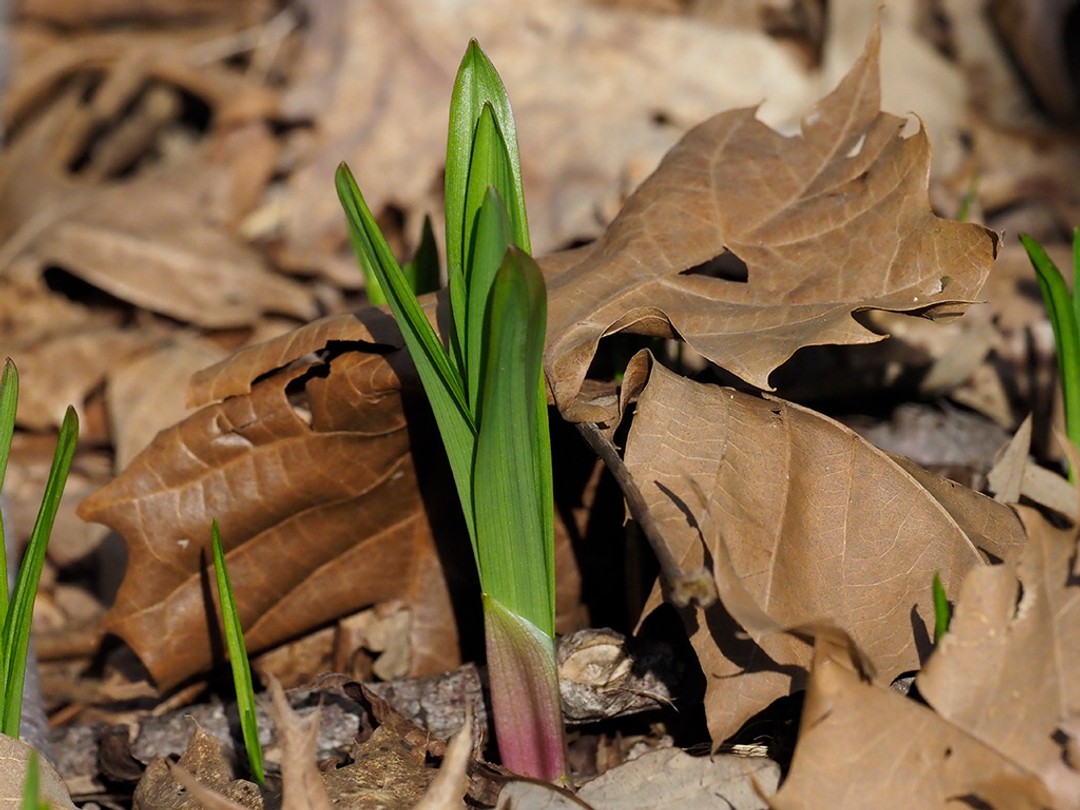
Magenta sheath 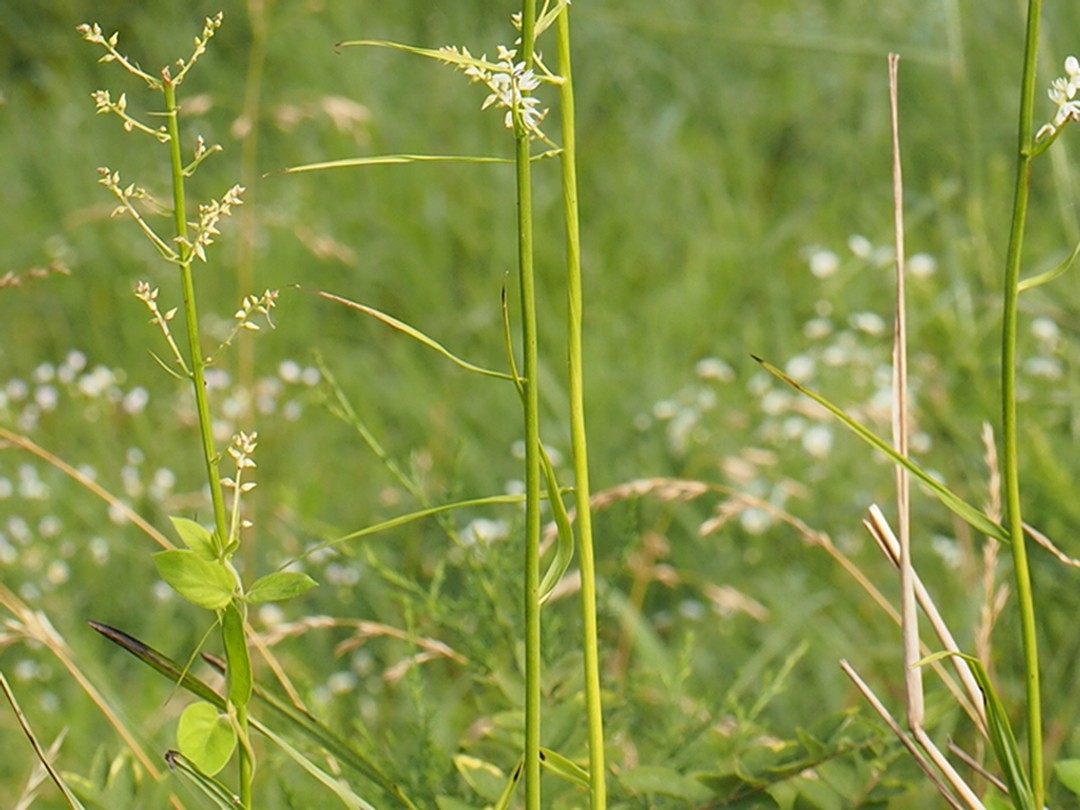
Stem leaves 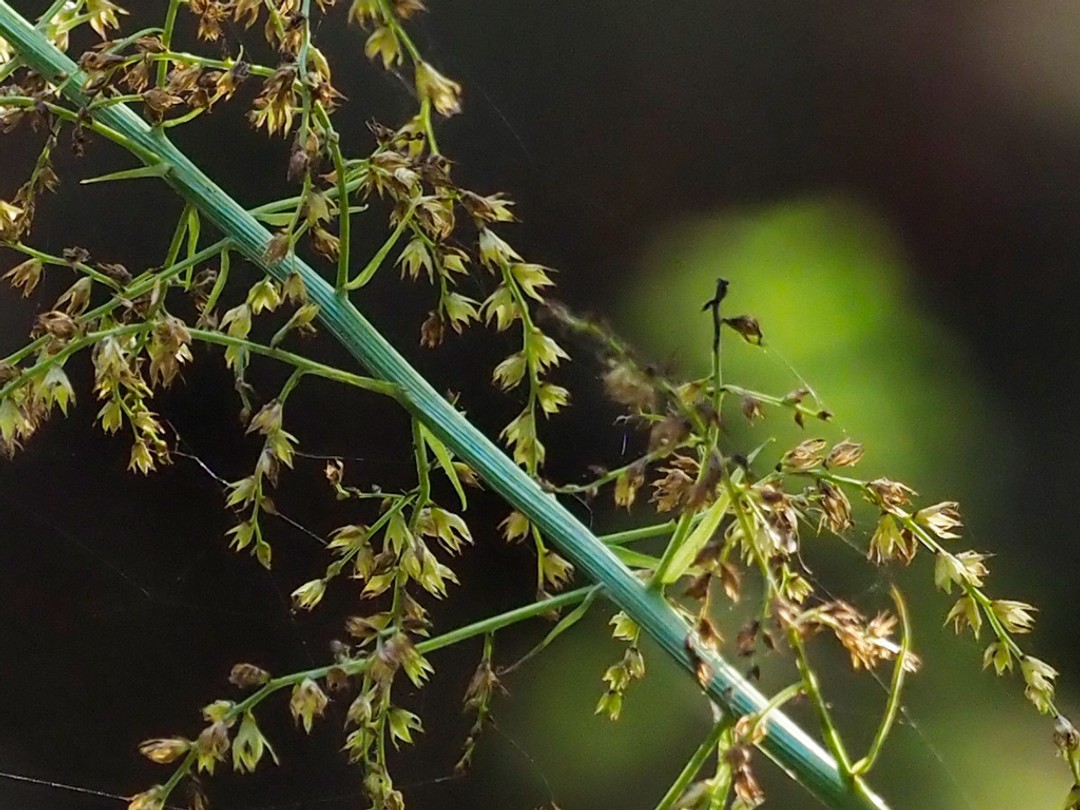
Stem after flowering 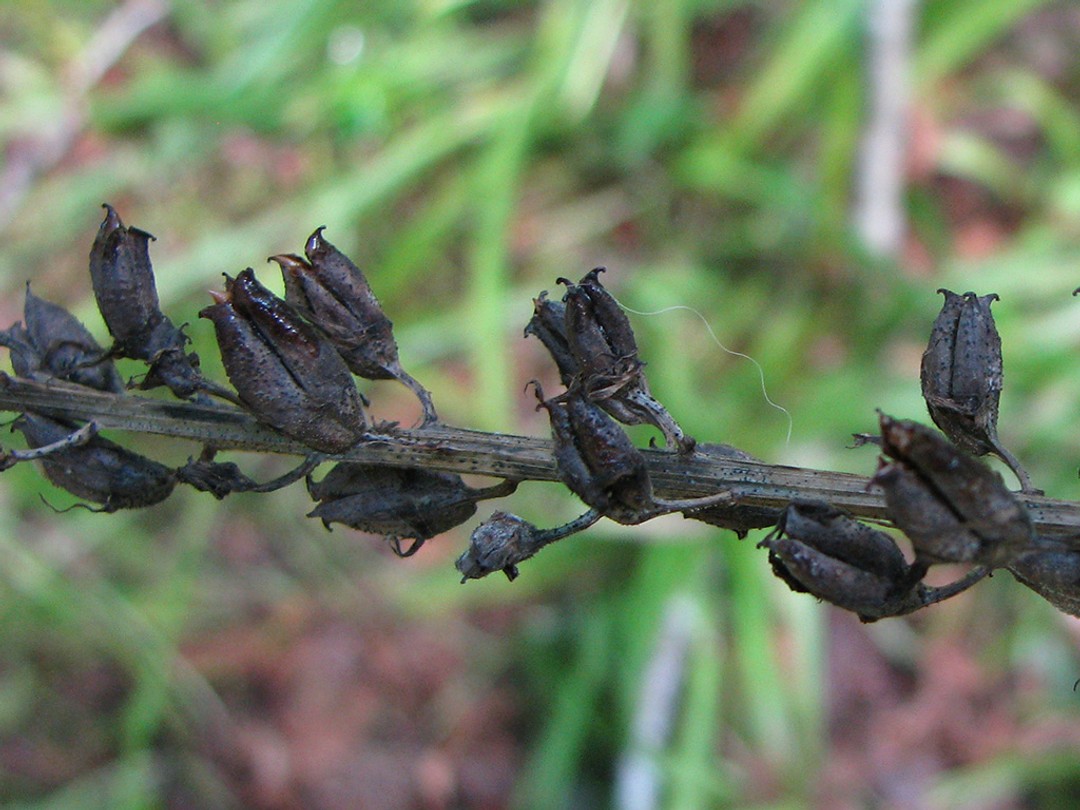
Ripe seed pods
POLLINATORS
I've documented several pollinators of Featherbells including bees, butterflies and other insects.
Soldier beetles are frequently seen crawling flower to flower. These busy beetles look a lot like Fireflies (Lightning bugs), but they don't 'light up'. On Ozarkedge, they seem to be the most common pollinator.
I've also documented Juniper Hairstreak butterflies visiting the flowers. The host of this colorful green butterfly is the Eastern red cedar, which is quite common here. These pretty butterflies are always a treat to observe.
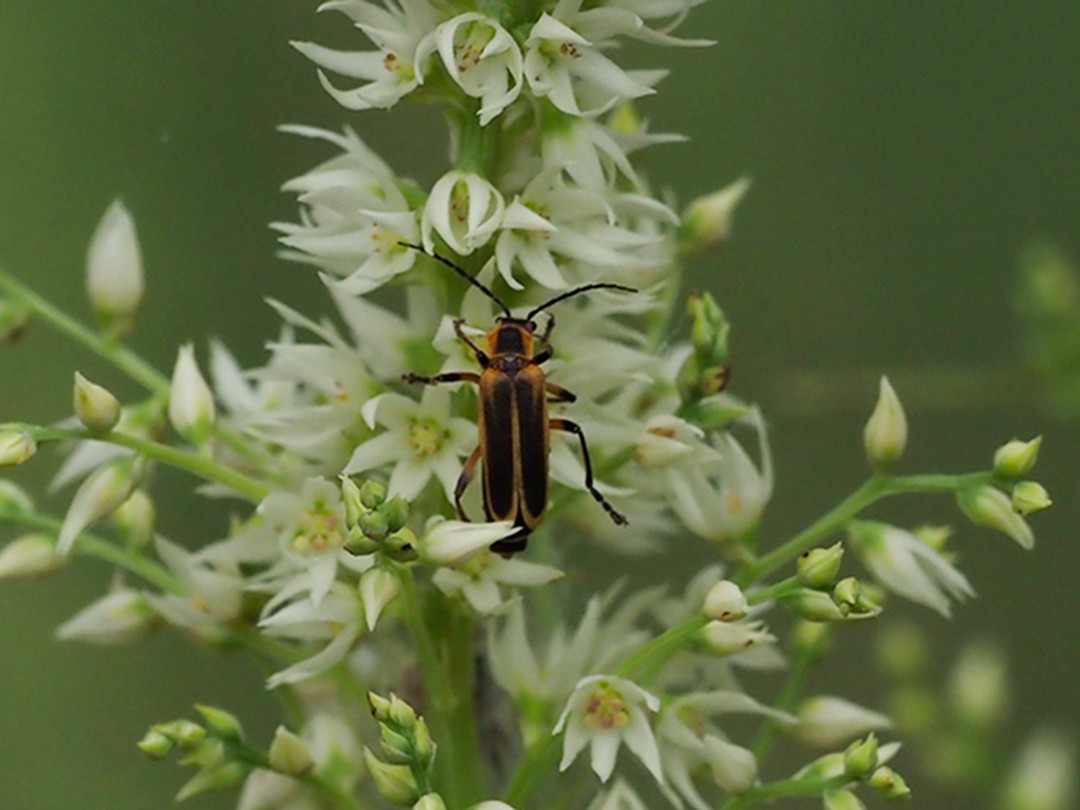
Soldier Beetle 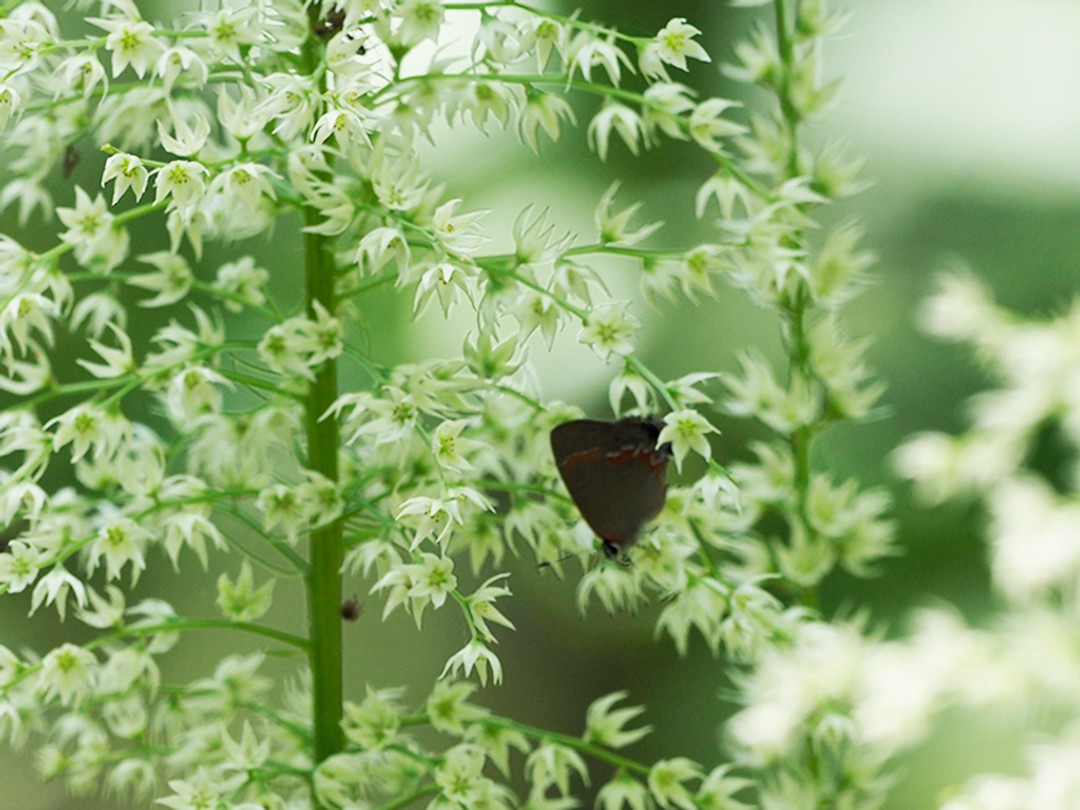
Juniper Hairstreak
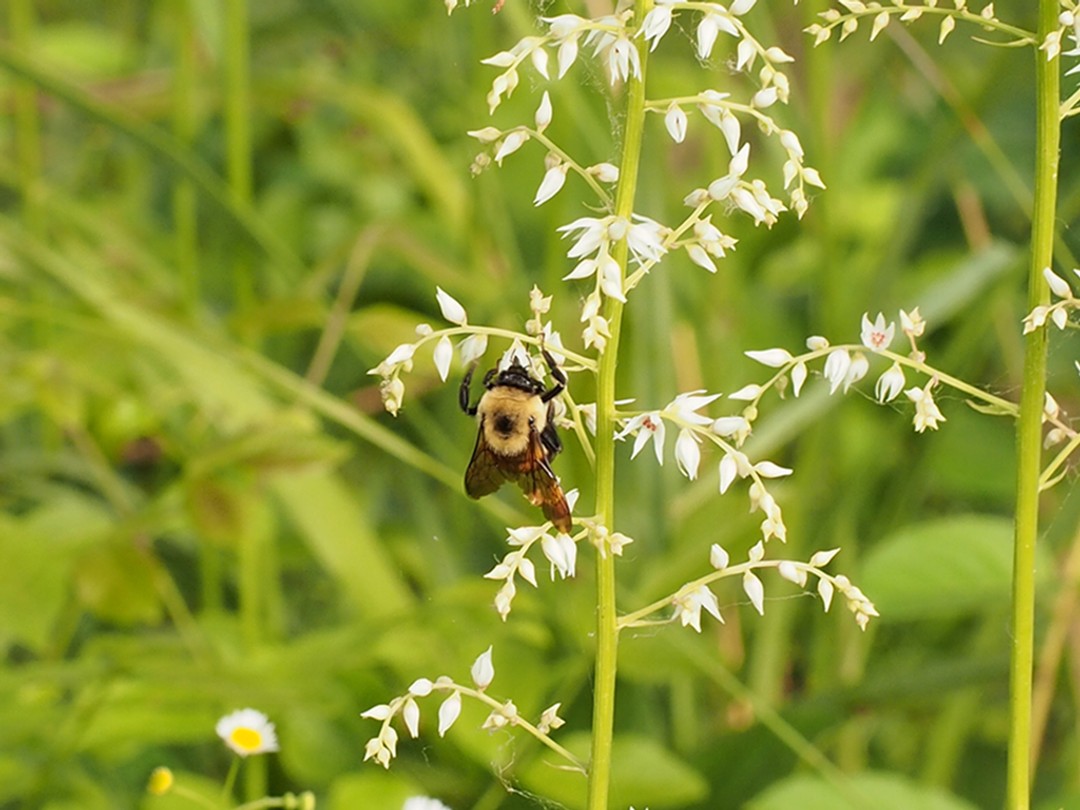
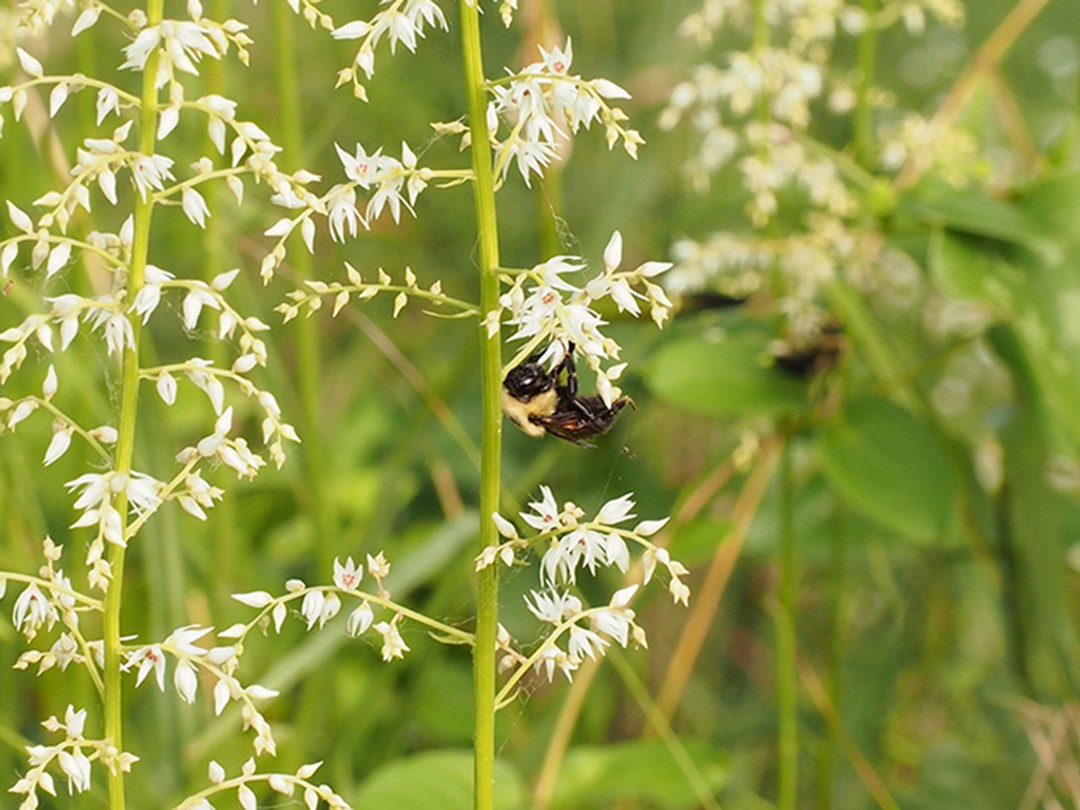
Bombus griseocollis, the Brown-belted bumble bee is an important bee pollinator of Featherbells.
PLANTS GROWING NEARBY
I first found Featherbells growing near a group of Iris cristata (Crested Iris). Other plants I noted nearby include Podophyllum peltatum (May Apple), Thalictrum thalitroides (Rue Anenome), Trillium recurvatum (Trillium recurvatum), Aureolaria laevigata (Smooth false foxglove) and Cunila origanoides (Dittany). Dogwood and Red Buckeye are also close at hand, decorating the same woodland.
Other plants that thrive in the same damp woods include Polystichum acrostichoides (Christmas fern), Onoclea sensibilis (Sensitive fern), Podophyllum peltatum (May Apple), Thalictrum thalictroides (Rue Anemone), Trillium recurvatum (Trillium recurvatum), Aureolaria laevigata (Smooth false foxglove) and Cunila origanoides (Dittany). Dogwood and Red Buckeye also decorate the nearby woodland.
HABITAT
On Ozarkedge, the original stand of Stenanthium gramineum was found growing on a slight ridge in low, damp woods. My research shows that this Stenanthium is a habitat generalist and can be found growing in meadows, grassy balds, rock outcrops and dry to mesic woods.
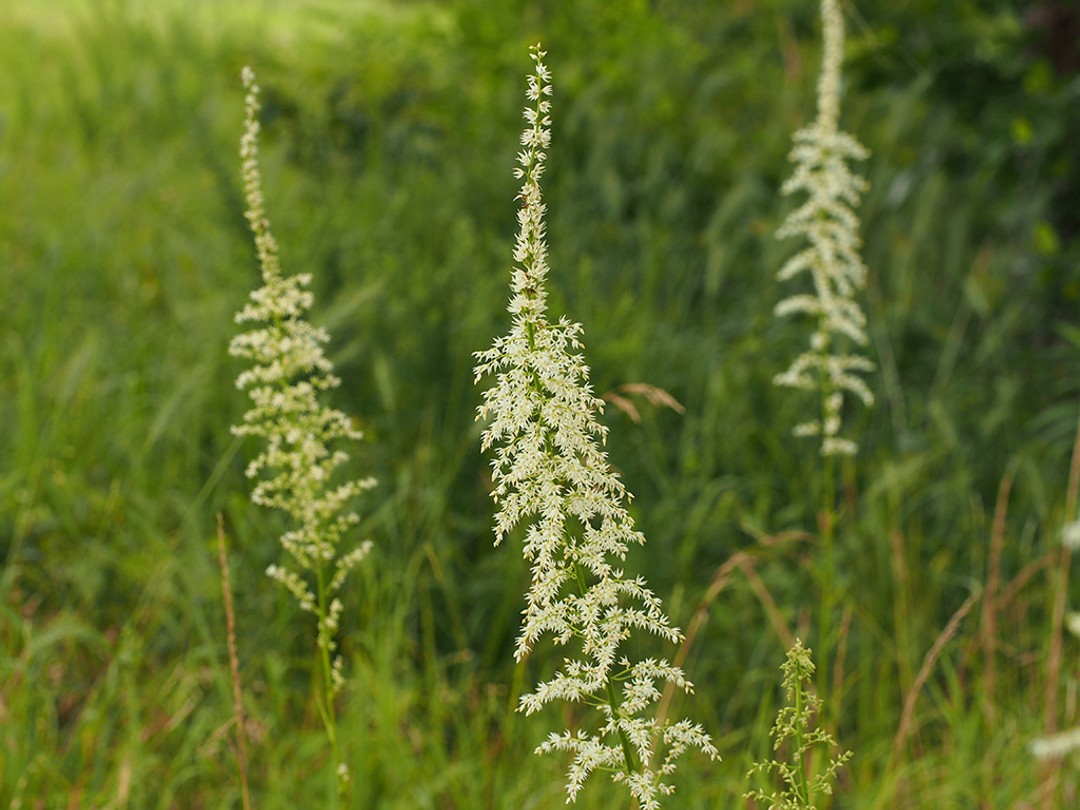
Grassland habitat 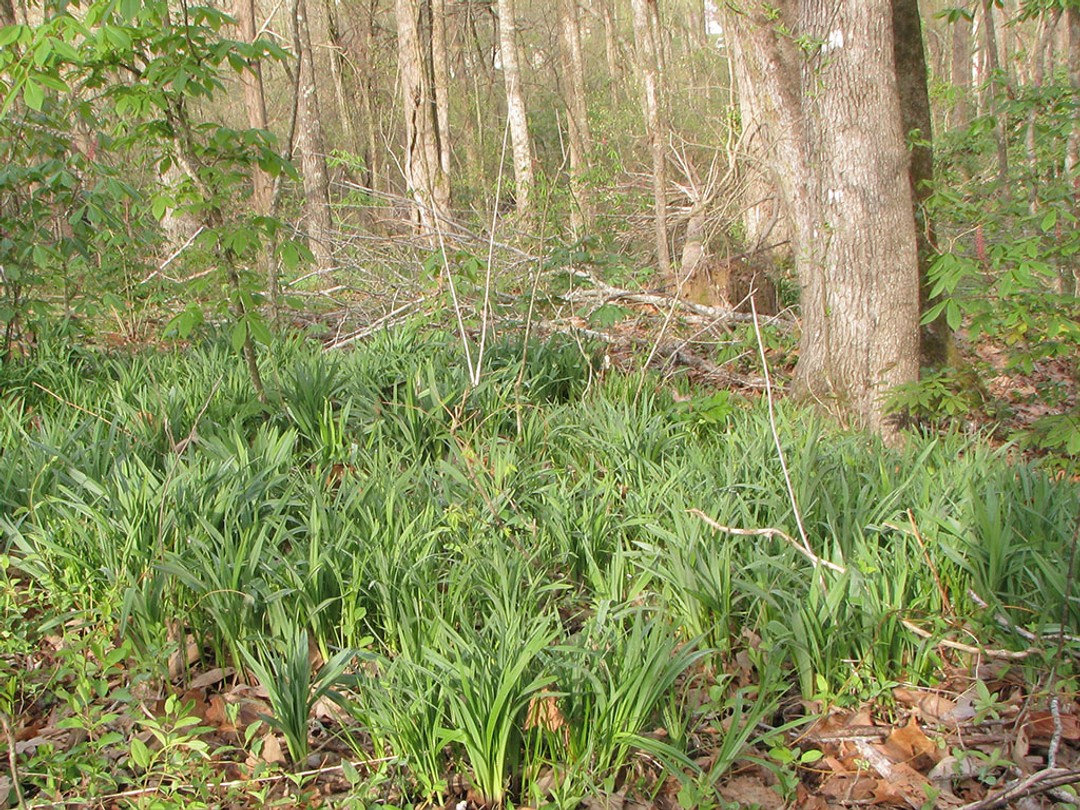
Woodland habitat
CONSERVATION STATUS
Stenanthium gramineum has a conservation value of 9 (out of 10) in Arkansas, meaning "Conservative taxa with strong fidelity to intact habitats. These taxa tend to exhibit late-successional characteristics like long lifespans with low seed sets and an inability for far ranging dispersal."
While Natureserve lists Featherbells as overall 'Apparently Secure', it is: Critically Imperiled- Illinois, Indiana, Oklahoma, Mississippi and Maryland, Vulnerable- Arkansas, Louisiana, North Carolina and West Virginia, Apparently Secure- Virginia and Pennsylvania, and has No Status Ranking- Missouri, Kansas, Texas, Kentucky, Tennessee, Alabama, Georgia, Florida and South Carolina.
Checking the Documented Distribution tab on Natureserve pulls up the state view distribution. This reveals that Featherbells are only found in a few counties of each state. This beautiful plant is not found in abundance anywhere.
INTERESTING TIDBITS
I saved some seed from the plants on Ozarkedge and hoped they would germinate in the spring. My goal was to establish a new stand in another area on the property. I had no luck with the seeds so I moved a few small plants to 4 other locations on the property, hoping to increase the overall number of plants and securing their presence. Success! In 3 of the 4 locations the plants have thrived, and proliferated. They flowered in their 3rd year. The plants in the 4th location were in a shaded, woodland area and eventually did not reproduce or thrive.