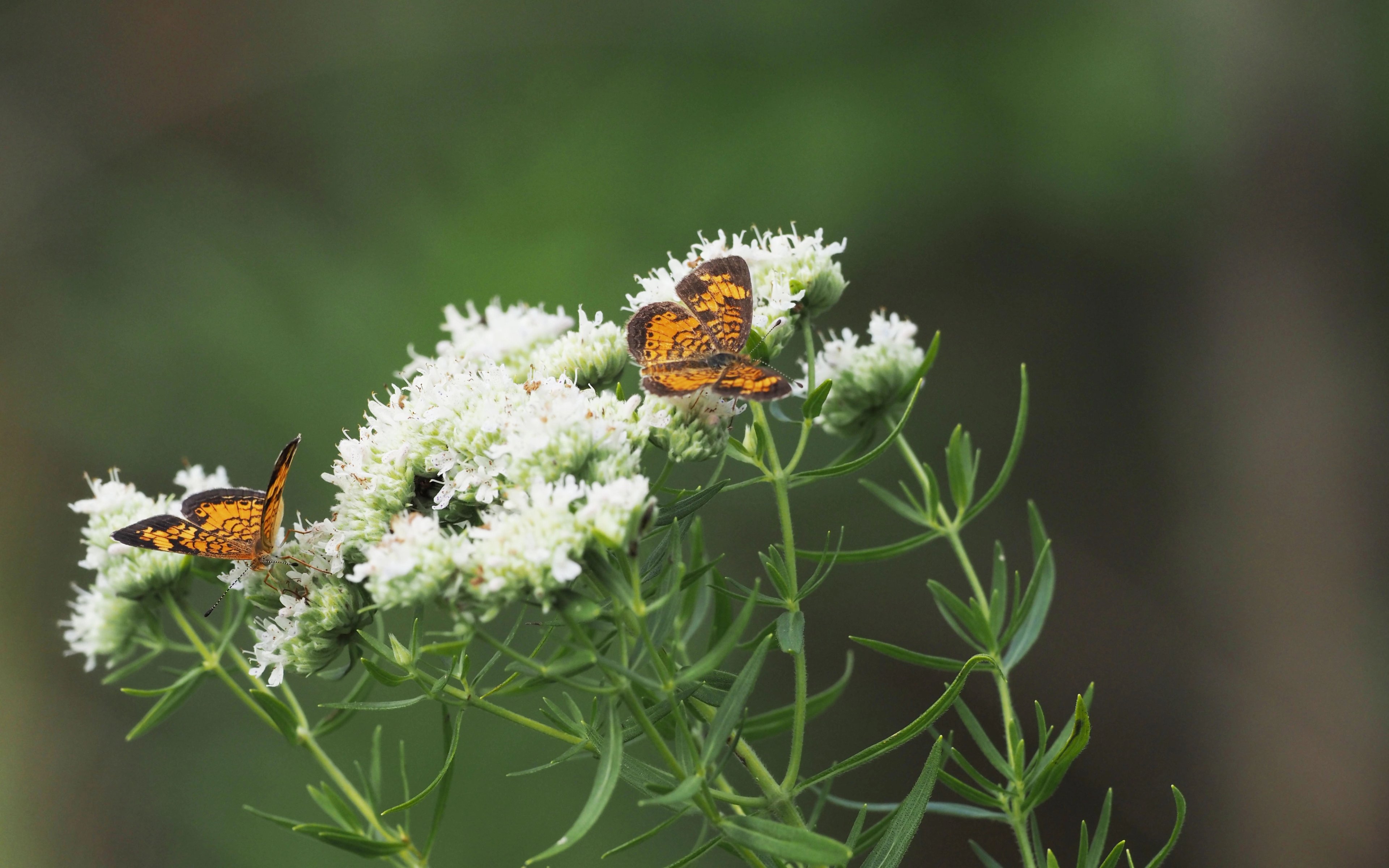
PLANT NAME
The word 'pycnanthemum' is derived from the Greek word 'pyknos' meaning dense and 'anthos' meaning flower. Altogether it refers to the dense clusters of flower found on this Mountain mint. The specific epithet 'virginianum' describes where the plant was first described, hence the common name of Virginia mountain mint is pretty straightforward. Like most wildflowers, there are numerous common names. In addition to 'Virginia mountain mint', you might also find 'Common mountain mint' or 'American mountain mint'.
BLOOM
The white flowers of Virginia Mountain Mint usually have purple speckles. The flowers occur in clusters at the top of the plant with individual flowers being quite small. Flowering typically begins in June, extending through July. If conditions are good (ample rain), flowering may extend into August.
While Virginia Mountain mint is primarily pollinated by its many insect visitors, it is capable of self-pollination. However, the protruding style (female part) helps to ensure cross pollination from insects moving from flower to flower as they are likely to transfer pollen from one flower to another.
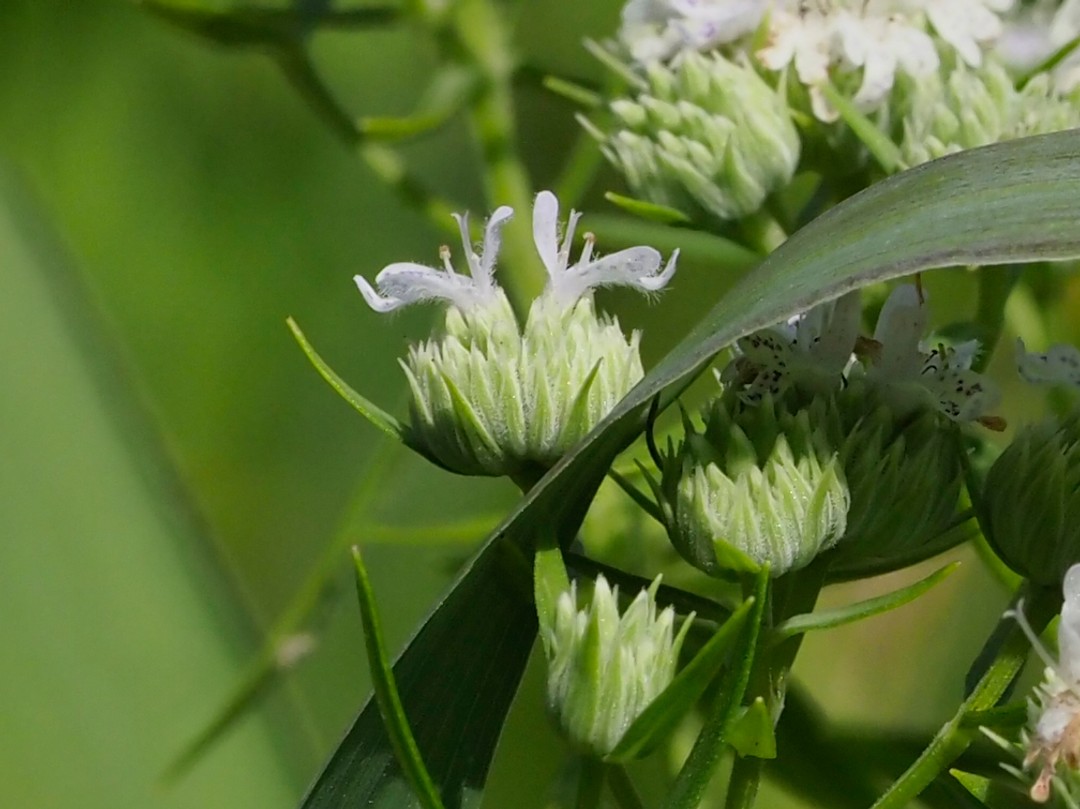
Tiny, individual flowers 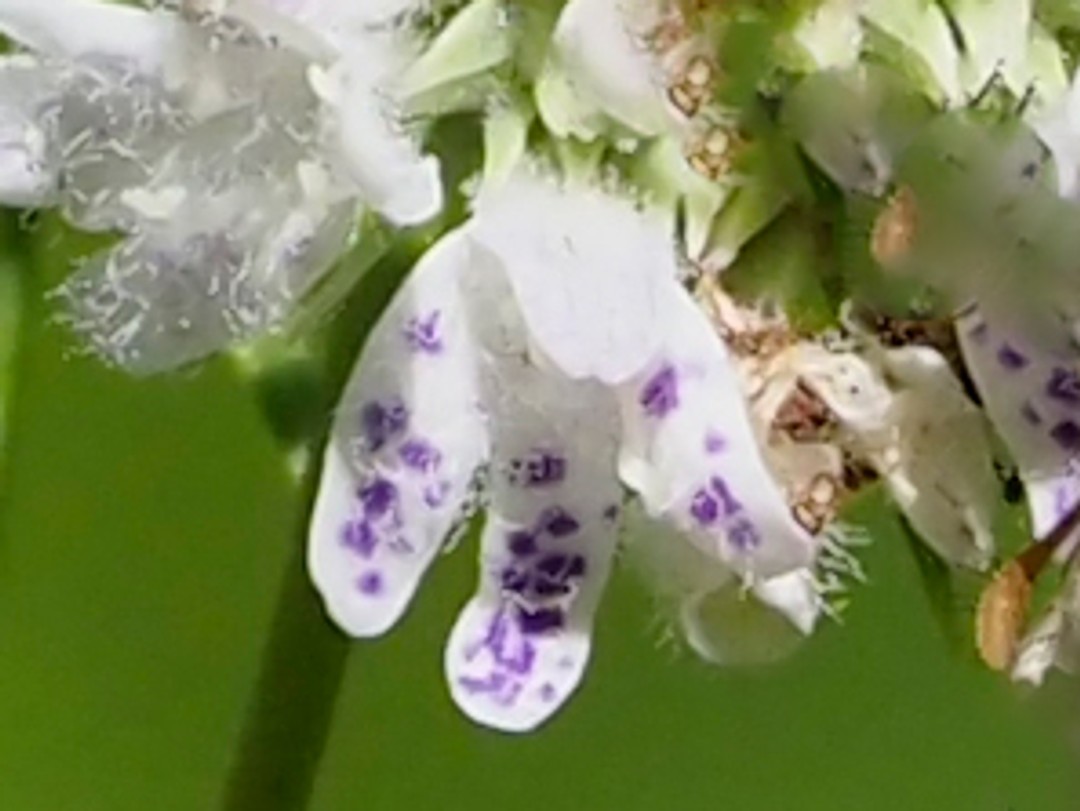
Purple speckles on single flower
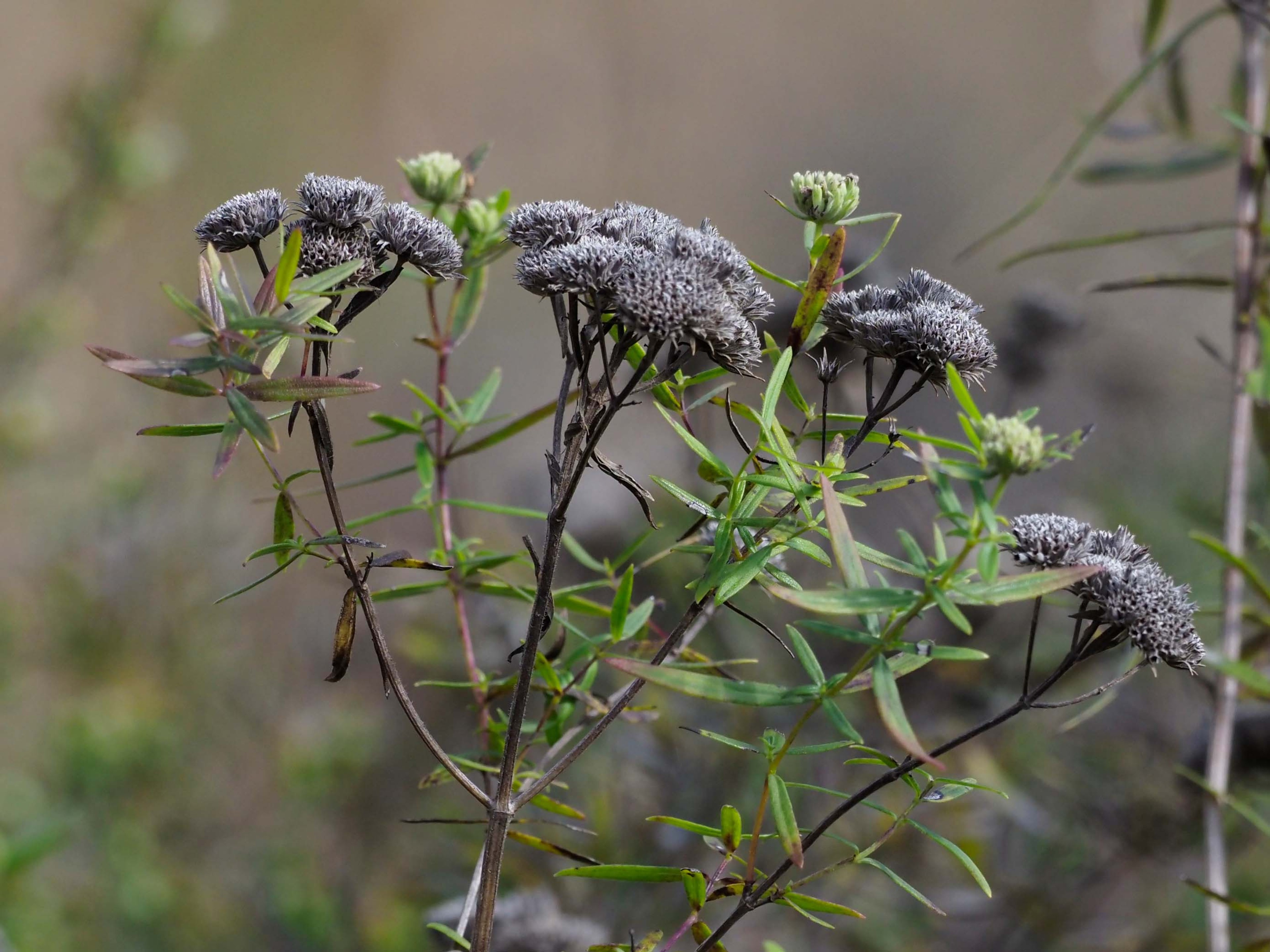
After flowering, lovely pewter colored seed heads decorate the plants. Each head contains numerous tiny seeds that are dispersed by wind, birds and insects.
DESCRIPTION
Virginia mountain mint forms a large clump containing numerous individual plants. Plants typically grow to a height of about 3 feet, tolerating full sun to partial shade. The stems are square, as expected with all members of the mint family. Stems may be green or reddish and have short hairs. Leaves are lance shaped, narrow and sessile with smooth margins. The leaves have a lovely, minty fragrance.
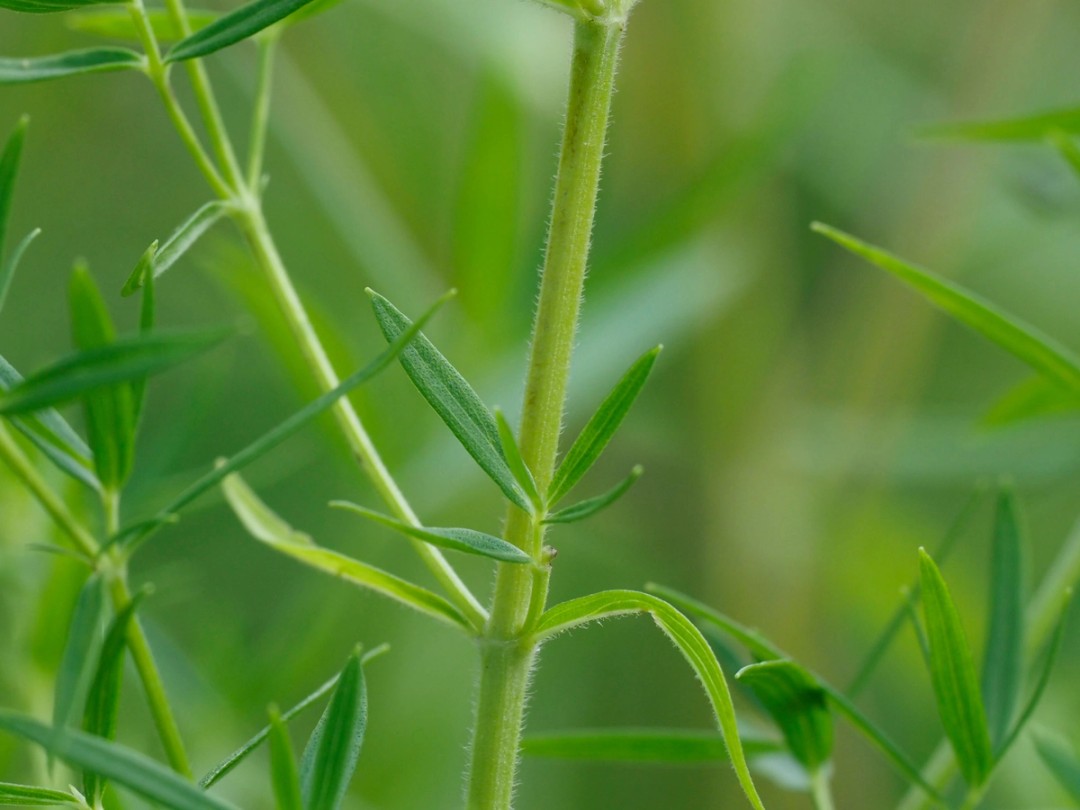
Green stem with short hairs 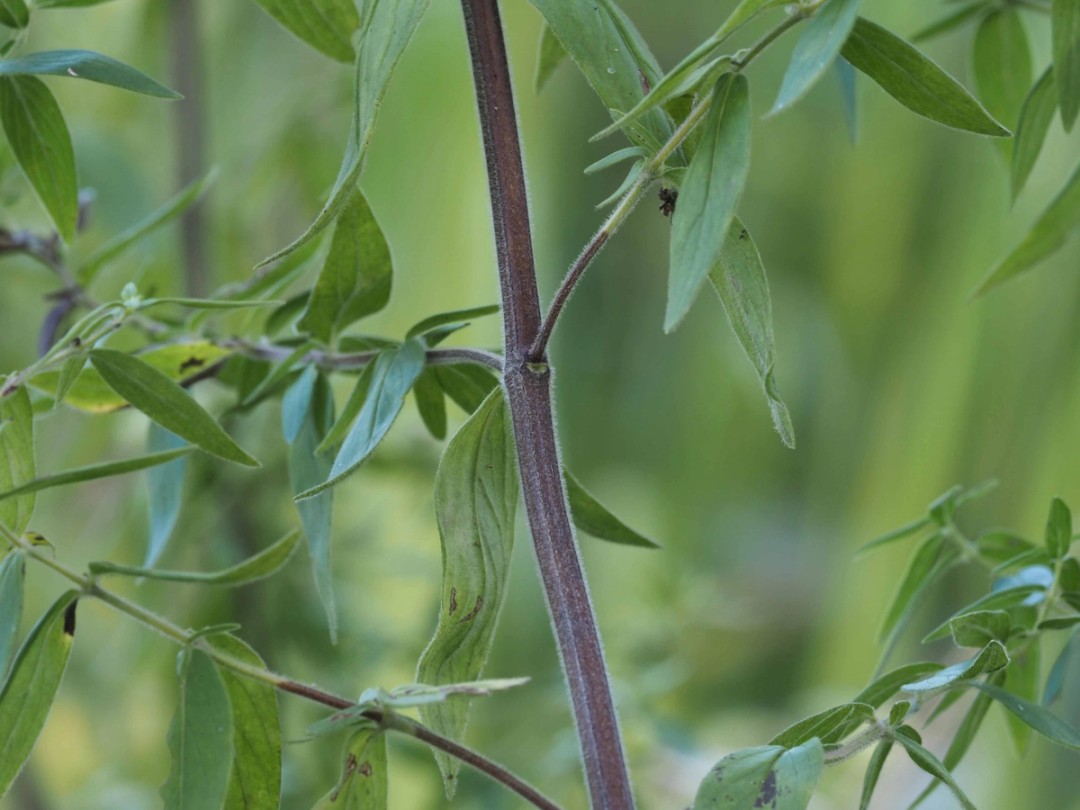
Reddish stem 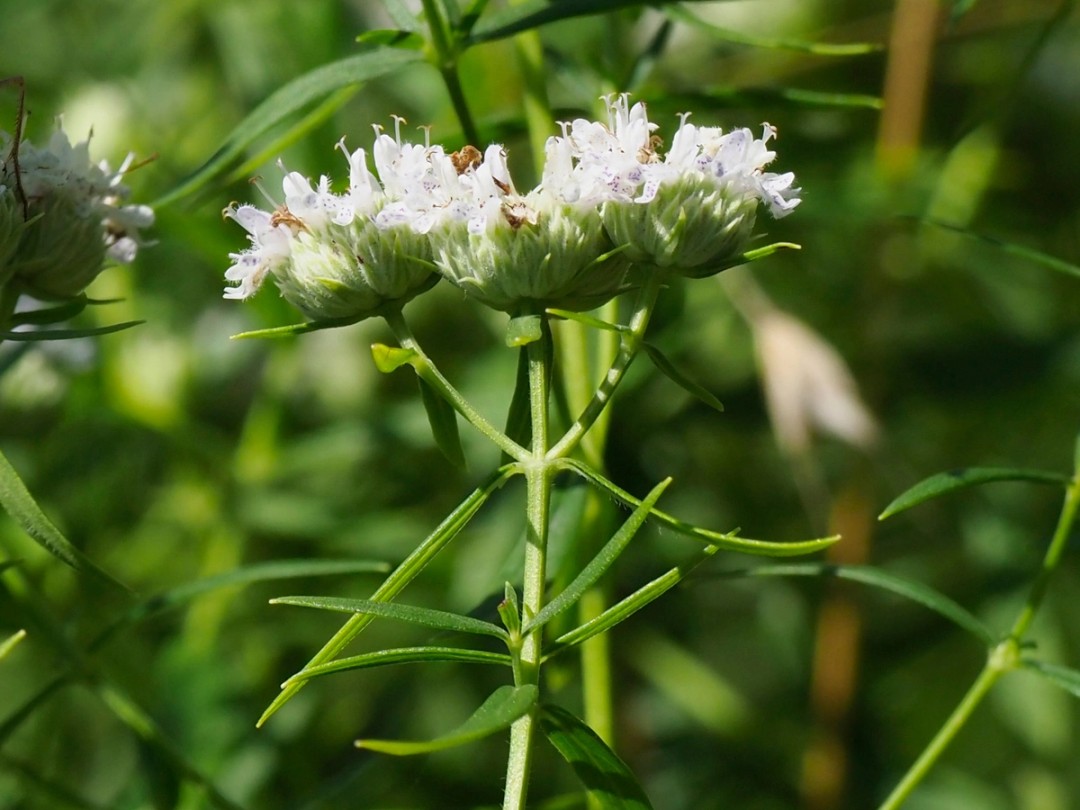
Narrow, opposite leaves 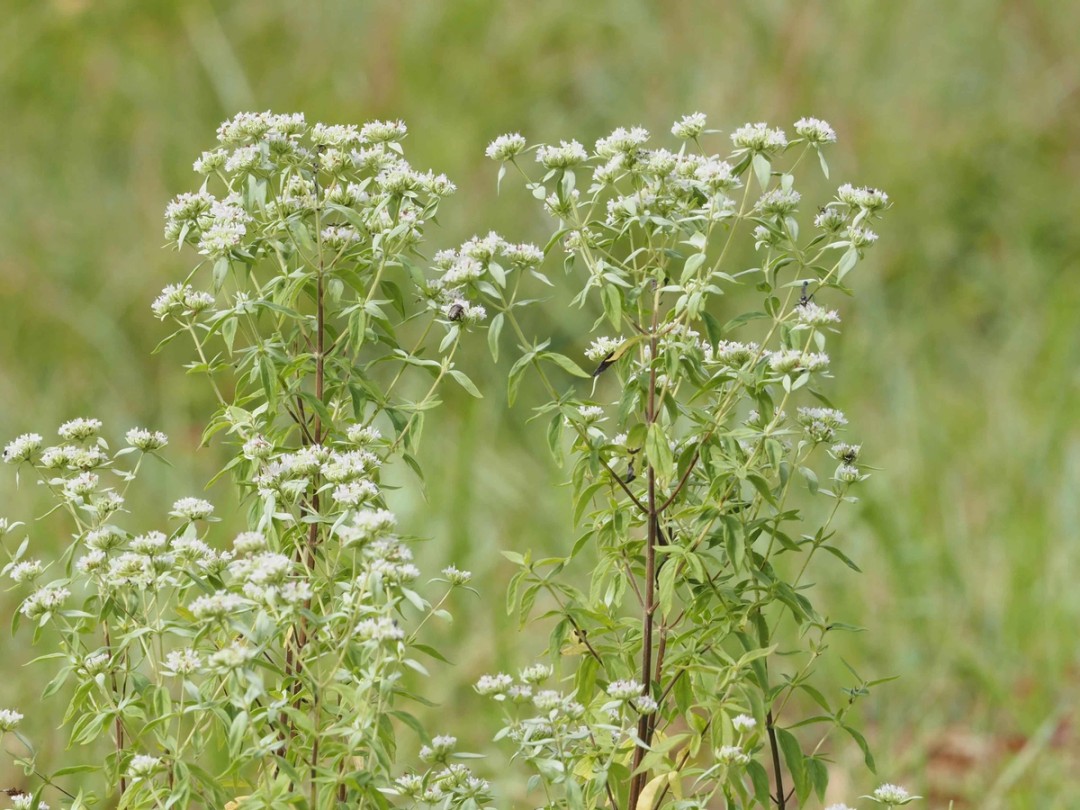
Mature flowering plant
Plants arise from rhizomes to form loose colonies. In nature, the colonies are welcome, in a garden setting they may occasionally need monitoring, however this is not an aggressive plant.
POLLINATORS
Many different insects are attracted to the Mountain Mints! Why? Mountain mints produce copious amounts of nectar and their wide, flat flower heads are ideal insect 'landing pads'. I've documented many varied insects visiting Virginia mountain mint. Indeed, this is a wonderful plant for a pollinator garden or to add to a native garden simply to support our pollinators.
Take a look at the astounding variety of butterflies and skippers I've documented visiting Virginia Mountain mint.
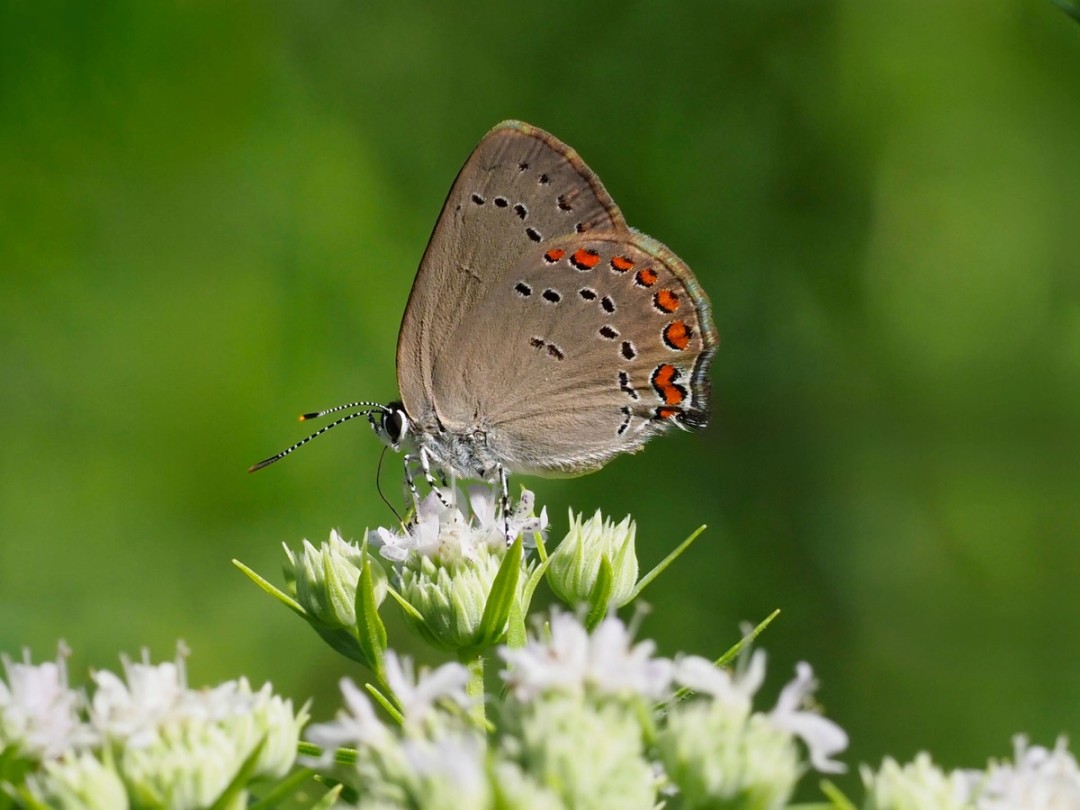
Coral hairstreak 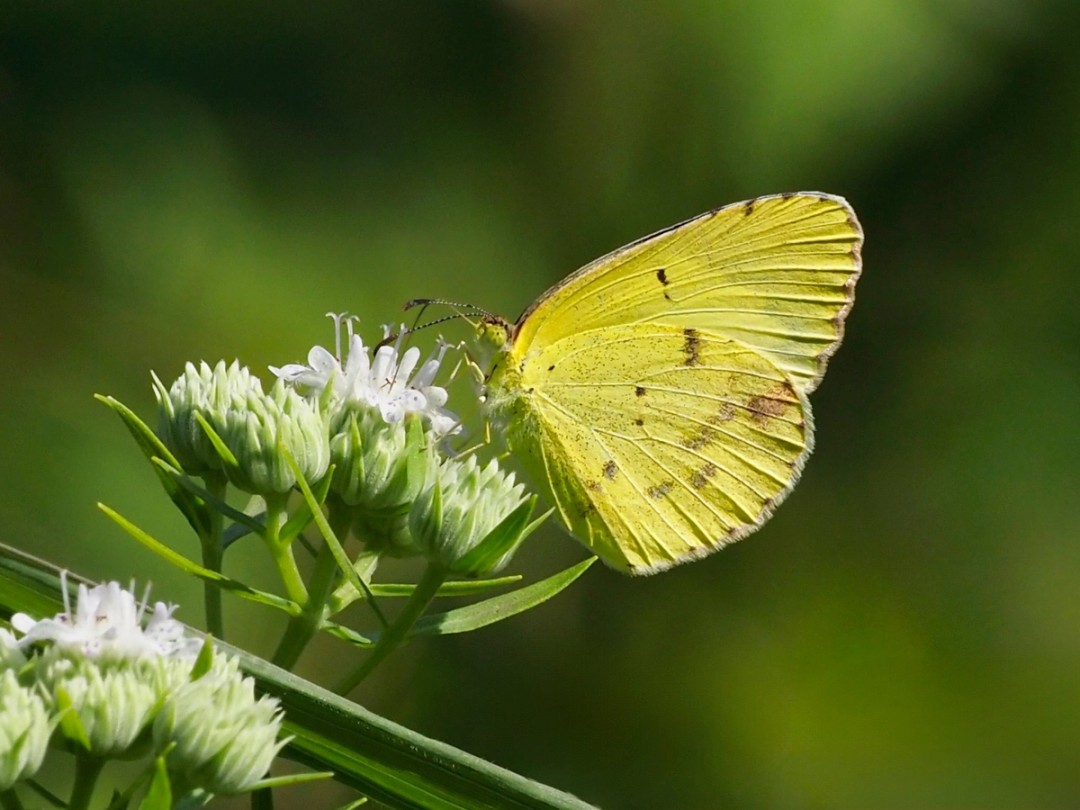
Little Yellow 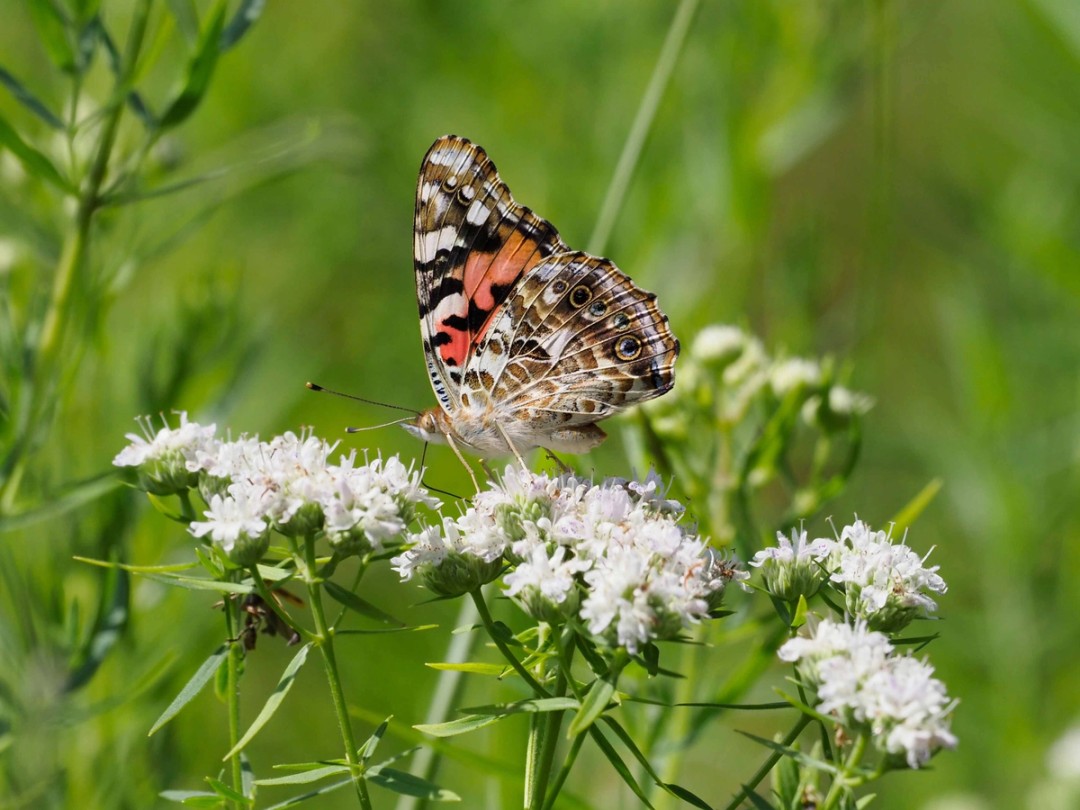
Painted Lady 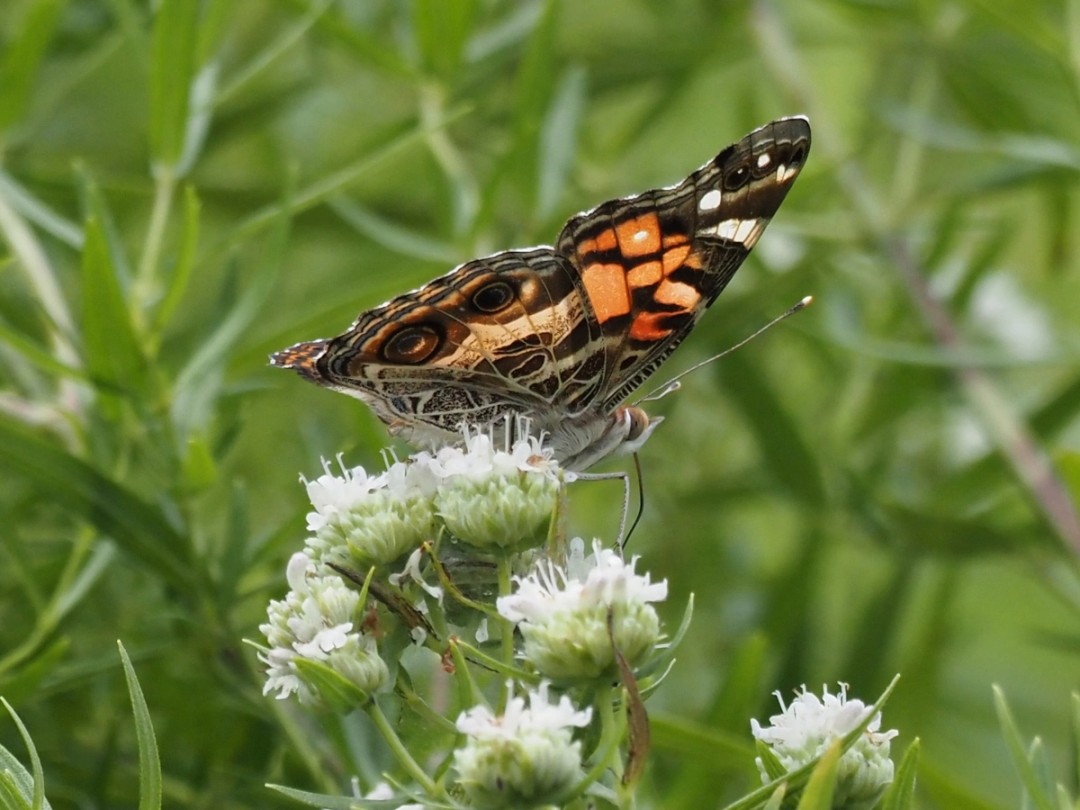
American Lady 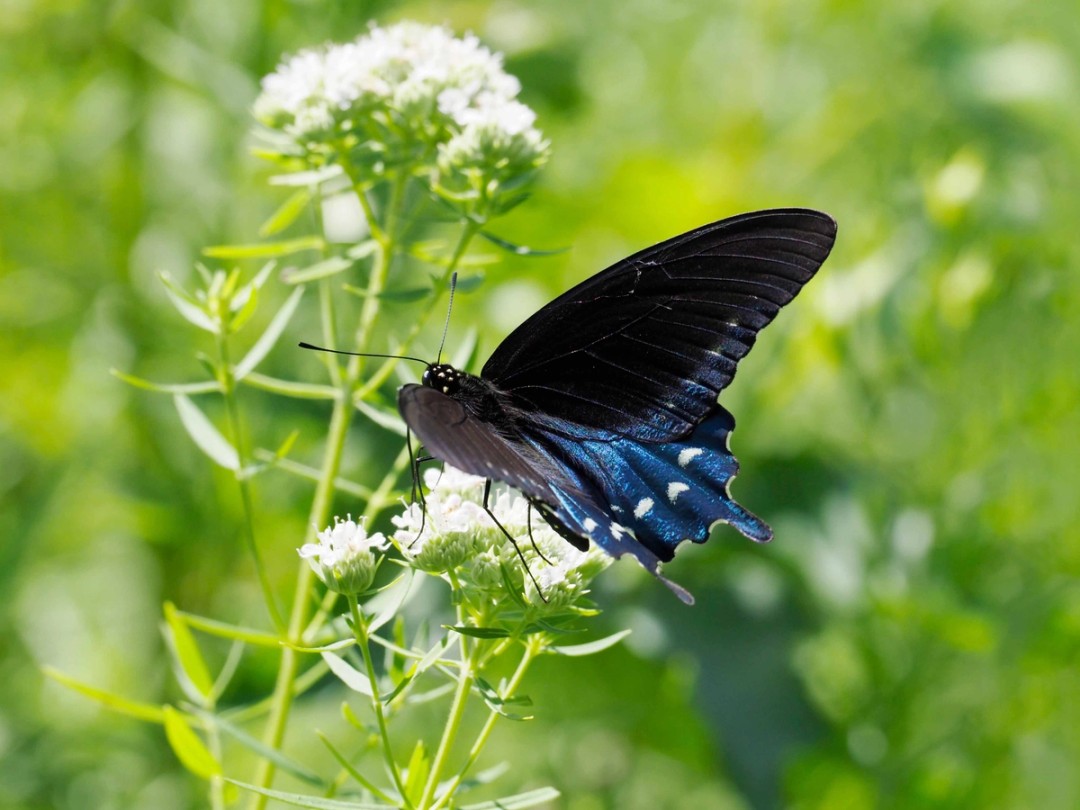
Pipevine swallowtail 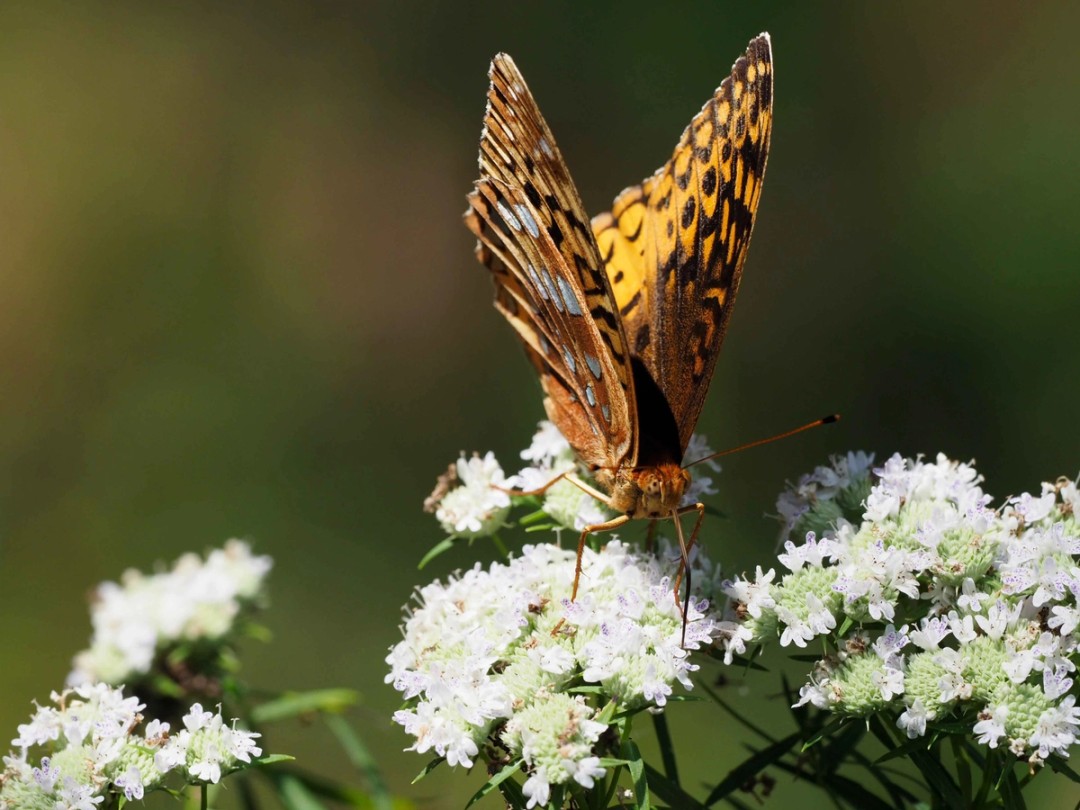
Great Spangled fritillary 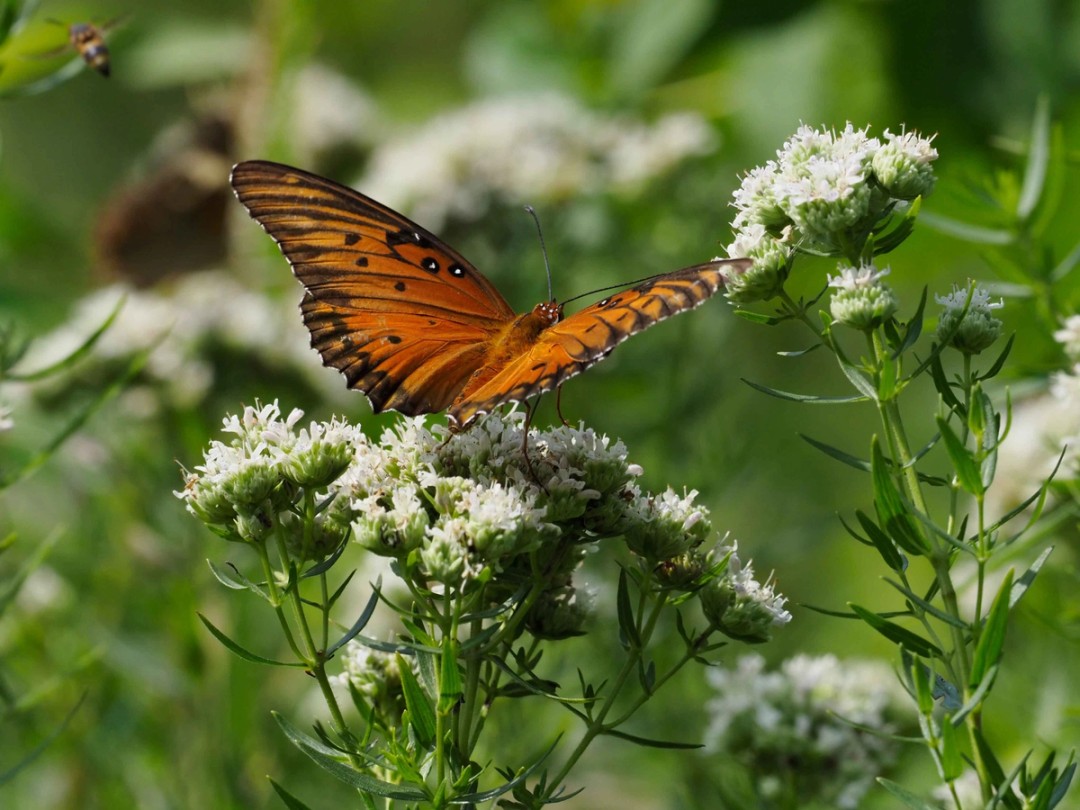
Gulf fritillary 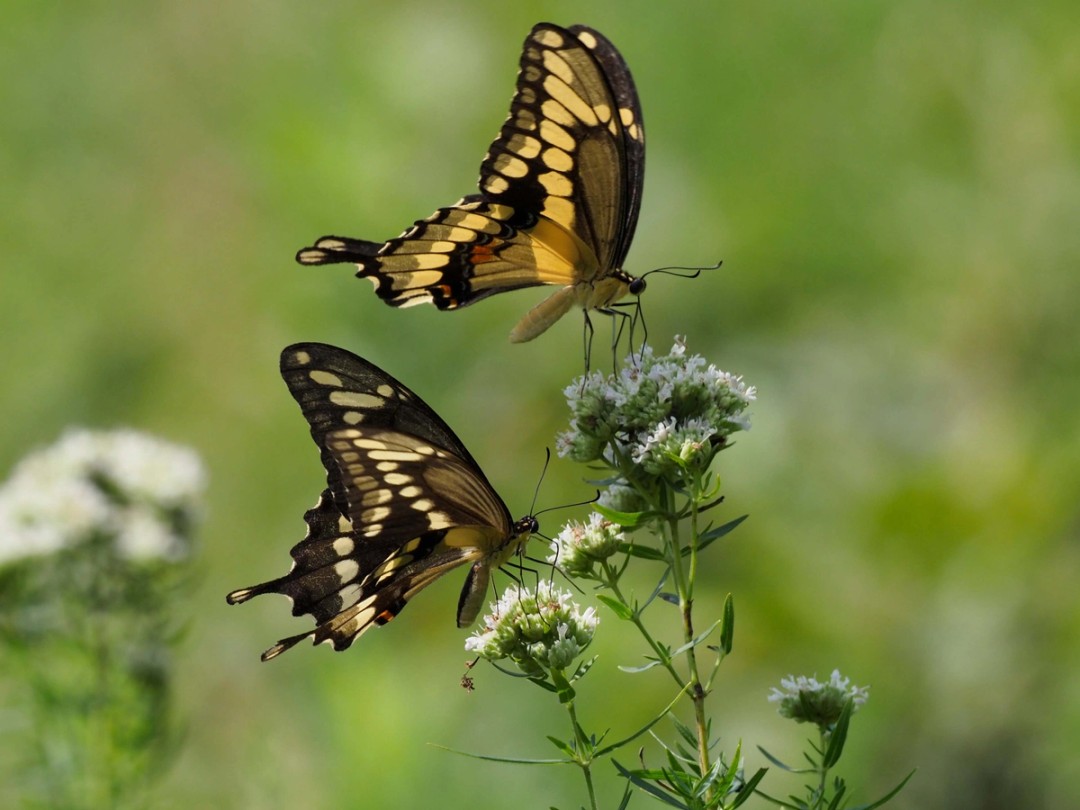
Giant swallowtails 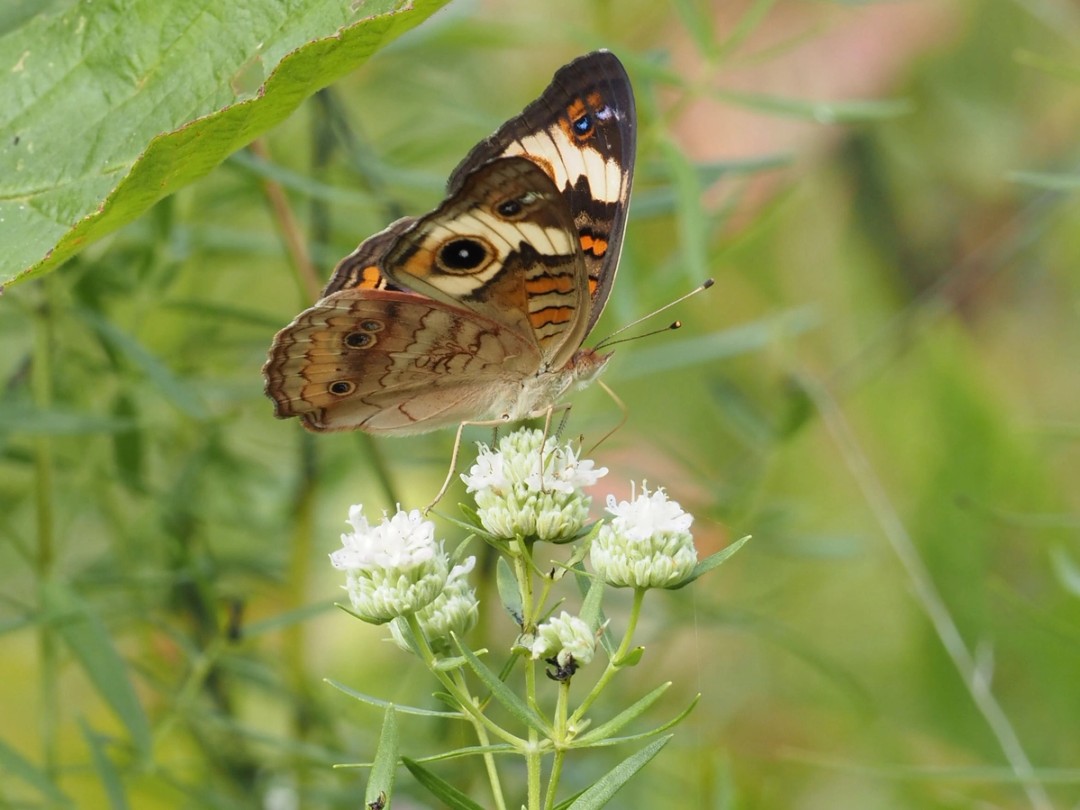
Common Buckeye 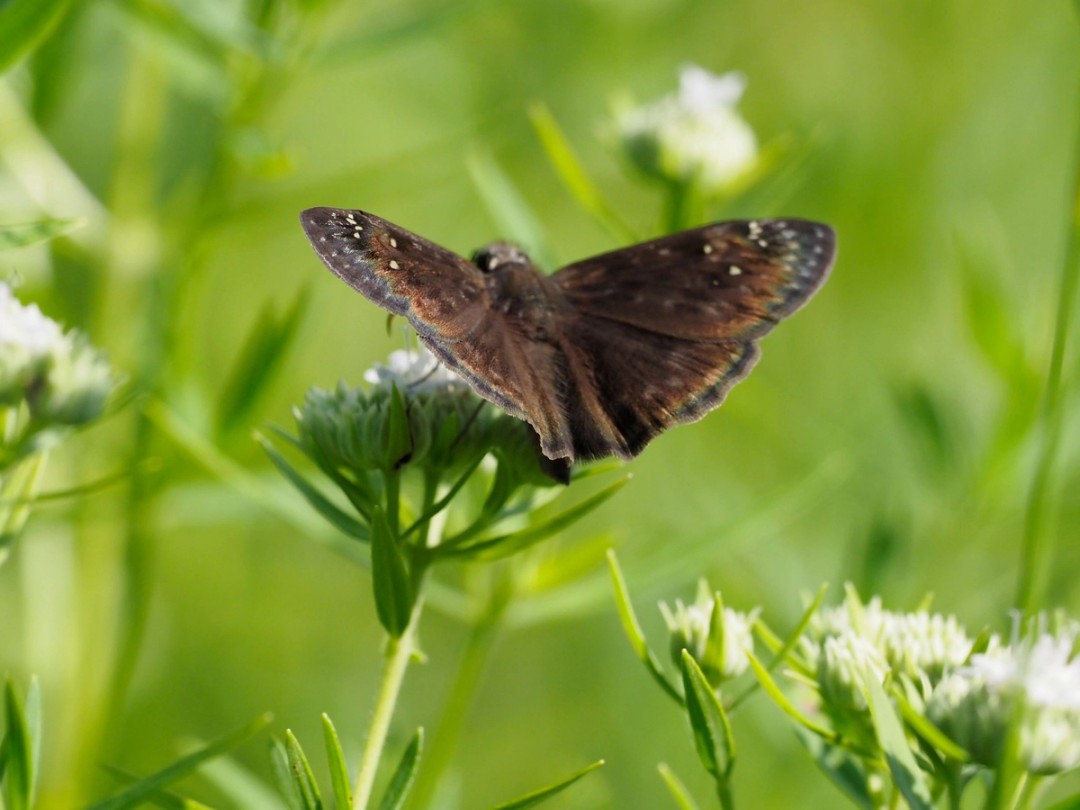
Horace's duskywing 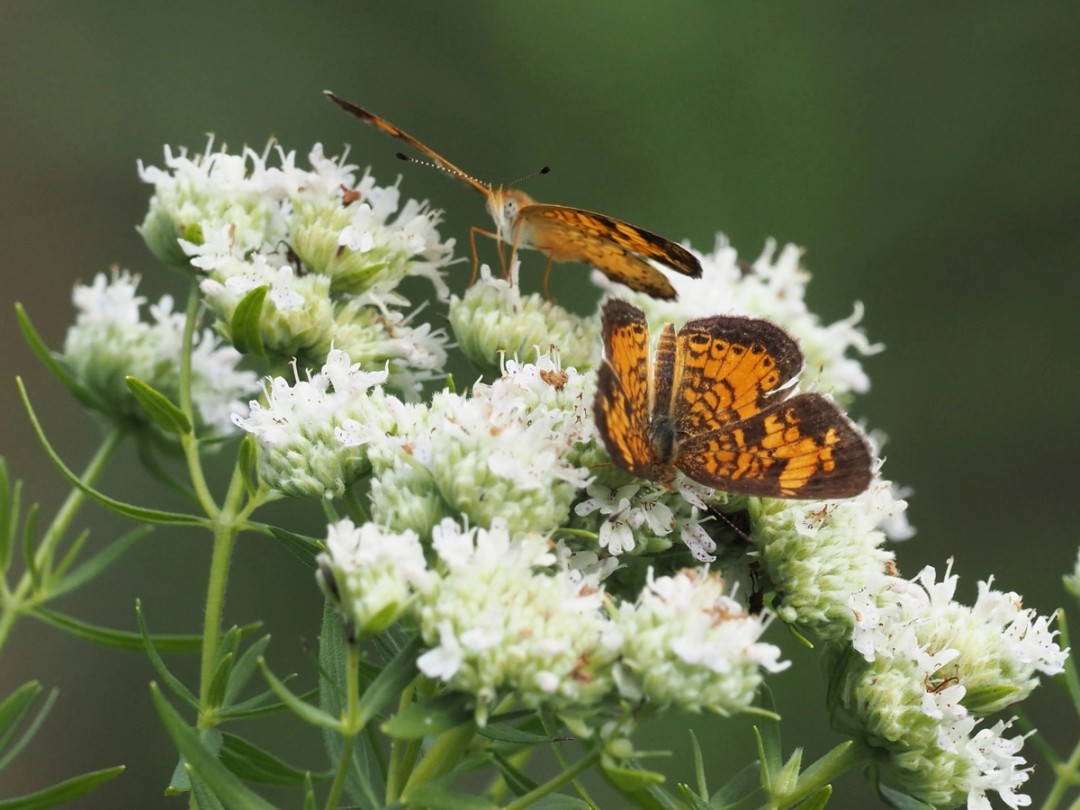
Pearl crescent 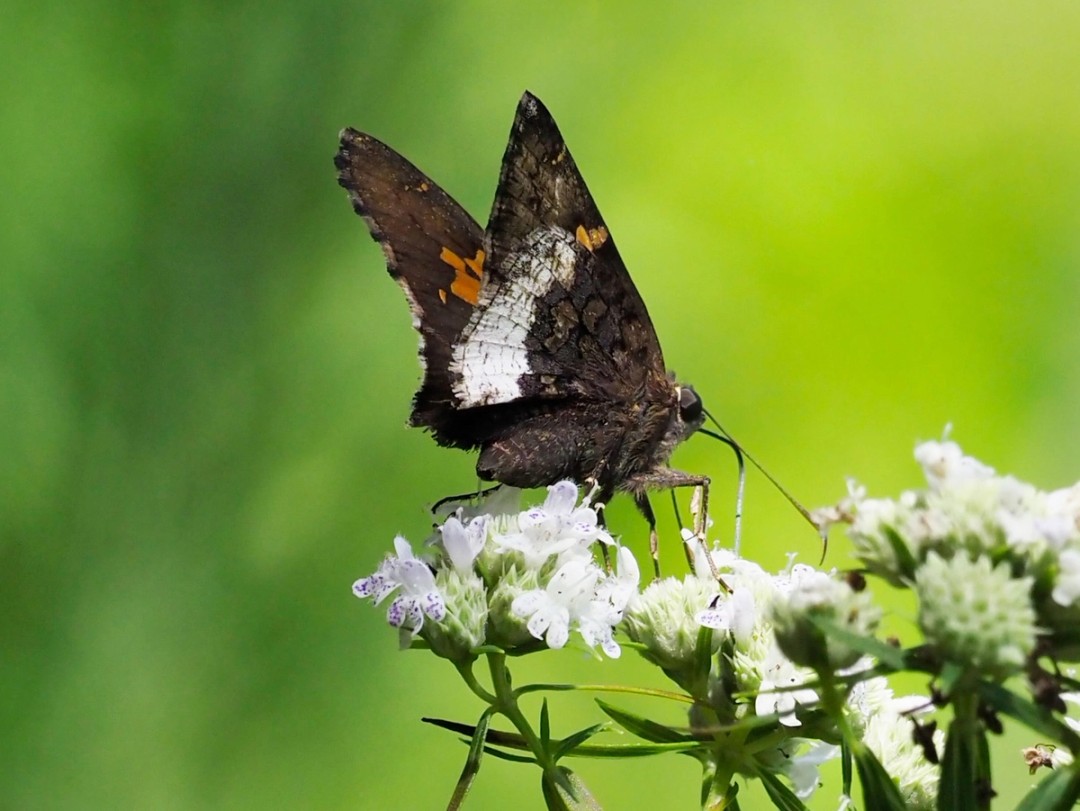
Hoary Edge skipper 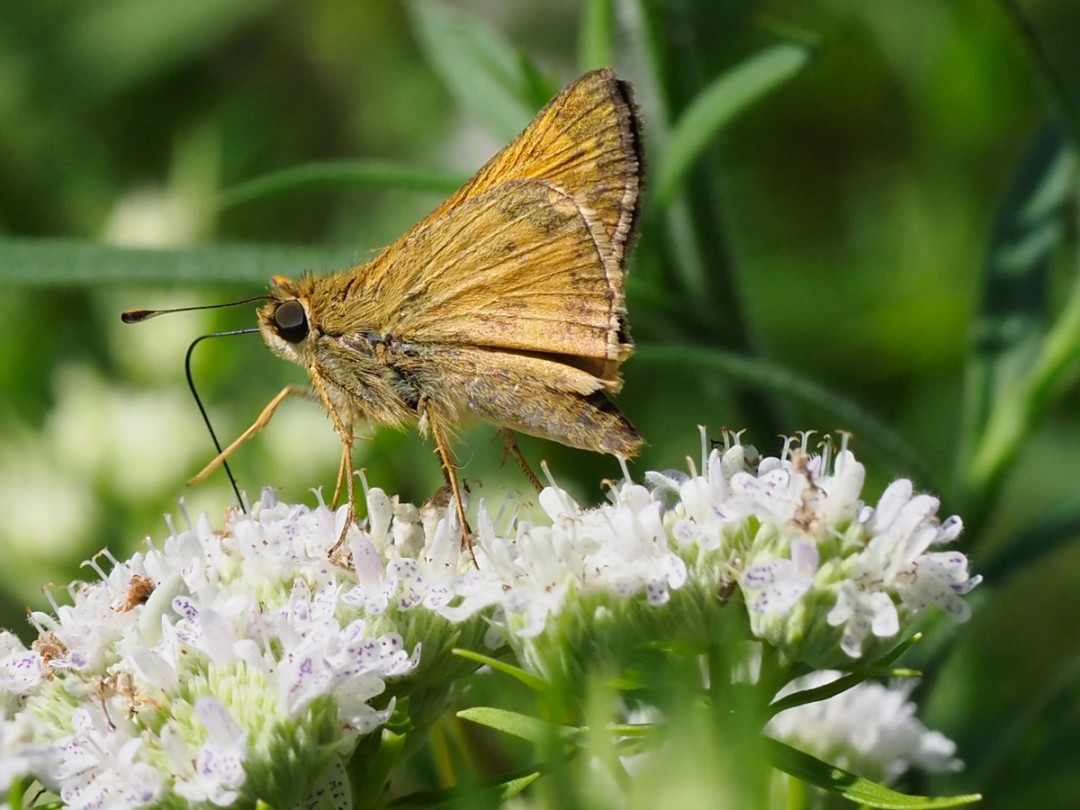
Sachem 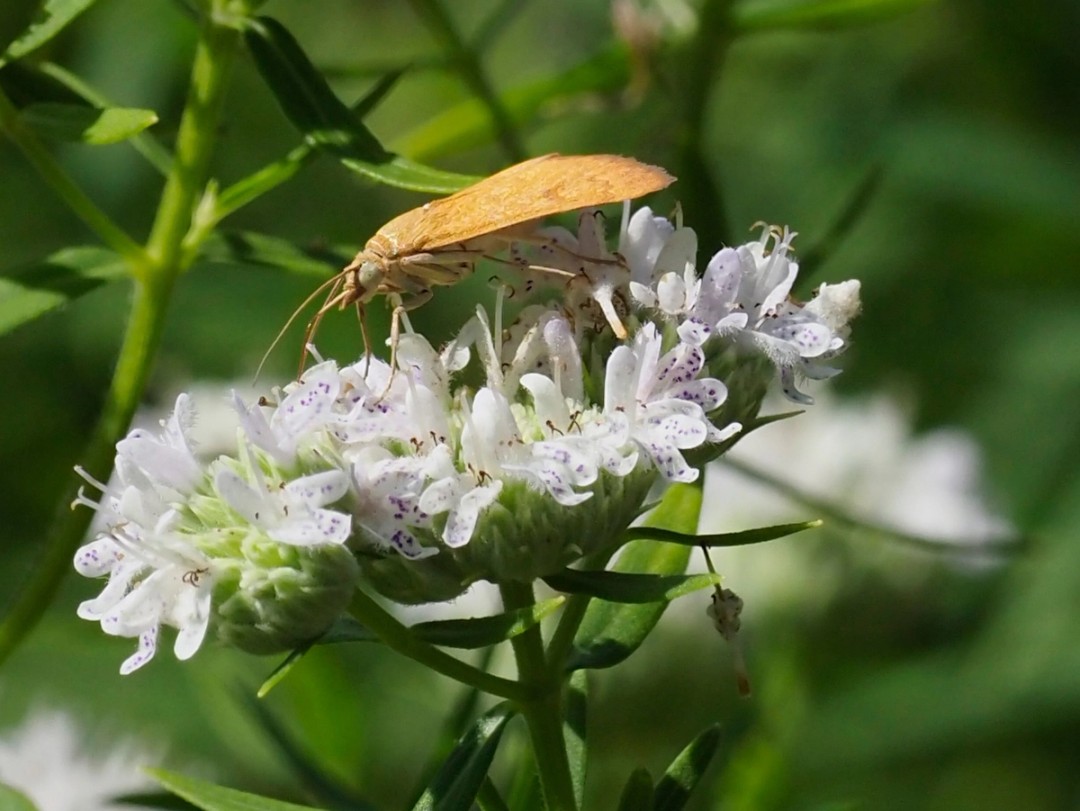
Crambid Snout moth
Bee and Wasp visitors:
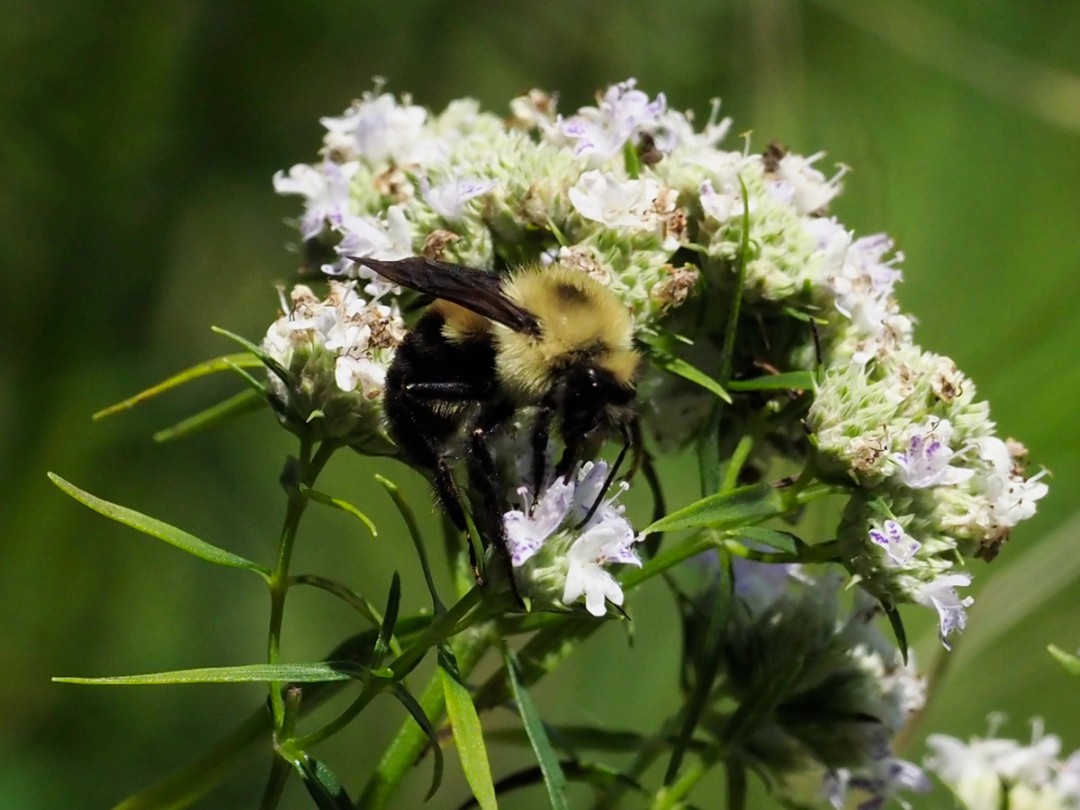
Brown-belted Bumble Bee 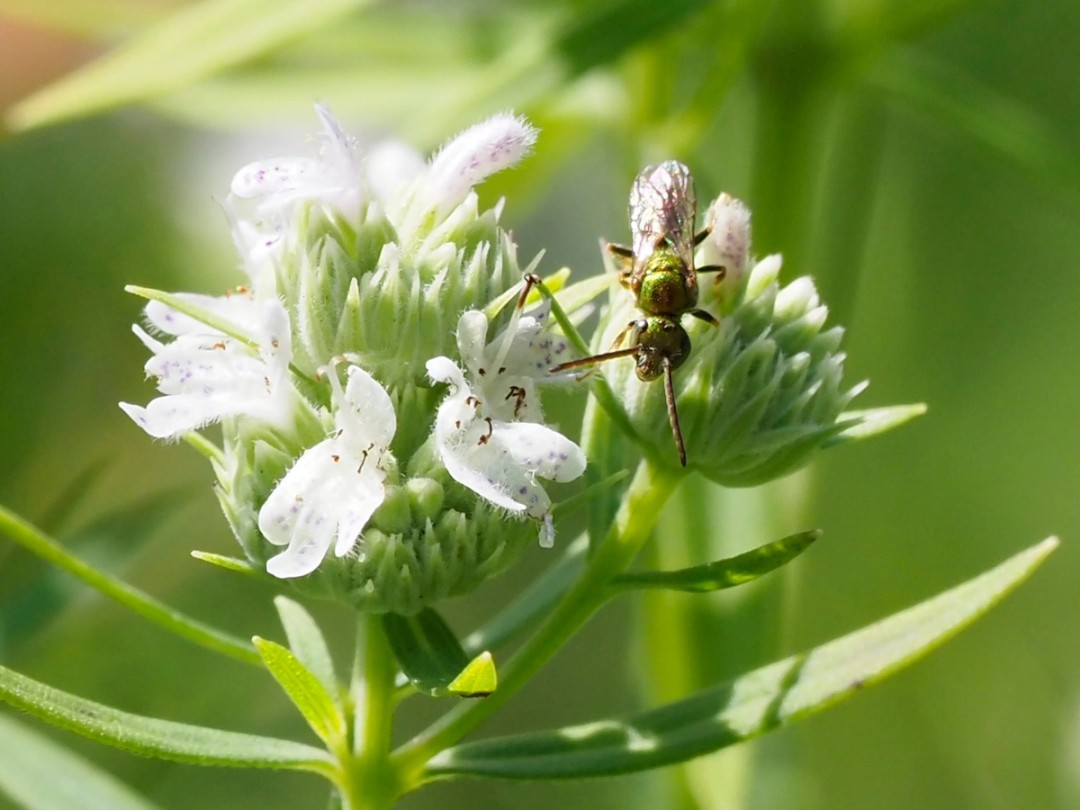
Green sweat bee 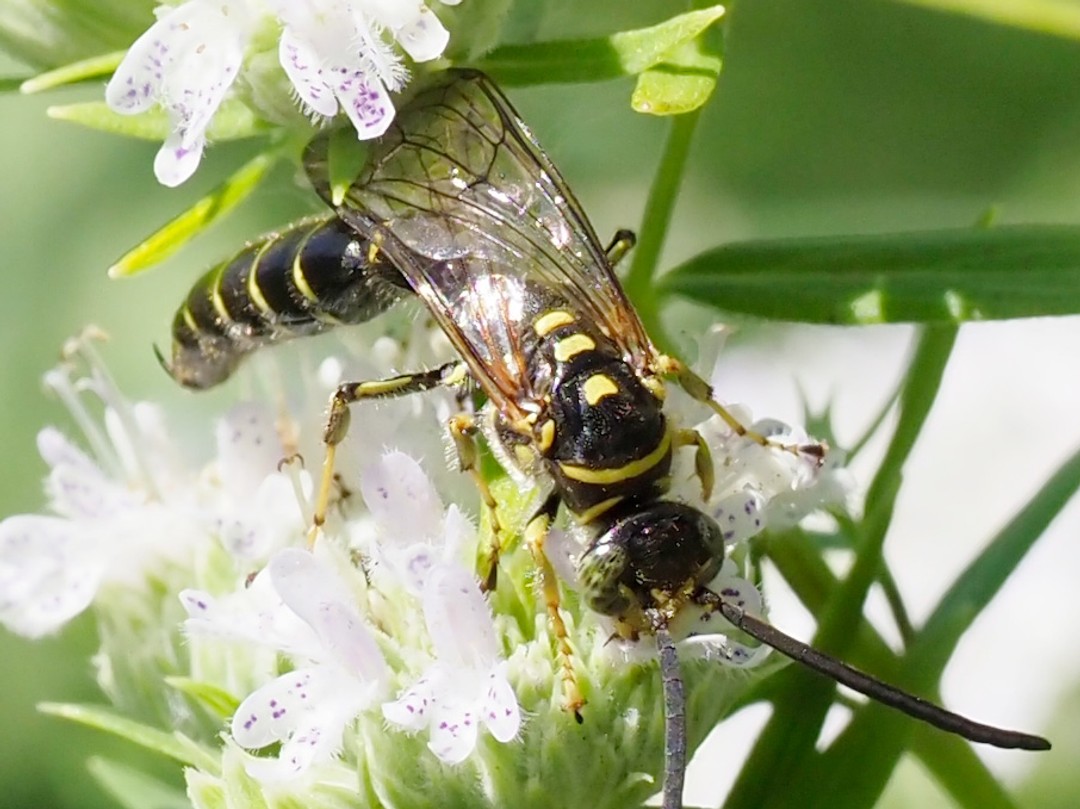
Five-banded Thynnid wasp 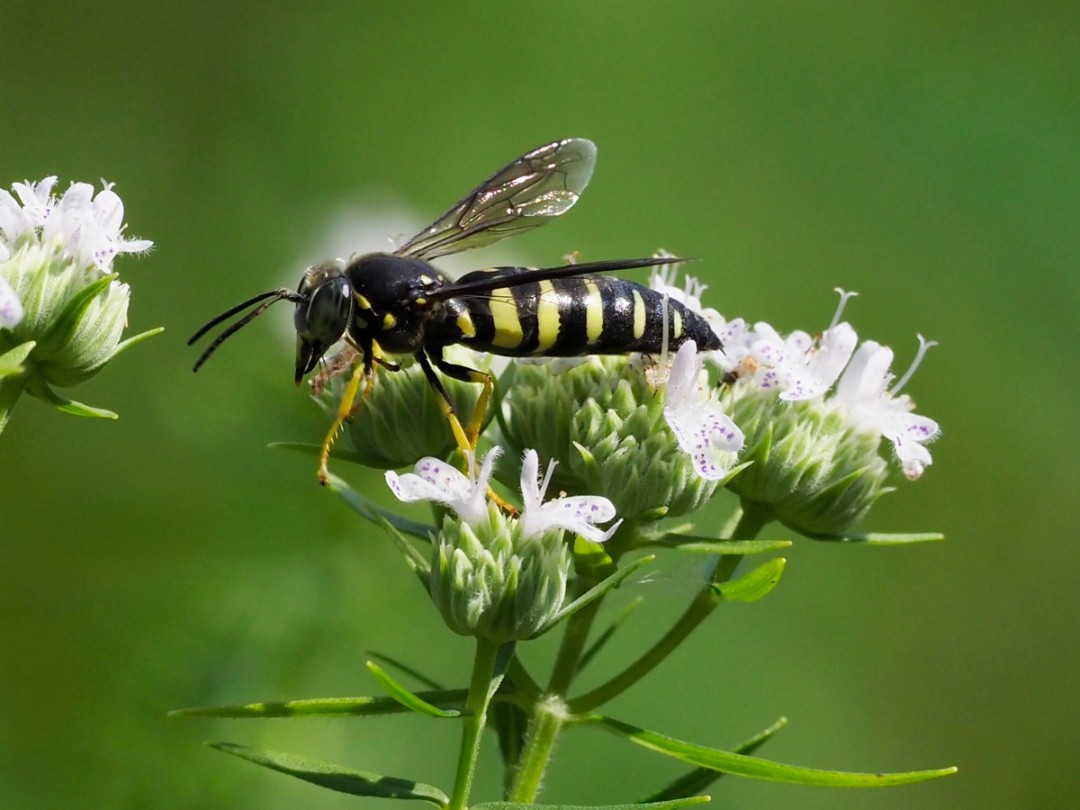
Four-banded Sand wasp 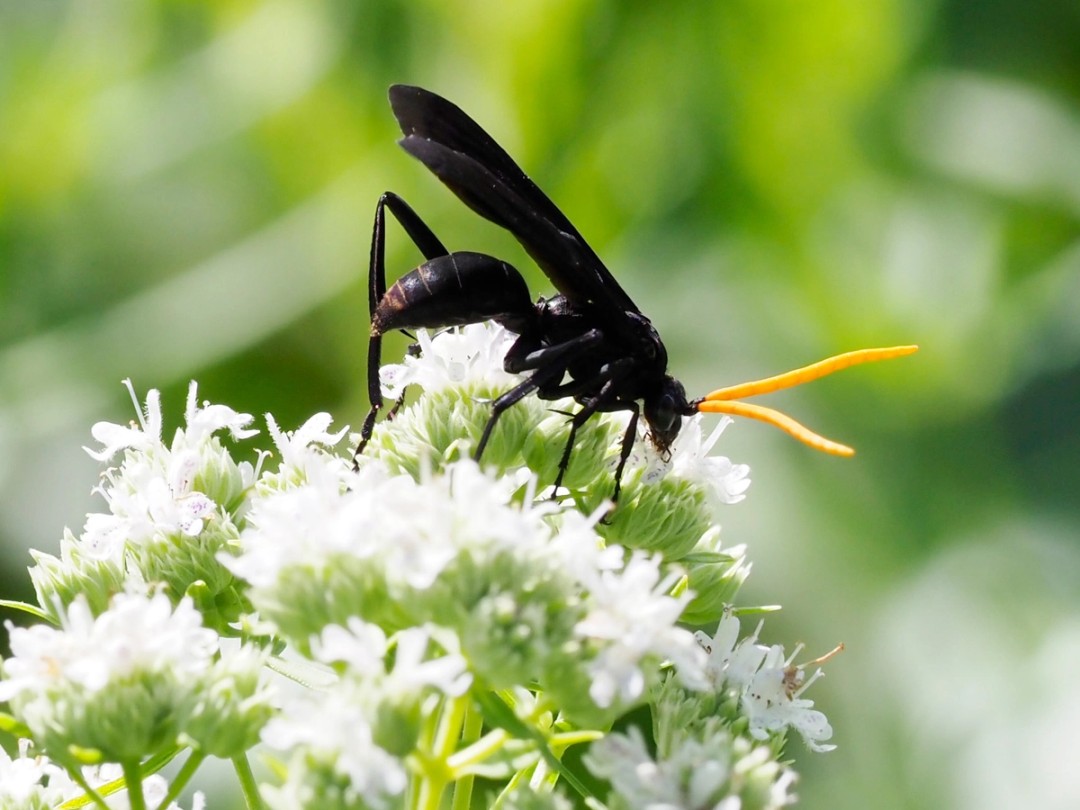
Elegant Tarantula Hawk wasp 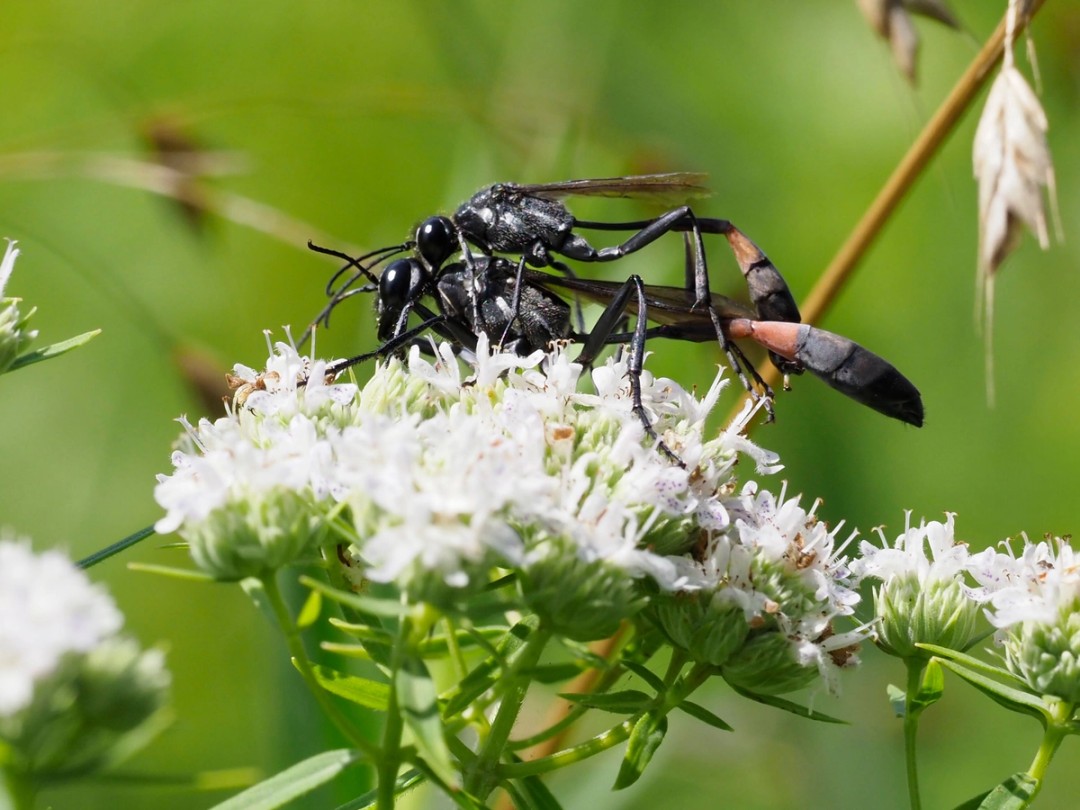
Black Thread-waisted wasp 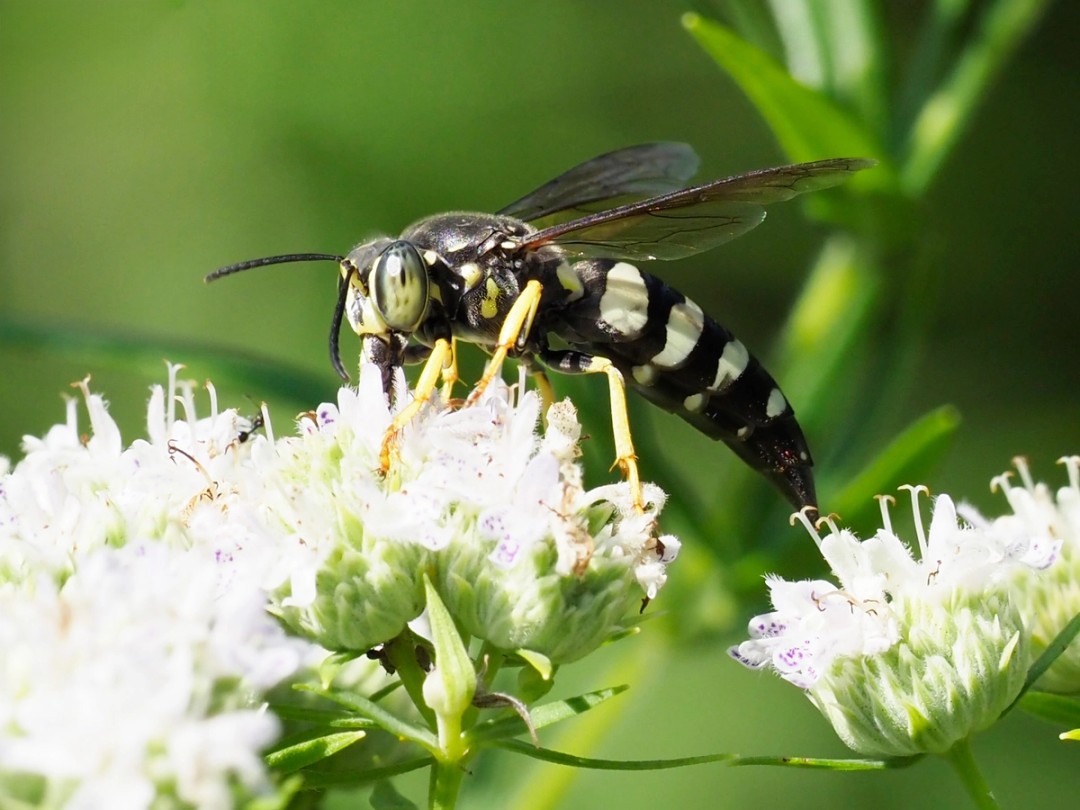
Horse Guard wasp 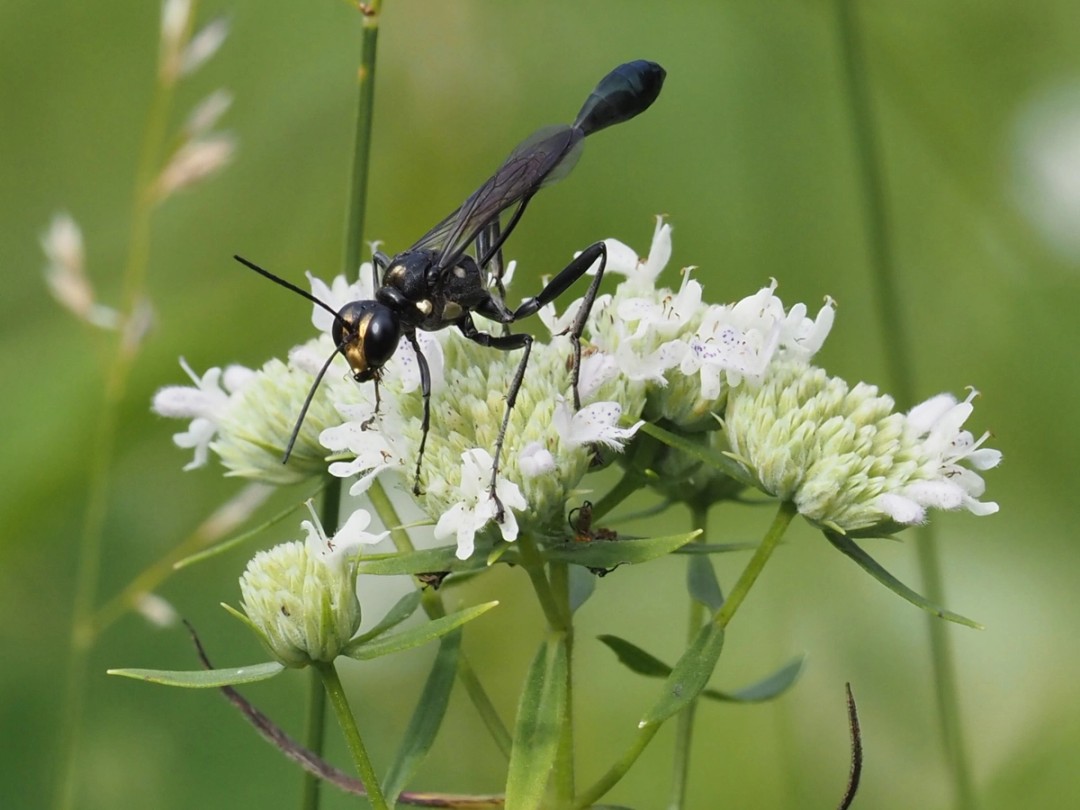
Gold-Marked Thread Waisted wasp 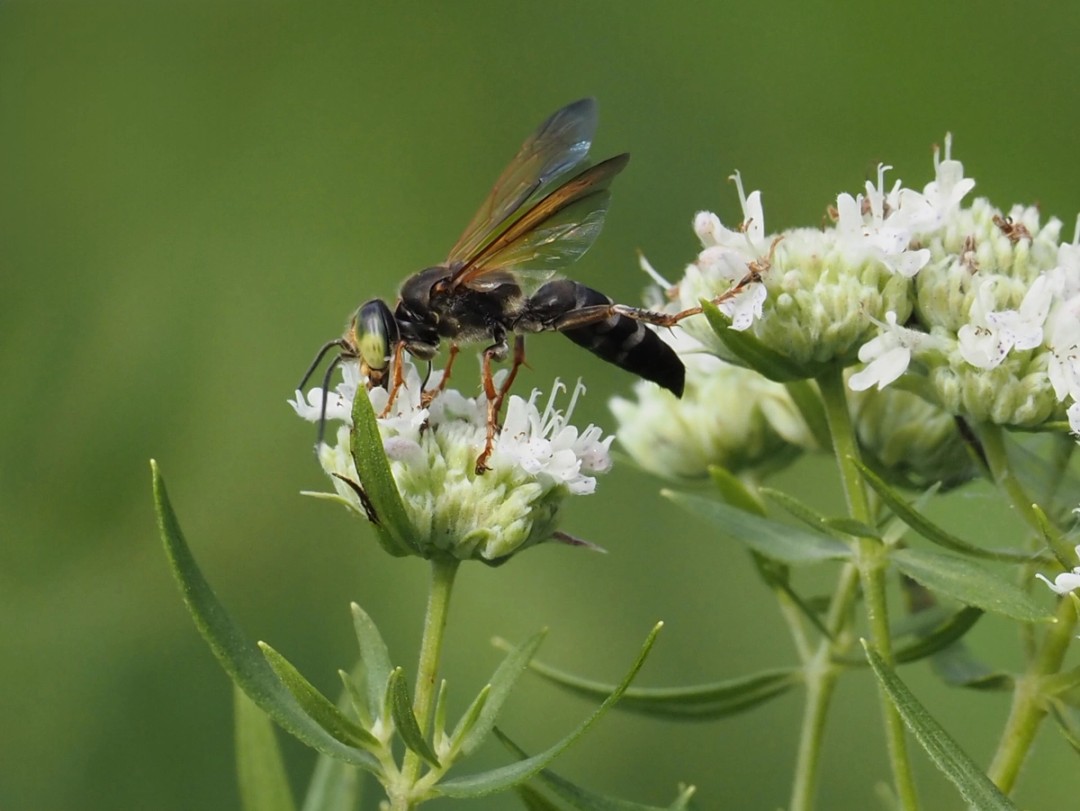
Sand-loving wasp 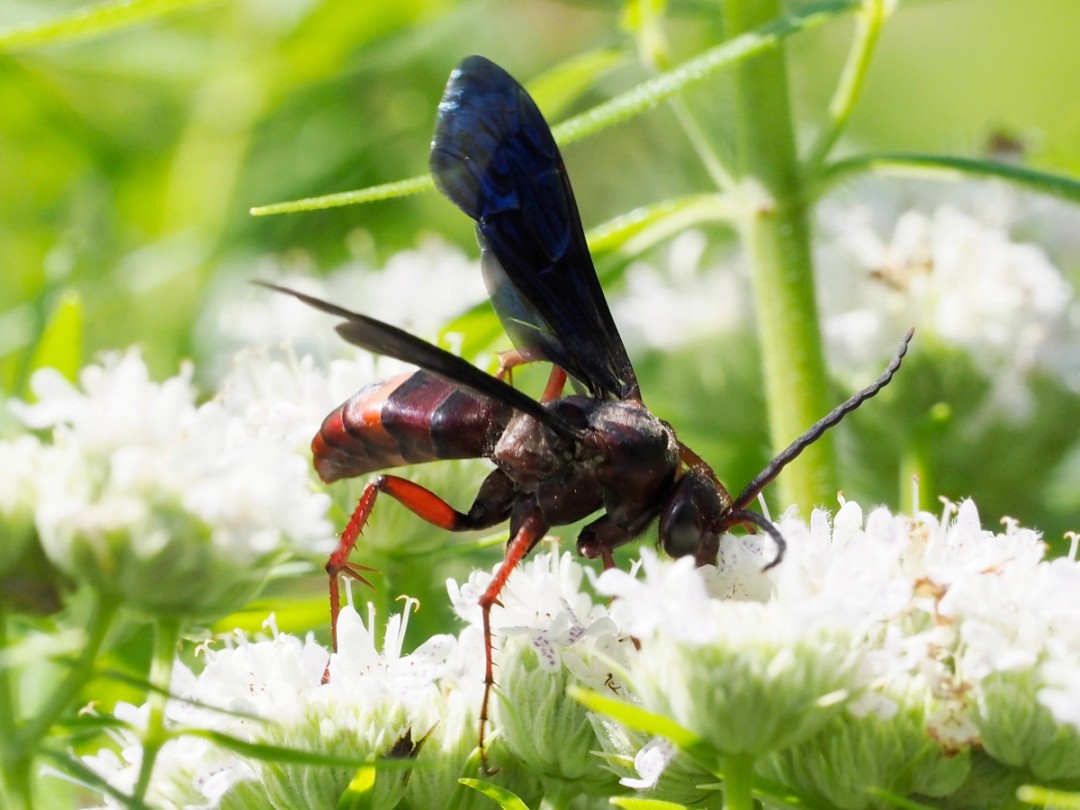
Frigid Spider wasp
I've also documented a couple of Diptera species visiting these flowers.
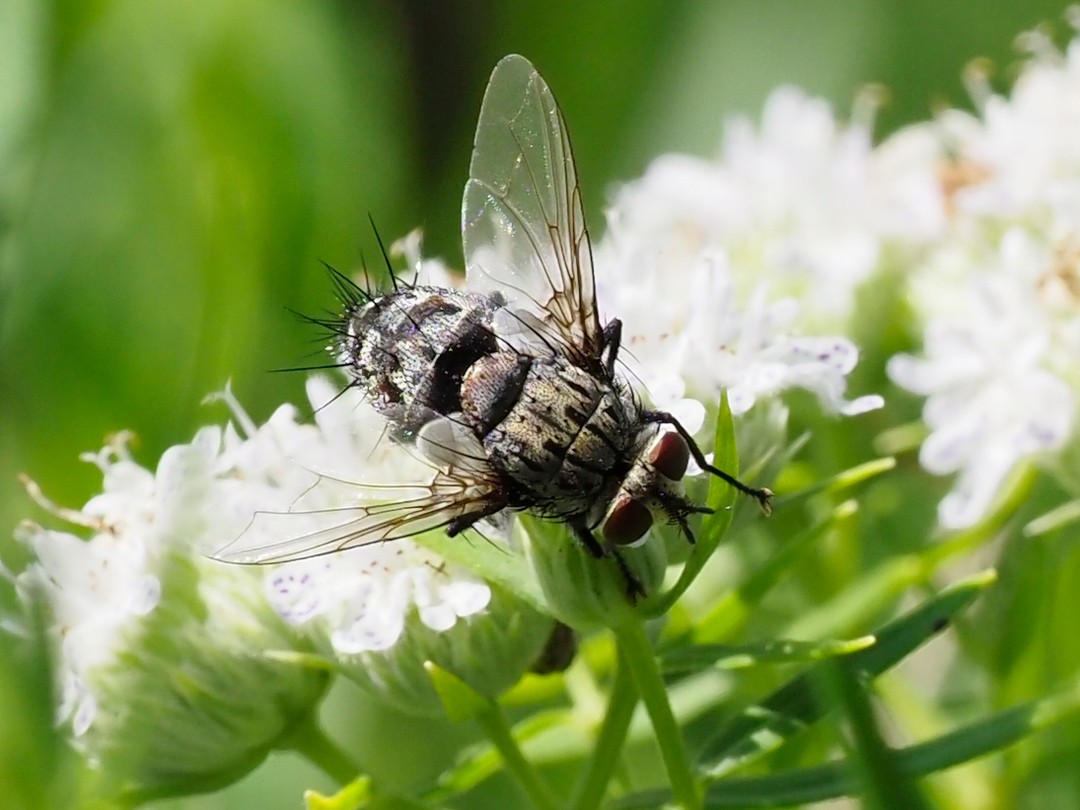
Genus Exorista 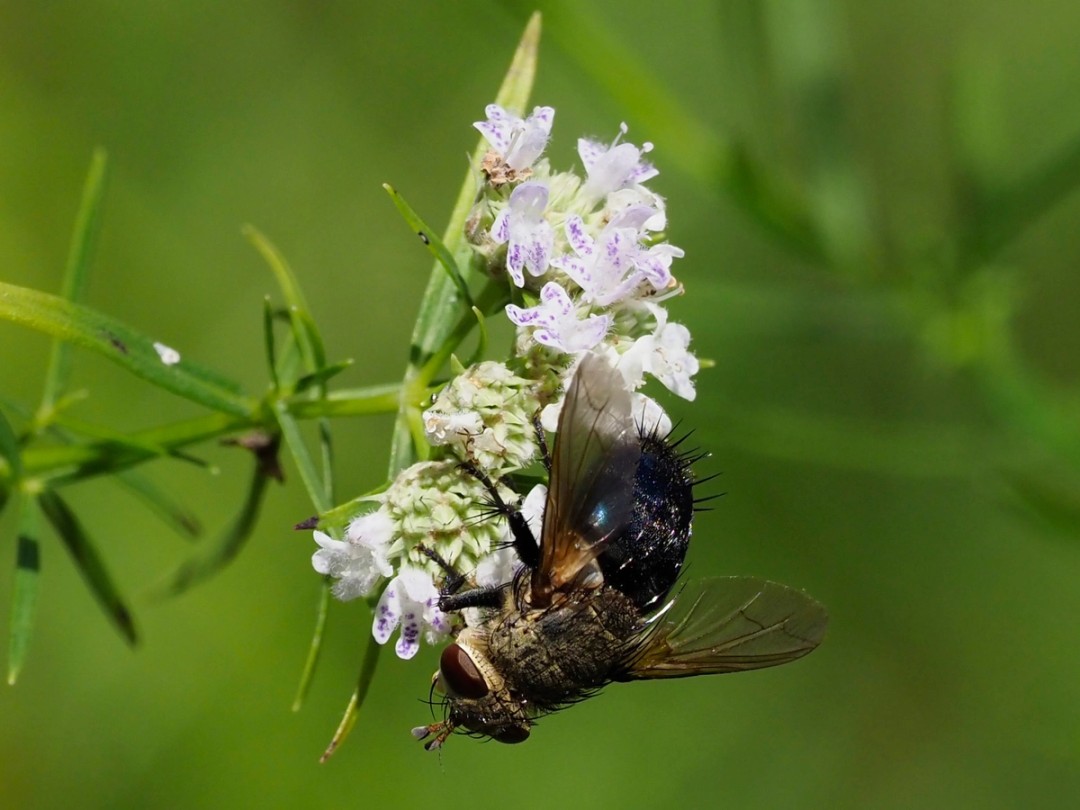
Hornworm Tachinid fly
PLANTS GROWING NEARBY
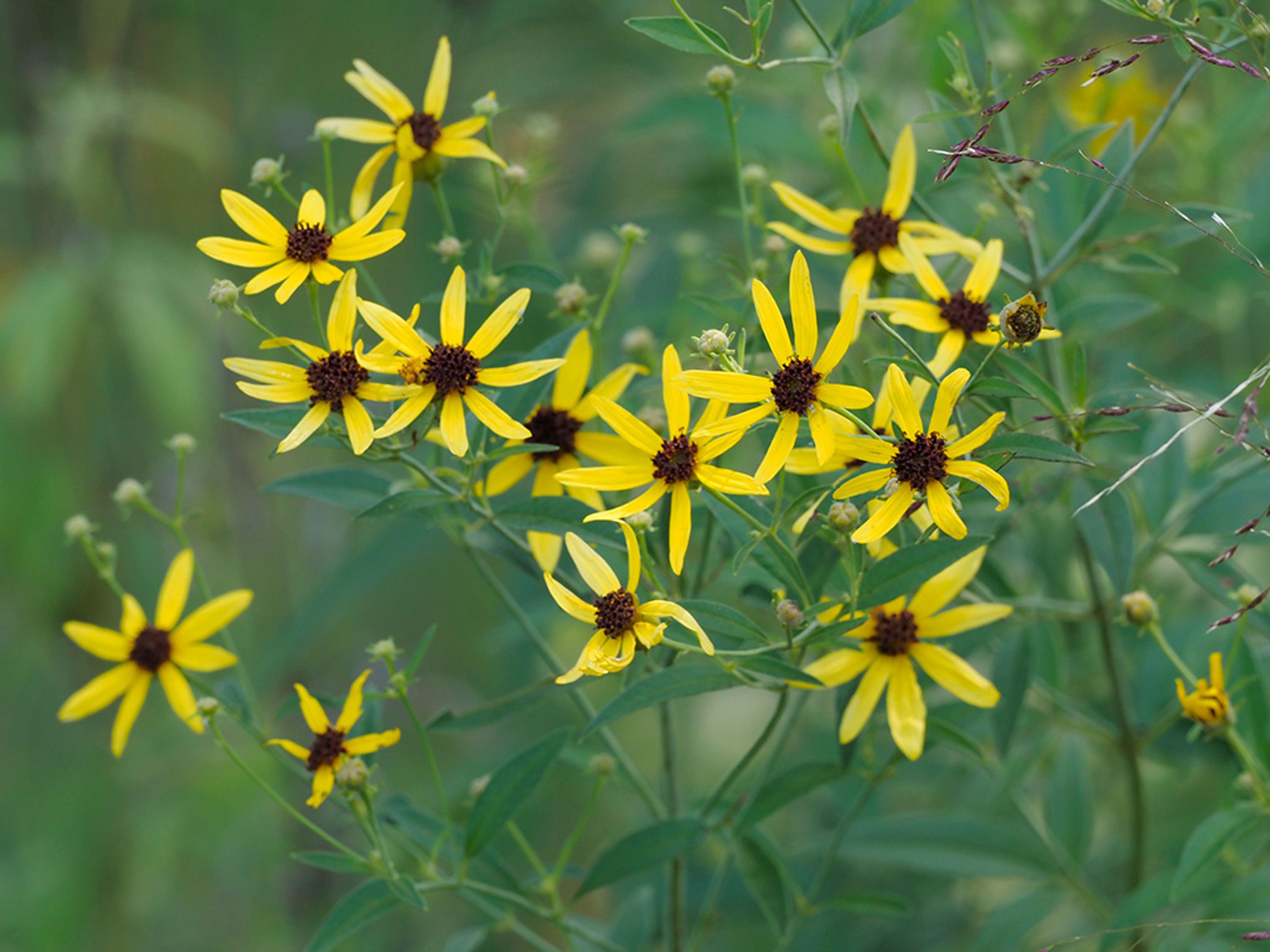
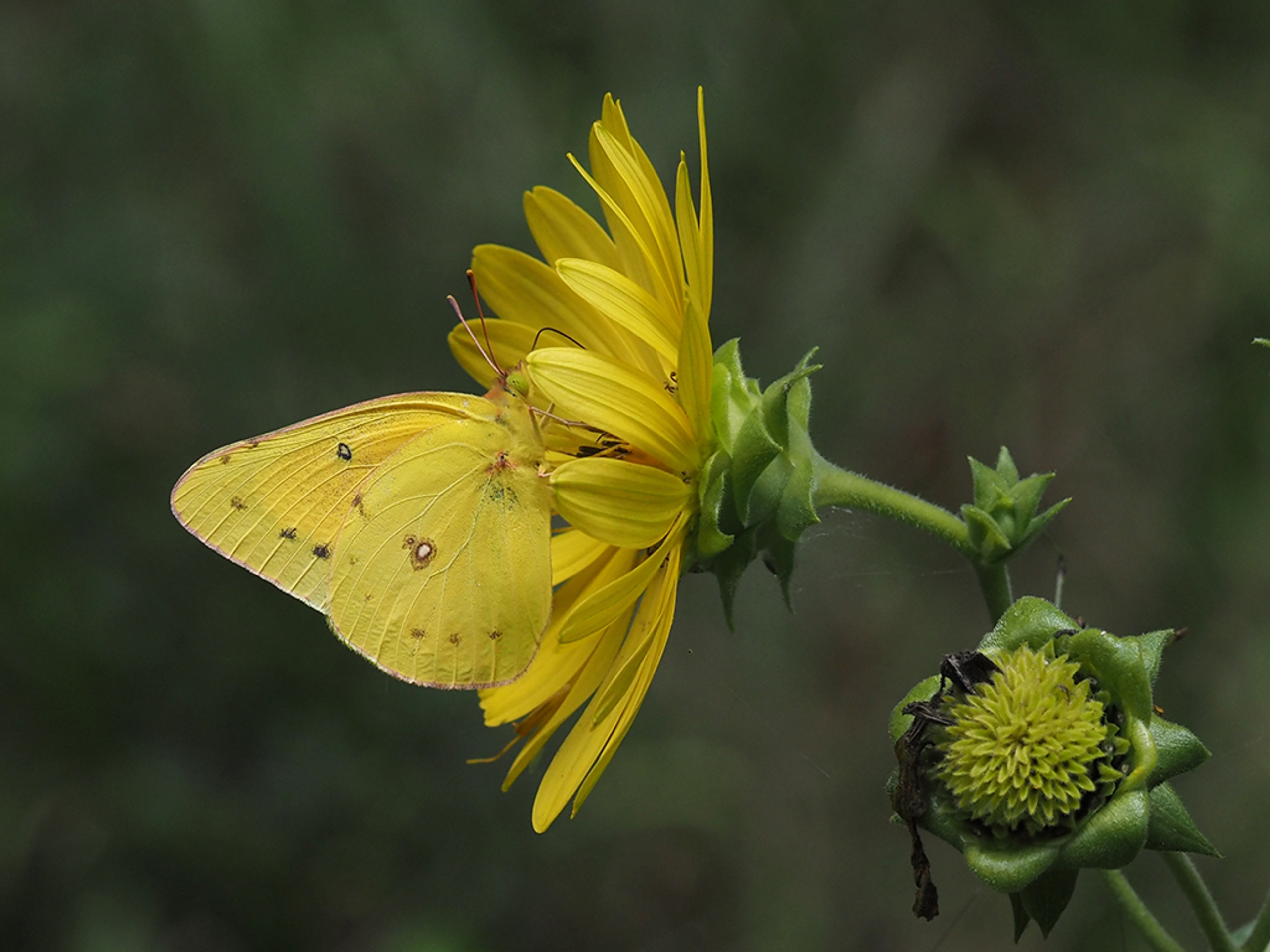
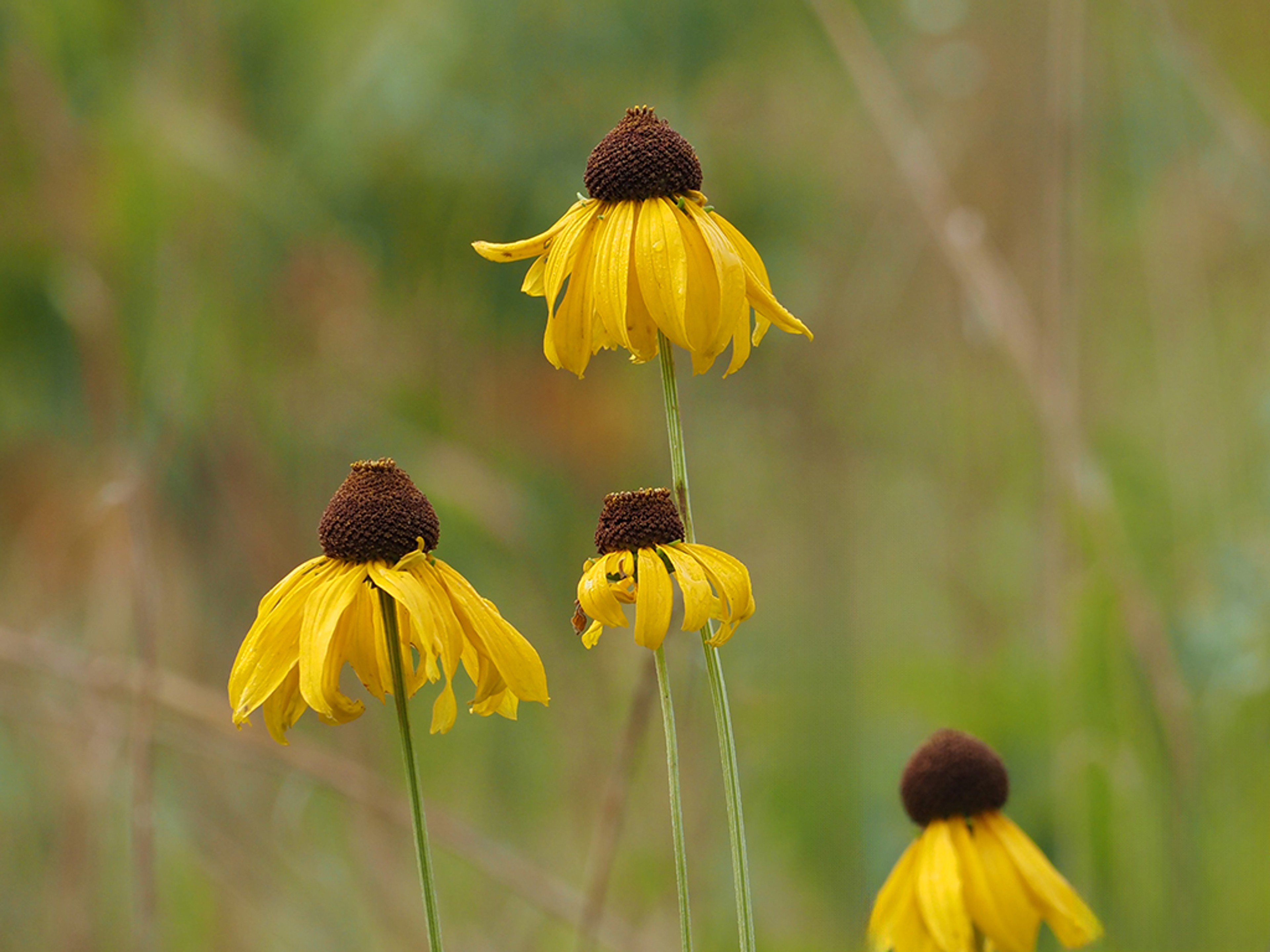
I often find Blackberry growing nearby and sometimes into the clumps of Virginia mountain mint. Other companion plants I've noted in Arkansas include Rosin weed, Canada wild rye, Grassleaf rush, Tall Coreopsis and River oats.
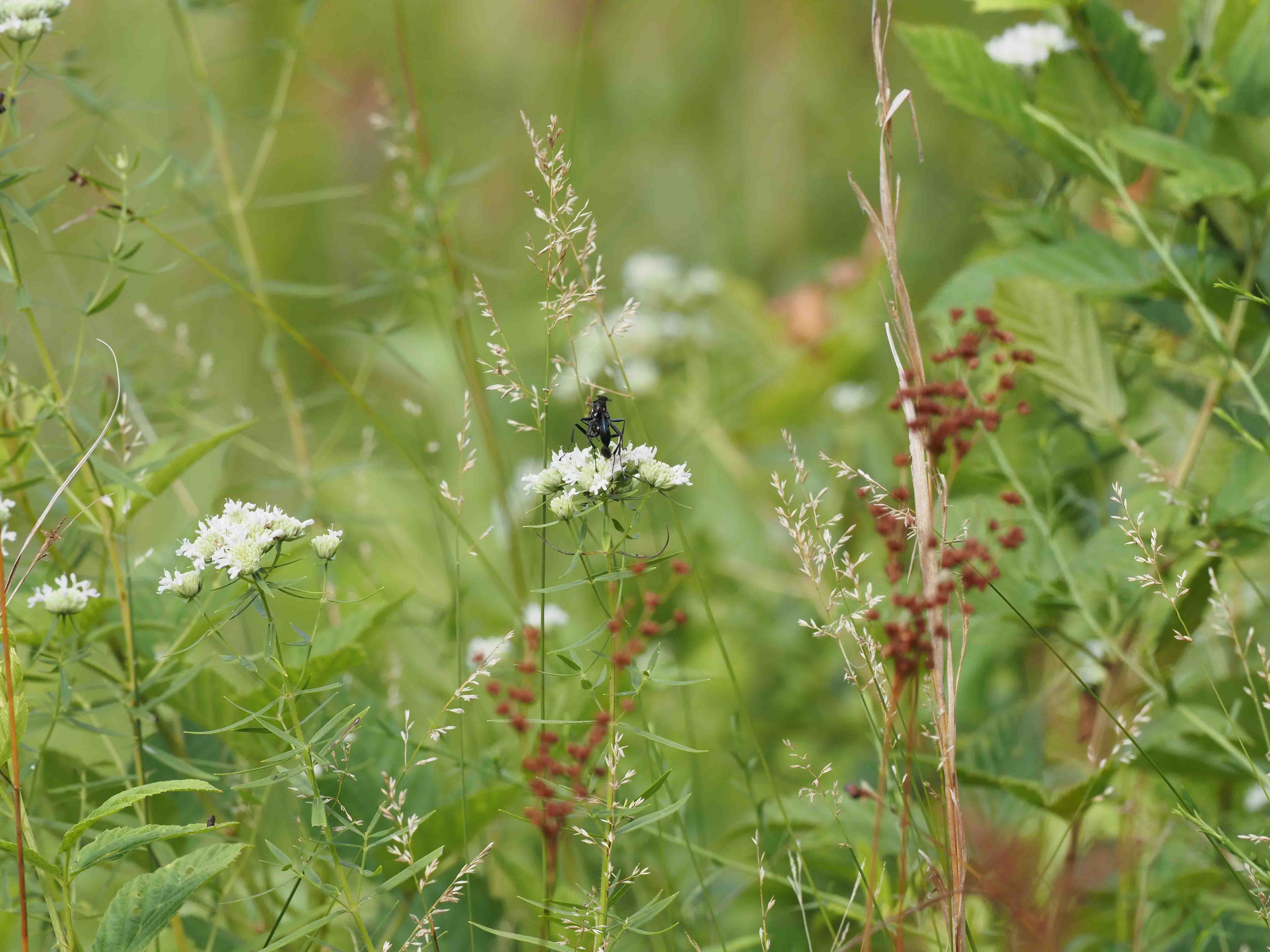
HABITAT
Pycnanthemum virginianum thrives in full sun but will take light shade such as an open woodland. It is typically found in prairie/grassland habitat and can manage drought to average moisture.
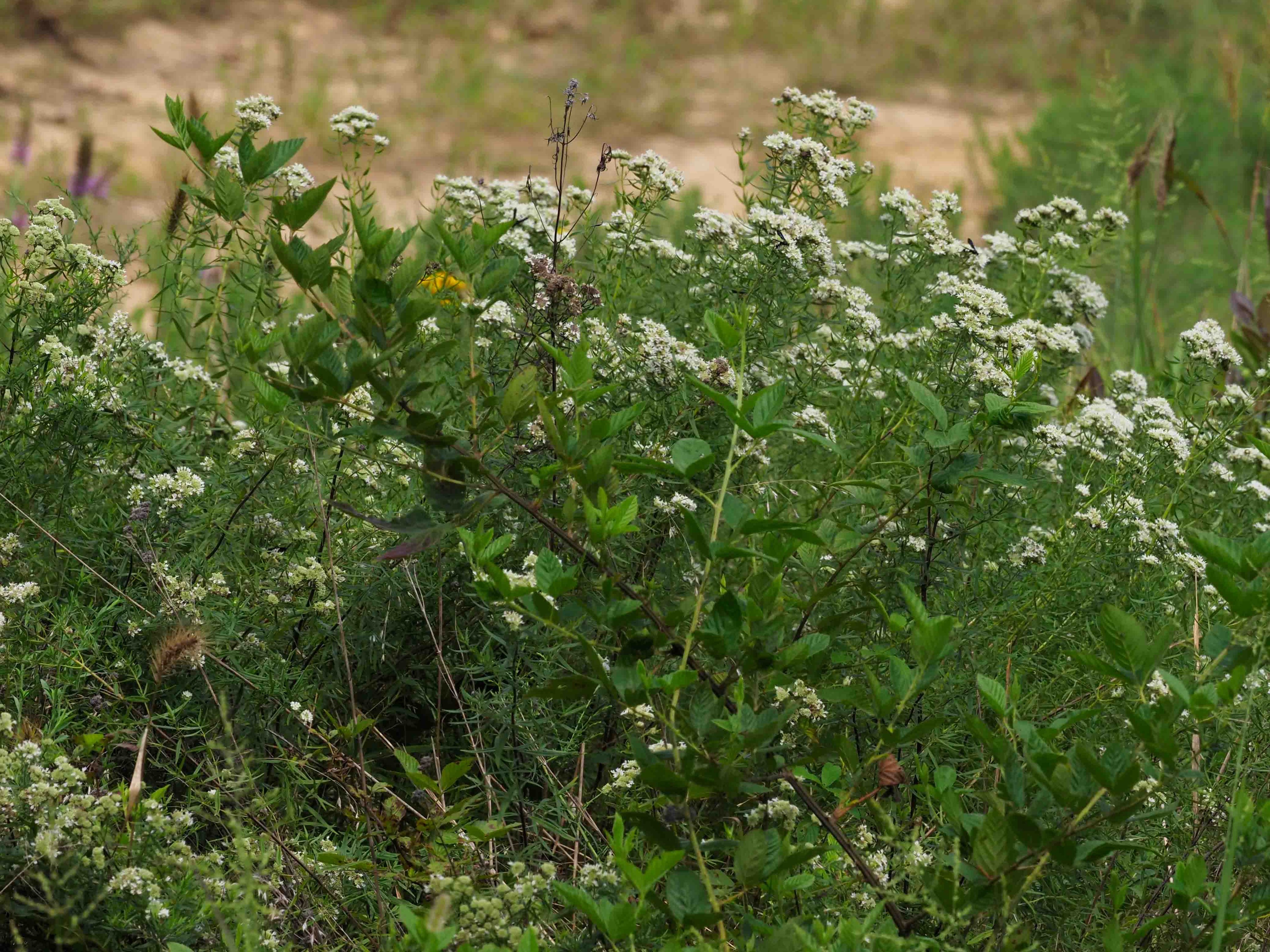
CONSERVATION STATUS
Virginia mountain mint is native to the eastern half of the United States as well as midwestern states. It is much more common north of Arkansas. NatureServe lists it as Apparently Secure in Delaware, Iowa, Kentucky, New Jersey, New York, Vermont and Virginia. It is listed as Secure in Pennsylvania and Vulnerable in North Dakota. It's struggling more in southern states with Georgia listed as Imperiled (also Maryland), and North Carolina, Alabama, Arkansas and Kansas listed as Critically Imperiled.
Arkansas has placed a C-Value of 9 on Pycnanthemum virginianum meaning "Conservation taxa with strong fidelity to intact habitats. These taxa tend to exhibit late-successional characteristics like long lifespans with low seed sets and an inability for far ranging dispersal."
INTERESTING TIDBITS
All of the native mountain mints are deer and rabbit resistant. The lovely minty aroma that we so enjoy, is derived from oils that deer and rabbits find very distasteful!