winter
Winter is a time to slow down, to notice interesting seed heads and collect seed, to hike in the grassland and woods, to enjoy colorful lichens and fungi, and to be delighted by frost flowers and ice formations in creeks.
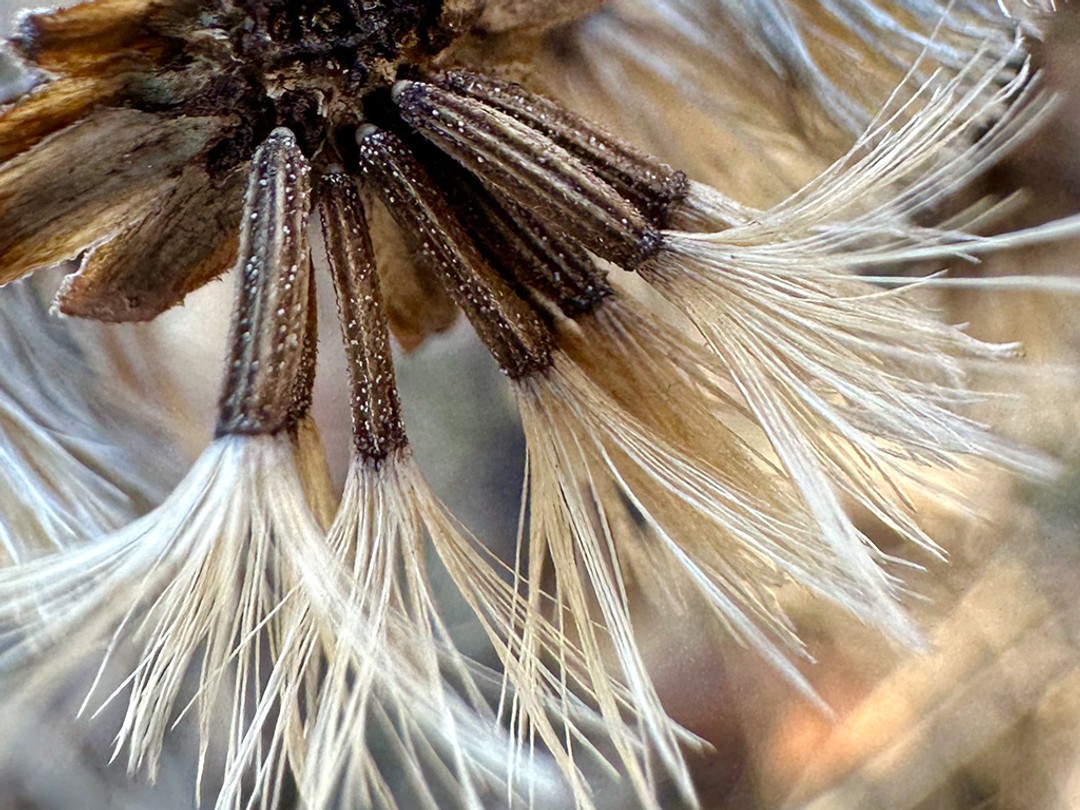
Close view of Liatris seeds with fluffy pappus 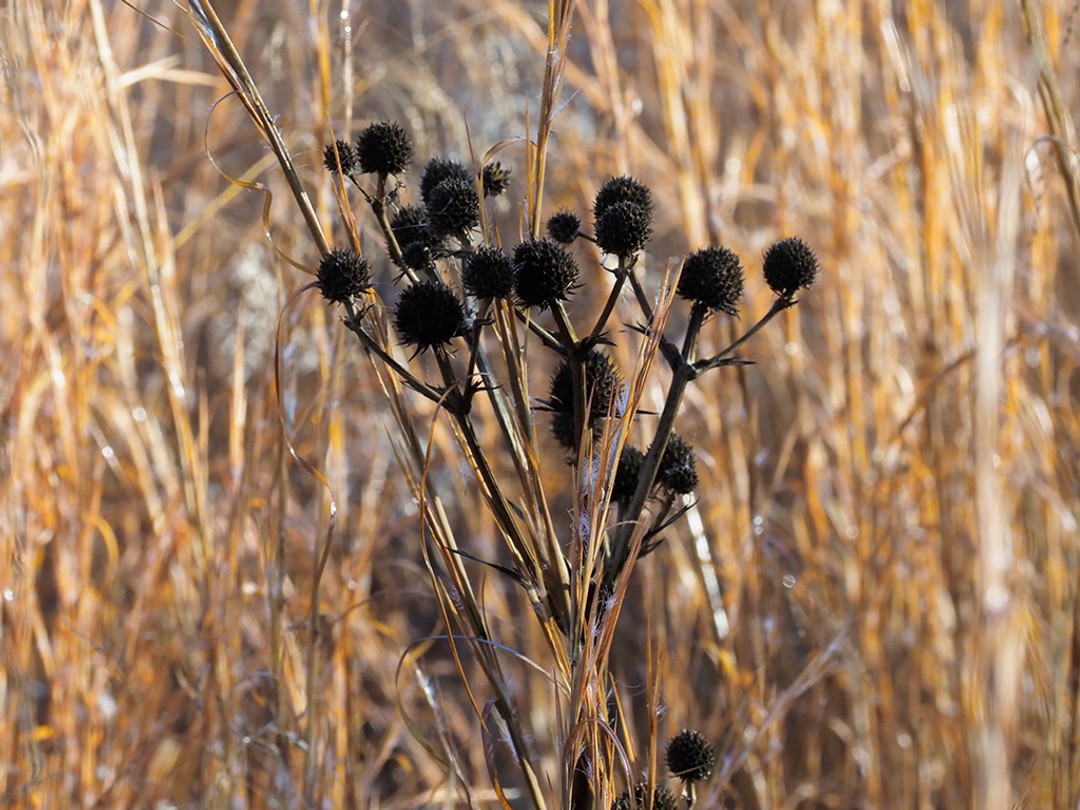
Ripe seed heads of Rattlesnake master 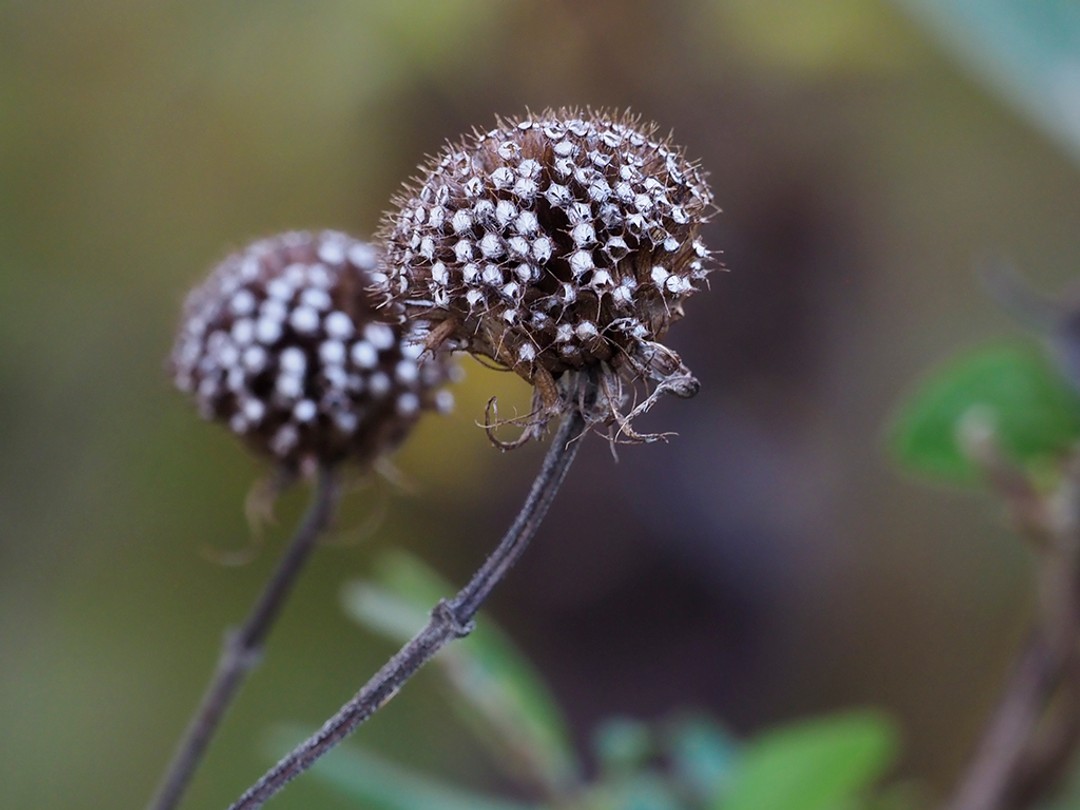
Ripe seed head of Bee balm 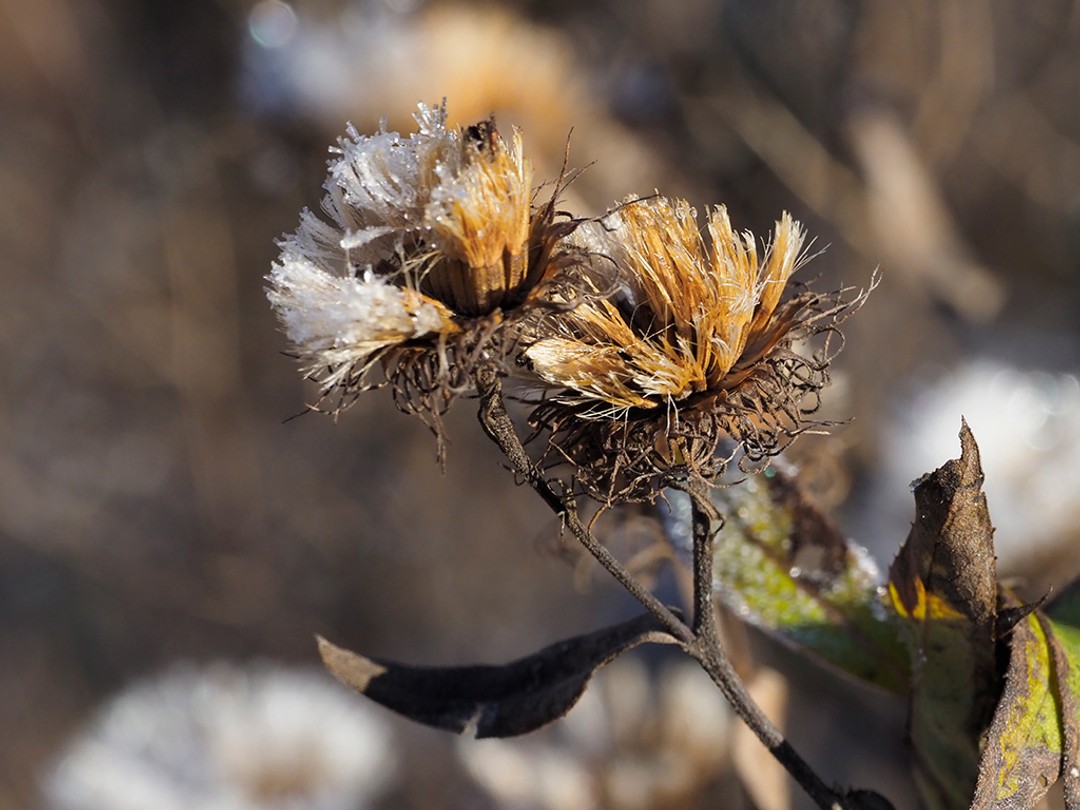
Curly top iron weed seed head
In winter the landscape lacks the color of the other seasons. When we are hungry for color, it's time to head to the woods! In northern Arkansas, January and February are ideal months to see brilliantly colored lichens.
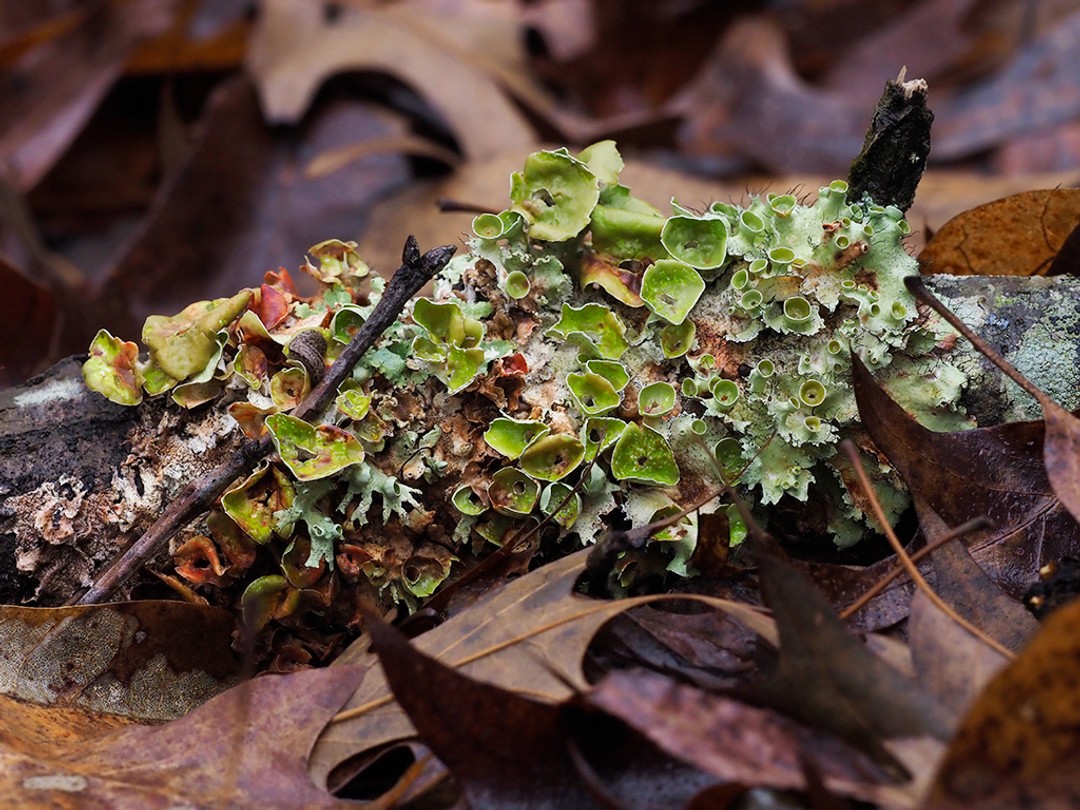
Colorful lichen and fungi 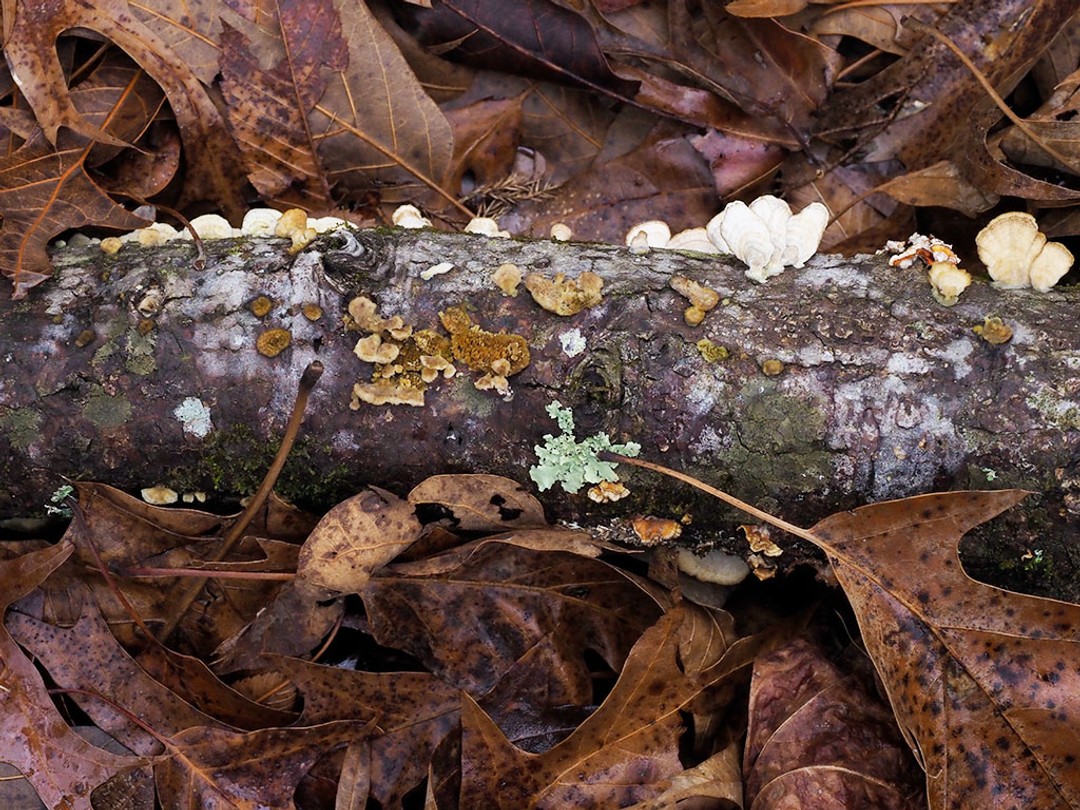
Woodland lichen and fungi 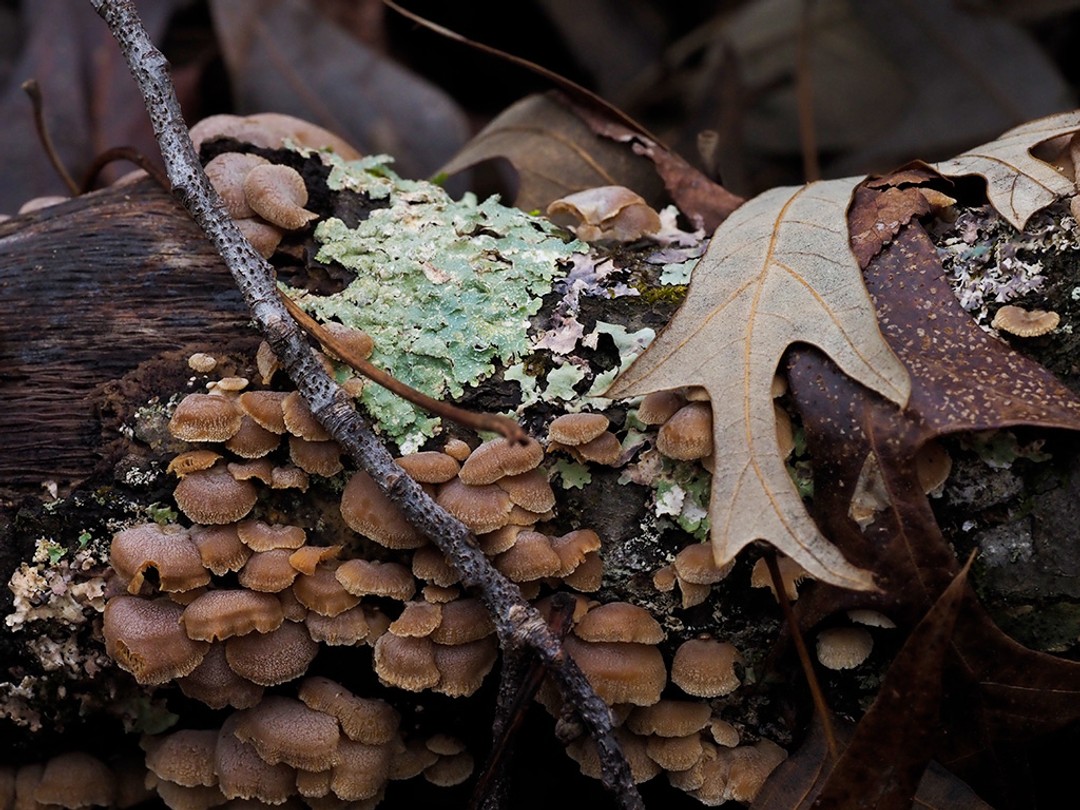
Greens and browns 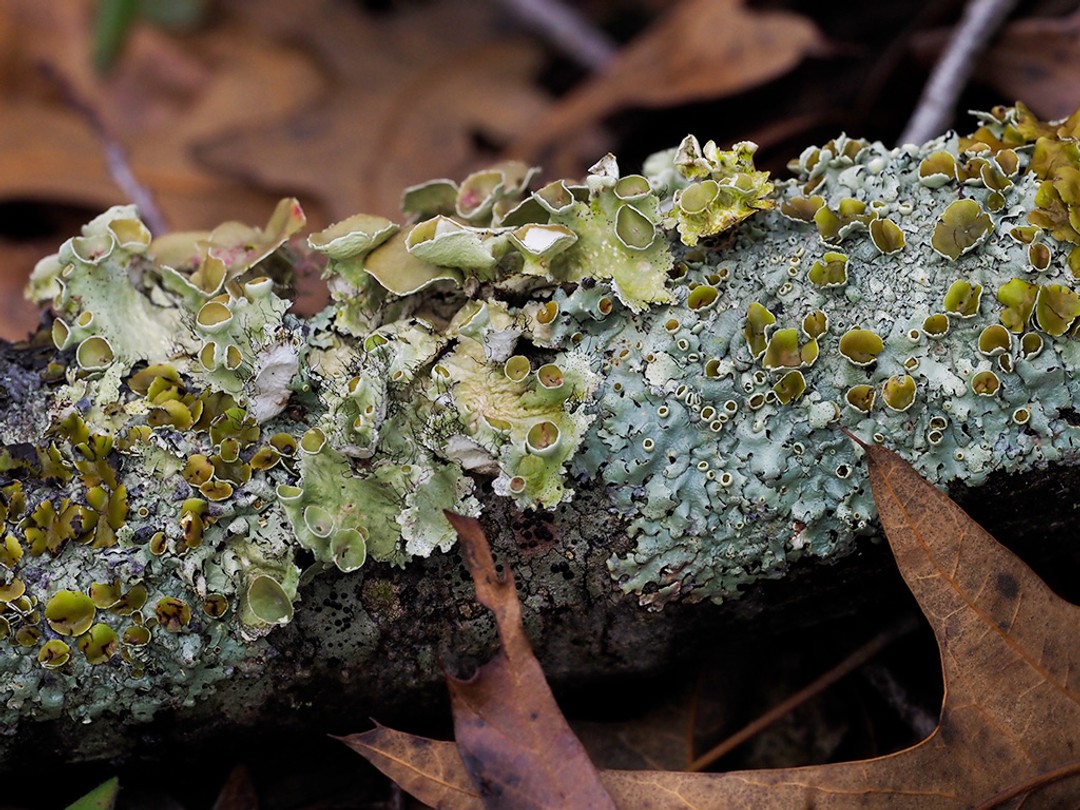
Greens and blues
Many birds feed on the seeds of our native wildflowers and grasses. It's delightful to watch their acrobatics as they work to pull out each seed.
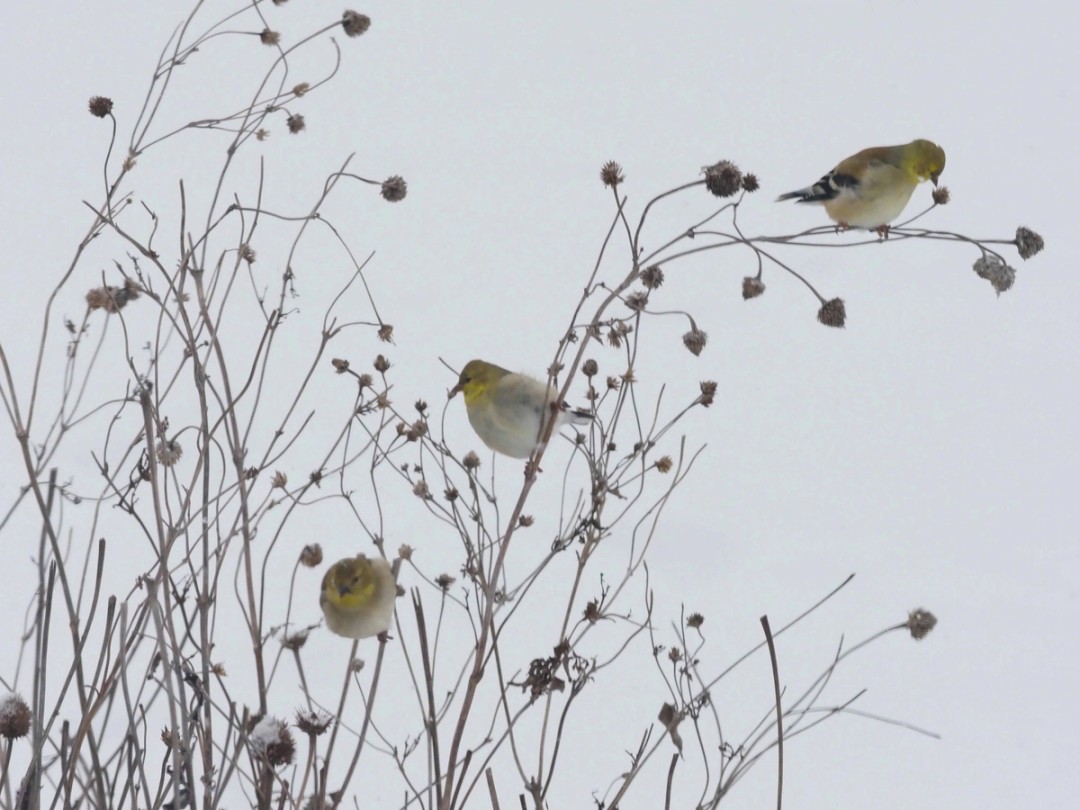
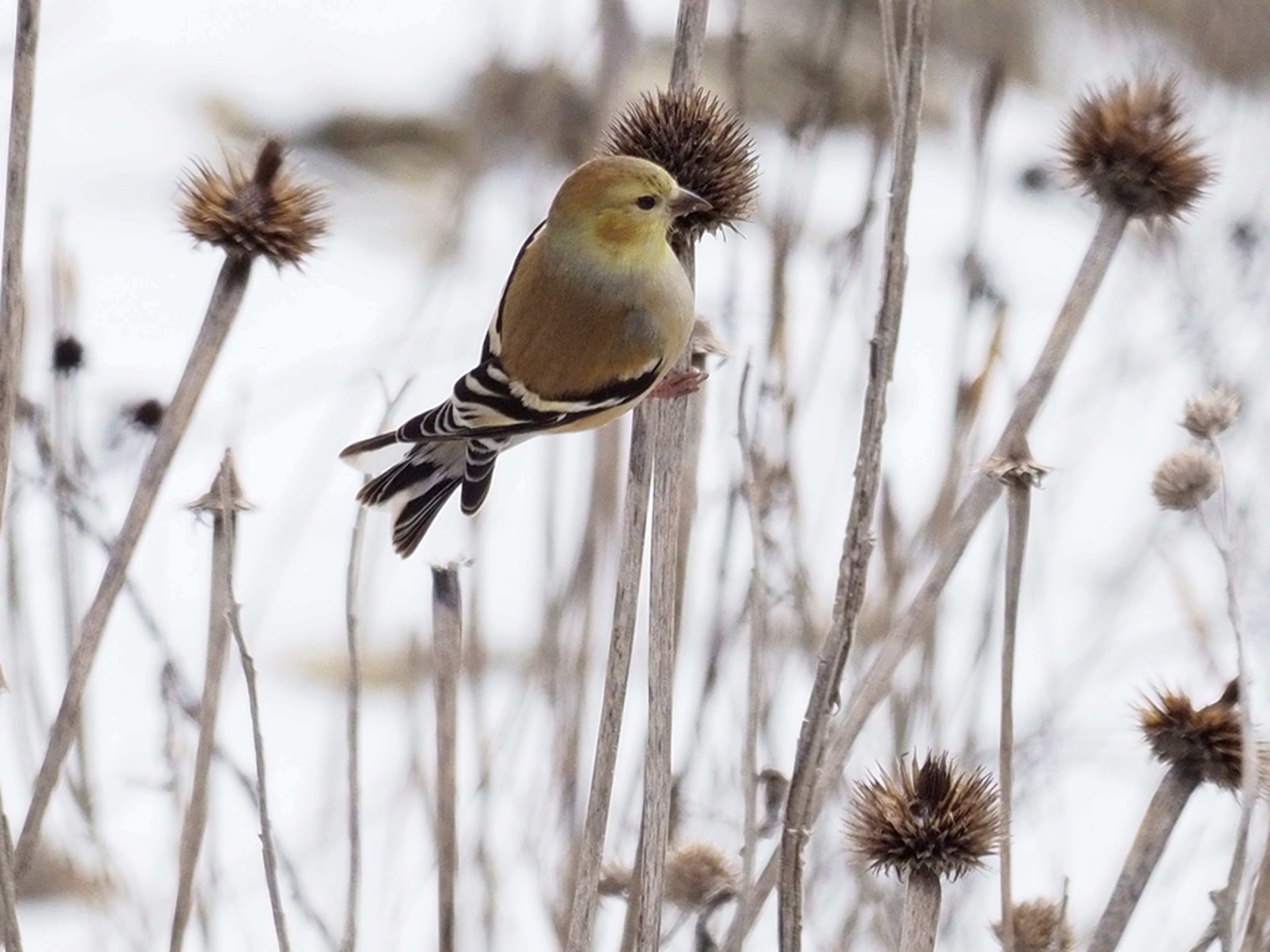
Goldfinches eating wildflower seeds in snowstorm 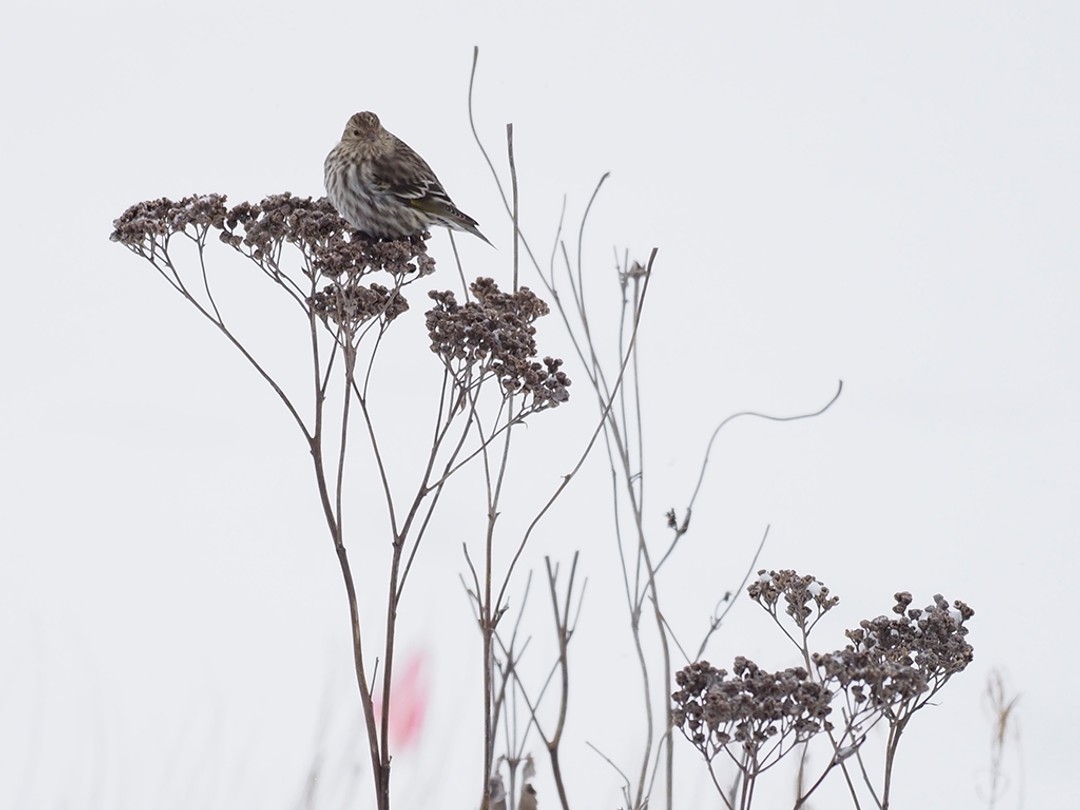
Pine Siskin feeding on Wild quinine 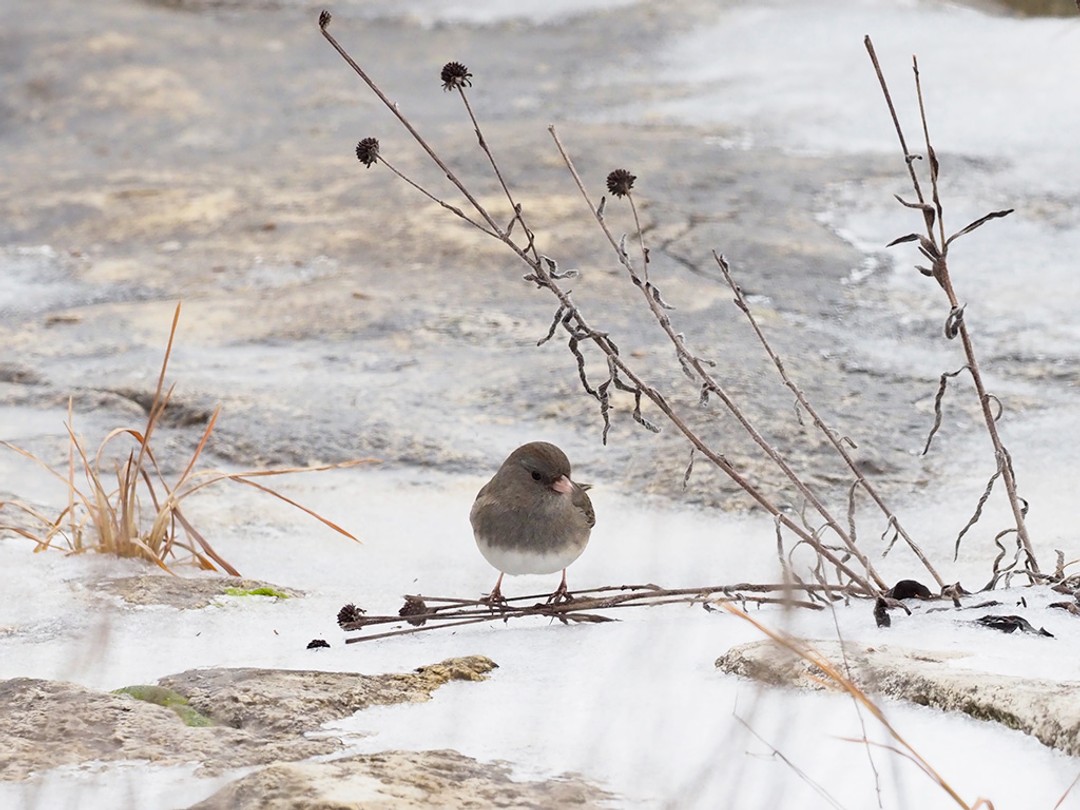
Dark-eyed Junco and Missouri coneflower seeds 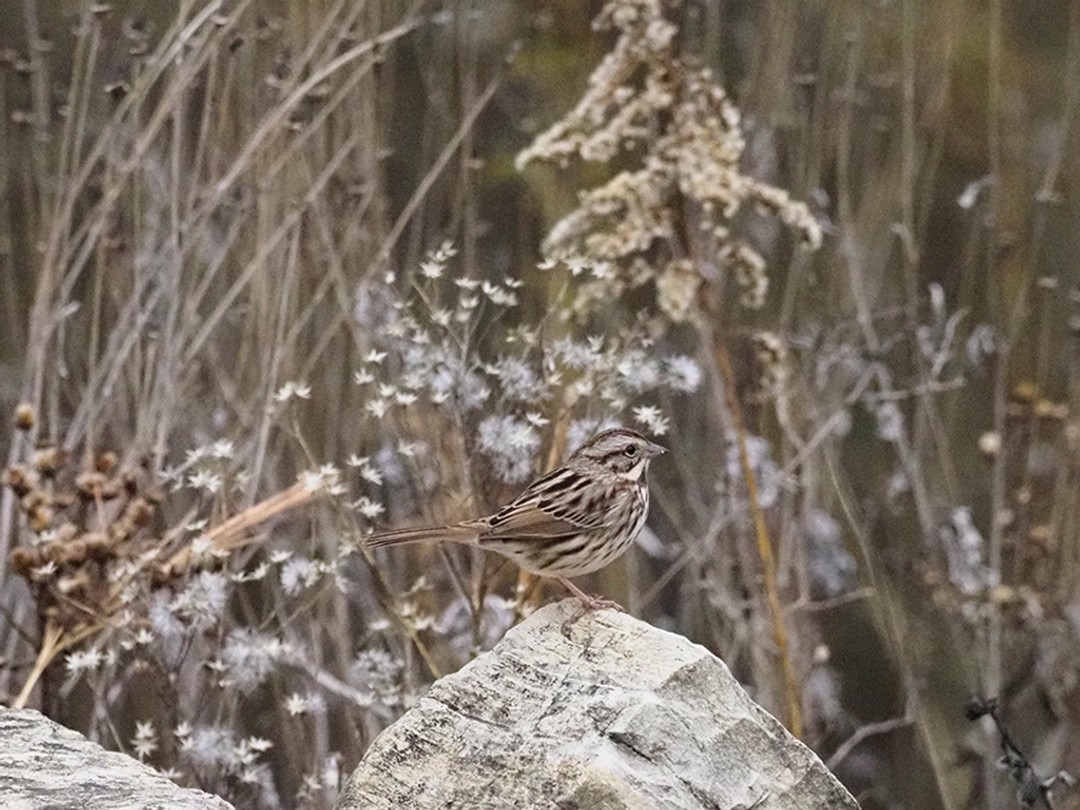
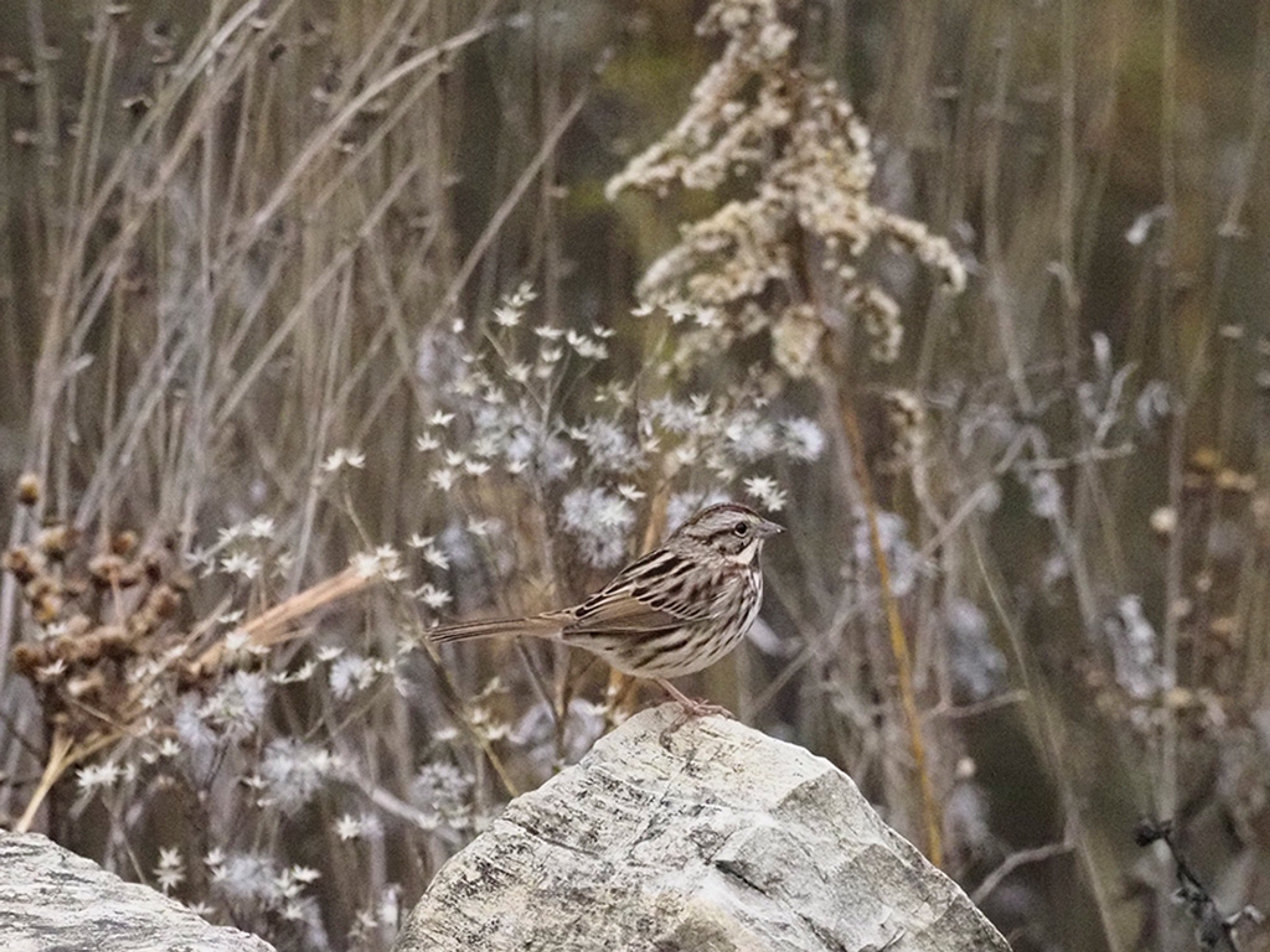
Song sparrows eat many kinds of seeds in winter
In early winter, there are still a few native plants blooming. You might find various asters and our native verbena in flower. In late winter, a few early wildflowers may be found blooming in the woodlands and glades.
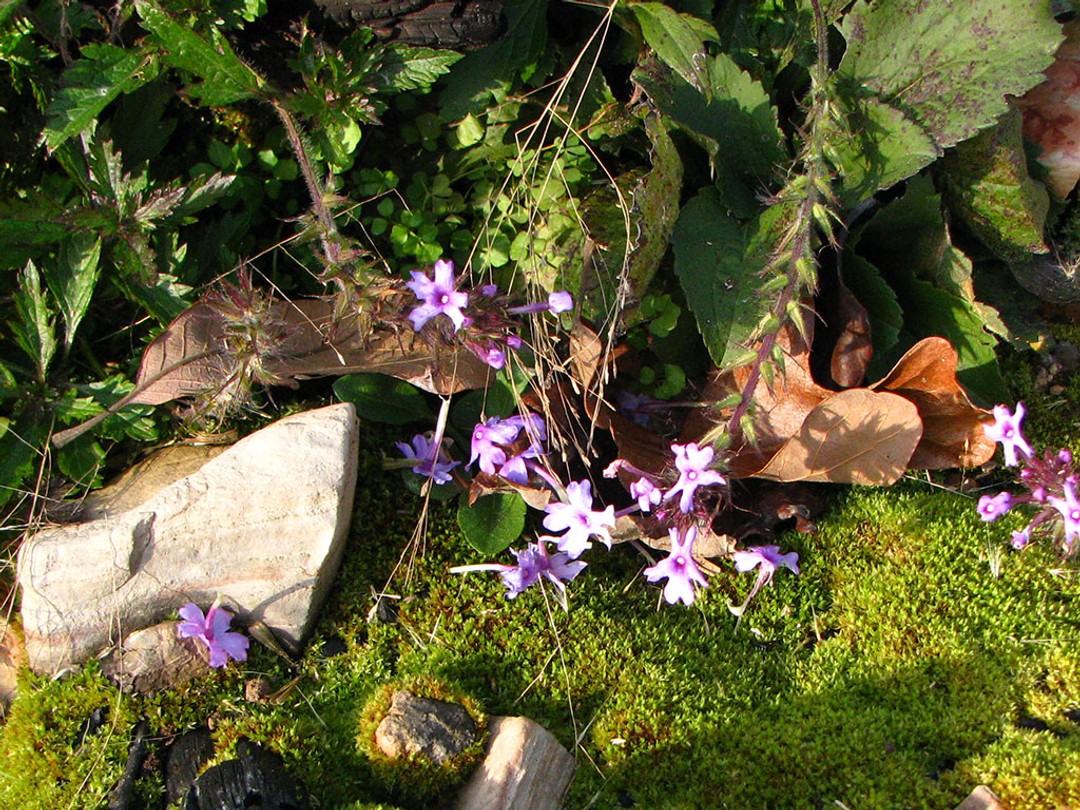
Native verbena mid November 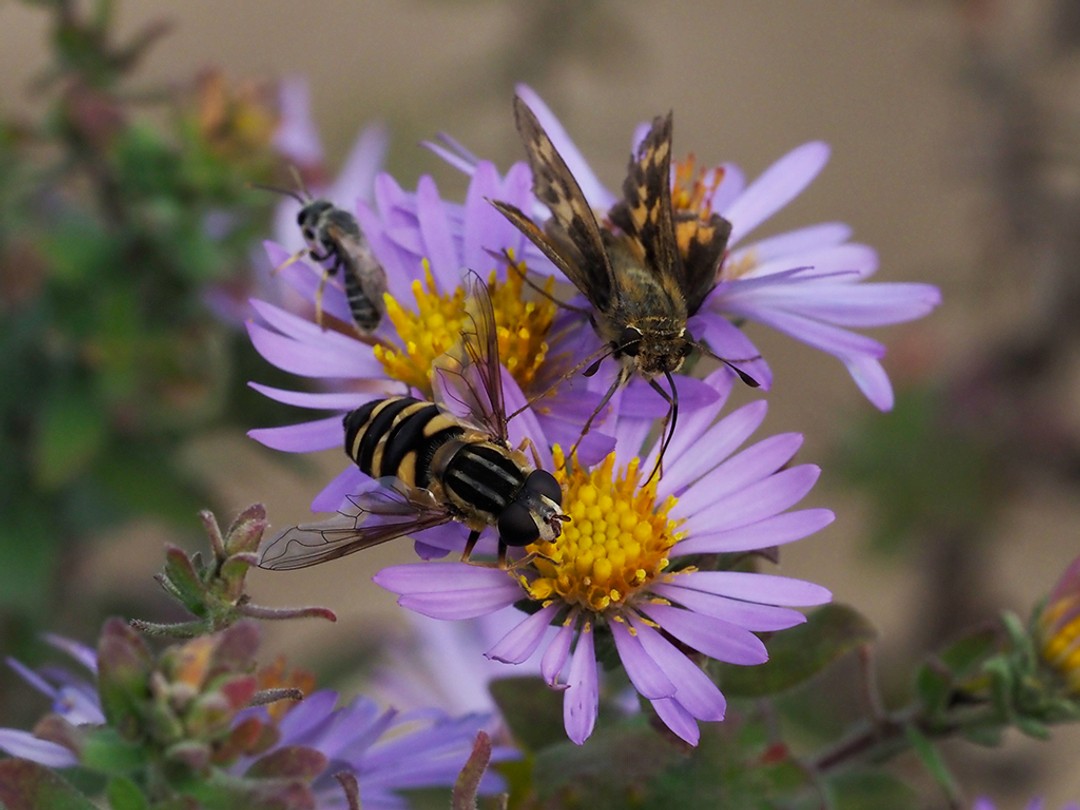
Aromatic aster mid November
Frost flowers are fun to explore after the first few frosts of the season. Of course, they aren't truly flowers. They are ice formations created when the liquid in a plant freezes, which causes it to expand and burst through the stem. The results are exquisite ice ribbons that curl and form beautiful patterns. You have to get out early to see them, as they dissipate with the slightest warmth. It's worth the effort!
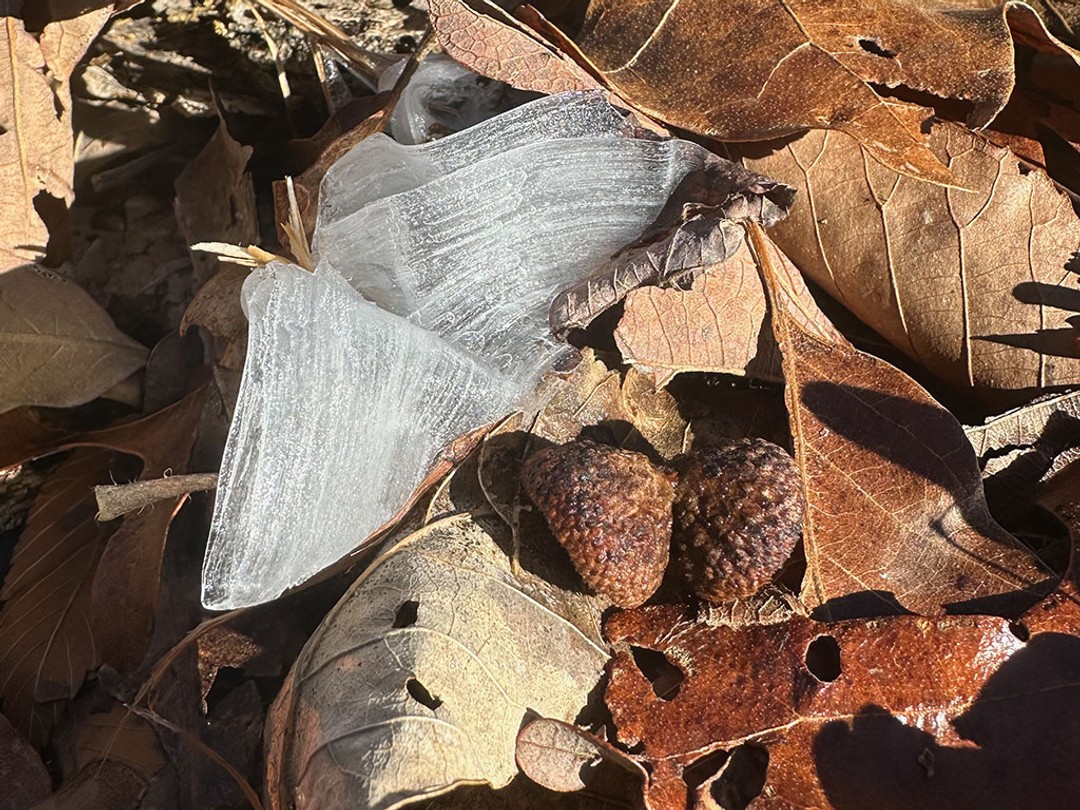
Frost flower in early winter 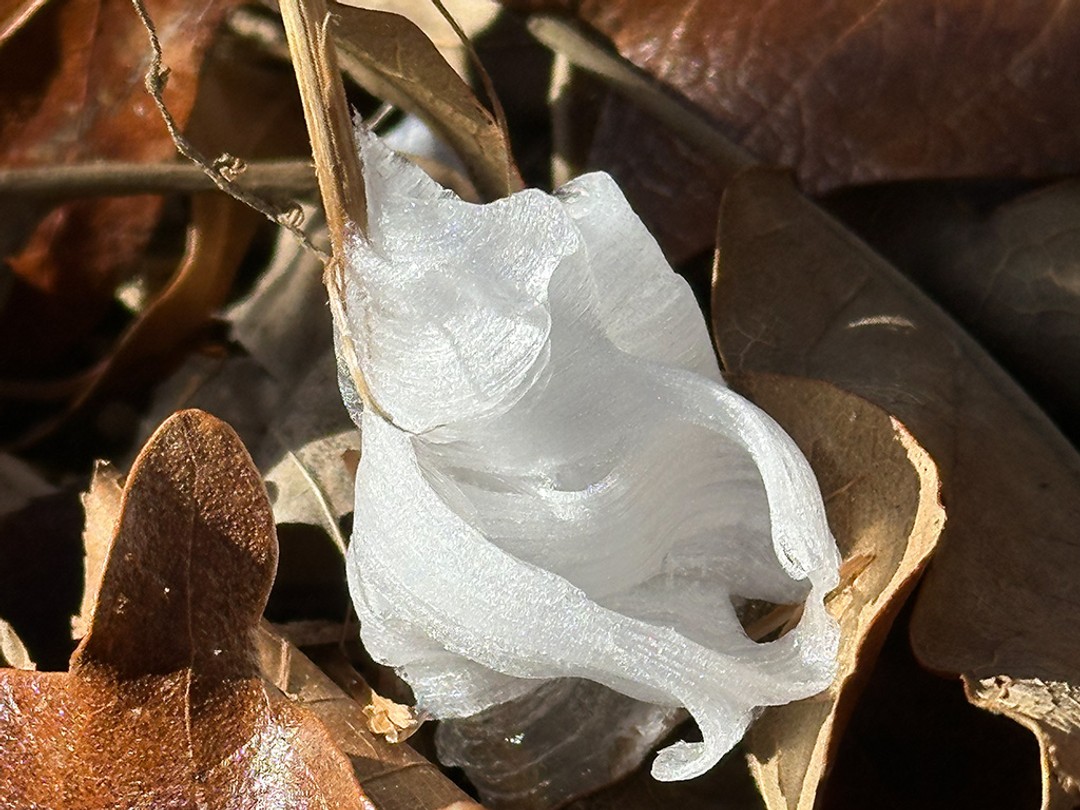
Cunila origanoides frost flower