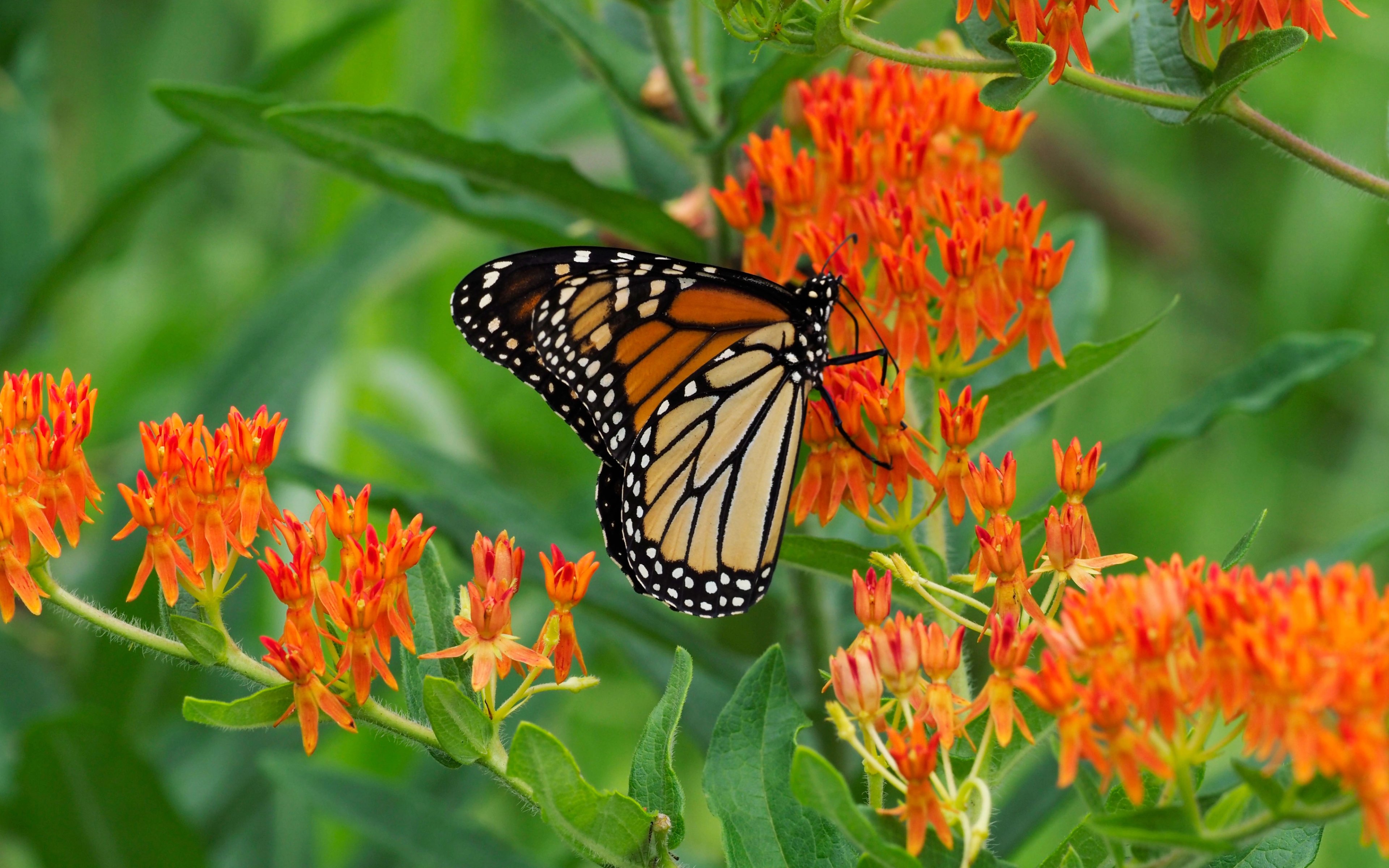
PLANT NAME
The name 'Asclepias' refers to 'Asclepius' who was the mythical son of Appollo and the 'god of medicine'. 'Tuberosa' simply means tuberous, and refers to the stout roots of this plant.
Butterfly weed or Butterfly milkweed are the common names you're likely to hear. A lesser used common names is Pleurisy root. This refers to its use by Native Americans as a cure of pleurisy and other ailments affecting the chest.
BLOOM
Butterfly weed flowers are typically bright orange and sometimes nearly red. Occasionally plants have yellow flowers. Flower color depends on the amount of red pigment present and isn't related to soil type. In fact, both orange and yellow flowers may be seen blooming near each other.
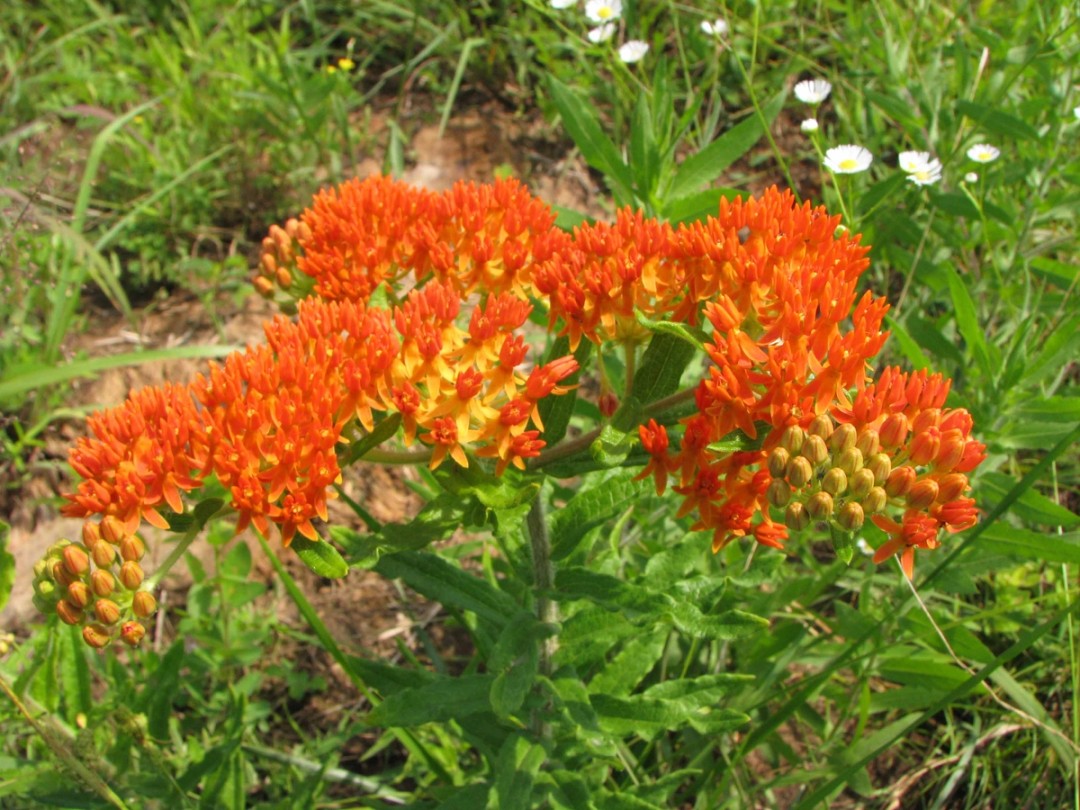
Orange flowers 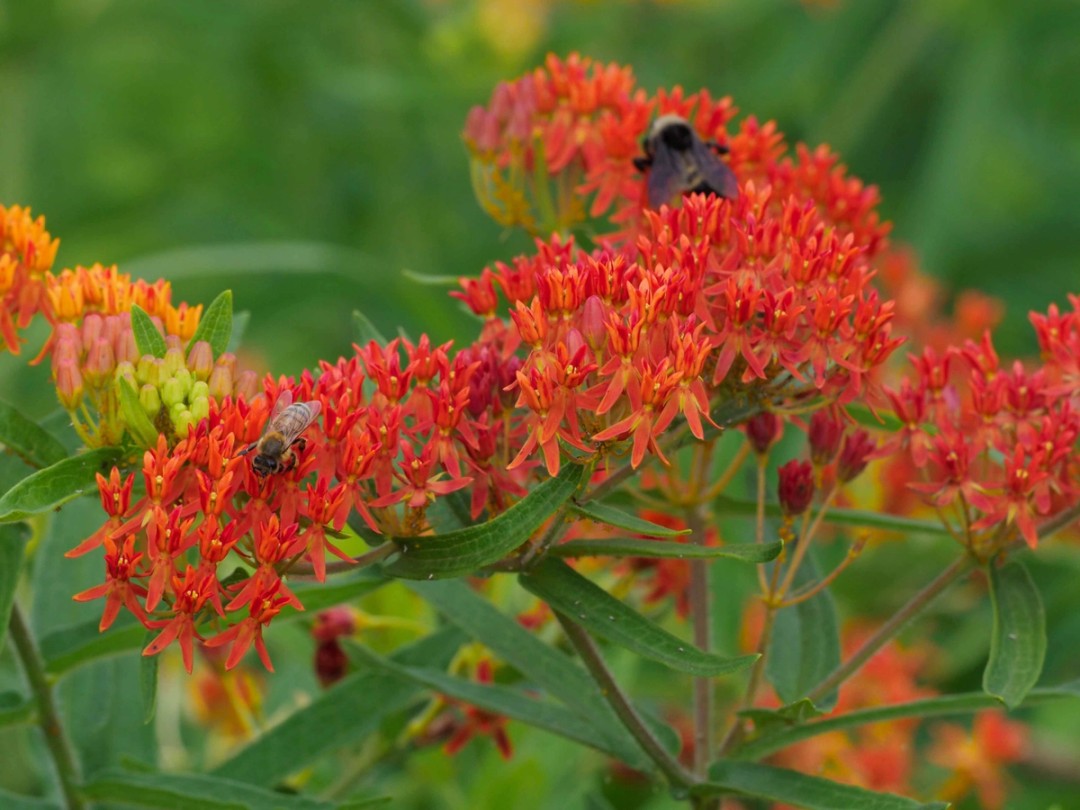
Red flowers 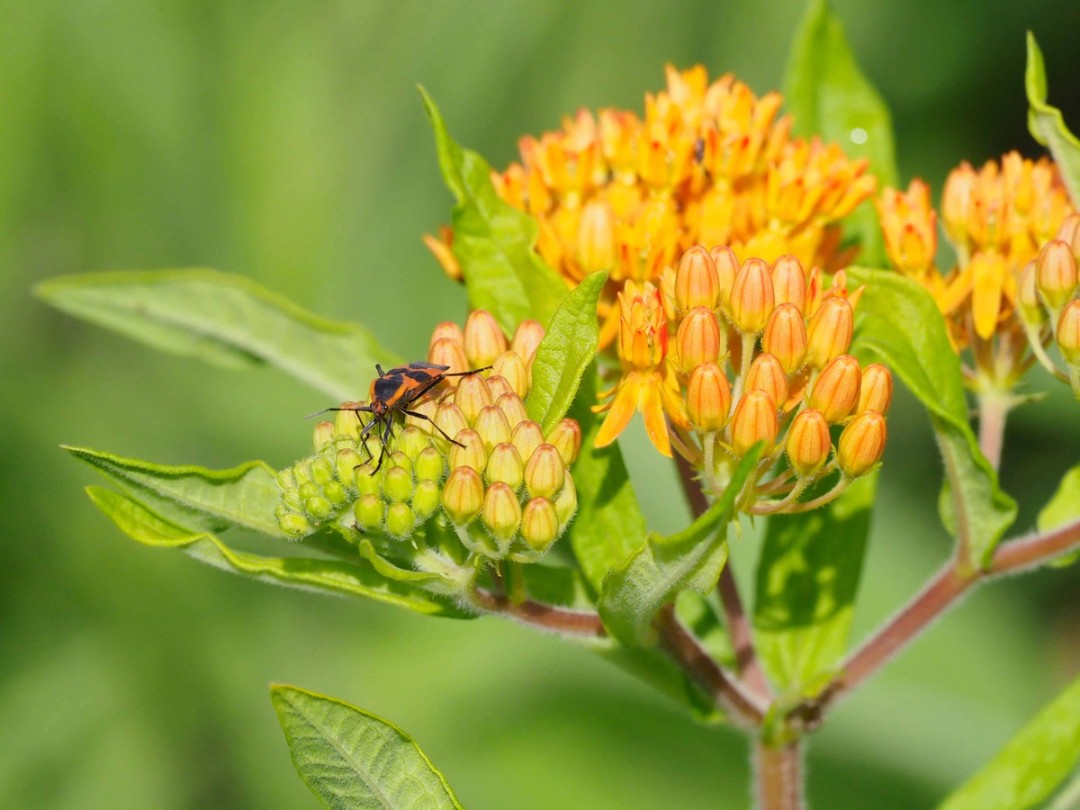
Yellow flowers 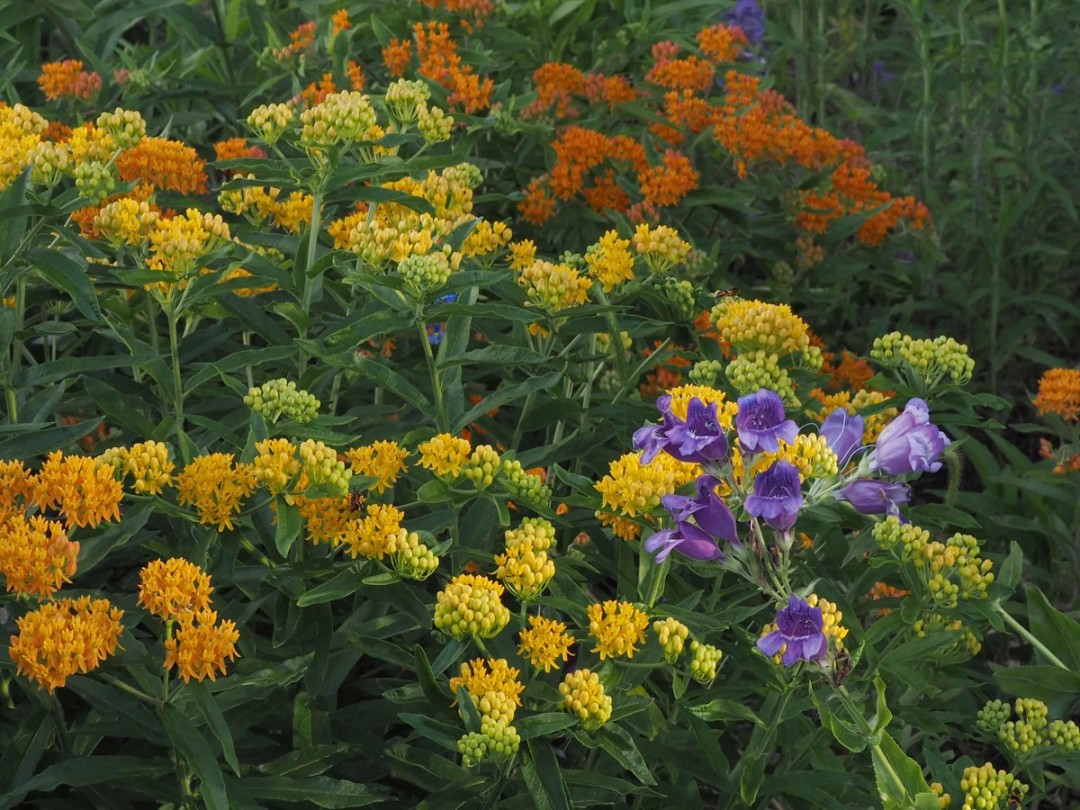
Yellow and Orange
Flowers occur in umbels, with each containing many flowers. The umbels develop at the top of stems and leaf axils. Individual flowers are less than an inch long, consisting of 5 sepals and 5 reflexed petals with 5 hoods above. The hoods are often described as forming a 'crown' at the top of the flower. Sepals are mostly hidden on open flowers.
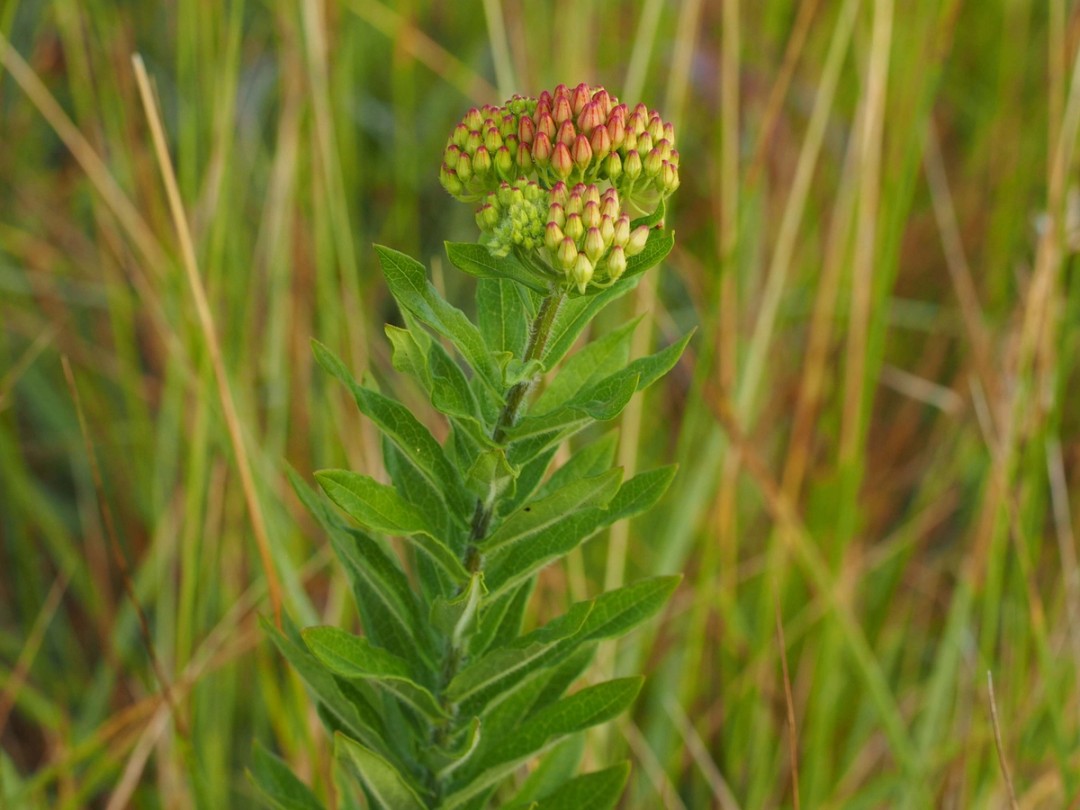
Colorful buds 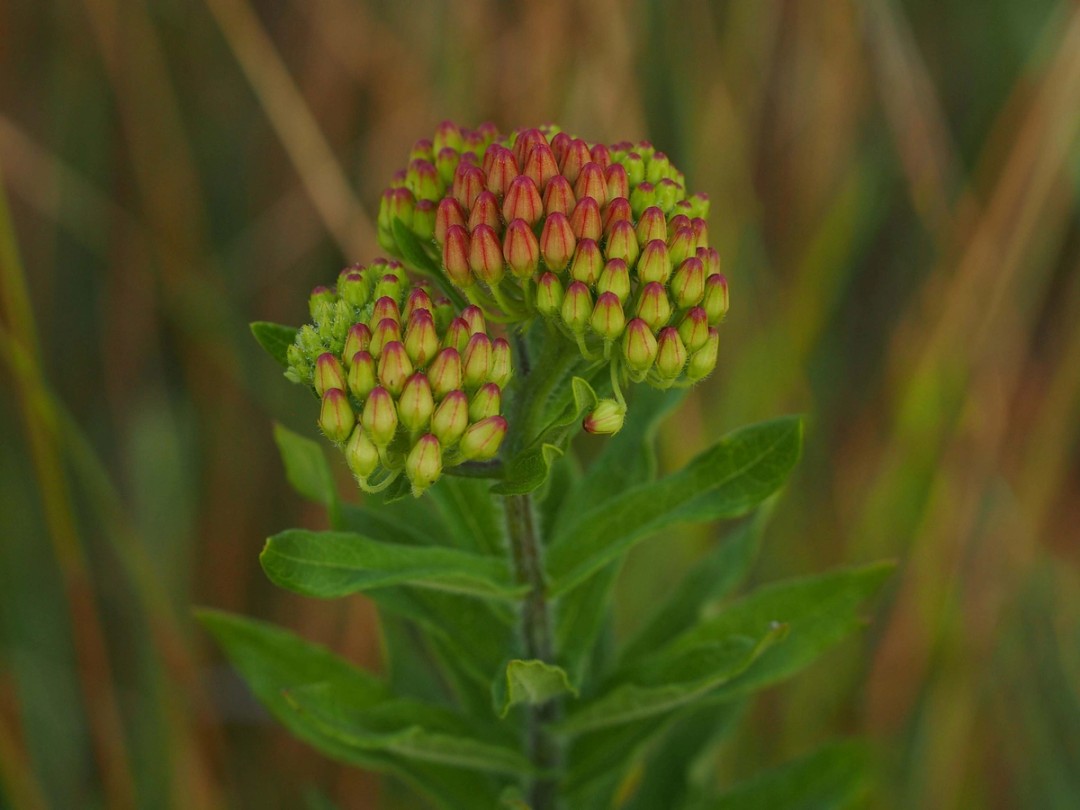
Close look at buds 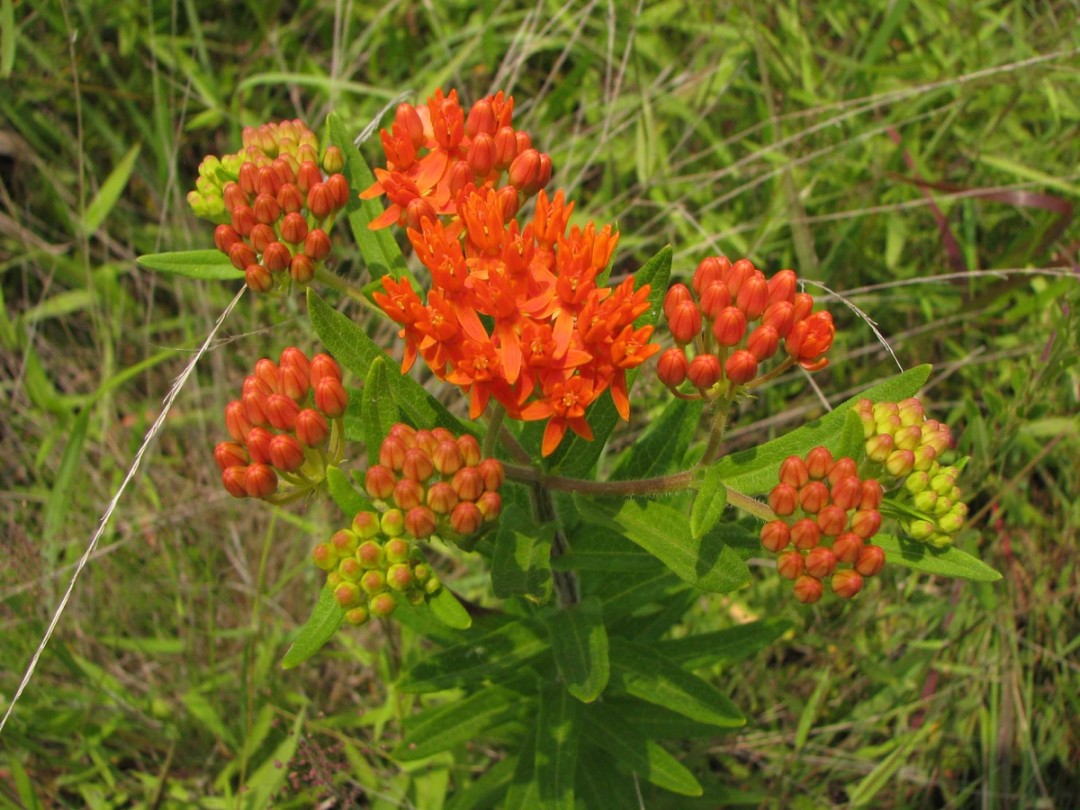
Buds and flowers 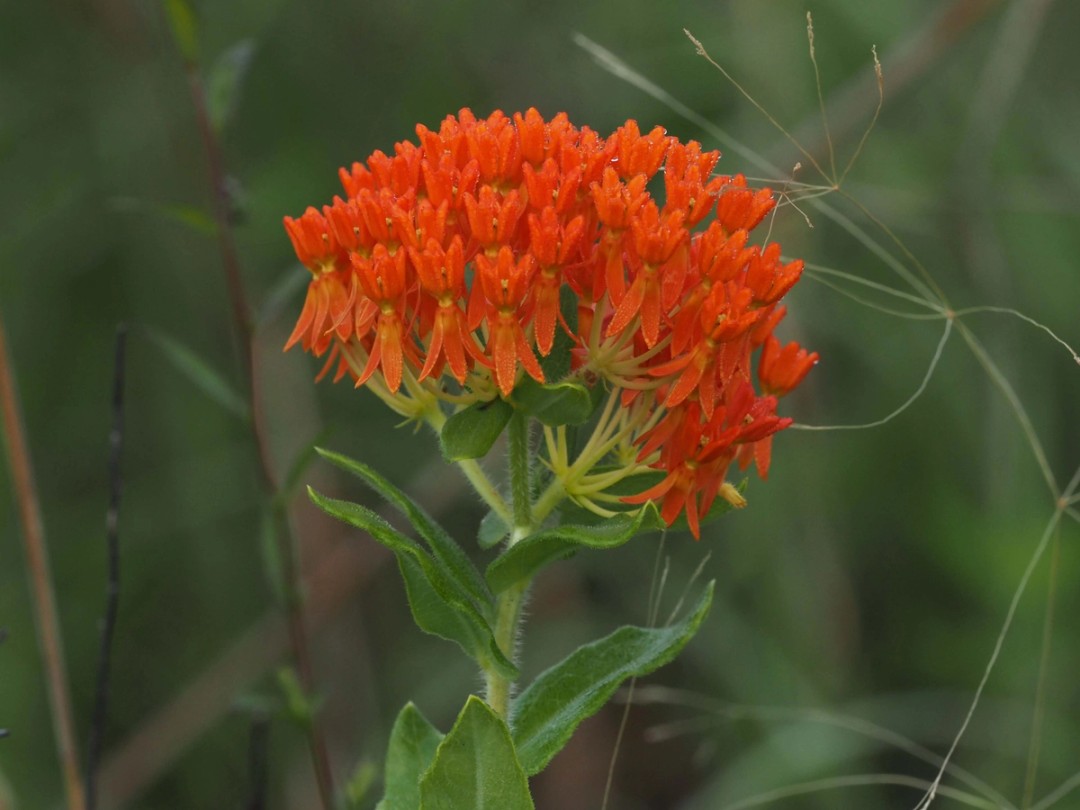
Flower umbel
I've read the flowers make excellent cut flowers, lasting 2-4 days, but I can't bring myself to clip any. I prefer enjoying them in the wild or garden setting.
DESCRIPTION
Butterfly weed reaches a height of 1-3 feet. Mature plants have multiple stems arising from the plant base. Stems develop branches toward the upper part of the plant.
Narrow, toothless, alternate leaves are about 3-4 inches long. They are sessile or may have short petioles.
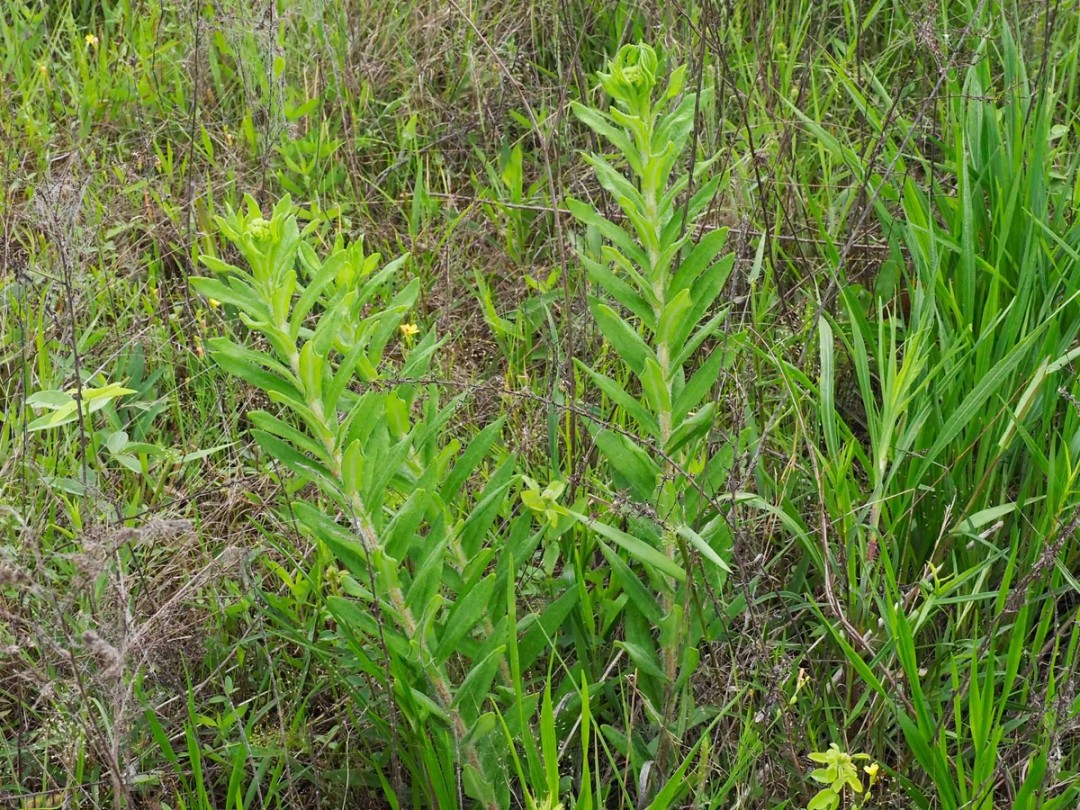
Leaves and stem 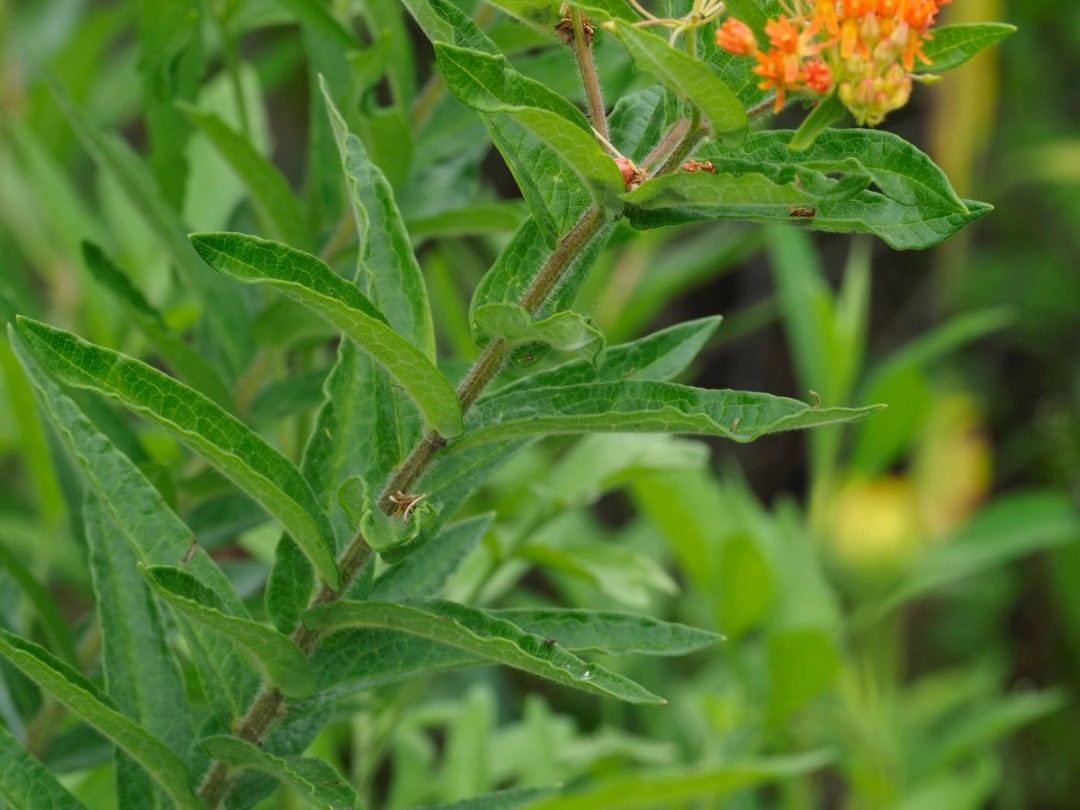
Alternate leaves 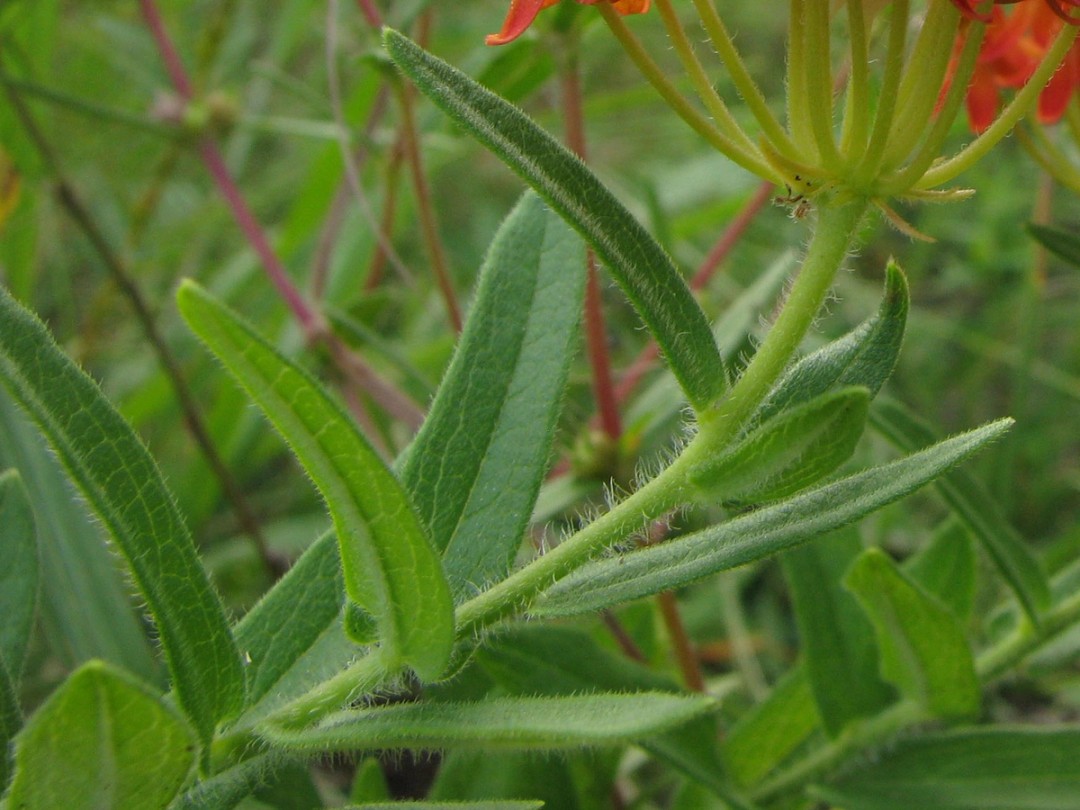
Hirsute stem and leaves 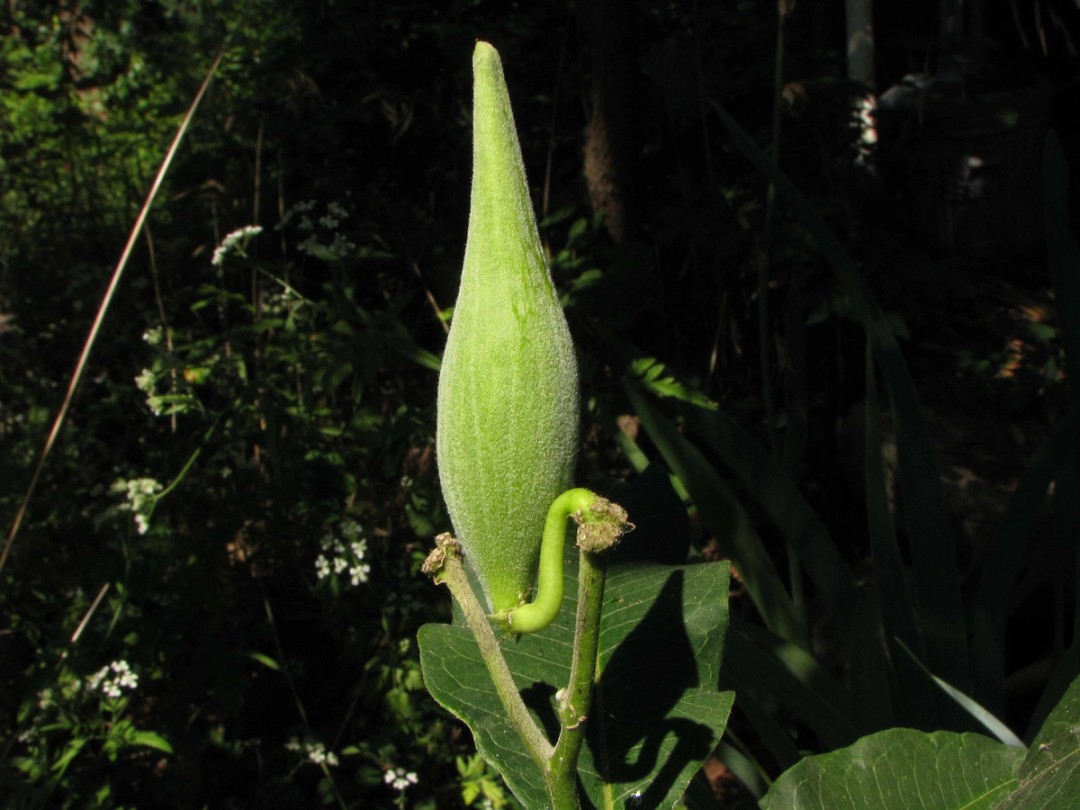
Seed pod
After flowering elongated seed pods develop. When ripe, the pods begin to split open. This is the best time to harvest seed. Once open, seeds are dispersed by wind.
Butterfly weed has a stout, long and very deep taproot. One should never attempt to dig mature plants. Excavating the entire, brittle root is unlikely and plants rarely survive damaged roots. Instead, its best to start plants from seed. Flowering usually occurs the 3rd year.
POLLINATORS
Many insects visit Butterfly weed including bees, butterflies and moths. Hummingbirds also visit the flowers. Butterfly weed is a host plant for the Monarch butterfly who also uses the nectar rich flowers as a food source. Look closely at the photo below to see a Monarch laying eggs. We keep our distance so as not to disturb females laying eggs. For photography, a long lens is helpful!
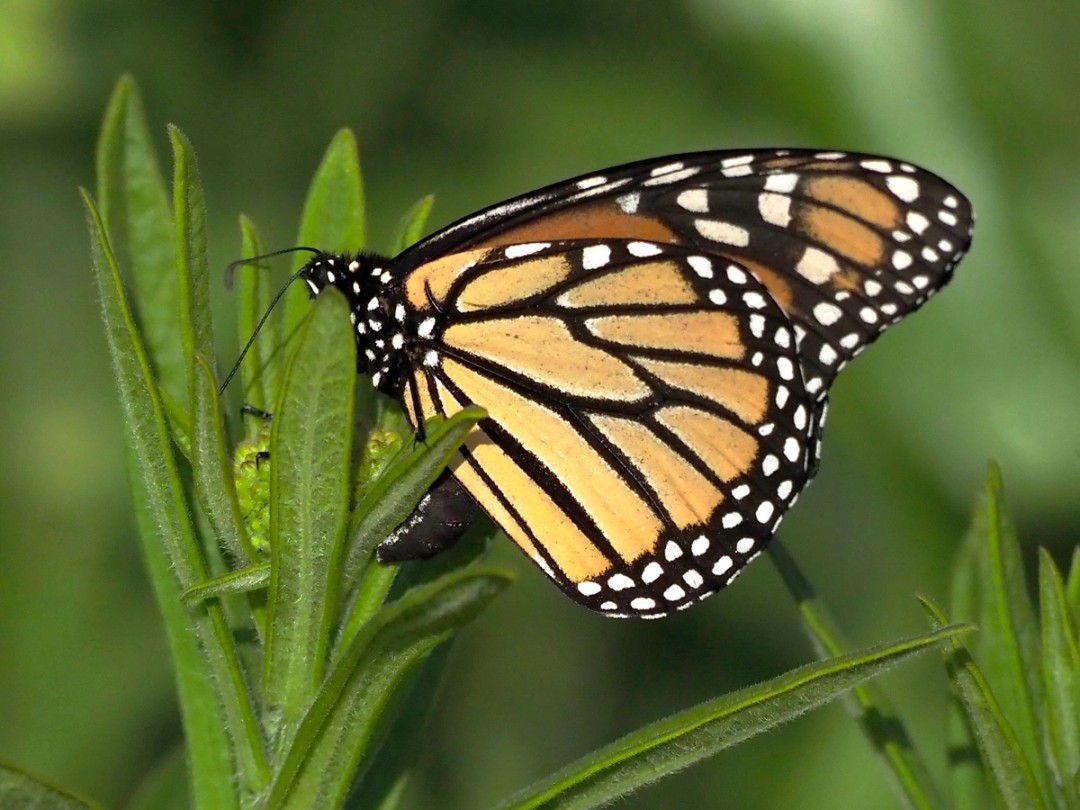
Monarch laying eggs 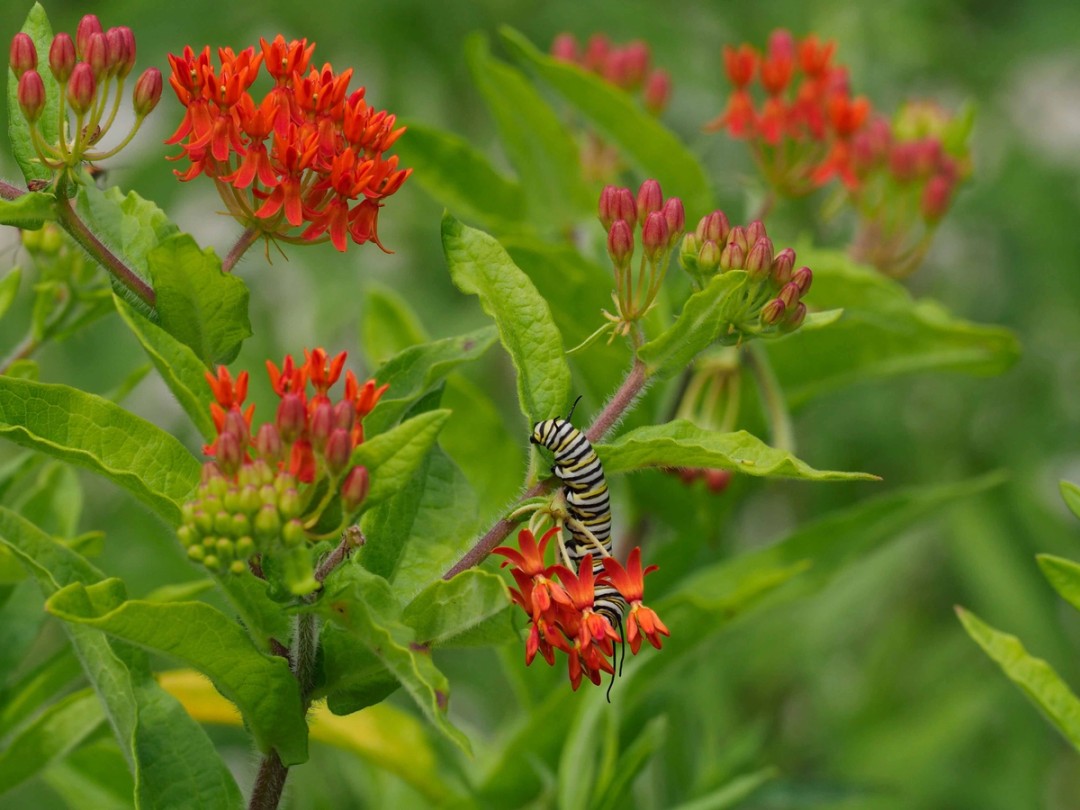
Monarch caterpillar
Male Monarchs can be differentiated from females as they have thinner veins and a black spot on the lower hind wings (yellow arrow) that's not present on the females.
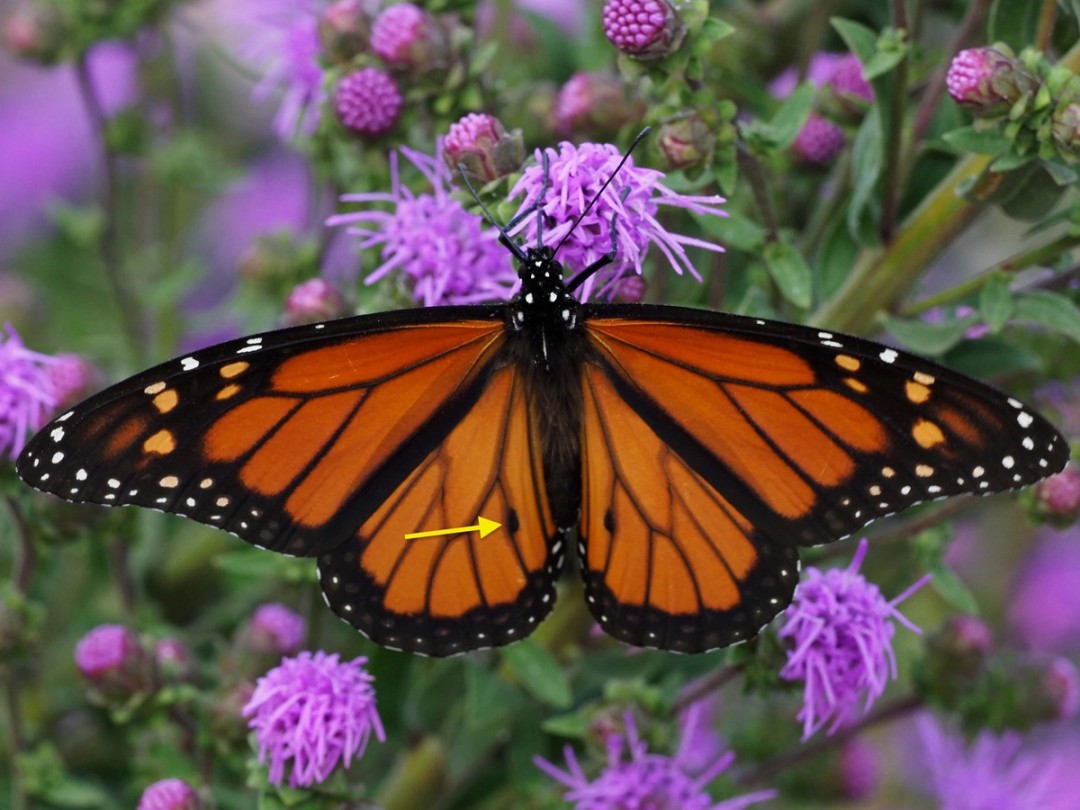
Male monarch 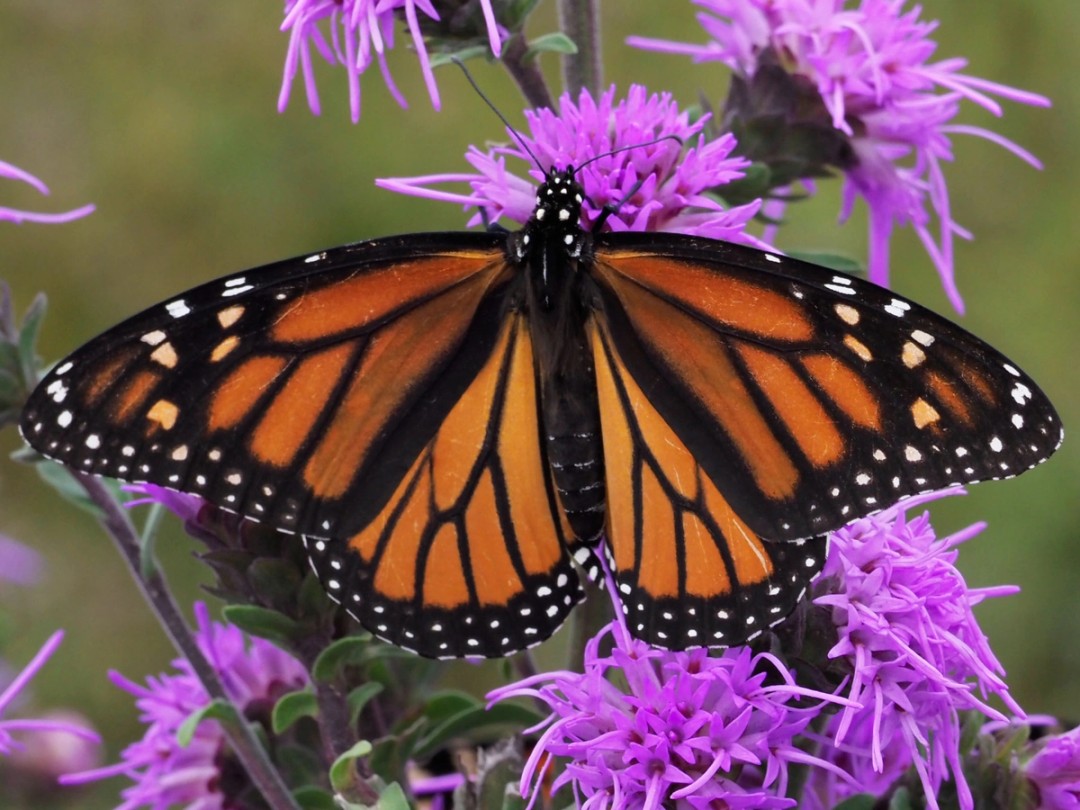
Female Monarch
Hungry Monarch caterpillars can completely defoliate a plant but don't worry, this doesn't hurt the plant. Leaves will regrow.
Butterfly weed is a nectar source for many butterflies in addition to Monarchs. Take a look at a sampling below.
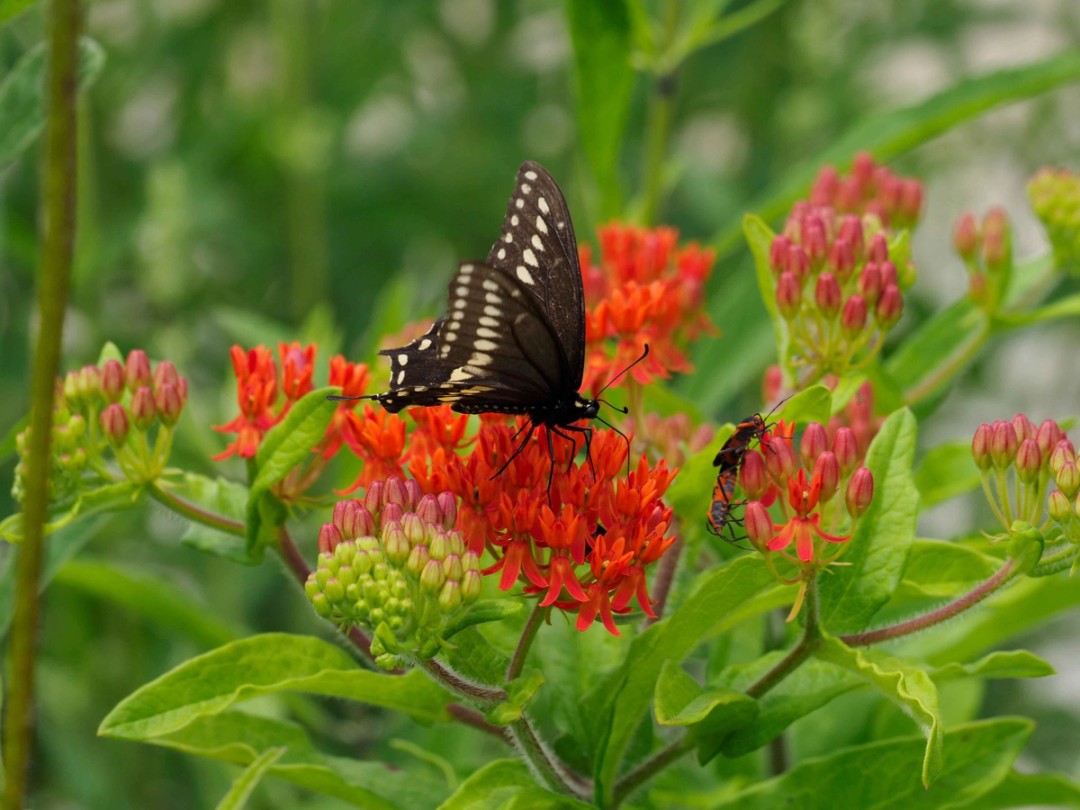
Black swallowtail 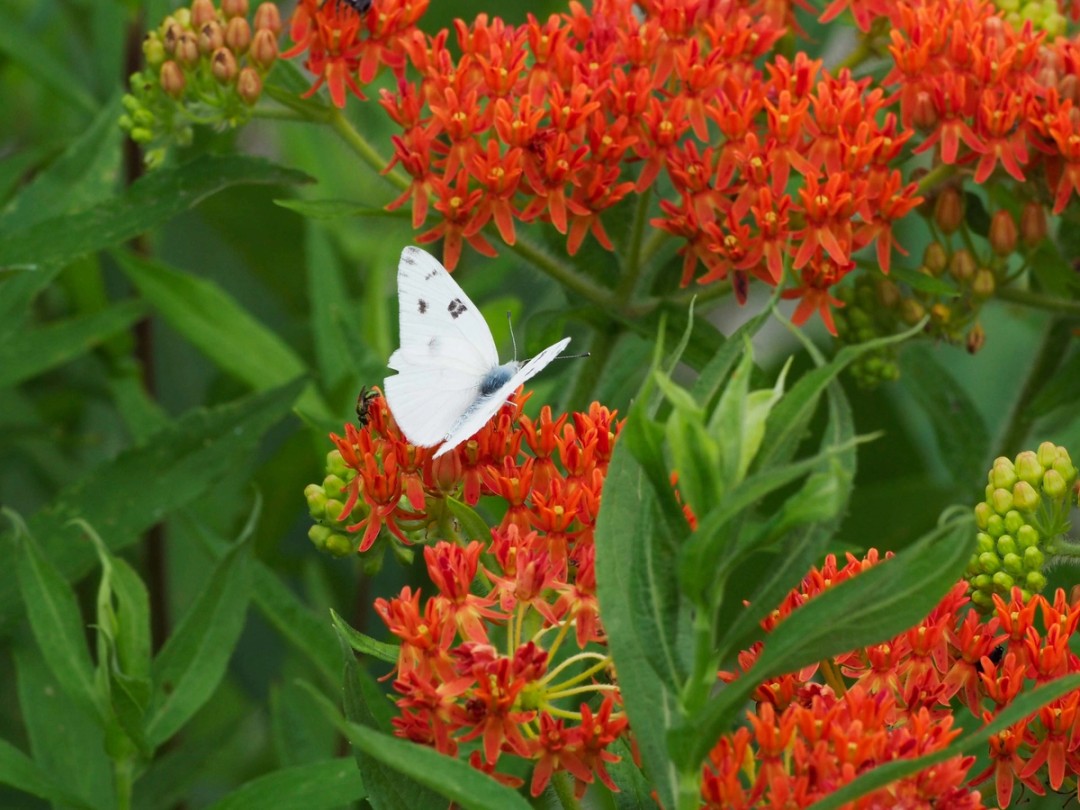
Checkered white 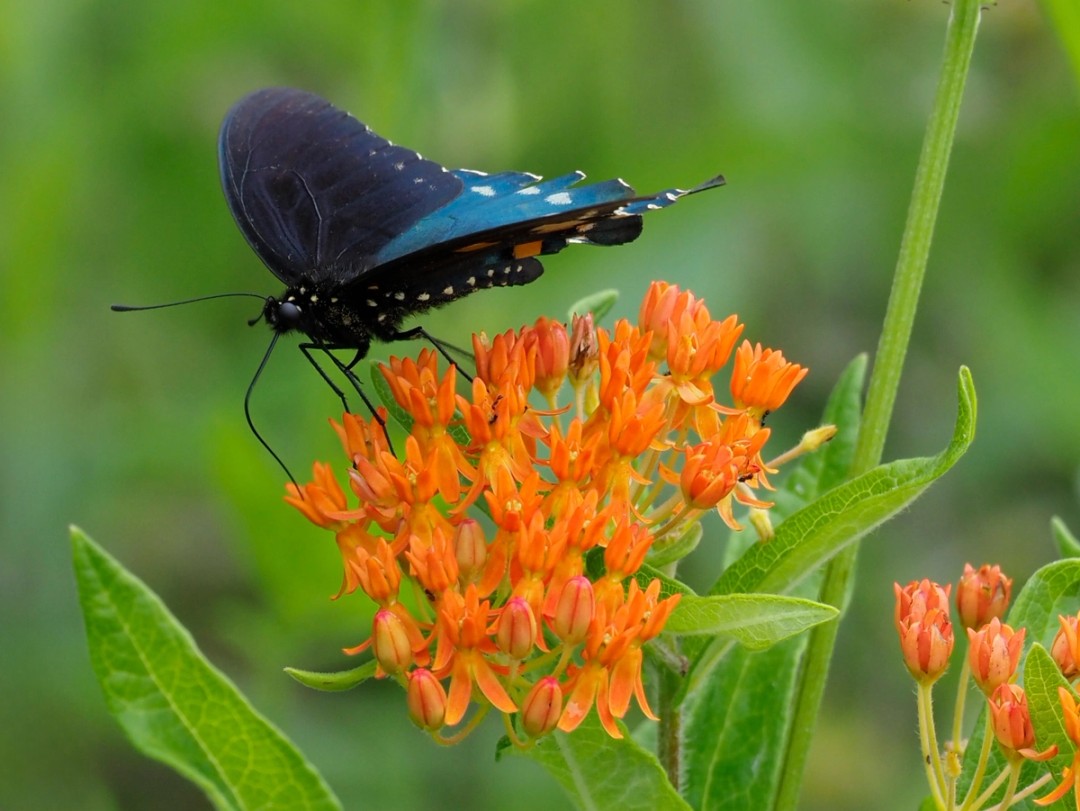
Pipevine swallowtail 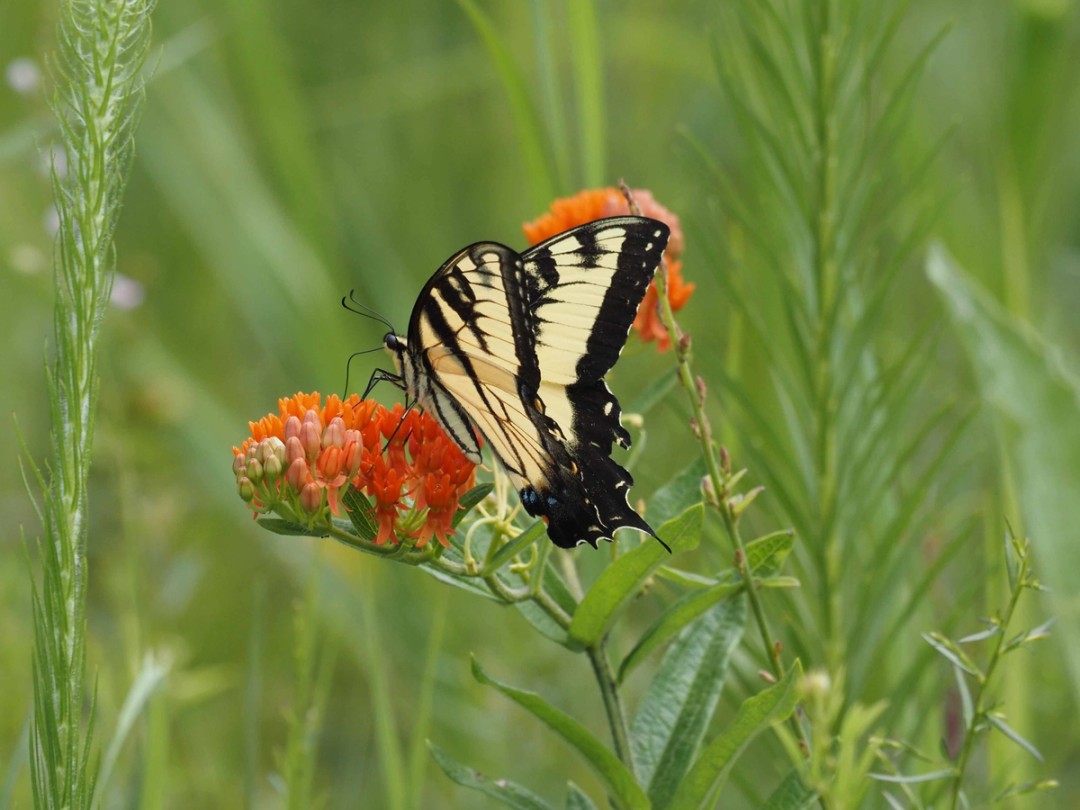
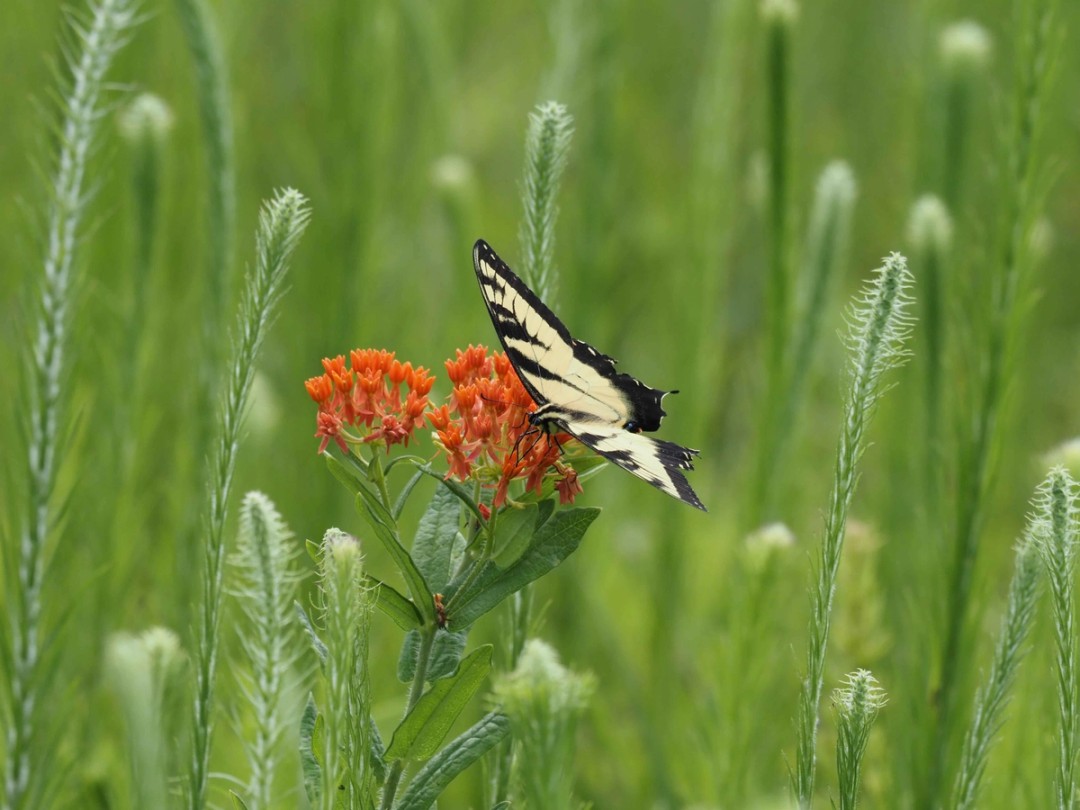
Eastern tiger swallowtail 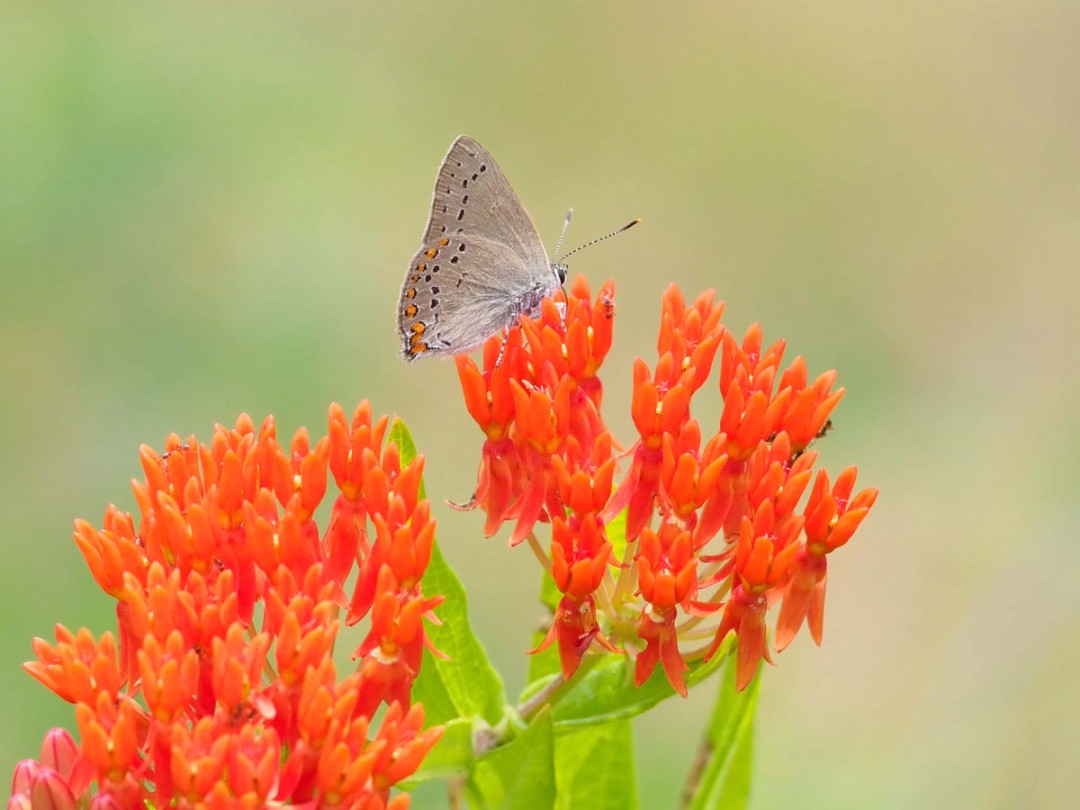
Coral hairstreak 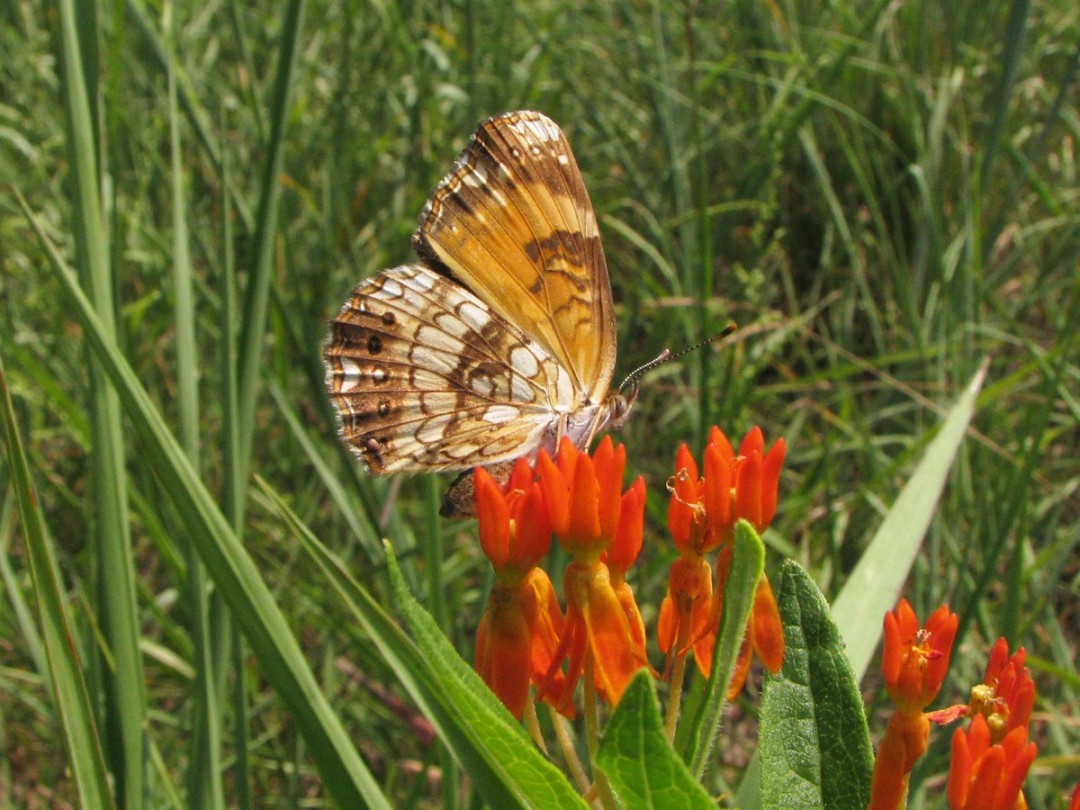
Silvery checkerspot 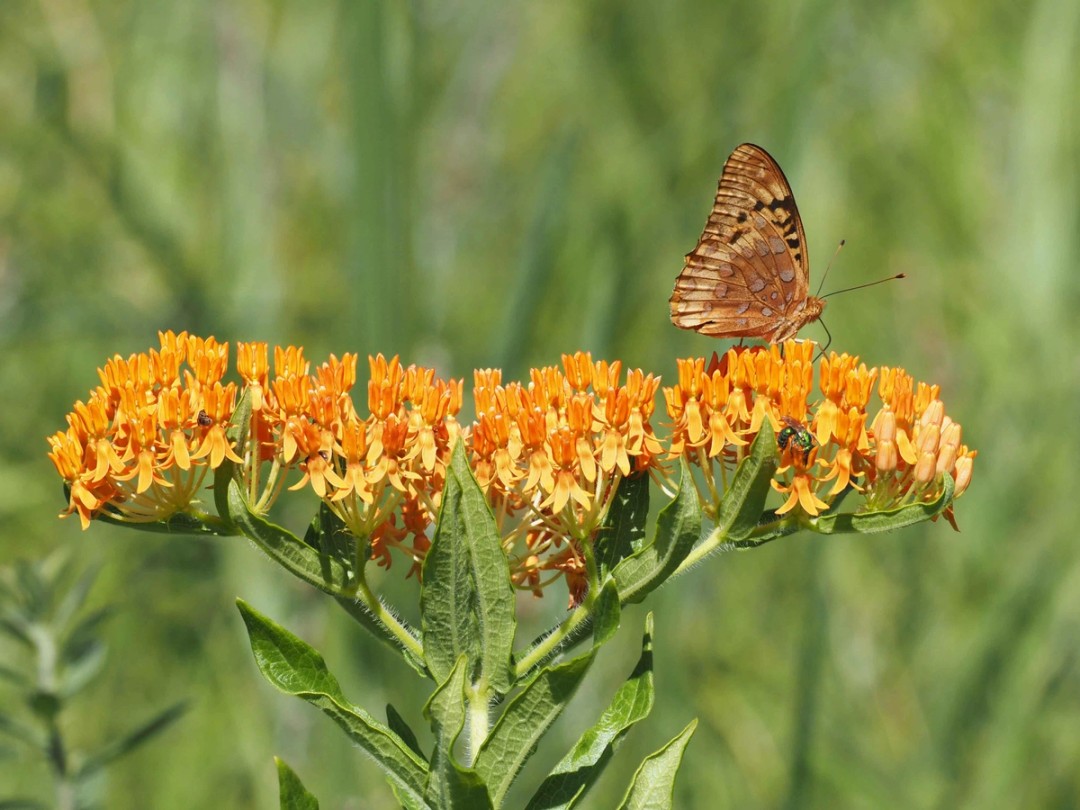
Great spangled fritillary 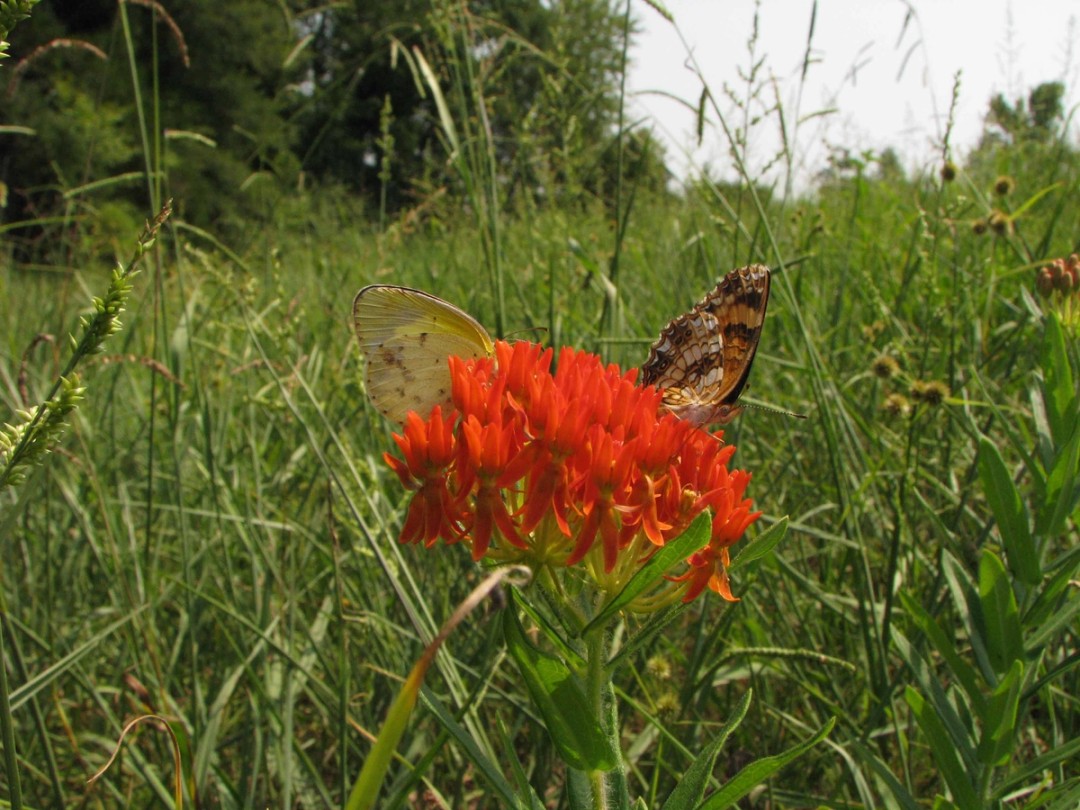
Little Yellow, Silvery Checkerspot 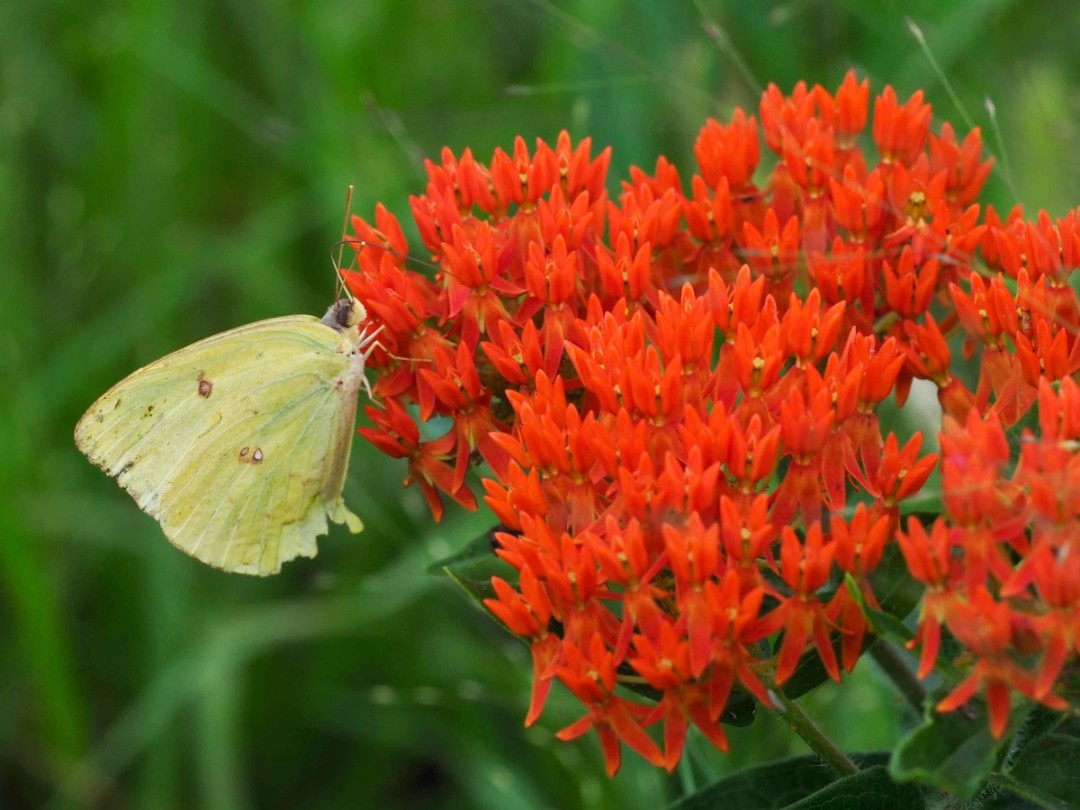
Cloudless sulfur 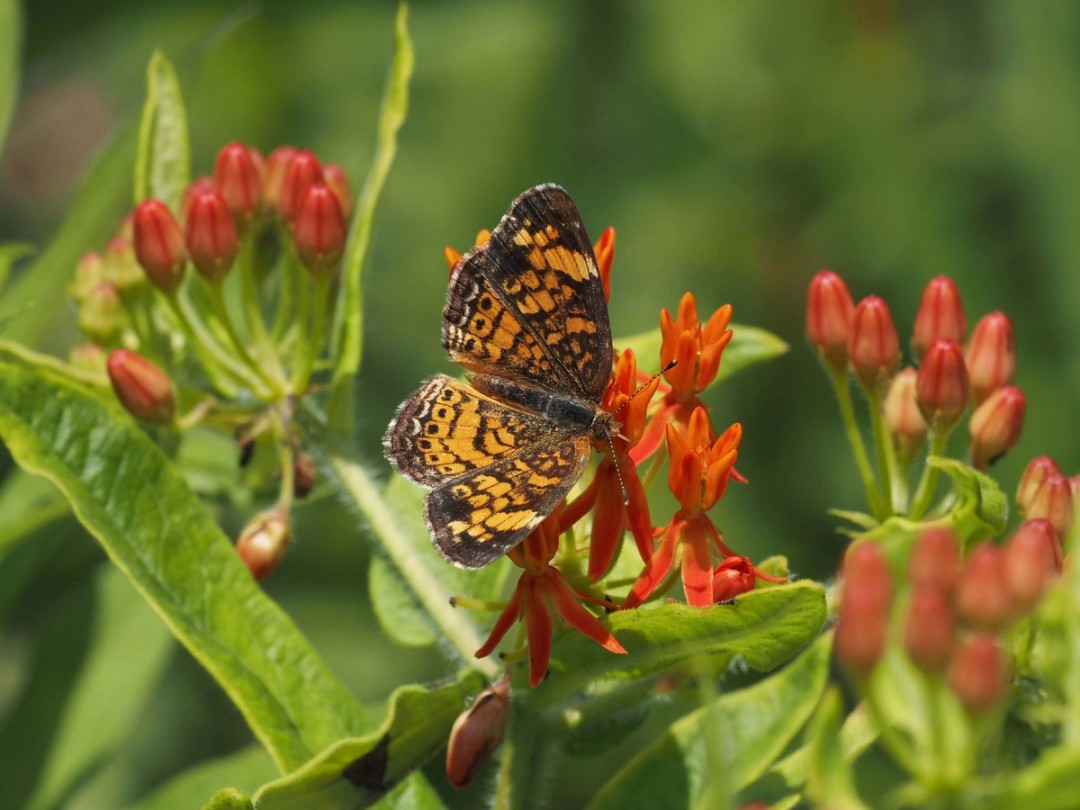
Pearl crescent
Below is a sampling of bees and wasps supported by Butterfly weed.
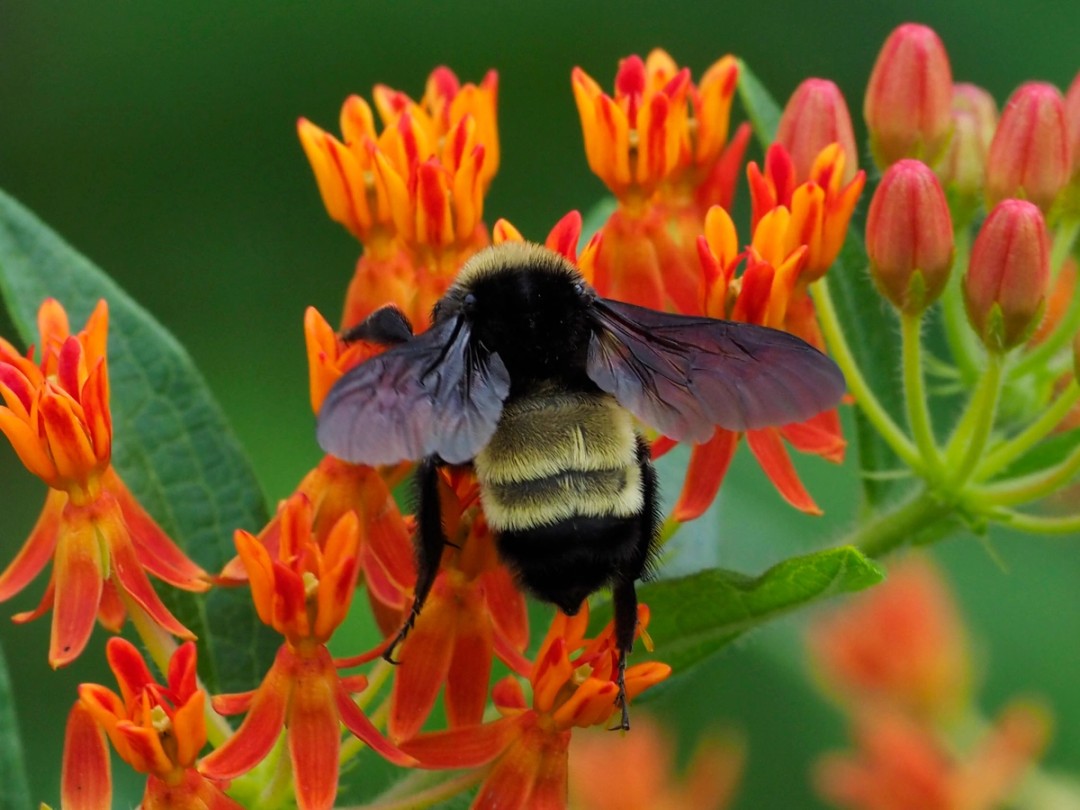
American bumble bee 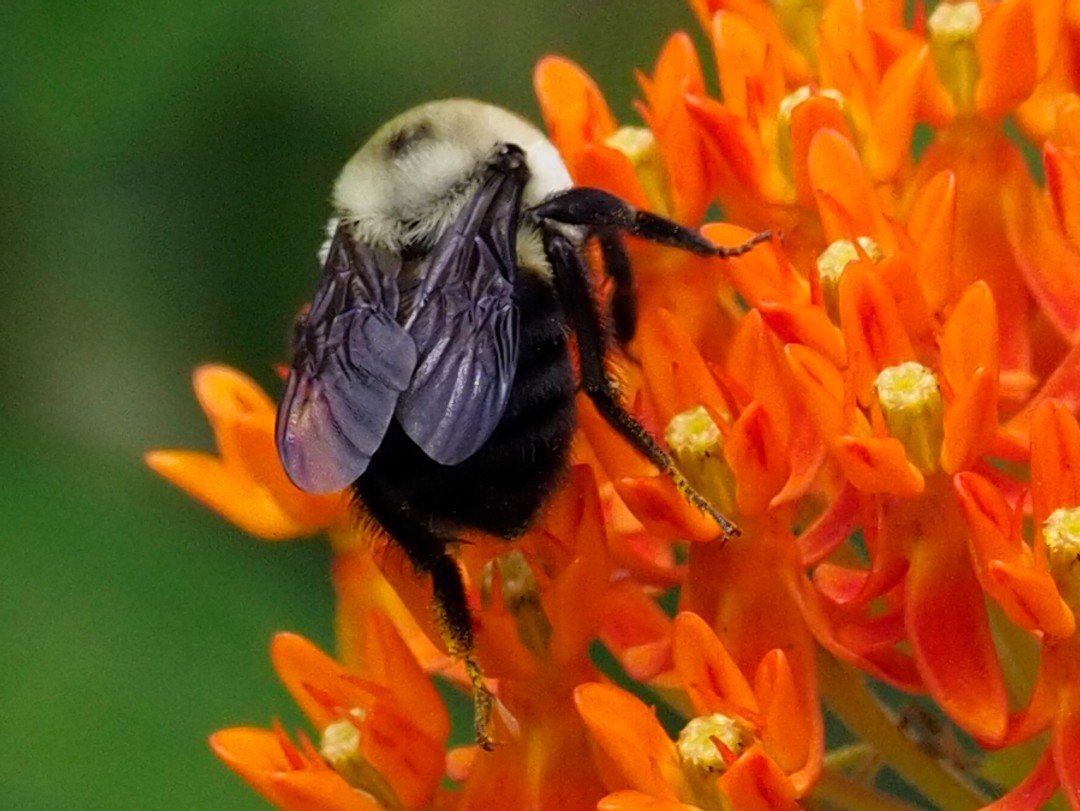
Brown-belted Bumble bee 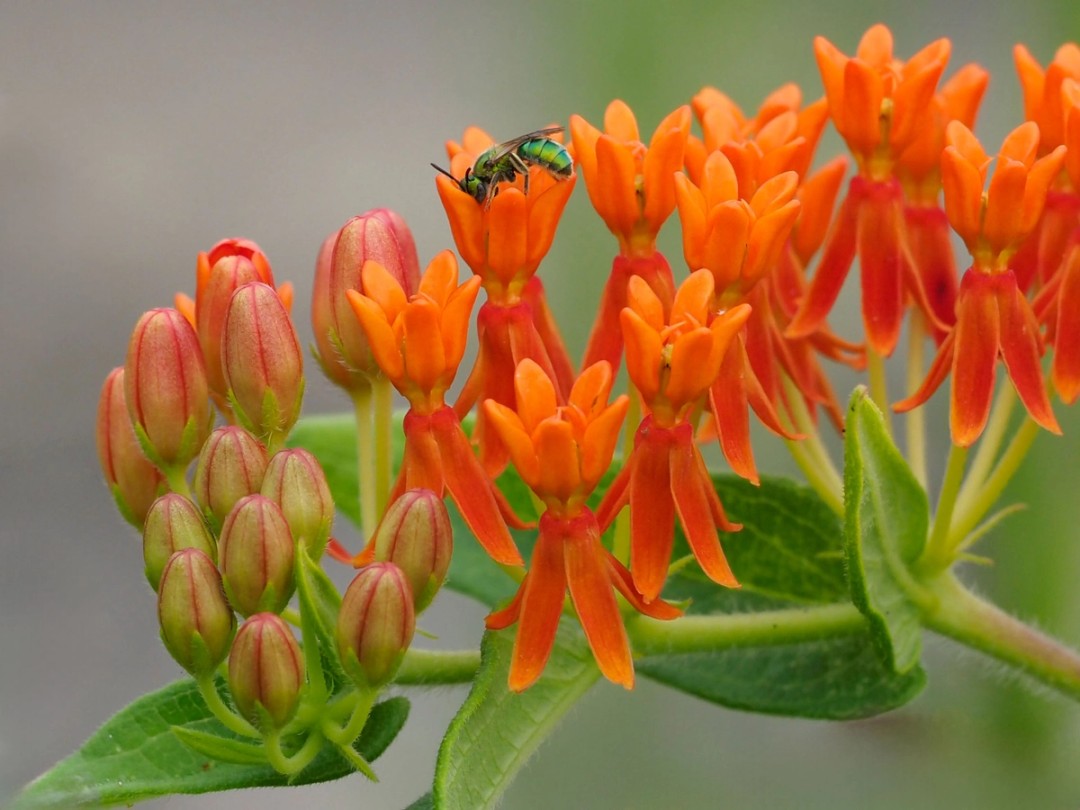
Green sweat bee 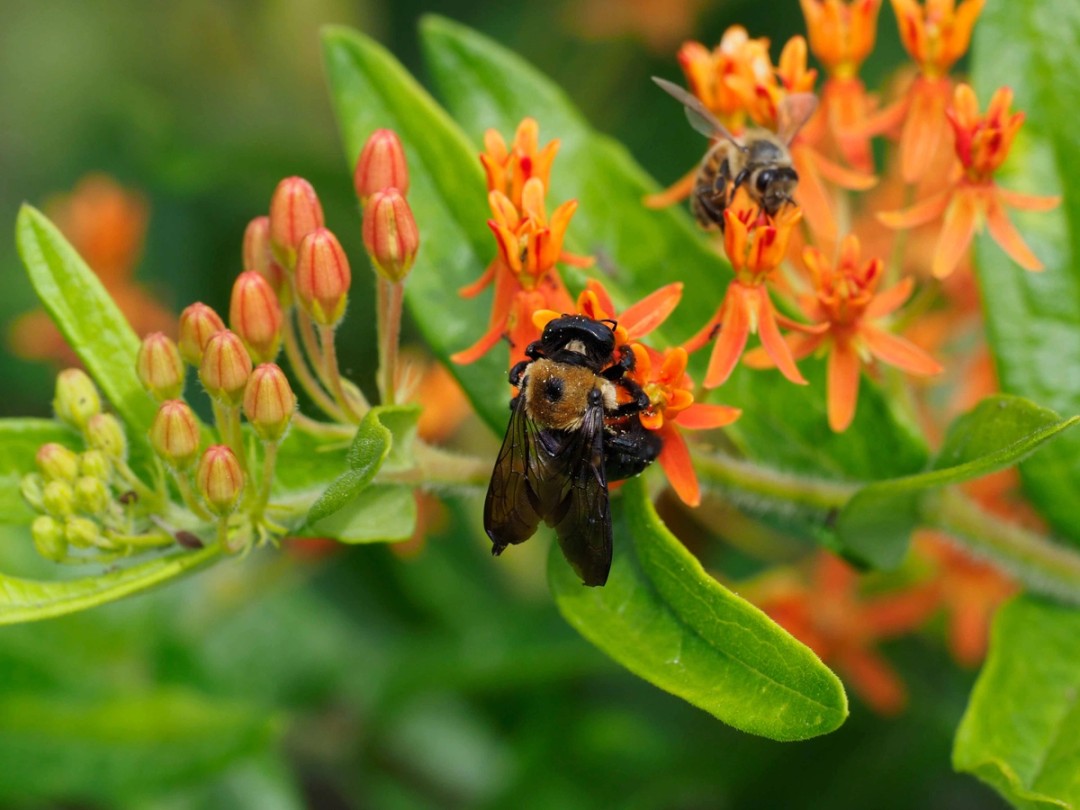
Large carpenter bee 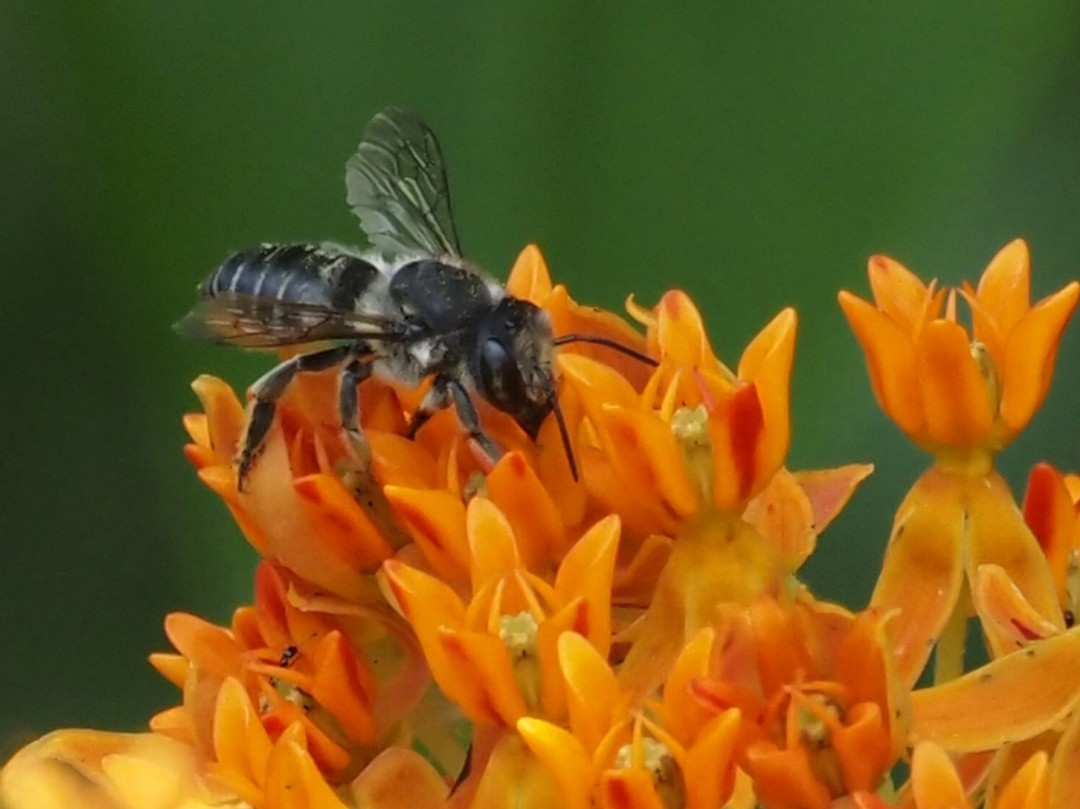
Leafcutter bee 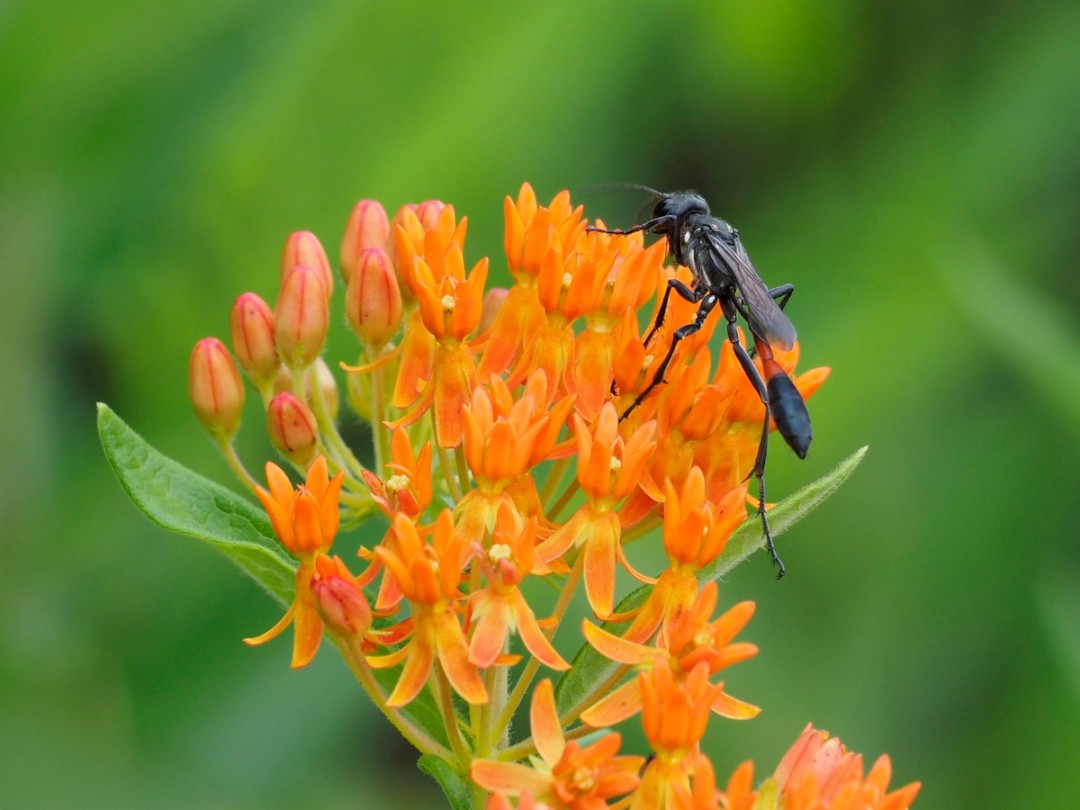
Tall thread-waisted wasp
PLANTS GROWING NEARBY
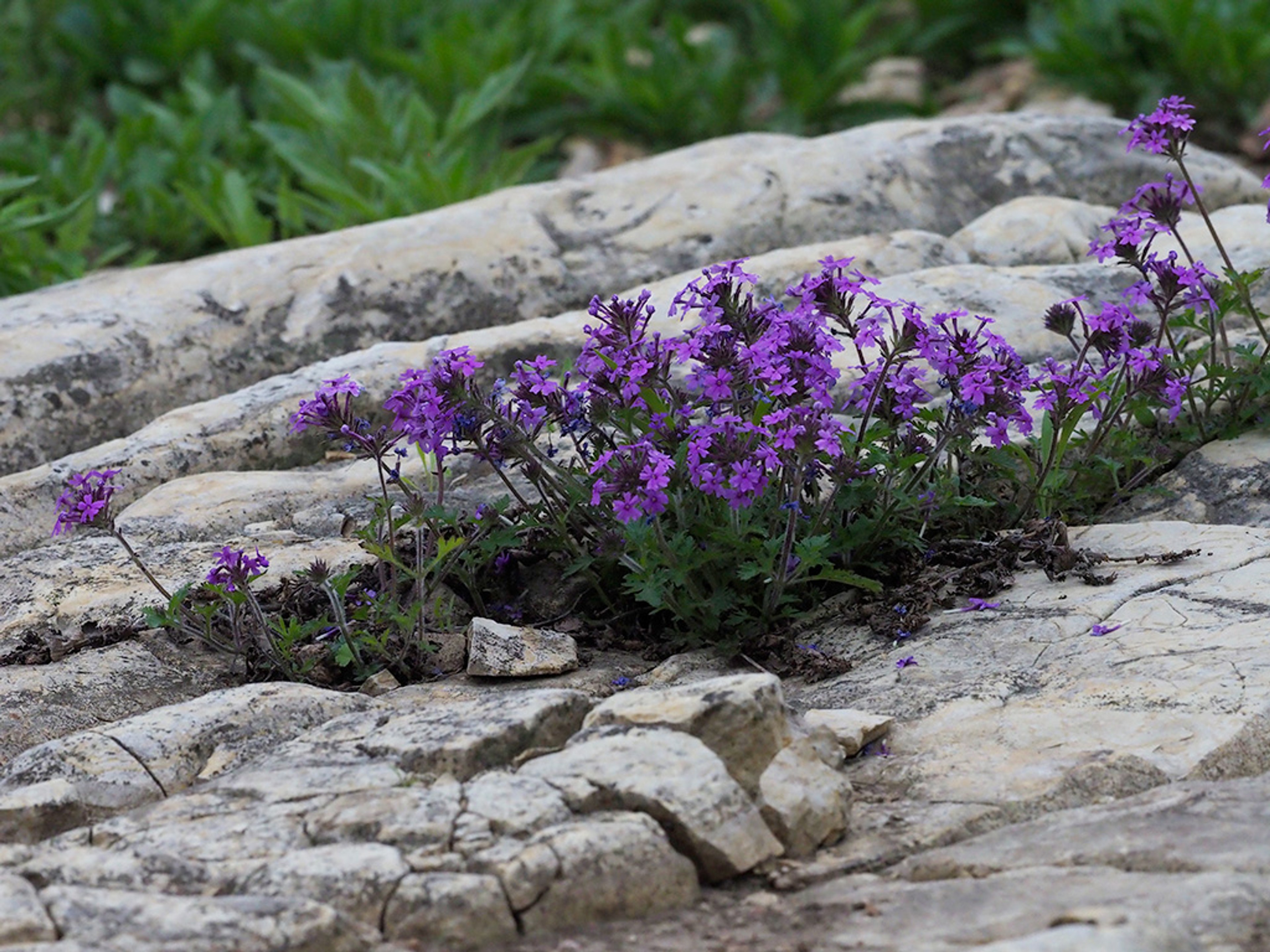
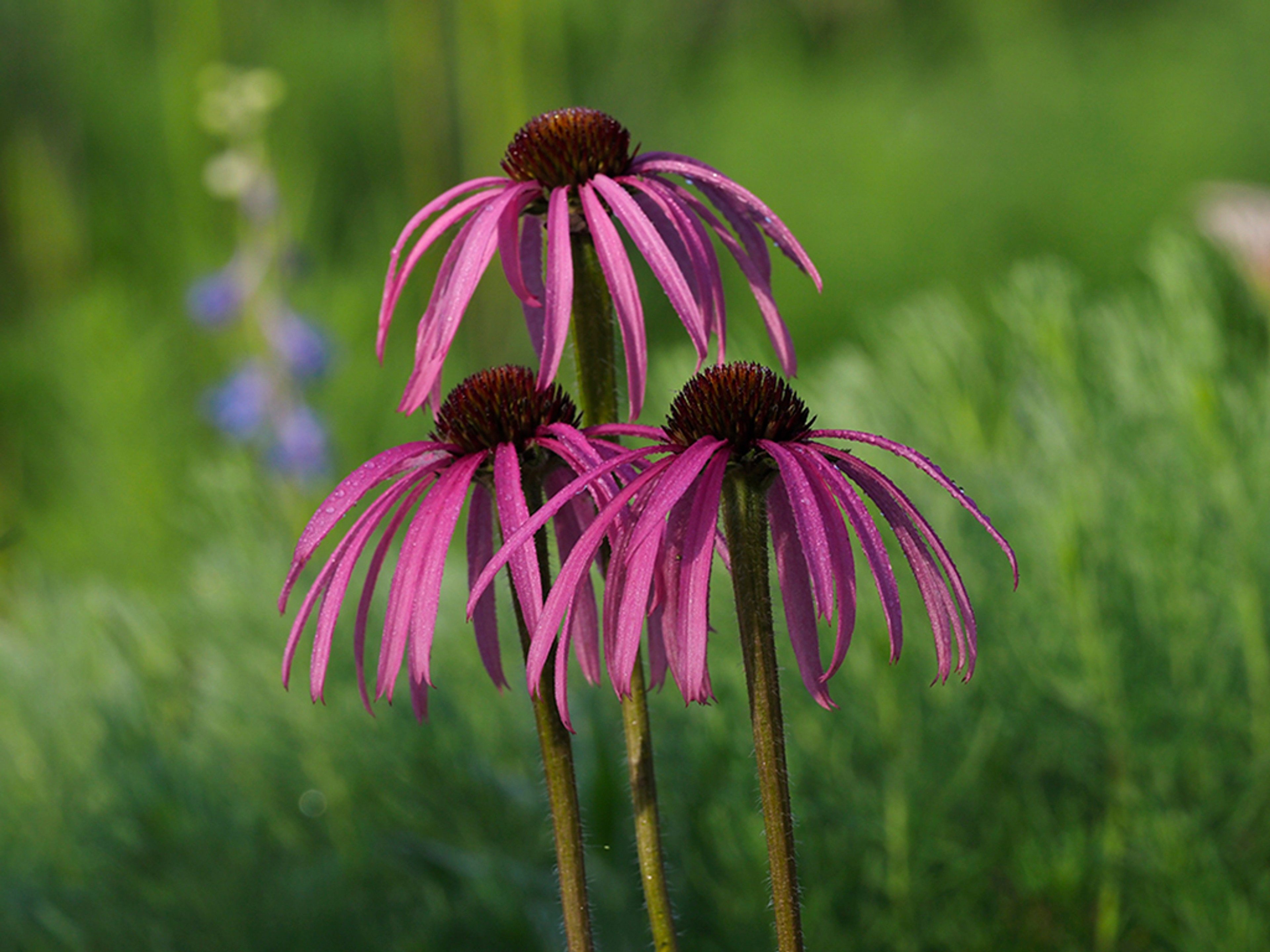
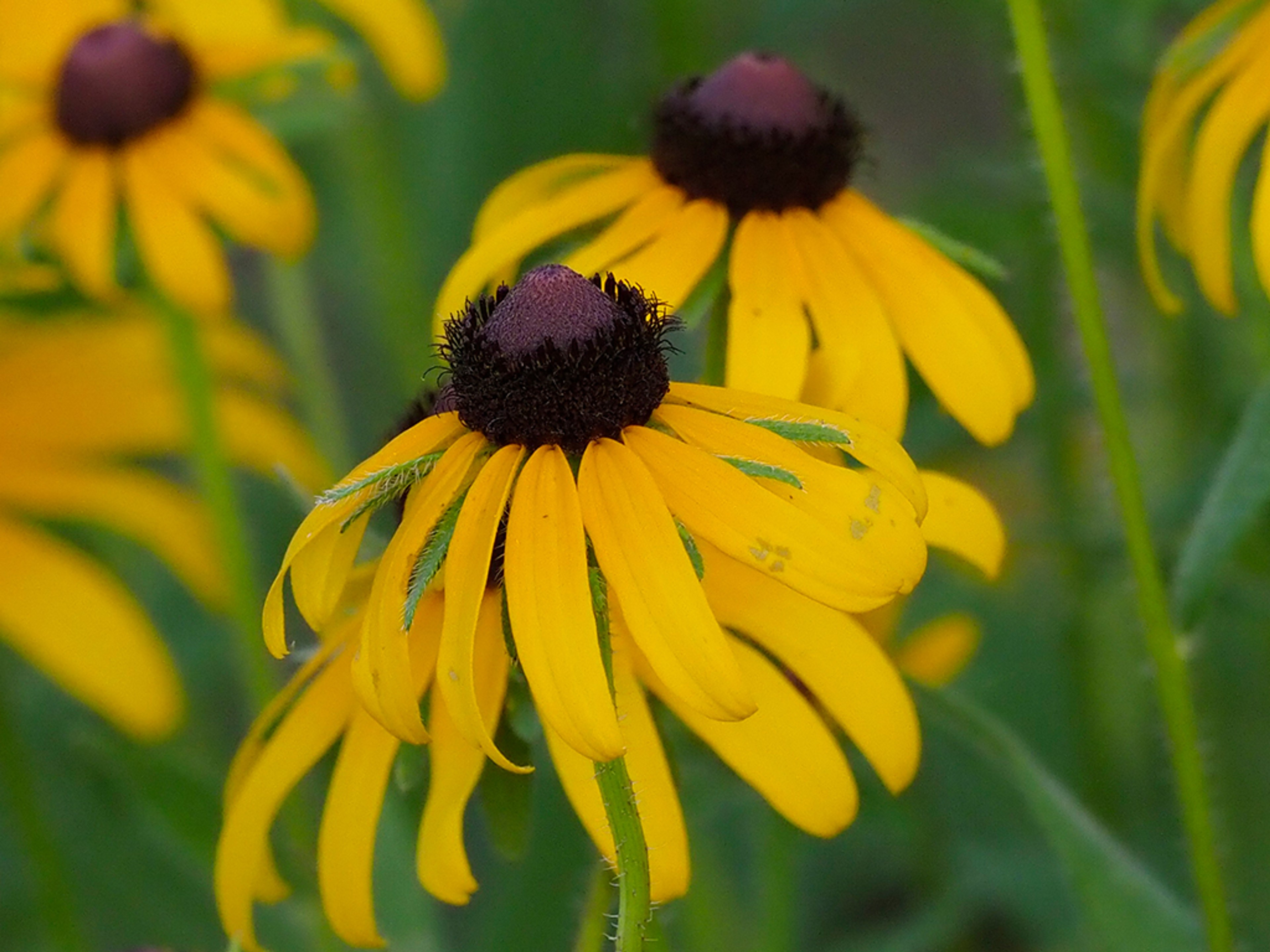
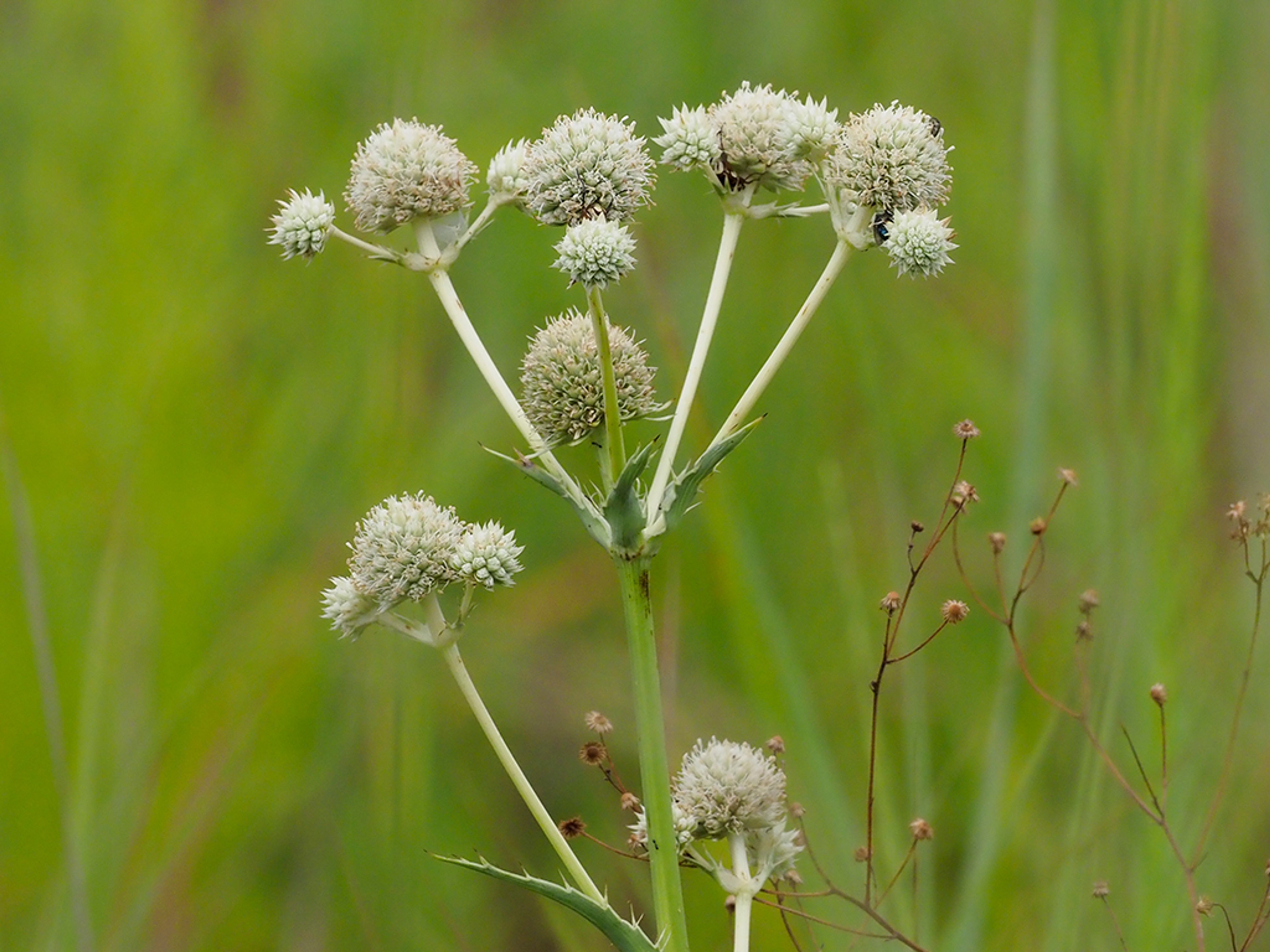
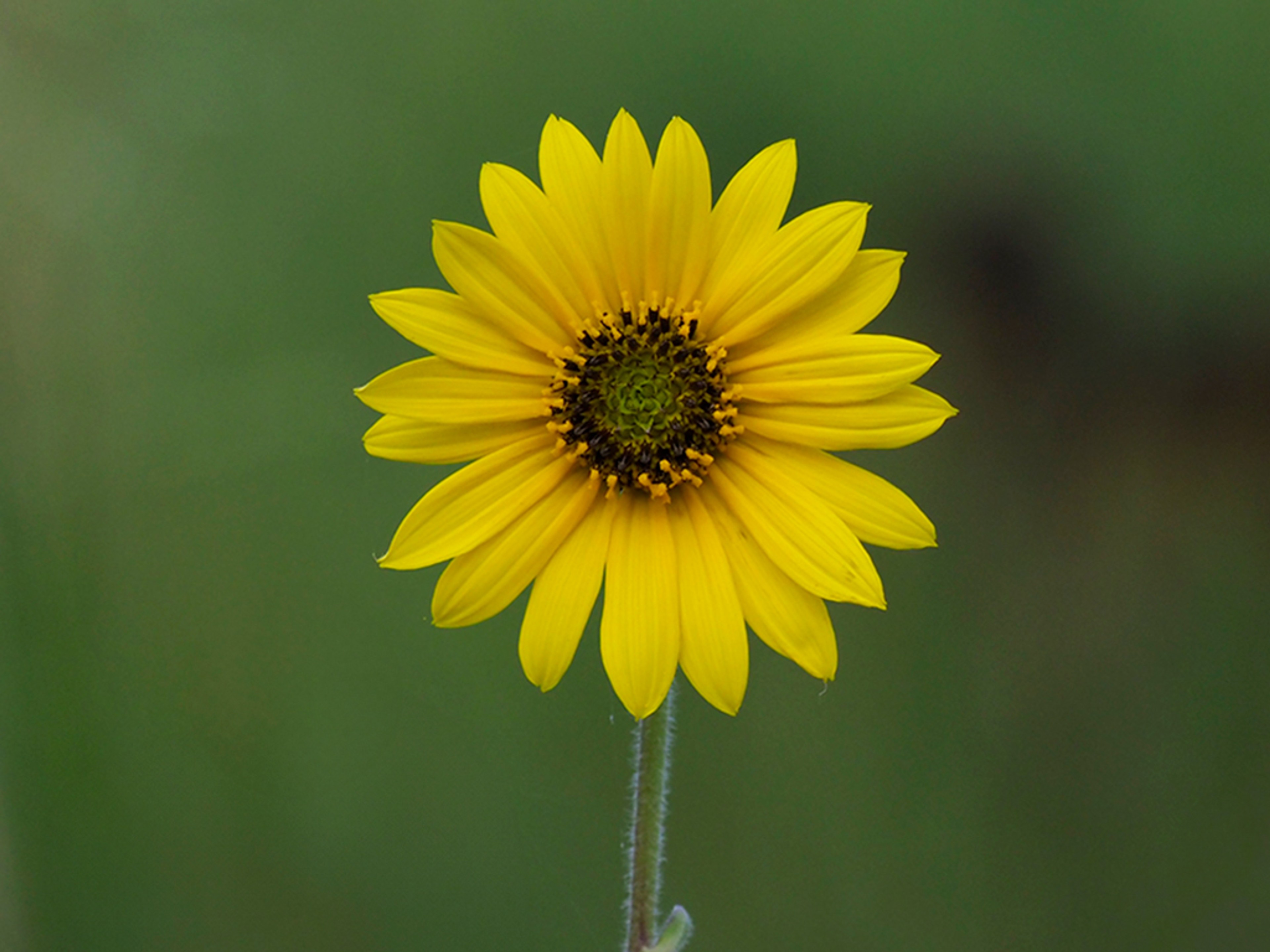
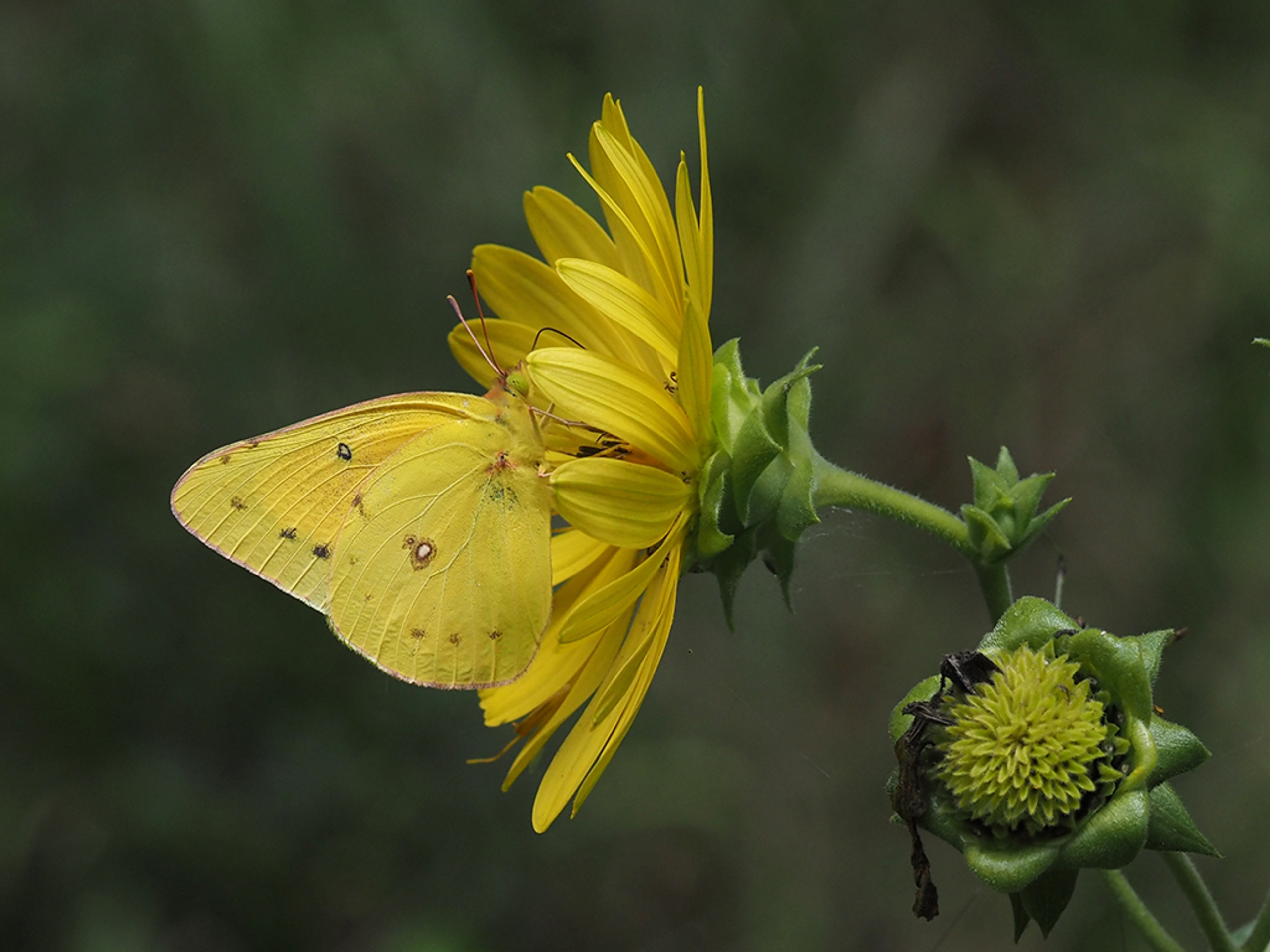
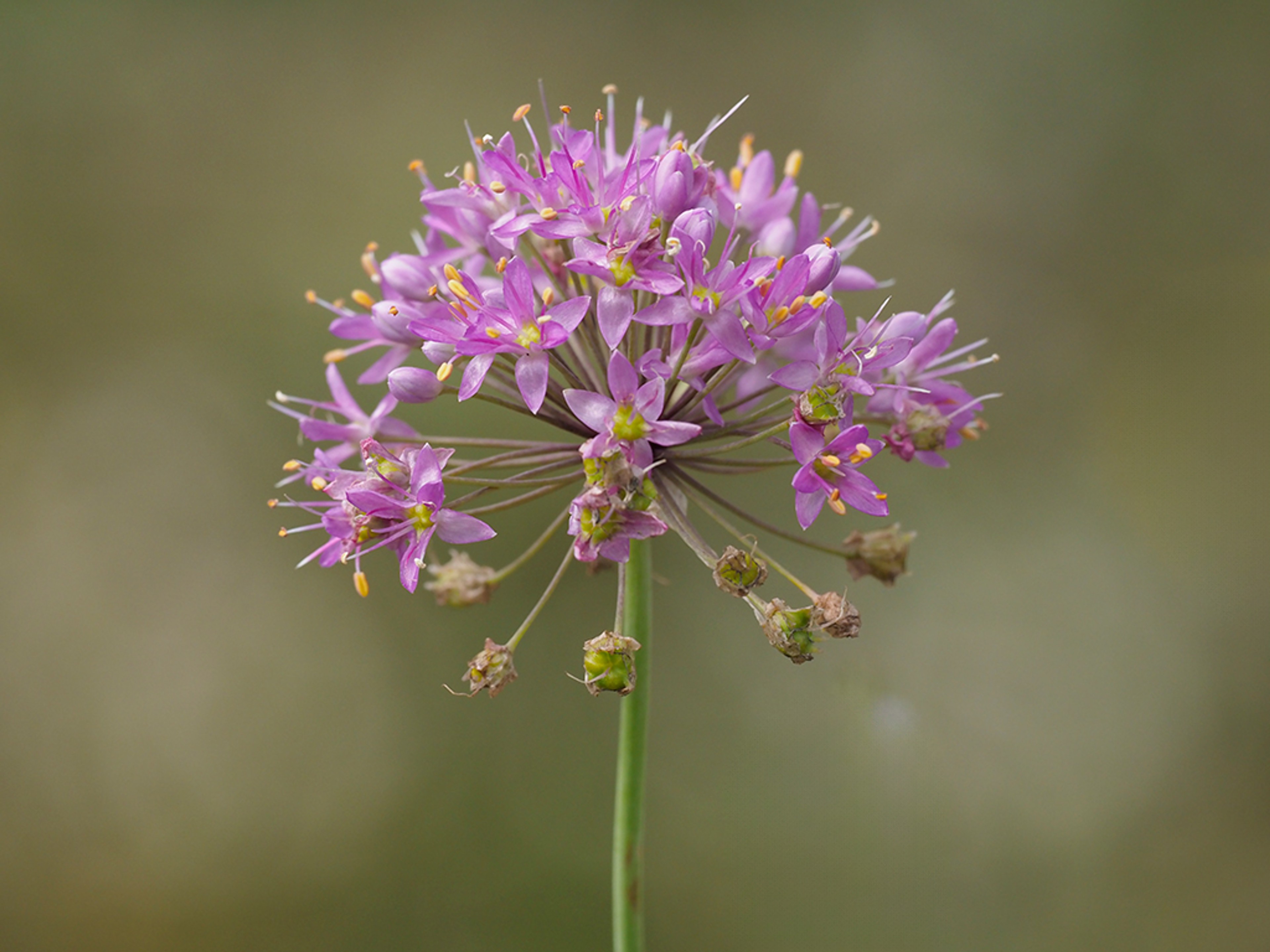
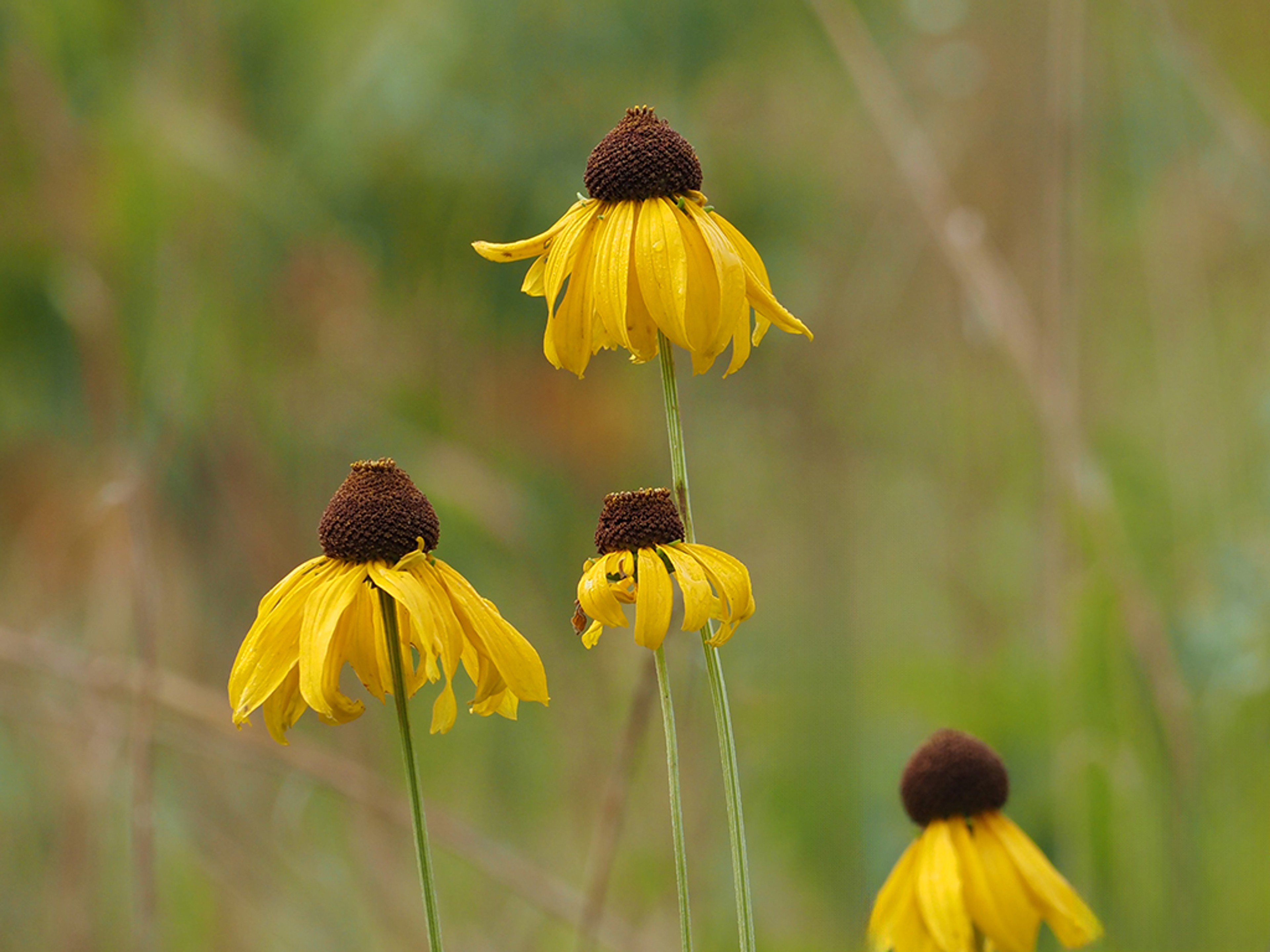
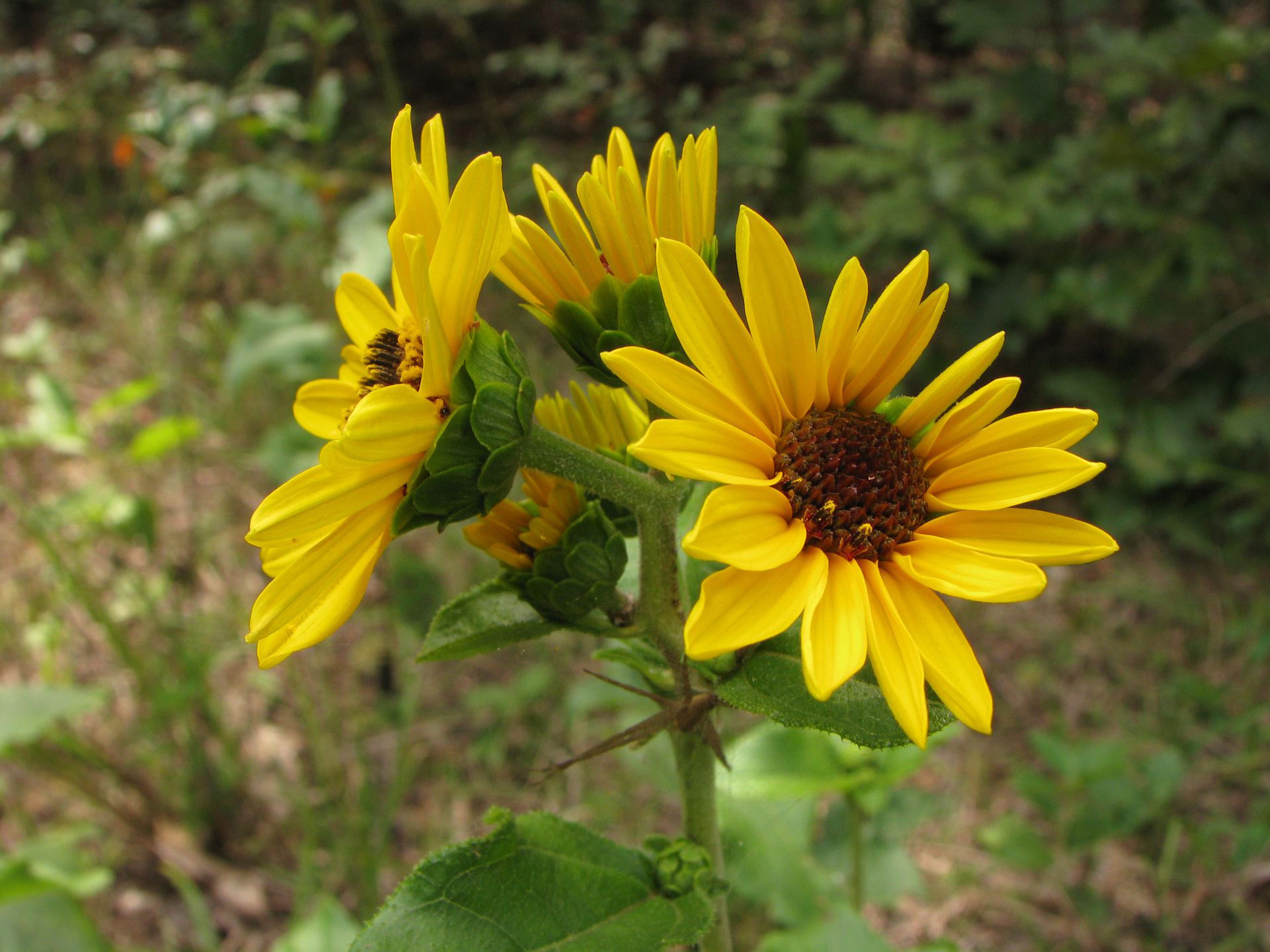
Since Butterfly weed occurs in varying habitats, it has a wide variety of native companions. In glades, you might see Rudbeckia hirta (Black-eyed susan), Ratibida pinnata (Wild quinine), Rudbeckia missouriensis (Missouri coneflower), Glandularia canadensis (Rose verbena), Allium canadense (Wild onion), Callirhoe involucrata (Purple poppy mallow), Penstemon cobaea (Purple beardtongue) and Ratibida pinnata (Gray-headed coneflower) among others.
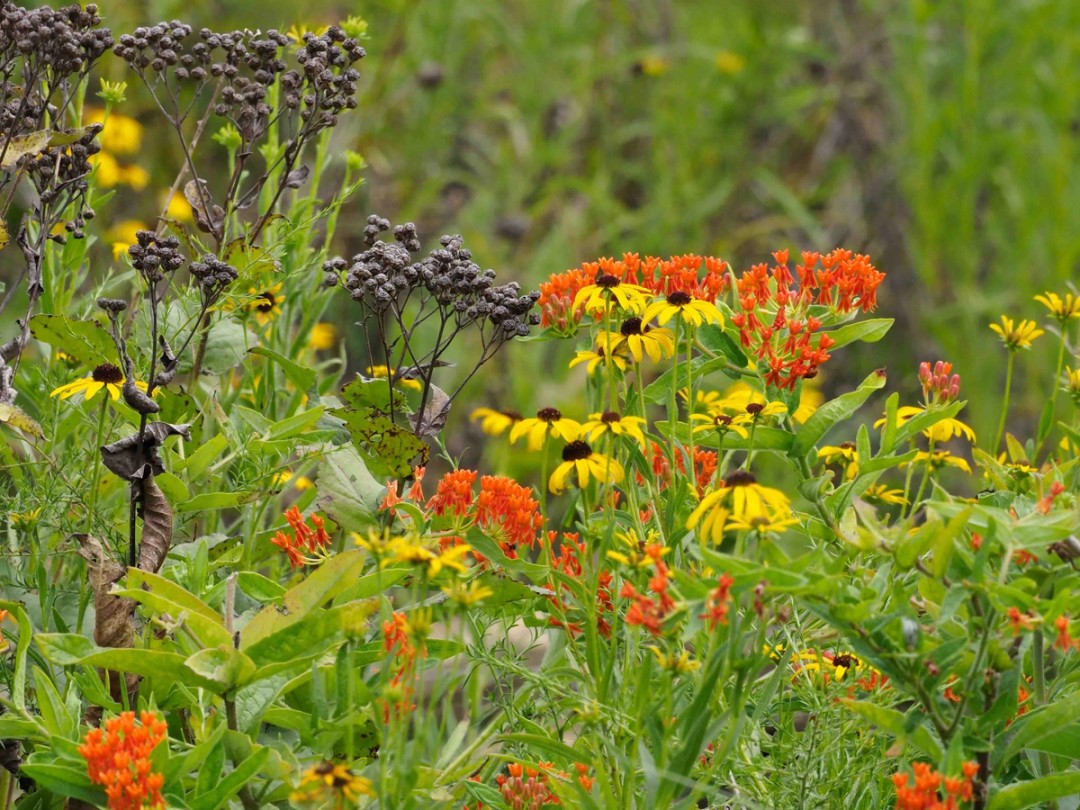
Wild quinine, Blackeyed susan Purple Beardtongue 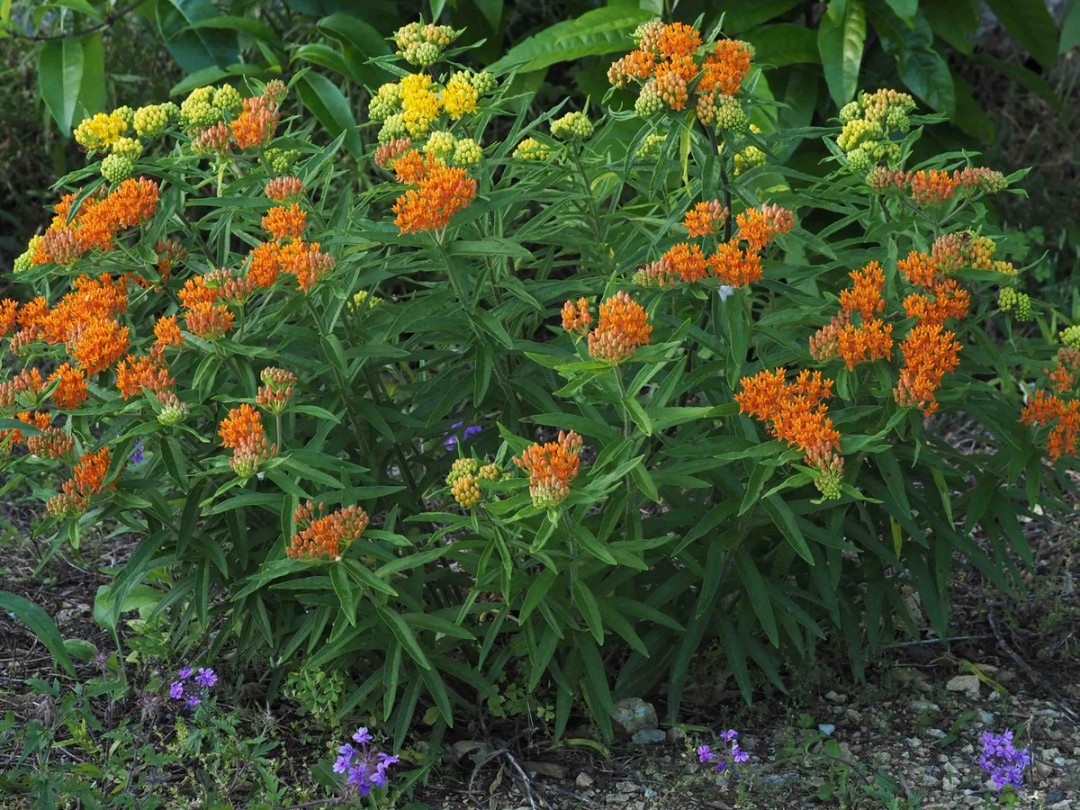
Rose verbena 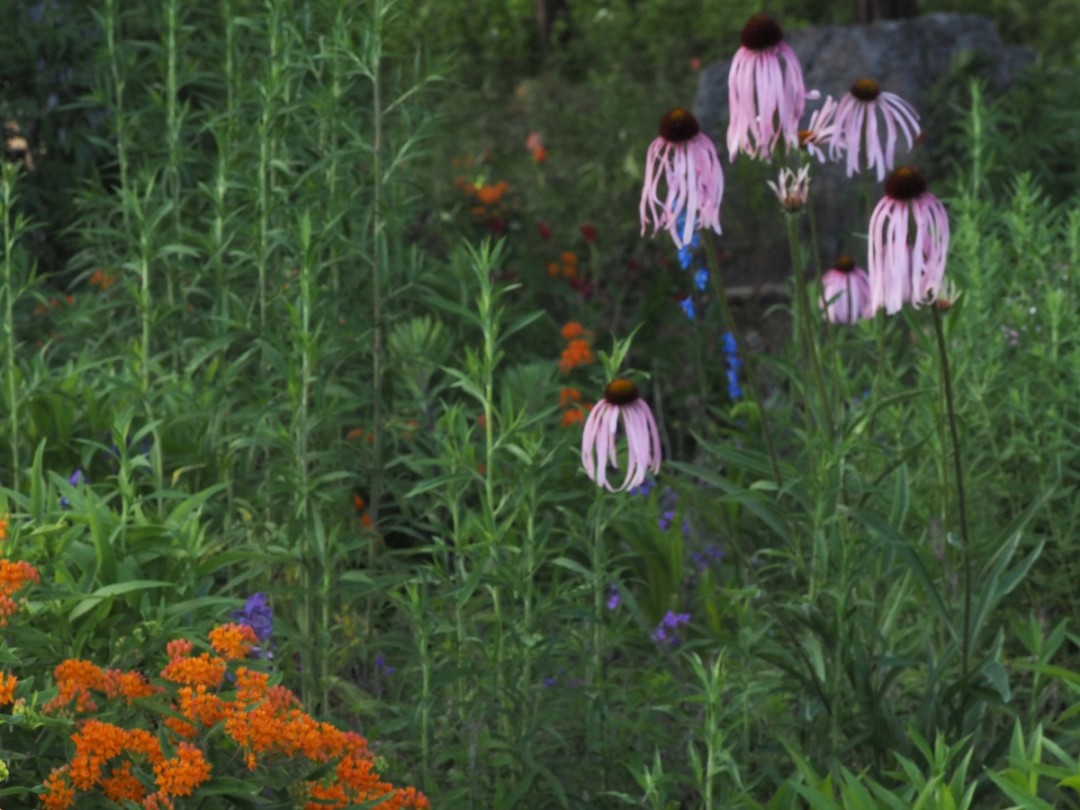
Glade coneflower 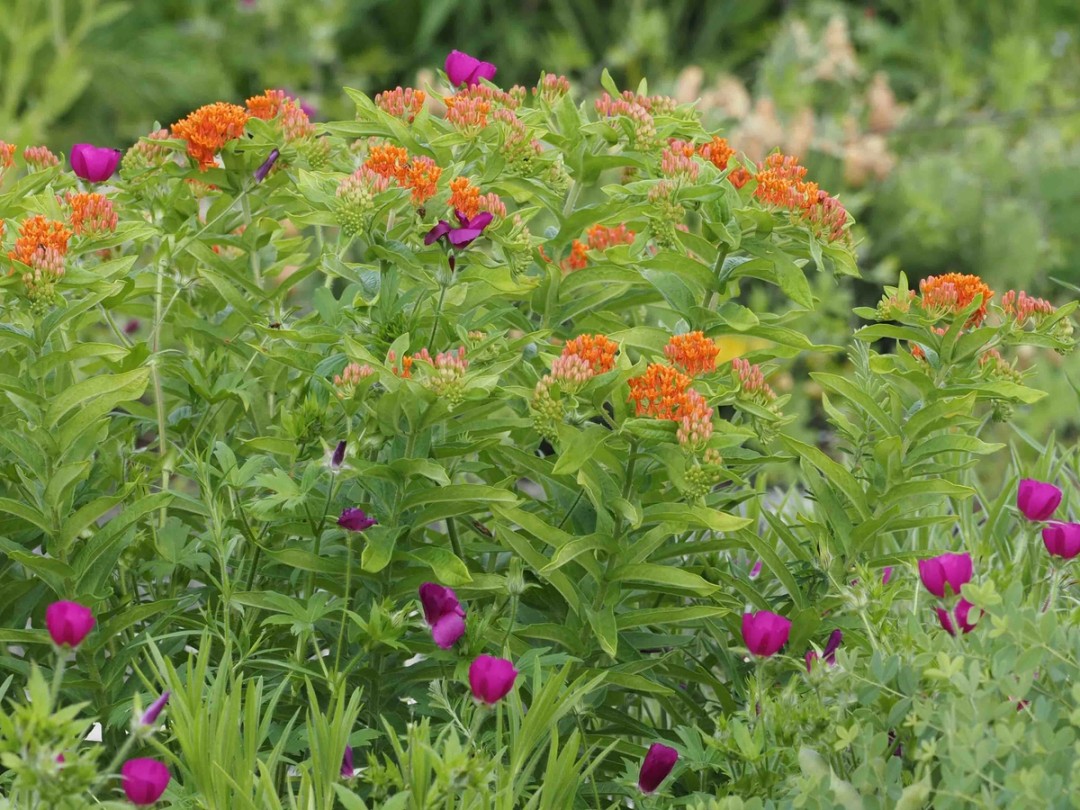
Purple poppy mallow 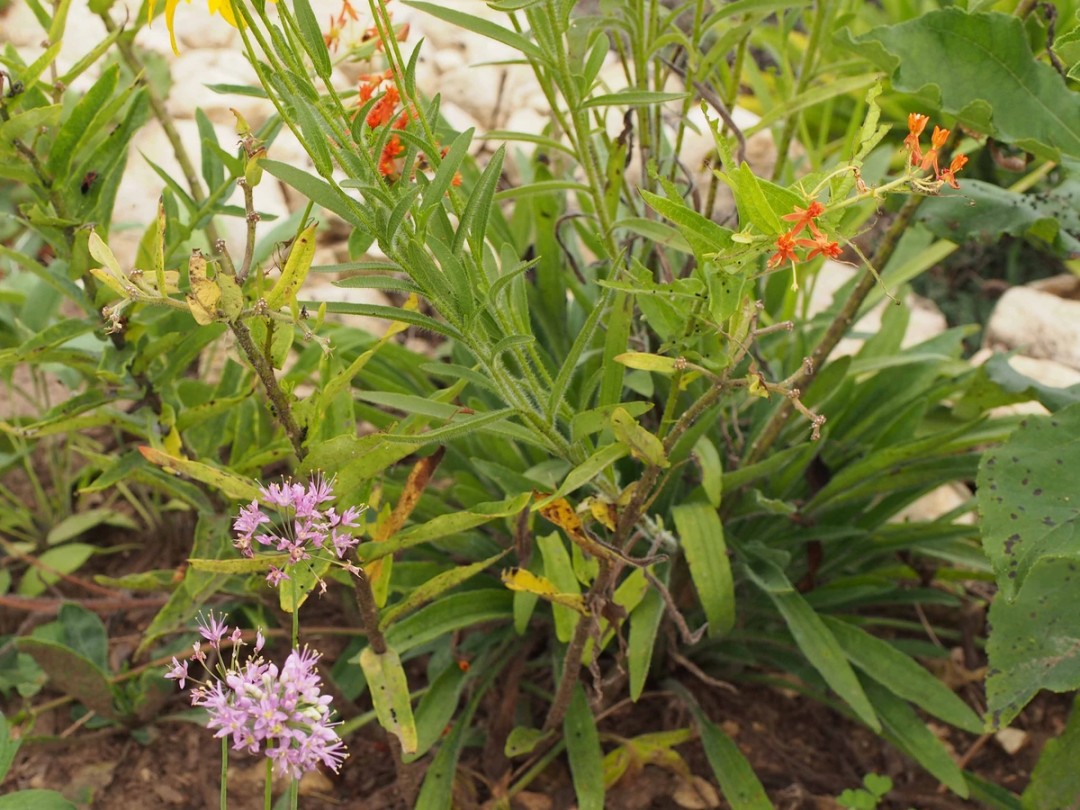
Wild onion
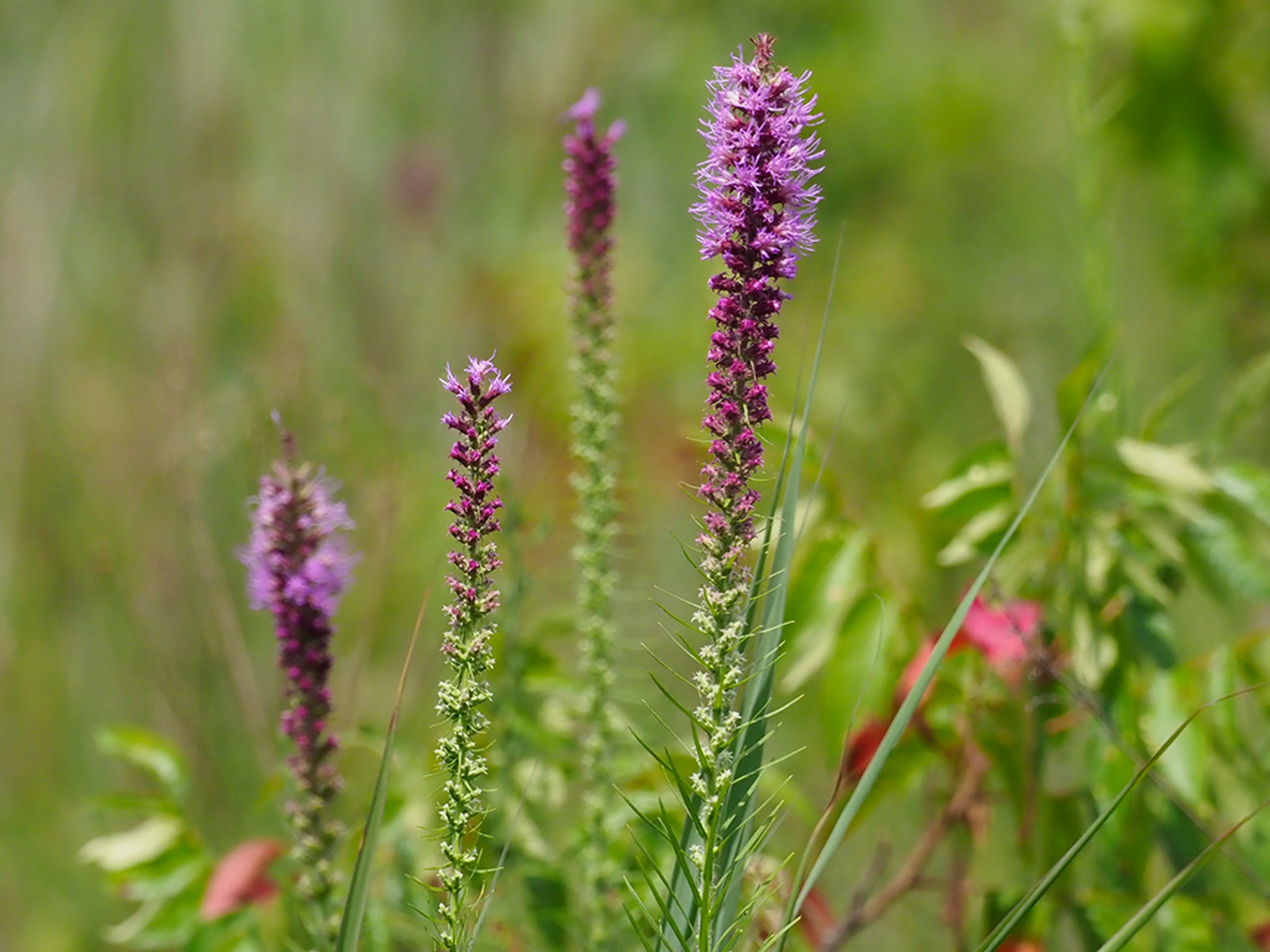
In Prairie, common companions include Liatris pycnostachya (Prairie blazing star), Ratibida pinnata (Rattlesnake master), Rudbeckia grandiflora (Tall coneflower), Pycnanthemum tenuifolium (Slender mountain mint), Helianthus mollis (Ashy sunflower), Rubus sp. (Wild blackberry) and Erigeron annuus (Daisy fleabane).
Prairie blazing star 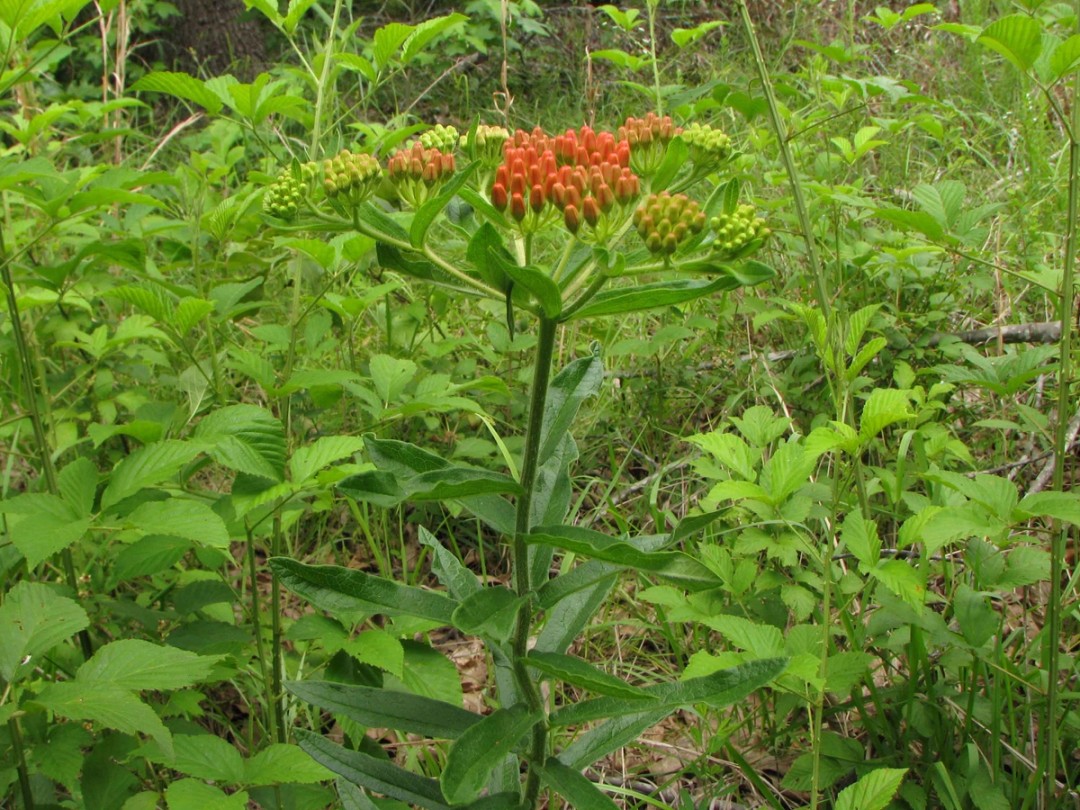
Blackberry Daisy fleabane 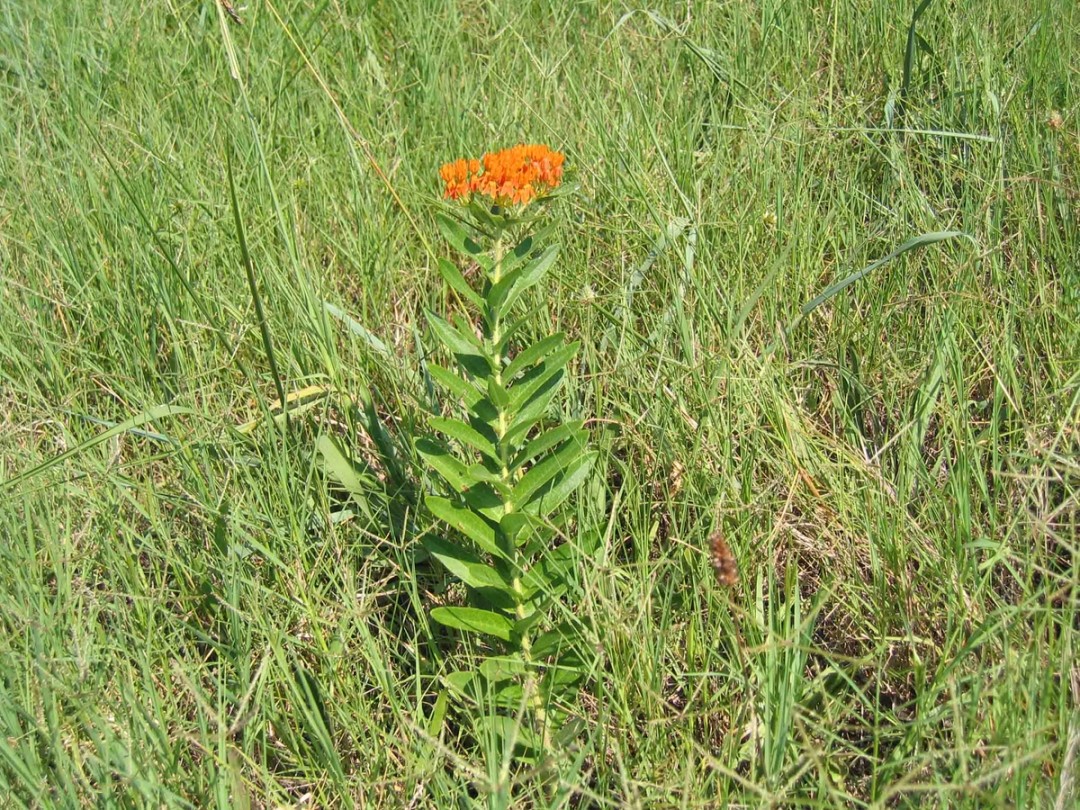
Grasses
HABITAT
Butterfly weed occurs in a range of habitats including glades, prairies, roadsides, old fields and even open, rocky woodlands.
Grassland 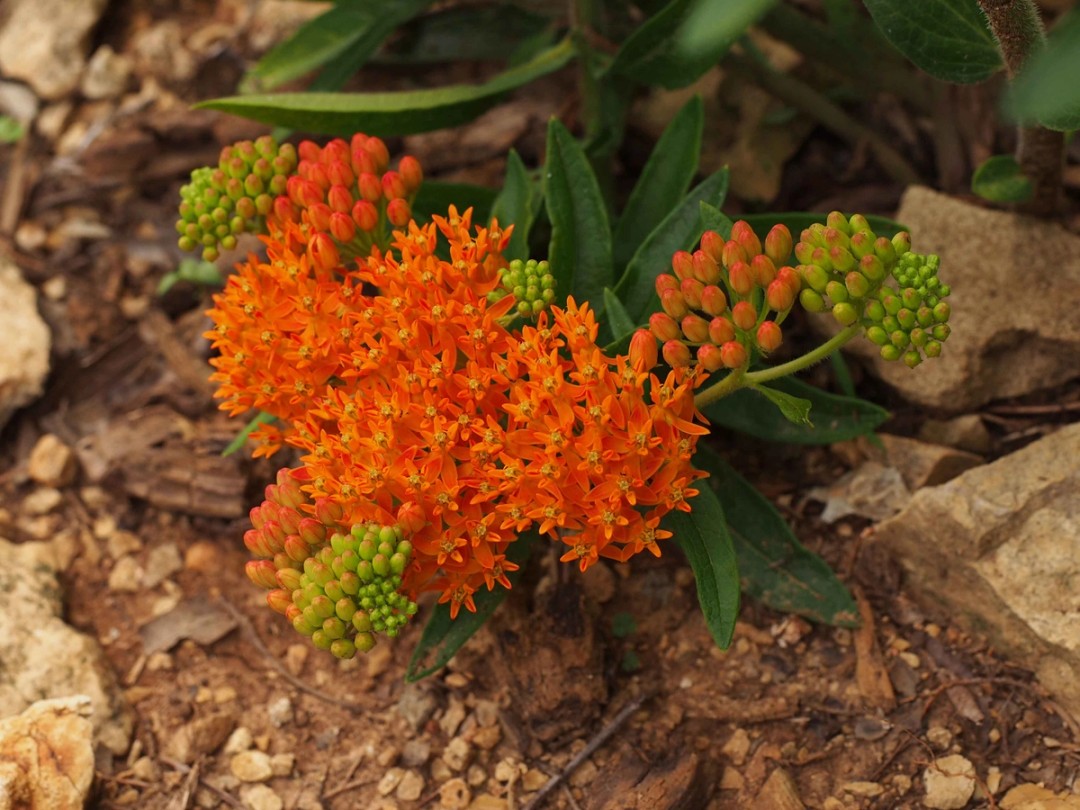
Glade 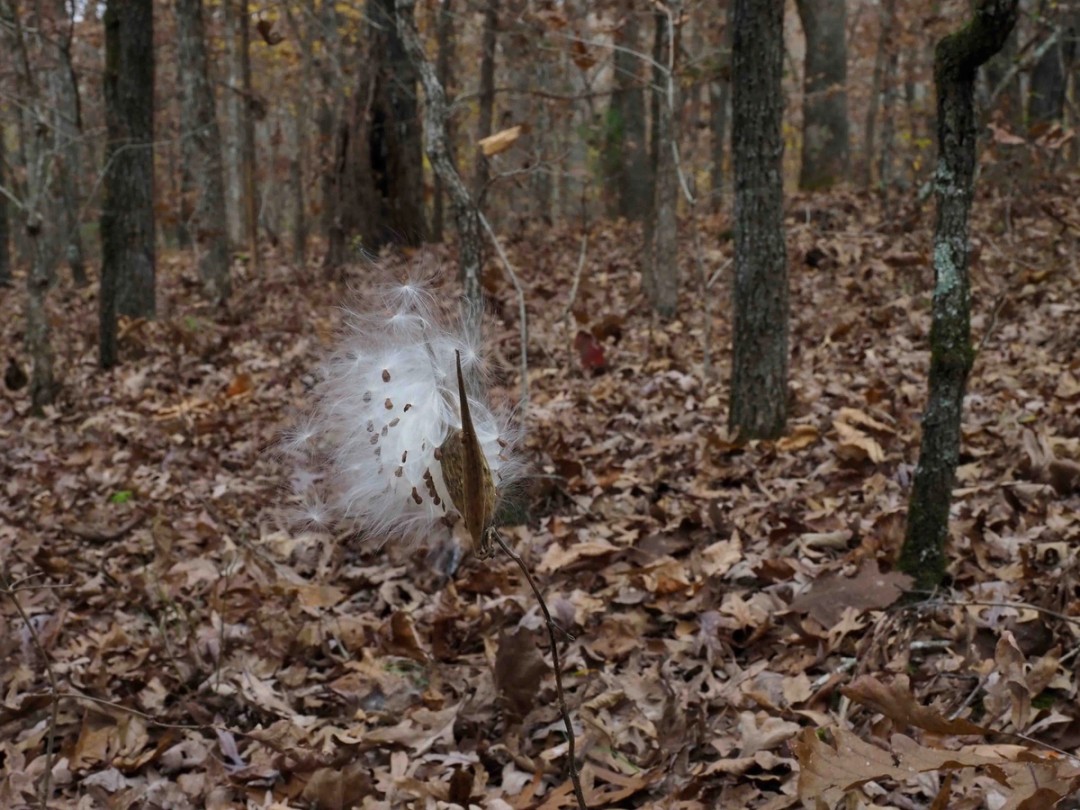
Woodland Old field
CONSERVATION STATUS
Asclepias tuberosa subsp. interior is shown as a Secure Subspecias on iNaturalist with comments that it has declined in parts of its range. Challenges include loss of native habitat due to development and loss of roadside habitat due to chemical spraying and roadside maintenance. Wild collecting is another threat.
In Arkansas, Asclepias tuberosa has a Conservation value of 6 (in the group of 4-7) meaning "Typical matrix taxa in intact, stable habitats, with some limited ability to respond to destabilizing forces and repopulate areas from which they have been extirpated".
INTERESTING TIDBITS
Its true that Milkweed is poisonous. It contains toxic cardiac glycosides. If ingested in large enough doses, nausea, diarrhea, confusion, heart rhythm changes and even seizures can occur. It can also irritate eyes and skin. While all parts of milkweed plants contain the toxic cardiac glycosides, it's mostly found in the milky fluids. While milkweed has been used medicinally as part of indigenous culture and there are various recipes online to cook or prepare it, this is not recommended and could be dangerous. Always double (and maybe triple) check before consuming wild plants. Better safe than sorry!