PLANT NAME
The Swedish taxonomist, Carl Linnaeus assigned the scientific name, Rudbeckia hirta in honor of his botany teacher, Olof Rudbeck. In Latin, the word “hirta” means hairy and refers to the hirsute stem and leaves. The most frequently used common name is “Black-eyed Susan”. There are many plants that share this common name, so it’s important to use the Botanical name if you want to specifically refer to this beloved native flower. Rudbeckia hirta is in the asteraceae family.
BLOOM
There are two types of flowers on each flower head in the asteraceae family- disk flowers and ray flowers. Rudbeckia hirta has anywhere from 8 to about 20 golden yellow ray flowers (commonly referred to as petals). Occasionally a darker maroon color is found at the base of each ray. The ray flowers are subtended by green, densely hairy bracts. Ray flowers are not fertile.
The disk flowers are fertile. These are the tiny flowers on the dark brown cone in the center of the inflorescence. There are many disk flowers on each dark brown cone with each one having a single pistil with five stamens. Each one will produce a single seed (achene). The seeds are long lived and have been known to sprout even after 30 years.
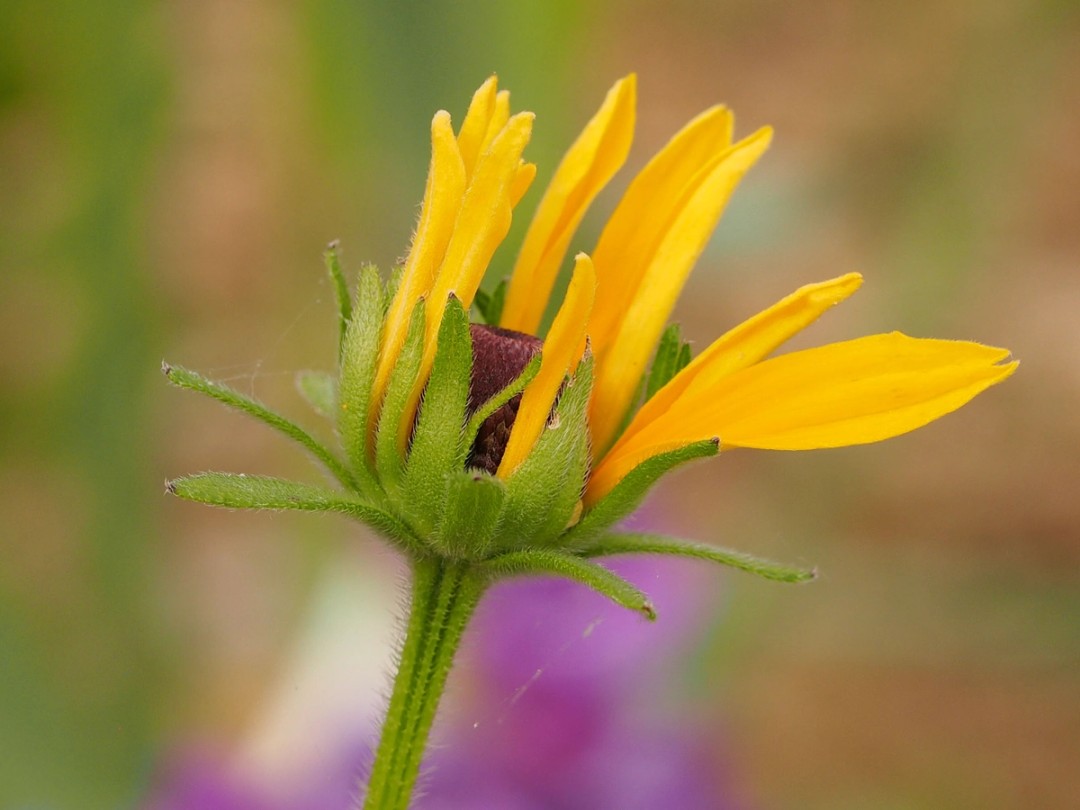
Bud and bracts 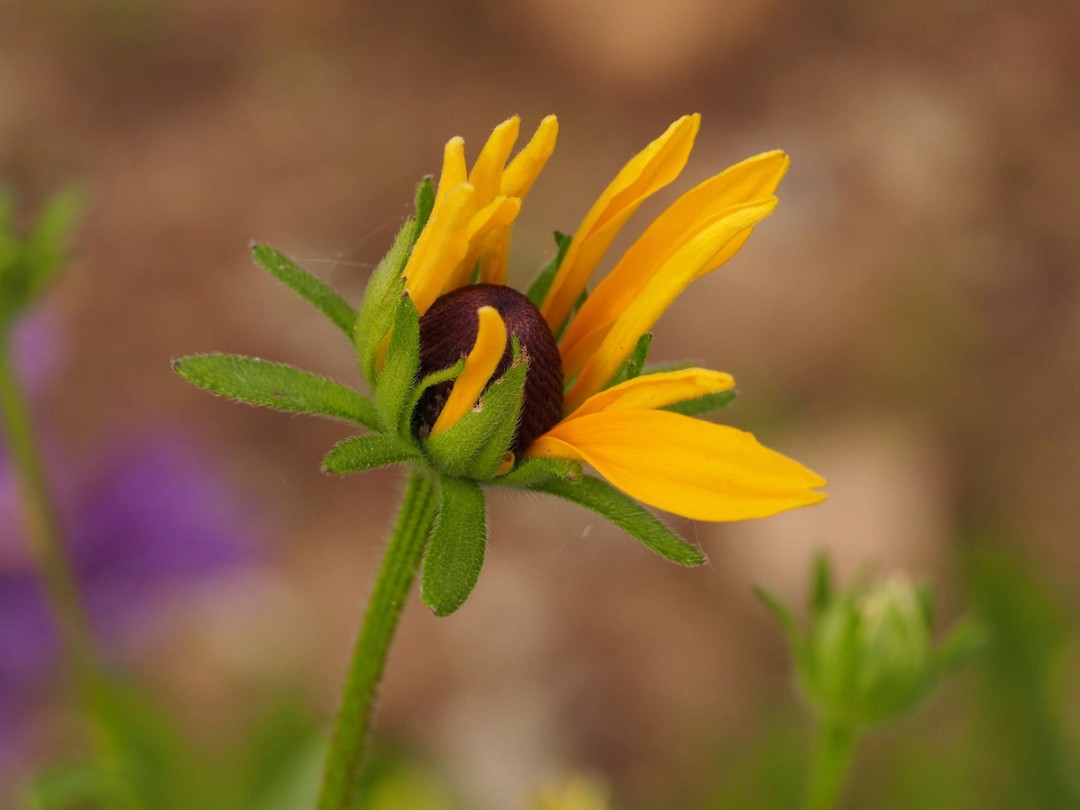
Bud partially open 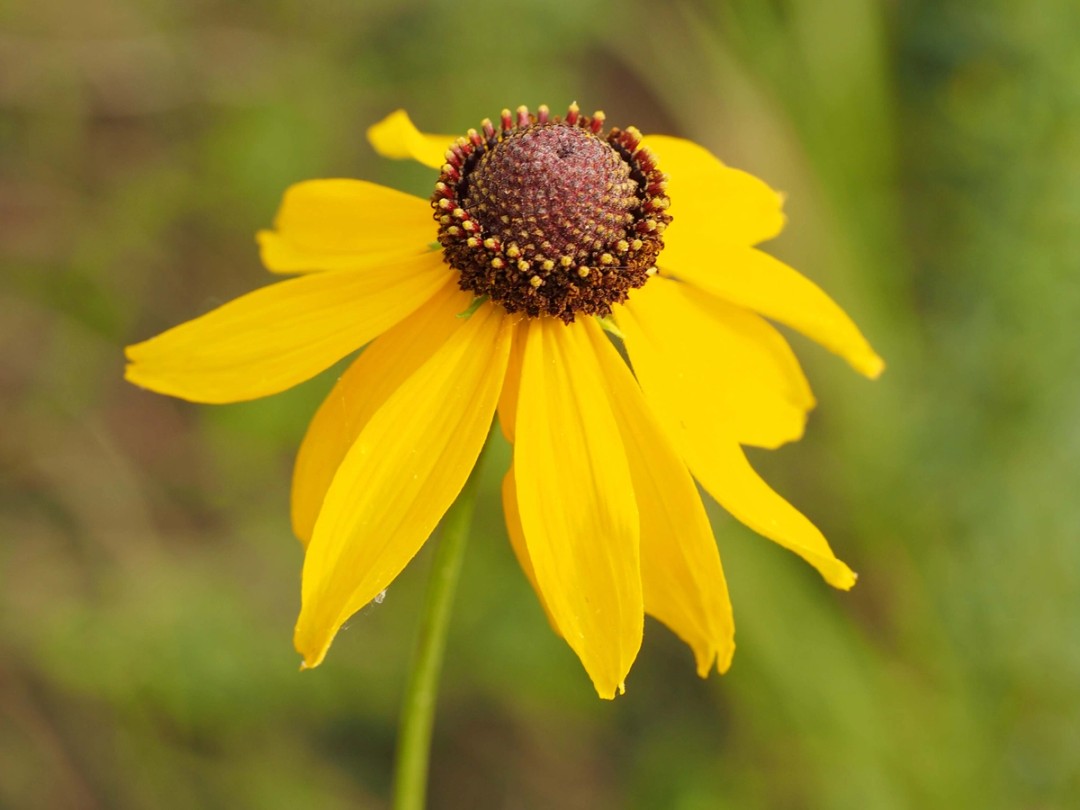
Disk and Ray florets 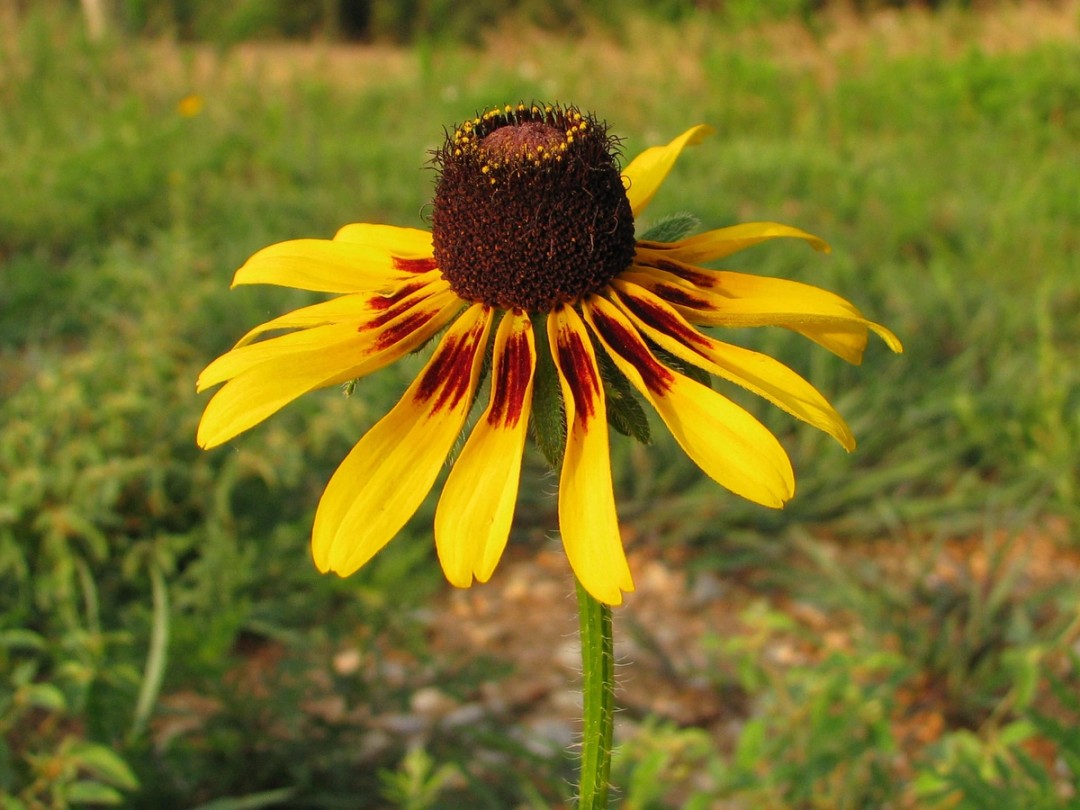
Color variation
DESCRIPTION
Rudbeckia hirta may act as an annual, biennial or even short lived perennial. Seeds sown in spring often flower the same year. Seeds dropped from flowering plants form a basal rosette that overwinters and produces flowers the following year.
The stem and leaves are covered with bristly hairs. Even the roots of this plant are covered with hairs. The root system is fibrous- no tap root or rhizome. Root hairs substantially increase the surface area available for water absorption. Leaf hairs also reduce water loss. Altogether, the hairy nature of the plant makes it highly adaptable to surviving dry, hot conditions.
Rudbeckia hirta grows to a height of about 2.5 feet with multiple, hairy stems. Leaves occur alternately and often clasp the stem. Leafless upper stems each support a single flower.
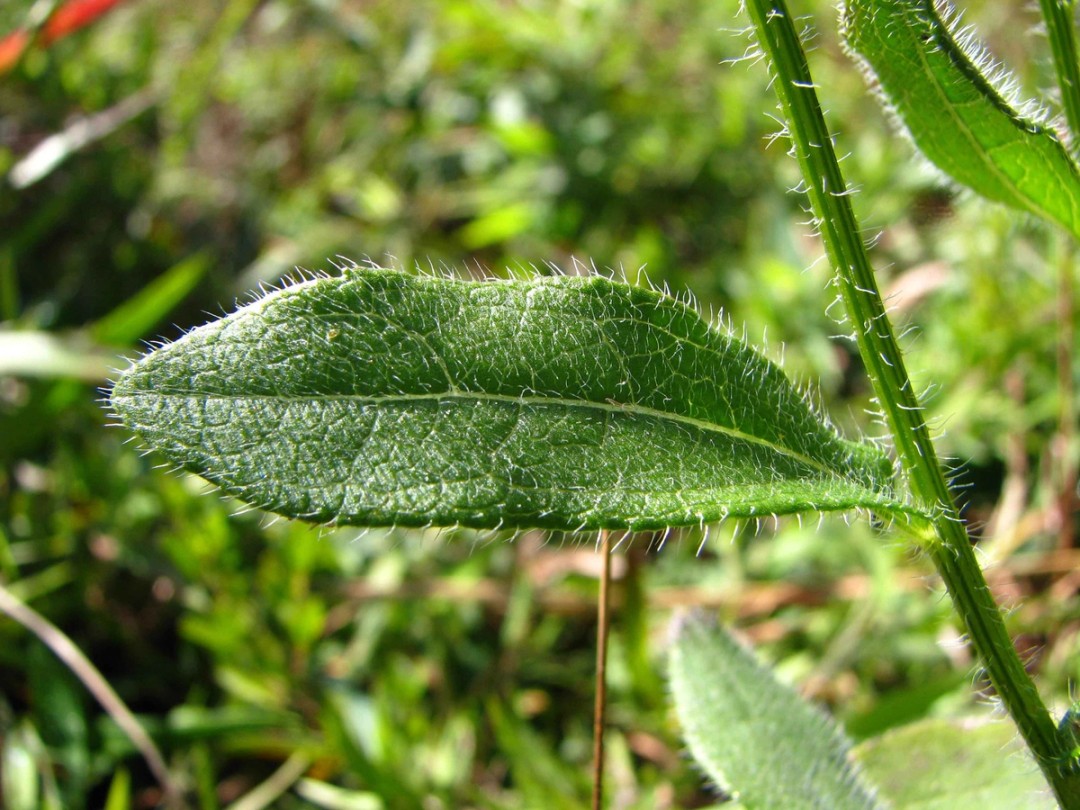
Hirsute leaf clasping stem 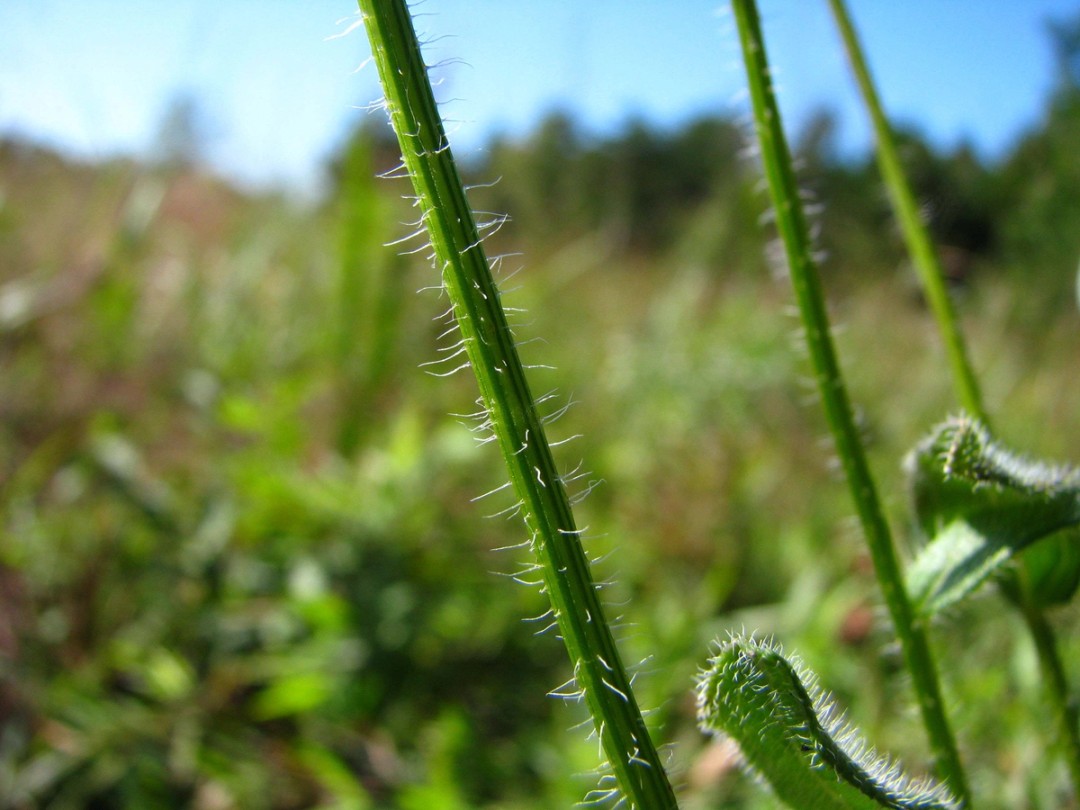
Hirsute stem 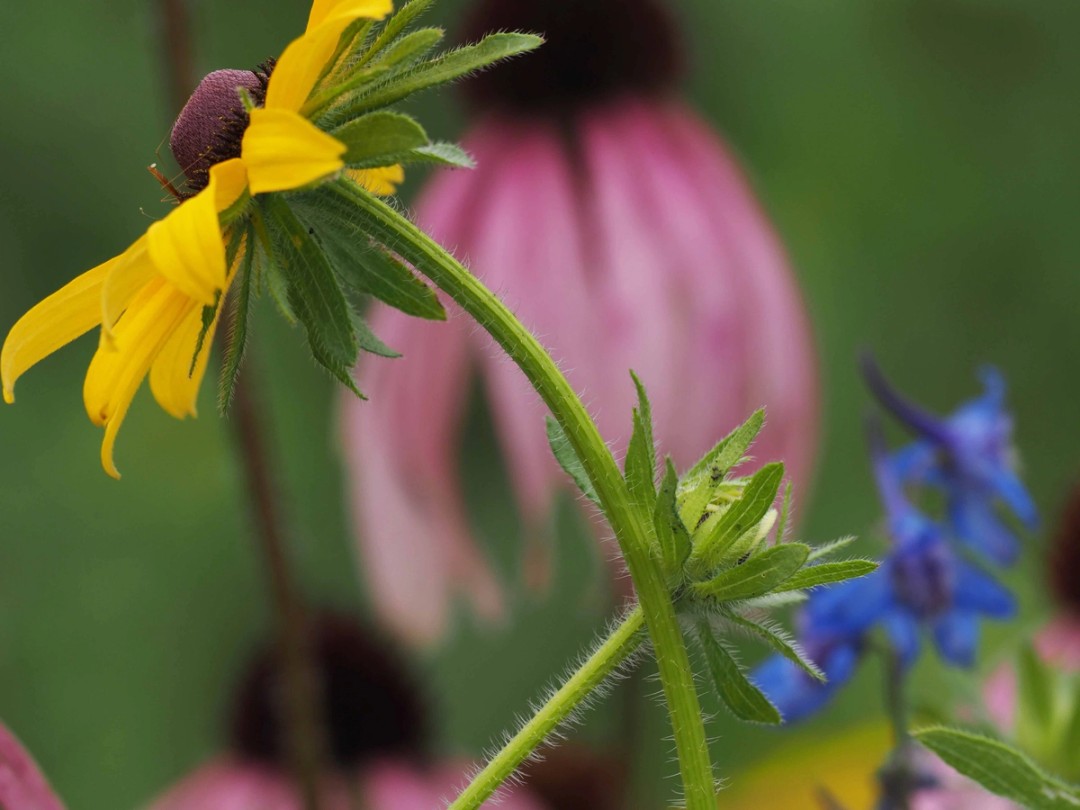
Stem, bracts and flower 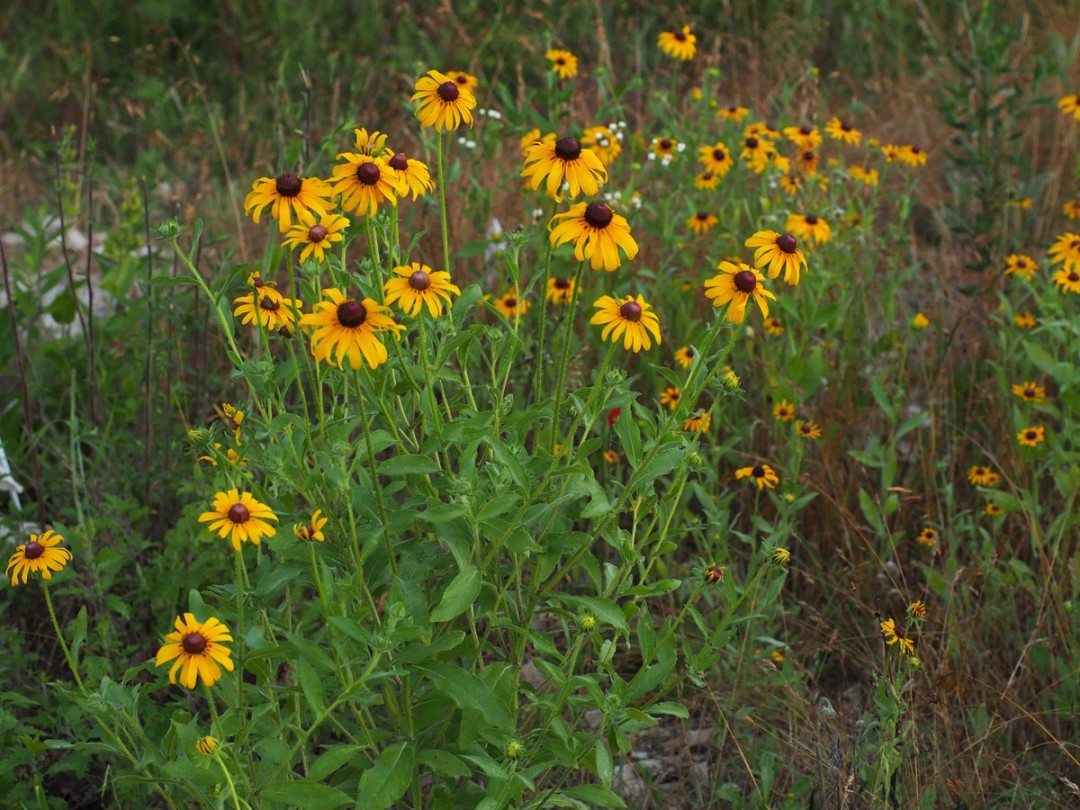
Flowering plant 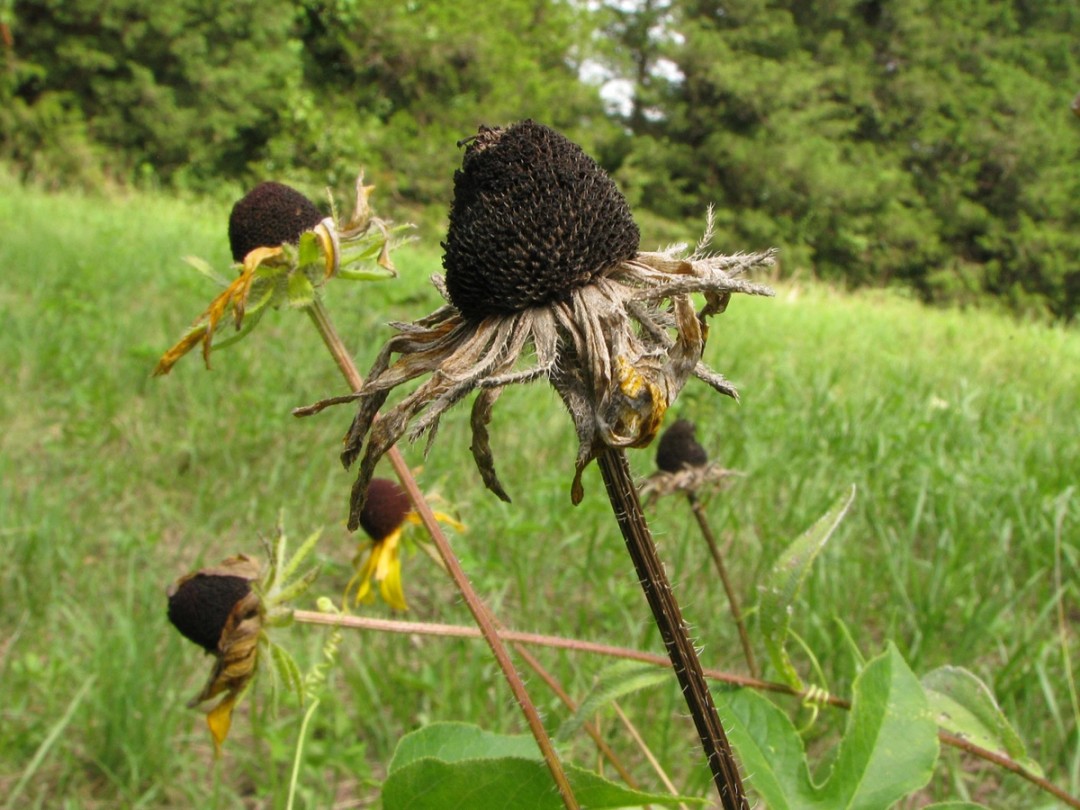
Seed head 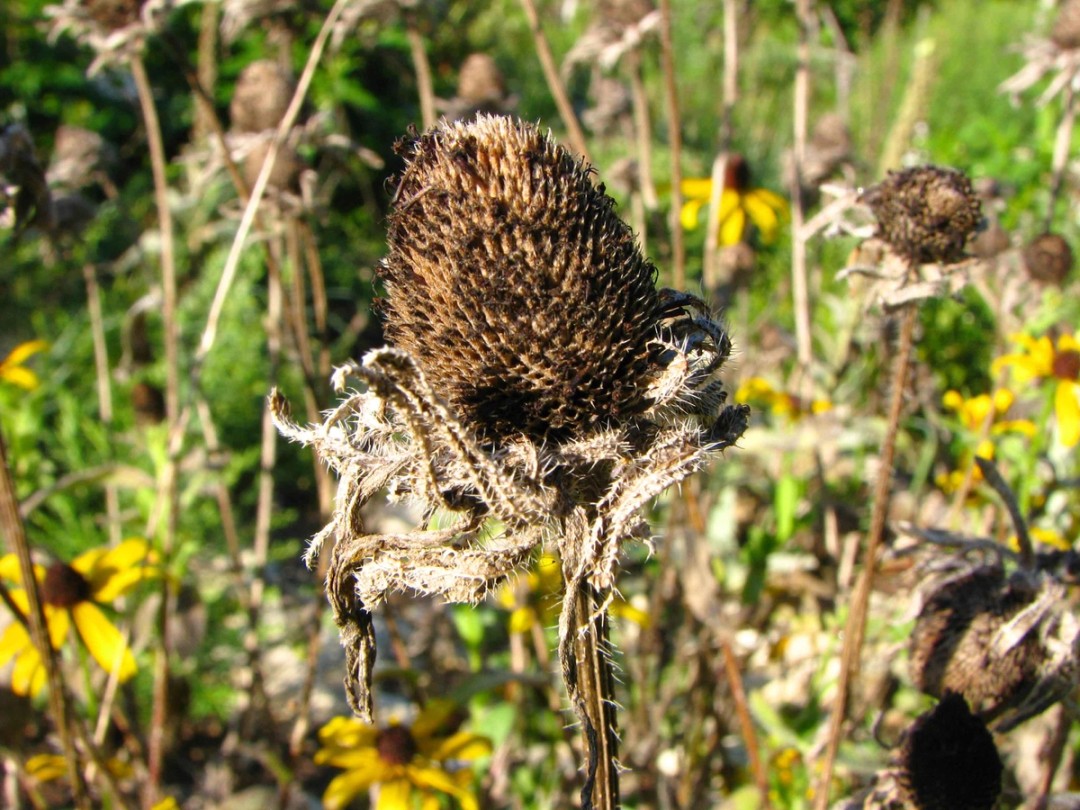
Missing seeds
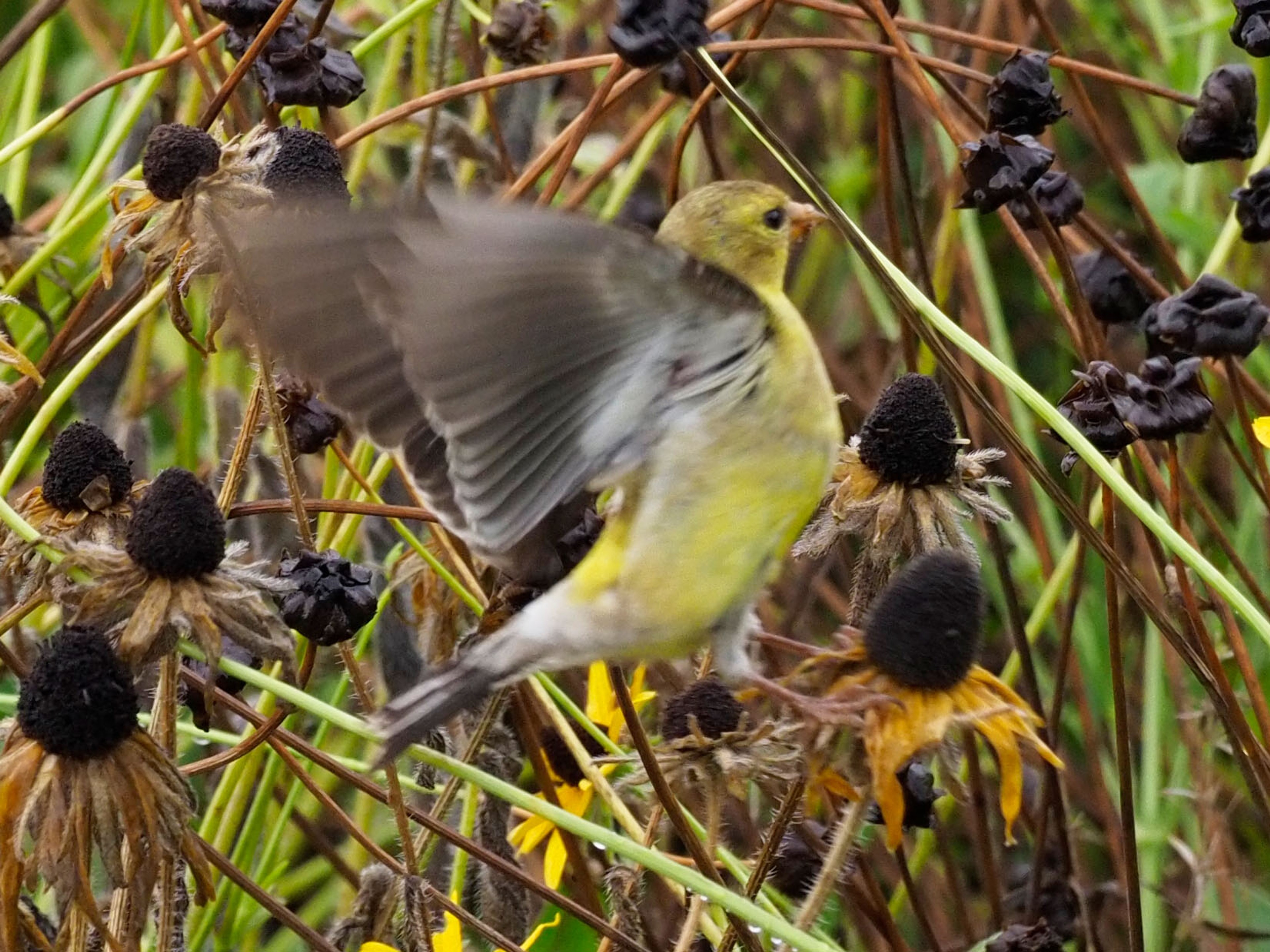
The seeds of Rudbeckia hirta are favored by many birds, especially the American goldfinch, but also Carolina chickadees, Cardinals, Sparrows and Nuthatches. The photo below shows a female goldfinch flying in to dine on seeds of both Rudbeckia hirta and Lanceleaf coreopsis.
POLLINATORS
While the main pollinators of Rudbeckia hirta are various kinds of bees, there are many interesting insects that visit the plants to consume the nectar and pollen. According to Illinois Wildflowers, Bee visitors include Little Carpenter bees, Leaf-Cutter bees, Green Metallic and other Halictine bees as well as Andrenid bees and more. Many people are unaware that flies are important pollinators. Fly visitors include Syrphid flies, Bee flies and Tachinid flies. Various wasp species also visit and aid in pollination of Rudbeckia hirta.
I'm always amazed at the number and diversity of insects visiting Rudbeckia hirta! Here's a sampling of bees I've documented visiting these flowers.
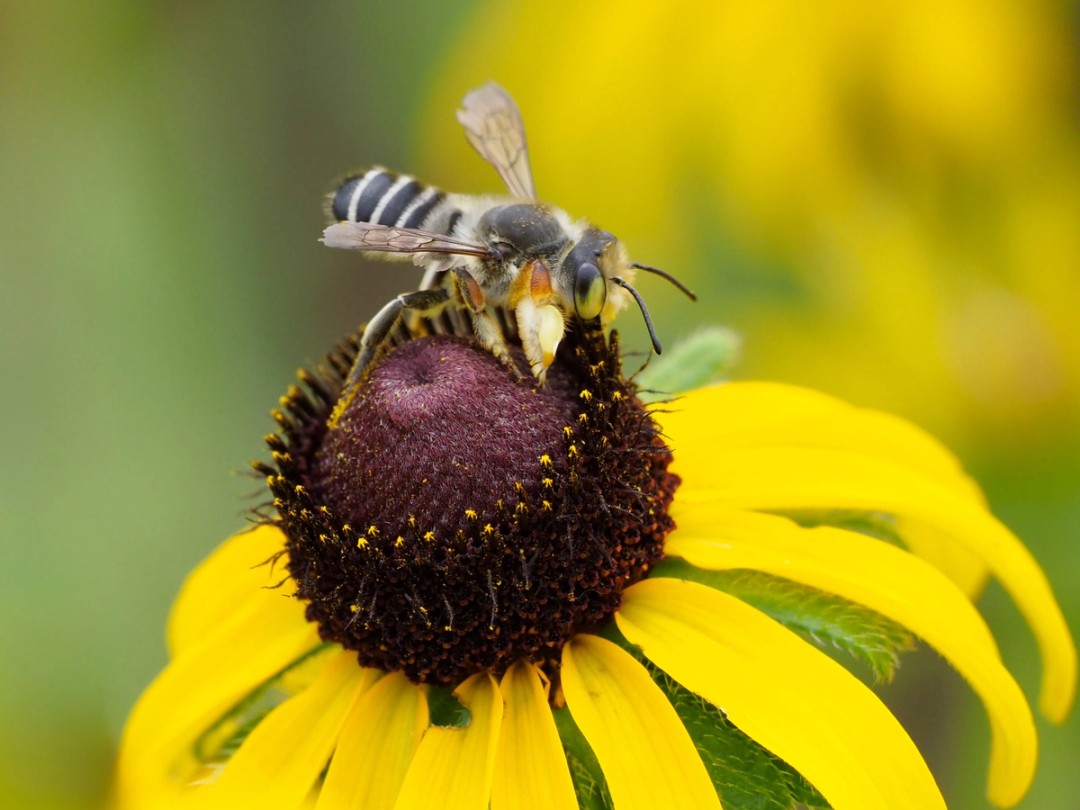
Megachile polaris bee 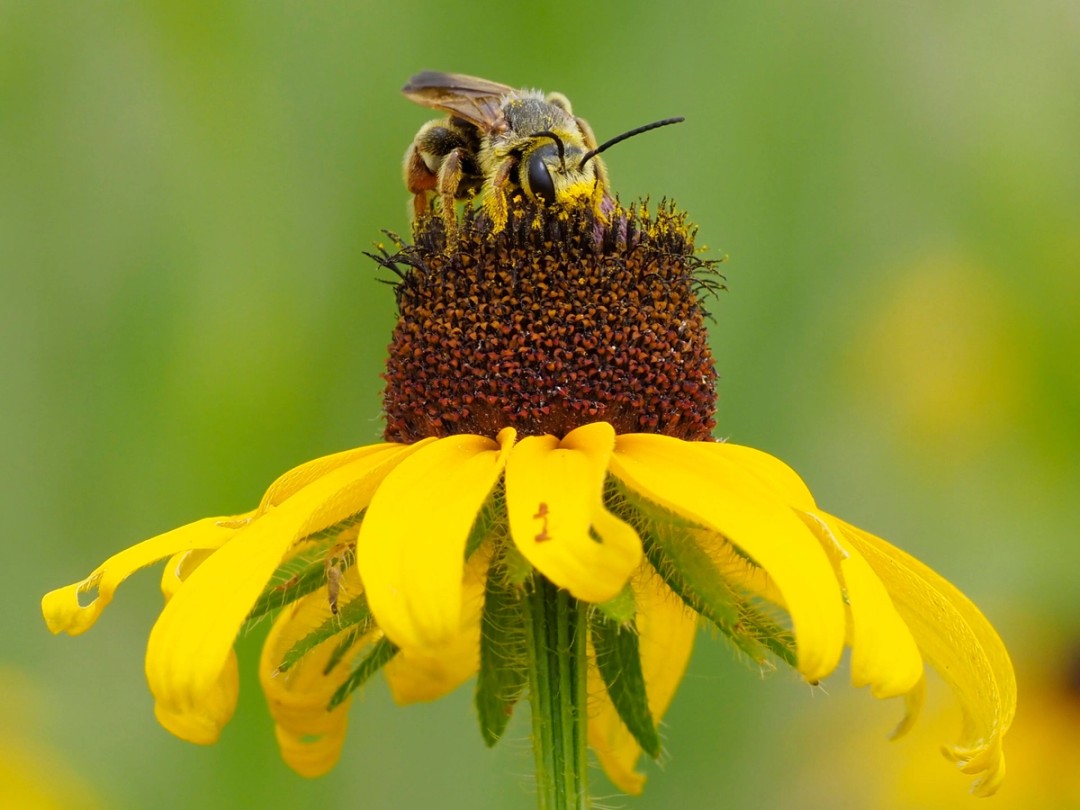
Andrena rudbeckia bee 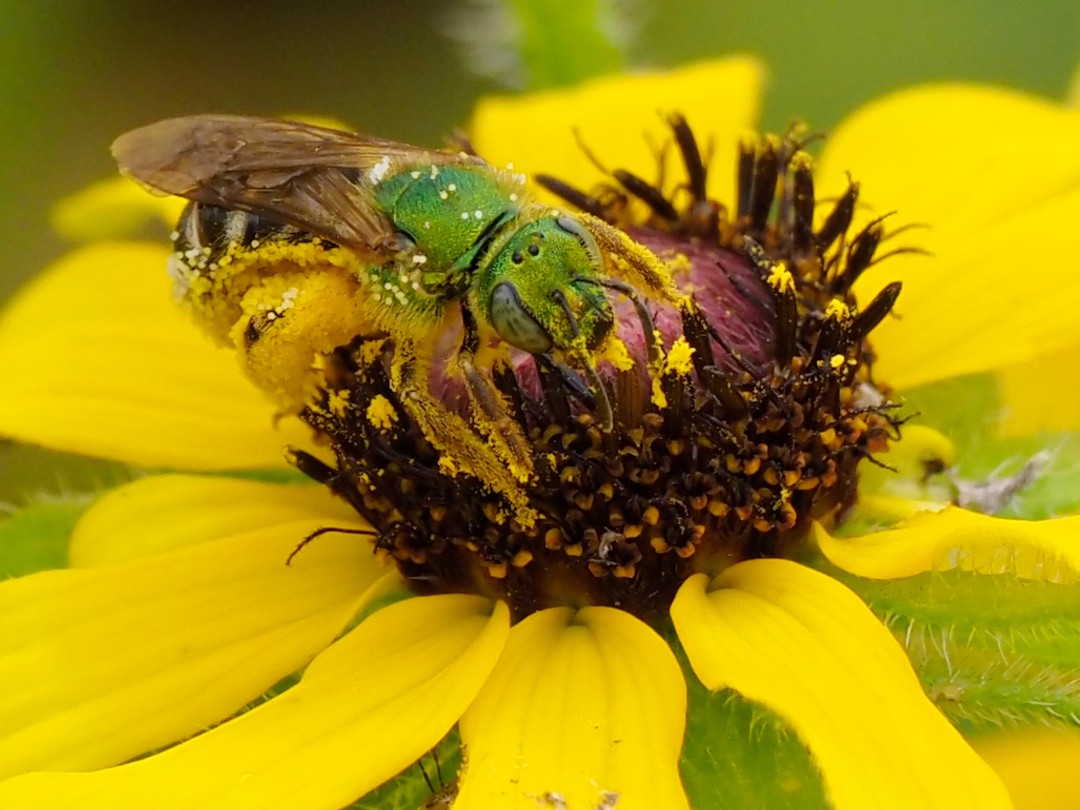
Bicolored sweat bee 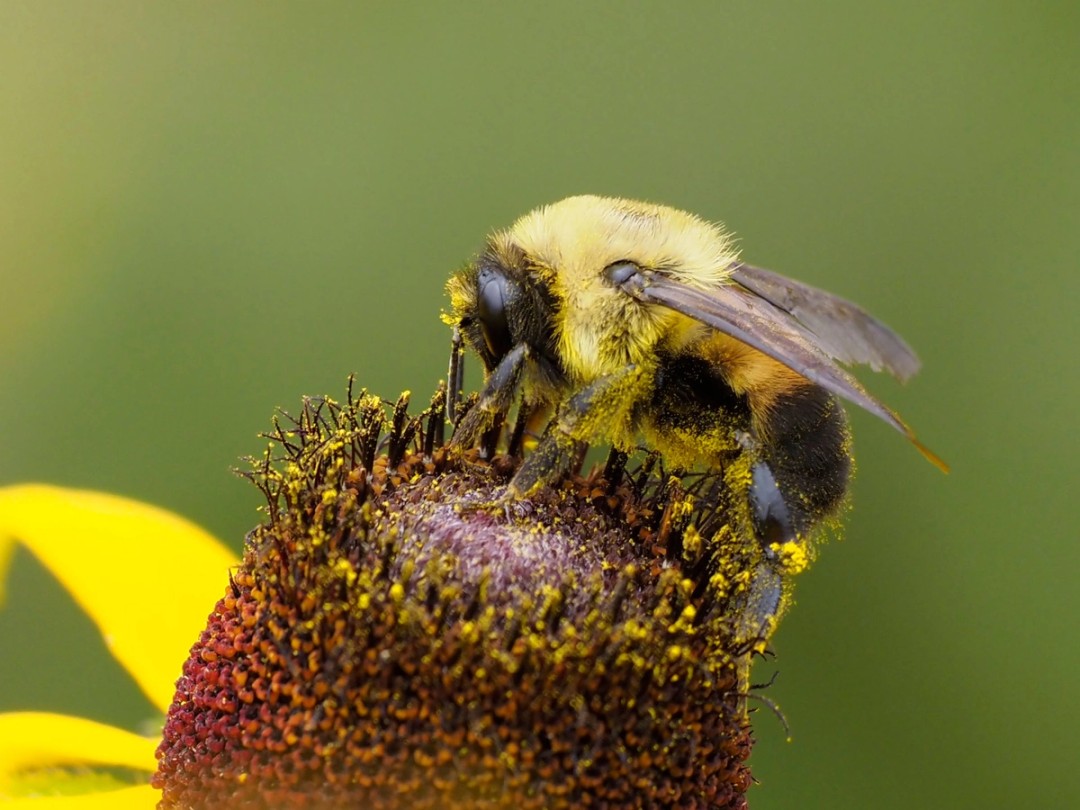
Brown-belted bumblebee
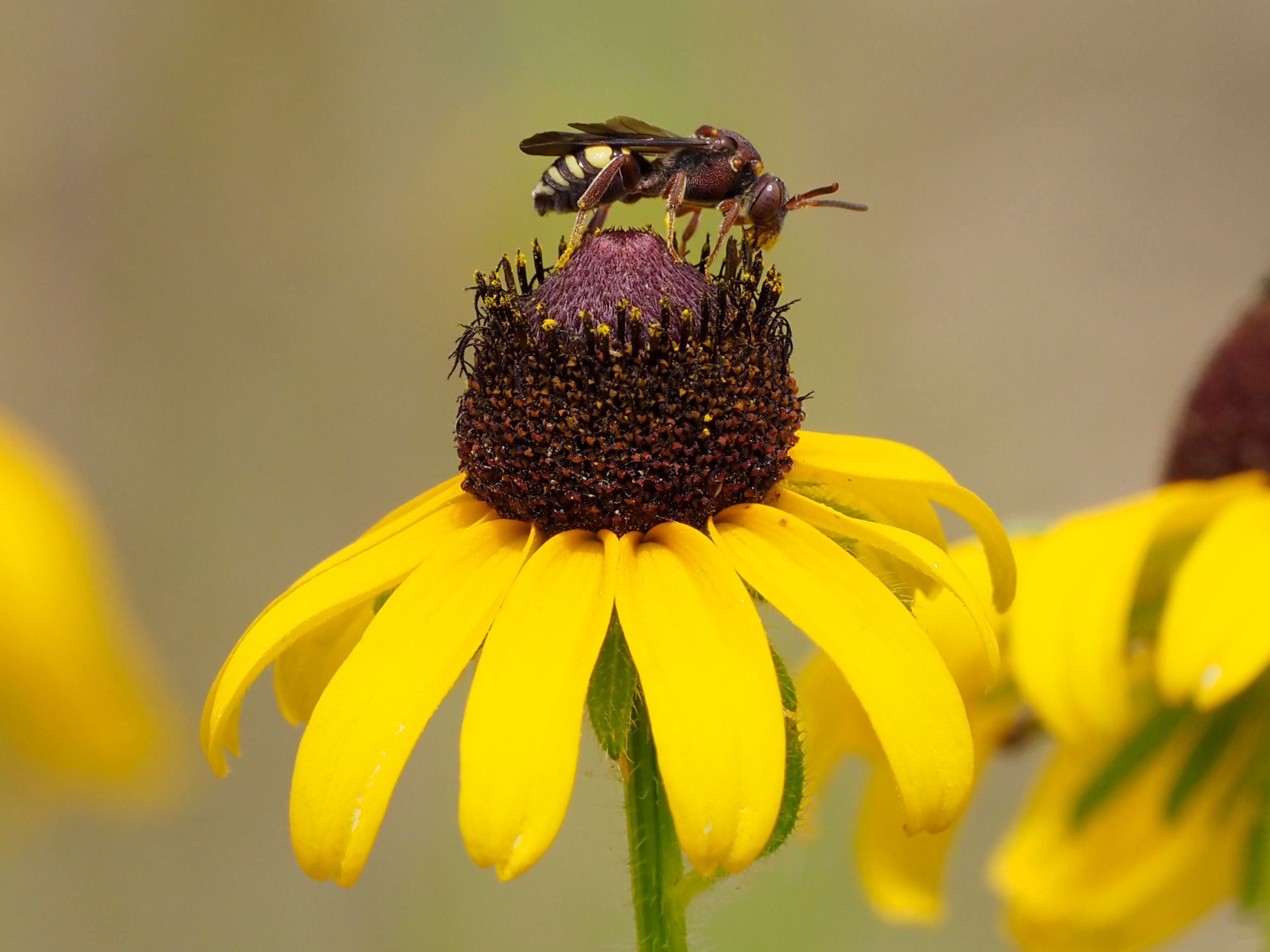
Wasps are also pollinators of Rudbeckia hirta. The Four-banded Sand Wasp in the video below is a particularly beautiful wasp nectaring on Rudbeckia hirta.
Fly and Beetle visitors are quite interesting to observe!
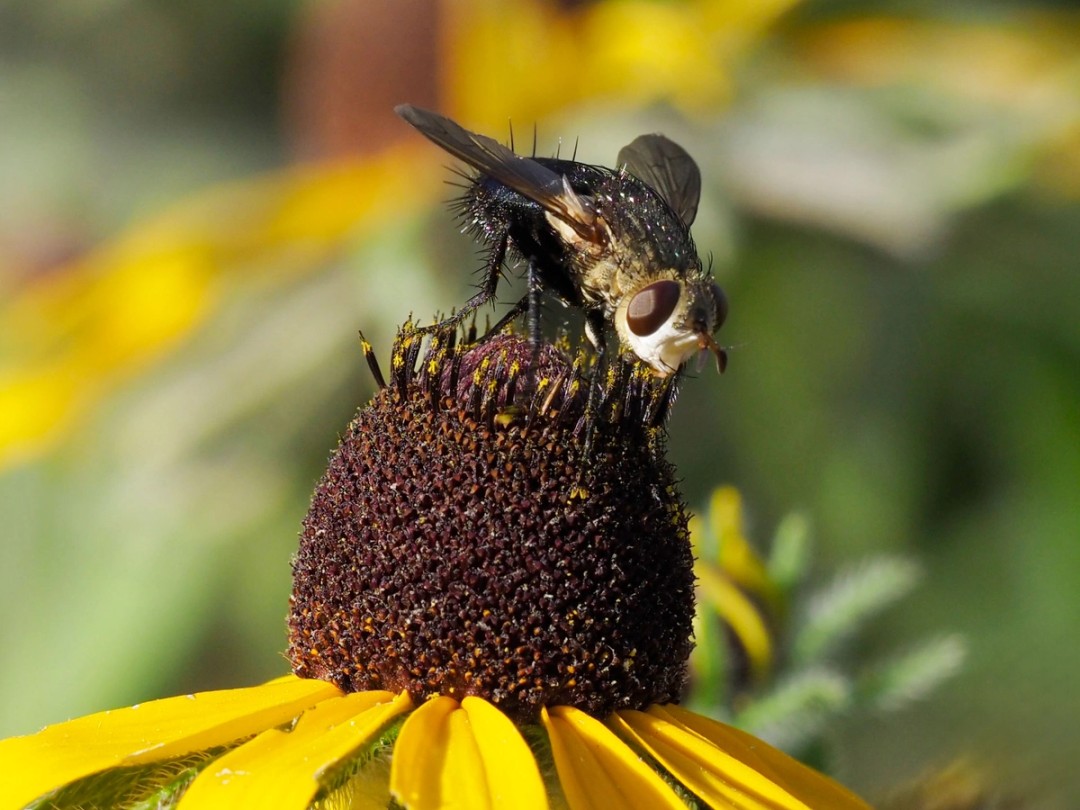
Fly 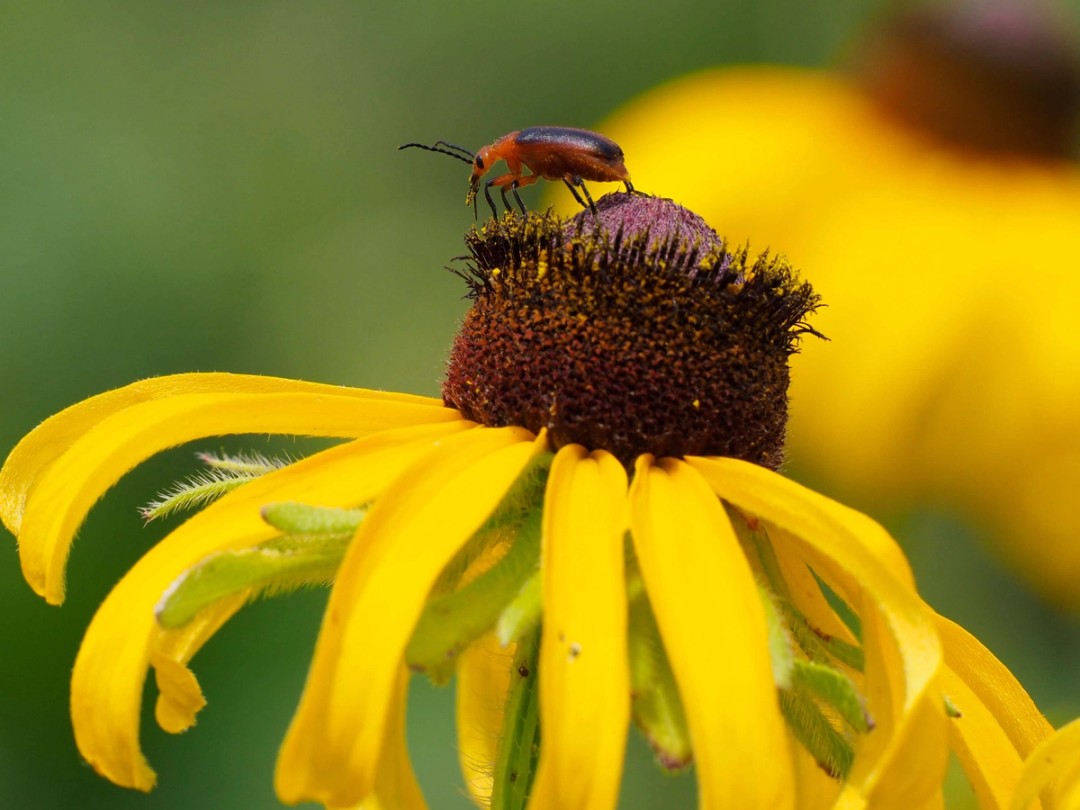
Blister beetle
Butterflies and Skippers are always beautiful to see!
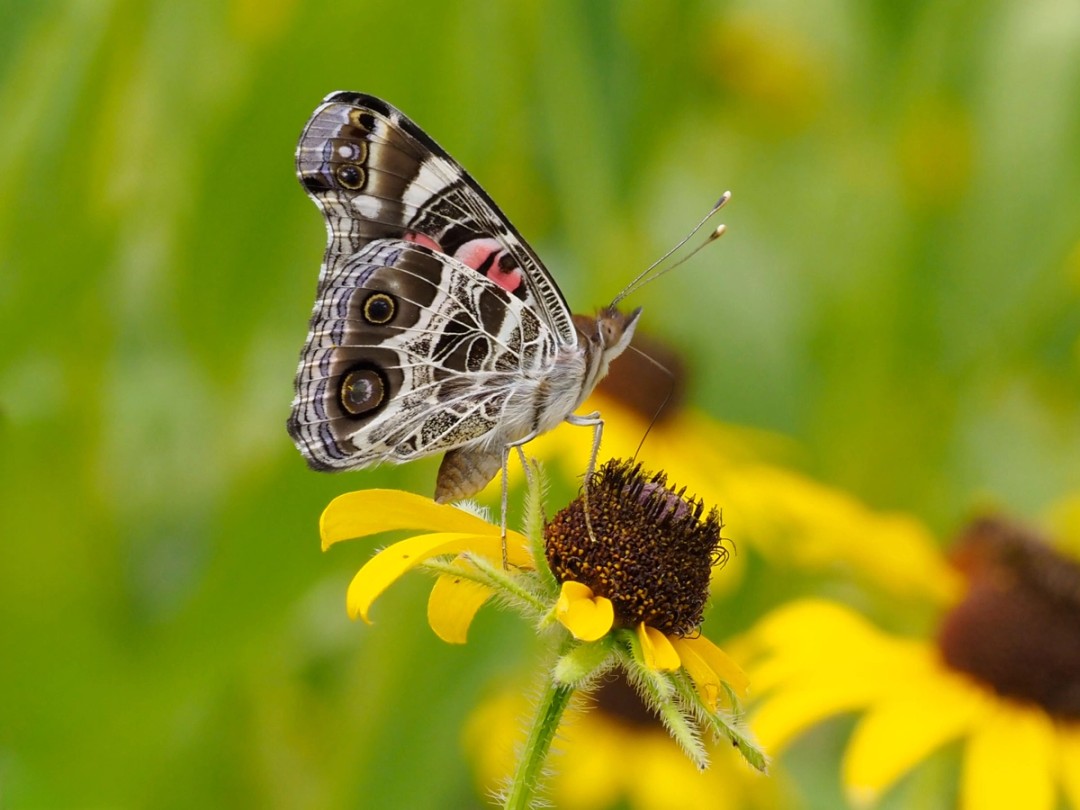
American Lady 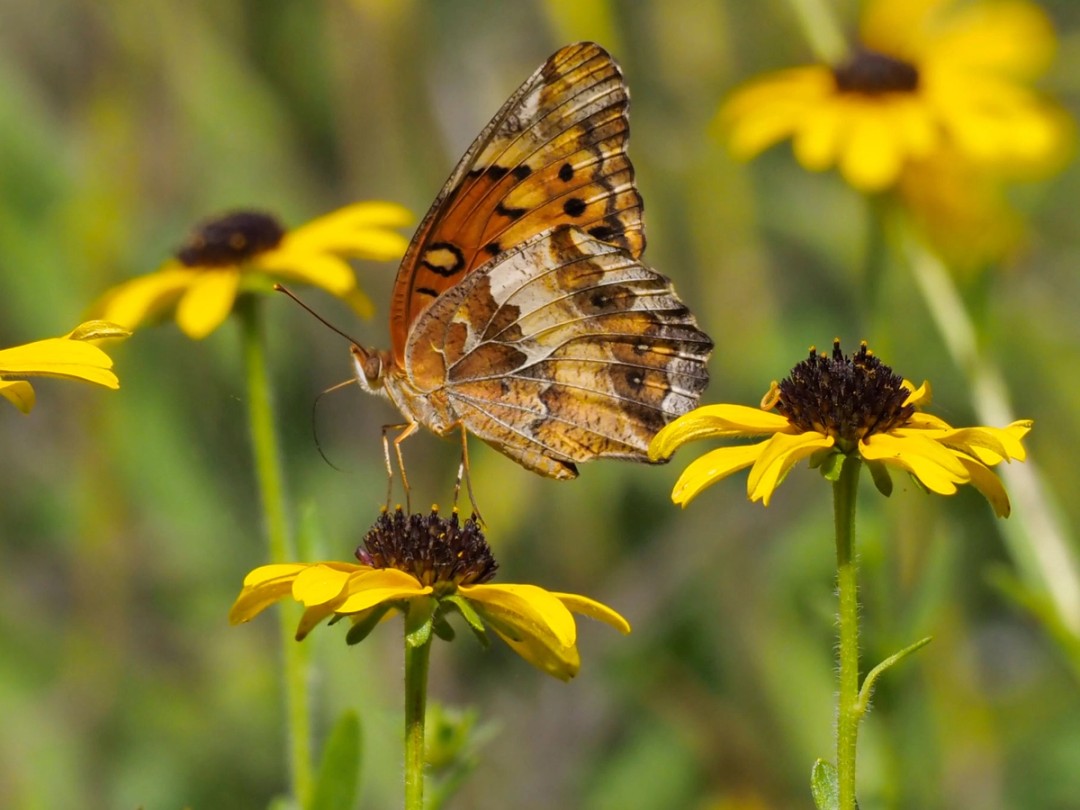
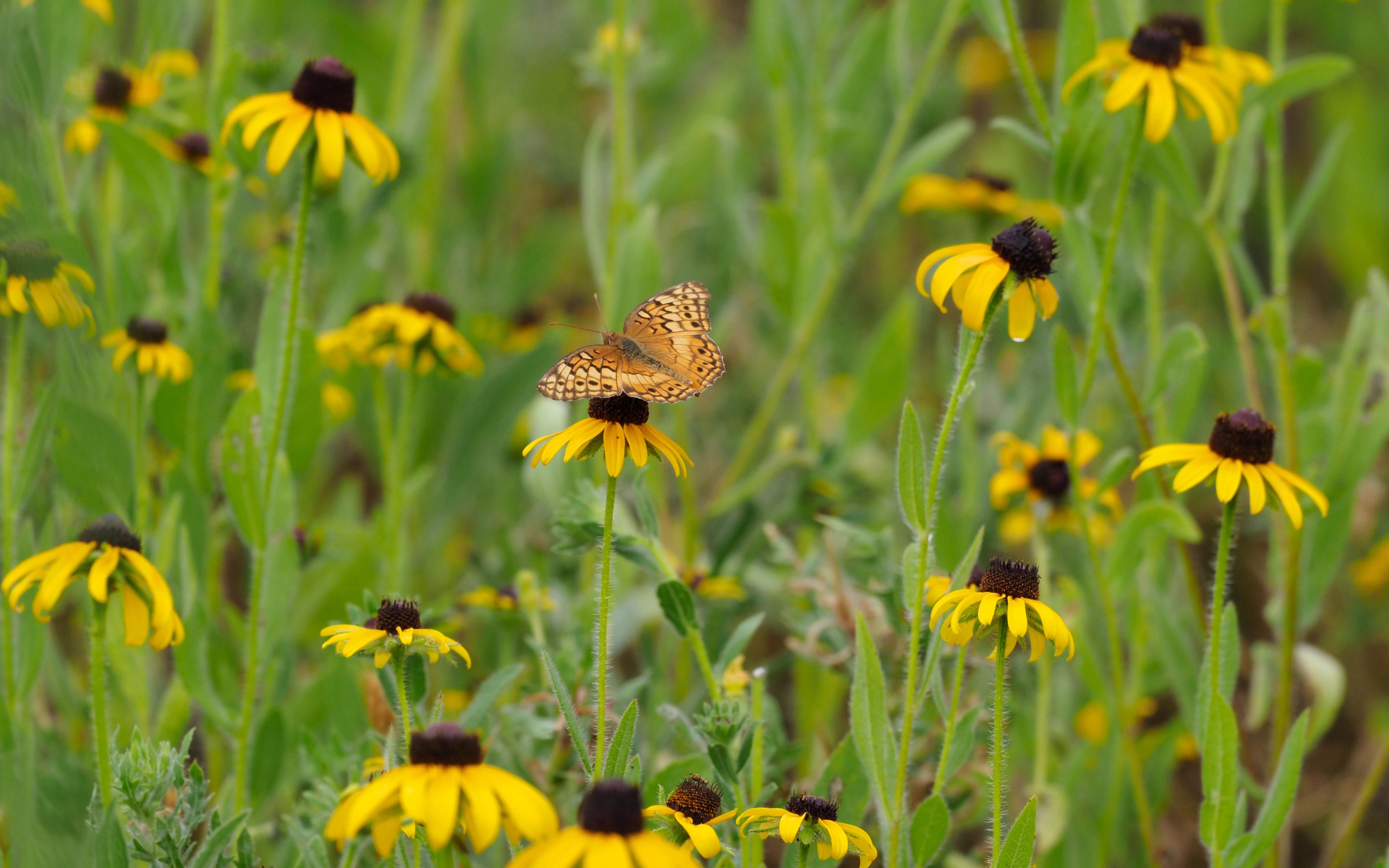
Variegated fritillary 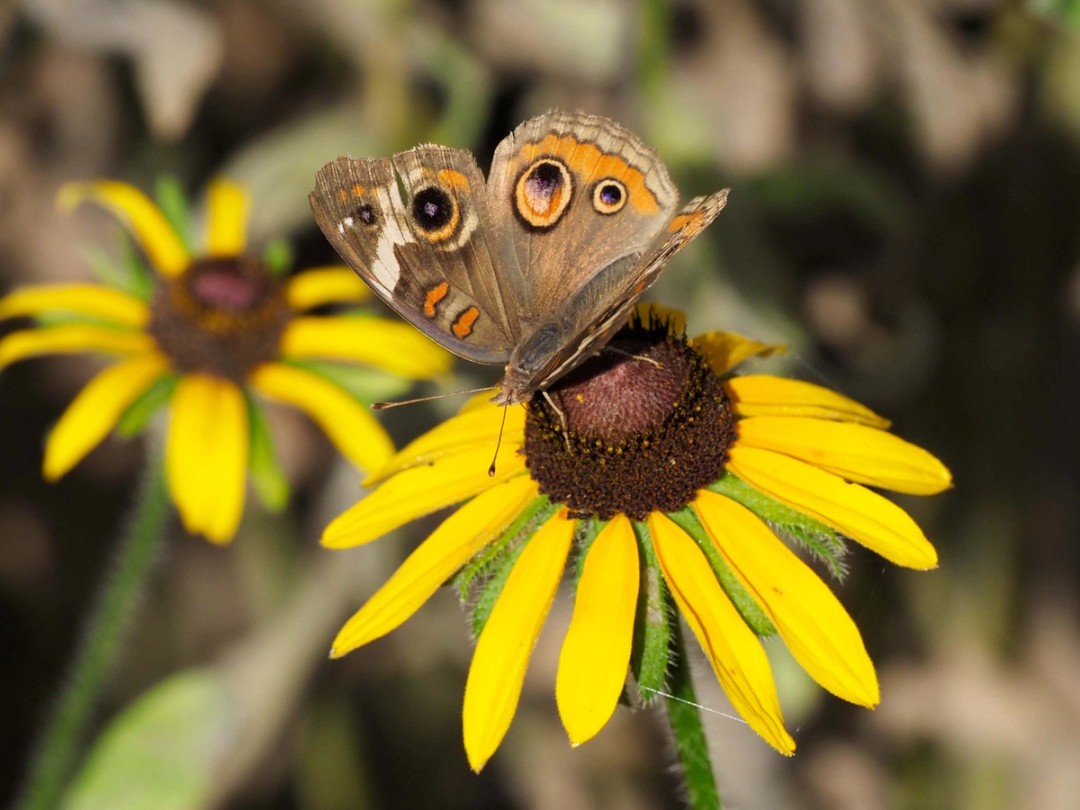
Common Buckeye 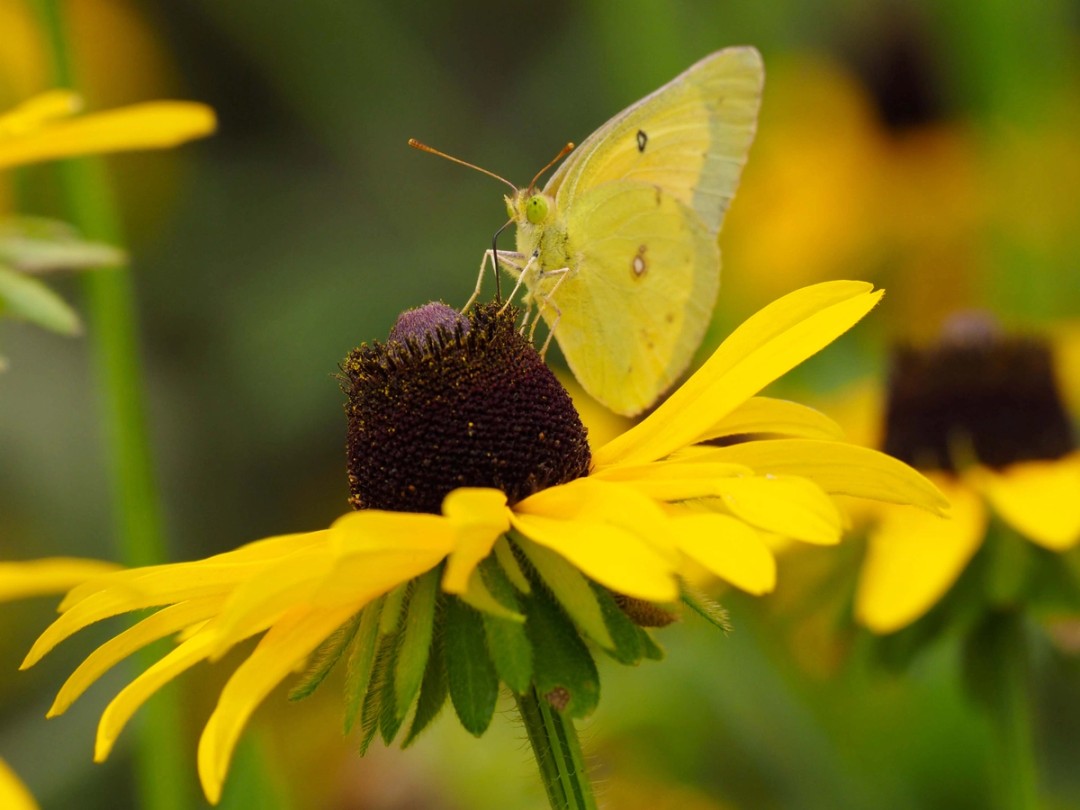
Clouded sulfur 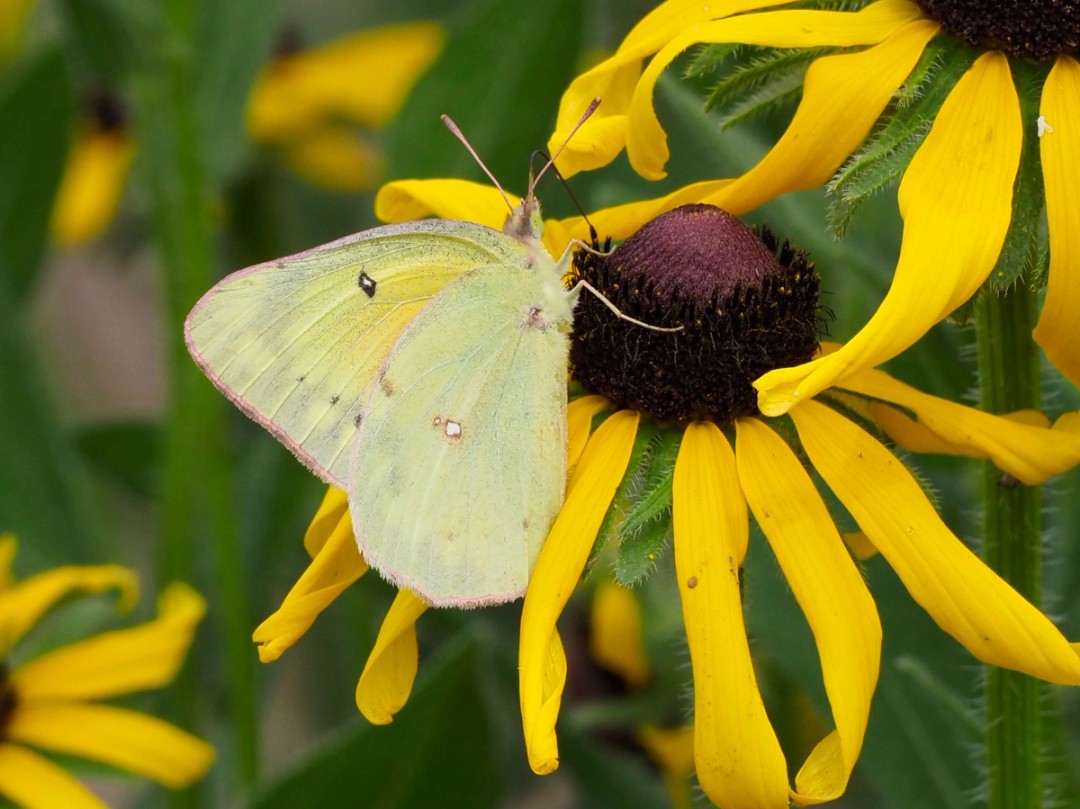
Orange sulfur 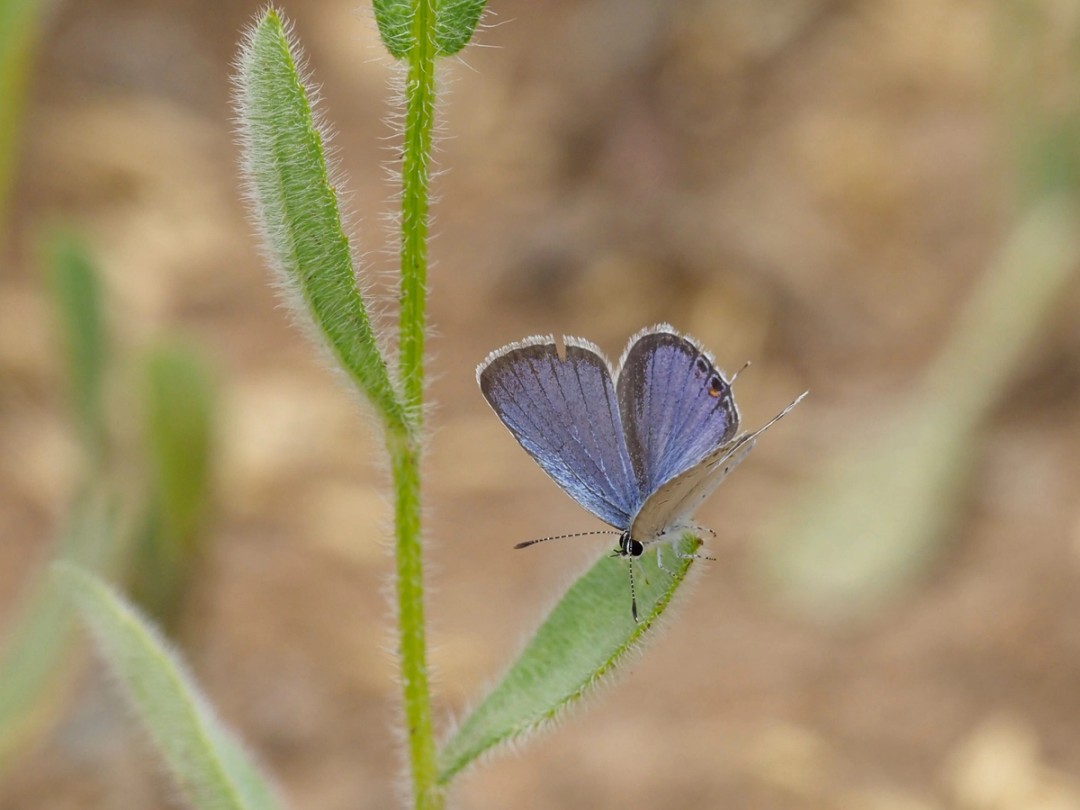
Eastern Tailed-Blue 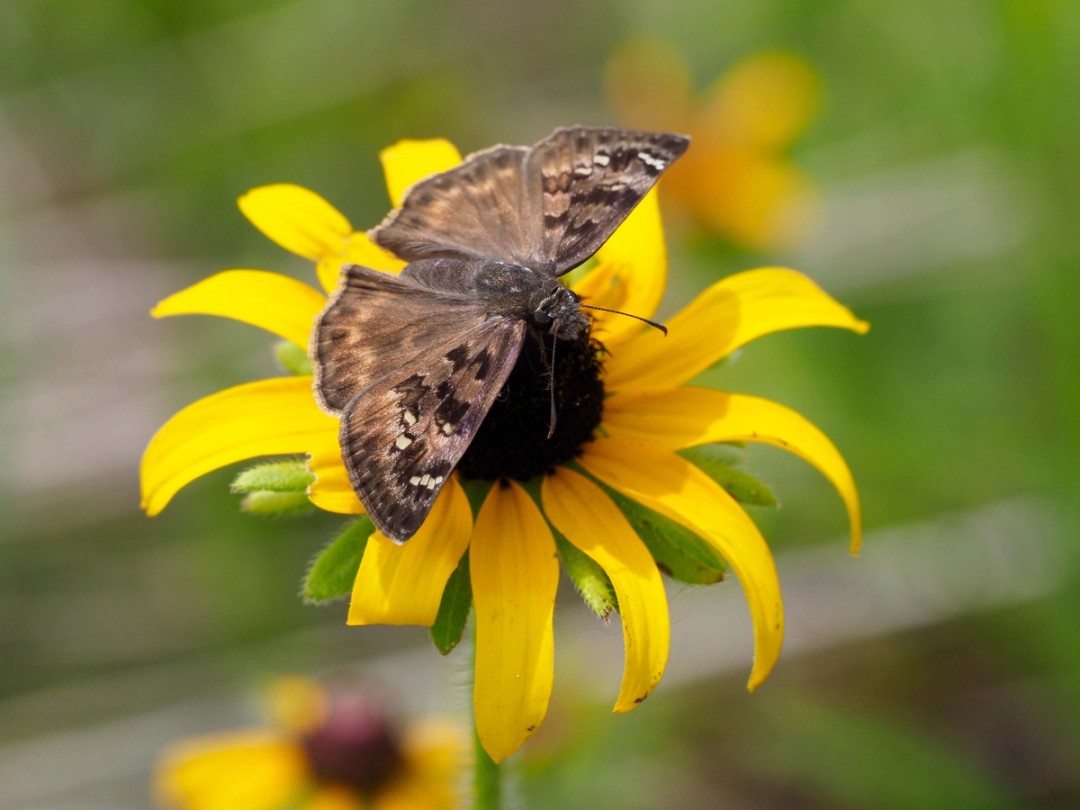
Horace's duskywing 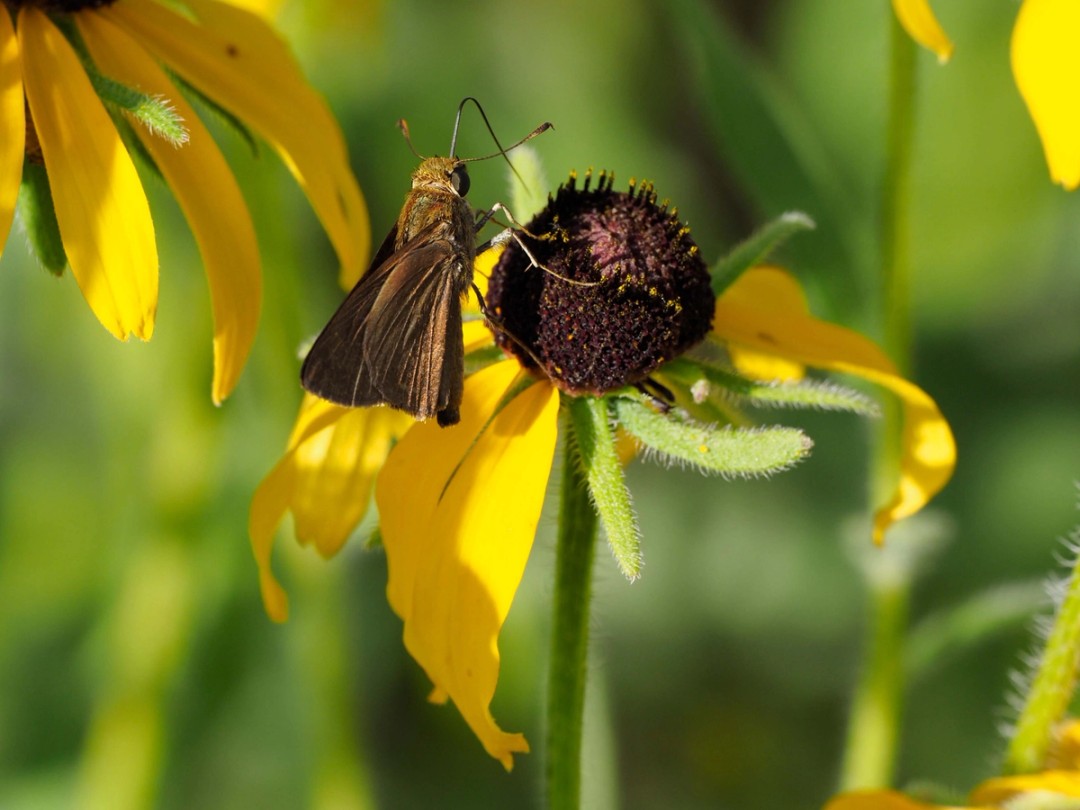
Dun Skipper 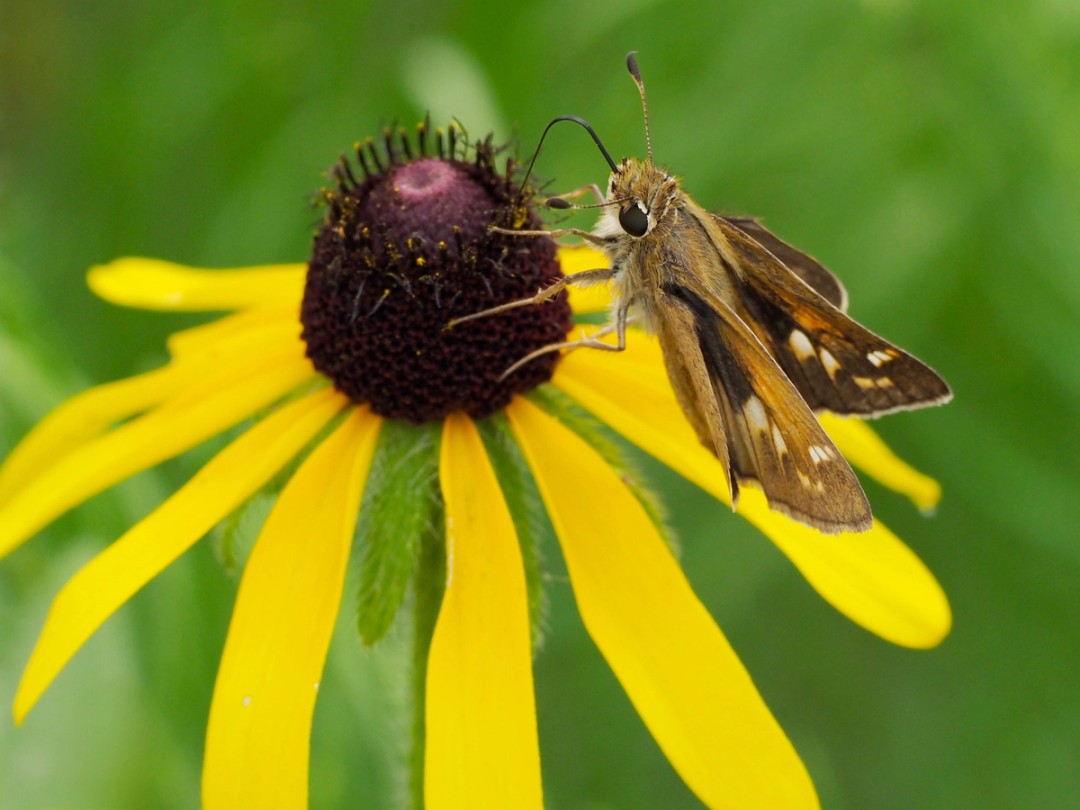
Sachem skipper 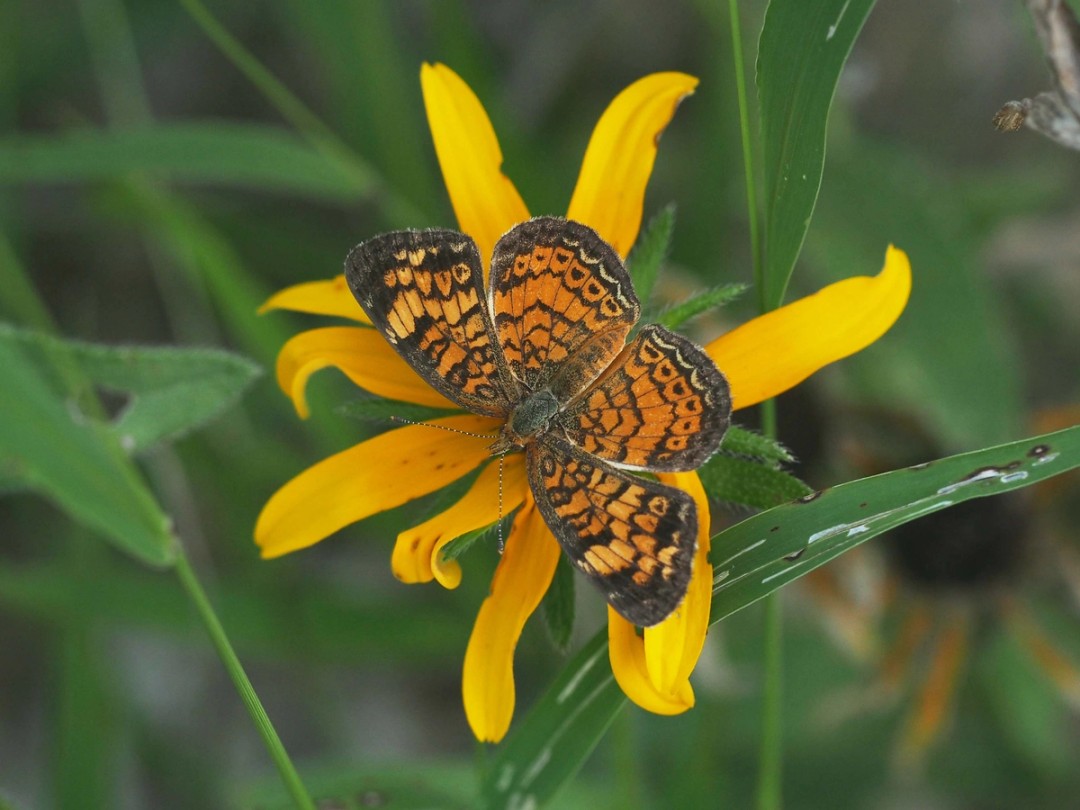
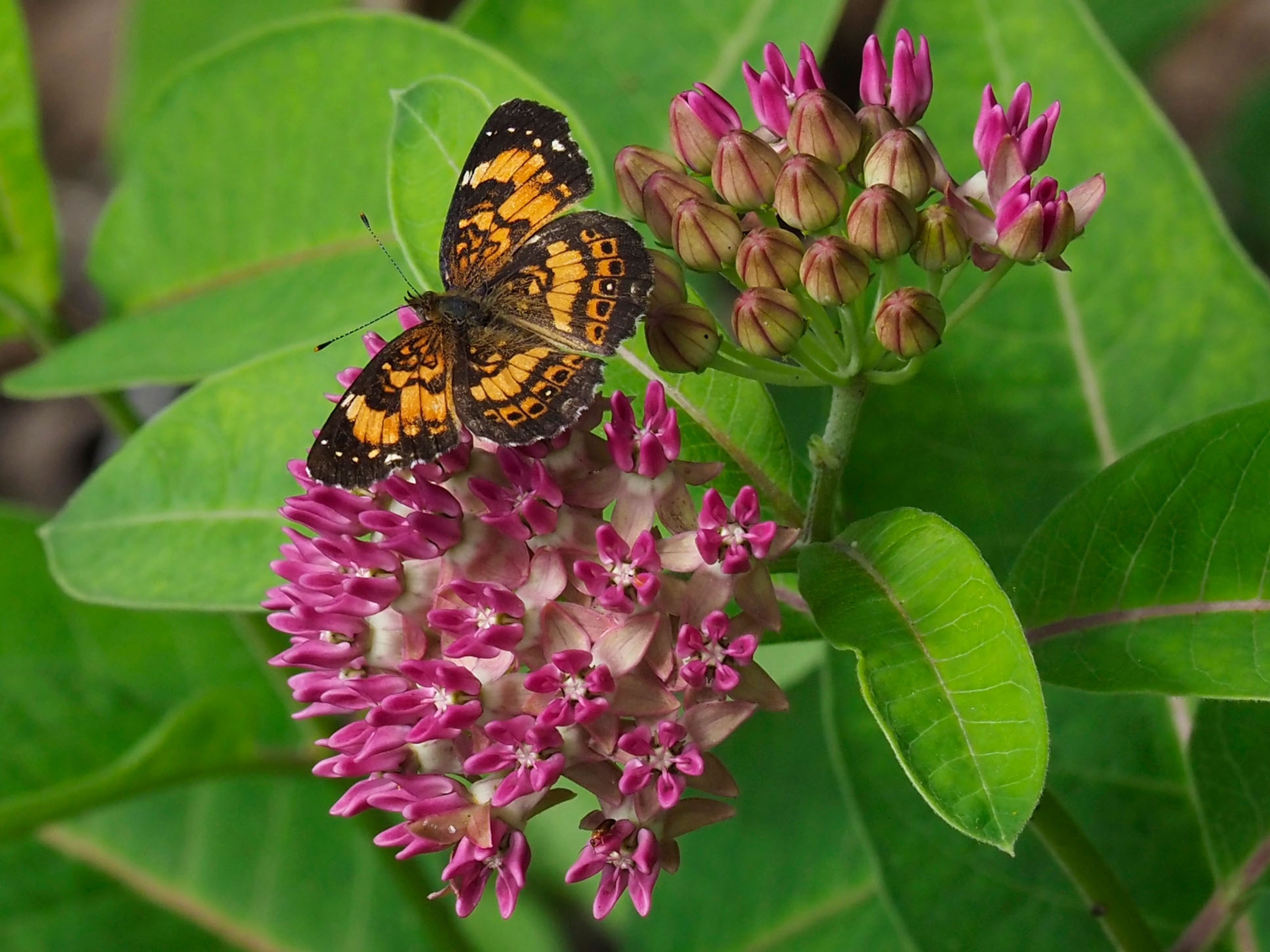
Pearl crescent
PLANTS GROWING NEARBY
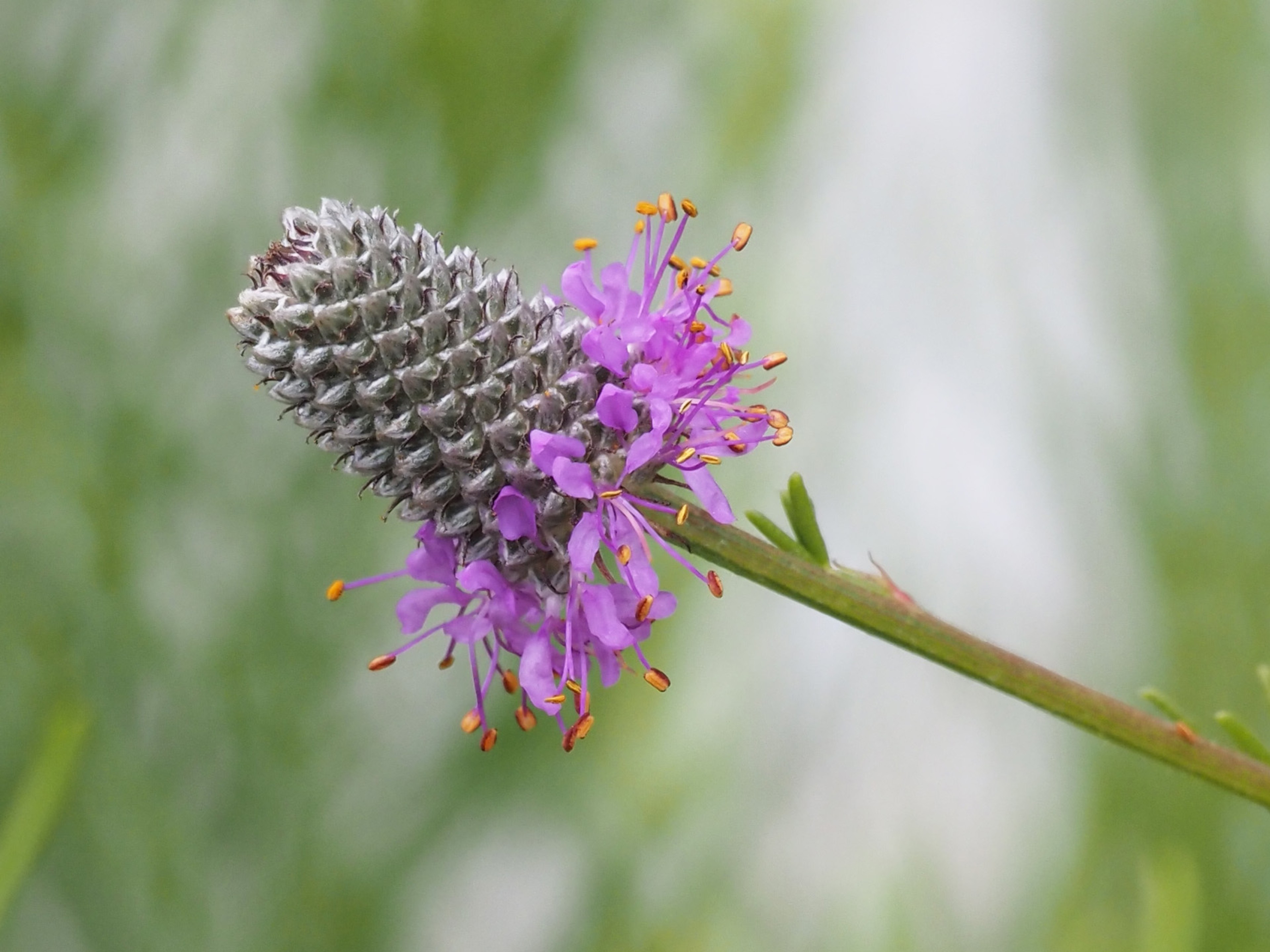
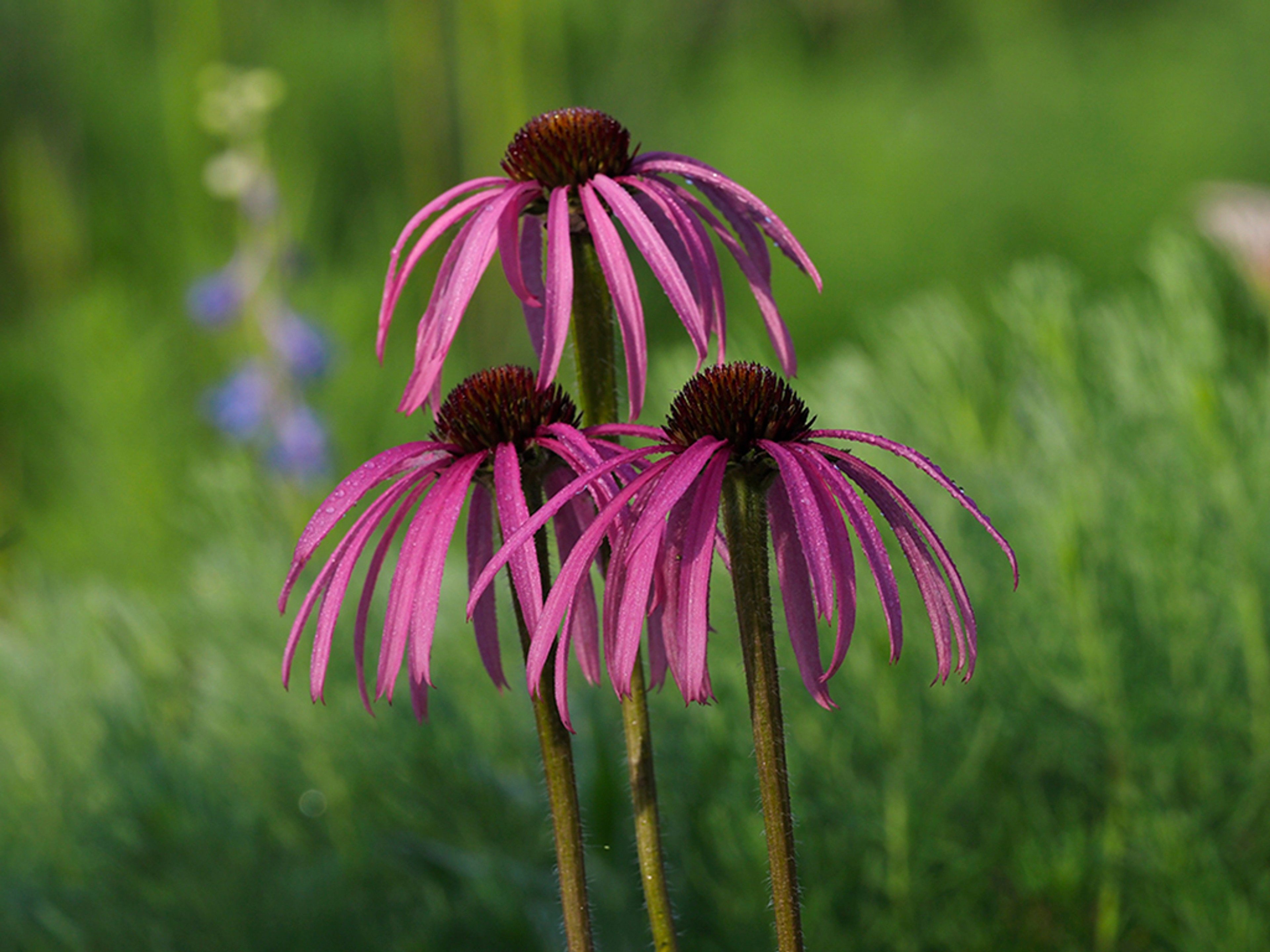
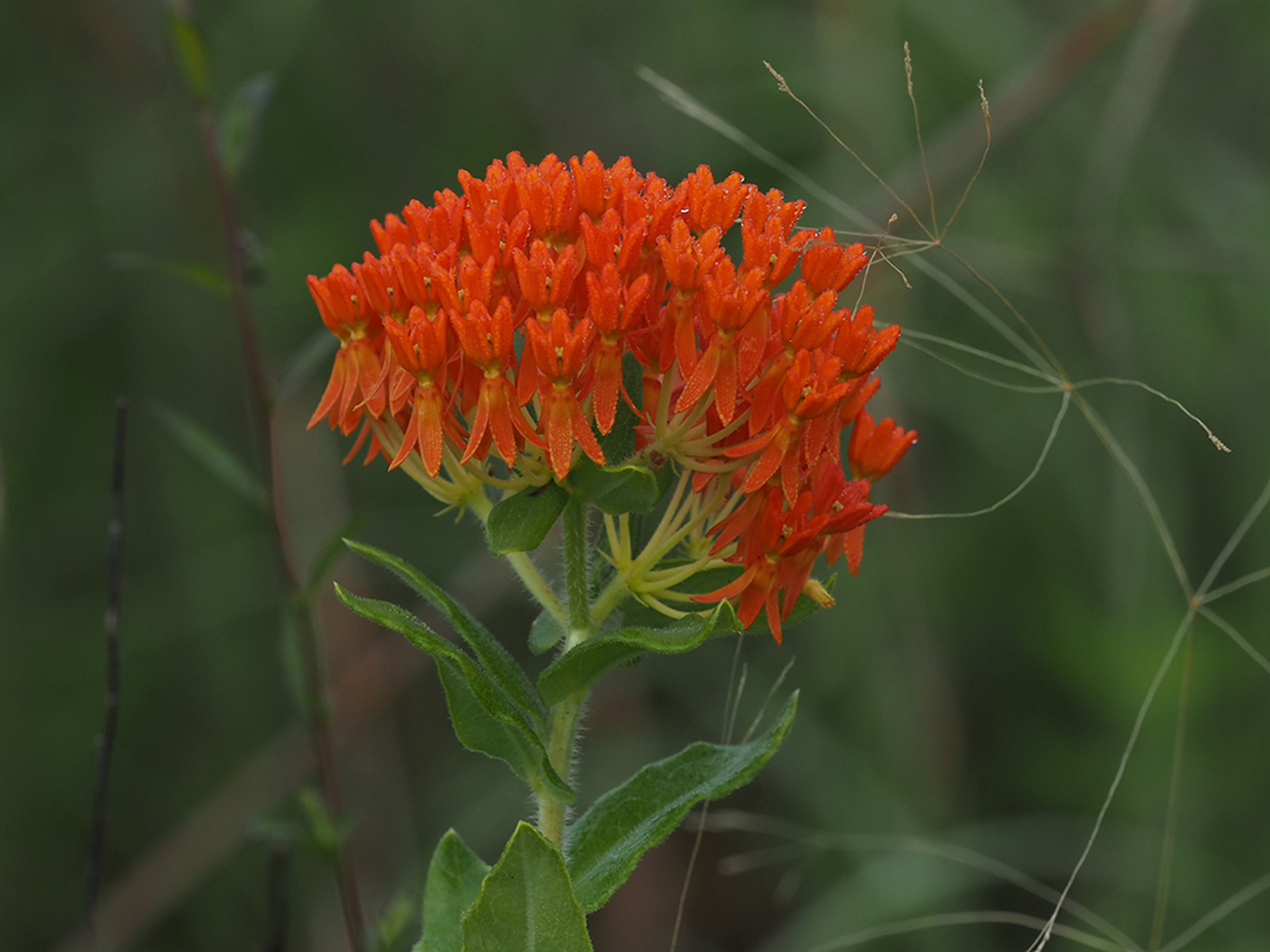
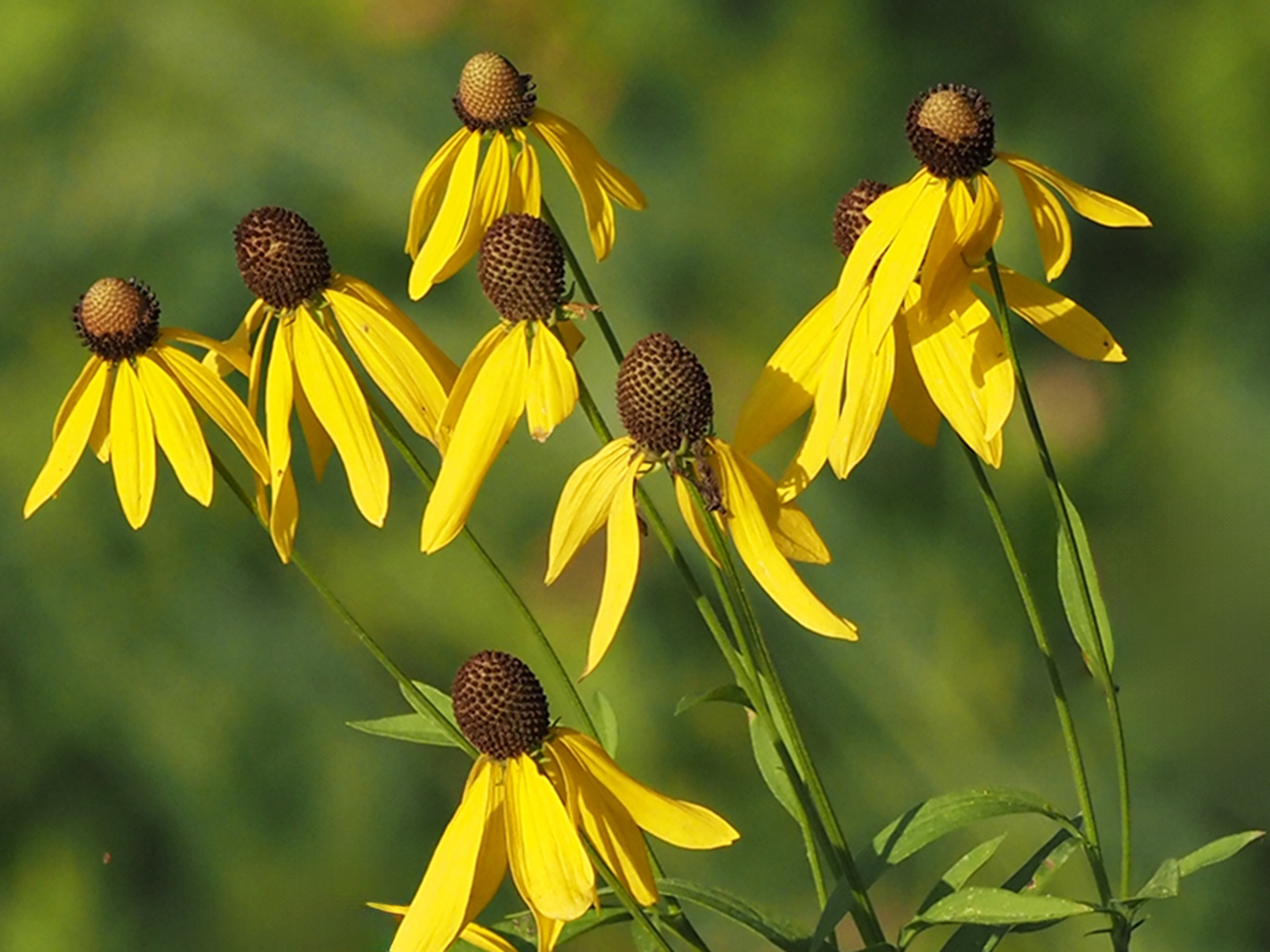
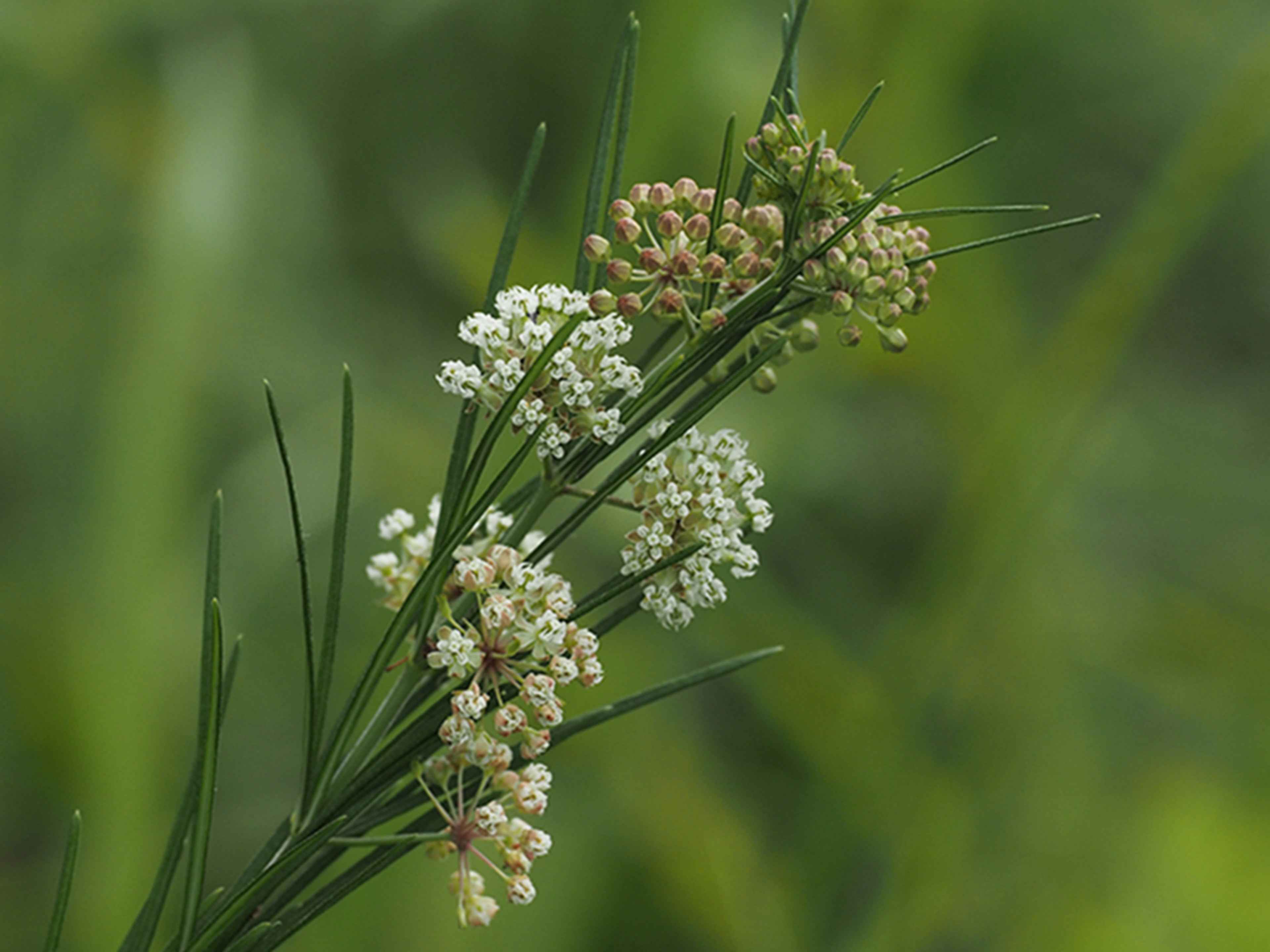
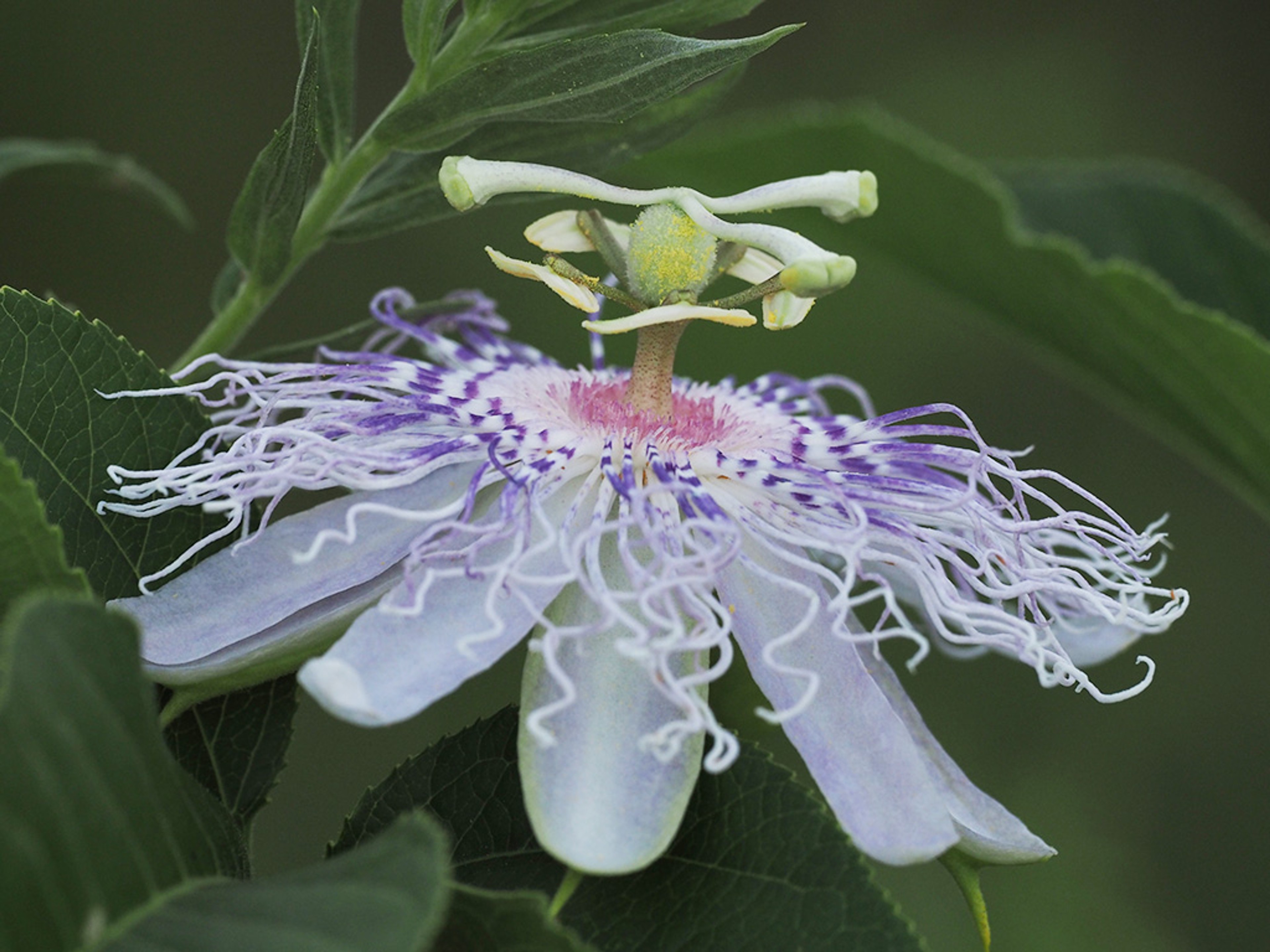
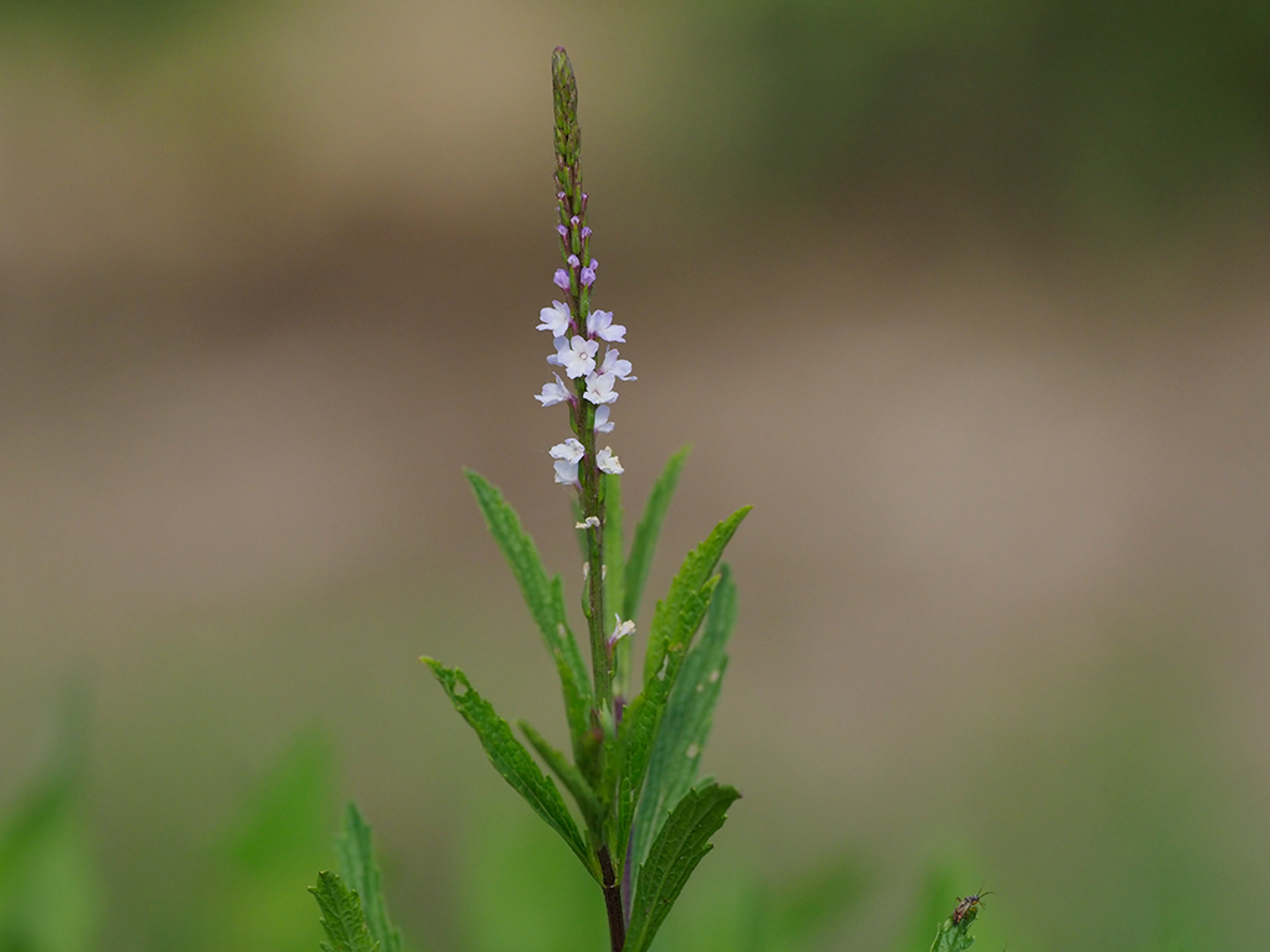
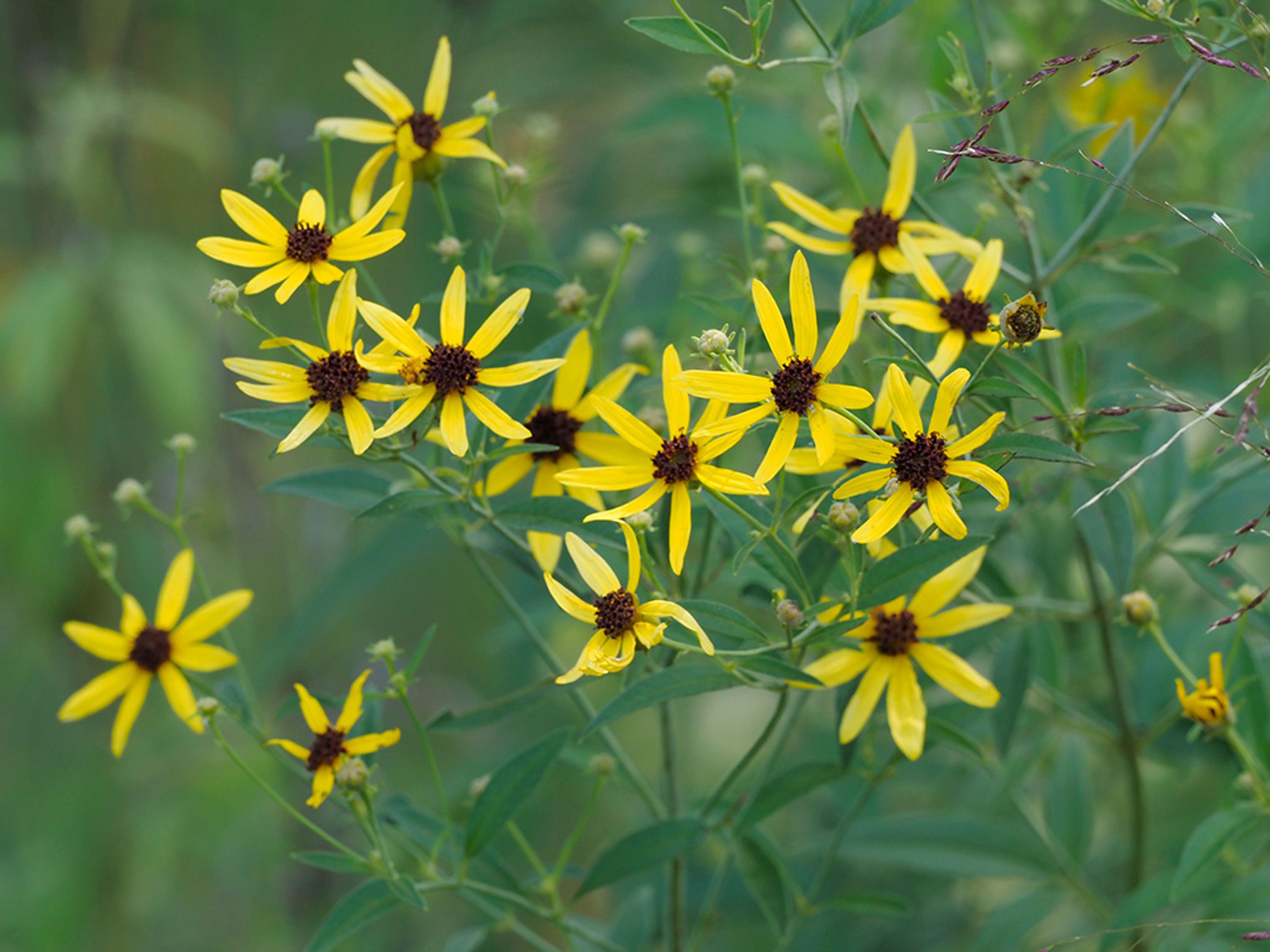
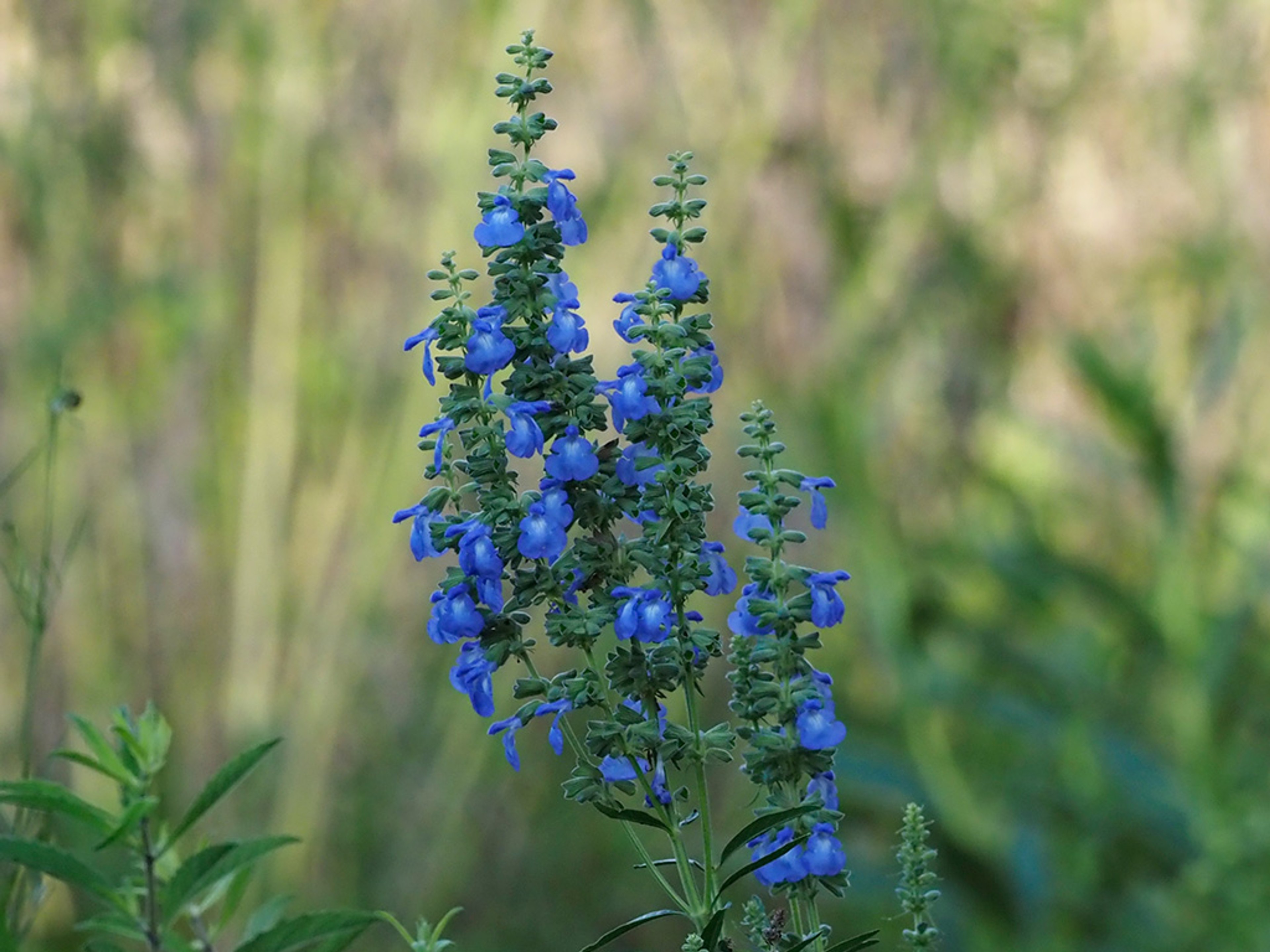
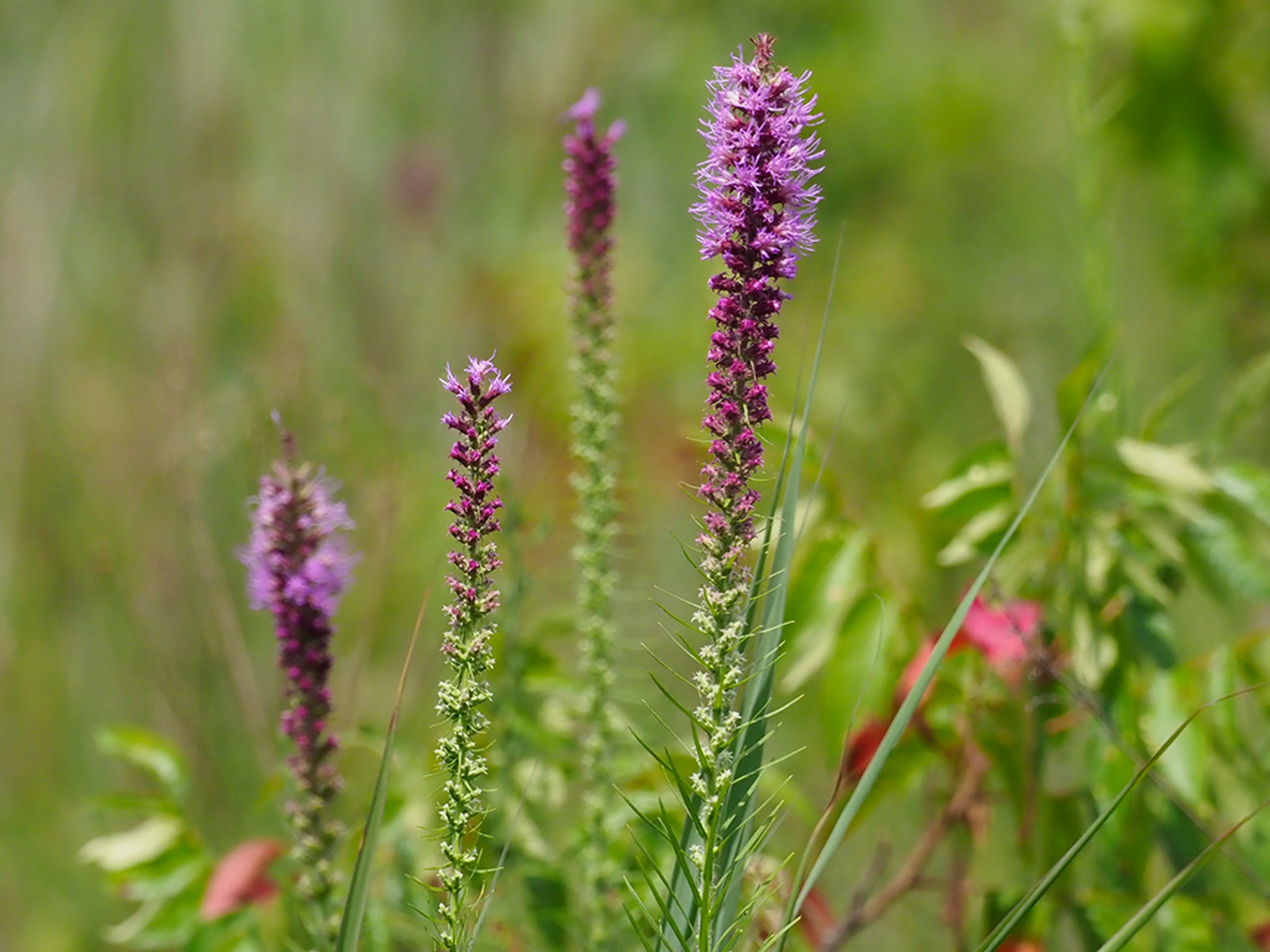
Since Rudbeckia hirta is found in varied habitats, it has many different companion plants. In glade habitat, I find it just beginning to flower when Glade coneflower is nearly done for the year. Similarly it may be found near other glade plants such as Purple prairie clover, Carolina larkspur, Lanceleaf coreopsis and Wild quinine. This is a sampling of companion plants I've noted in Arkansas, but keep in mind that Black-eyed Susan is a common plant with many and varied plant companions.
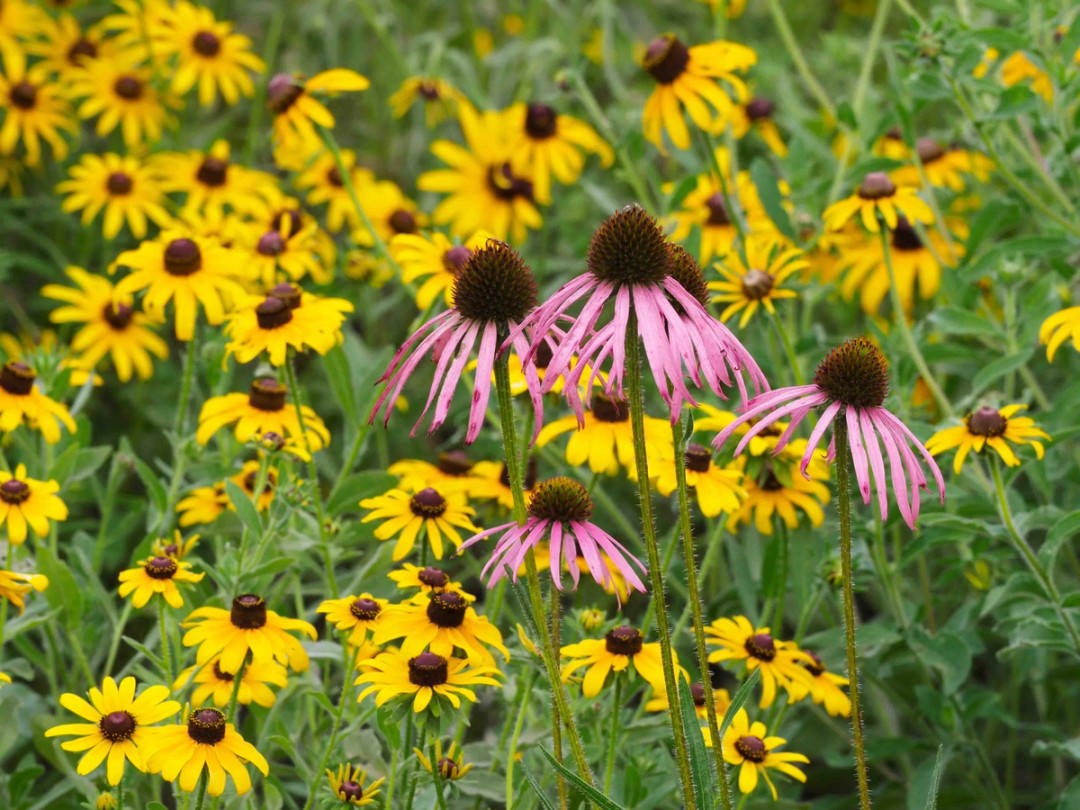
Glade coneflower 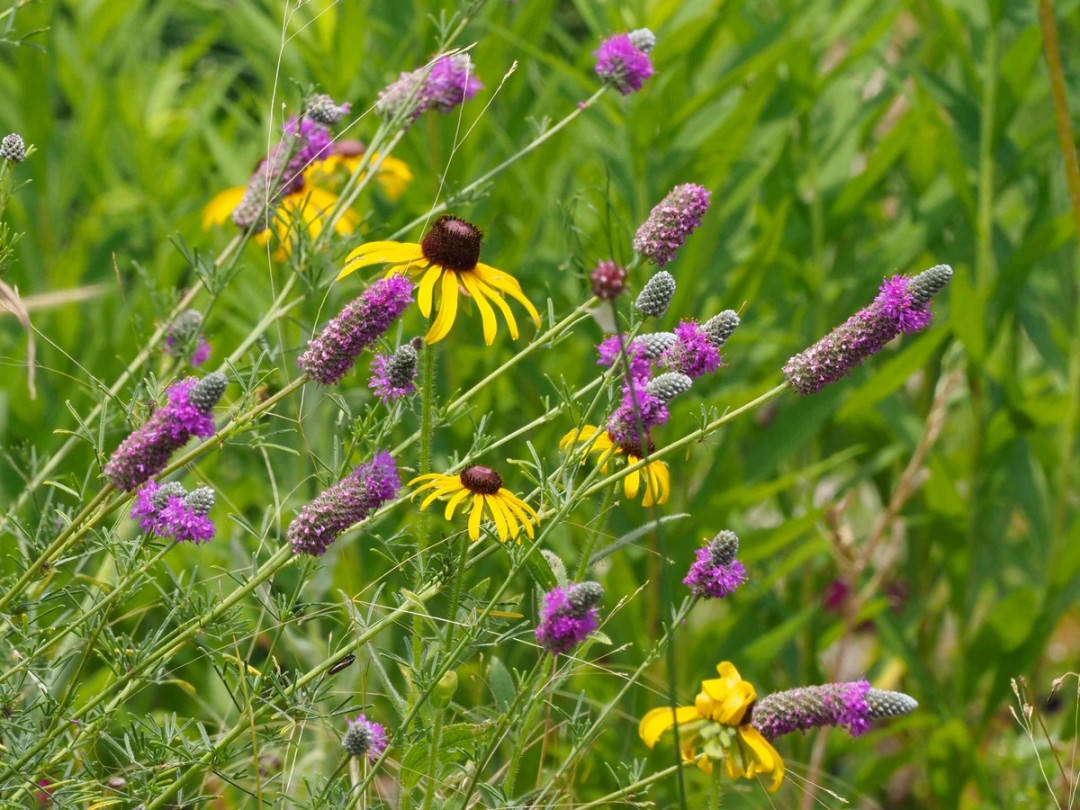
Purple prairie clover 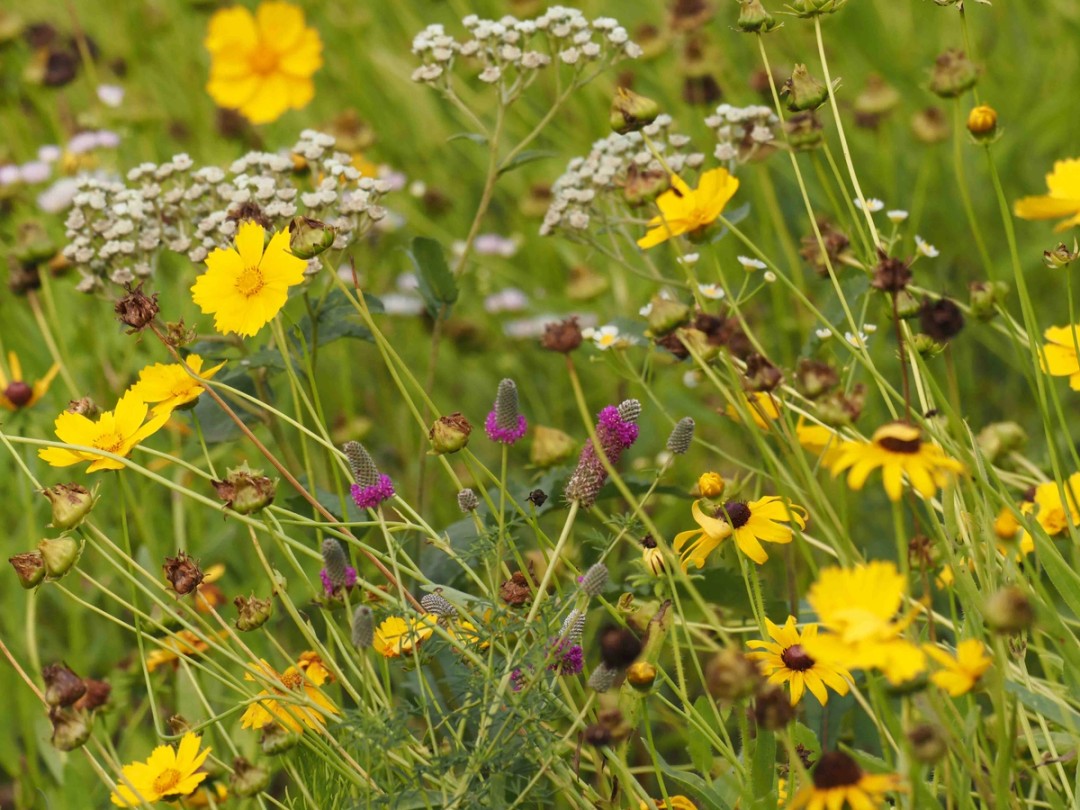
Lanceleaf coreopsis, Wild Quinine 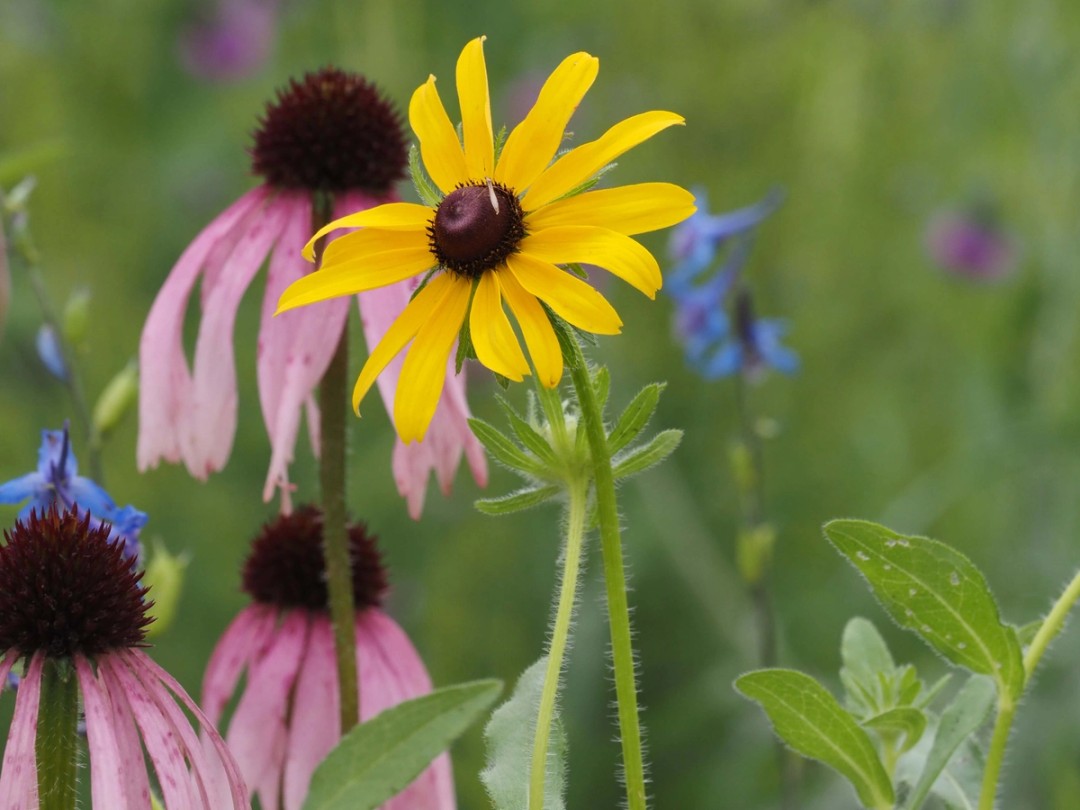
Glade coneflower, Carolina larkspur
In Prairie or grassland habitat it has many plant companions. Here's a sampling.
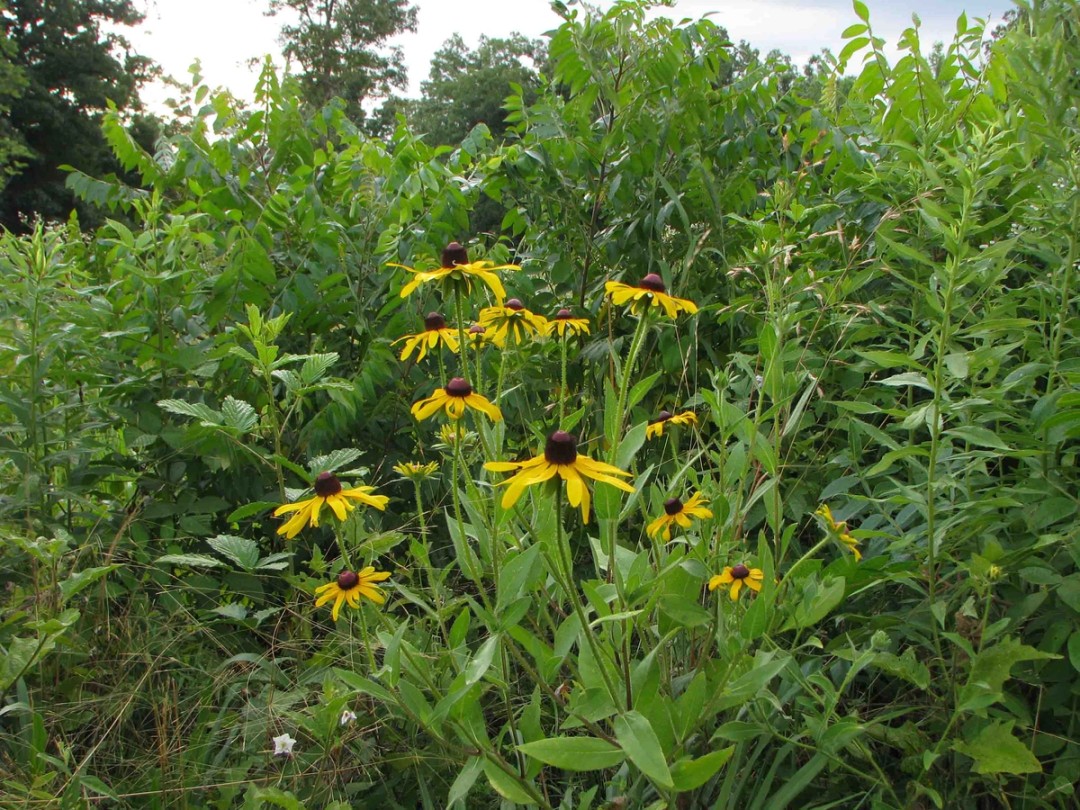
Blackberry and Sumac 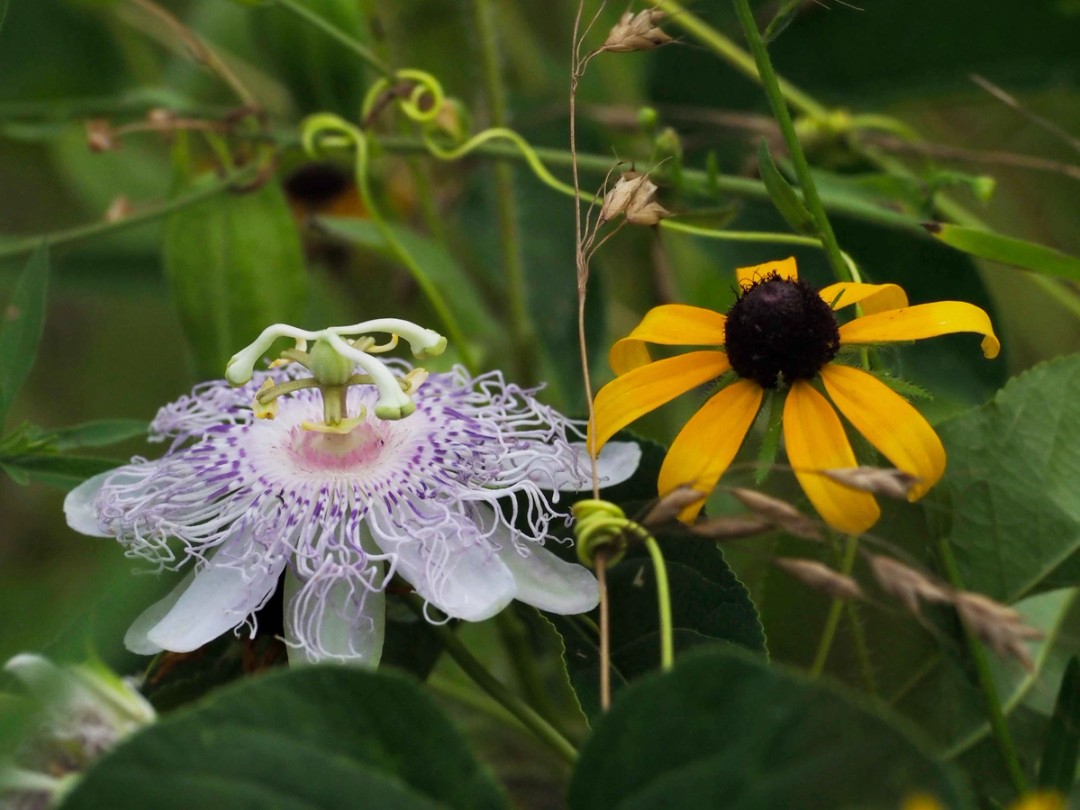
Passion vine 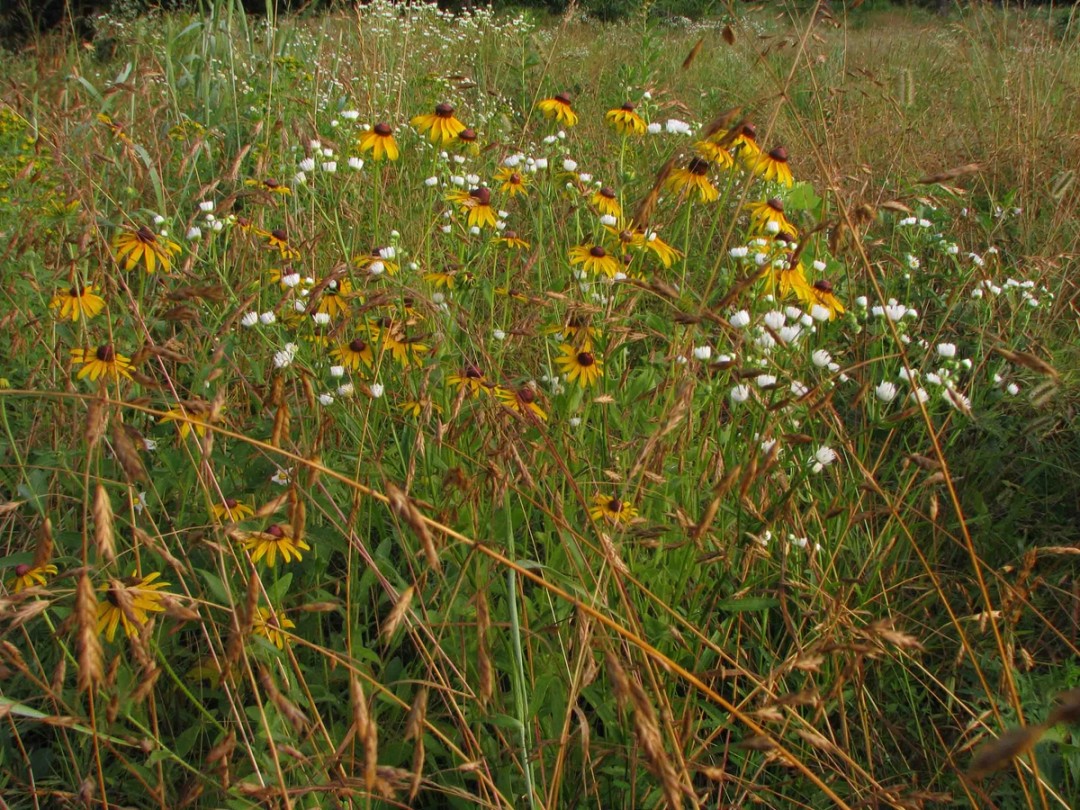
Daisy fleabane 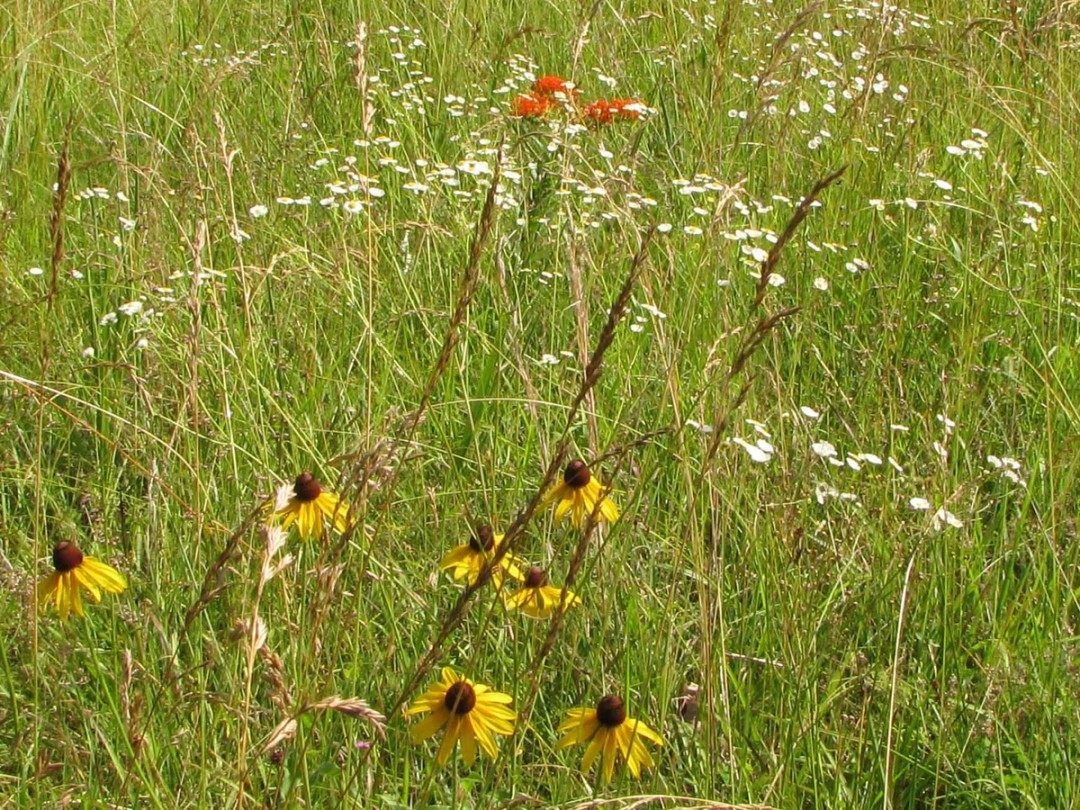
Butterfly milkweed
HABITAT
This wonderful, yet common native wildflower can be found in diverse habitats. You may find it blooming on roadsides, meadows and prairies, glades and even open woodlands. It's not picky about soil types, although it doesn't do well in soggy conditions. Our Arkansas summers are typically hot and dry, and Rudbeckia hirta handles then very well!
CONSERVATION STATUS
Rudbeckia hirta is native across most of the United states. It is listed as either Secure or Apparently Secure in all states that show status on Natureserve, however the majority of states show No Status Ranking.
Both varieties are present in Arkansas with Rudbeckia hirta var. hirta showing a conservation value of 3 and Rudbeckia hirta var. pulcherrima showing a conservation value of 2.
INTERESTING TIDBITS
The Silvery checkerspot (Chlosyne nycteis) uses Rudbeckia hirta as a larval host plant and source of nectar.