Explore

  • Home
  • Native wildflowers
  • About Ozarkedge

Seasons

  • Spring
  • Summer
  • Autumn
  • Winter

Featured plant

Common milkweedA host for monarch caterpillars and a favorite of many pollinators · View →

Blooming now · November

  • Glade onionJul—Nov
  • Rose VerbenaFeb—Dec
All 2 → plants blooming in November

Recently added

All plants A–ZAll →
  • Purple milkweedAug 29
  • Glade onionAug 14
  • CamphorweedAug 6
Purple flowers of Dalea purpurea

Purple prairie clover


Dalea purpurea var. purpurea

The photos in my wildflower books did not prepare me for my first site of Purple prairie clover. It was blooming alongside other native wildflowers in an Arkansas glade. Oh my goodness, it was stunning! We were in the process of restoring the glade on our property and I knew this was one of the essential plants of an Arkansas glade. I returned to collect some seed and dispersed them in our rocky glade. In the third year I finally saw flowers appear. The plants have continued to thrive and spread. How wonderful to see them in full maturity with bees buzzing around the beautiful purple flowers!


  1. NAME
  2. BLOOM
  3. POLLINATORS
  4. DESCRIPTION
  5. PLANTS GROWING NEARBY
  6. HABITAT
  7. CONSERVATION STATUS
  8. INTERESTING TIDBITS
  1. NAME
  2. BLOOM
  3. POLLINATORS
  4. DESCRIPTION
  5. PLANTS GROWING NEARBY
  6. HABITAT
  7. CONSERVATION STATUS
  8. INTERESTING TIDBITS

PLANT NAME

Dalea purpurea is named for Samuel Dale, who was an English botanist from the 17-18th century. The specific (pururea) epithet means purple. Although the common name is Purple prairie clover, this plant is not in the clover family, it is a legume in the pea family (Fabaceae). Plants in the pea family fix nitrogen in the soil boosting soil fertility.


  1. NAME
  2. BLOOM
  3. POLLINATORS
  4. DESCRIPTION
  5. PLANTS GROWING NEARBY
  6. HABITAT
  7. CONSERVATION STATUS
  8. INTERESTING TIDBITS

BLOOM

The flowers of Dalea purpurea are pinkish-purple. They occur on a flowering spike on which they are grouped in small cylindrica rings similar to a wreath. Flowering begins at the base of the cylindrical flowerhead and proceeds to its tip. As new flowers open, older flowers fade. The purplish flowers have 5 golden hued anthers that form beautiful contrasting colors.

  • Newly blooming flower
    Newly blooming flower
  • Golden stamens
    Golden stamens
  • Flowering from base to tip
    Flowering from base to tip
  • Flowering nearly complete
    Flowering nearly complete

  1. NAME
  2. BLOOM
  3. POLLINATORS
  4. DESCRIPTION
  5. PLANTS GROWING NEARBY
  6. HABITAT
  7. CONSERVATION STATUS
  8. INTERESTING TIDBITS

DESCRIPTION

Purple prairie clover has a main stem with numerous branches developing near its base as the plants mature. This gives mature plants the appearance of a small bush. The plant height may reach up to 3 feet tall.

Single plant

The stem may be hairless or somewhat hairy as shown below.

  • Hairless stem
  • Hairy stem

Leaves occur alternately with 3-7 leaflets.

  • Leaves
  • Bud, stem and leaves

  1. NAME
  2. BLOOM
  3. POLLINATORS
  4. DESCRIPTION
  5. PLANTS GROWING NEARBY
  6. HABITAT
  7. CONSERVATION STATUS
  8. INTERESTING TIDBITS

POLLINATORS

Purple prairie clover attracts a diverse group of bees, as well as many other interesting insects such as the syrphid fly below.

Bumble bee and Syrphid fly

Studies have shown that a multitude of Bees visit the plants. Depending on the bees native to where you live, you'll likely find some different bees than those here in Northern Arkansas.

  • Brown-belted bumblebee
    Brown-belted bumblebee
  • American bumble bee
    American bumble bee
  • Metallic green sweat bee
    Metallic green sweat bee
  • subfamily Megachillinae
    subfamily Megachillinae

Take a look at this beautiful bee grooming itself after nectaring on Dalea purpurea.

While I've read that butterflies visit the flowers of Purple prairie clover, I have not observed this in Northern Arkansas.


  1. NAME
  2. BLOOM
  3. POLLINATORS
  4. DESCRIPTION
  5. PLANTS GROWING NEARBY
  6. HABITAT
  7. CONSERVATION STATUS
  8. INTERESTING TIDBITS

PLANTS GROWING NEARBY

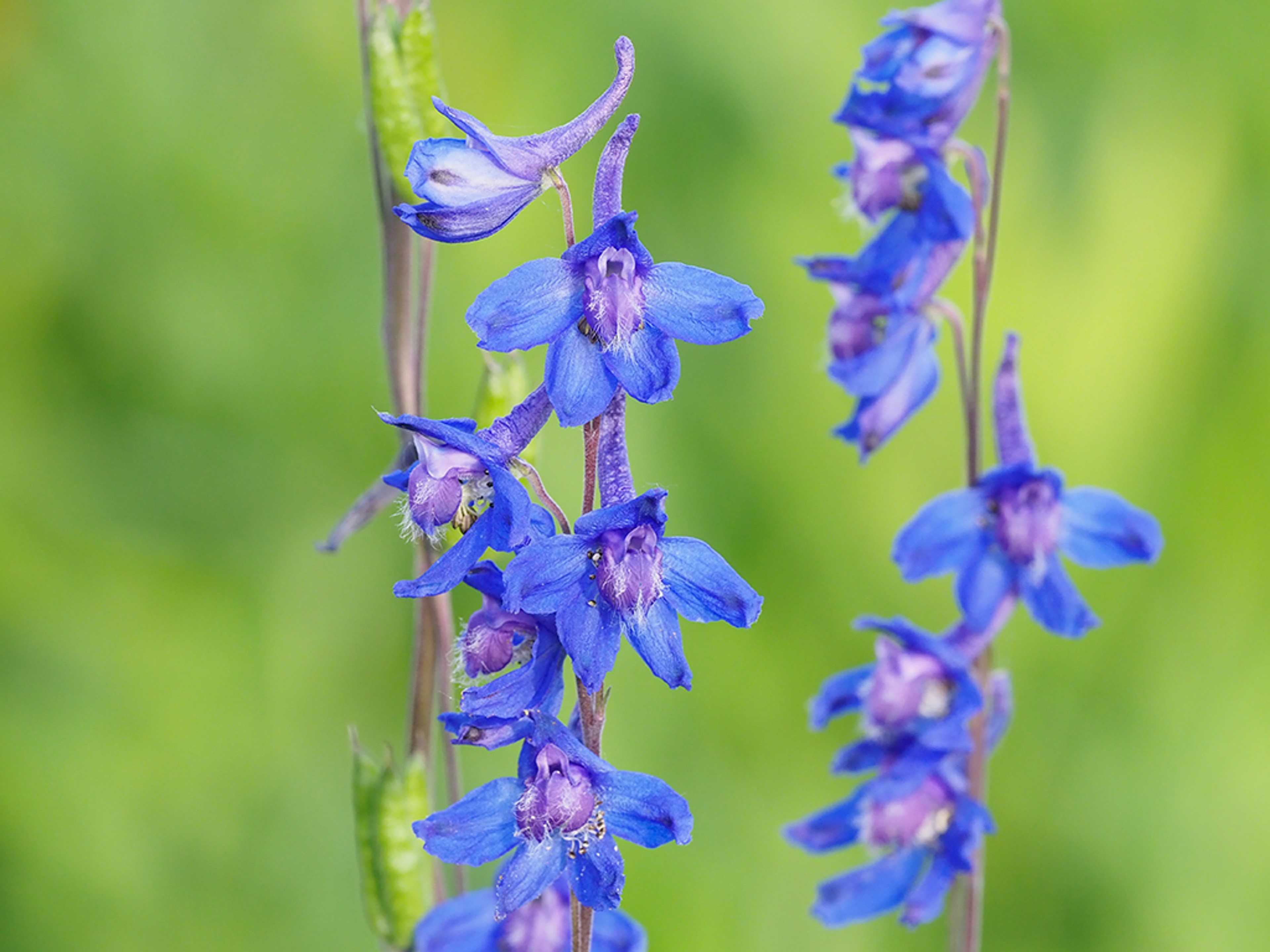
  • Delphinium carolinianum
    Delphinium carolinianum
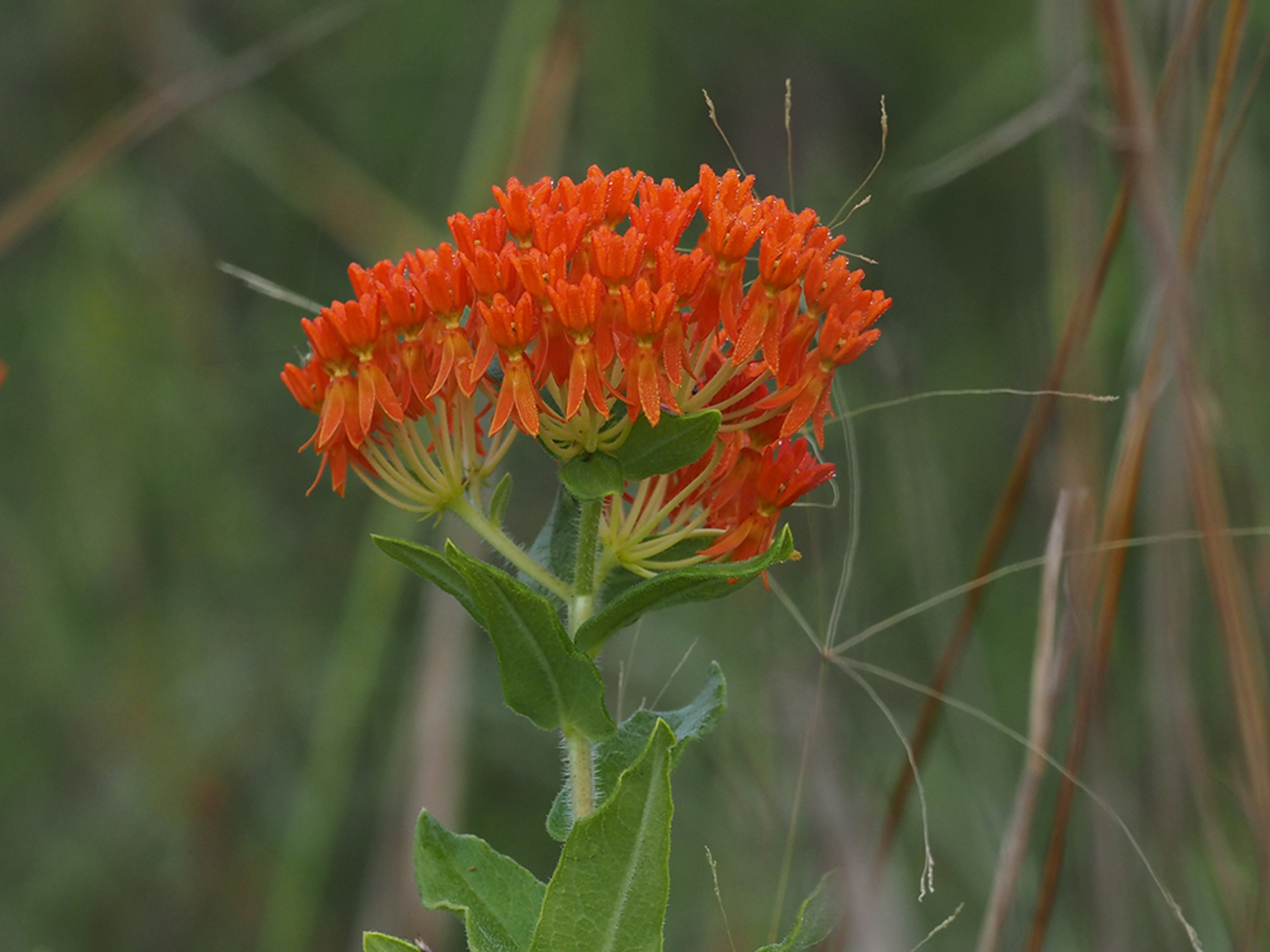
  • Asclepias tuberosa
    Asclepias tuberosa
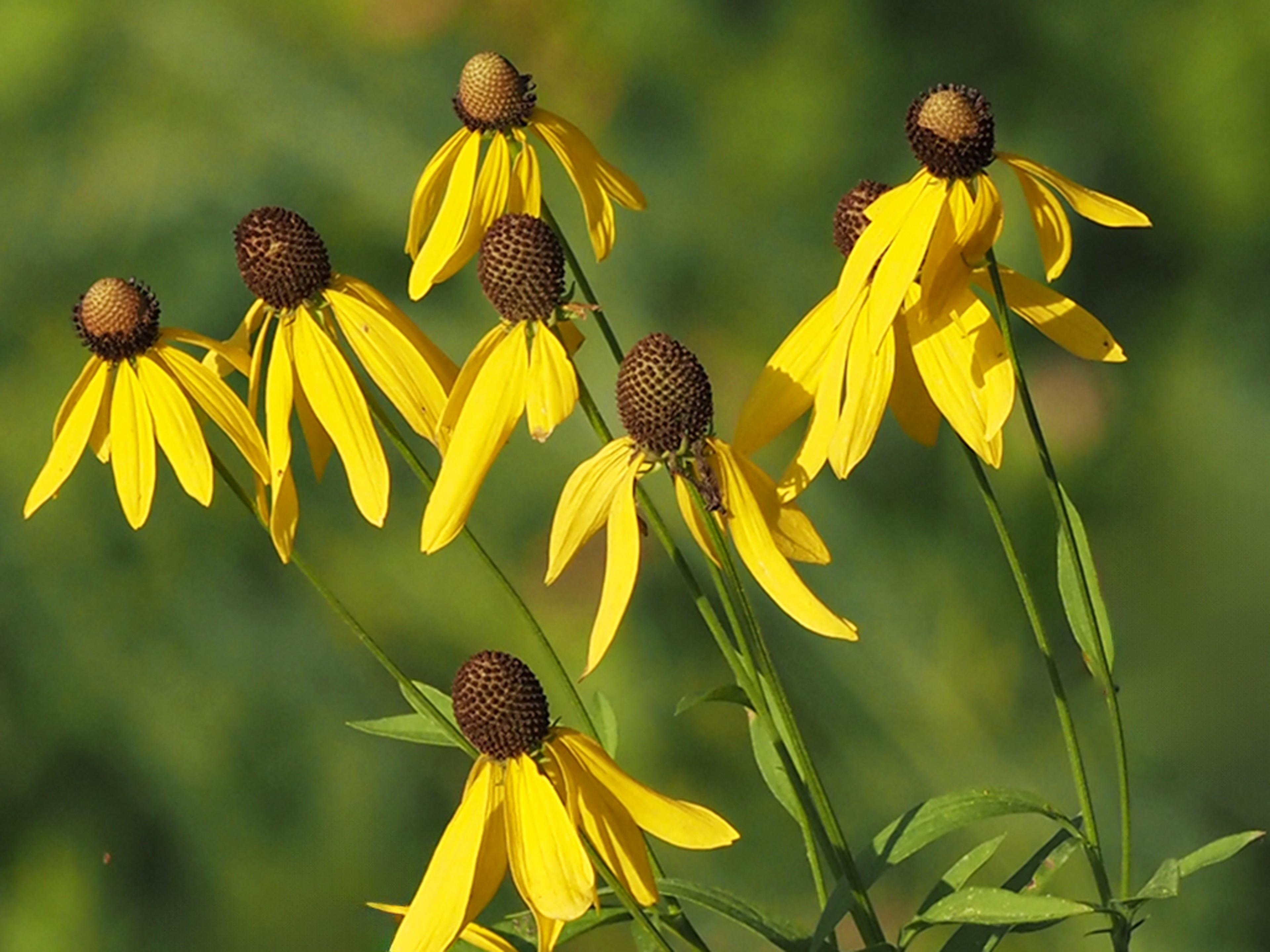
  • Ratibida pinnata
    Ratibida pinnata
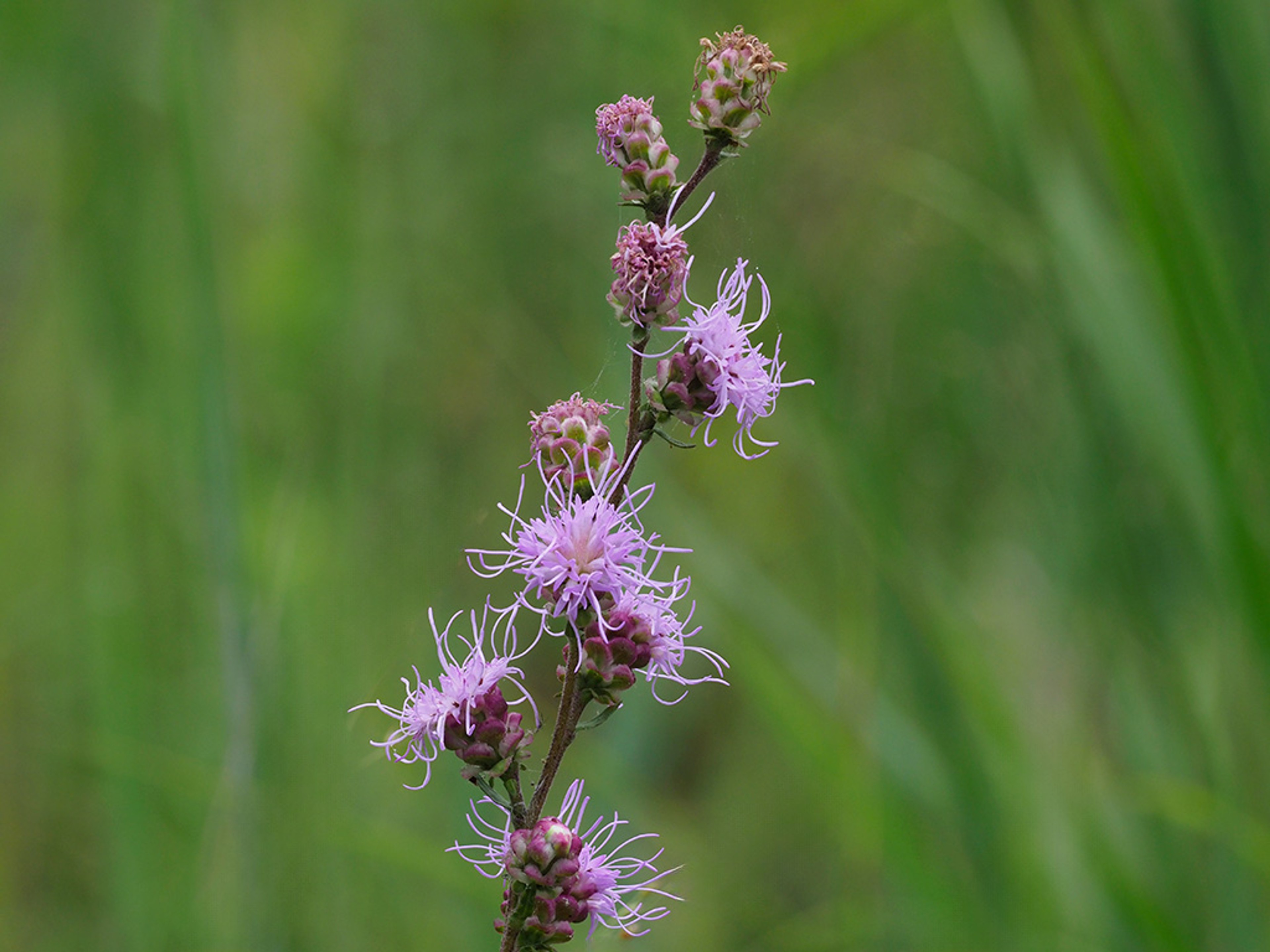
  • Liatris aspera
    Liatris aspera
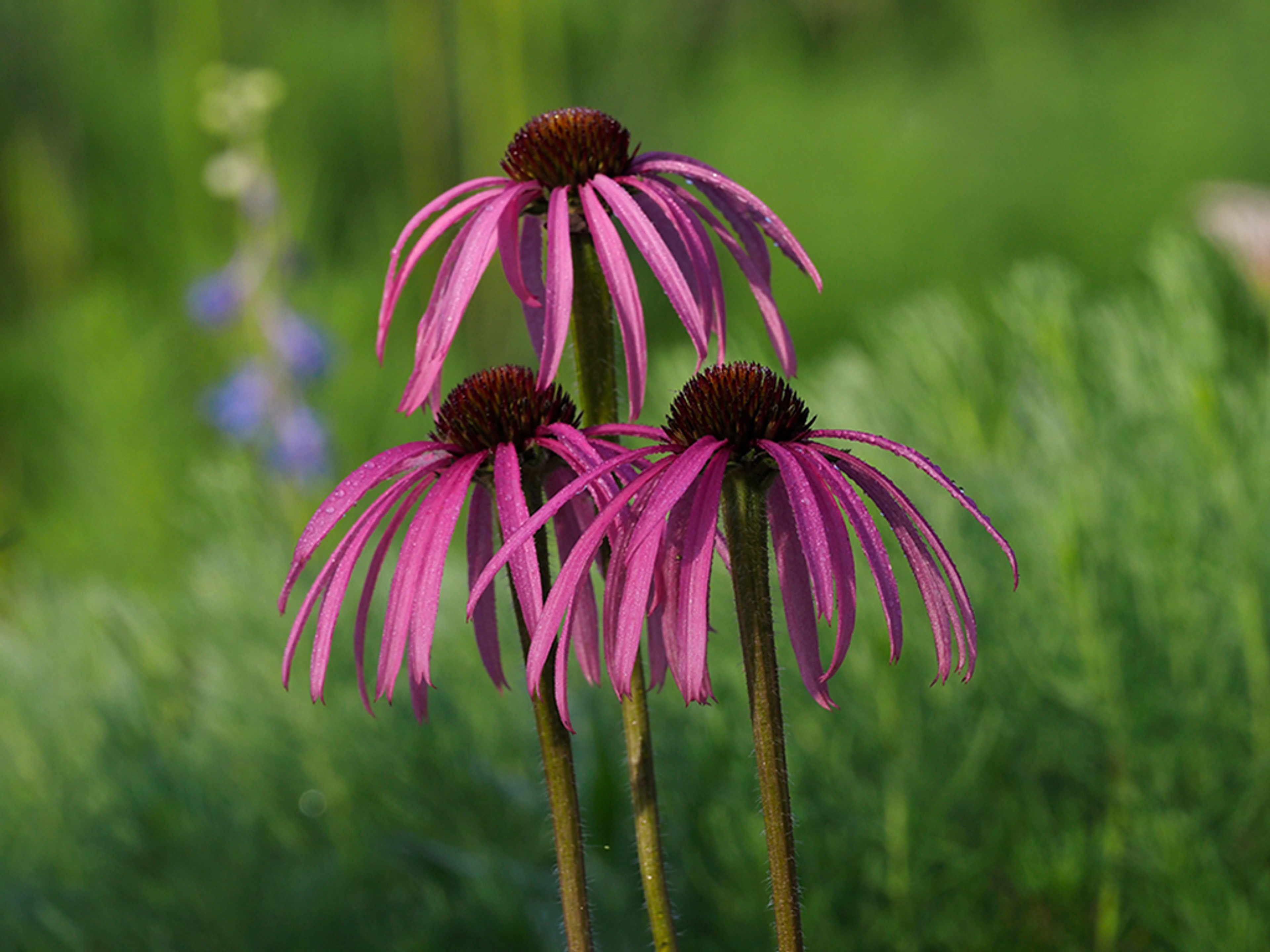
  • Echinacea simulata
    Echinacea simulata
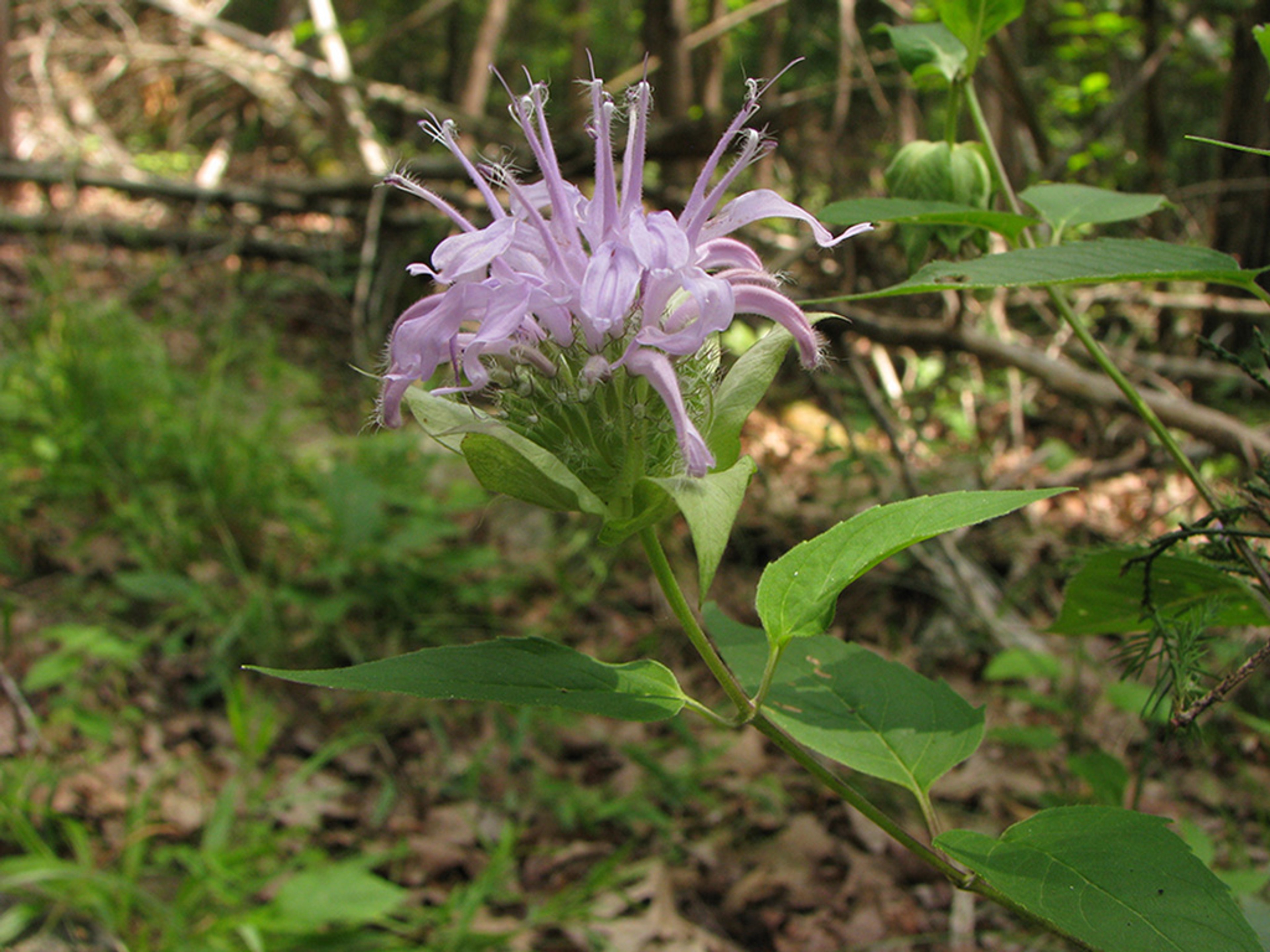
  • Monarda fistulosa
    Monarda fistulosa
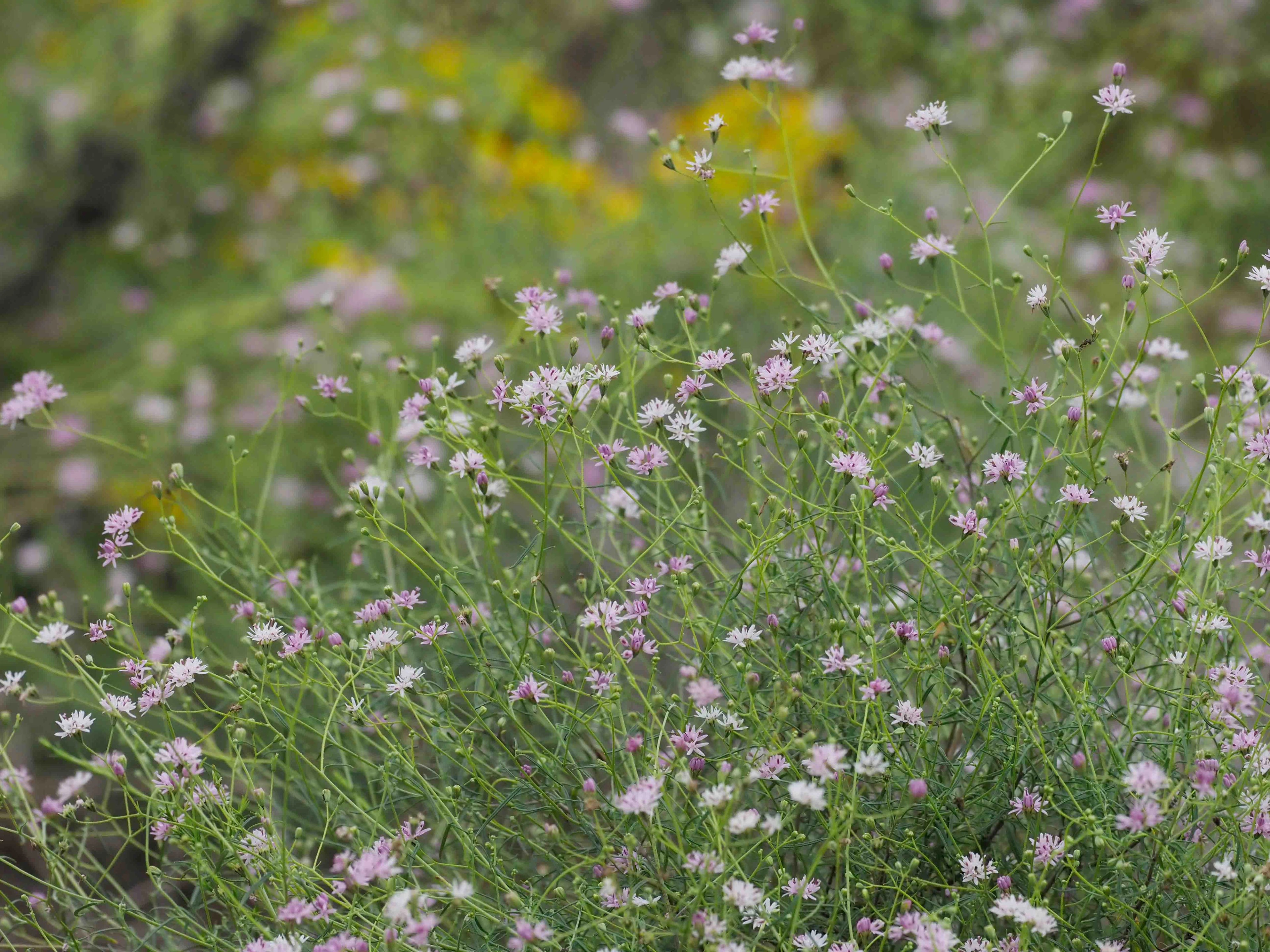
  • Palafoxia callosa
    Palafoxia callosa

I typically find Purple prairie clover in glade habitat. It has many beautiful plants growing and flowering nearby. Take a look at a few examples below.

  • Delphinium carolinianum
    Delphinium carolinianum
  • Coreopsis grandiflora and Parthenium integrifoloium
    Coreopsis grandiflora and Parthenium integrifoloium
  • Rudeckia hirta
    Rudbeckia hirta
  • Echinacea simulata
    Echinacea simulata

  1. NAME
  2. BLOOM
  3. POLLINATORS
  4. DESCRIPTION
  5. PLANTS GROWING NEARBY
  6. HABITAT
  7. CONSERVATION STATUS
  8. INTERESTING TIDBITS

HABITAT

Purple prairie clover thrives in full sun. Indifferent to soil type, it's found thriving in gravel, clay or loam. Habitats include glades, rocky open woodlands and prairies. This tough plant is often included in seed mixes for prairie restorations as it fixes nitrogen, increasing soil fertility.

  • Roadside glade habitat
    Roadside glade habitat
  • Glade 'garden' habitat
    Glade 'garden' habitat

  1. NAME
  2. BLOOM
  3. POLLINATORS
  4. DESCRIPTION
  5. PLANTS GROWING NEARBY
  6. HABITAT
  7. CONSERVATION STATUS
  8. INTERESTING TIDBITS

CONSERVATION STATUS

Natureserve shows Dalea purpurea var. purpurea as T5 (Secure Variety). However, it has a conservation value of 10 in Arkansas. This is the highest Conservation value, meaning 'Conservation taxa with strong fidelity to intact habitats. These taxa tend to exhibit late-successional characteristics like long lifespans with low seed sets and an inability for far ranging dispersal'.


  1. NAME
  2. BLOOM
  3. POLLINATORS
  4. DESCRIPTION
  5. PLANTS GROWING NEARBY
  6. HABITAT
  7. CONSERVATION STATUS
  8. INTERESTING TIDBITS

INTERESTING TIDBITS

Dalea purpurea was one of the plants collected by Lewis and Clark and sent back to President Jefferson in 1805. The National Park Service reports that two of the original specimens have survived, now being part of the Lewis and Clark Herbarium at the Philadelphia Academy of Natural sciences.


© Copyright 2026. Ozarkedge Wildflowers