PLANT NAME
The term 'liatris' isn't defined in Stern's dictionary of Plant Names. It is of unknown derivation. 'Aspera' comes from the Latin, meaning rough, referring to the texture of the stem and leaves of this plant.
The common name, 'Rough' is fitting based on the explanation of 'rough' above. 'Blazing star' refers to the star shape and showiness of the individual tiny flowers.
Liatris aspera is in the Aster family (Asteraceae).
BLOOM
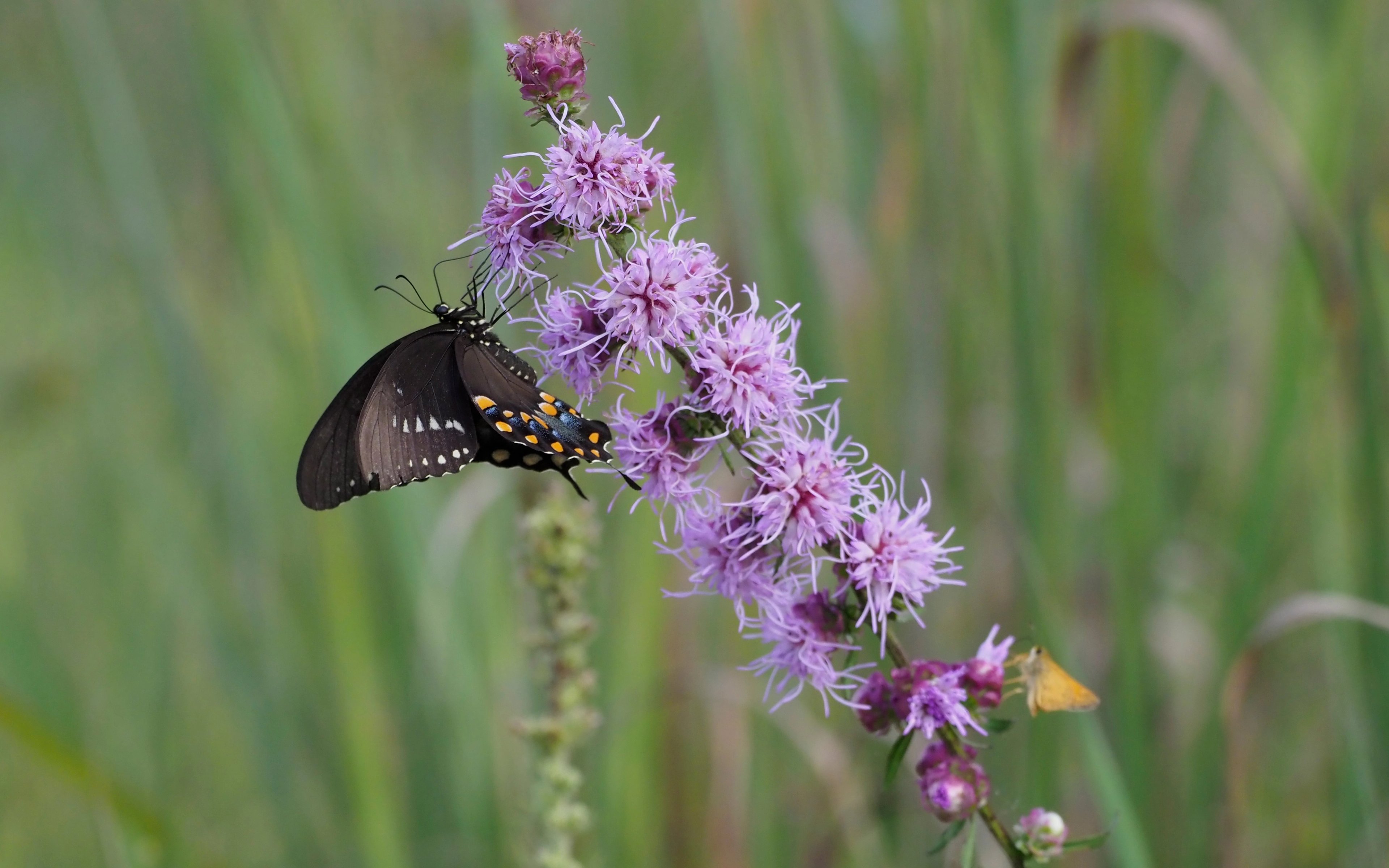
Flowers occur alternately in a raceme toward the top of the plant. The flowers are about an inch wide with bright pink to purple. Like other liatris species, the flowers lack a floral scent. Liatris aspera makes up for that with extra large and beautiful flowers. Blooming proceeds from the top of the spike downward.
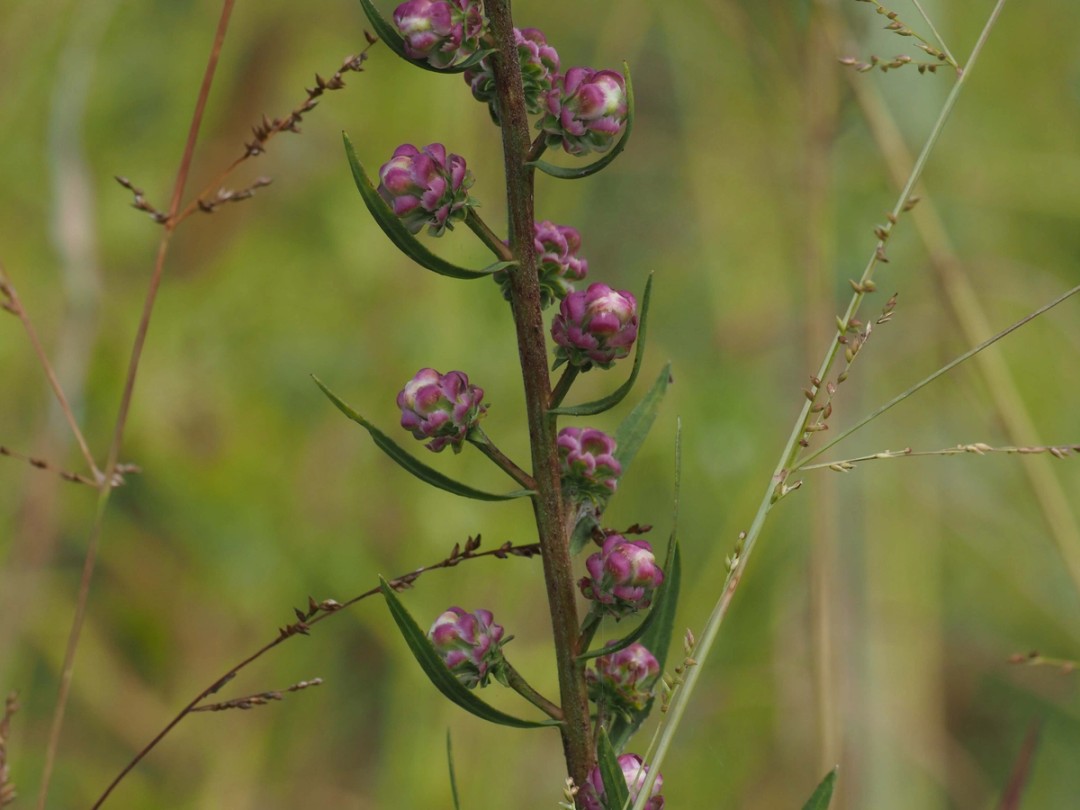
Buds 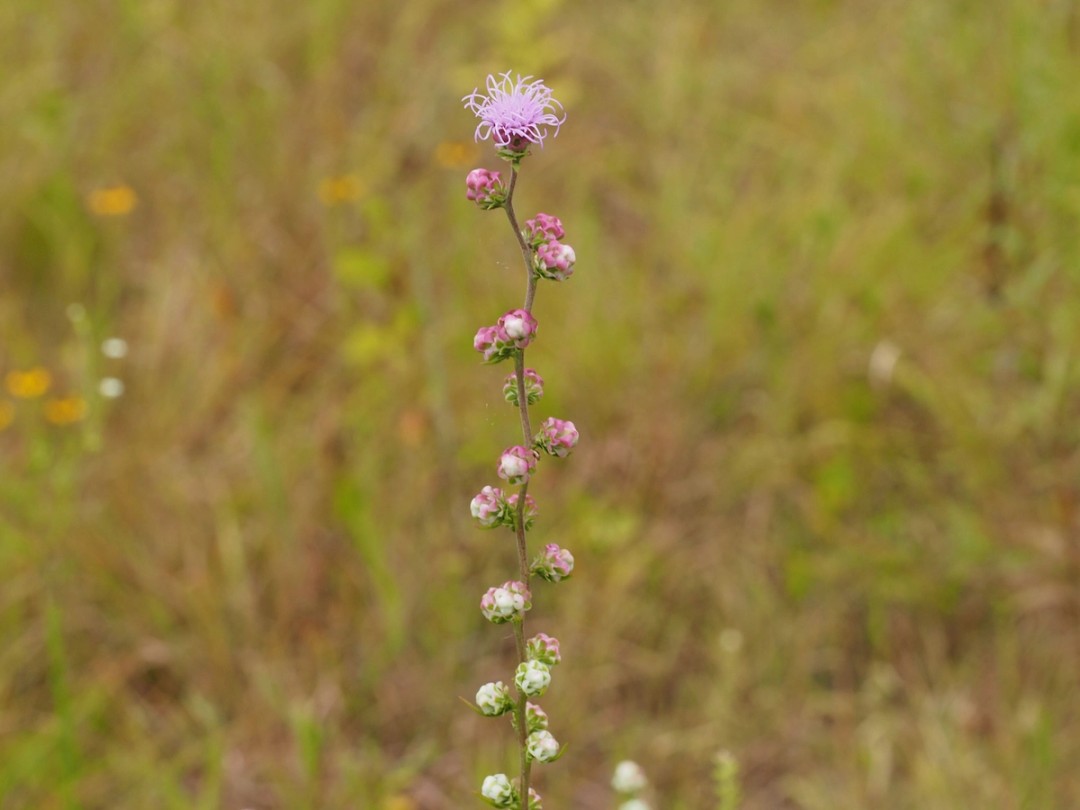
Flowering from top to bottom 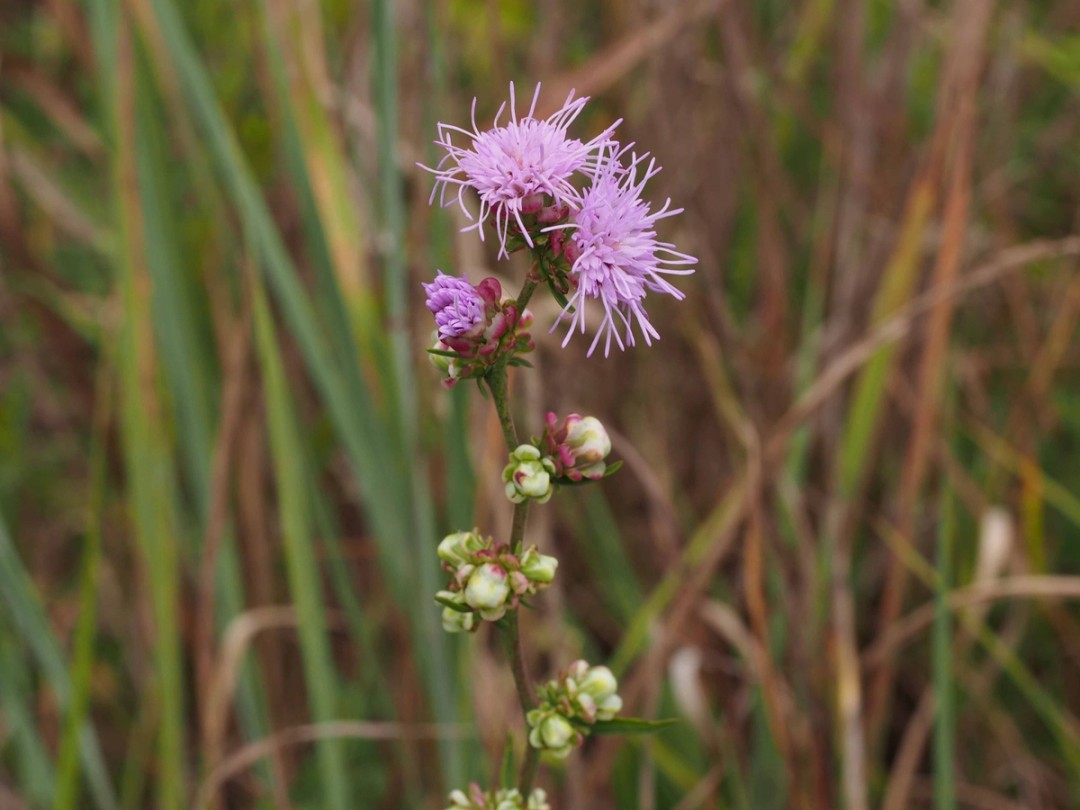
Flowers and buds 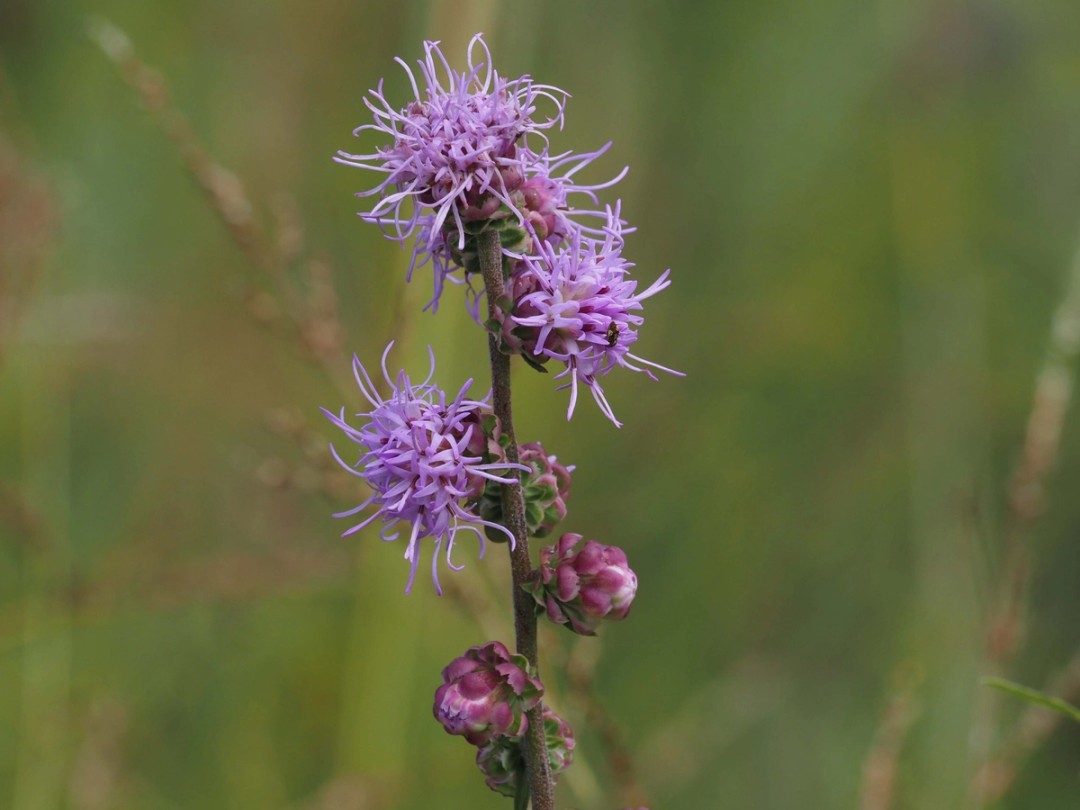
Big flower heads
DESCRIPTION
Liatris aspera is a perennial like other members of the Liatris tribe. It reaches a height between 3–5 feet. The stem may be green or somewhat reddish. It has short hairs but may lack hairs toward its base. Tall stems may lean under the weight of flowers and buds. The alternate leaves are larger at the base (up to 10 inches) with short stalks. Toward the top, they become much shorter and stalkless.
Flowers are subtended by bracts that have a pouch-shape with irregular margins.
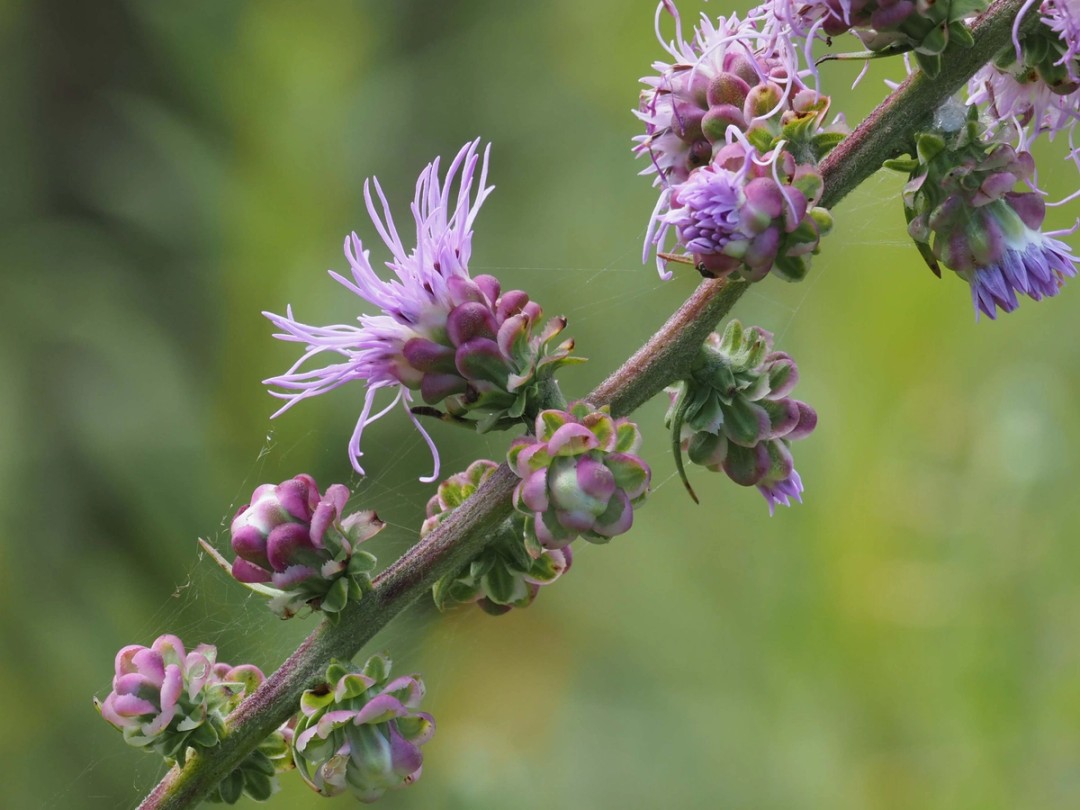
Pouch-shaped bracts 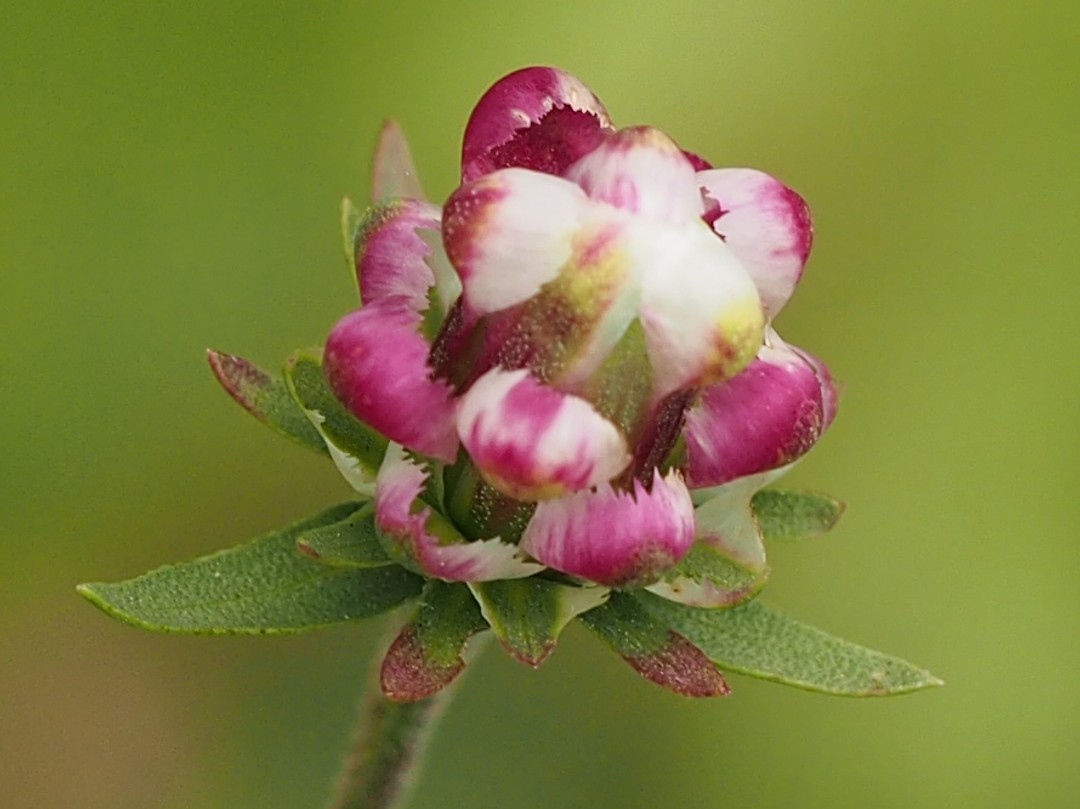
Bracts with irregular margins 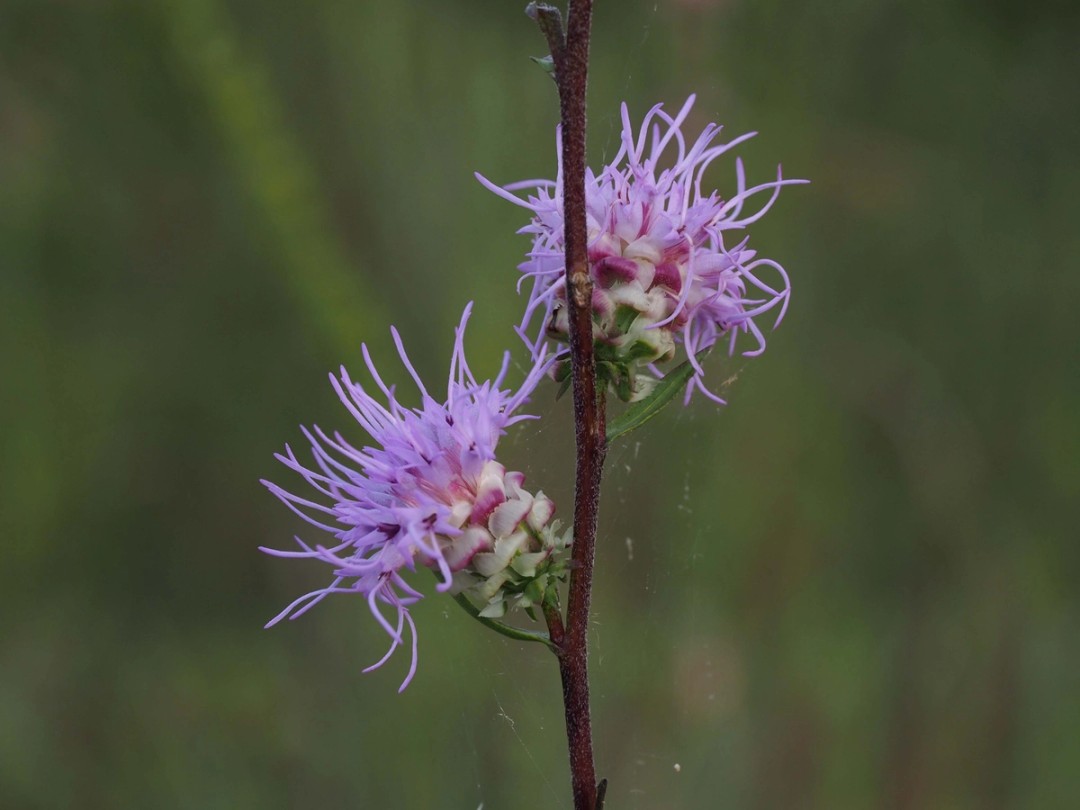
Stem with short hairs 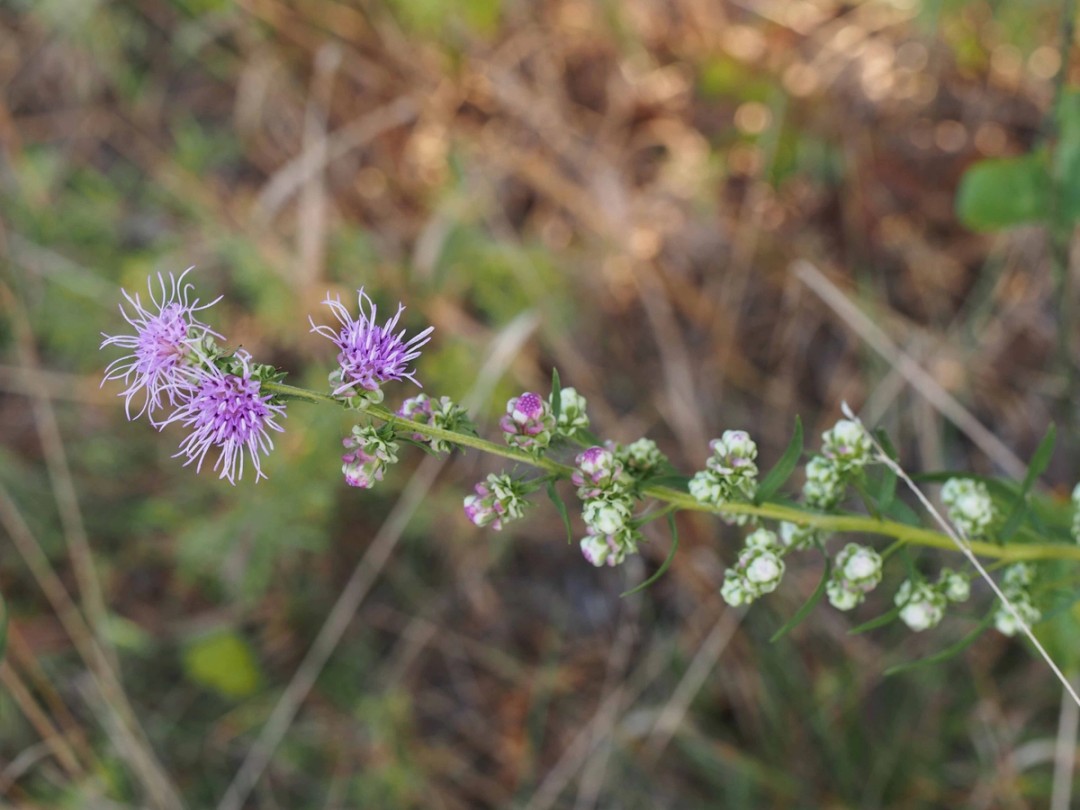
Leaning stem 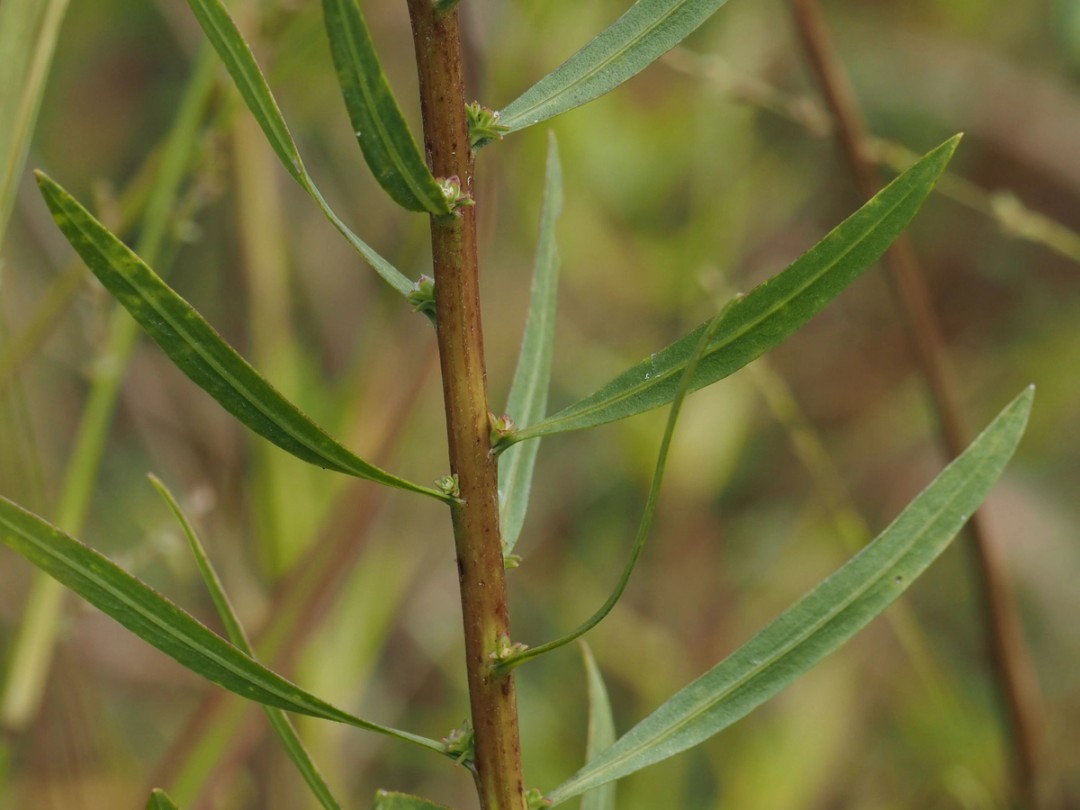
Lower stem and leaves 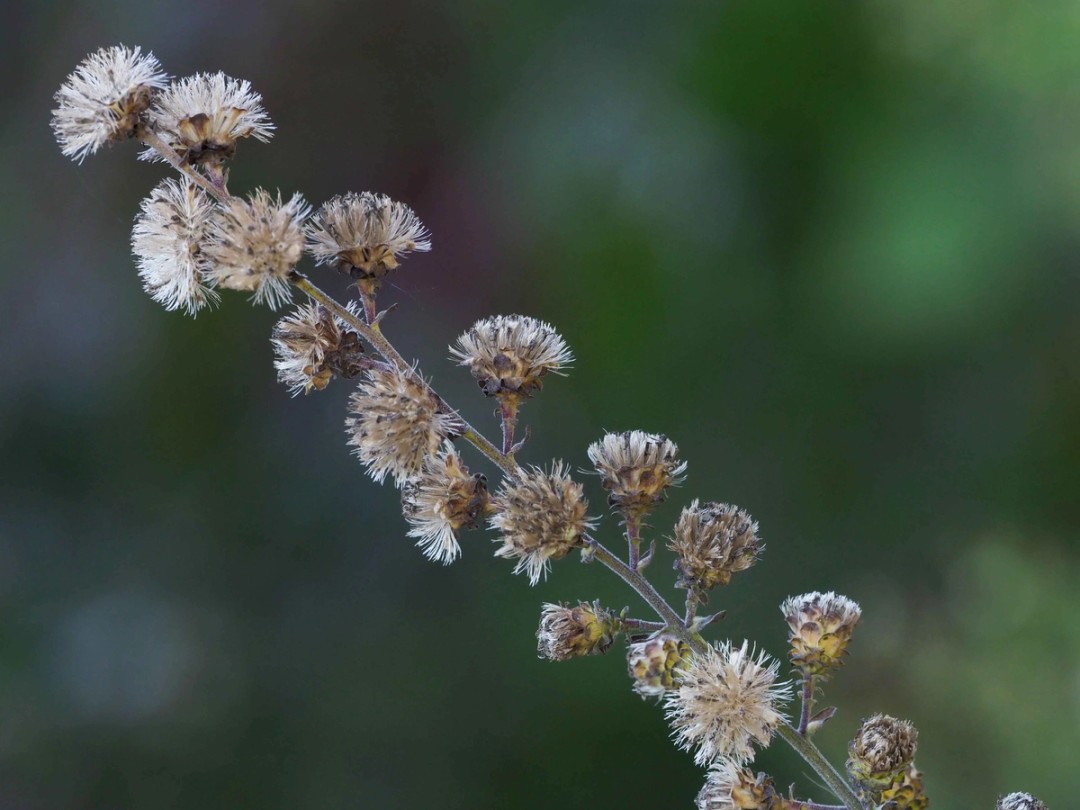
Ripe seed heads
POLLINATORS
Liatris aspera is a terrific plant for a pollinator garden as it attracts many varied butterflies, skippers, bees and bee flies as well as Ruby-throated hummingbirds.
Hummingbirds
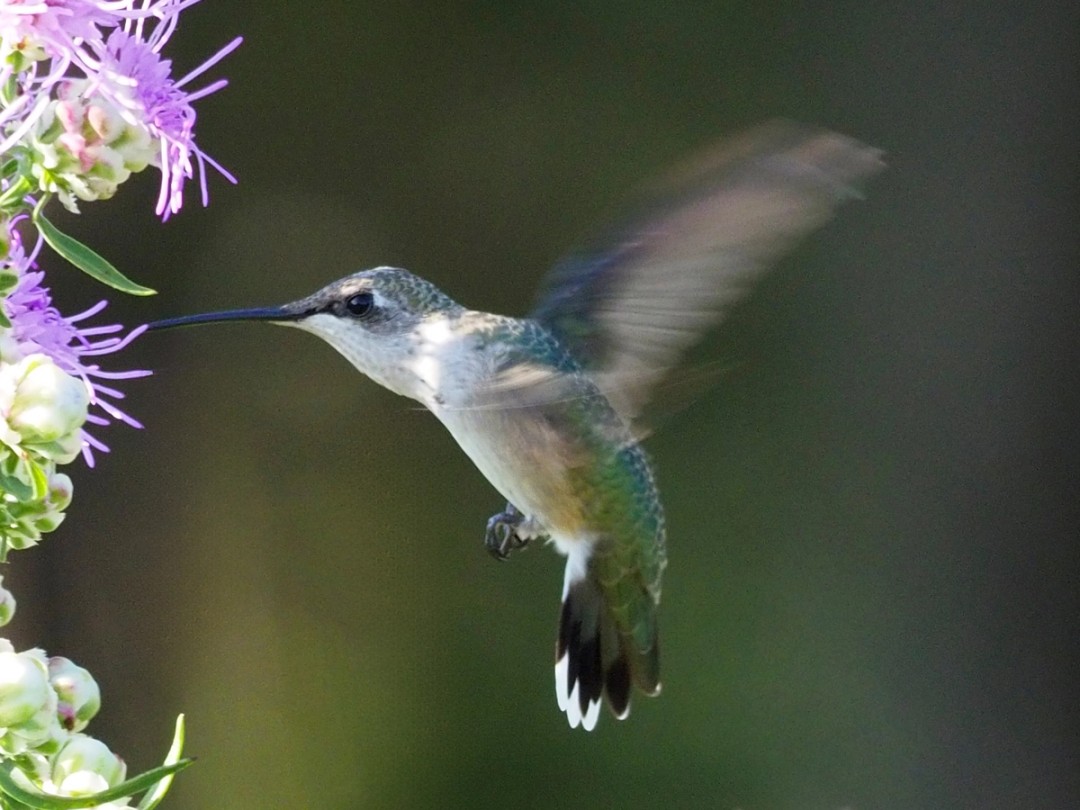
Ruby-throated Hummingbird 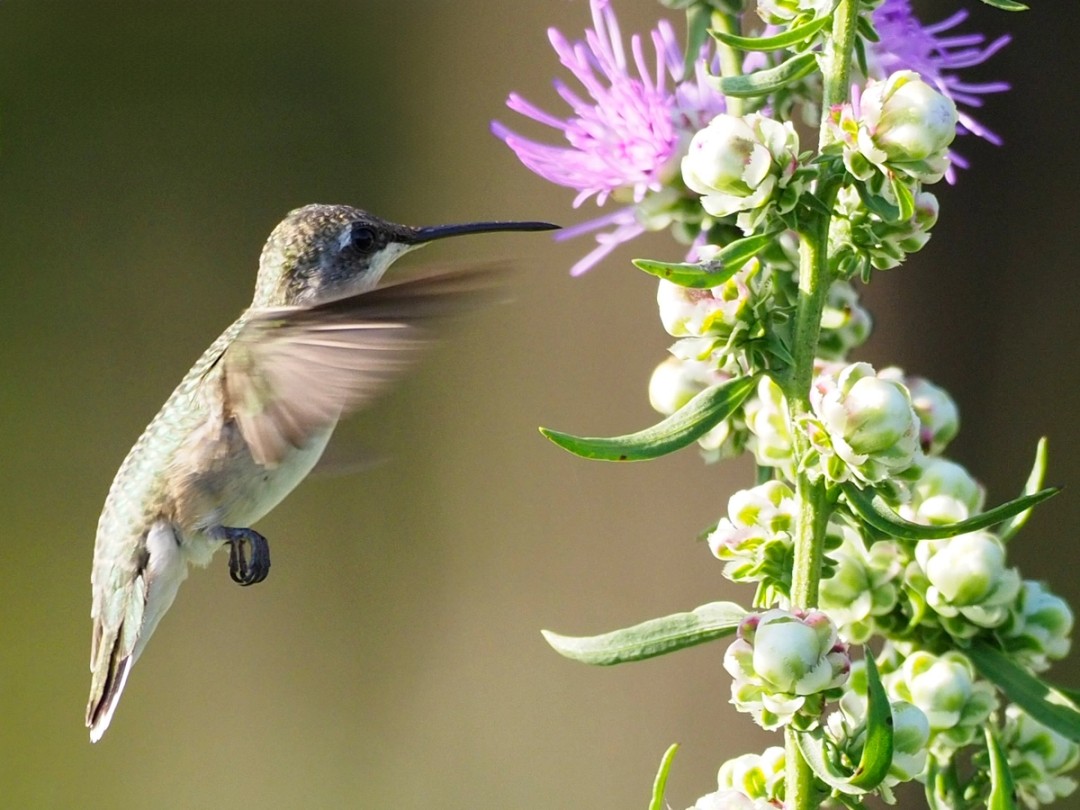
Ruby-throated Hummingbird
Bees
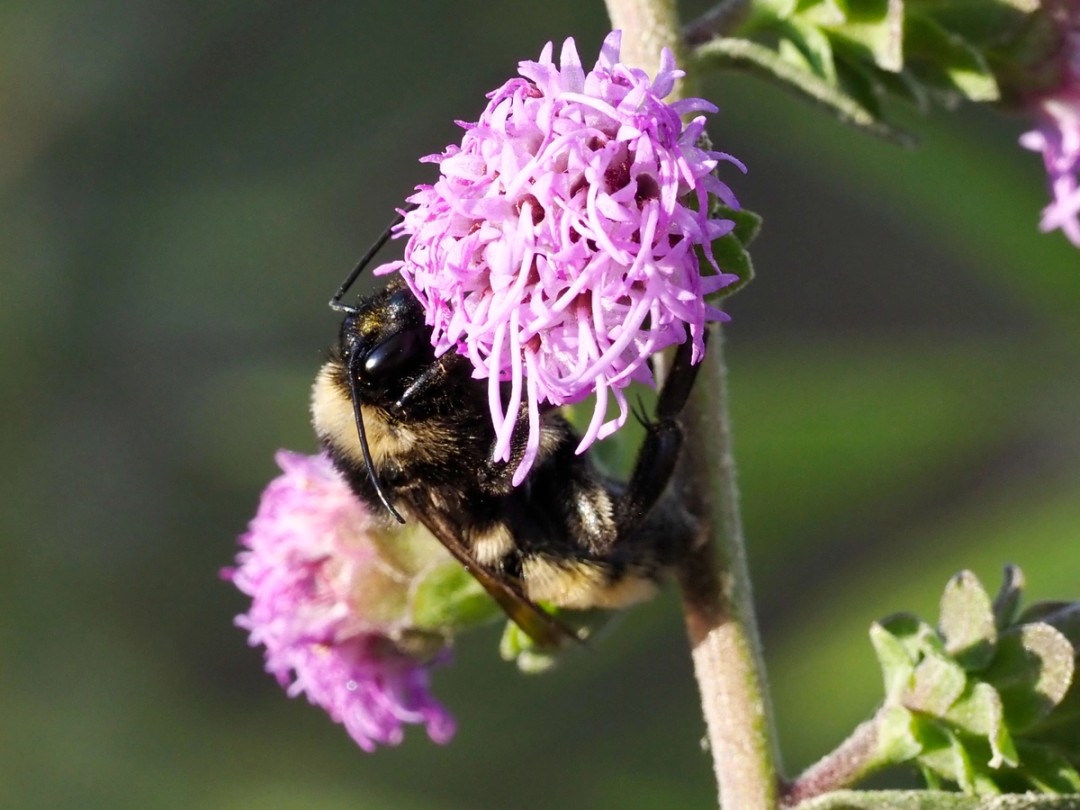
Female American Bumble bee 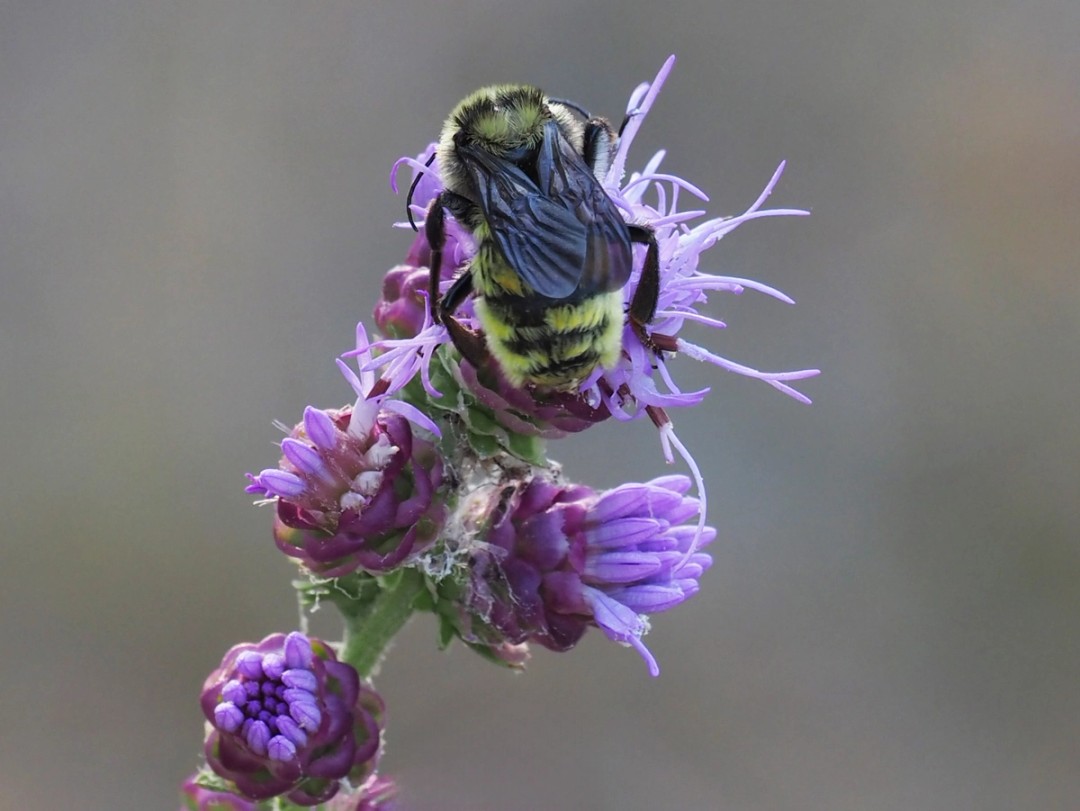
Male American Bumble bee
Butterflies
I had a real treat one afternoon observing a male Spicebush Swallowtail courting a female who was nectaring on the flowers of Liatris aspera. See photos below.
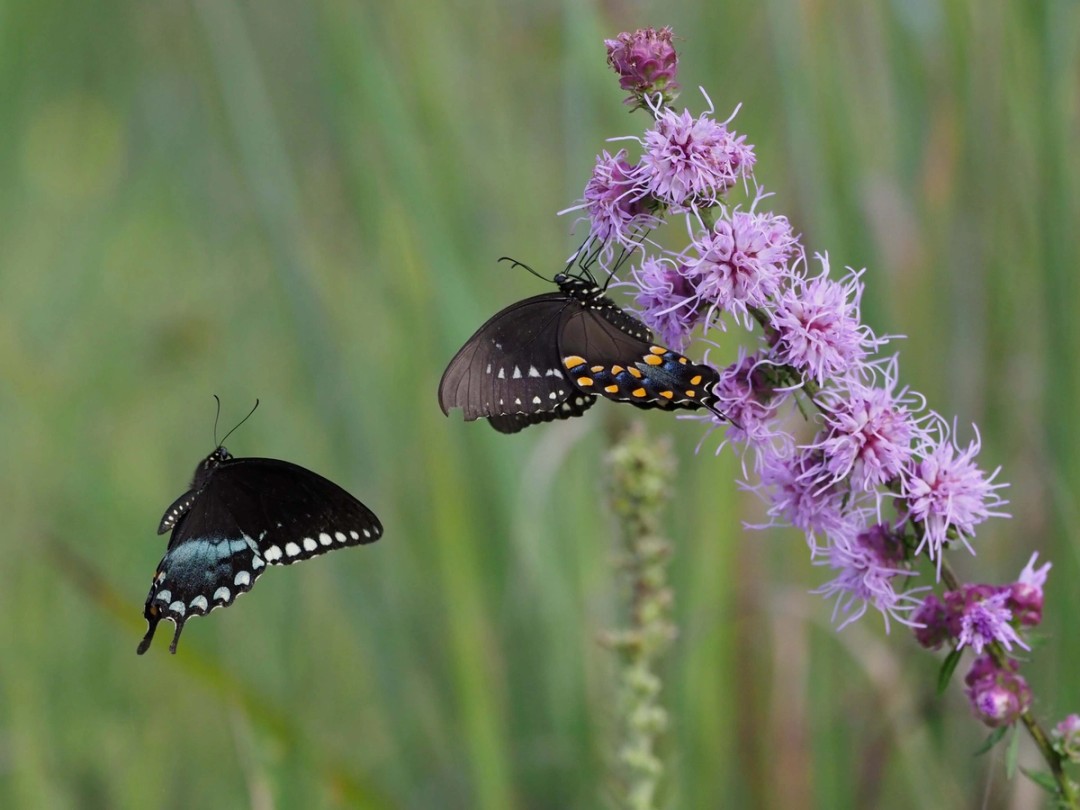
Male courting Female Spicebush Swallowtail 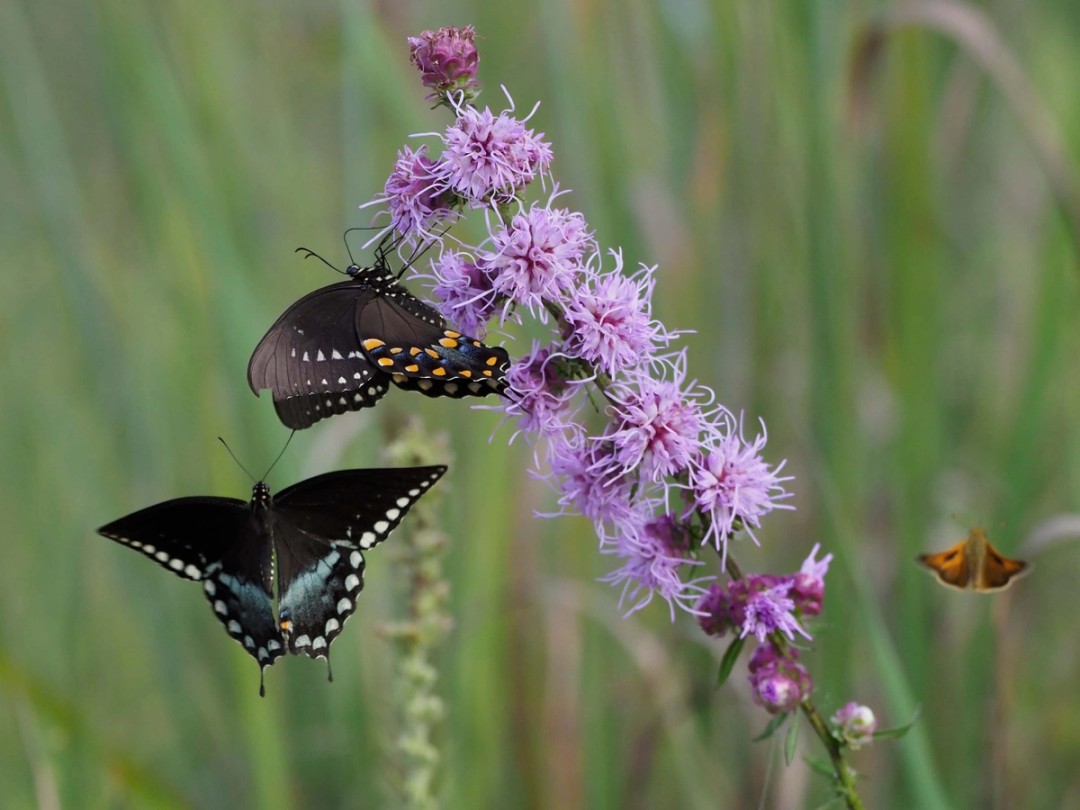
Male and Female Spicebush Swallowtail
Here's a sampling of butterflies I've documented visiting these flowers (in addition to the Spicebush Swallowtails shown above).
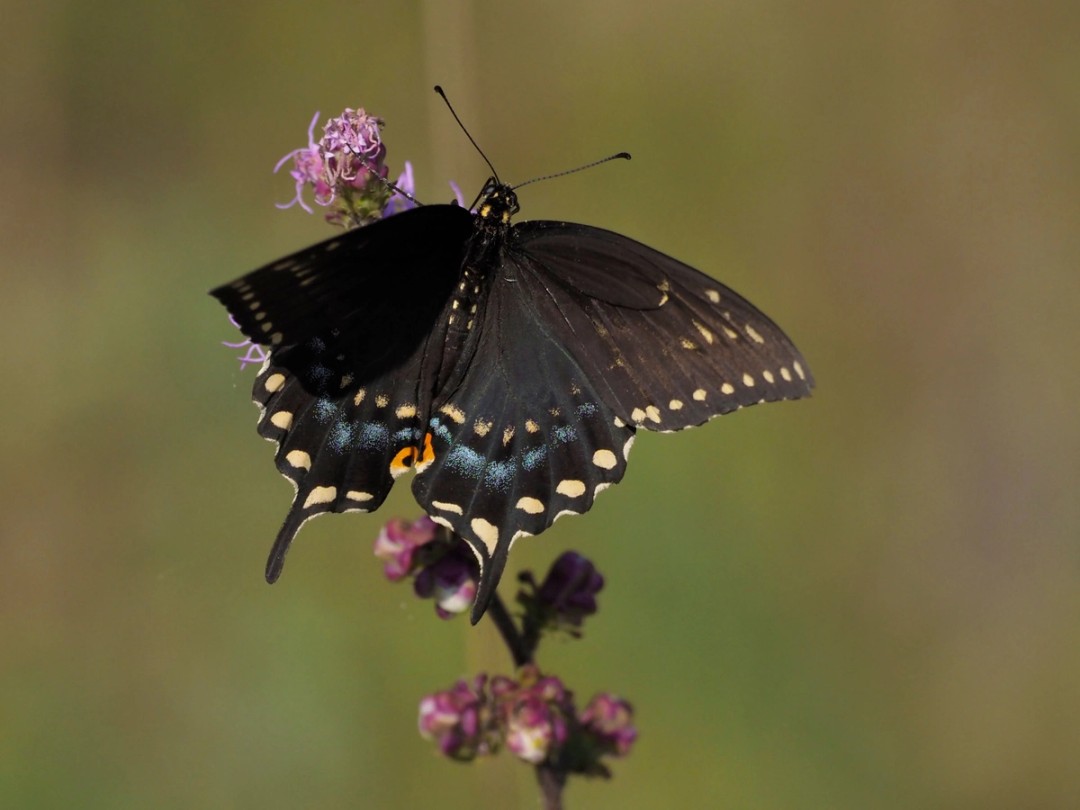
Black Swallowtail 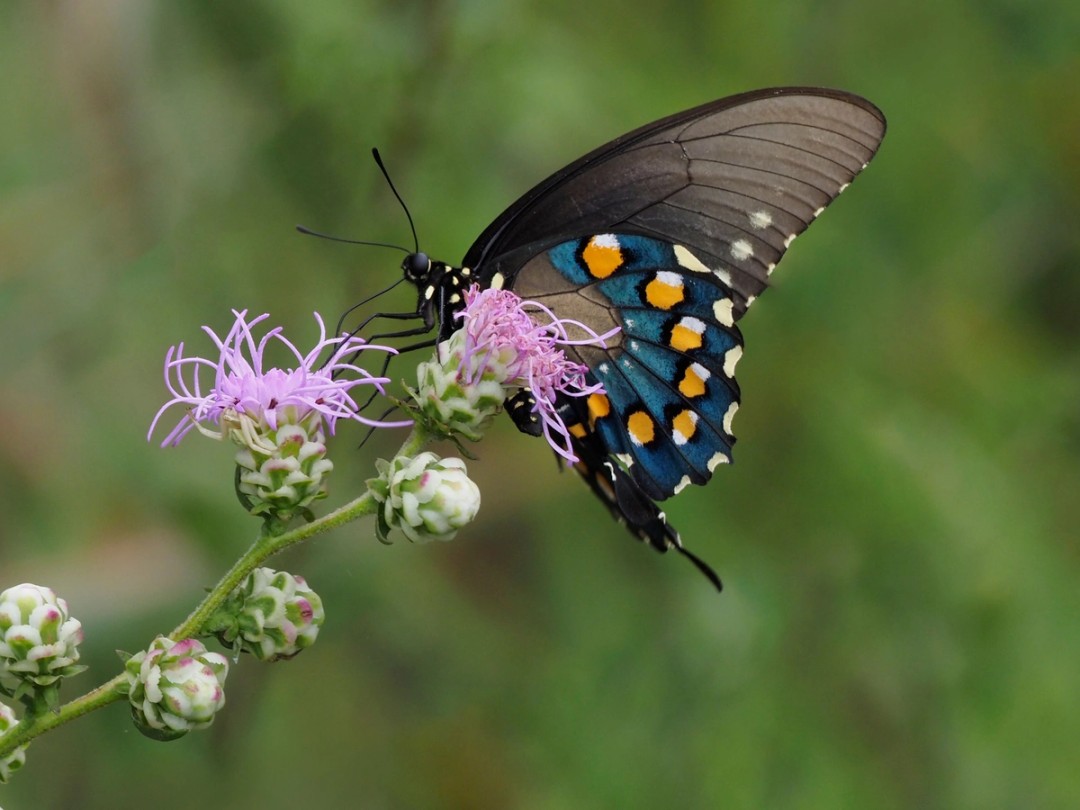
Pipevine Swallowtail 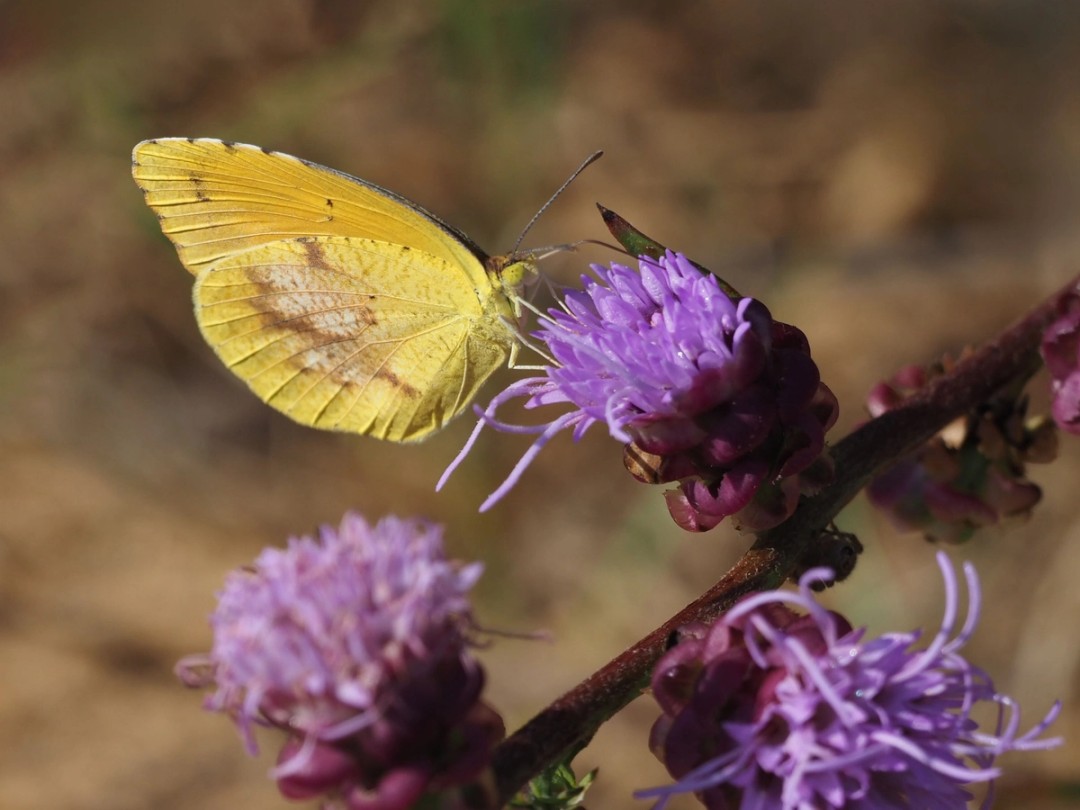
Sleepy Orange 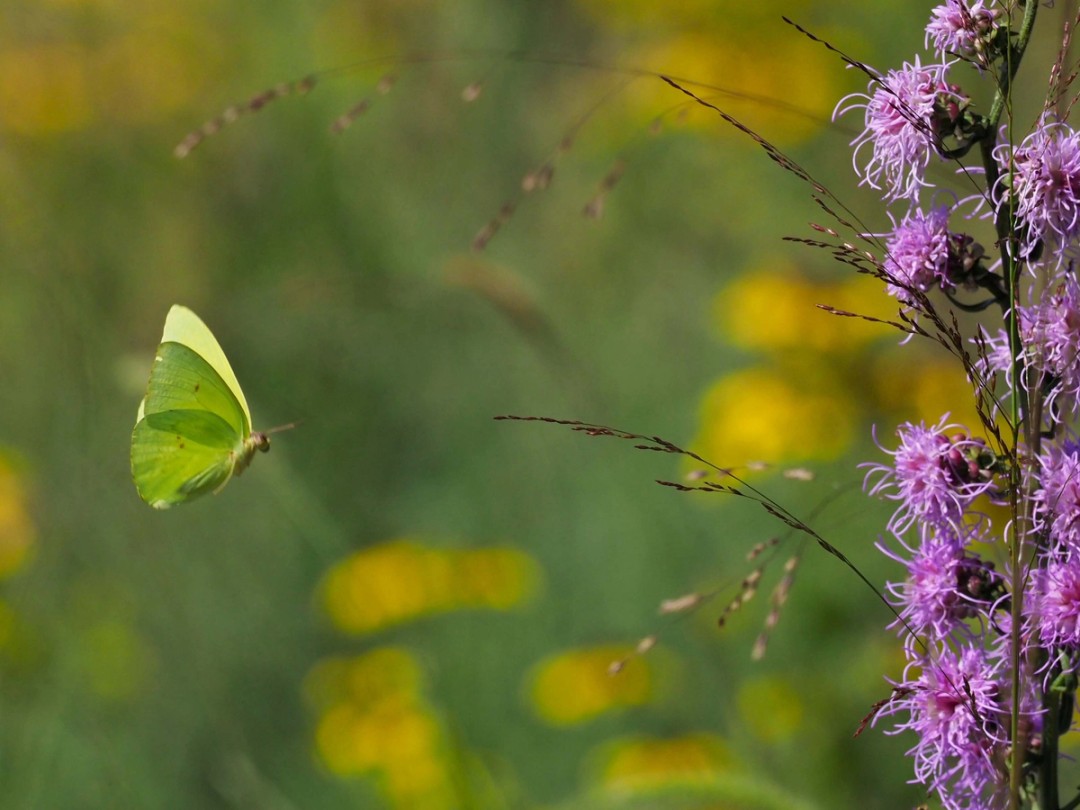
Cloudless Sulfur
Skippers
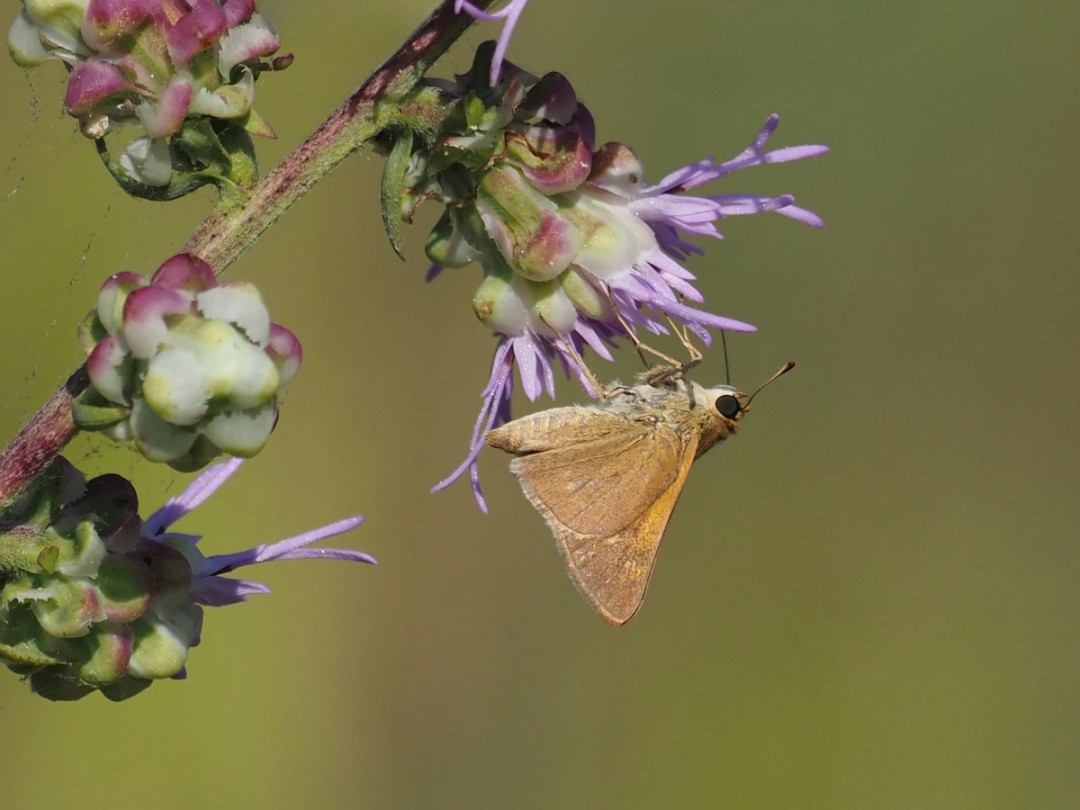
Tawny-edged Skipper 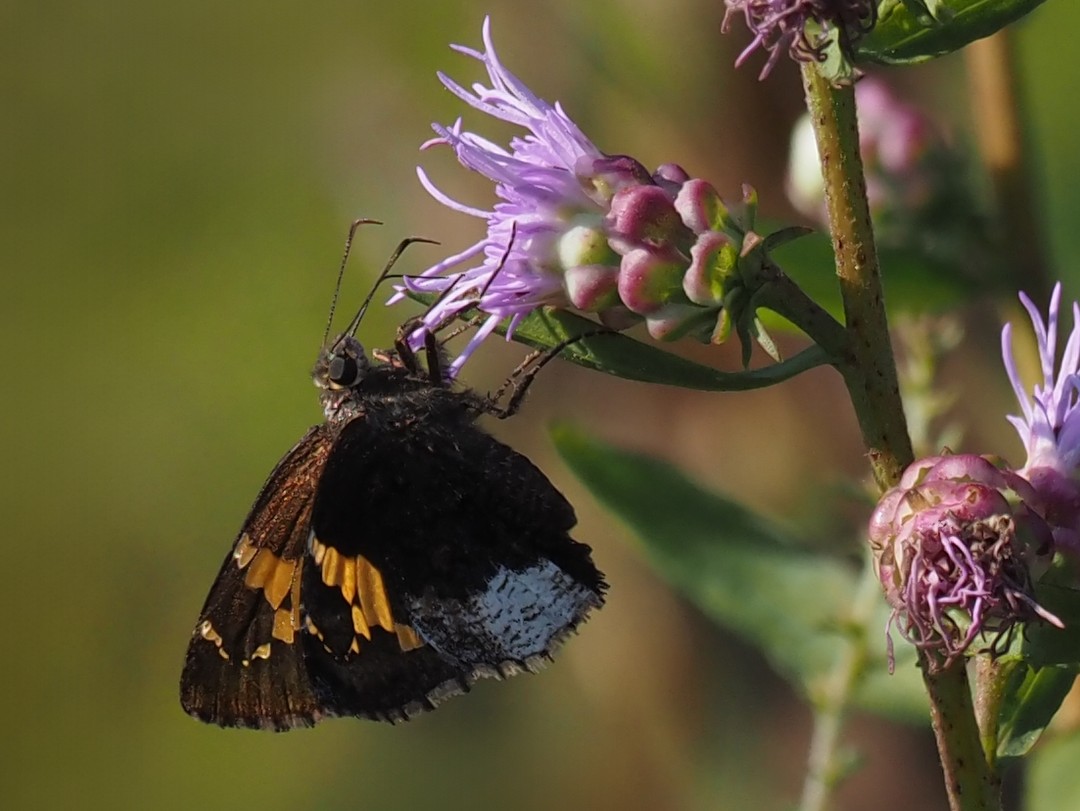
Hoary-edged Skipper 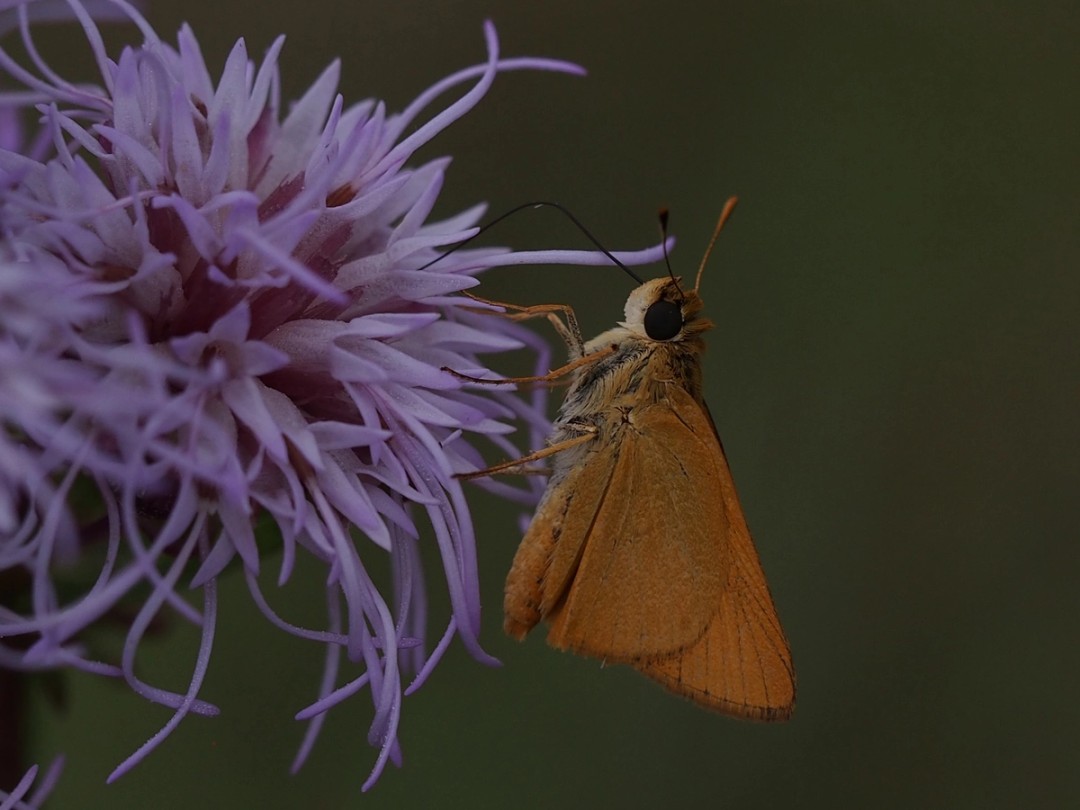
Delaware Skipper 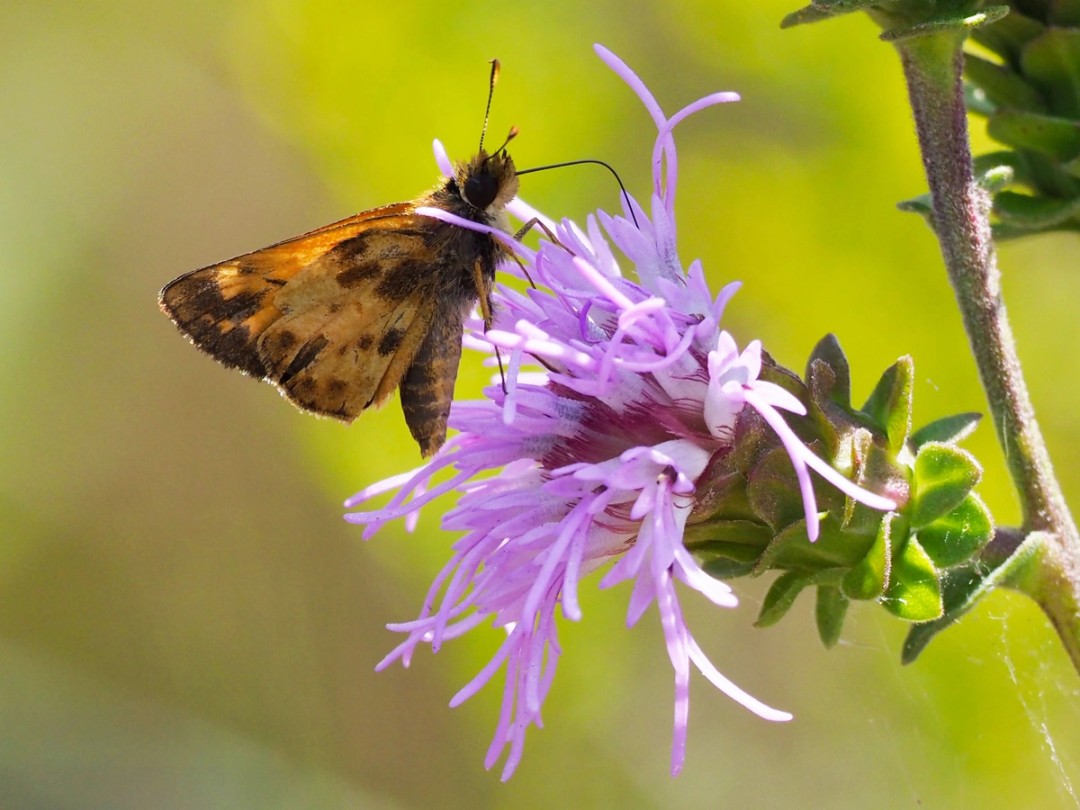
Zabulon Skipper 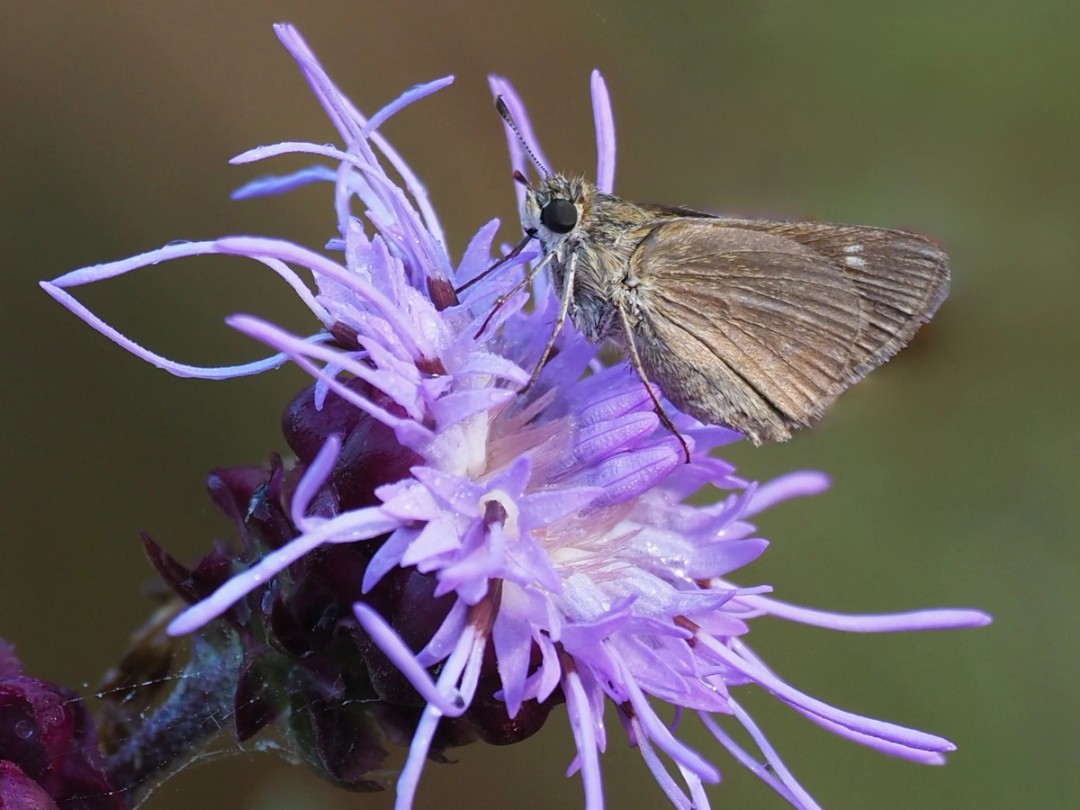
Crossline Skipper 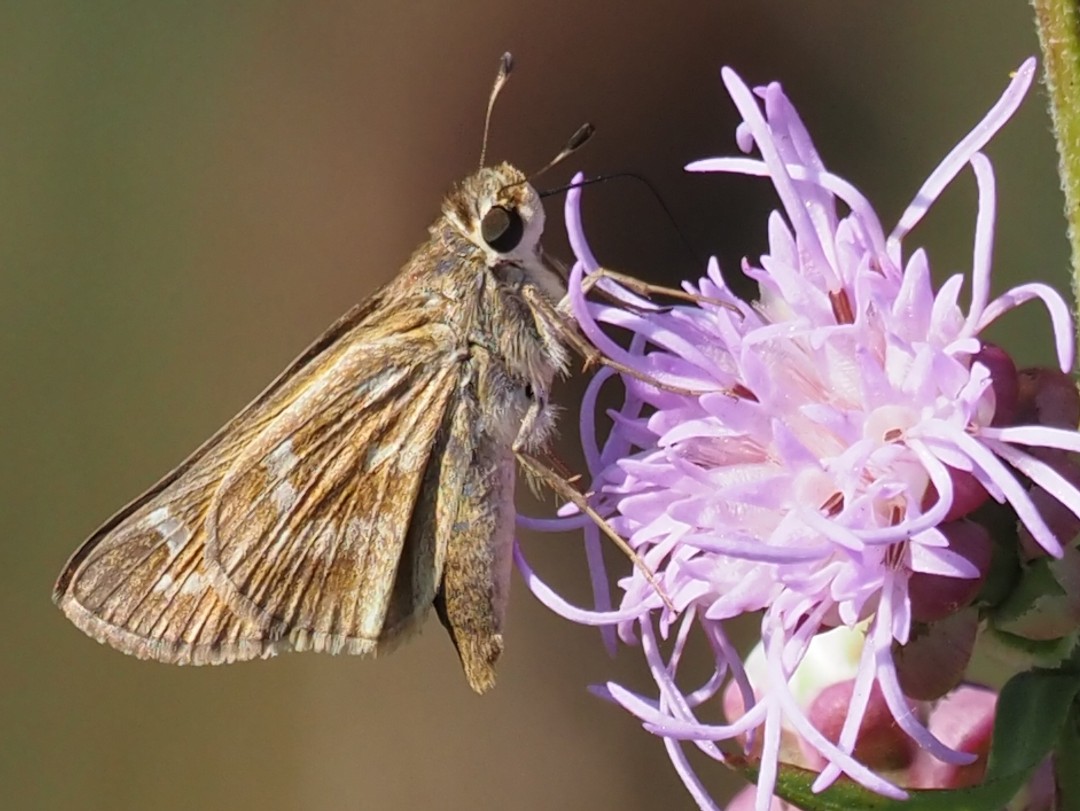
Sachem Skipper
PLANTS GROWING NEARBY
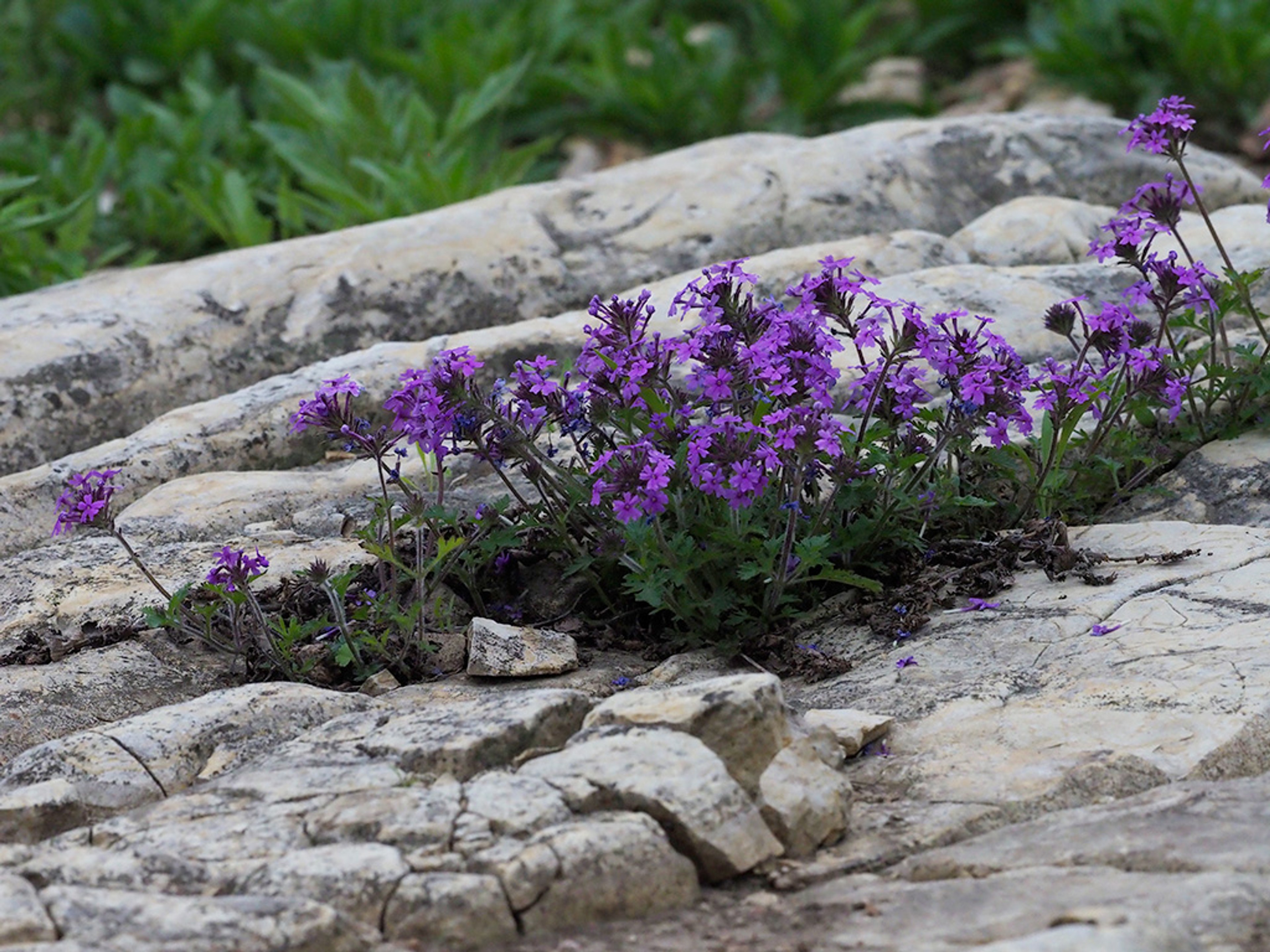
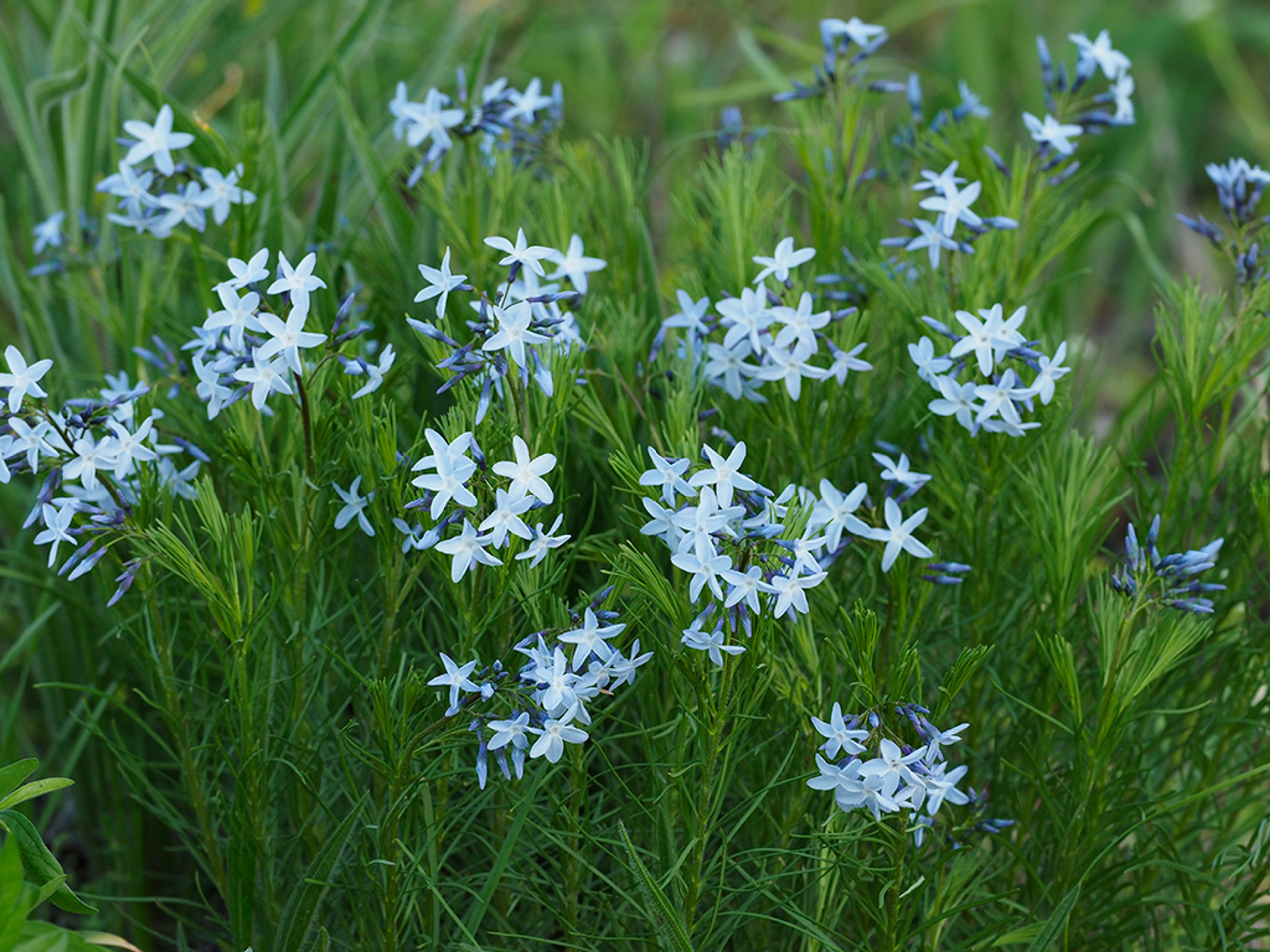
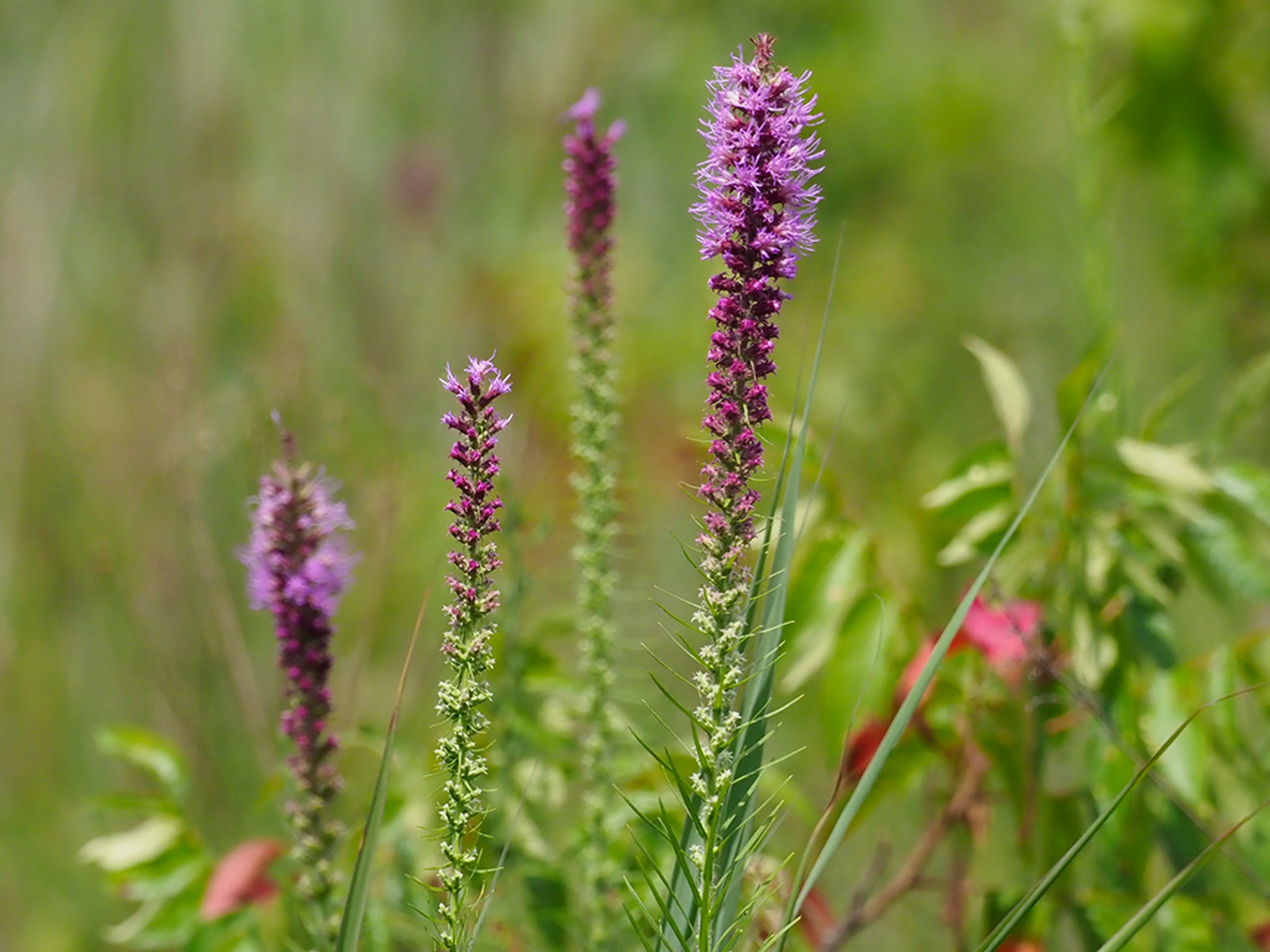
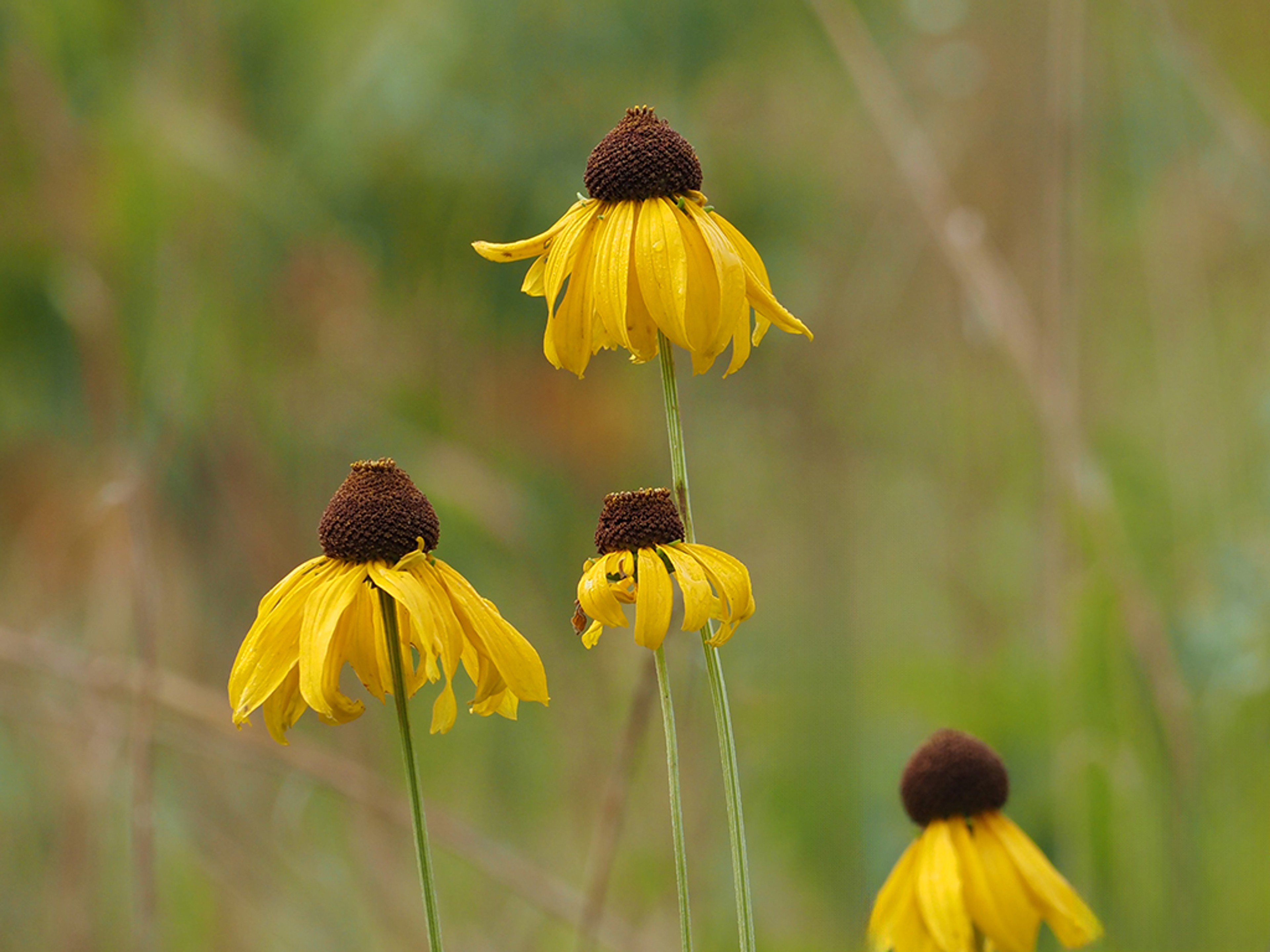
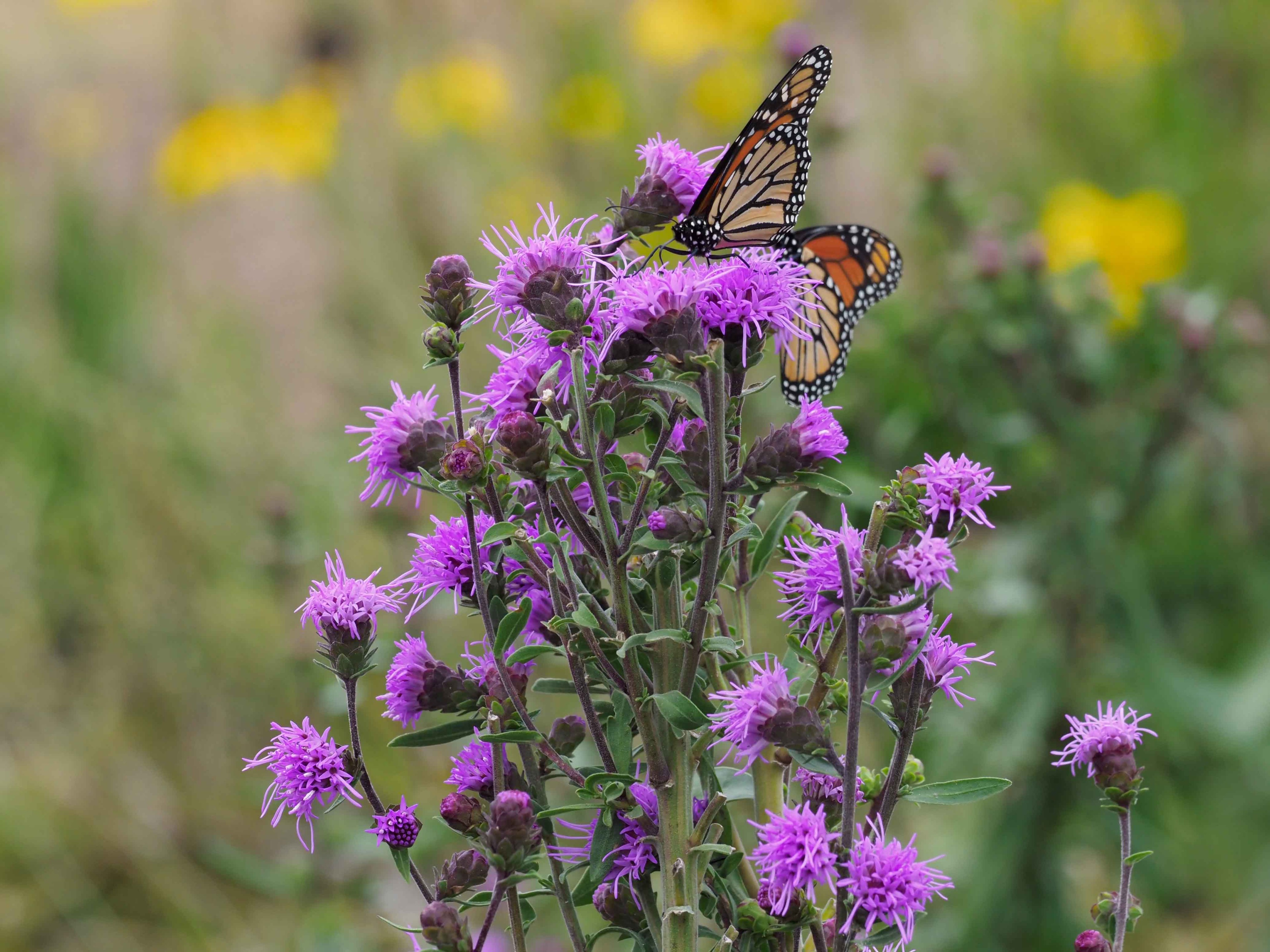
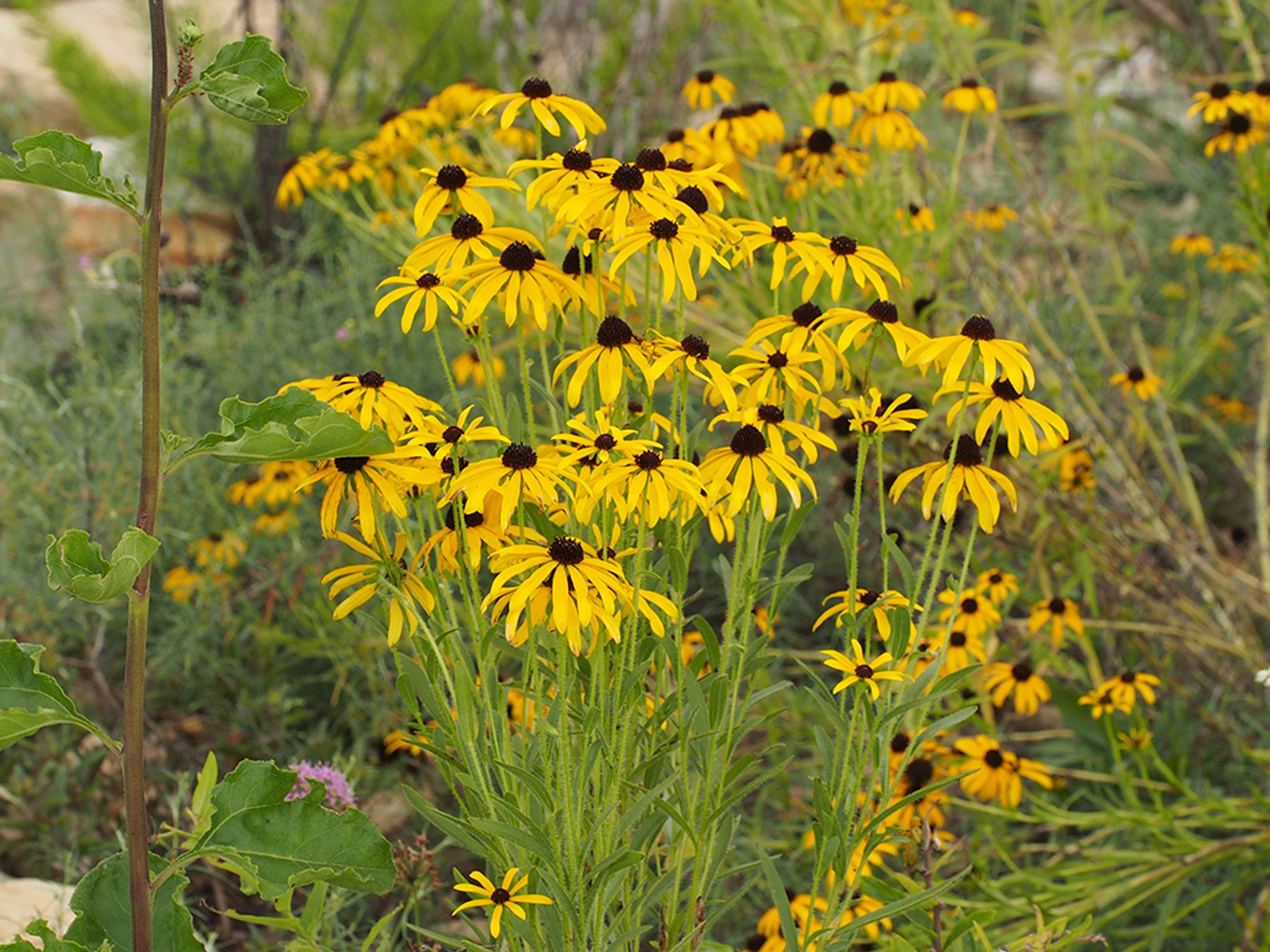
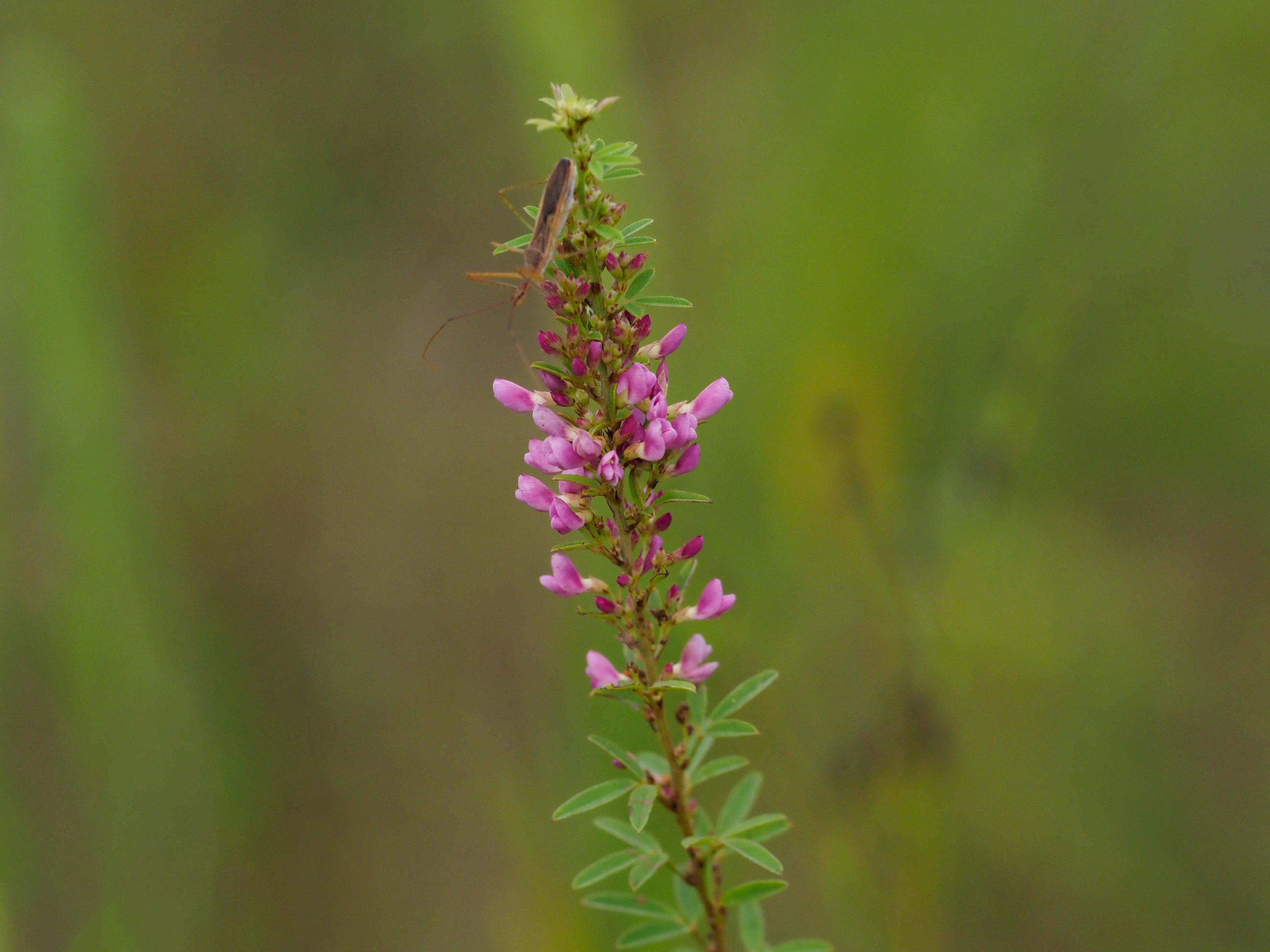
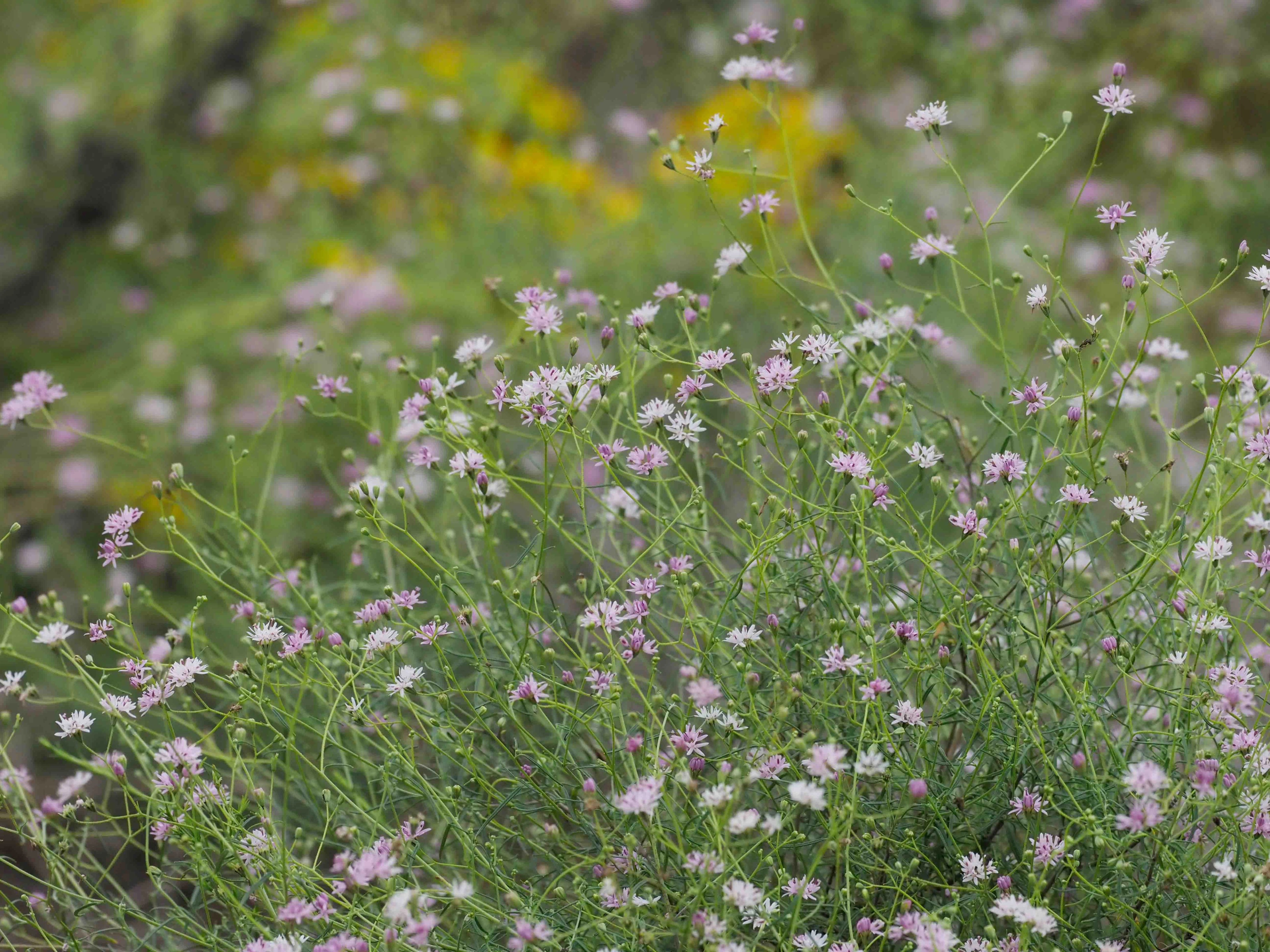
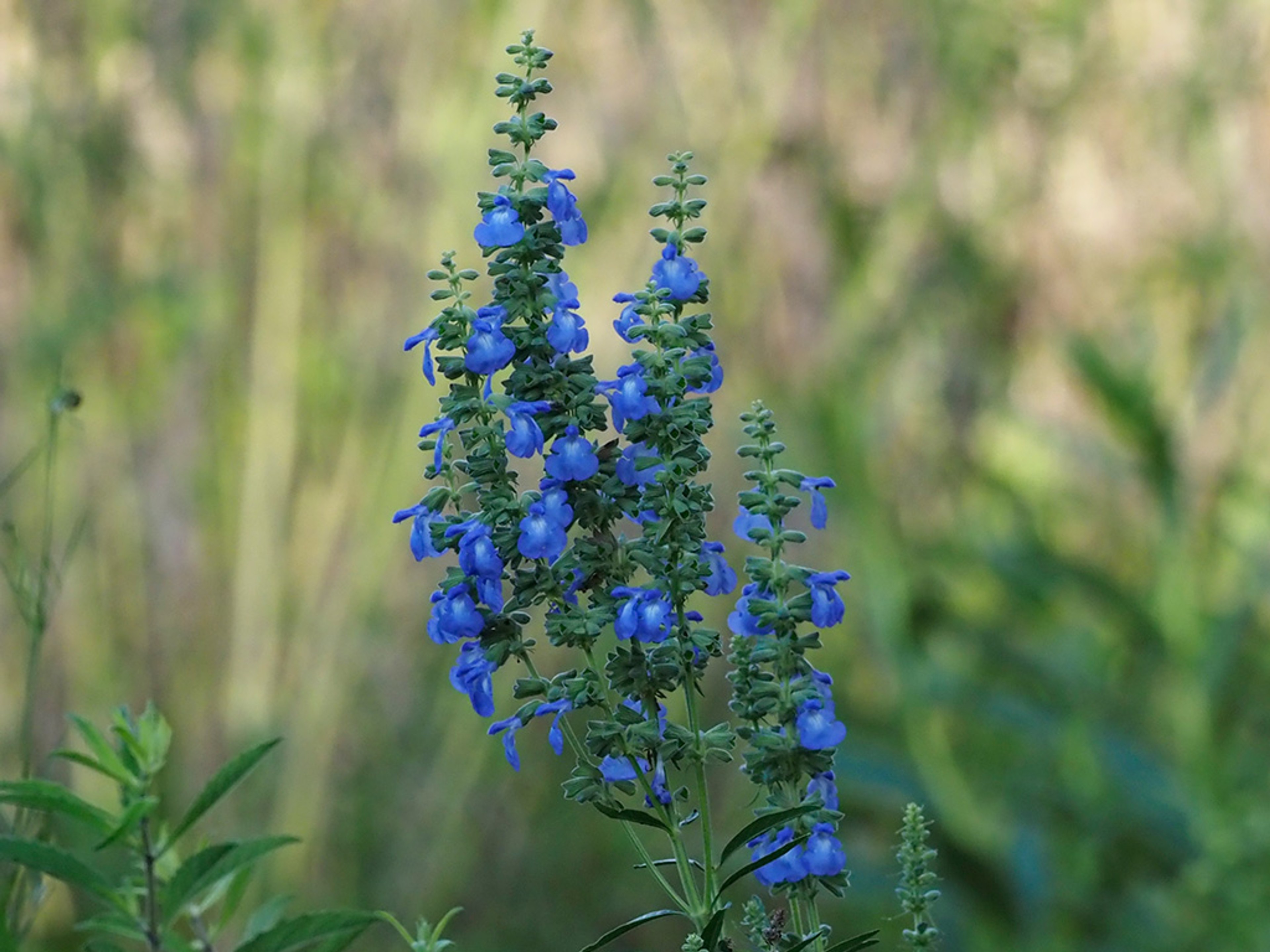
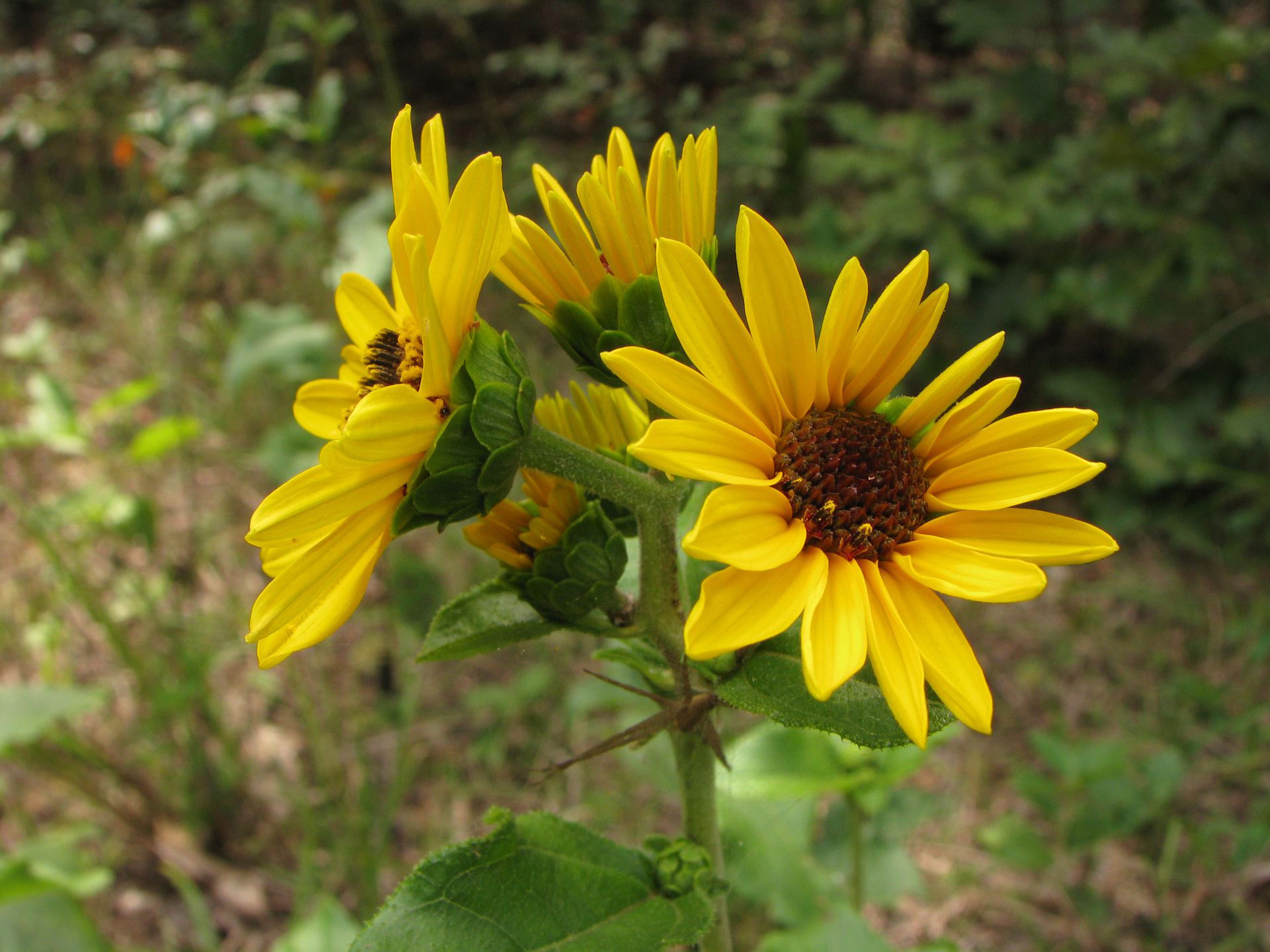
Liatris aspera has some lovely plant companions. The plants growing nearby differ by habitat.
Glade
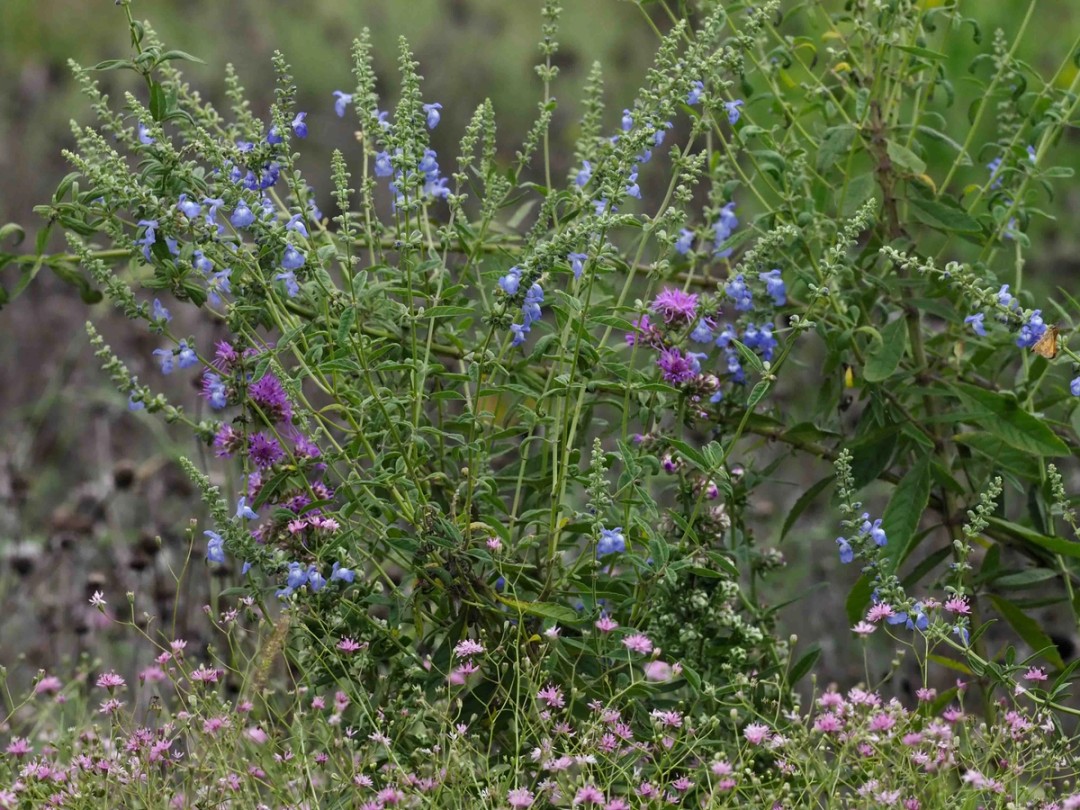
Palafoxia callosa, Salvia azurea 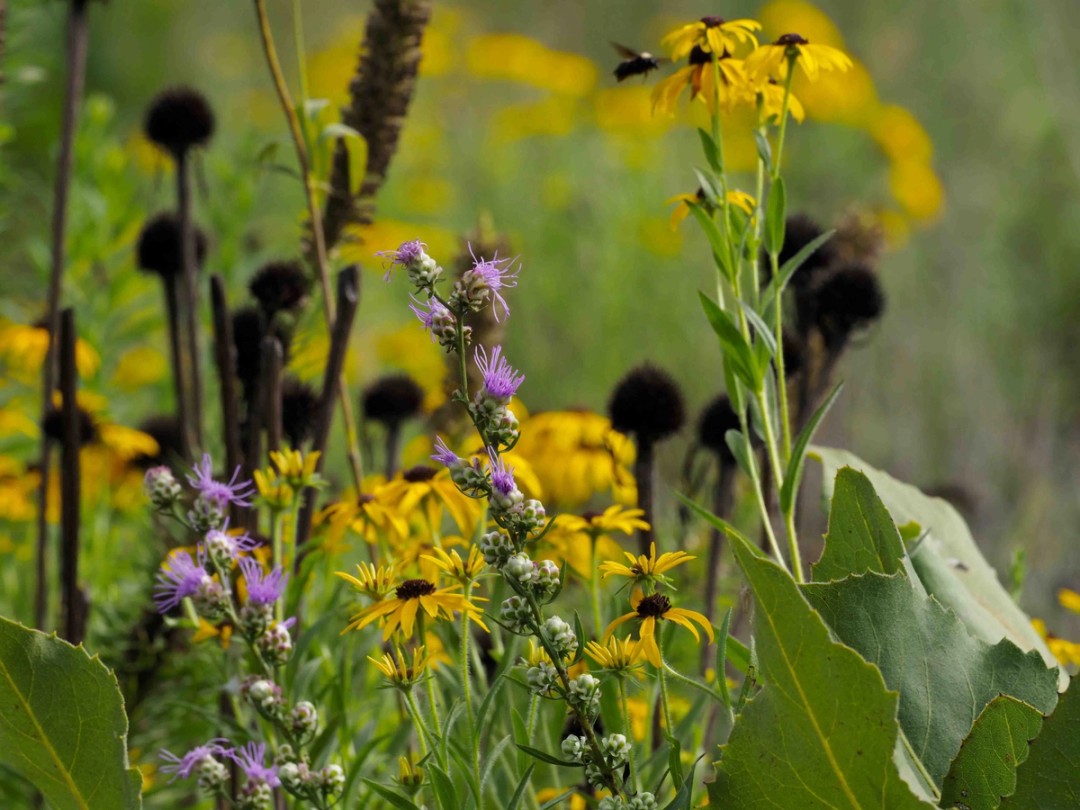
Rudbeckia missouriensis, Silphium terebinthinaceum, Glandularia canadensis 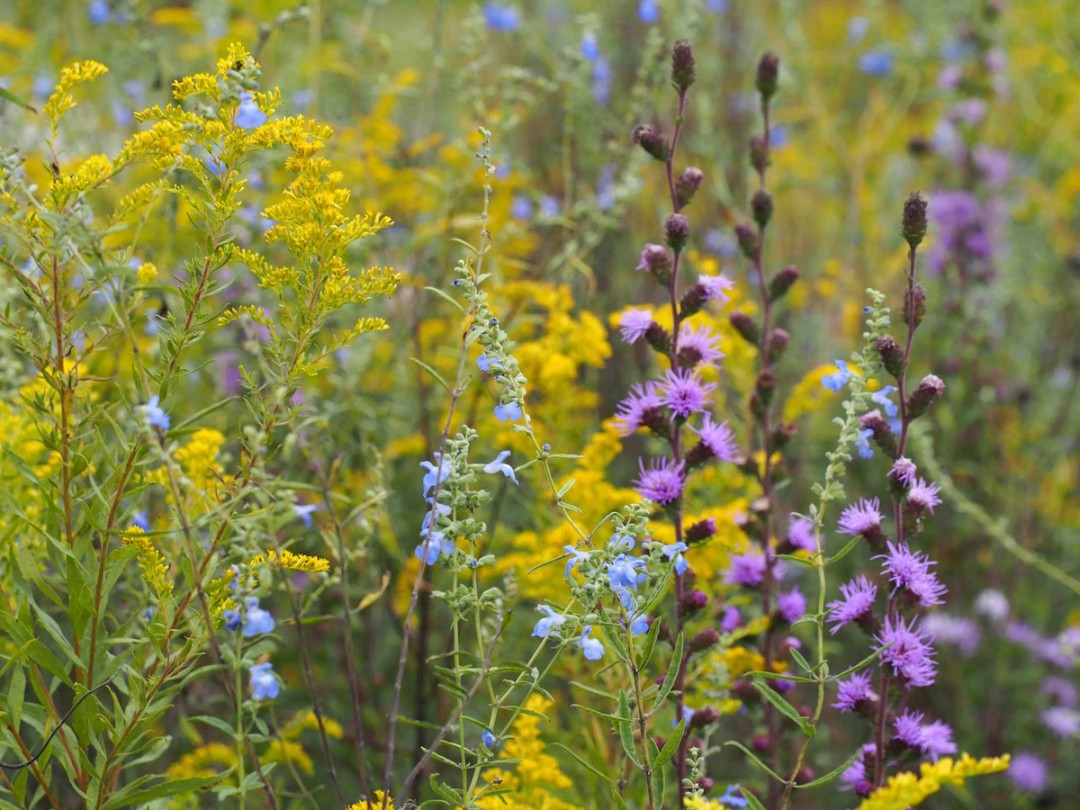
Salvia azurea, Solidago altissima 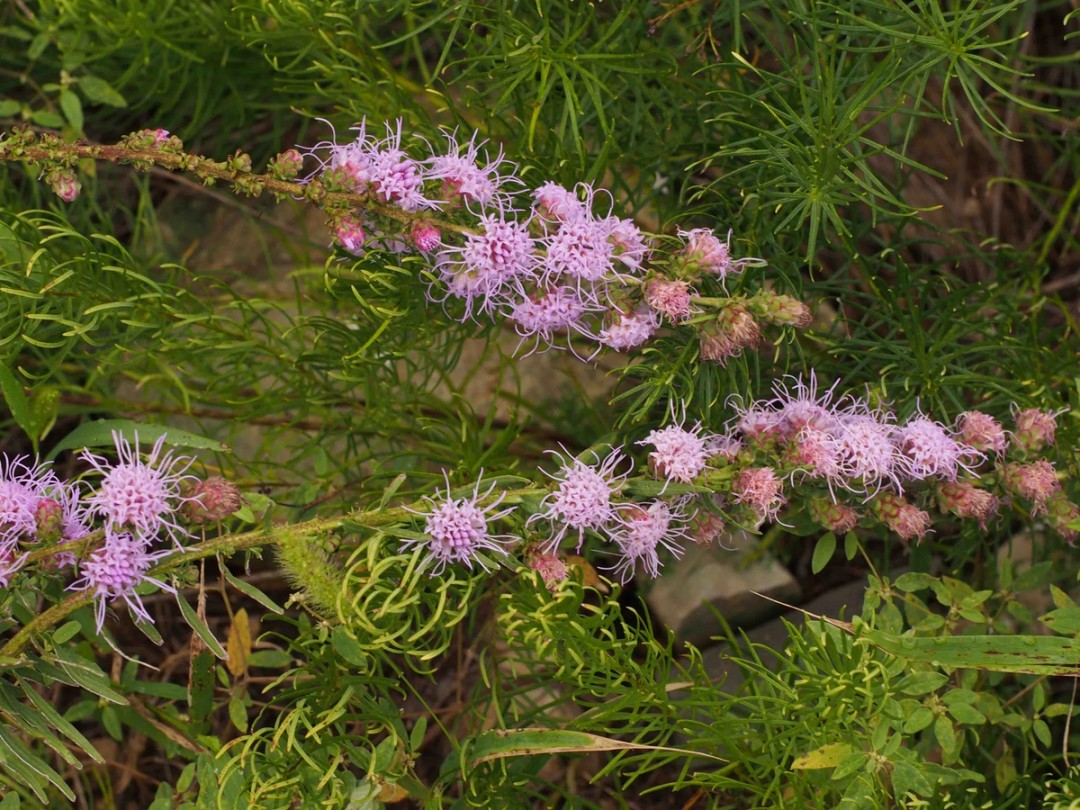
Amsonia ciliata
Grassland
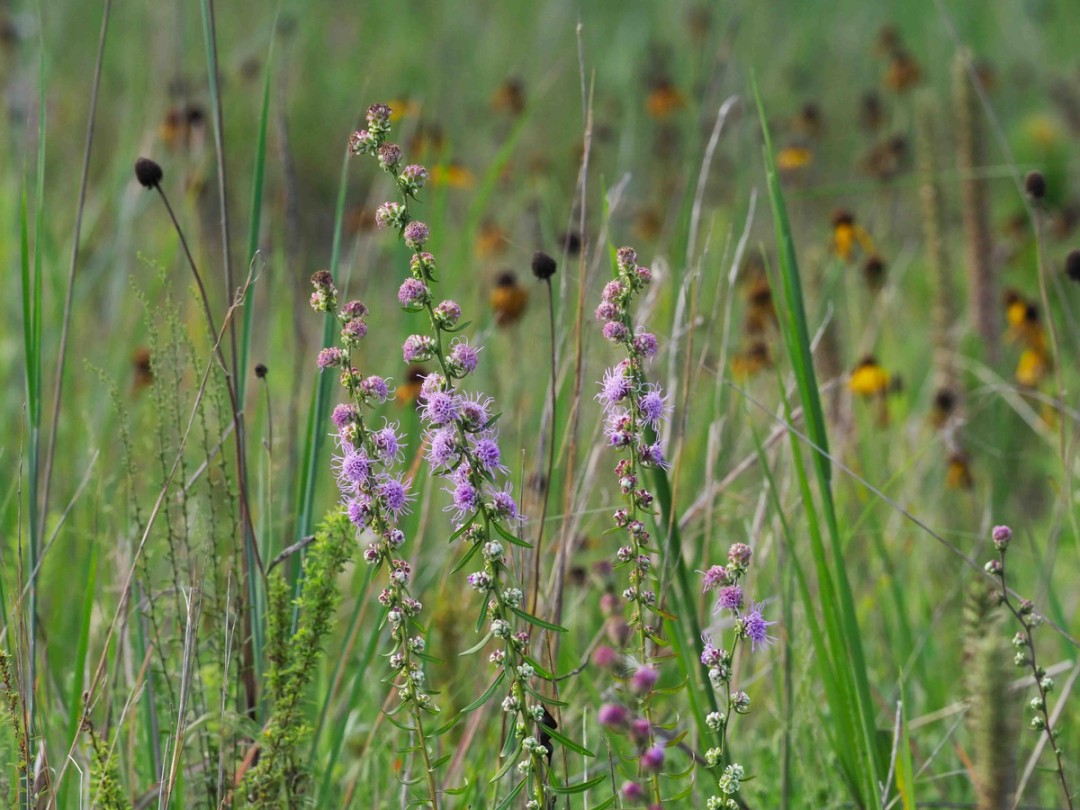
Rudbeckia grandiflora, Lespedeza virginica (lower left, not flowering) 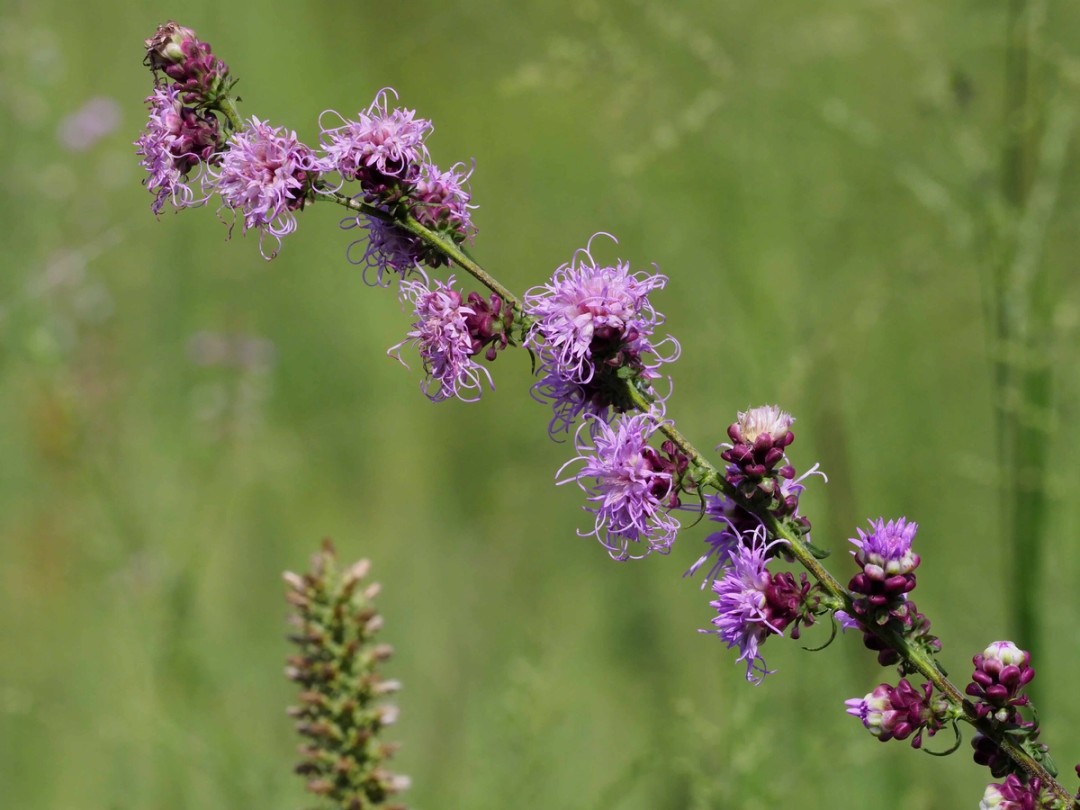
Liatris pycnostachya (bottom left, not flowering)
HABITAT
Liatris aspera is found in a variety of habitats including prairie, savanna, limestone glade and woodland edge as well as forest openings, ledges and bluff tops. Here in northern Arkansas, I find it growing in grassland, glade and occasionally, woodland edge. It tolerates and blooms in poor soil, during droughts and despite the heat and humidity of our Arkansas summers. This is a tough plant!
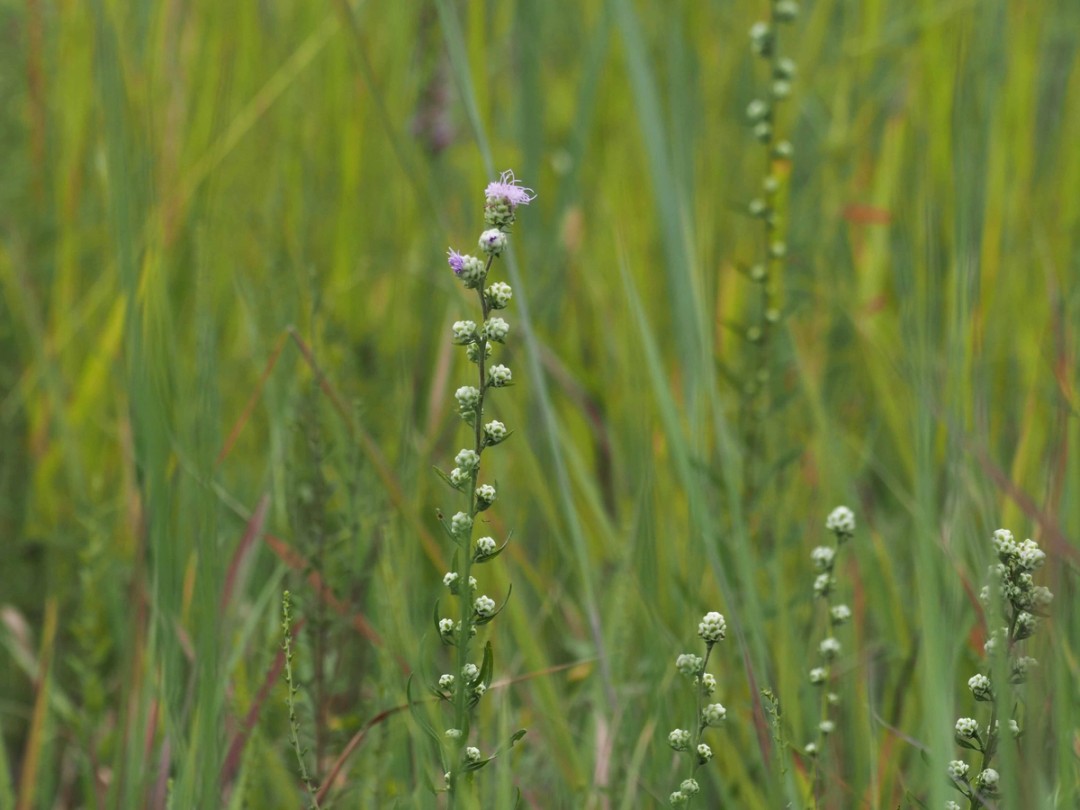
Grassland 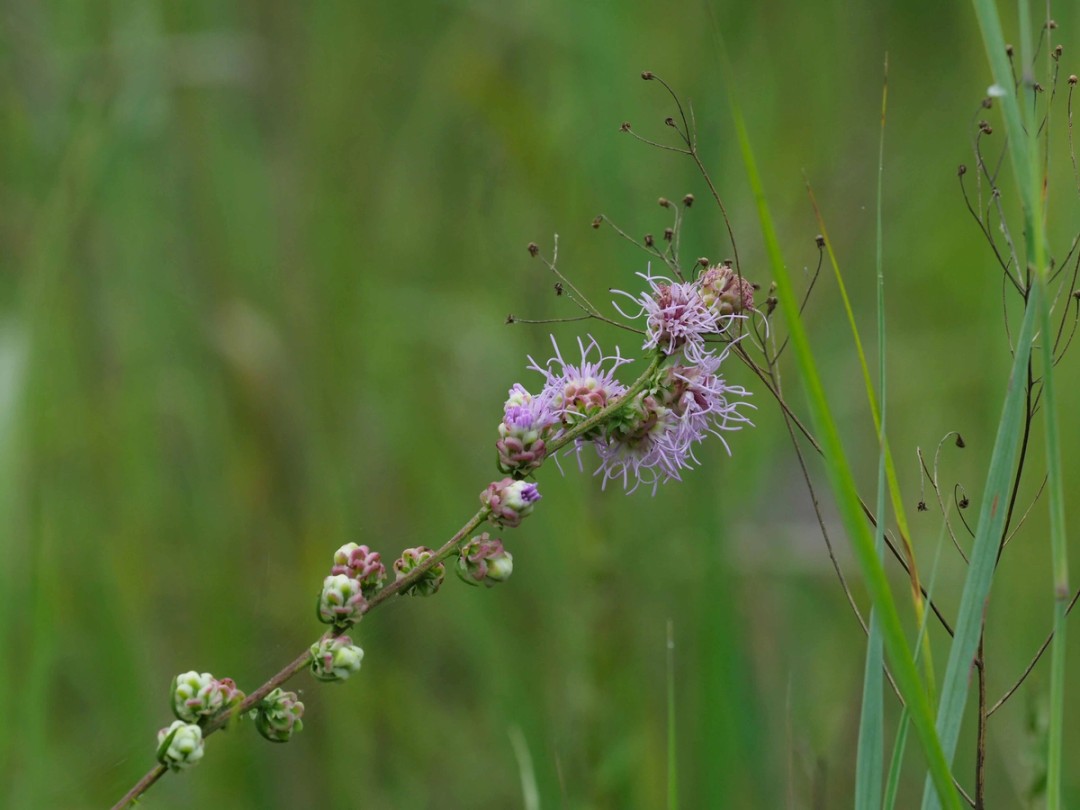
Grassland 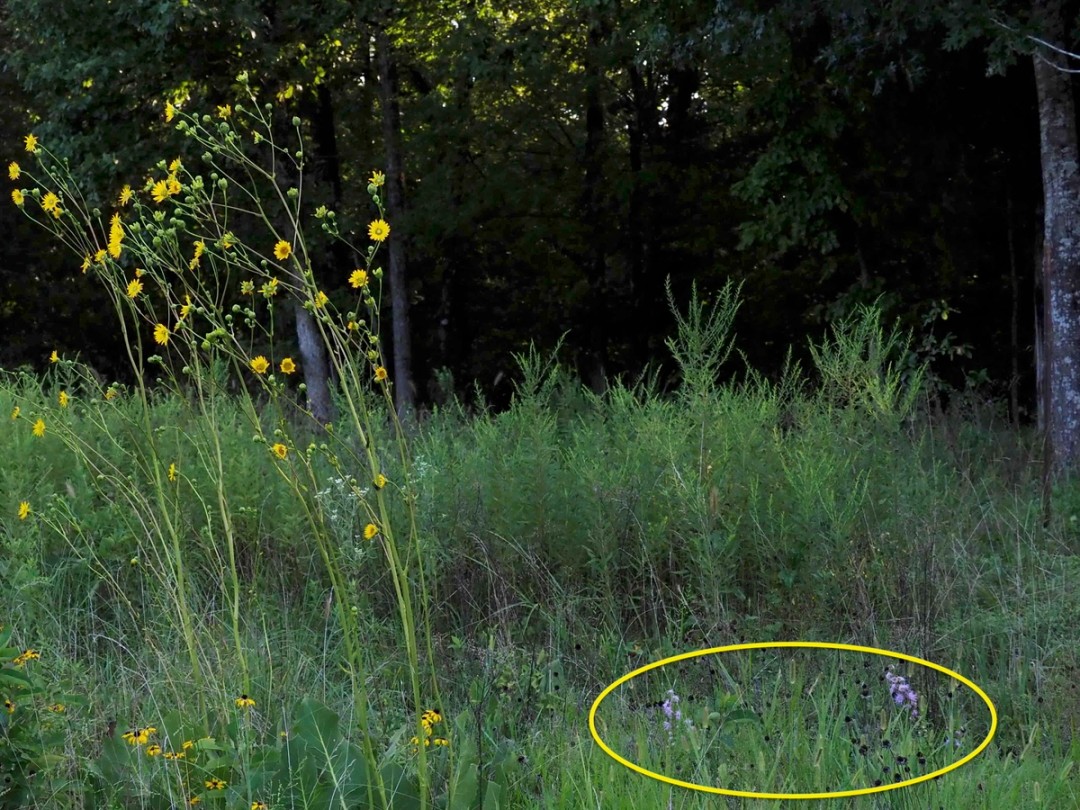
Woodland edge 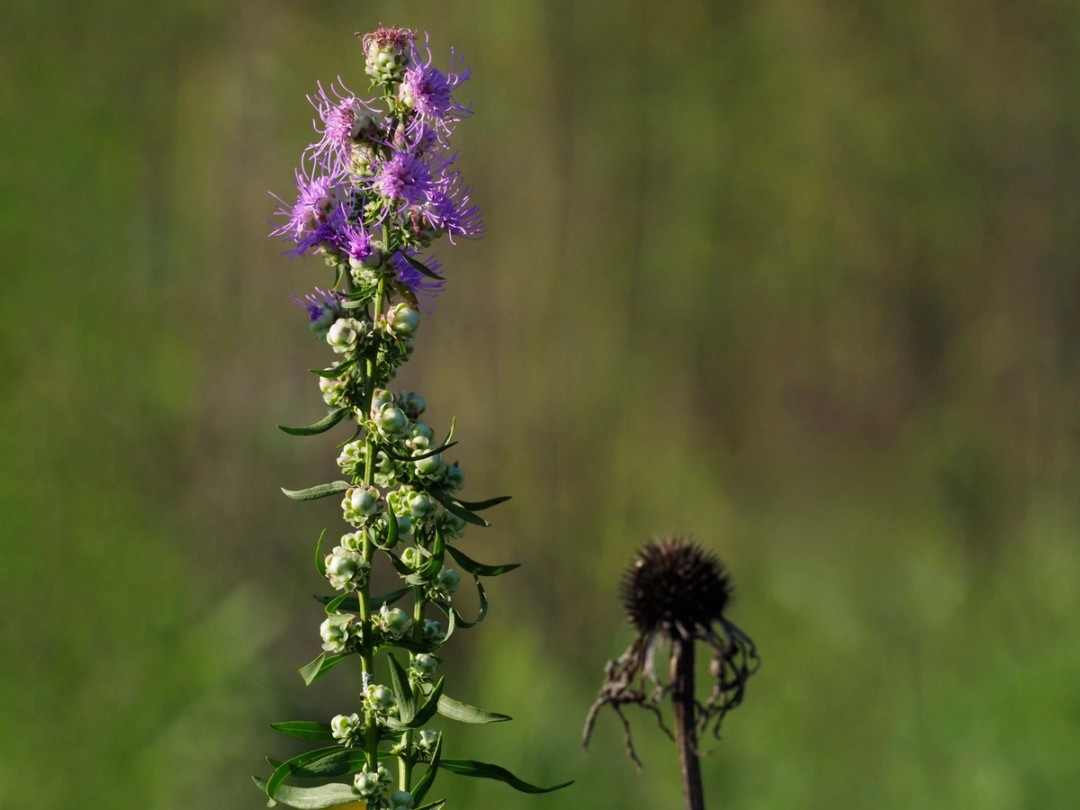
Glade habitat
CONSERVATION STATUS
NatureServe lists Liatris aspera as Apparently Secure within its range, however it is shown as Critically Imperiled in North Carolina, Imperiled in South Carolina and Vulnerable in Kentucky, Virginia and Georgia. It is Apparently Secure in Iowa, West Virginia and Secure in Kansas. All other states within its range show No Status Rank.
In Arkansas, Liatris aspera has a Conservation Value of 8 (in the highest group 8-10), meaning "Conservative taxa with strong fidelity to intact habitats. These taxa tend to exhibit late-successional characteristics like long lifespans with low seed sets and an inability for far ranging dispersal."
INTERESTING TIDBITS
This is one of our most drought tolerant plants that will not only survive droughts but also bloom during them. So if you are considering a Xeriscape or water-wise garden, this is a plant to consider.