PLANT NAME
Palafoxia callosa is in the Asteraceae (sunflower) family. The genus name comes from Jose de Palafox y Melz. He was the Duke of Saragossa and a Spanish general. I did not find information as to why this plant was named for him. The genus name comes from Latin, meaning 'wonderful', and it certainly is a wonderful plant! Callosa means hardened, rough or thick skinned.
The most used common names are Small Palafox and Spanish needles.
BLOOM
The masses of small flowers are dark pink with maroon stamens when they first open–very striking. They gradually lose saturation, becoming nearly white with just a blush of pink after a couple of days. The result is that a mass of plants will have flowers of many pink shades.
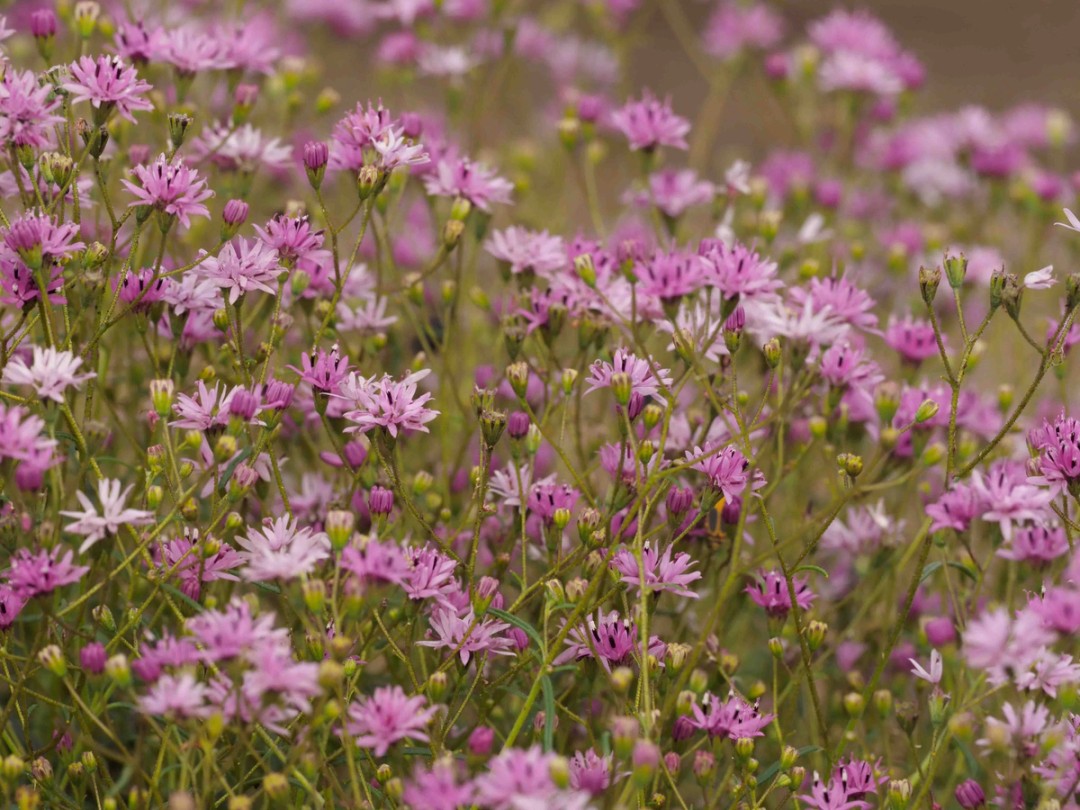
Many shades of pink 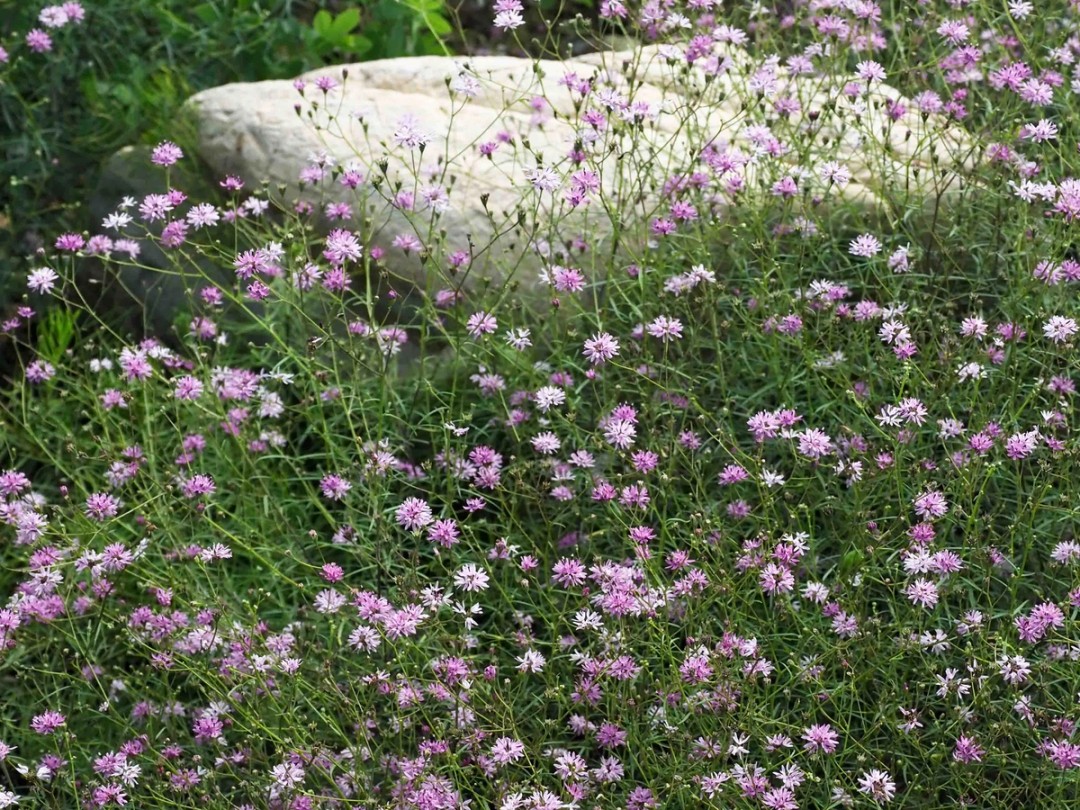
Masses of pink flowers
The flowers of Palafoxia are discoid. There are no ray flowers (unlike most of the Asteraceae family). The pink to purple florets number 15 or more. They begin as a darker shade, fading to light pink over a couple of days. Stamens with powdery white pollen, appear before the style, avoiding self pollination. Once the pollen has been dispersed, the style arises. The stigma bifurcates and curves backward, ready to receive pollen.
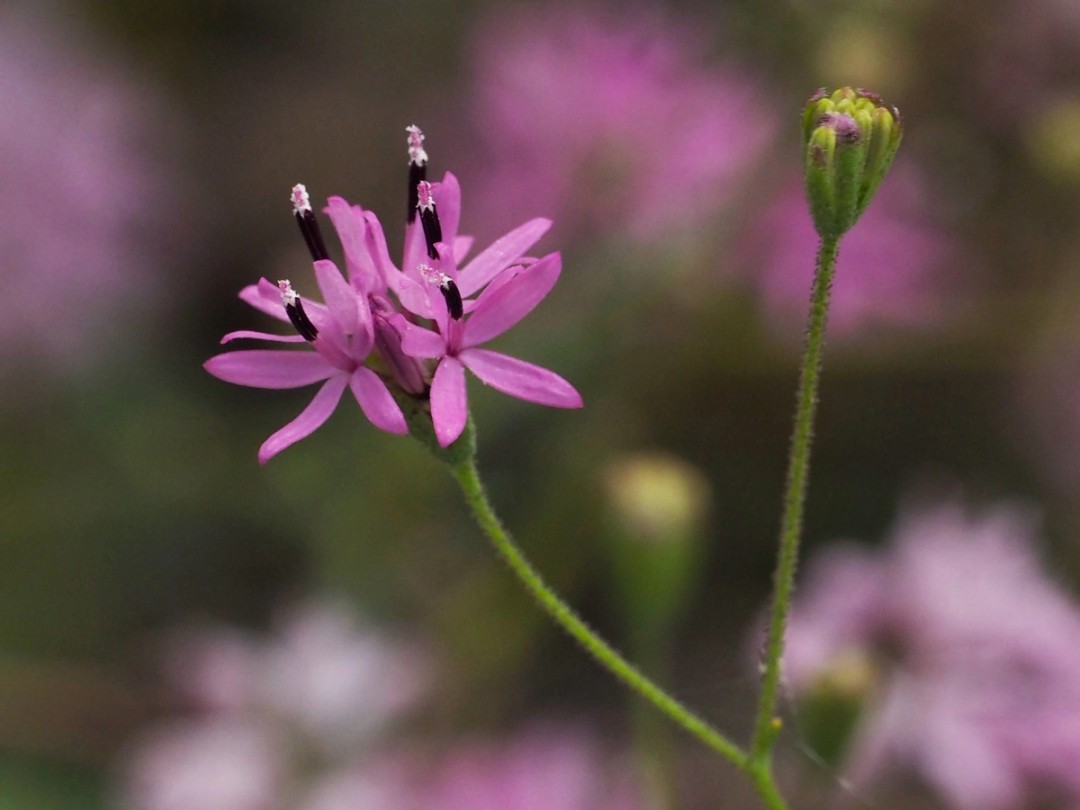
Stamen with white pollen 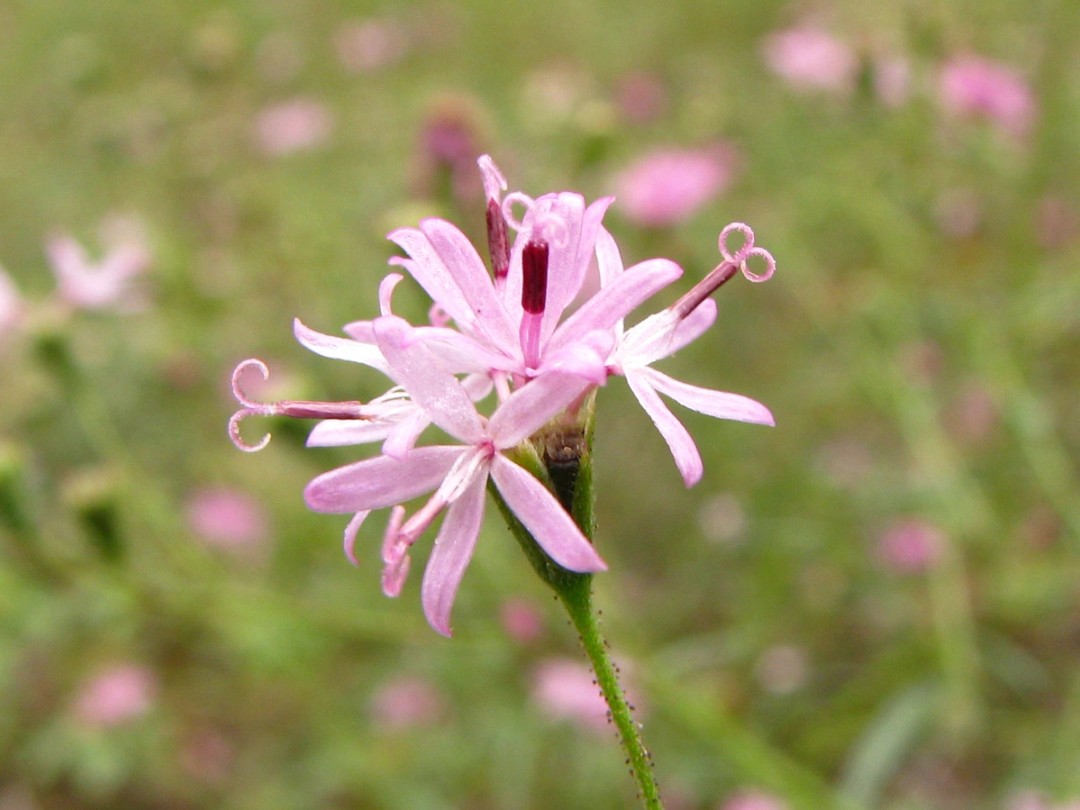
Bifurcated stigma
DESCRIPTION
Palafoxia callosa is a free-seeding annual of about 18-20 inches in height. The leaves are sparse, long and thin with a central crease and pointed tip.
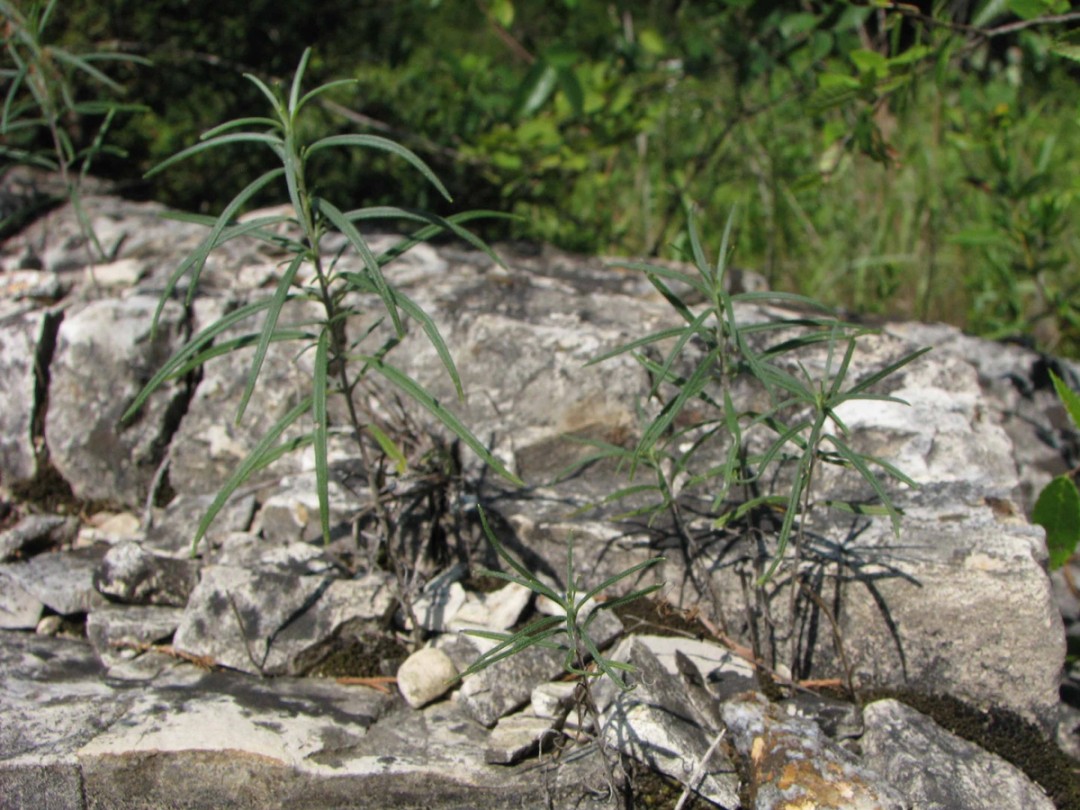
Long, thin leaves 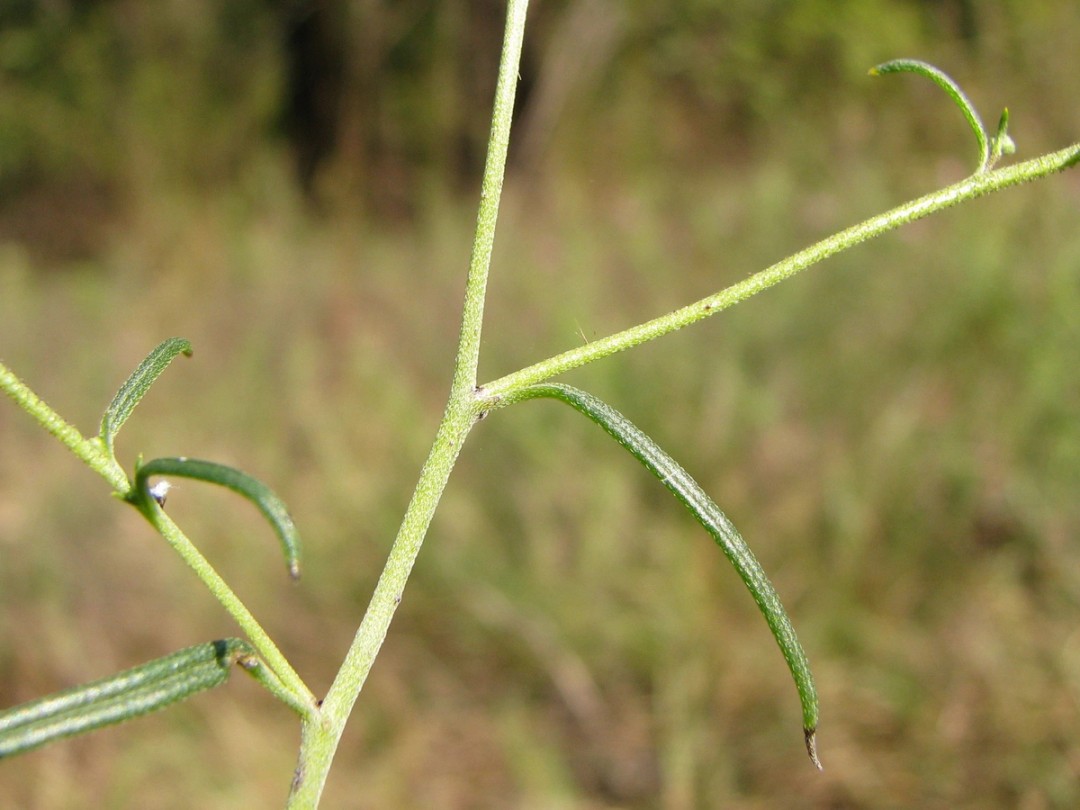
Leaves
The stems branch many times giving a somewhat mounded, yet wispy shape to the plant. The lower stems are pubescent with the upper stems being densely glandular.
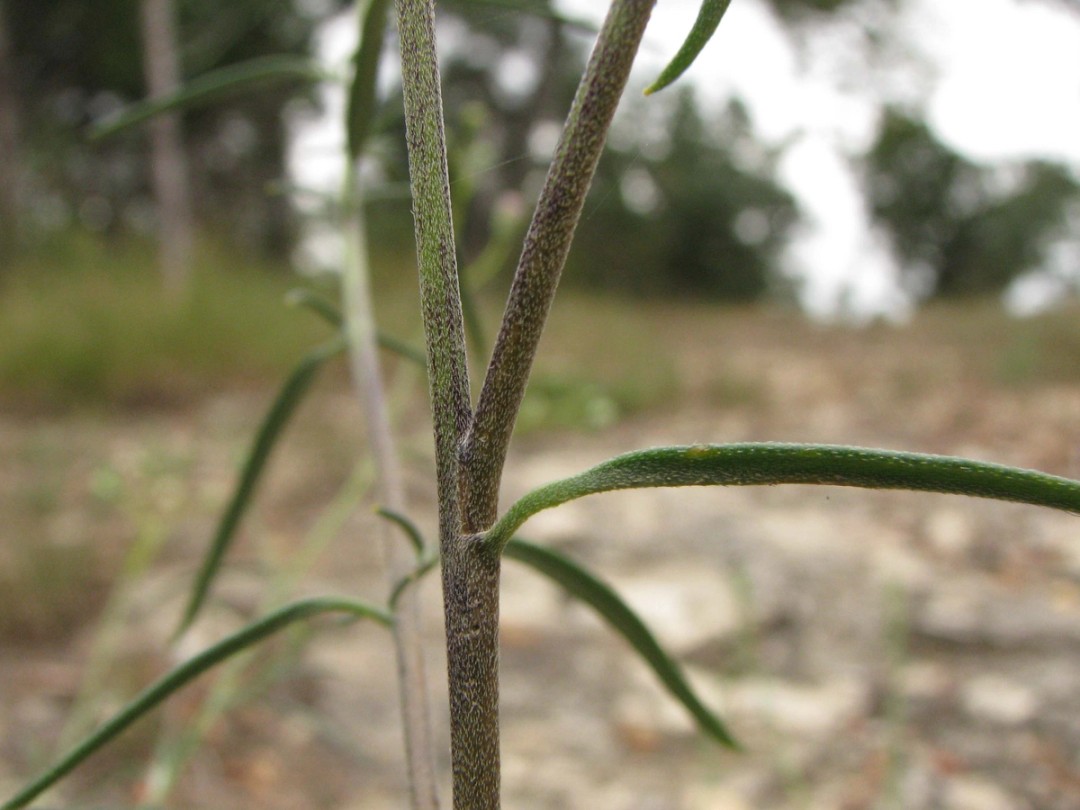
Pubescent lower stem 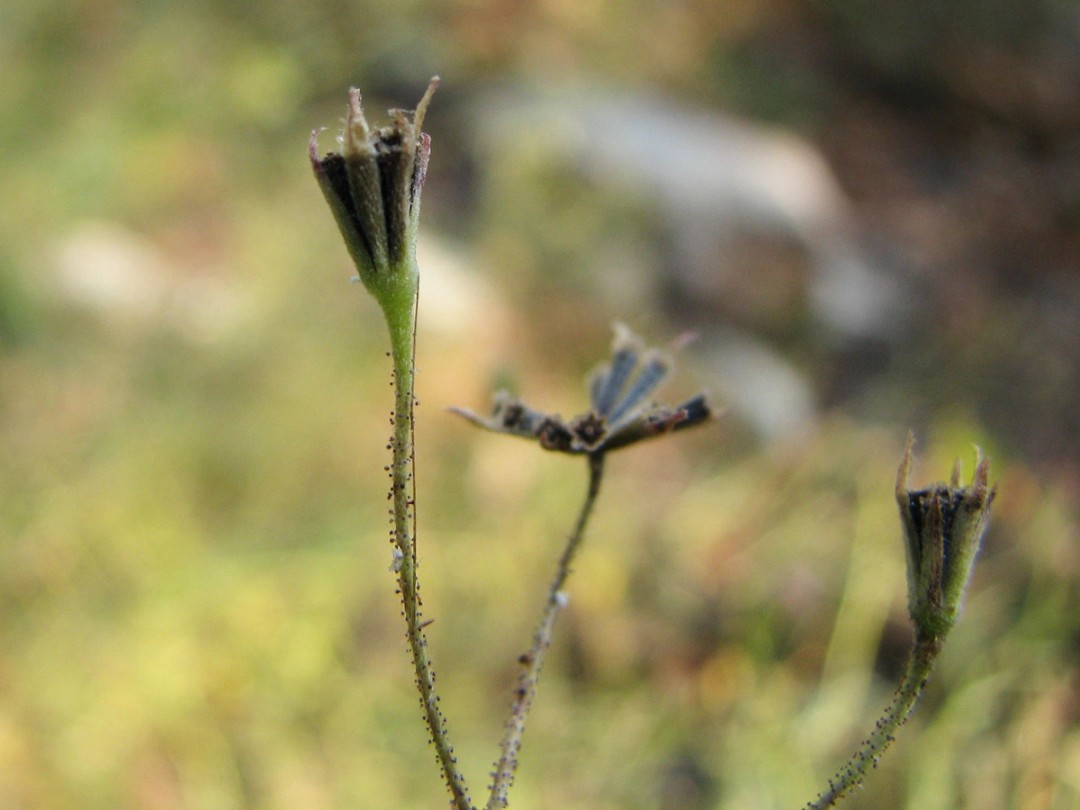
Glandular upper stem
POLLINATORS
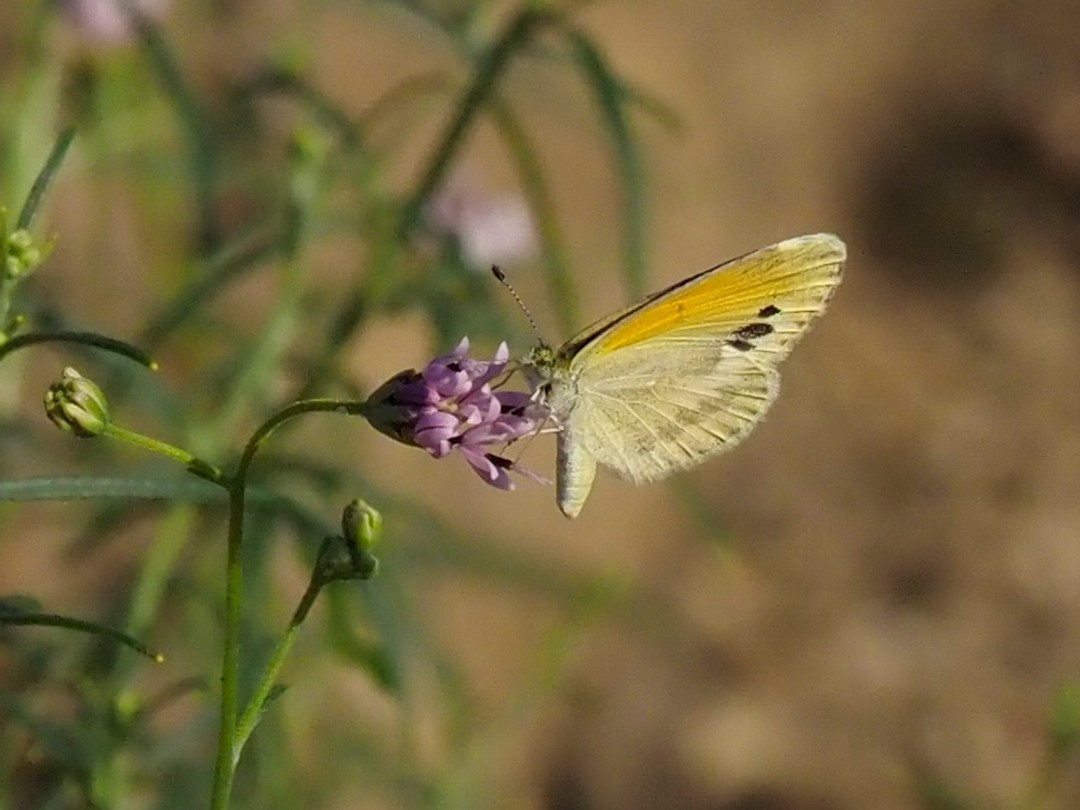
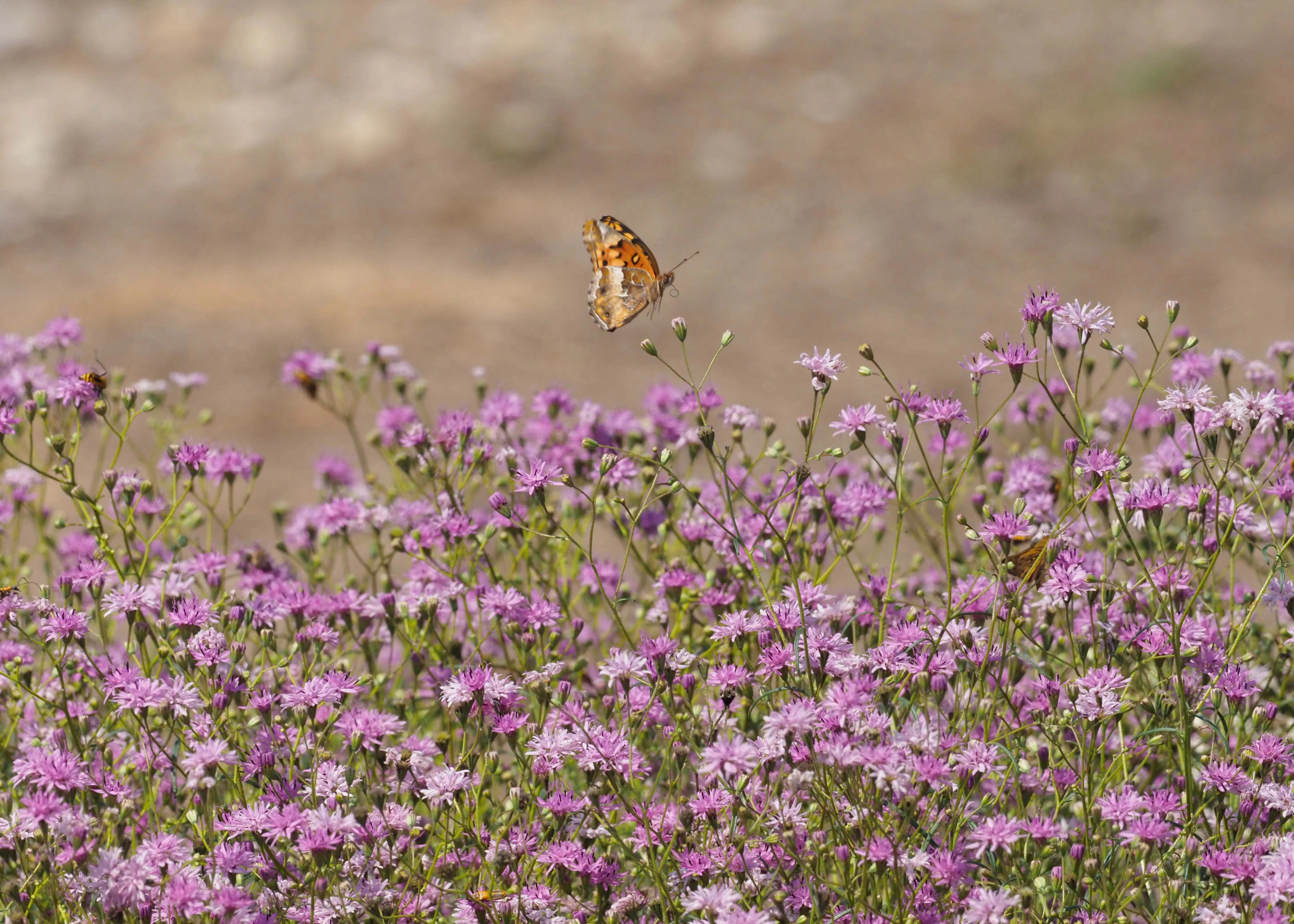
As soon as the flowers open, there is a flurry of butterfly and bee activity on the flowers of Palafoxia callosa. Butterflies, in particular, are attracted to these flowers, making this a wonderful addition to a butterfly garden. Other insects visit as well, including Drone flies and Scoliid wasps. It's a busy plant! Take a look at a sampling of butterfly visitors.
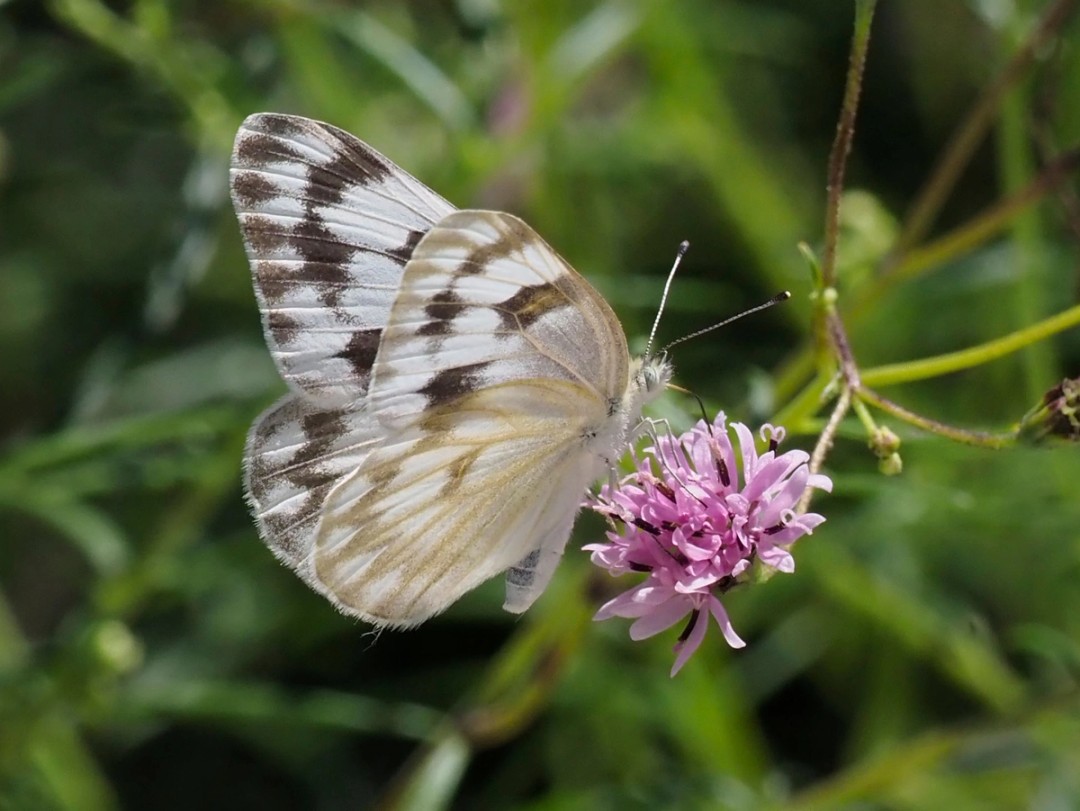
Pontia protodice 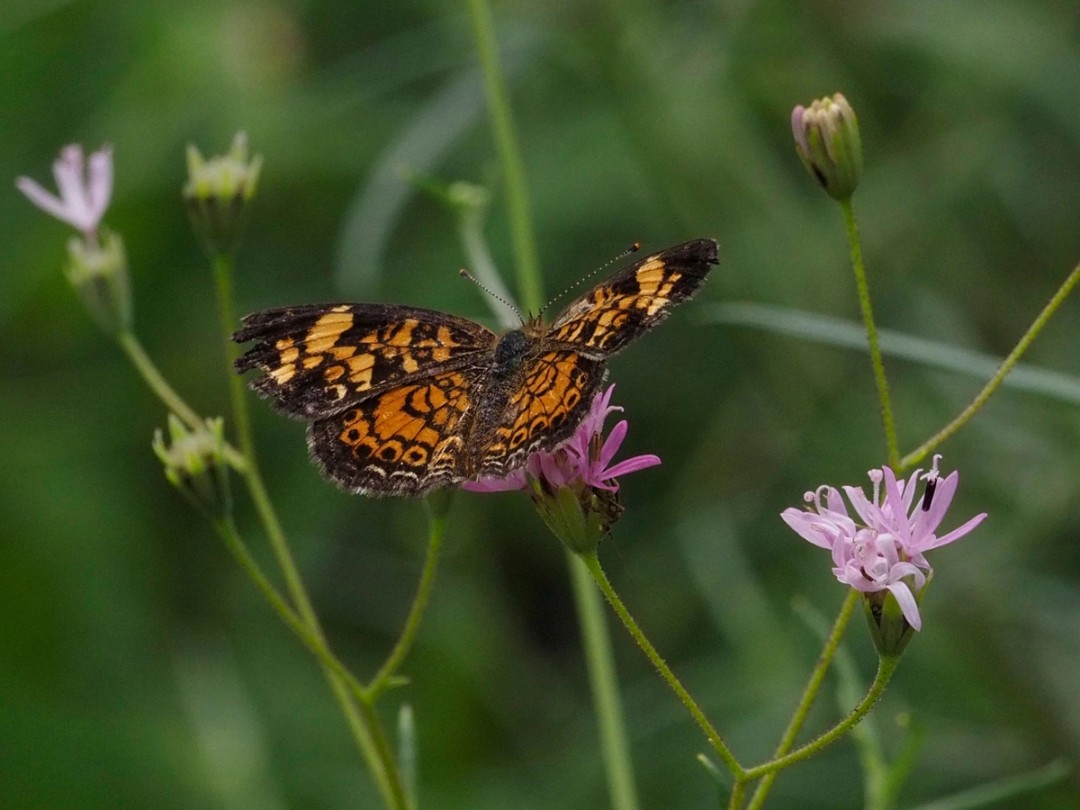
Pearl crescent 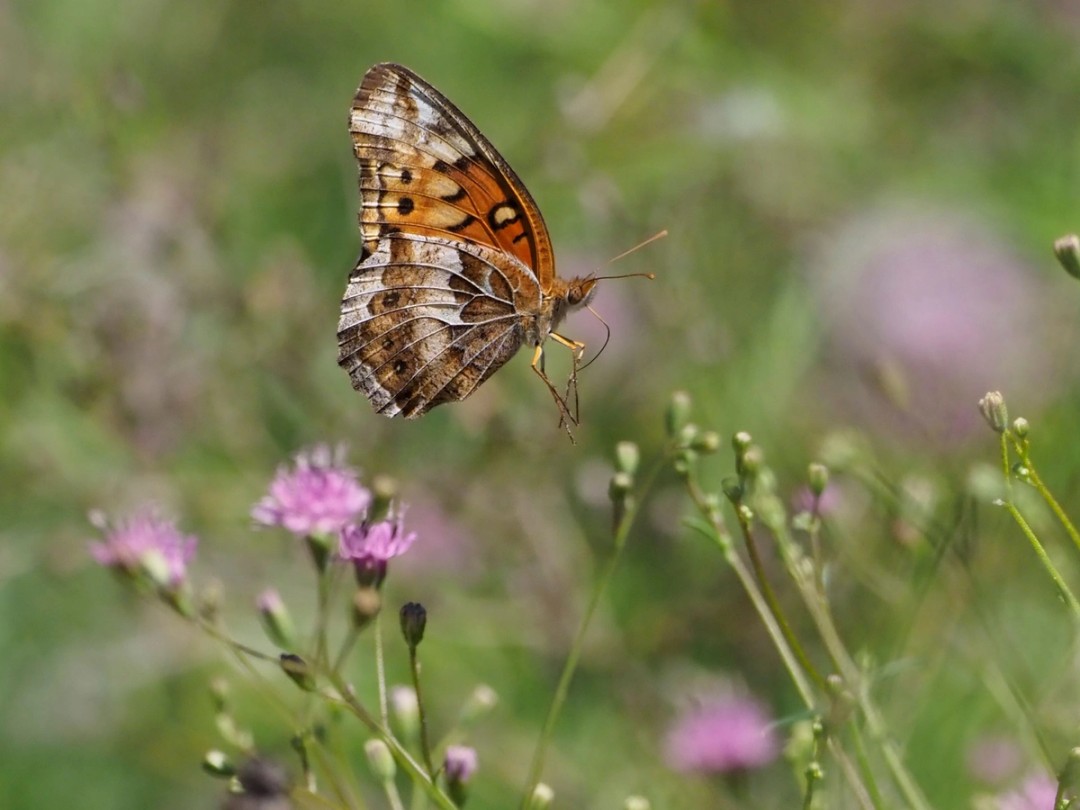
Variegated fritillary 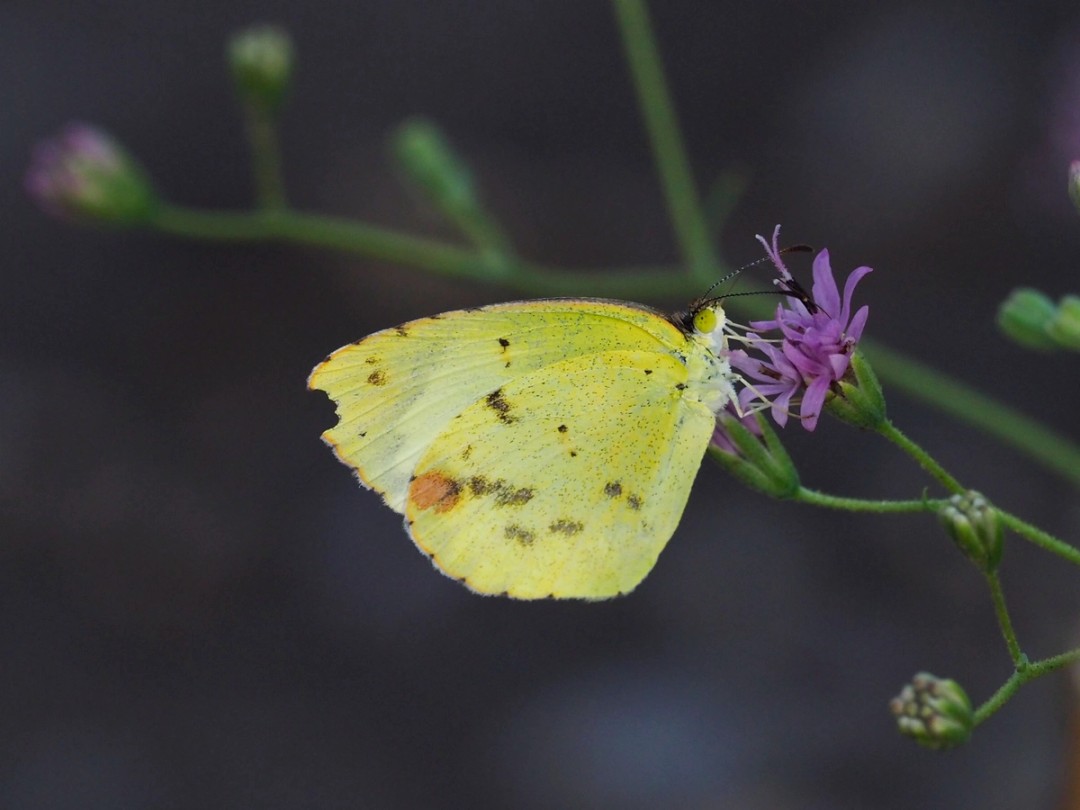
Little yellow 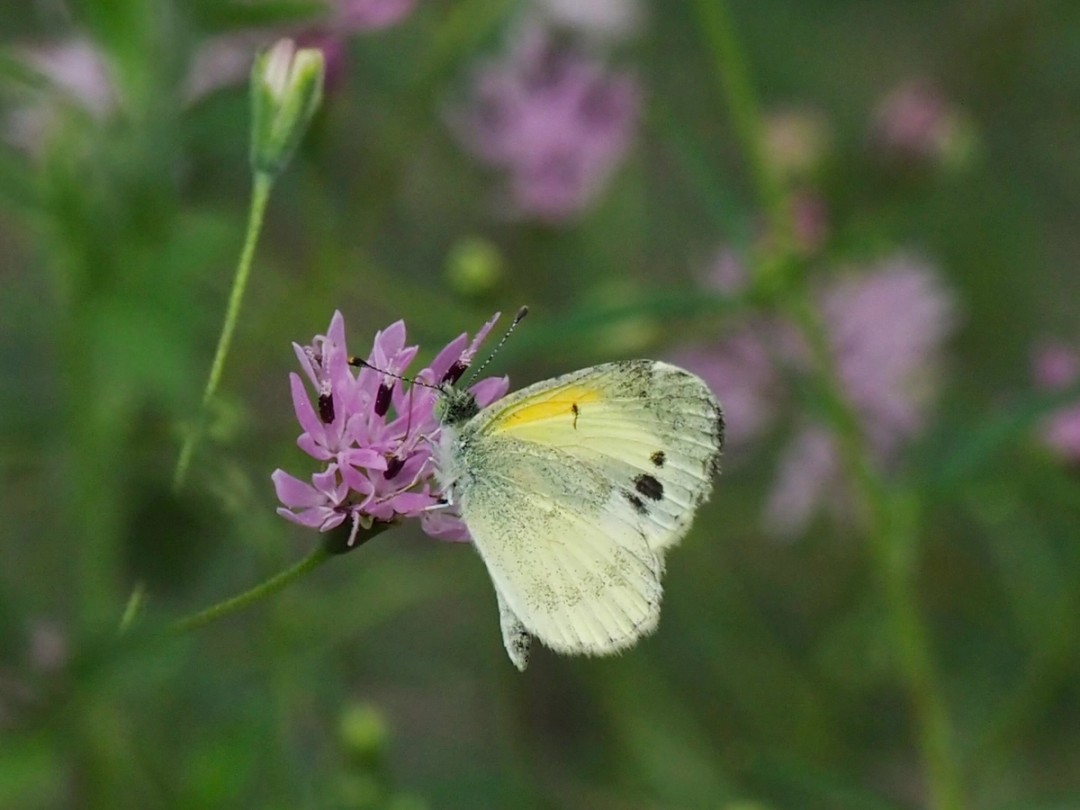
Dainty sulfur 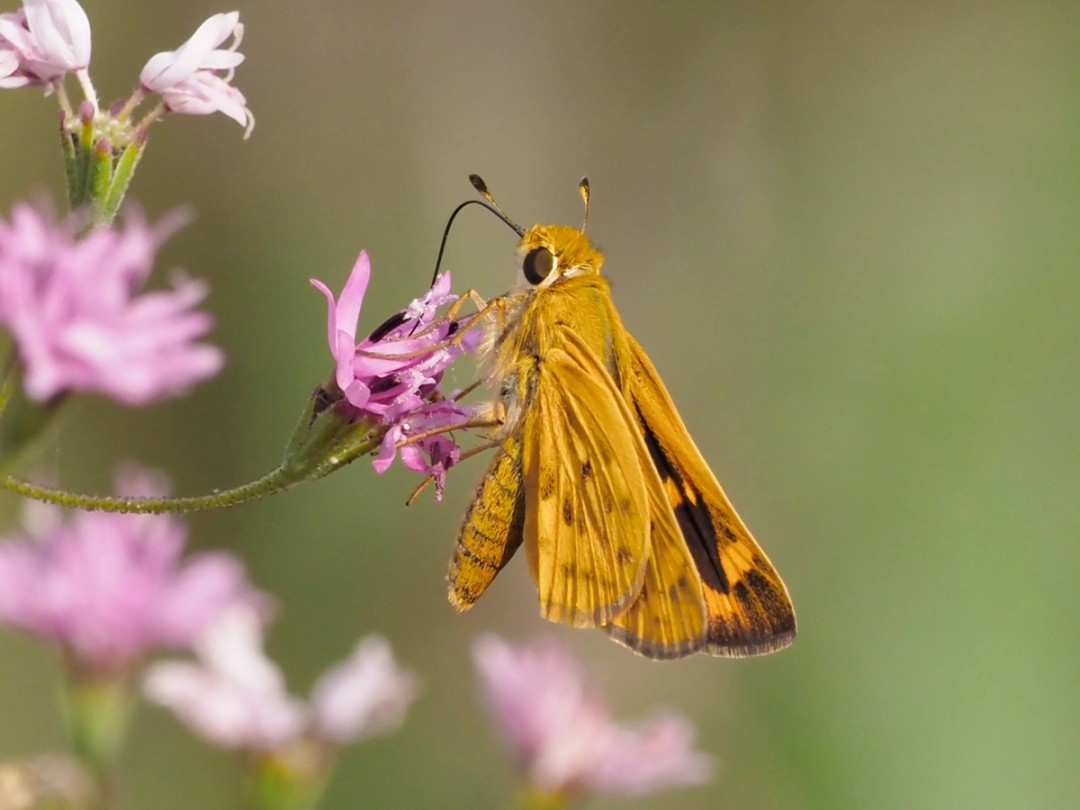
Fiery skipper 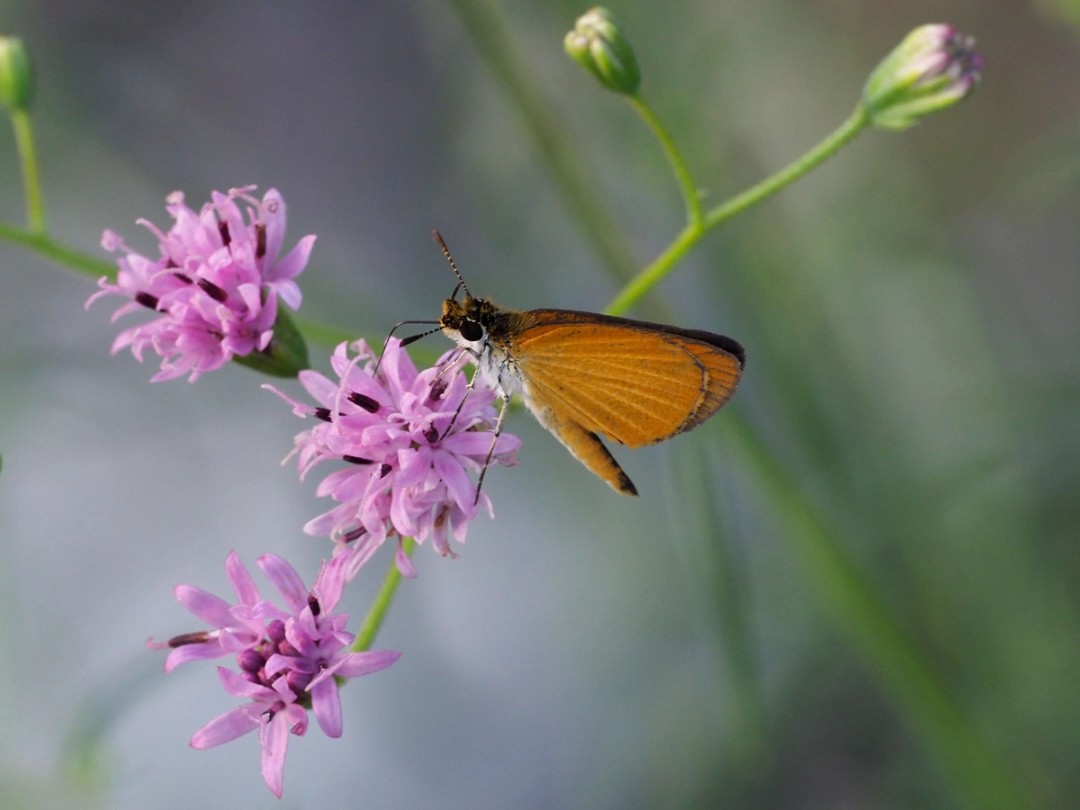
Least skipper 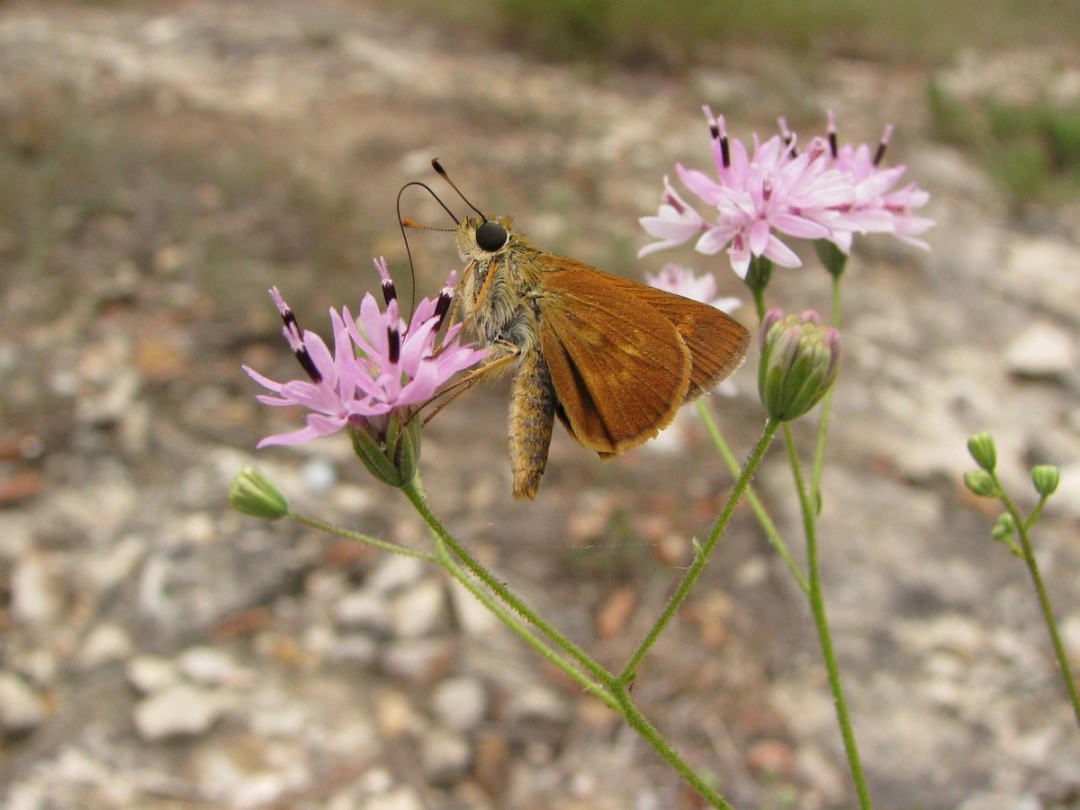
Southern Broken-Dash
Bees!
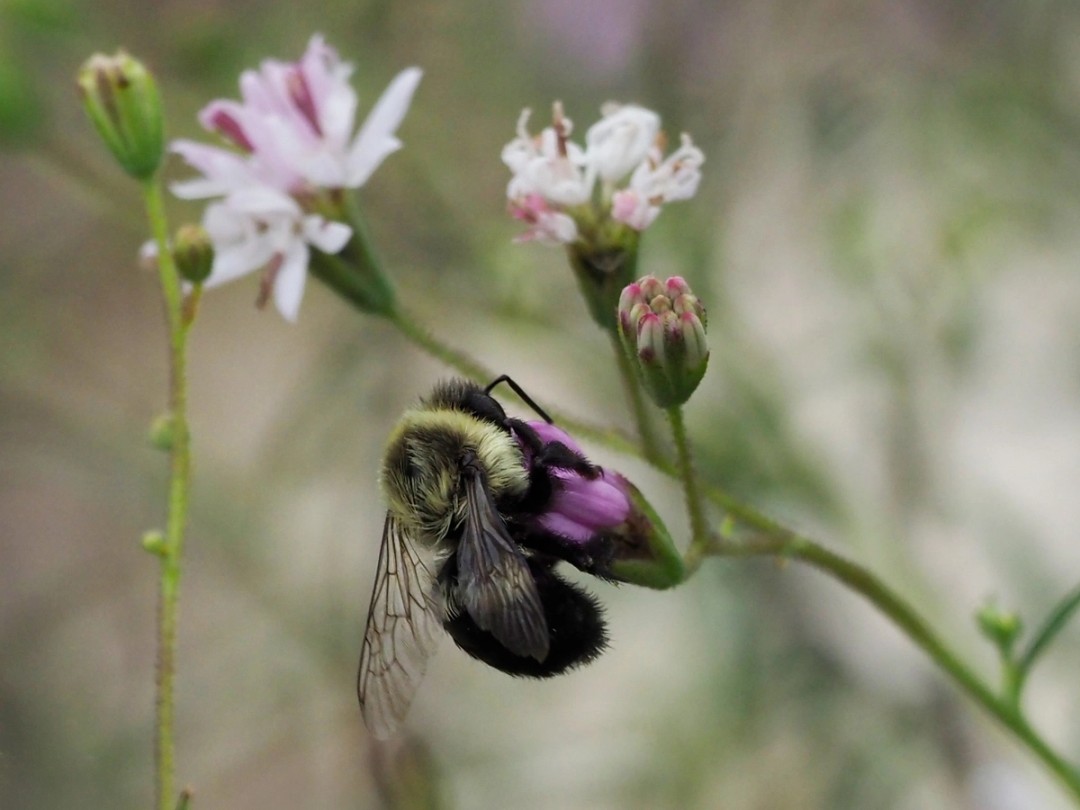
Common Eastern Bumblebee 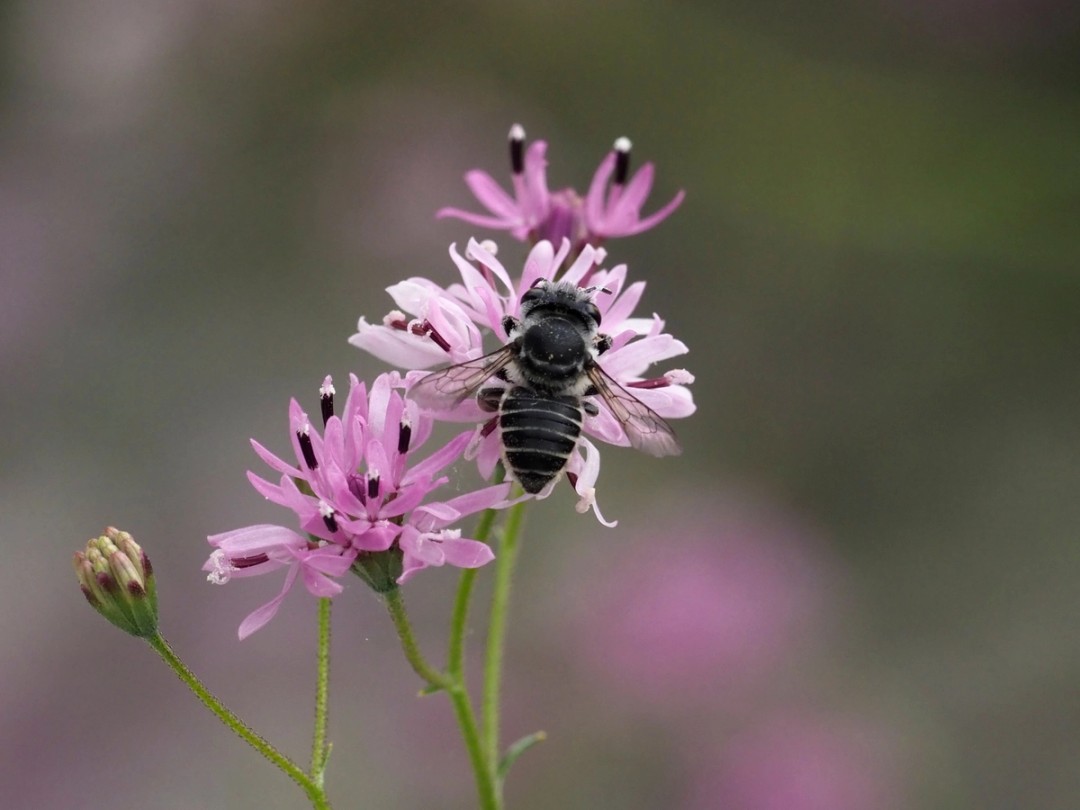
Leafcutter bee 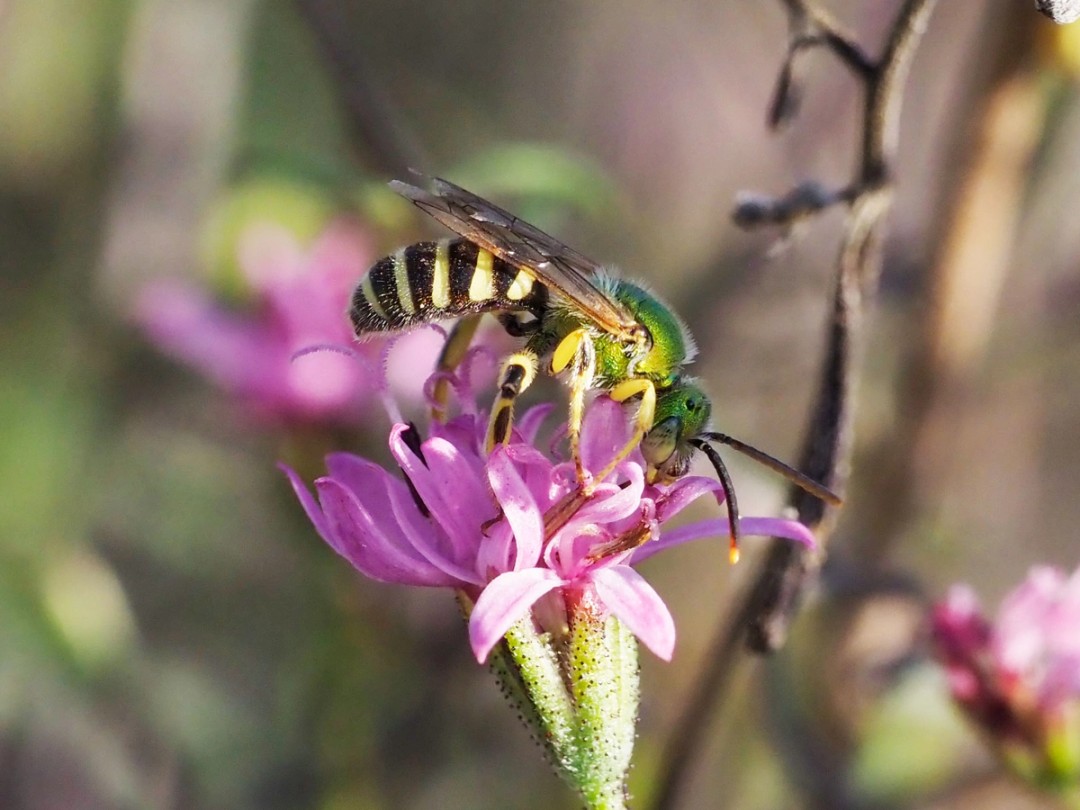
Striped Sweat bee 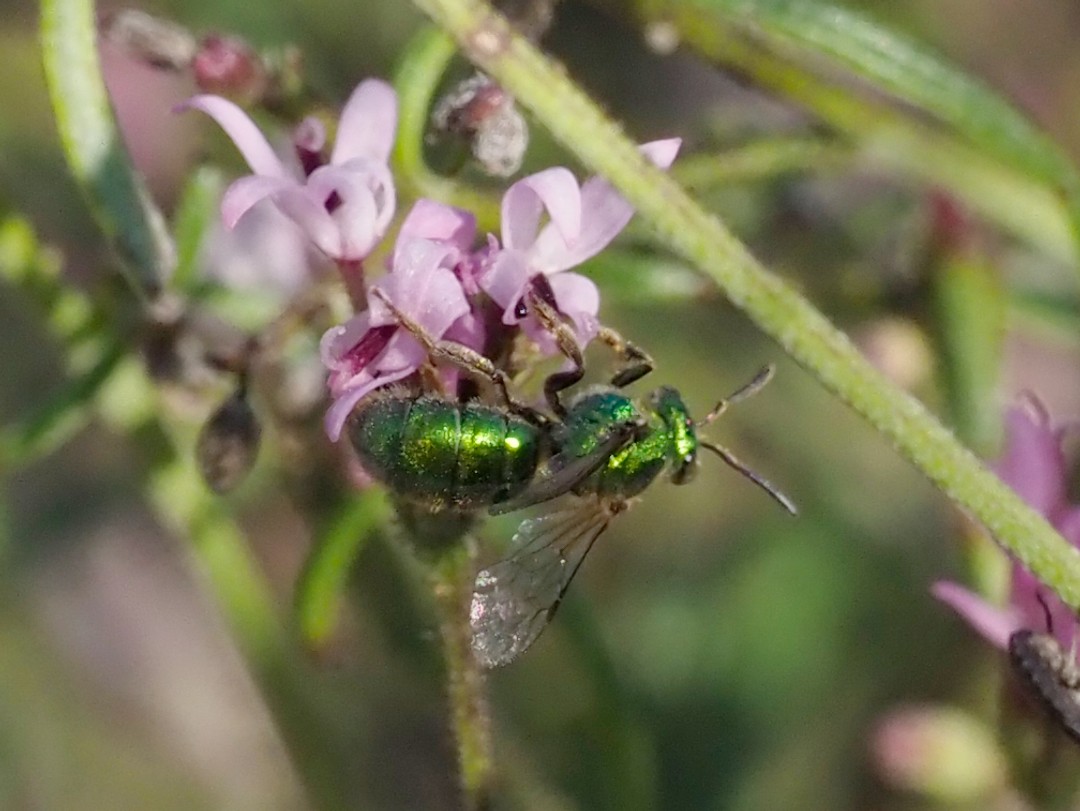
Green Sweat bee
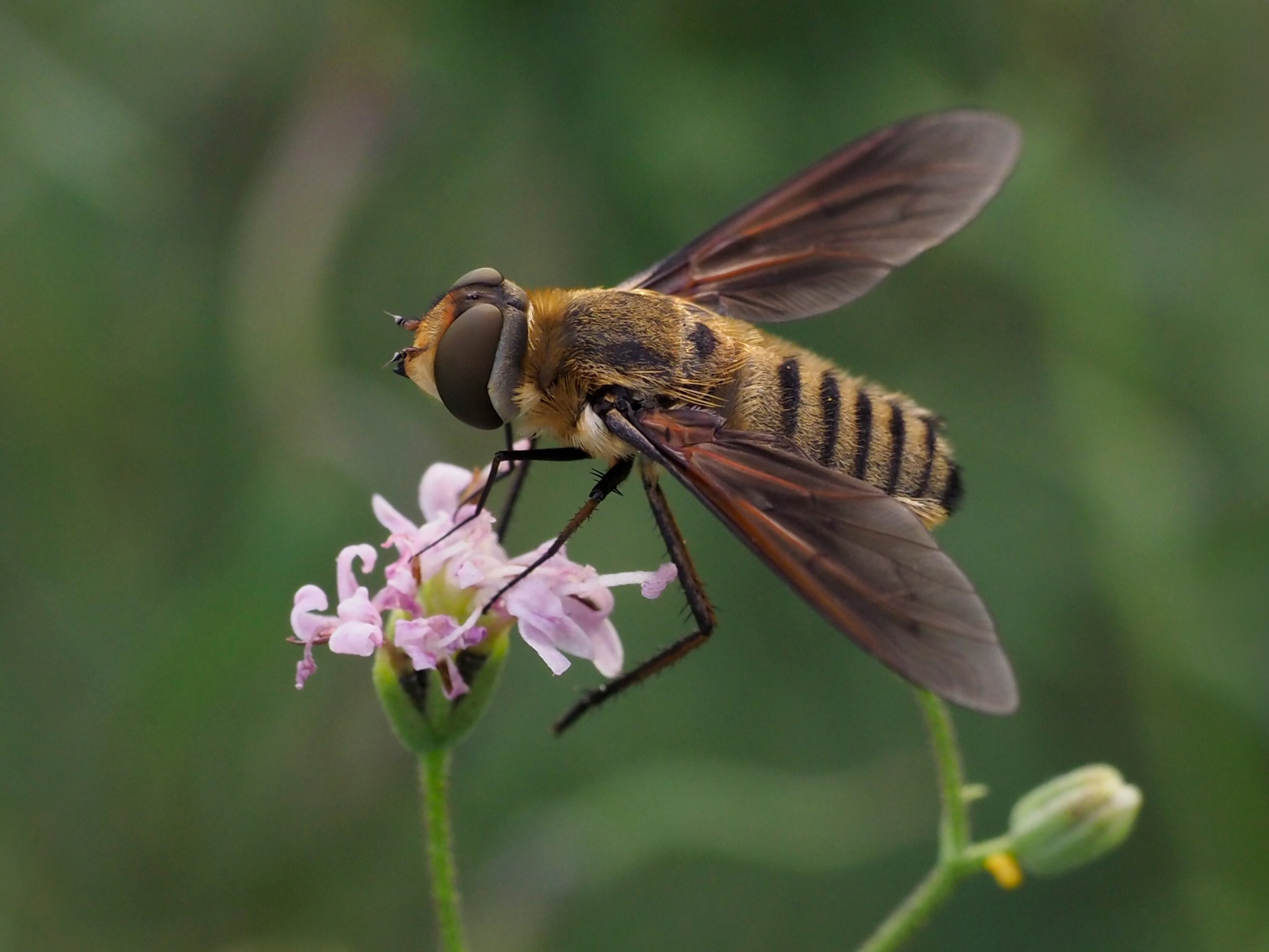
Bee flies also visit Palafoxia. Below is a photo of a particularly large and beautiful Bee fly- Poecilanthrax lucifer.
PLANTS GROWING NEARBY
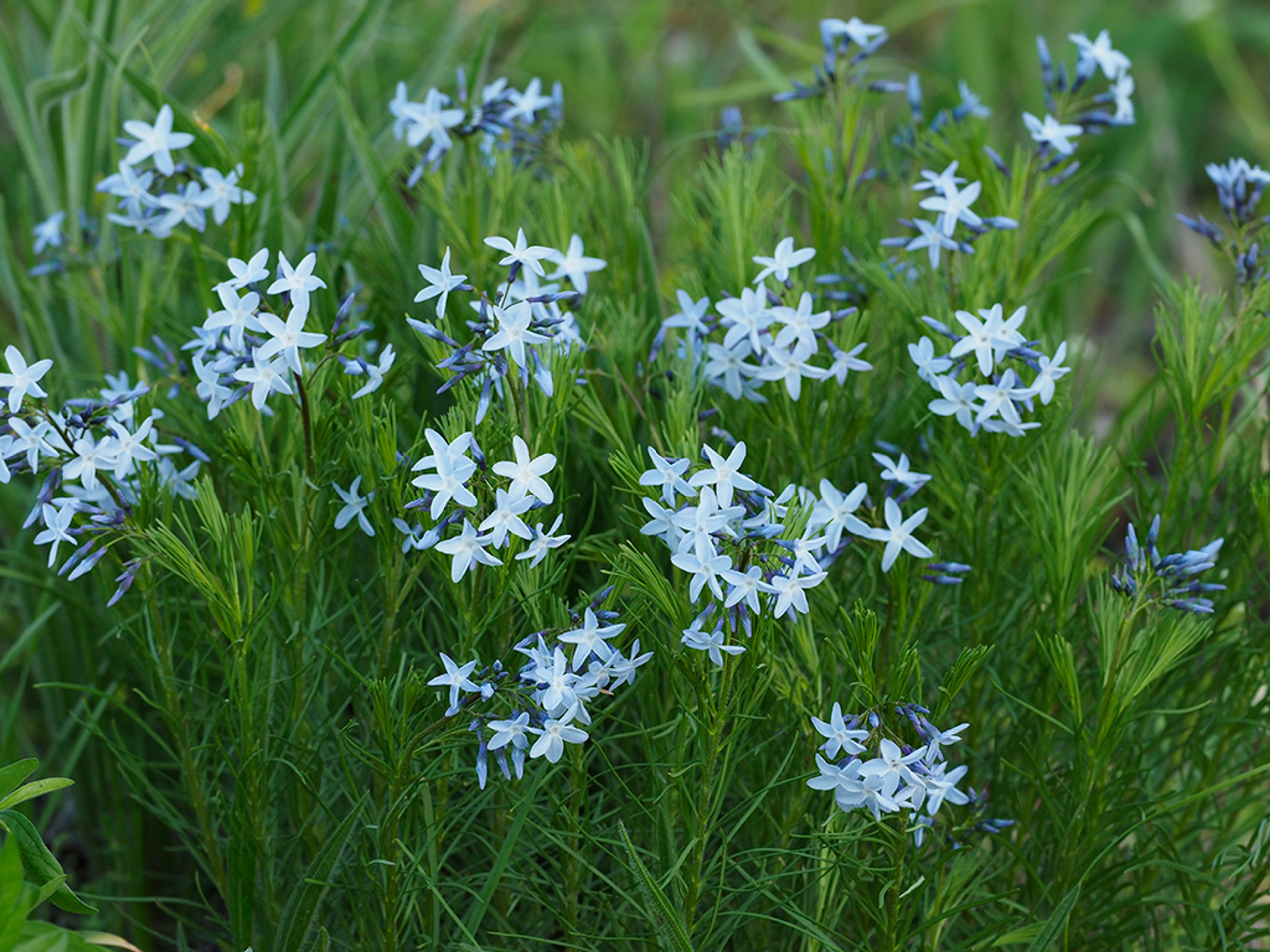
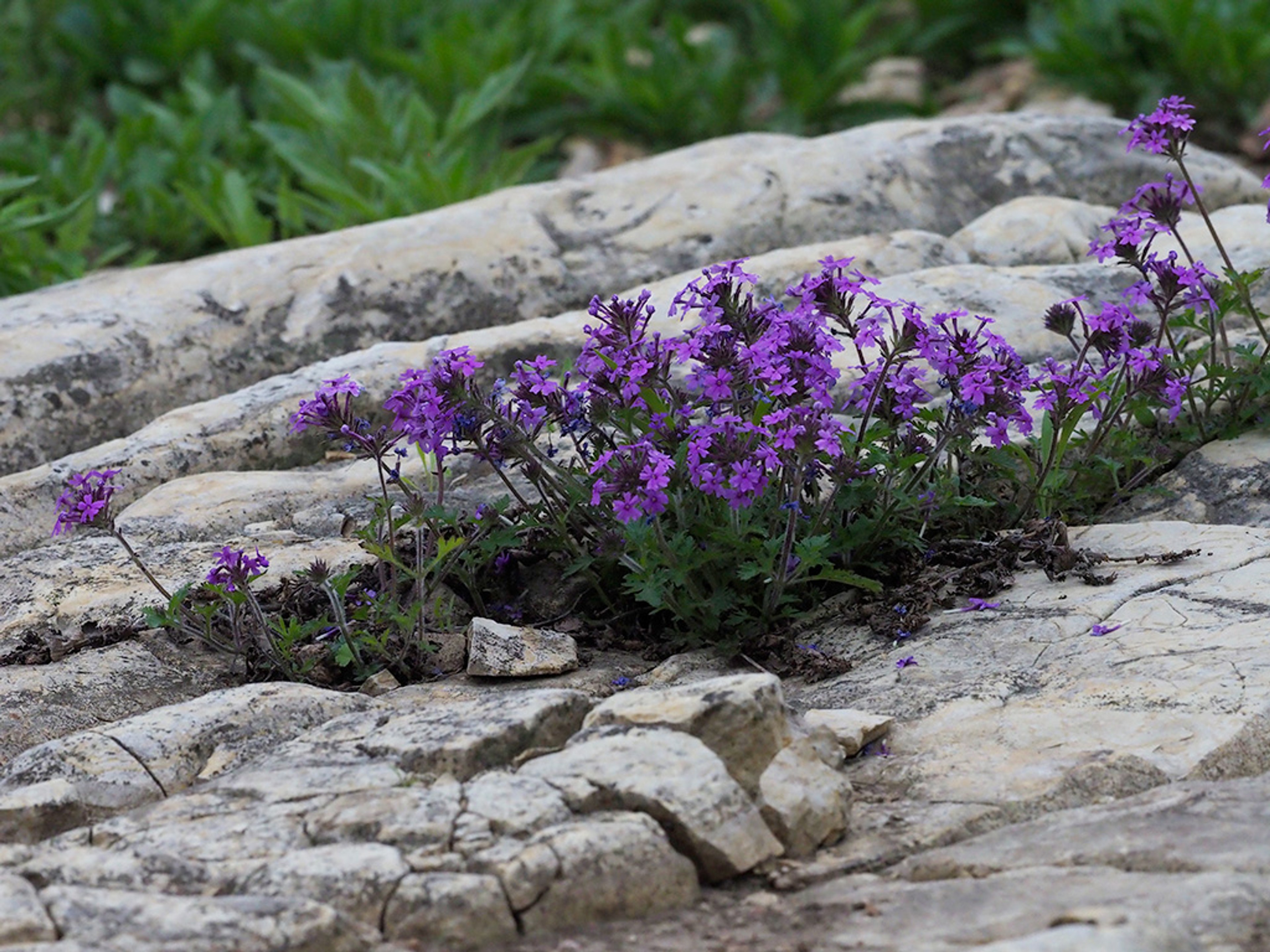
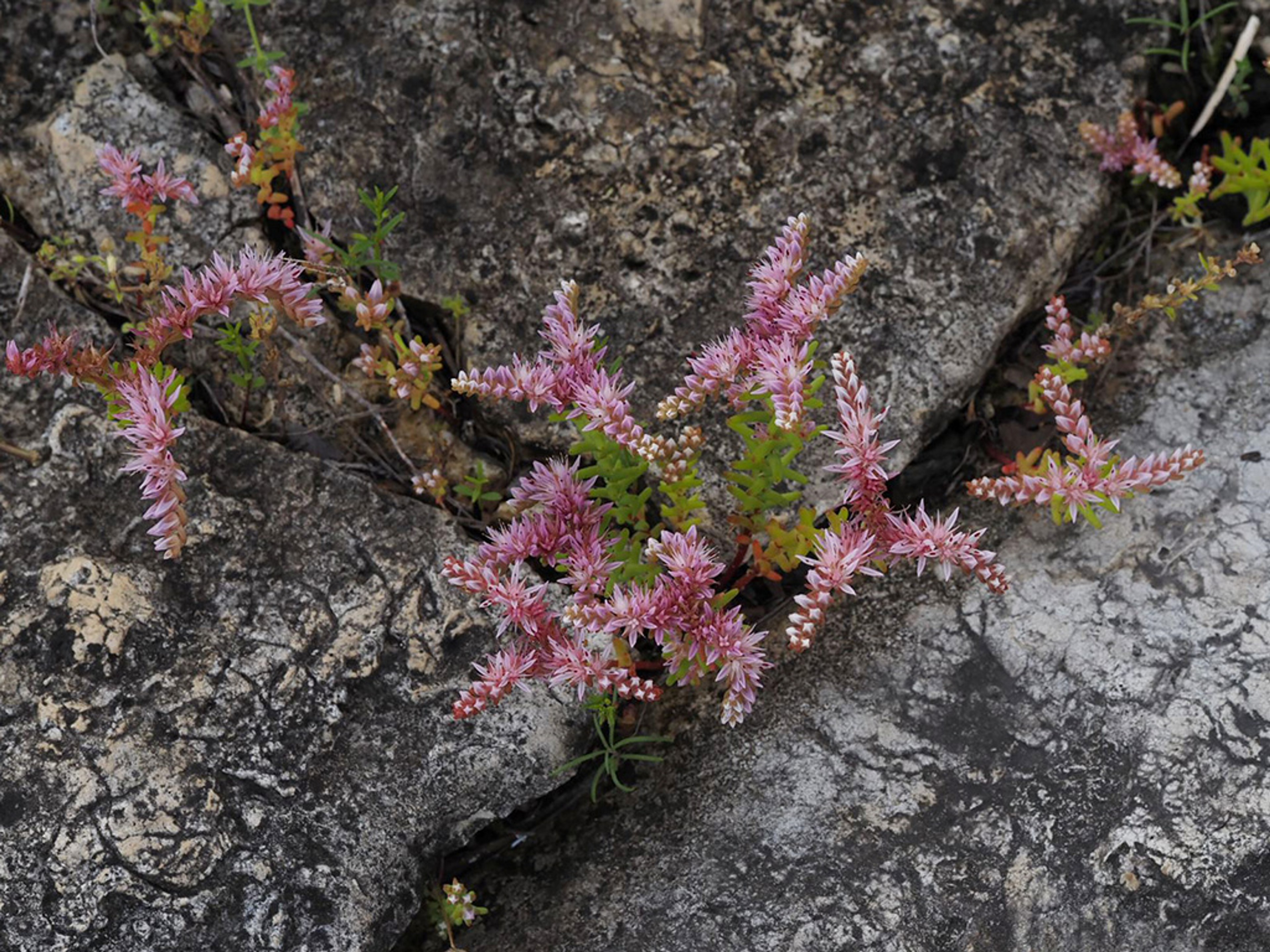
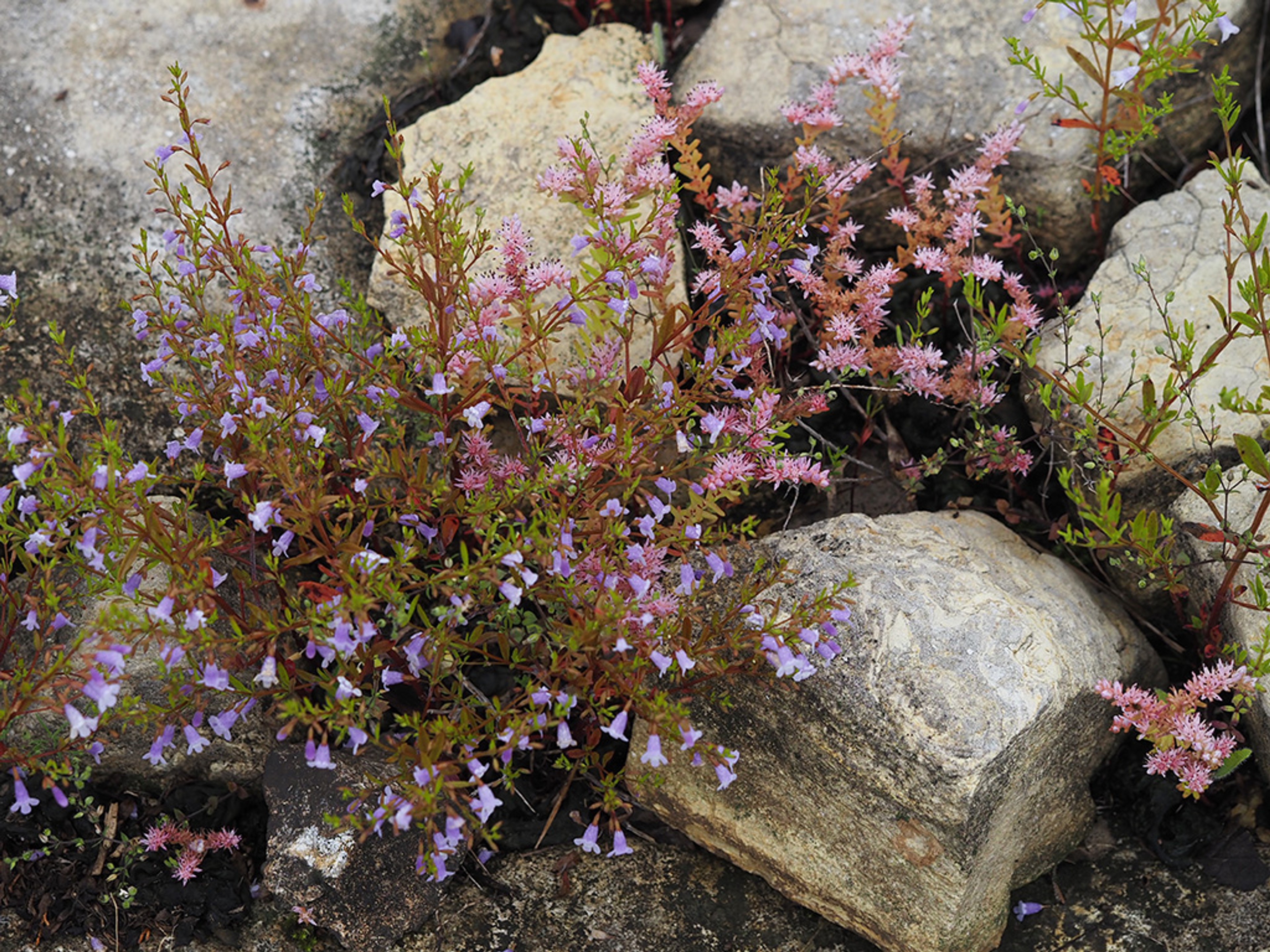
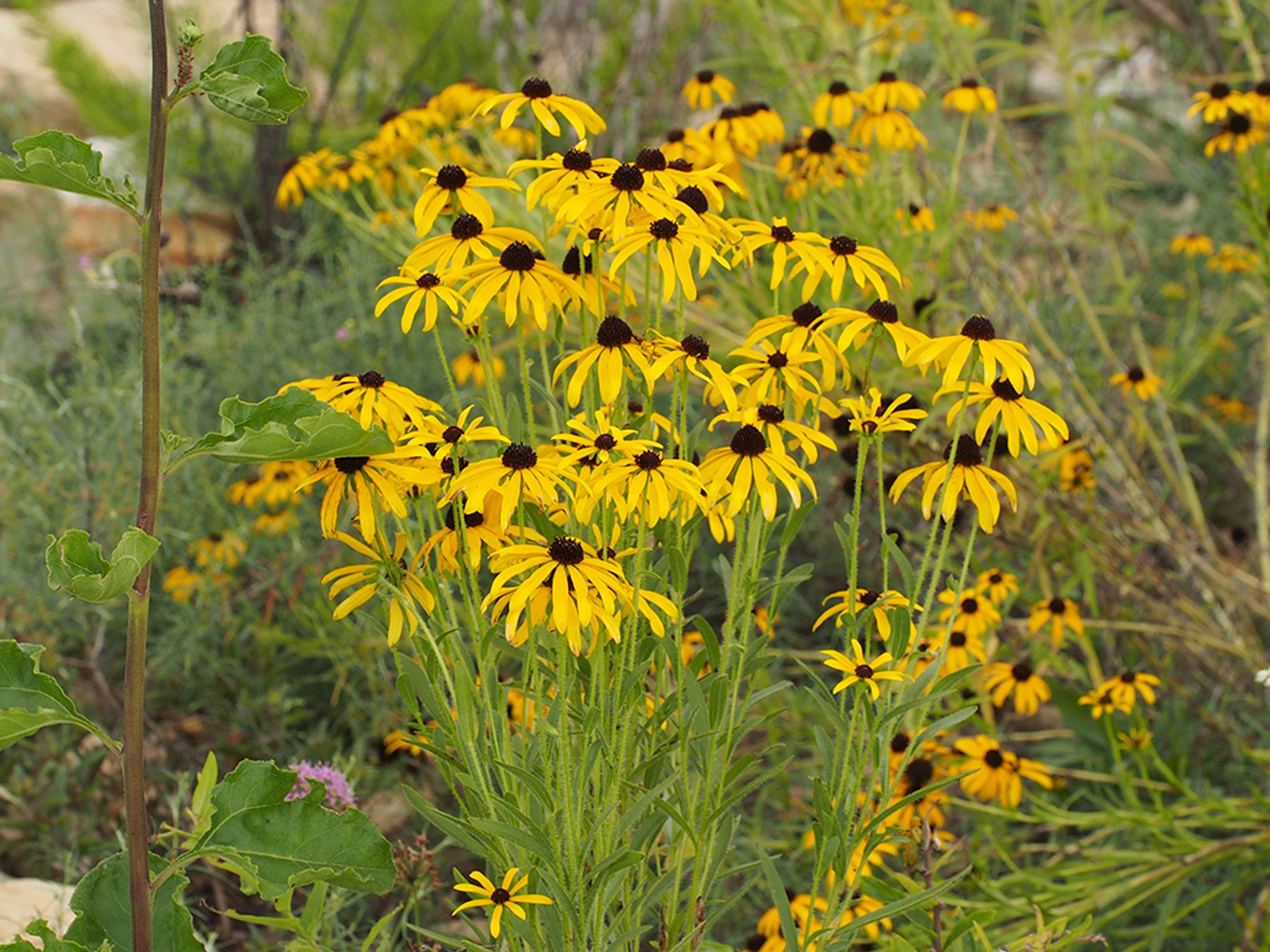
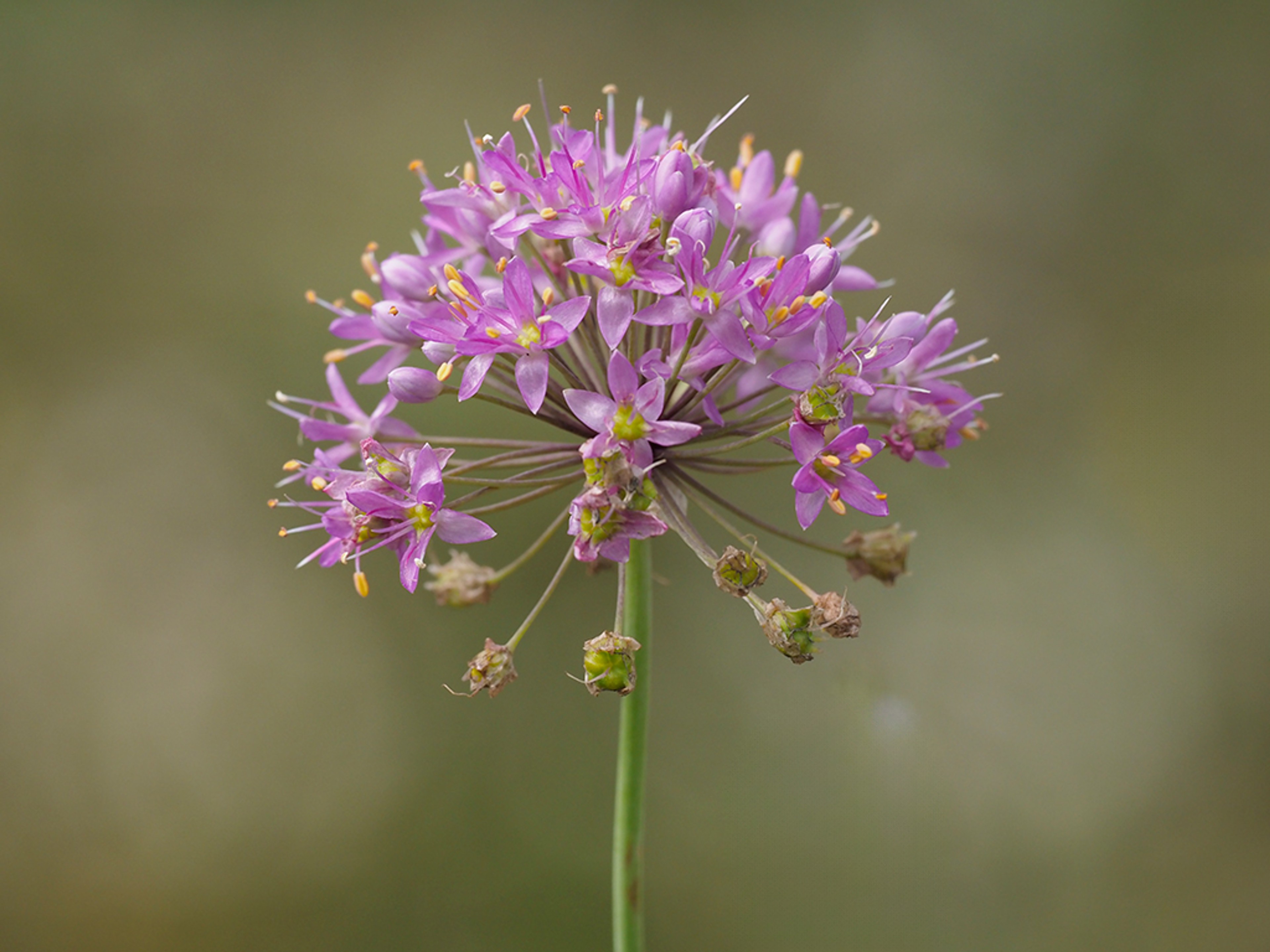
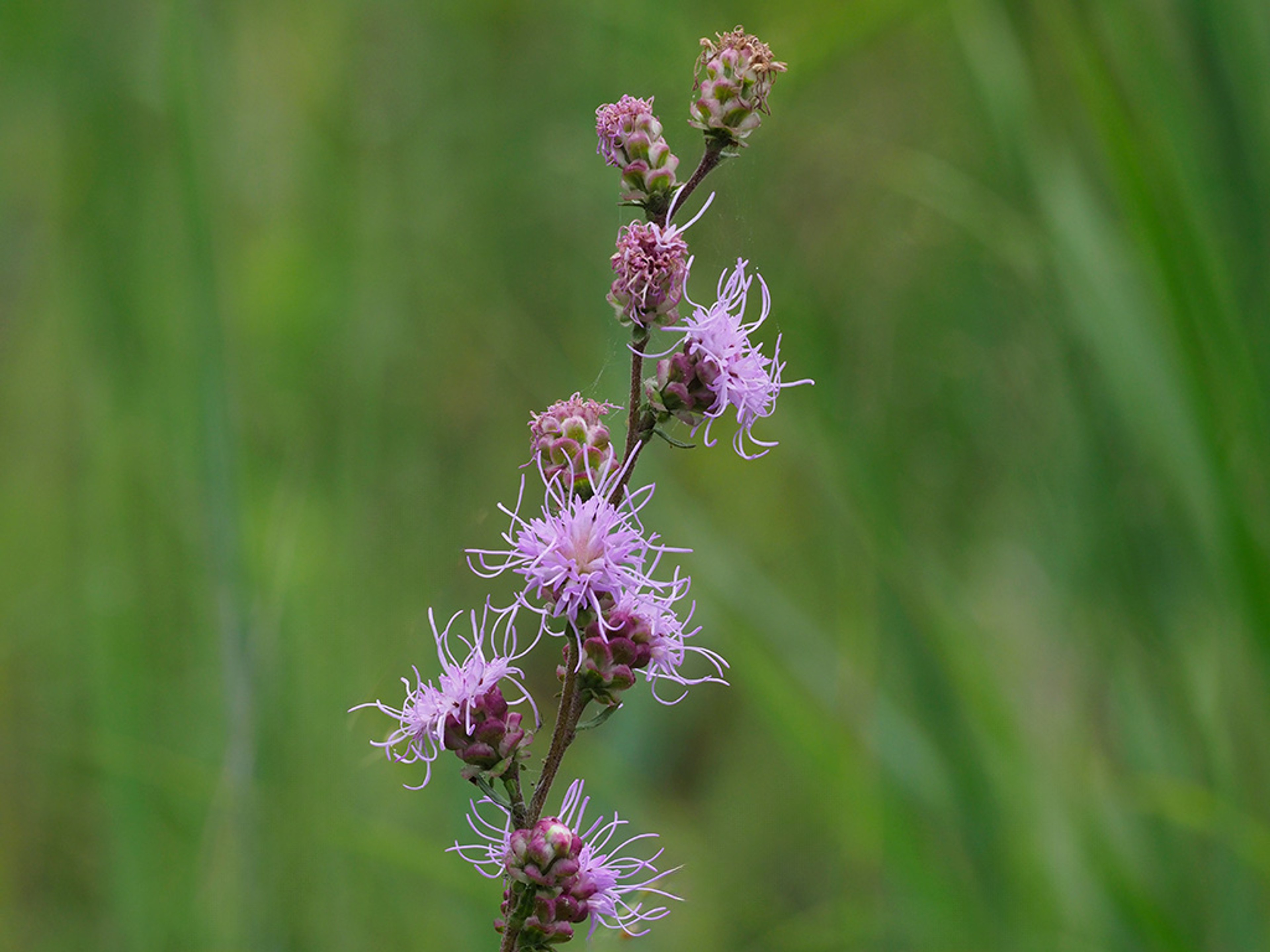
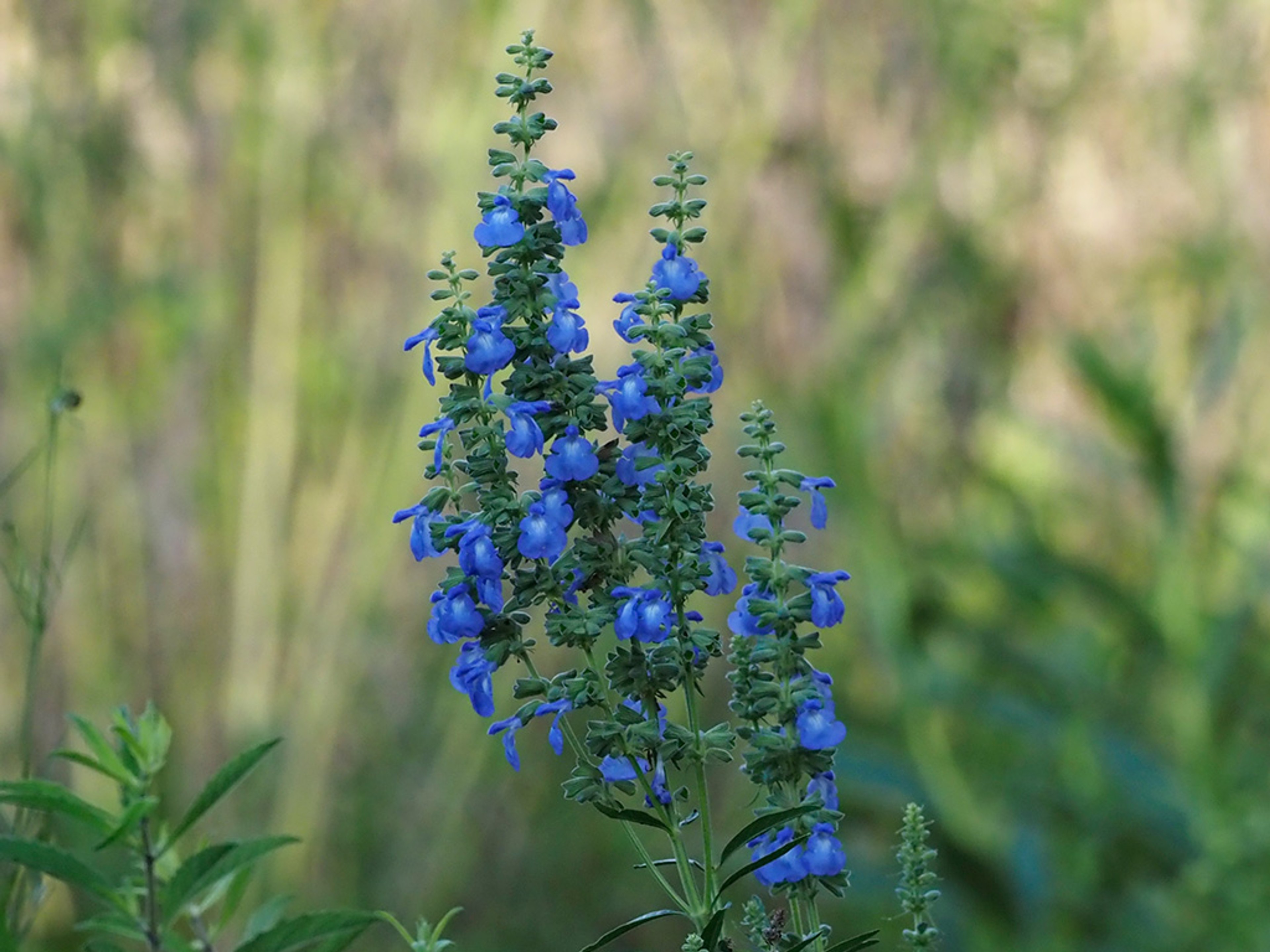
Palafoxia callosa is a often seen flowering alongside Rudbeckia missouriensis (Missouri coneflower) in Arkansas glades. Other frequent companions include Salvia azurea (Blue sage), Allium stellatum (Wild onion), Eupatorium seratinum (Late boneset), Parthenium integrifolium (Wild quinine) and the tiny blue flowers of Trichostema brachiatum (False pennyroyal).
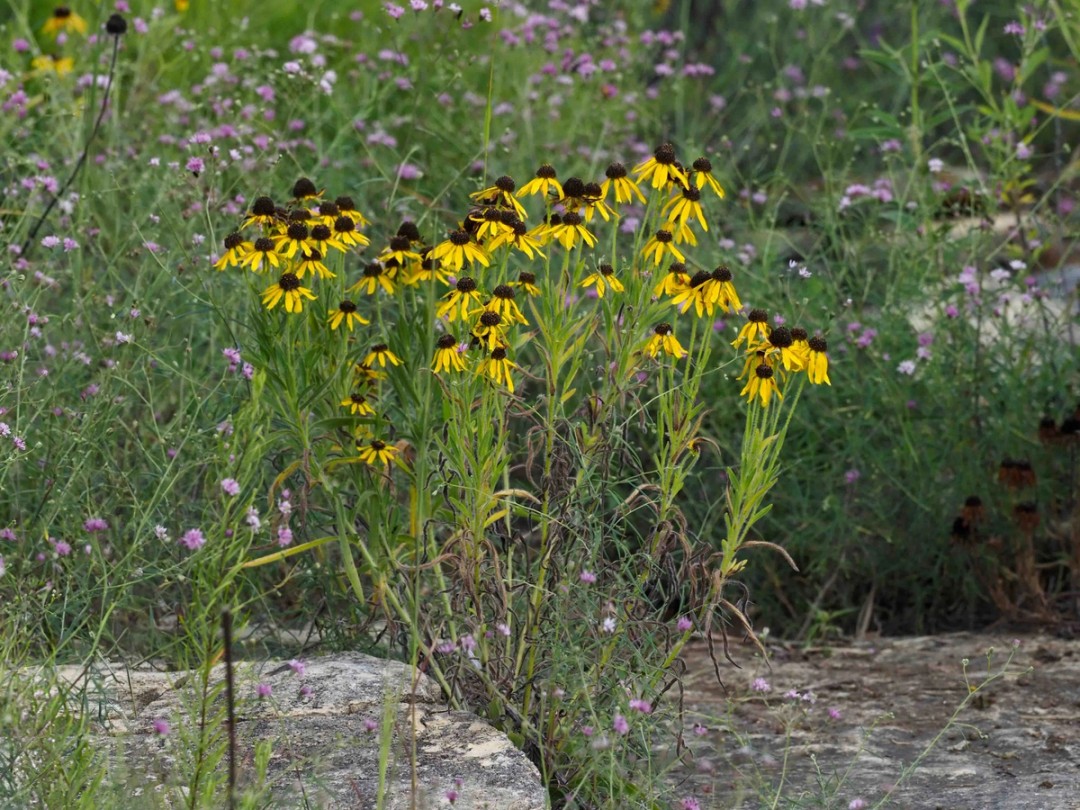
Rudbeckia missouriensis 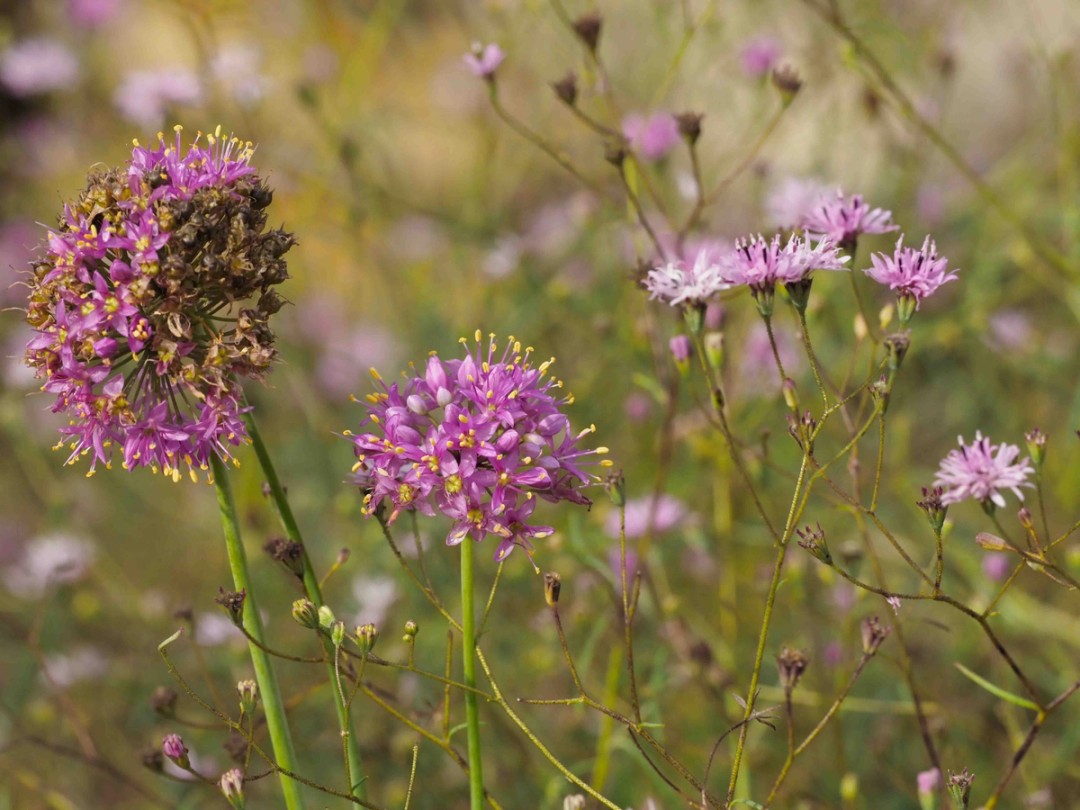
Allium stellatum 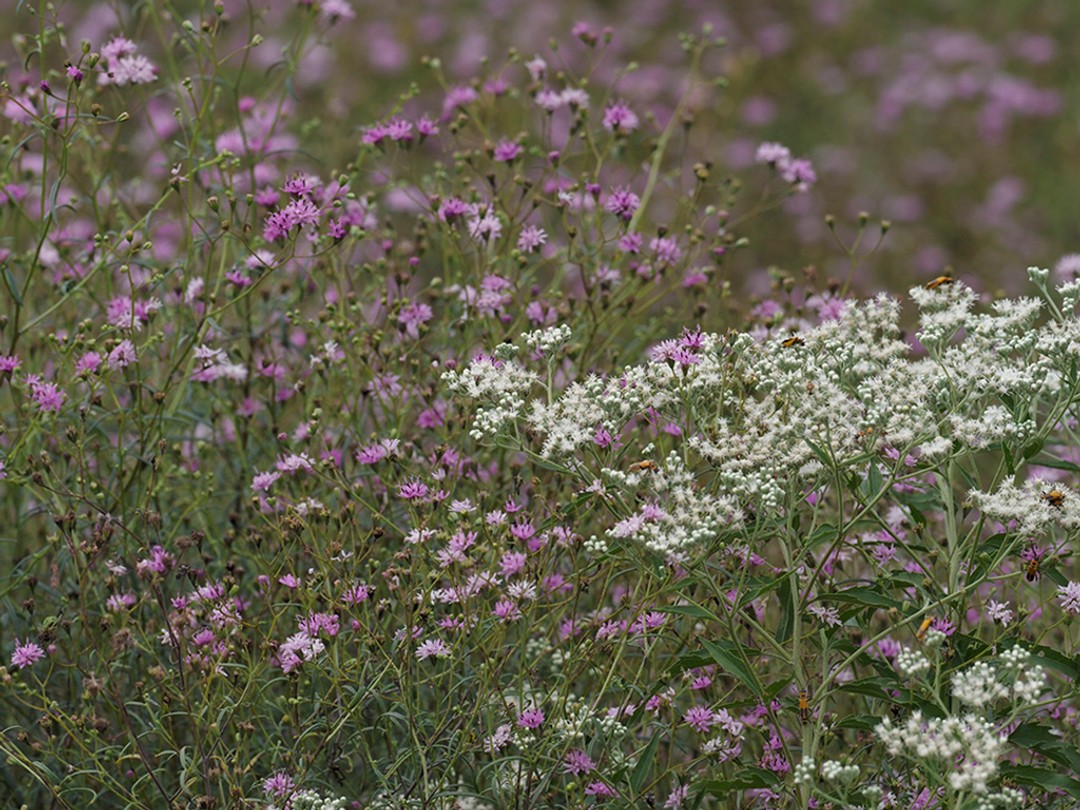
Eupatorium serotinum 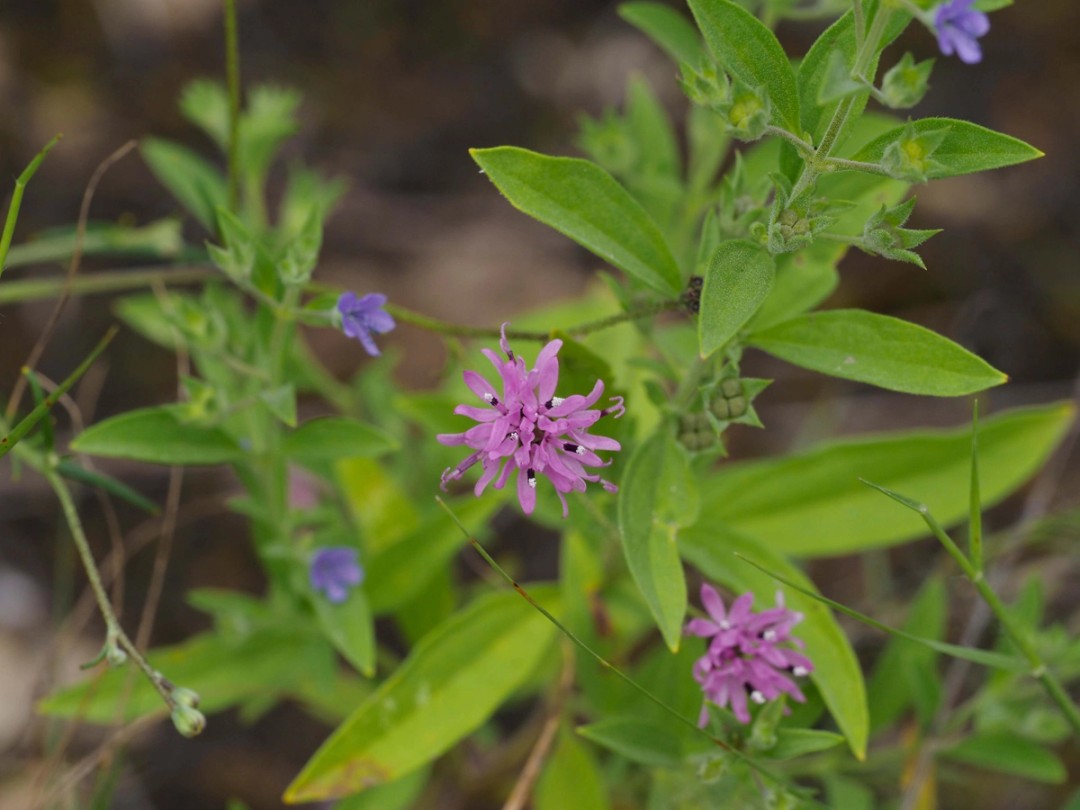
Trichostema brachiatum 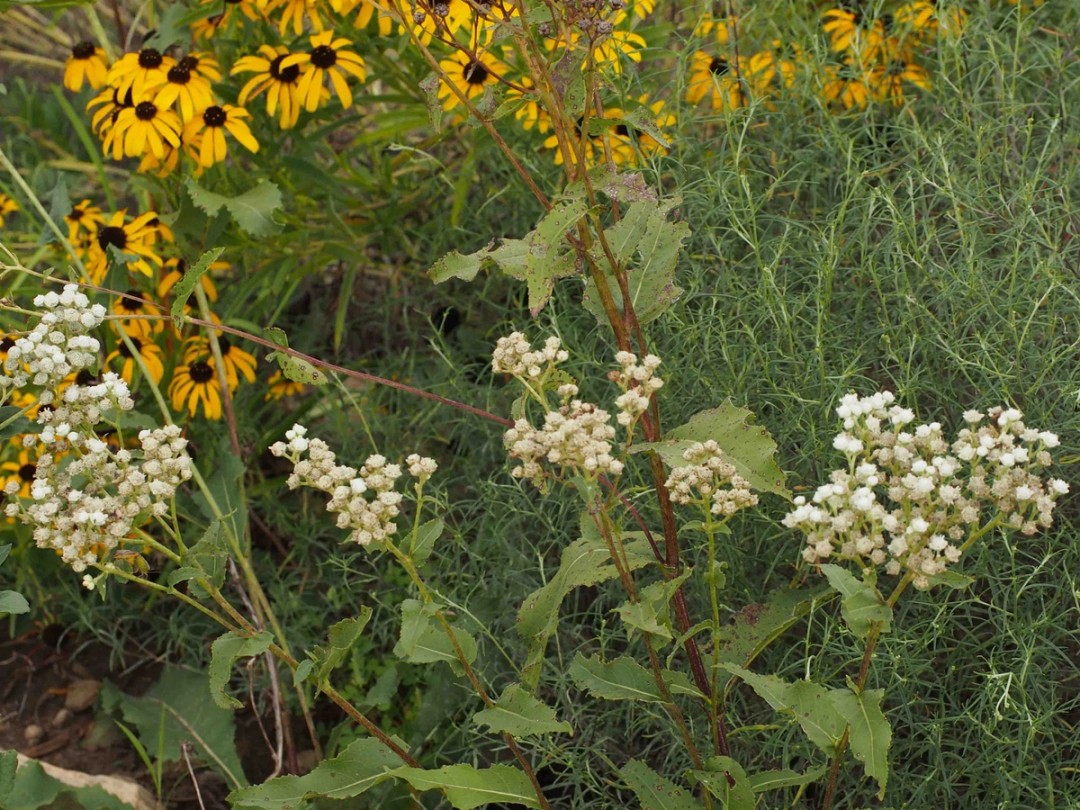
Parthenium integrifolium 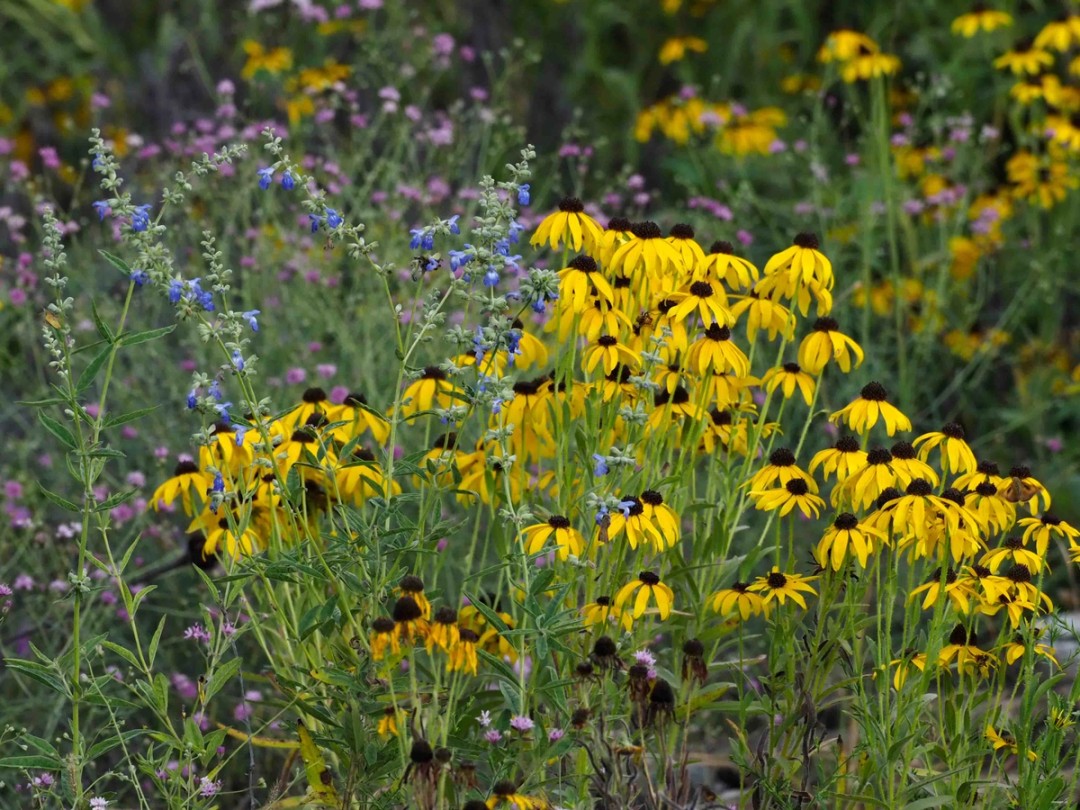
Salvia azurea
HABITAT
On Ozarkedge, I find Palafoxia callosa growing in the rocky, gravelly soil of calcareous glades. It relishes the native limestone and prefers full sun with minimal shade. It won't do well in damp or shady sites or sites with rich soil. I often find it growing where Clinopodium arkansanum (Ozark calamint) and Sedum pulchellum (Widow's cross) bloomed in the spring.
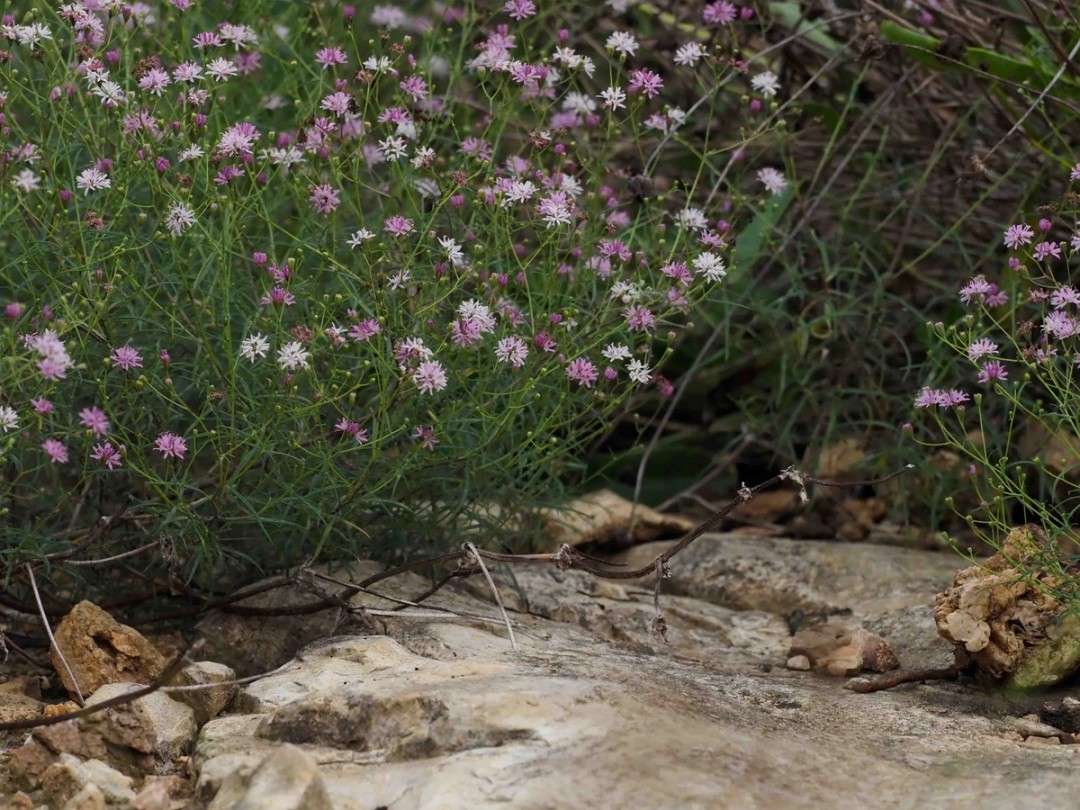
Limestone glade habitat 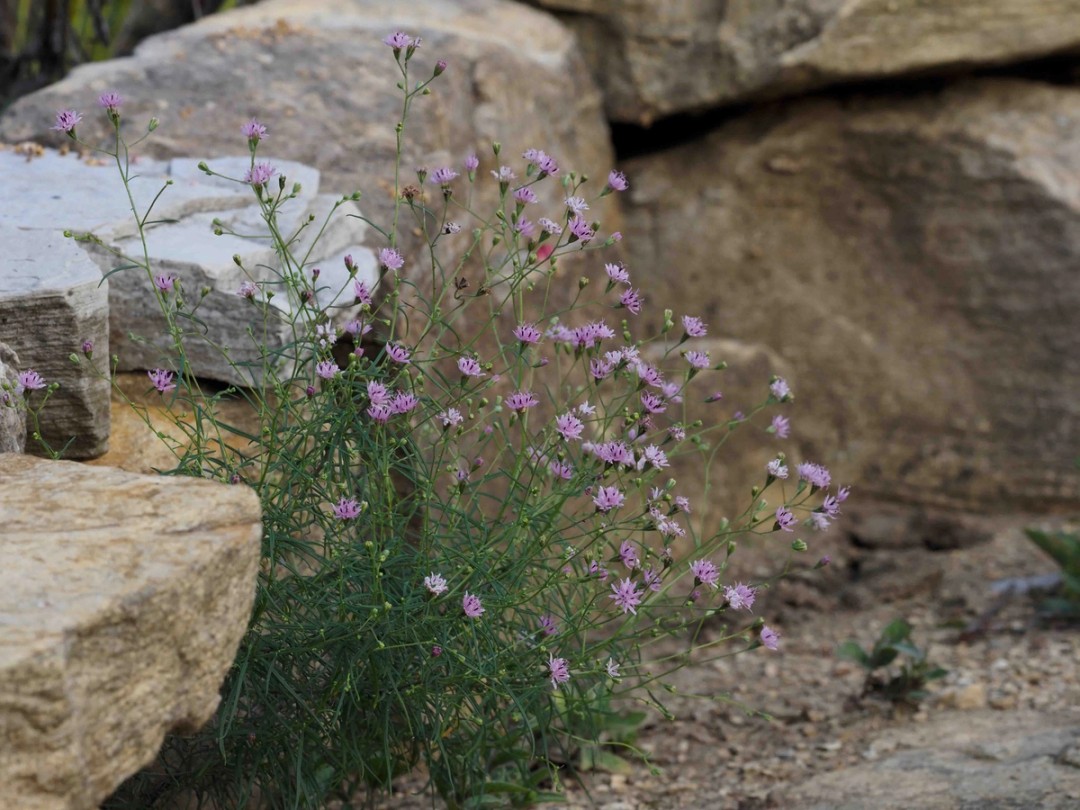
Blooming by a low stone wall
CONSERVATION STATUS
Palafoxia callosa is primarily located in southern Missouri and northern Arkansas. In Arkansas it's limited to the Ozark Plateau and Crowley’s Ridge. A separate population is found in Texas. Other states with smaller populations include Oklahoma, Louisiana and Mississippi. Natureserve has little information on this lovely wildflower, only documenting its status in Mississippi where it's lists it as Critically Imperiled.
Arkansas lists it with a C-Value of 6, meaning "Typically matrix taxa in intact, stable habitats, with some limited ability to respond to destabilizing forces and repopulate areas from which they have been extirpated."
INTERESTING TIDBITS
Palafoxia callosa is a host plant for the tiny Dainty Sulfur butterfly. Below are a couple photos on Dainty sulfurs visiting its flowers.