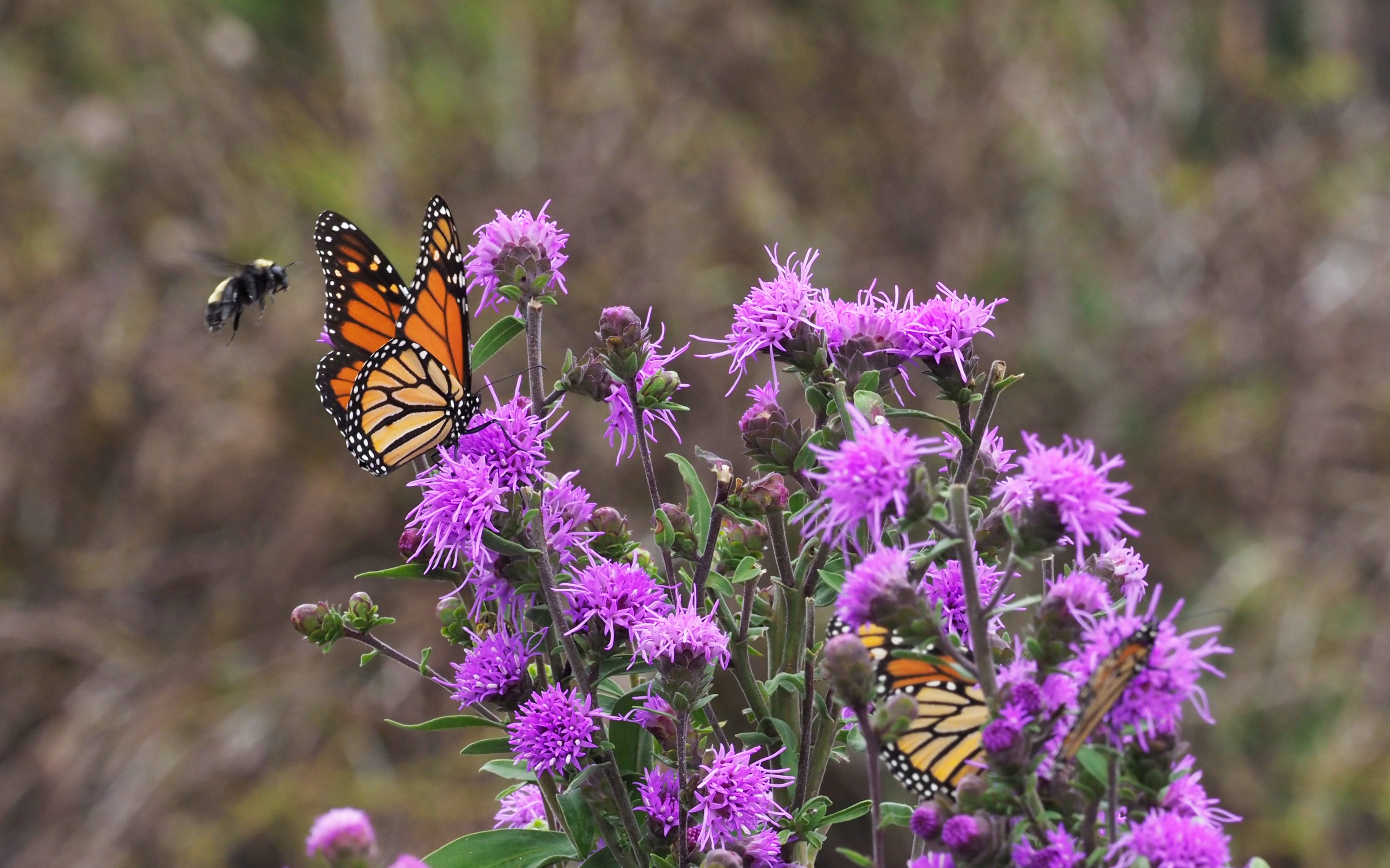
PLANT NAME
The botanical name of this plant is Liatris scariosa var. nieuwlandii. The specific epithet (scariosa) is from the Latin, meaning thin, in reference to its bracts.
Commonly it is known by several names including Blazing Star, Northern Blazing Star, Savanna Blazing Star, Devil's Bite, Large Gayfeather, and Eastern Blazing Star.
BLOOM
Liatris scariosa is a beautiful plant covered with many button-like, fluffy flowers. The flowers develop brilliant shades of bright pink to purple. At the top of the plant, flowers are sessile. Toward the center, they stretch past the upper flowers on long, protruding stalks. The presence of these stalks is an easy way to differentiate this plant from Liatris aspera, as its flowers are all sessile.
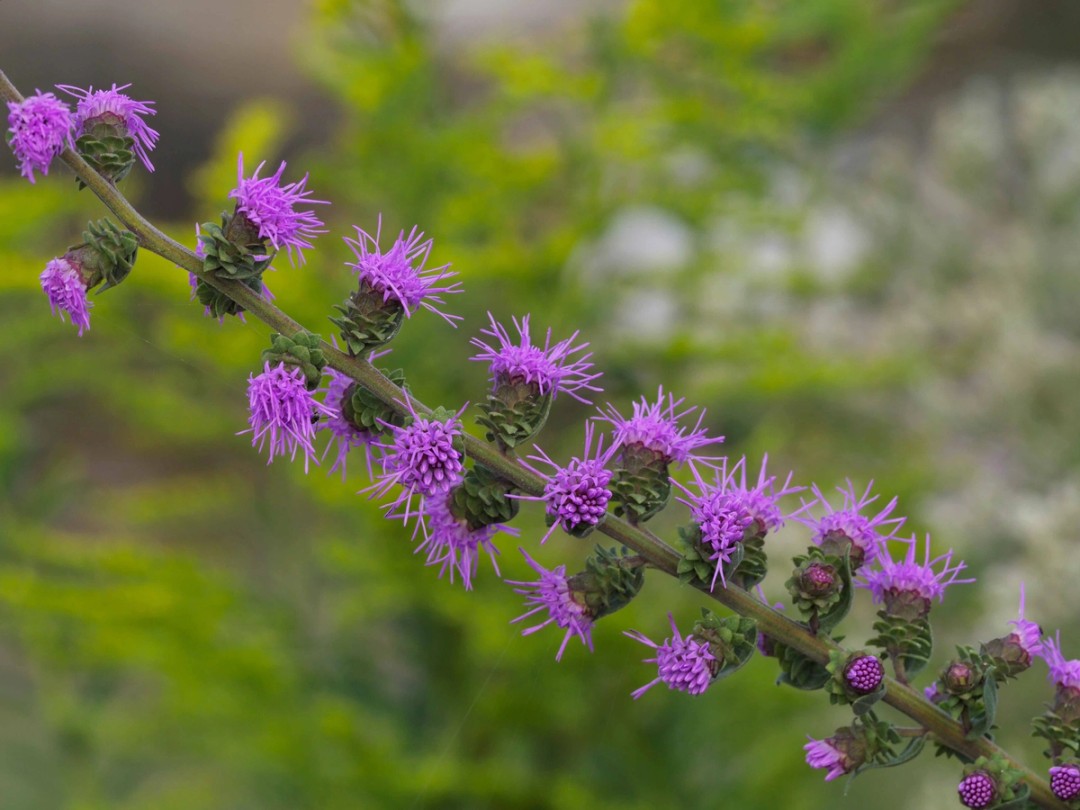
Upper flowers sessile 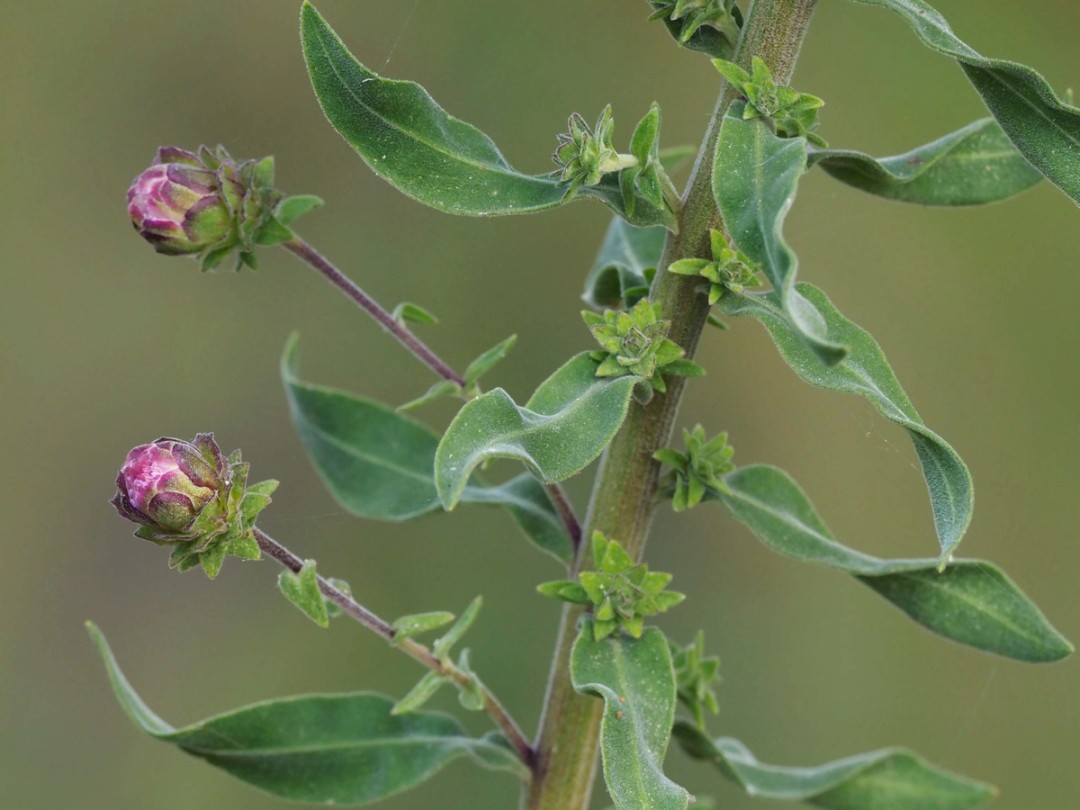
Middle flowers on long stalks 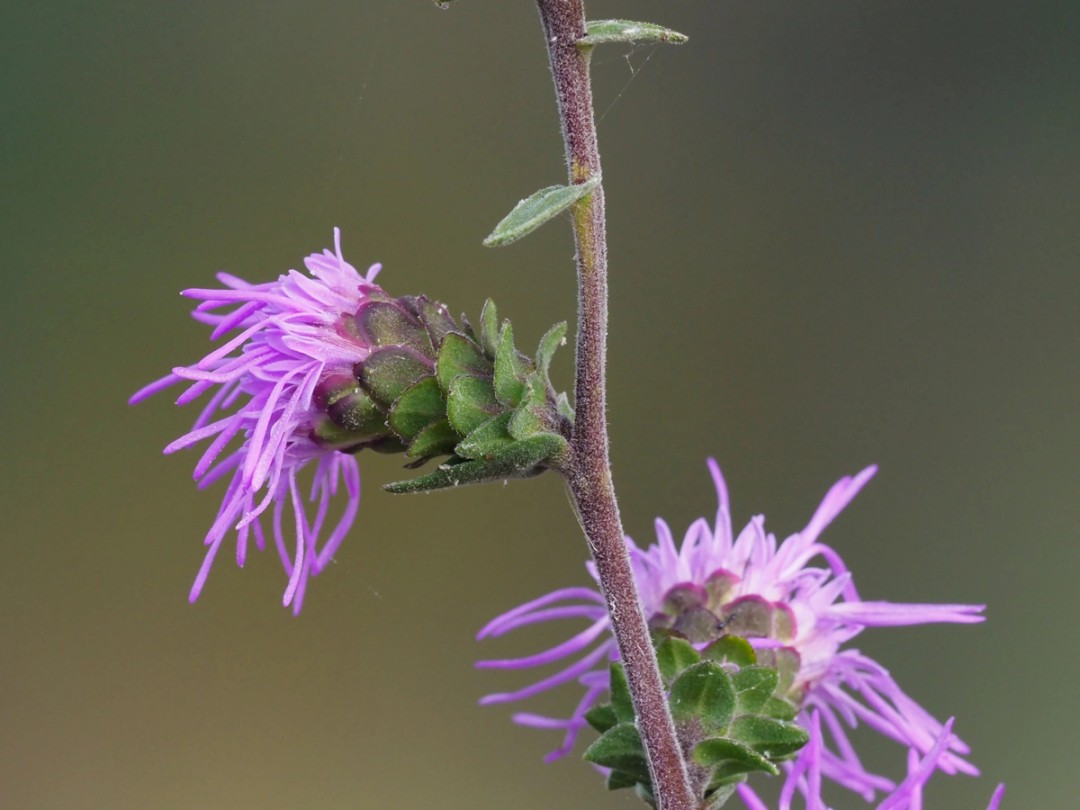
Flowers and bracts 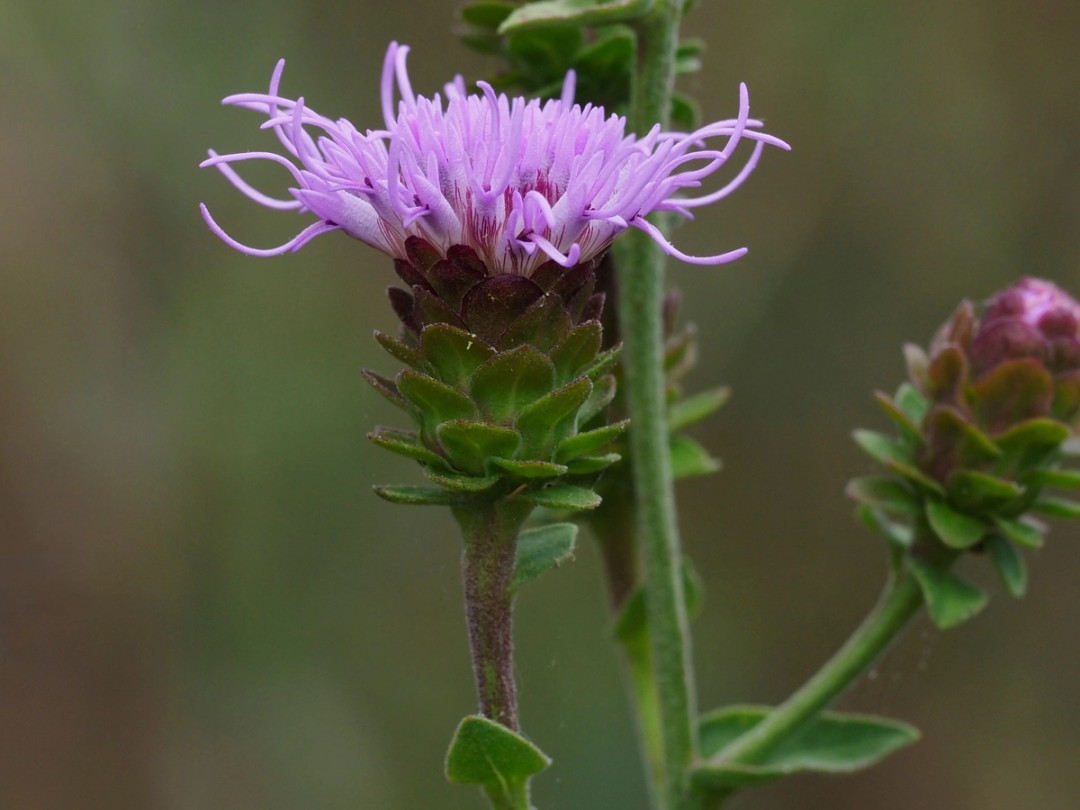
Large pink flowers
This liatris blooms from mid-summer through fall, from July to October, after many other plants have completed their blooming cycle. Each inflorescence consists of 10 to 40 large, purplish flower heads. The tall spikes of these fluffy flowers are a welcome sight during late summer and fall. Upper flowers open first, with blooming proceeding toward the base.
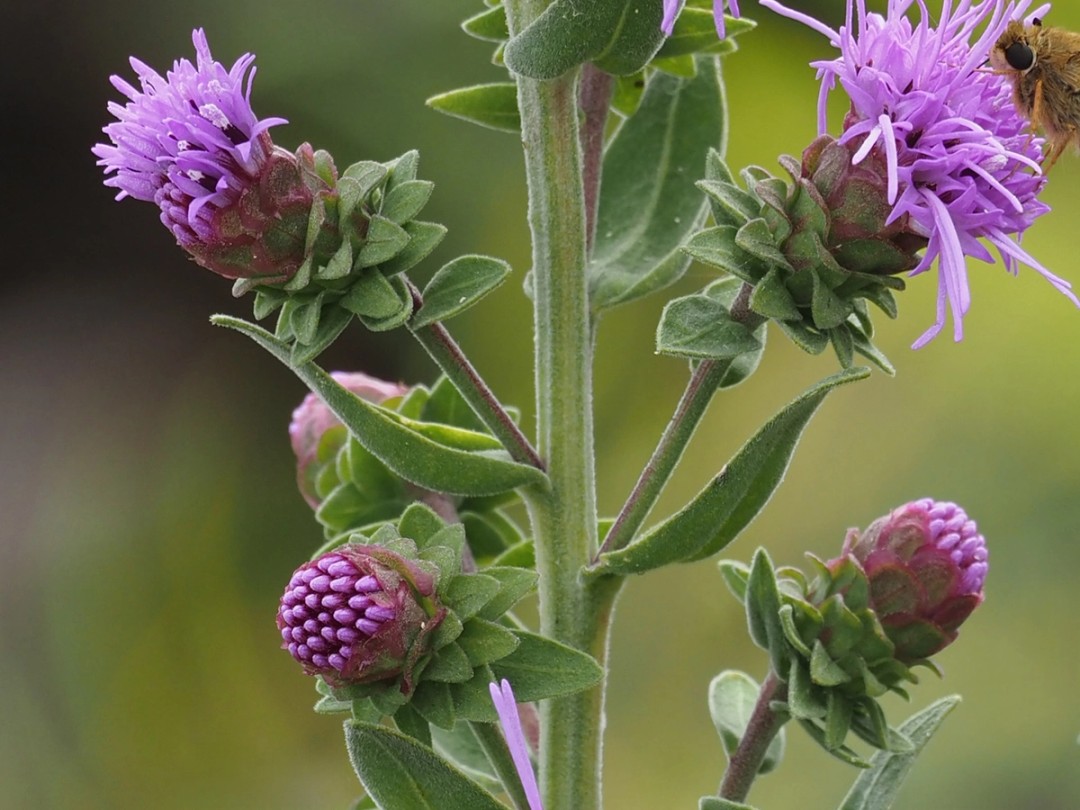
Flowers and buds 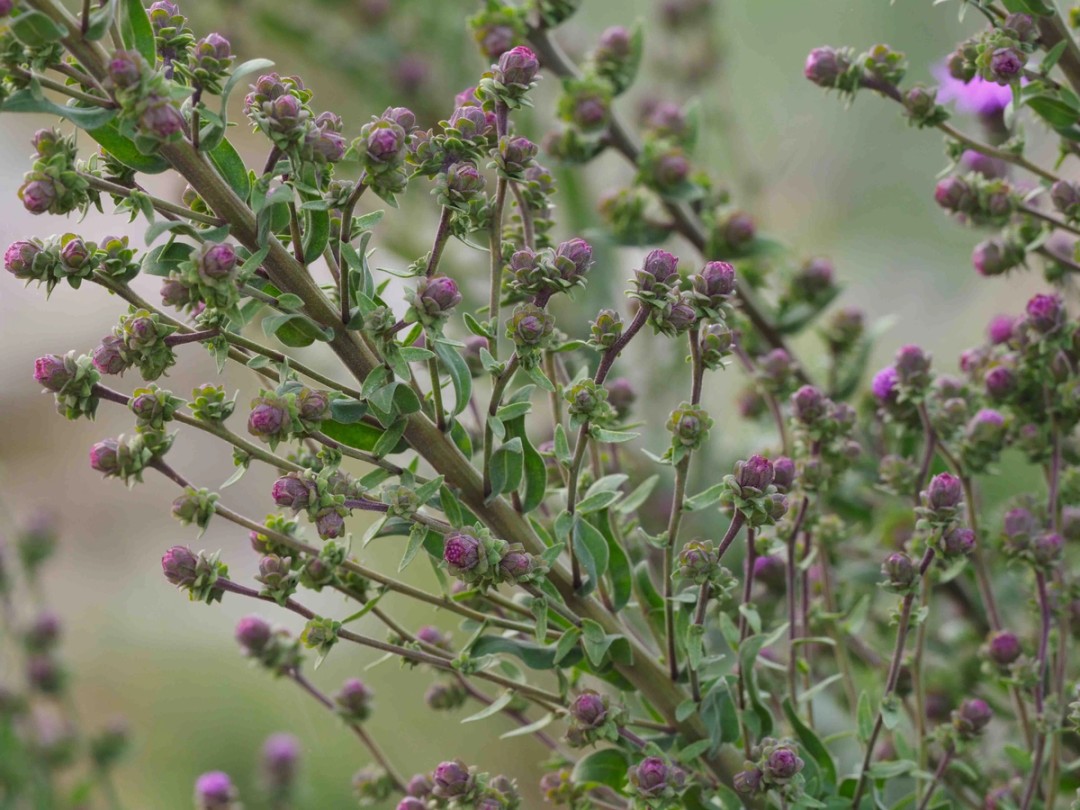
Many buds
DESCRIPTION
Liatris scariosa is a tall plant, shooting up to about 5 feet. It typically stands upright, occasionally leaning after a rain. The stem, which ranges from green to reddish, is pubescent, covered in short hairs except for the base. The leaves are alternately arranged, with the lower leaves being quite large, reaching up to 12 inches in length. As they ascend the stem, the leaves become smaller and hairless. Lower leaves have petioles, while the mid to upper leaves are sessile.
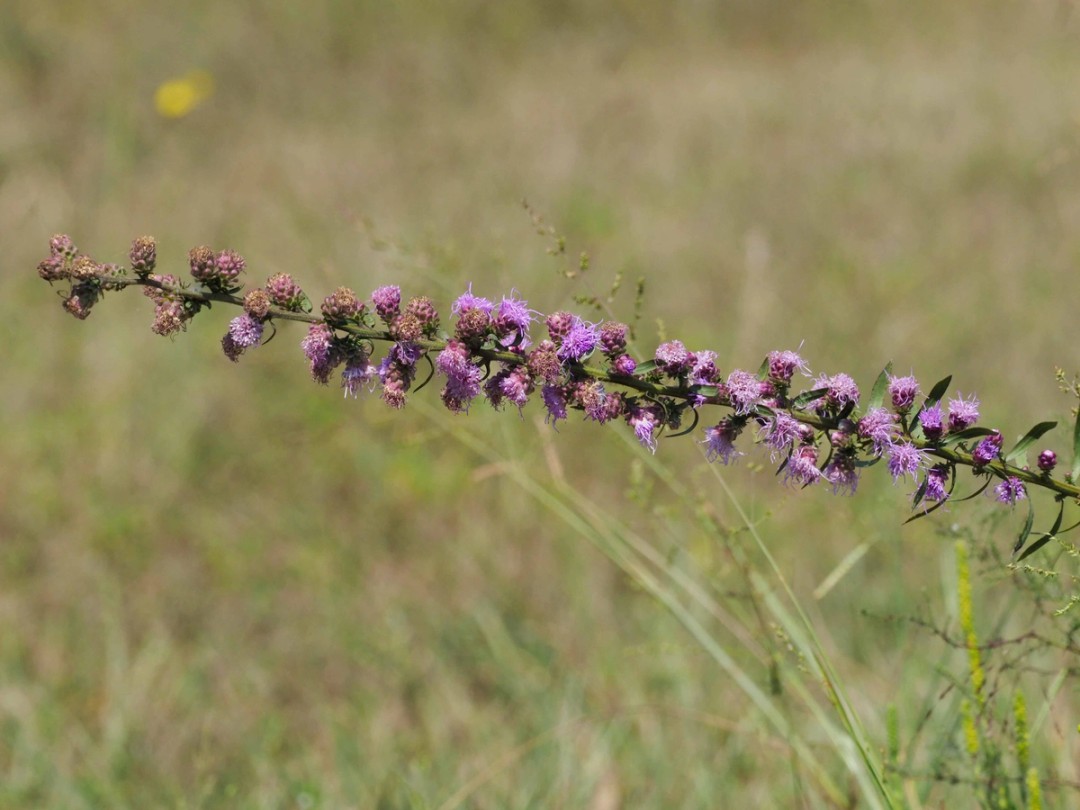
Long stem with no branches 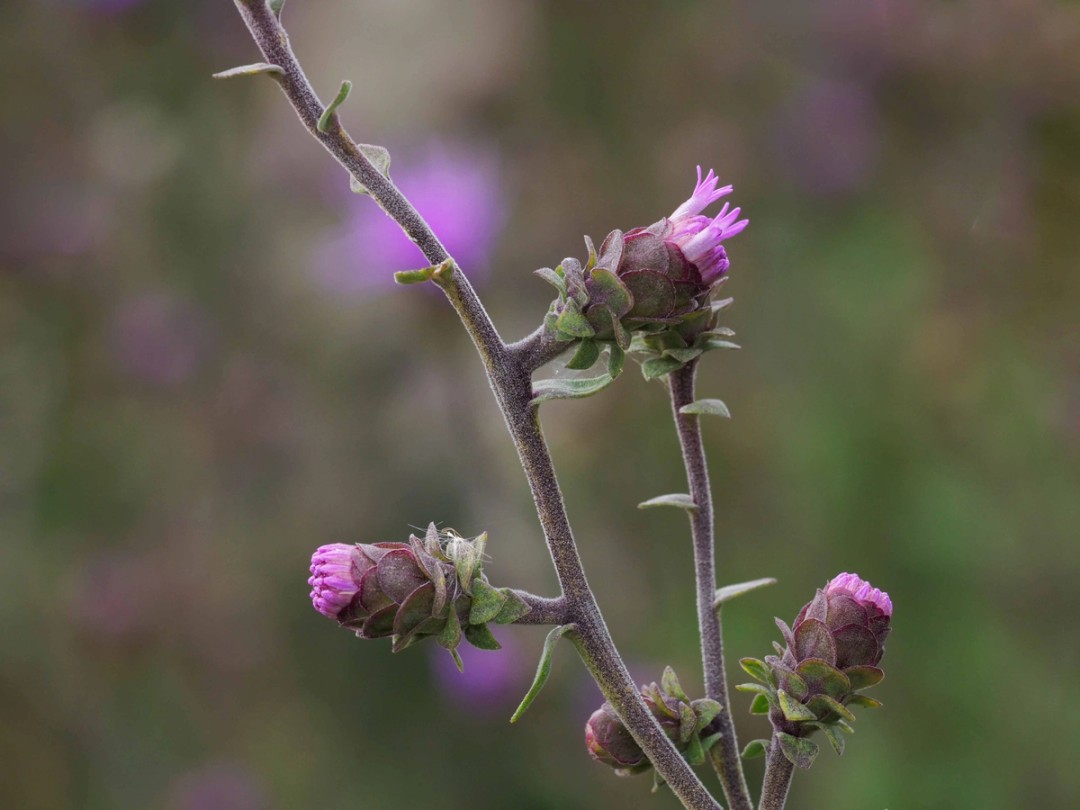
Stem with short hairs 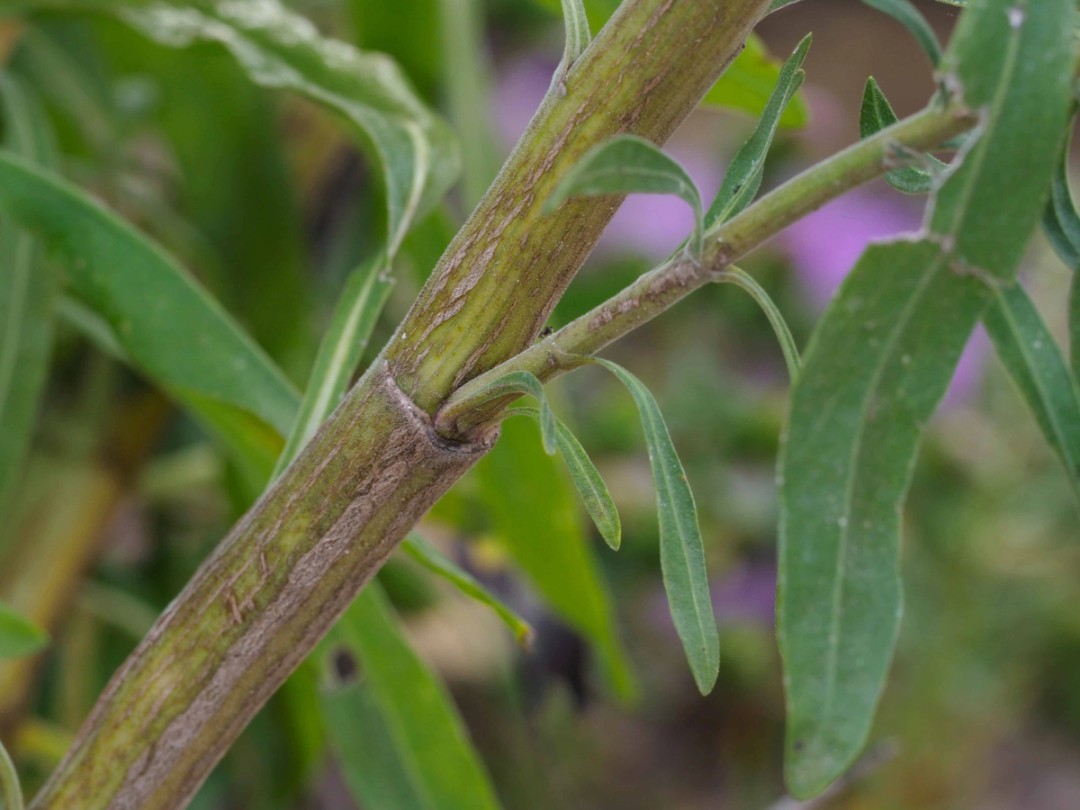
Lower stem 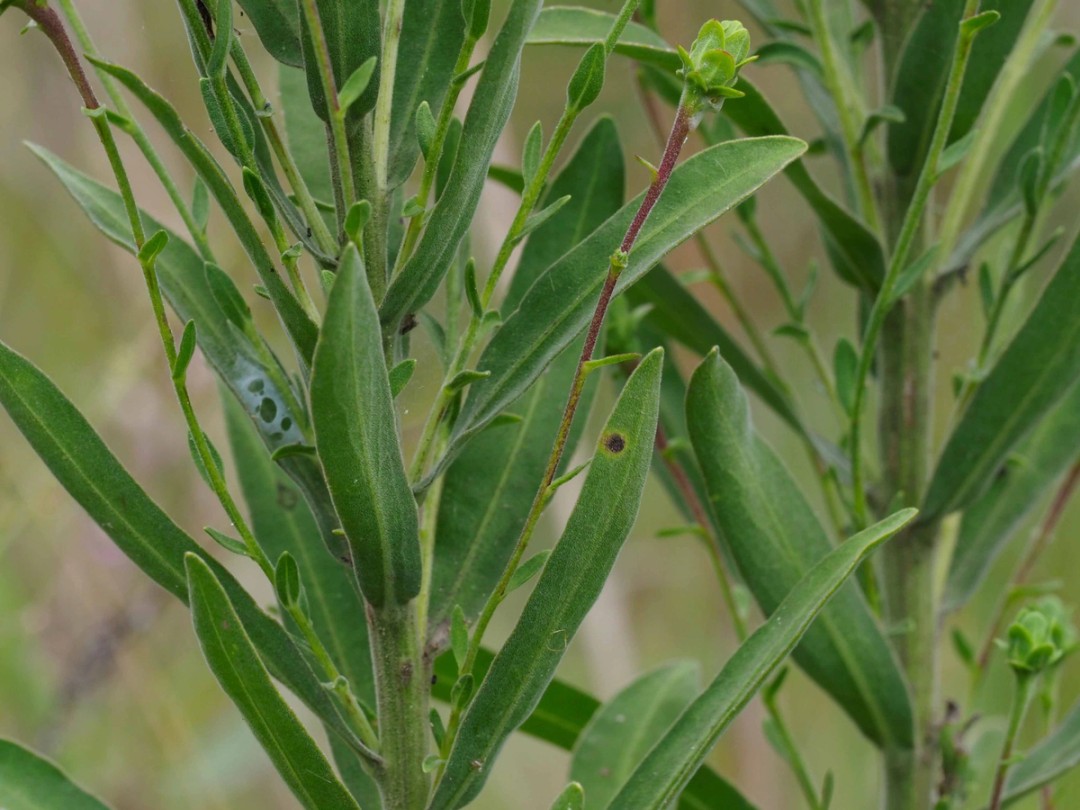
Large lower leaves 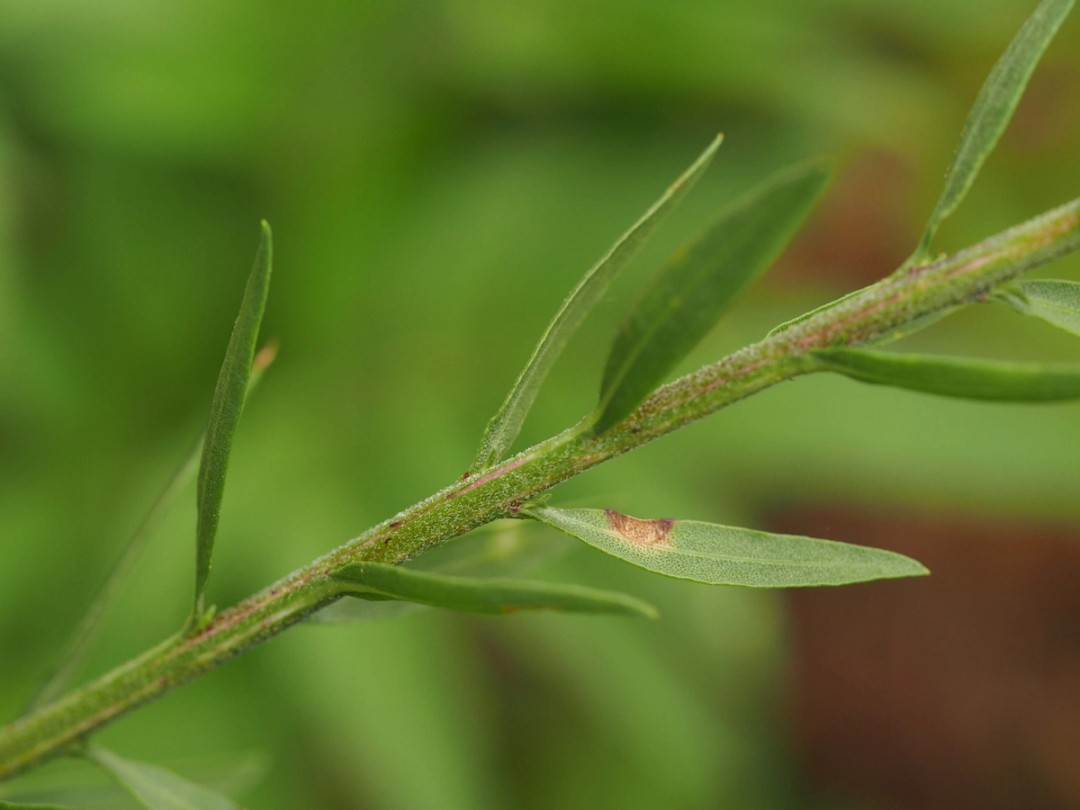
Sessile upper leaves 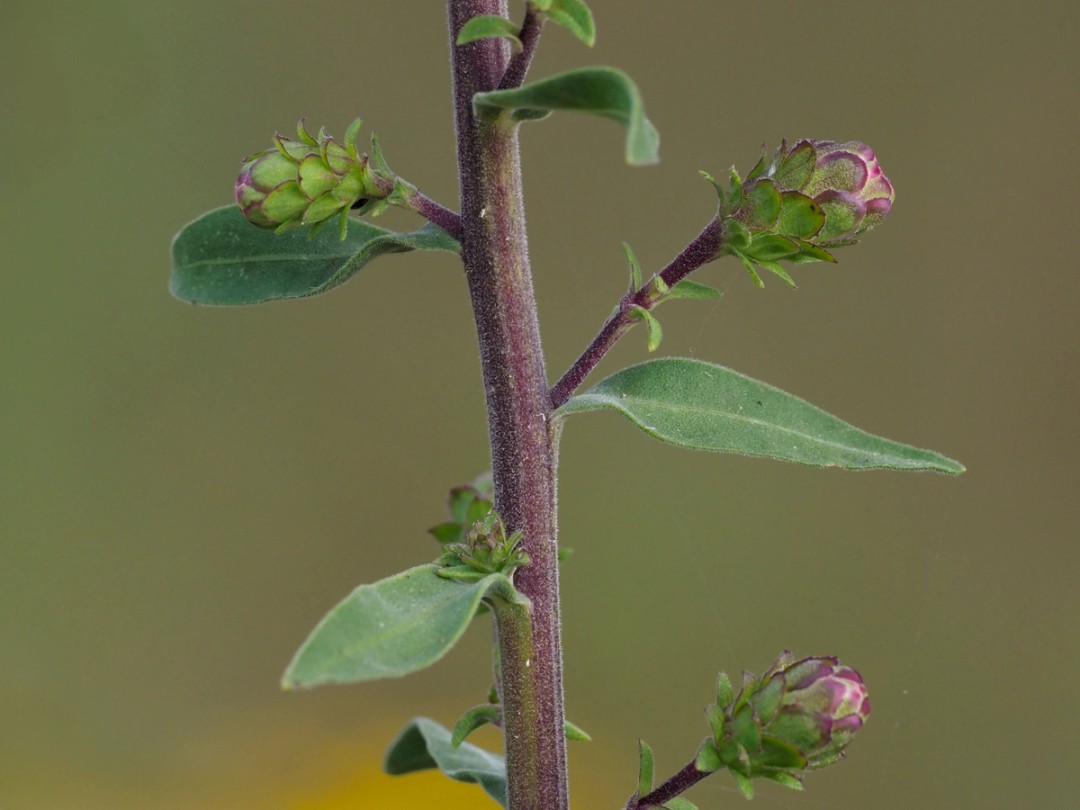
Small upper stem leaves
This plant is sometimes mistaken for the more prevalent Liatris aspera. They can be easily distinguished by examining their floral bracts. The bracts of Liatris scariosa overlap, are flat, and sometimes pointed, while those of Liatris aspera are pouched with irregular margins. Furthermore, Liatris scariosa is usually taller, with flowers on long stalks in the central part of the plant, whereas the flowers of Liatris aspera are sessile or with short stalks.
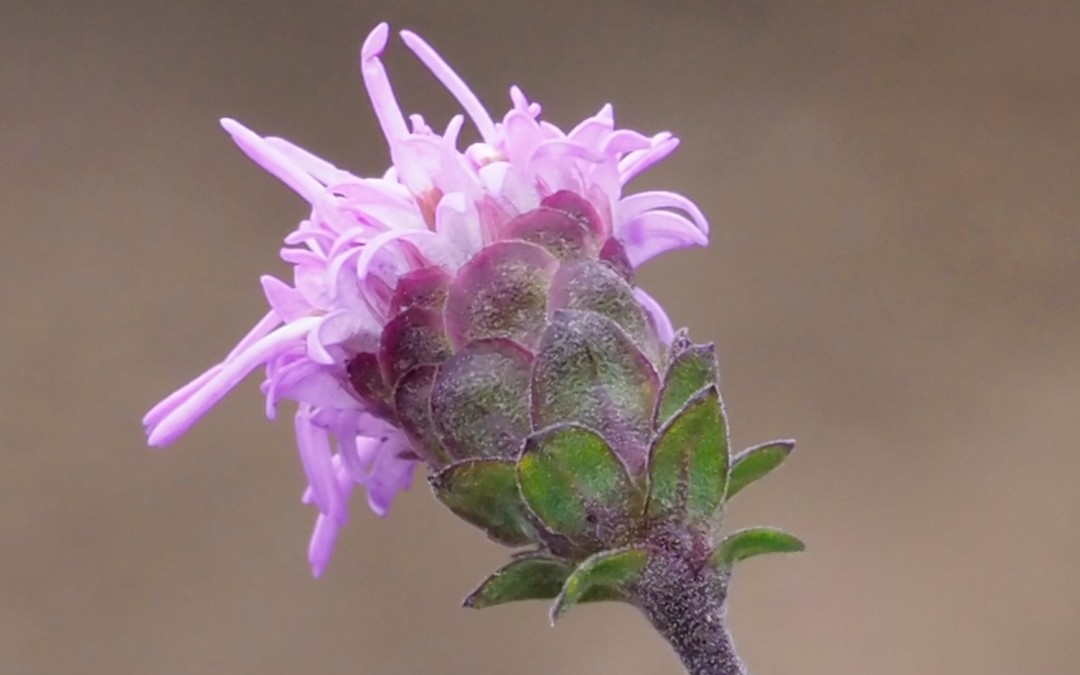
Liatris scariosa bracts 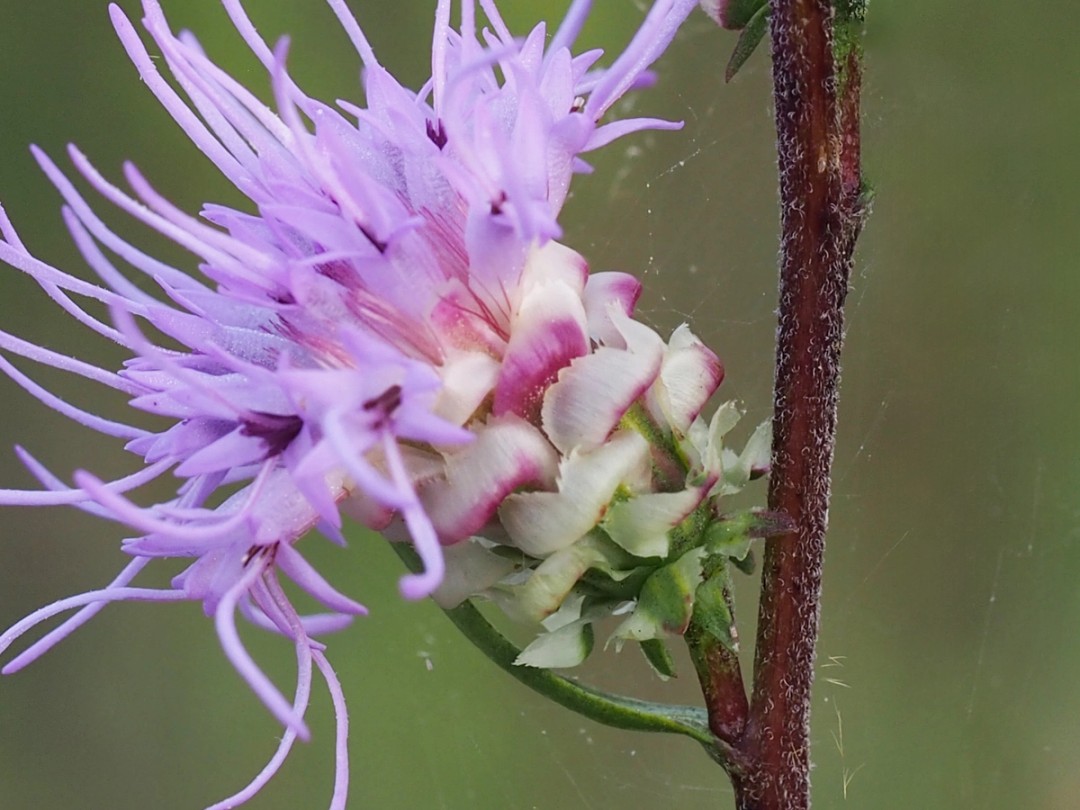
Liatris aspera bracts
After blooming fluffy seed heads appear, producing copious amounts of seeds. Ripe seed is found inside the 'fluff'. It's best to disperse the seeds in winter, ideally before a snow or soft rain. The seeds need a freeze/thaw period to break dormancy and may not germinate until their second year. To grow plants from seed for a garden, one can place seed in containers filled with potting soil and set them outdoors throughout winter. This will allow them to experience the freeze/thaw cycles necessary for germination. Alternatively, seed can be refrigerated for 2–3 months and sown in spring.
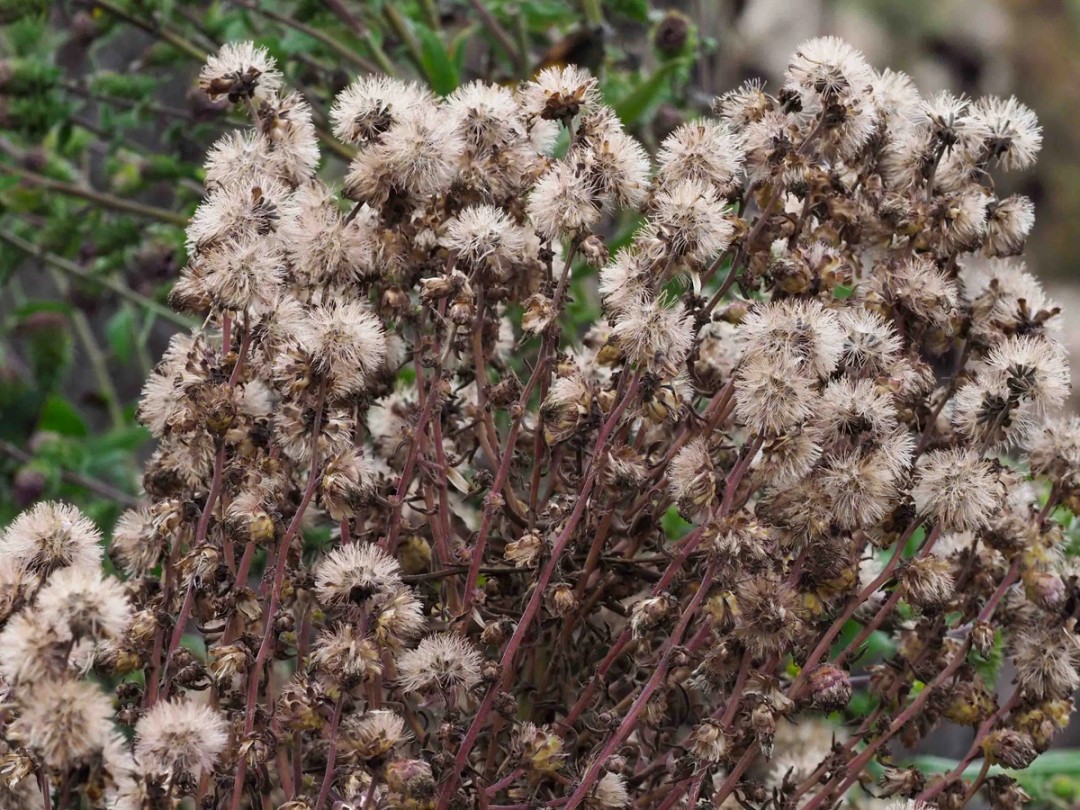
Many ripe seedheads 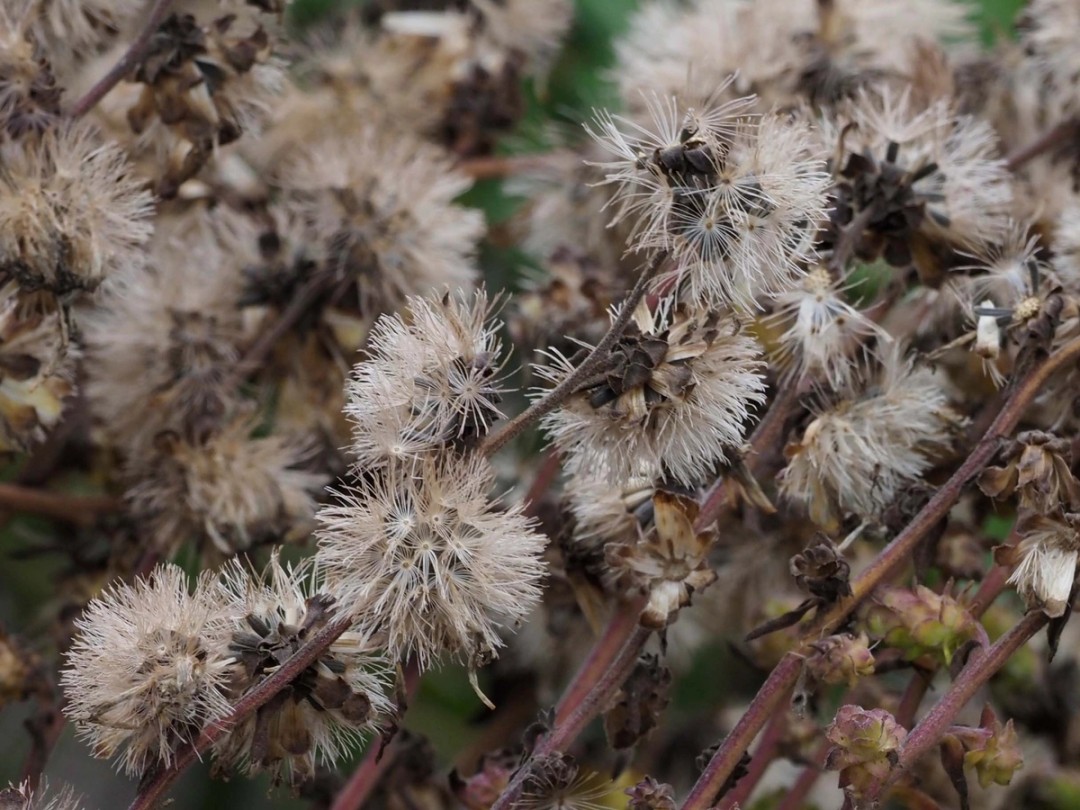
Close look at fluffy seed heads
POLLINATORS
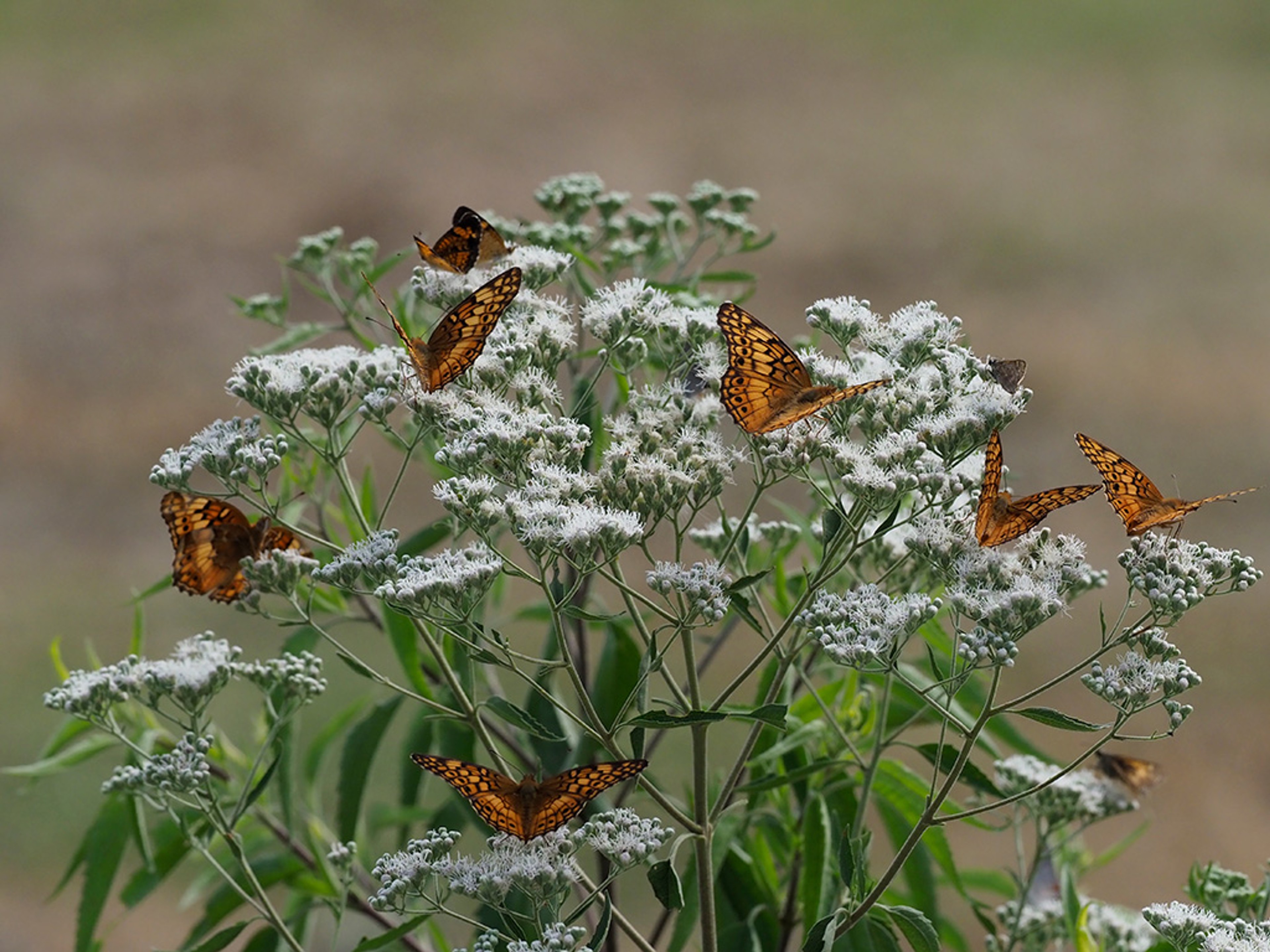
Blazing star attracts a diverse array of butterflies and skippers. Monarch butterflies, in particular, can often be found in great numbers on a single plant. This impressive native plant supports a wide variety of pollinators.
Butterflies
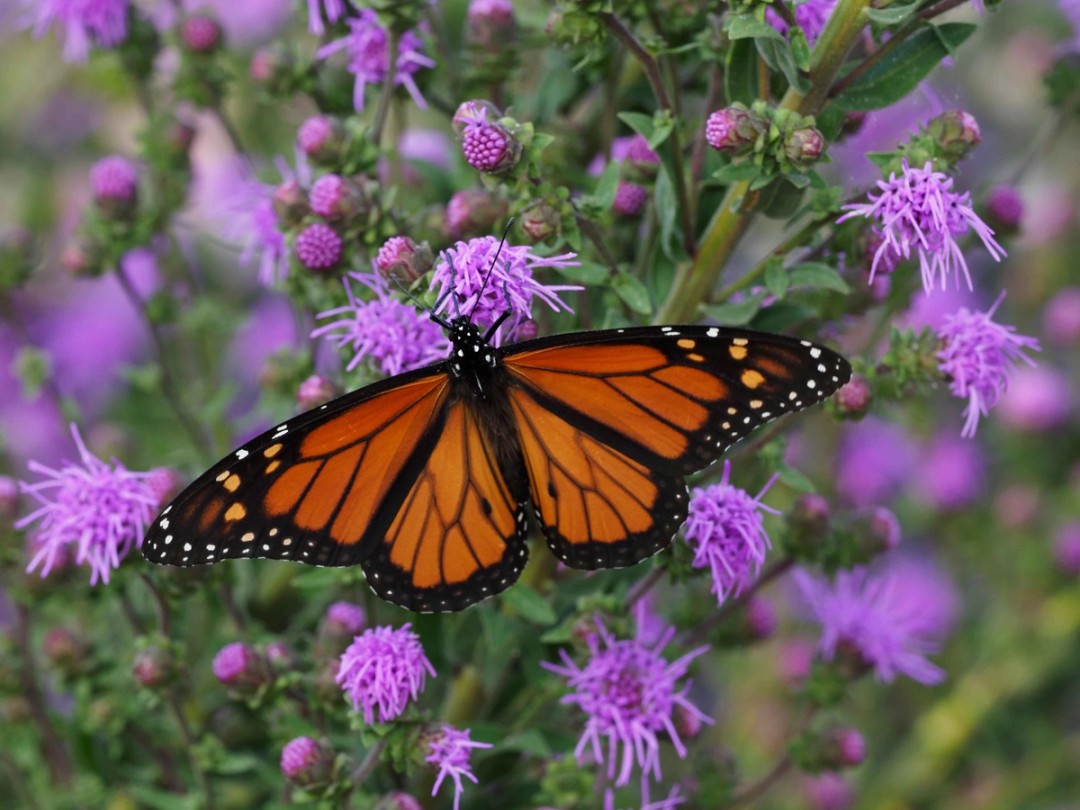
Monarch 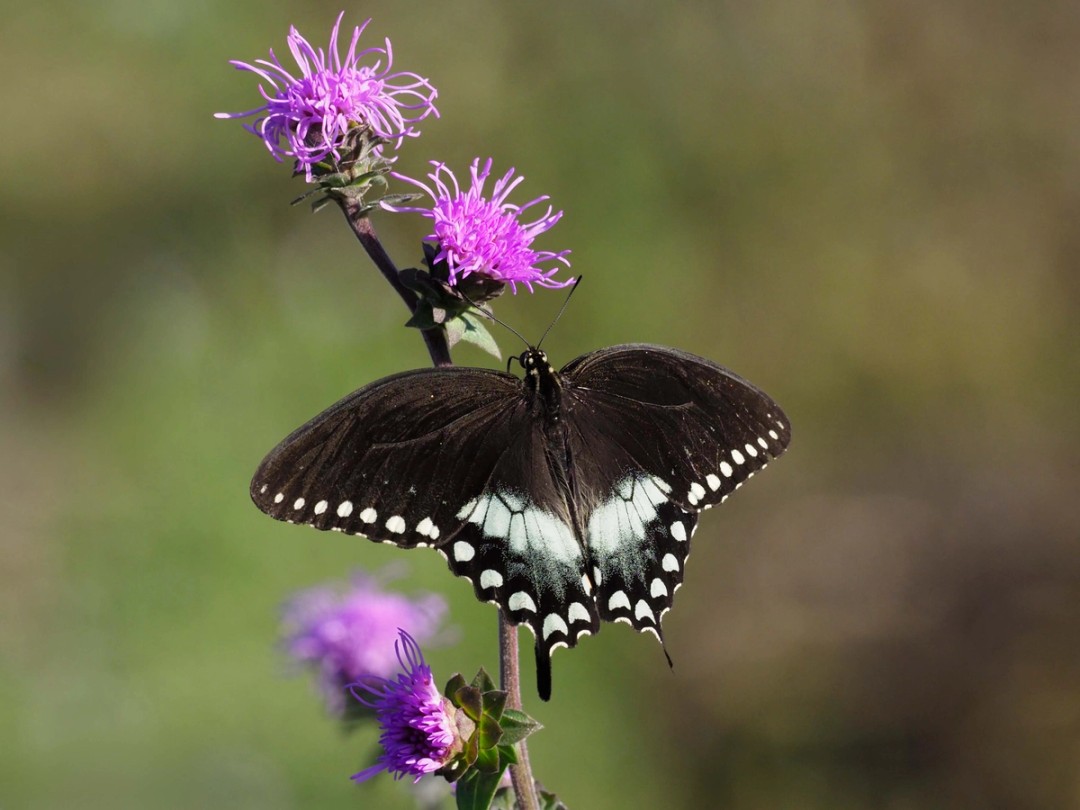
Spicebush swallowtail 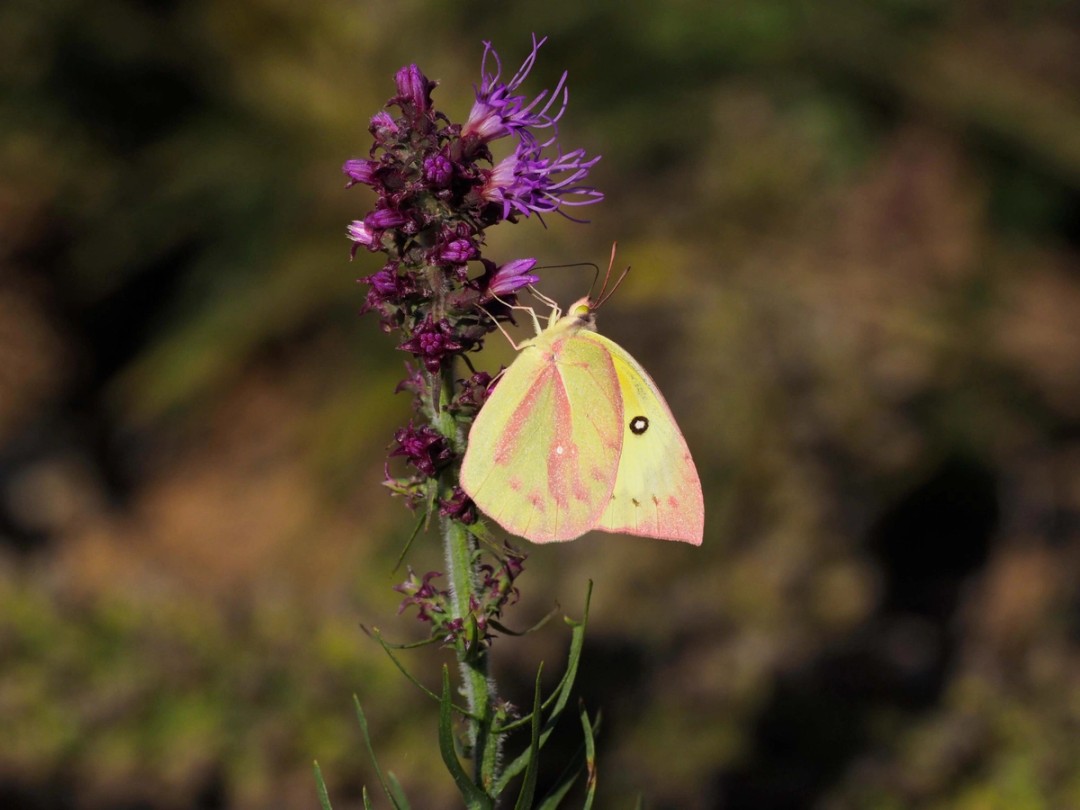
Southern dogface 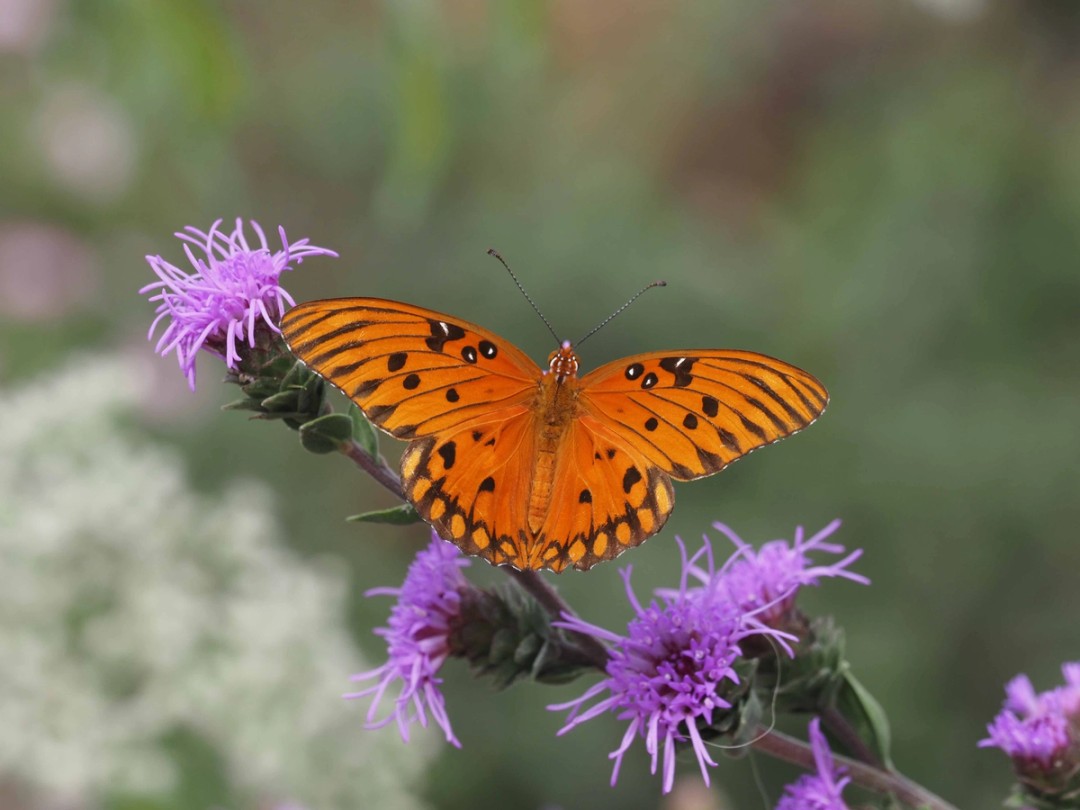
Gulf fritillary 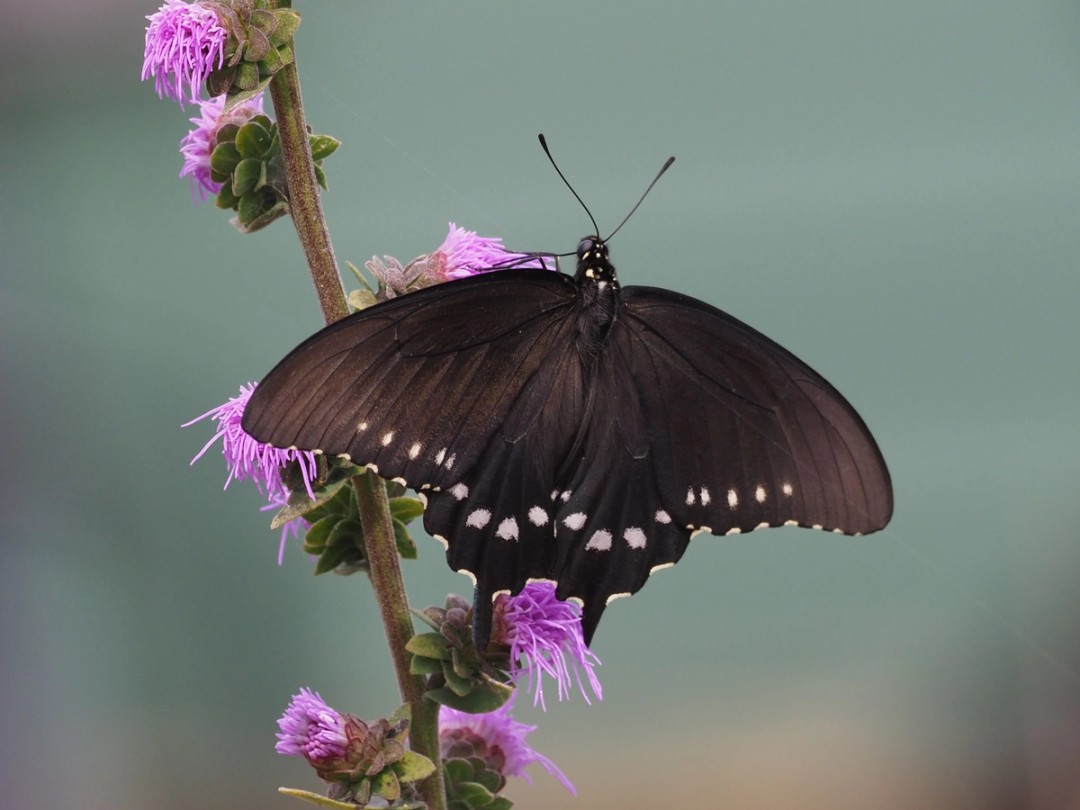
Pipevine swallowtail 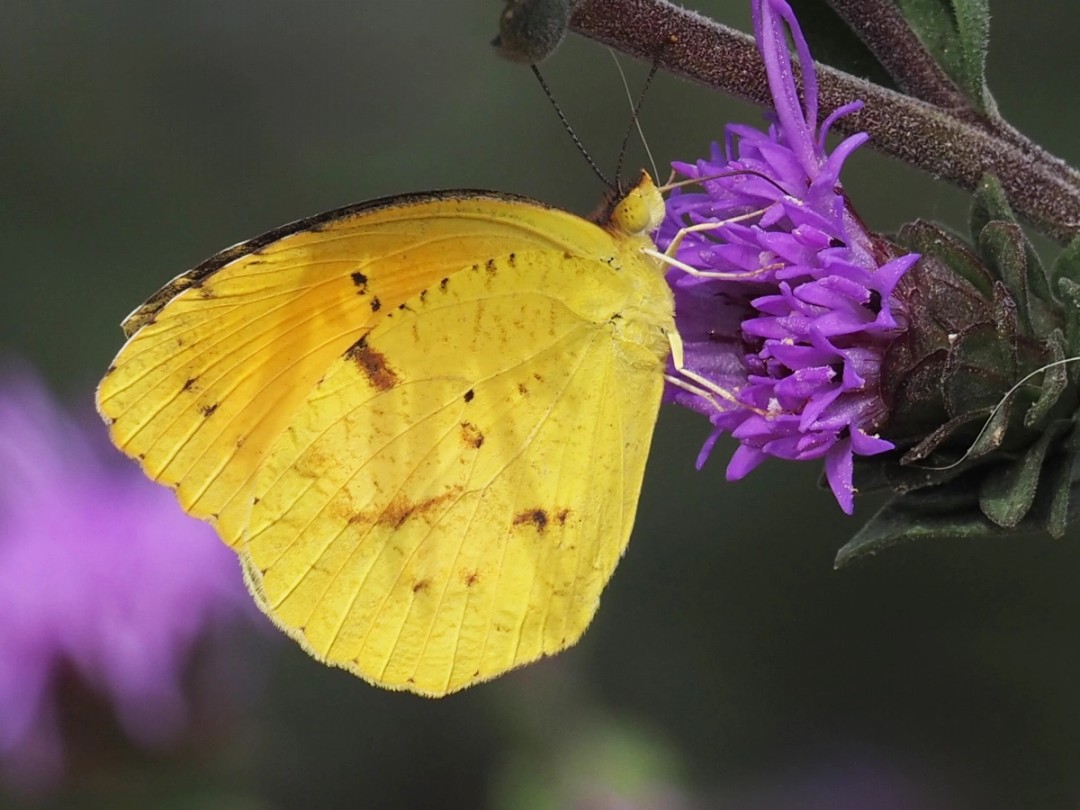
Sleepy orange 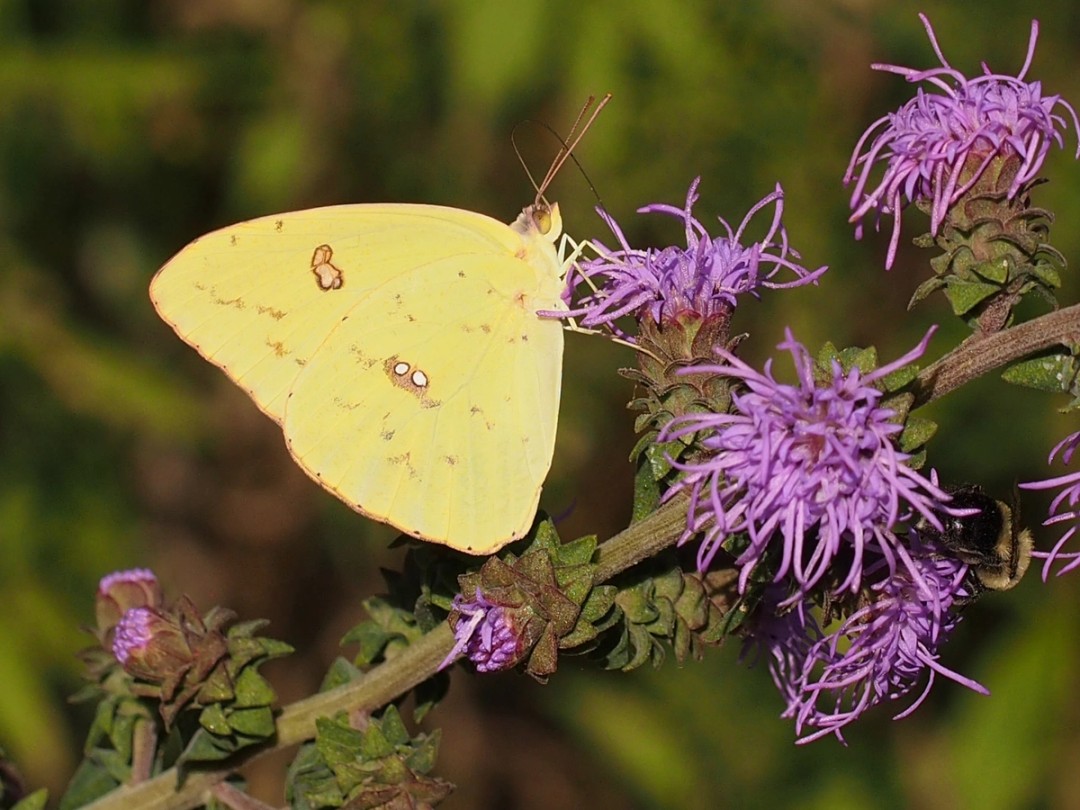
Cloudless sulfur 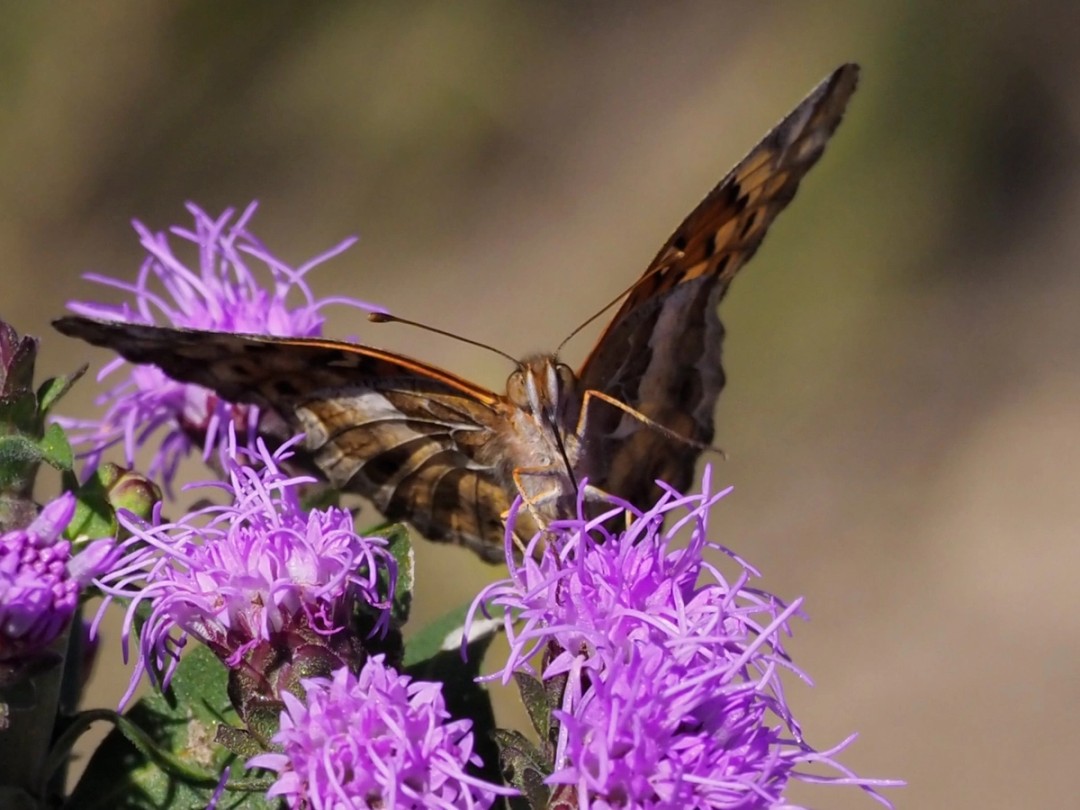
Variegated fritillary 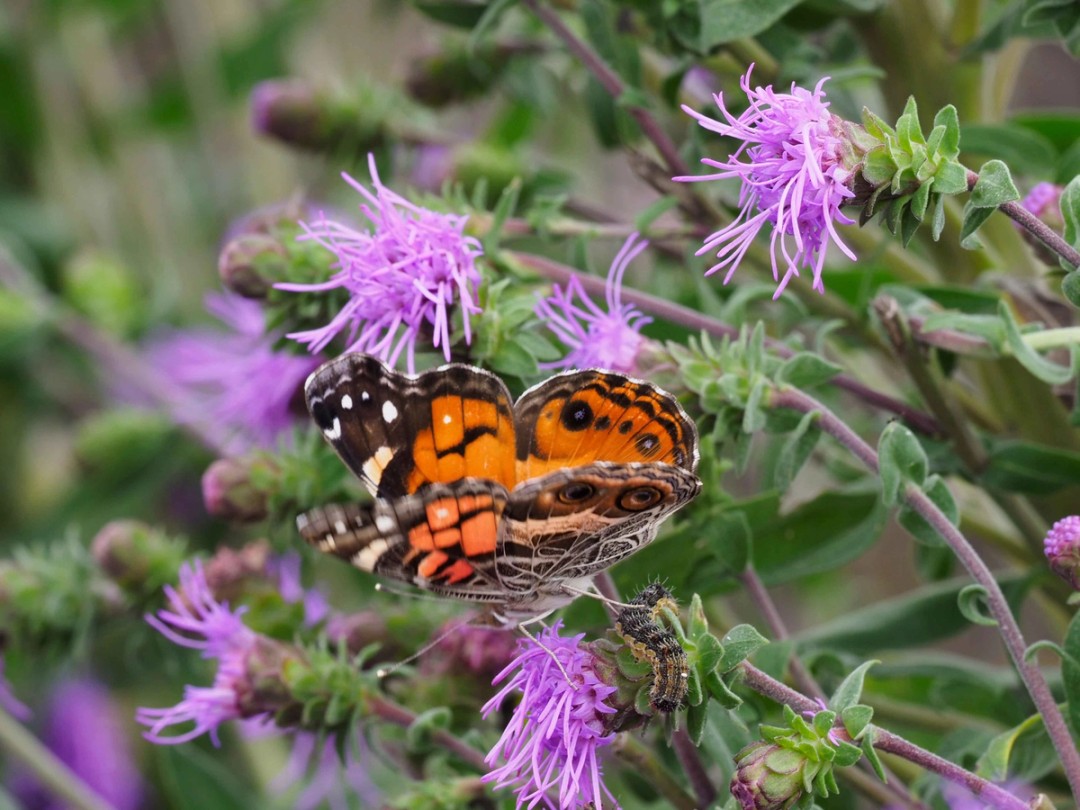
American lady 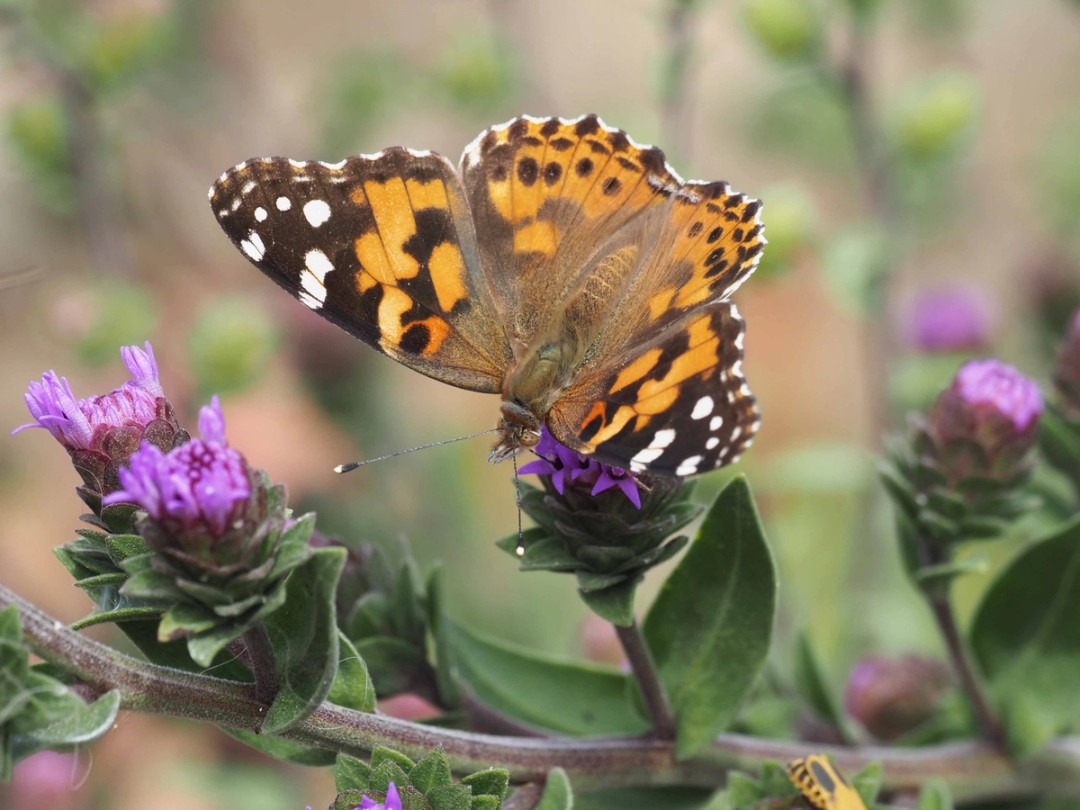
Painted lady
Skippers
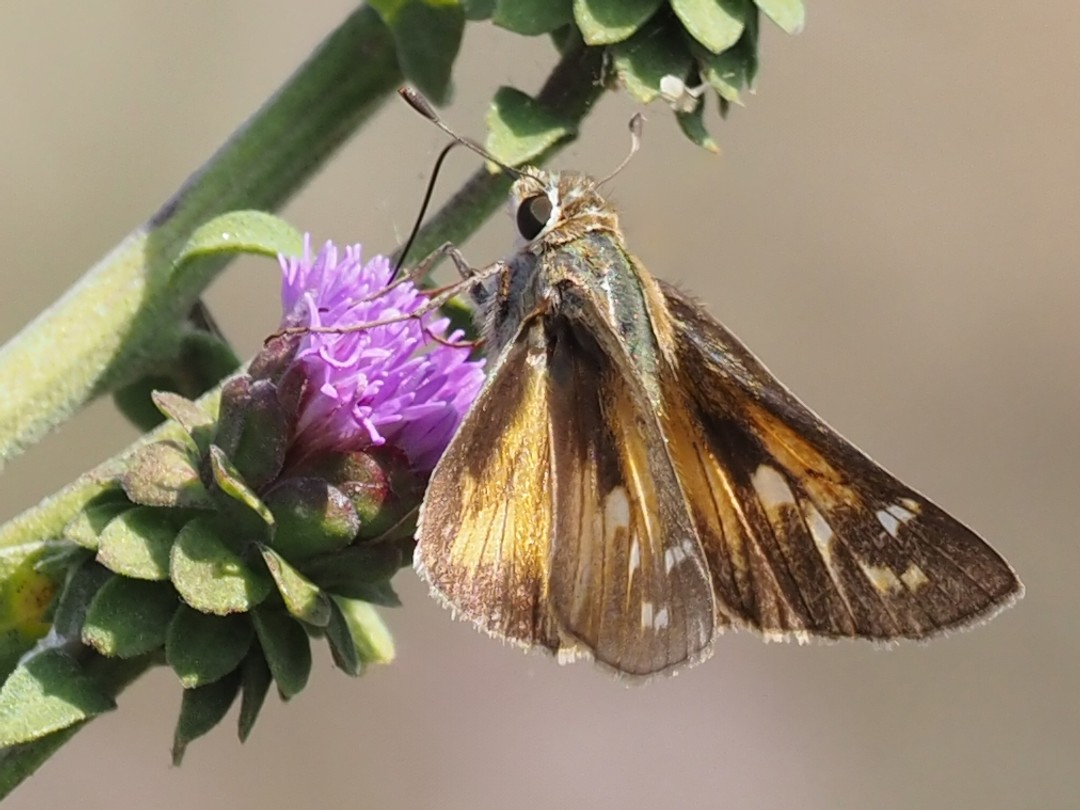
Sachem skipper 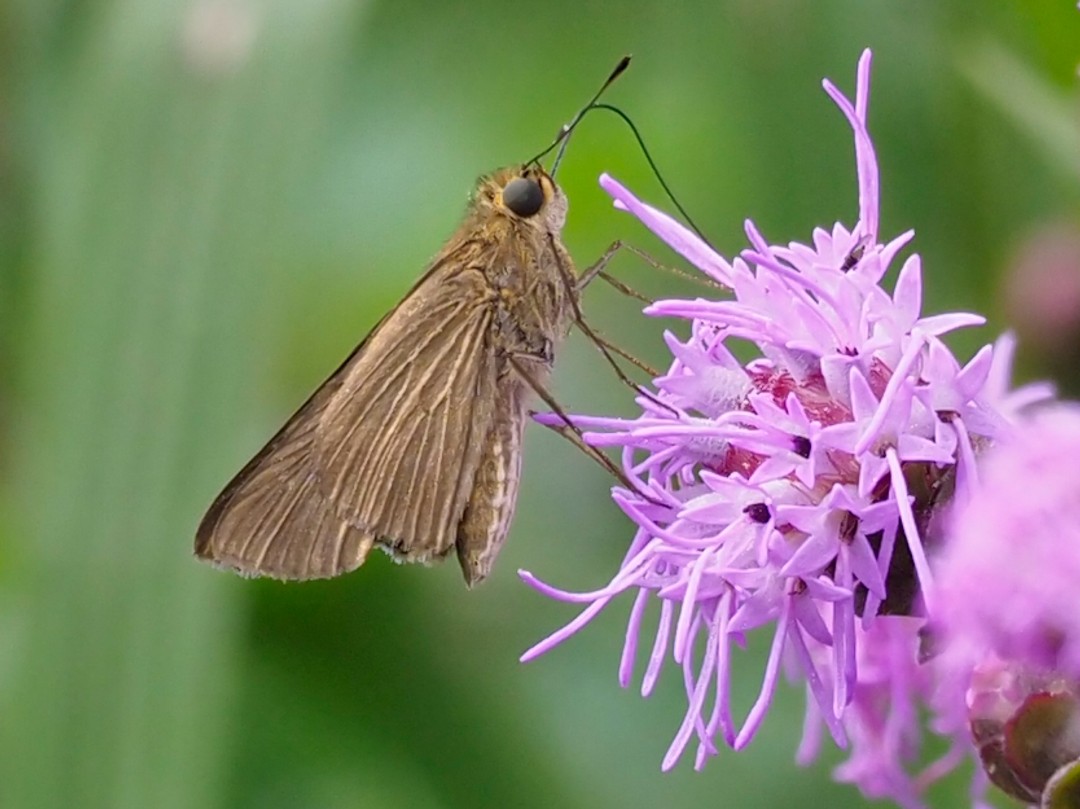
Ocola skipper 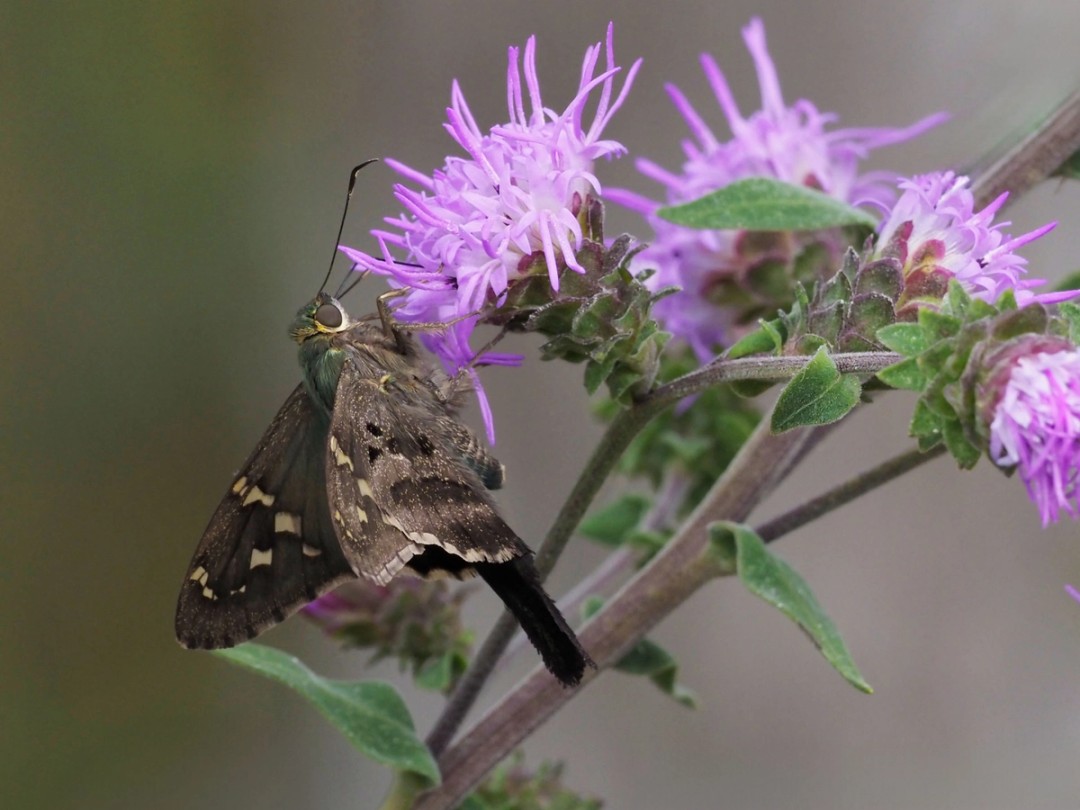
Long-tailed skipper 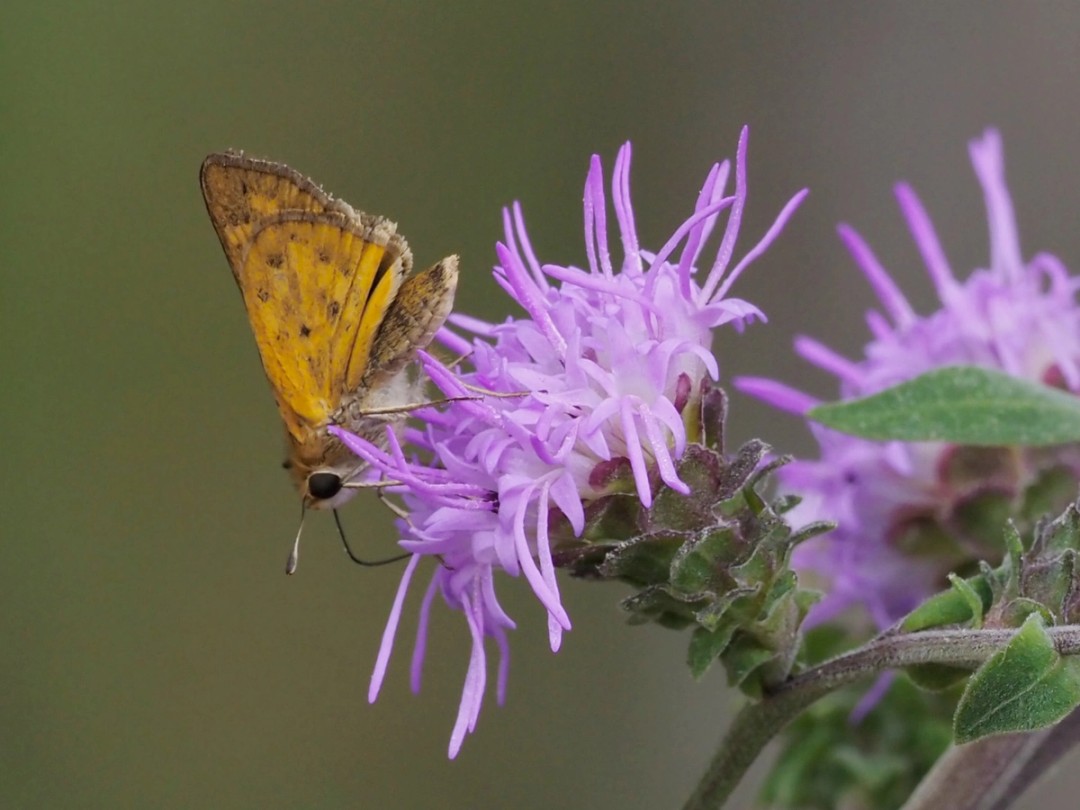
Fiery skipper 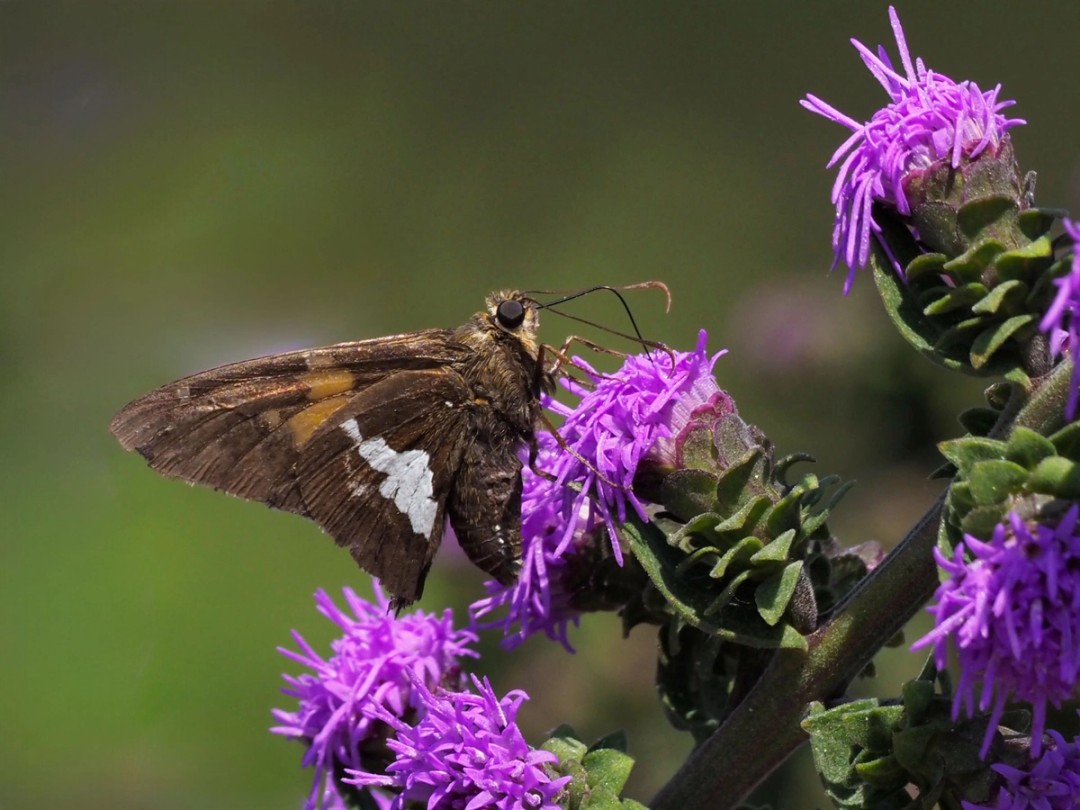
Silver spotted skipper 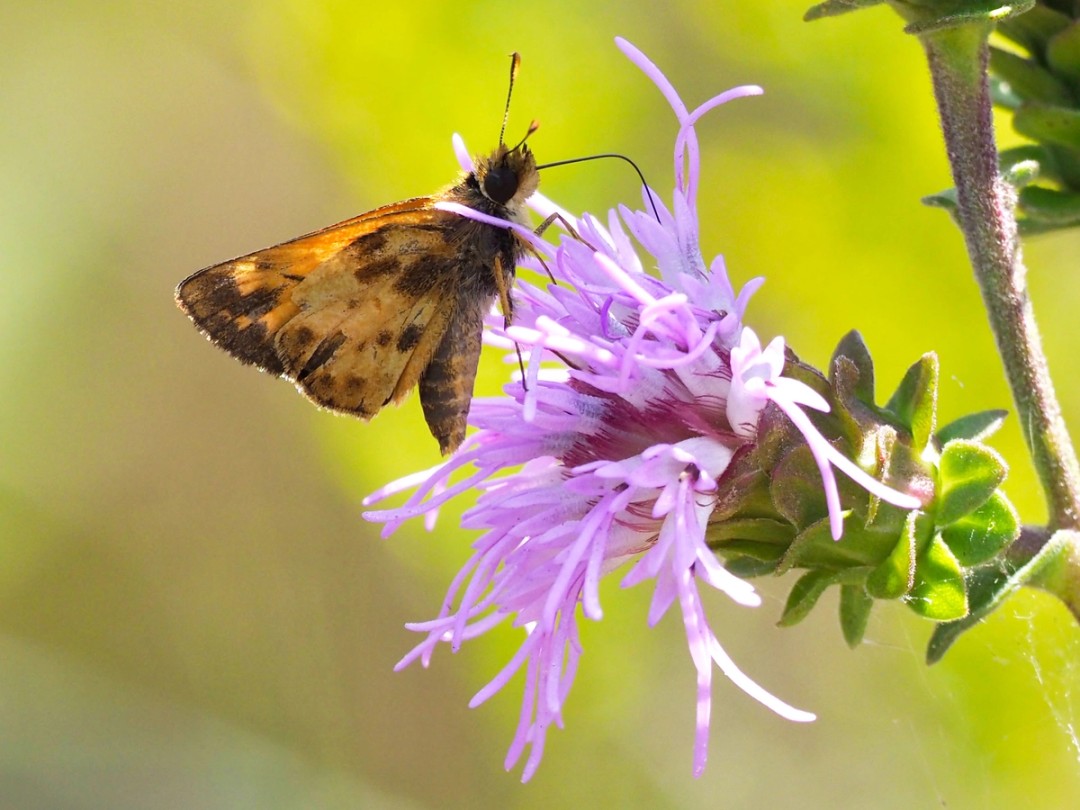
Zabulon skipper
Bees
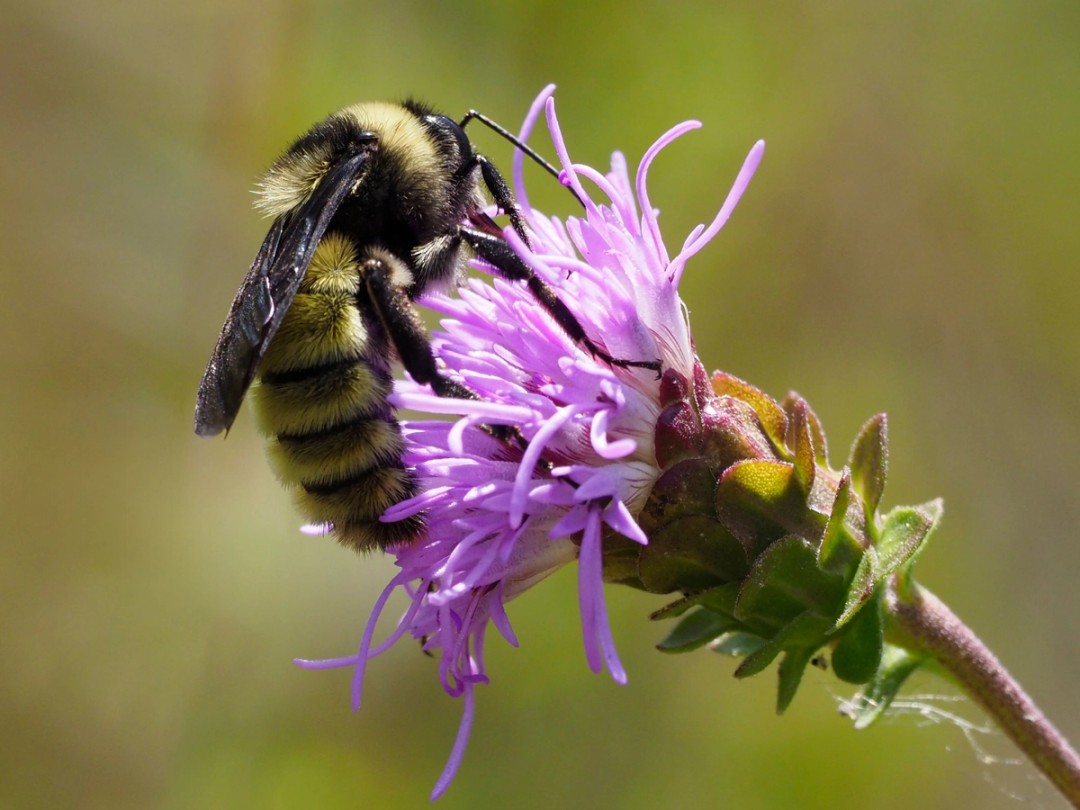
American bumble bee (Male) 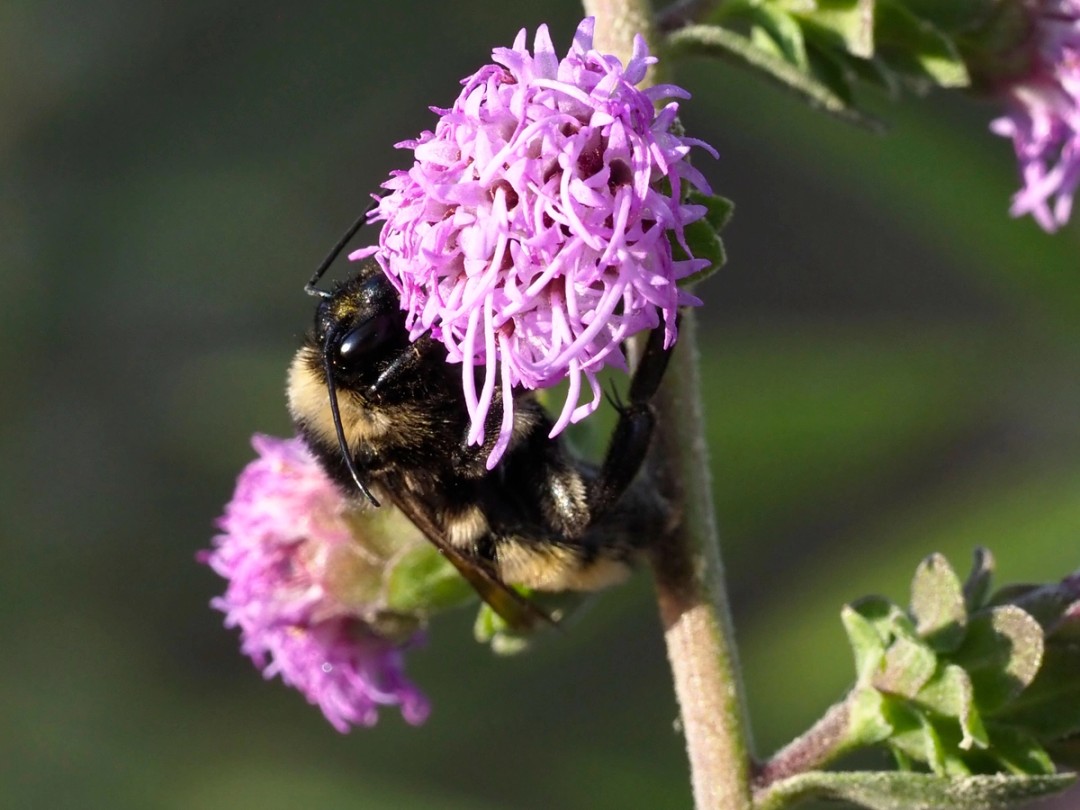
American bumble bee (Female)
The most common bees I’ve encountered are American Bumblebees, both male and female. Occasionally, I also spot Common Eastern Bumblebees visiting the flowers.
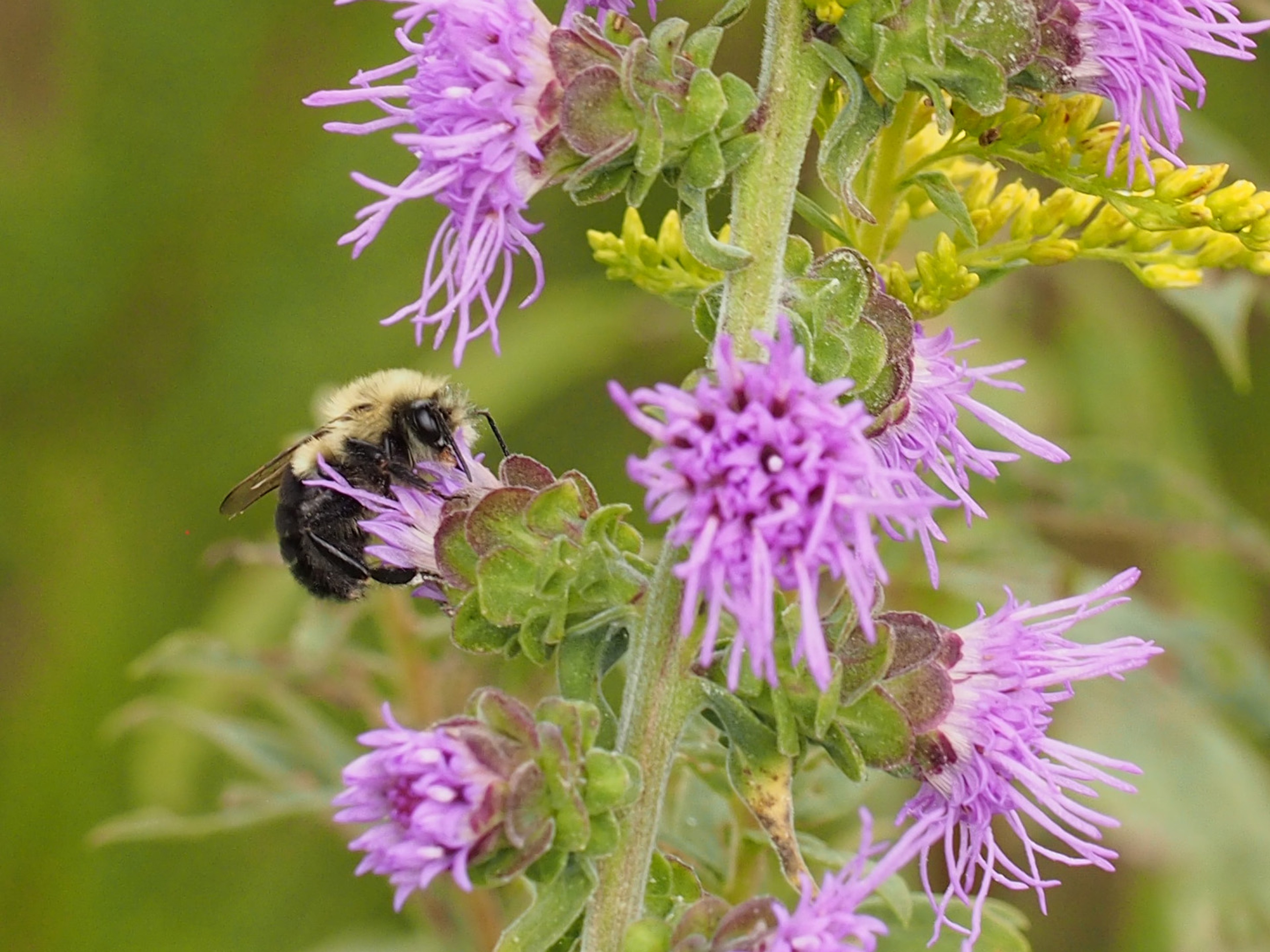
Other Pollinators
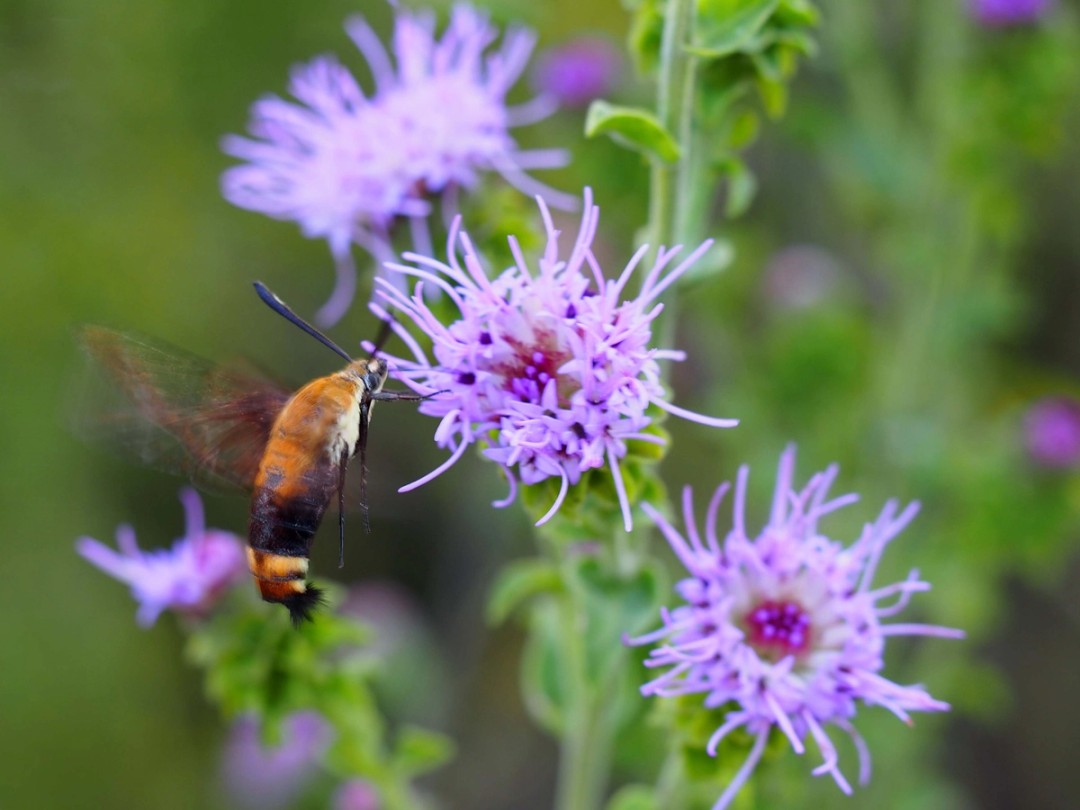
Hummingbird Clearwing moth 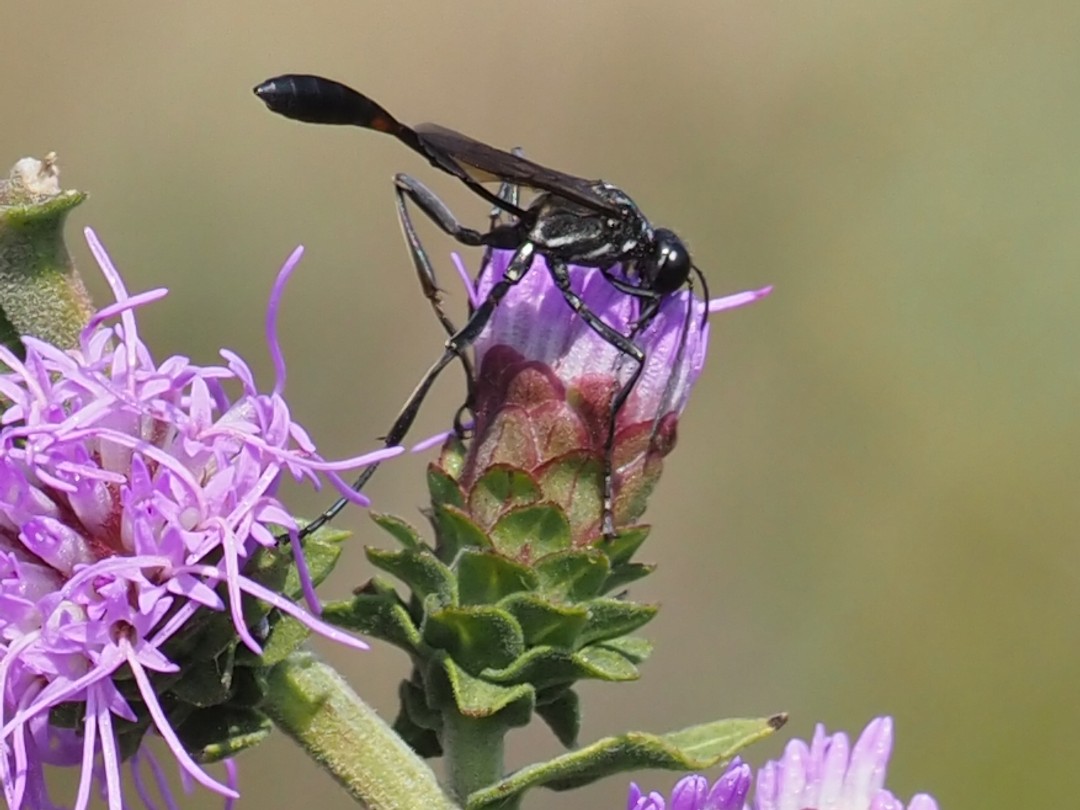
Ammophila wasp
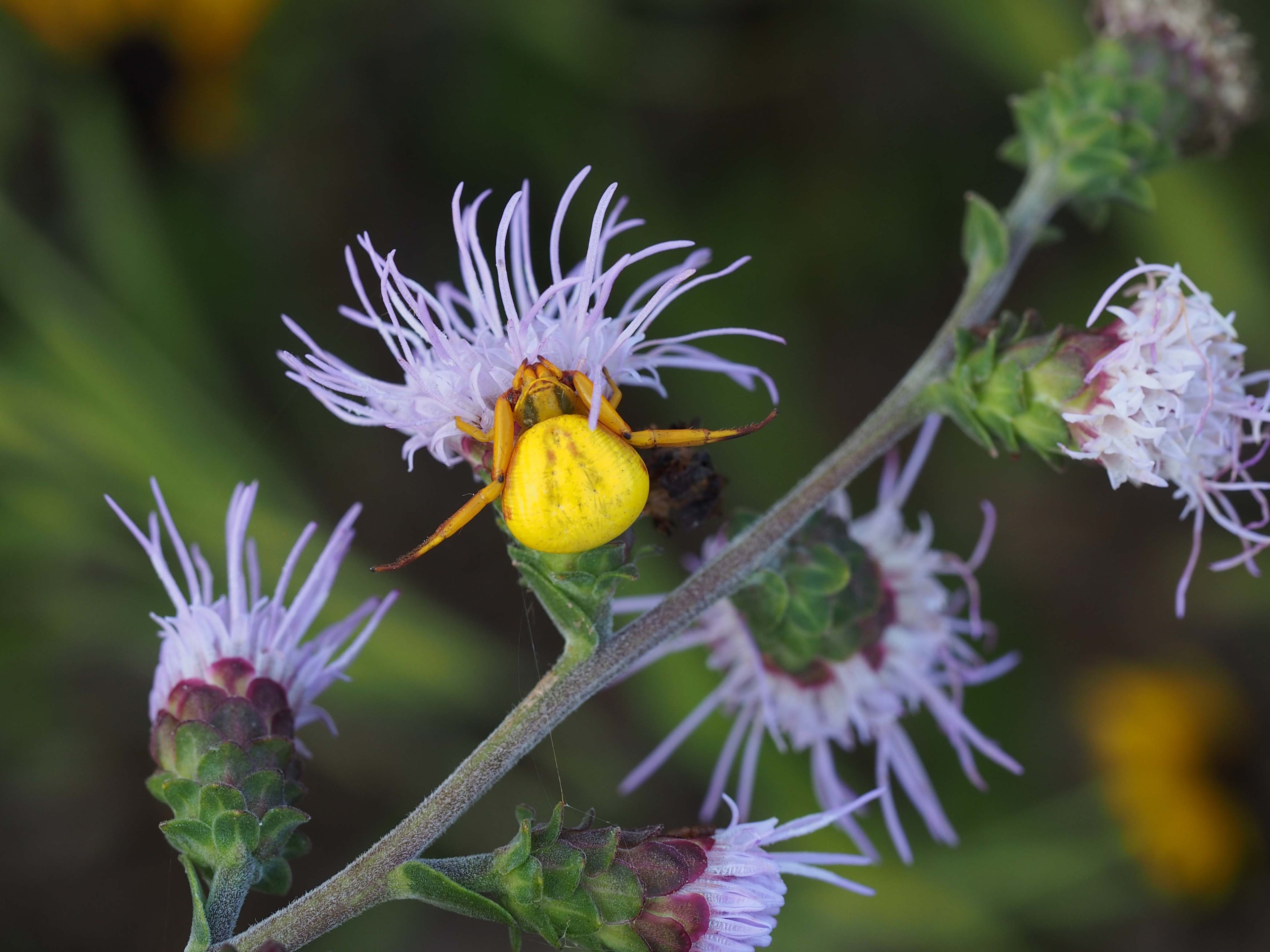
Lastly, here's a lovely crab spider using the flowers as a hunting ground for its next meal.
PLANTS GROWING NEARBY
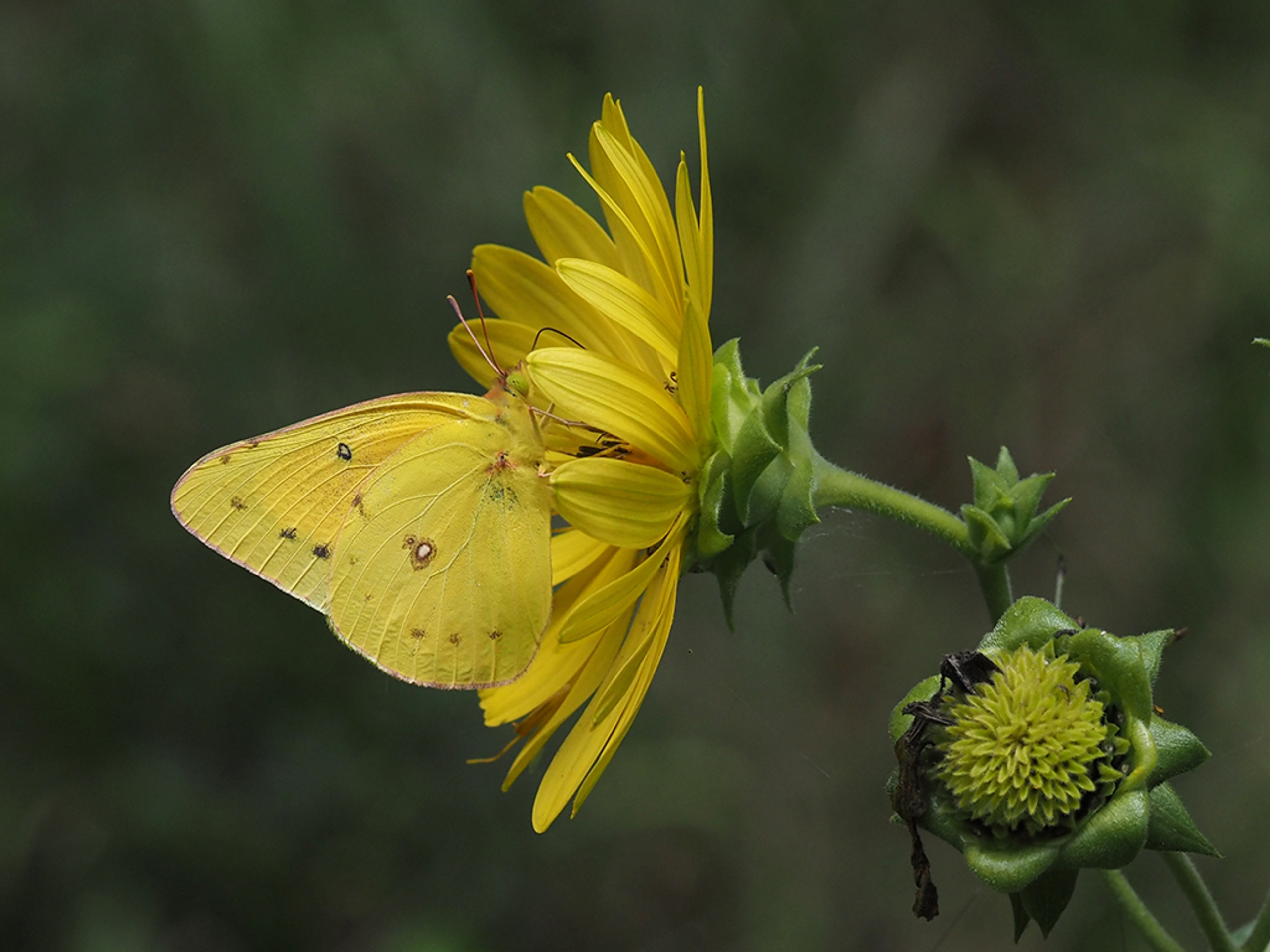
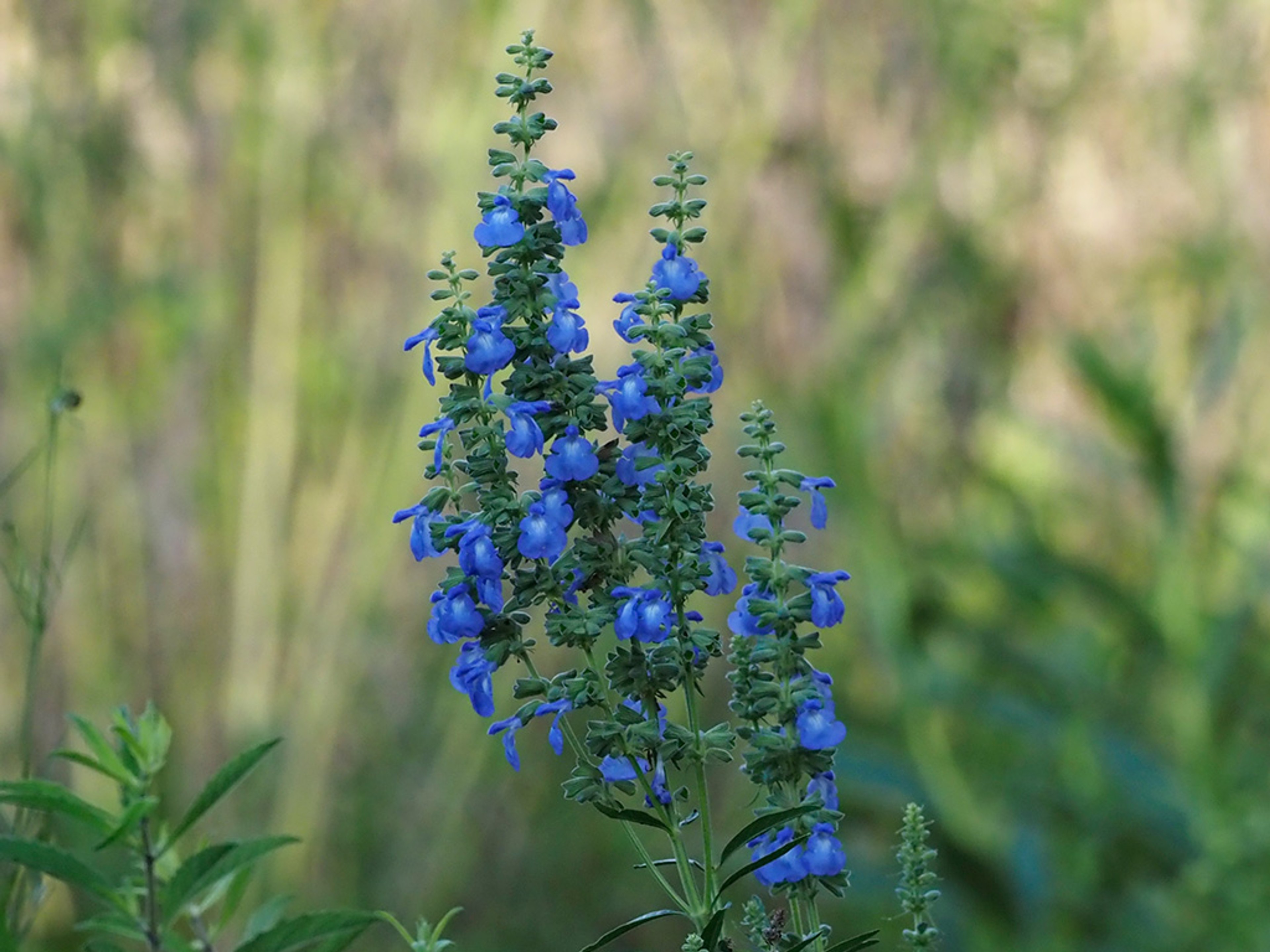
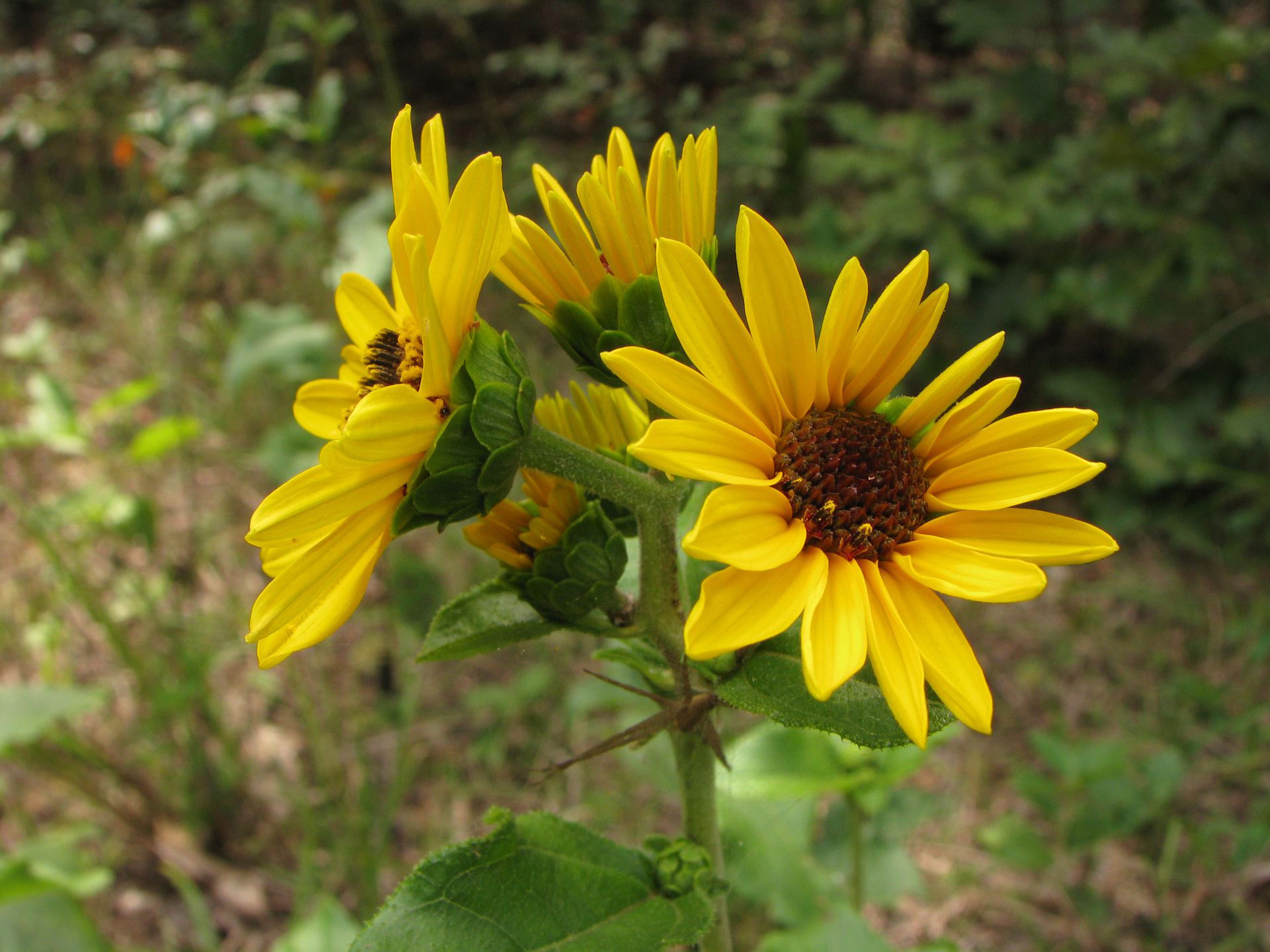
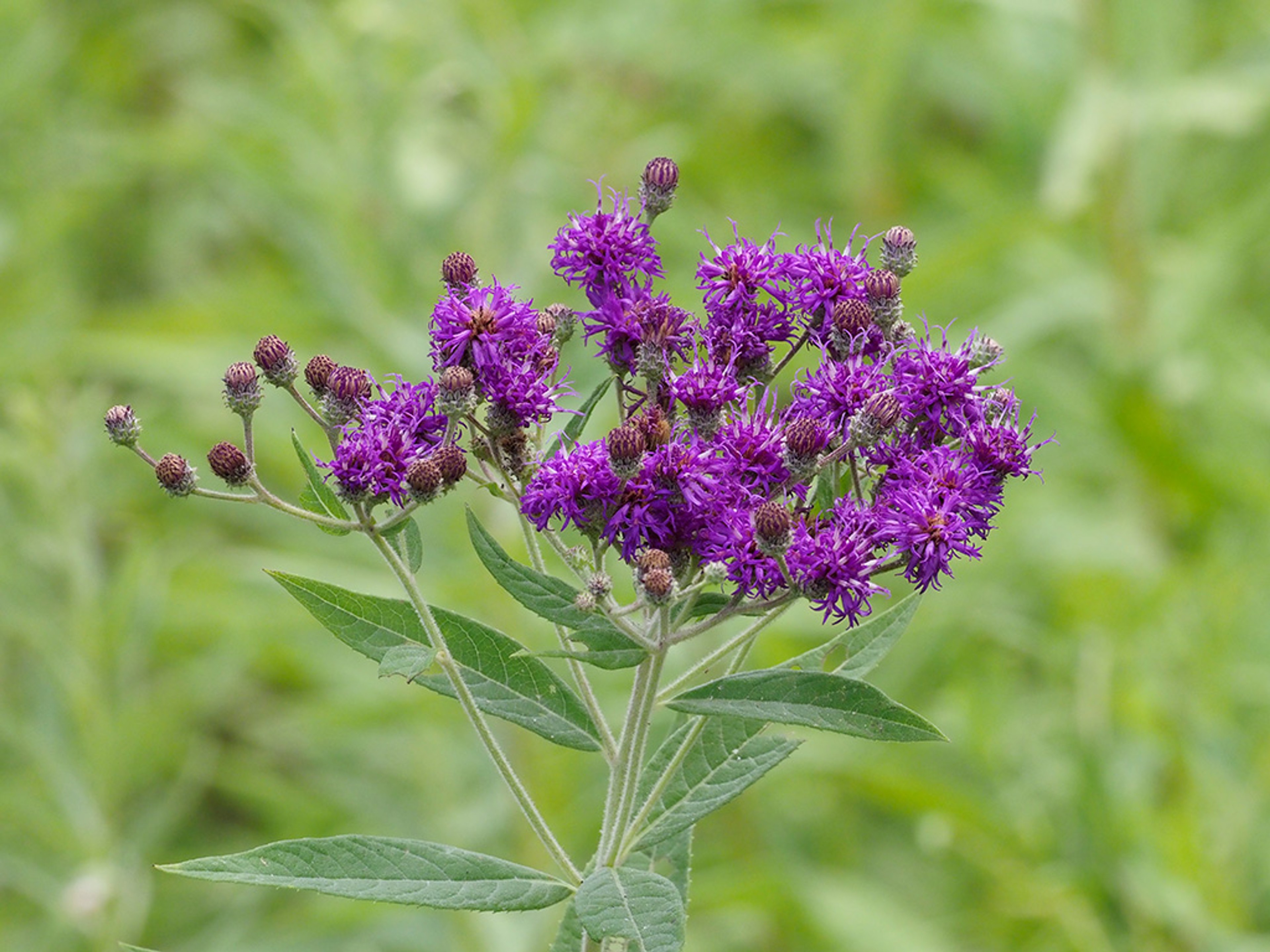
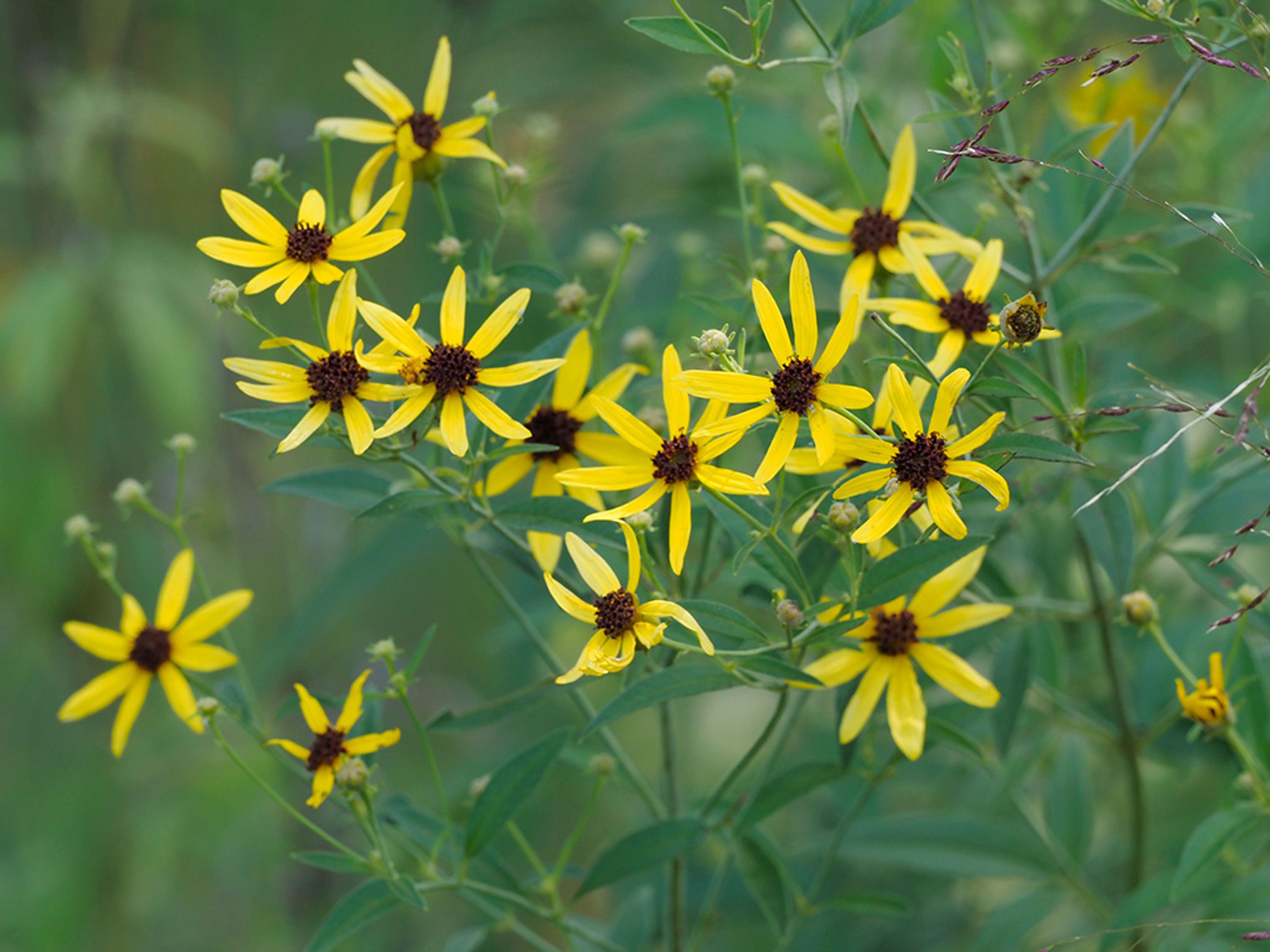
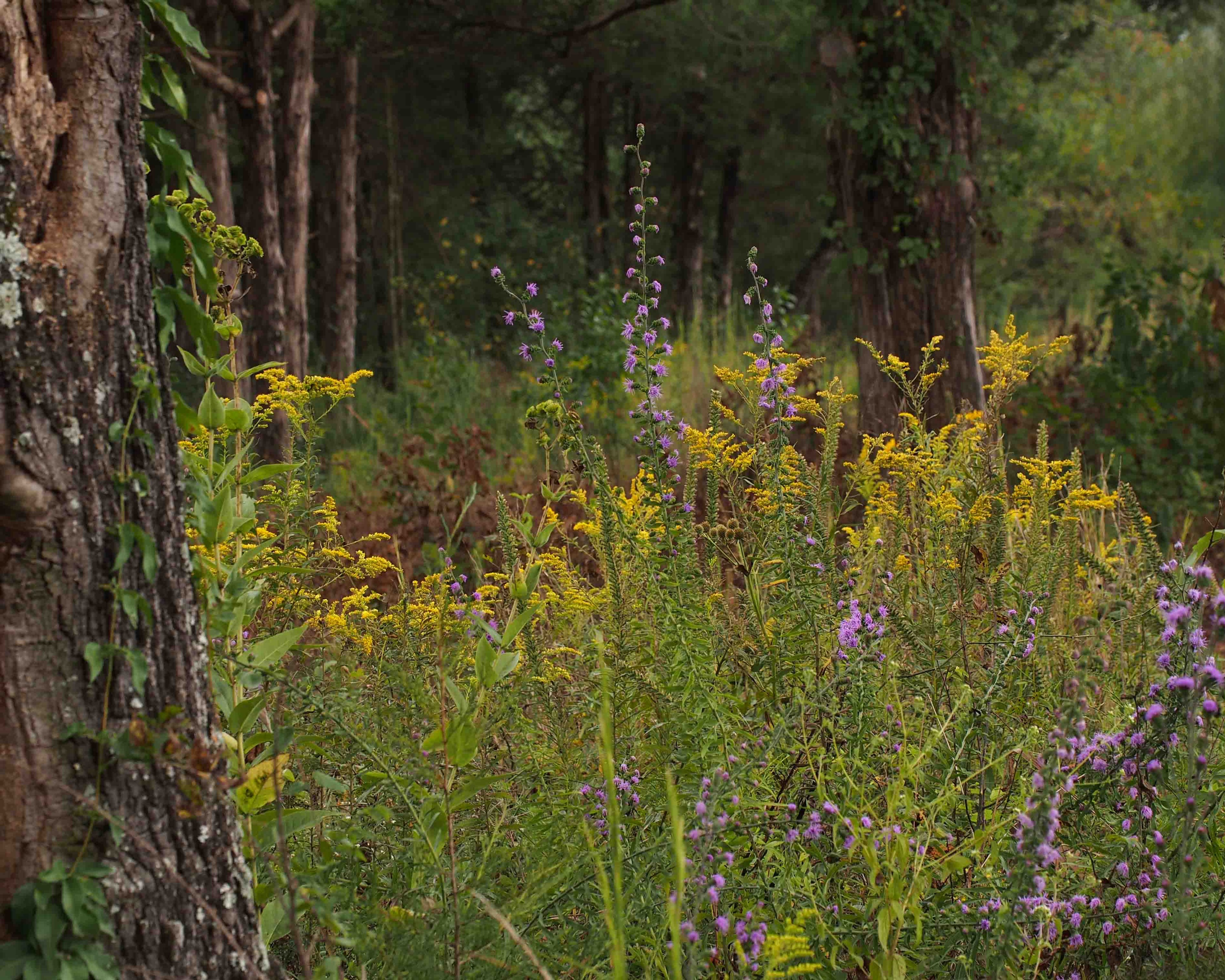
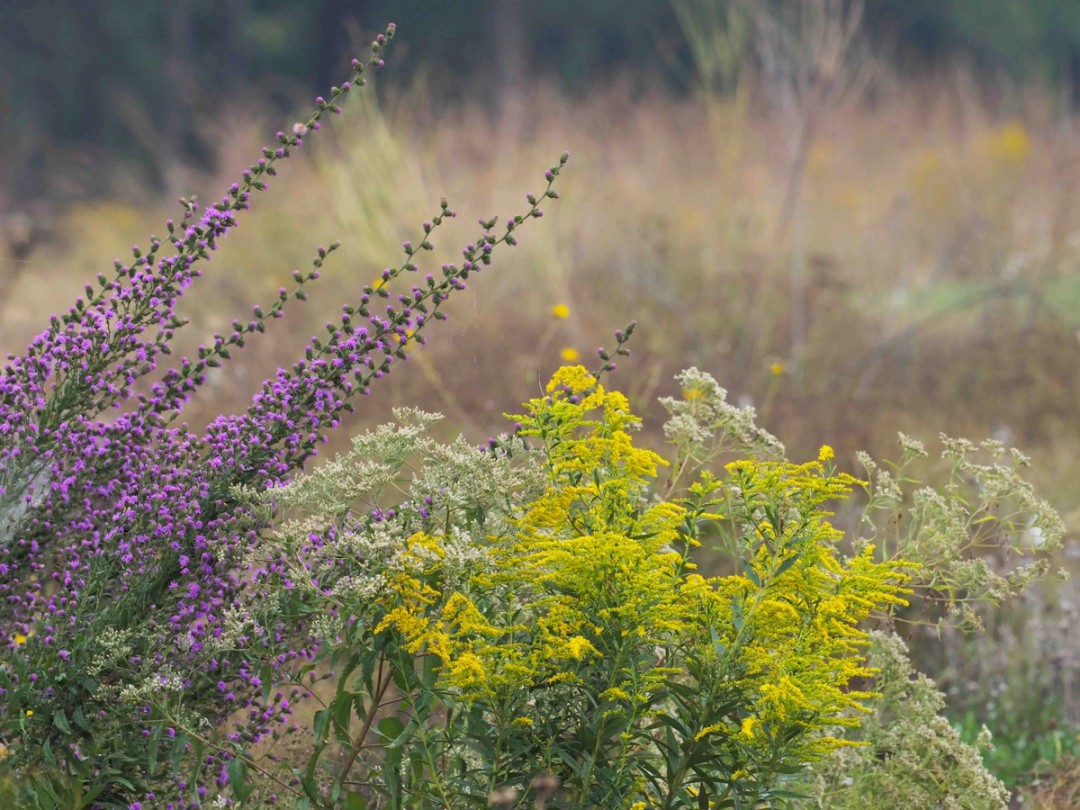
Goldenrods are frequently seen blooming alongside Liatris scariosa. Their bright yellow flowers make for a striking combination.
Blue sage (Salvia azurea) and Ozark sunflower (Helianthus silphioides) are also companion plants that bloom simultaneously with Liatris scariosa.
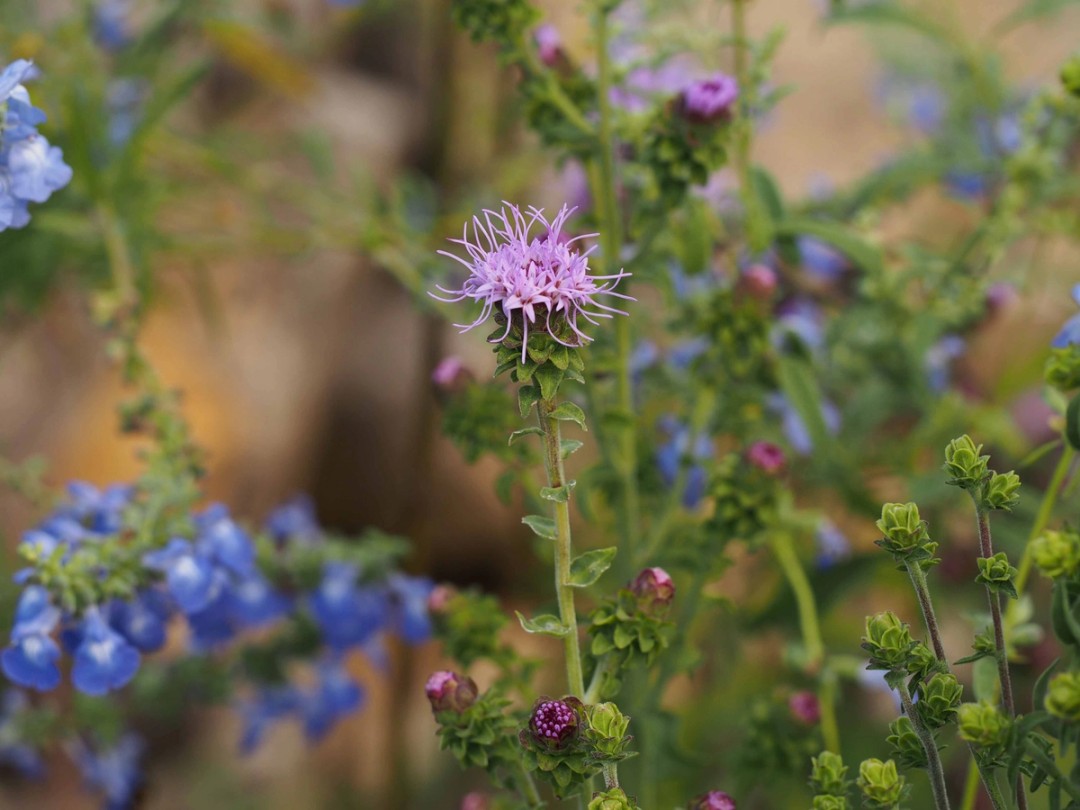
Blue sage (Salvia azurea) 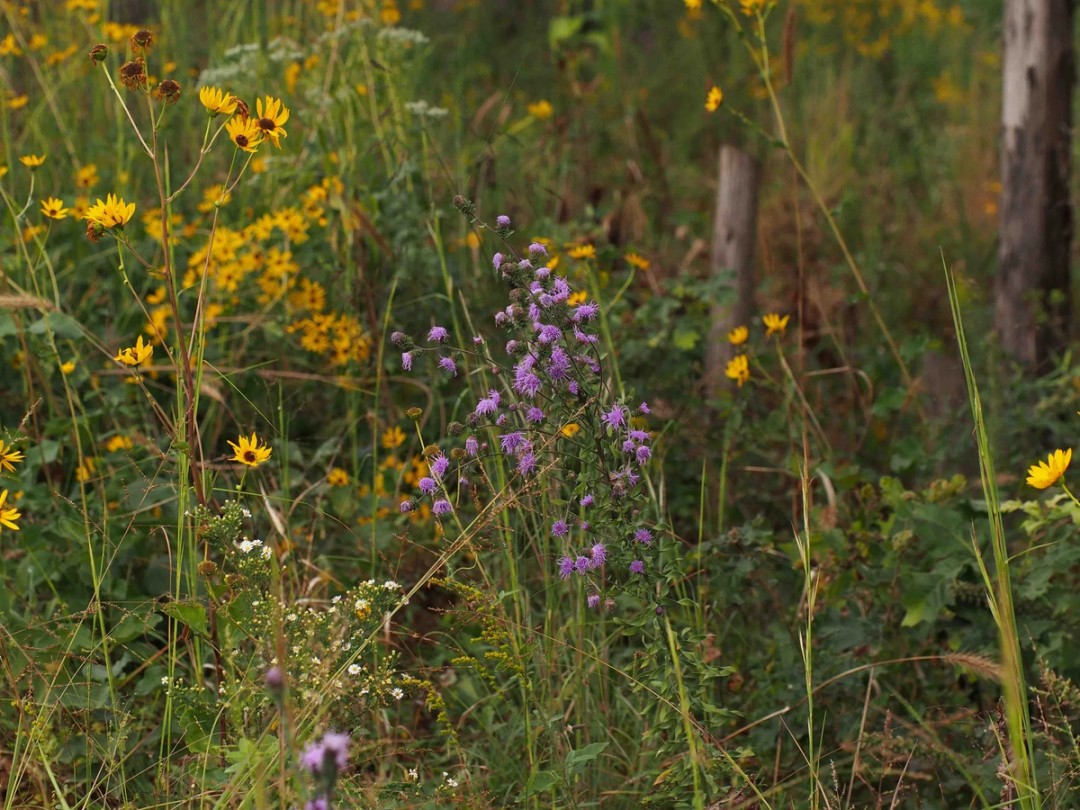
Ozark sunflower (Helianthus silphioides)
HABITAT
Blazing star is found in the northeastern part of Arkansas, bordering southeastern Missouri. It is an adaptable plant, thriving in a variety of habitats including savannas, prairies, limestone glades, open rocky woods, and woodland edges. This resilient plant can thrive in both rocky and poor soil conditions. However, excessively rich soil can cause it to flop or become lanky.
Grassland 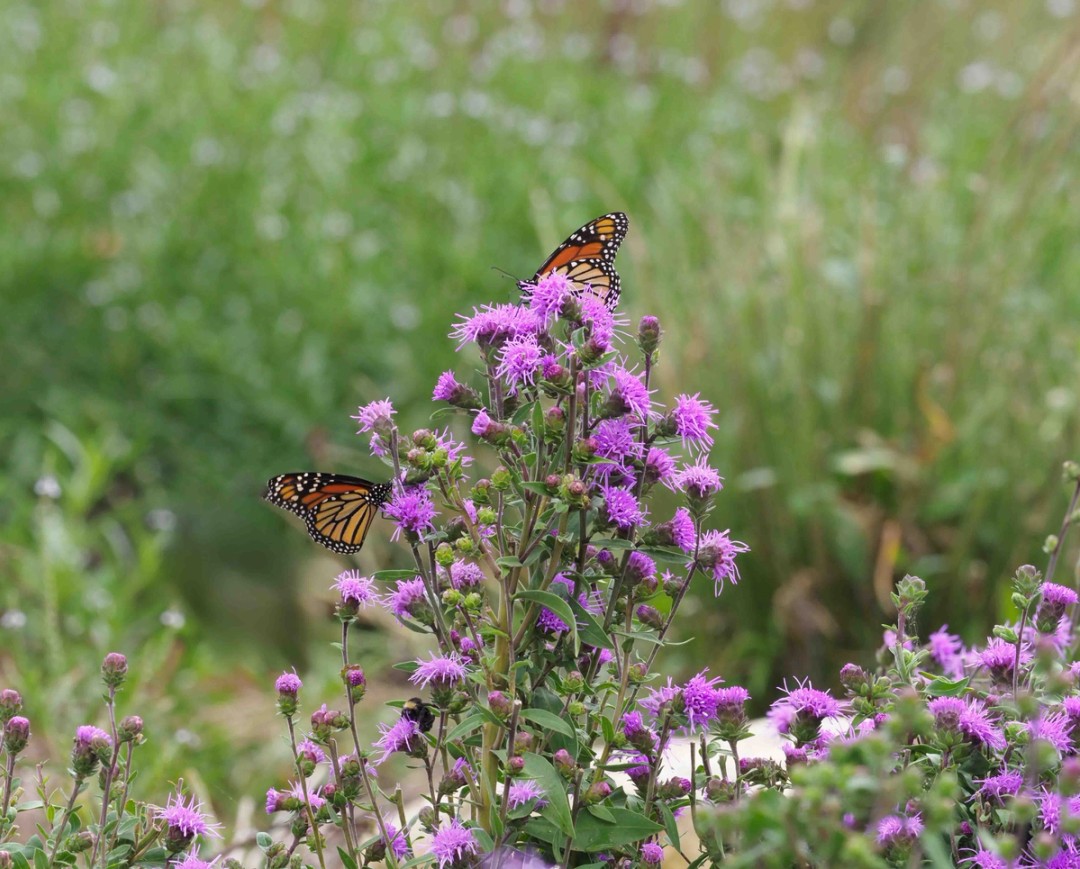
Grassland 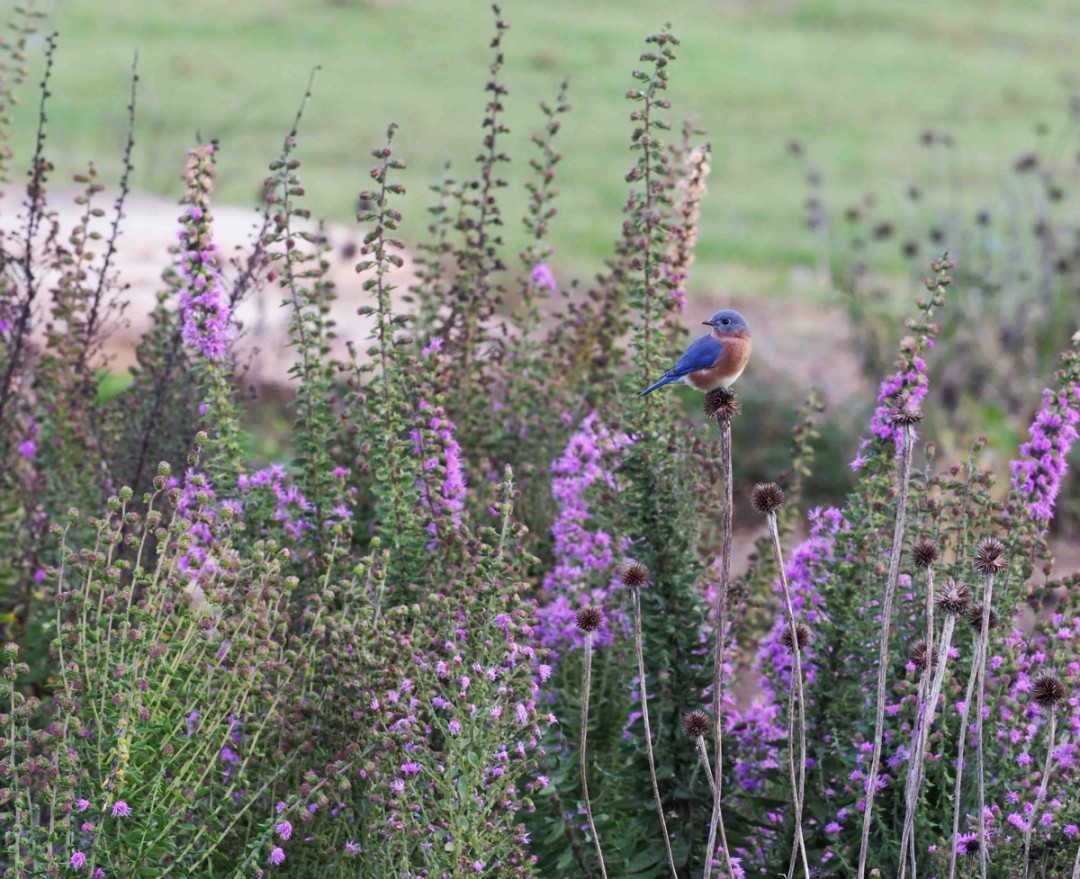
Glade 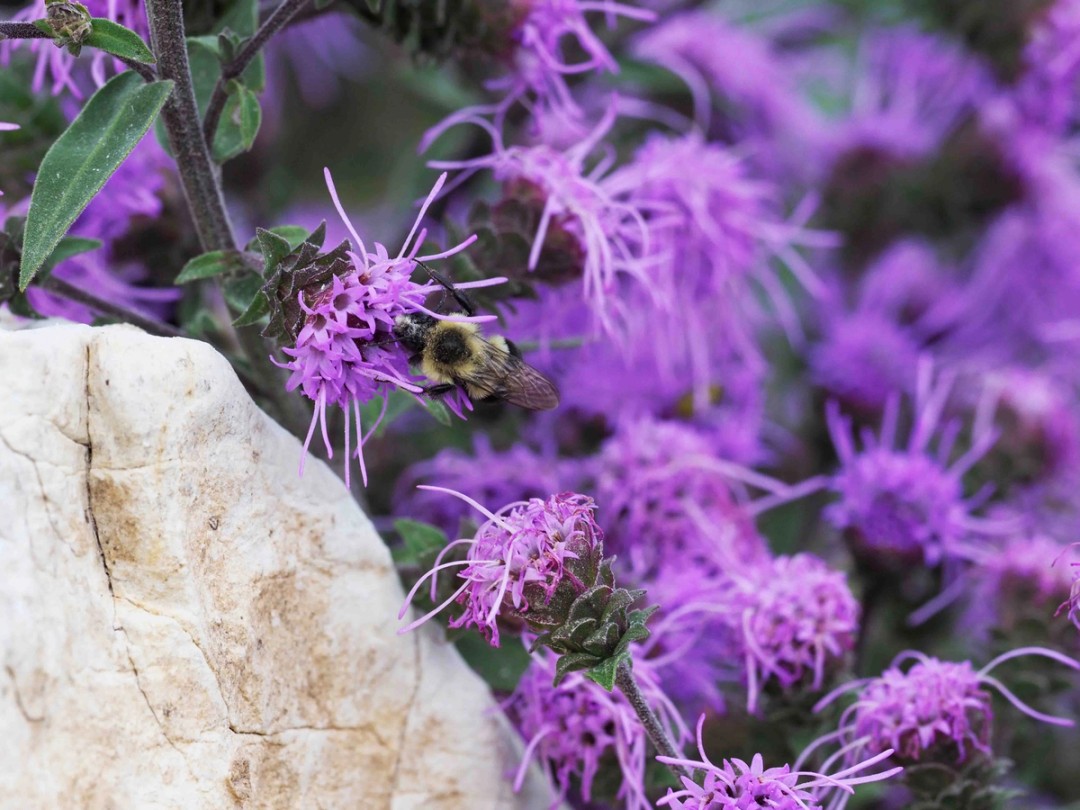
Glade 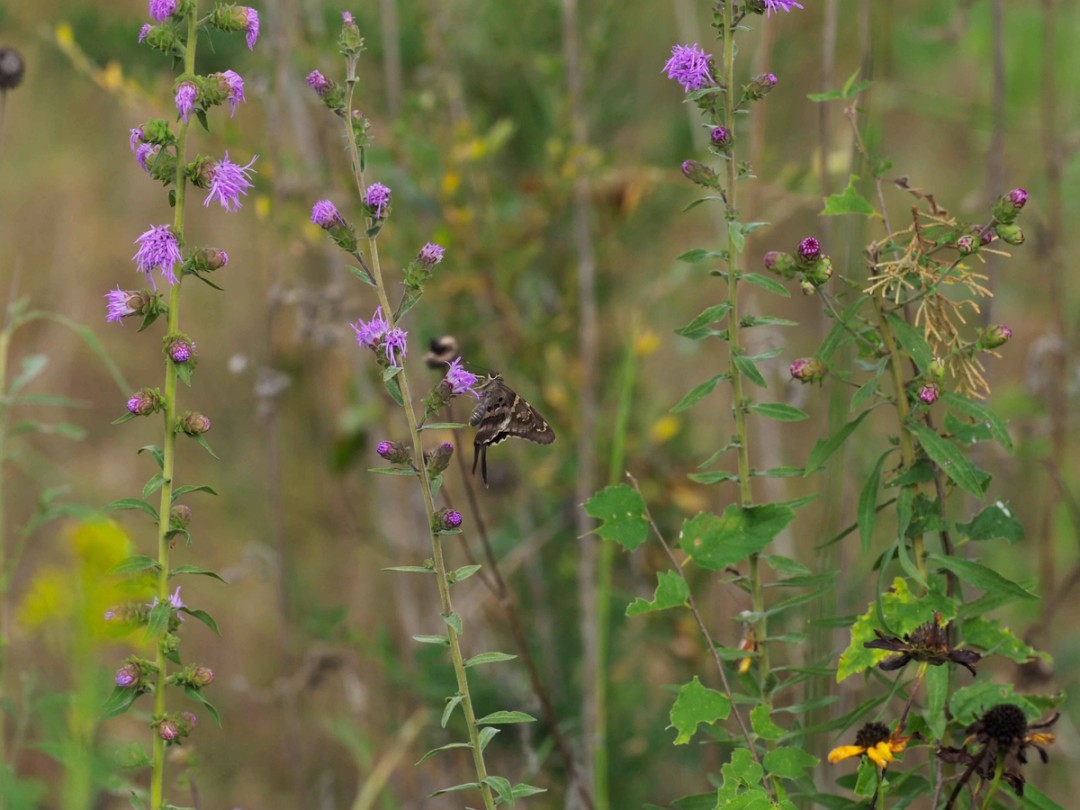
Woodland edge 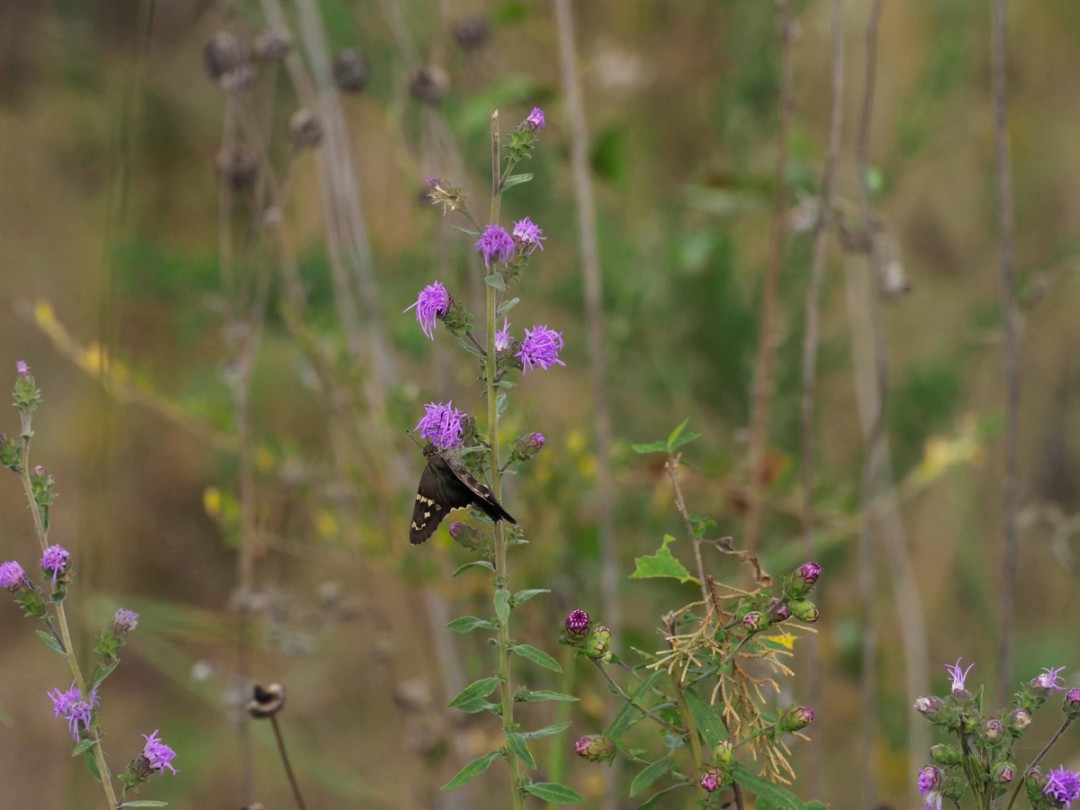
Woodland edge
CONSERVATION STATUS
Liatris scariosa var. nieuwlandii, native to 10 states, faces numerous threats, including development, agriculture, pasture, rights-of-way maintenance, recreational activities, fire suppression, invasive species, and deer browse. Despite these challenges, NatureServe has assessed it as Apparently Secure. The reason for this assessment is its extensive range, numerous occurrences, and broad habitat preferences.
It is listed as Critically Imperiled in 2 states (New York and West Virginia) and Imperiled in 3 states (Illinois, Missouri, and Arkansas). Other states within its range have No Status Rank. These include Oklahoma, Indiana, Ohio, Michigan, and Pennsylvania.
In Arkansas this beautiful wildflower has a Conservation Value of 9, meaning "Conservative taxa with strong fidelity to intact habitats. These taxa tend to exhibit late-successional characteristics like long lifespans with low seed sets and an inability for far ranging dispersal".
INTERESTING TIDBITS
Liatris scariosa is known by many common names. These include Northern Blazing Star, Blazing Star, Savanna Blazing Star, and Devil's Bite! To avoid confusion, it's helpful to use the botanical name when referring to this plant.
Although deer often browse this plant, I usually find they only nibble on the top flowers, leaving the rest of the plant to continue blooming.