PLANT NAME
Sunflowers are in the Asteraceae family and Helianthus genus. Helianthus is derived from the Latin “helios” (sun) and “anthos” (flower). The epithet, “silphioides” means “looks like silphium” which is another genus in the Asteraceae family. It does look a bit like another wildflower I find on Ozark Edge- Silphium integrifolium. Common names include Silphium sunflower, Rosinweed sunflower and, my favorite, Ozark sunflower. Its peak occurrence is within the Ozark mountains of Arkansas.
BLOOM
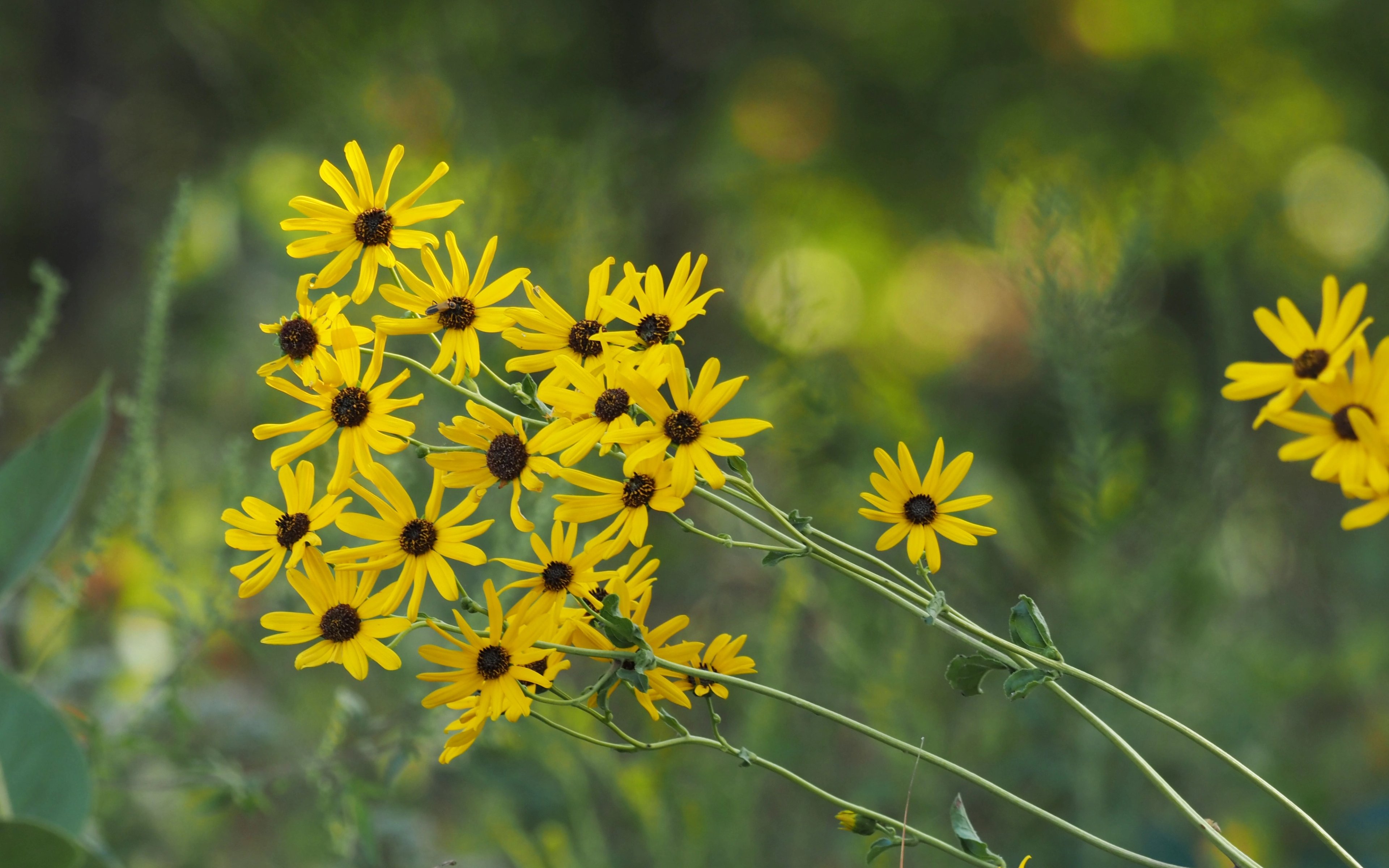
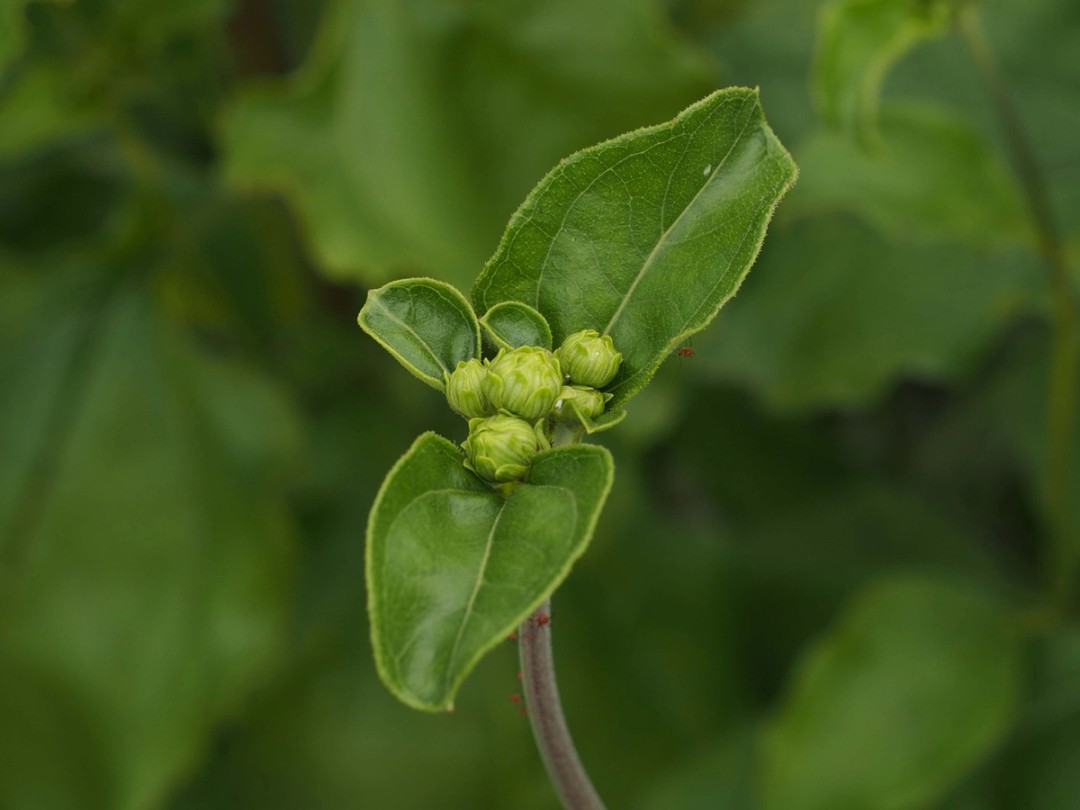
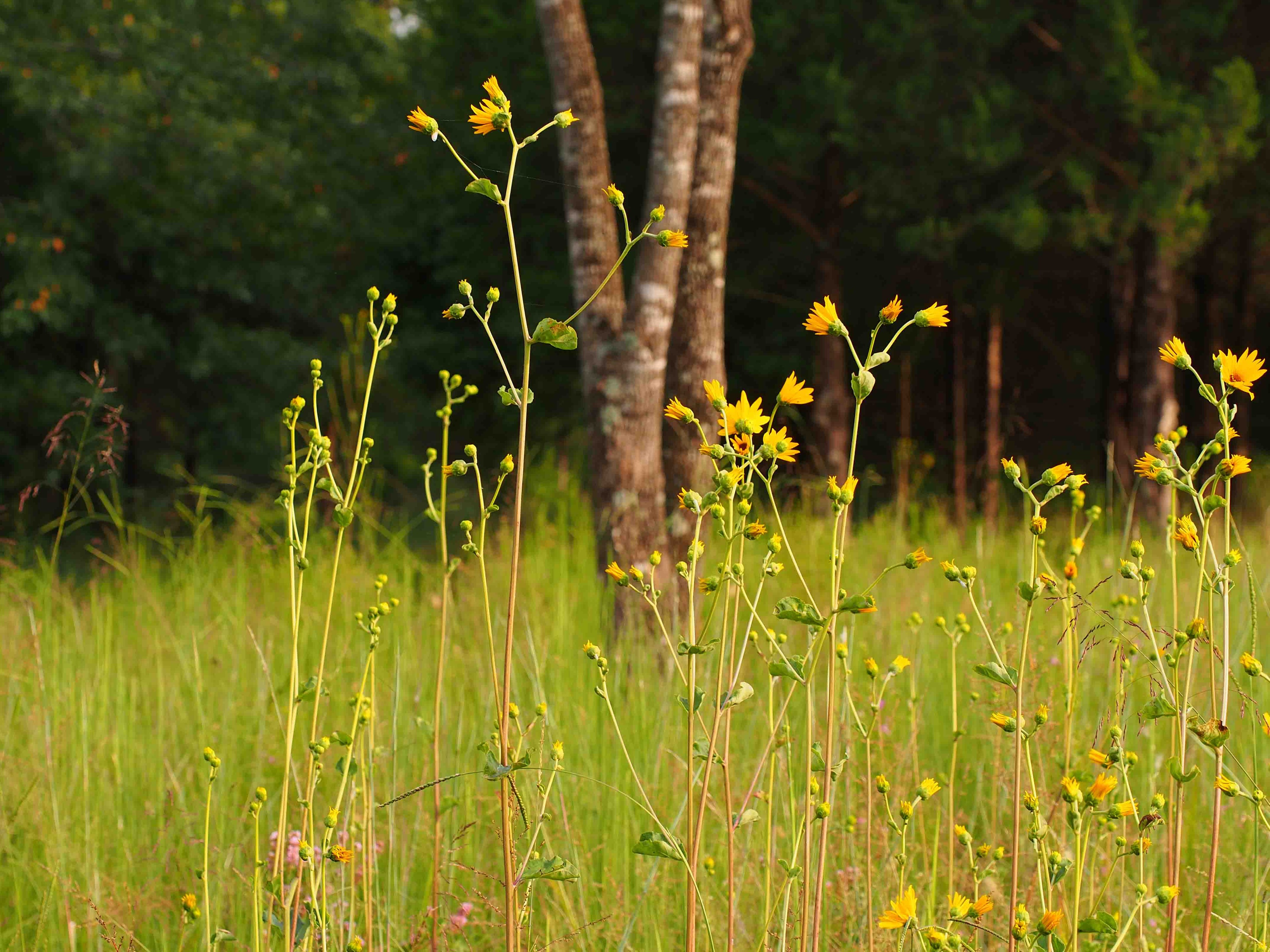
Buds appear at the top of the plant in late July and early August. The large flowers of Helianthus silphioides are about 2-3 " in width. They are butterscotch yellow with a dark, reddish central disk. At the base of each flower, layered green bracts lay flat to the stem. Each plant sends up a nearly bare stem that branches numerous times toward the top to give rise to 12 or more flowers.
August buds 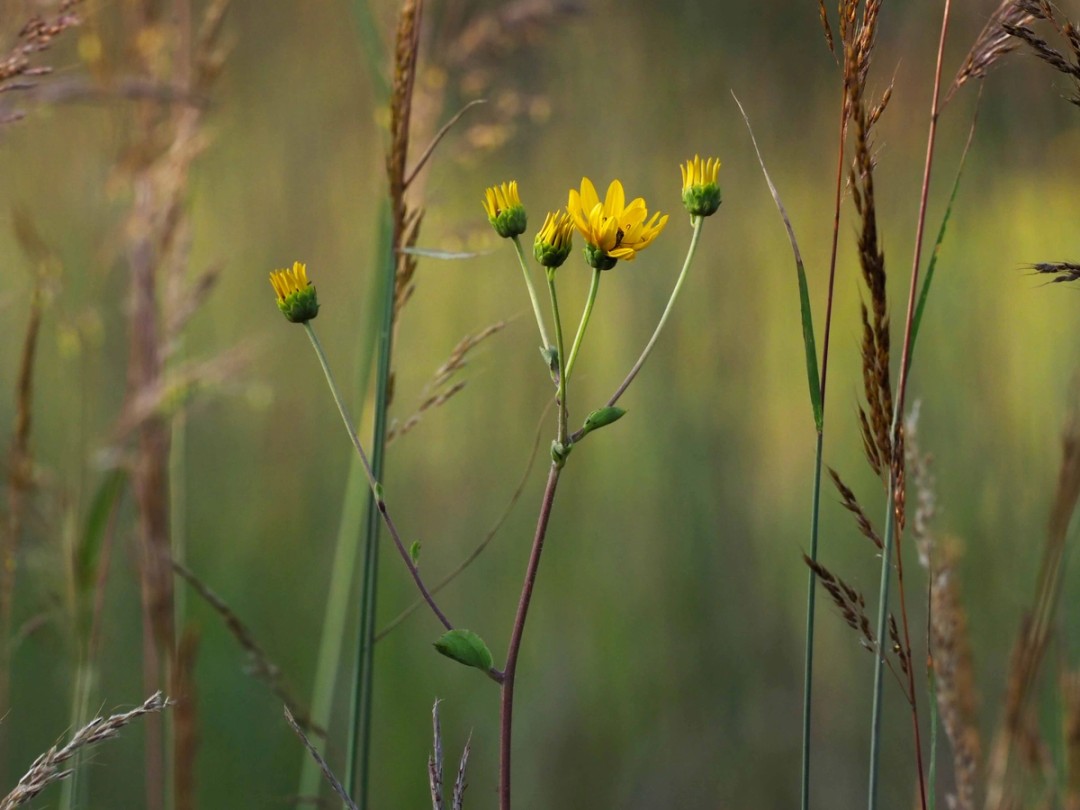
Buds 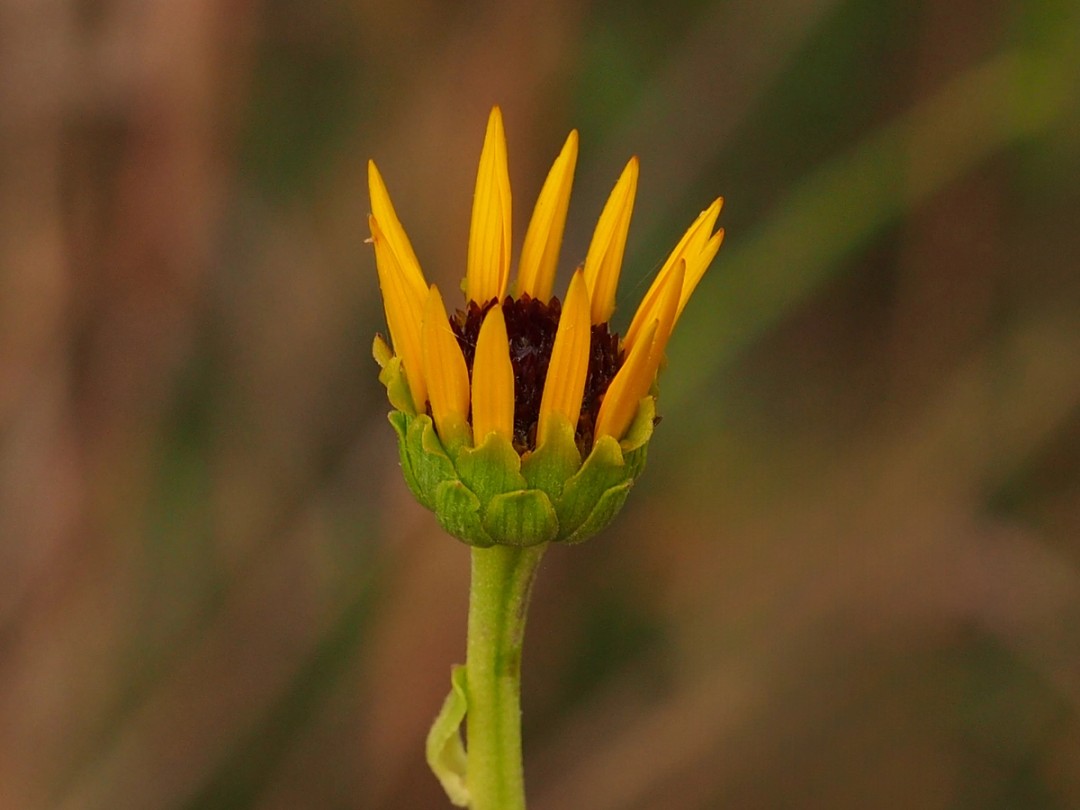
Bracts 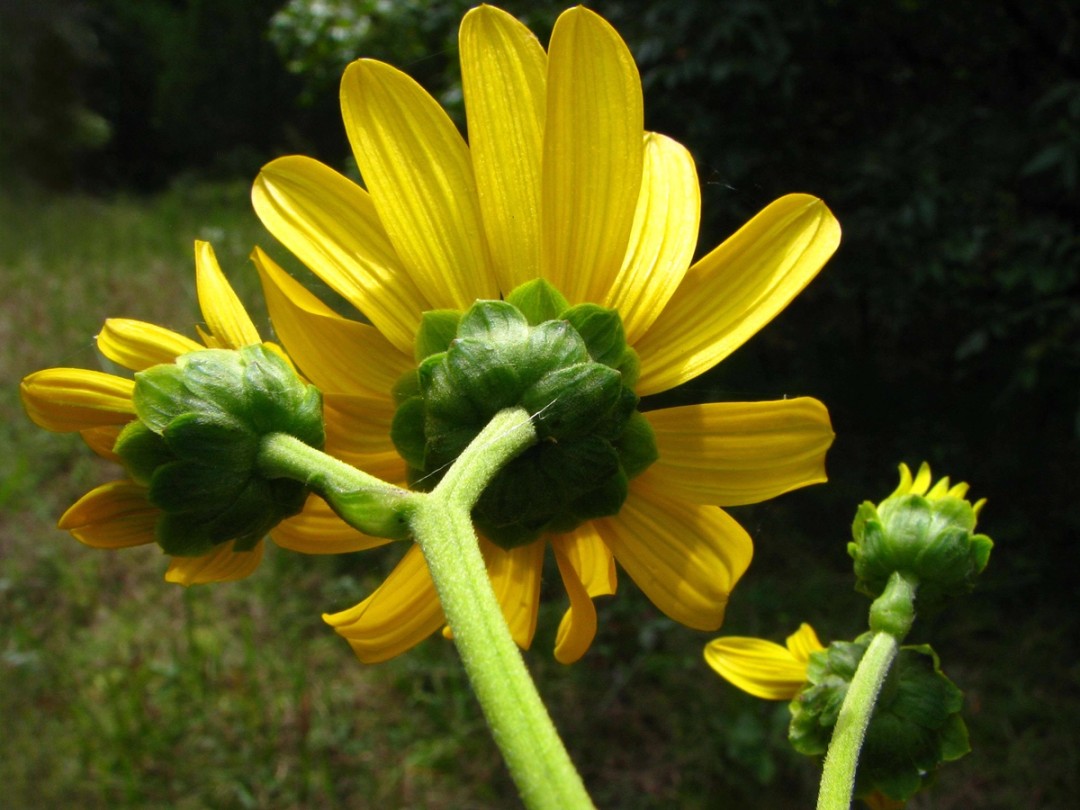
Flowers and bracts 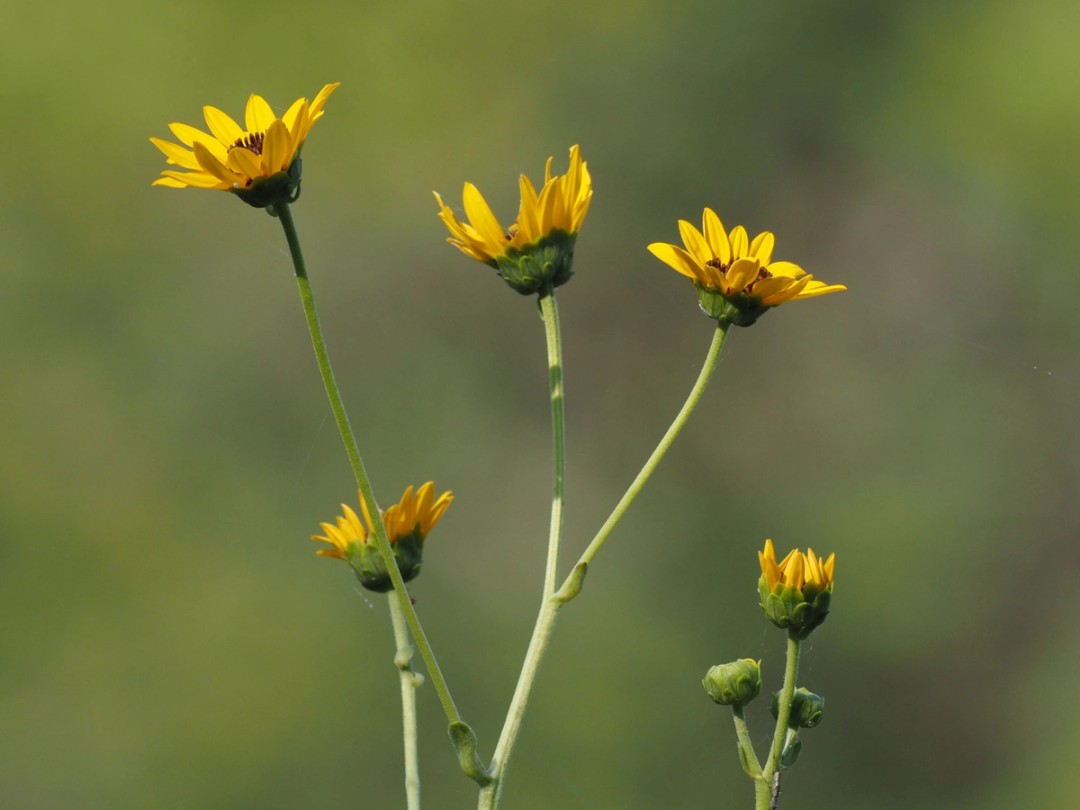
Flowers at top of plant 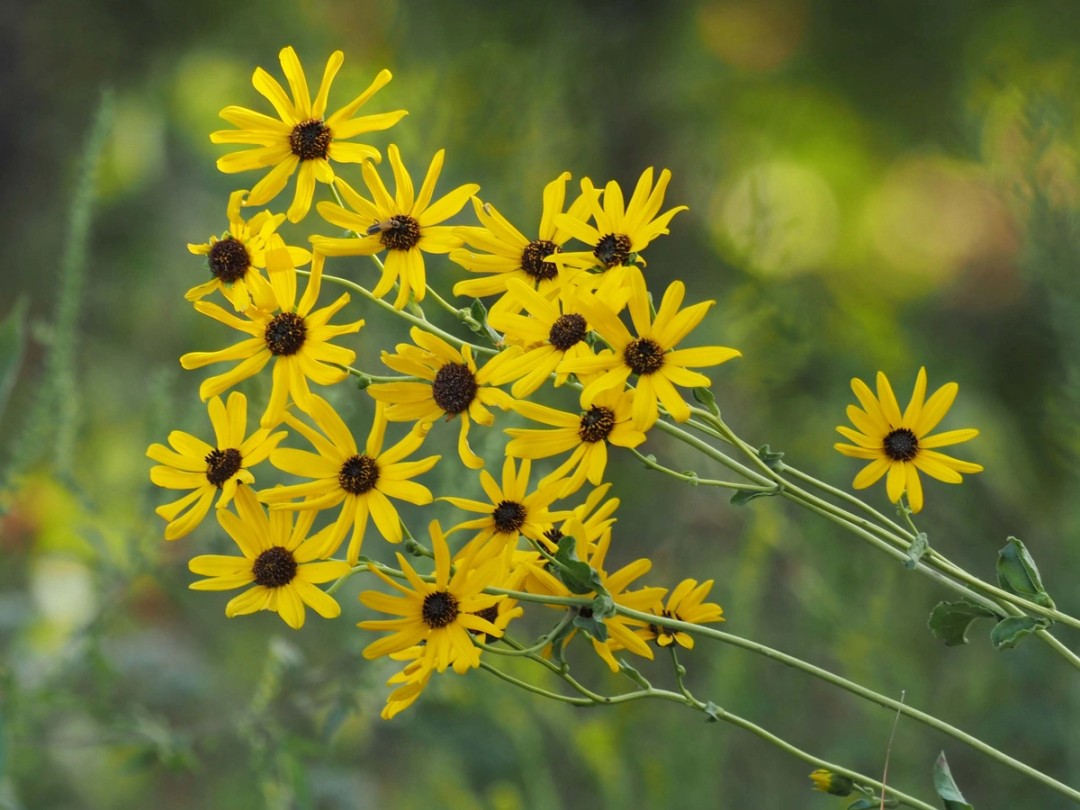
Peak flowering
Helianthus silphioides blooms later than Helianthus mollis, usually waiting until late August to fully open. The peak bloom usually occurs in September and ends by early October.
DESCRIPTION
Ozark sunflowers are perennial native wildflowers growing to a height of 6 feet or more. They have distinctive leaves that occur opposite on the lower aspect of the plant and alternate on the upper part. The beautiful lower leaves are much larger than the sparse upper leaves. They have a somewhat oval shape and are rough to the touch. Rubbing one’s hand against the leaves is similar to rubbing against sandpaper. The edges of the leaves are toothed. They have a tendency to fold longitudinally along the prominent vein. On the upper portion of the stem, the alternate leaves become smaller and more widely spaced. The photos below showcase leaves beginning with the uppermost and ending with the lowest leaves.
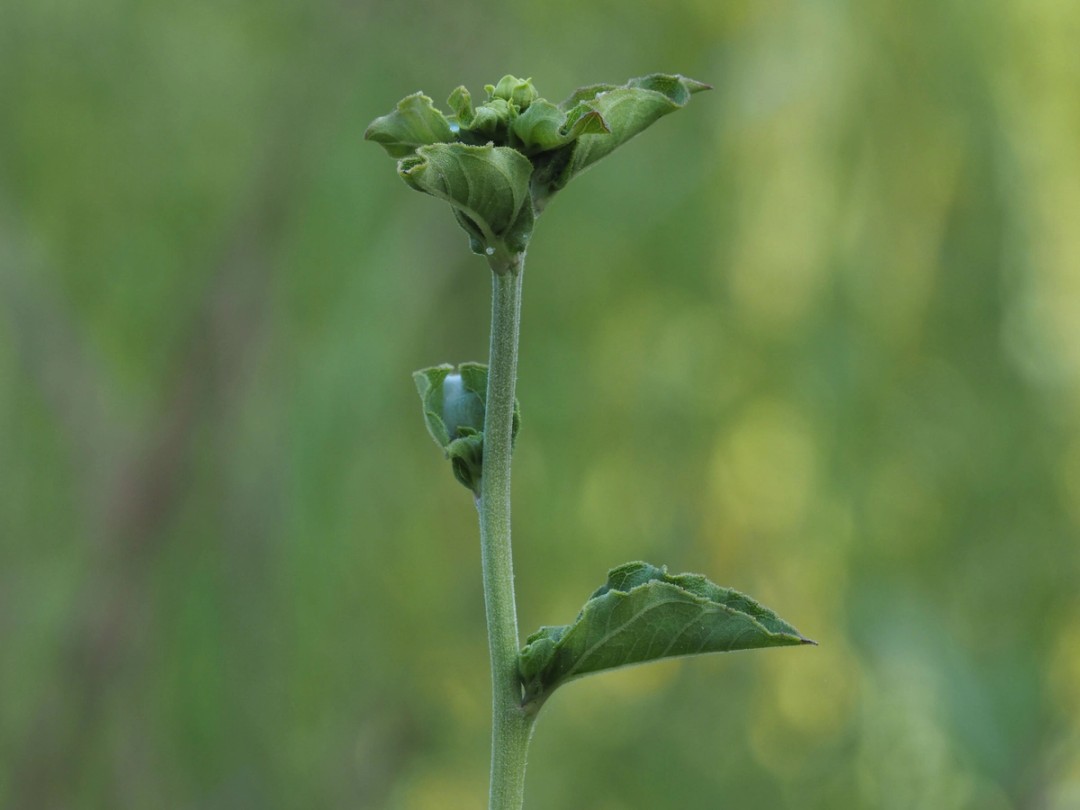
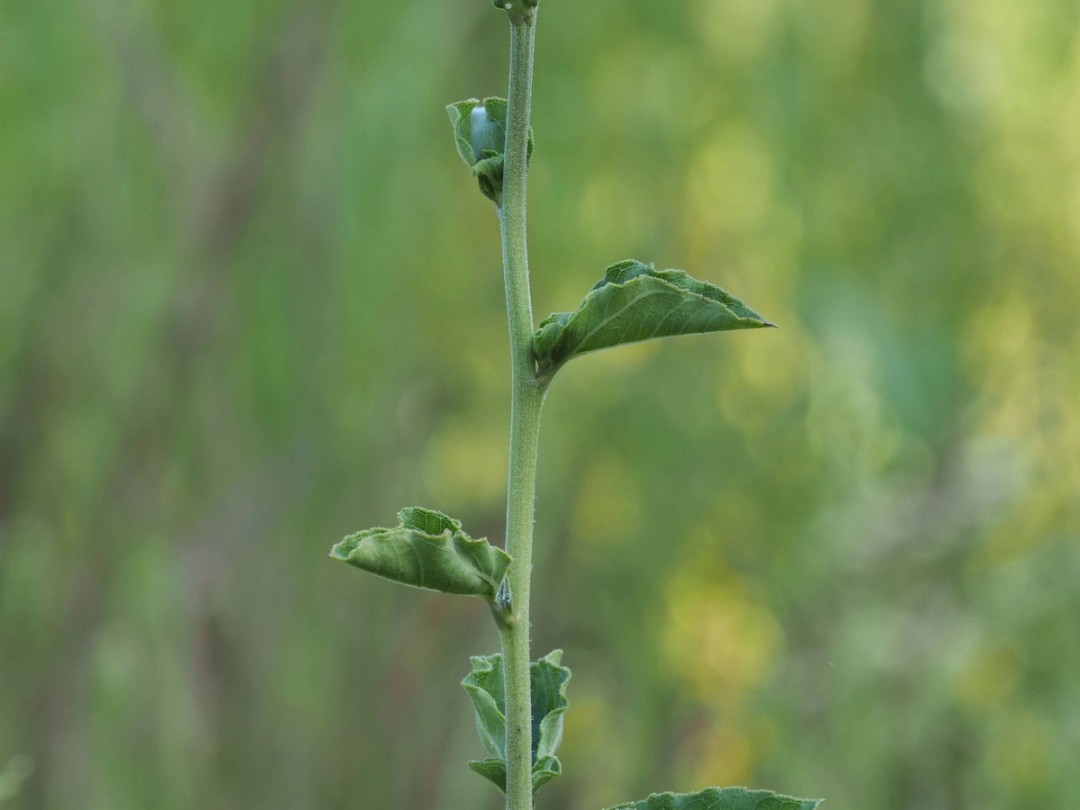
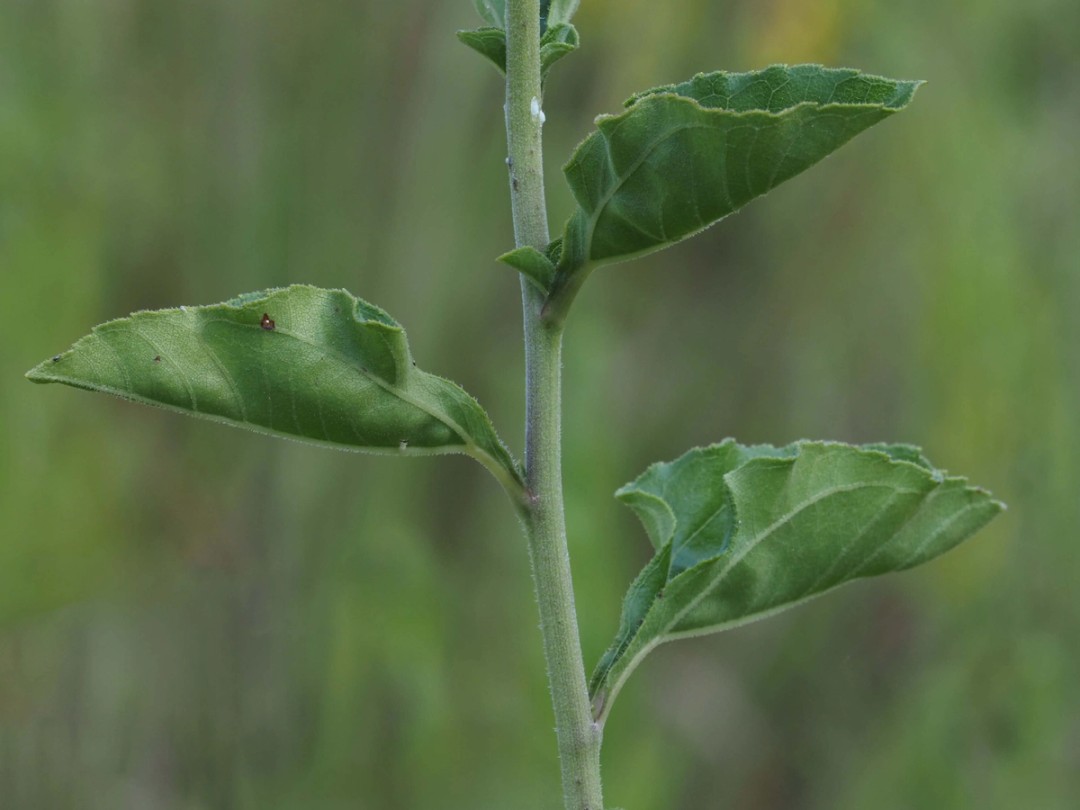
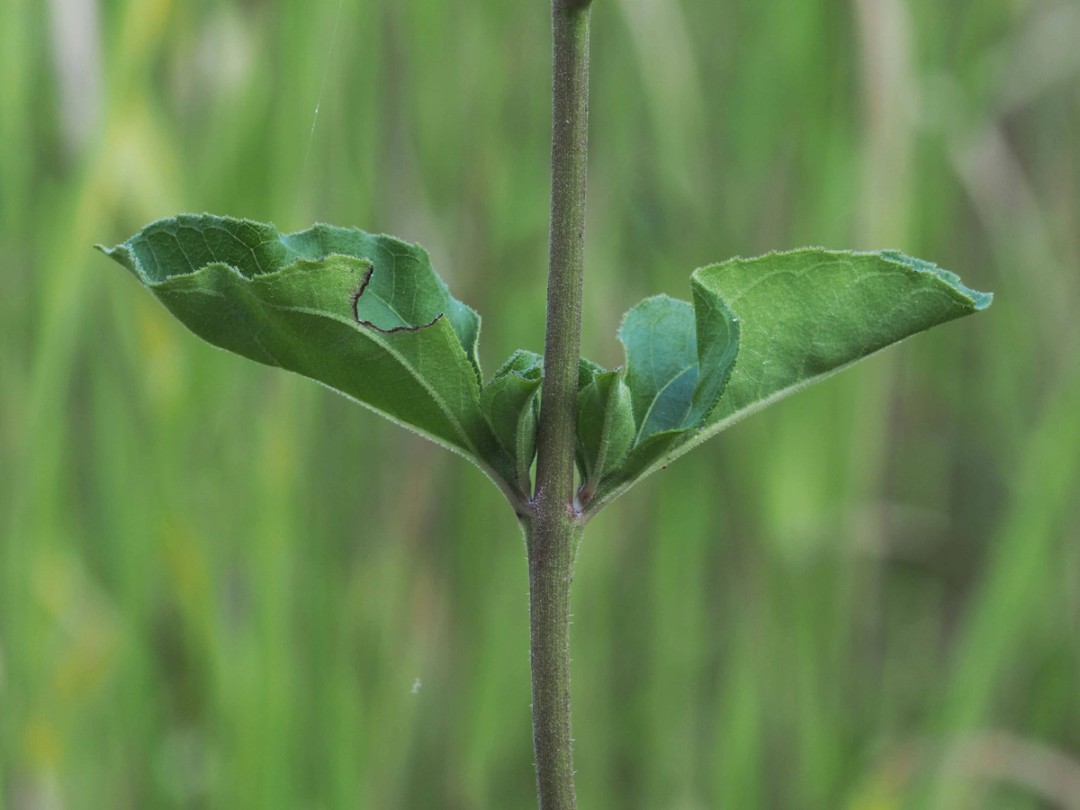
The stem tends to have bristly hairs on the lower aspect and may be nearly hairless on the top half of the plant.
Seed dispersal of Helianthus silphioides is thought to be limited without human or animal intervention. The seeds are not dispersed by wind and are more likely to fall and stay under the maternal plant. Little is known about the life history of this plant. Deer and other mammals eat the achenes (one-seeded fruit with thin wall) which may help in seed dispersal. Birds may also assist in spreading the plants.
POLLINATORS
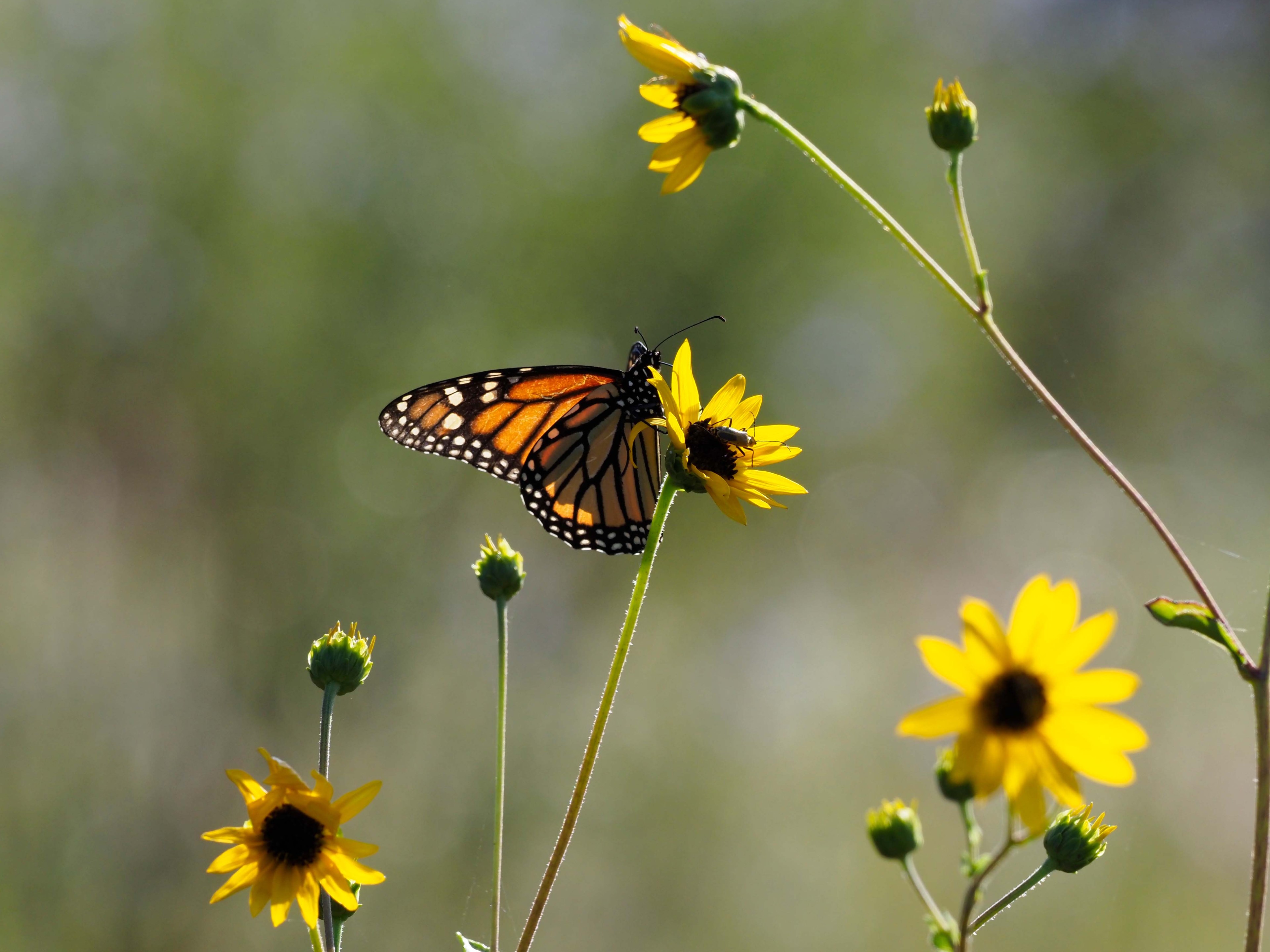
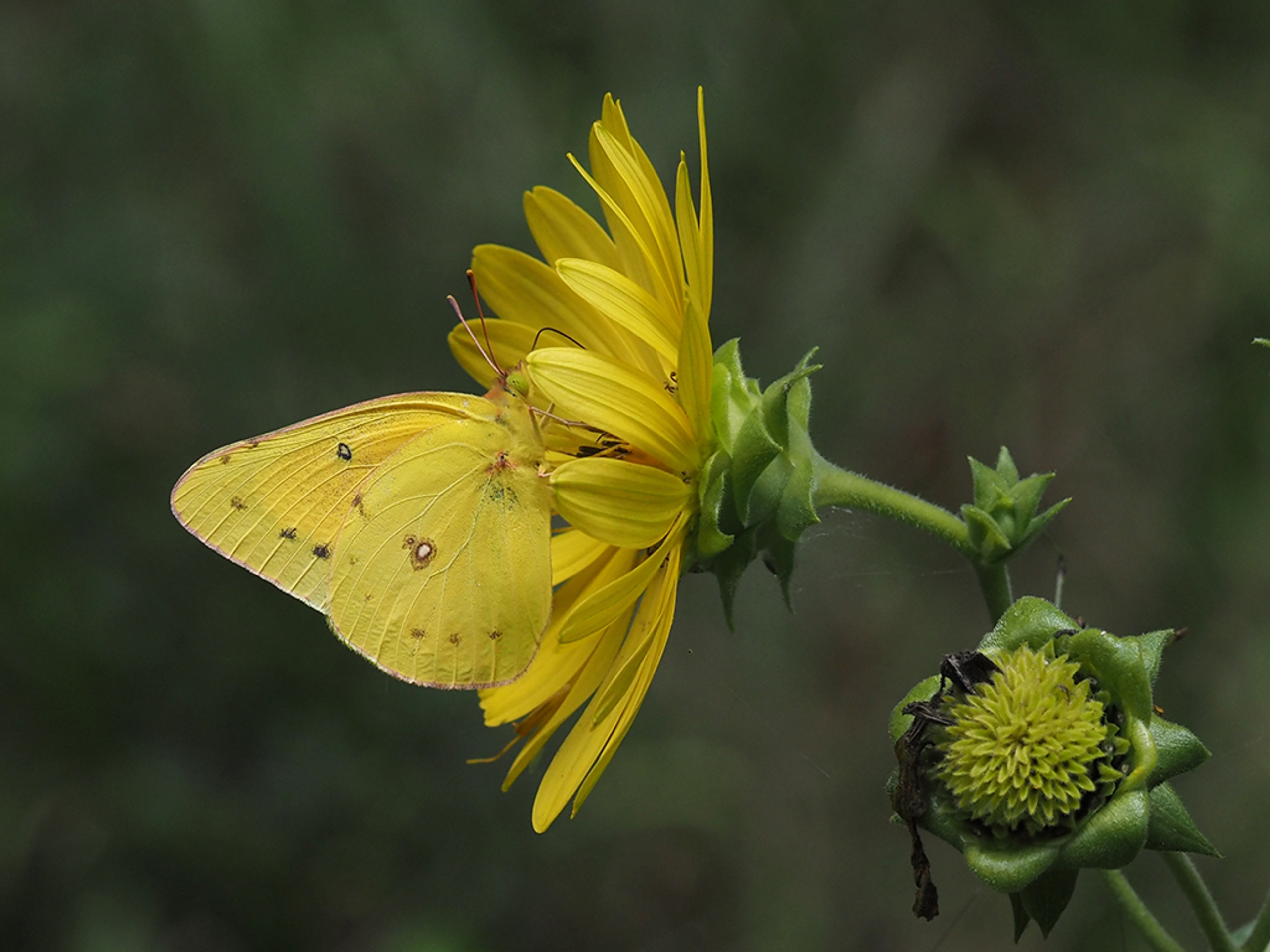
Very little is known or documented regarding the pollinators of this beautiful native wildflower. I've recorded and photographed Monarch butterflies visiting the flowers, their orange wings beautiful next to the bright yellow flowers.
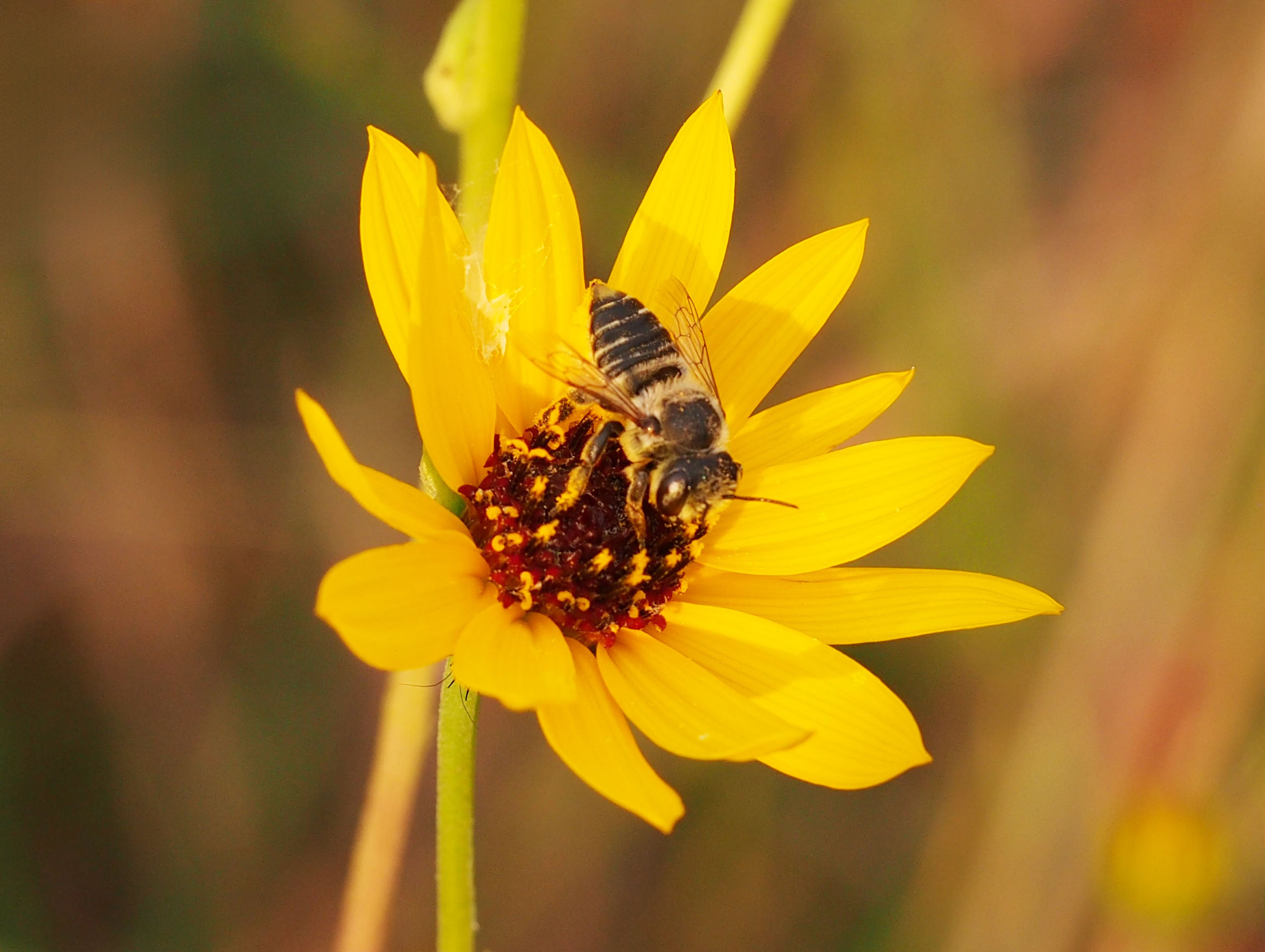
I’ve also documented Leaf-cutter bees pollinating the flowers.
Other insect visitors I've documented include Drone flies, Pearl crescent butterflies, Sachem skippers and many Soldier beetles.
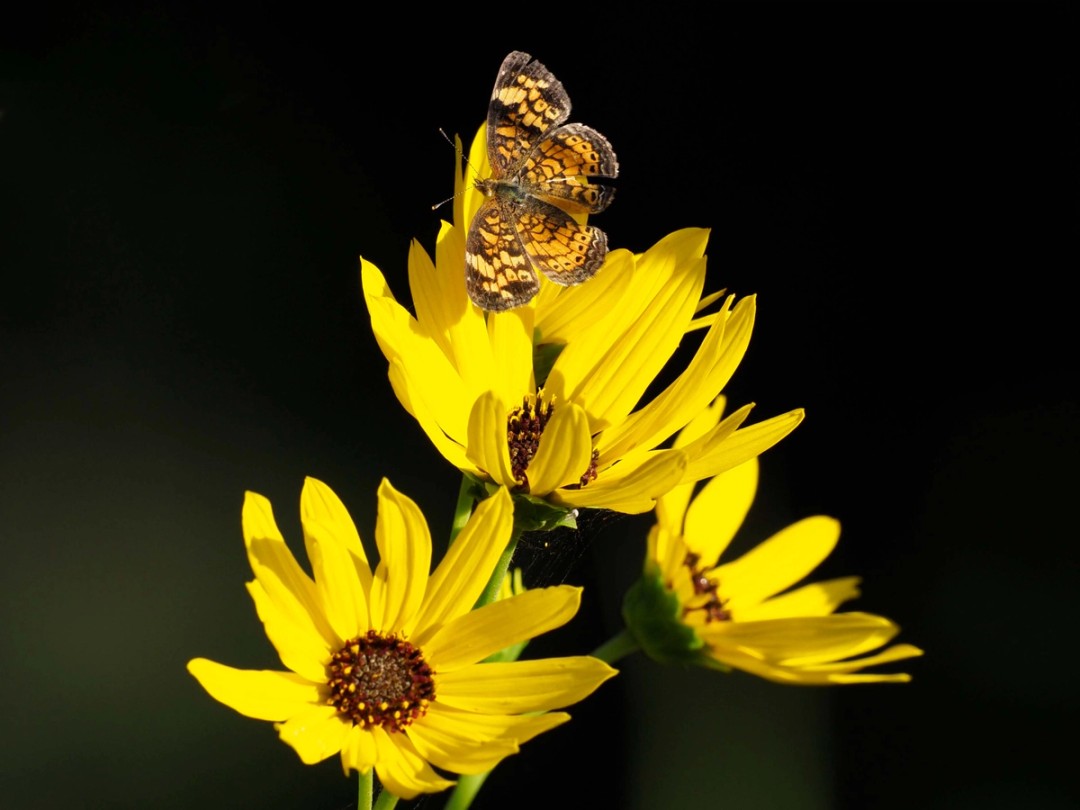
Pearl crescent butterfly 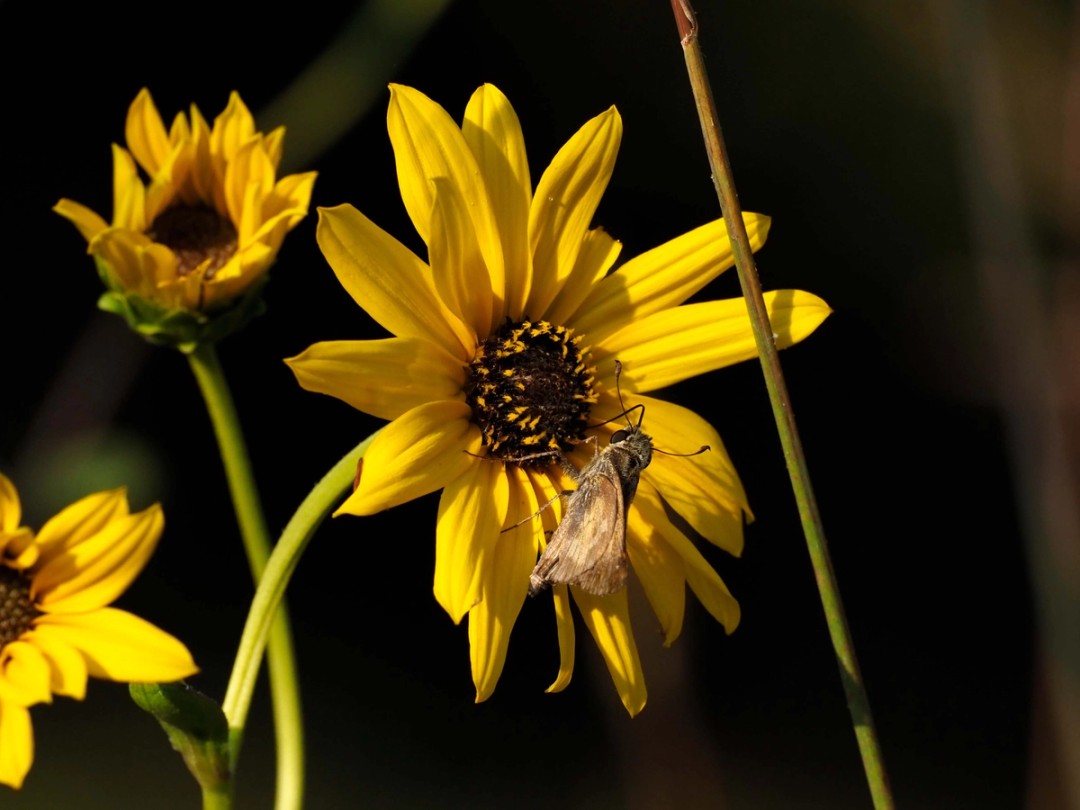
Sachem skipper 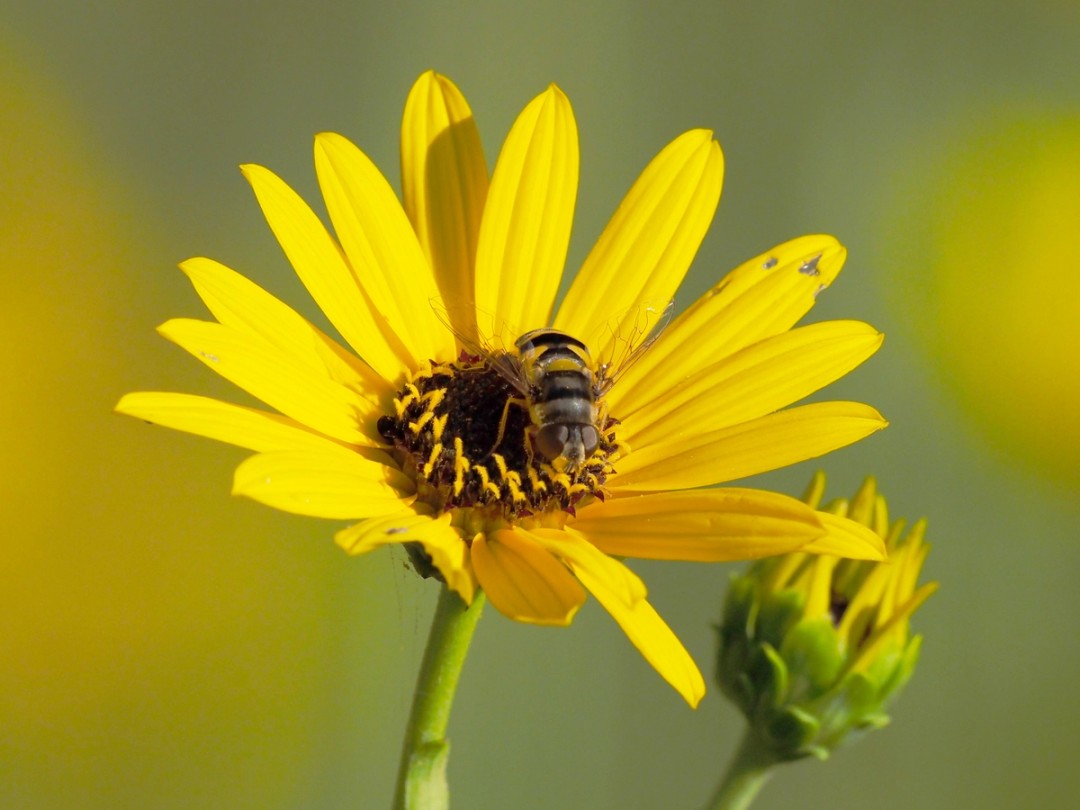
Drone fly 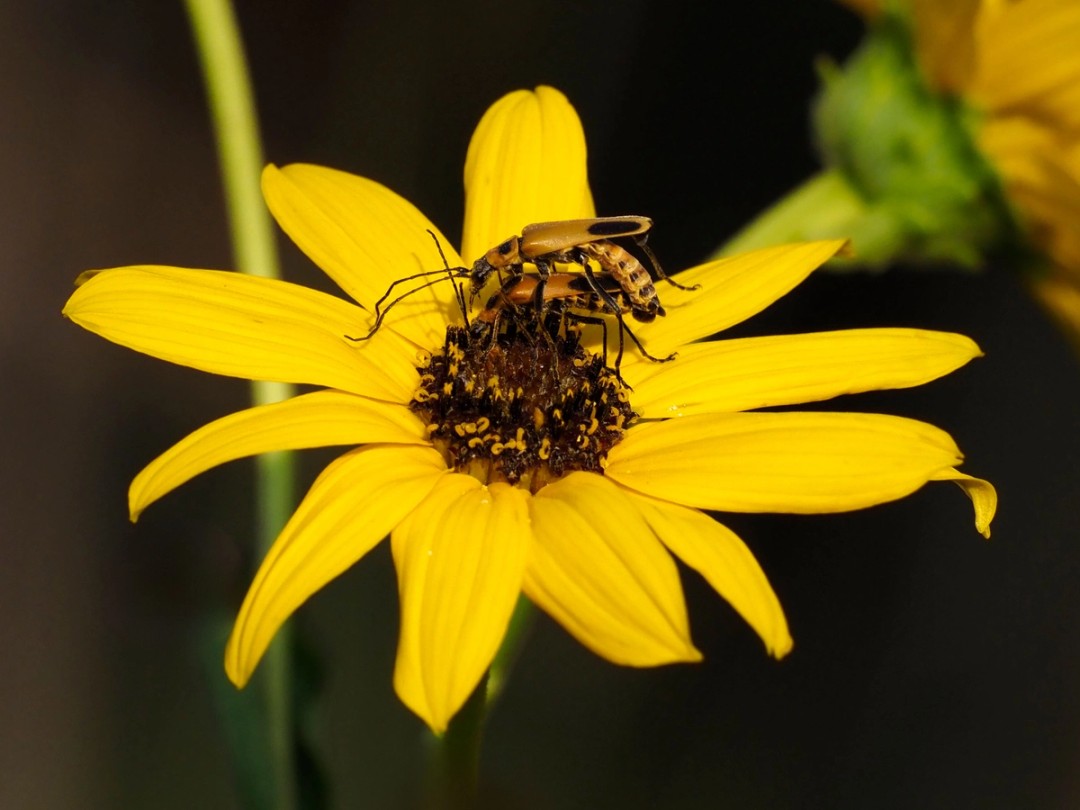
Soldier beetles
PLANTS GROWING NEARBY
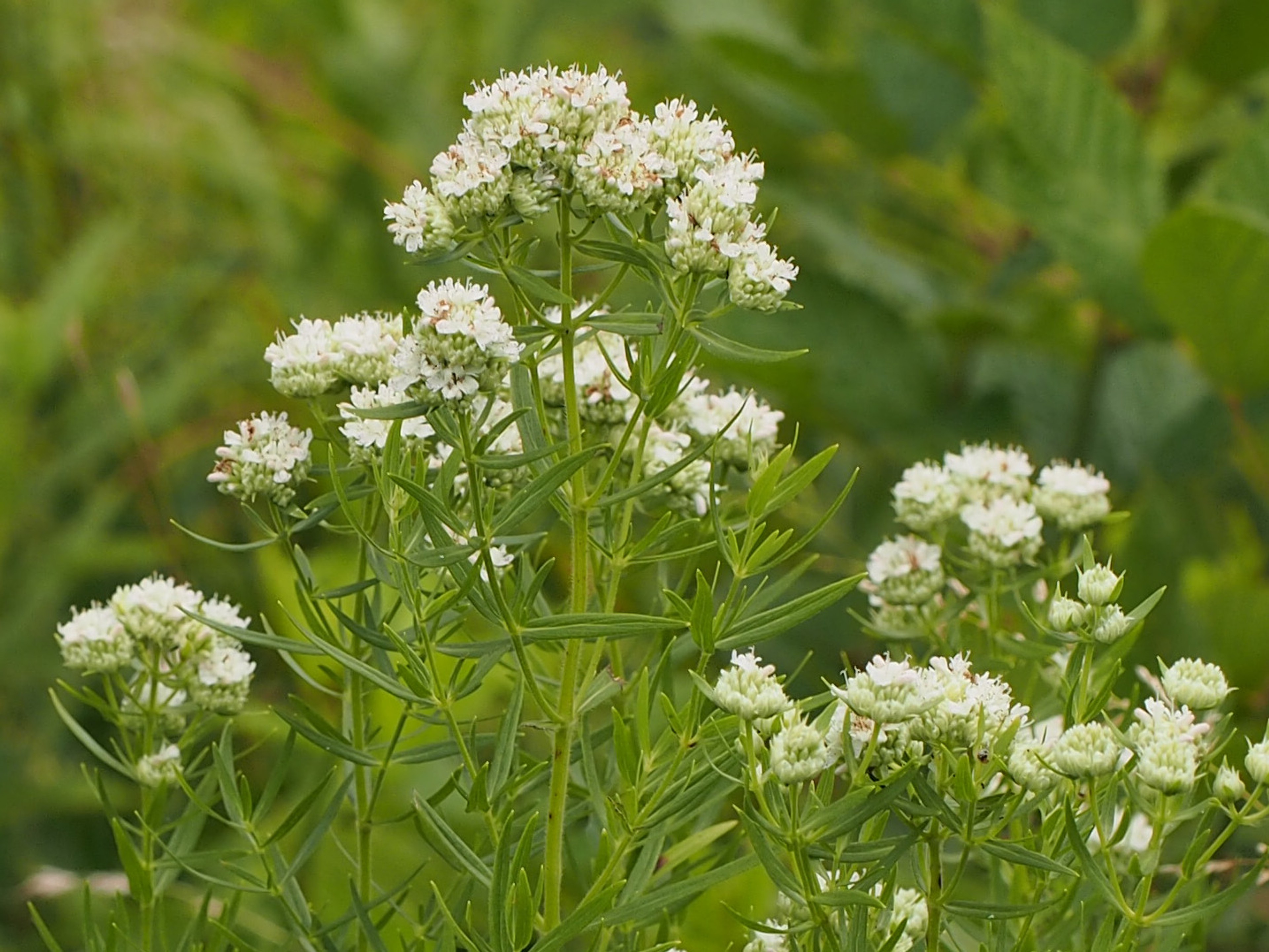
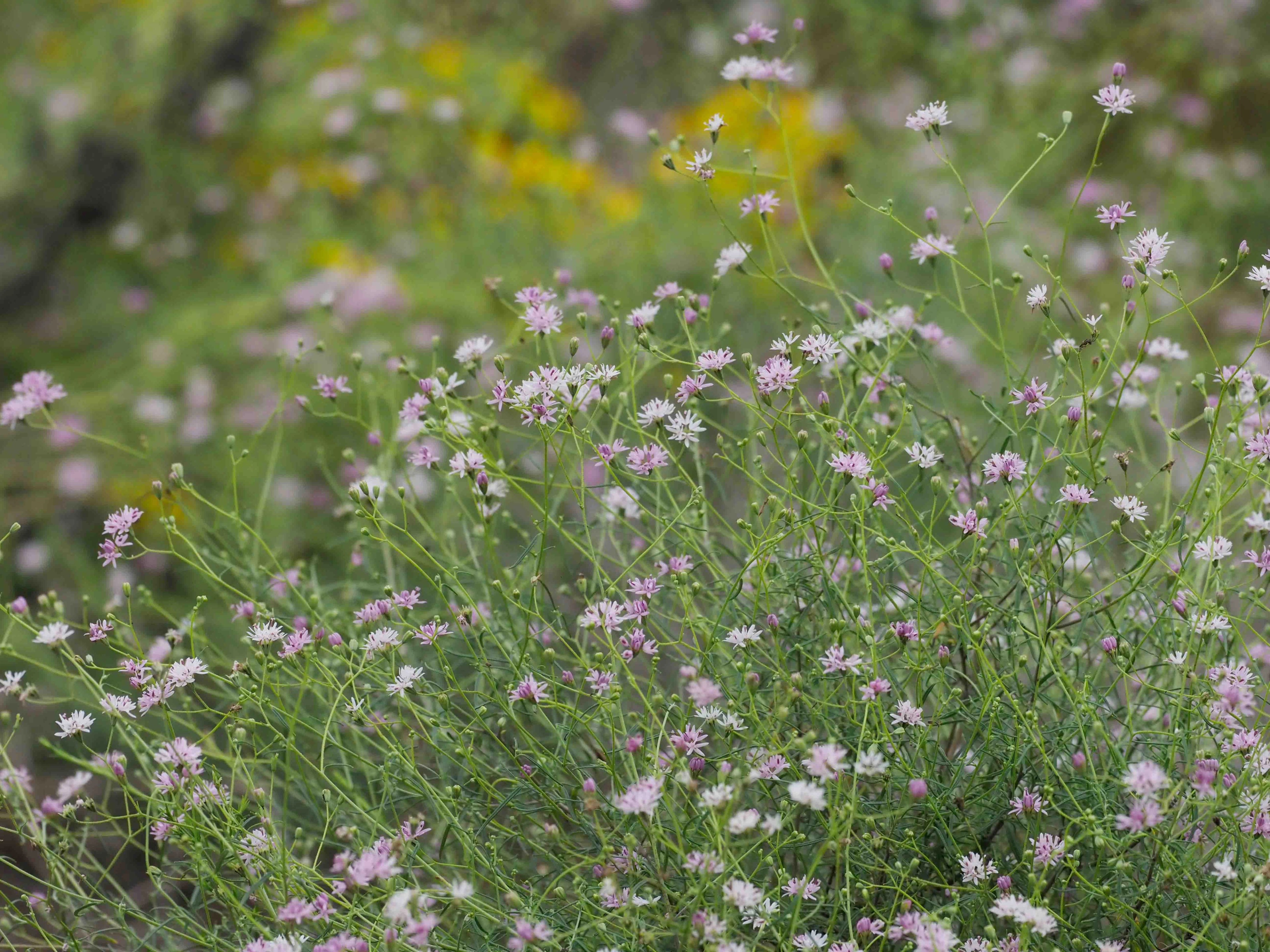
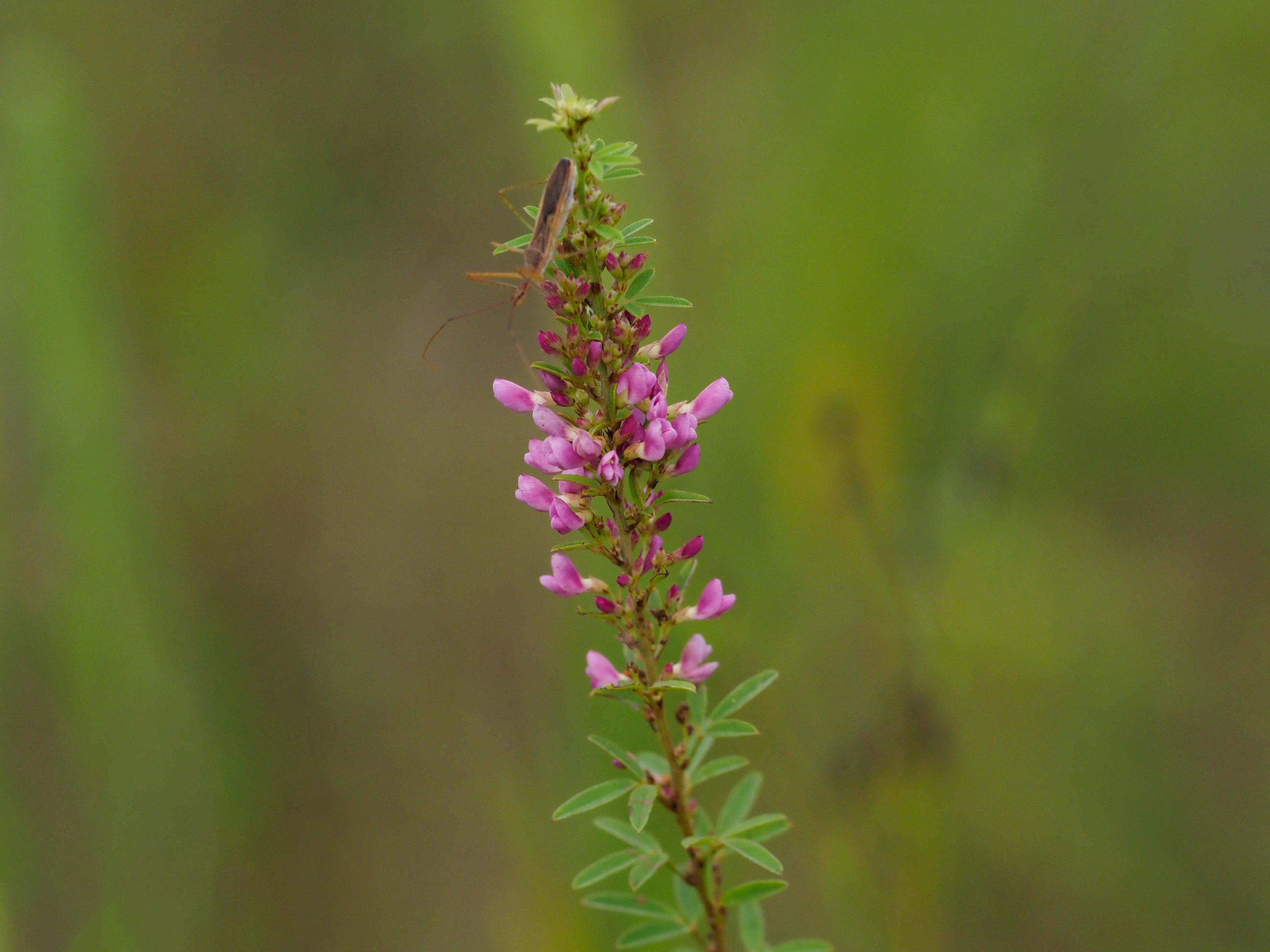
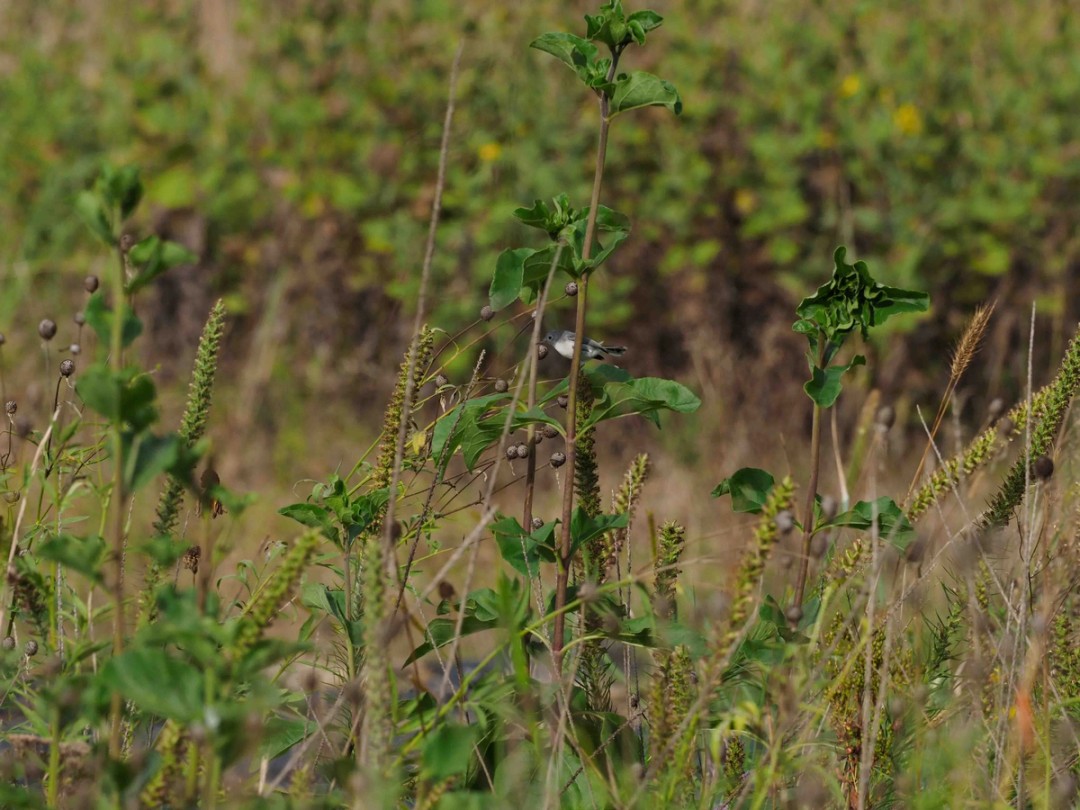
Prairie Habitat
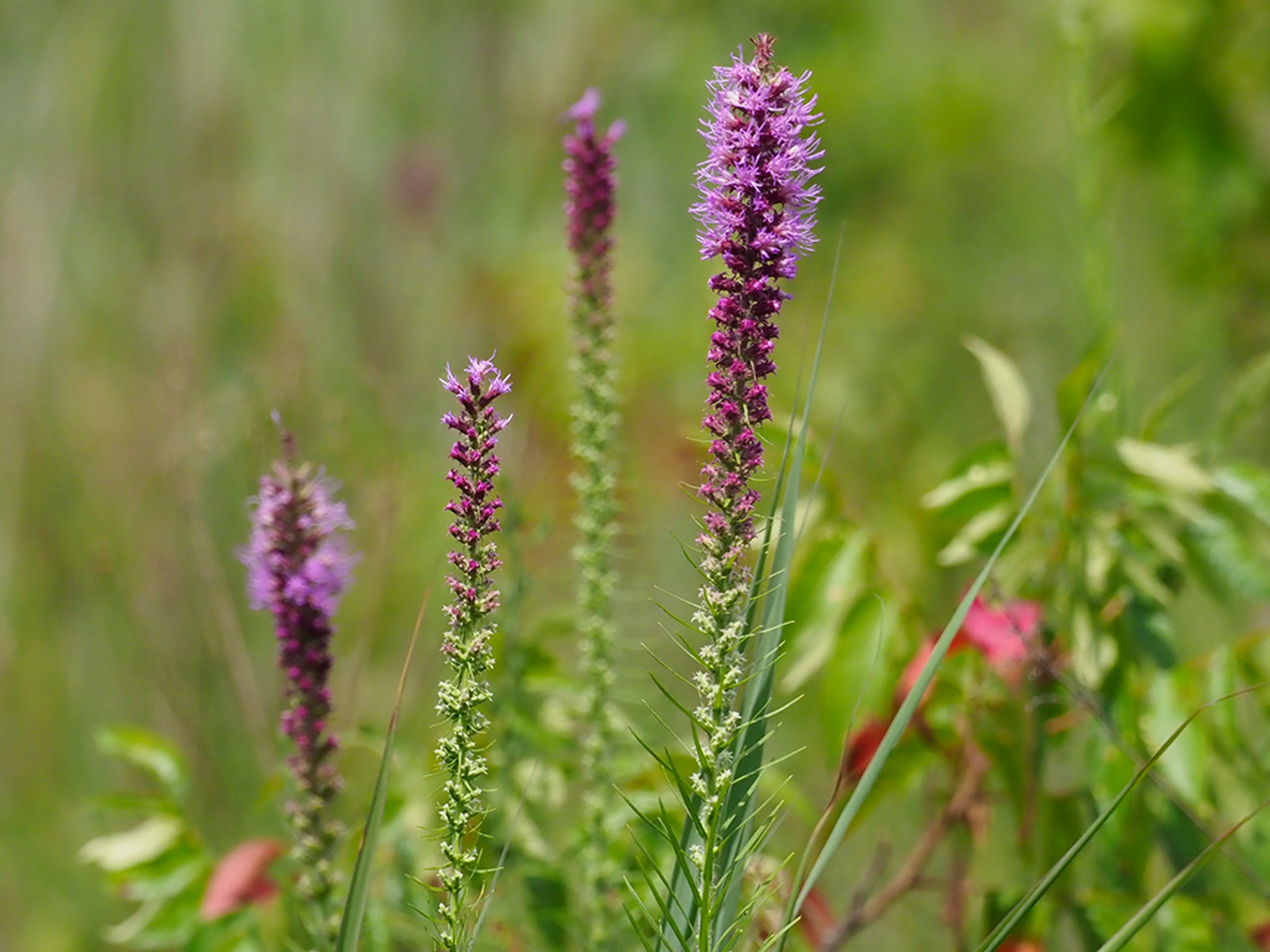
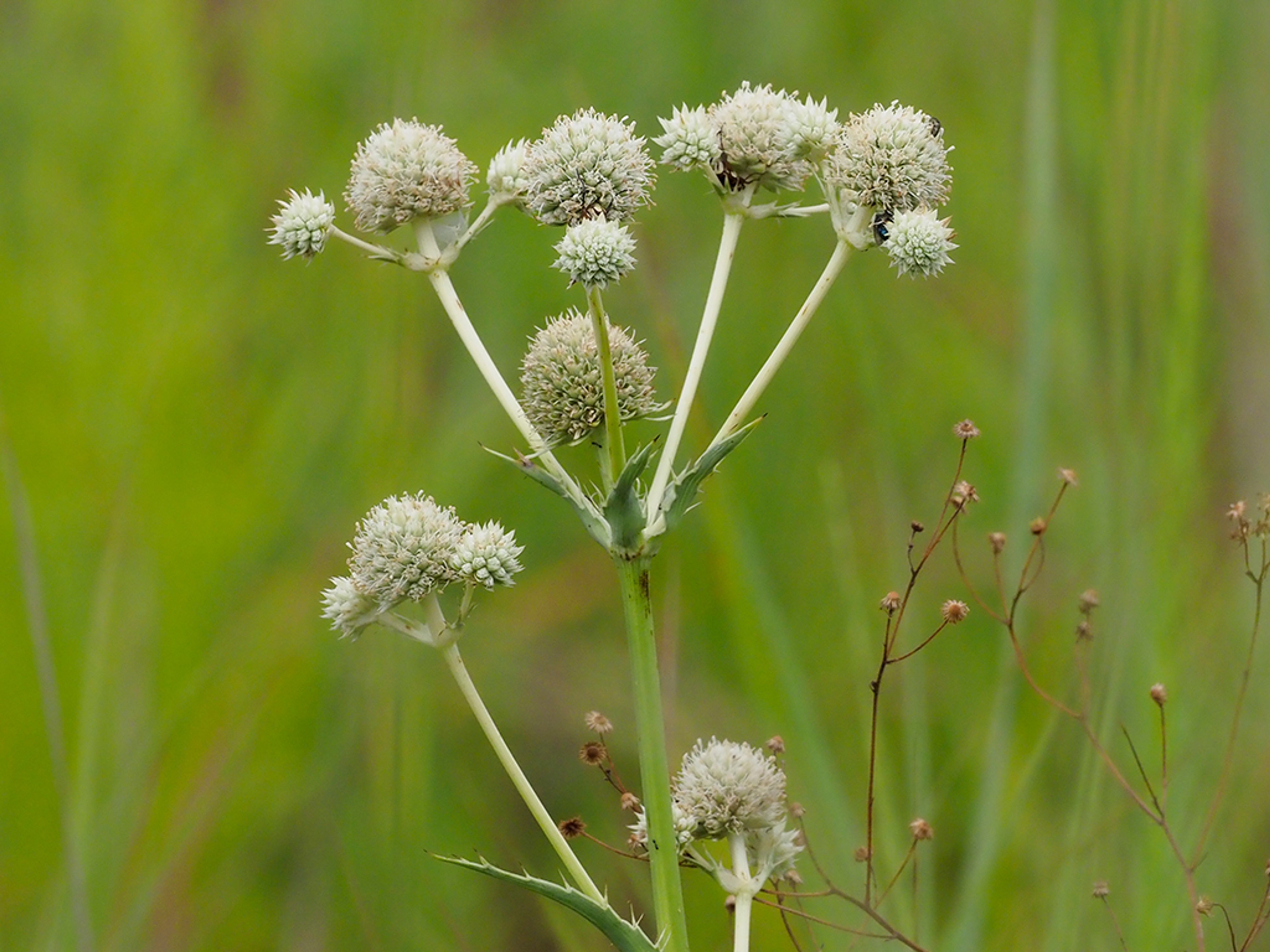
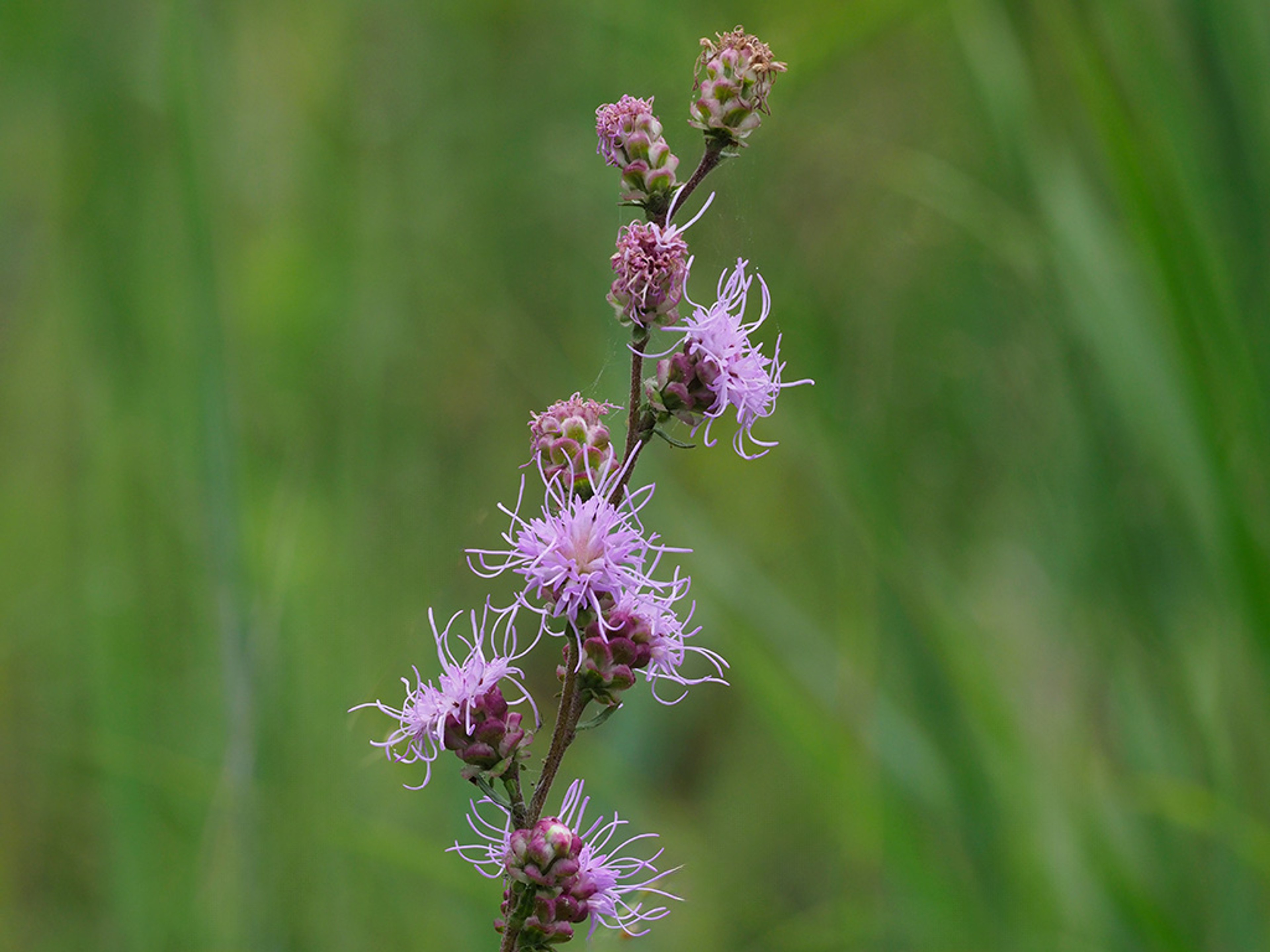
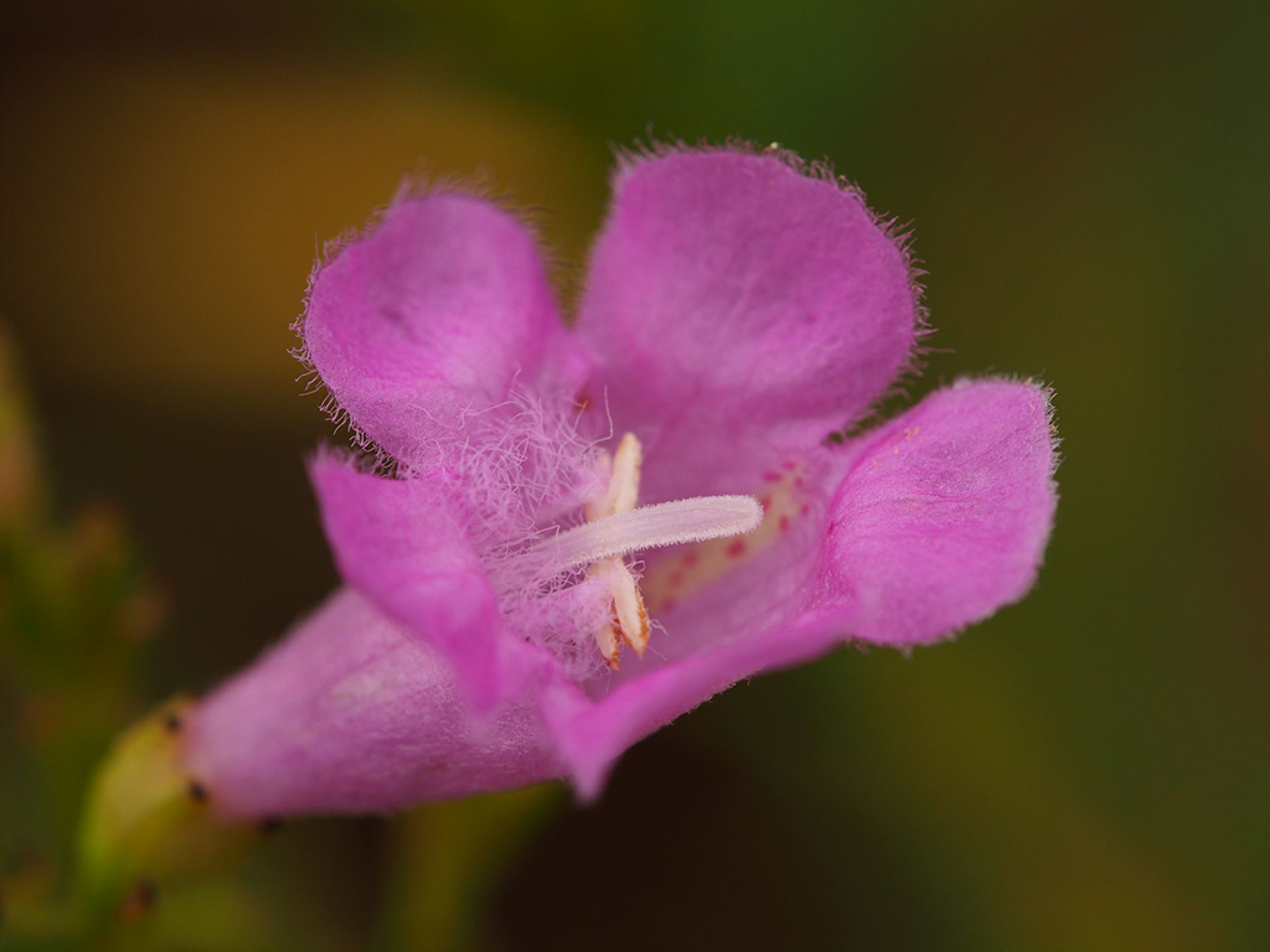
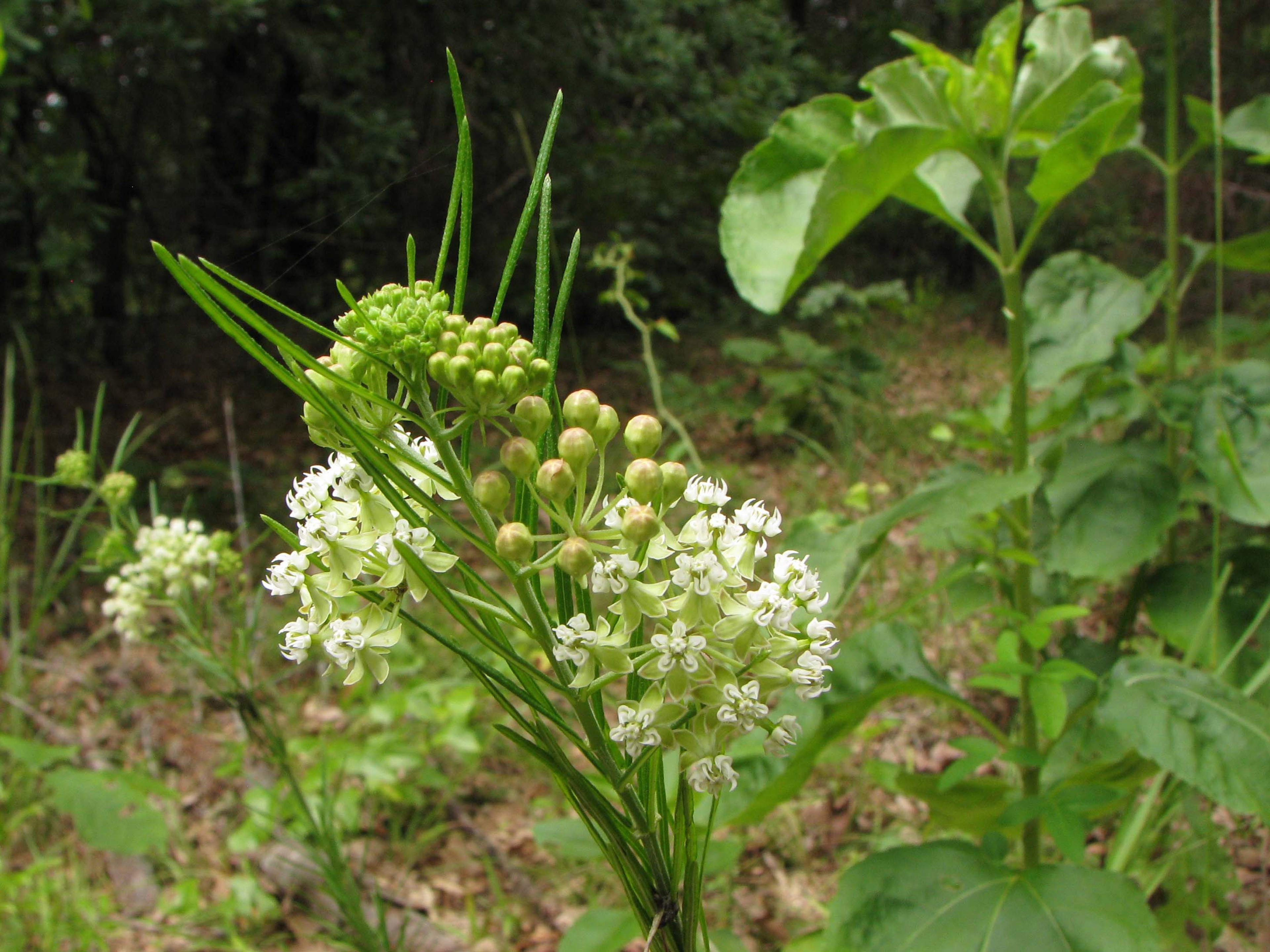
Here I find Slender Mountain Mint (Pycnanthemum tenuifolium), Prairie blazing star (Liatris pycnostachya), Rough blazing star (Liatris aspera), Purple false foxglove (Agalinis fasciculata), Rosinweed (Silphium integrifolium), various Asters, and Slender bush clover (Lespedeza virginica) growing near Ozark sunflower.
with Liatris pycnostachya (post bloom) 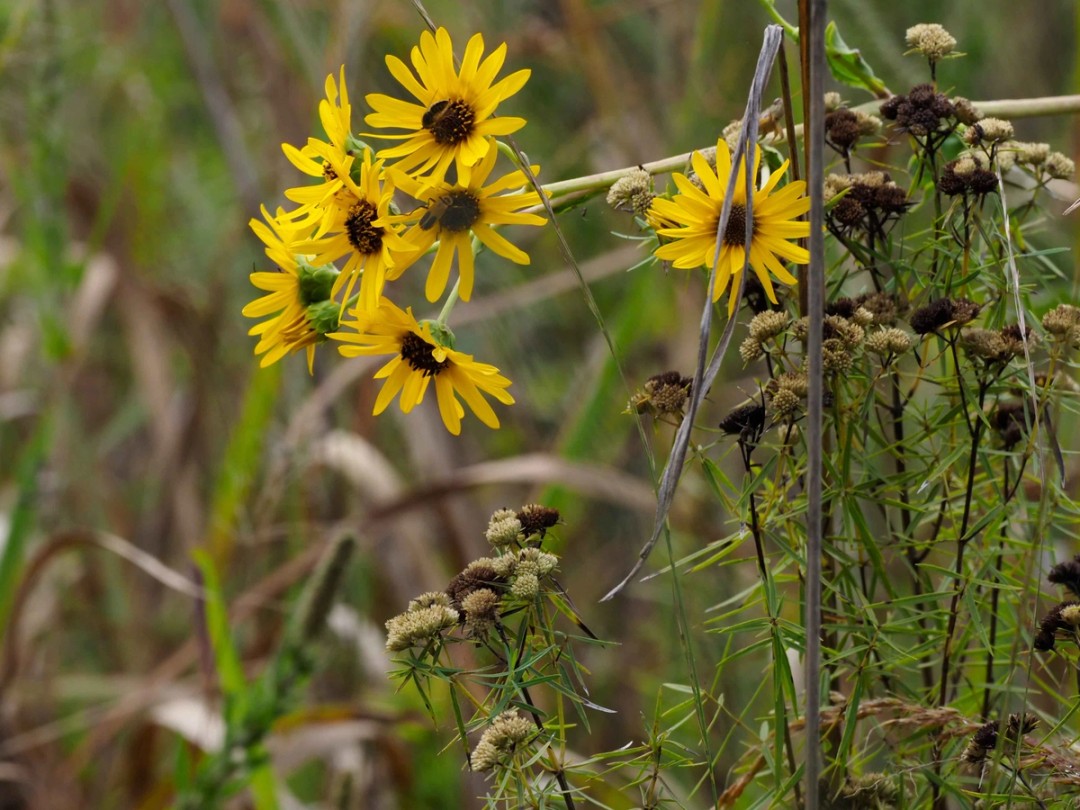
with Pycnanthemum tenuifolium 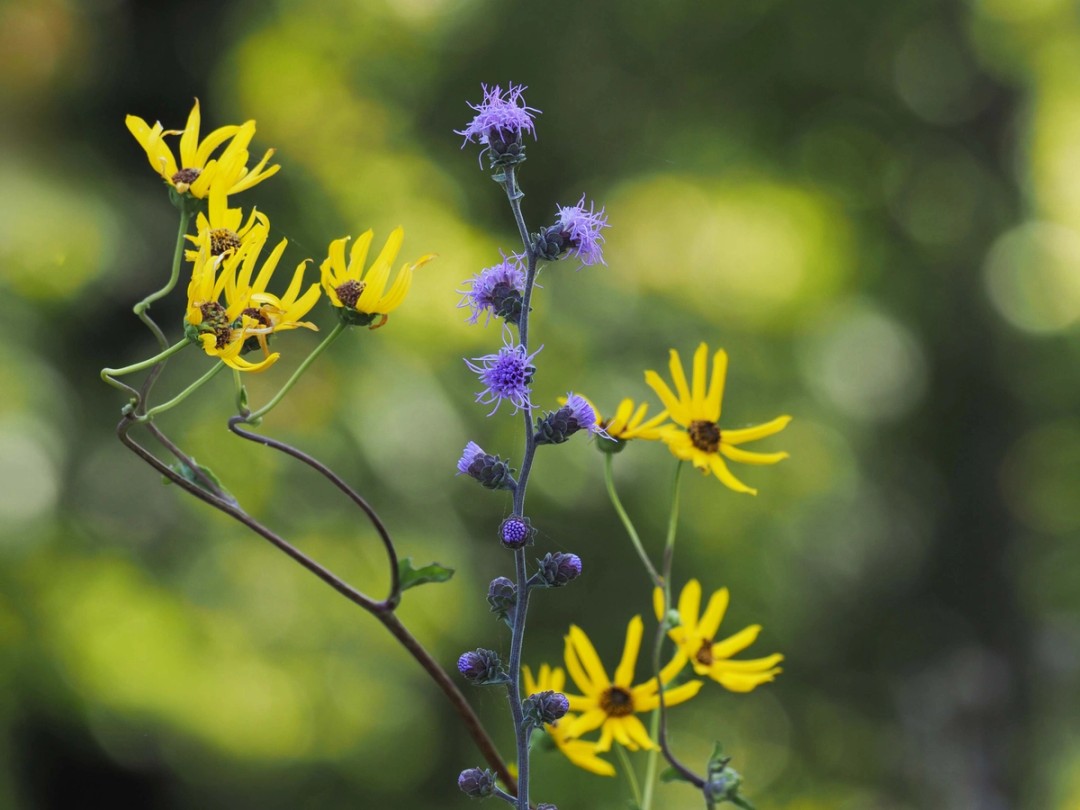
with Liatris aspera 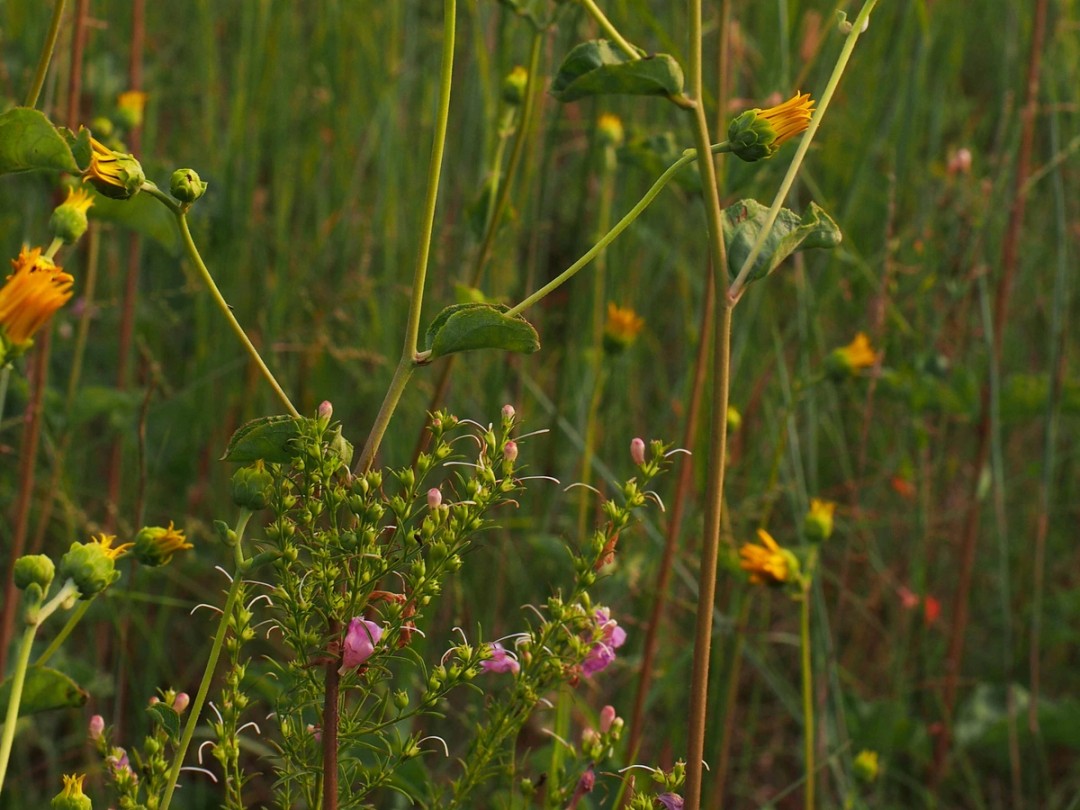
with Lespedeza virginica 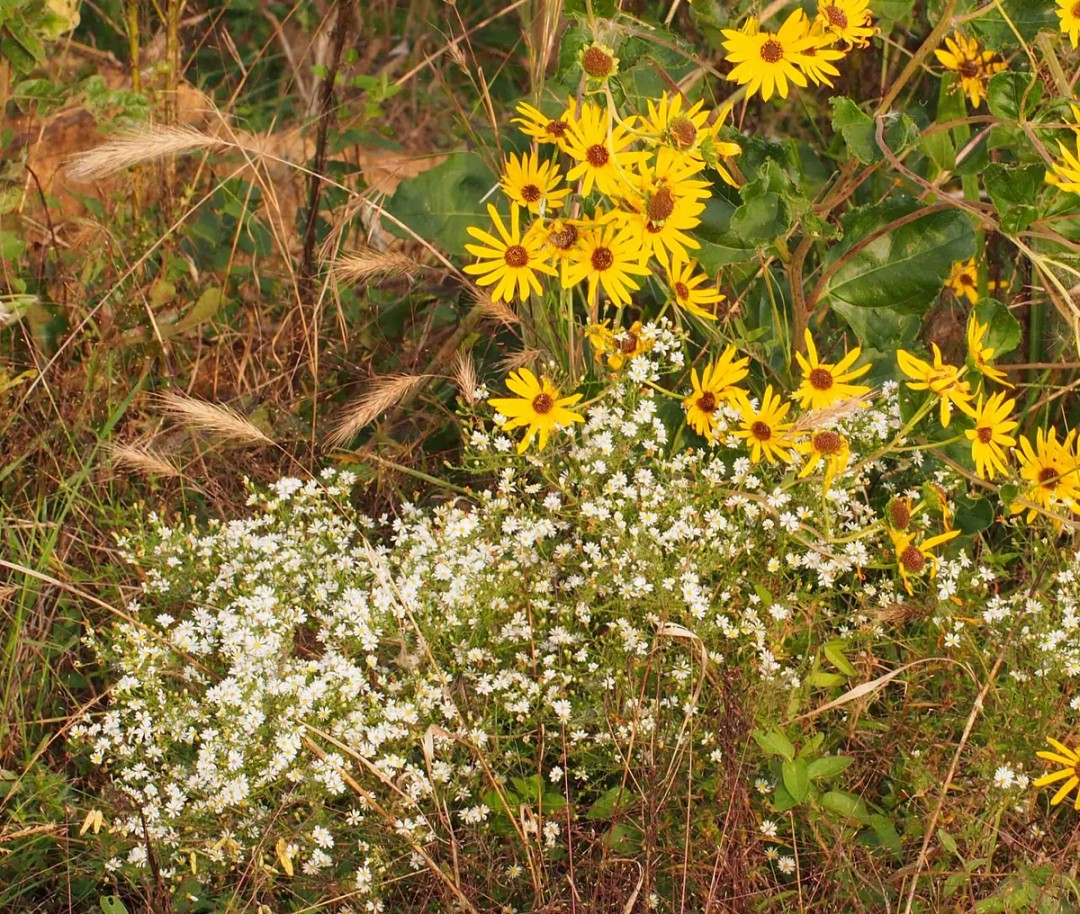
with Symphyotrichum pilosum 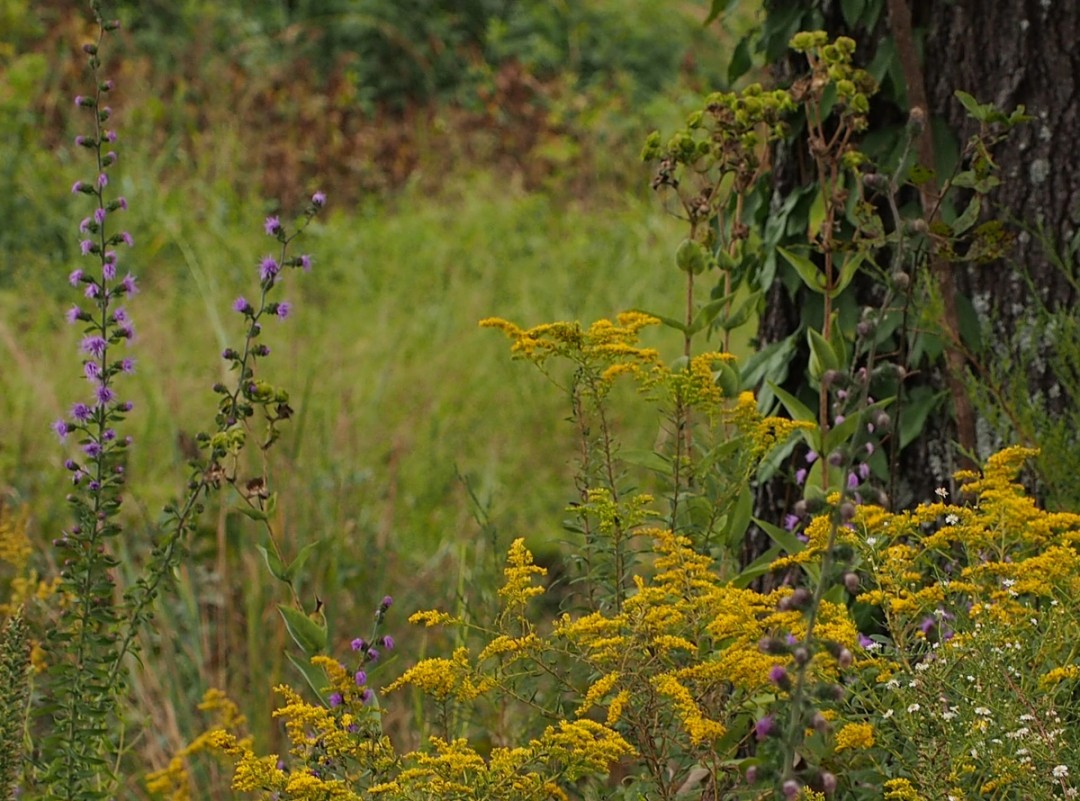
with Liatris scariosa, Solidago sp
Purple false foxglove (Agalinis fasciculata)is another beautiful and common companion flowering alongside Ozark sunflower.
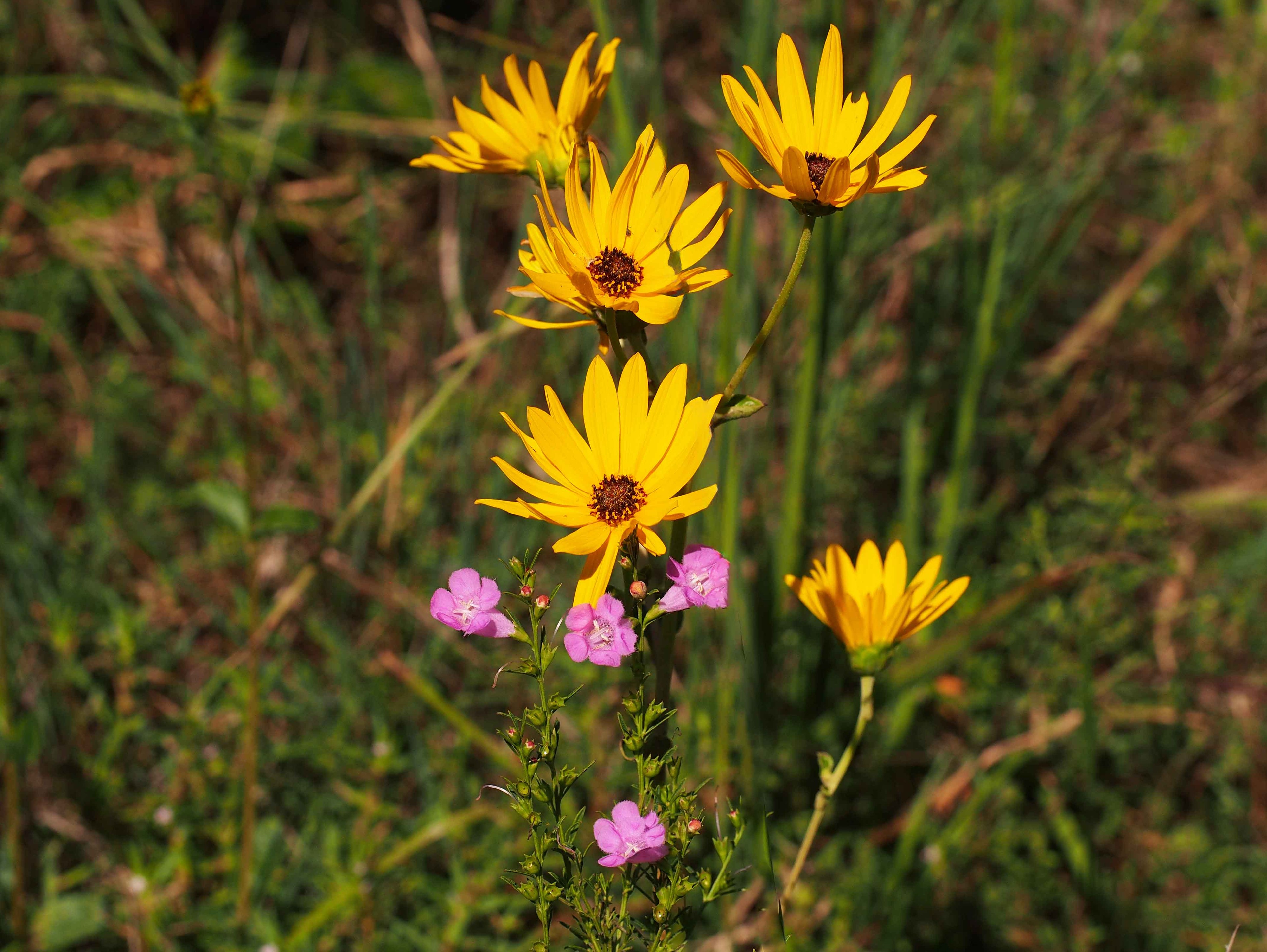
Glade habitat
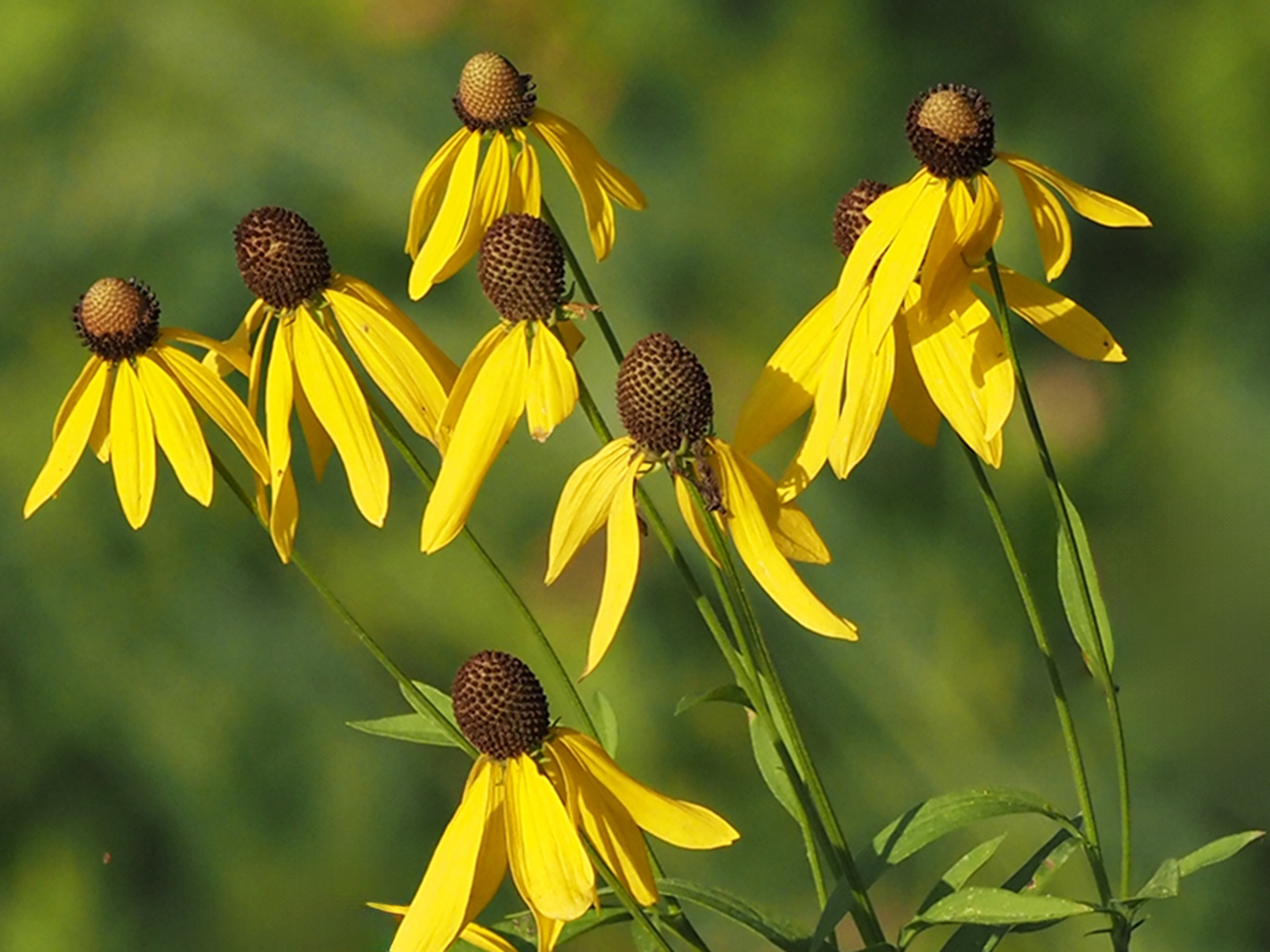
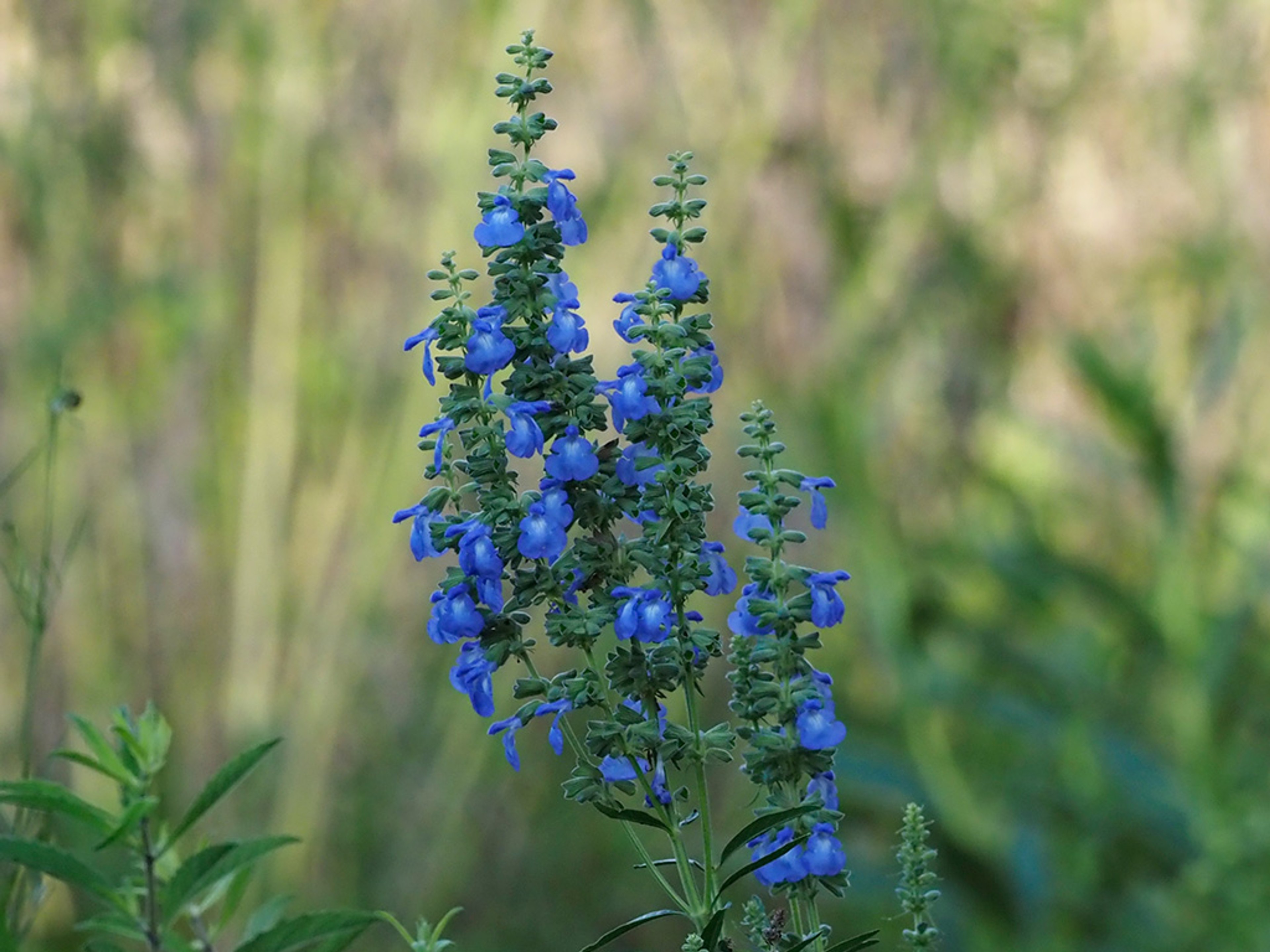
Blue sage (Salvia azurea), Gray-headed coneflower (Ratibida pinnata) and Spanish needles (Palafoxia callosa) are often found growing alongside Ozark sunflowers in glade habitat.
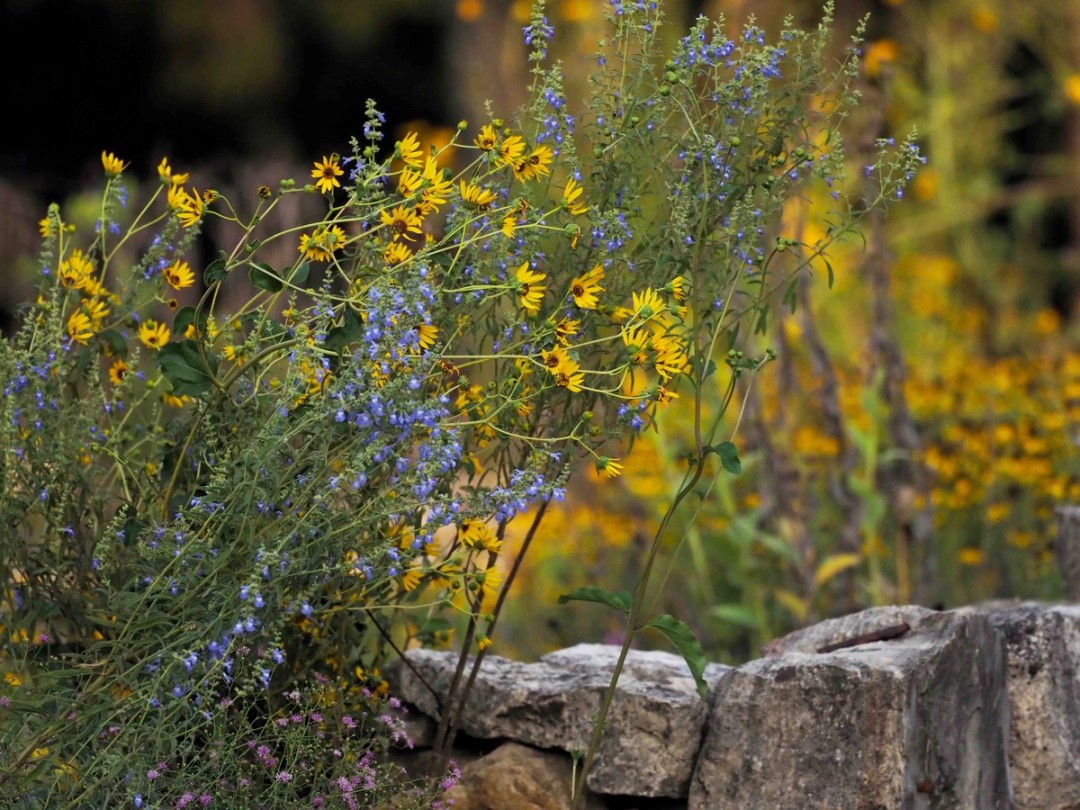
with Salvia azurea 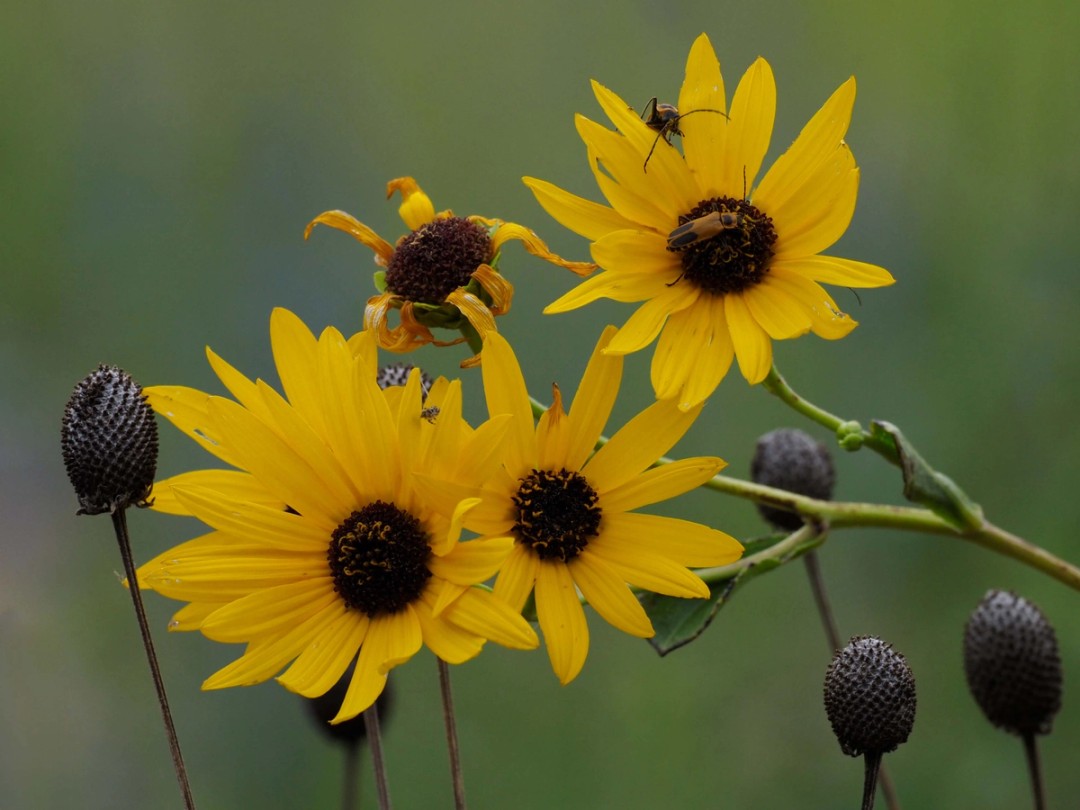
with Ratibida pinnata
HABITAT
Across its limited range, Helianthus silphioides doesn’t seem to be overly particular about its habitat. It is known to prefer acidic soil and can thrive in both dry upland sites and wet, sandy areas. On Ozarkedge, I’ve observed it growing at the edges of prairie/grassland habitats, particularly in areas with partial shade. Additionally, it can be found at the borders of woods or open woods, as well as at the edges of sunny glades. In the past, I’ve often witnessed Ozark sunflowers blooming beautifully along Arkansas roadsides, but unfortunately, this is becoming rare due to roadside mowing.
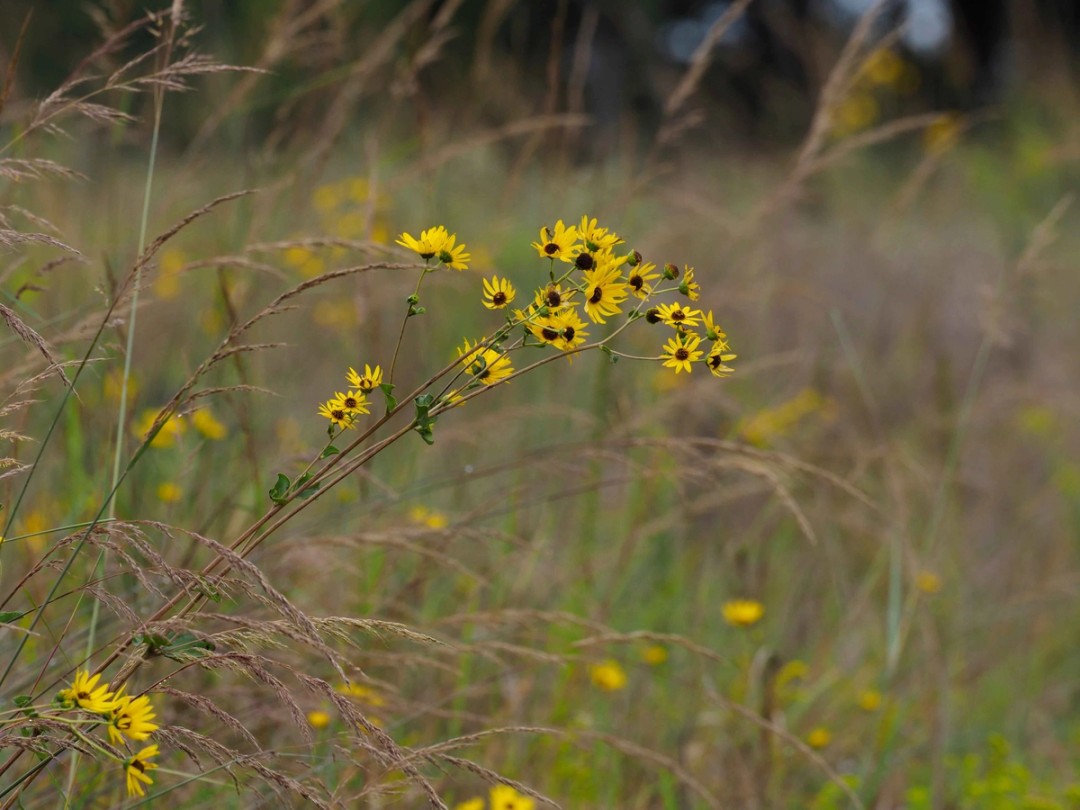
Prairie/grassland habitat 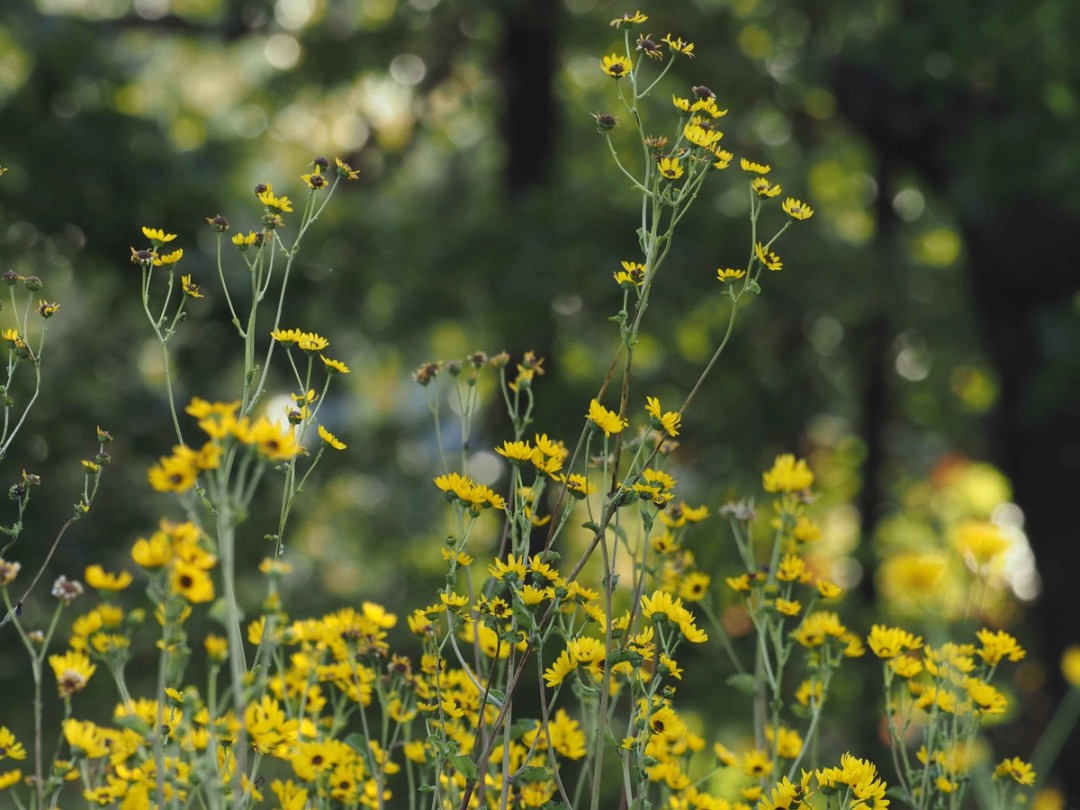
Woodland edge habitat
CONSERVATION STATUS
NatureServe reports Helianthus silphioides as Apparently Secure, however within its range it is only shown as Secure in Mississippi. It is listed as Critically Imperiled in Illinois, Kentucky and Oklahoma. It is Imperiled in Tennessee and Louisiana. There is No Status Rank shown for Missouri, Arkansas and Alabama.
In Arkansas it has a C-value of 7 out of 10 (in the group of 4-7). This means "Typically matrix taxa in intact, stable habitats, with some limited ability to respond to destabilizing forces and repopulate areas from which they have been extirpated."
Helianthus silphioides faces numerous threats to its long-term viability. Development and agriculture have led to the loss of much of its preferred habitat, resulting in the clearing of open woodlands, glades, and prairie remnants. Fire suppression has also contributed to the problem, as it leads to the growth of woody undergrowth that crowds out the sun-loving wildflower. Furthermore, invasive, non-native species degrade its preferred soil and light conditions, exacerbating the challenges it faces.
INTERESTING TIDBITS
Some years I find red aphids on the Ozark sunflowers. They appear suddenly when the plants bloom and can cover many stems. Aphids are not uncommon on sunflowers as they drink the plant’s sap. Surrounding plants seem to be ignored by the intruders. Fortunately, the aphid attack doesn’t seem to adversely affect Helianthus silphioides. I assume it is part of nature’s cycle.
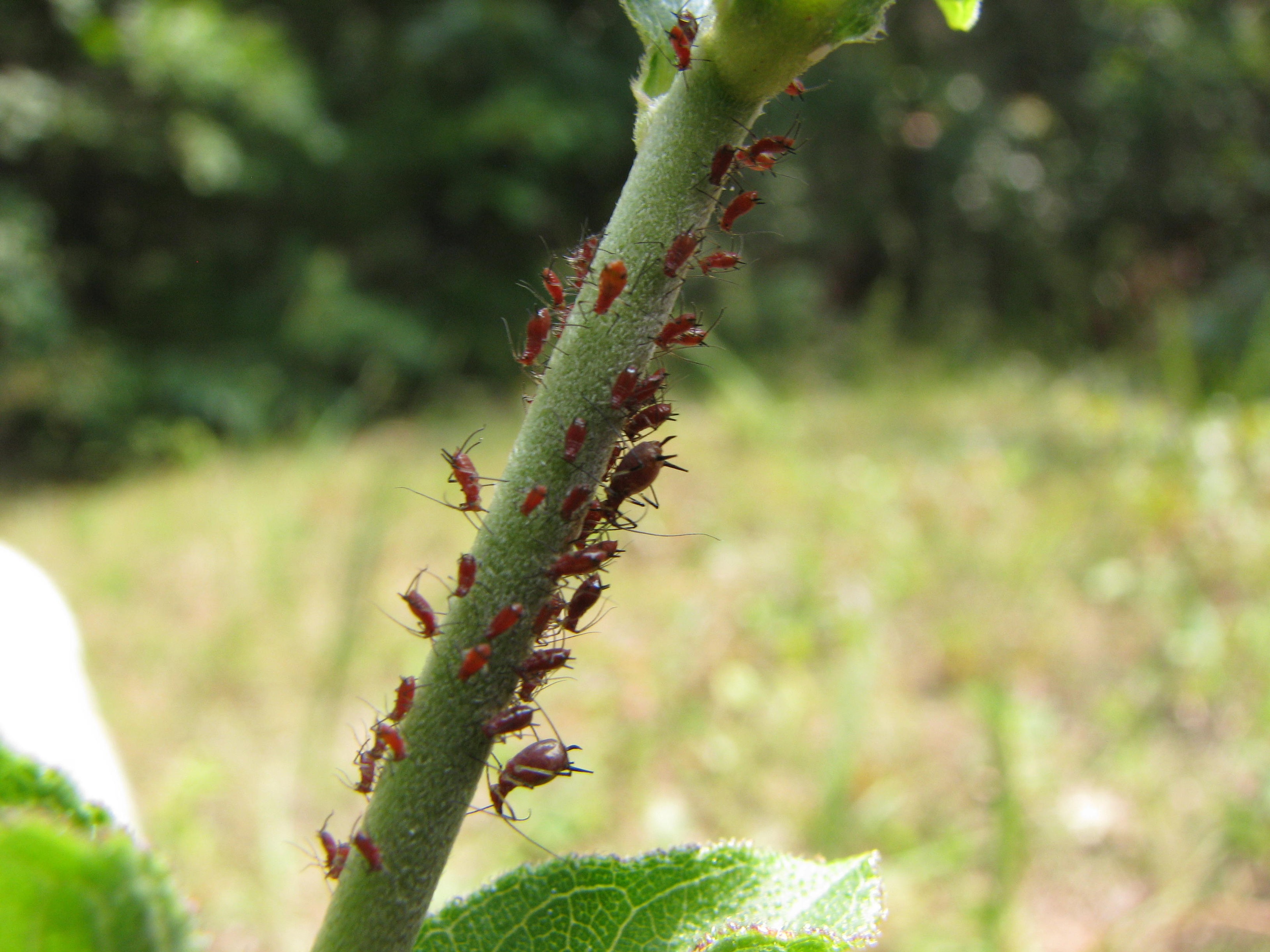
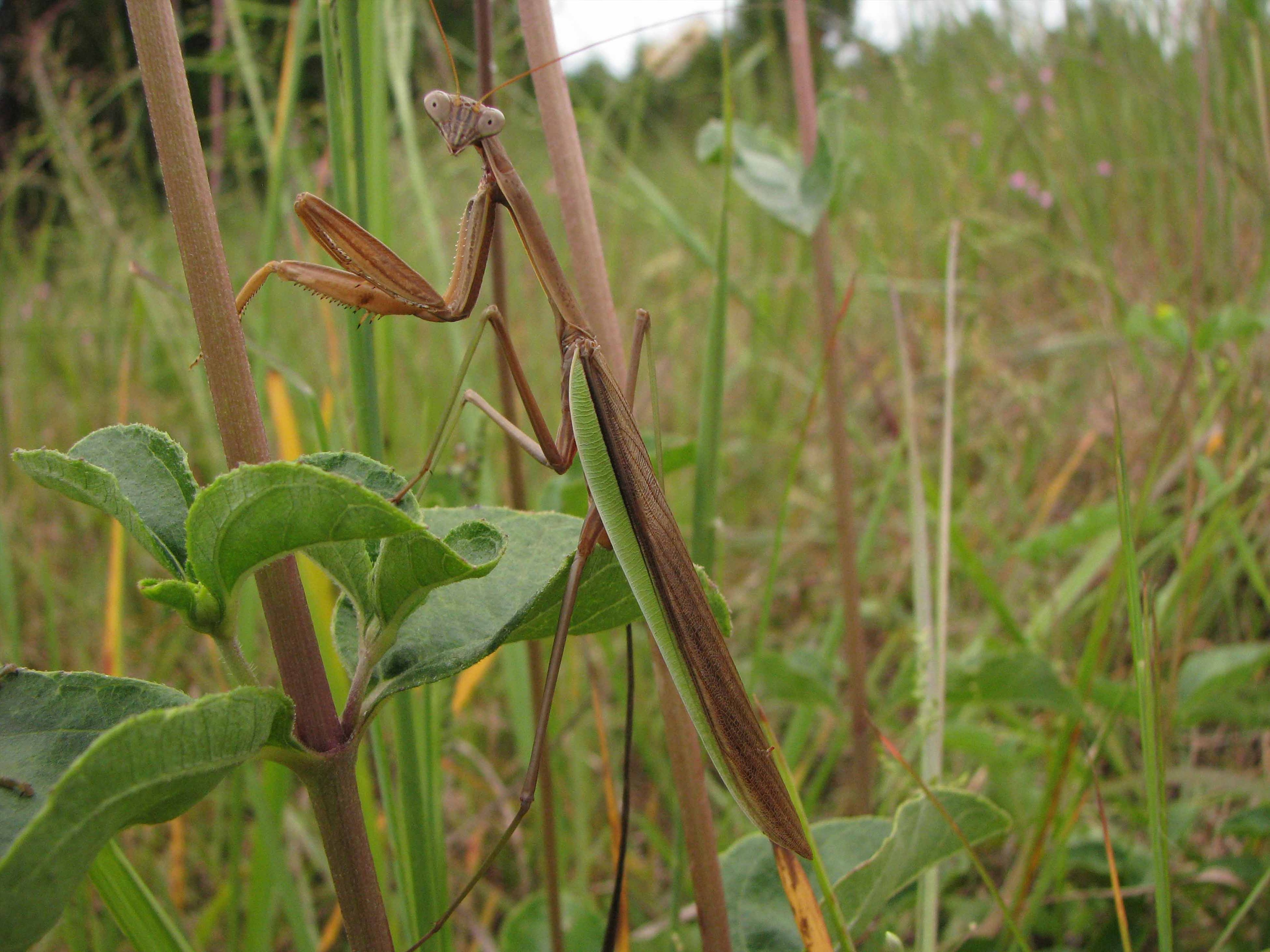
Certainly the praying mantis I photographed below enjoyed the feast.