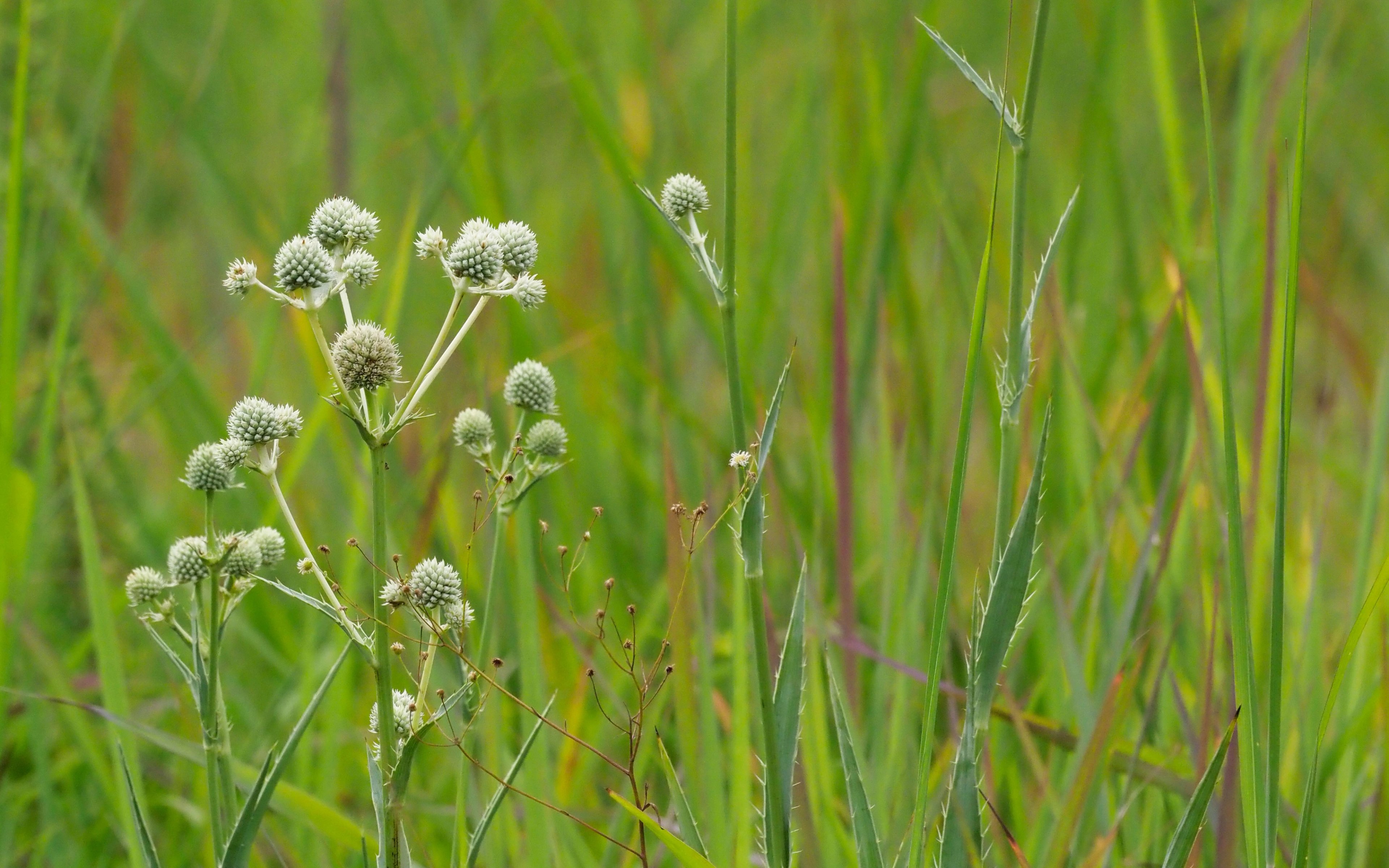
PLANT NAME
The botanical name, Eryngium, is from the Greek meaning thorny or prickly and the specific epithet yuccifolium refers to the similarity of the leaves to those of Yucca. Eryngium yuccilfolium is in the Apiaceae family (celery, carrot or parsley family).
The common name, Rattlesnake master, came from the erroneous belief that this plant could be used to treat snake bites.
BLOOM
Rattlesnake master has some of the most unique flowers among our native flora. Each globe shaped, spiky inflorescence consists of many (over 100) tiny individual white flowers. A mature plant will have anywhere between 10-40 flowering globes with each containing many minute florets. Each floret is composed of 5 petals with 5 stamens. The stamens have greenish-white filaments and greenish anthers. Florets are subtended by small bracts with the flowering globe subtended by larger, triangular bracts with pointed tips. Each floret has a pair of styles that appear ahead of the stamens. Flowering begins in June and may extend into August.
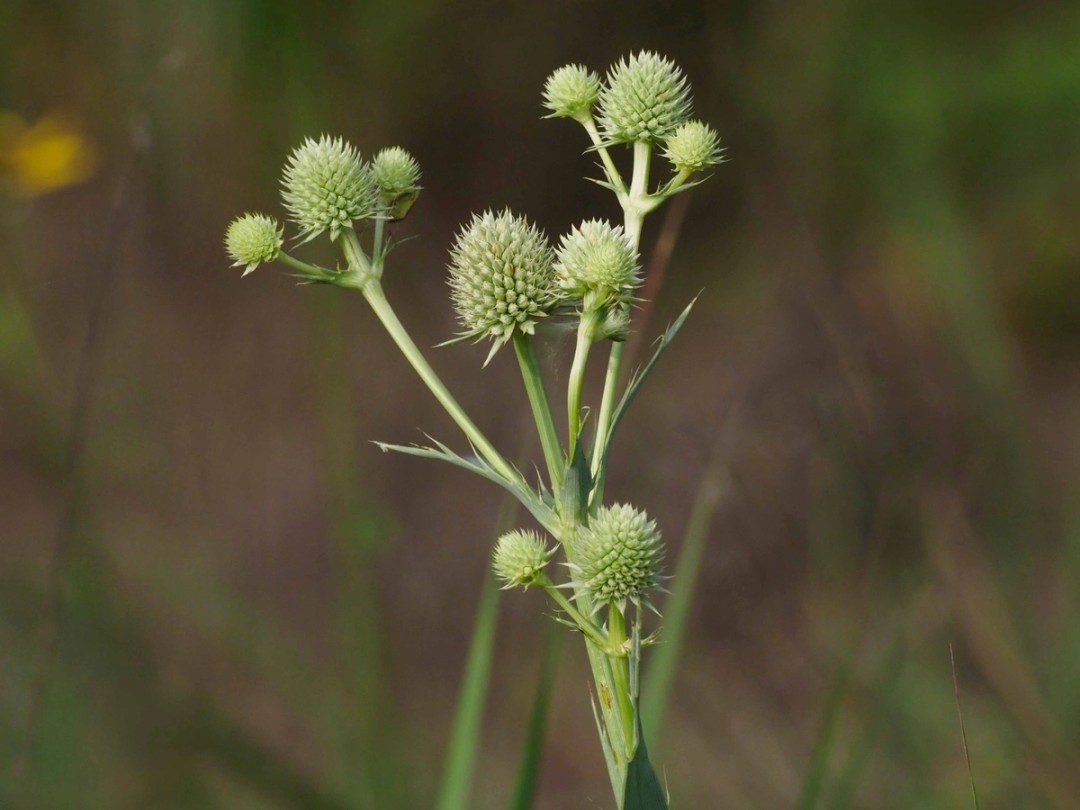
Immature inflorescence and bracts 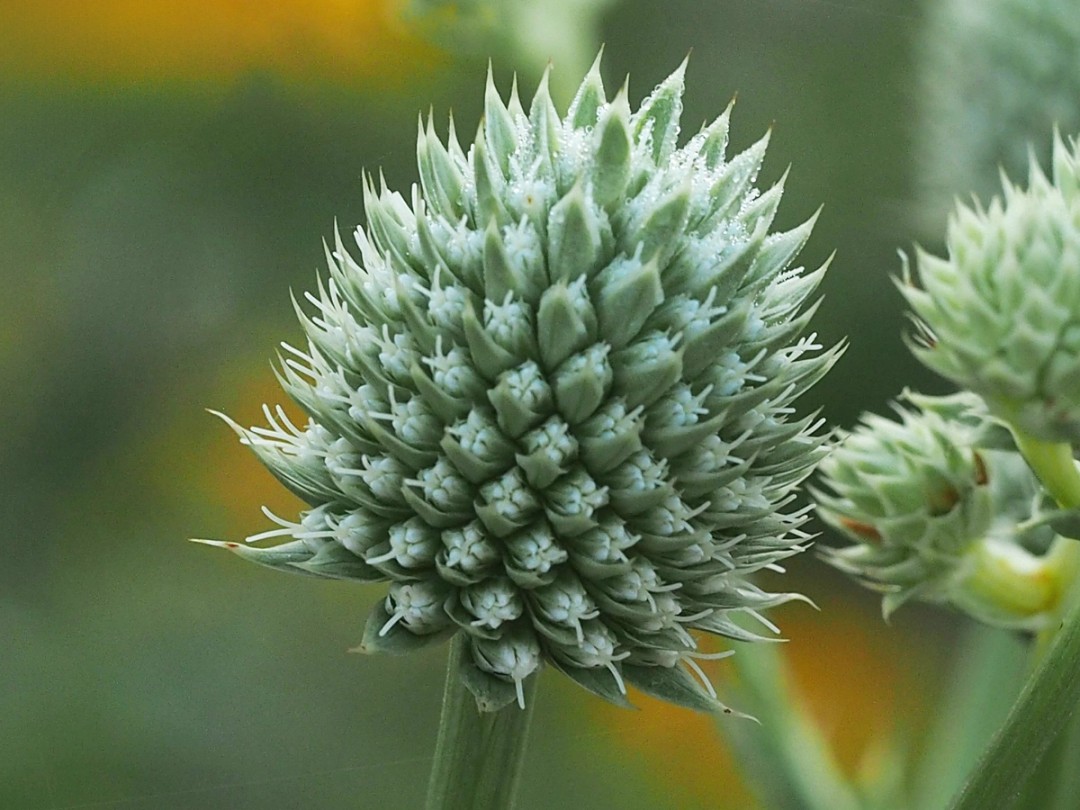
Individual flowers 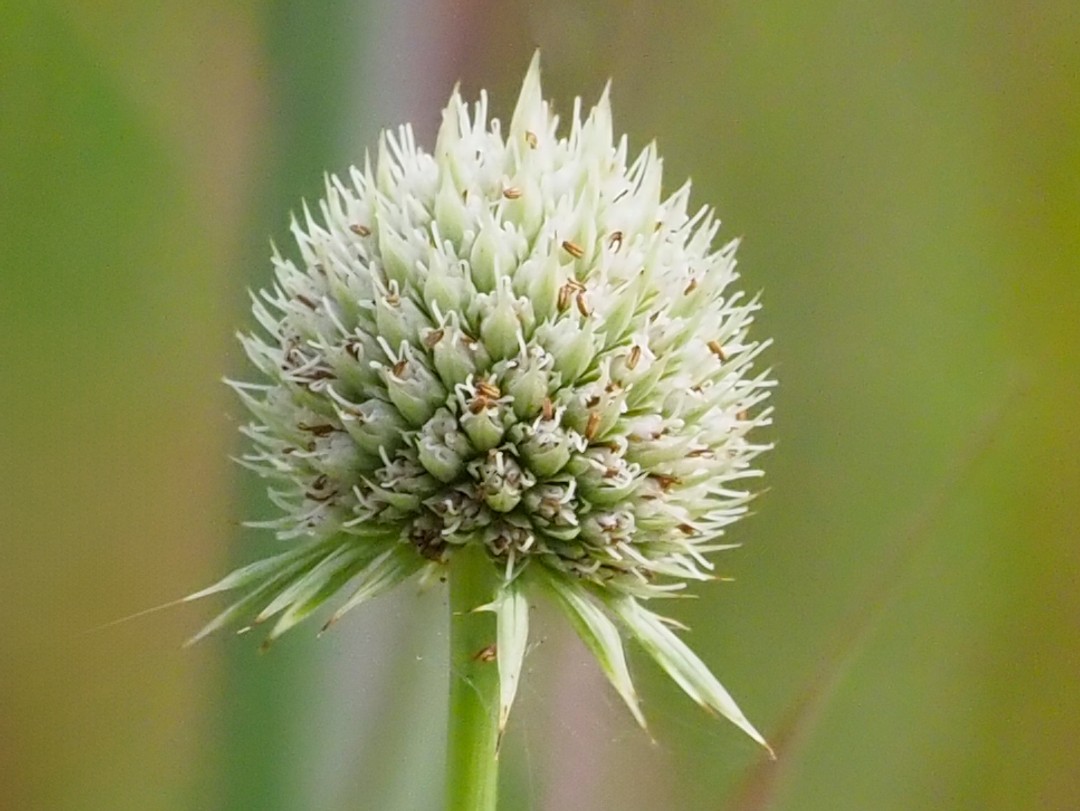
Bracts 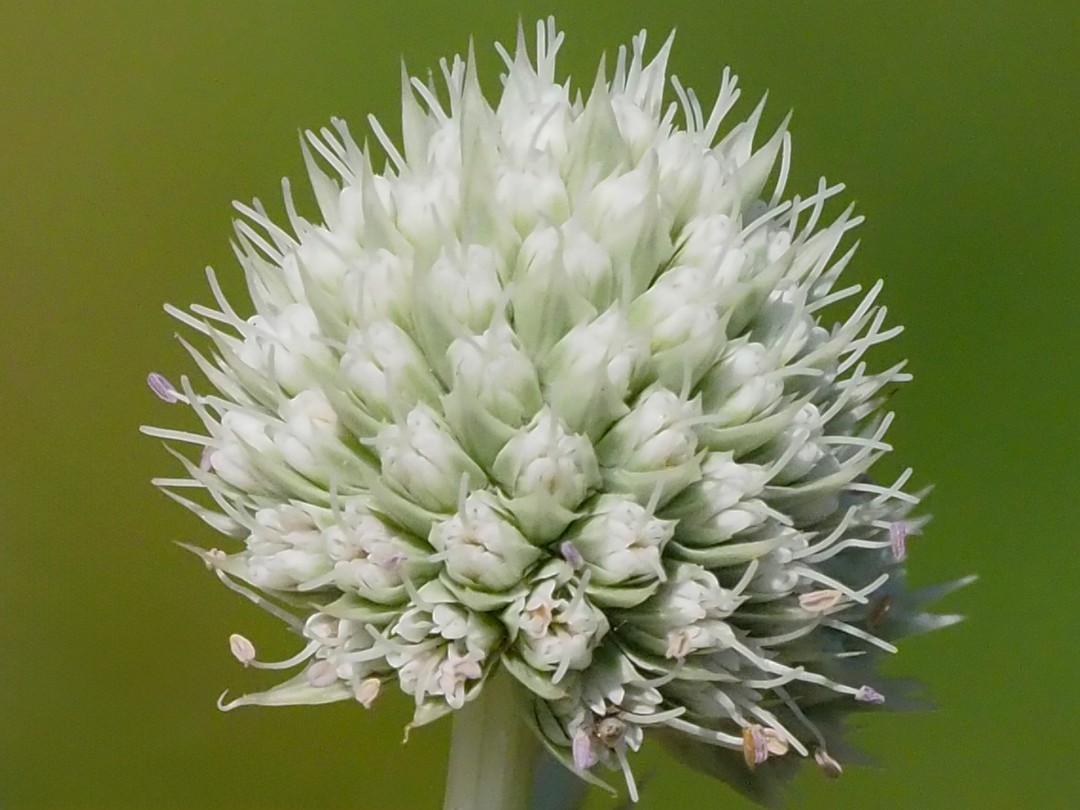
Stamen and styles
The distinctive appearance of Rattlesnake master makes it a charming standout in the grassland, glade or garden setting. The flowers (fresh or dried) are also long-lasting in a bouquet (if you can stand to cut them!).
DESCRIPTION
Eryngium yuccifolium is a long-lived perennial wildflower with unique grayish-green coloration. It typically grows to a height of 4-5 feet. Basal leaves are whorled. Stem leaves are alternate and clasp the stem. All leaves are thick and lanceolate in shape with bristly edges. The inflorescence is subtended by prominent leafy bracts (orange circle in image below).
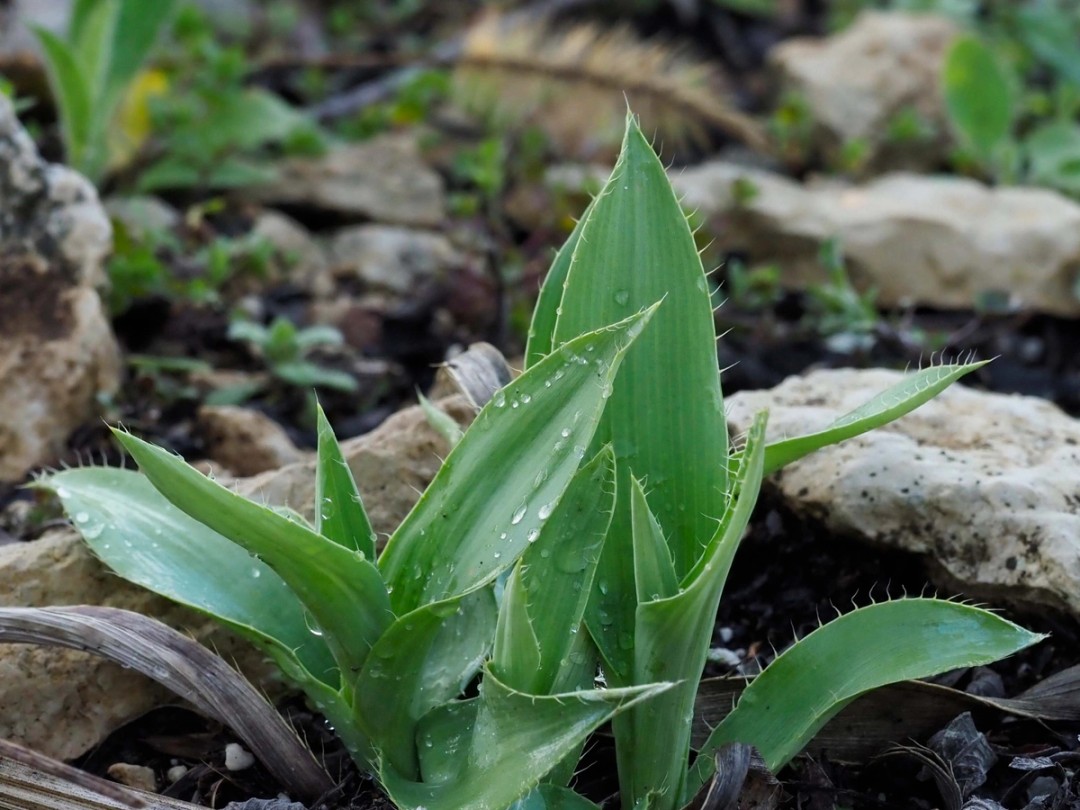
Spring leaves 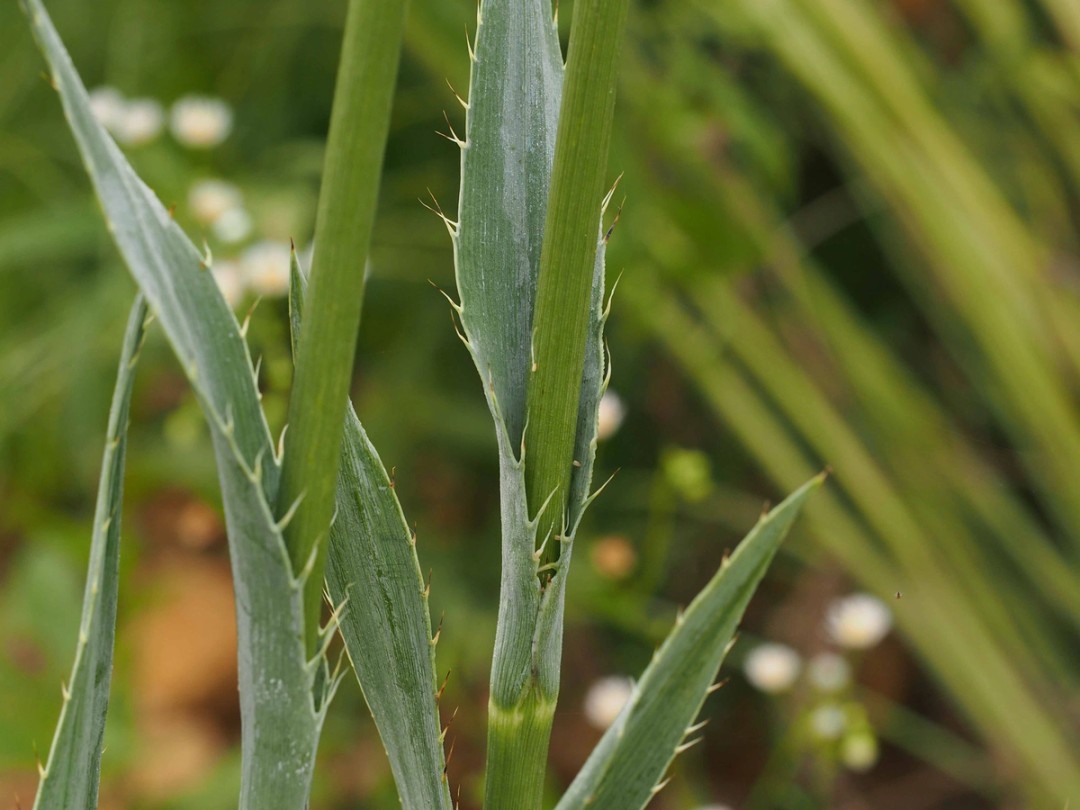
Leaves clasping stem 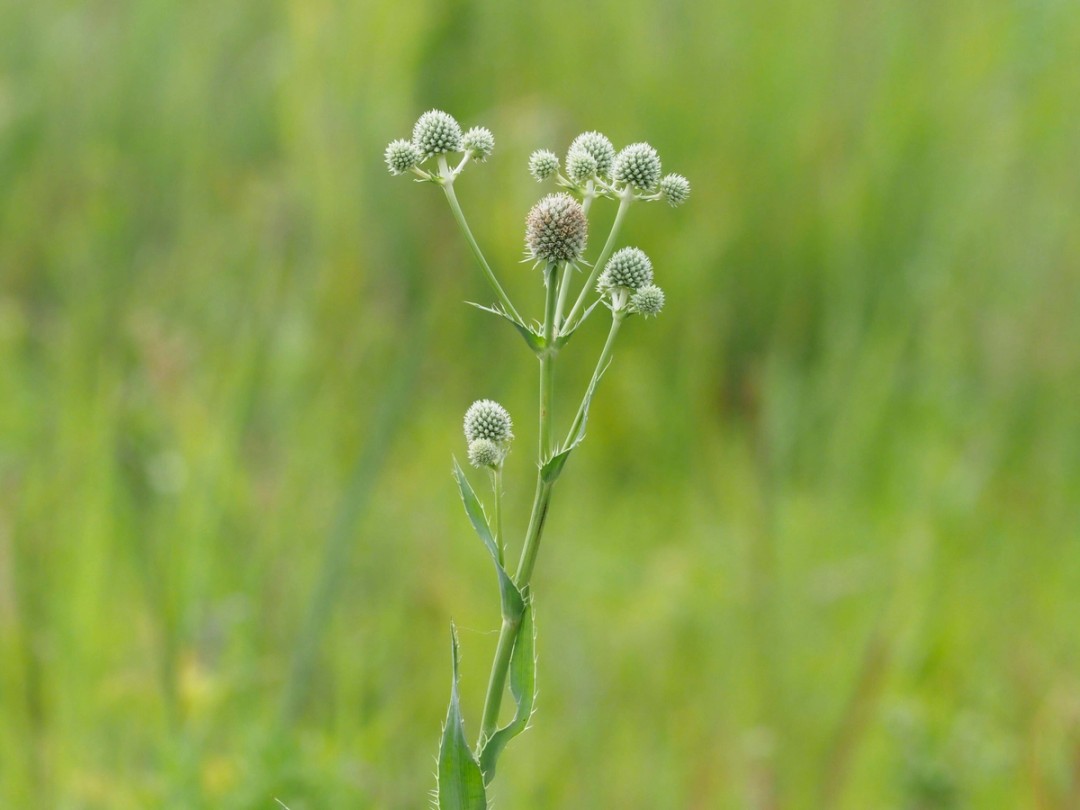
Stem and leaves 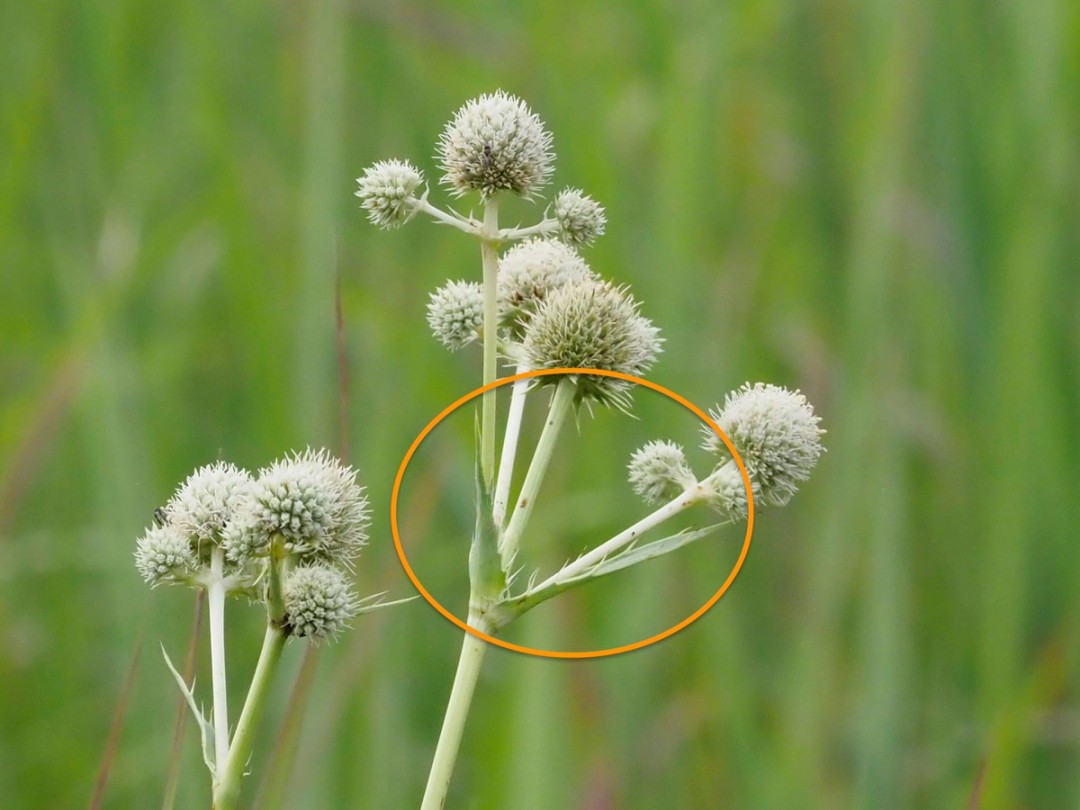
Bract
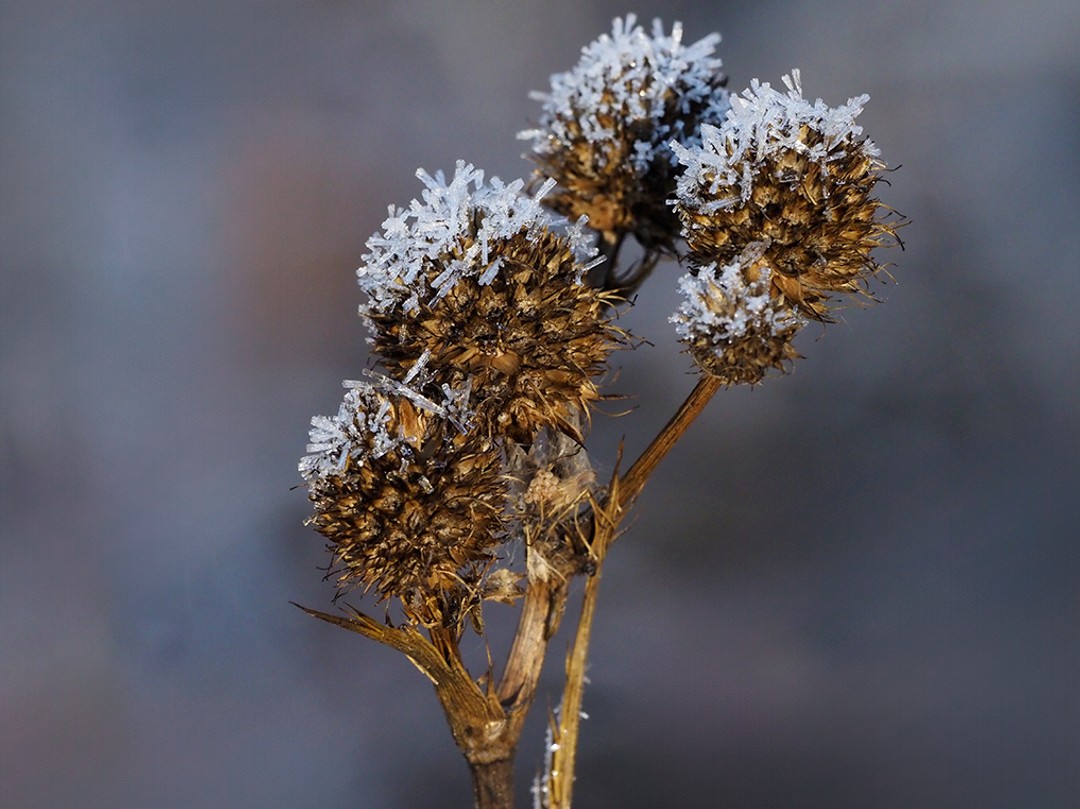
The flowers turn brown and bristly when the seeds are ripe for harvesting.
POLLINATORS
The unusual flowers of Rattlesnake master are highly sought after by many varied insects. Various types of bees, wasps, flies, butterflies, skippers, beetles and plant bugs can be found visiting the flowers. An extended list of many insect visitors can be found on the website, Illinoiswildflowers. Below you'll find photos of the insects I've documented in Arkansas.
Many types of wasp visit the flowers of Rattlesnake Master. Some are quite beautiful with interesting markings or green eyes! I am particularly fond of the large Horse guard wasp as it preys on horse flies, which my horse despises.
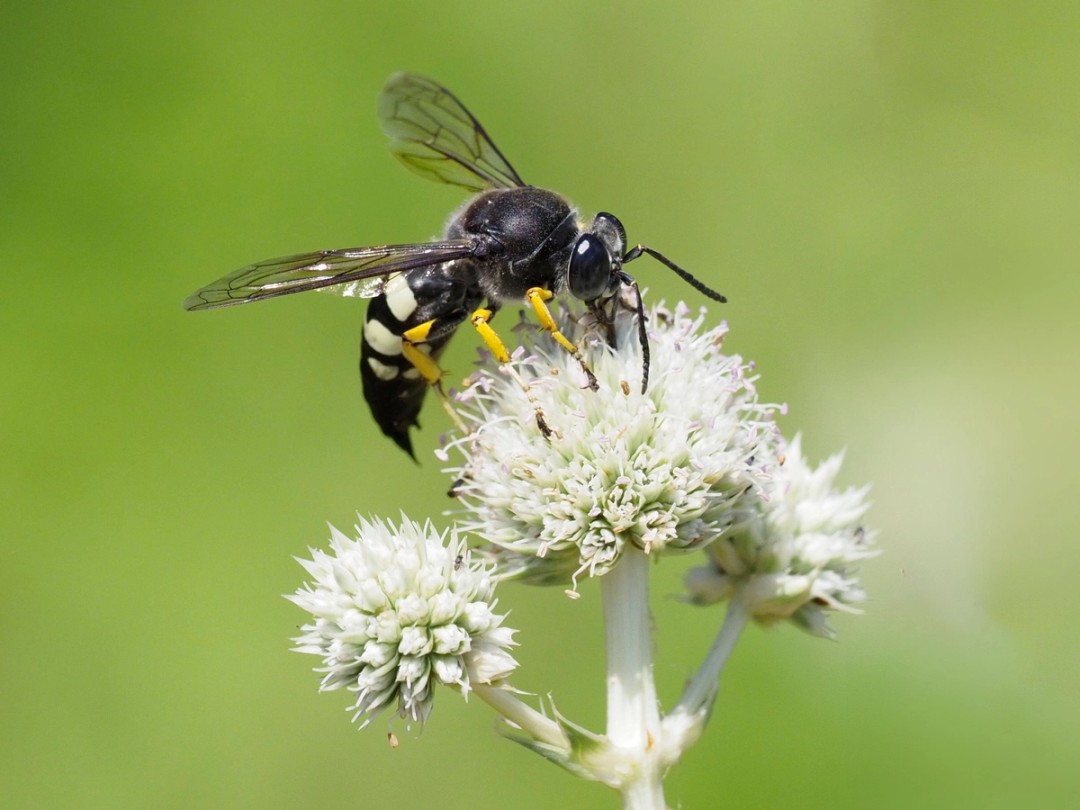
Horse guard wasp (Stictia carolina) 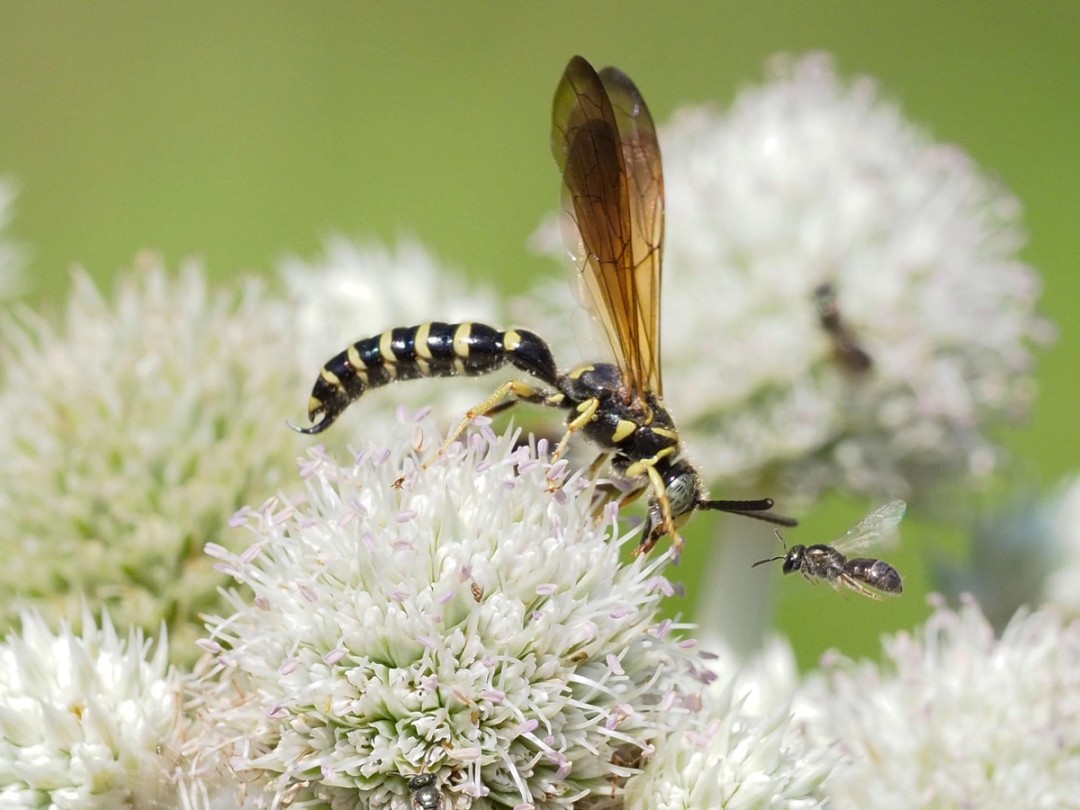
Five-banded thinned wasp (Myzinum quinquecinctum) 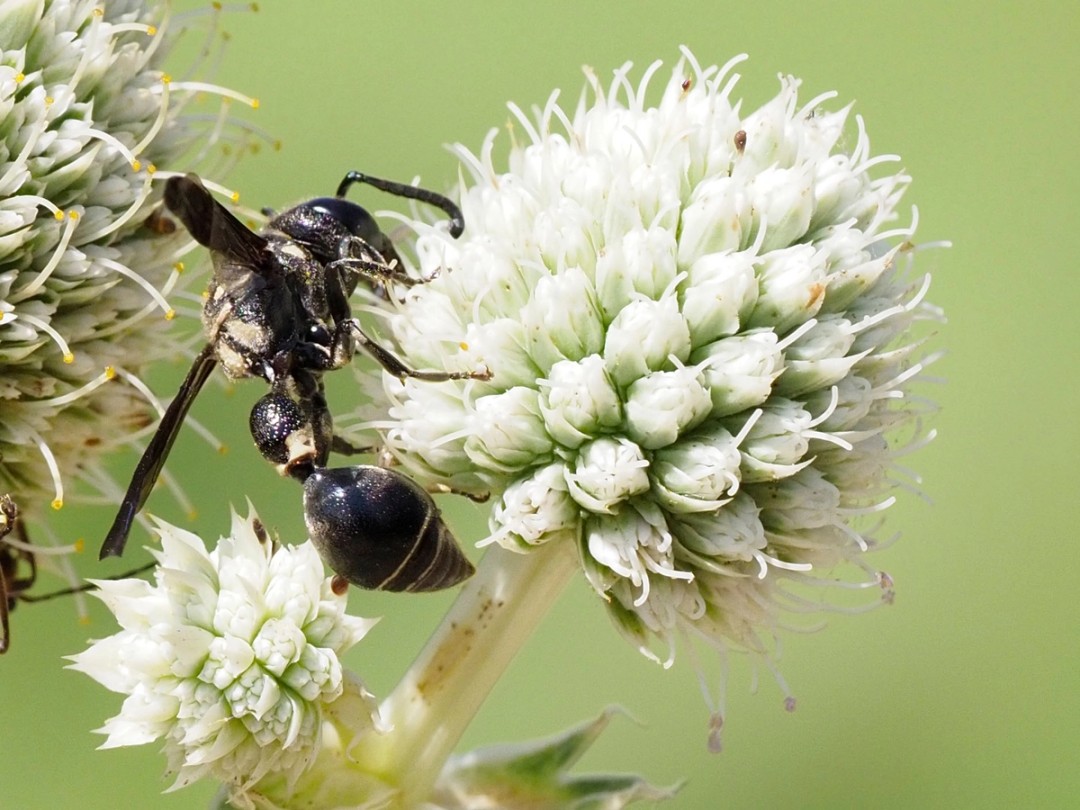
Black Thorn-footed Mason wasp (Zethus spinipes) 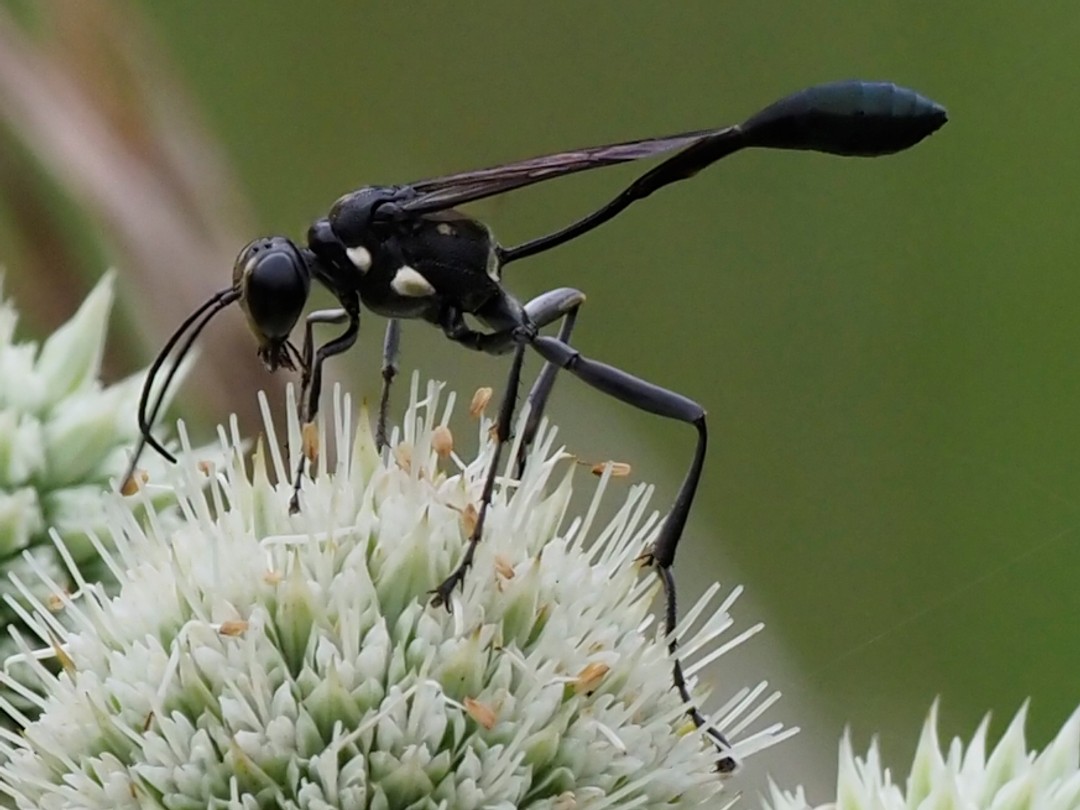
Gold-marked Thread-waisted wasp (Eremnophila aureonata) 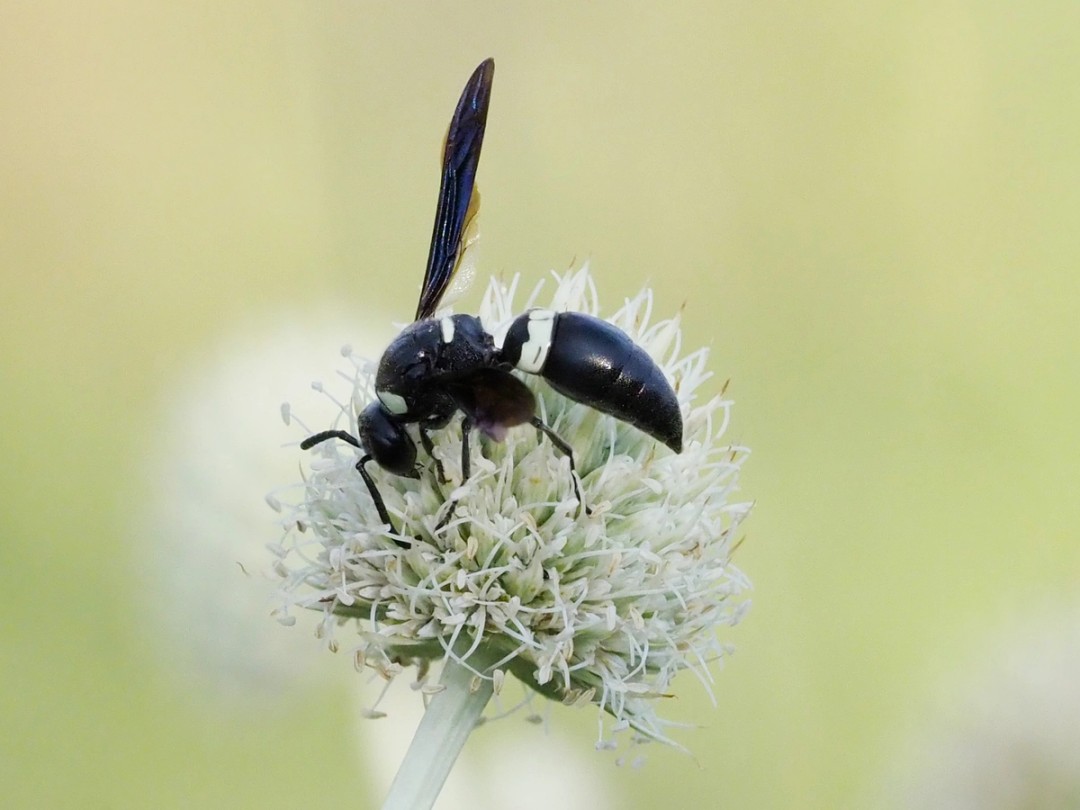
Four toothed mason wasp (Monobia quadridens) 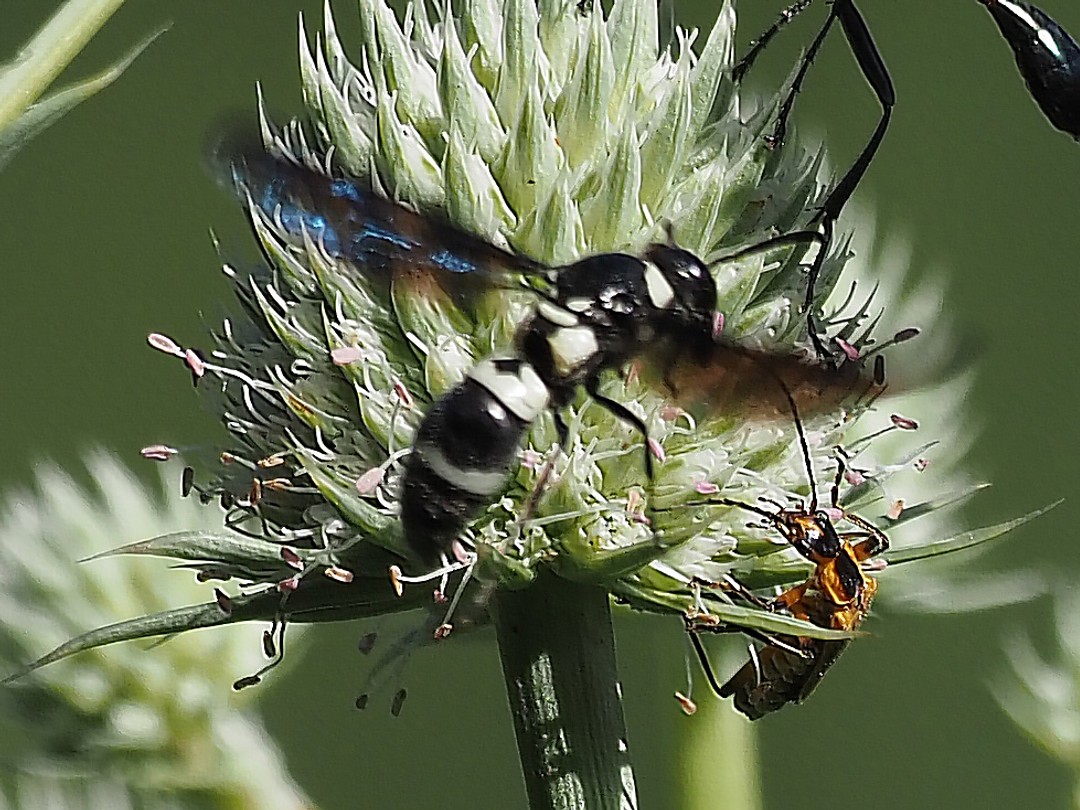
Square-cut Mason wasp, Pseudodynerus quadrisectus
I see many more wasps than bee visitors. The metallic green sweat bees are particularly beautiful, but as they are quite small, their beauty is easier to appreciate on photographs!
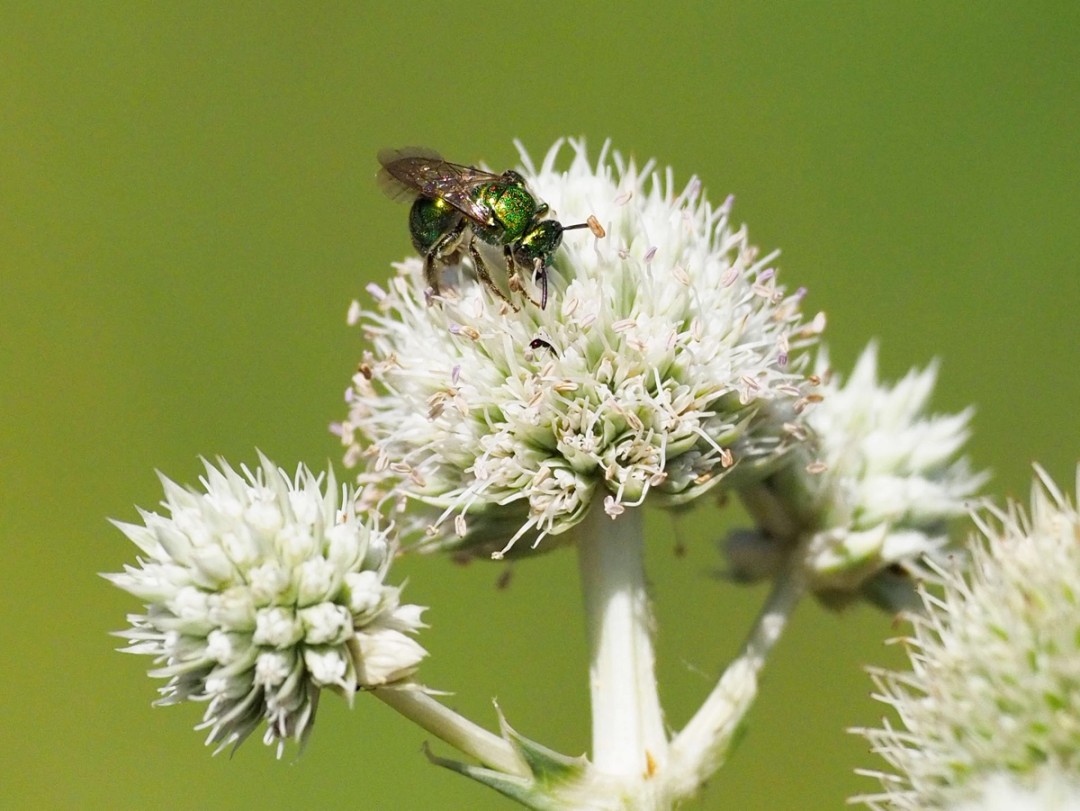
Genus Augochloropsis 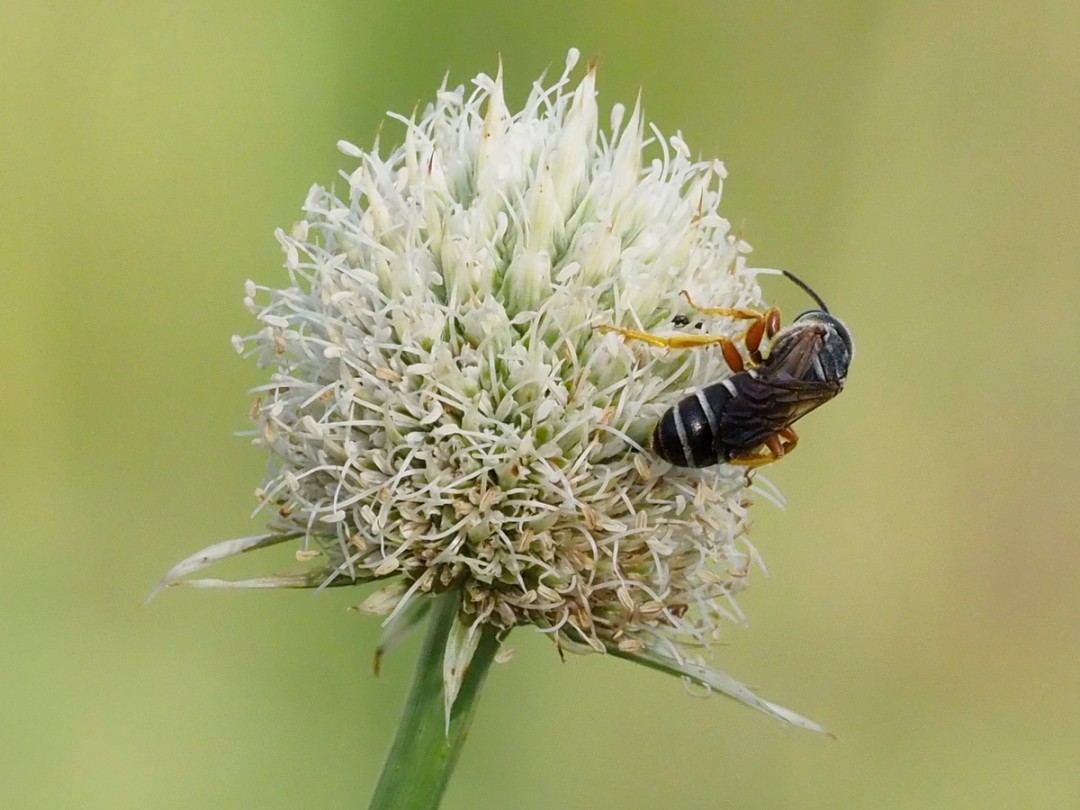
Furrow bee (Genus Halictus)
Butterflies
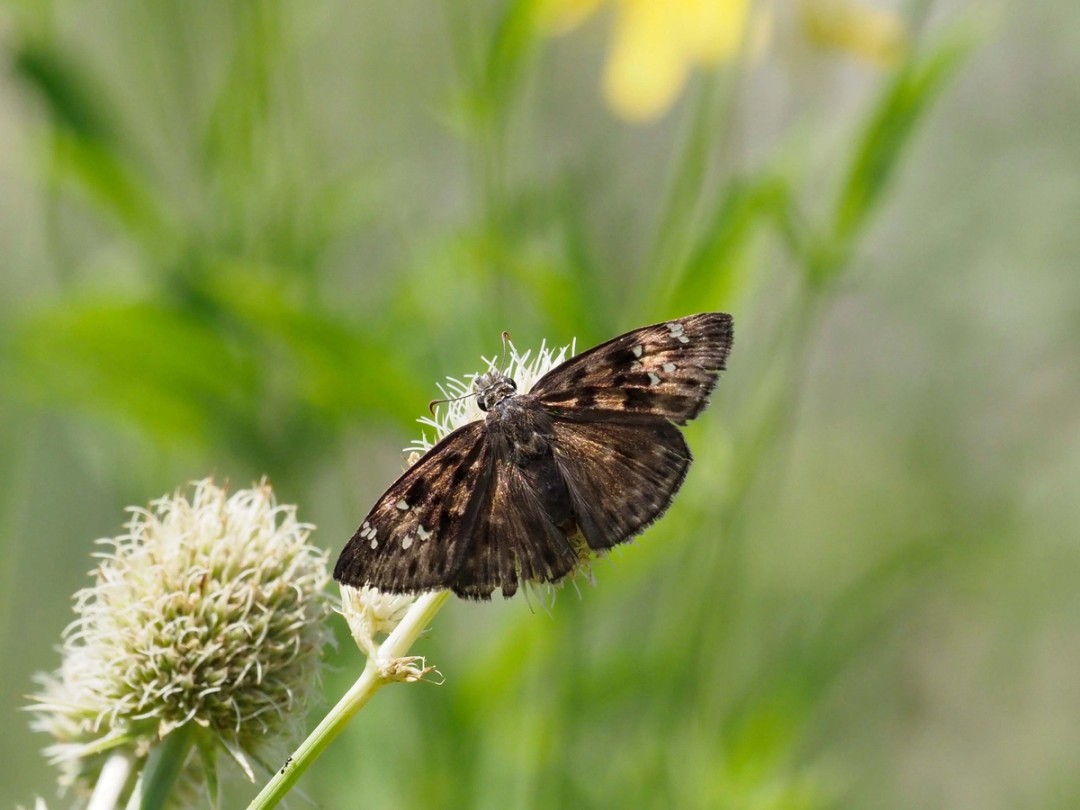
Horace's duskywing 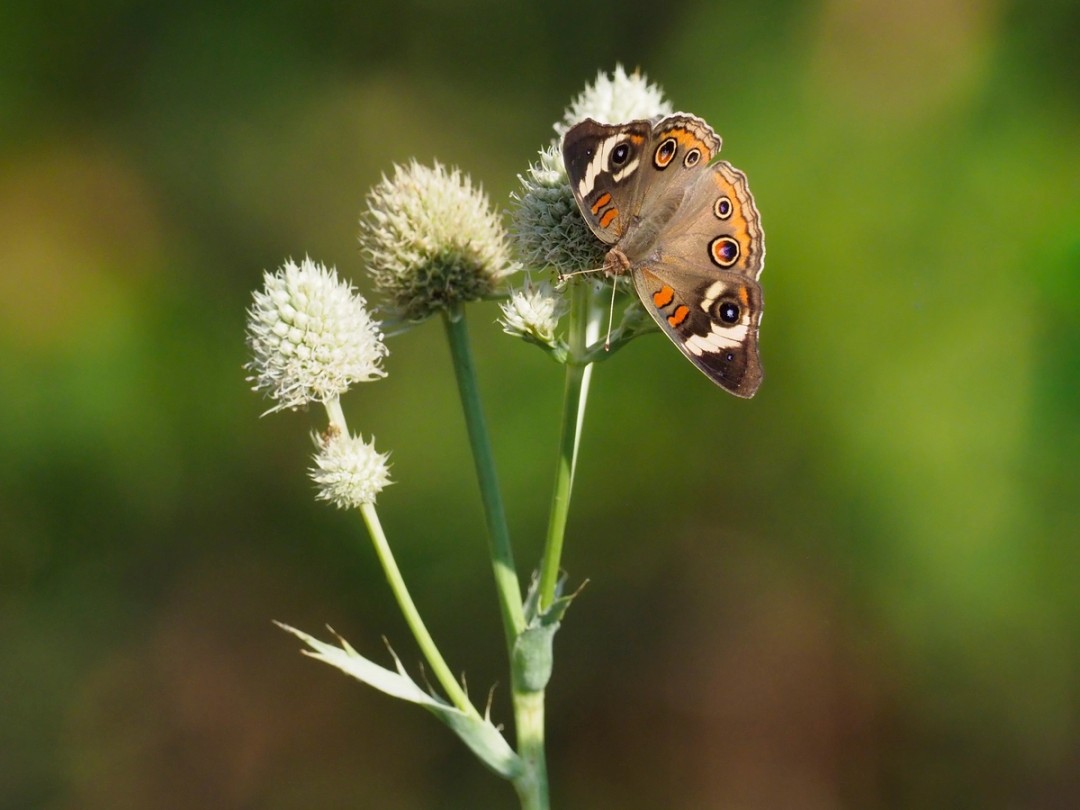
Common Buckeye 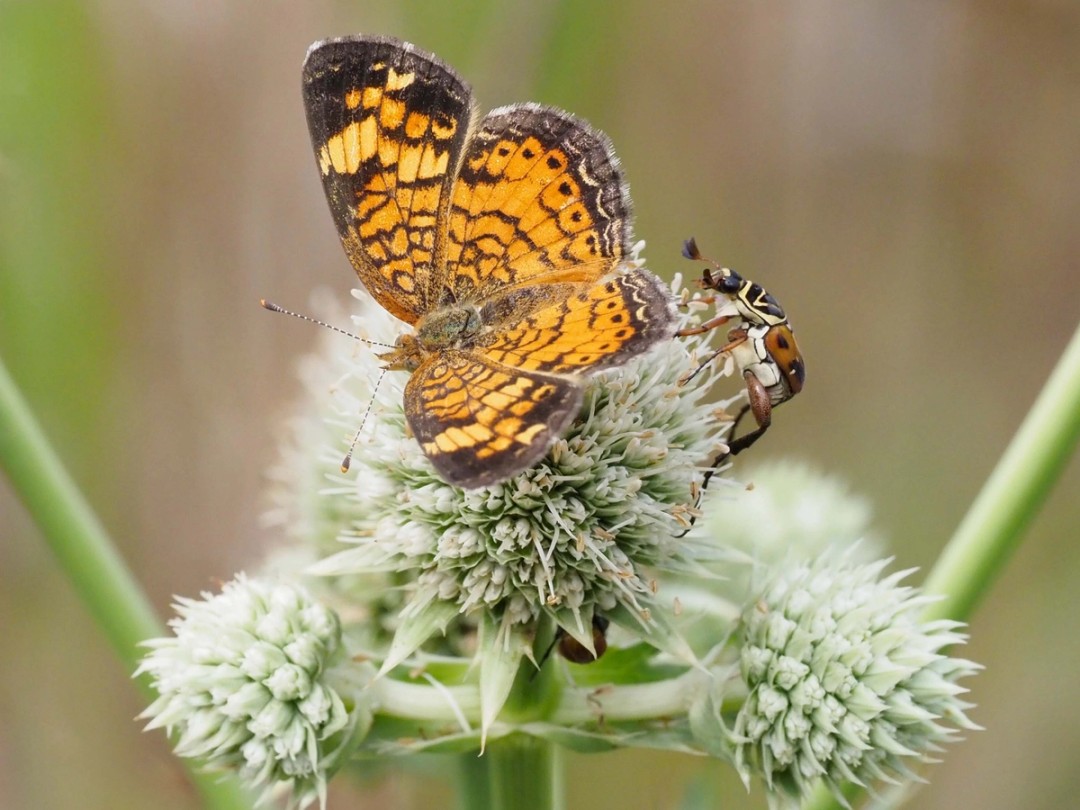
Pearl crescent 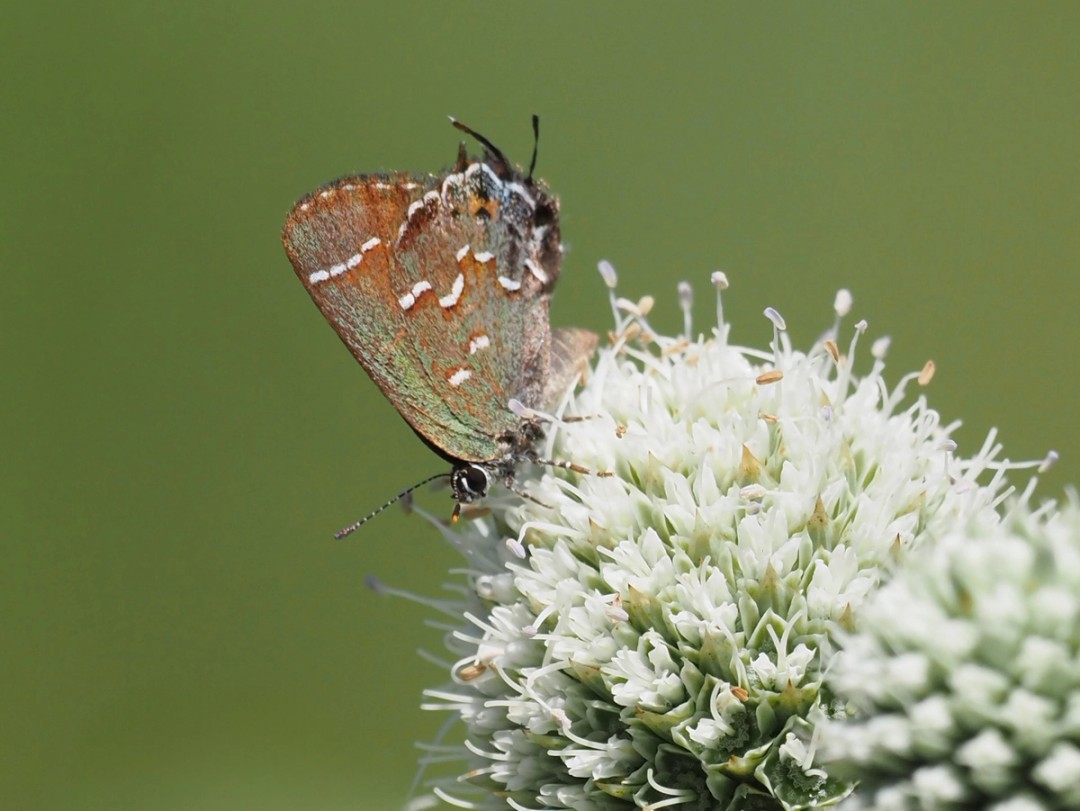
Juniper hairstreak
Other insect visitors-
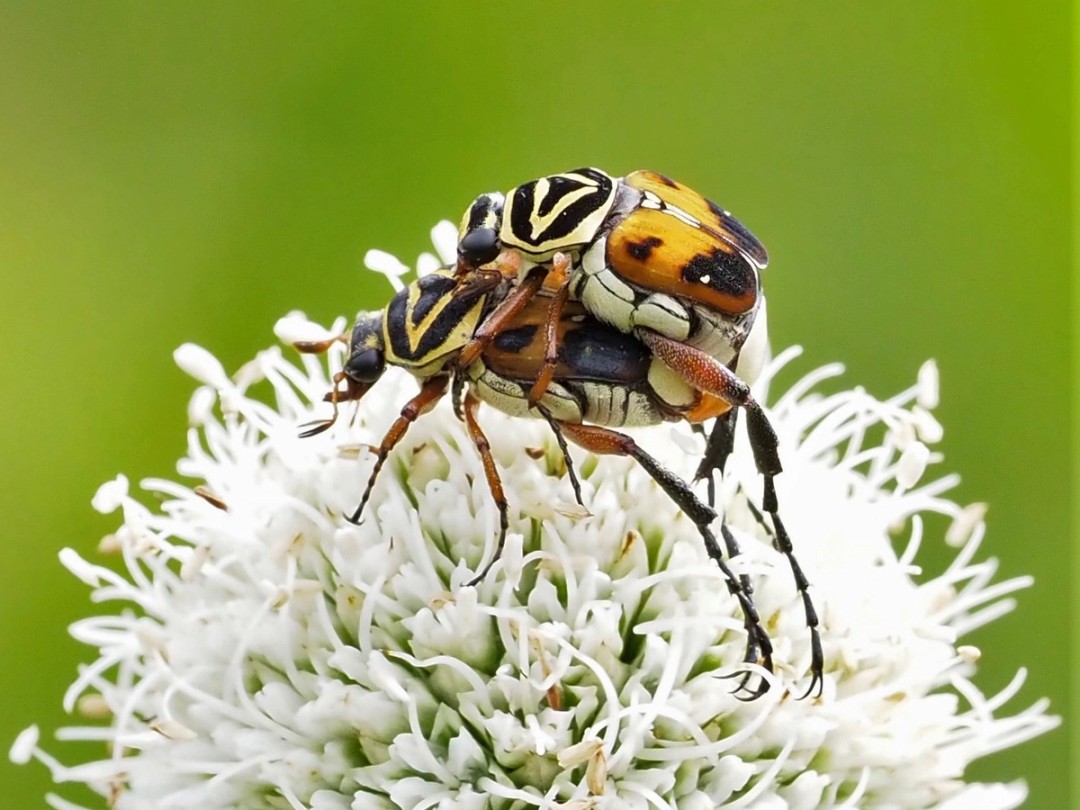
Delta flower scarab beetle 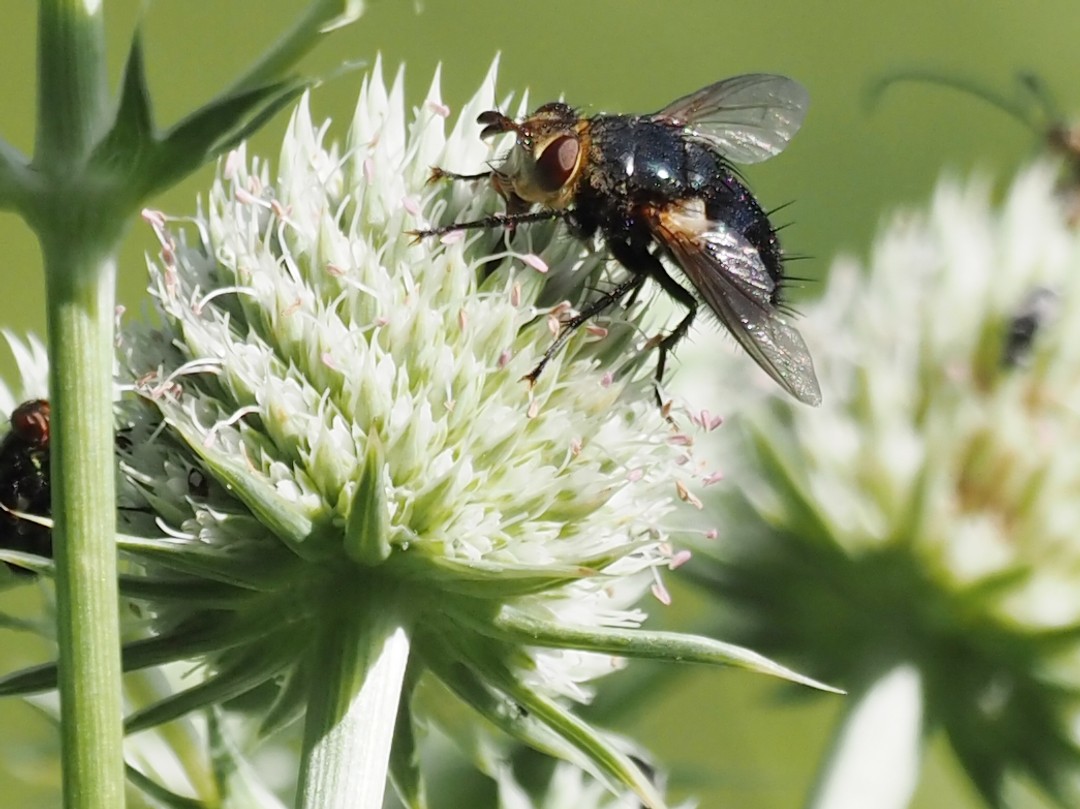
Genus Archytas (family Tachinidae)
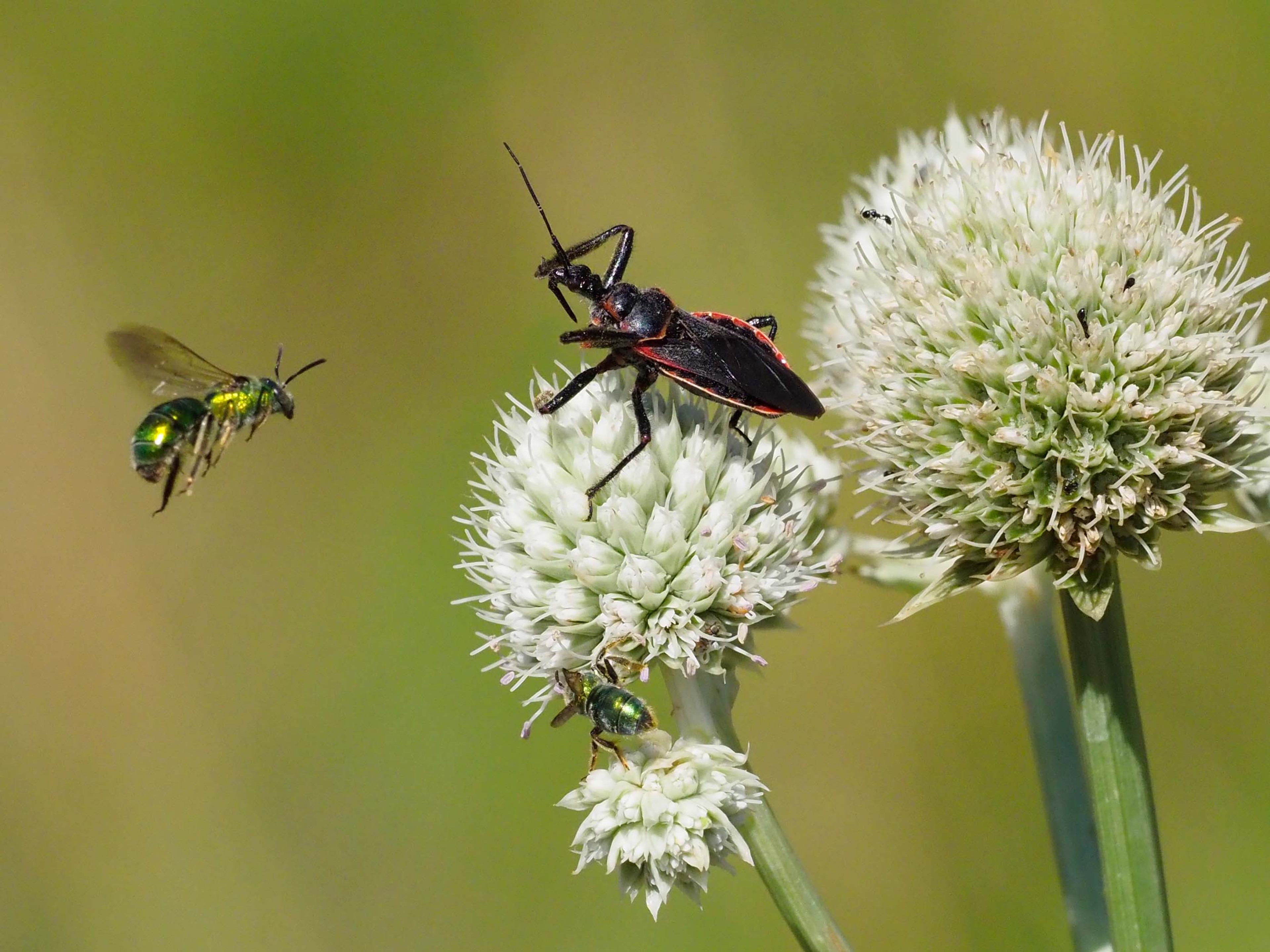
There are so many insects visiting these flowers and sometimes they get testy with each other. Take a look at this battle between an Assassin bug and a couple of Green sweat bees!
PLANTS GROWING NEARBY
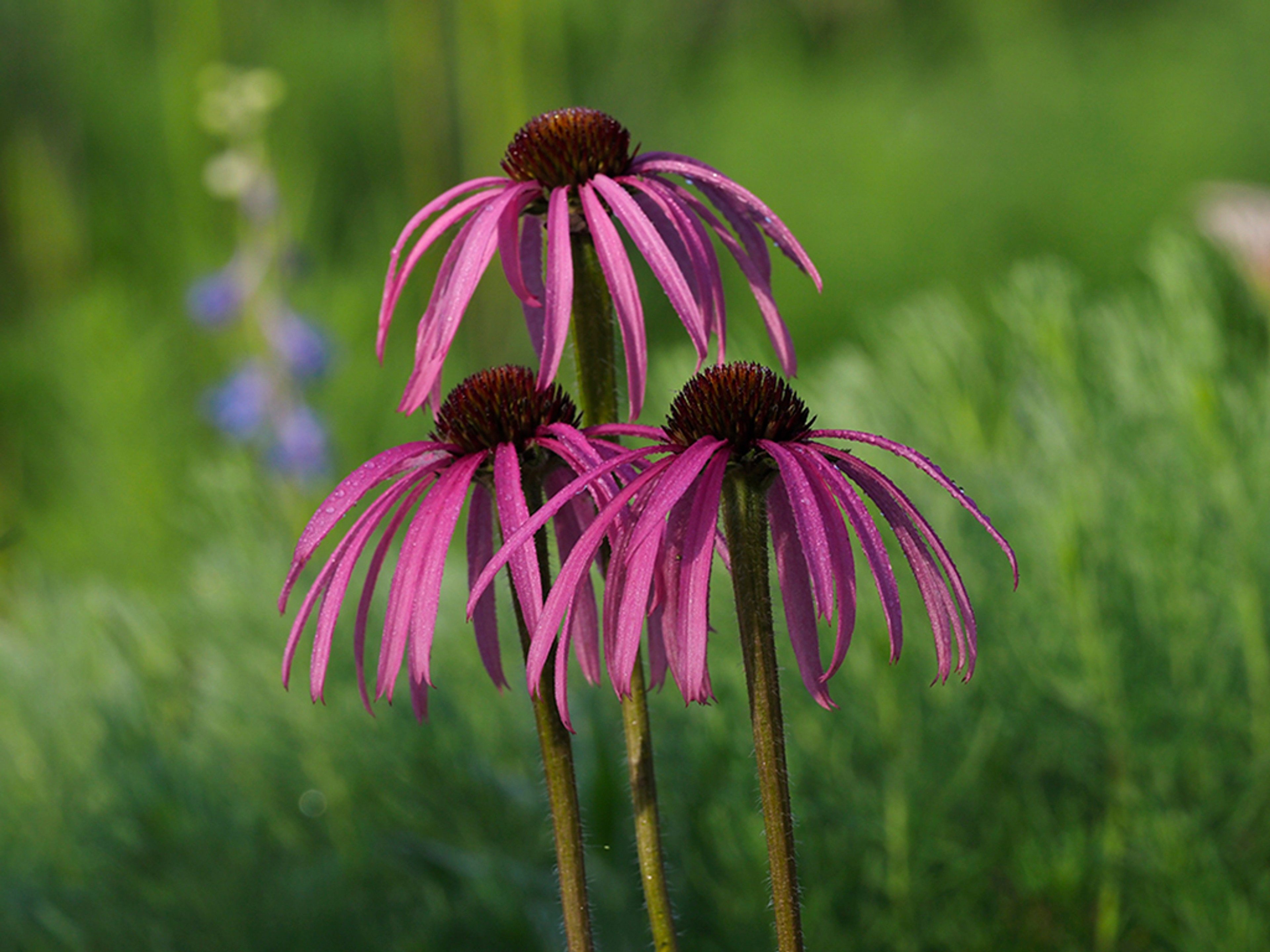
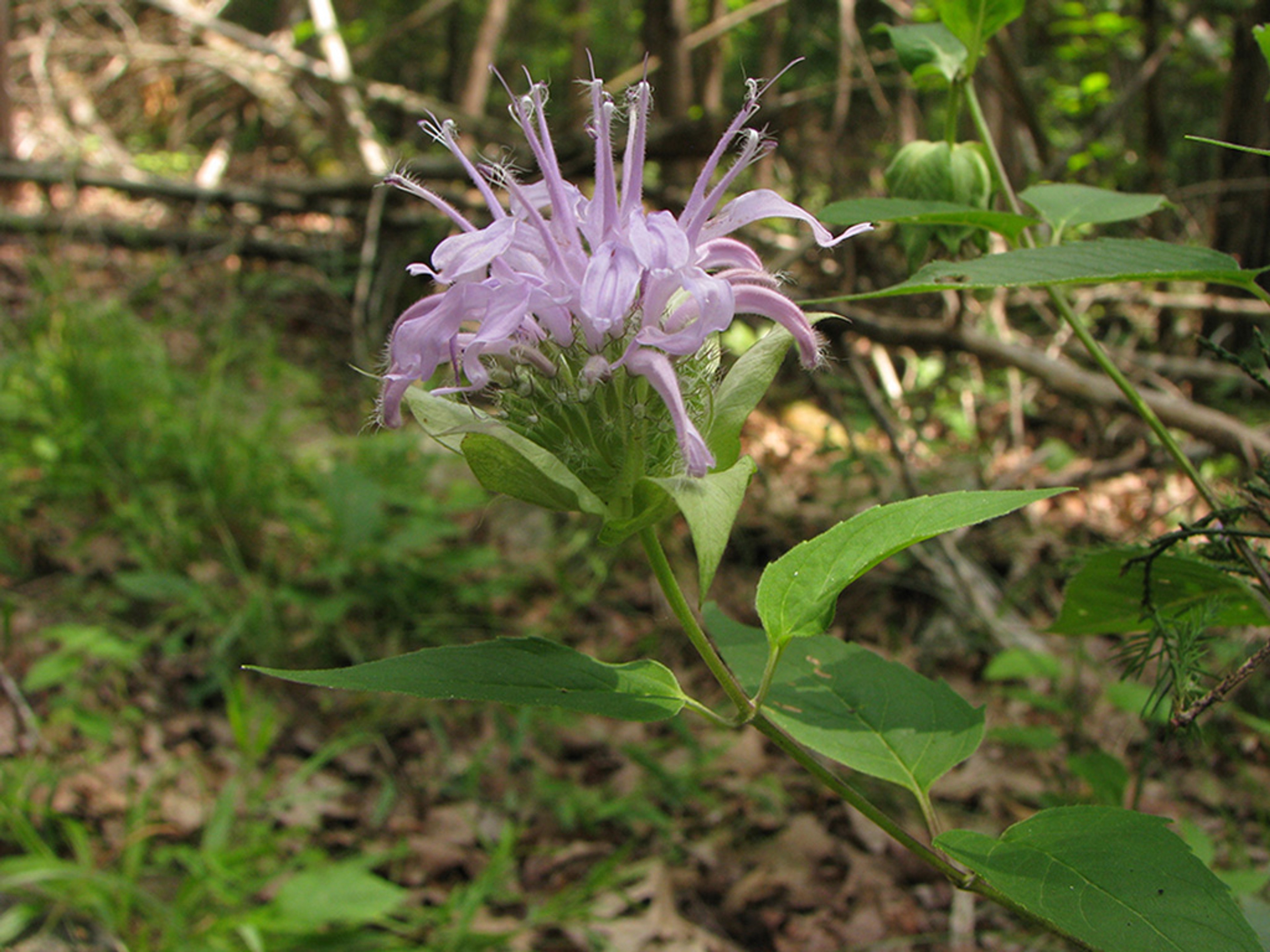
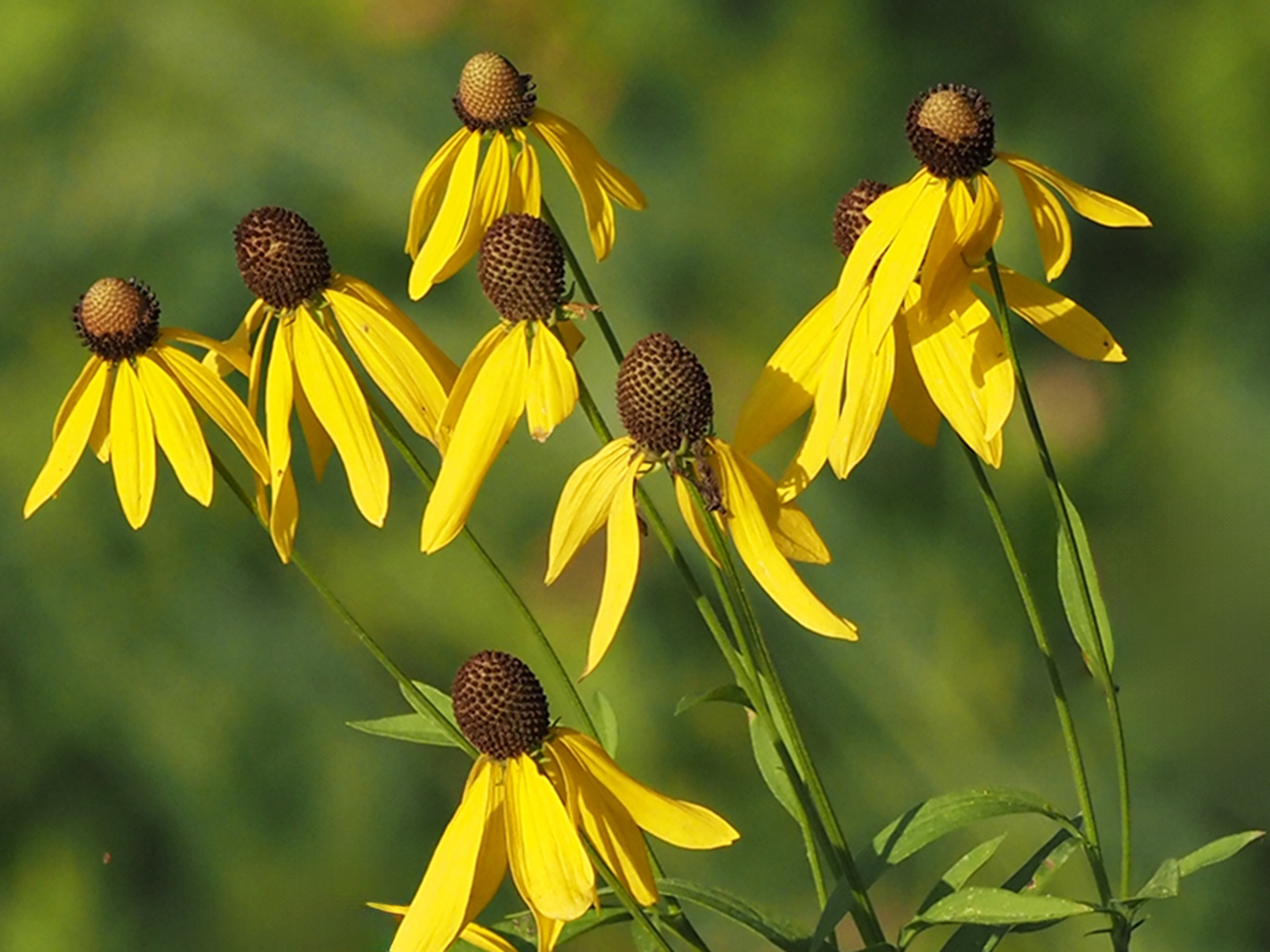
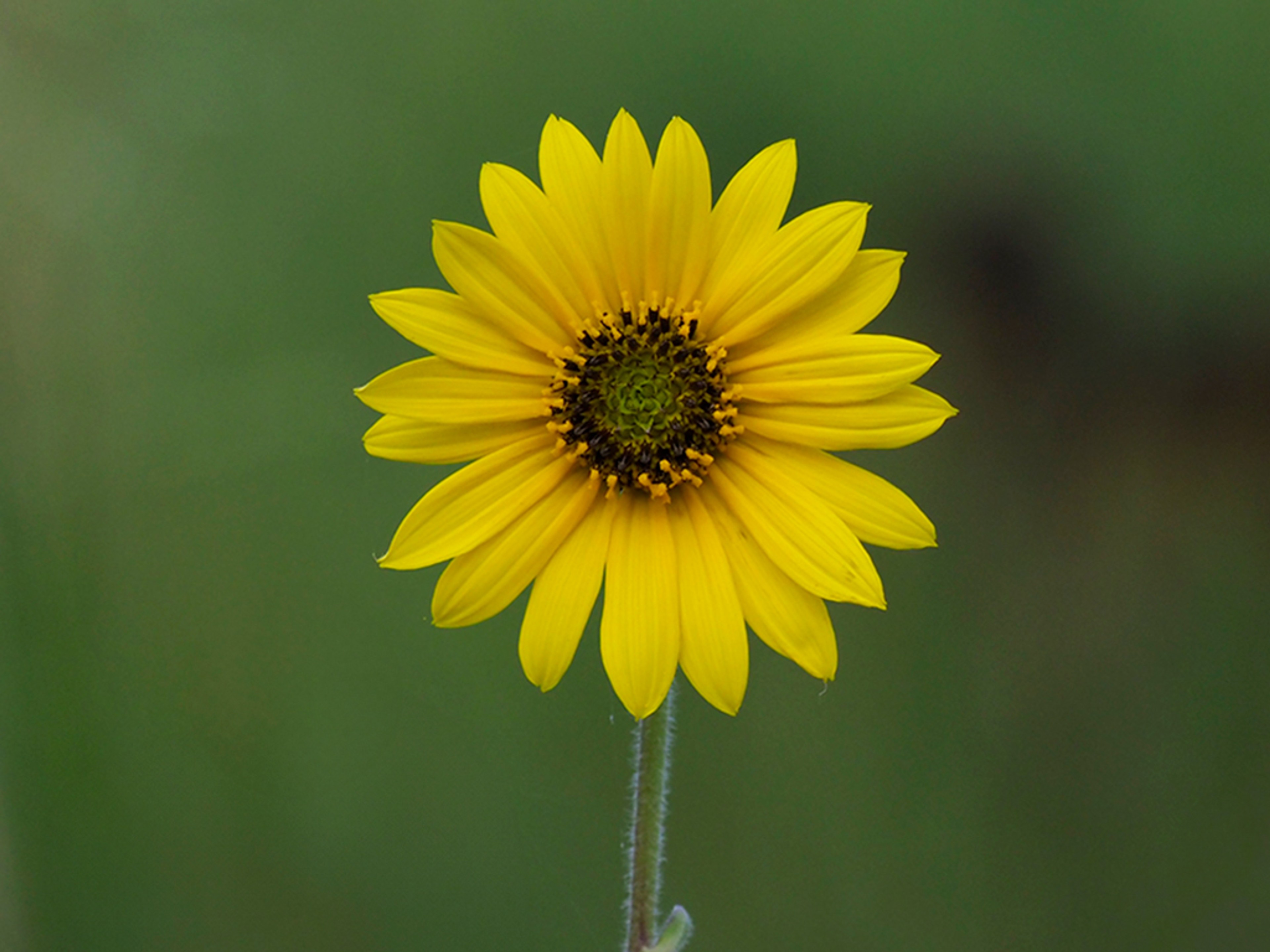
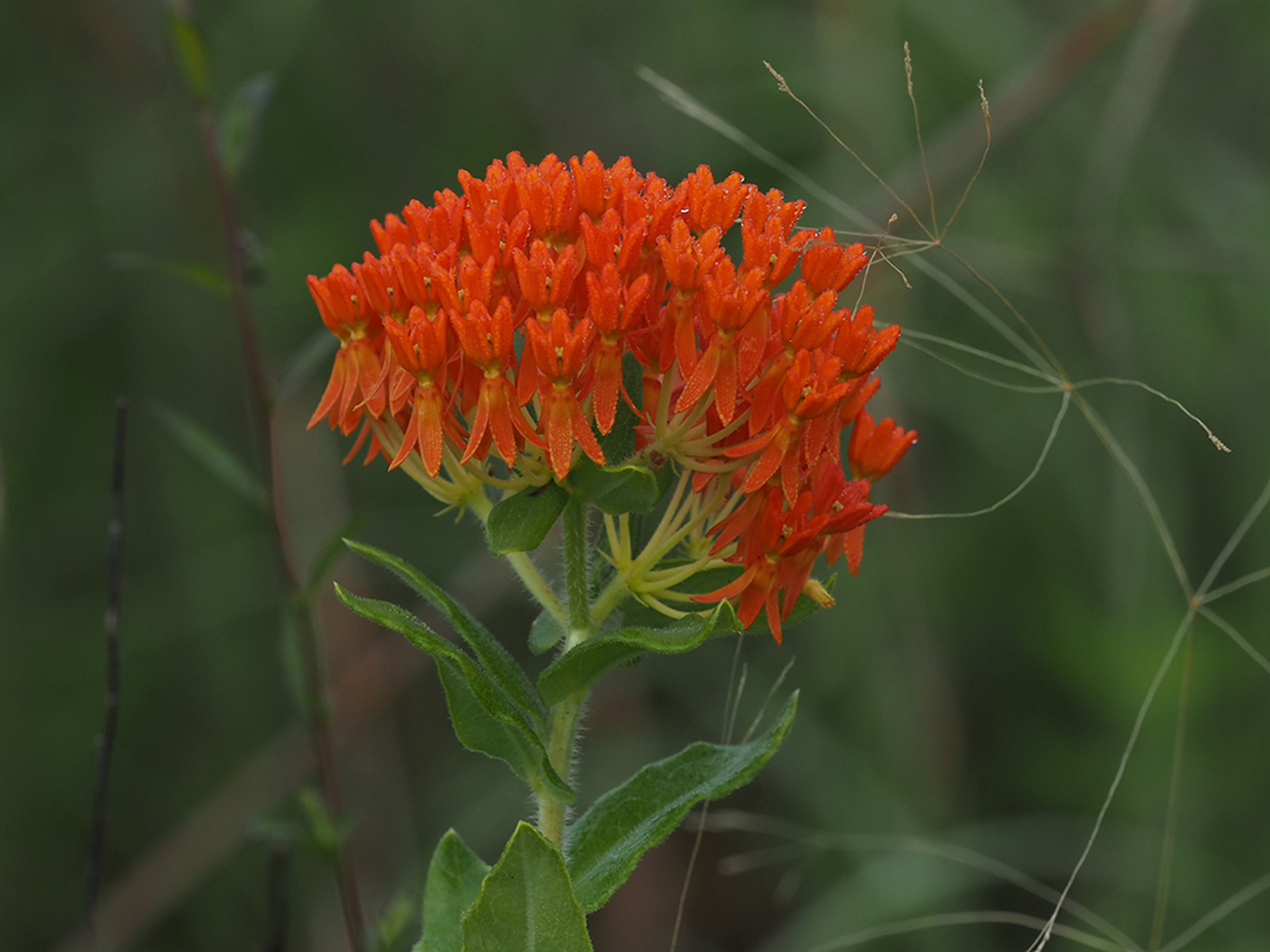
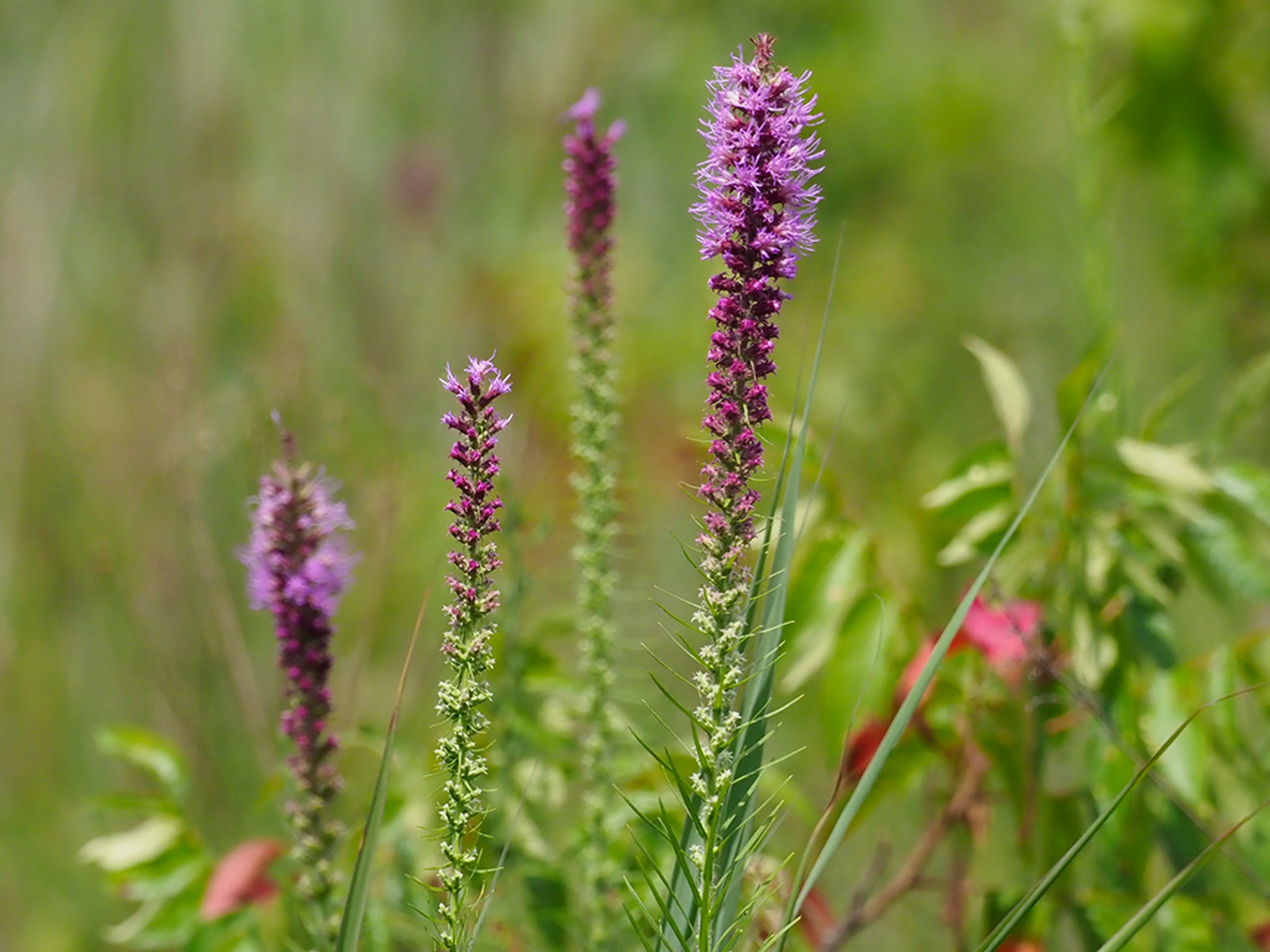
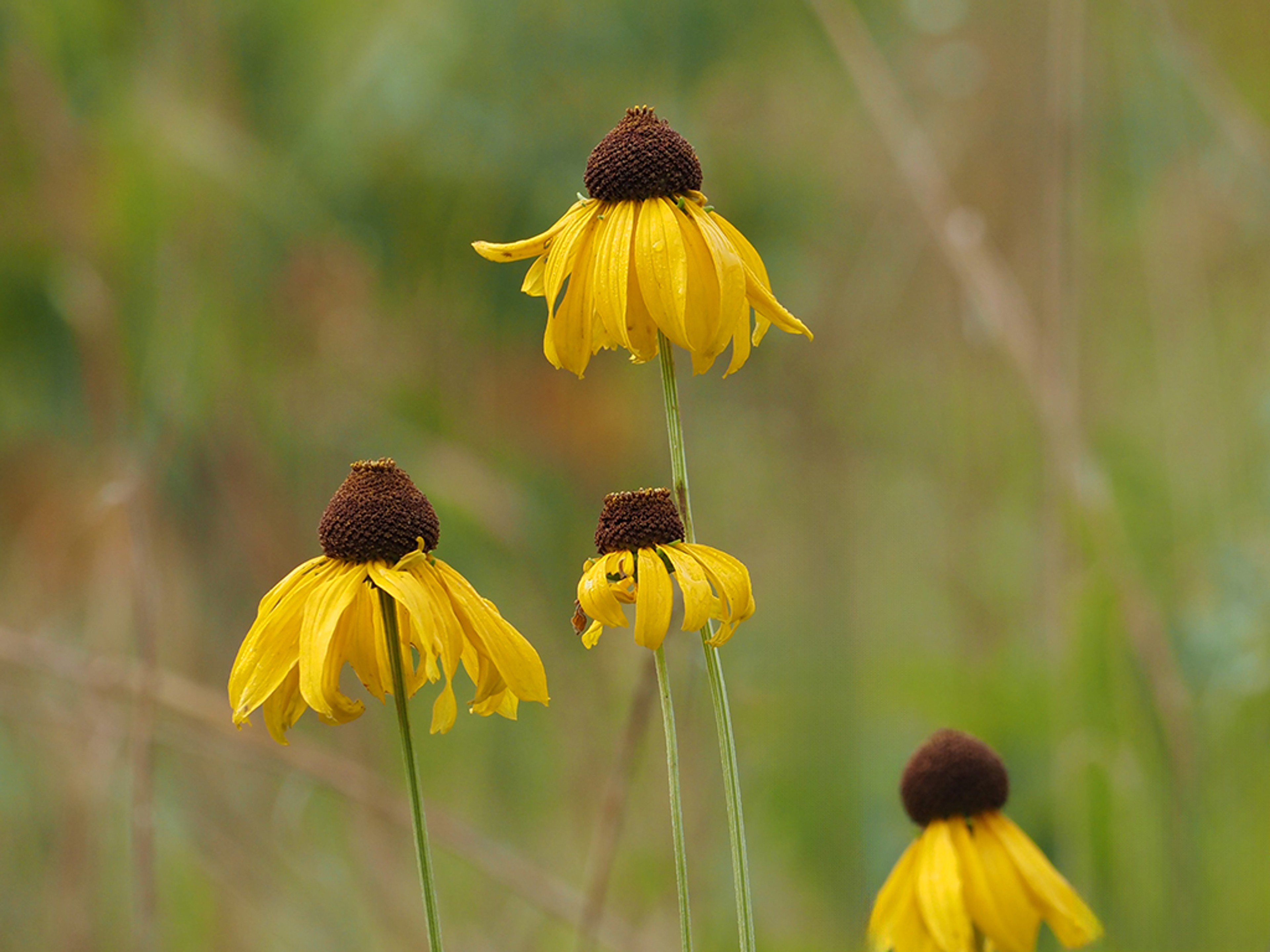
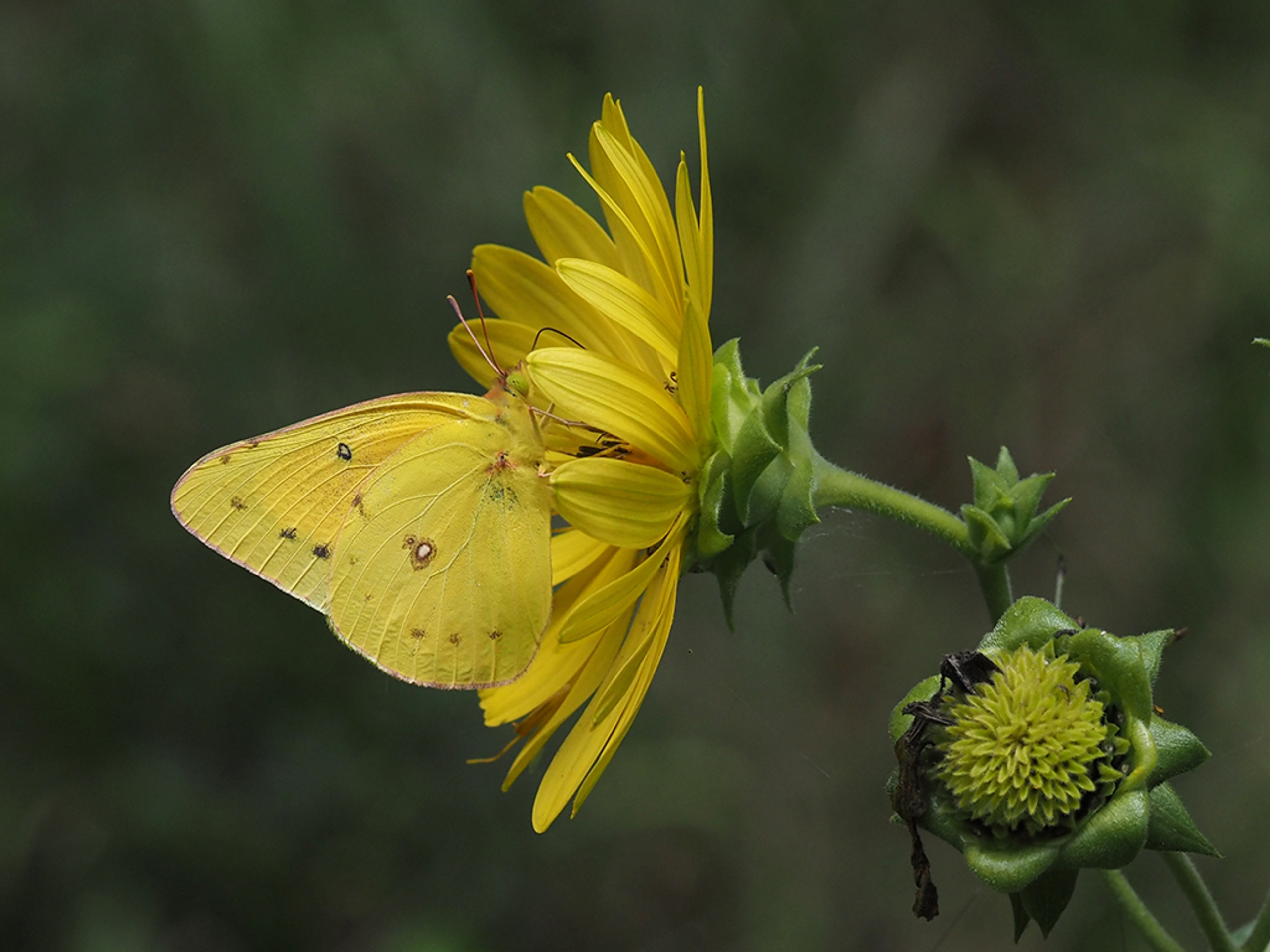
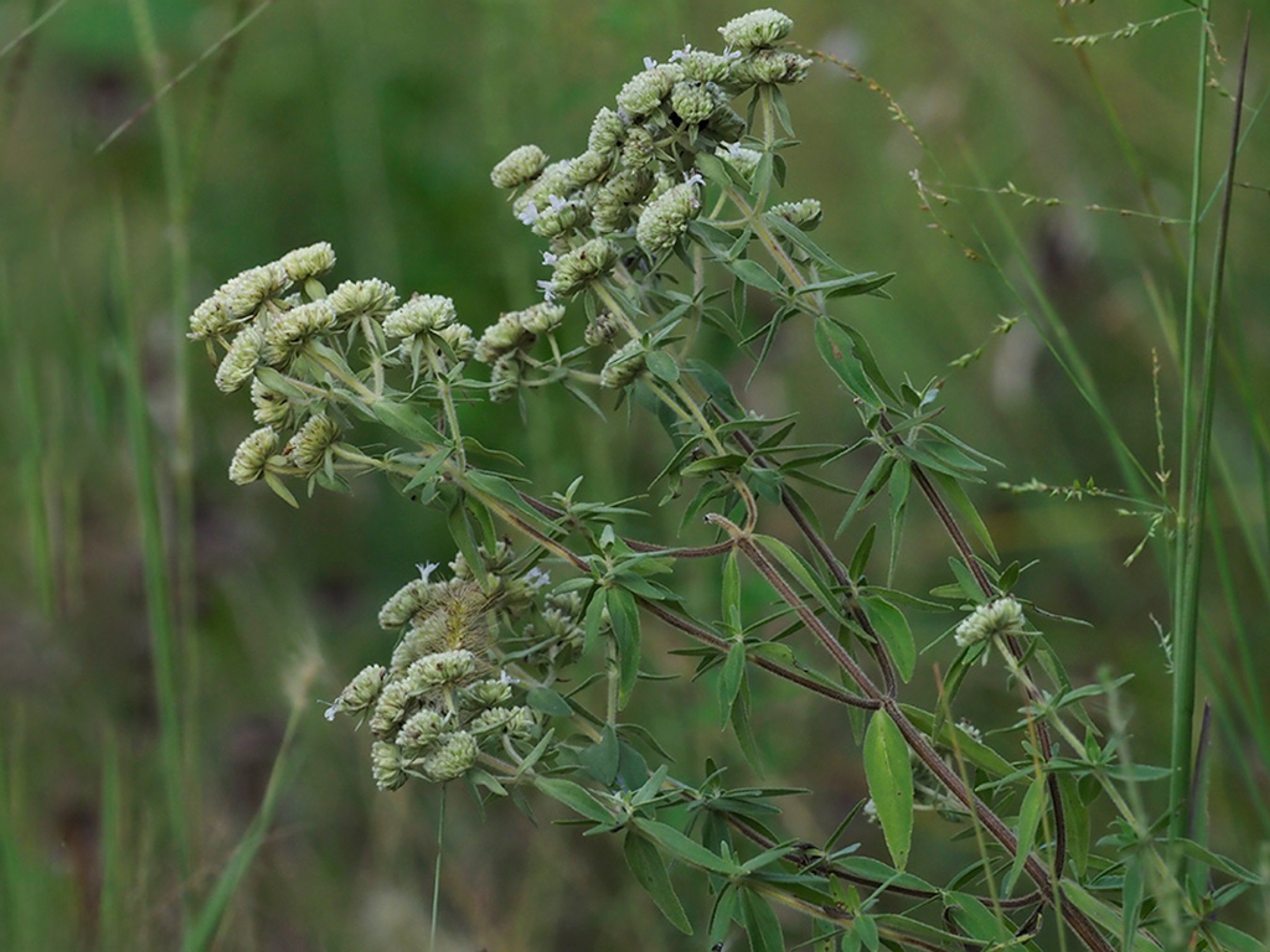
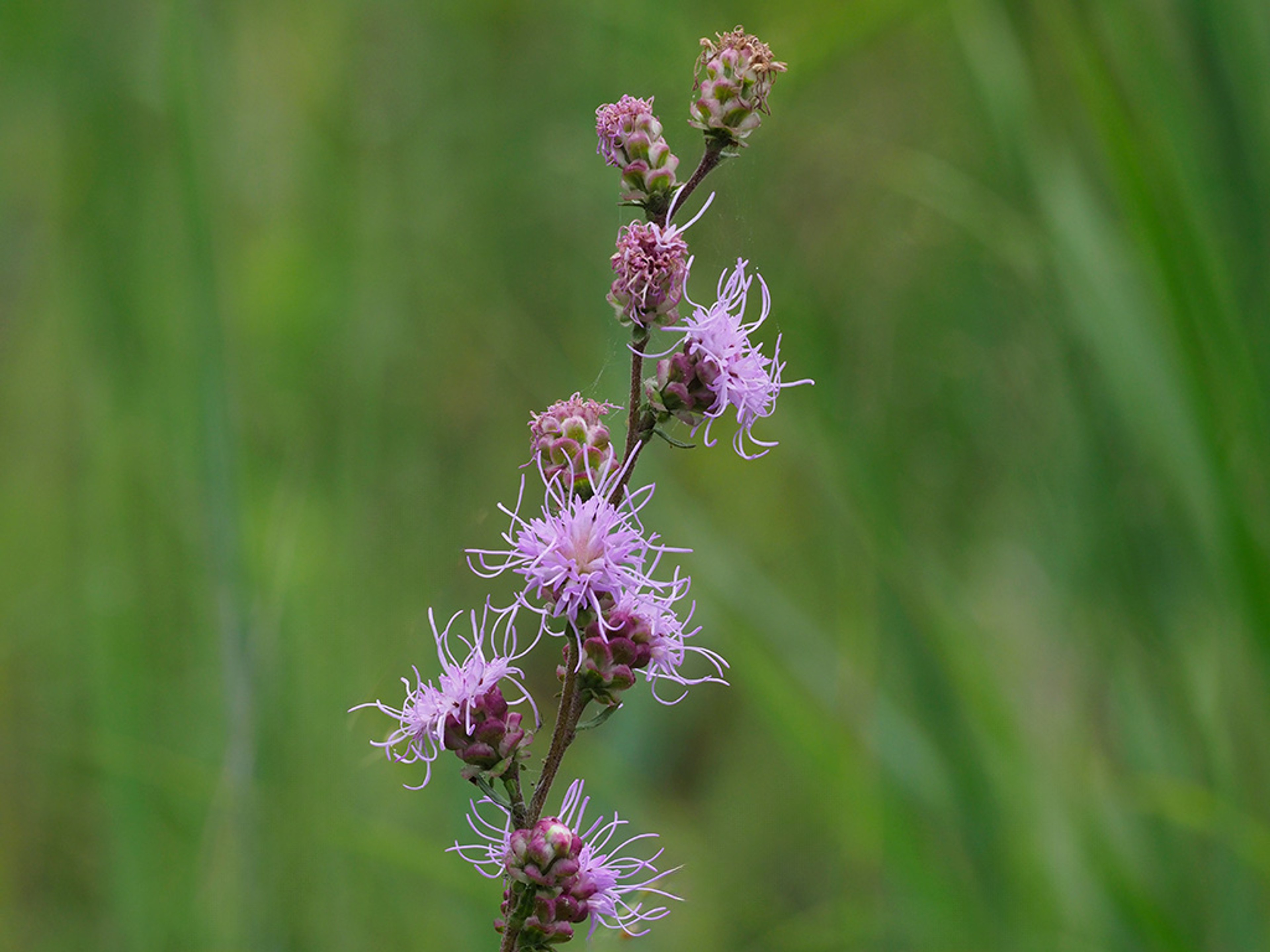
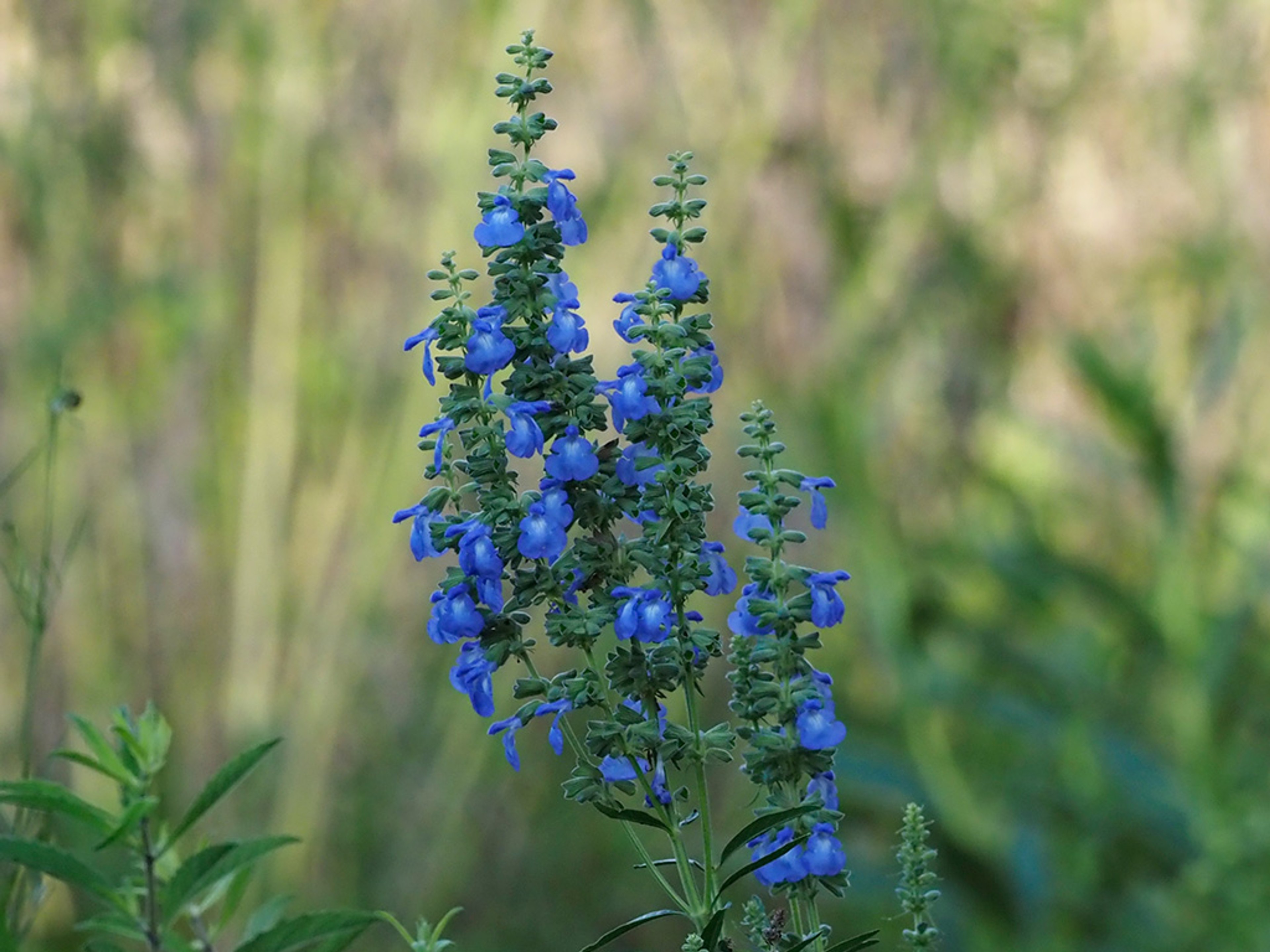
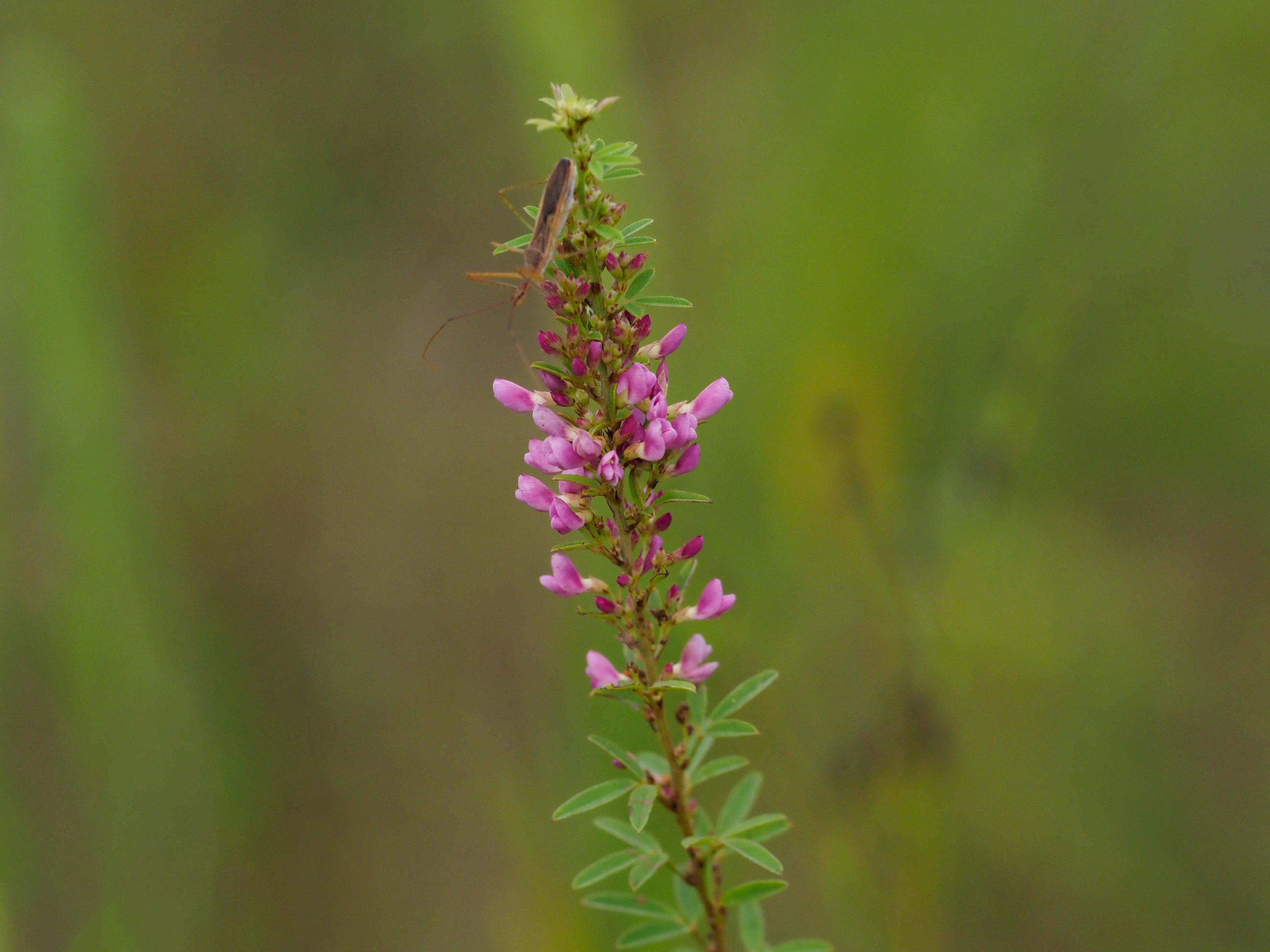
Rattlesnake master has many plant companions in both prairie and glade habitat. I often find it growing alongside Tall cornflower (Rudbeckia grandiflora), Prairie blazing star (Liatris pycnostachya), Gray headed coneflower (Ratibida pinnata), Tall goldenrod (Solidago altissimo) and Ashy sunflower (Helianthus Mollis). Another common companion in the grassland is Grassleaf rush (Juncus marginatus). These are just a few examples.
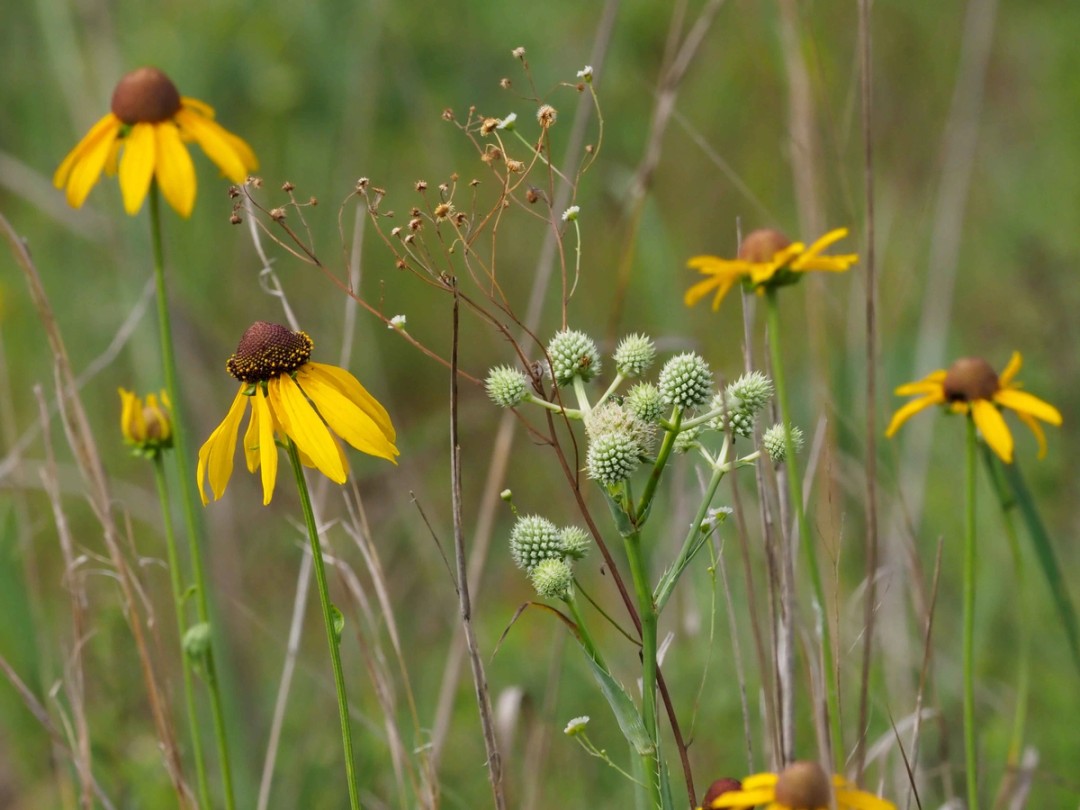
Rudbeckia grandiflora 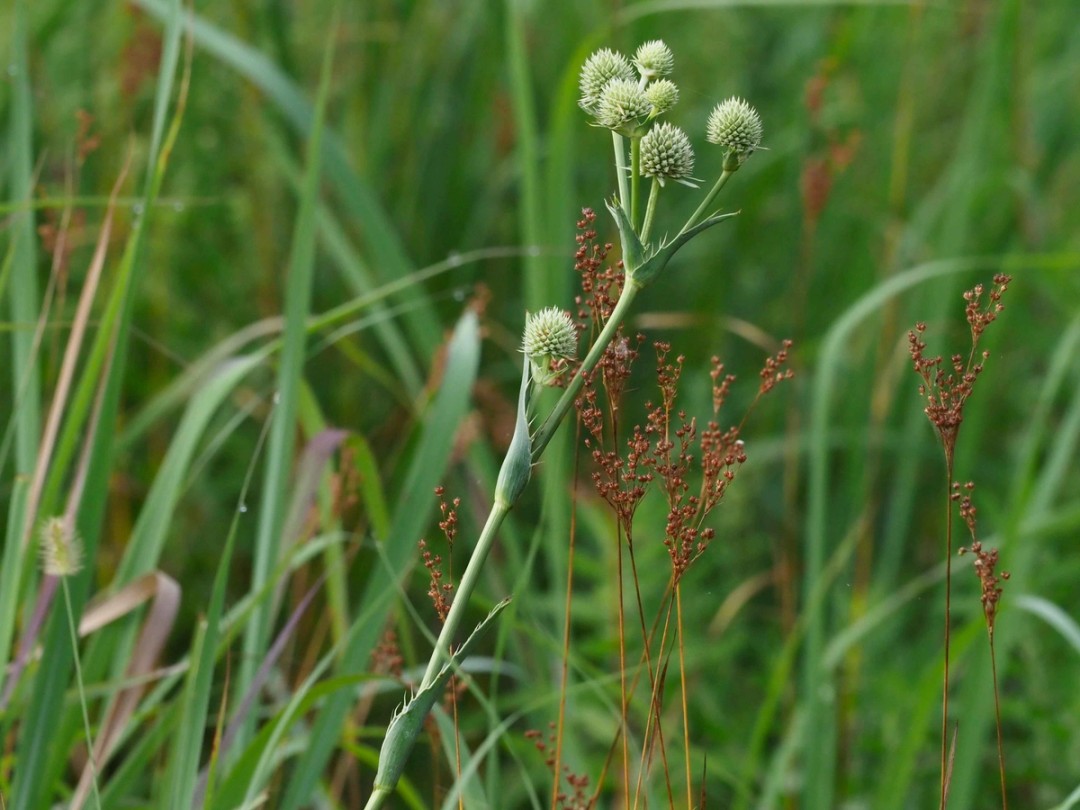
Juncus marginatus 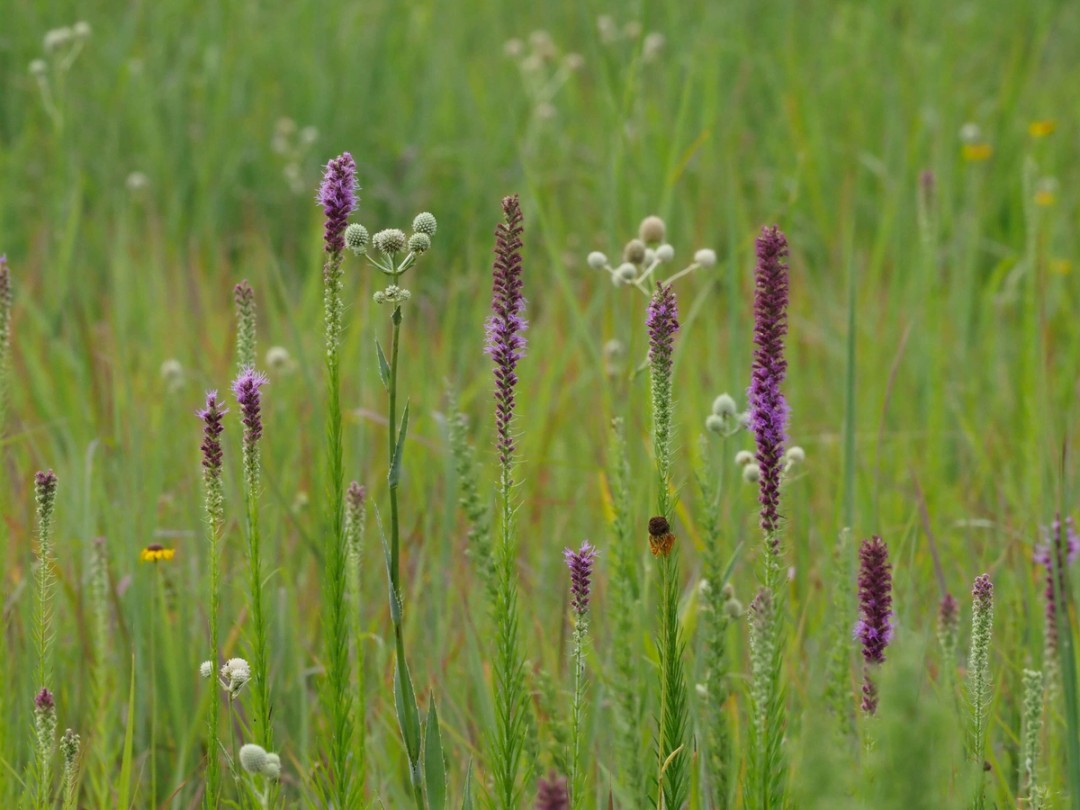
Liatris pycnostachya 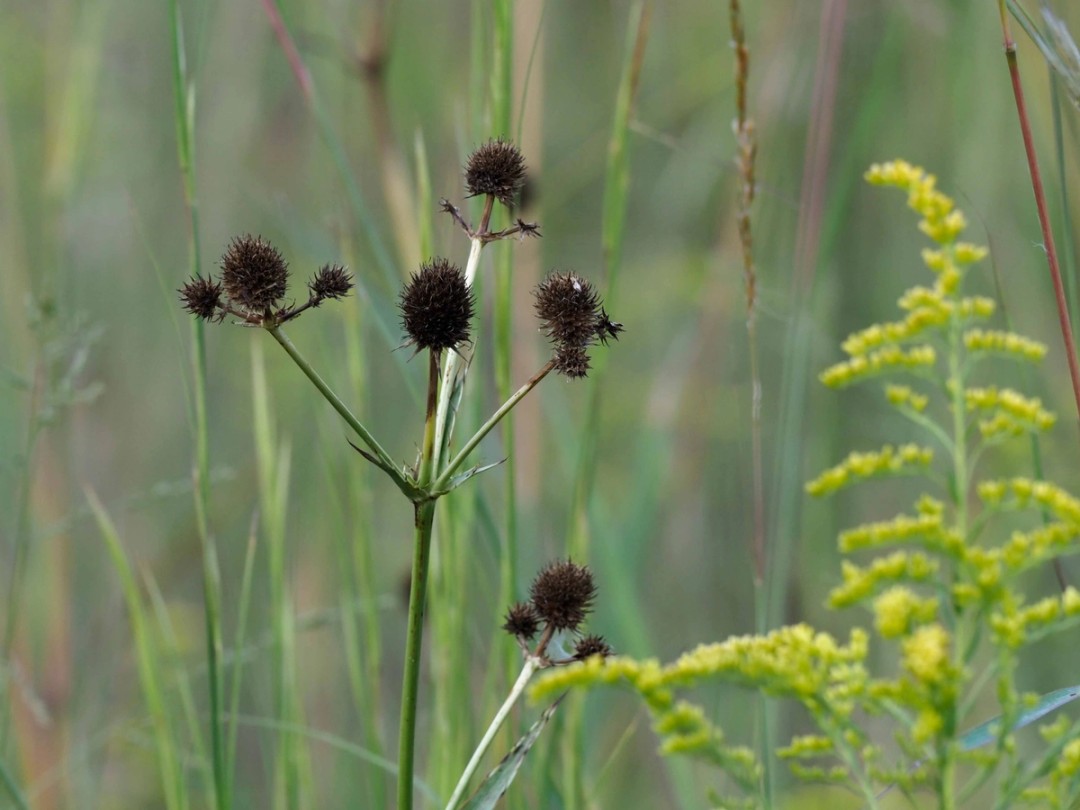
Solidago altissima 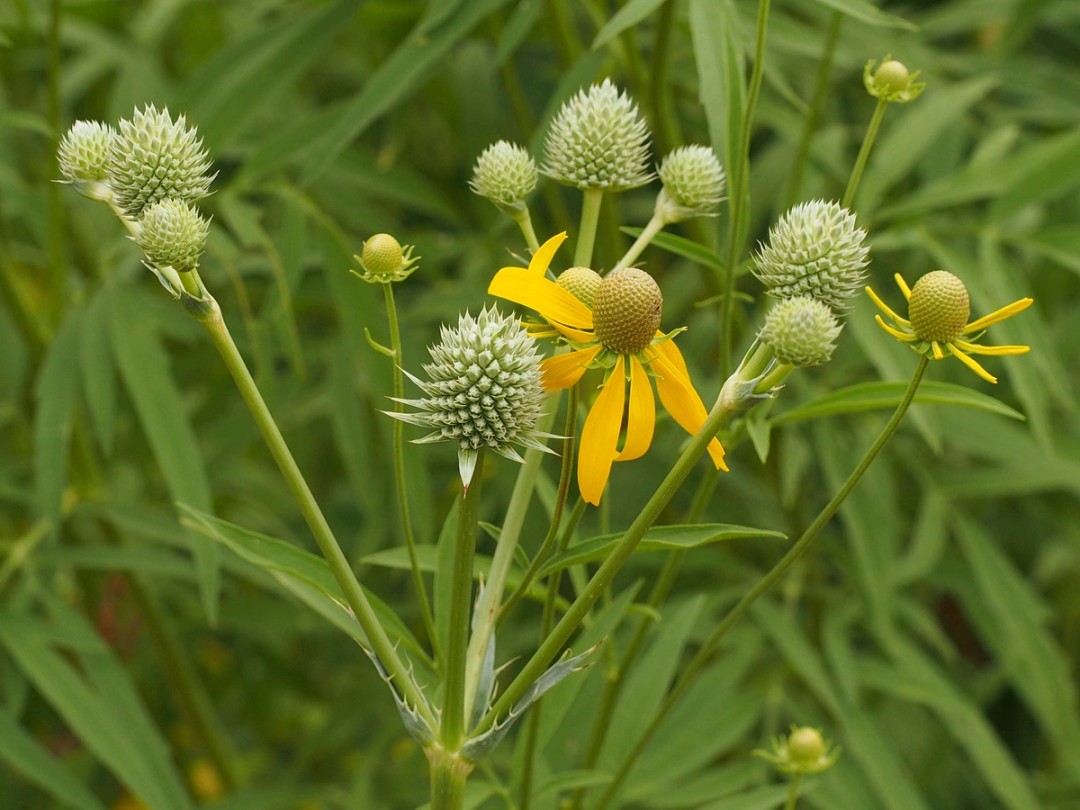
Ratibida pinnata 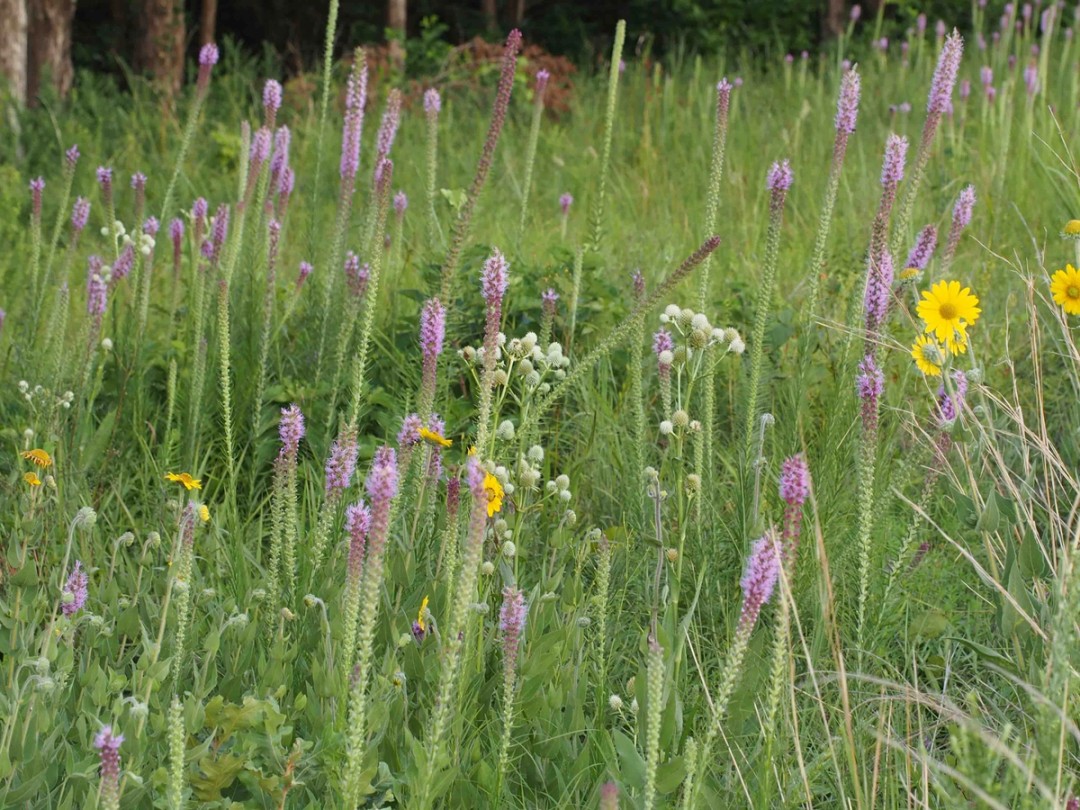
Helianthus mollis
HABITAT
Rattlesnake master isn't too picky about its habitat. It does very well among grasses and other forbs in the full to partial sun of prairie habitat. It also does well in the hot, rocky ozark glades. In fact, it will thrive just about anywhere except for full shade or wetland. Overall, this is an easy-to-please native plant.
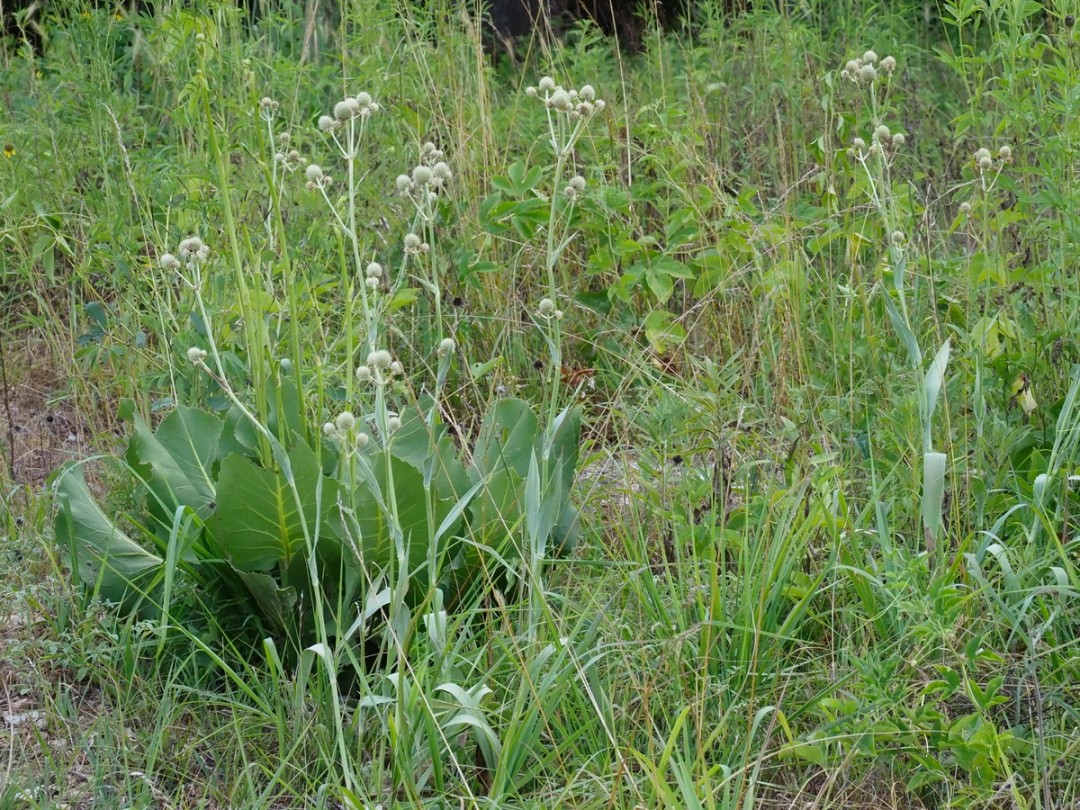
Glade habitat 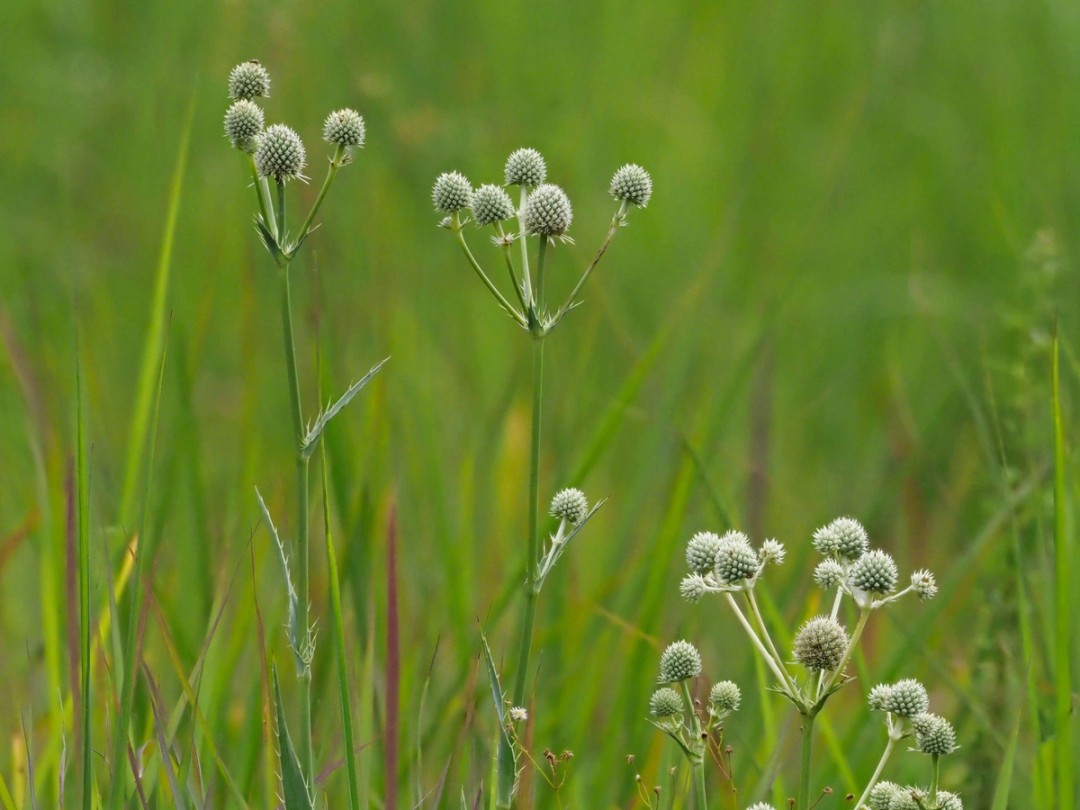
Grassland habitat
CONSERVATION STATUS
While Natureserve lists Rattlesnake masters as Secure, most of the states in its range lack status ranking on the site. It is listed as Secure in Georgia and North Carolina, Apparently Secure in Iowa, Vulnerable in Ohio, Imperiled in Virginia and Michigan. It is Critically Imperiled in Nebraska and Possibly Extirpated in Maryland. All other states within its range show No Status Ranking.
In Arkansas, Eryngium yuccifolium has a Conservation value of 8, meaning "Conservative taxa with strong fidelity to intact habitats". "These taxa tend to exhibit late-successional characteristics like long lifespans with low seed sets and an inability for far ranging dispersal."
INTERESTING TIDBITS
Prehistoric sandals discovered in Missouri were found to use fibers from Eryngium yuccifolium for padding.* What a great idea. I can imagine that layers of the thick yucca like leaves of Rattlesnake master could be very comfortable in the sole of a pair of sandals. The sandals were discovered in the 1950s and were dated using accelerator mass spectrometry in 1977.
*Science.1998 Jul 3;281(5373):72-5. doi: 10.1126/science.281.5373.72.
Rattlesnake master fiber shoes have been found across a wide region. In Salts Cave, Kentucky, slippers woven from Eryngium yuccifolium leaves date to approximately 1500 BCE, while ornate adult- and child-sized moccasins and sandals from Missouri have been dated from 1,000 to 8,000 years old — stylish and ancient!
(Gordon, A. and Keating, R.C. Journal of Archaeological Science. 2001. 28:55-60.)
On the Ozark Plateau, Eryngium yuccifolium leaves made up nearly 70% of fiber used in Archaic and Woodland period textiles. Rattlesnake master may even appear in early European accounts — Rangel's record of the De Soto expedition describes a plant called 'abrotea,' pounded to produce fiber like flax, which historians believe may be this very species.
(Standifer, M.S. et al. From Foragers to Farmers. Oxford Books, 2012.)
Multiple Indigenous nations used Rattlesnake master medicinally well beyond snake bite treatment. The Muscogee used the roots as an analgesic, sedative, and gastrointestinal aid; the Meskwaki used it in ceremonial medicine and as an antidote for poisons. Of course, please consult a healthcare provider rather than a prairie plant for any medical concerns!
(Kindscher, K. Medicinal Wild Plants of the Prairie. University Press of Kansas, 1992.)