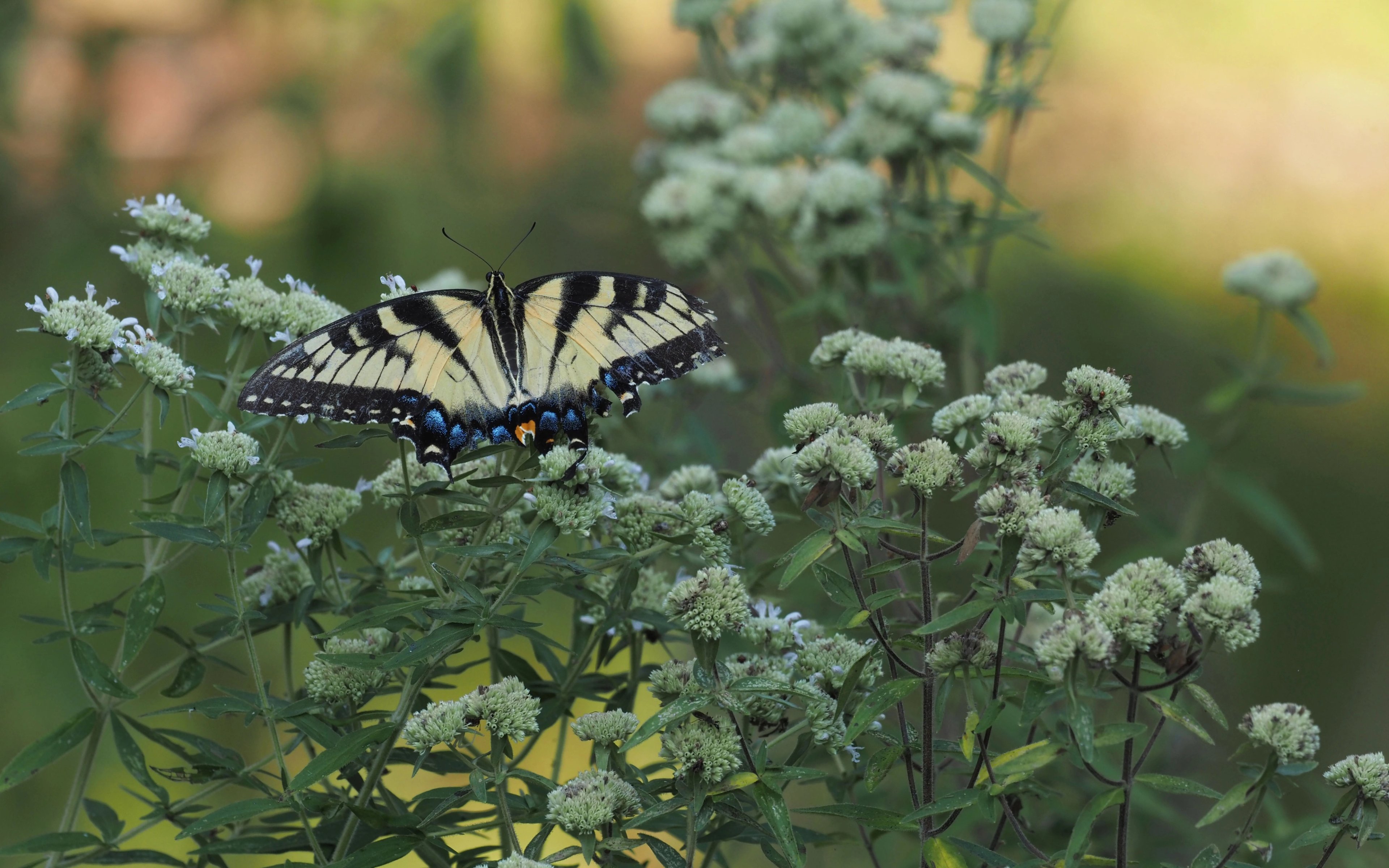
PLANT NAME
The word 'pycnanthemum' is derived from the Greek word 'pyknos' meaning dense and 'anthos' meaning flower. Altogether it refers to the dense clusters of flower found on this Mountain mint. The specific epithet 'pilosum' means 'hairy' or 'covered with hair'.
The common name of Hairy mountain mint is straightforward when one notes the hairiness of the stems.
BLOOM
The flowers of Hairy mountain mint (Pycnanthemum pilosum) are white with purple dots and look quite similar to those of Virginia mountain mint (Pycnanthemum virginianum). Overall, this plant lives up to its name, being more hairy in nearly all parts compared to Virginia mountain mint. The minty fragrance is wonderful and easily released with a gentle squeeze!
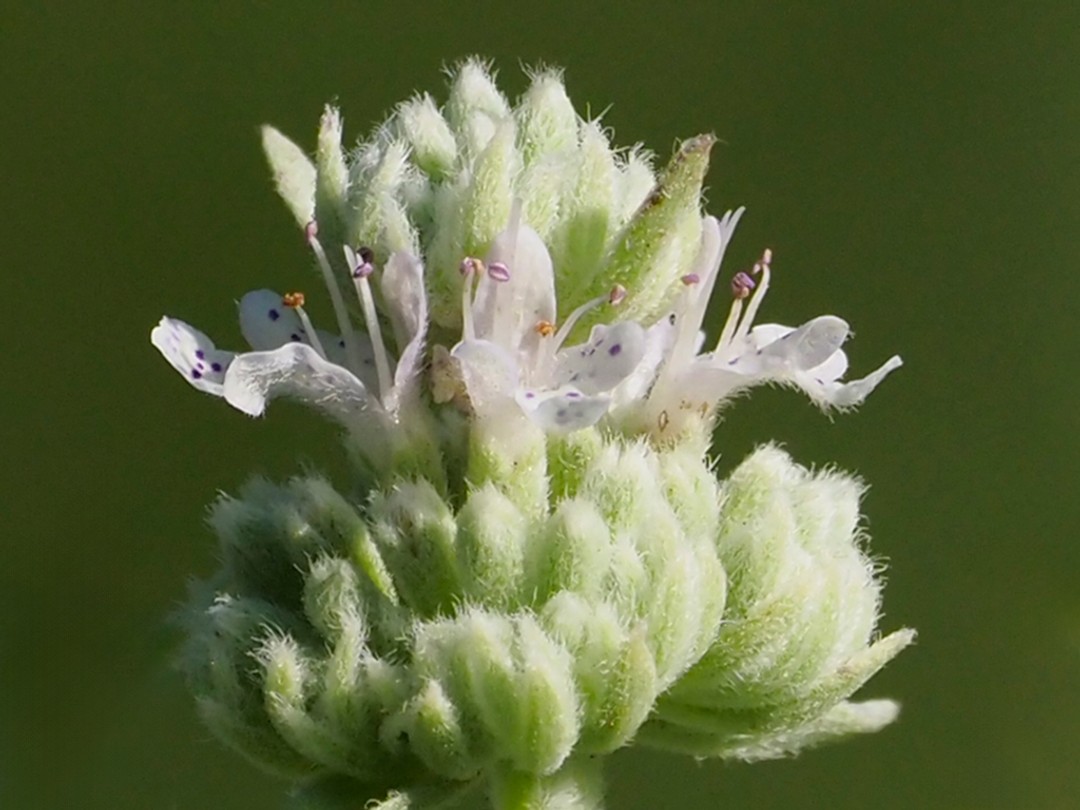
Flowers and hirsute calyces 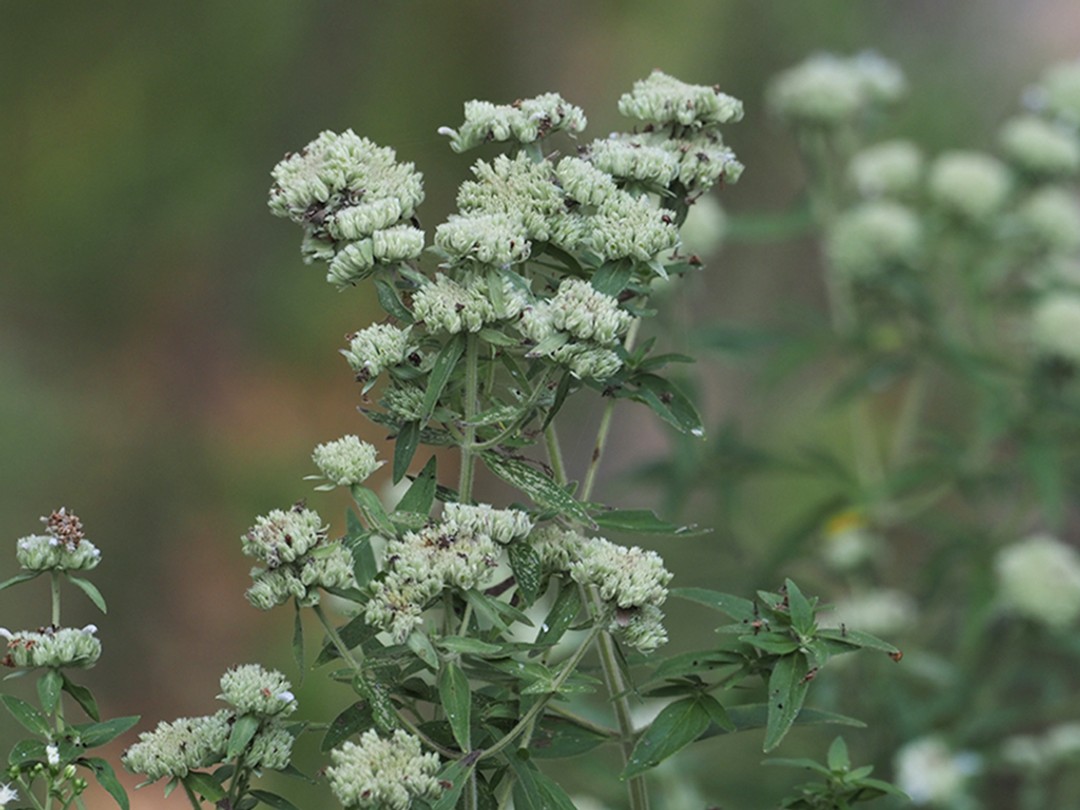
Fuzzy flowers of P. pilosum 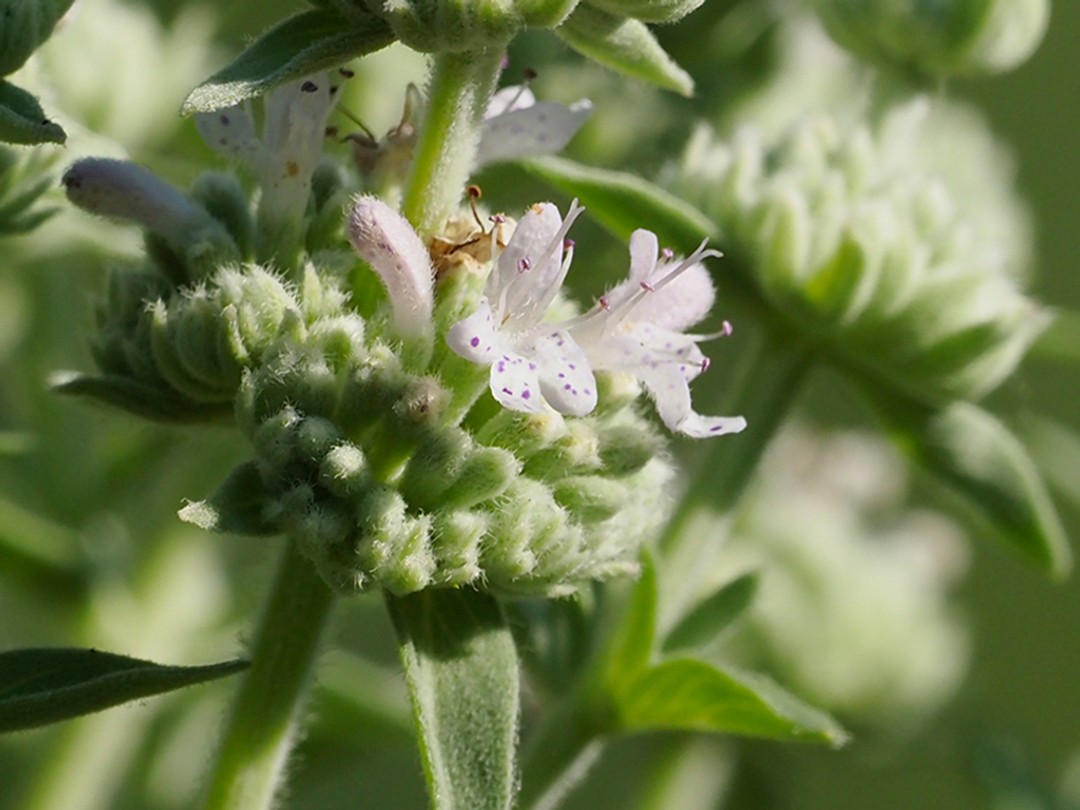
White flowers with purple dots 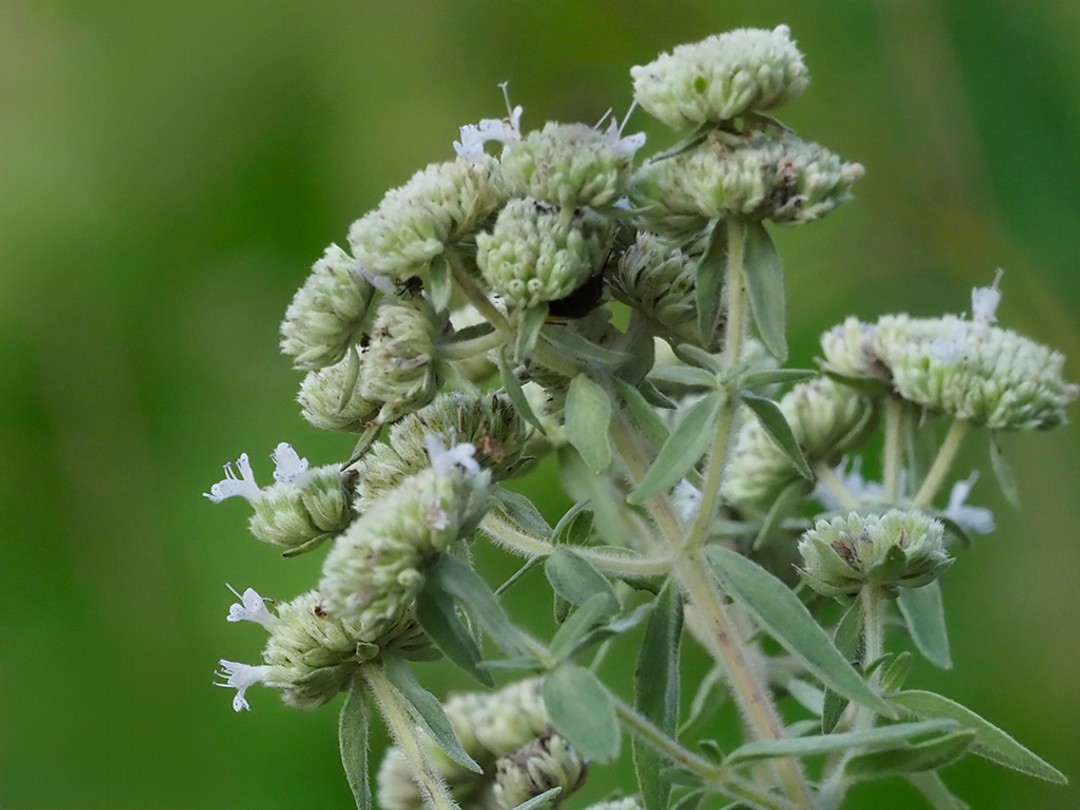
Stamen and styles
DESCRIPTION
Hairy mountain mint grows to a height between 2-4 feet. It forms large clumps, spreading to develop a colony. Plants have square stems that are light green or occasionally reddish and densely pubescent. The leaves are opposite and sessile or may have short petioles. They are lanceolate in shape and densely pubescent. The leaves on Hairy mountain mint are wider compared to Virginia Mountain mint and Slender Mountain mint. After flowering, the pewter colored seed heads are quite attractive.
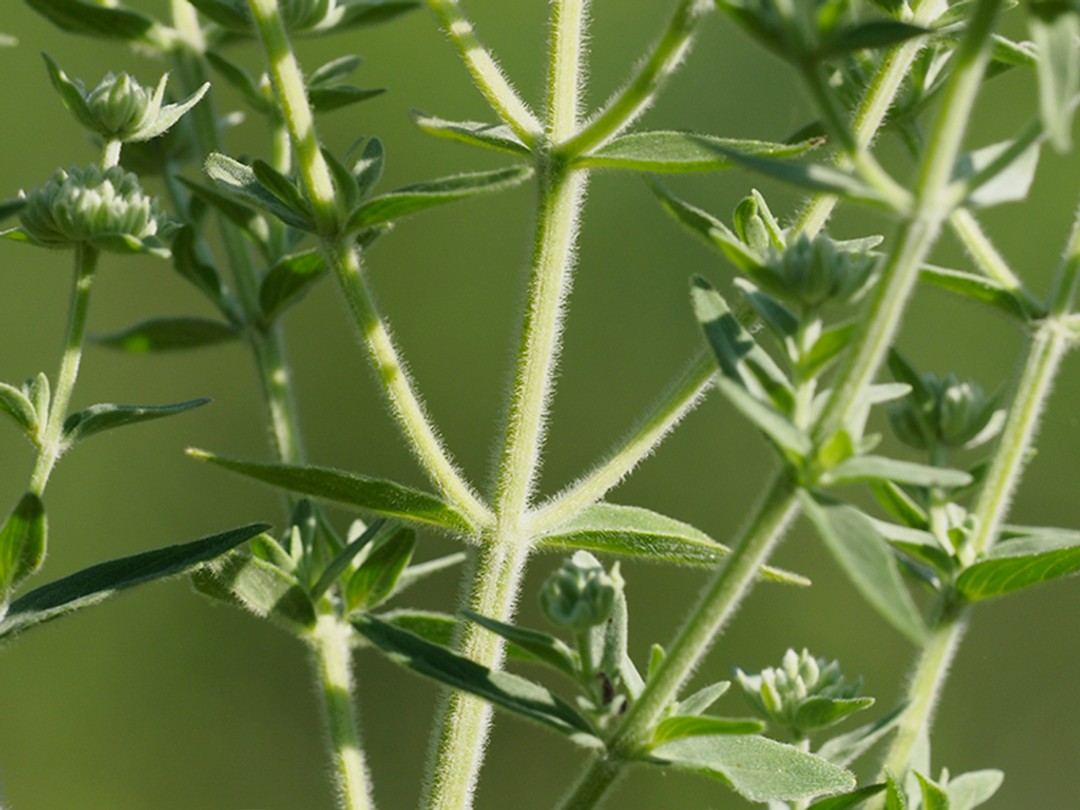
Hirsute stem 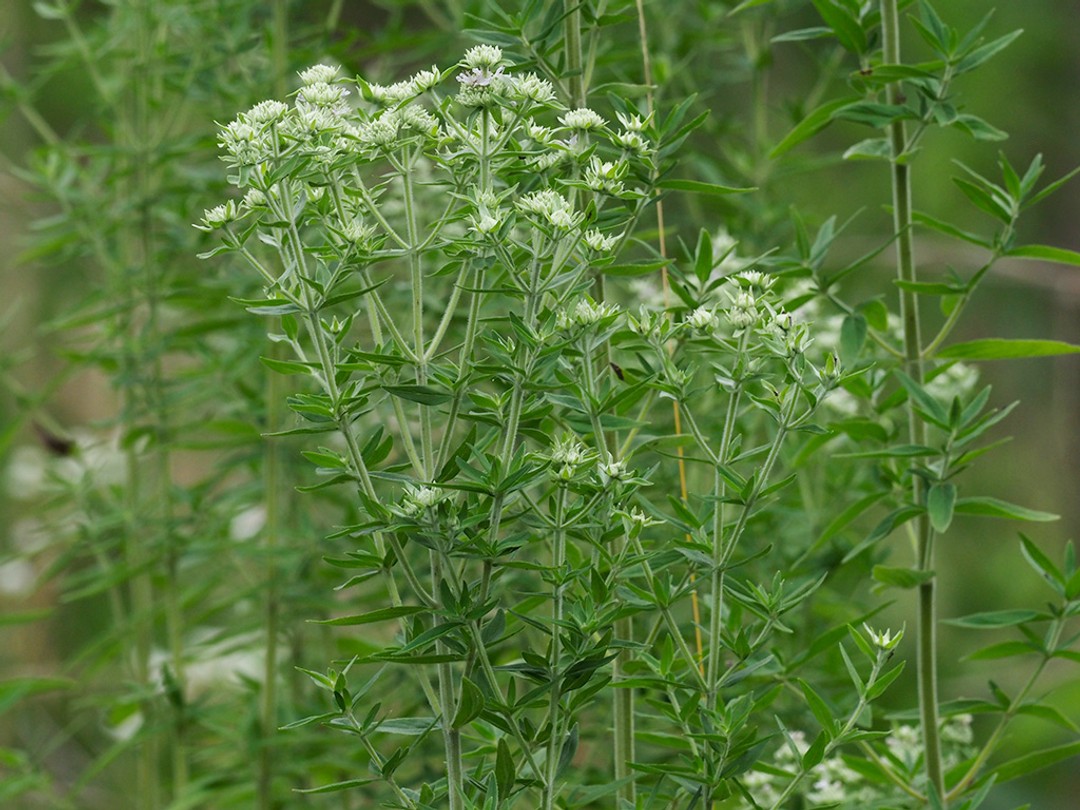
Mature plant in June 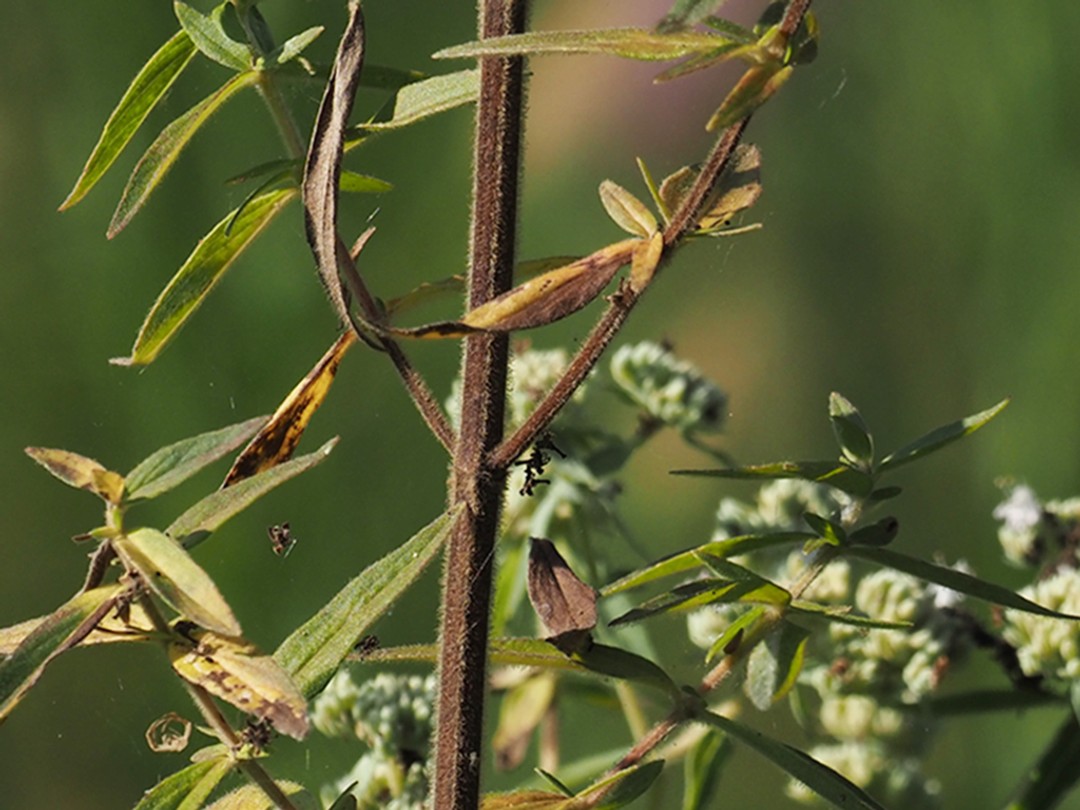
Reddish stem in late summer 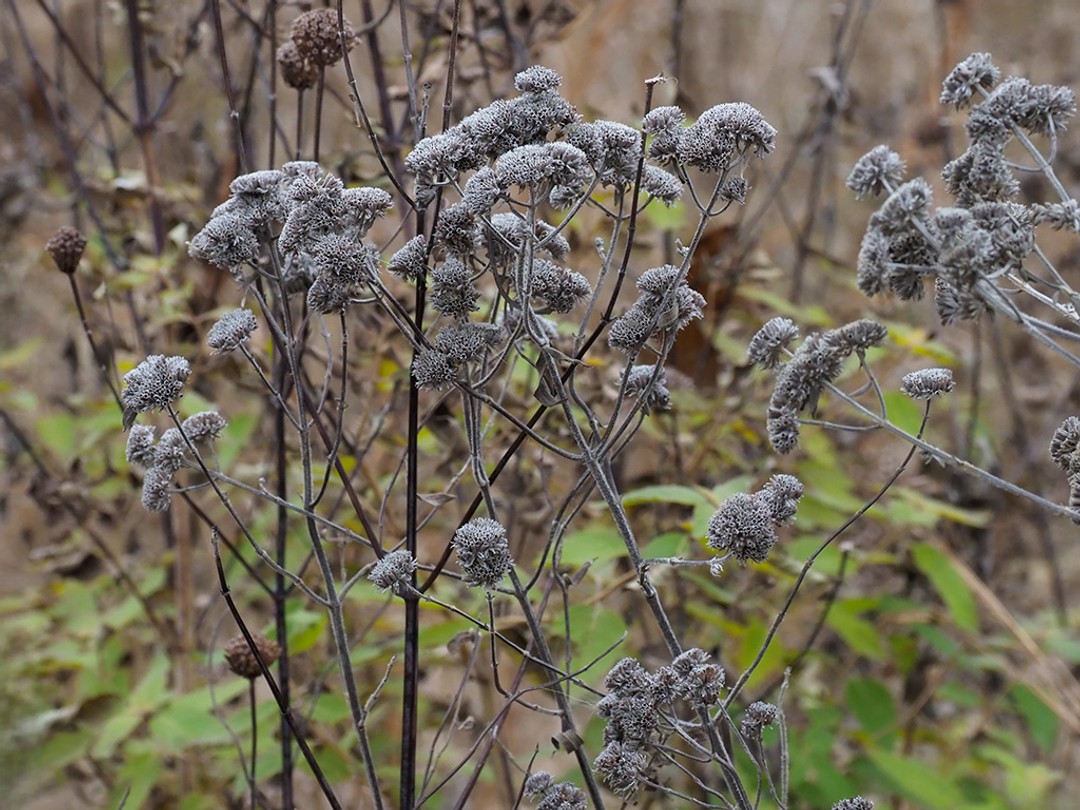
Seed heads in fall
POLLINATORS
Hairy mountain mint is always busy with varied insect visitors. Butterflies, skippers and bees are frequently found visiting the flowers, but the array of diverse and beautiful wasps are the real stars of the show.
Wasps:
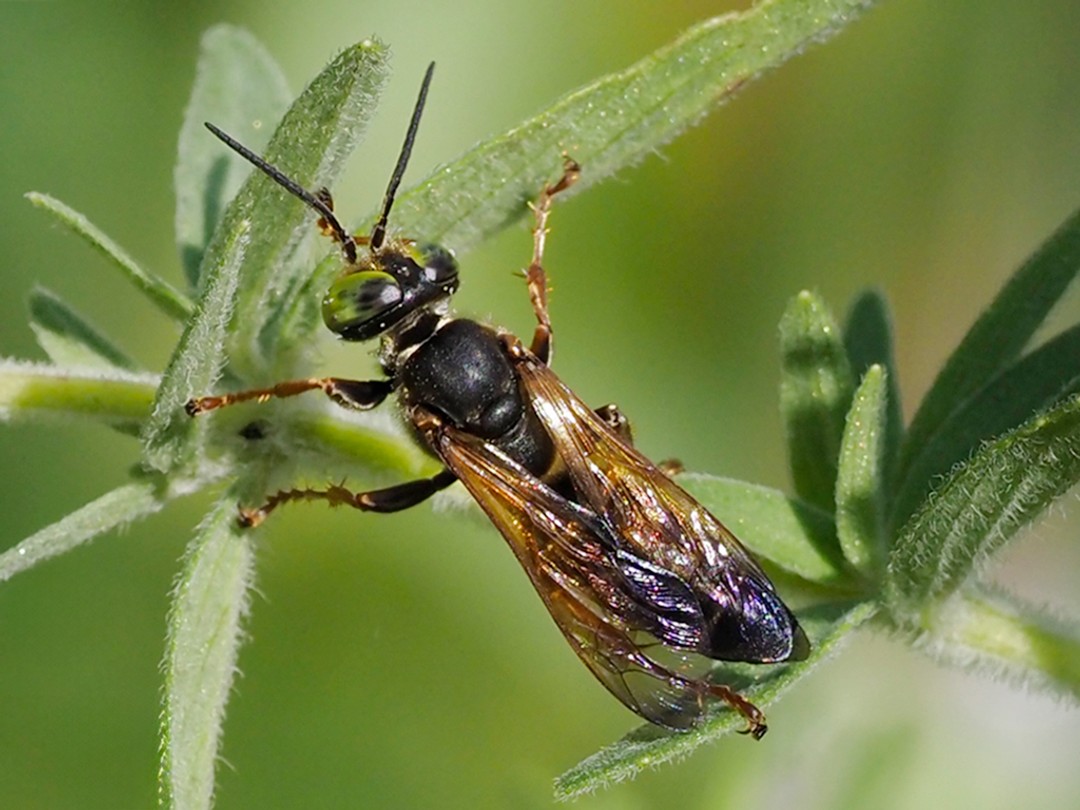
Distinct grasshopper hunting wasp 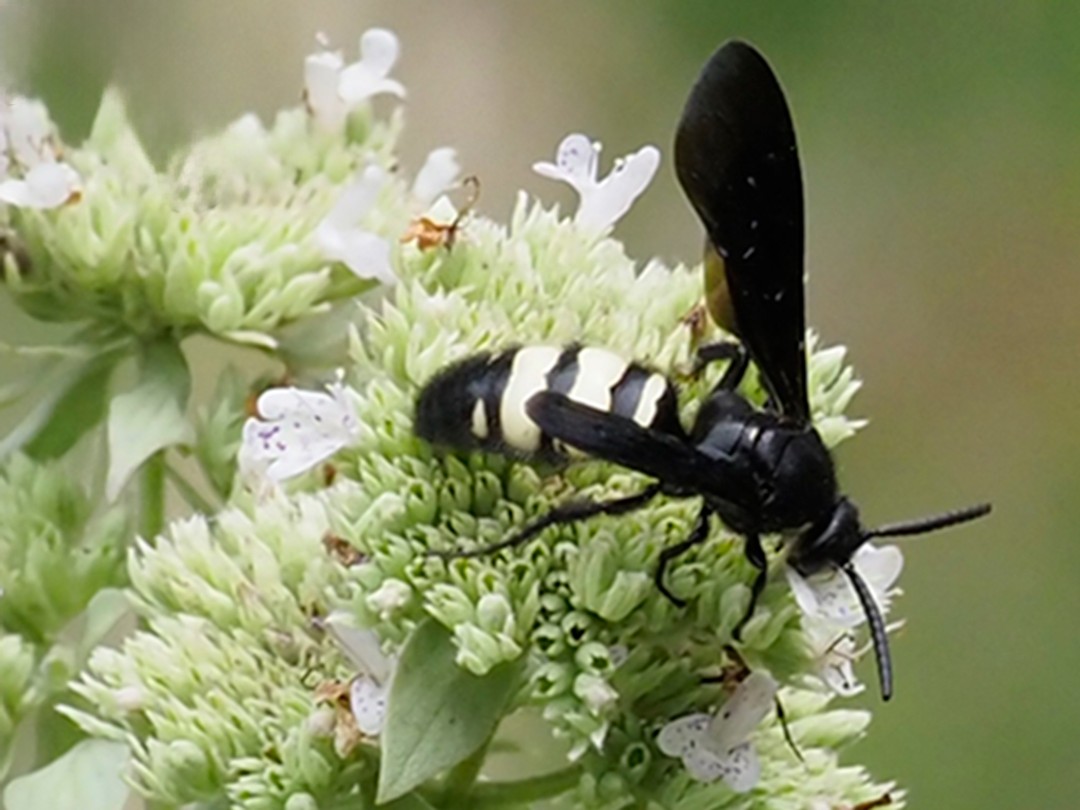
Scoliid wasp 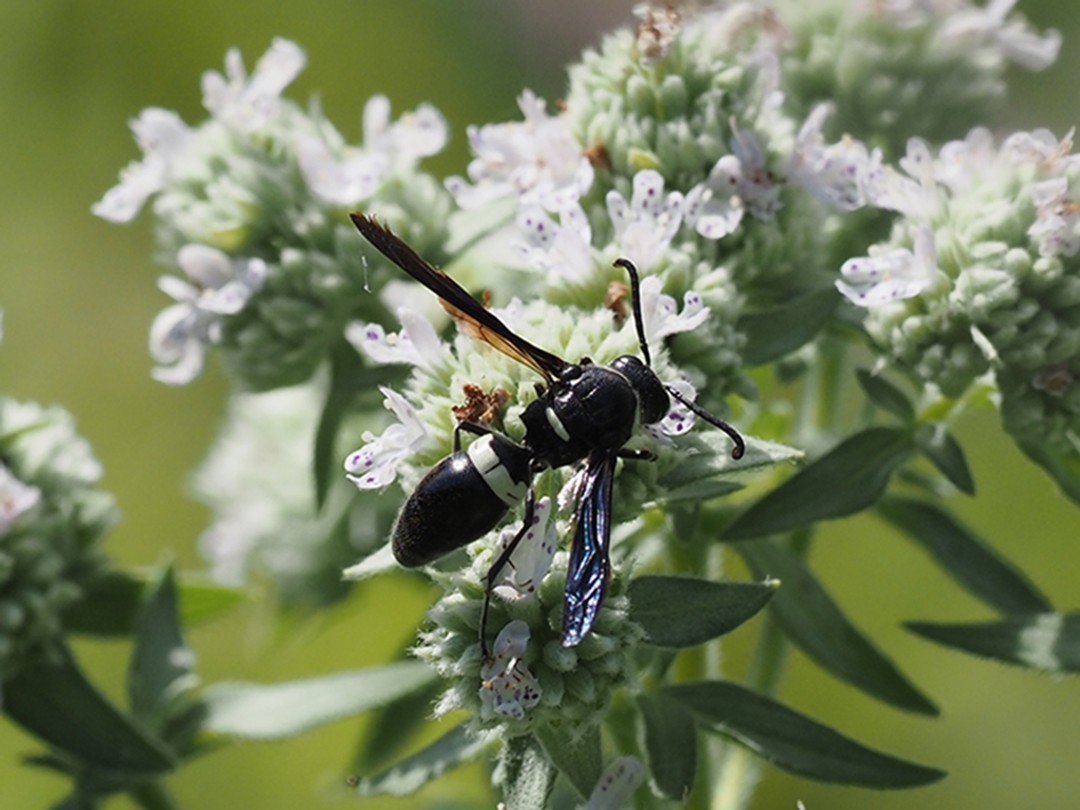
Four-toothed mason wasp 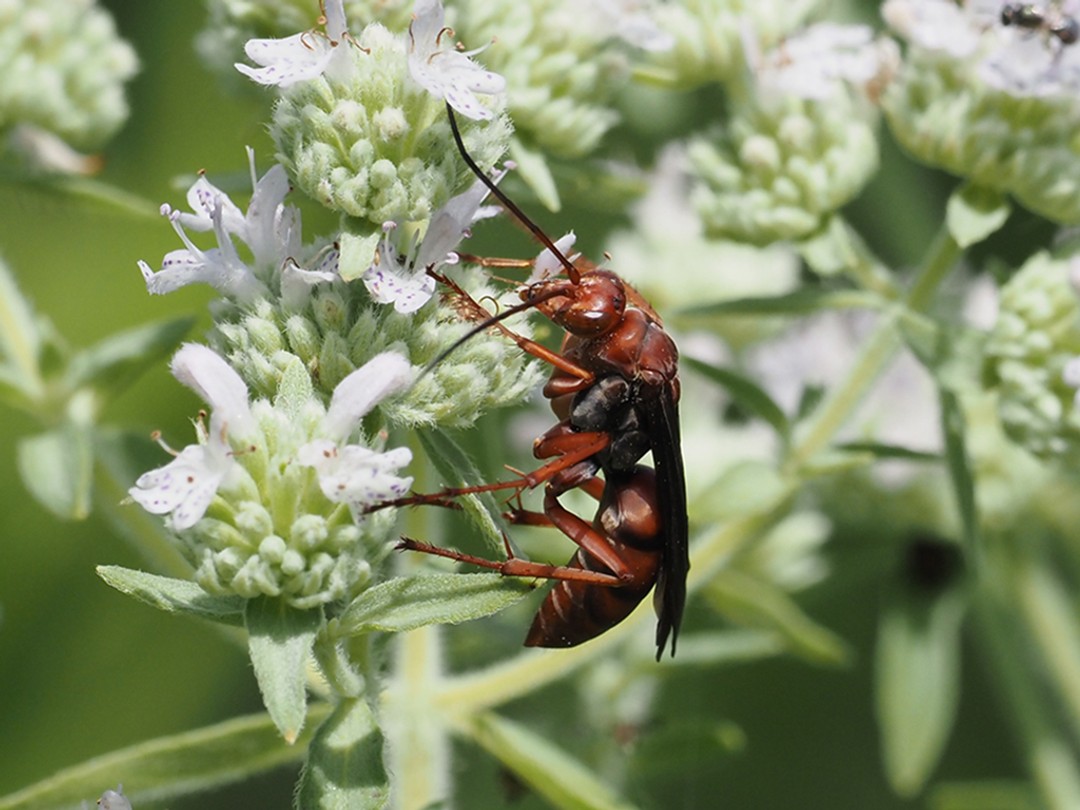
Rusty spider wasp 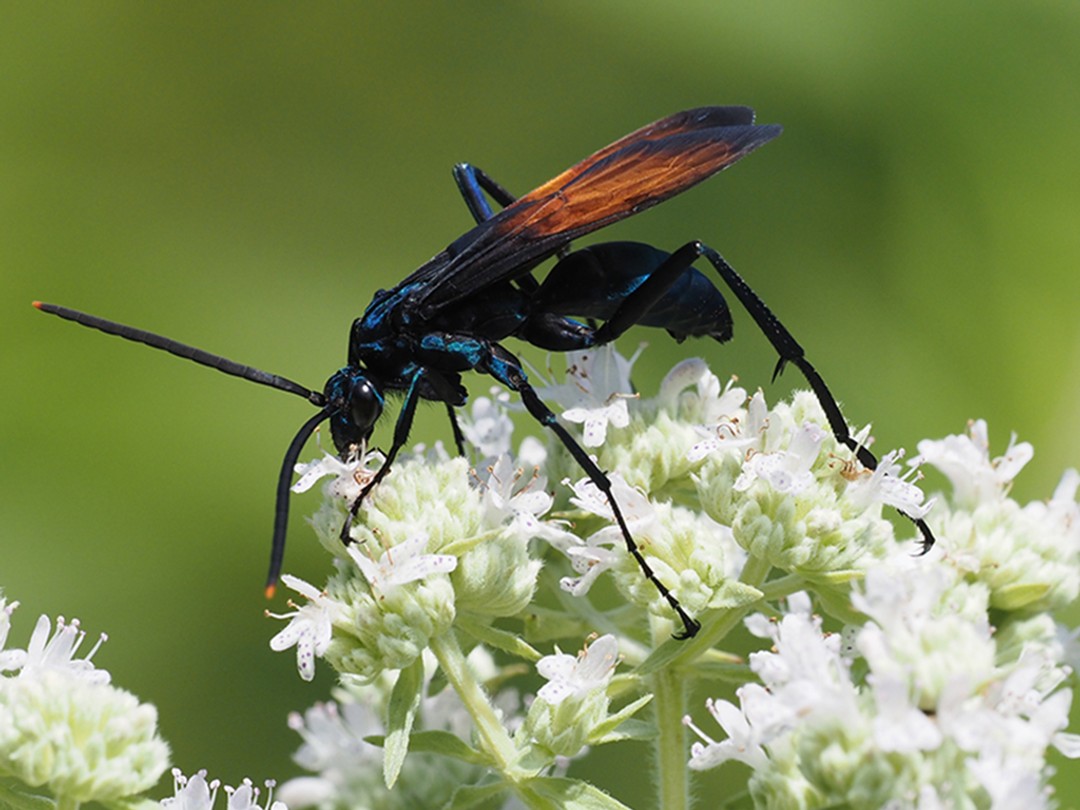
Tarantula hawk wasp 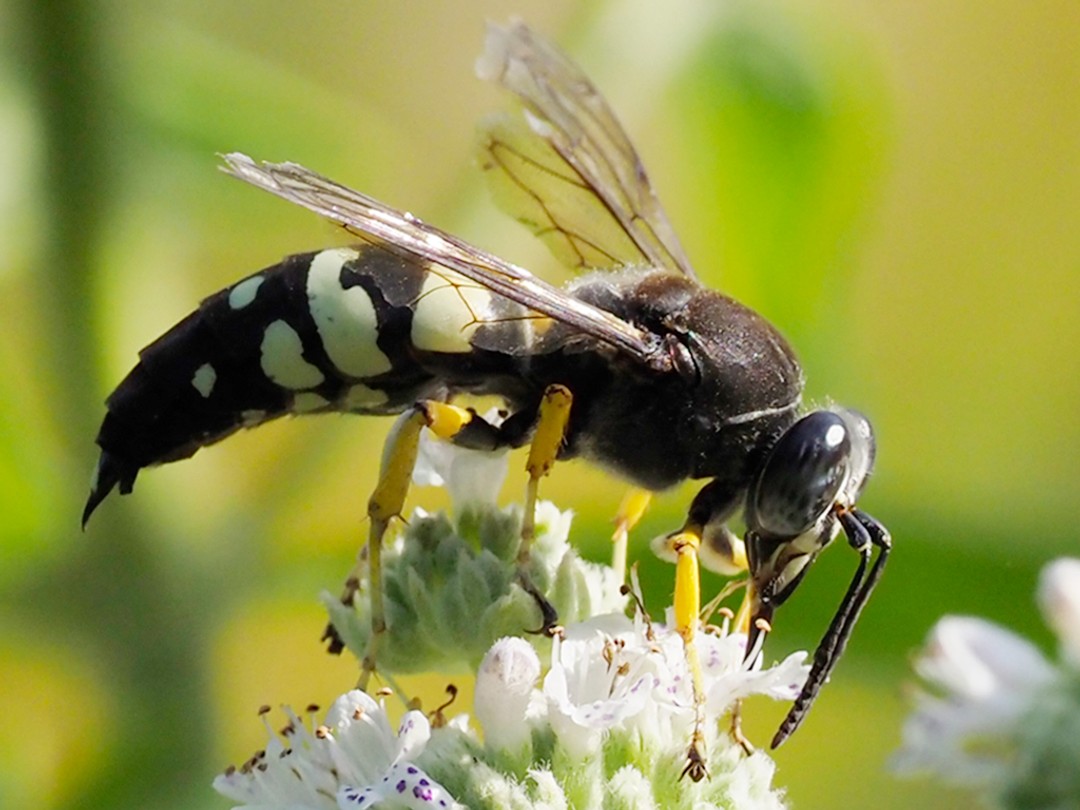
Horse guard wasp
Butterflies:
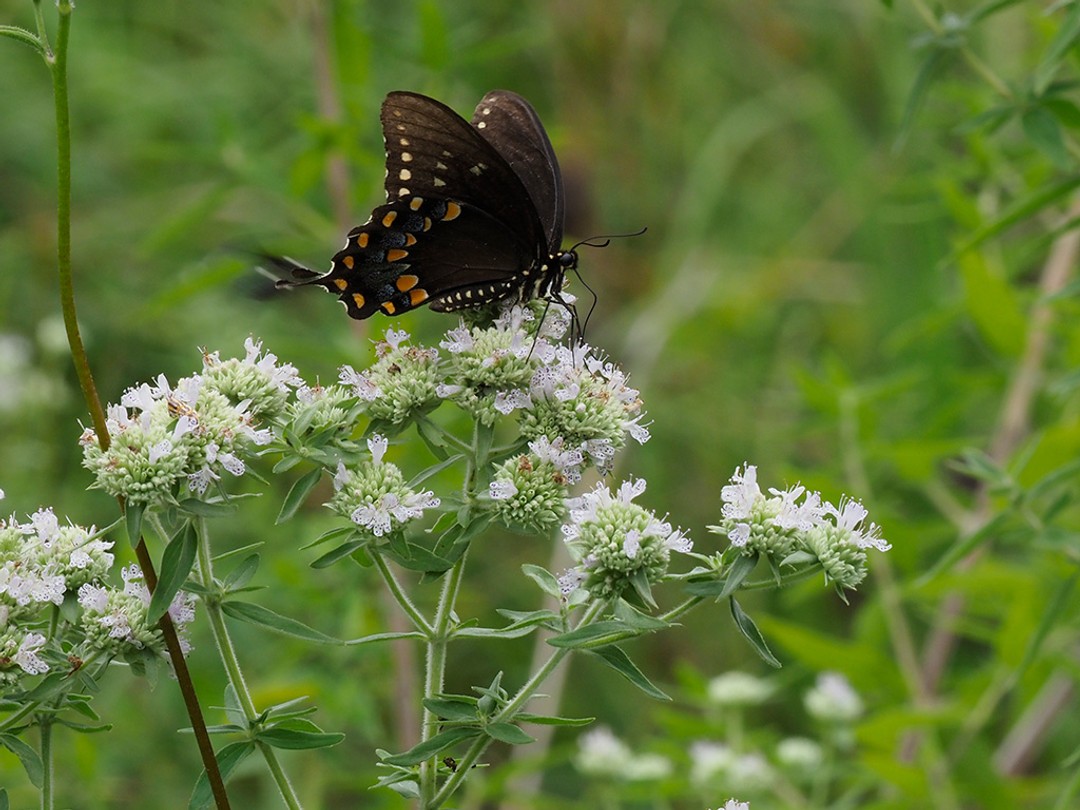
Spicebush swallowtail 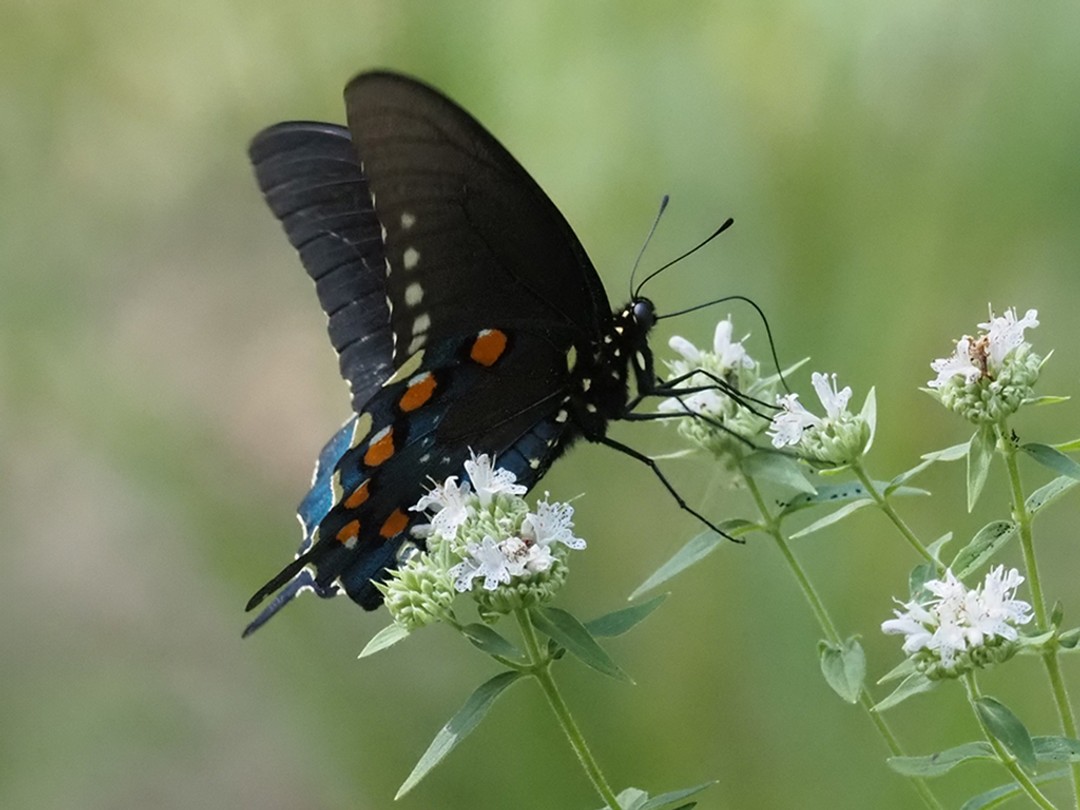
Pipevine swallowtail 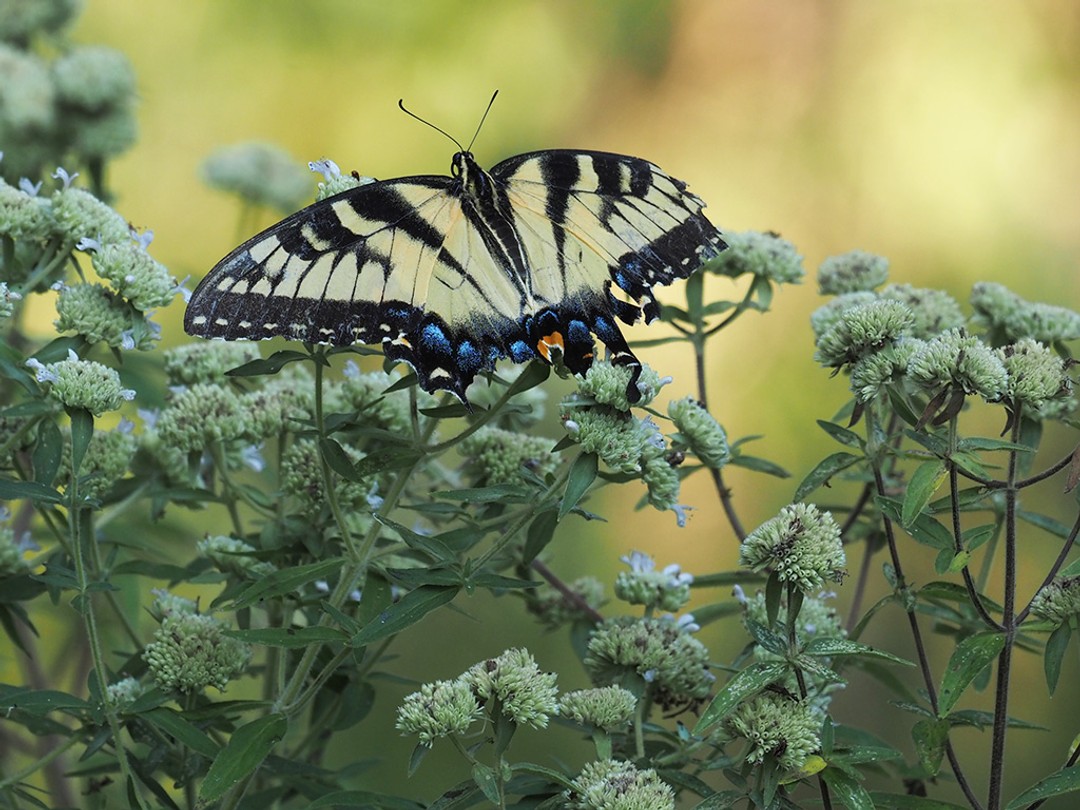
Eastern Tiger swallowtail 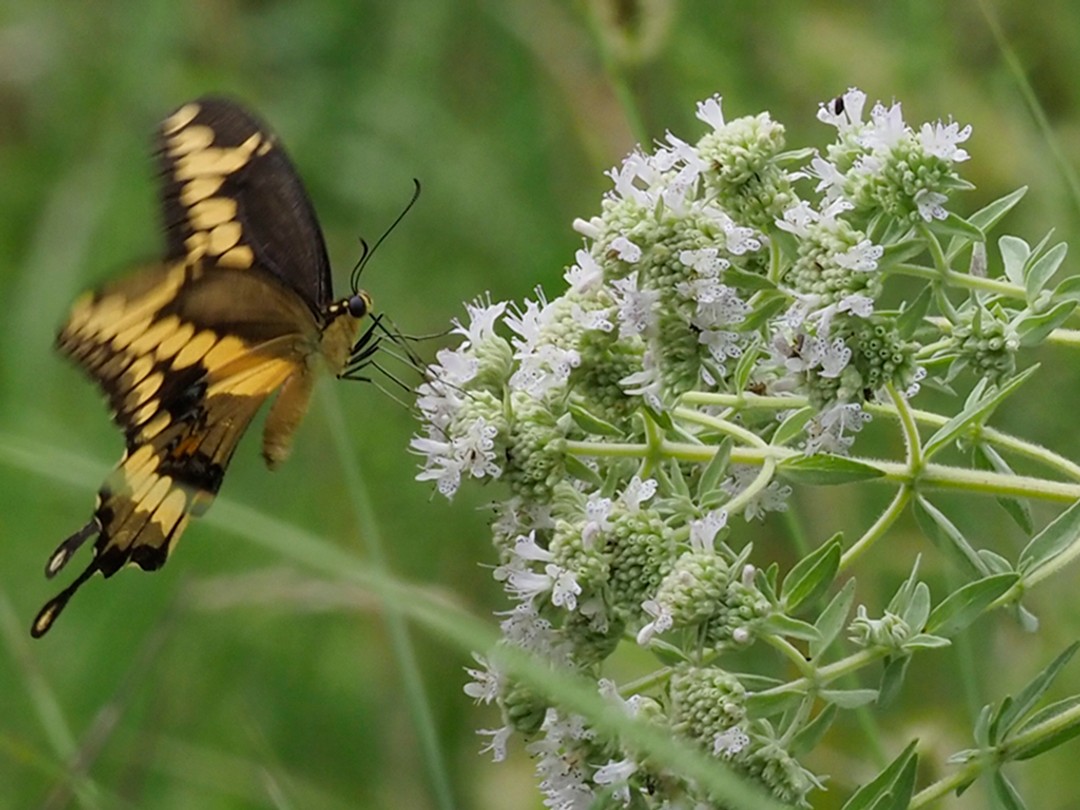
Giant swallowtail
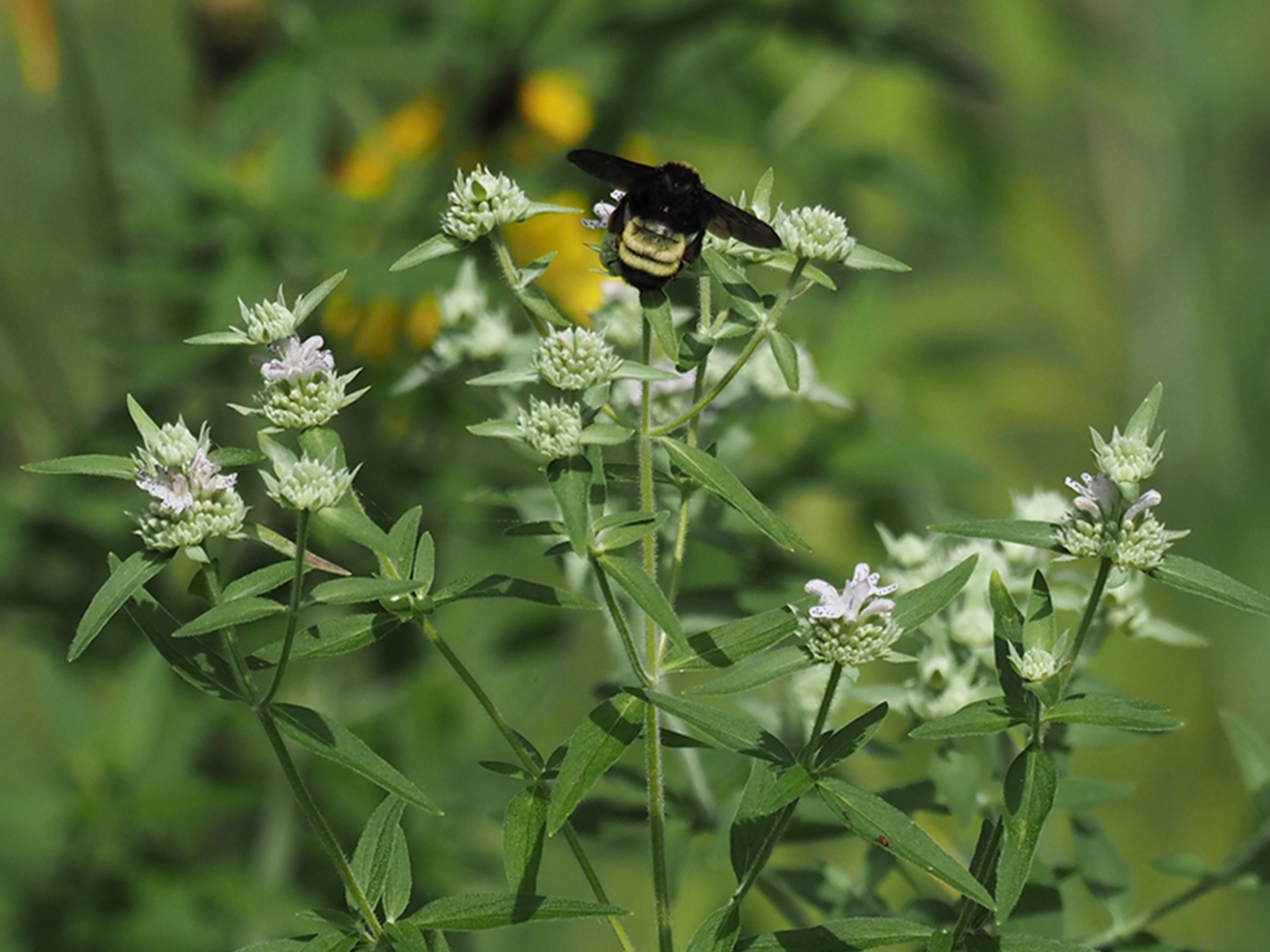
Other pollinators:
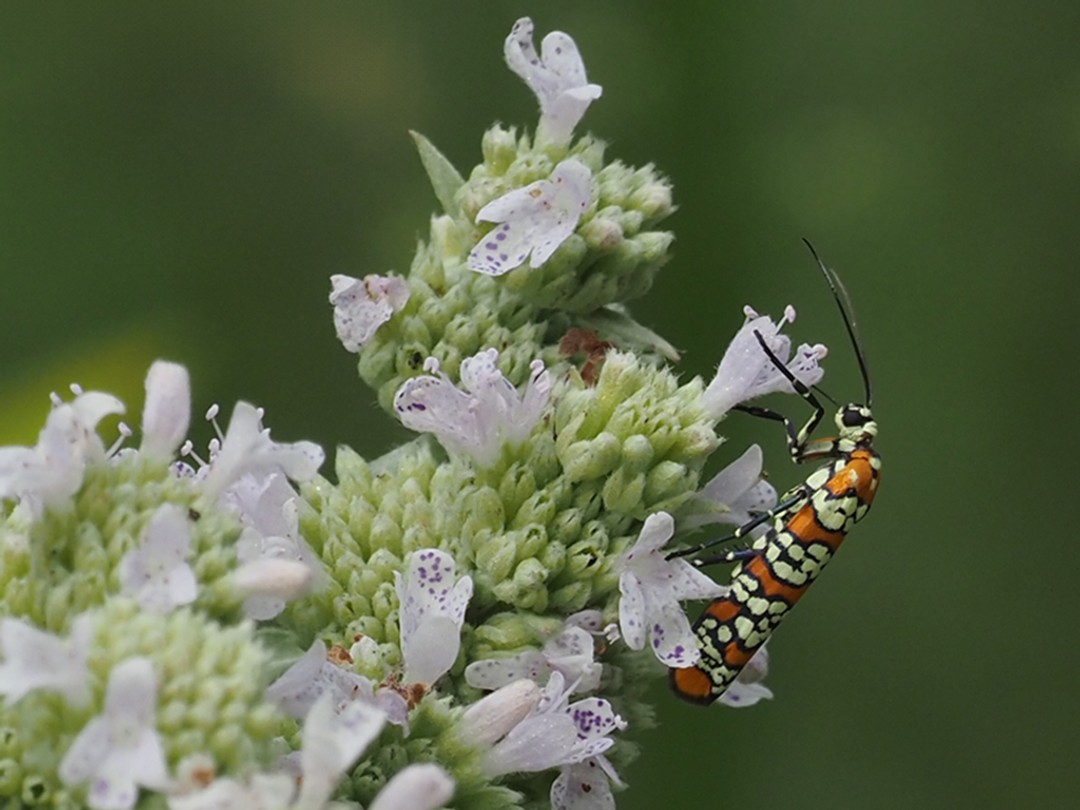
Ailanthus webworm moth 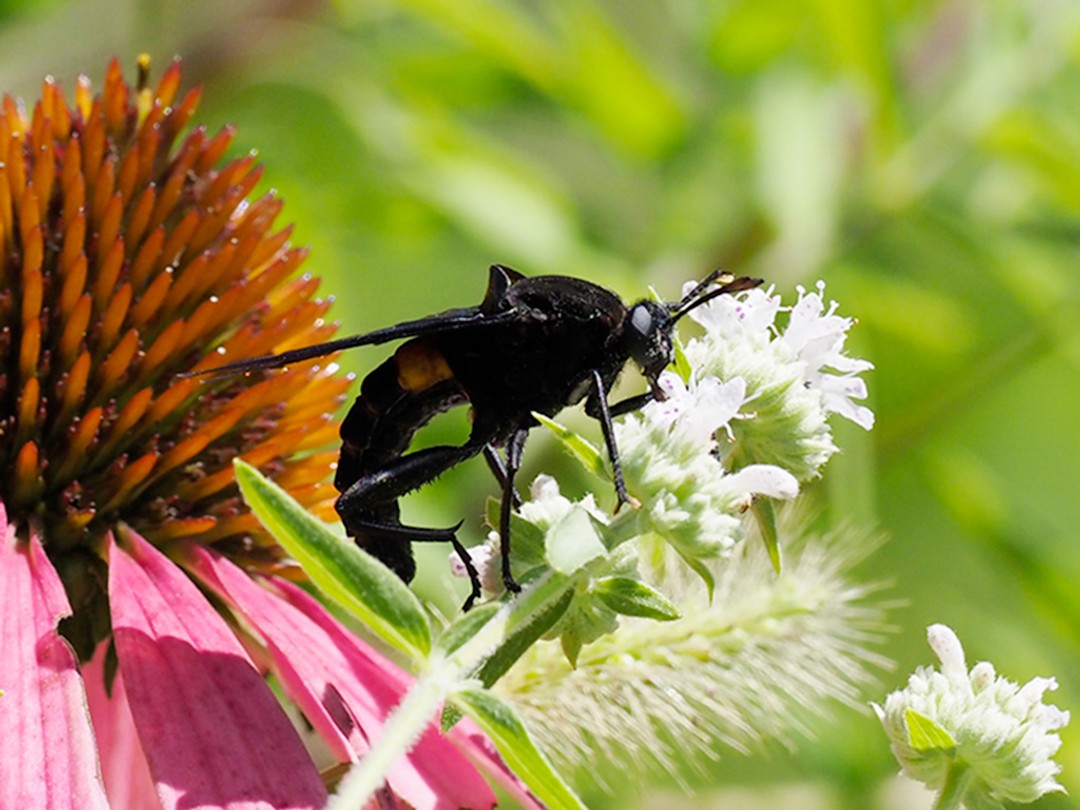
Clubbed mydas fly
PLANTS GROWING NEARBY
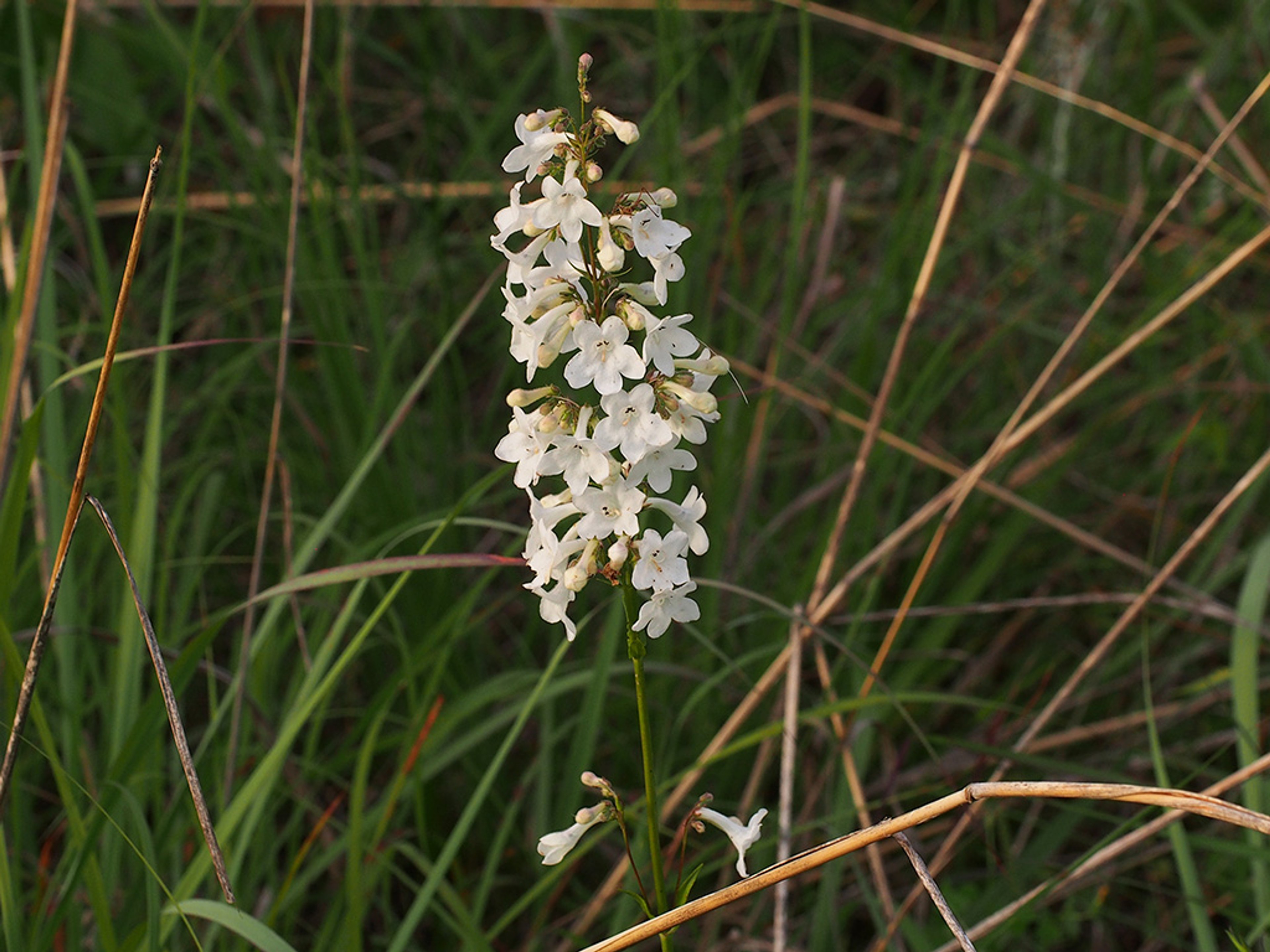
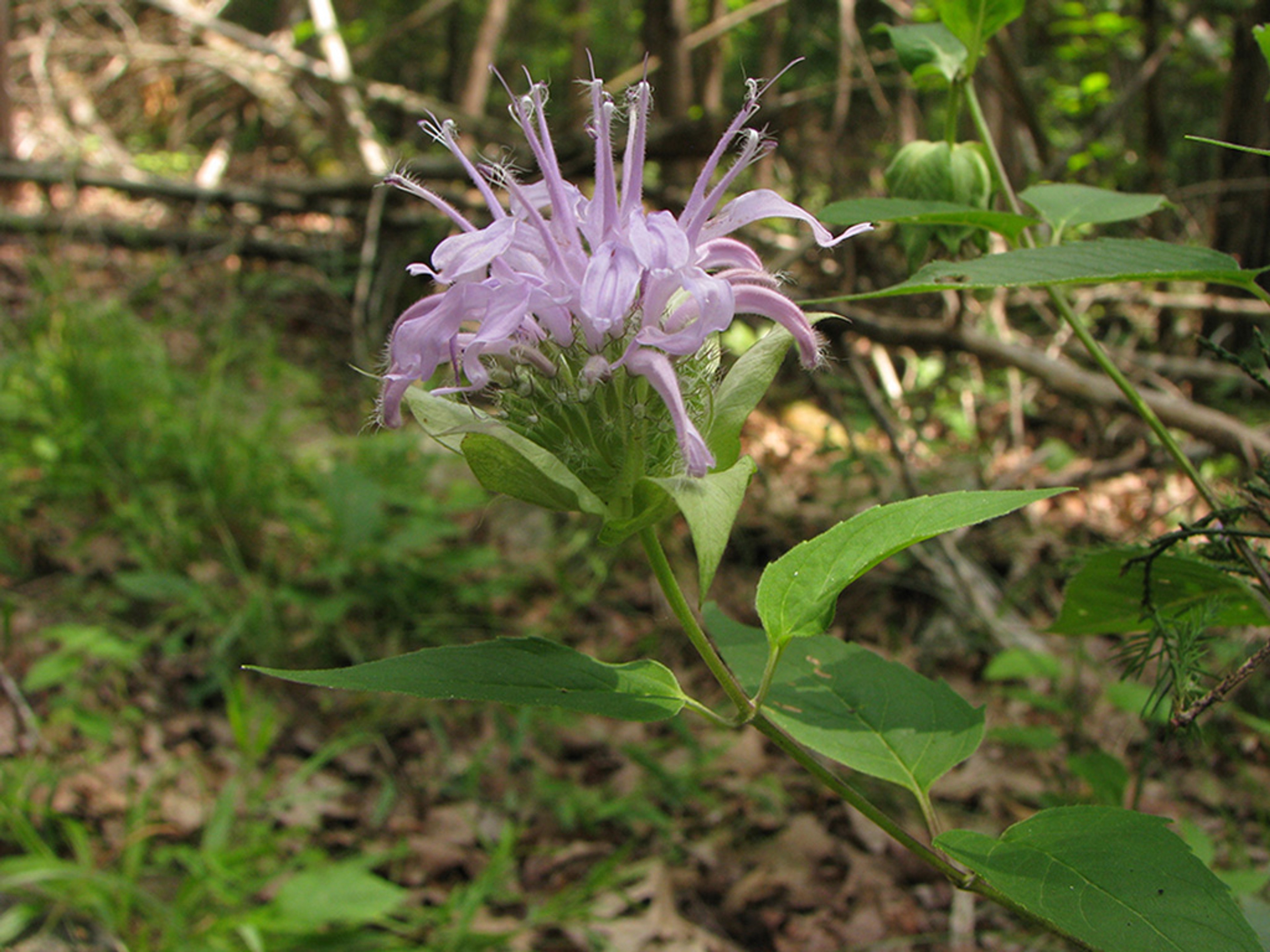
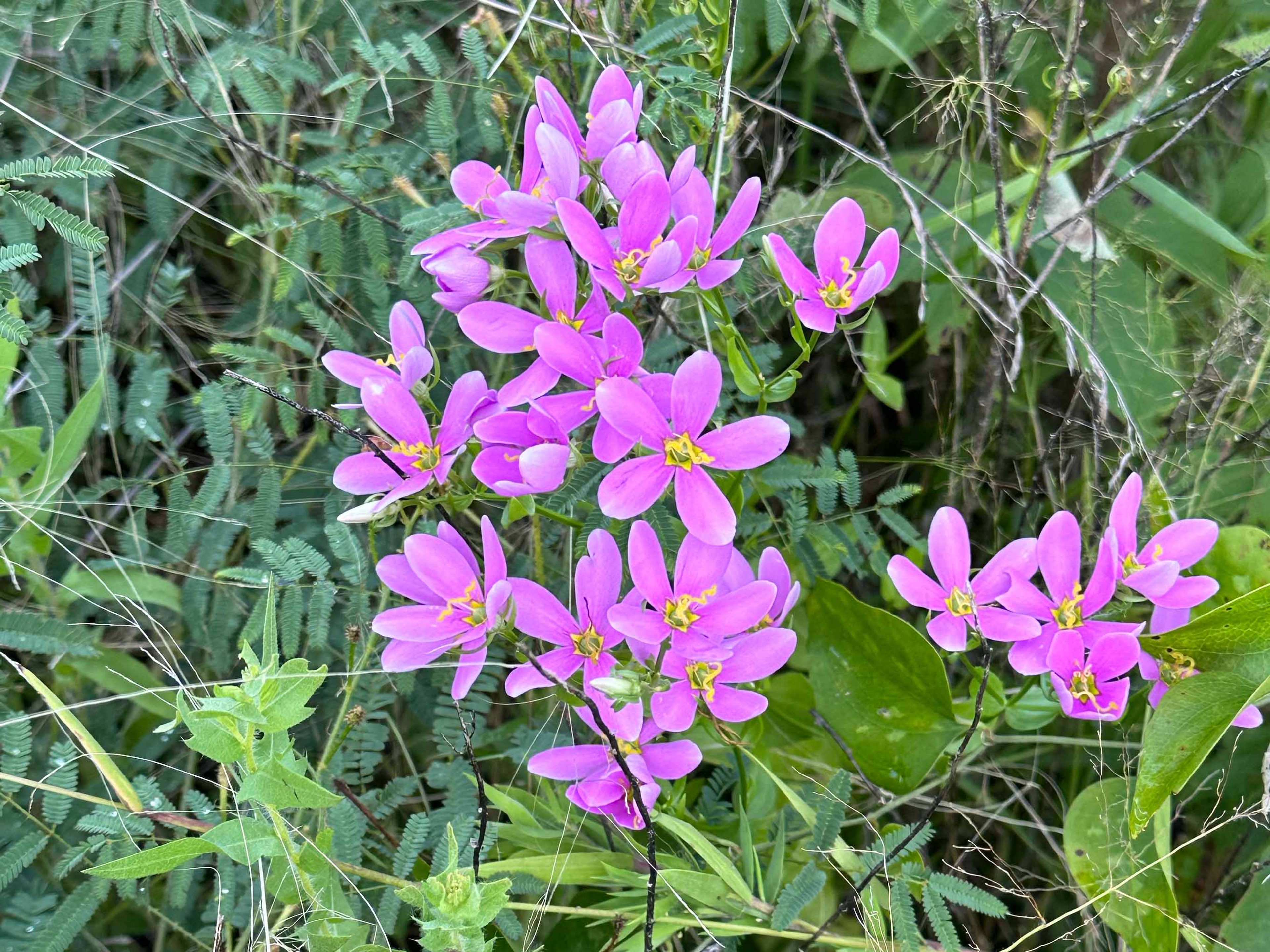
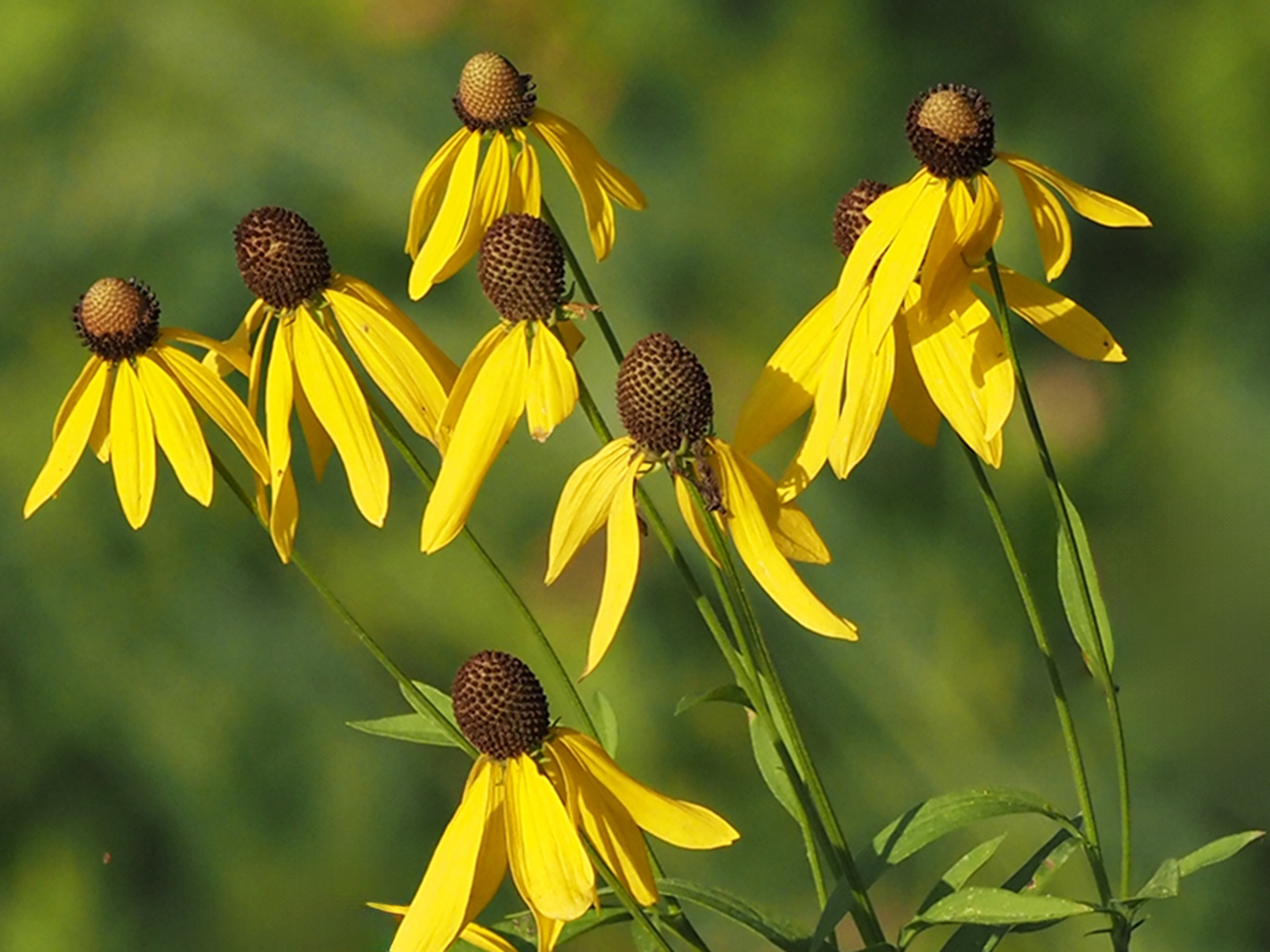
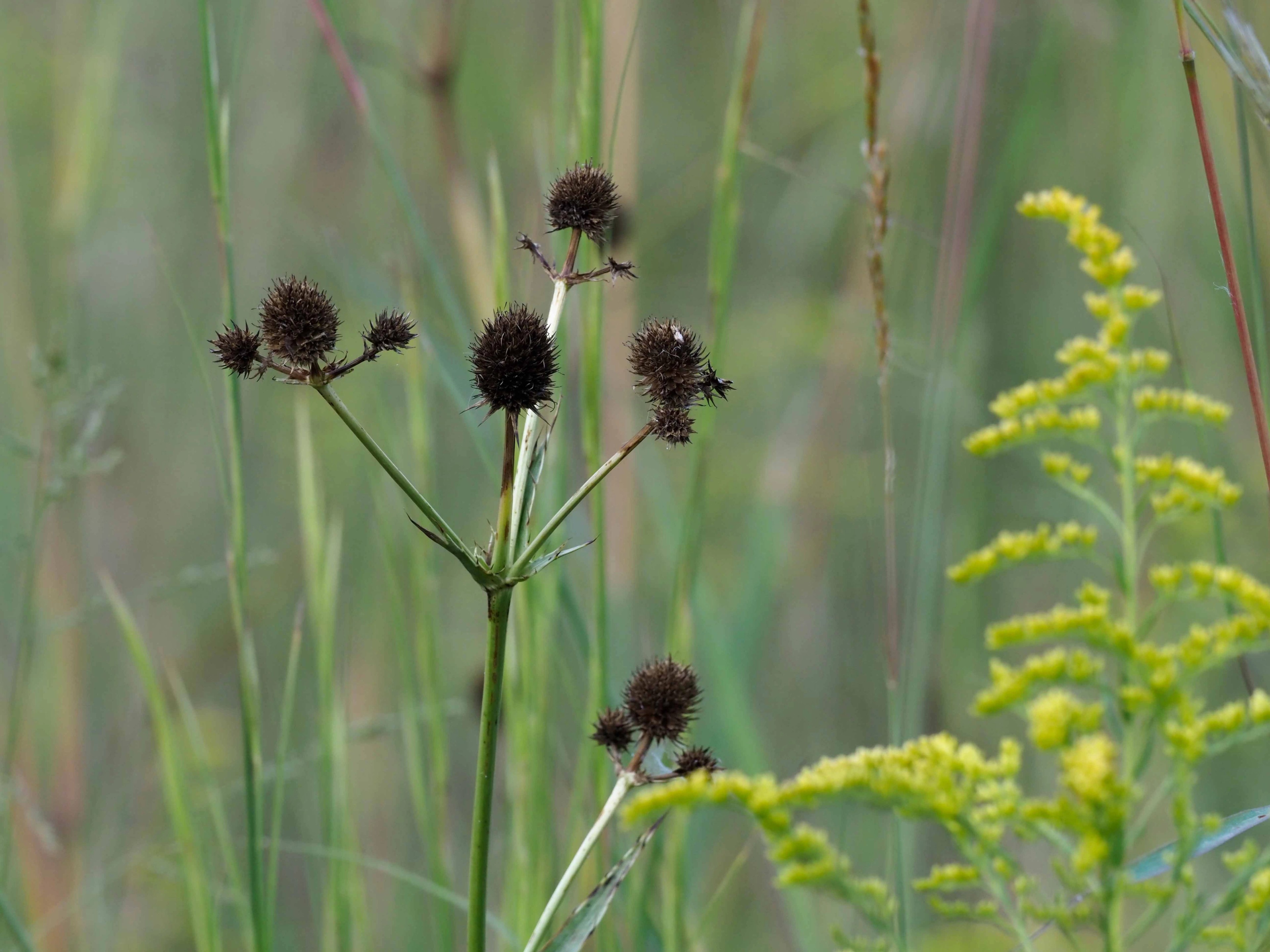
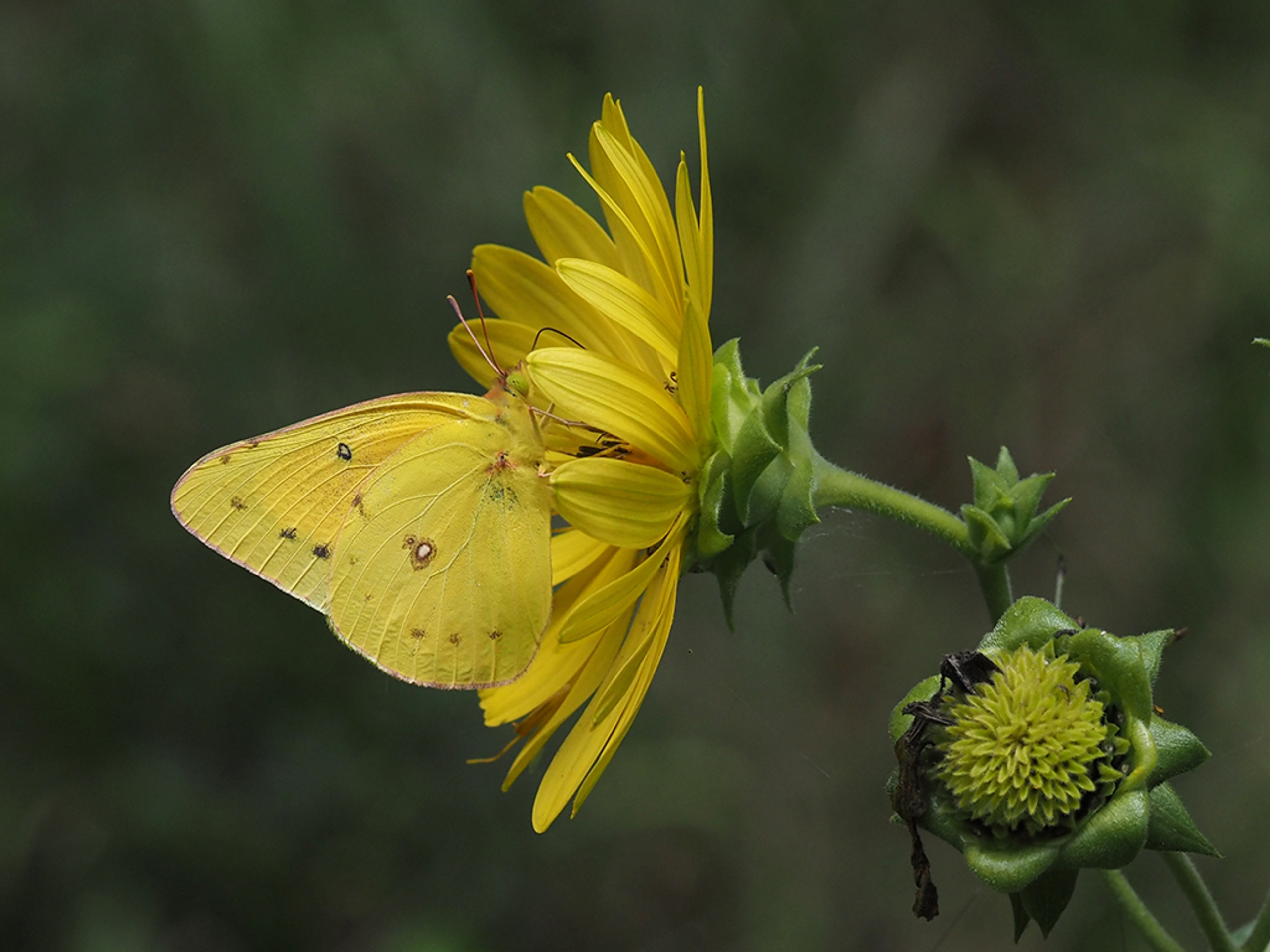
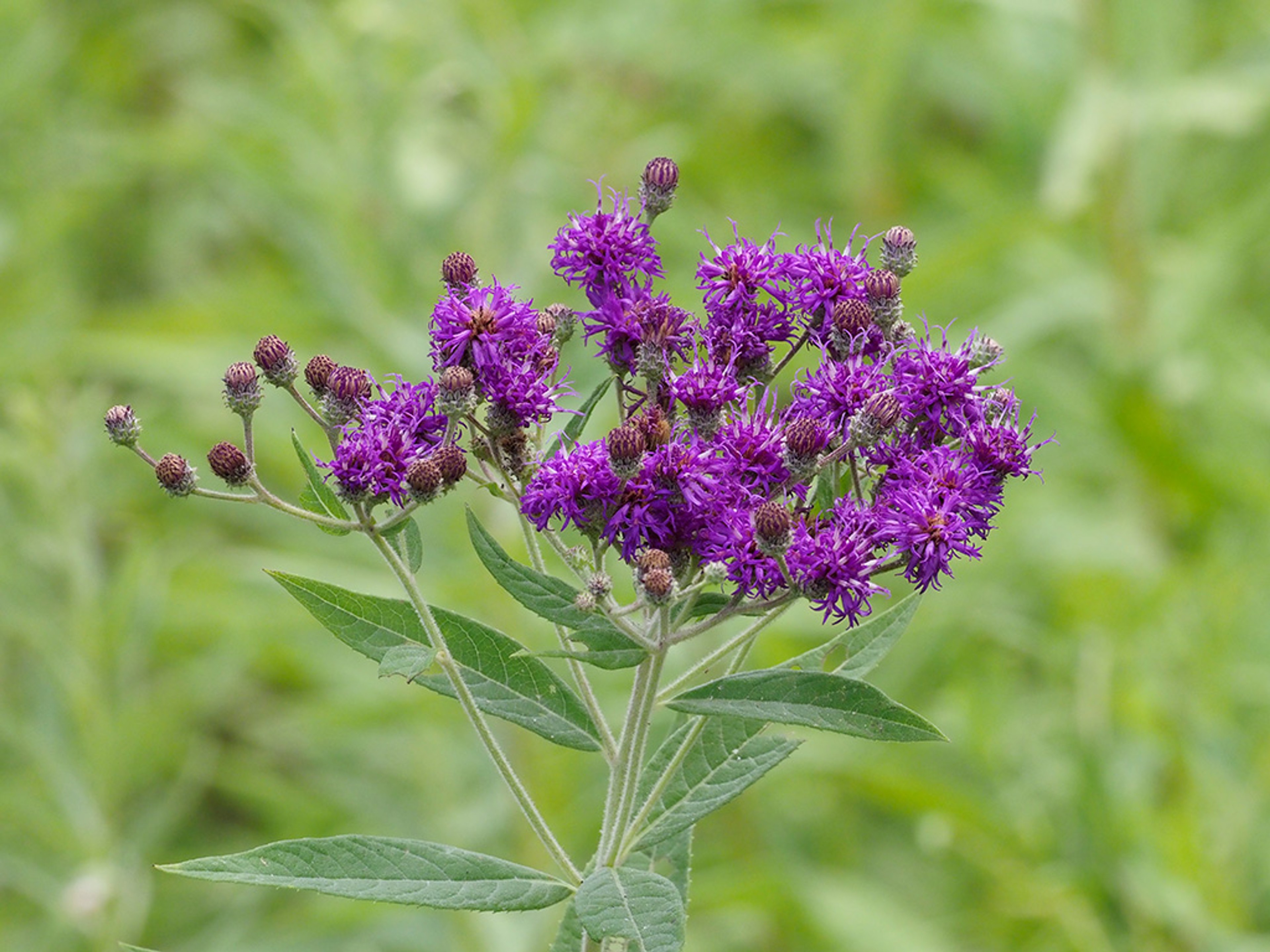
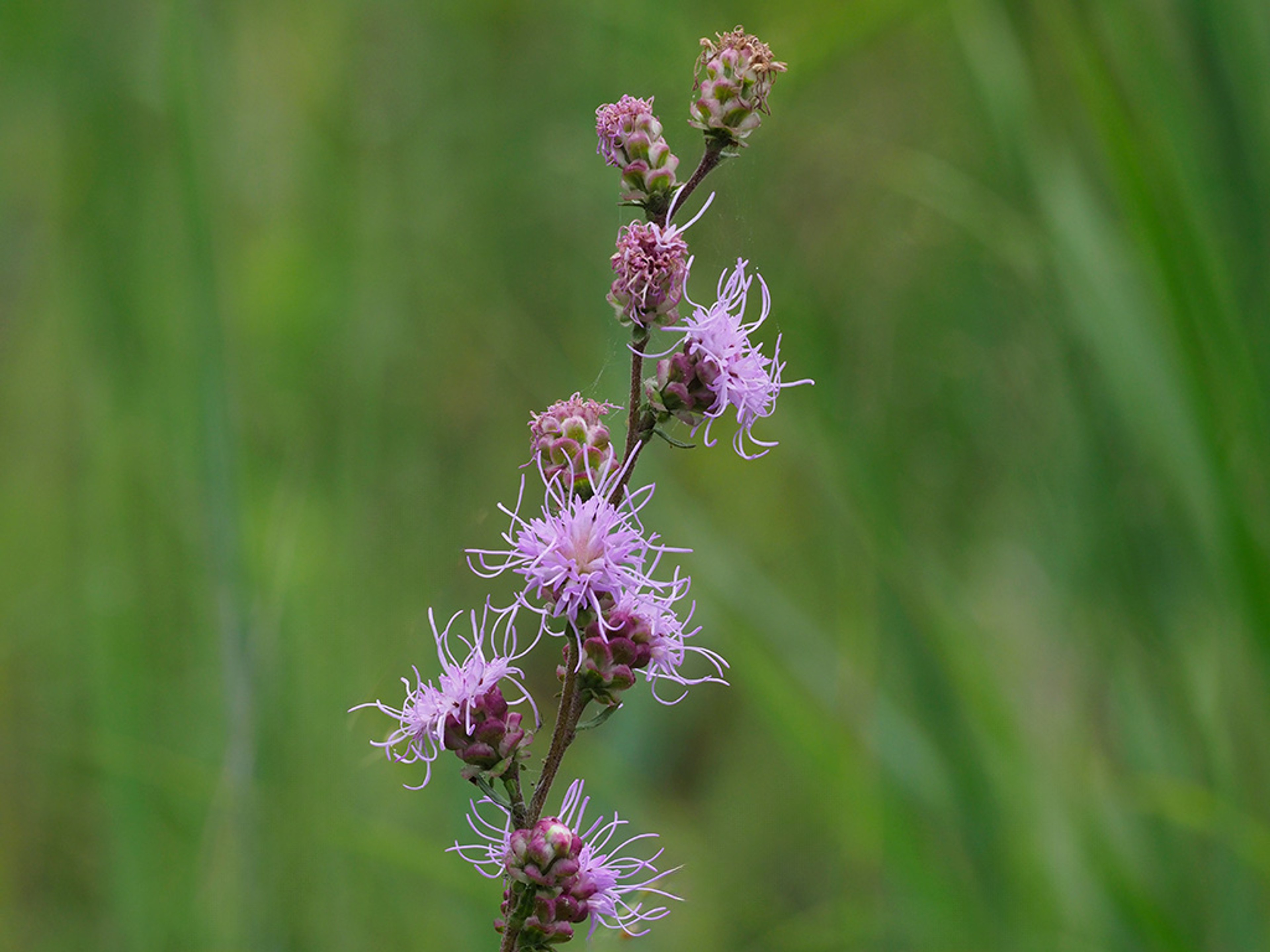
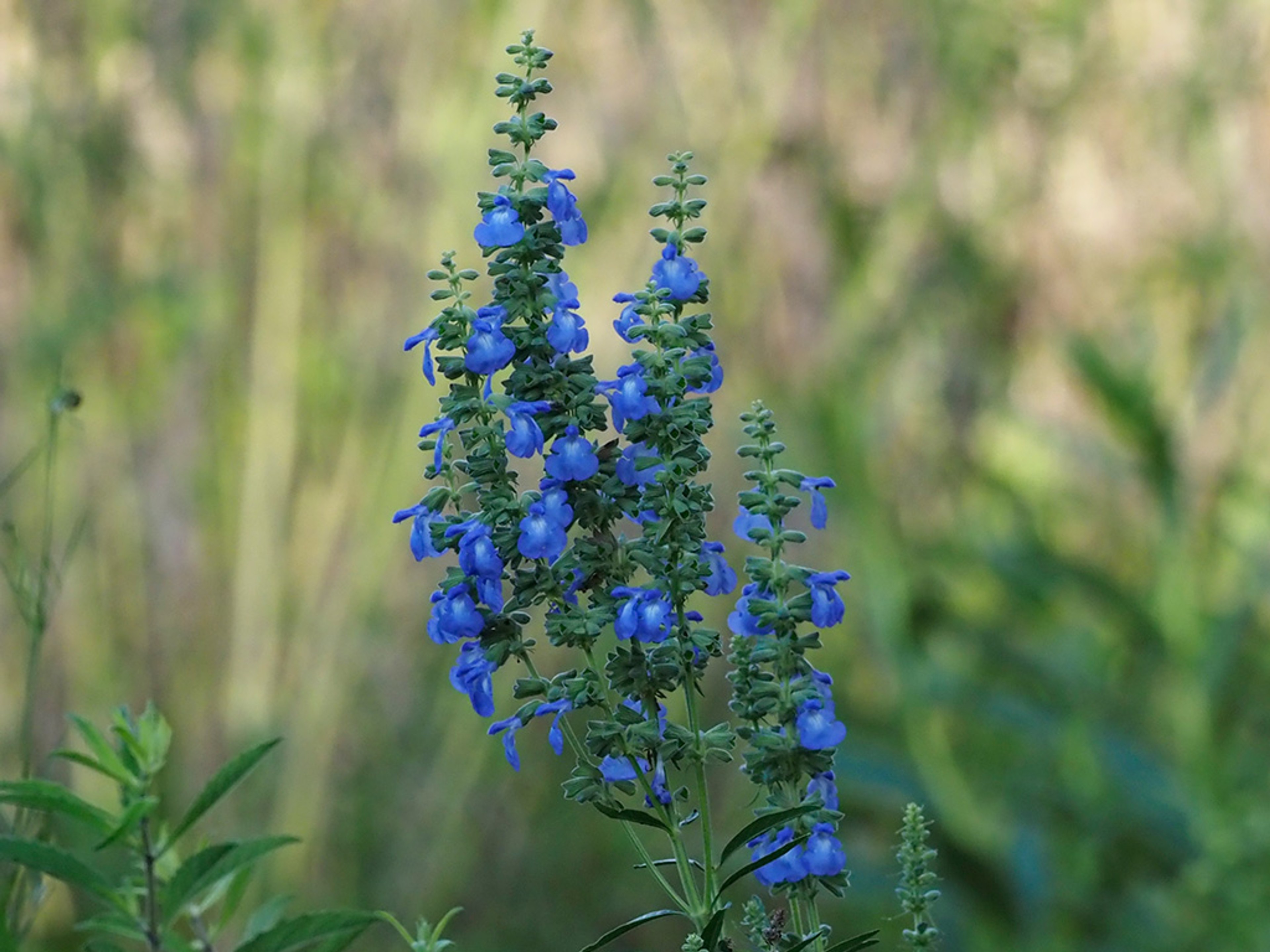
I often see Penstemon tubaeflorus (Tubed beardtongue), Ratibida pinnata (Gray-headed coneflower), Monarda fistulosa (Wild bergamot) and Echinacea purpurea (Purple coneflower) growing nearby, although there are many different plant companions to be found alongside this beautiful mountain mint.
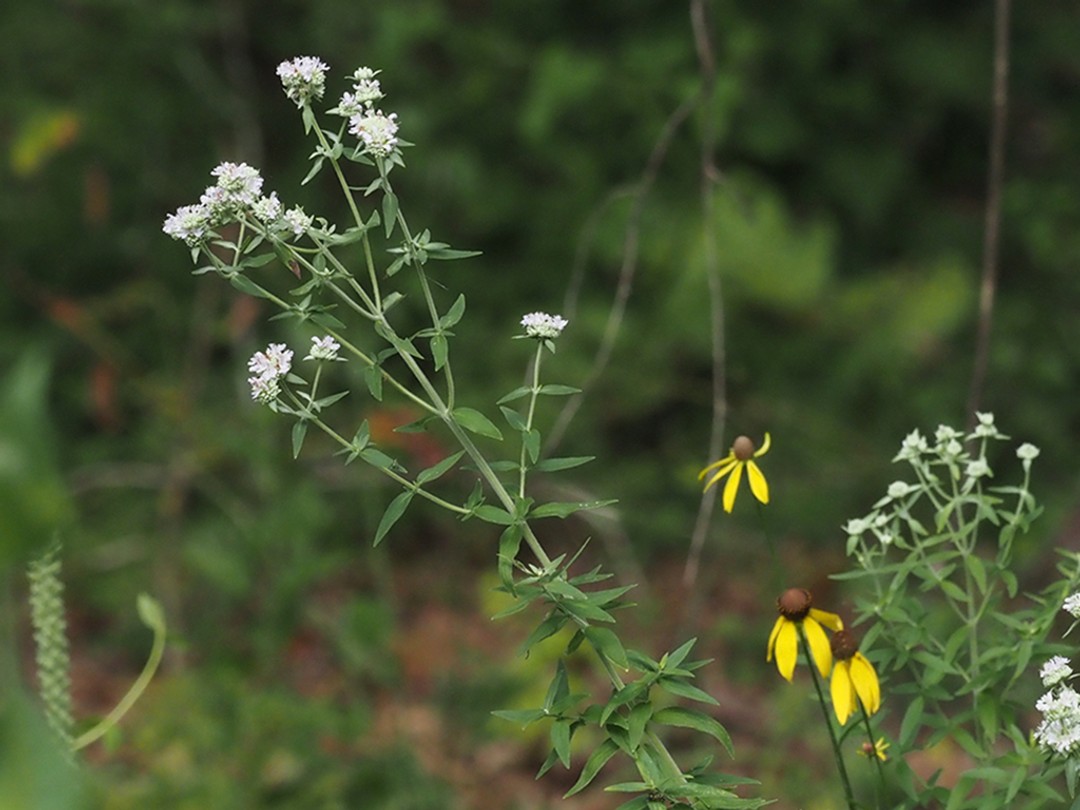
With Gray-headed coneflower 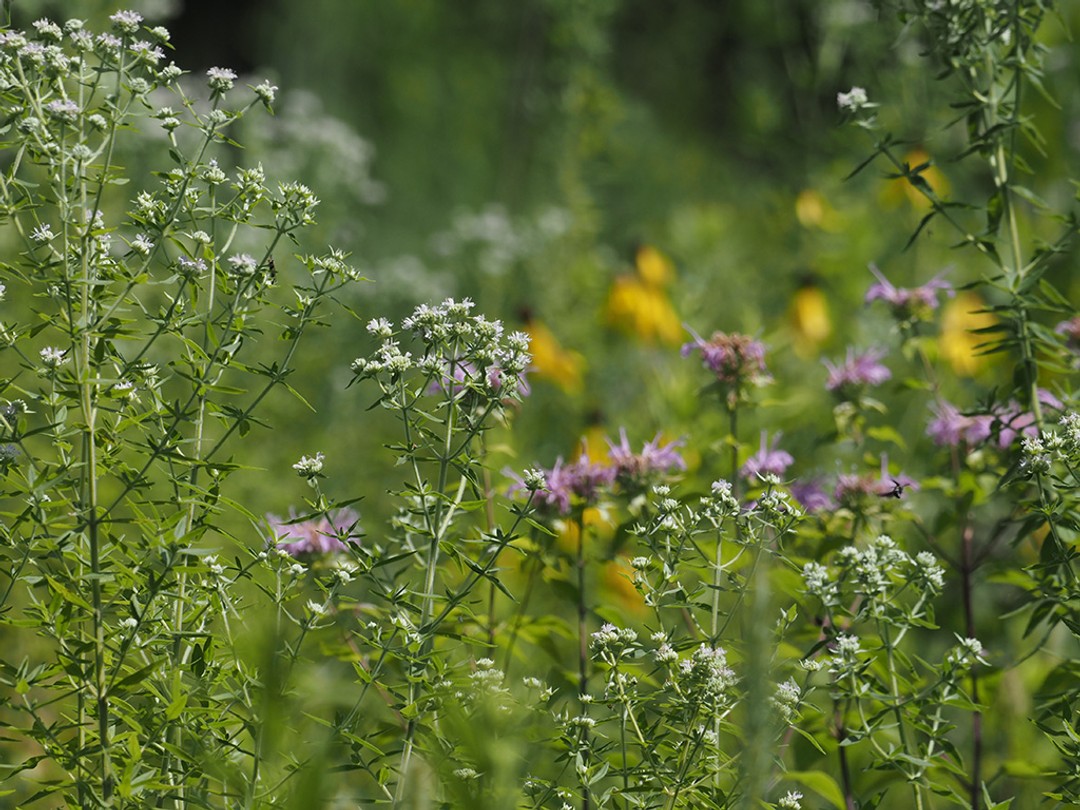
With Wild bergamot 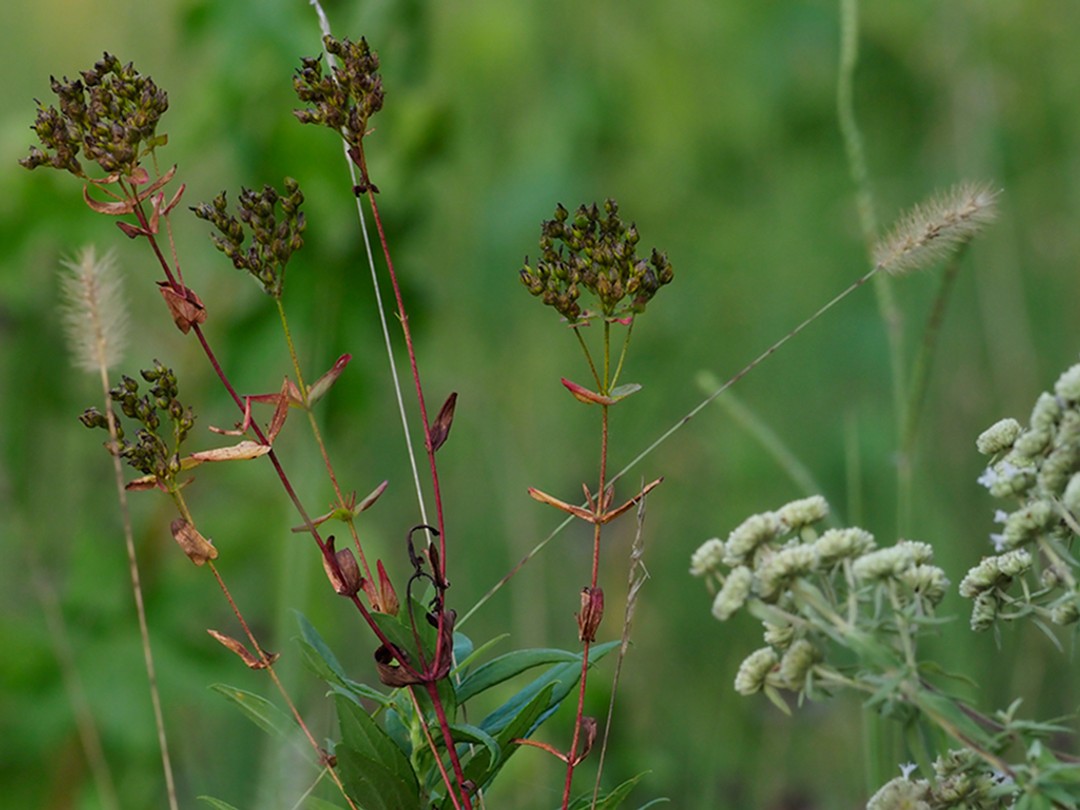
With Tubed beardtongue 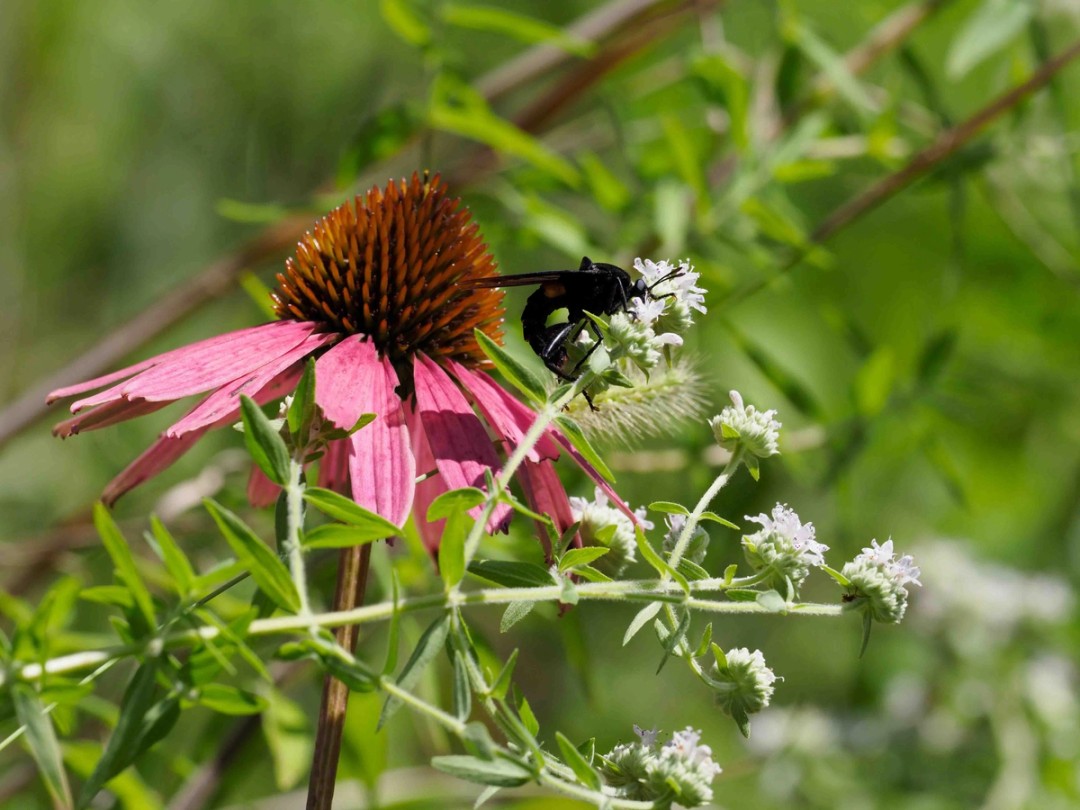
With Purple coneflower
HABITAT
This beautiful mountain mint can be found in varied habitats including open woods, savannas, prairies, grasslands, glades, stream banks, pond margins as well as old fields, pastures and along roadsides. It prefers full sun to partial shade and handles moist to dry conditions.
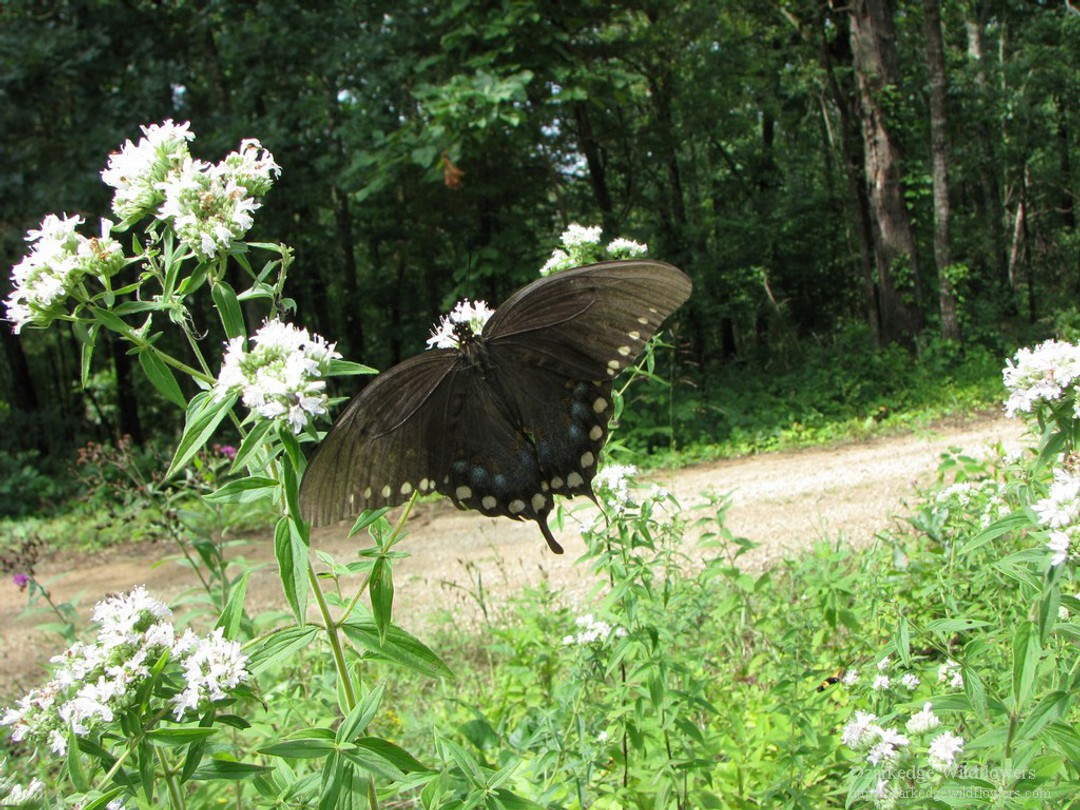
Roadside 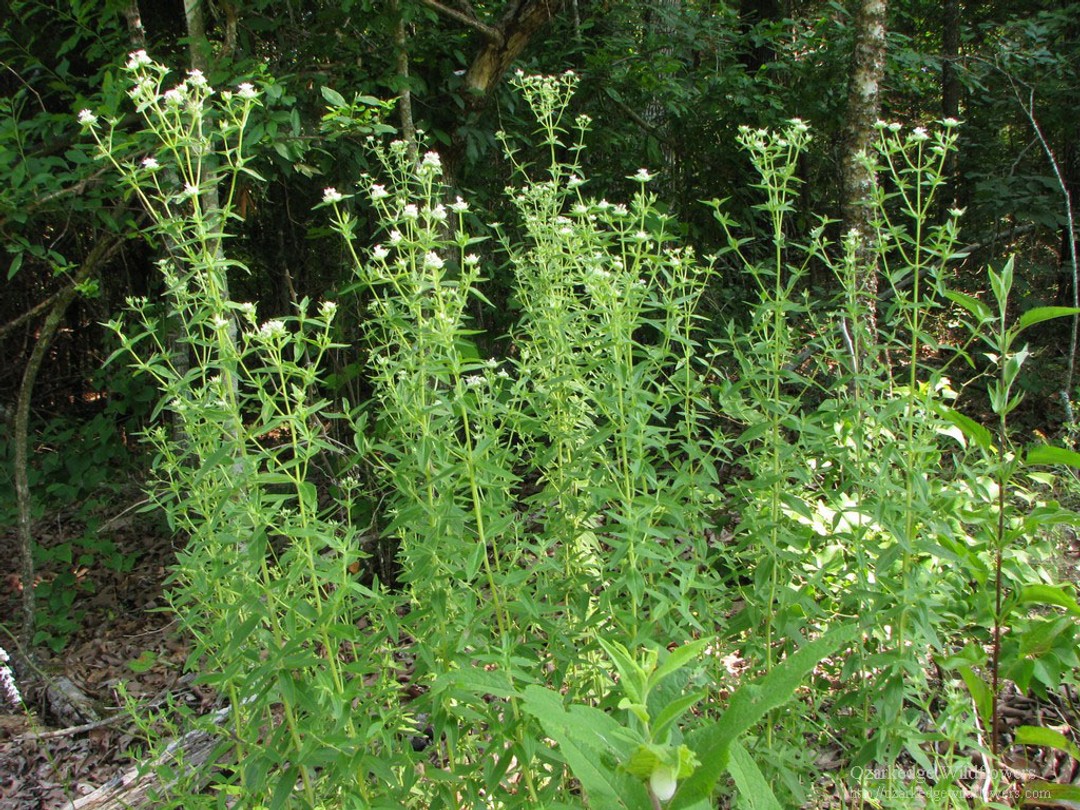
Woodland edge 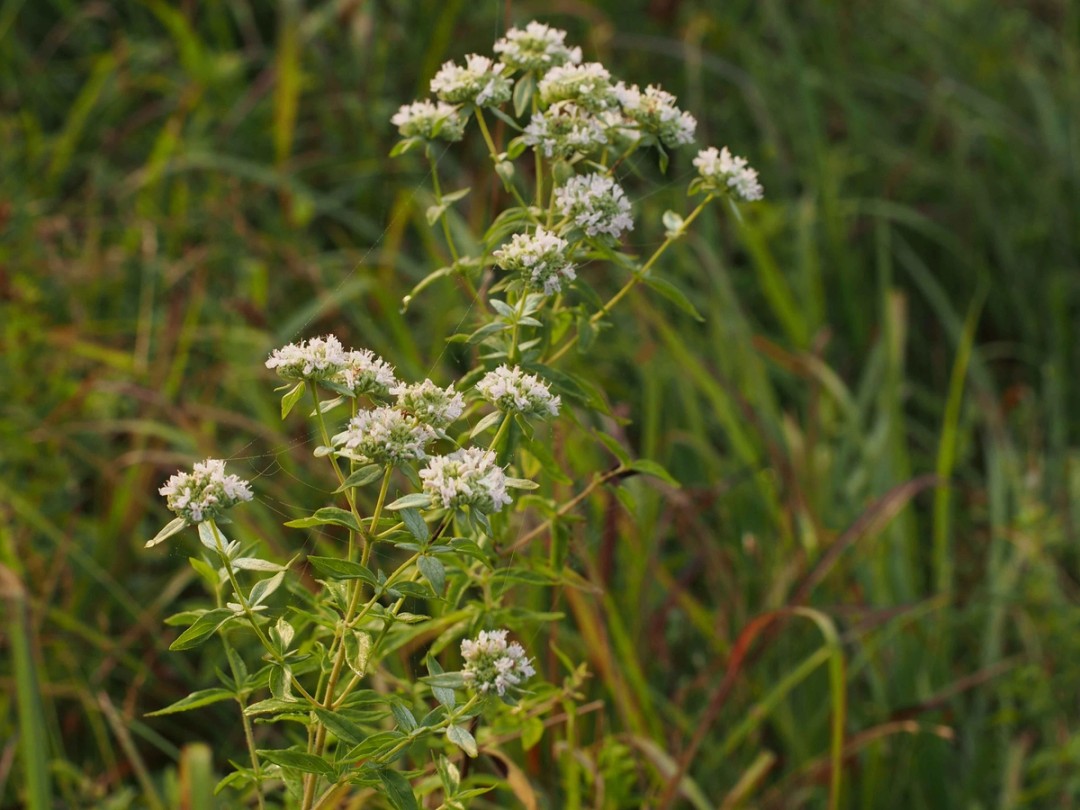
Grassland 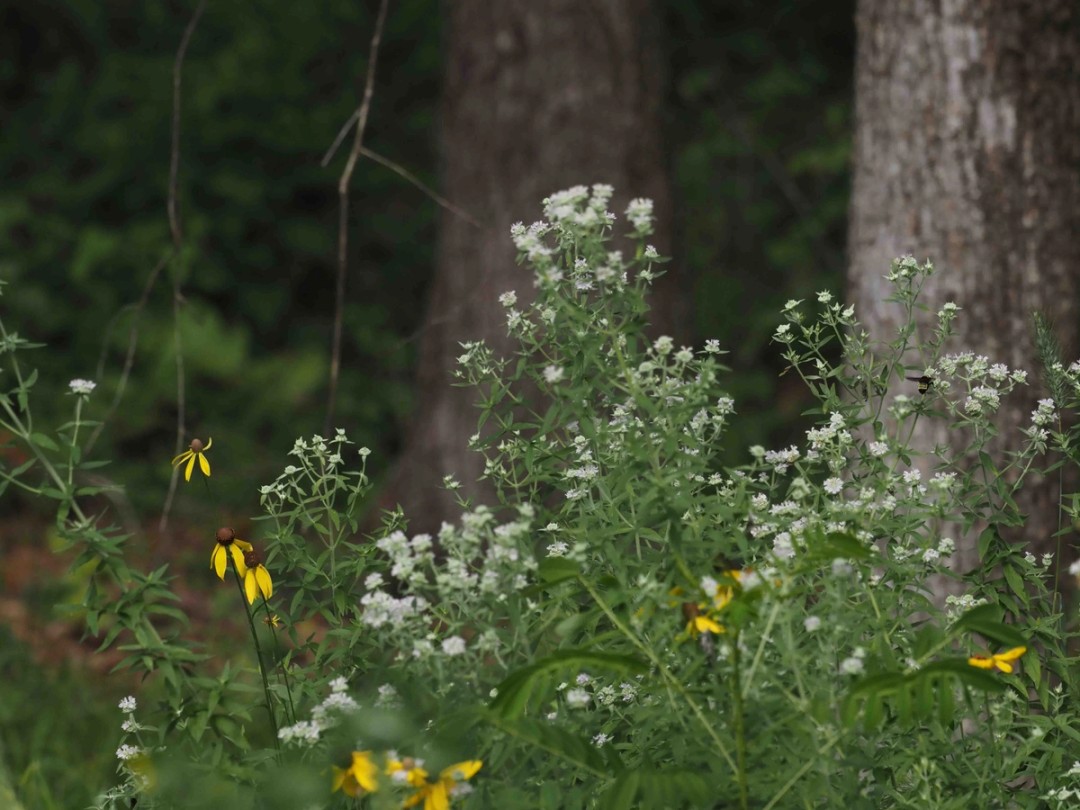
Creek bank
CONSERVATION STATUS
Arkansas has placed a C-Value of 7 (in the group of 4-7) on Pycnanthemum pilosum meaning "Typically matrix taxa in intact, stable habitats, with some limited ability to respond to destabilizing forces and repopulate areas from which they have been extirpated."
Some Botanists consider P. pilosum to be a distinct species and others consider it to be a variety of P. verticillatum. The 'Coefficients of conservatism for the vascular flora of Arkansas' lists it as a distinct species. On Natureserve, it is listed as Pycnanthemum verticillatum var. pilosum (Whorled Mountainmint) and shown as a Secure Variety.
INTERESTING TIDBITS
A tea can be made from most Mountain mints including Pycnanthemum pilosum, Pycnanthemum viginianum and Pycnanthemum tenufolium. It's easy to prepare the tea from both fresh or dried leaves by steeping them in hot water. I've read that the leaves can also be used in salads or as flavoring for deserts and other culinary dishes.