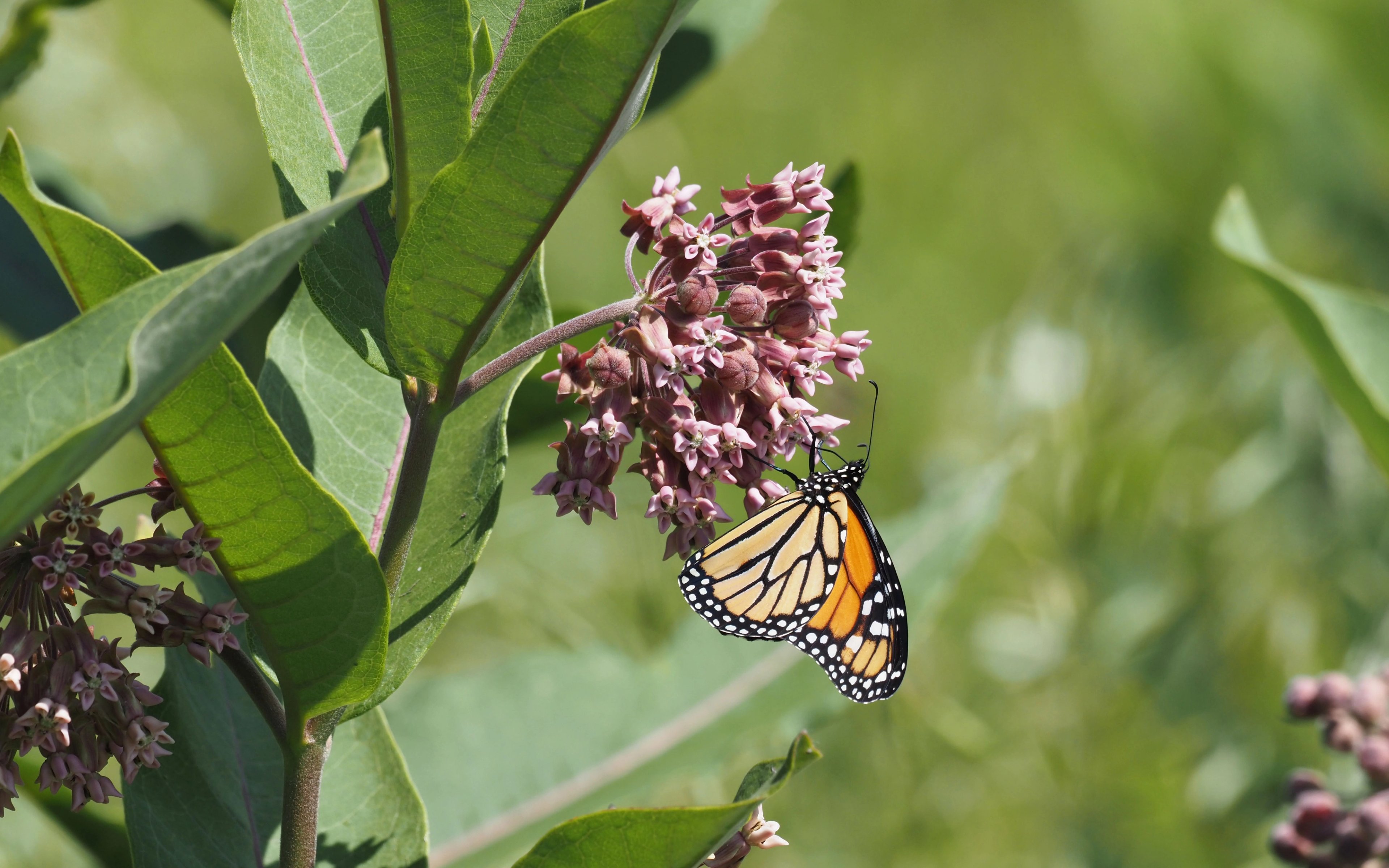
PLANT NAME
This perennial forb, the most common of all milkweeds, is known as Common milkweed. Its botanical name is Asclepias syriaca. The word ‘Asclepias’ is derived from the Greek god of medicine, Asklepios, reflecting the plant’s historical medicinal use. The specific epithet ‘syriaca’ stems from a misconception that the plant originated in Syria. This error arose when Linnaeus obtained a specimen from a garden in the Middle East and mistakenly assumed it was native to that region.
BLOOM
Common milkweed is a perennial, fragrant plant with large umbels occurring on the top half of the stem. The umbels contain anywhere from 2 to 100 individual flowers and are approximately 2 to 4 inches in diameter. They emerge from the upper leaf axils. Individual flowers are about 1/4 to 1/2 inch across with 5 petals and 5 hoods, with the hoods having a lighter color than the petals.
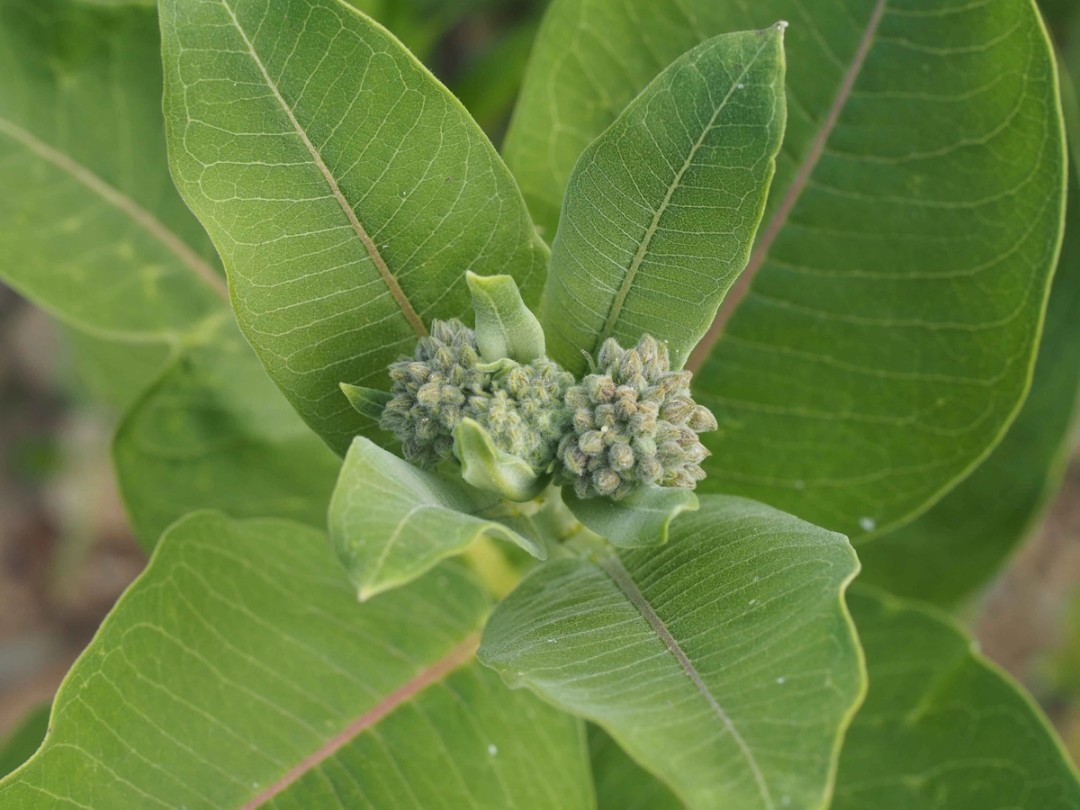
Many buds 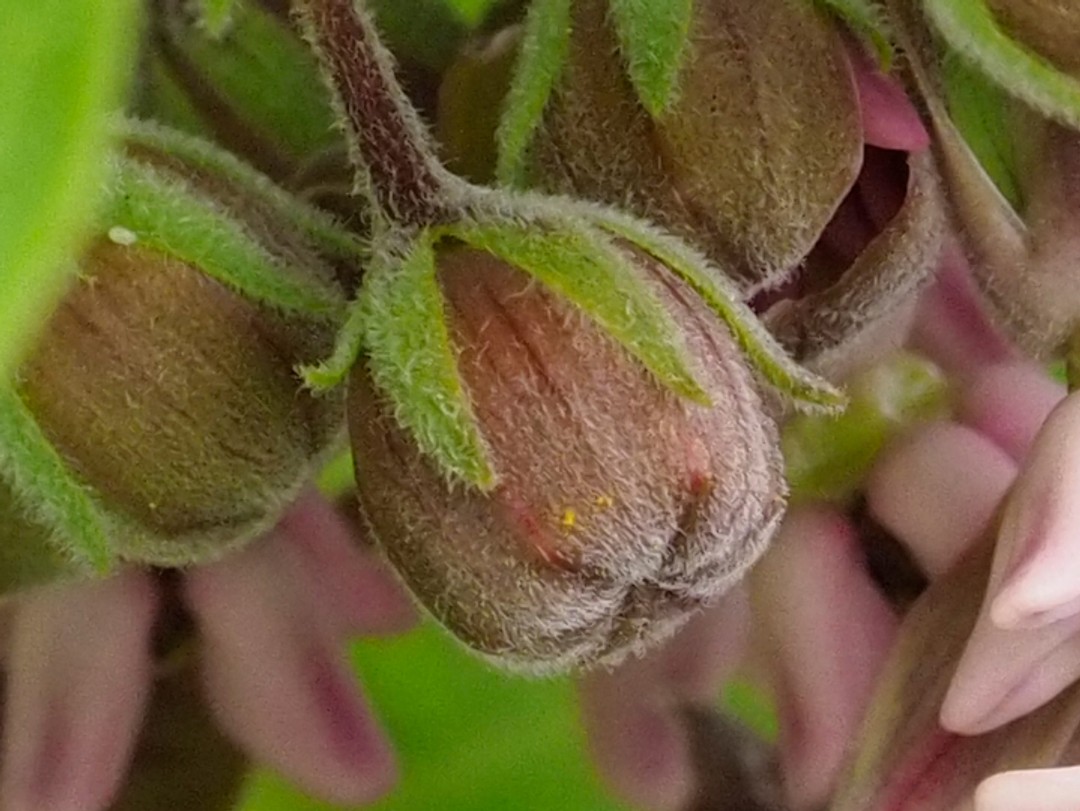
Close look at bud 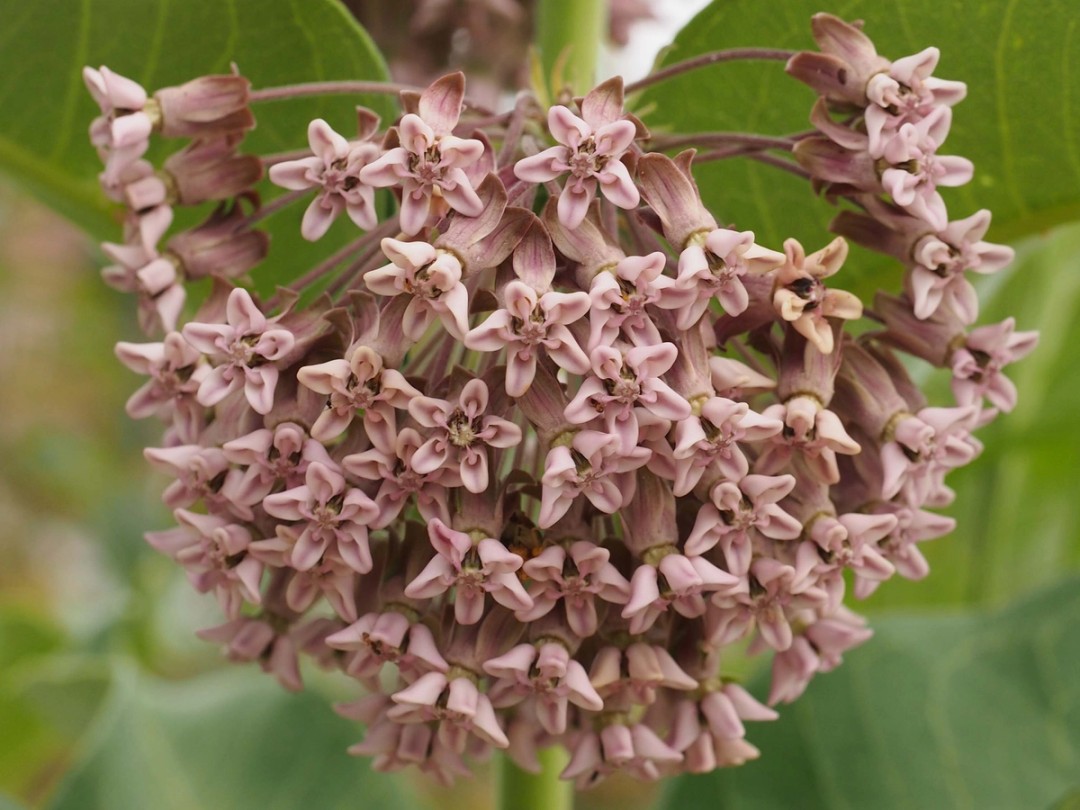
Umbel of flowers 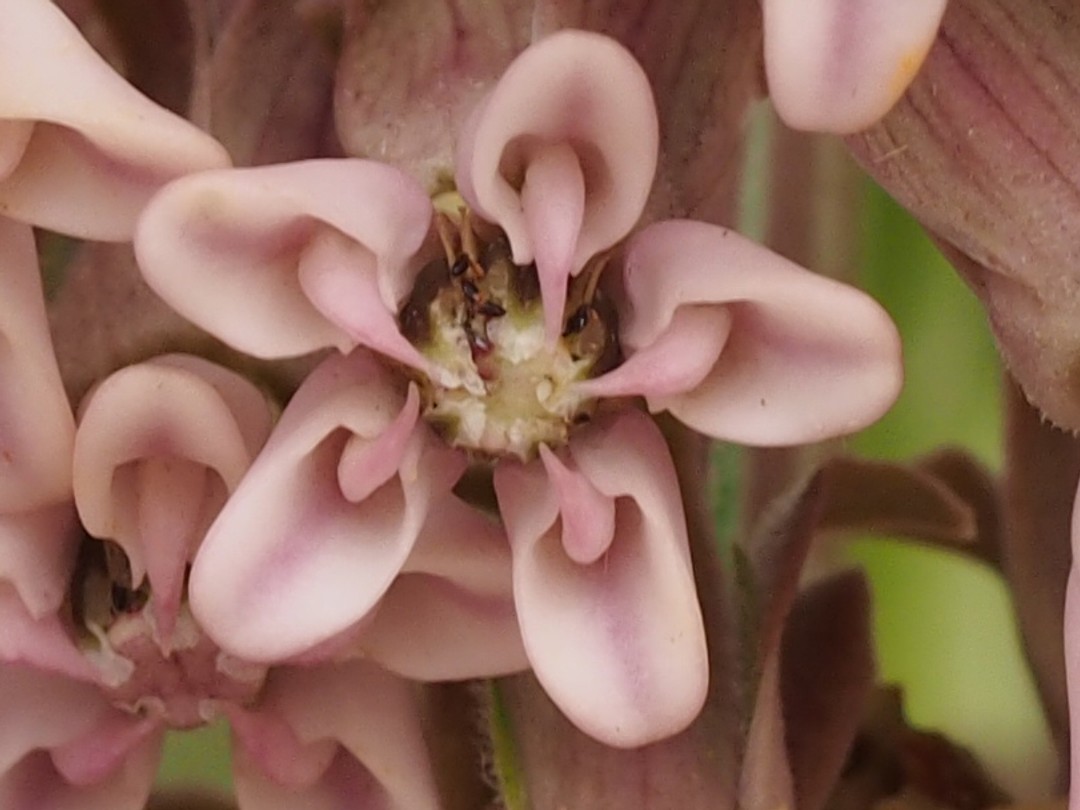
Individual flower 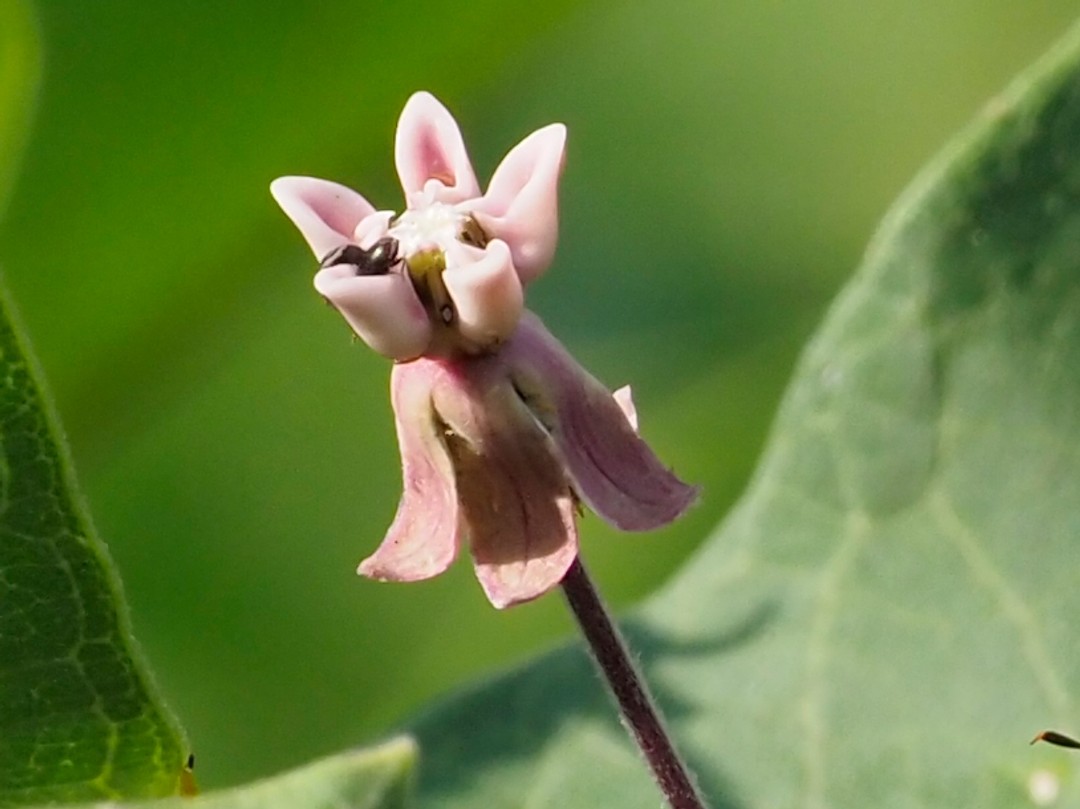
Flower and calyx 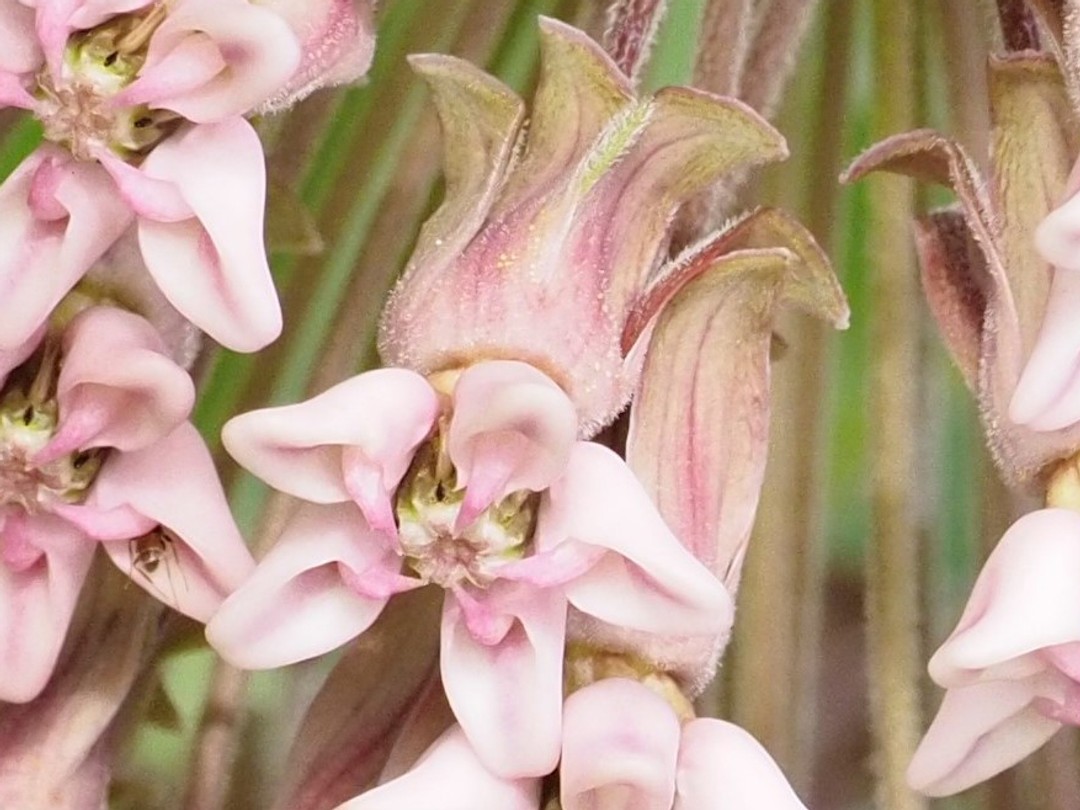
Flower and calyx
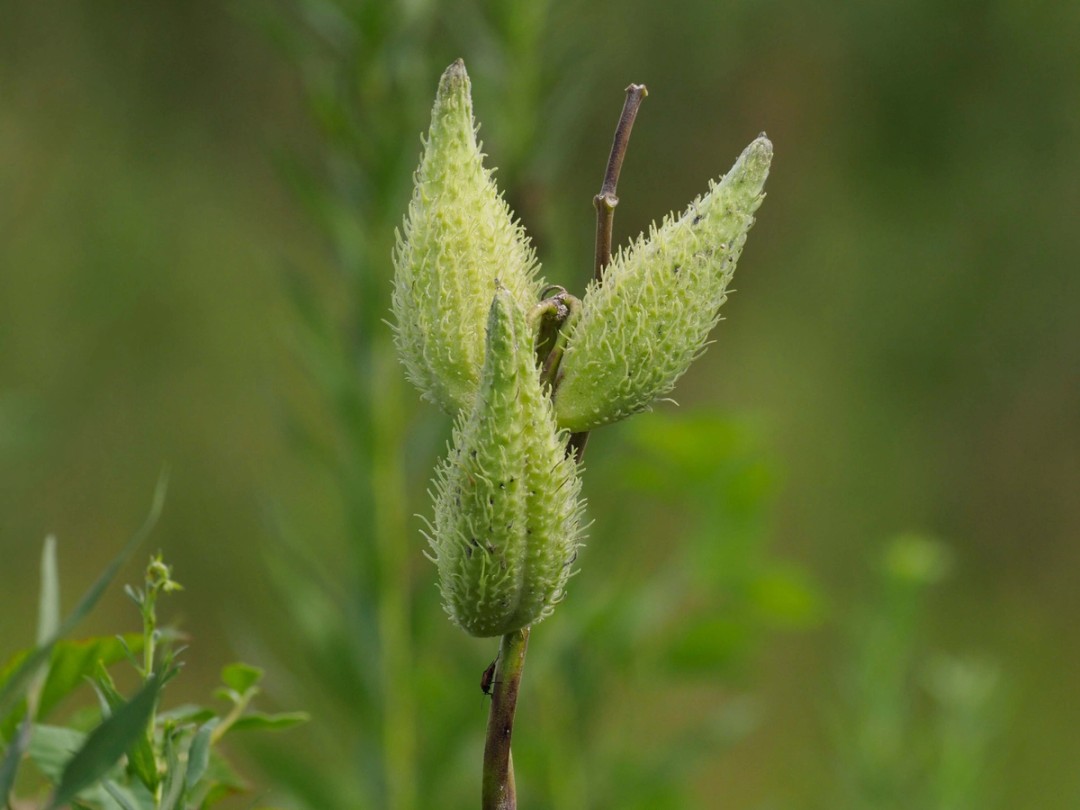
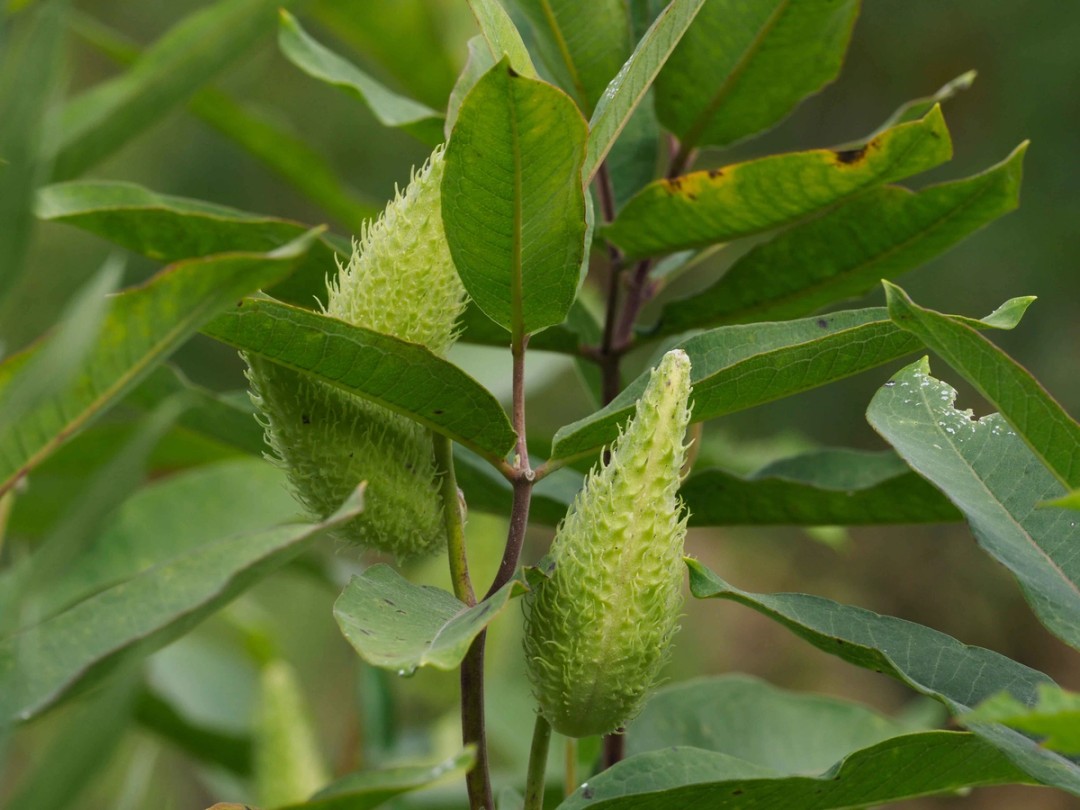
After flowering, interesting seed pods appear. These hairy seed pods are large, ranging from 3-4 inches long. They have a fuzzy, bumpy and somewhat warty appearance. When ripe, they darken to a tan or brown color and are easily split along their seam.
The seed pods in the photos below are not yet ripe.
These photos capture ripe seed pods that are ready for harvest. On the left, a few seeds are beginning to escape from an opening in the pod, accompanied by their coma (milkweed floss or silk). On the right, the coma has spilled out of the pod. The small brown seeds will float away with the breeze, propelled by their tiny coma parachutes.
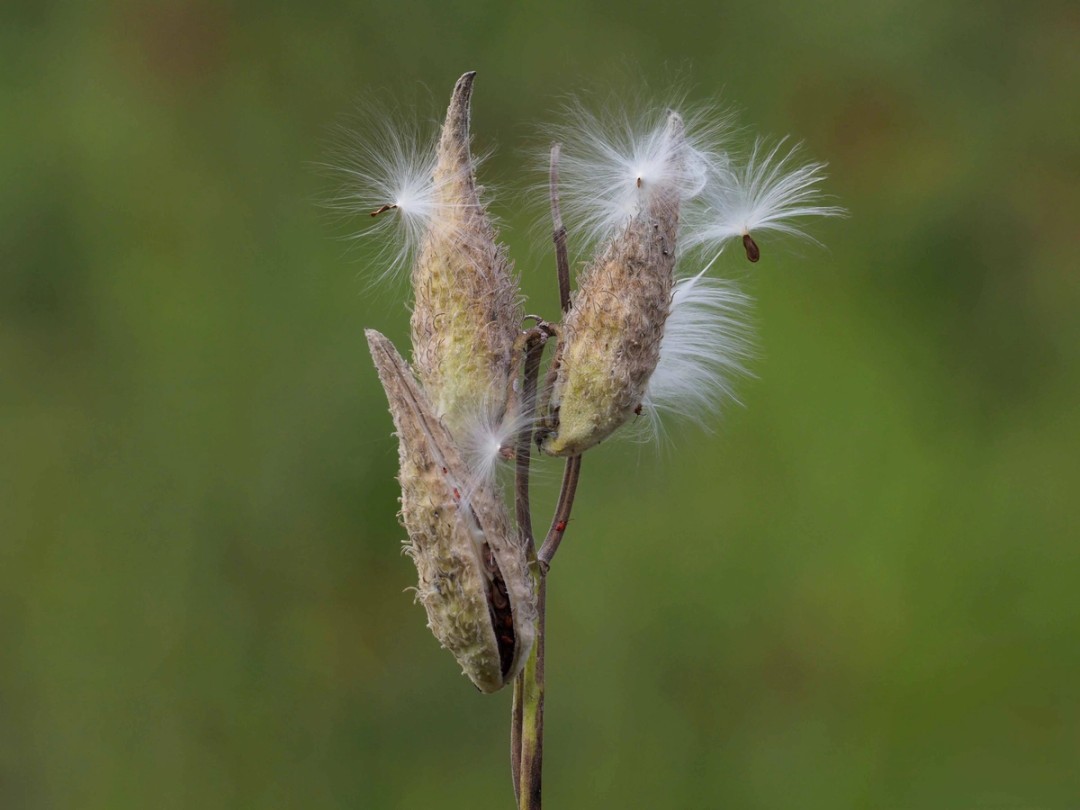
Ripe seed pods 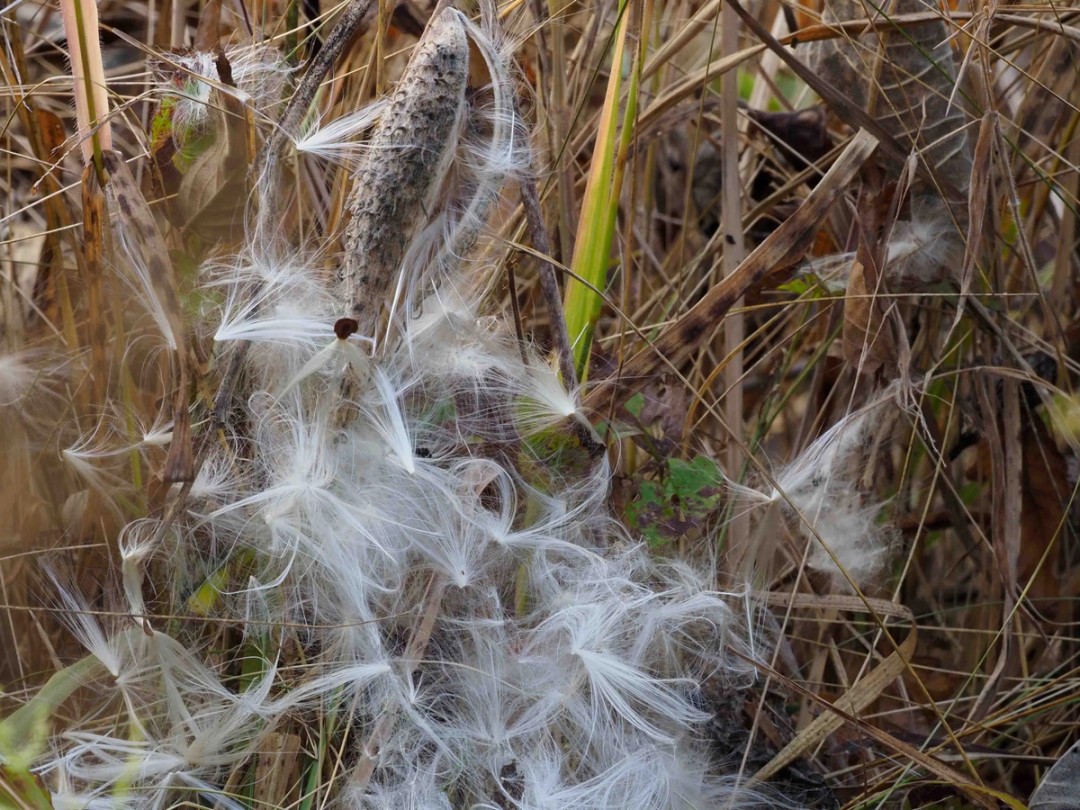
Open seed pod
DESCRIPTION
Asclepias syriaca is a tall plant growing up to about 5 feet in ideal conditions. It is a colonizing plant that spreads through rhizomes. Although a colony may appear as a group of many plants, it is actually a single large organism connected underground. For more information on this fascinating growth, I recommend reading “The Story of an Organism: Common Milkweed” by Craig Holdrege, published by The Nature Institute.
The stout stem remains unbranched until it reaches the plant’s top. It can be sparsely or densely hairy. If broken, it exudes a milky sap. The opposite leaves have short petioles. They are densely hairy, dark green above and lighter green underneath. A prominent central vein is visible at the center of each leaf.
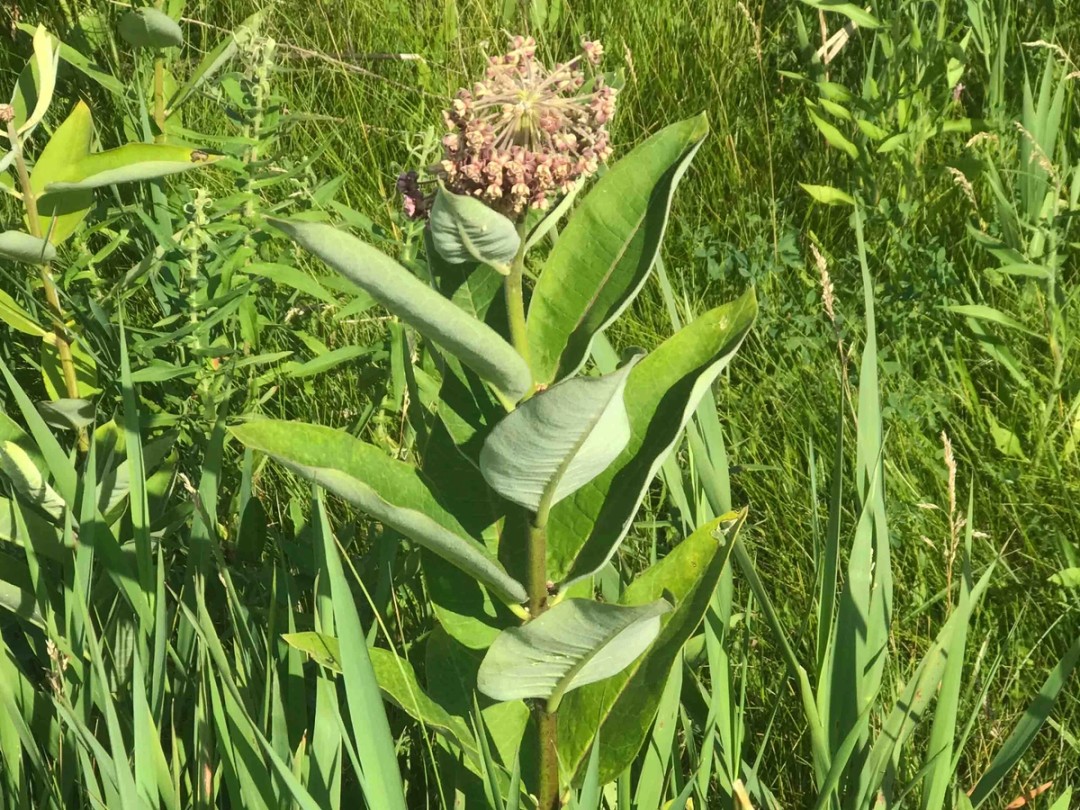
Opposite leaves 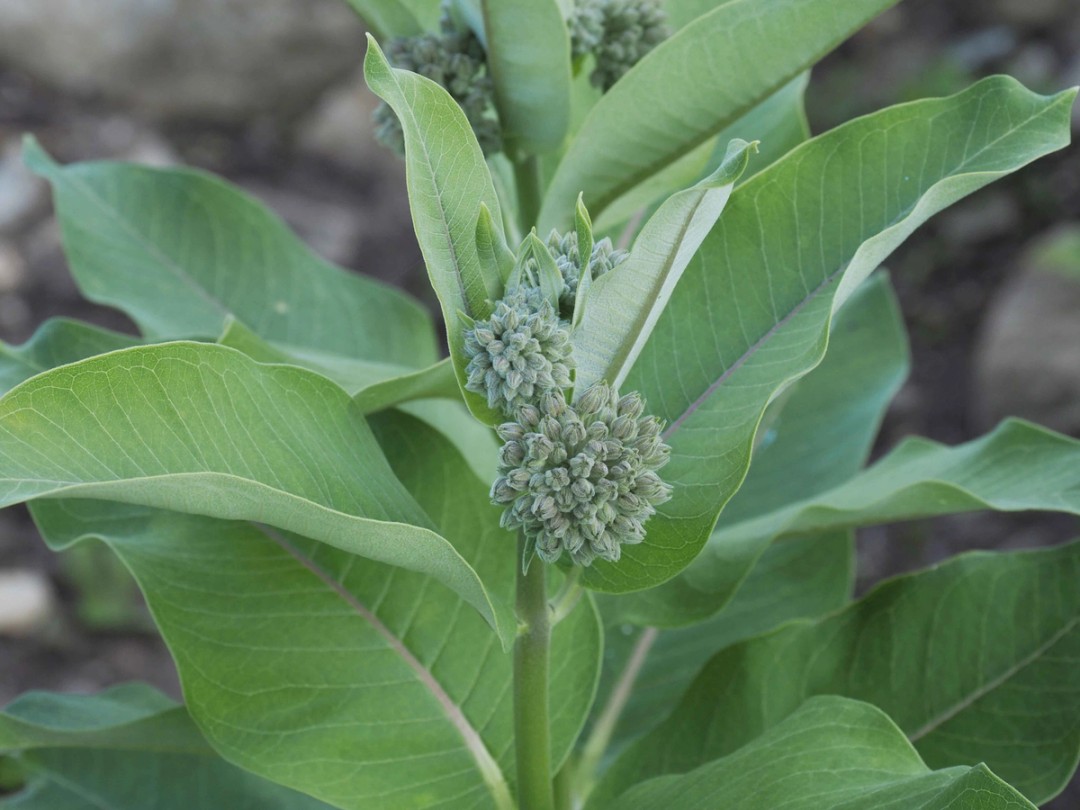
Large leaves with central vein
POLLINATORS
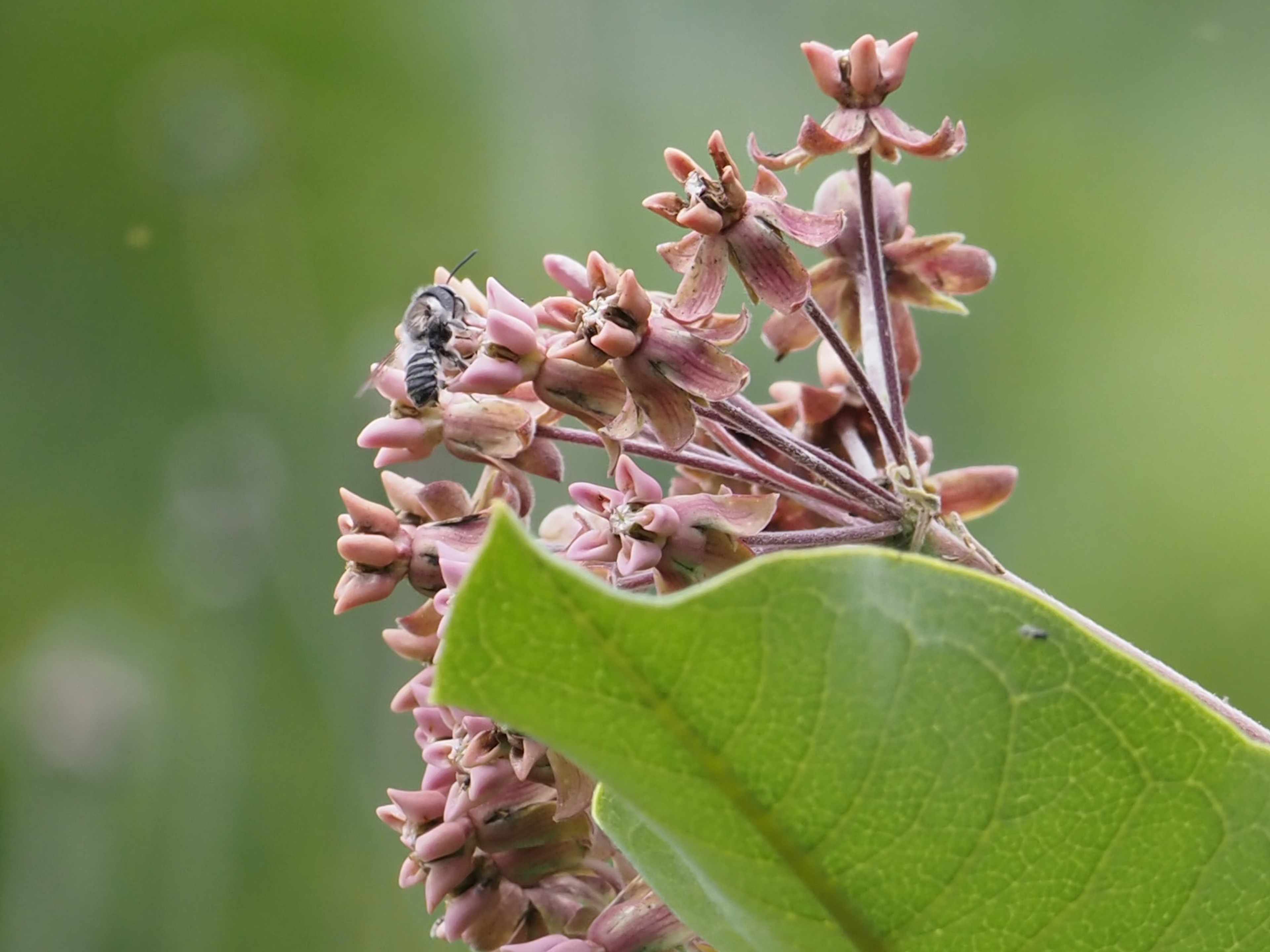
Common milkweed is a host plant for both the Monarch butterfly and the Milkweed Tussock moth. It is a vibrant hub of insect activity. Its leaves are a feast for the caterpillars of both species, making it an important plant for these insects. According to the US Forest Service, over 450 different insects rely on this plant for sustenance. I've personally witnessed bees, butterflies, skippers, beetles, wasps, milkweed bugs, ants, flies, and even hummingbirds visiting its flowers. Take a look below for a glimpse into the diverse array of insects that call this wonderful milkweed home.
Bees
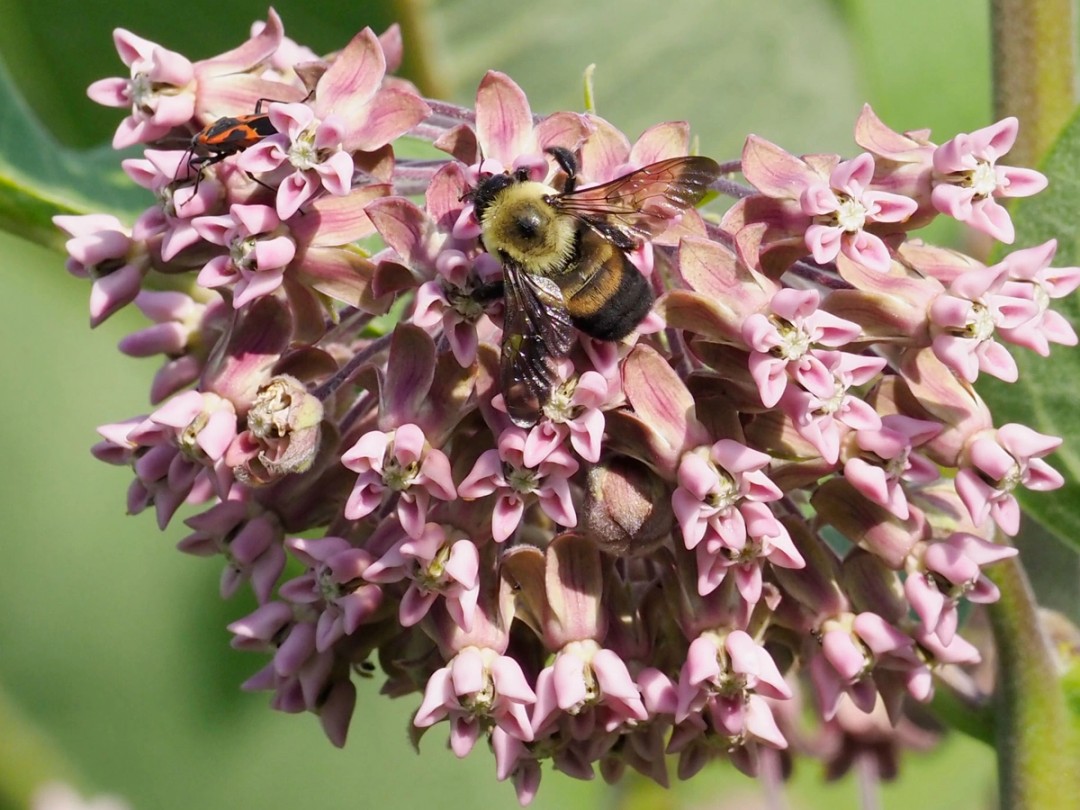
Bombus griseocollis 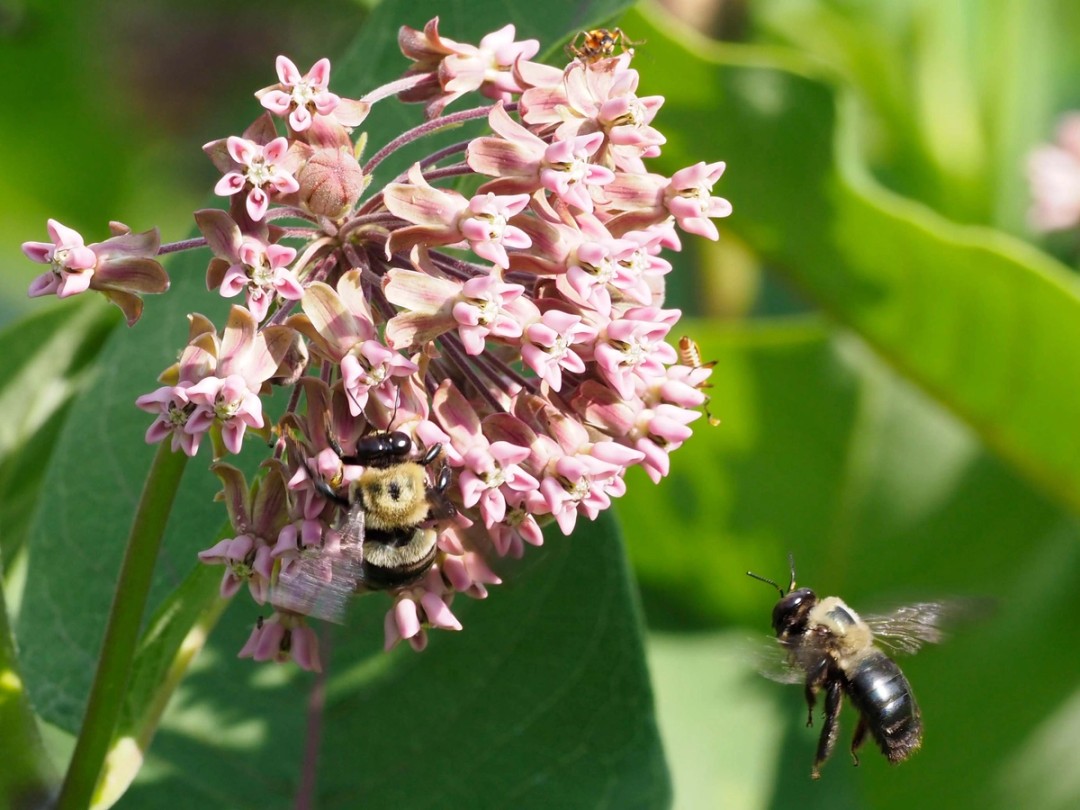
Large Carpenter bee
Butterflies
Monarch butterflies and their caterpillars are frequently seen on Common milkweed.
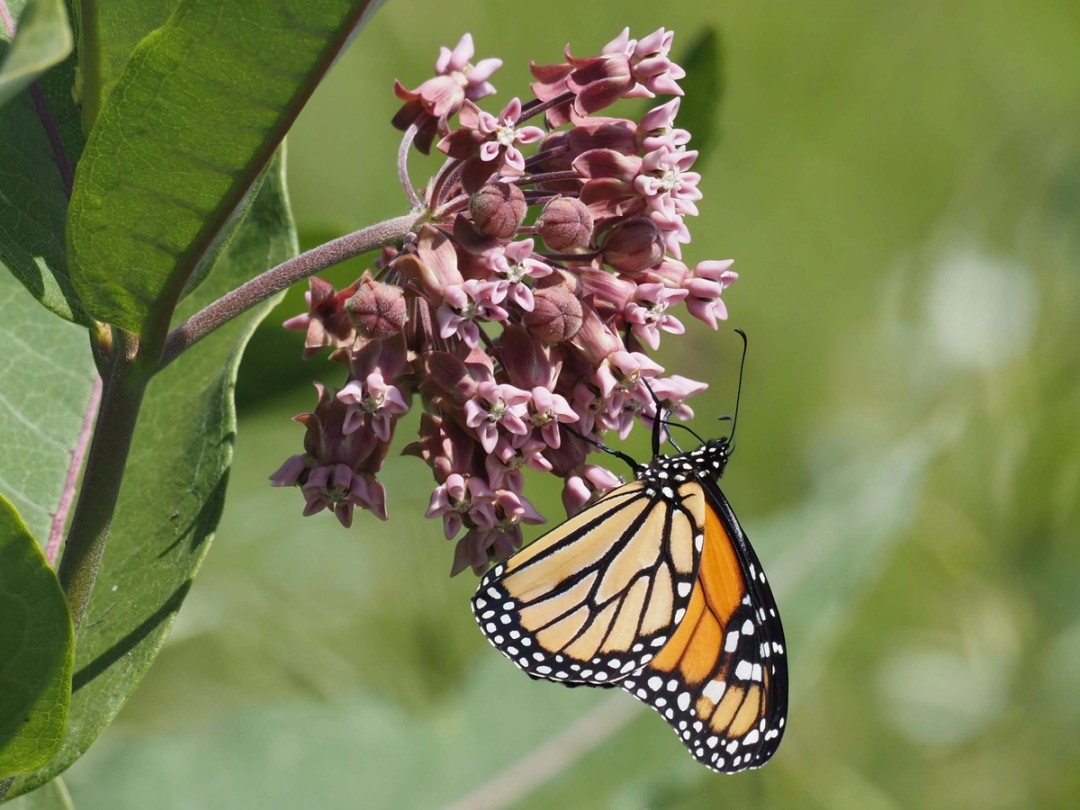
Monarch butterfly 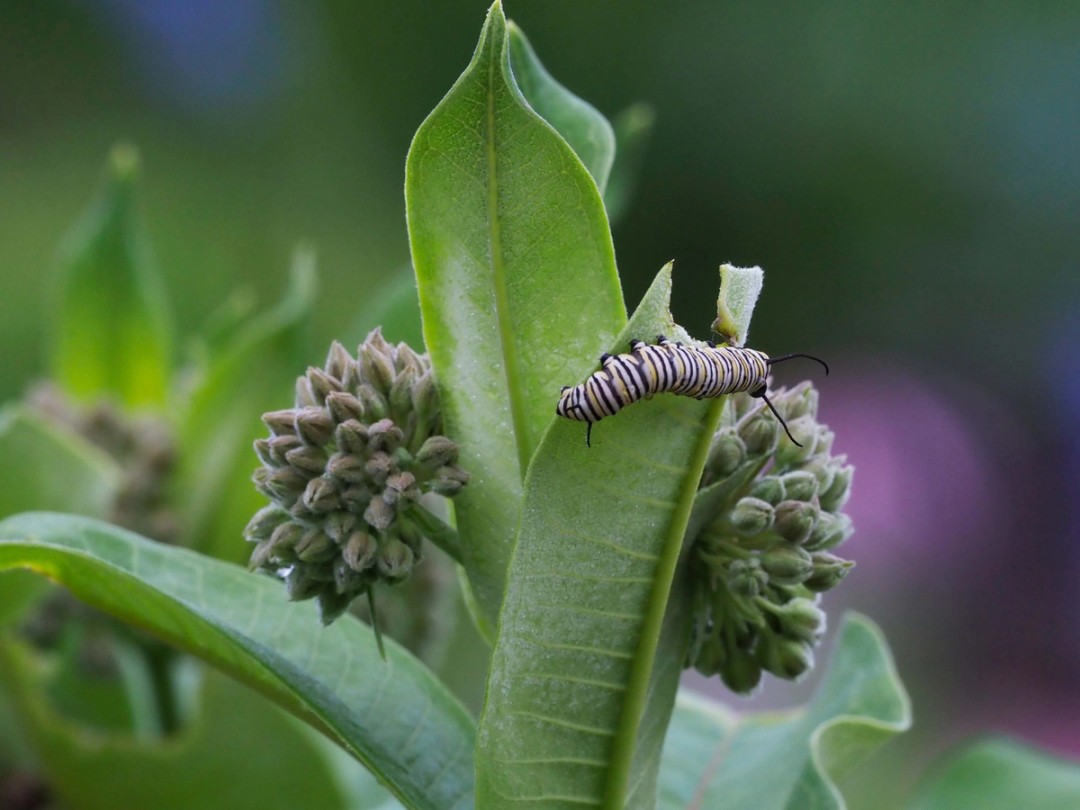
Monarch caterpillar
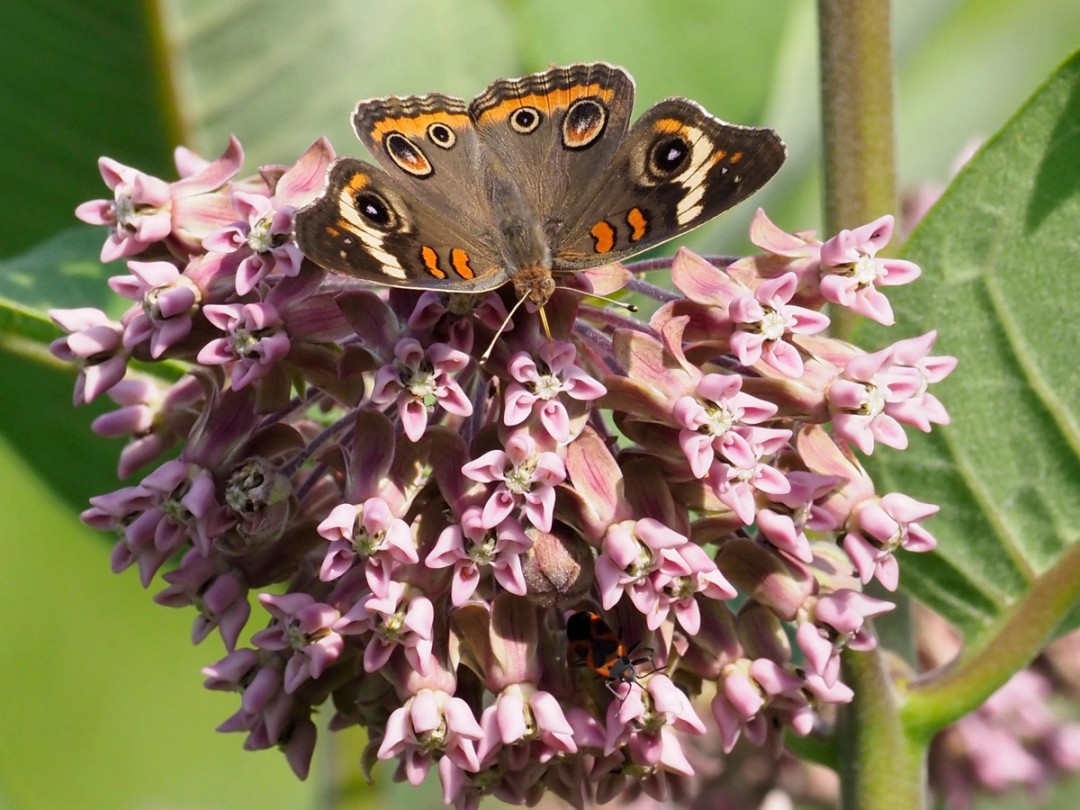
Common buckeye 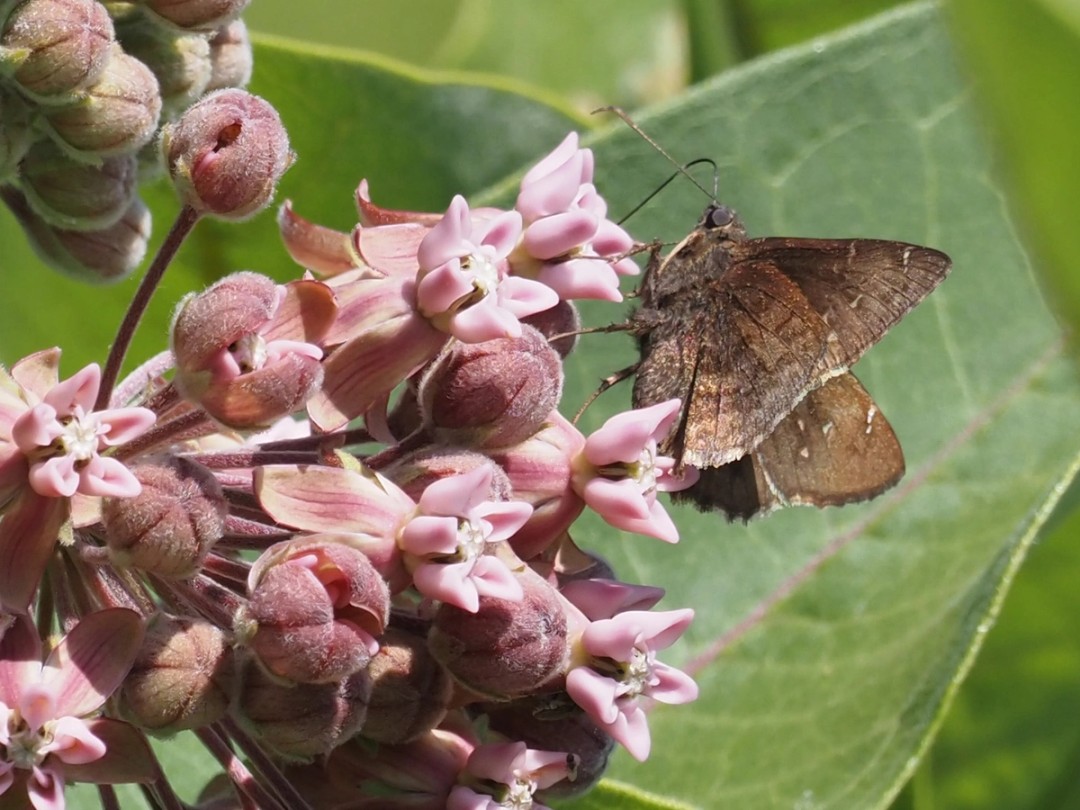
Northern cloudywing 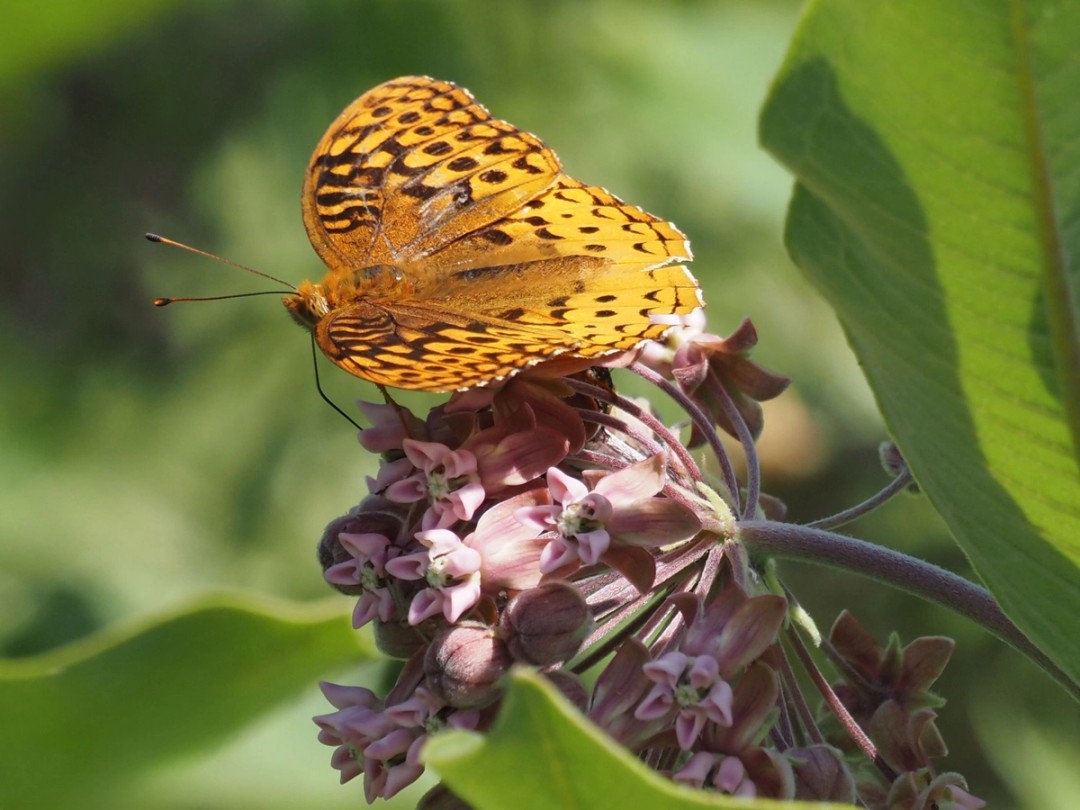
Great Spangled fritillary 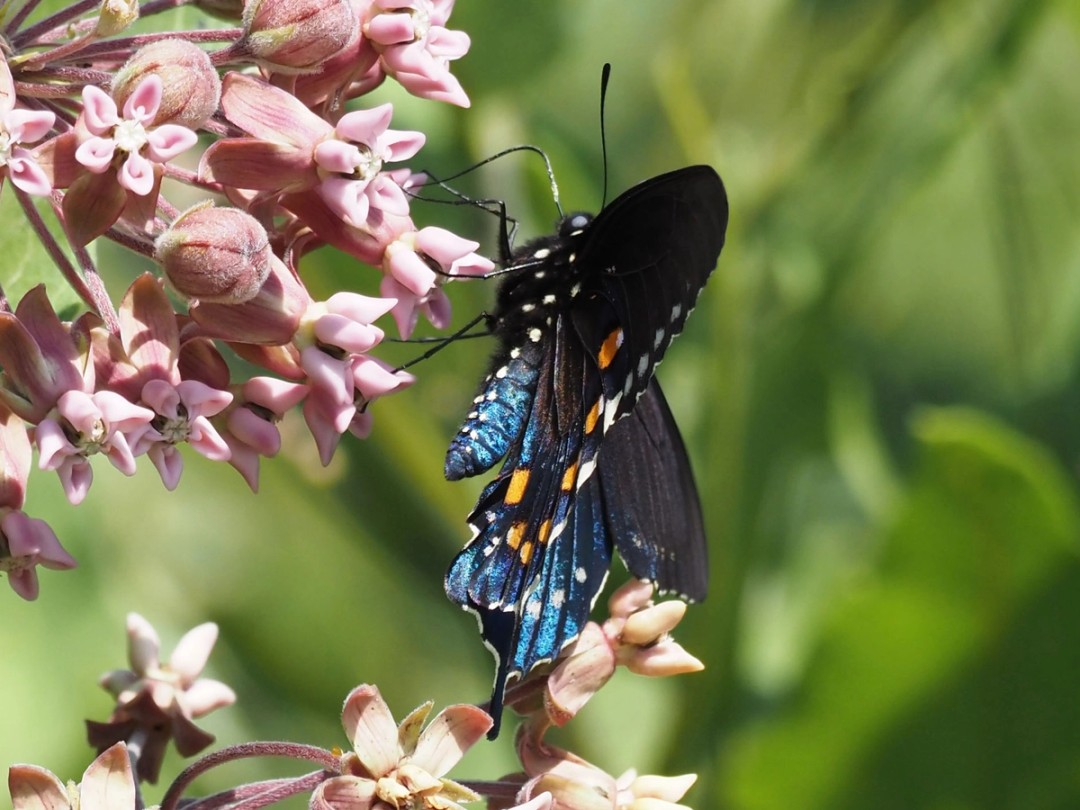
Pipevine swallowtail 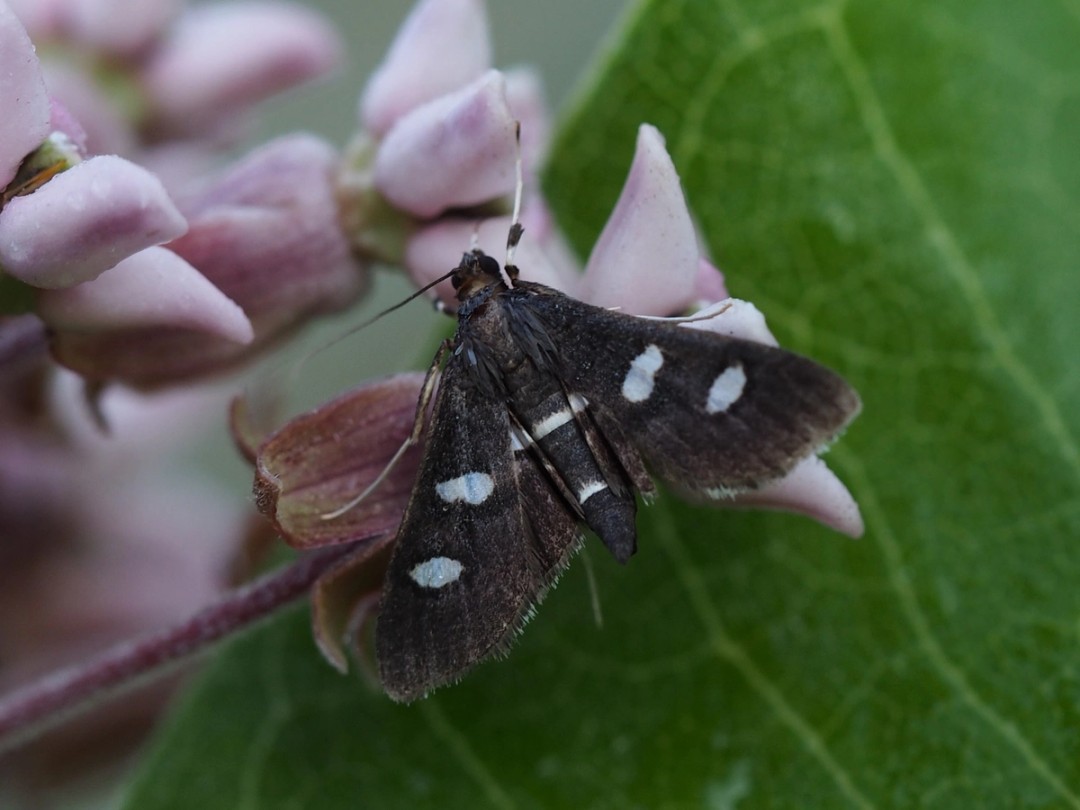
Genus Desmia 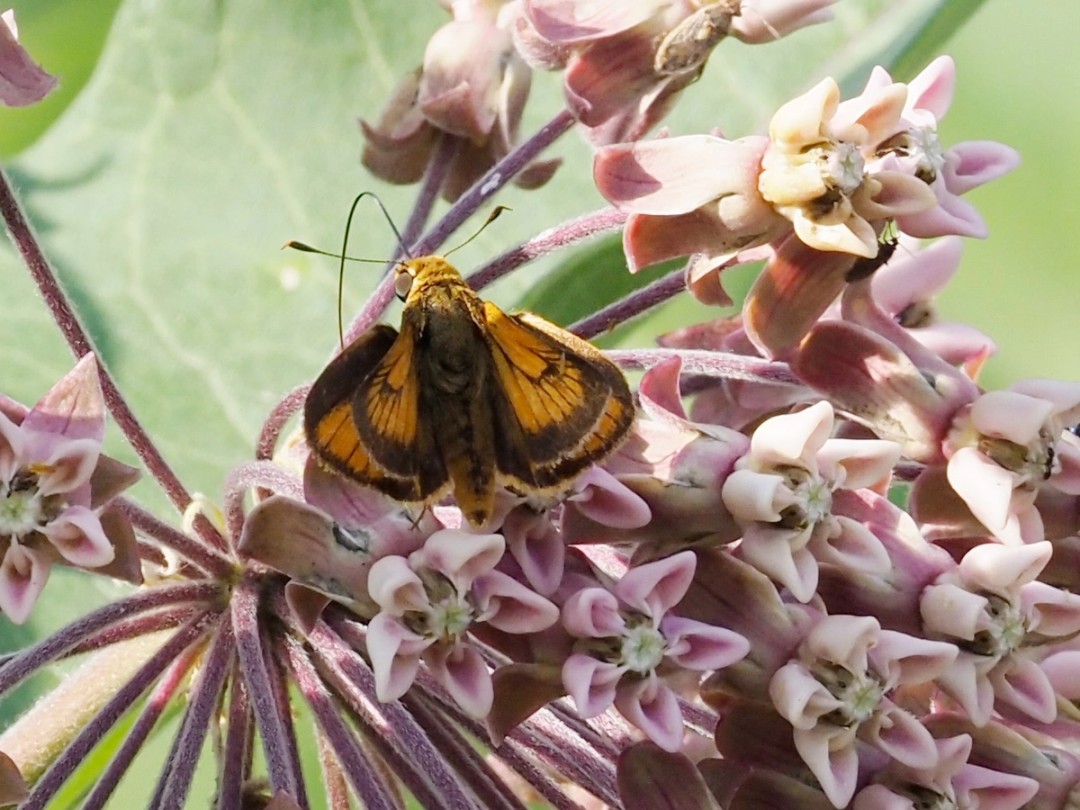
Delaware skipper
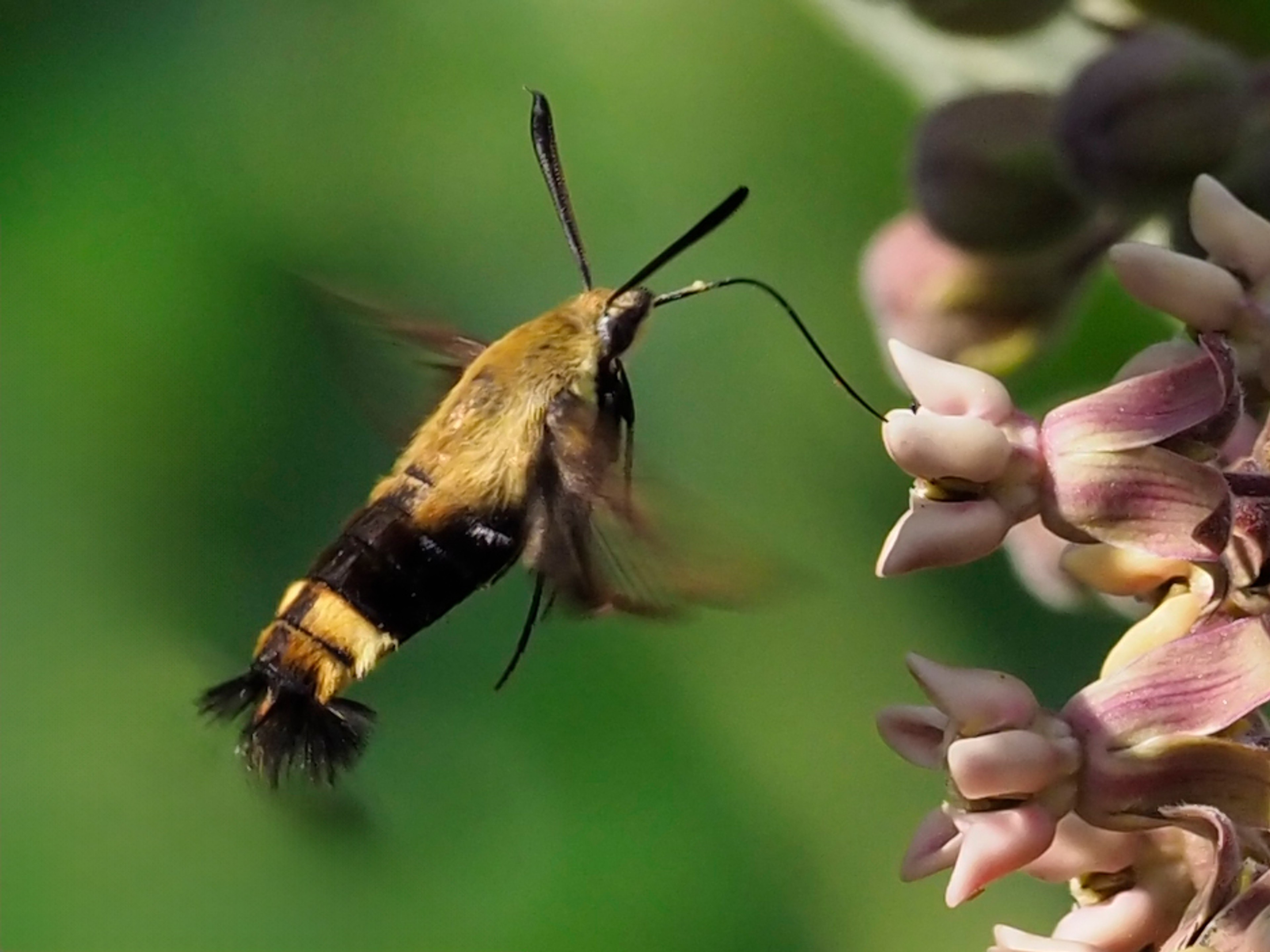
Hummingbird moths
These fast fliers are frequent visitors and good pollinators. With such a long proboscis and deft flying skills, they can probe deep inside the flower to reach the nectar.
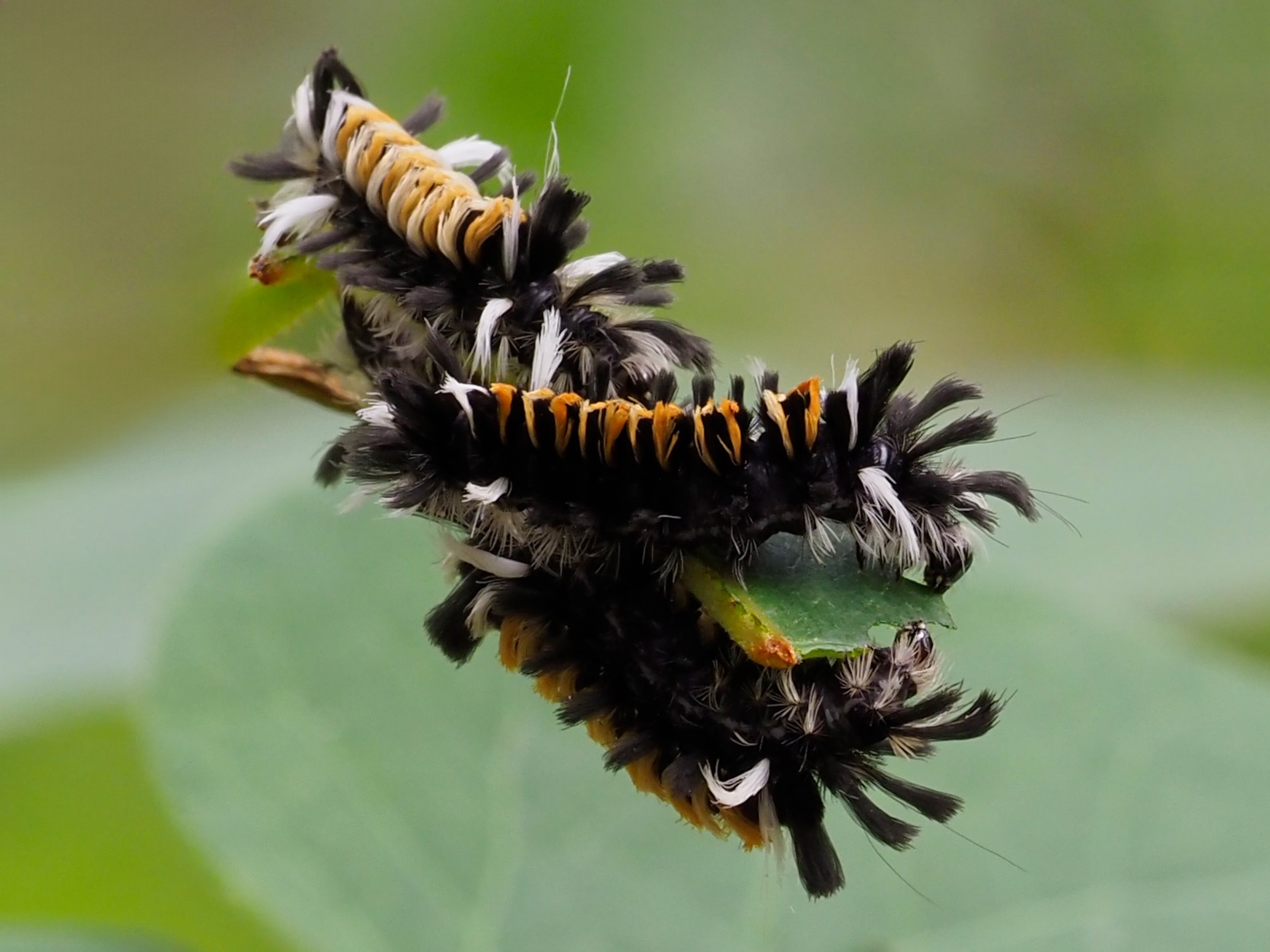
Milkweed Tussock Moth
The fuzzy black, white and golden caterpillars of the Milkweed tussock moth feed on the leaves of milkweeds (and dogbane) while the night-flying adults pollinate the plants as they sip nectar from the flowers.
PLANTS GROWING NEARBY
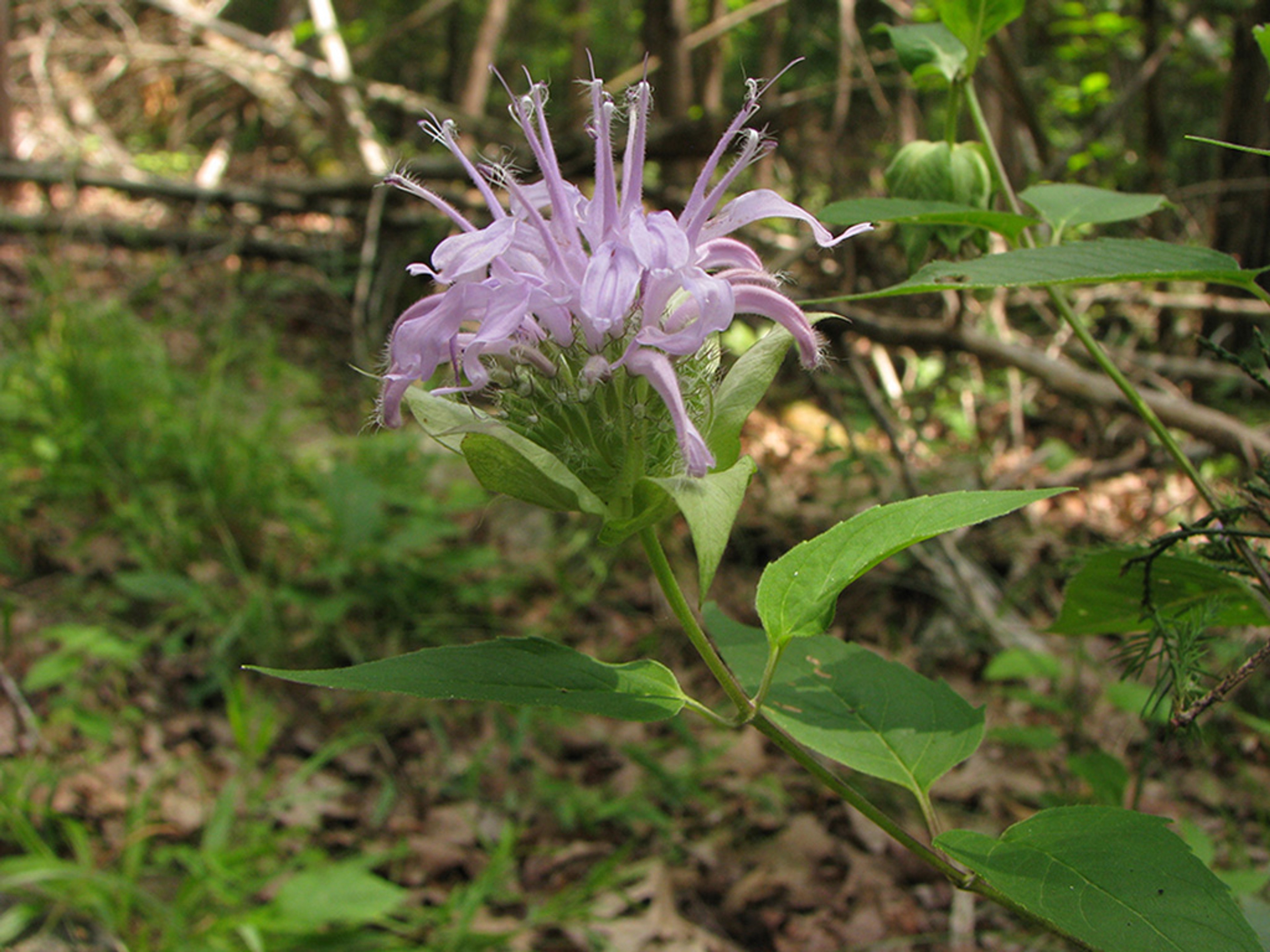
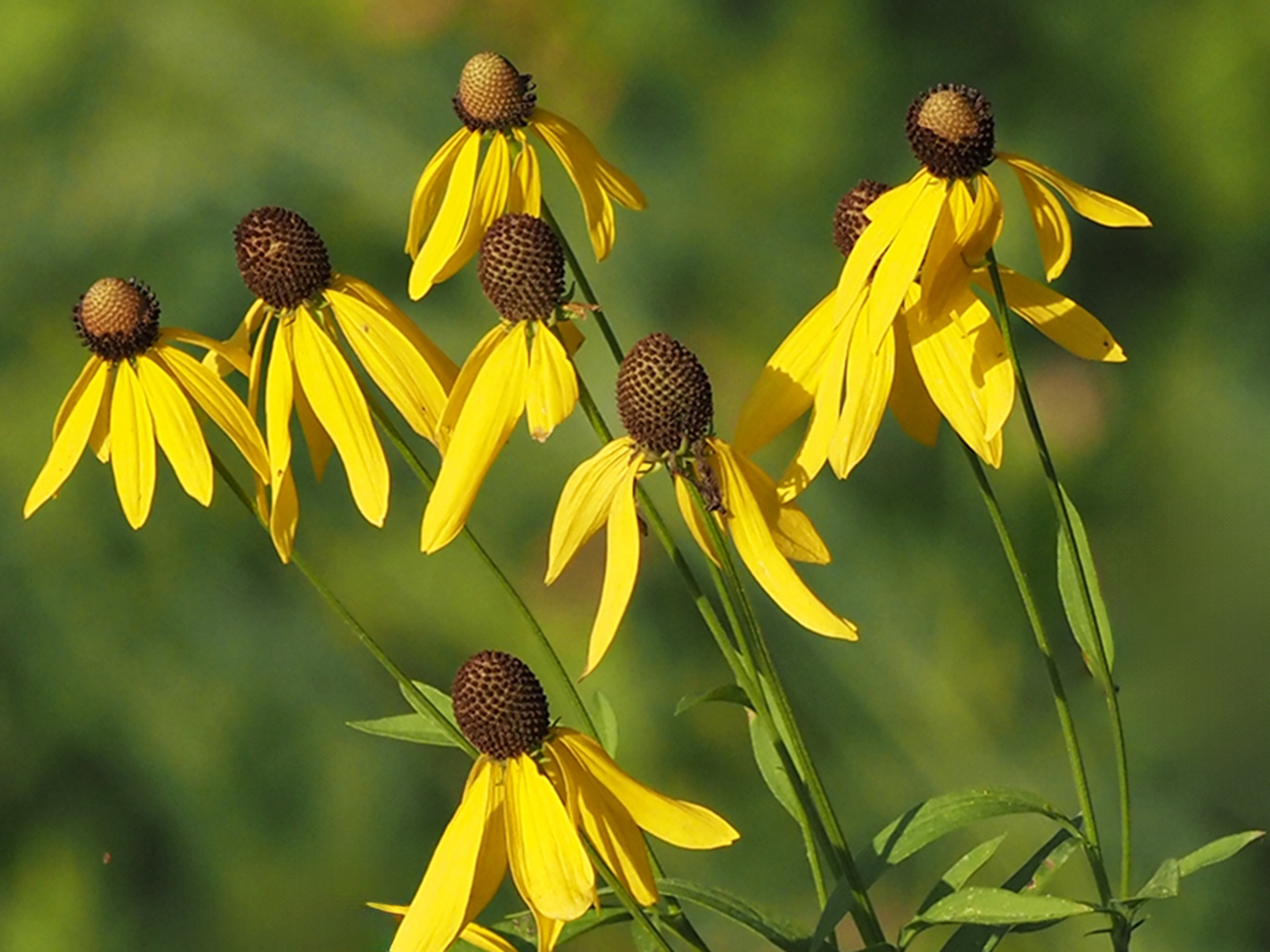
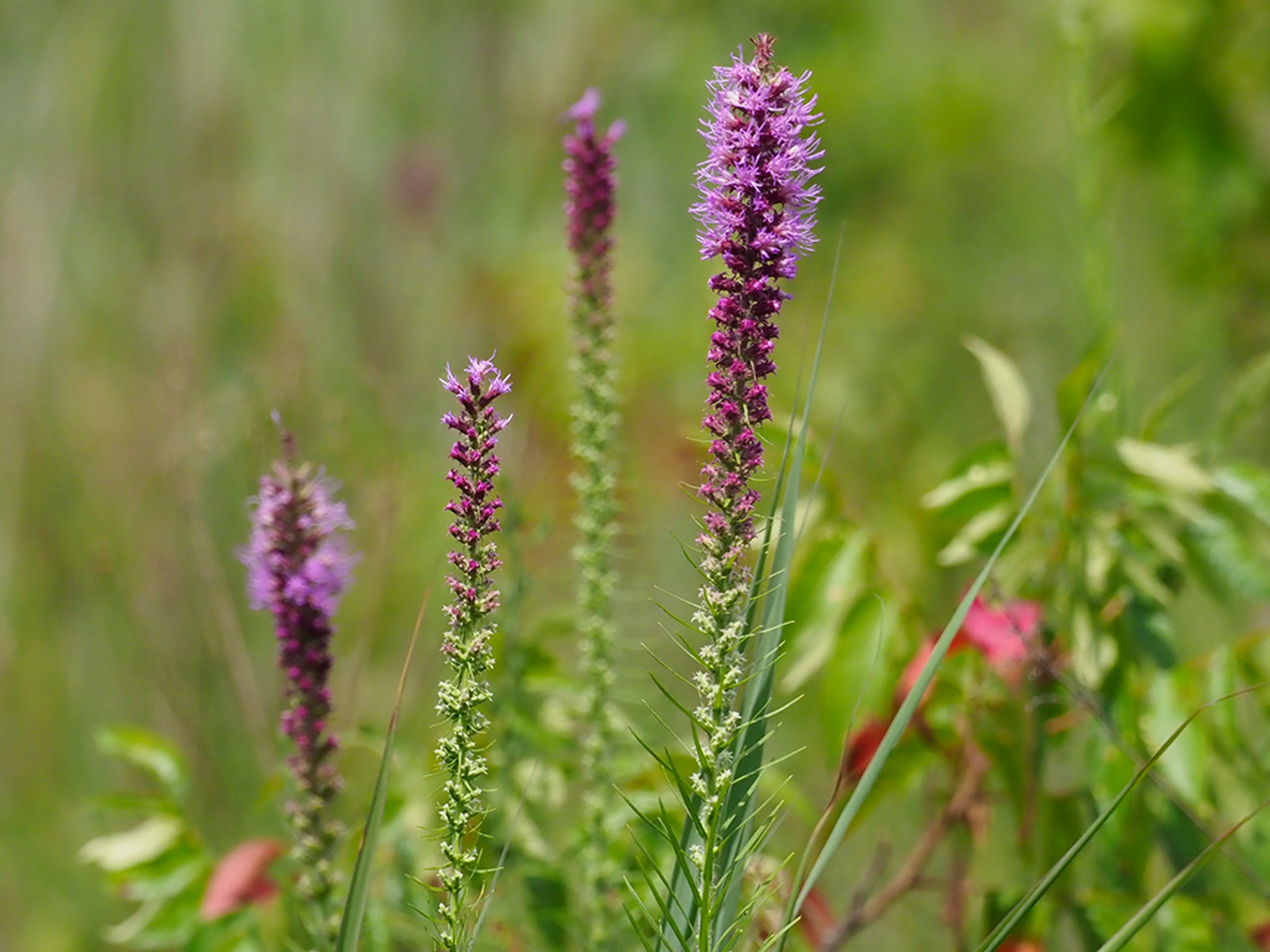
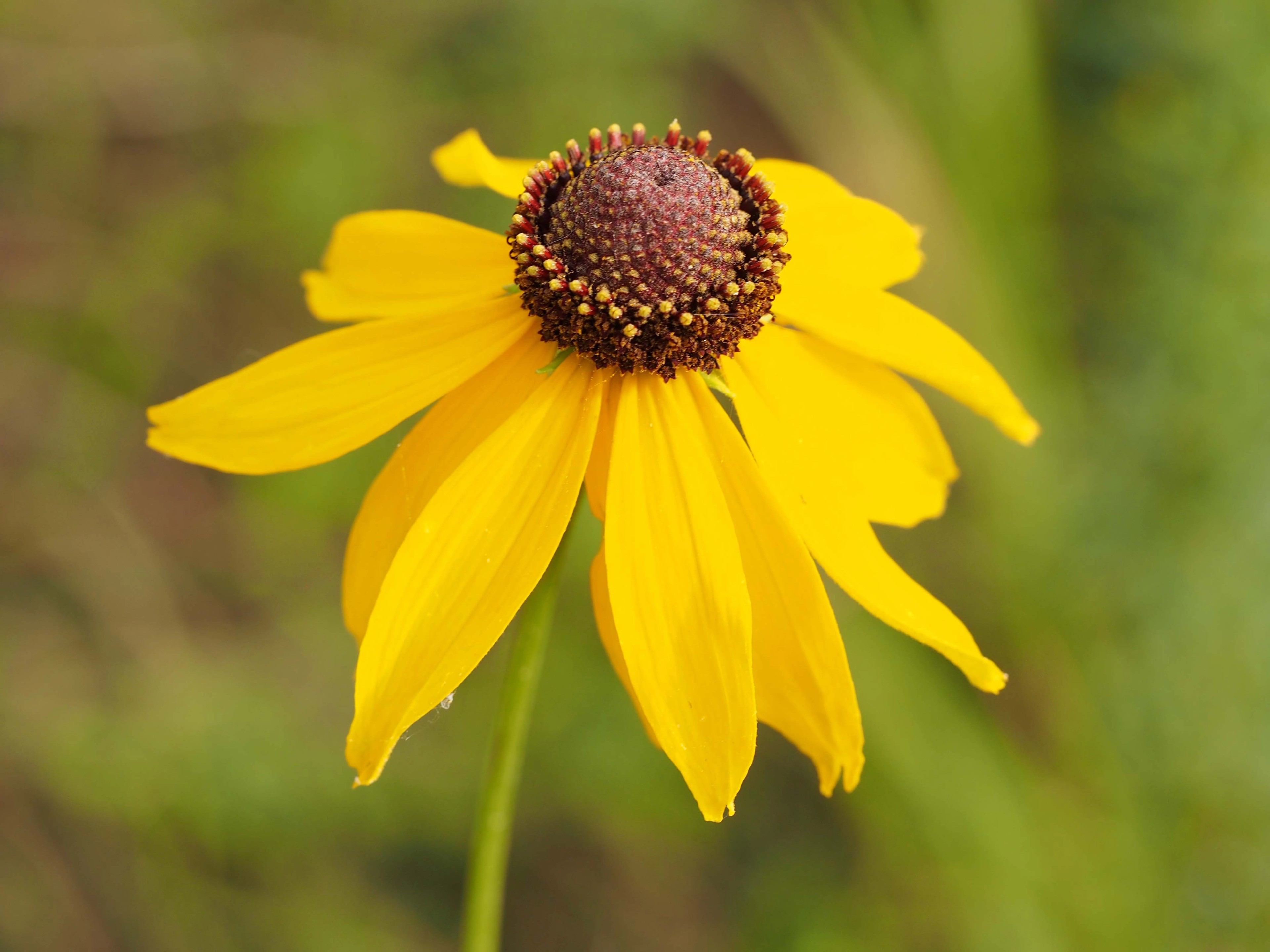
Some of the most common plants you’ll find growing near Common milkweed are our native grasses- Big Bluestem and Little bluestem. These native grasses also require full sun and tolerate the same type of rocky, poor soil as Common milkweed. Native wildflowers you may see include Gray-headed coneflower (Ratibida pinnata), Panicled Tick-Trefoil (Desmodium paniculatum), Showy Tick trefoil (Desmodium canadense), Wild bergamot (Monarda fistulosa) and Joe-Pye Weed (Eutrochium purpureum).
HABITAT
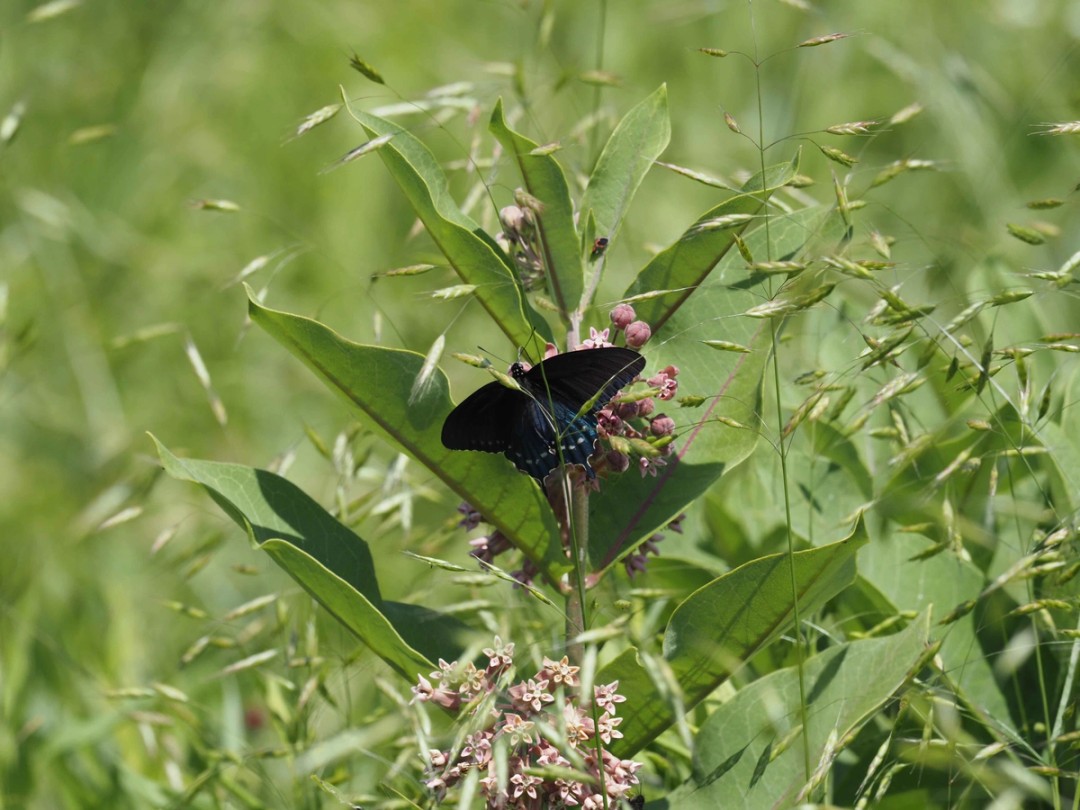
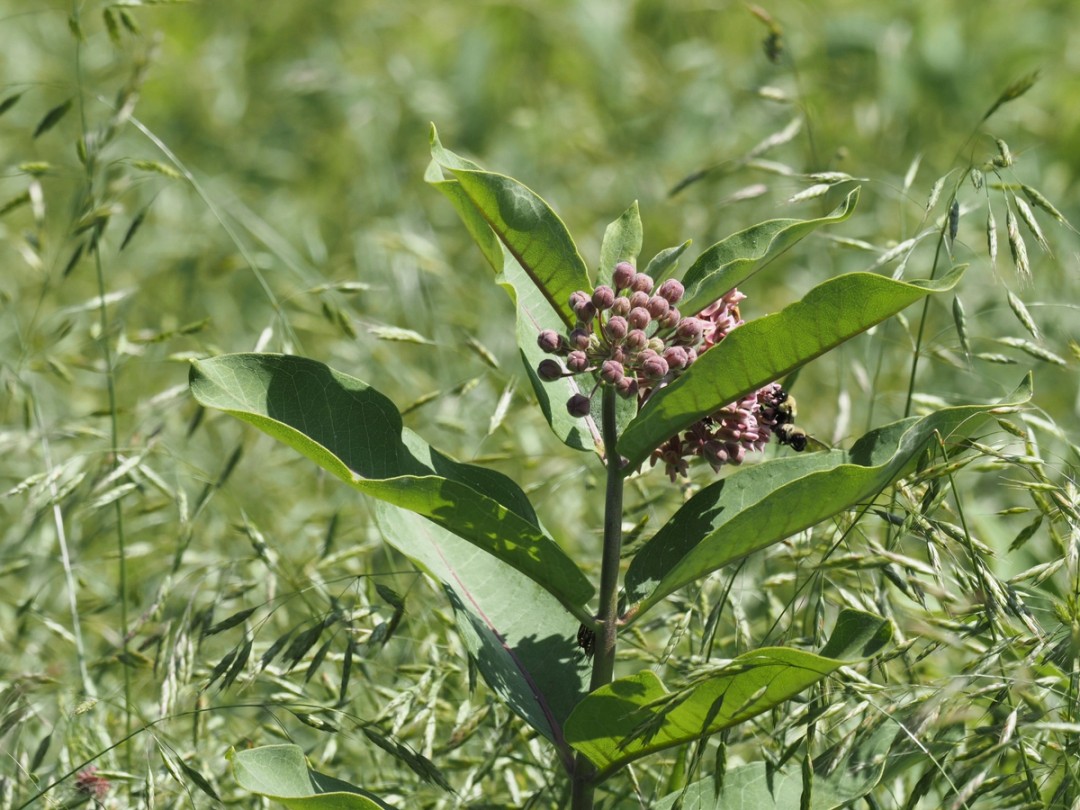
Common milkweed is a resilient plant, often thriving in disturbed sites, such as near agricultural areas, roadsides, ditches, woodland edges, fields, or pastures. While it occasionally appears in prairies, its prevalence is limited due to its preference for disturbance and competition with the deep-rooted prairie plants and grasses. Although it can be cultivated in gardens, its tendency to spread easily poses a challenge.
CONSERVATION STATUS
Common milkweed has a wide range, from Texas to the upper midwest into Canada and east to the Atlantic. While most states show No Status Rank on Natureserve, it is listed as Secure in Kansas, Iowa, Indiana, Kentucky, North Carolina, Virginia, West Virginia, Pennsylvania, New Jersey, New York, and New Hampshire. It is listed as Vulnerable in South Carolina. All other states within its range show No Status Rank.
In Arkansas, Asclepias syriaca has a Conservation value of 2, in the group of 1-3, meaning "Native weedy and early successional taxa, displaying high opportunistic potential for occupancy of destabilized sites. These taxa are typically well adapted to highly degraded areas of the contemporary environment or to lands that have been heavily altered in the past".
INTERESTING TIDBITS
Common milkweed, with its long history of use by Indigenous peoples, has been utilized for various purposes. The fibers from its stalk were employed to construct sturdy ropes, as well as bowstrings and fishing lines. The fluff from the seed pods was used to fill pillows and beds. Dried roots were formed into whistles to attract deer. It seems there was almost no end to the interesting ways they could use this plant! They even made chewing gum from its roots.