PLANT NAME
Phemeranthus calycinus is in the Portulacaceae (Purslane Family). Its prior botanical name was Talinum calycinum.In the 1990s, DNA analysis found it did not belong in the genus Talinum, and it was moved into the genus Phemeranthus.
It is commonly known as Fame flower or Rock pink.
BLOOM
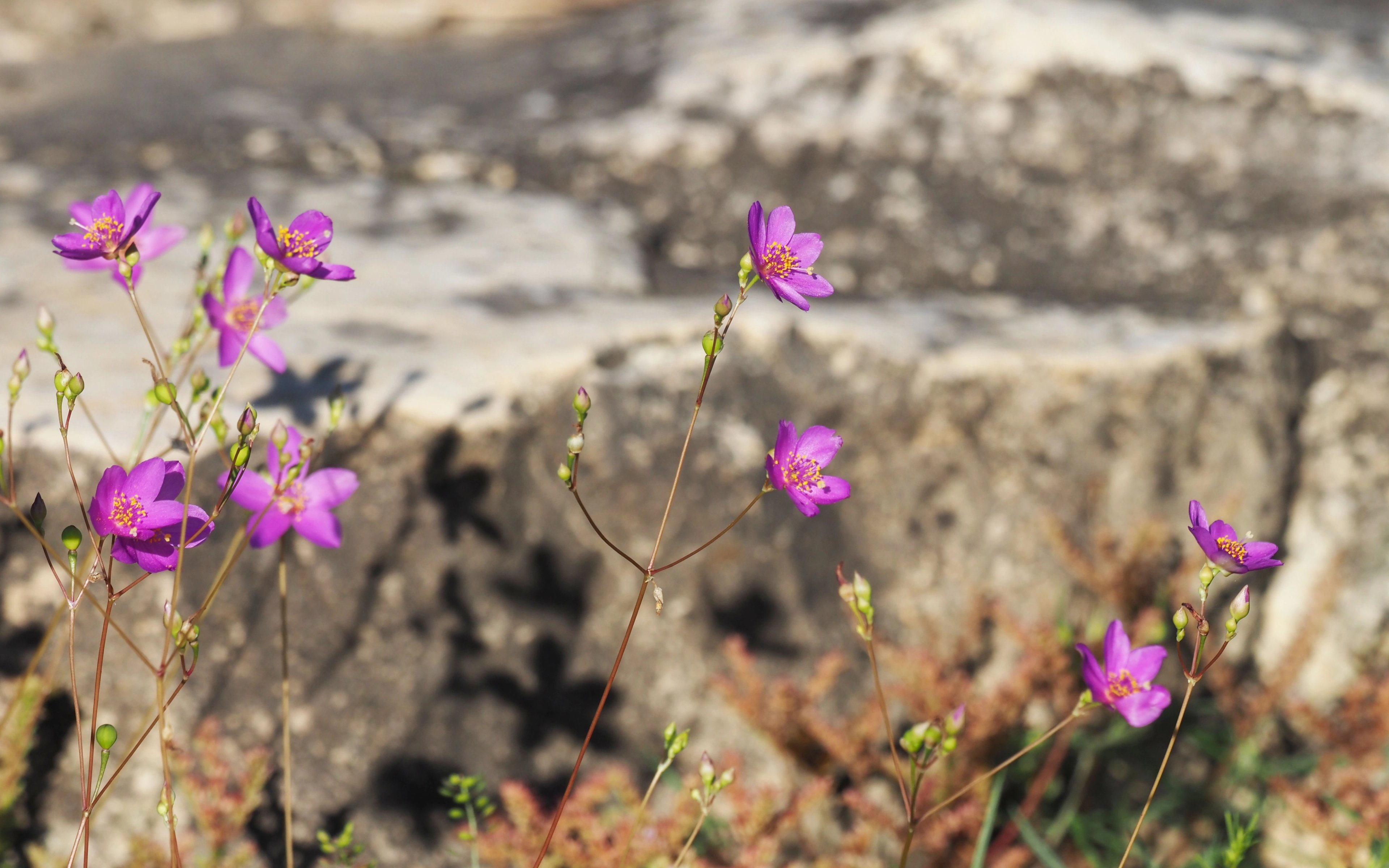
Fame flower plants are diminutive in size and easy to overlook when not blooming, but once the afternoon arrives and the bright pink flowers are open, they can't be missed. While each flower is only about an inch in diameter, the bright pink hue of their petals makes them a standout in nature or in a garden setting.
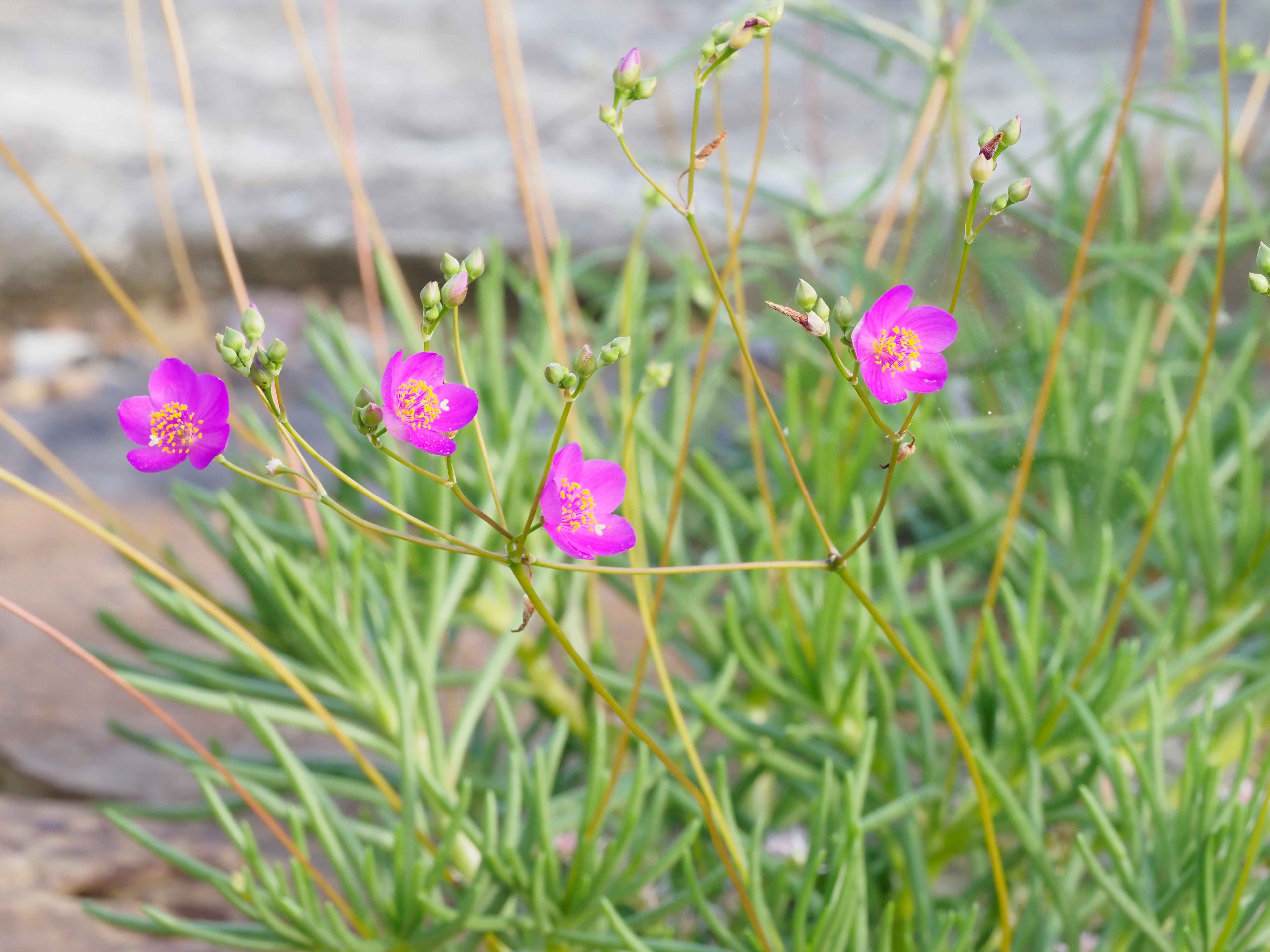
Individual flowers occur on long stems. They can variably have long or short stalks or even be sessile. Each flower is made up of 5 petals. There are many (25 or more) showy, bright yellow to nearly orange stamens held upright by skinny pink filaments. The contrast of the yellow stamens against the bright pink petals is quite dramatic. A long pistil holds the fluffy white style above the bright yellow anthers of the stamens.
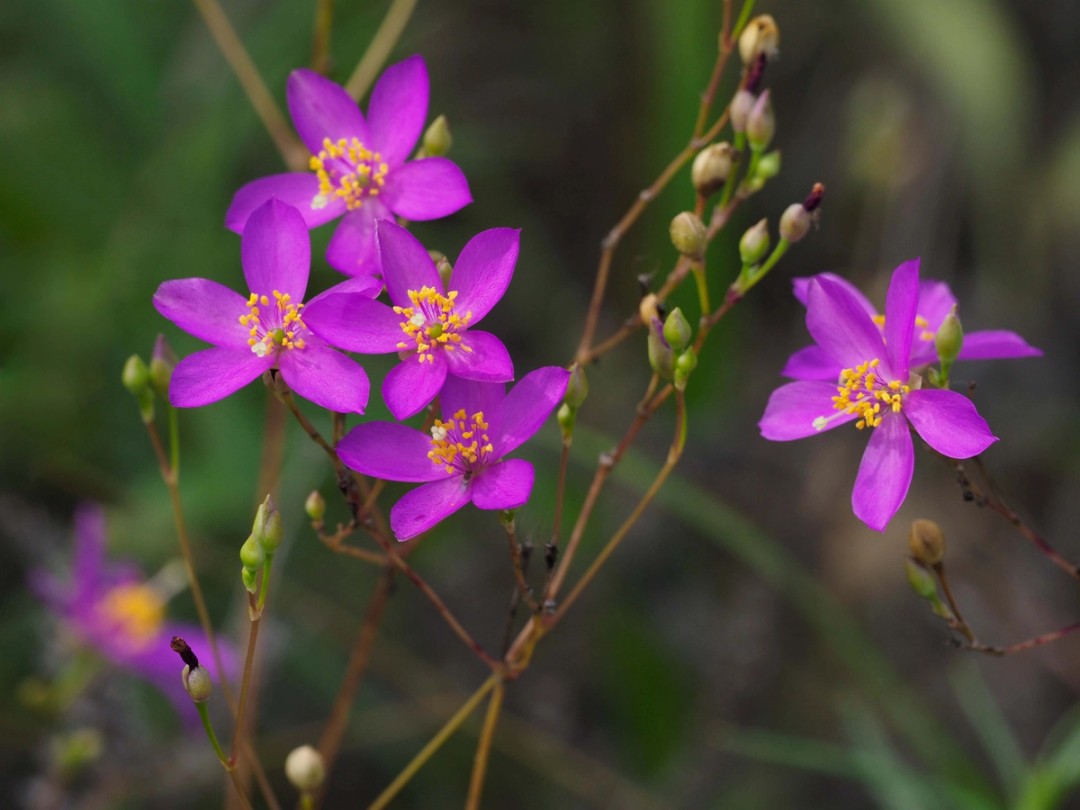
Pink flowers with yellow stamens 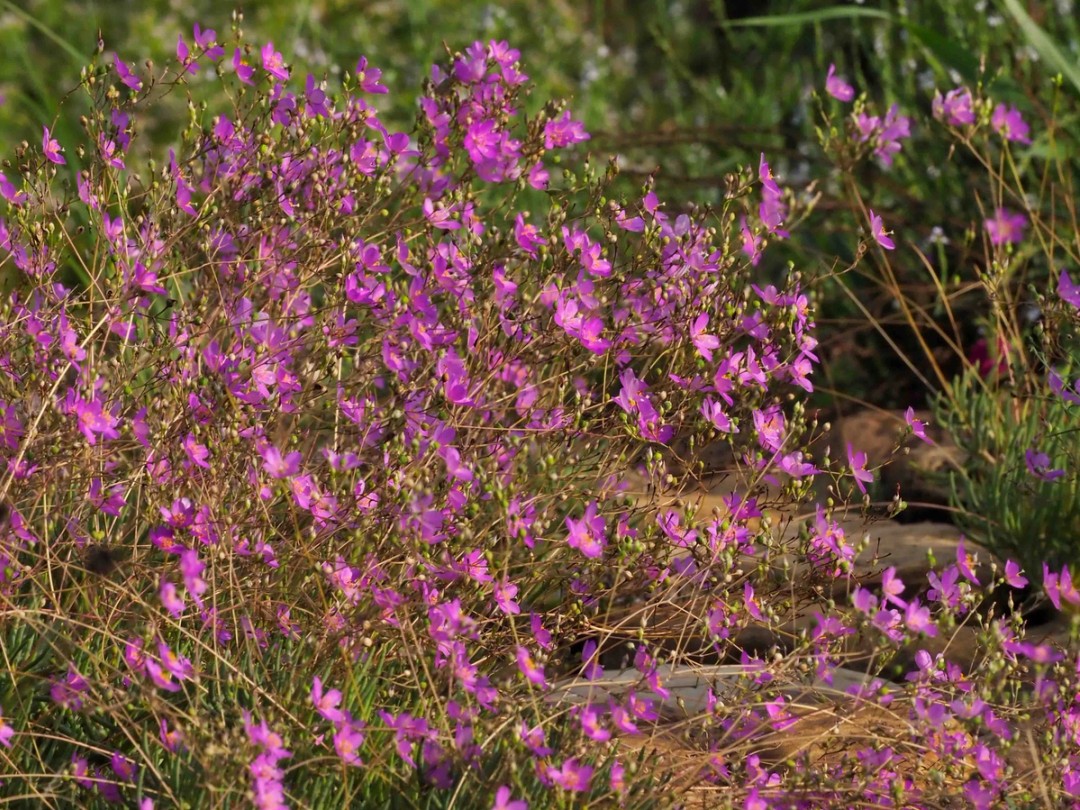
Mass of flowers at peak bloom 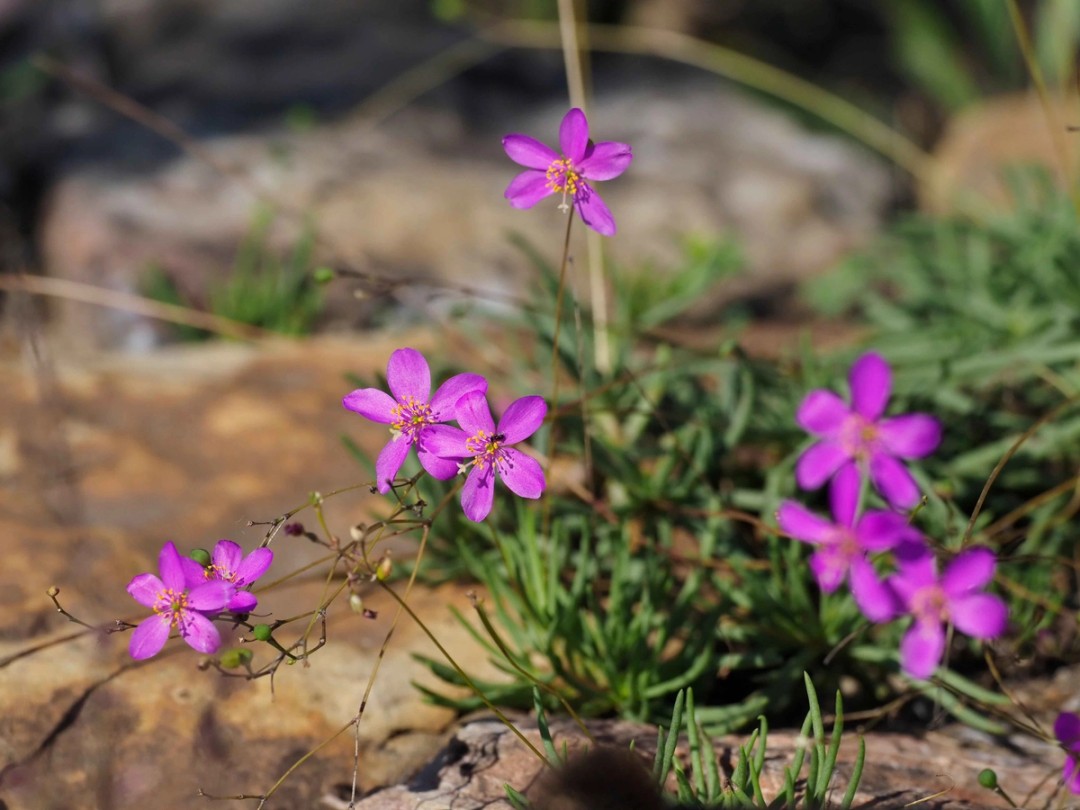
Flowers and leaves 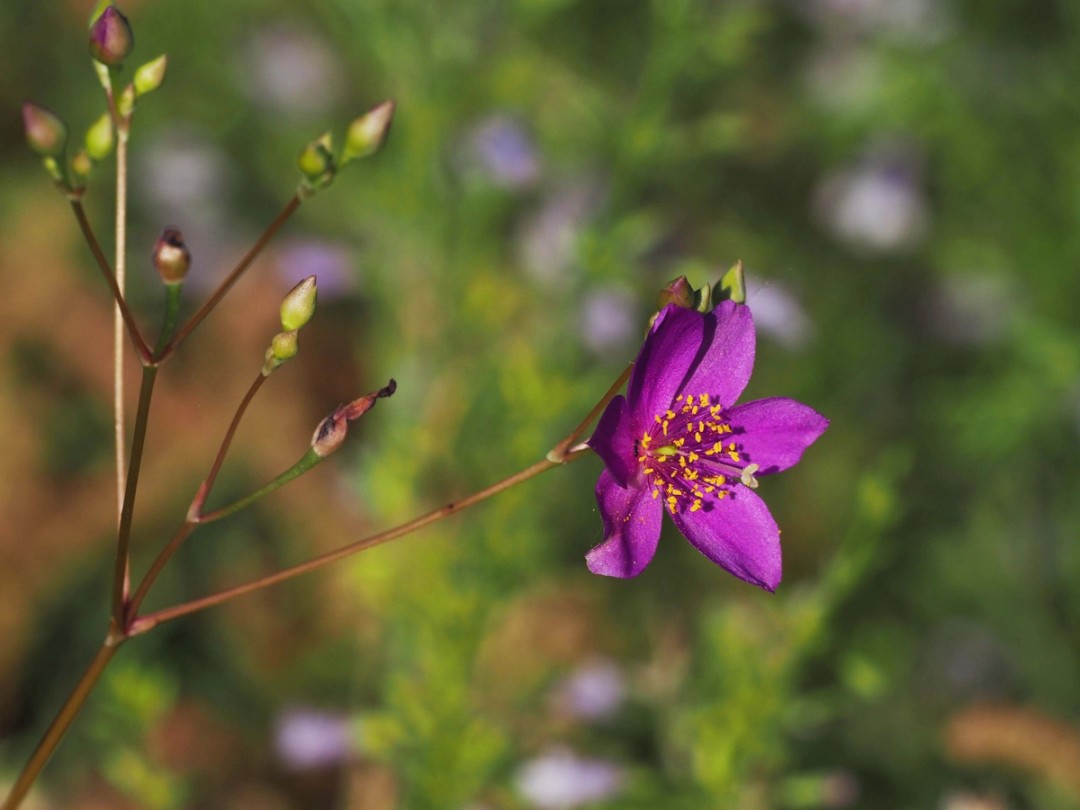
Flower with many buds 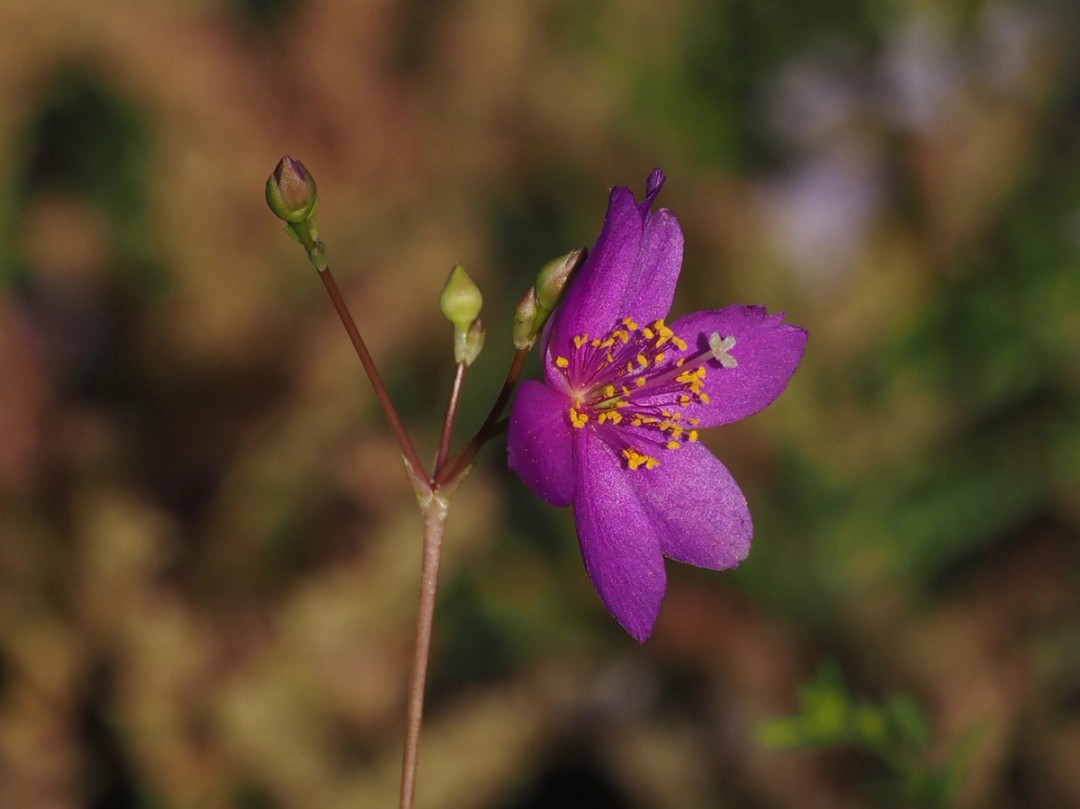
Yellow stamens 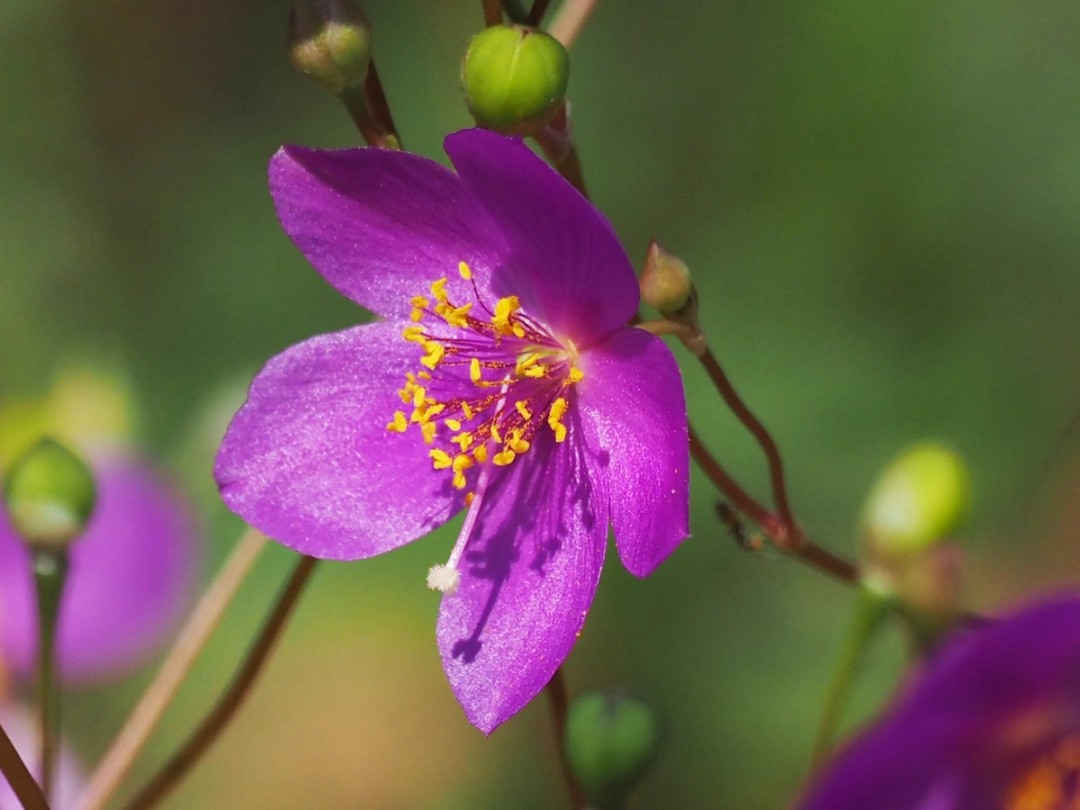
Stamen and style 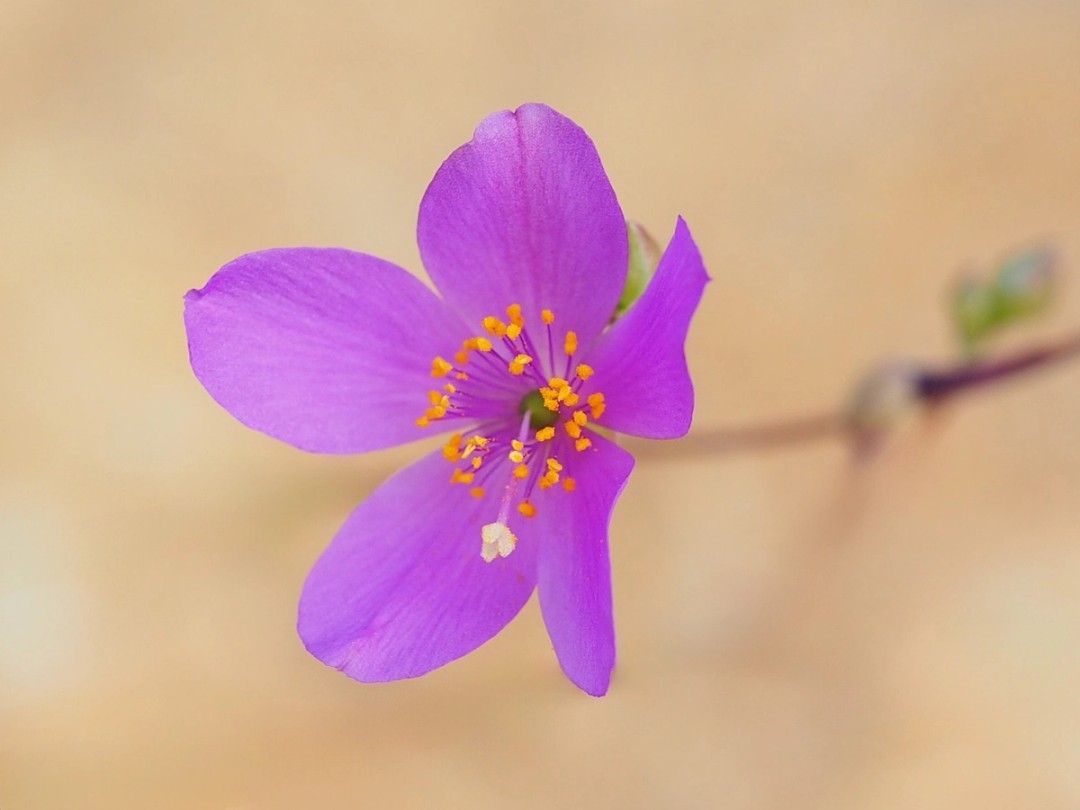
Green ovary 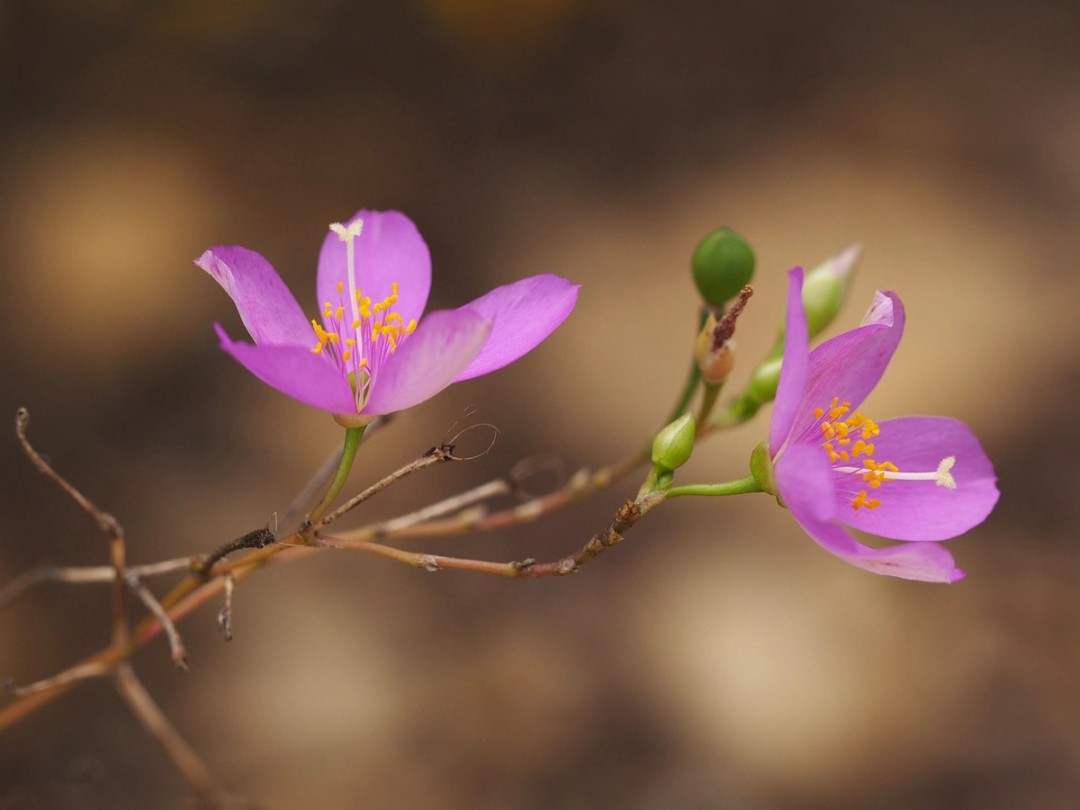
Flowers in various stages
The flowers are only open for a few hours in the afternoon and then only on sunny days! Individual flowers only last a single day. Fortunately, the plants bloom over a long period in summer so you will have numerous chances to enjoy their flowers.
Flowers may self-pollinate or be cross-pollinated by insects (see Pollinator section below).
DESCRIPTION
Fame flowers have thick, green stems that support the plant to a height of about 2 to 6 inches. Their succulent leaves are up to three inches long and slightly pointed at their tips.
Tiny seeds are held in ovoid capsules, each divided into 3 parts. Seeds fall to the ground and may be dispersed by wind.
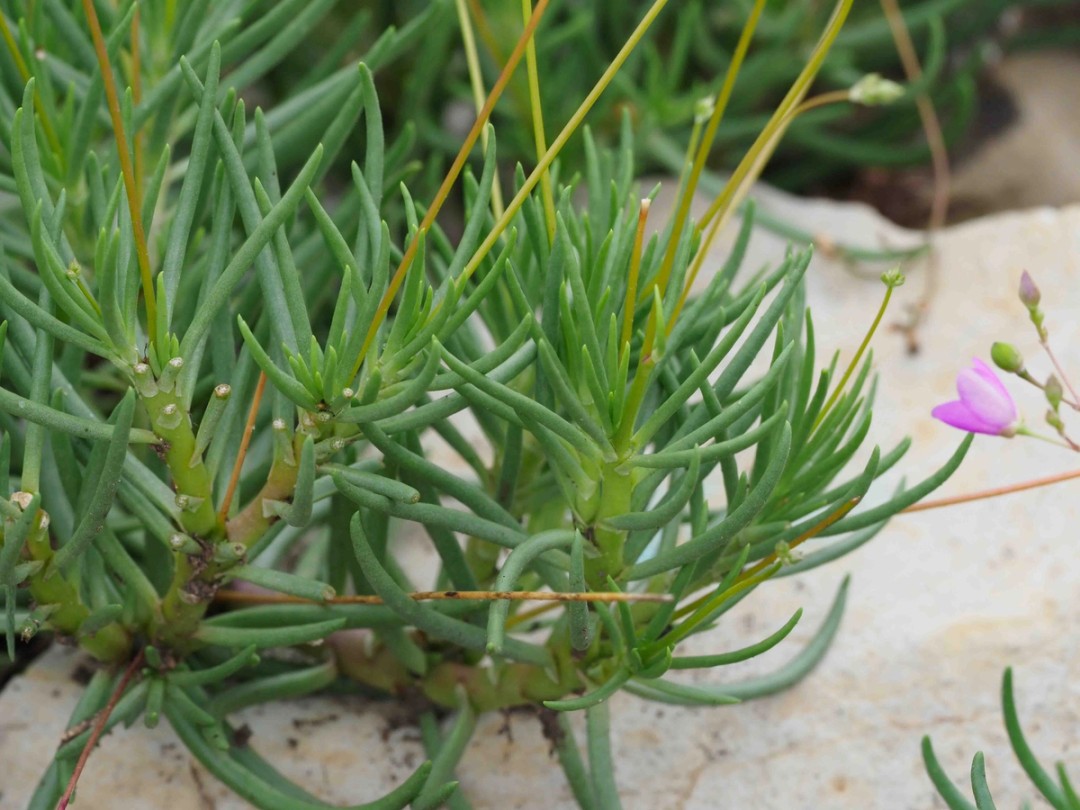
Succulent stem and leaves 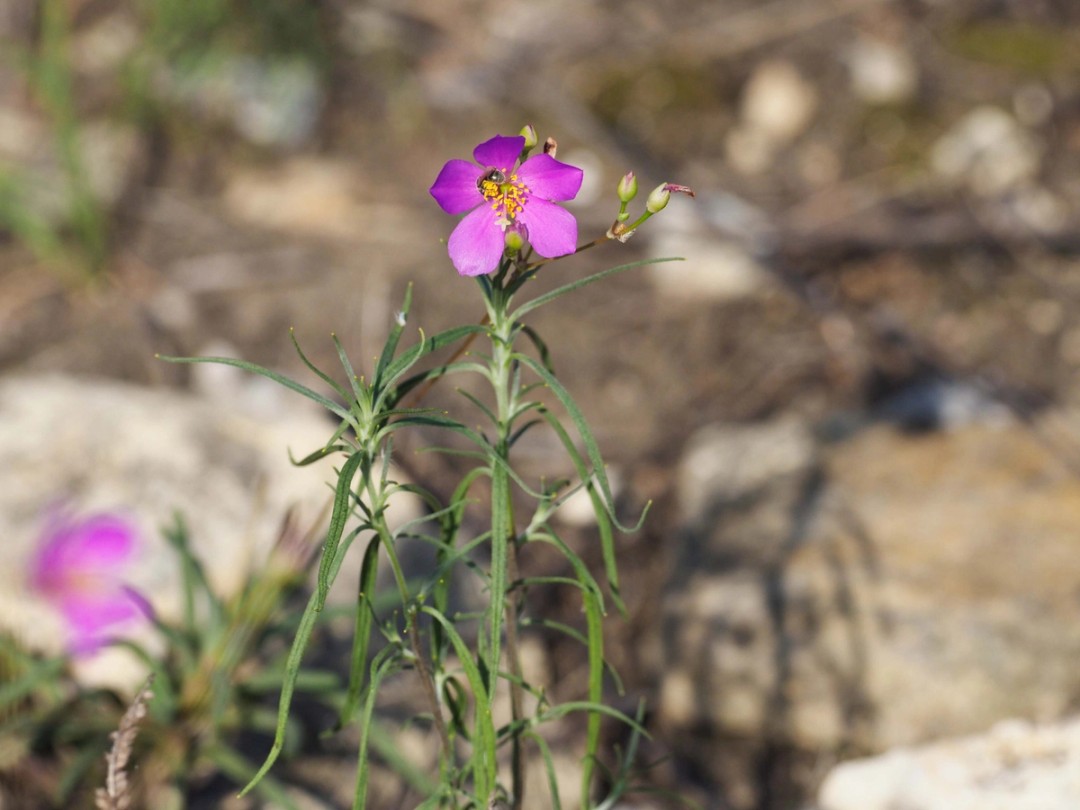
Stem and leaves 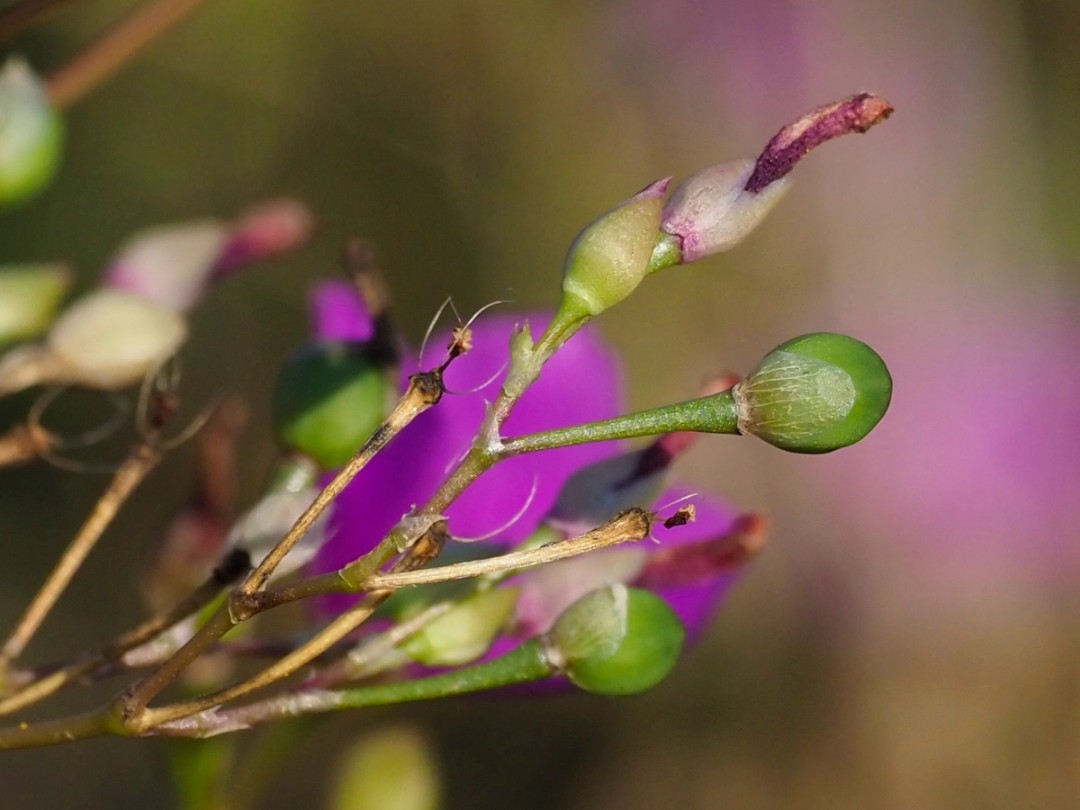
Developing seed pods 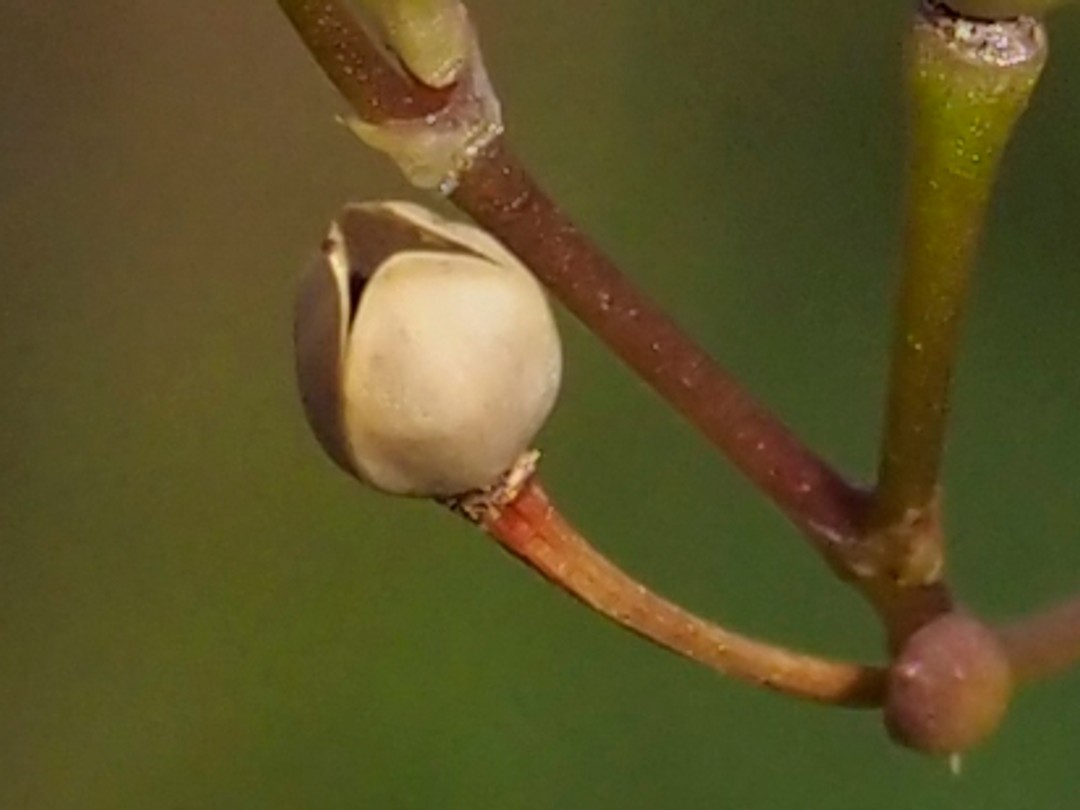
Ripe, open seed pod
POLLINATORS
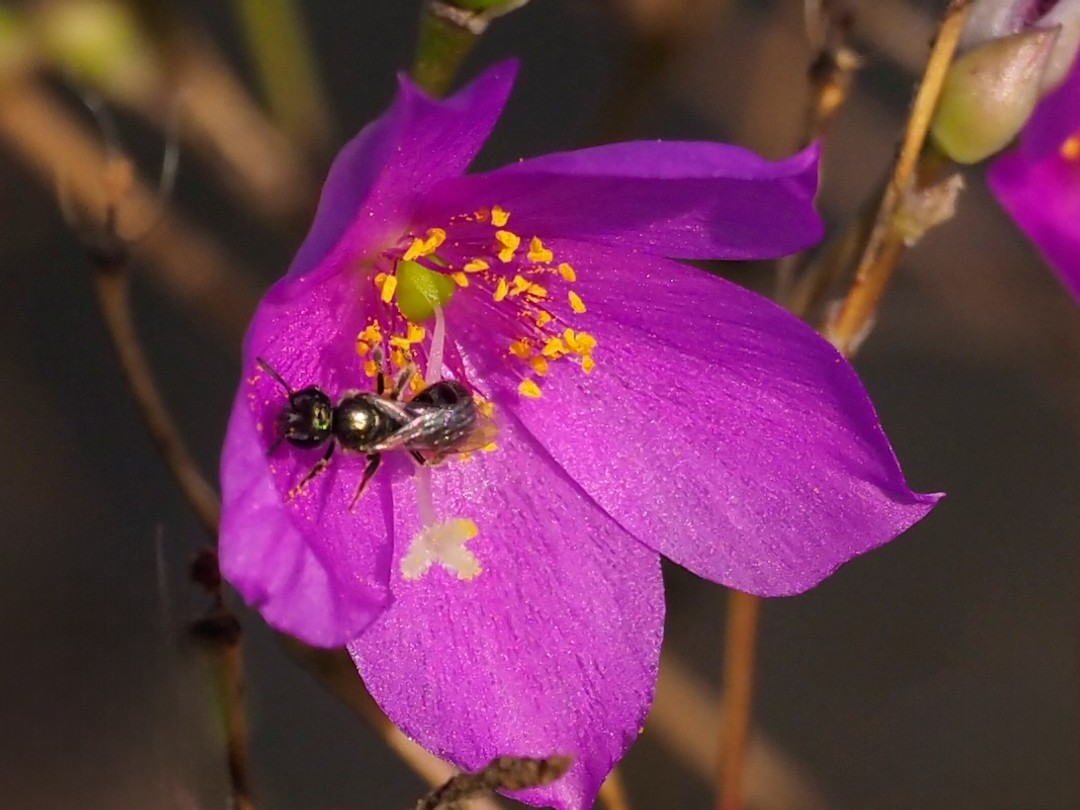
There isn't much information to be found about the pollinators of Phemeranthus calycinus. I've observed quite a few interesting insect visitors including bees, butterflies, skippers and syrphid flies. One of the most dramatic insects I’ve observed nectaring on these flowers is the Anthrax Bee fly. It repeatedly propelled itself at the flower to obtain nectar. You’ll find a short video of its antics near the end of this section.
Bees and Wasps
Metallic Sweat Bee (Subgenus Dialictus) 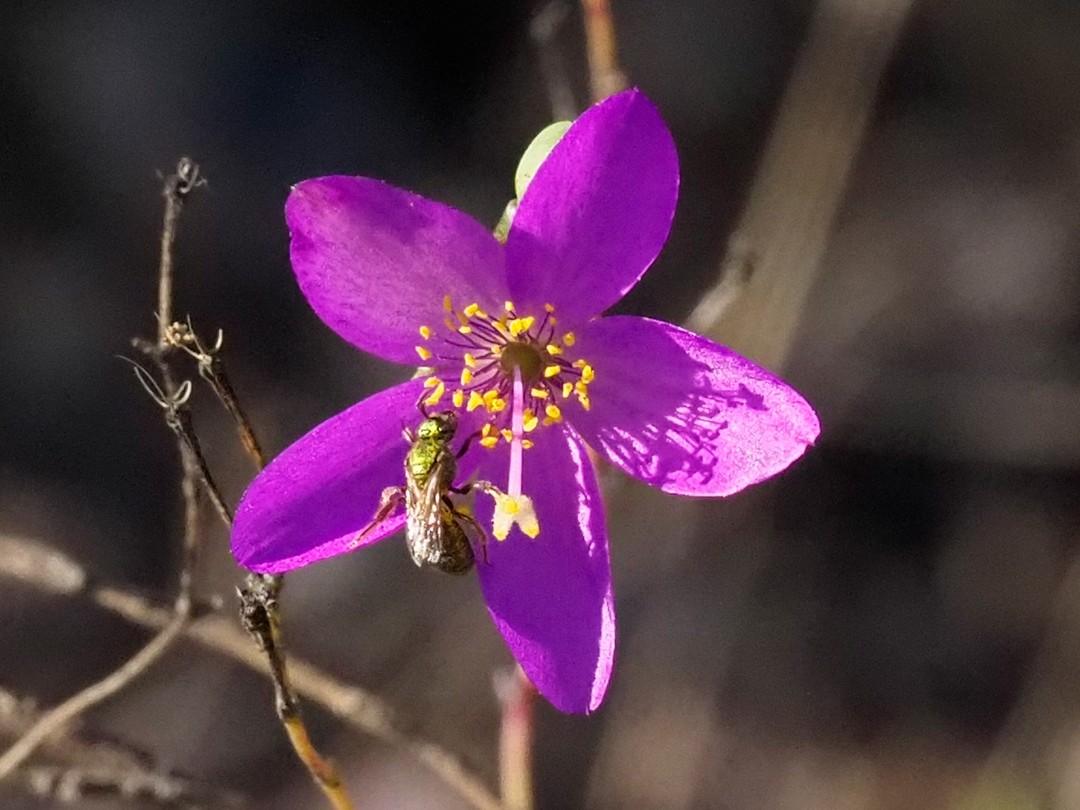
Golden sweat bee 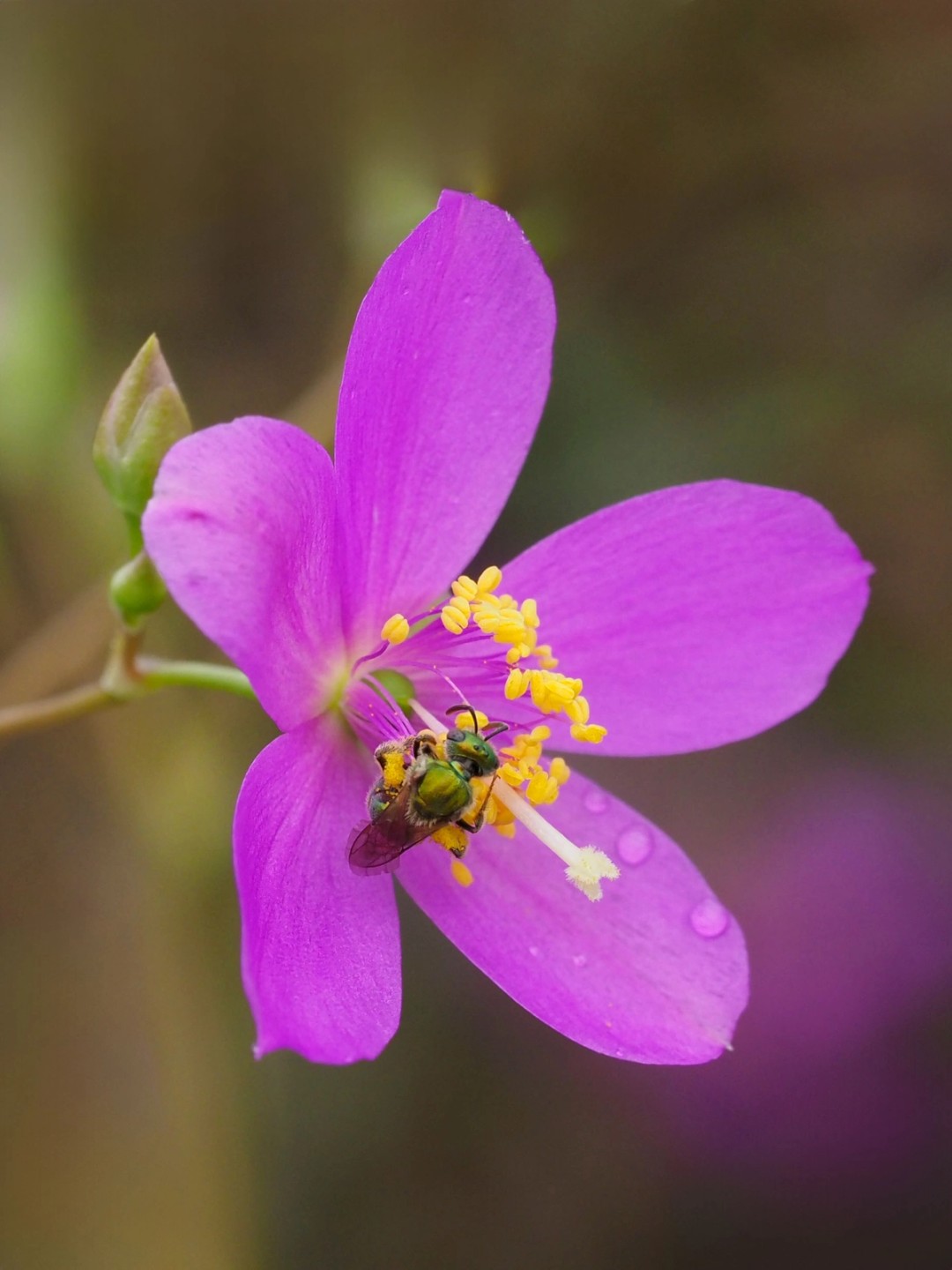
Subfamily Halictinae bee 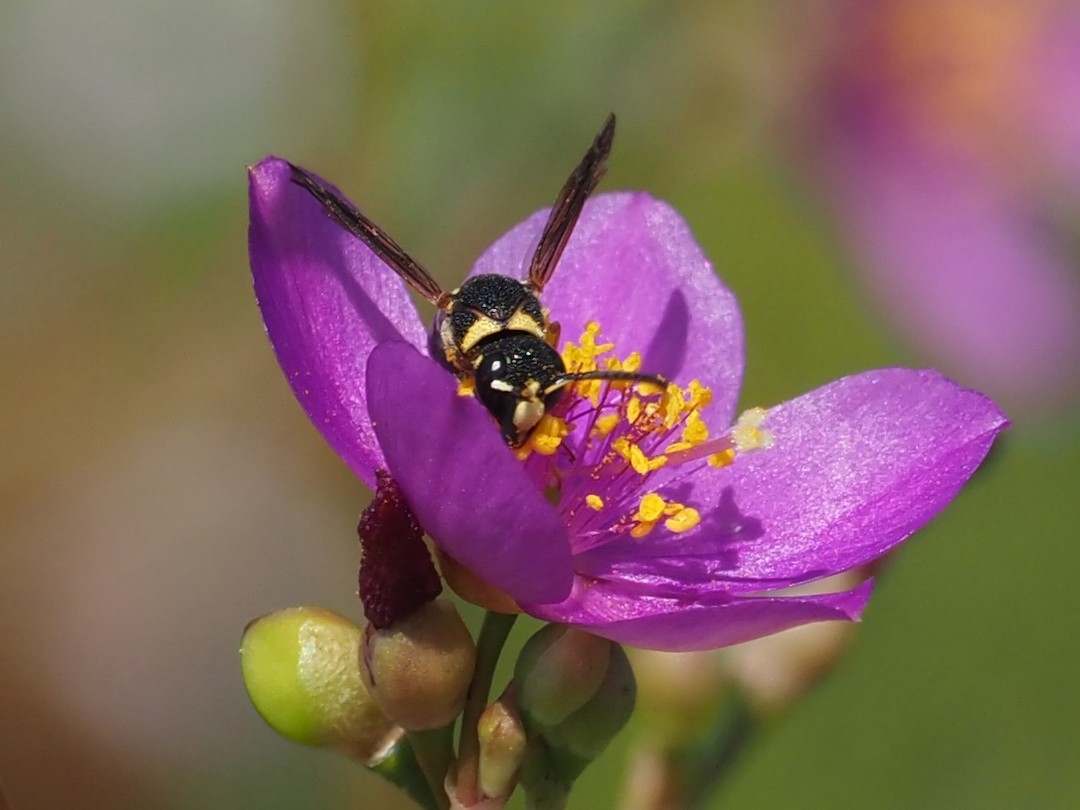
Unidentified wasp
Butterflies and Skippers
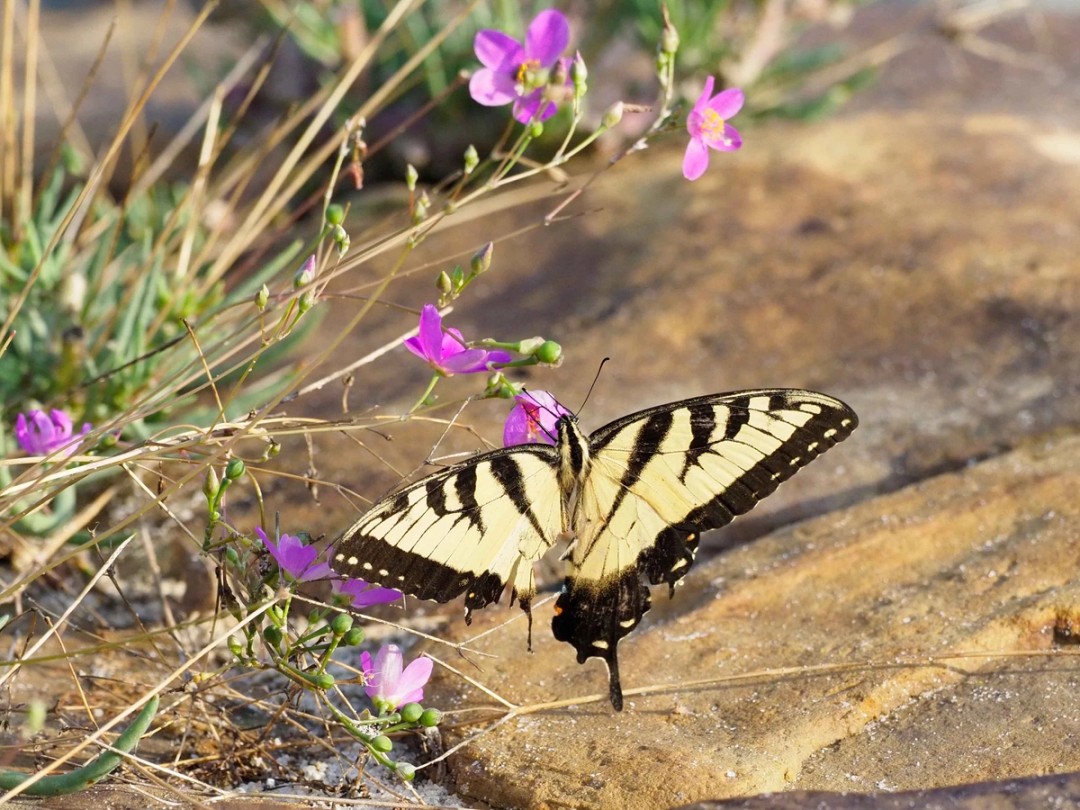
Eastern Tiger Swallowtail 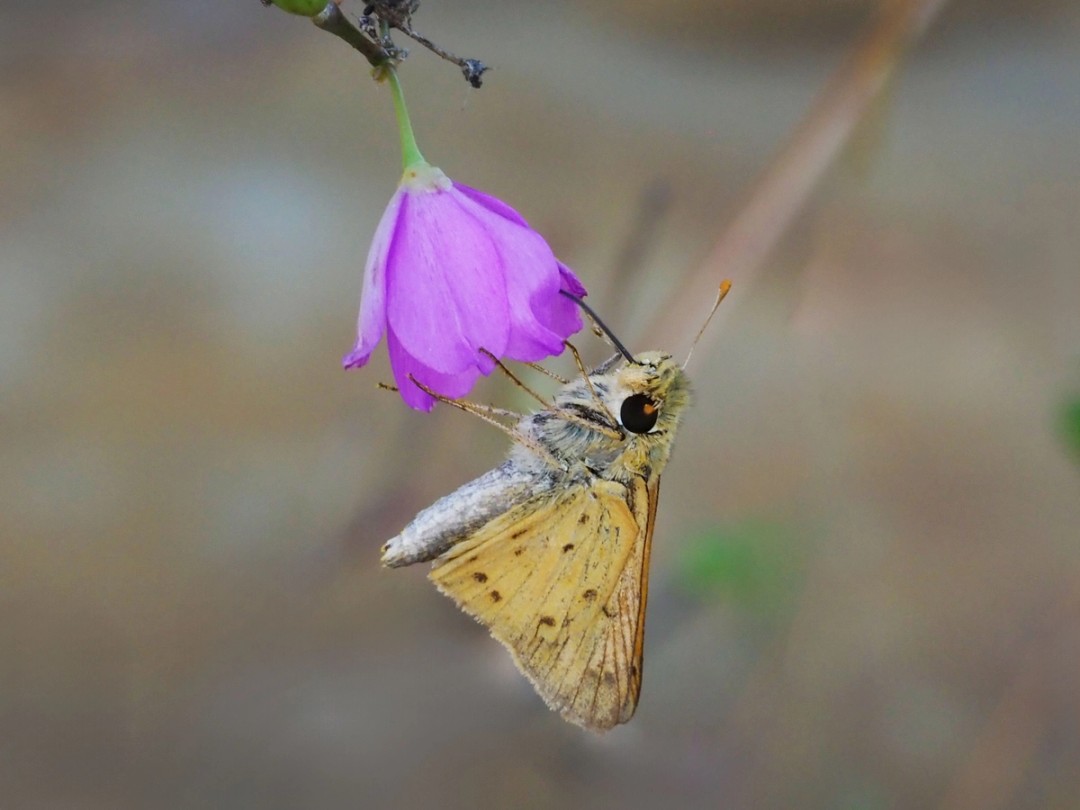
Fiery skipper 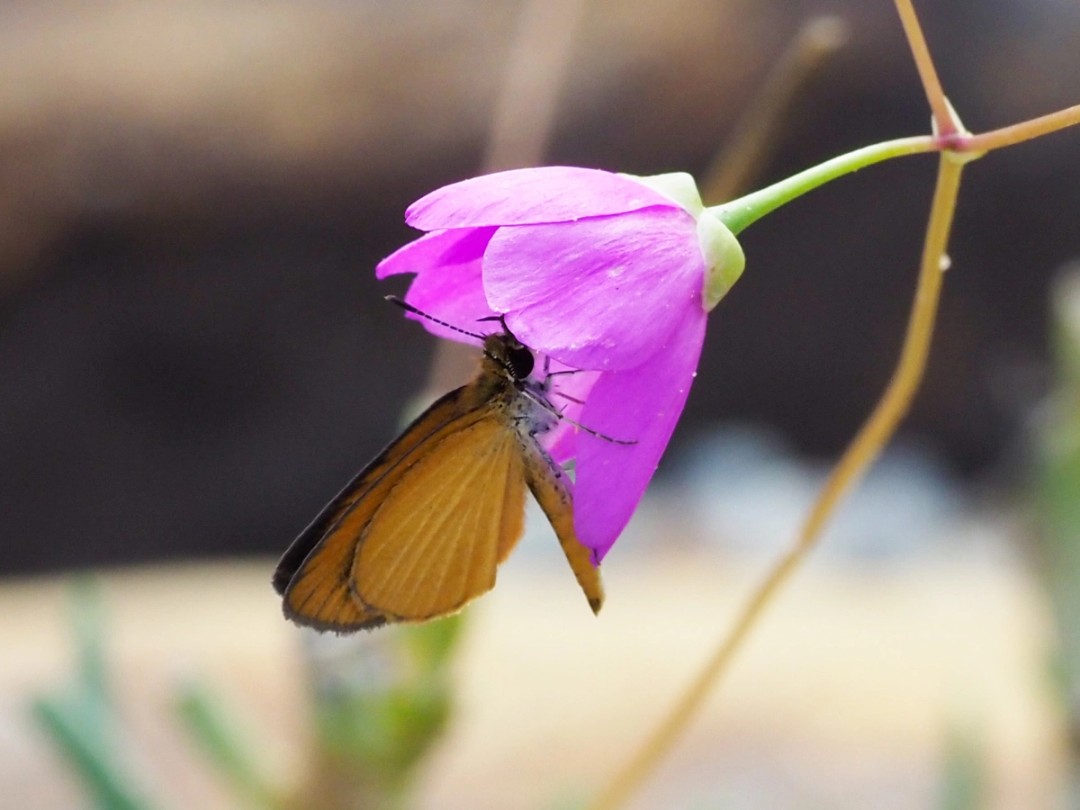
Least skipper 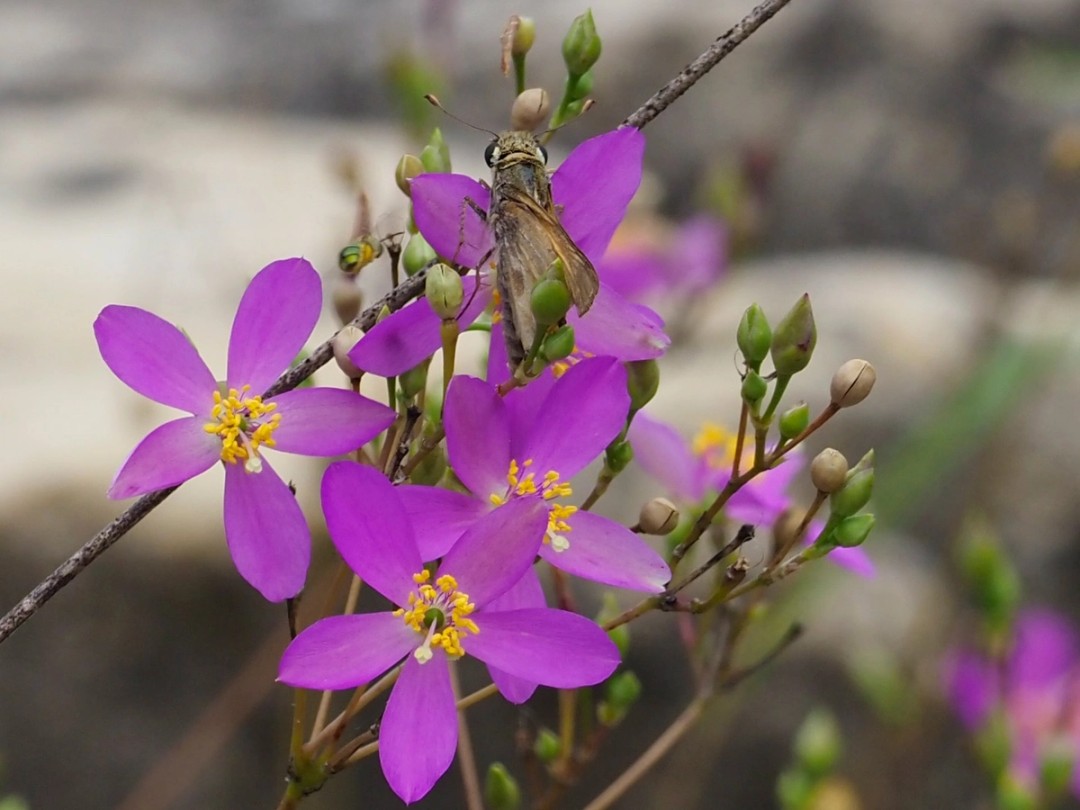
Unidentified skipper
Flies
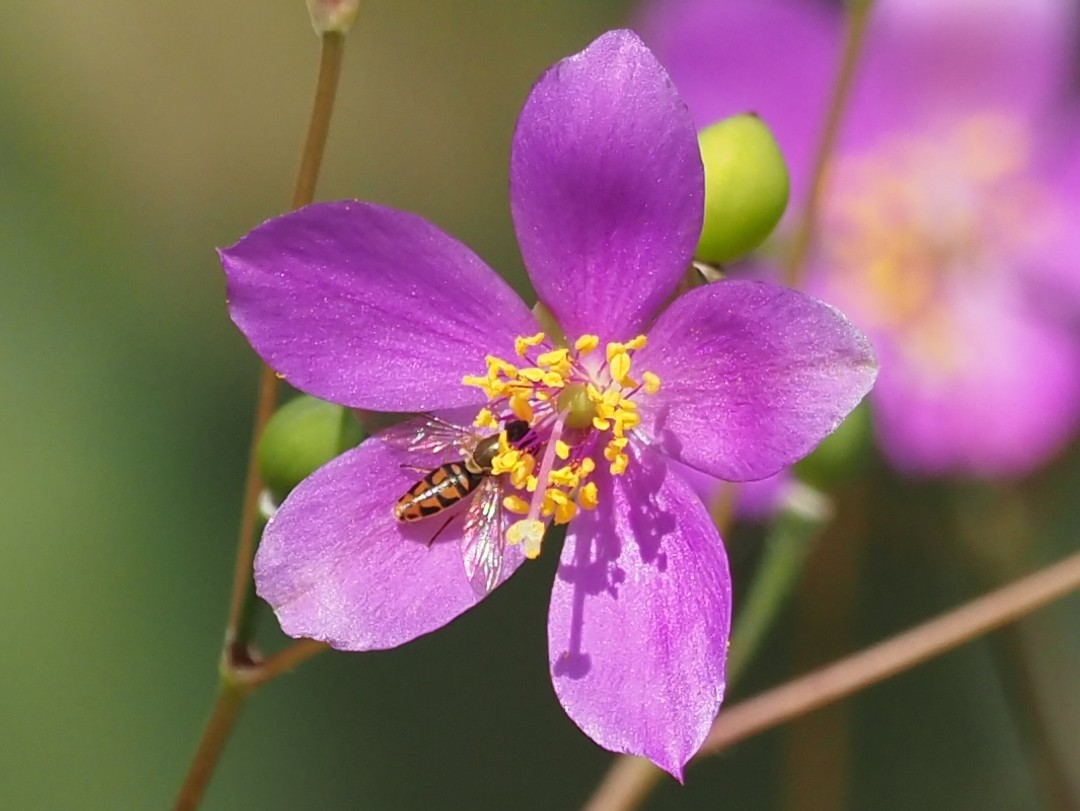
Syrphid fly 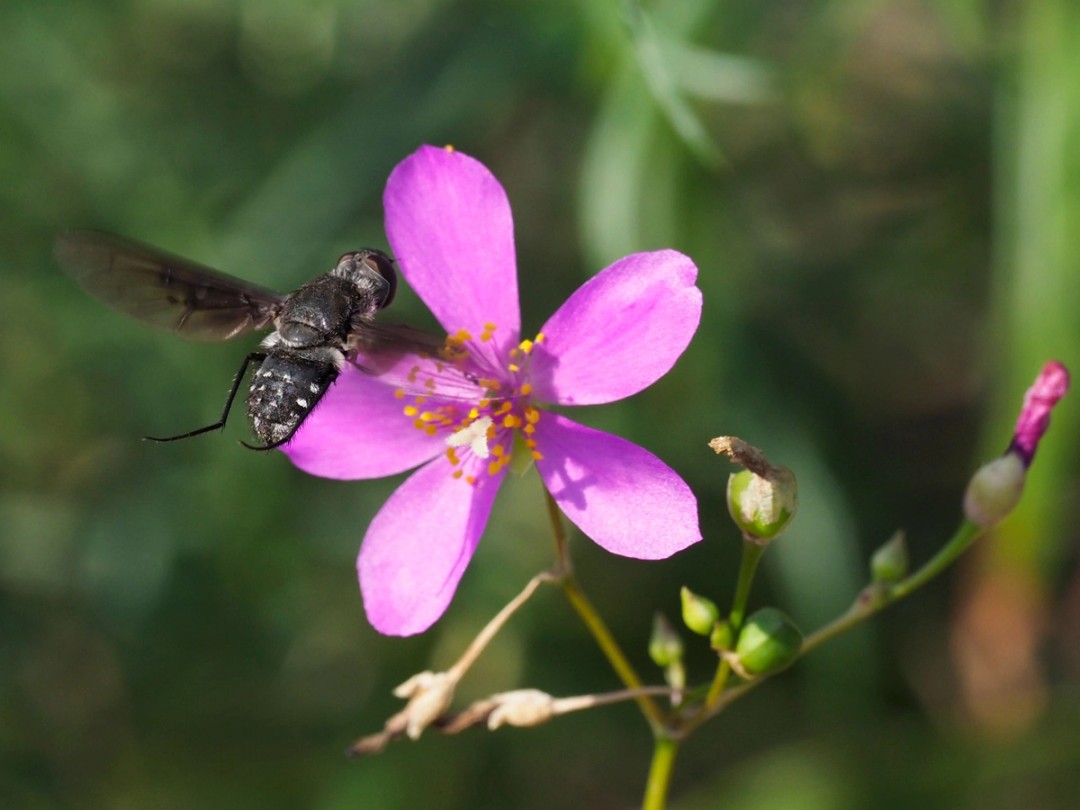
Anthrax bee fly
PLANTS GROWING NEARBY
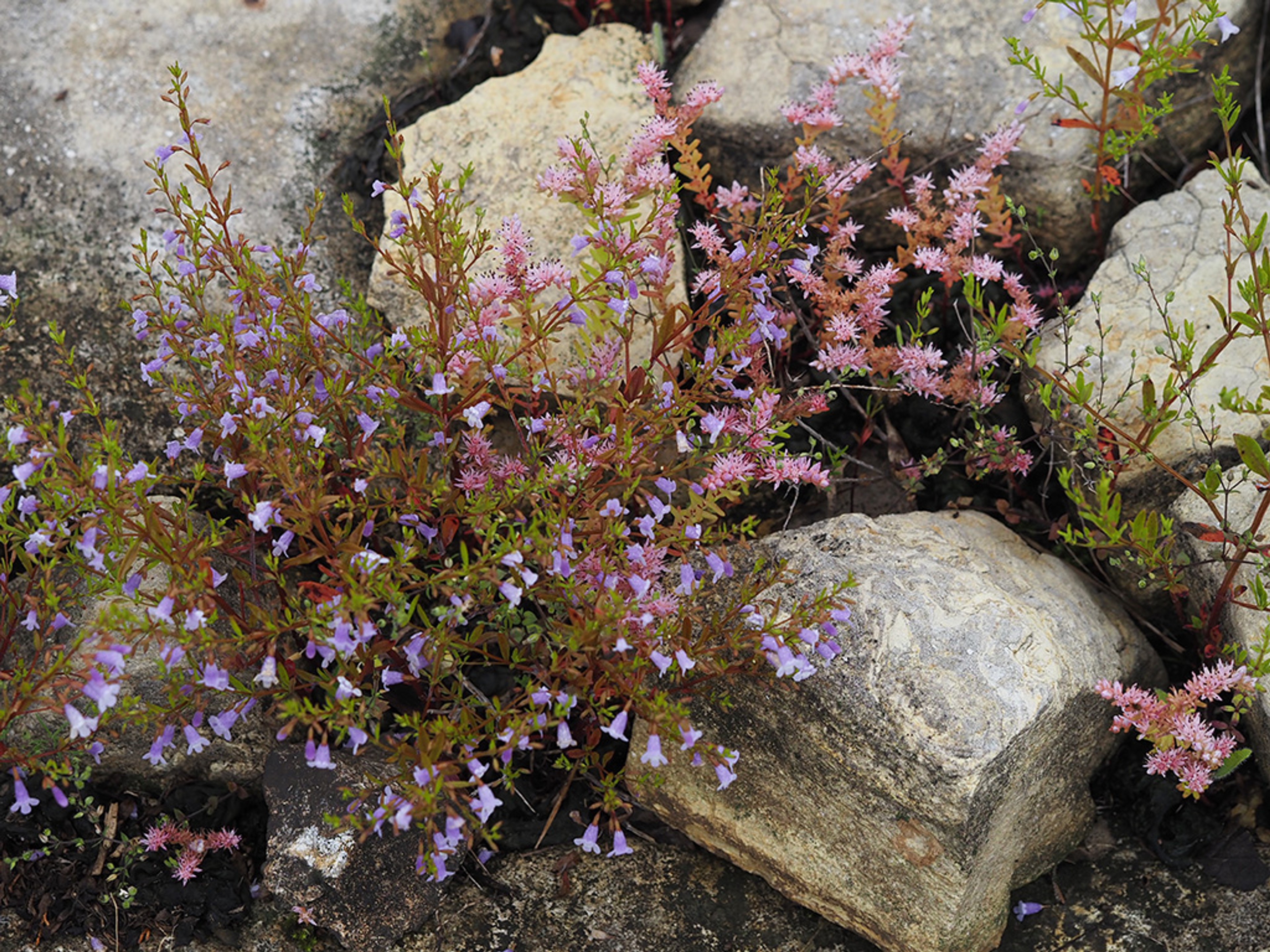
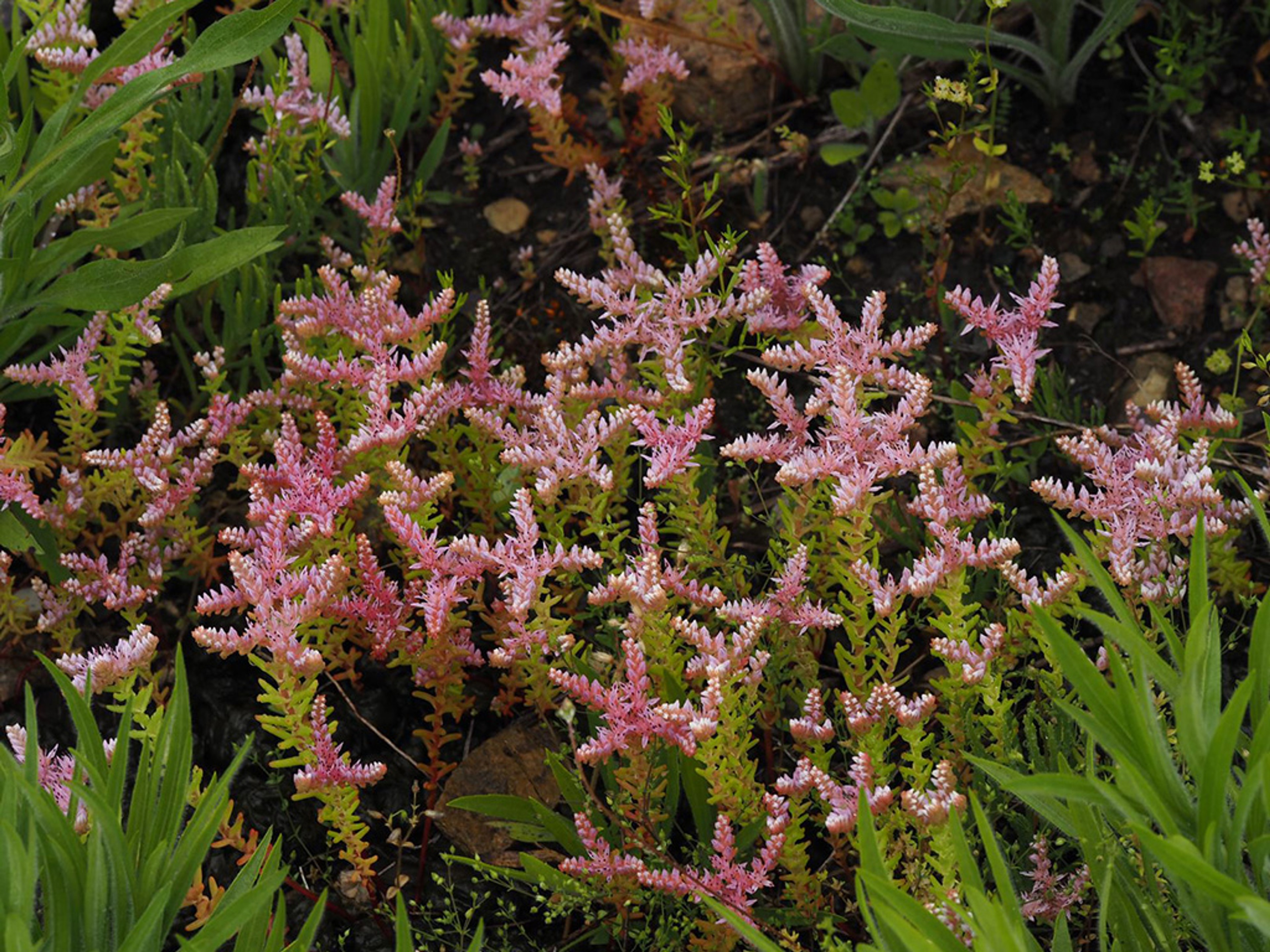
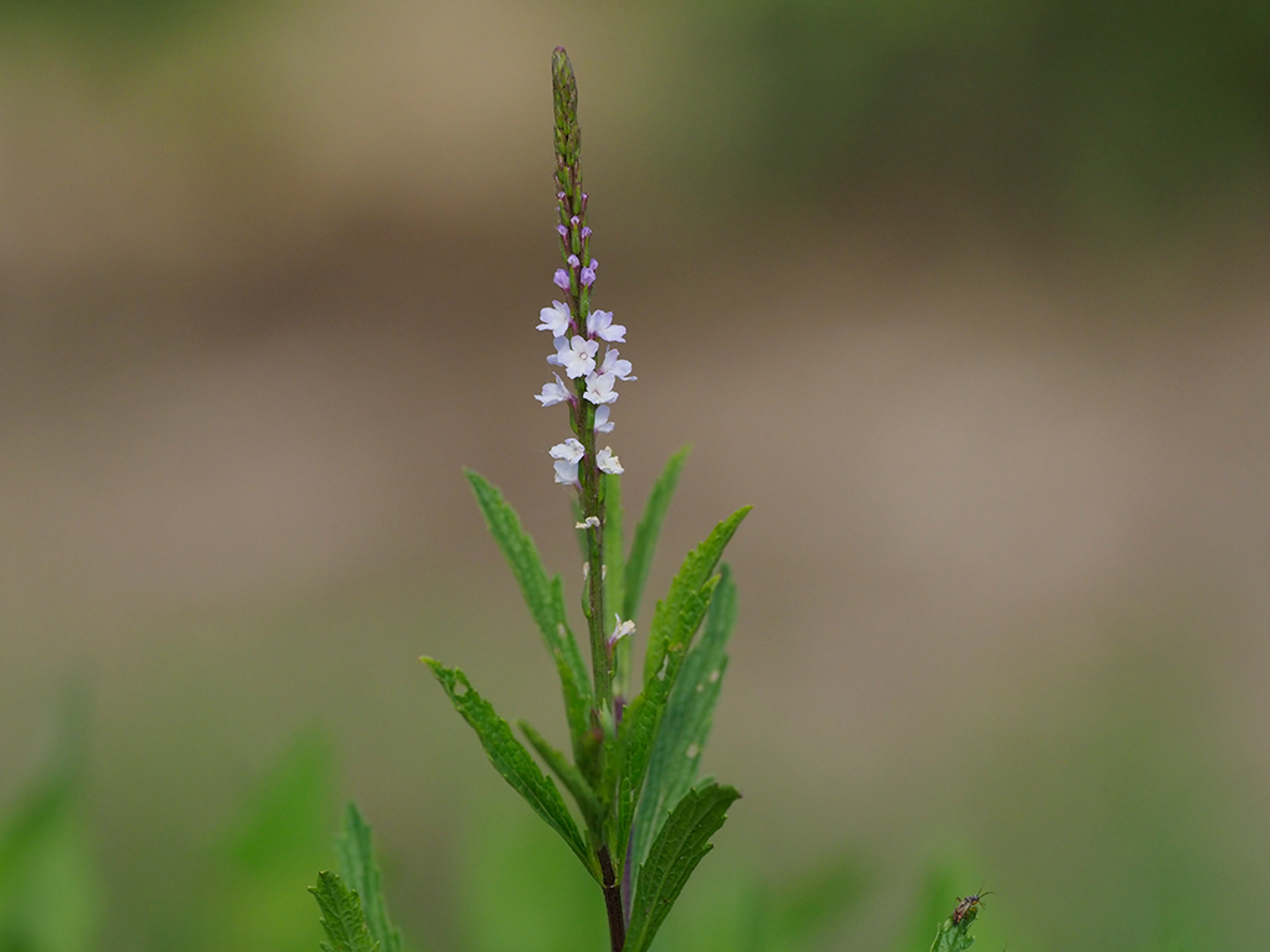
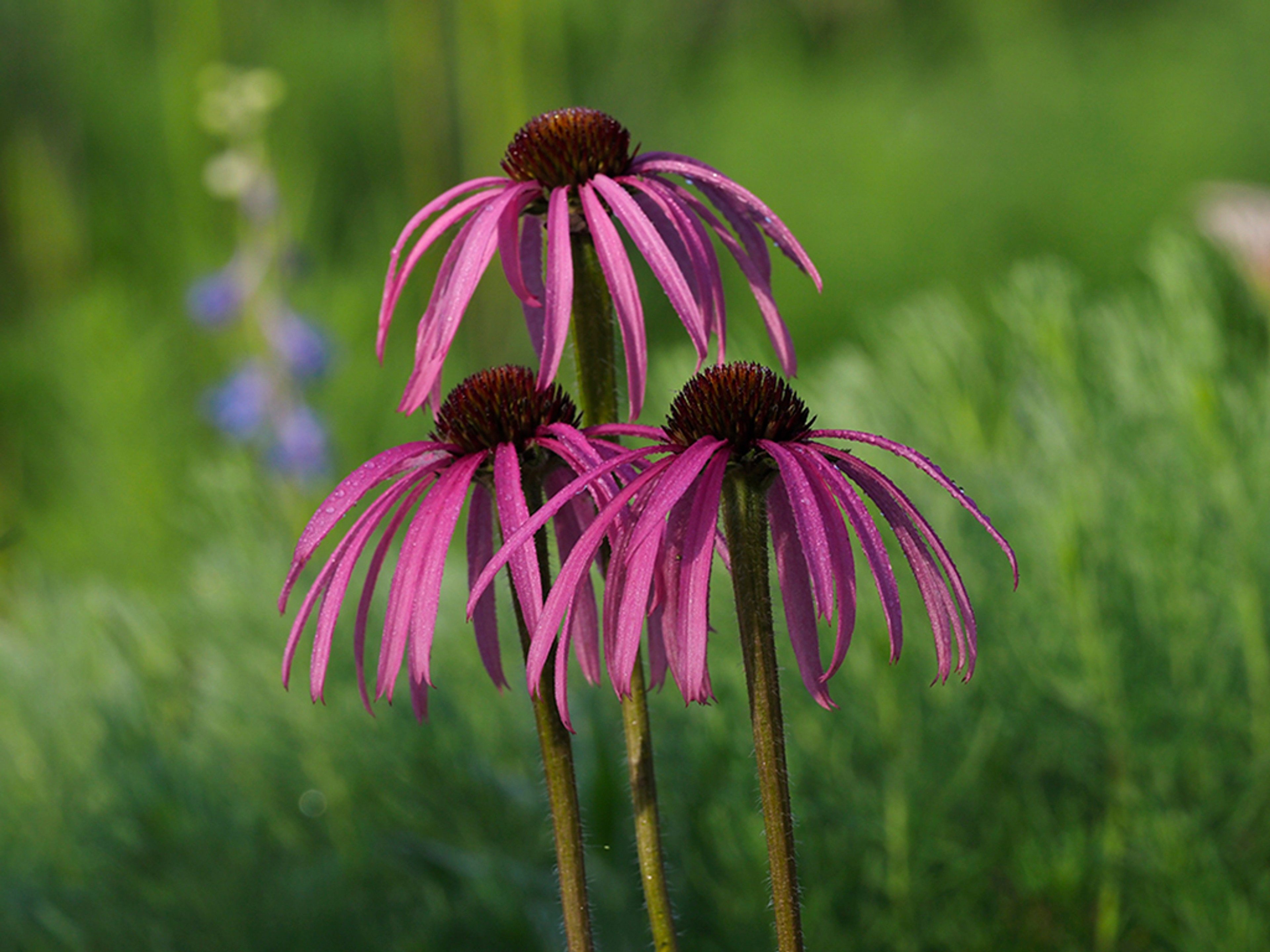
Fame flower doesn't handle competition well. Hence, the plants growing nearby tend to be small and non-aggressive. Widow's cross (Sedum pulchellum), Small skullcap (Scutellaria parvula), and Arkansas calamint (Clinopodium arkansanum) are some diminutive companions. Two other glade plants that may be found nearby include Glade coneflower (Echinacea simulata) and Narrow-leaved vervain (Verbena simplex).
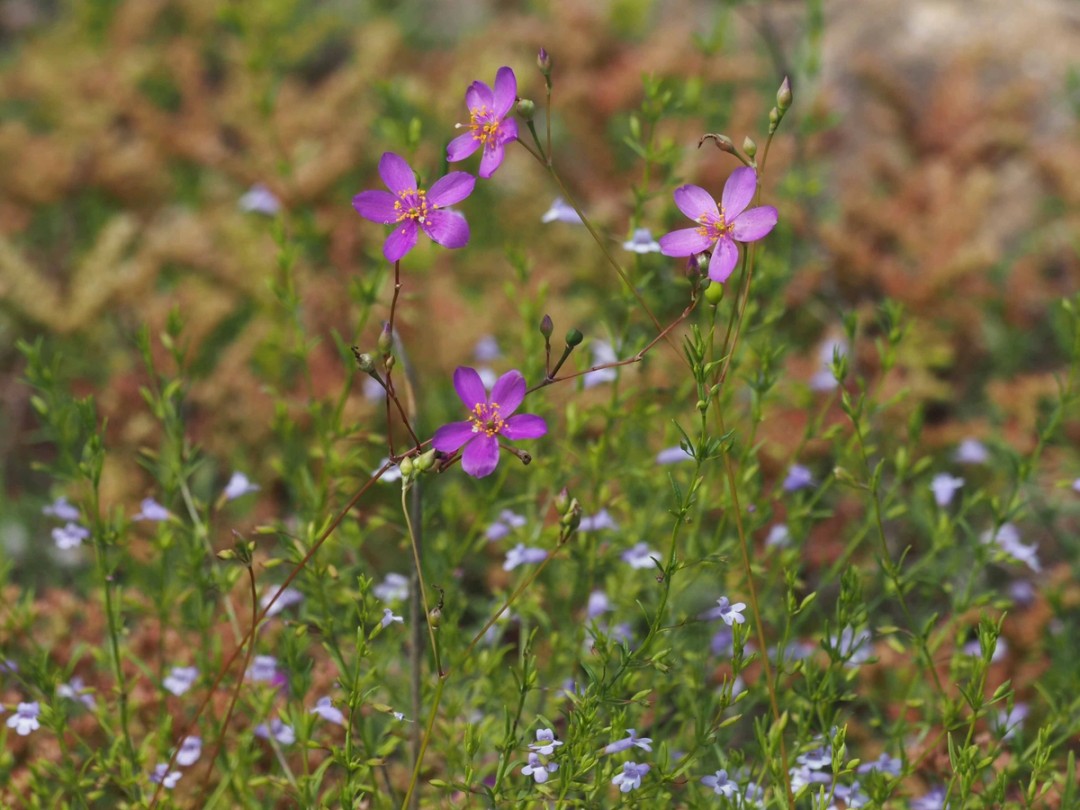
with Clinopodium arkansanum 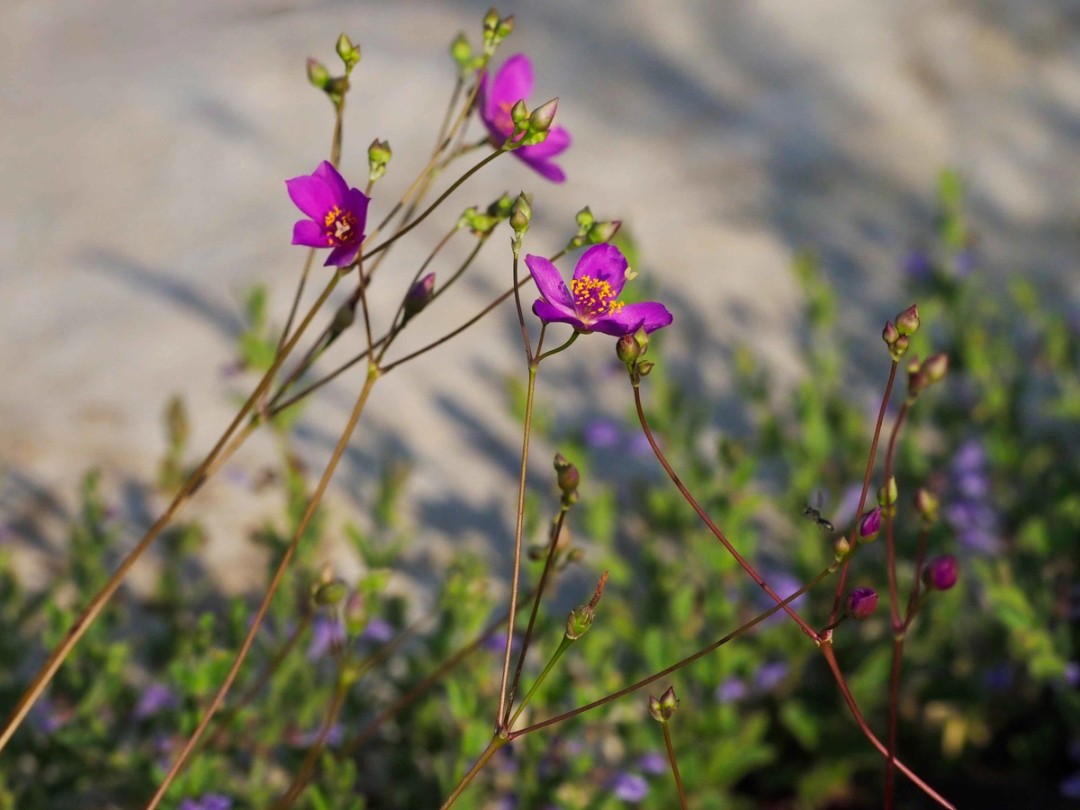
with Scutellaria parvula 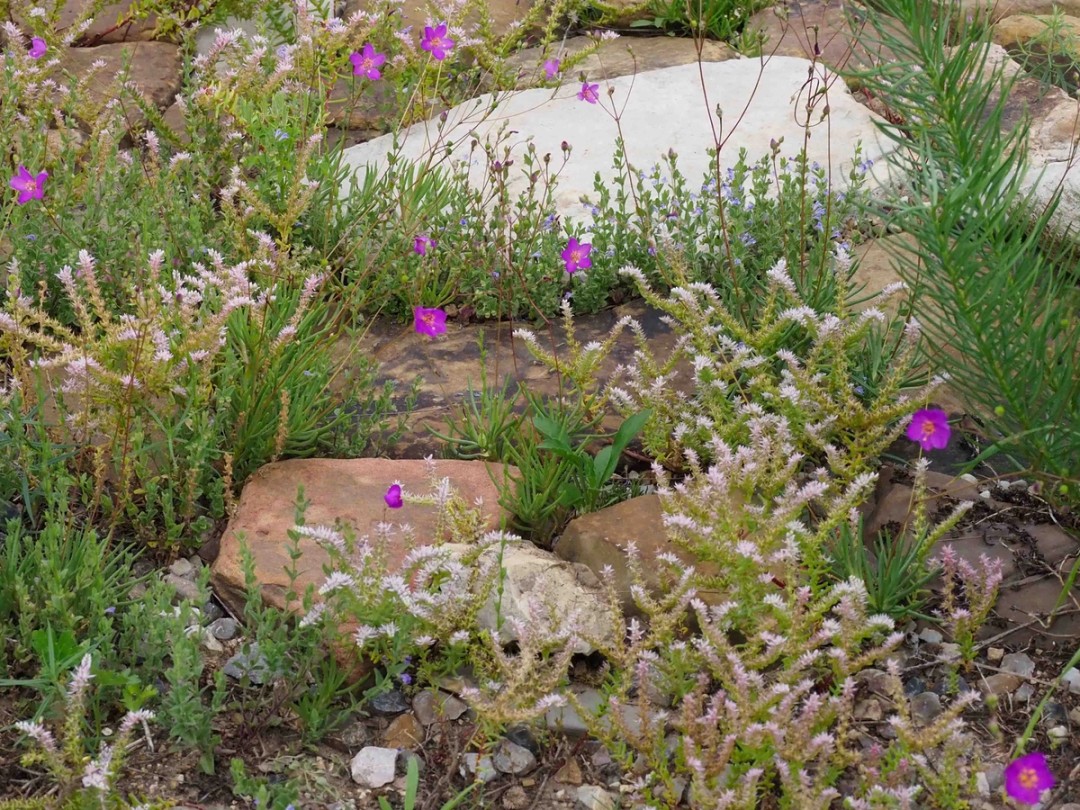
with Sedum pulchellum 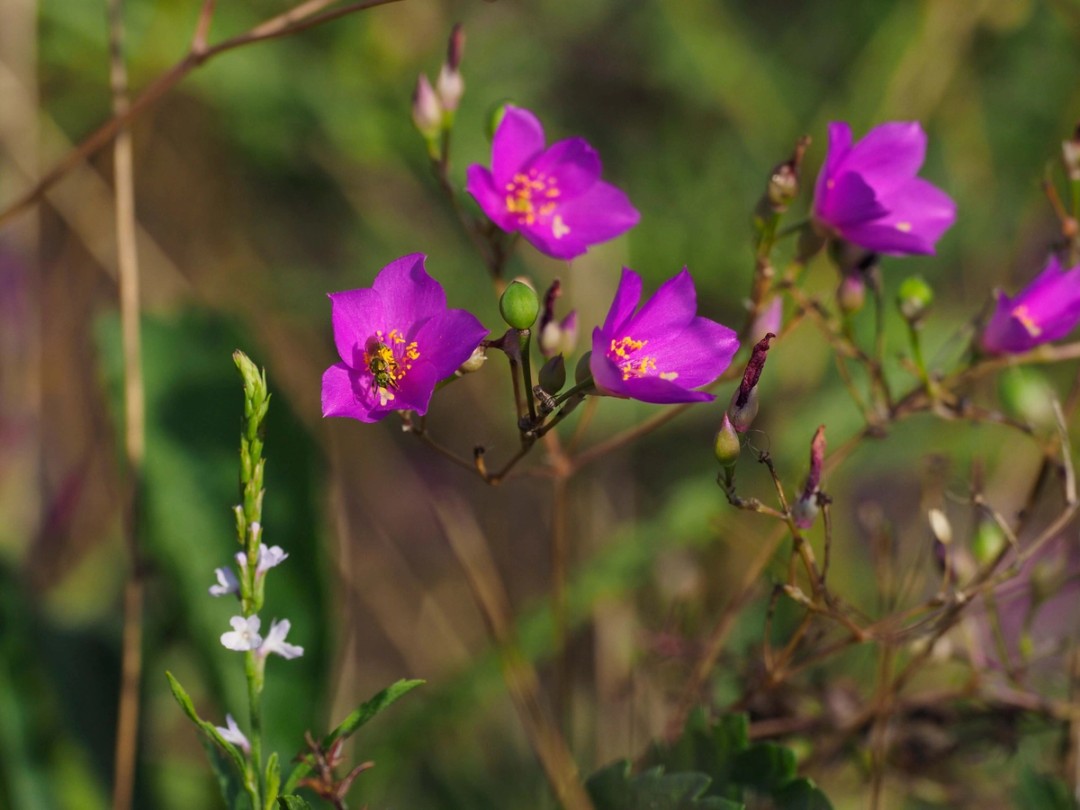
with Verbena simplex
HABITAT
Phemeranthus calycinus, a plant not commonly found in the wild, thrives in the rocky habitats of glades or bluffs. It typically grows on acidic substrates, although it can also be found on calcareous ones. In almost solid rock, where competition is minimal, it often forms large colonies.
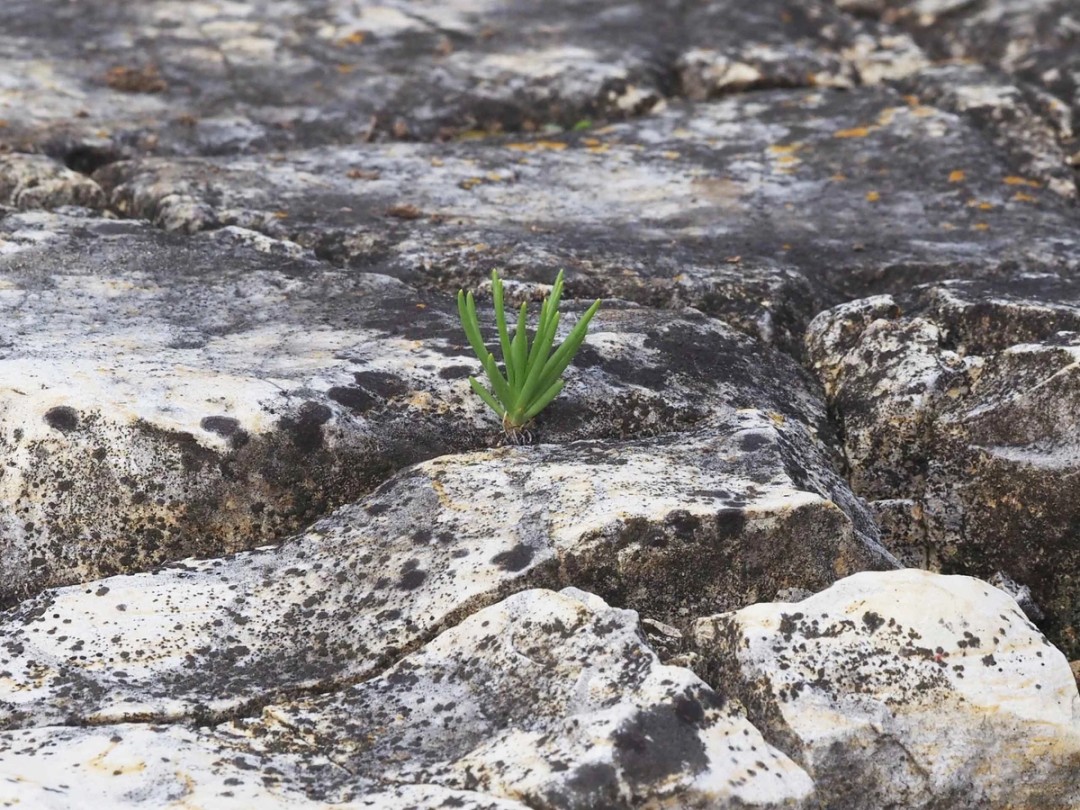
Rocky habitat Rocky habitat
CONSERVATION STATUS
In Arkansas, Fame flower has a conservation status of 9 in the group of 8–10 meaning "Conservative taxa with strong fidelity to intact habitats. These taxa tend to exhibit late-successional characteristics like long lifespans with low seed sets and an inability for far ranging dispersal."
NatureServe shows it as Critically Imperiled in Nebraska and Illinois and Vulnerable in Kansas. It is Possibly Extirpated in Colorado. All other states within its range show No Status Ranking (SNR).
INTERESTING TIDBITS
While finding Fame flower in the wild can be challenging, it's relatively easy to grow it in your garden by purchasing plants from native plant nurseries. You can easily grow it in a container and observe it opening in the late afternoon. Alternatively, you can create a rock garden and plant it with other small glade plants like Widow's cross, Small skullcap, and Arkansas calamint.
Rock garden with Fame flower, and Widows cross 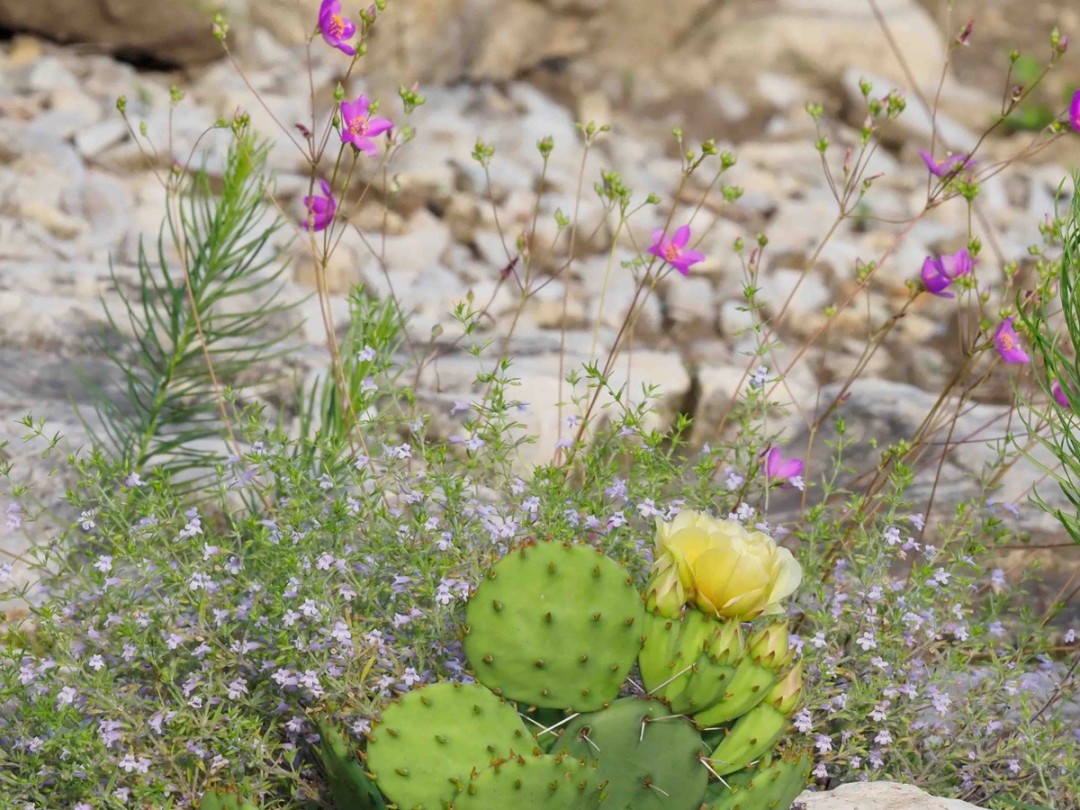
Rock garden with Opuntia and Ozark Calamint