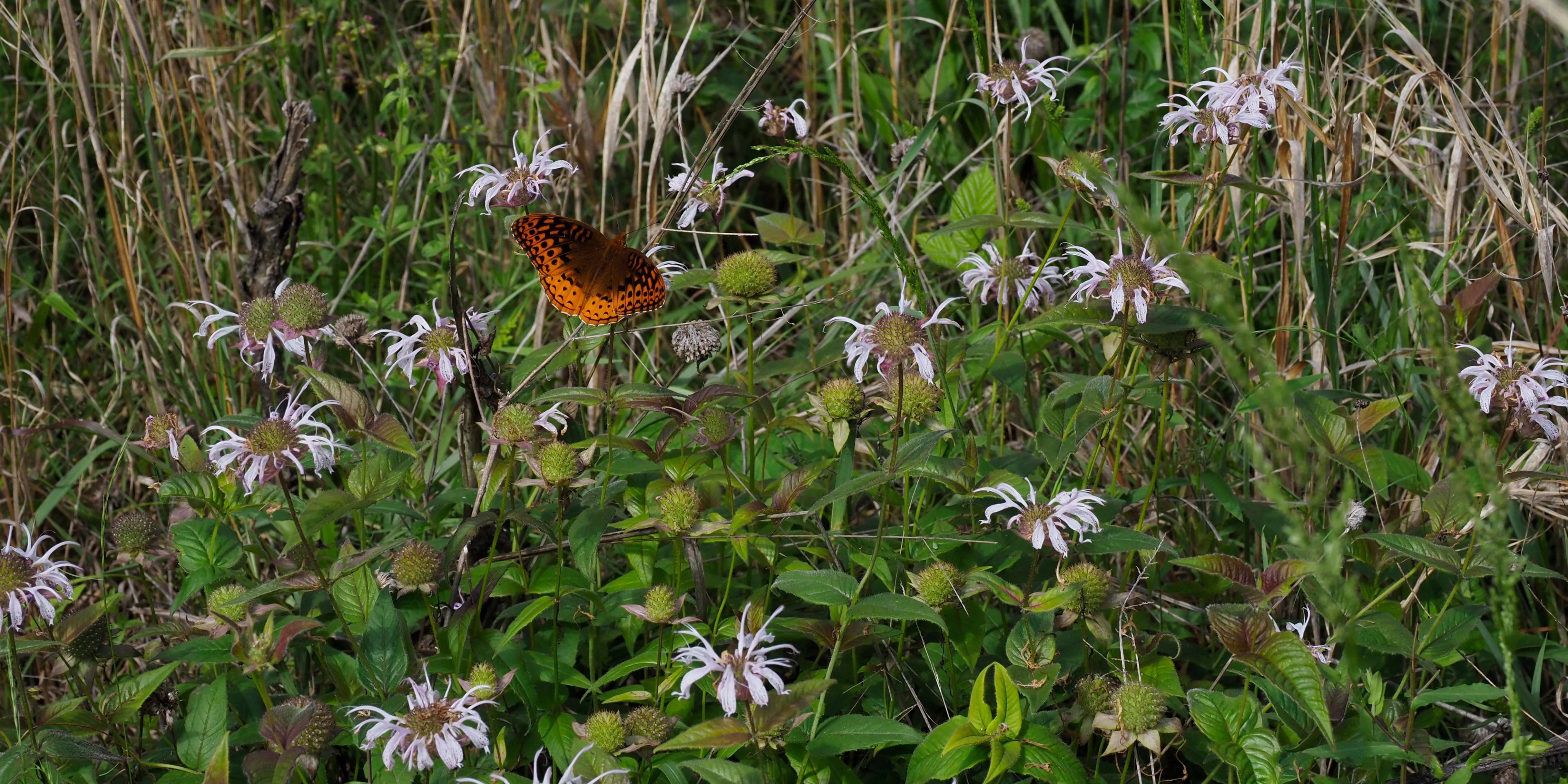
PLANT NAME
Monarda bradburiana is in the Mint family (Lamiaceae). The specific epithet (bradburiana) is named for Nicholas Monardes, a Spanish physician and botanist (1493 - 1588). He published a book in 1571 describing medicinal values of some of the native plants in North America.
It seems the most frequently used common name is simply Bee balm. Other common names you might find include Brabury's bee balm or Bracbury's monarda as well as Eastern beebalm, Wild bergamot and Horsemint.
BLOOM
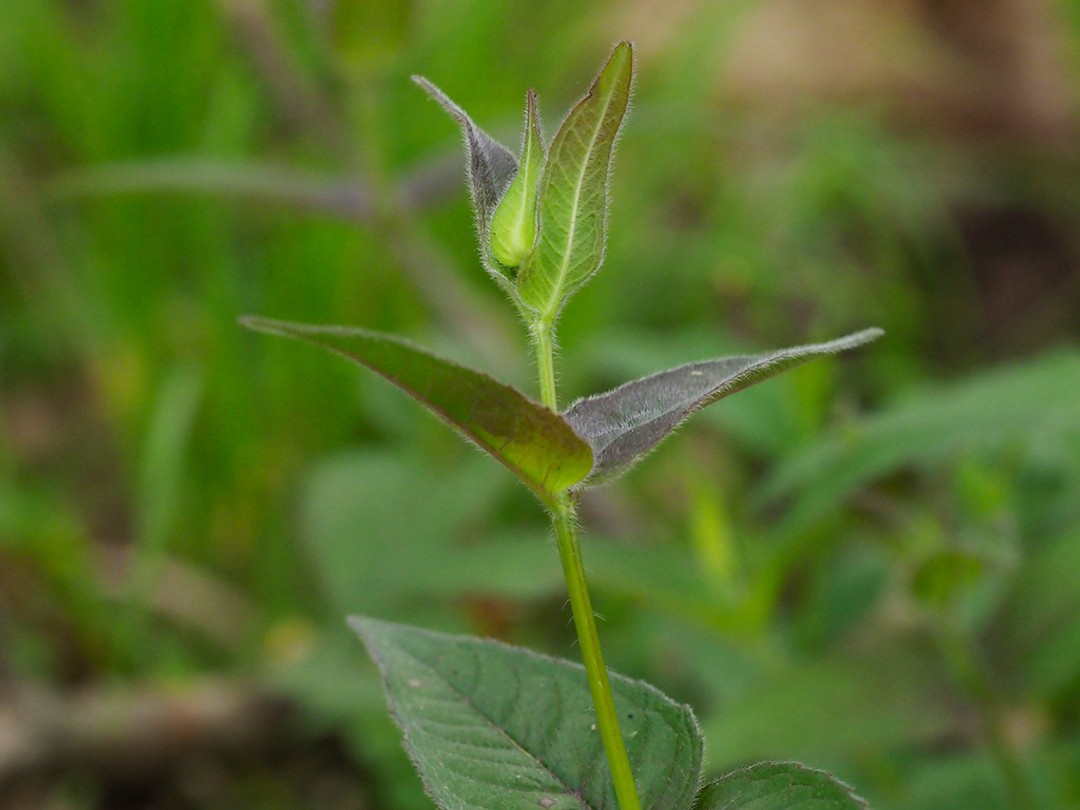
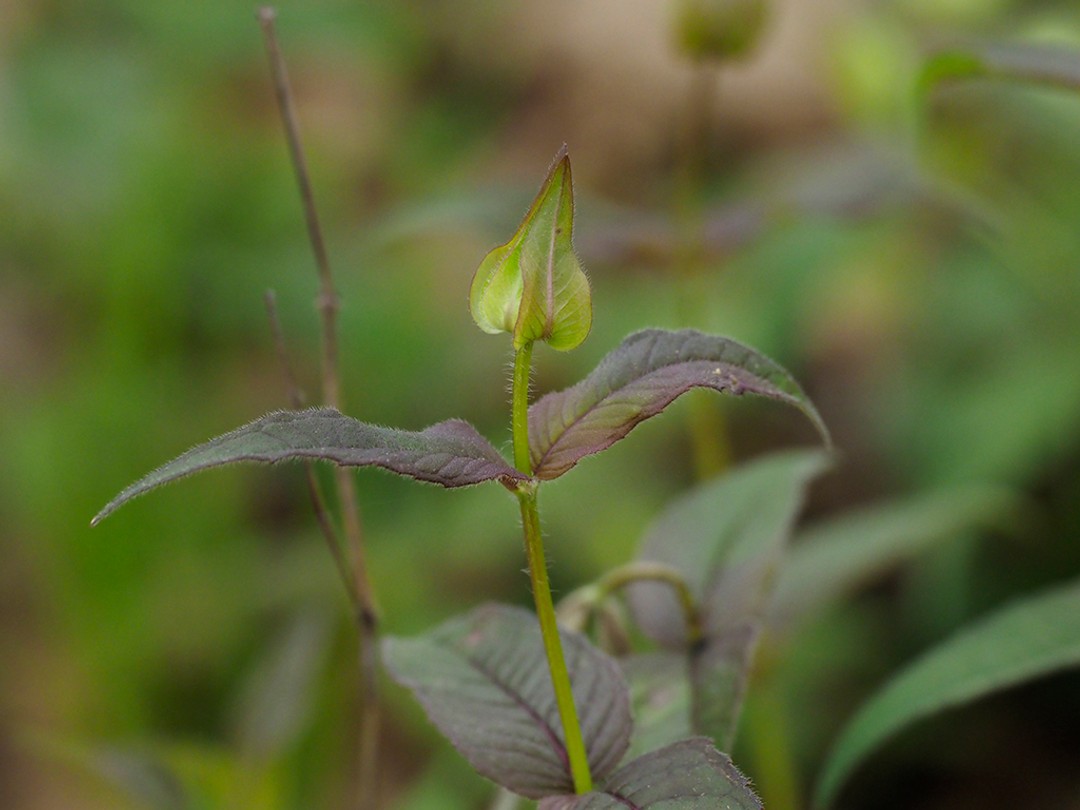
The early buds of Monarda bradburiana are nearly as beautiful as the flower. The leaves at this time often have a purplish hue. Flower proceeds from the center of the flower head to its edges. Once the outer flowers have opened, the inner flowers have dropped, leaving a central bare area.
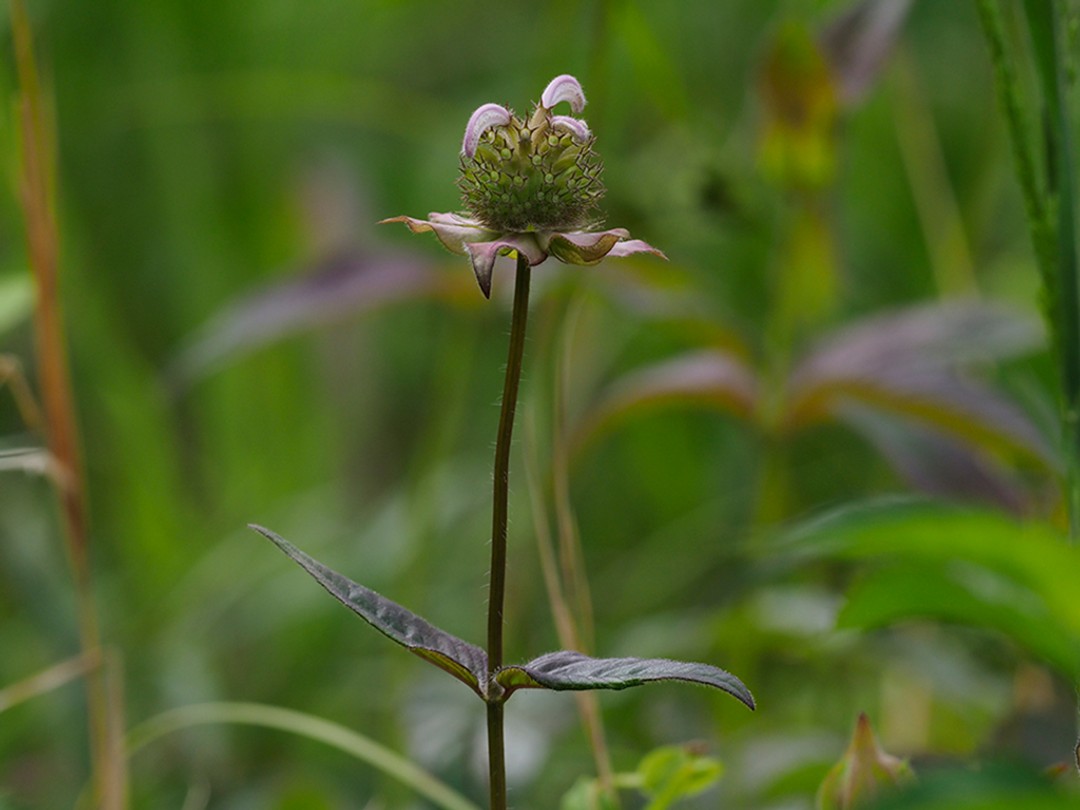
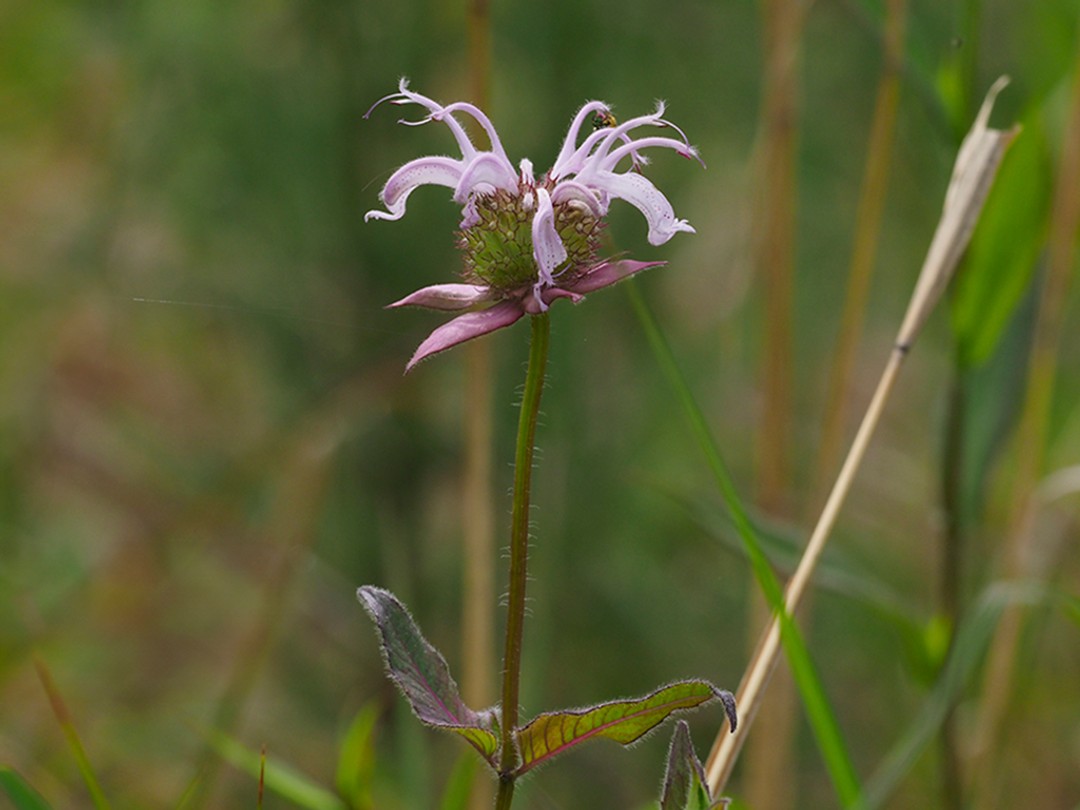
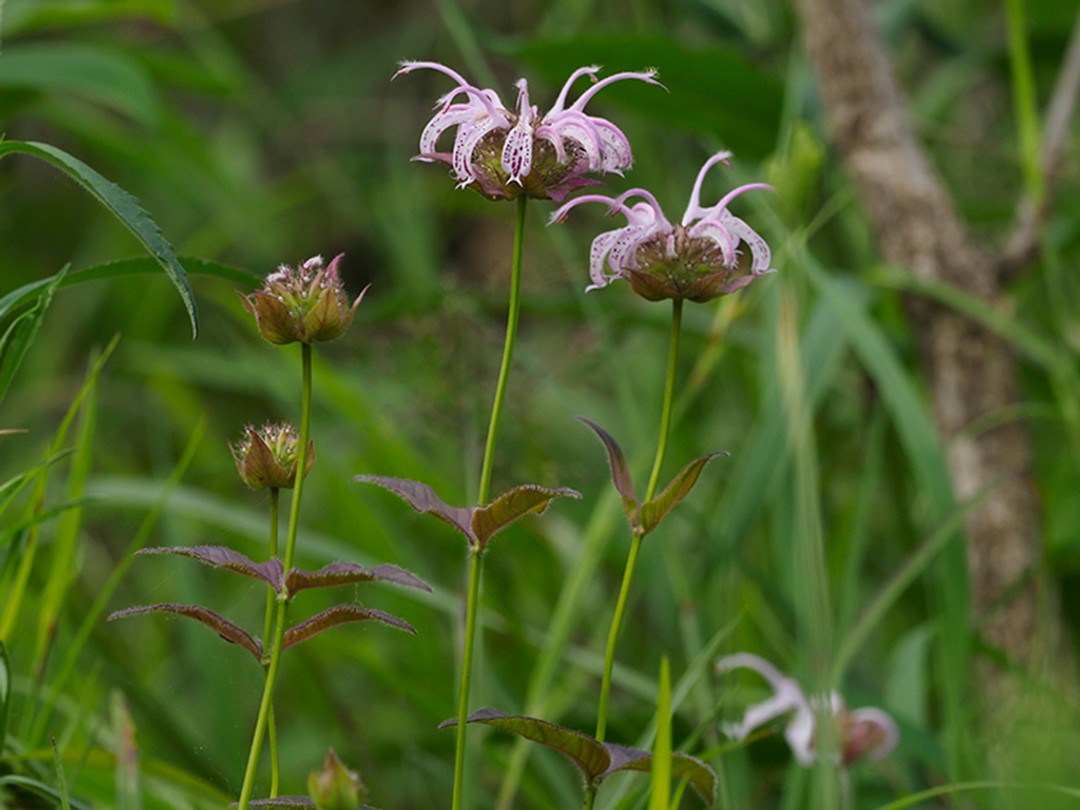
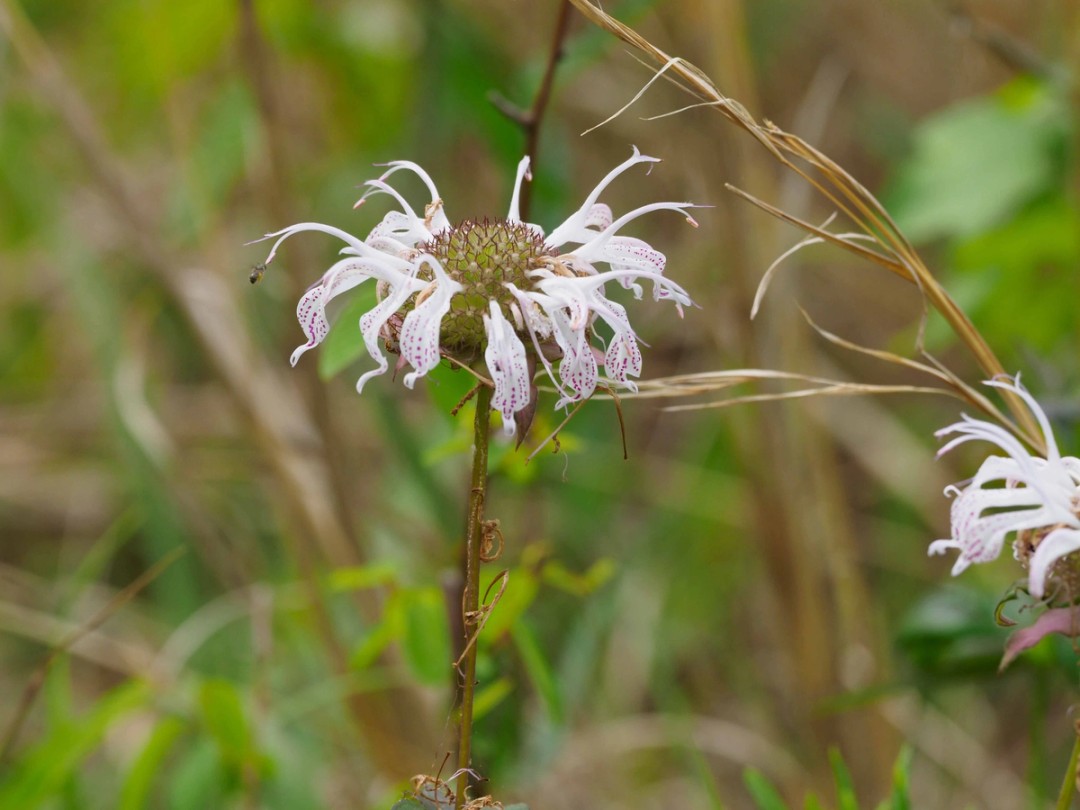
Flower clusters appear at the top of stems with each cluster containing about 50 slender, individual flowers. Each flower has an upper and lower lip. The stamens are exerted from the slim upper lip. They have white filaments and purplish anthers. The lower lip is broader and curves downward at its tip. Both lips are usually white to pale pink with the lower lip typically painted with purple dots.
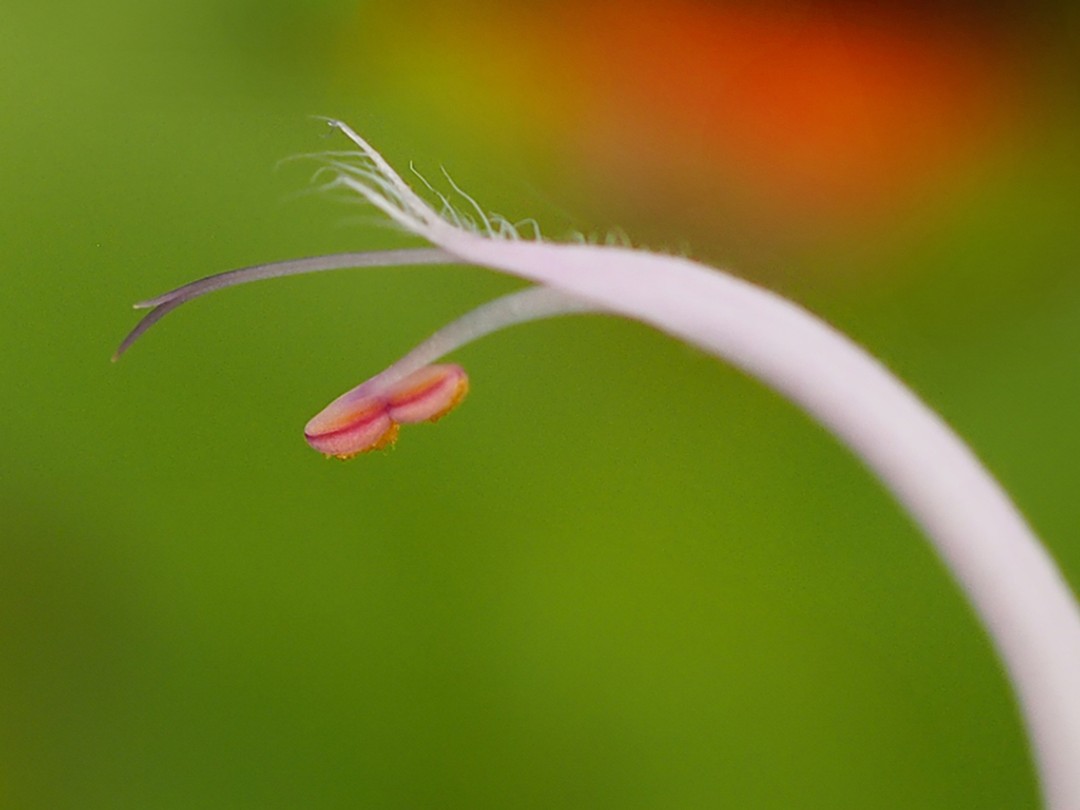
Style and Stamen 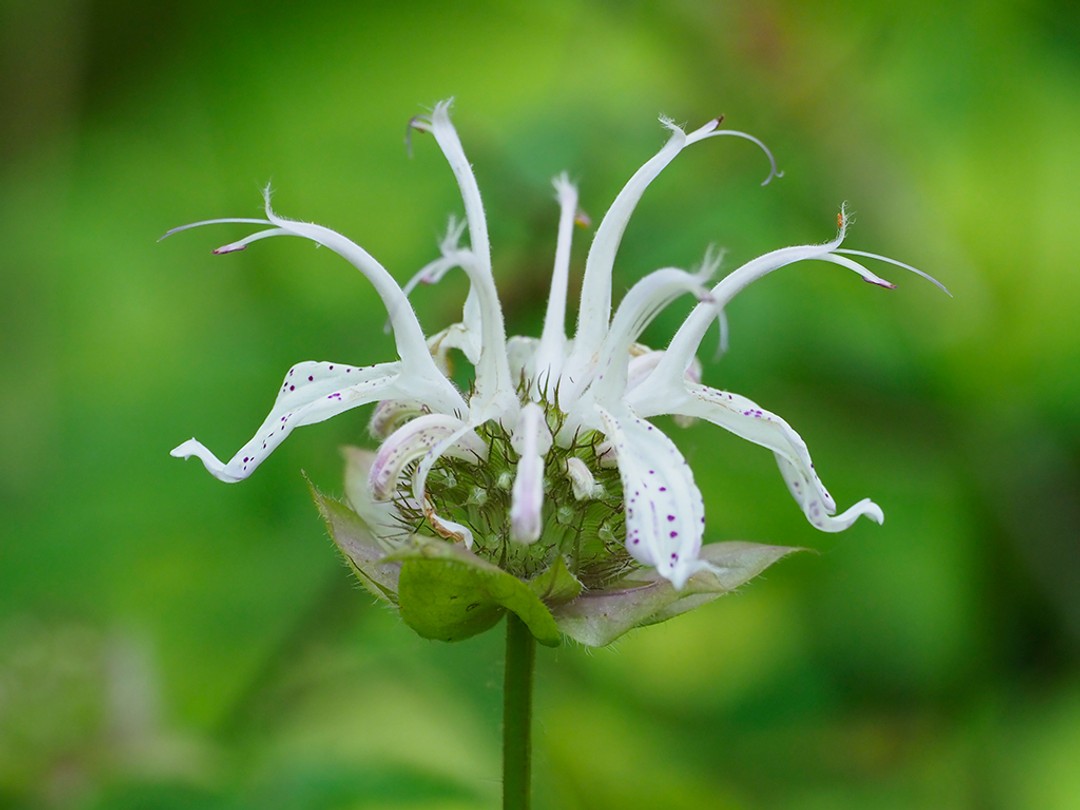
Upper and Lower Lip
DESCRIPTION
This perennial native plant is about 2 ft tall with 4-angled stems that are usually without hairs. It's lovely leaves are up to 3.5 inches long and 2 inches across. They are opposite, sessile (occasionally with short petioles) and lanceolate or ovate in shape with serrated margins. Leaf surfaces may be glabrous or somewhat pubescent. Each pair of leaves are rotated at right angles from the prior pair.
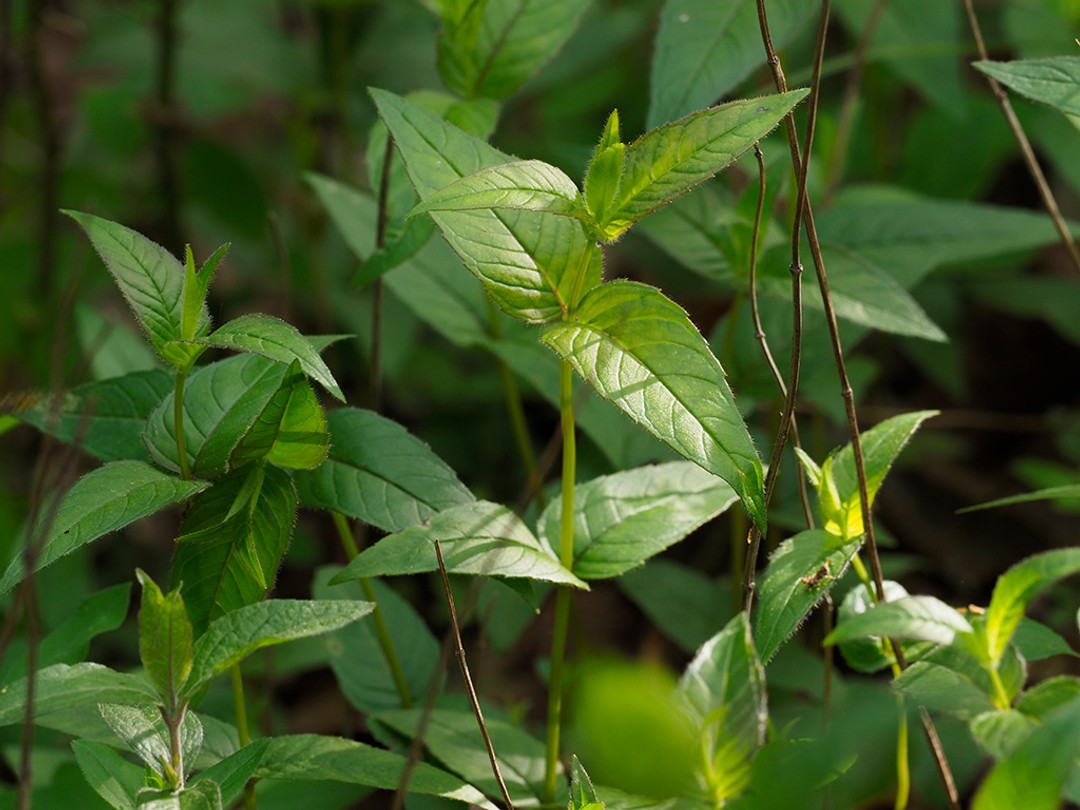
Opposite leaves 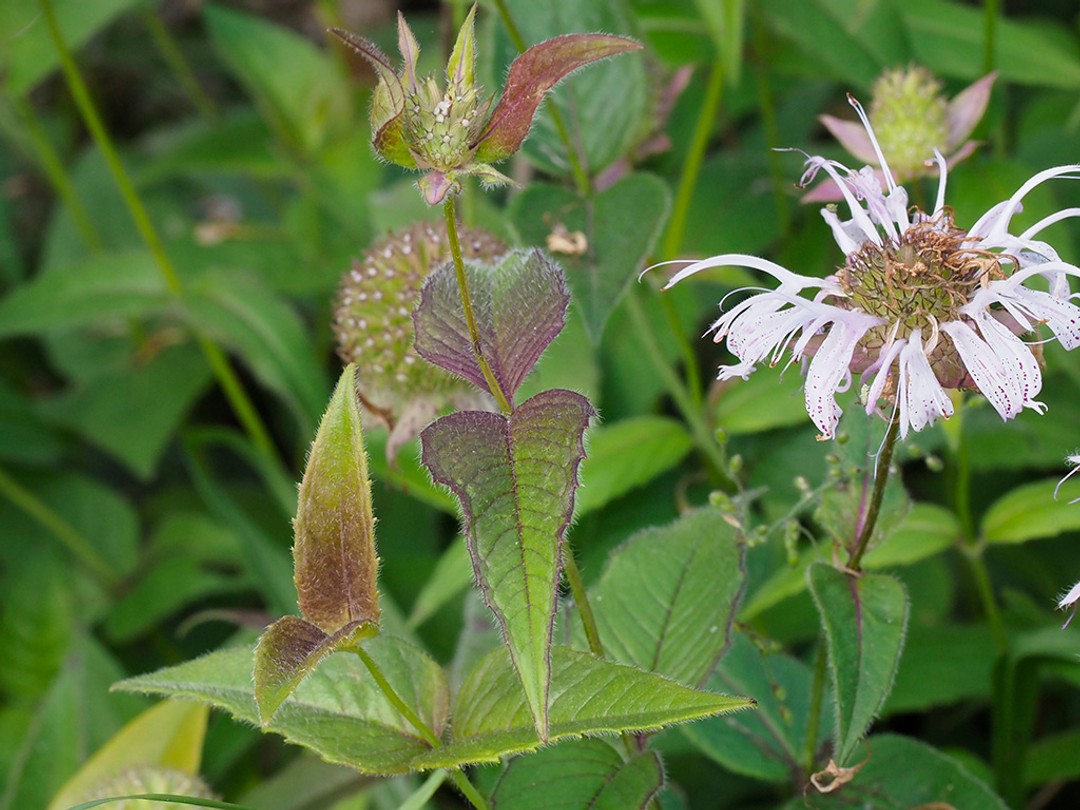
Purplish leaves 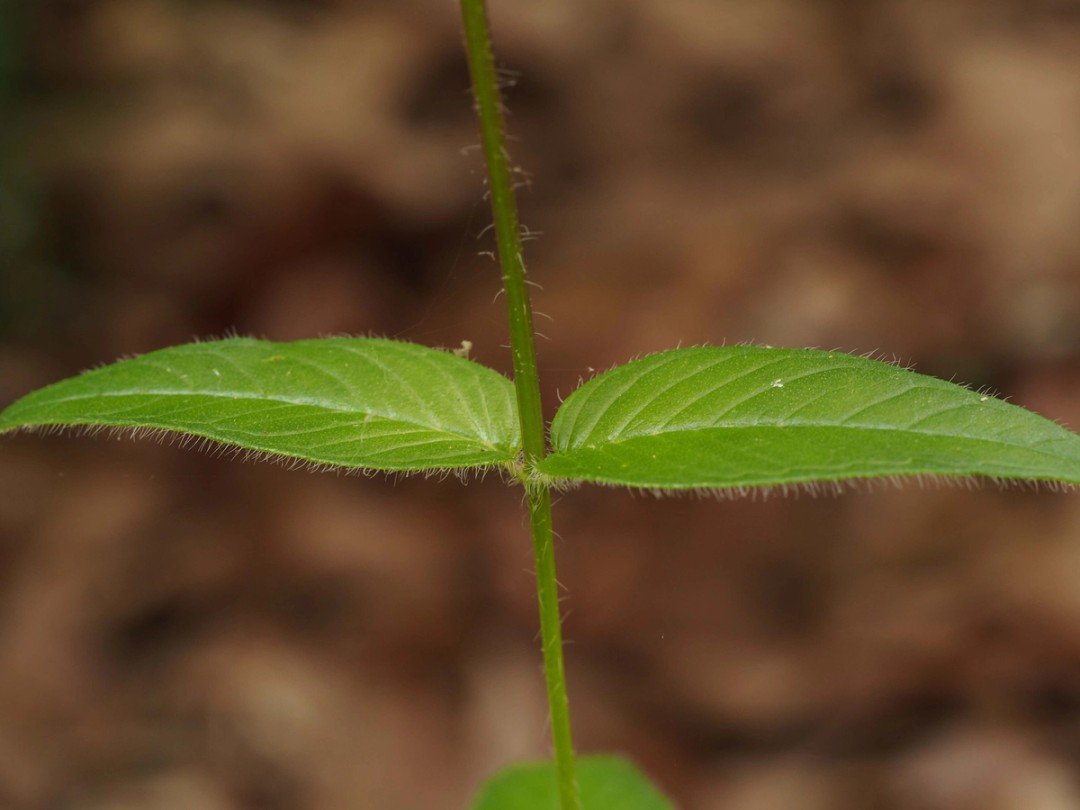
Ciliate margins 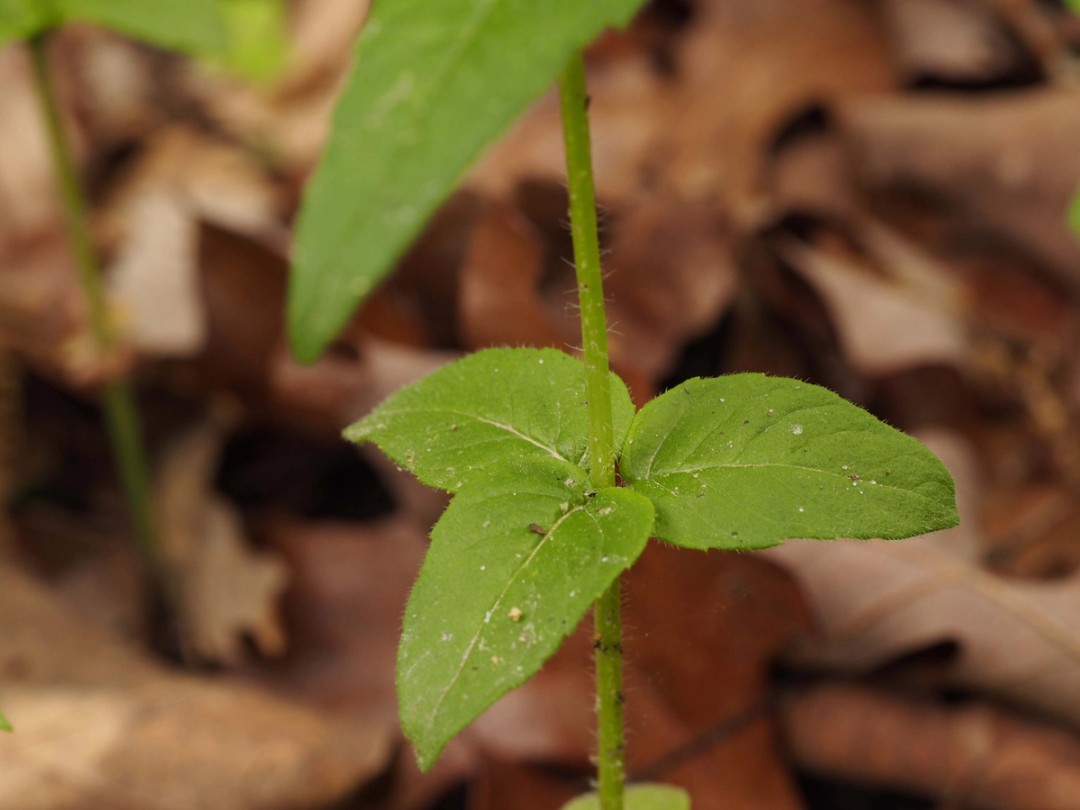
Uncommon trifoliate leaves
Stems are usually un-branched with 4-angles and glabrous to sparsely pubescent. The flower is subtended by a yellowish green bract.
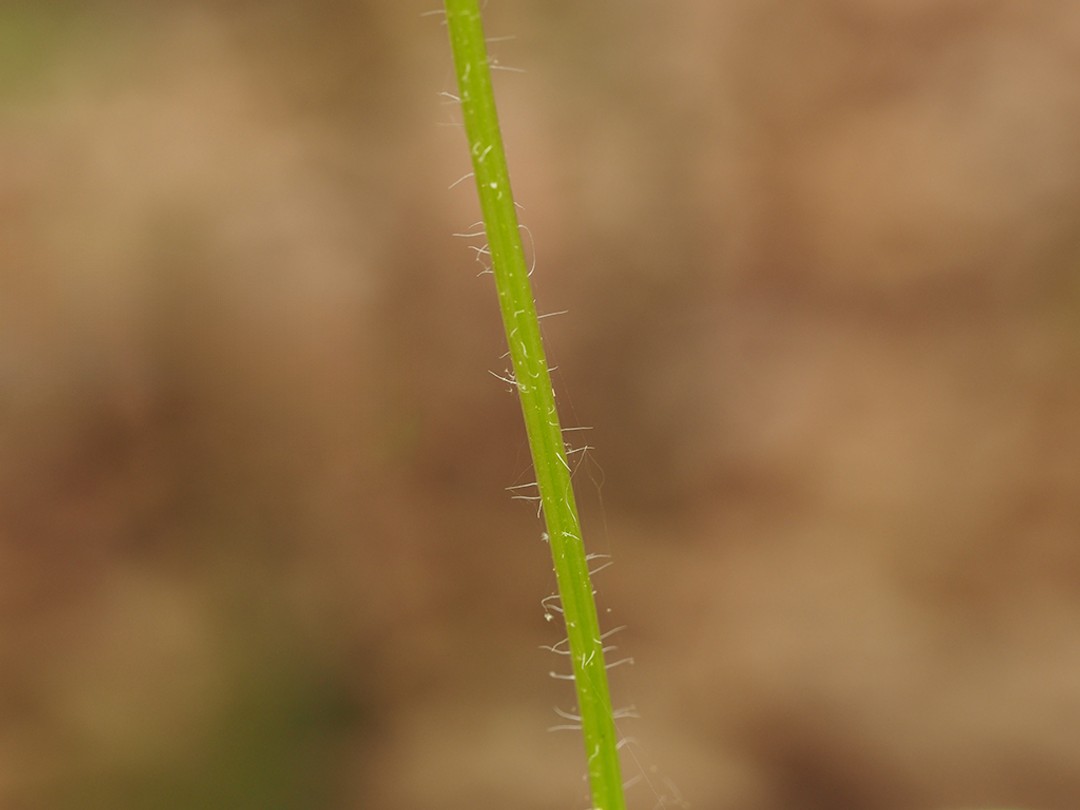
Hirsute stem 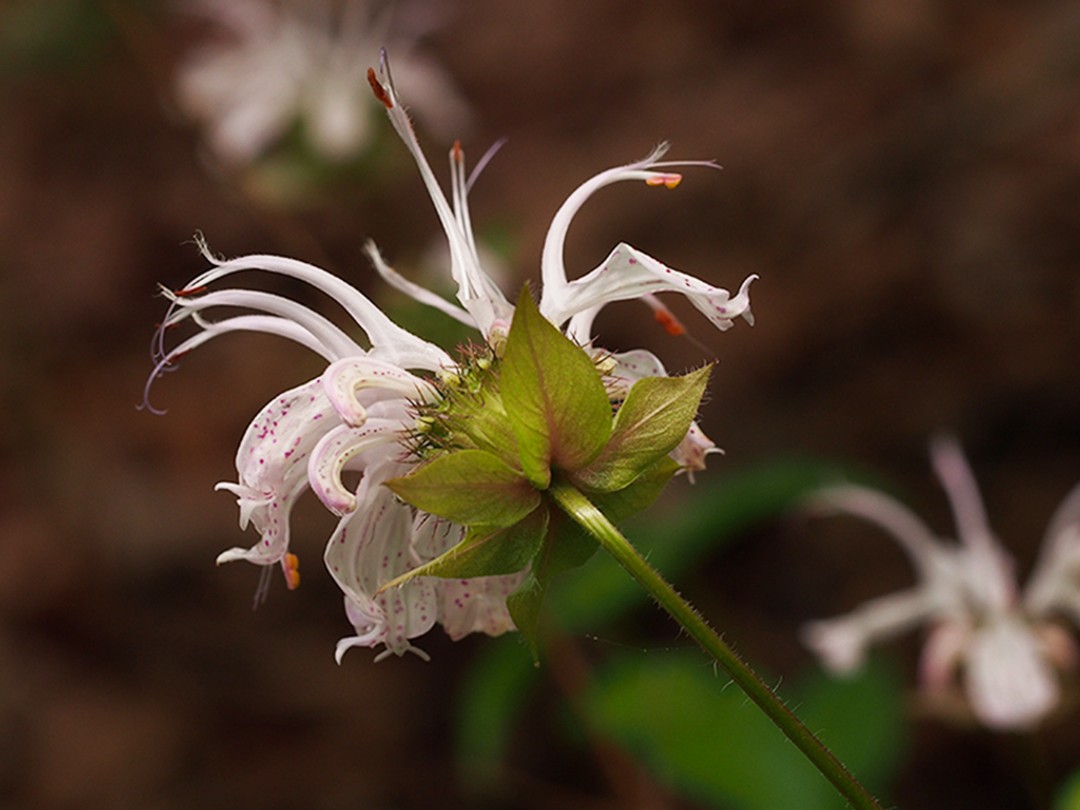
Bract
After flowering, fruits develop and ripen during summer.
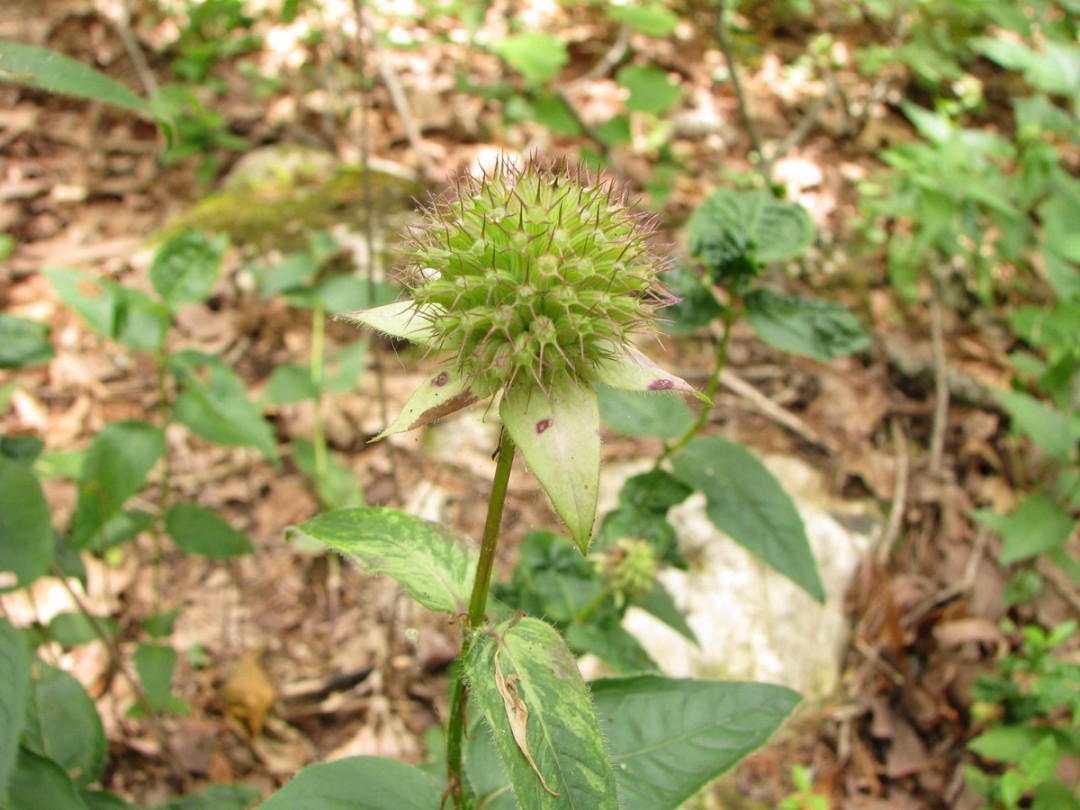
Developing fruits 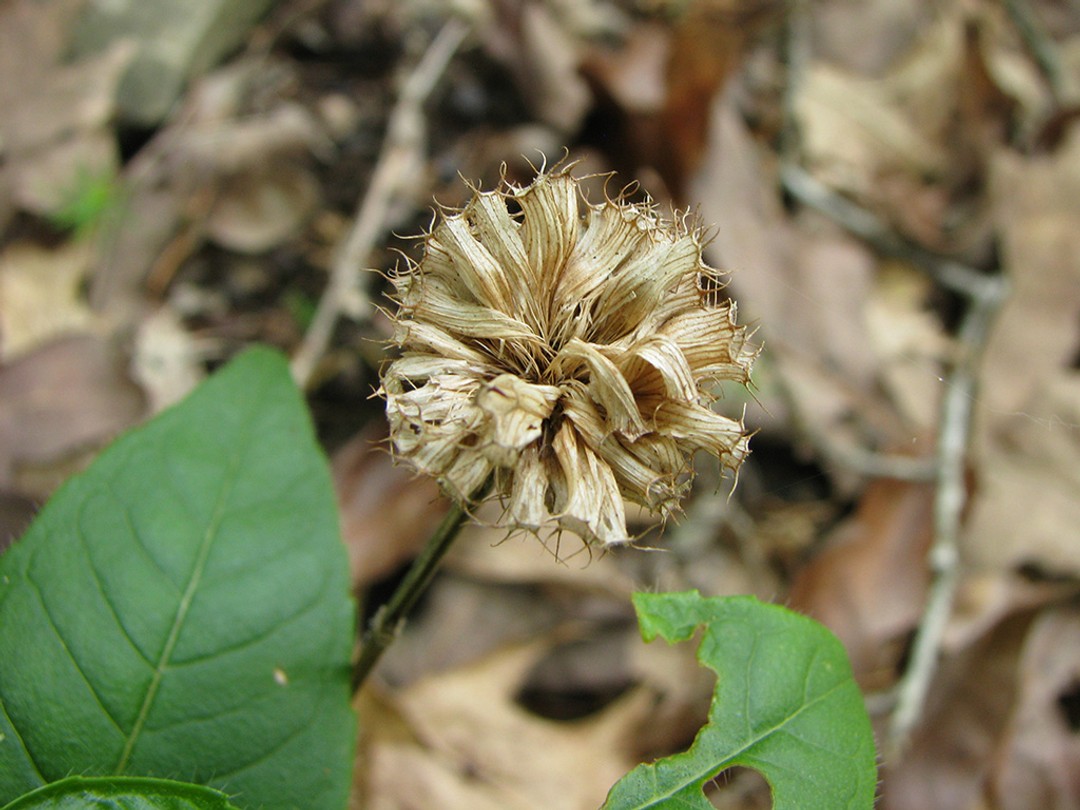
Ripe nutlets
POLLINATORS
Bee balm supports many interesting insects. Sit for a while and watch the activity around a clump of these lovely flowers and you're likely to see many different bees, butterflies, skippers and bee flies. Other insect visitors include hummingbird moths, beetles and wasps.
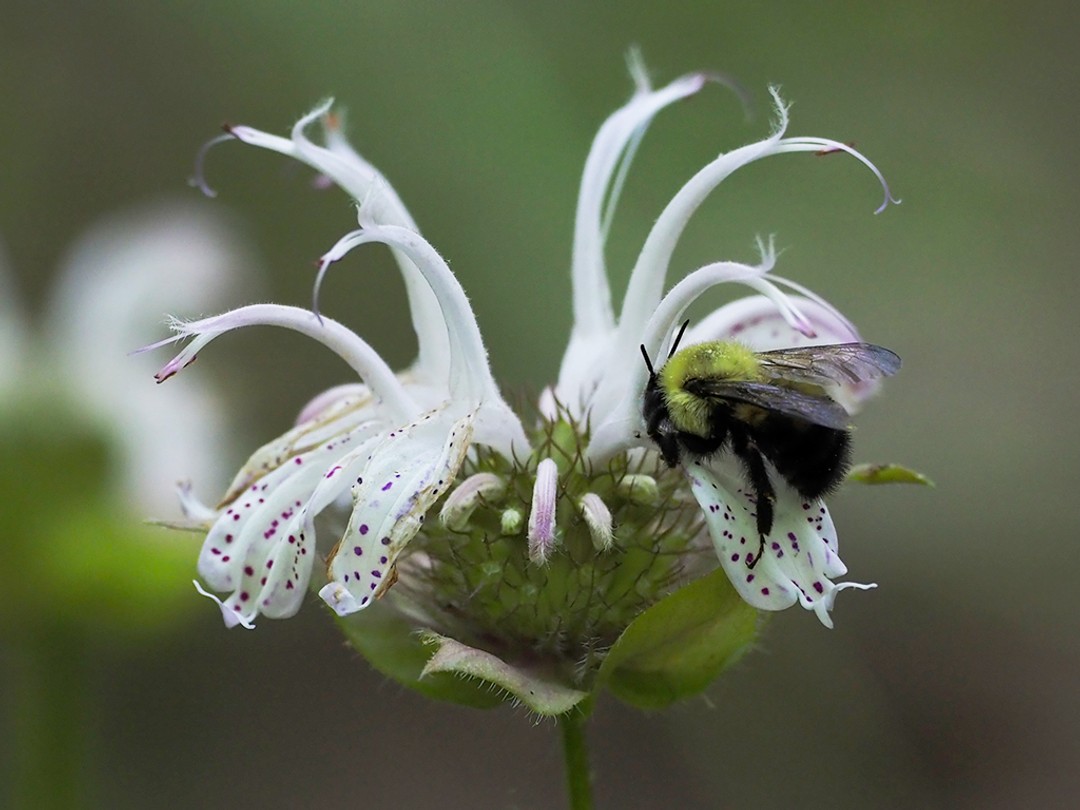
Bombus bimaculatus 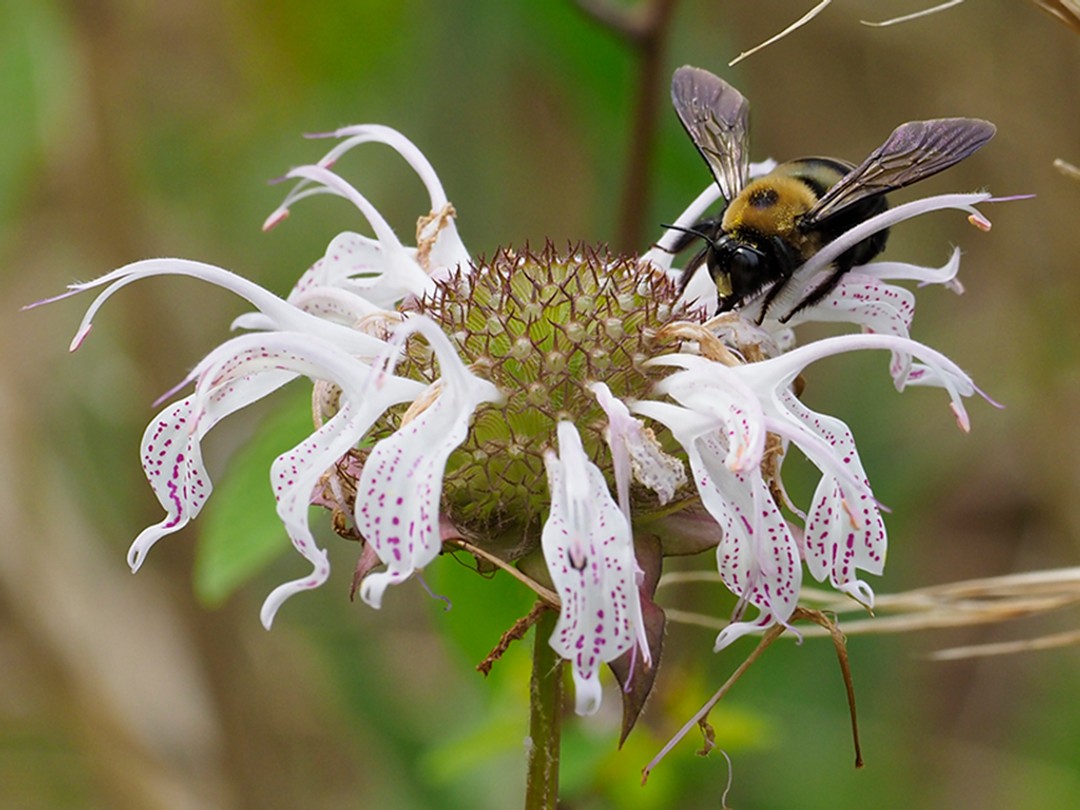
Xylocopa virginica 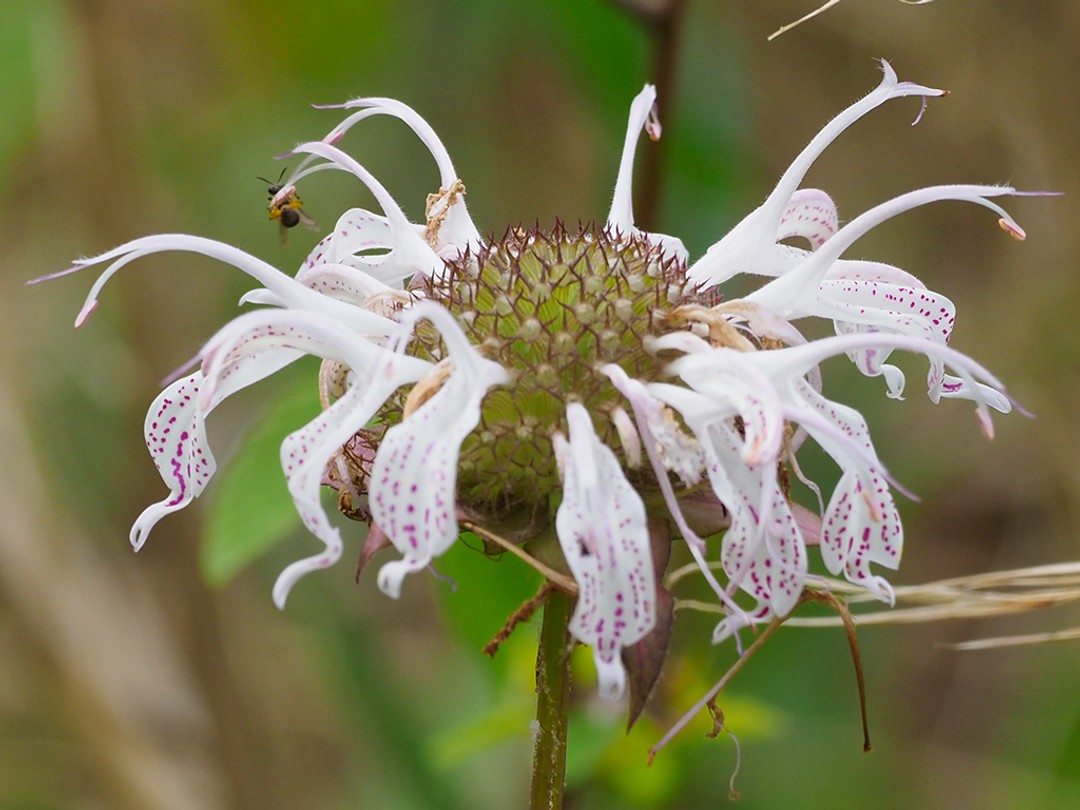
Lasioglossum bee 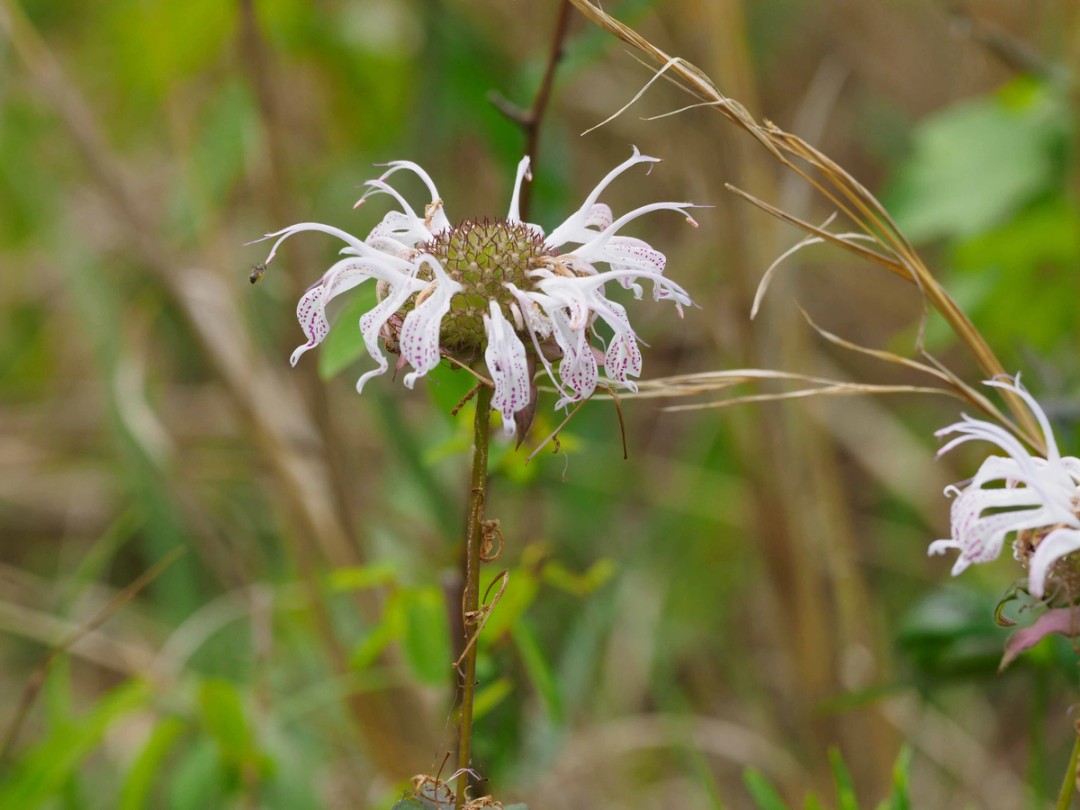
Lasioglossum bee
Bee flies are frequent visitors. It's fun to watch their fast flying acrobatics!
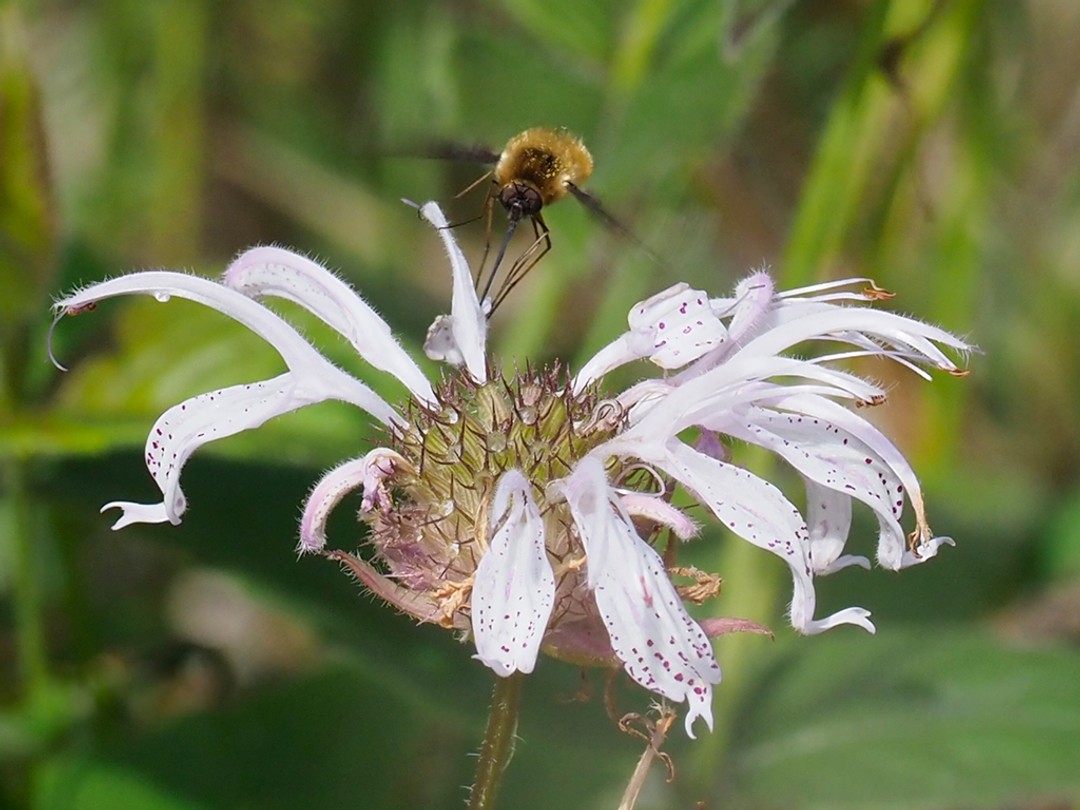
Bee fly 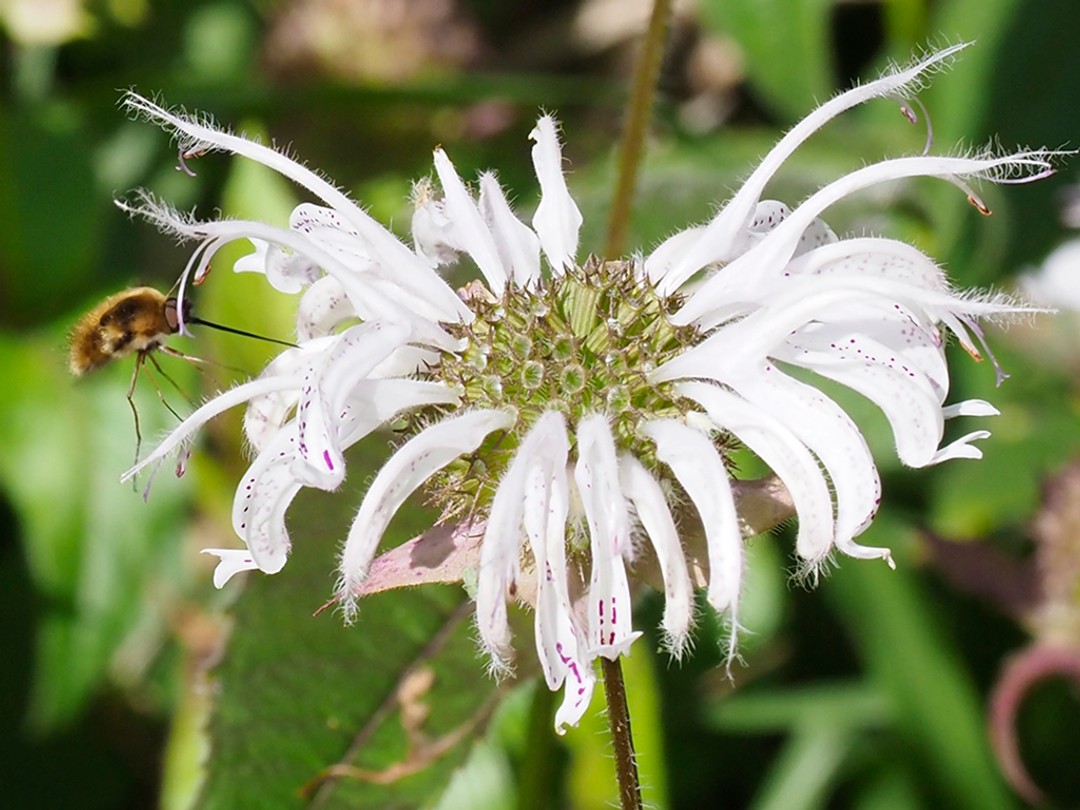
Bee fly
And, of course, many beautiful butterflies seek nectar from Bee balm.
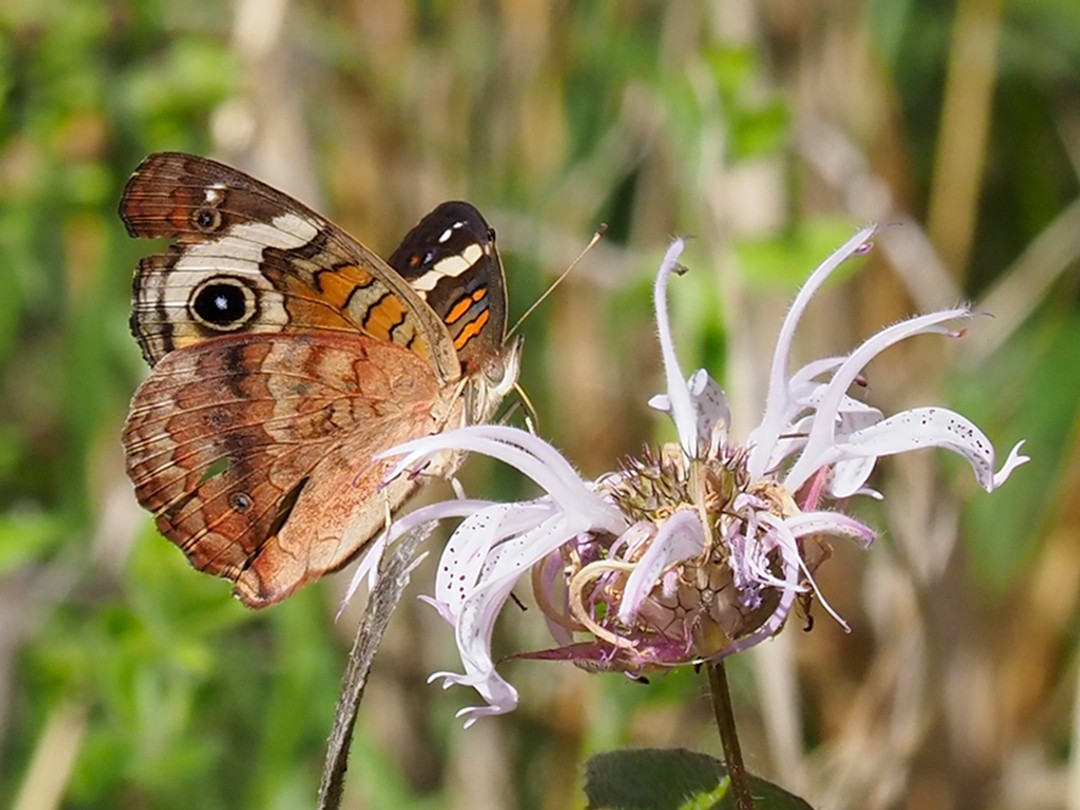
Common buckeye 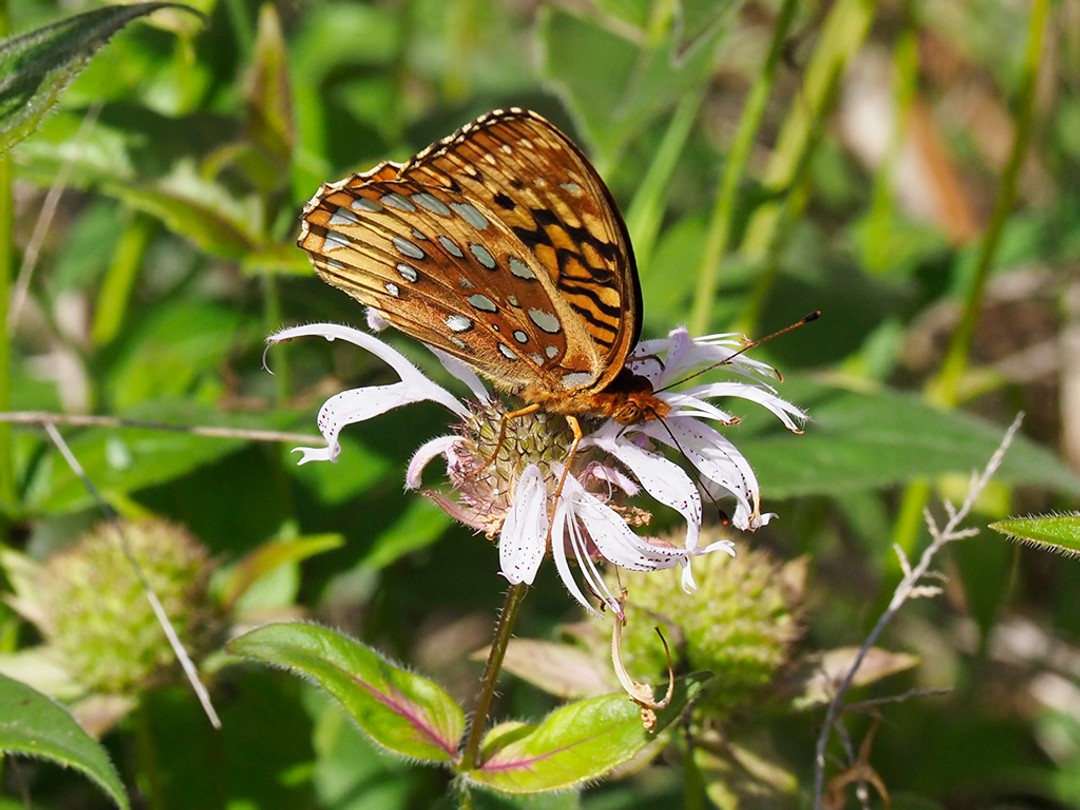
Great spangled fritillary 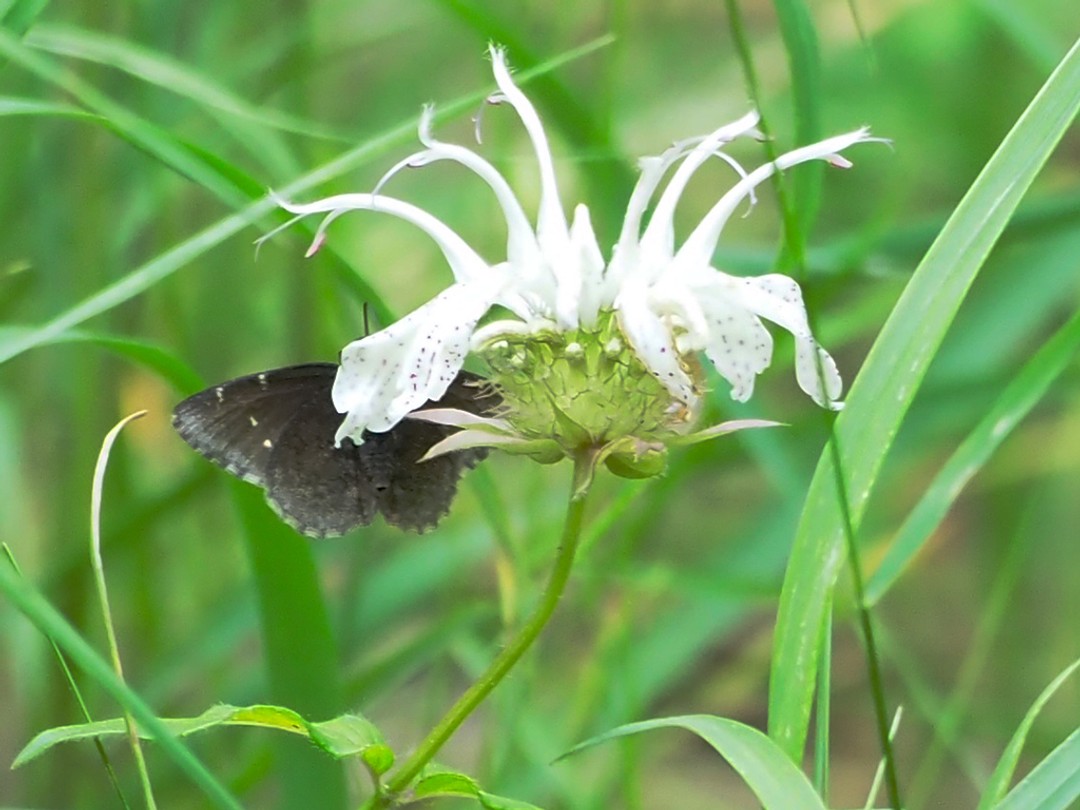
Northern cloudywing 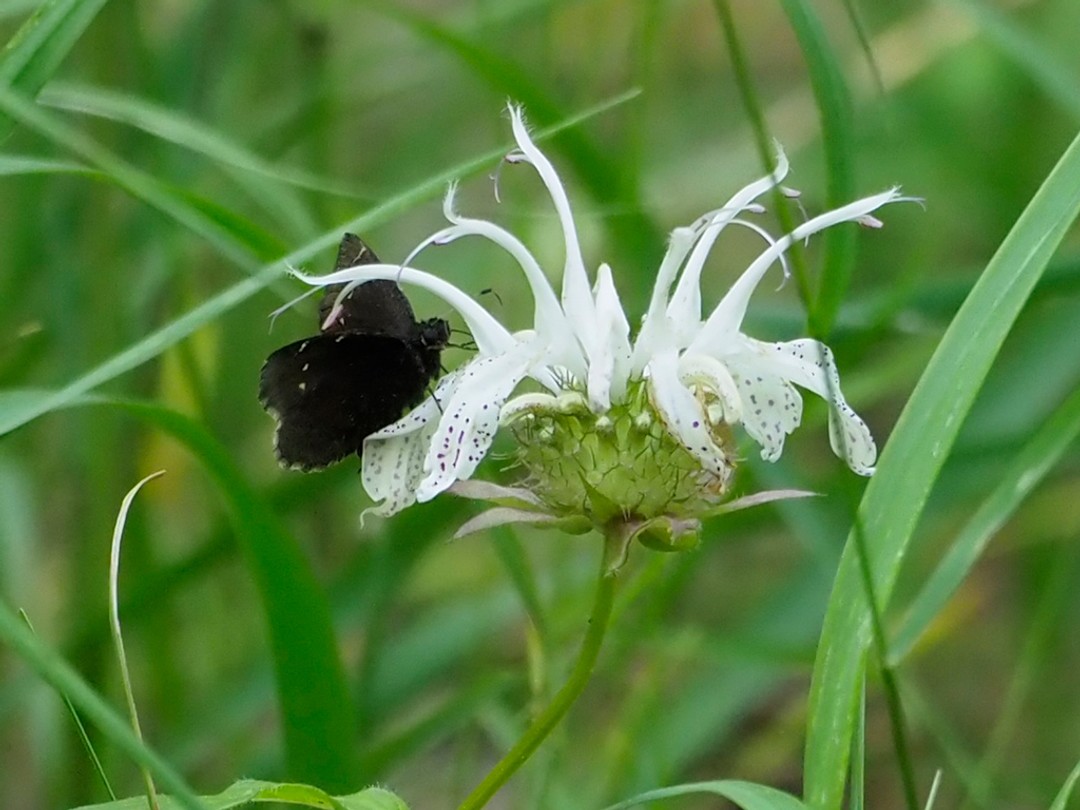
Northern cloudywing
PLANTS GROWING NEARBY
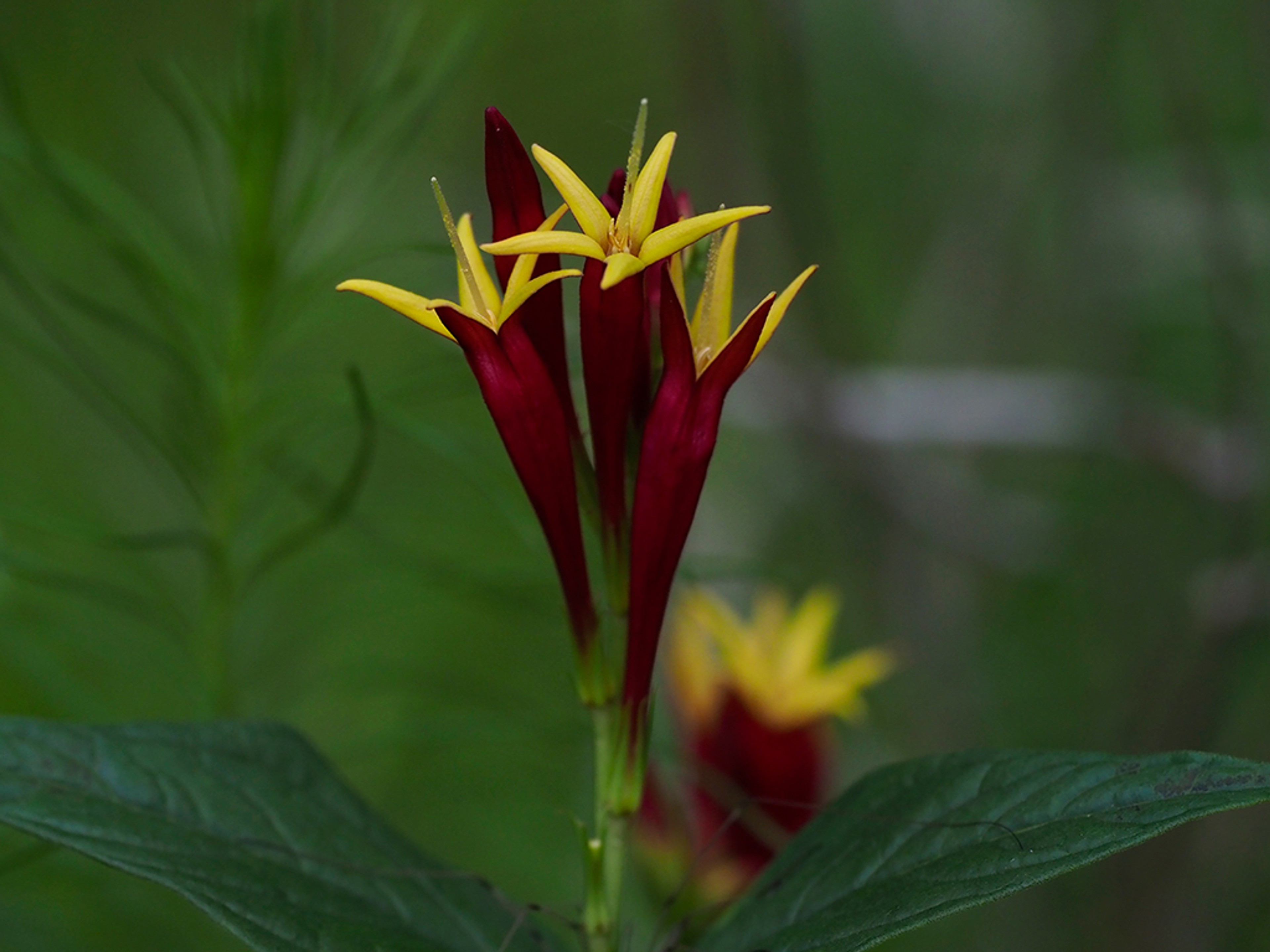
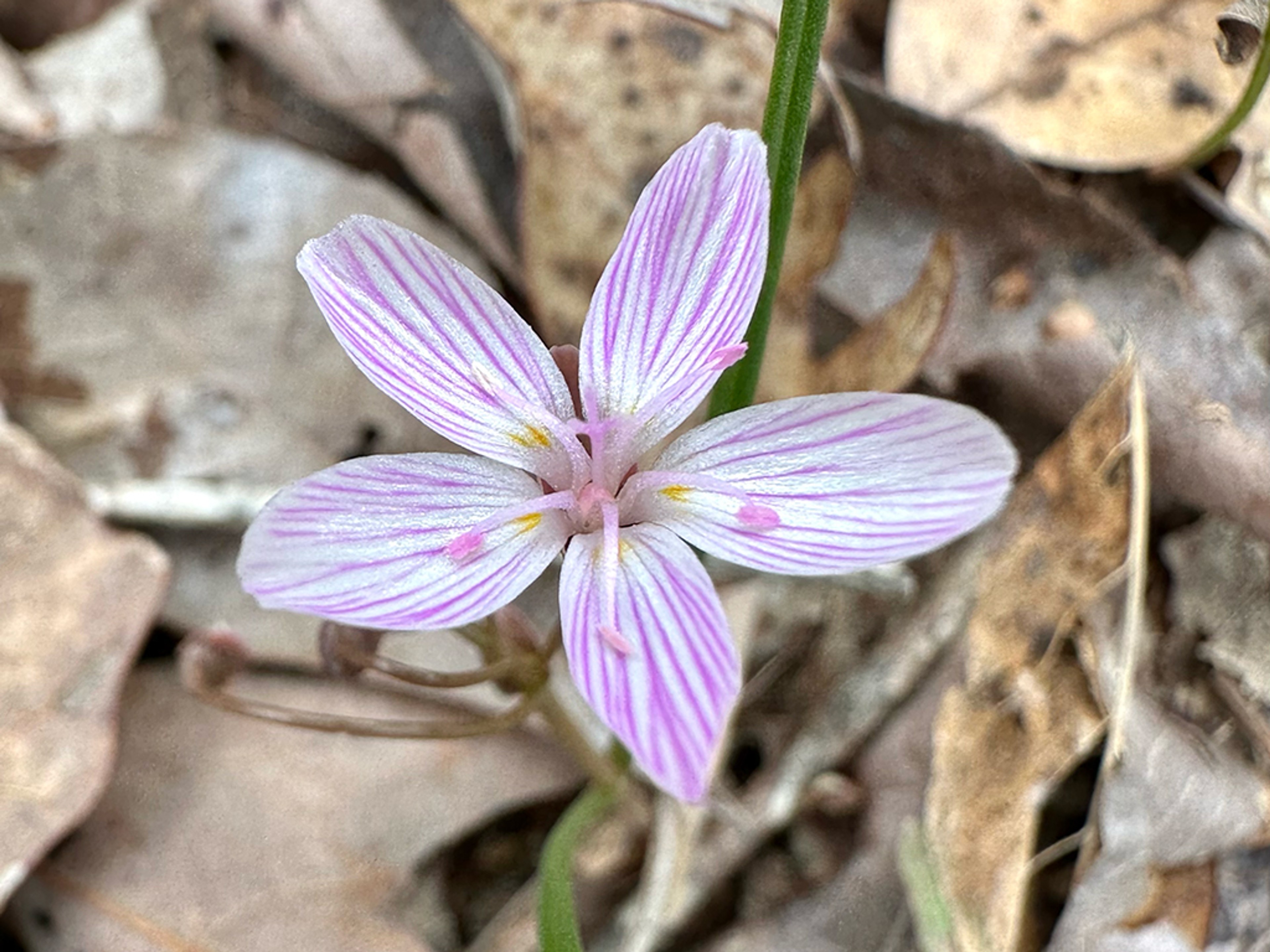
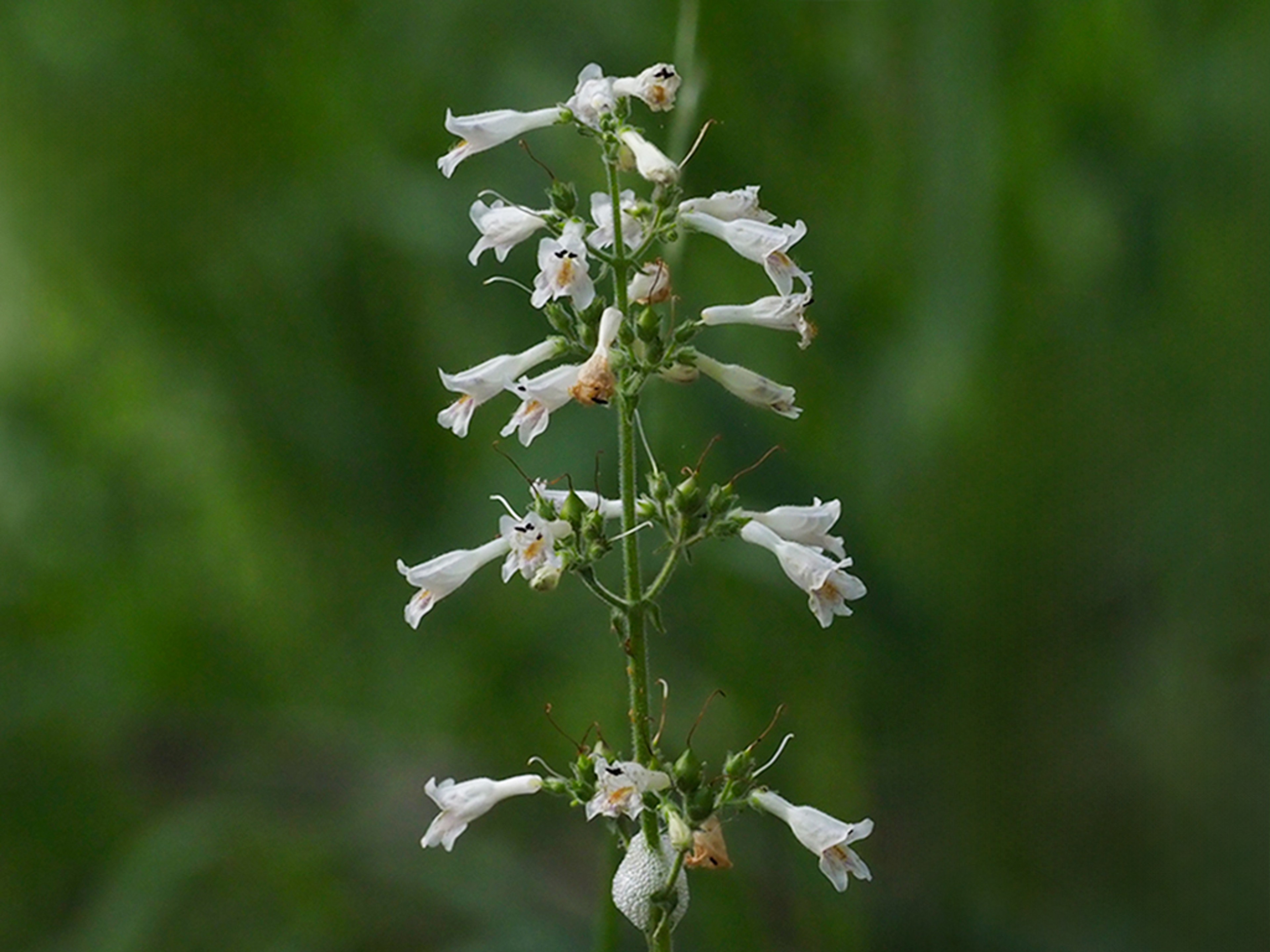
Depending on the habitat, Monarda bradburiana has different plant companions. In the dry woodland, Yellow pimpernel, Indian pink, Spring beauty and Robin's plantain are common companions. In the grassland, it may be seen growing near its relative Monarda fistulosa as well as Narrowleaf mountain mint,
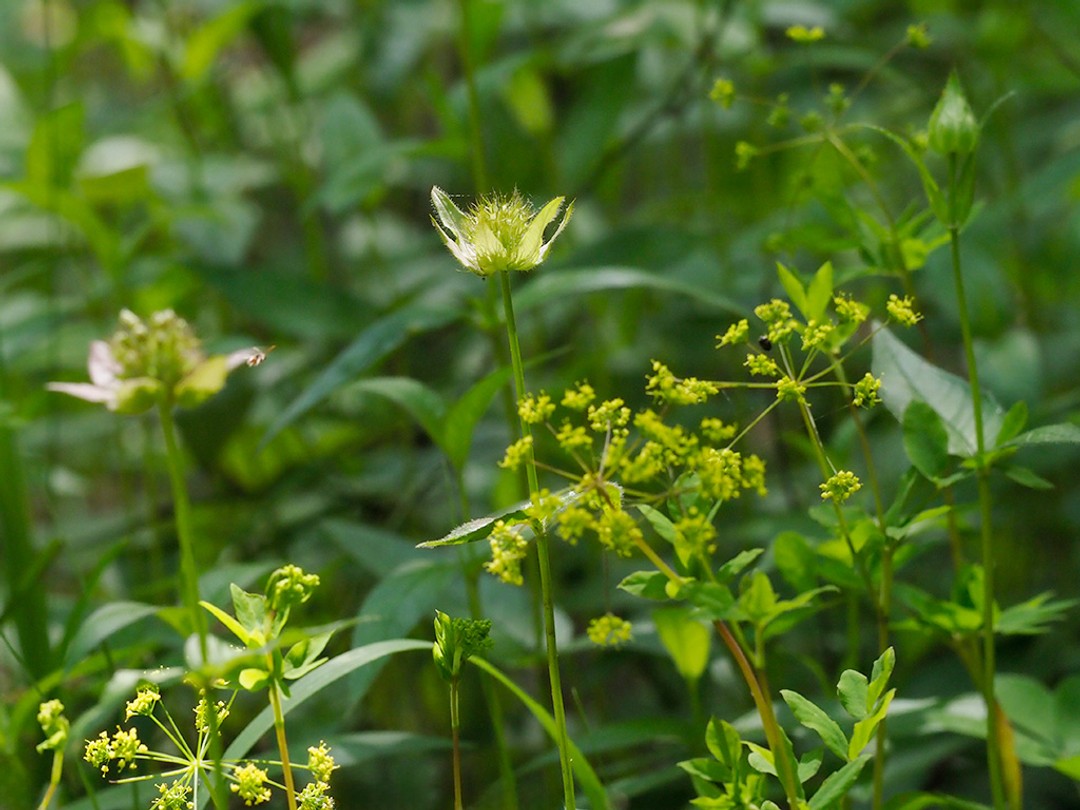
With Yellow pimpernel 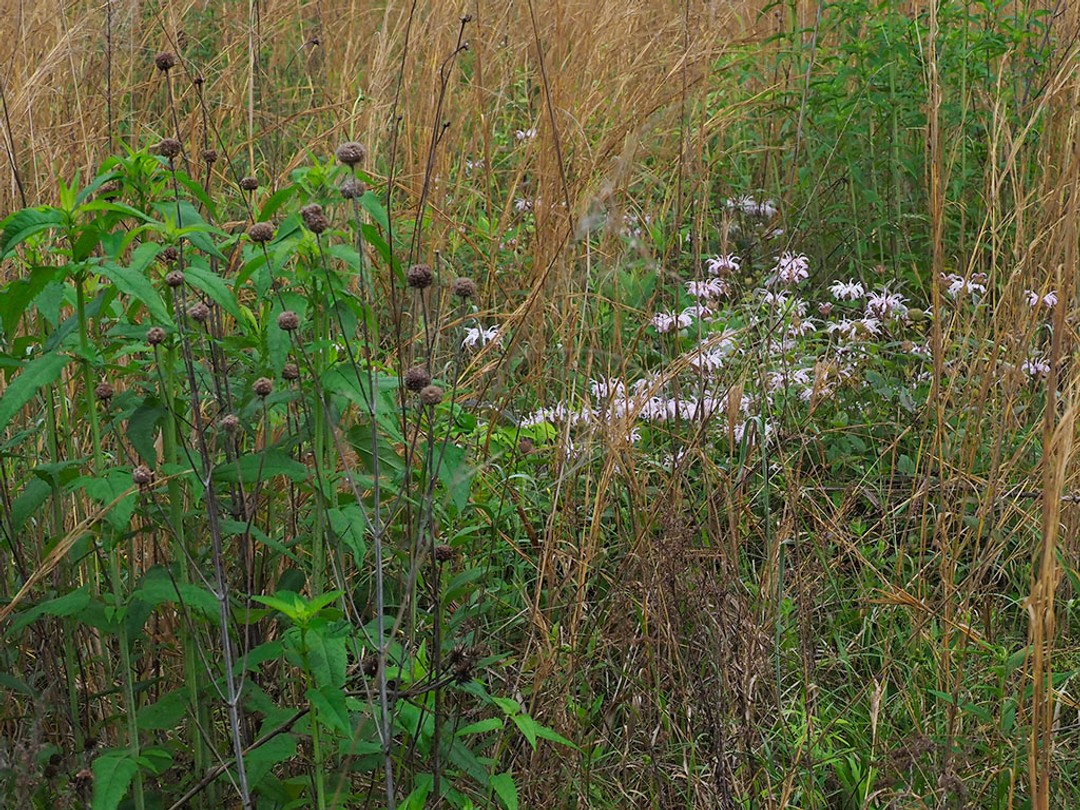
With Monarda fistulosa
HABITAT
Monarda bradburiana is found in rocky open woodlands, savannas and the borders of glades. It is typically found on dry sites.
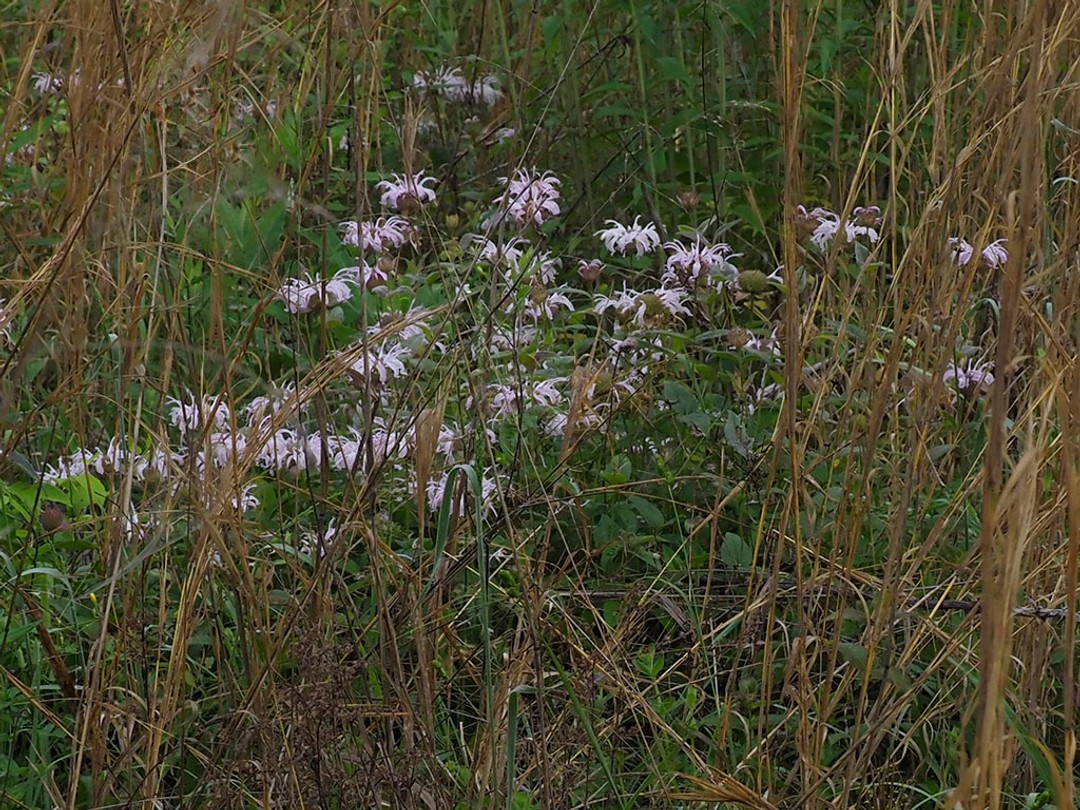
Savanna habitat 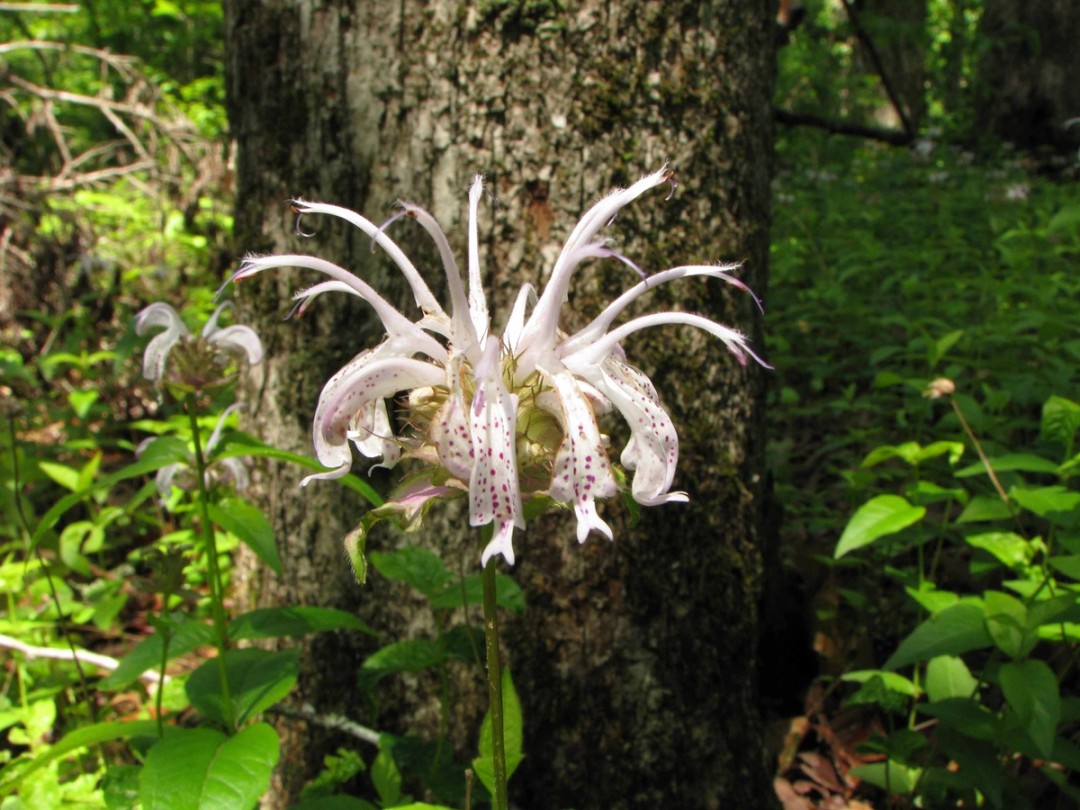
Woodland habitat
CONSERVATION STATUS
Monarda bradburiana has a Conservation Value of 7 in Arkansas, meaning "Typically matrix taxa in intact, stable habitats, with some limited ability to respond to destabilizing forces and repopulate areas from which they have been extirpated.
Natureserve lists itas G5- Secure. Its range is centered on Missouri and Arkansas and includes the surrounding states. Natureserve lists it as Critically Imperiled in Texas, Kansas, Indiana and Apparently secure in Kentucky with no Status Ranking for the other states within its range.
INTERESTING TIDBITS
The leaves of Monarda bradburiana are very fragrant. Crush some in your hand and you'll notice an aroma similar to oregano. Hence, historically these leaves have been used to make a tea.