PLANT NAME
Amsonia is named for Charles Amson- an 18th century scientific explorer from Virginia. Stern's Dictionary of Plant Names states that Tabernaemontana refers to Jacob Theodor von Bergzbern. He Latinized his name as Tabernaemontana and authored an herbal book (Neuw Kreuterbuch) with woodcut illustrations between 1588 and 1591. The woodcut illustrations were later used in 1597 in Garard's Herball.
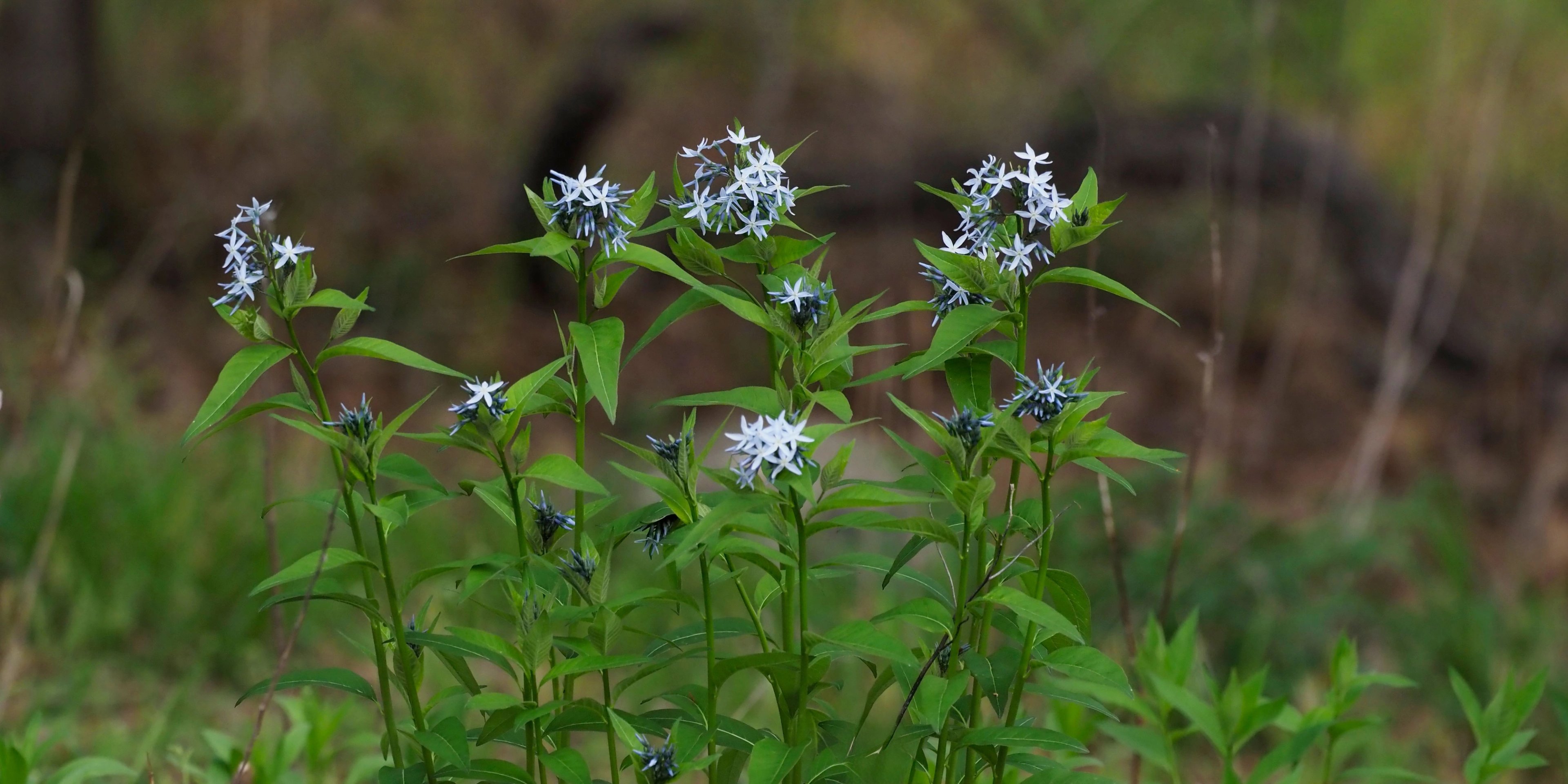
The common name, Bluestar refers to the star shaped flowers. Other common names include Eastern Blue Star, Blue Dogbane and Woodland Bluestar.
BLOOM
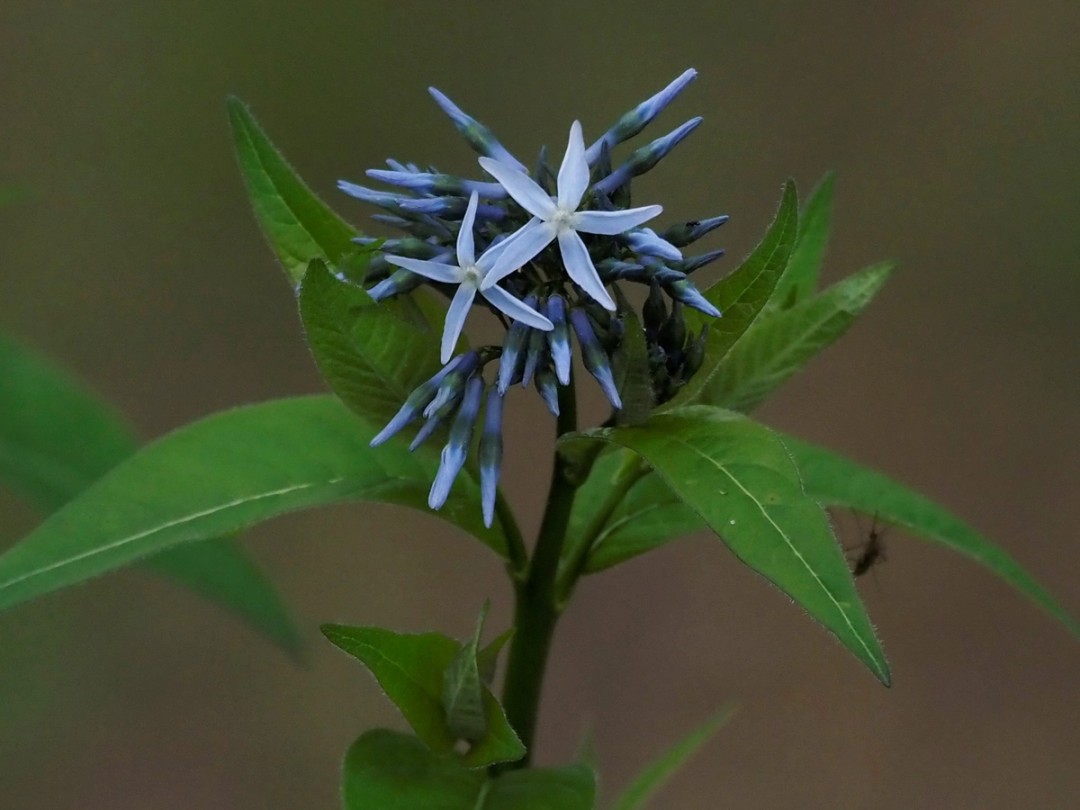
I searched for words describing shades of blue and the closest I could find to describe the dark base of this flower was slate blue. But, really, it’s more vibrant than that. The flower petals are much paler than the base, almost an icy shade of slate.
Shades of blue 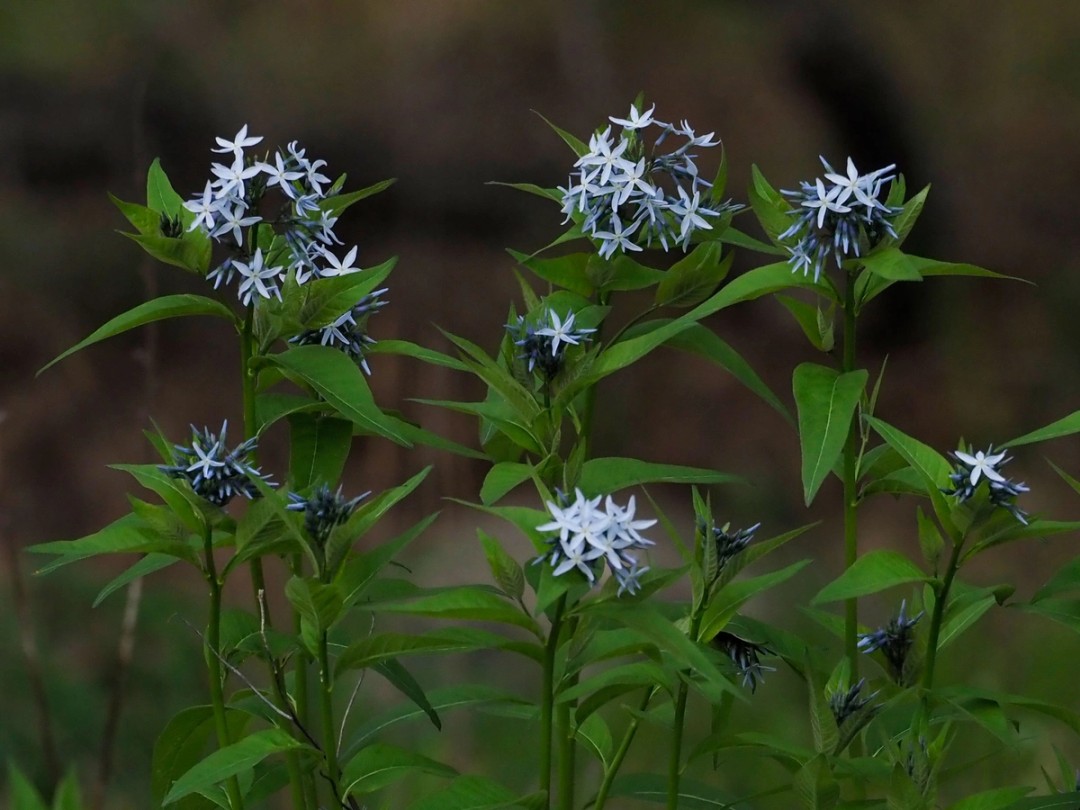
Lovely green foliage
Each flower consists of 5 star-like petals of light blue fastened onto a dark blue base. The contrast between the shades of blue and green on this plant is part of its special beauty. The reproductive parts of the plant (stamen and stigma) are hidden beneath the white hairs at the flowers' center.
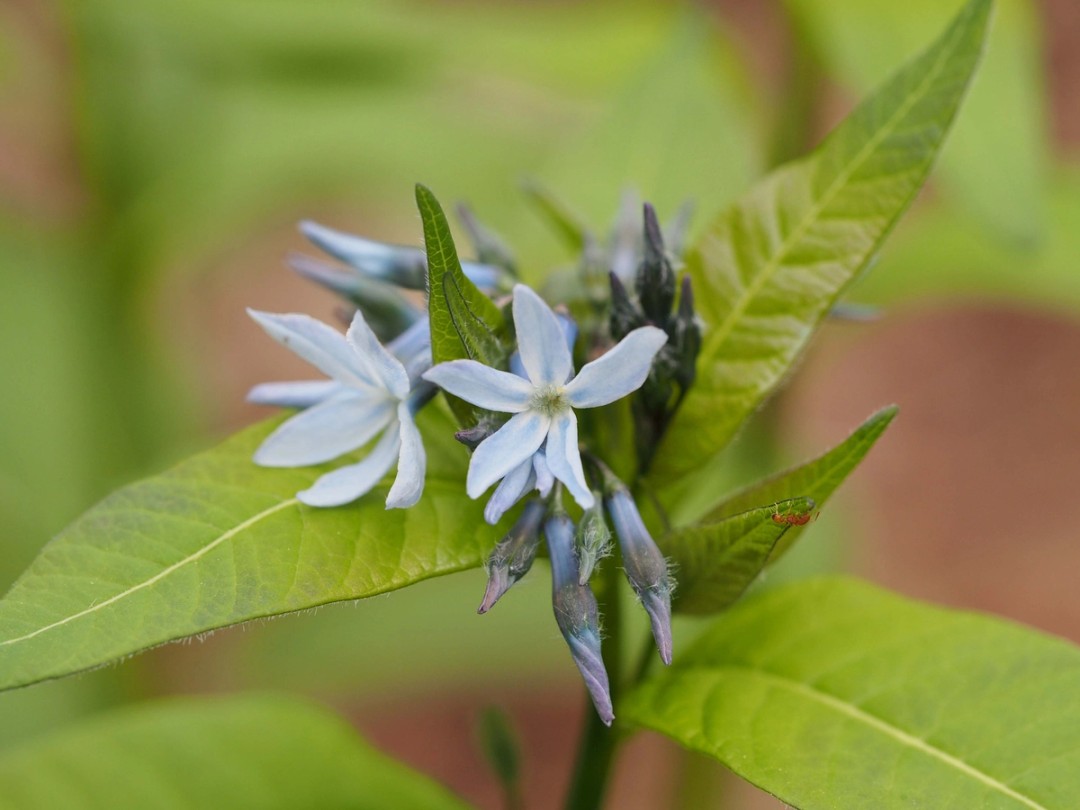
Five blue petals 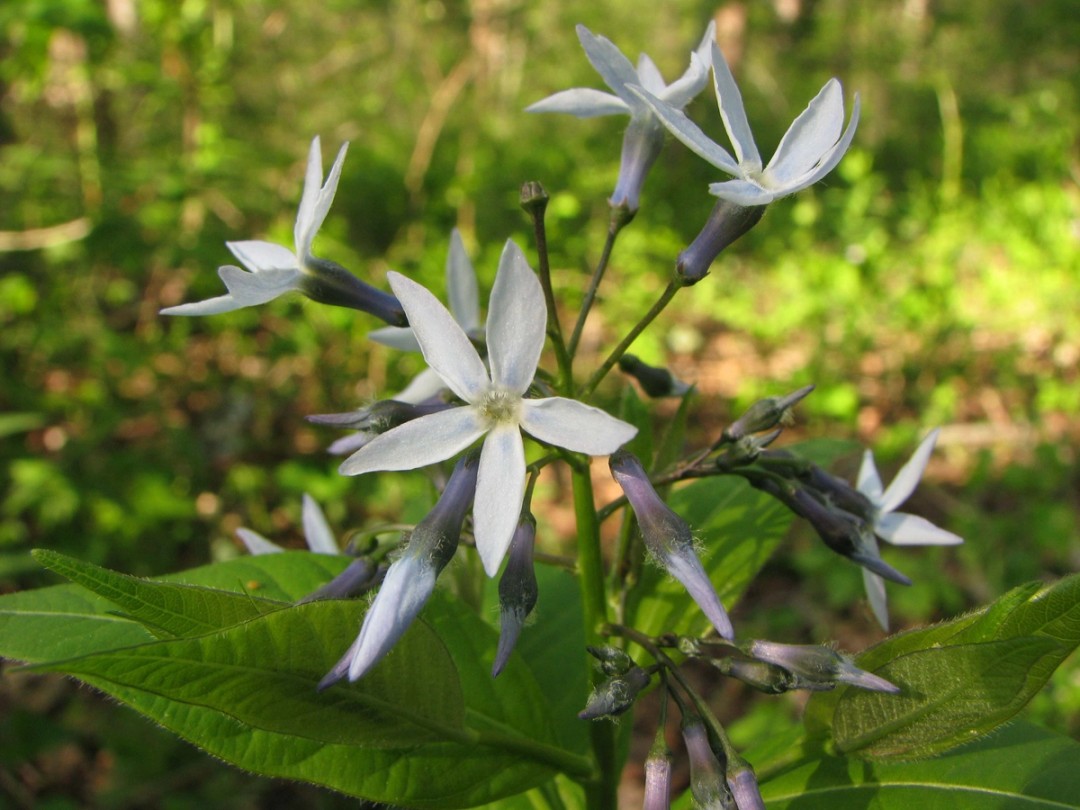
White hairs at flower base
On Ozarkedge, Blue stars are in full bloom during the month of April. Blooming lasts about four weeks. But one doesn’t have to wait for full bloom to have a visual treat. The emerging buds are almost as beautiful in the way their dark blue contrasts with the fresh, lime green leaves.
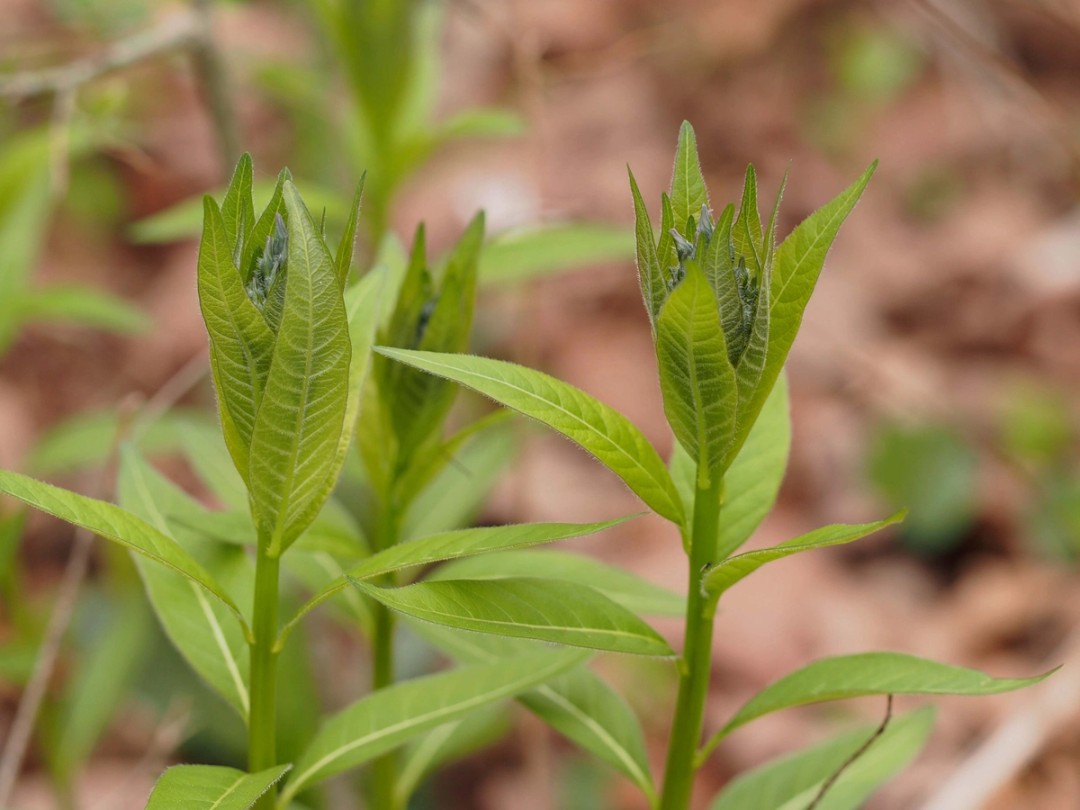
Early buds 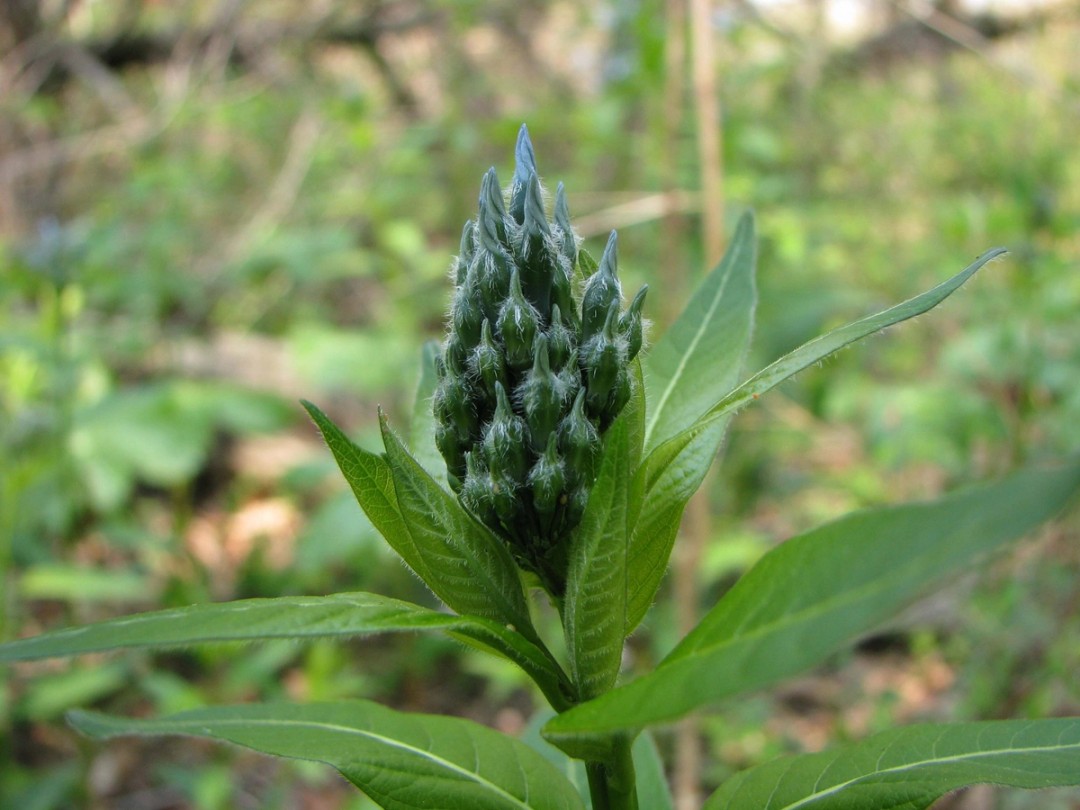
Developing buds
DESCRIPTION
The leaves of Amsonia tabernaemontana are almost lime green when they emerge in spring. They darken to a true, deep green when mature and fade to lovely chartreuse in autumn. The leaves are lanceolate and have long petioles. They arise in alternate fashion from a smooth, hairless stem. The leaf edges are ciliate, meaning fringy. Underneath, the leaves are a paler green and may be pubescent.
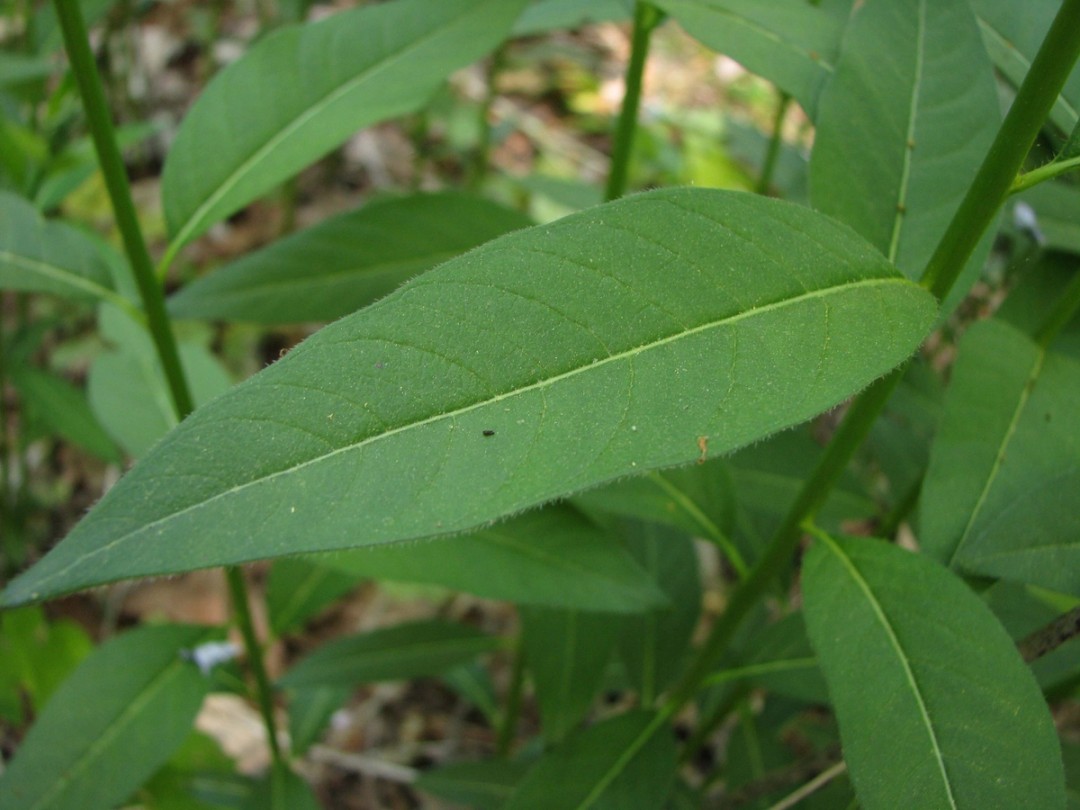
Leaf adaxial surface 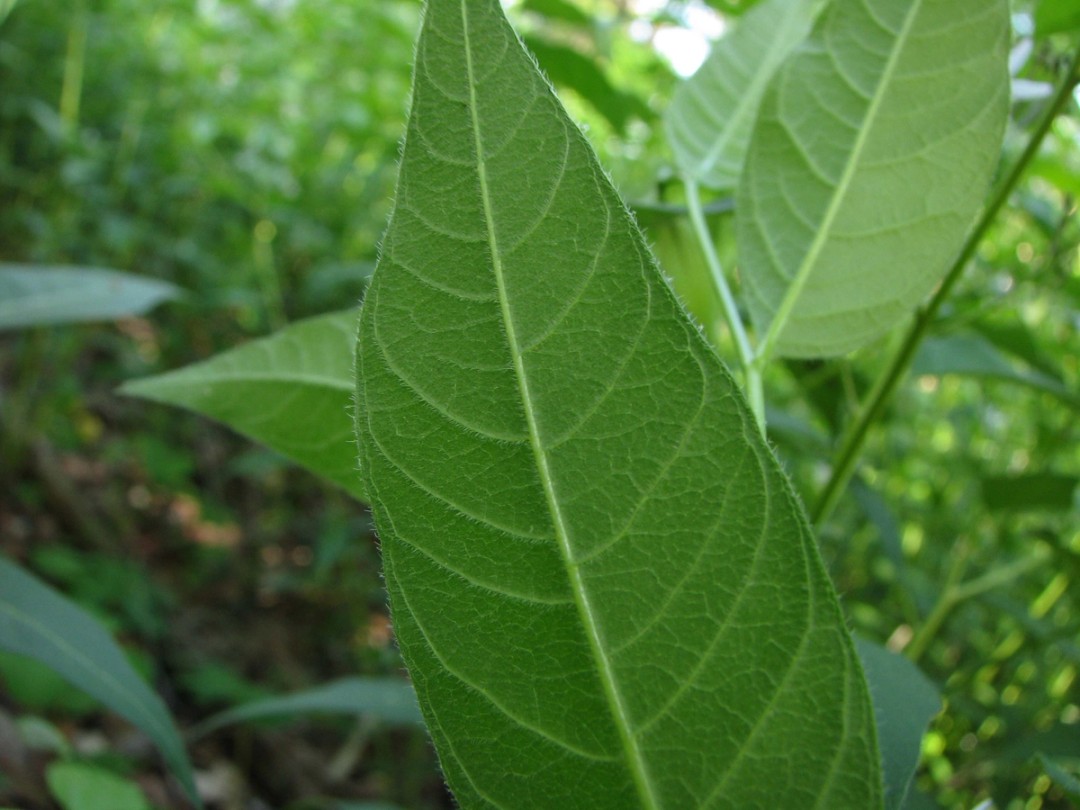
Leaf abaxial surface 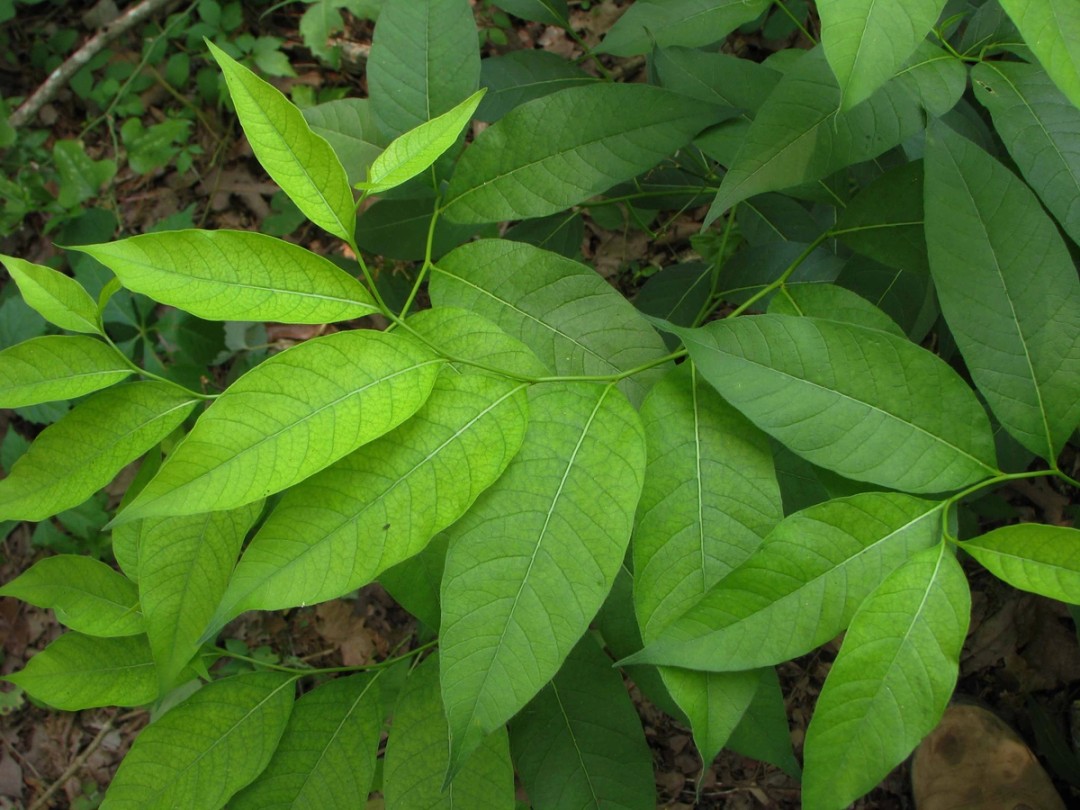
Leaves after flowering 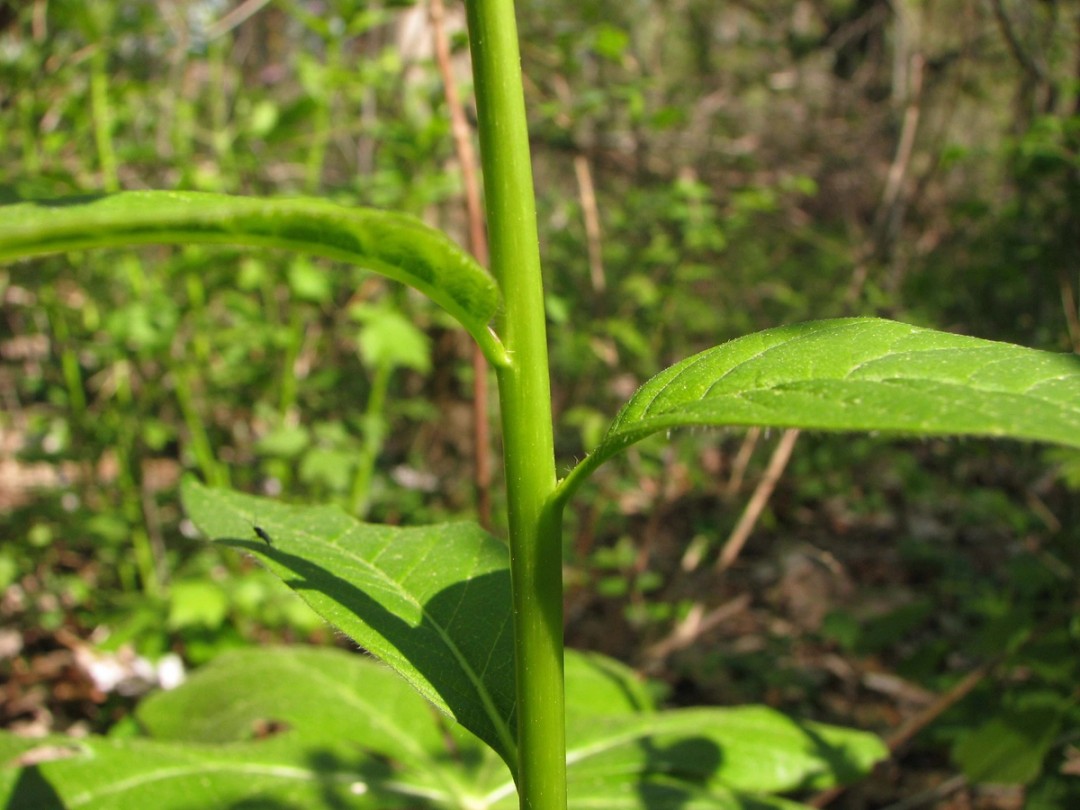
Glabrous stem
Each plant has many flowers at its apex. Long, tubed seed pods are held above the foliage. Initially green, they ripen to brown in September. Each seed pod holds up to 10 brown seeds. Stems from the previous year may persist through winter, standing adjacent to the flowering plants.
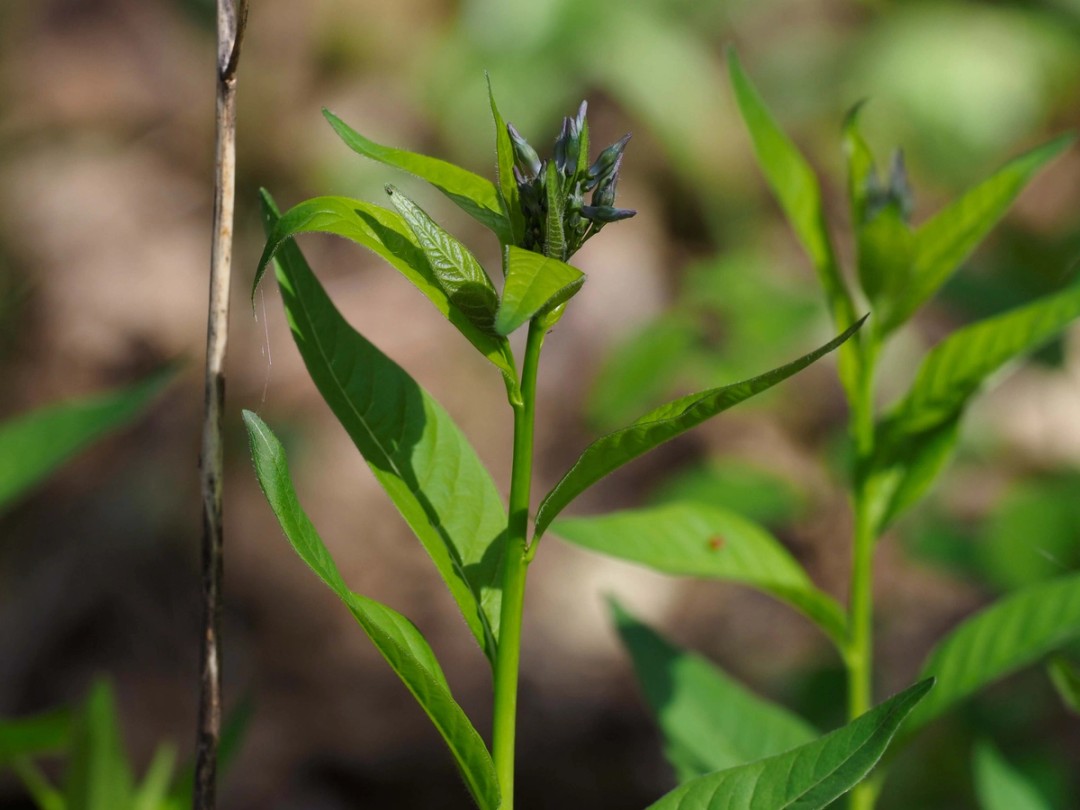
Brown stem from prior year 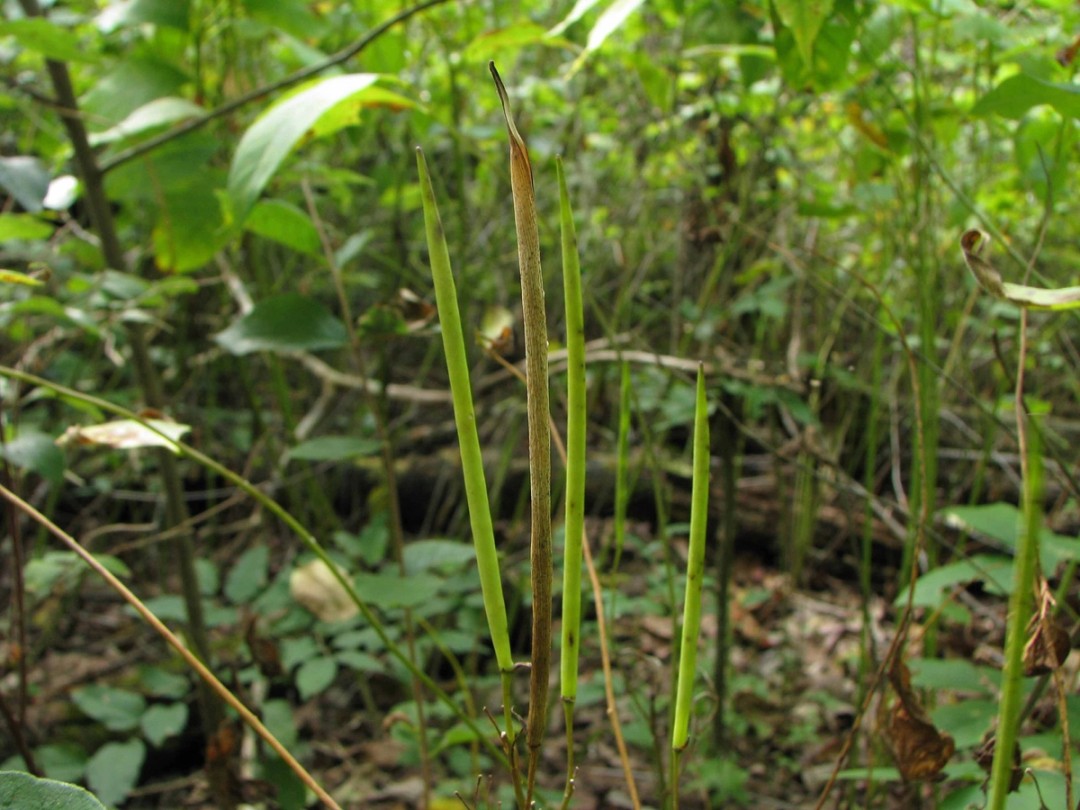
Seed pods
POLLINATORS
Blue star is attractive to a range of interesting insects. I've noted hummingbird moths, various bees, skippers and stilt bugs visiting the plants. Long-tongued bees in the Genus Eucera and Mason bees are key pollinators. Horace's duskywing is a common visitor, flying quickly from plant to plant.
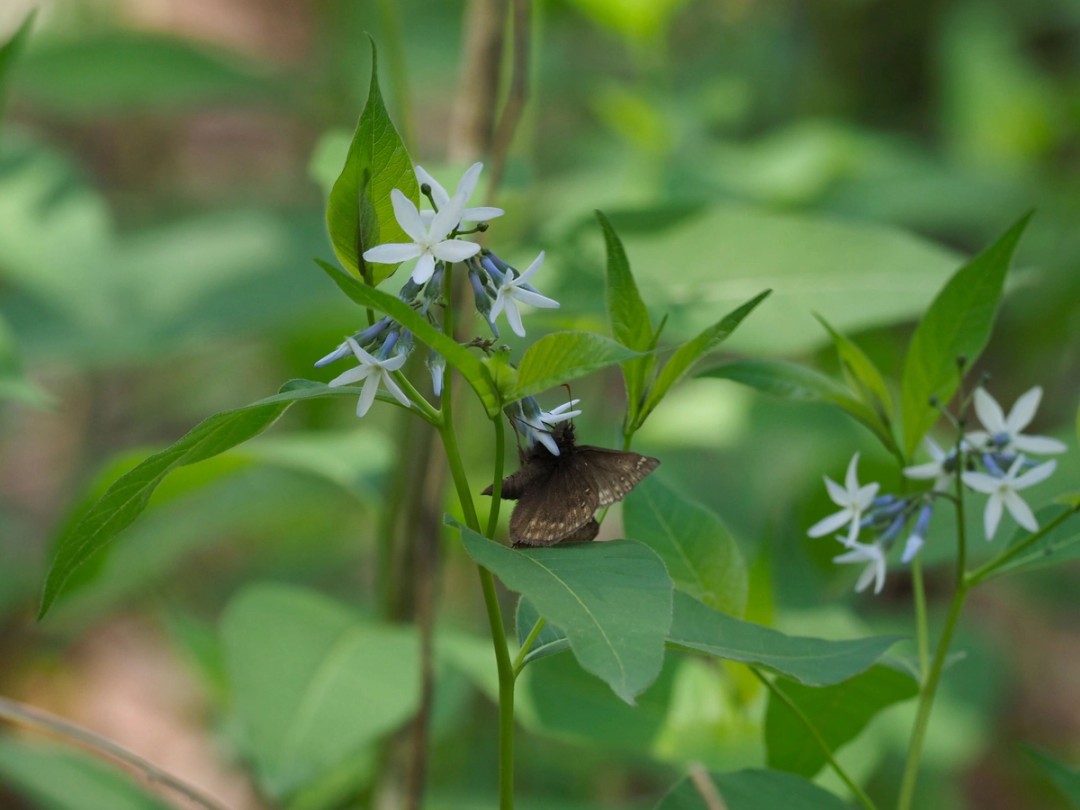
Horace's duskywing 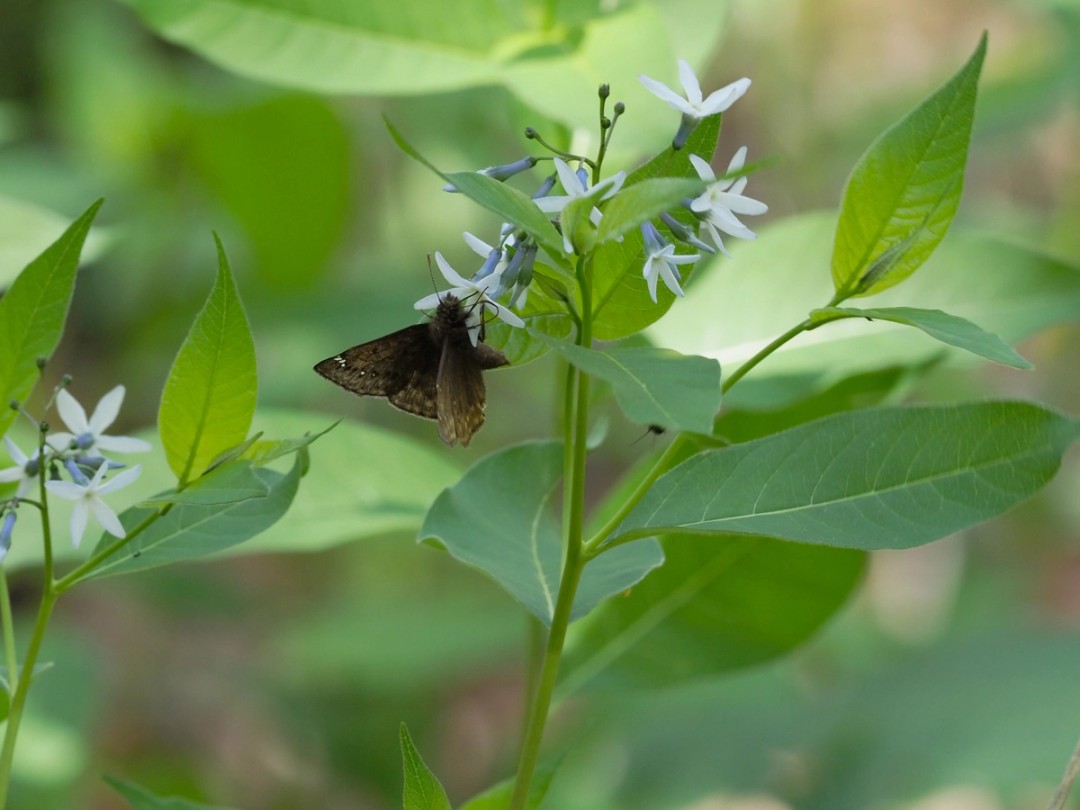
Horace's duskywing
I've read that Carpenter bees visit the plants, but I've yet to document them. On the other hand I've observed beautiful long-tongued bees with amazingly elongated antennae rushing from flower to flower..
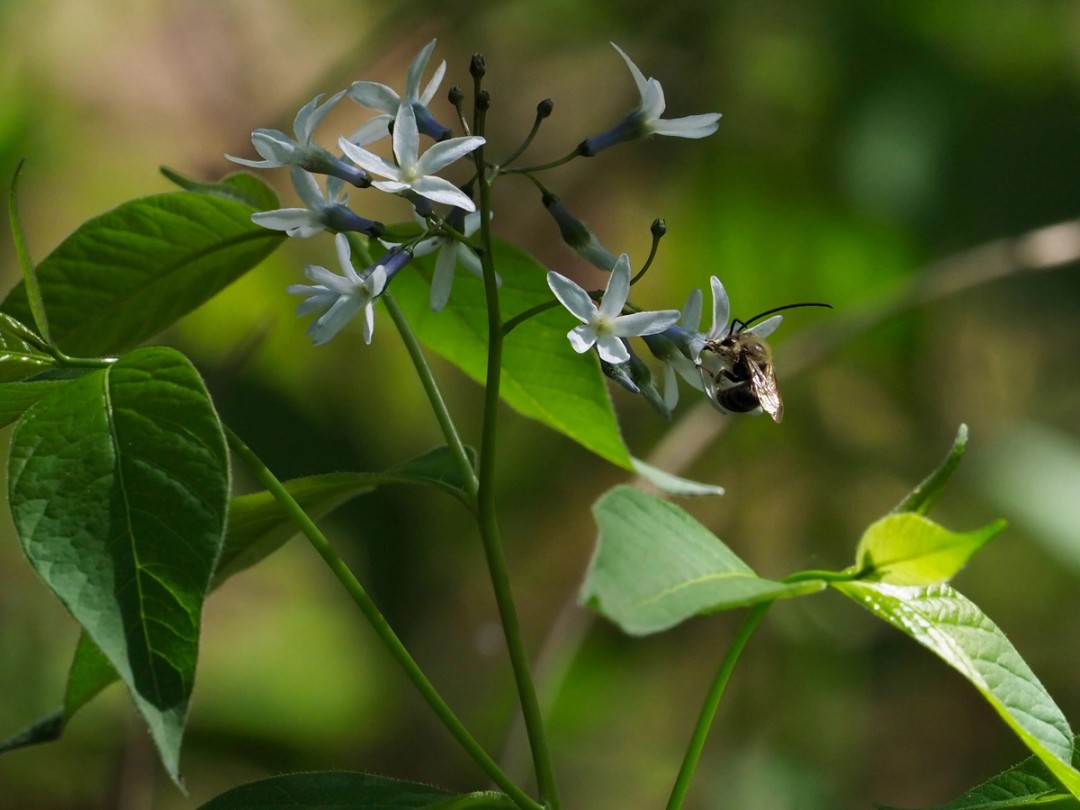
Long-horned bee (Genus Eucera) 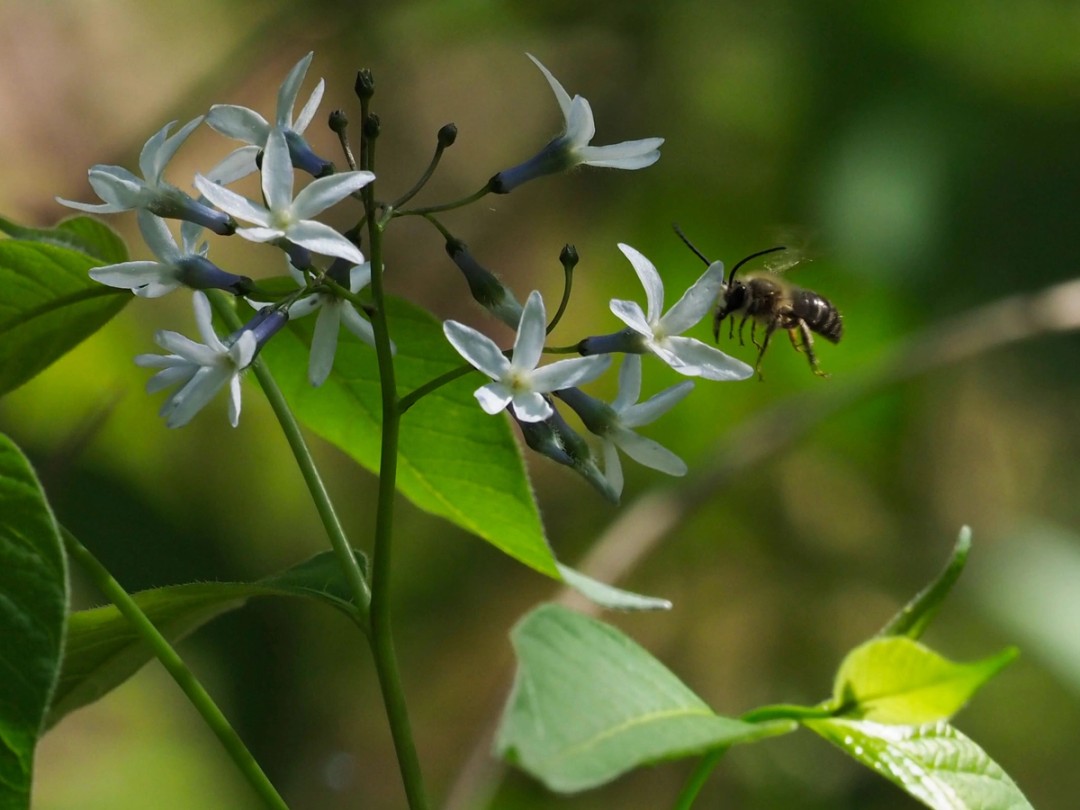
Long-horned bee (Genus Eucera)
Snowberry clearwing moths are fun to watch as they work the plants. They fly from flower to flower with great speed.
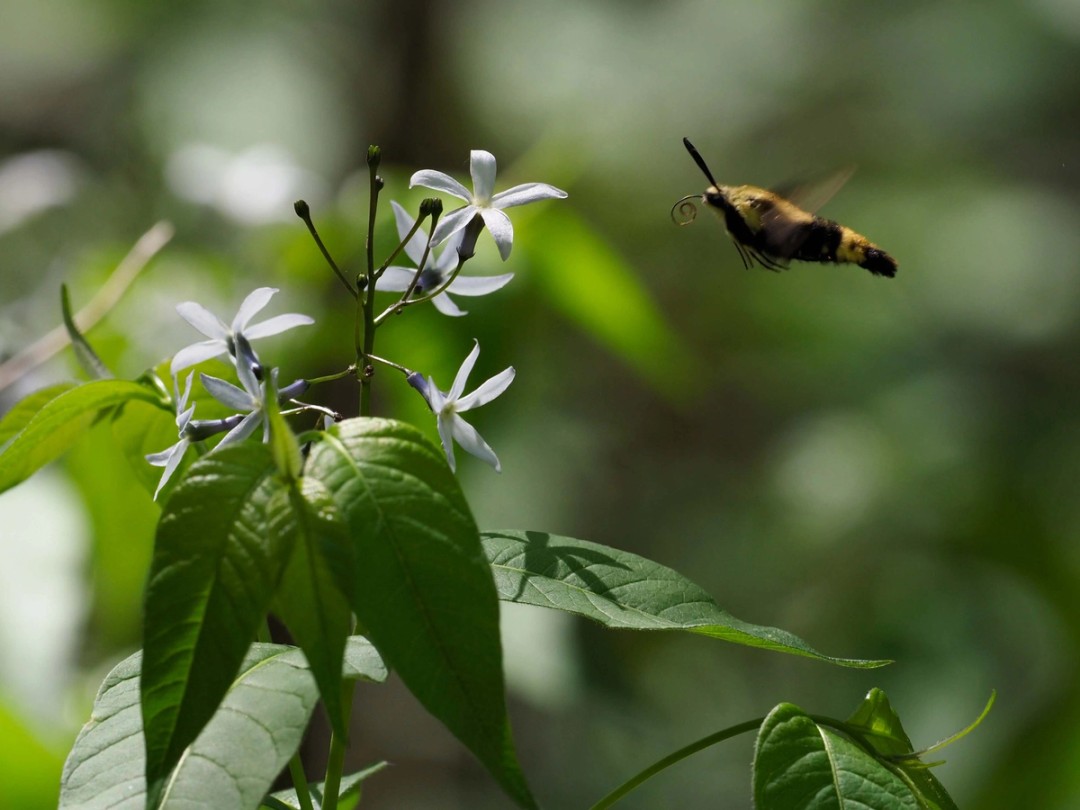
Snowberry clearwing moth 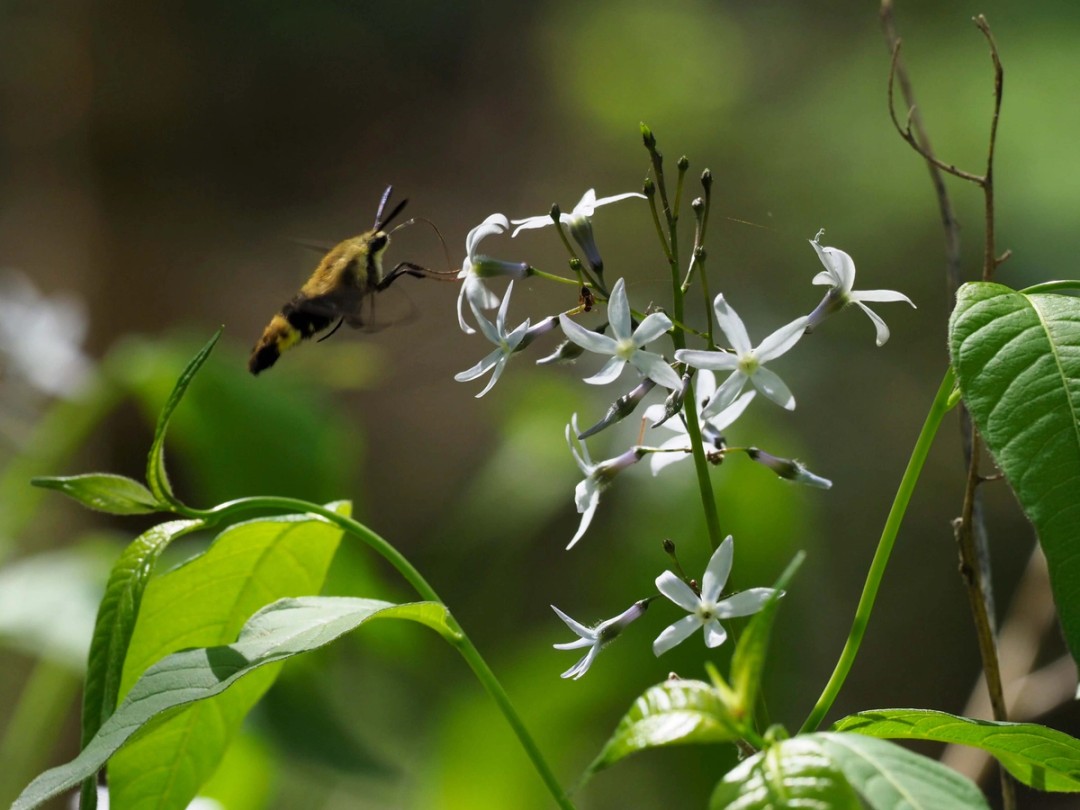
Snowberry clearwing moth
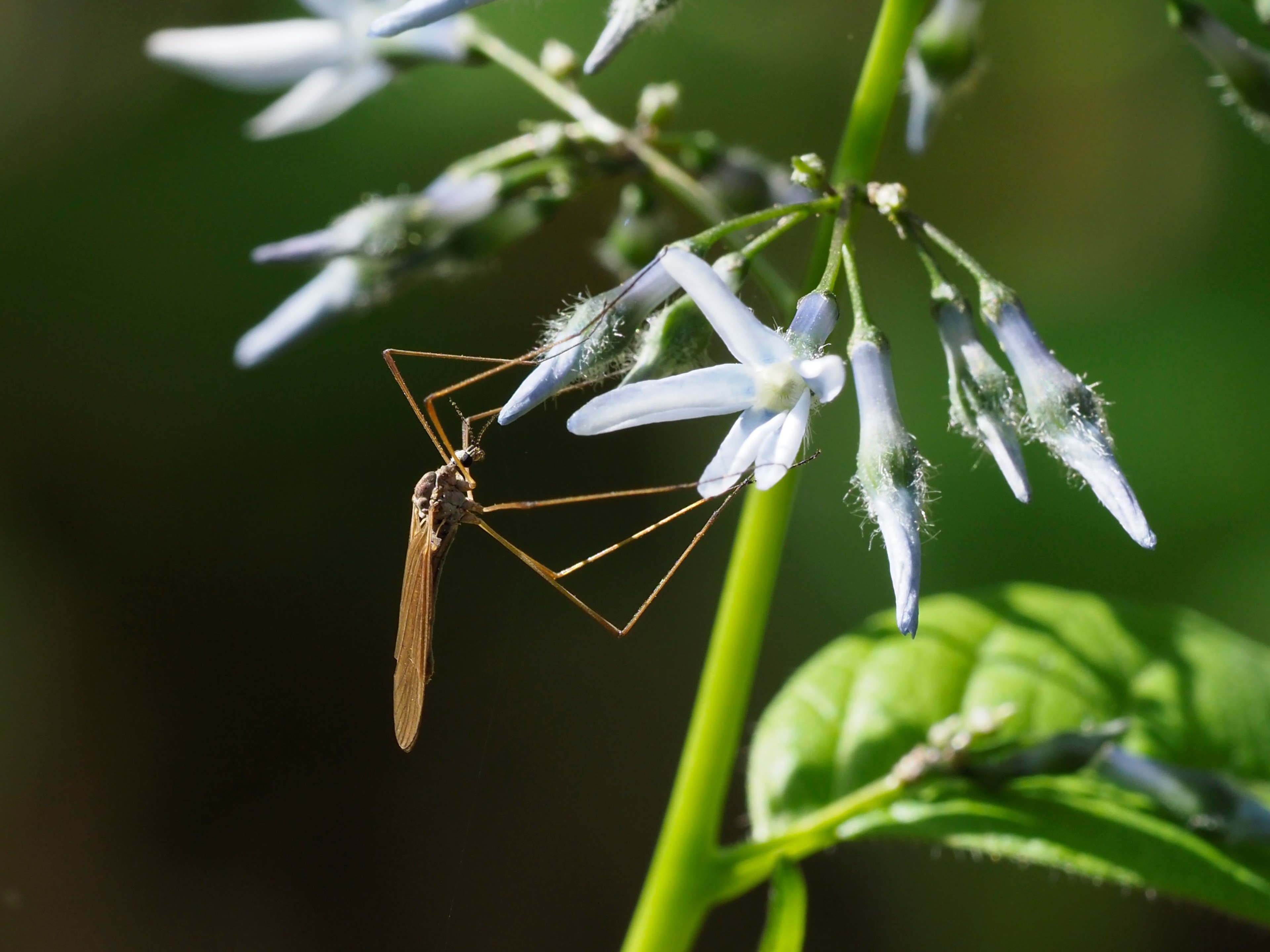
Stilt bugs are interesting to watch as they visit the flowers for nectar. Their long legs seem so awkward as they probe the flower.
PLANTS GROWING NEARBY
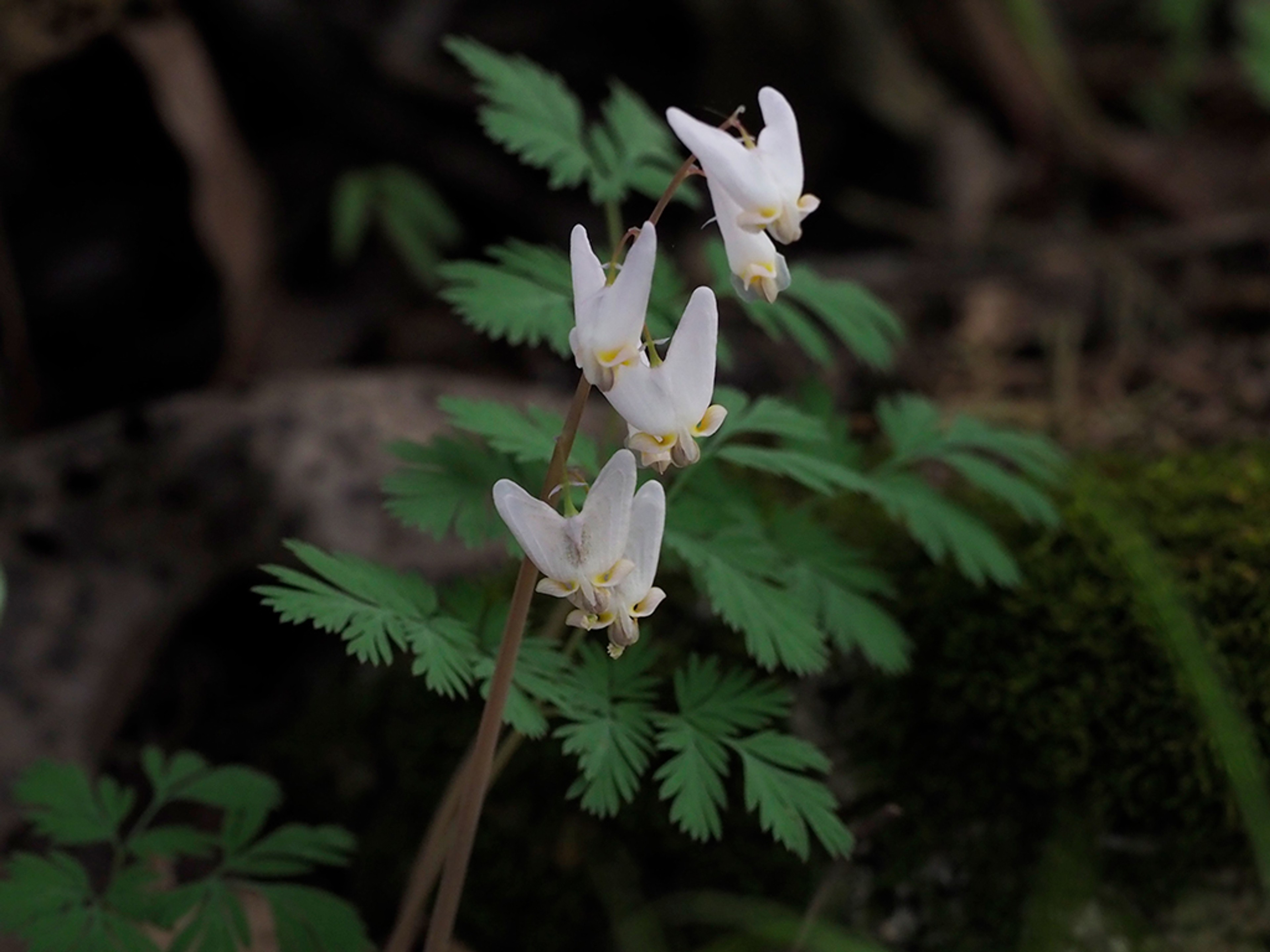
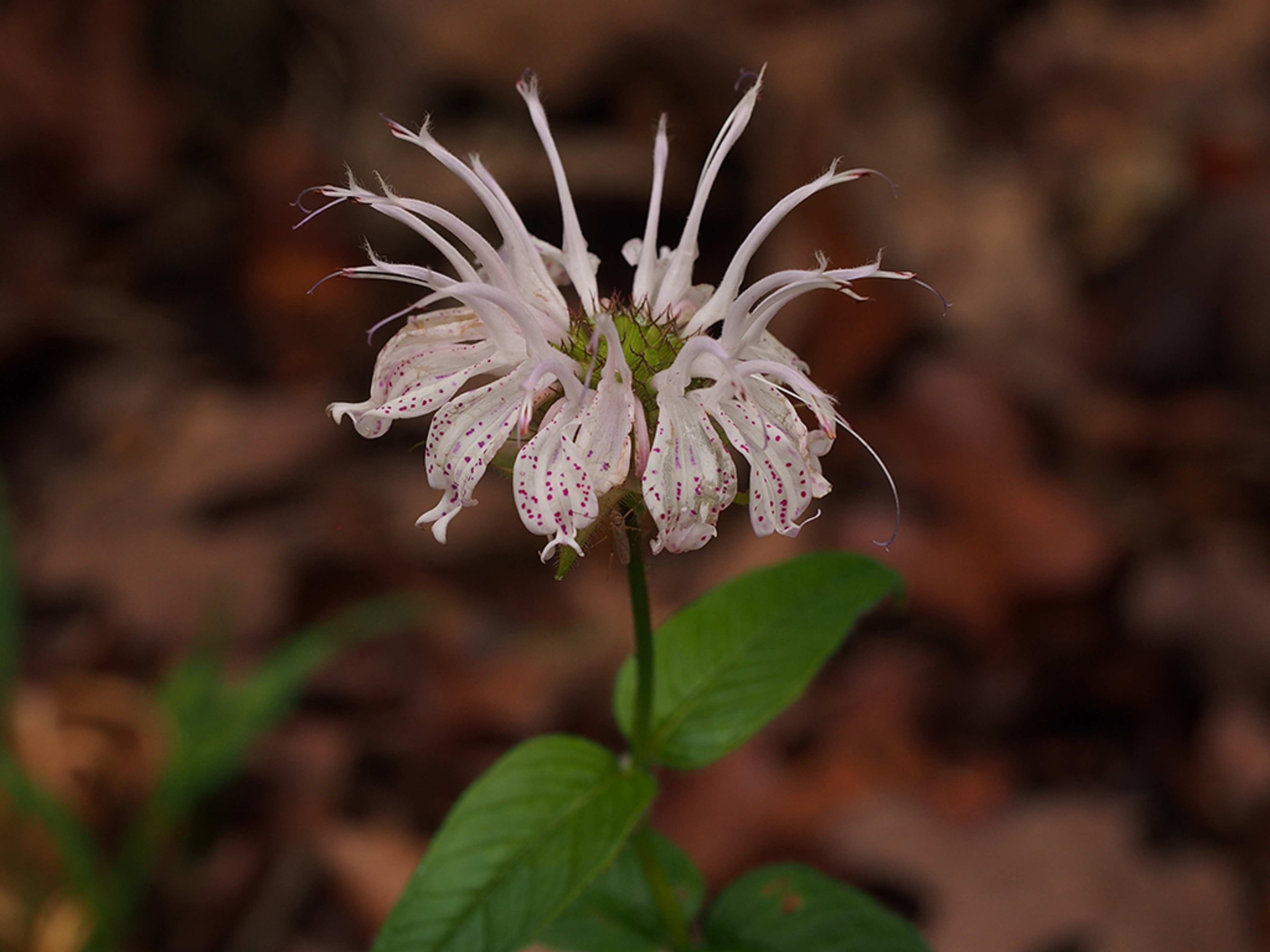
Plants growing nearby depends on habitat. In woodland habitat I find the immense leaves of May Apple (Podophyllum peltatum) blooming alongside Blue star. Another nearby friend is Bloodroot (Sanguinaria canadensis). The bloodroot flowers have finished blooming, but the beautiful single leaves continue to grow through May and are found in abundance mingled with those of the amsonia.
Roundleaf groundsel (Senecio obovatus) blooms alongside the amsonia. This makes for a beautiful site as its flowers are bright yellow.
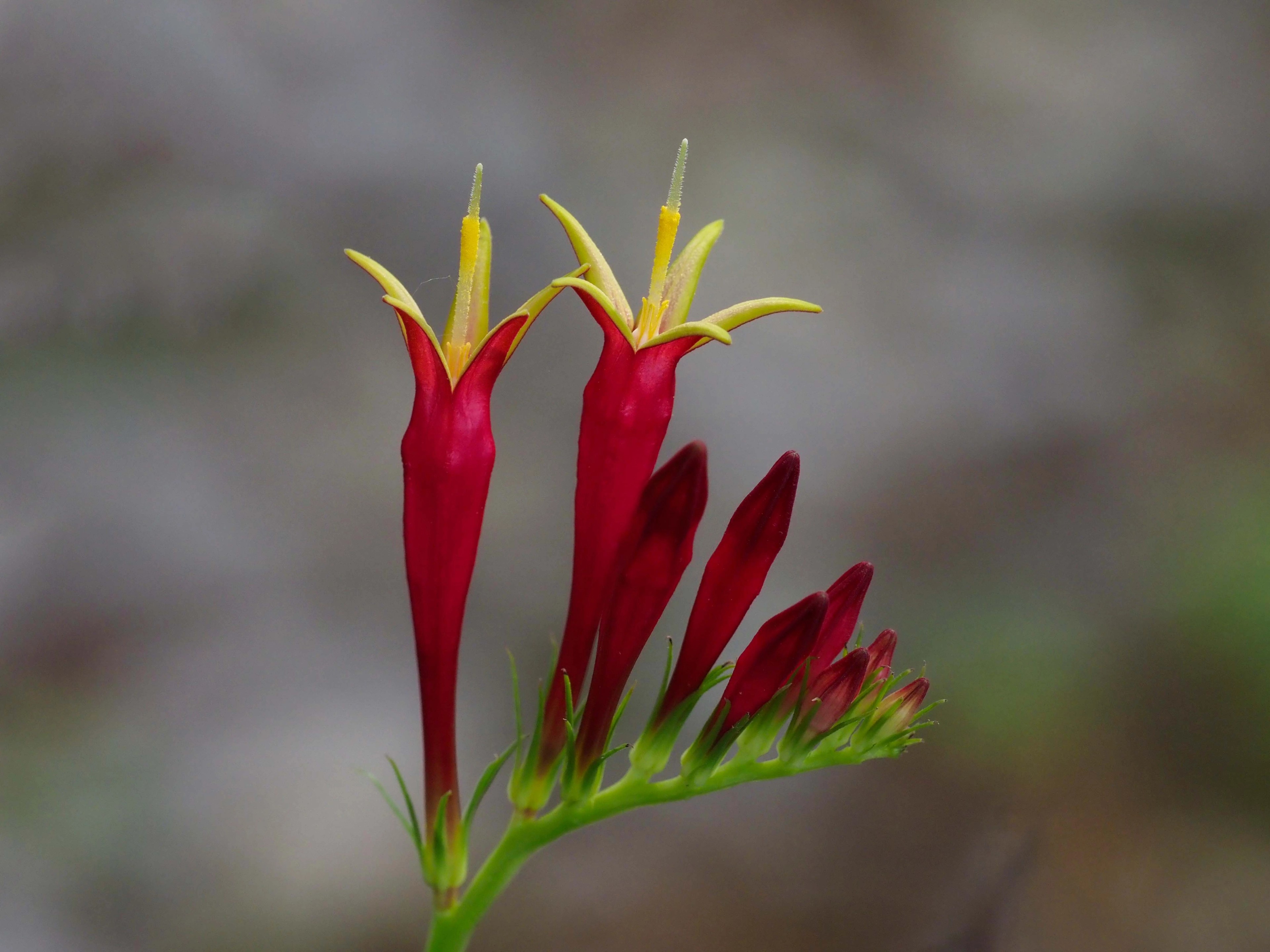
The bright red flowers of Buckeye trees (Aesculus pavia) provide another lovely color combination with Blue star. There are many other spring woodland wildflowers still blooming nearby.
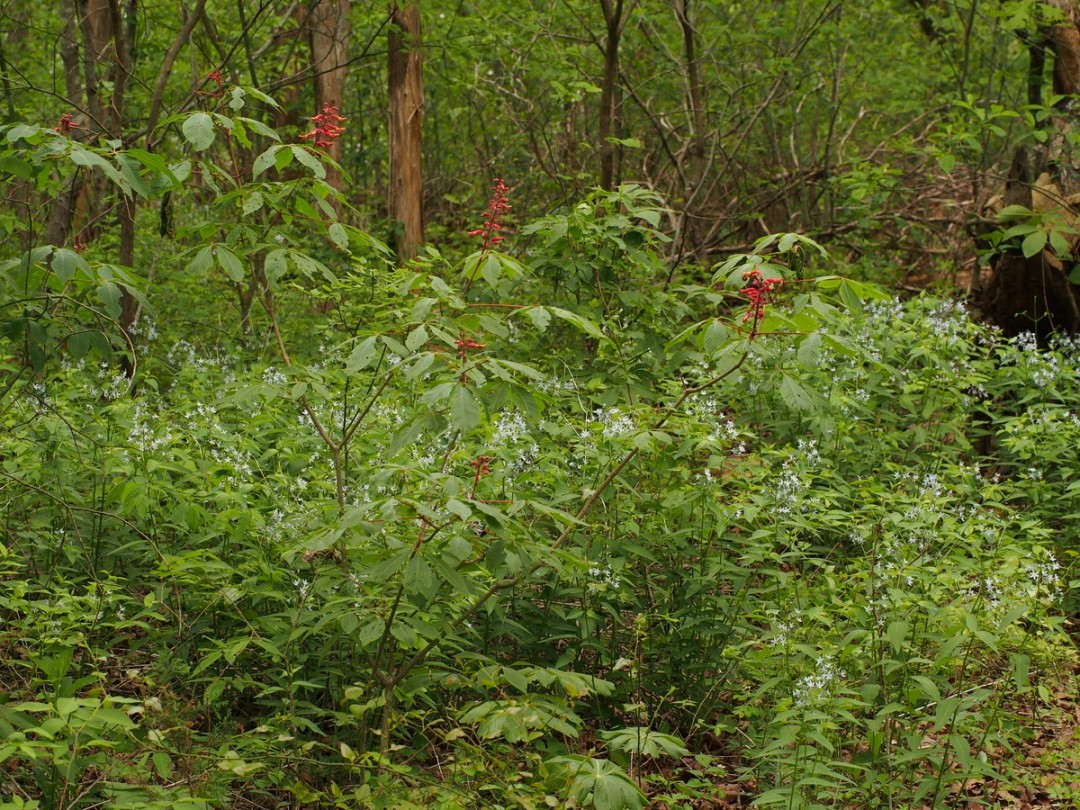
Red Buckeye tree 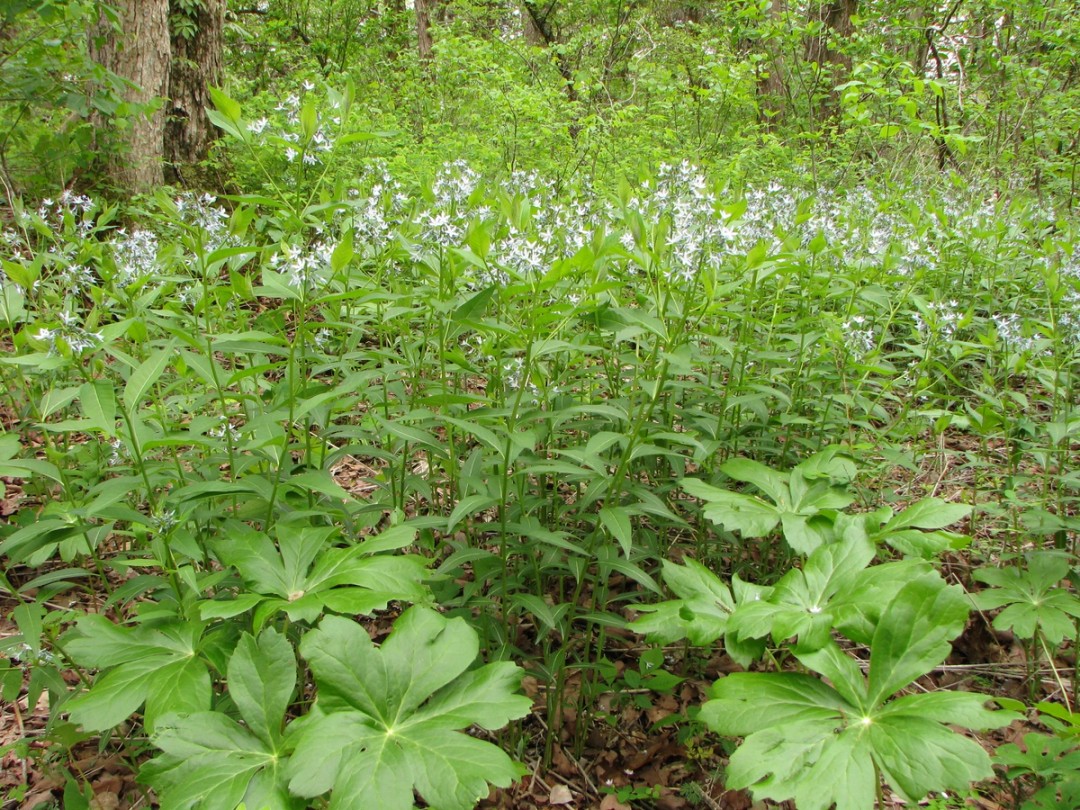
May apple 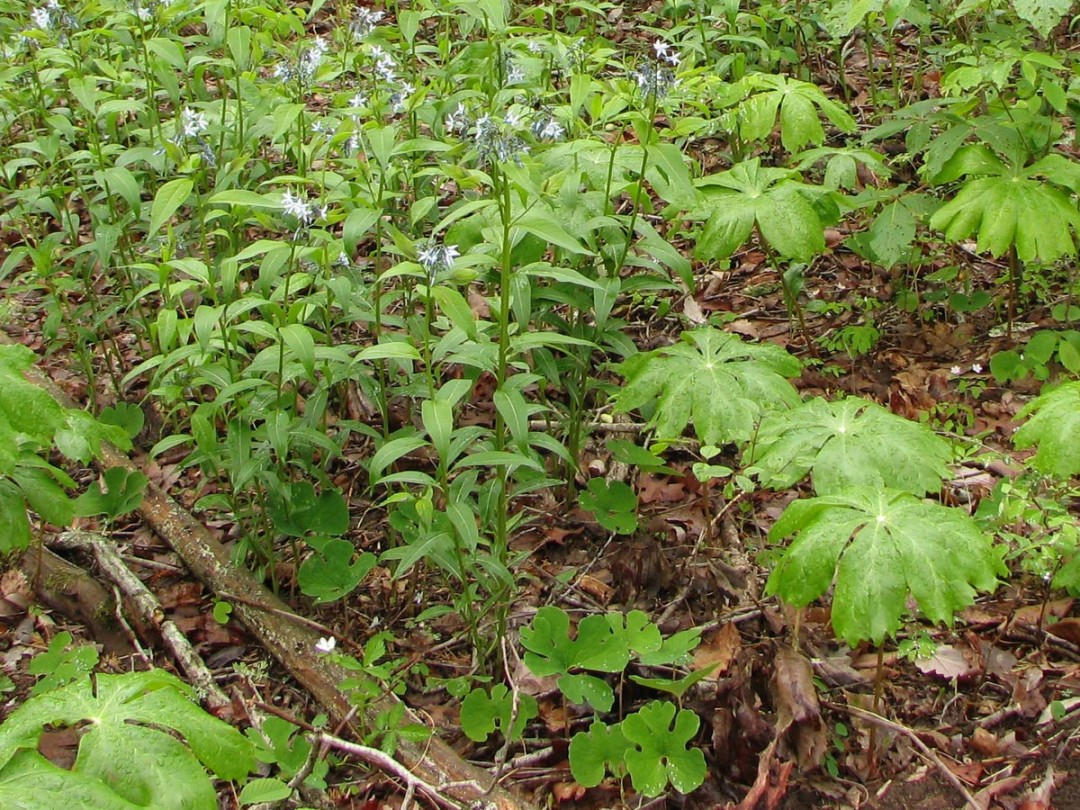
Bloodroot (leaves) 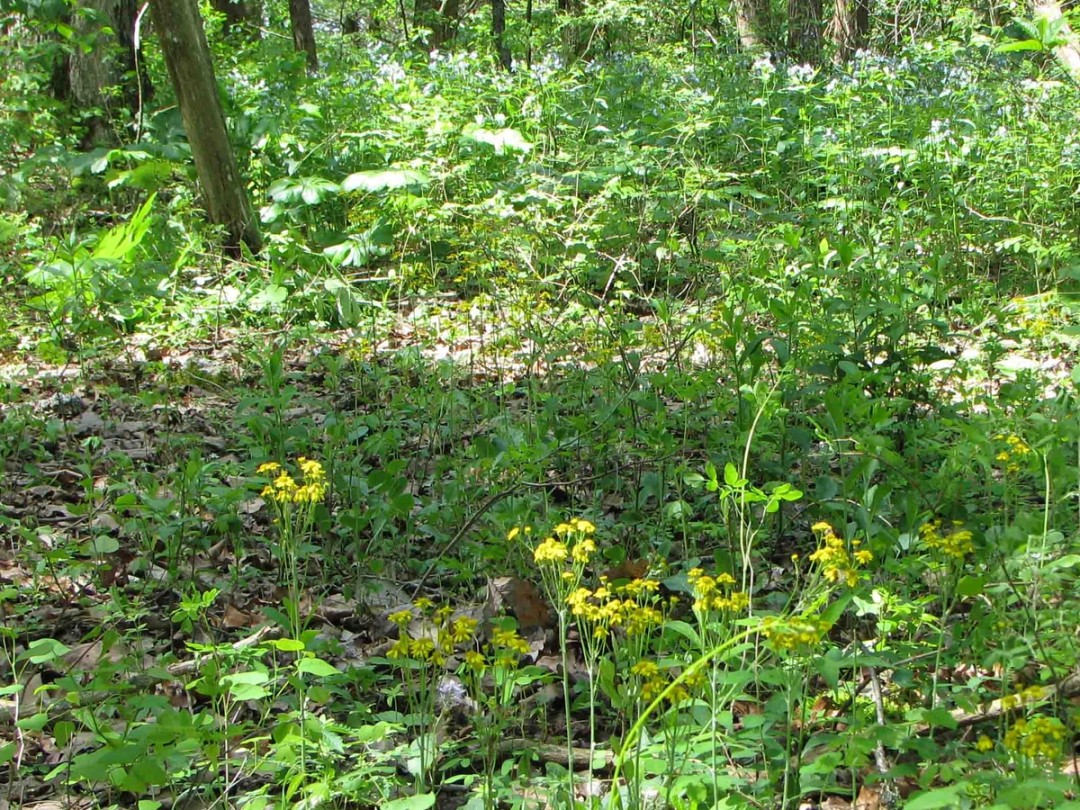
Roundleaf groundsel
HABITAT
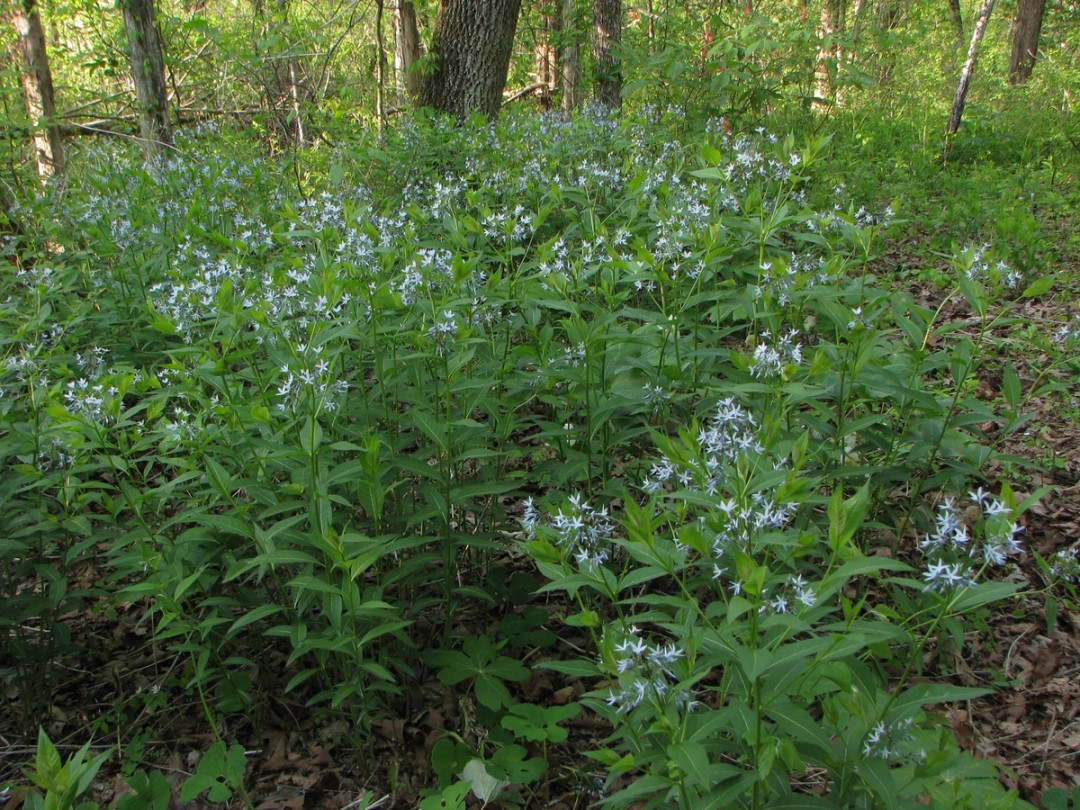
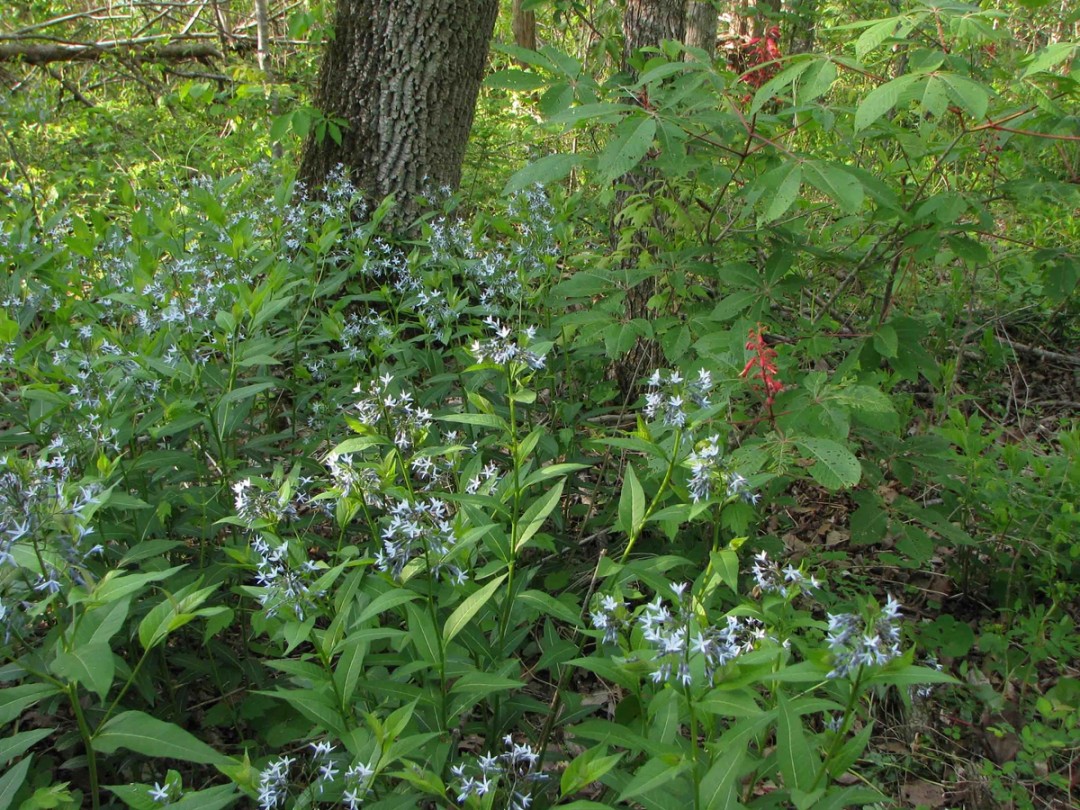
Amsonia tabernaemontana frequently forms colonies that can be found in various habitats, although open woods seems to be their preference. I've also seen them in ravines, along streams and roadsides. On Ozarkedge, I find them primarily in our open, rocky woods.
CONSERVATION STATUS
Amsonia Tabernaemontana has a range throughout most of the eastern US and west to Kansas. Natureserve lists it as Critically Imperiled in Kansas, Vulnerable in Virginia, Tennessee and Florida, Secure in Georgia and North Carolina and Apparently Secure in Indiana and Kentucky. Natureserve shows No Status in the other states in which it is native.
In Arkansas it has a Conservation value of 7 in the group of 4-7. "Typically matrix taxa in intact, stable habitats, with some limited ability to respond to destabilizing forces and repopulate areas from which they have been extirpated."
INTERESTING TIDBITS
The stem will bleed a milky sap if broken. This is said to be toxic to mammals, hence, this is a deer resistant plant.
Blue star is a host plant for the fast flying Snowberry clearwing moth (Hemaris diffinis) and the lovely Coral hairstreak (satyrium titus).
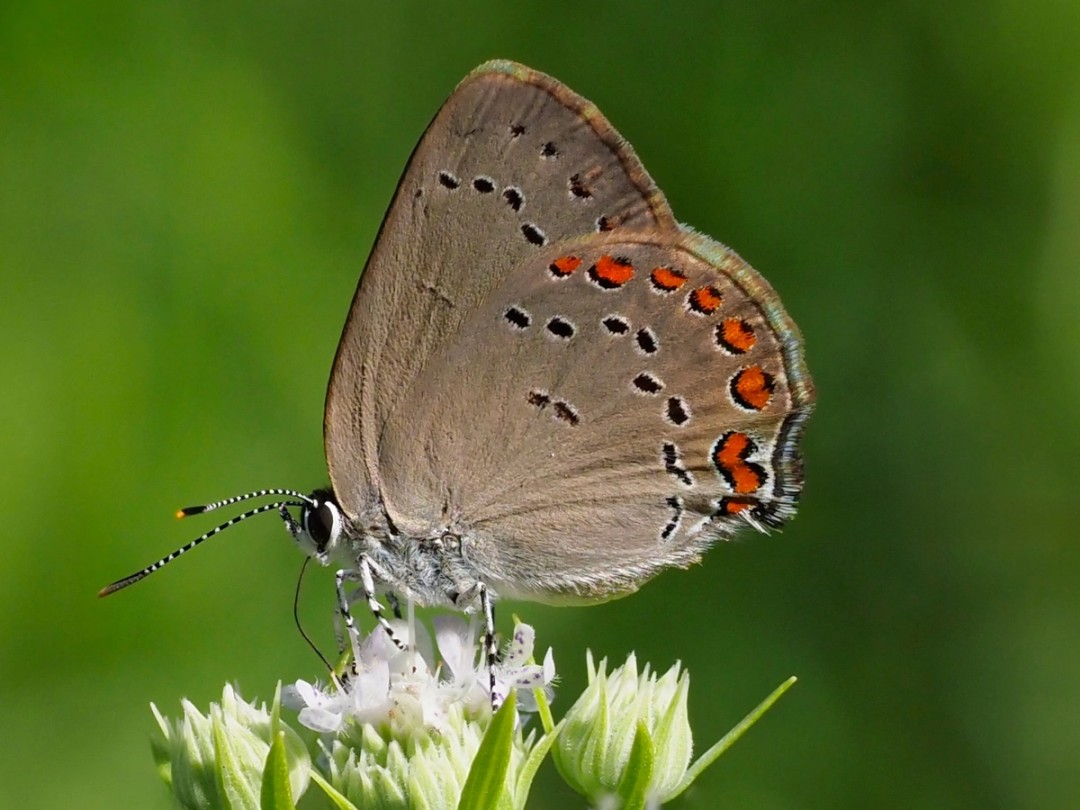
Coral Hairstreak Butterfly 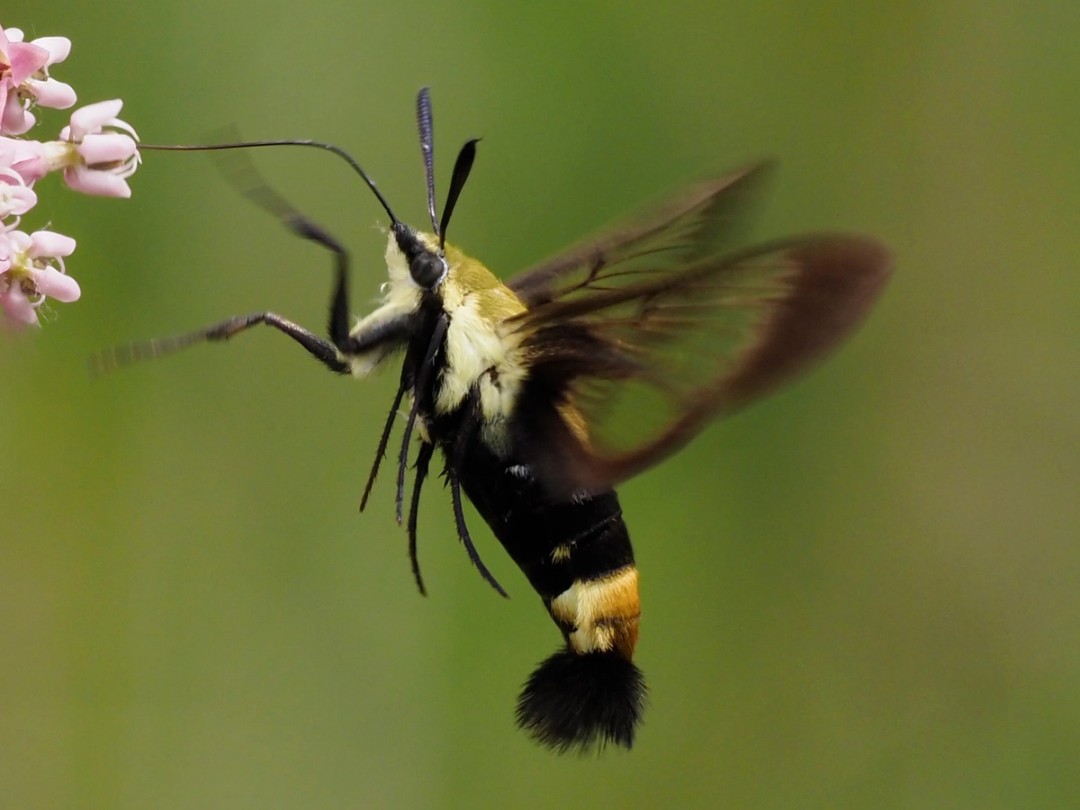
Coral Hairstreak Butterfly