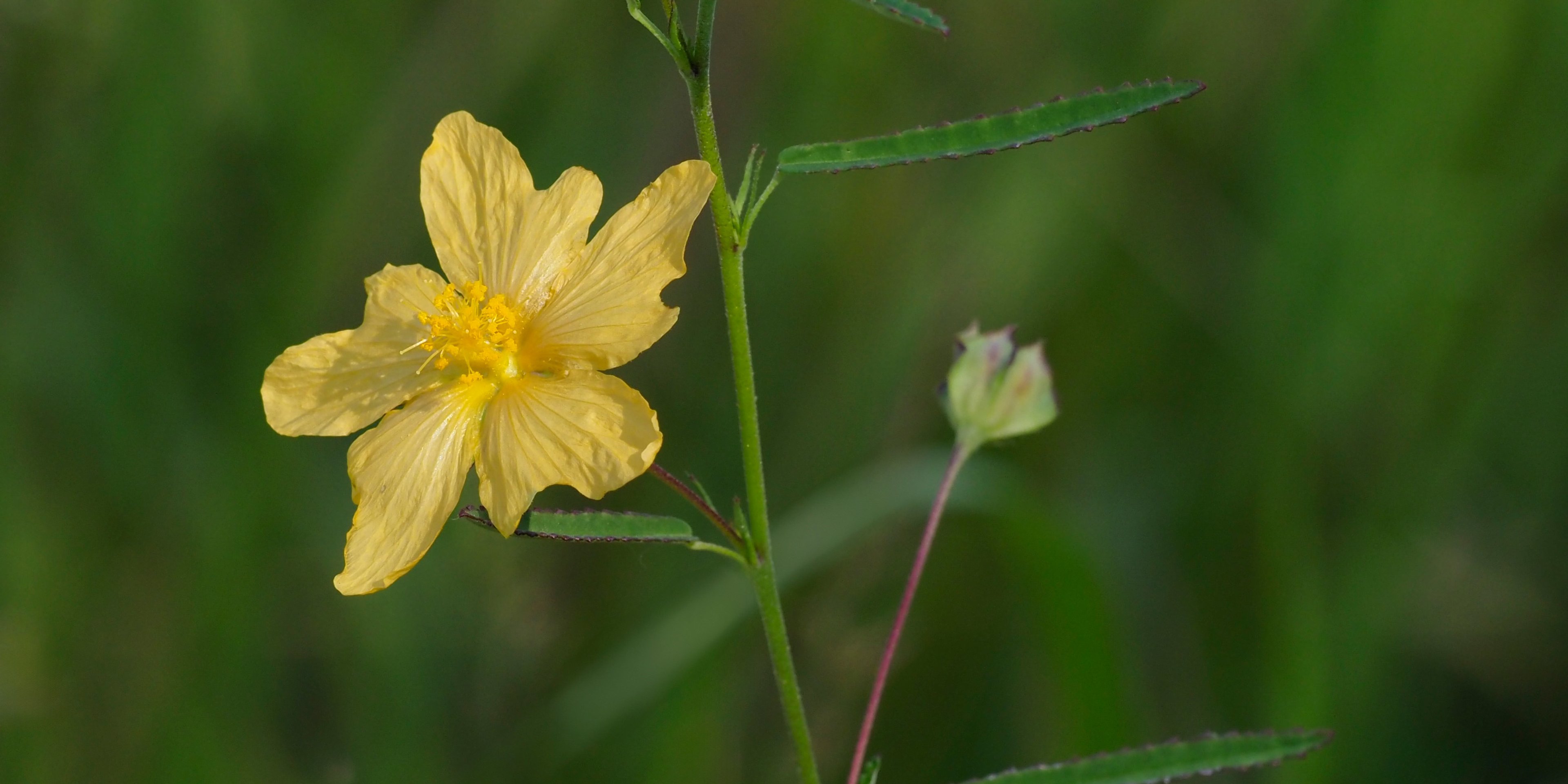
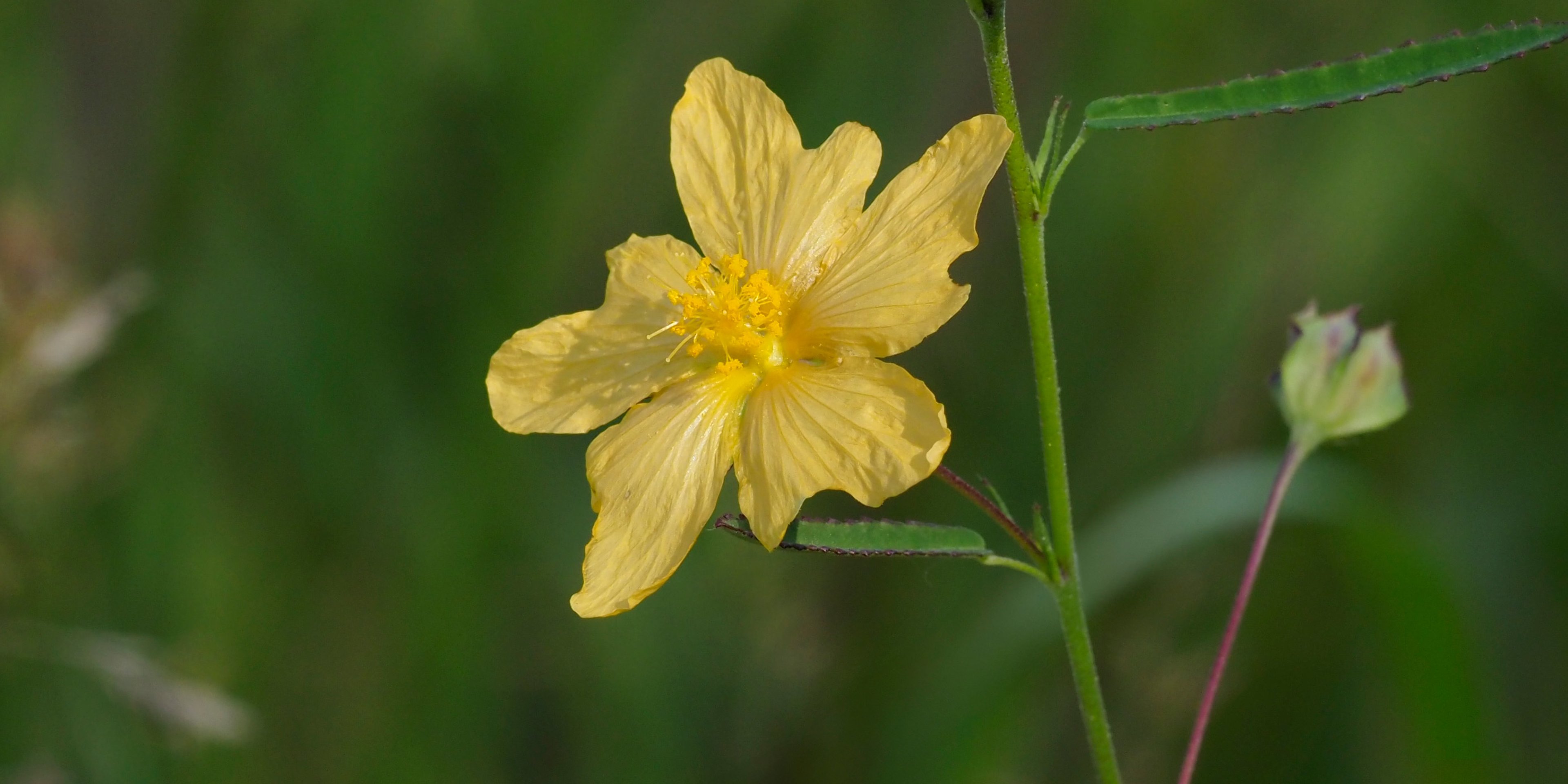
Sida elliottii is a perennial native wildflower in the Malvaceae (Mallow Family). The name Sida has a Greek base and means 'pomegranate' or 'water lily'.
The plant genus Elliottii honors Stephen Elliott who was a Professor of Natural History and Botany. He authored one of the most important botanical books regarding American botany, A Sketch of the Botany of South-Carolina and Georgia. It was published in two volumes 1816 to 1824.
The buds of Sida elliottii are visually appealing. They occur in the leaf axils and have a green color with red edges.
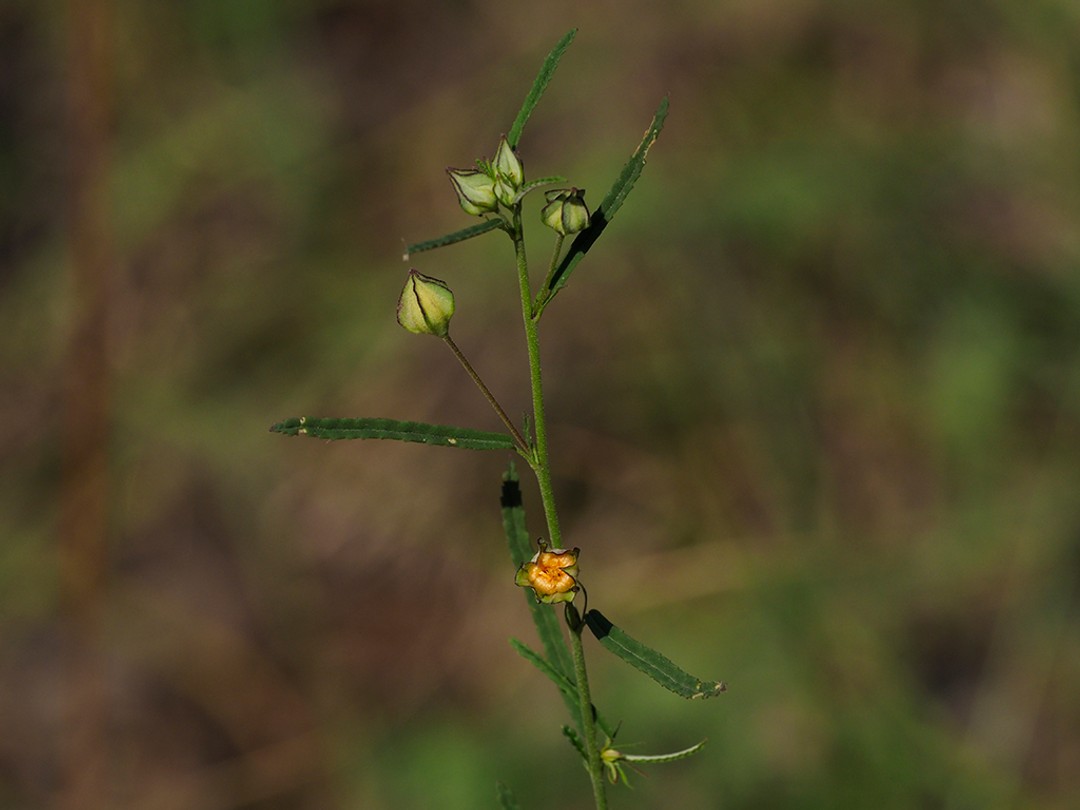
Buds 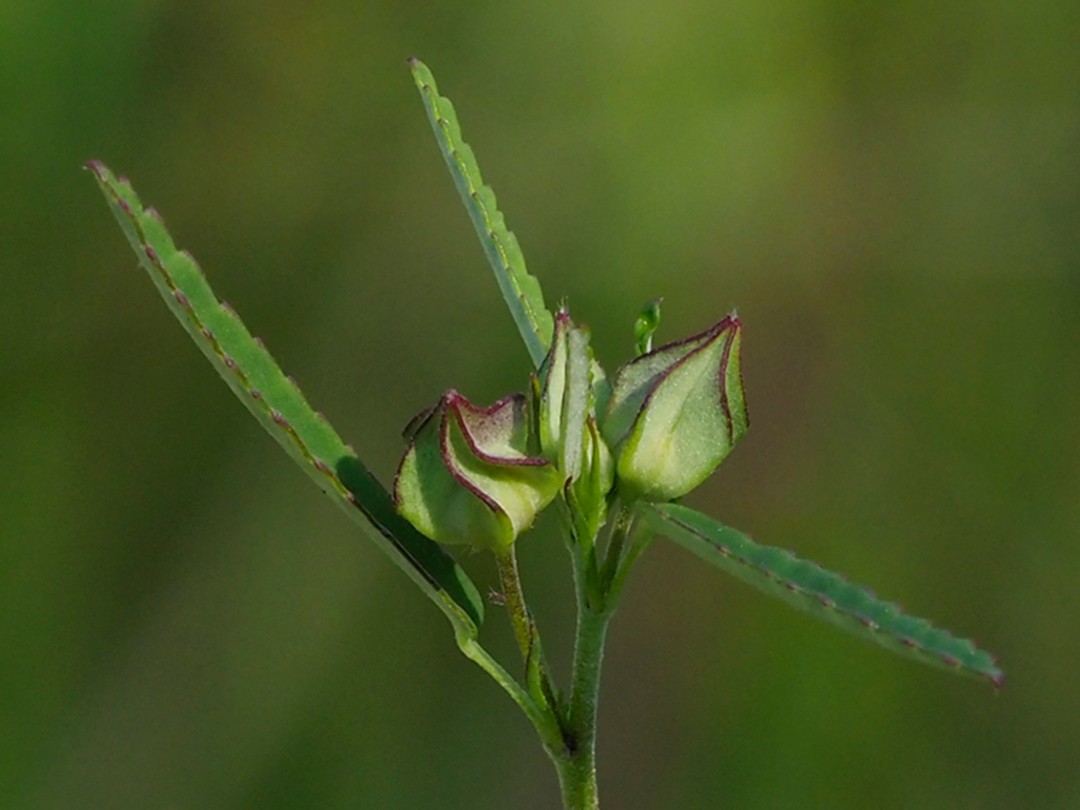
Close look at buds
Sida elliottii flowers boast a captivating blend of unique colors and shapes. Their hue ranges from a soft, buttery yellow to a warm, golden orange, reminiscent of butterscotch, amber, or saffron. Interestingly, the shade of each flower can vary, with some displaying a more vibrant orange and others leaning towards a pale yellow. Take a moment to examine these photographs and attempt to identify the color for yourself! Each flower is composed of five distinct, asymmetric petals.
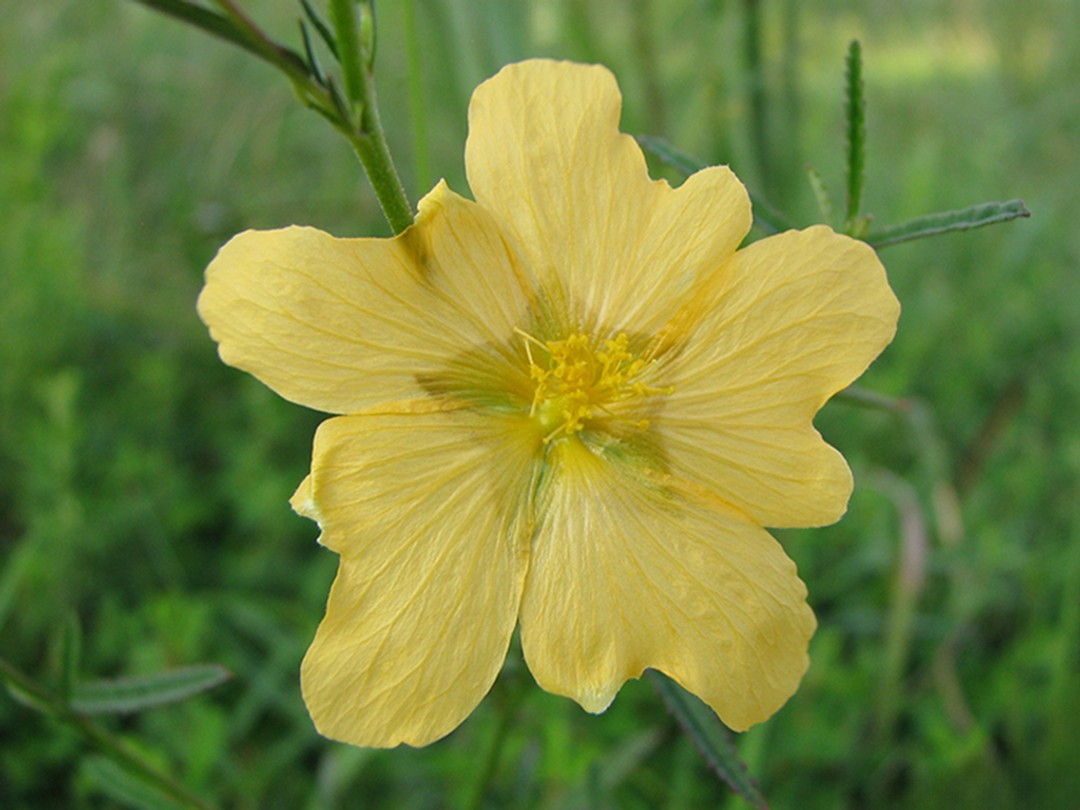
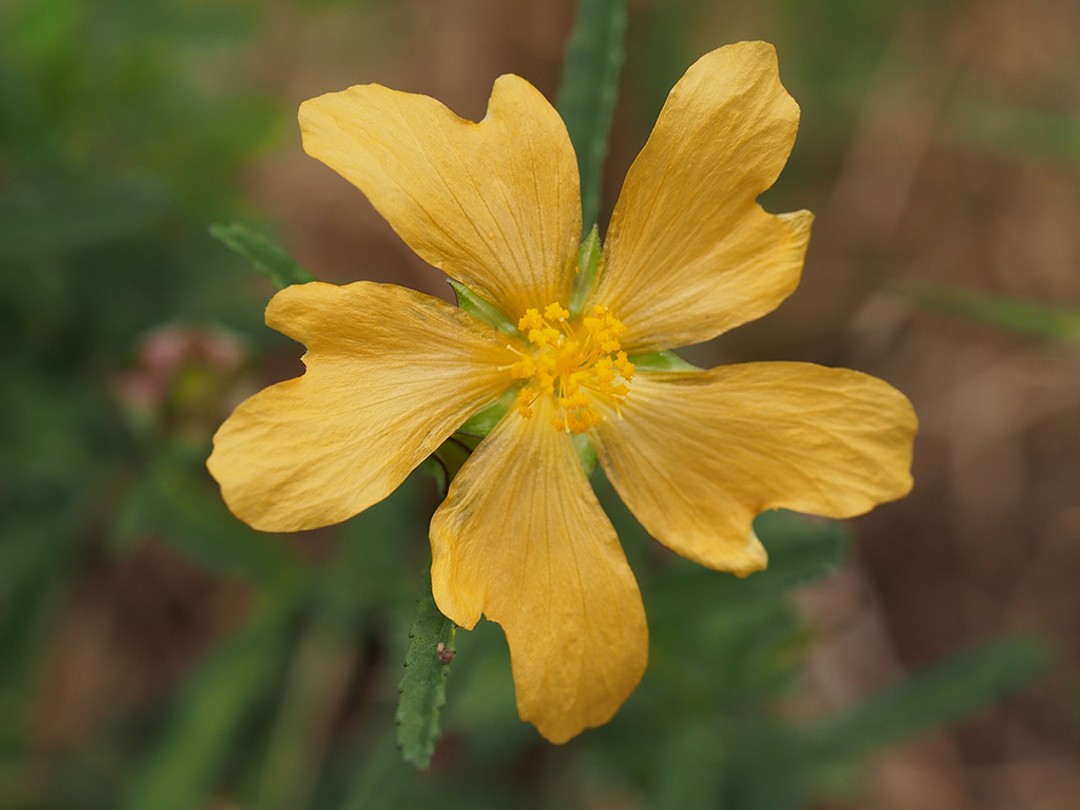
The calyx is composed of 5 green sepals with reddish, sharply pointed edges. The sepals are partially fused with triangular, pubescent lobes having a pointed tip.
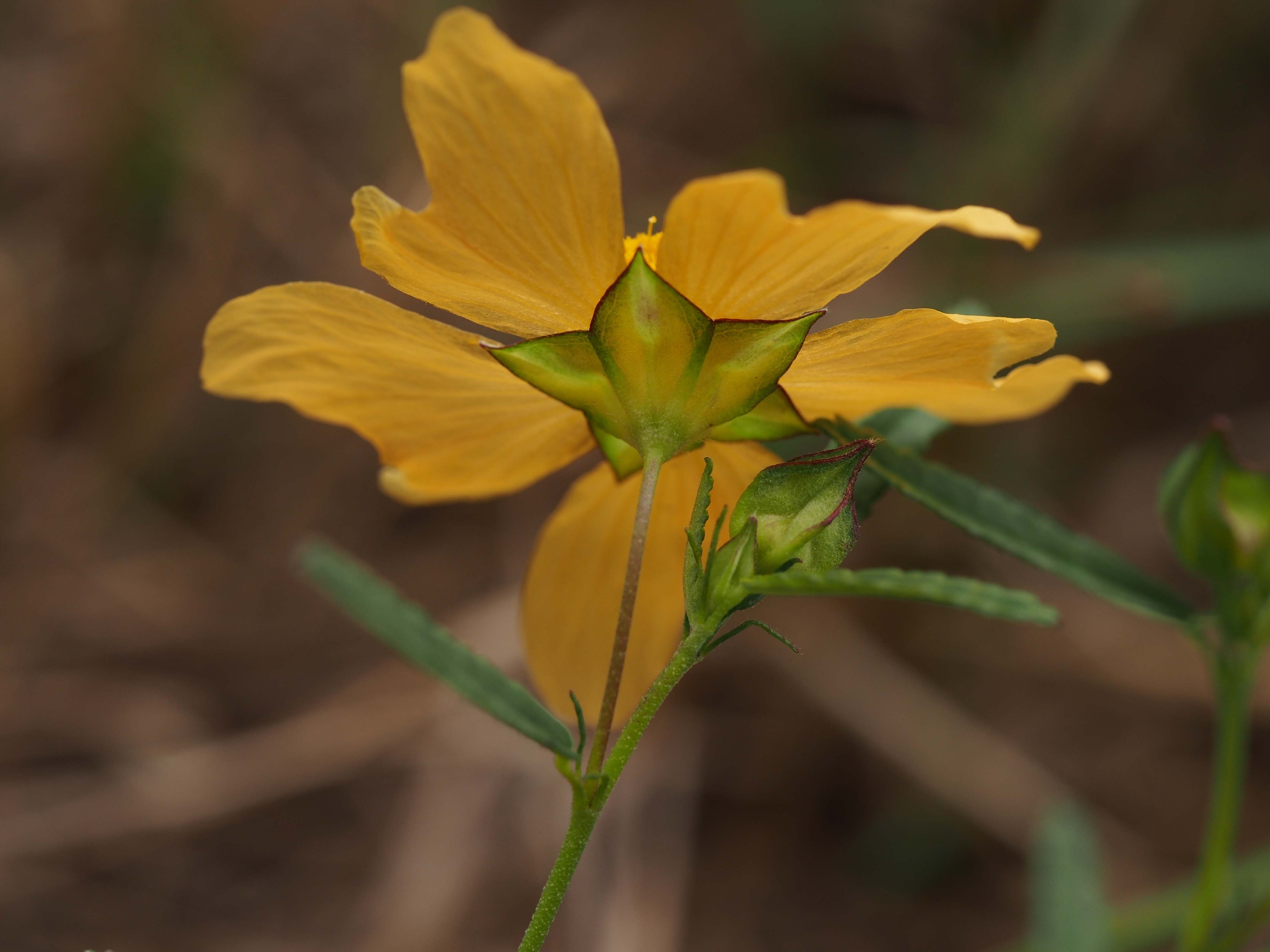
Surrounding the central ovary and a branched style is a cluster of showy stamens that protrude from the flowers’ center.
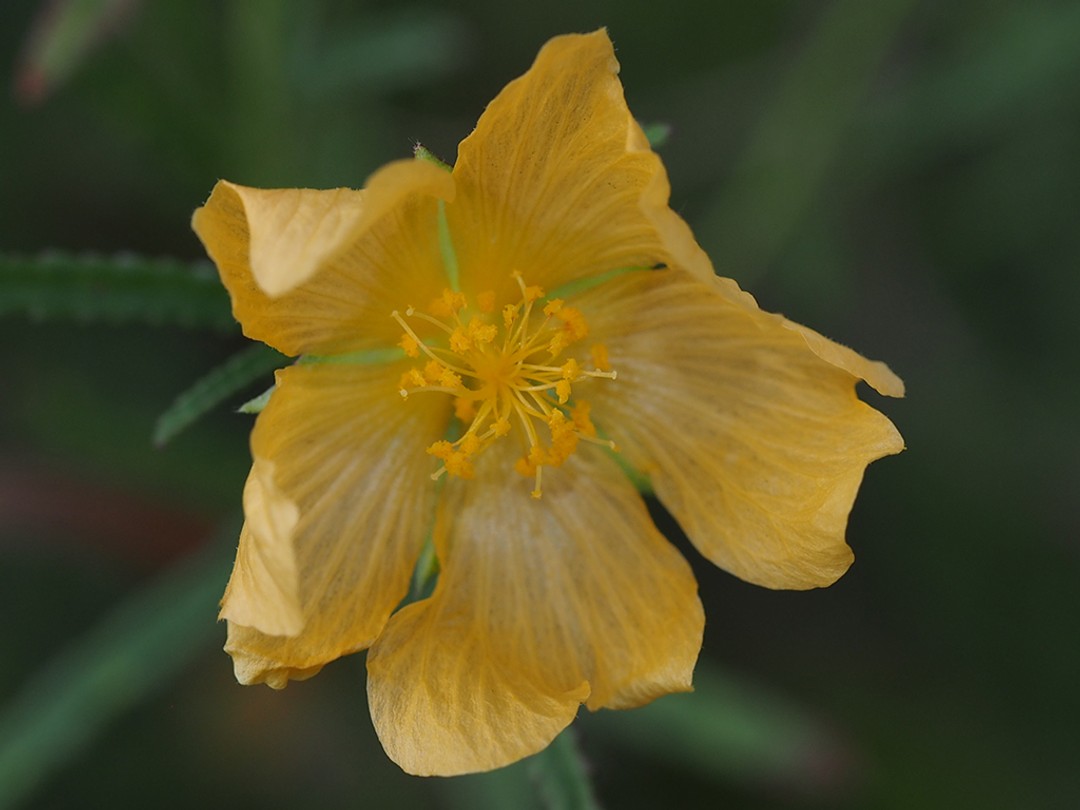
Stamens and style 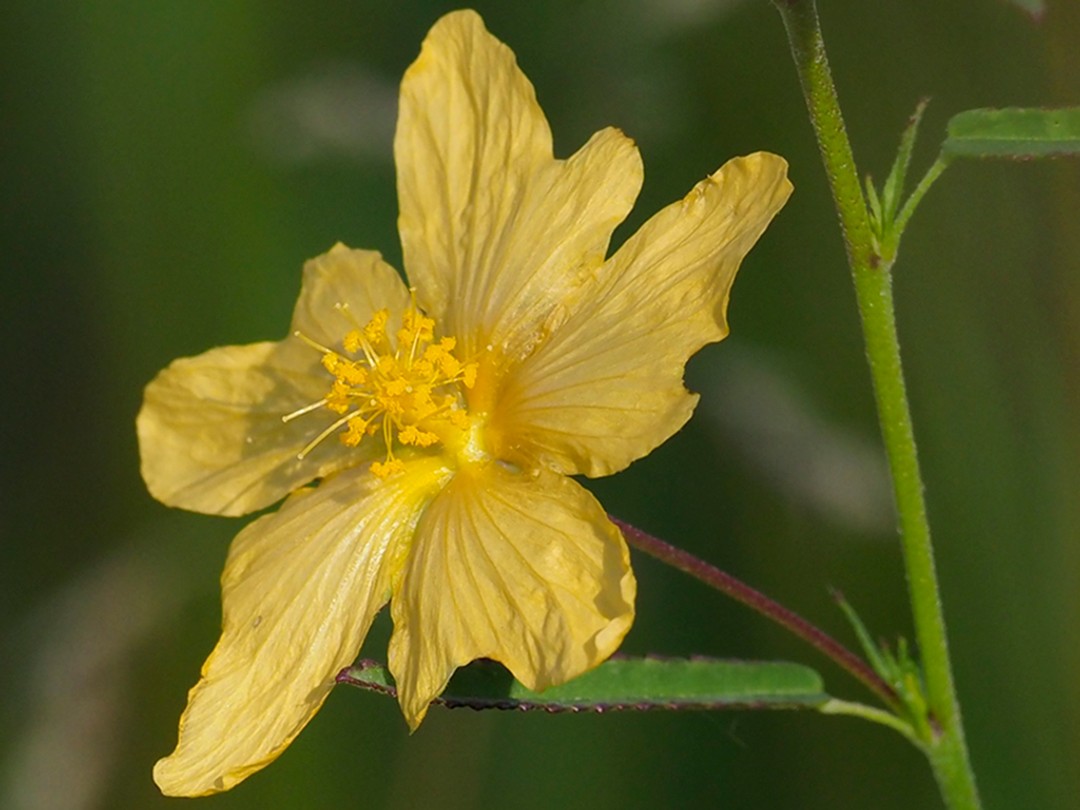
Stamens and Style
The flowers don't open until the afternoon. So, you won't have any luck finding them in the morning! I searched my photos over many years and they were all taken between 3 and 6 pm. I can't seem to find information on what time the flowers close. Is it early morning or before dawn?
Elliot’s sida is an open plant that grows to a height between 2 and 3 feet. Its stem is somewhat woody, branched, and pubescent, often with a reddish or orange hue. The leaves are toothed, narrow and hairy underneath. They occur alternately on short petioles.
The fruits are schizocarps that break down into about 10 mericarps, each containing one seed.
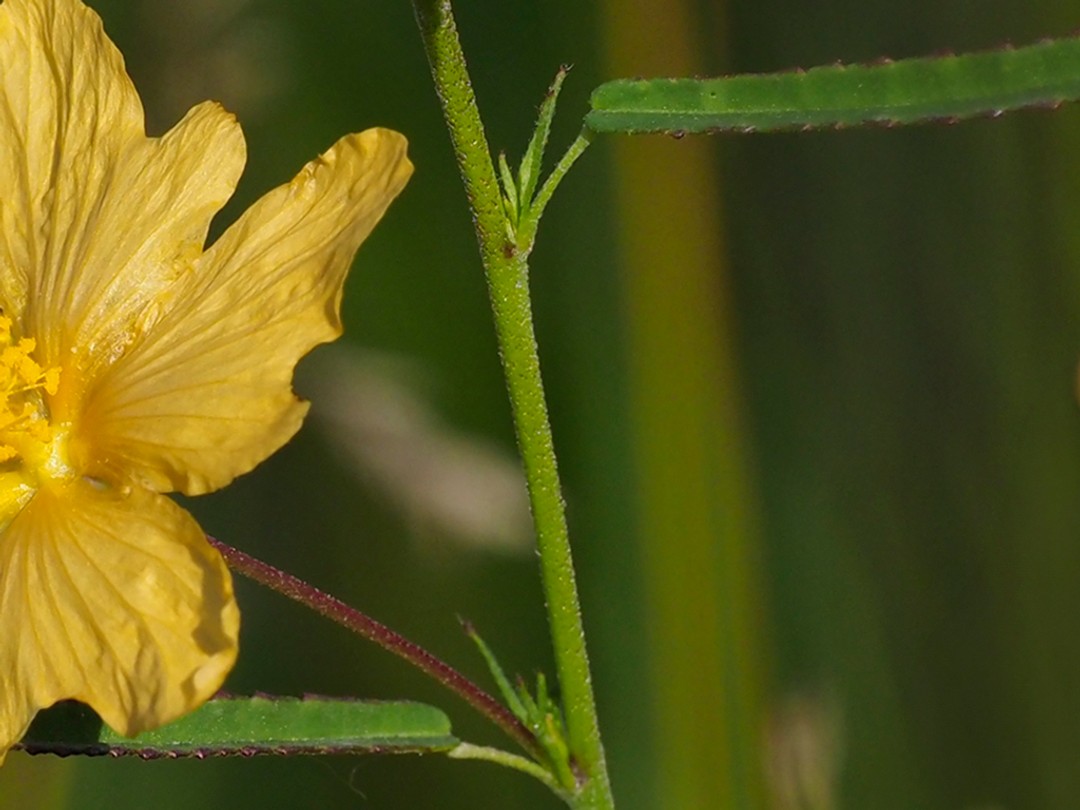
Pubescent stem 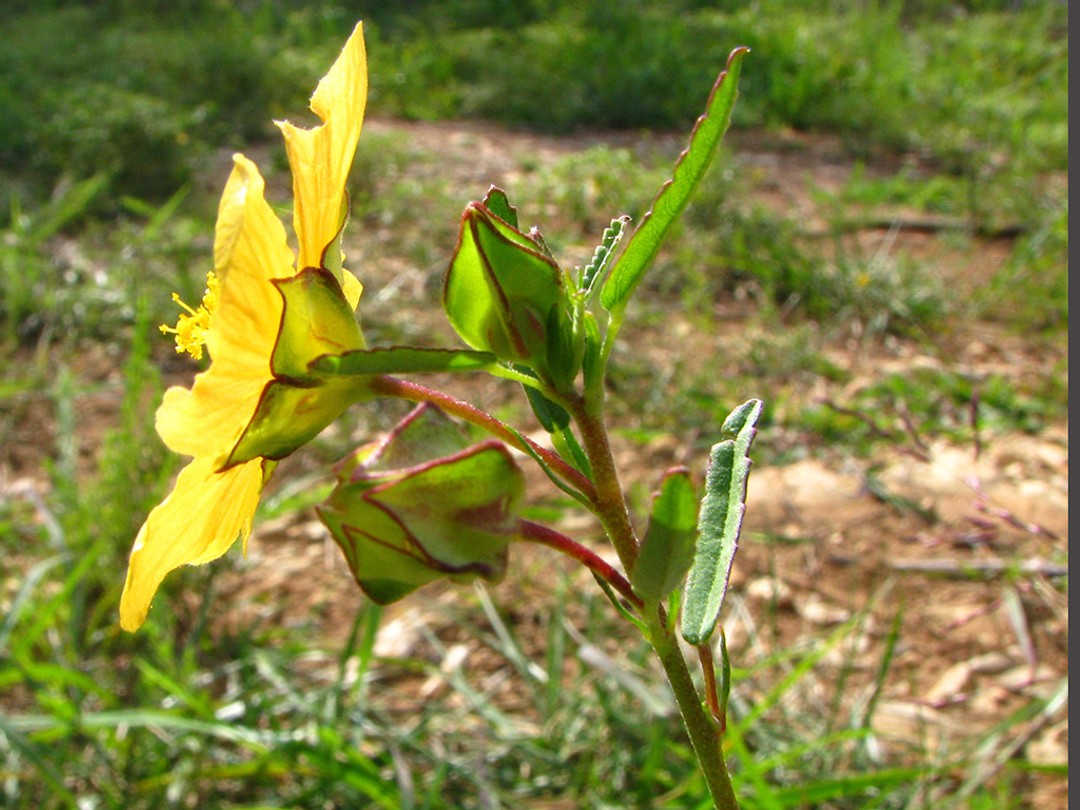
Reddish stem 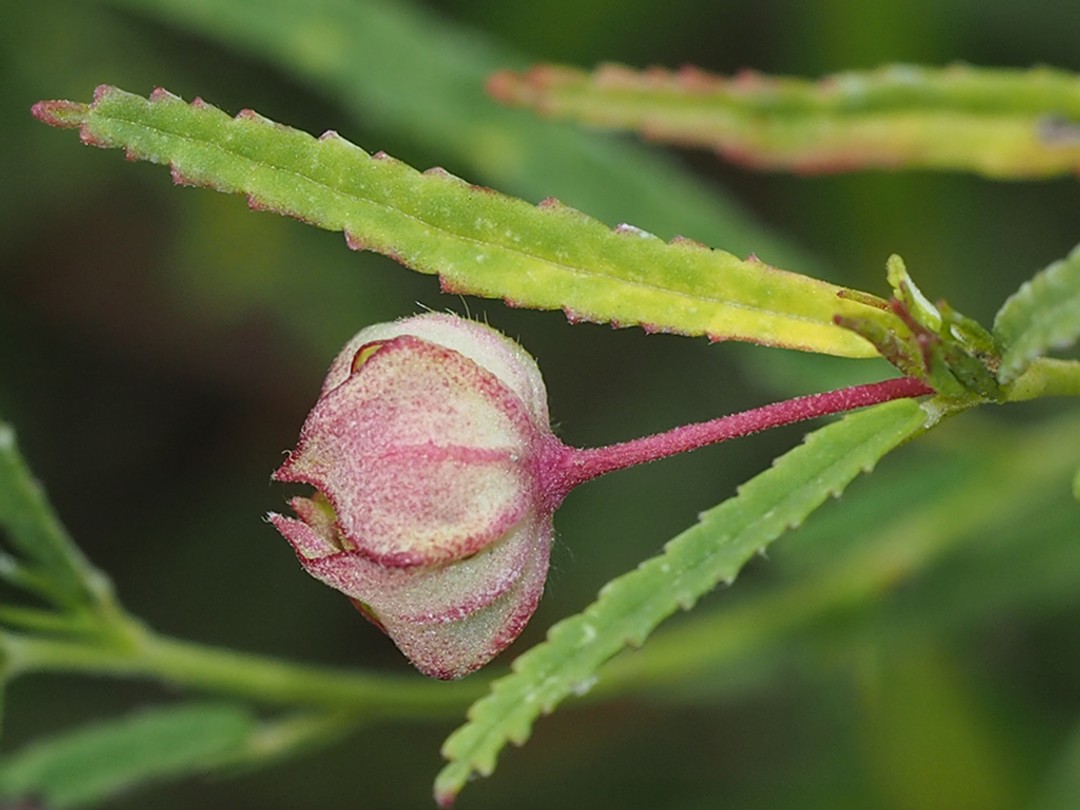
Toothed leaf 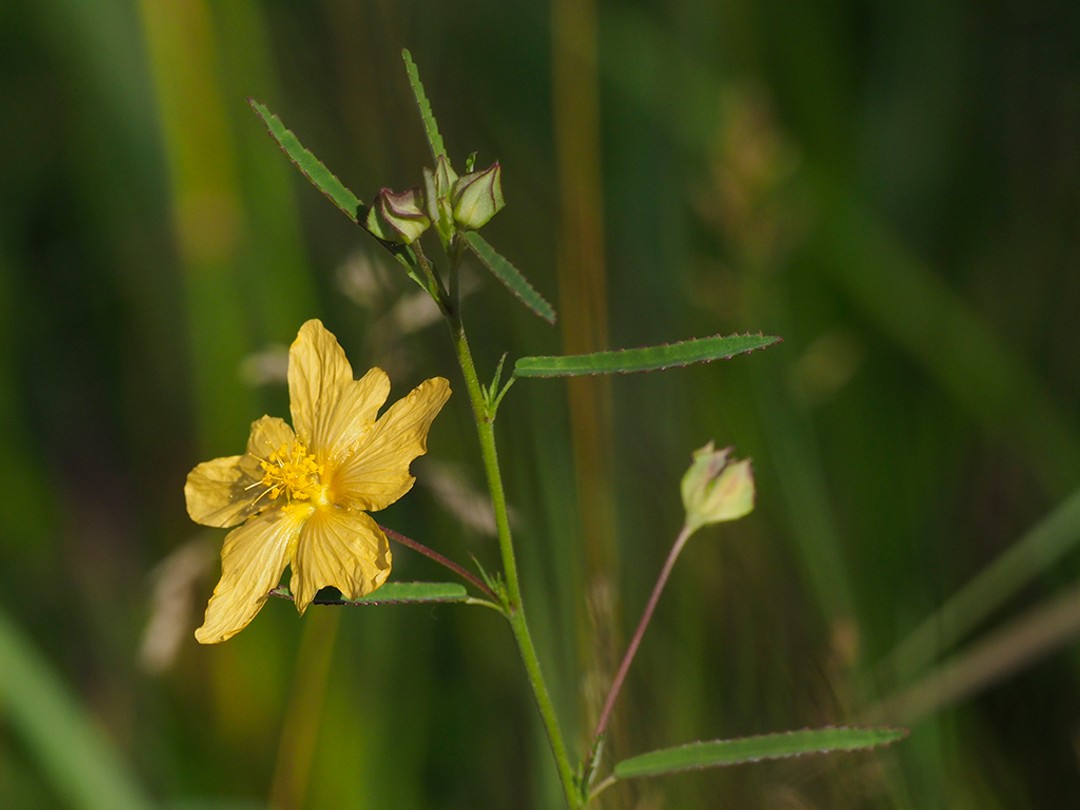
Alternate leaves 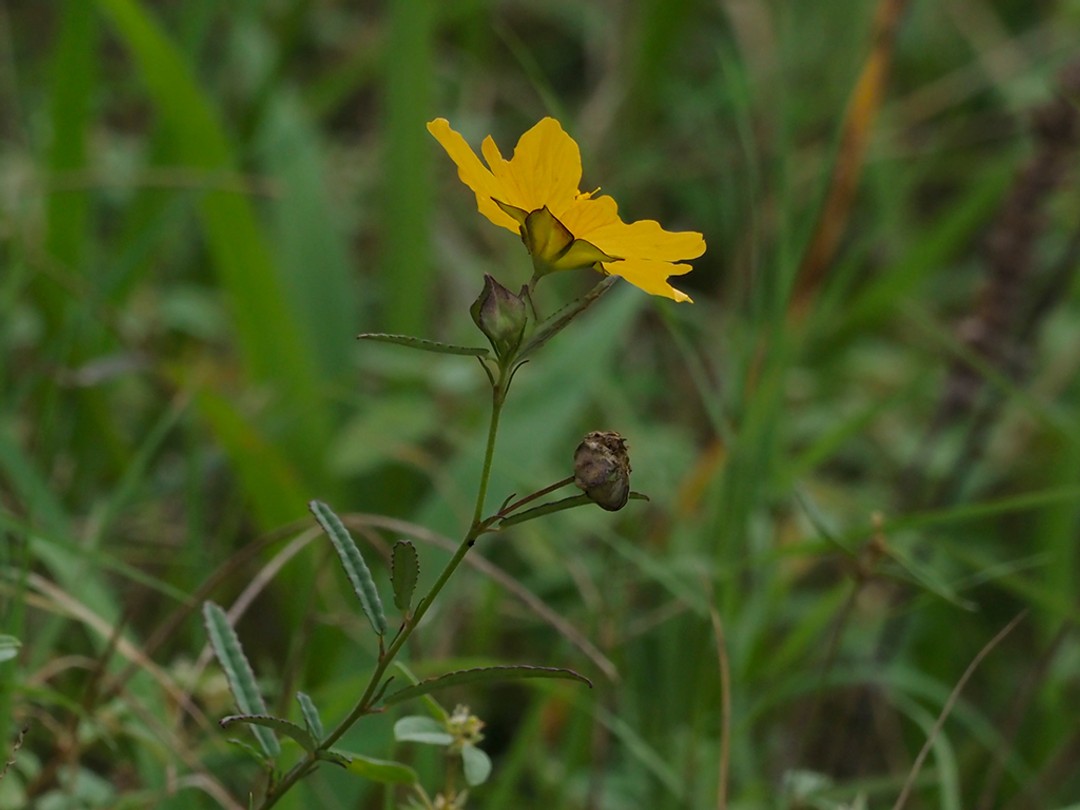
Flower, Bud, Seed pod 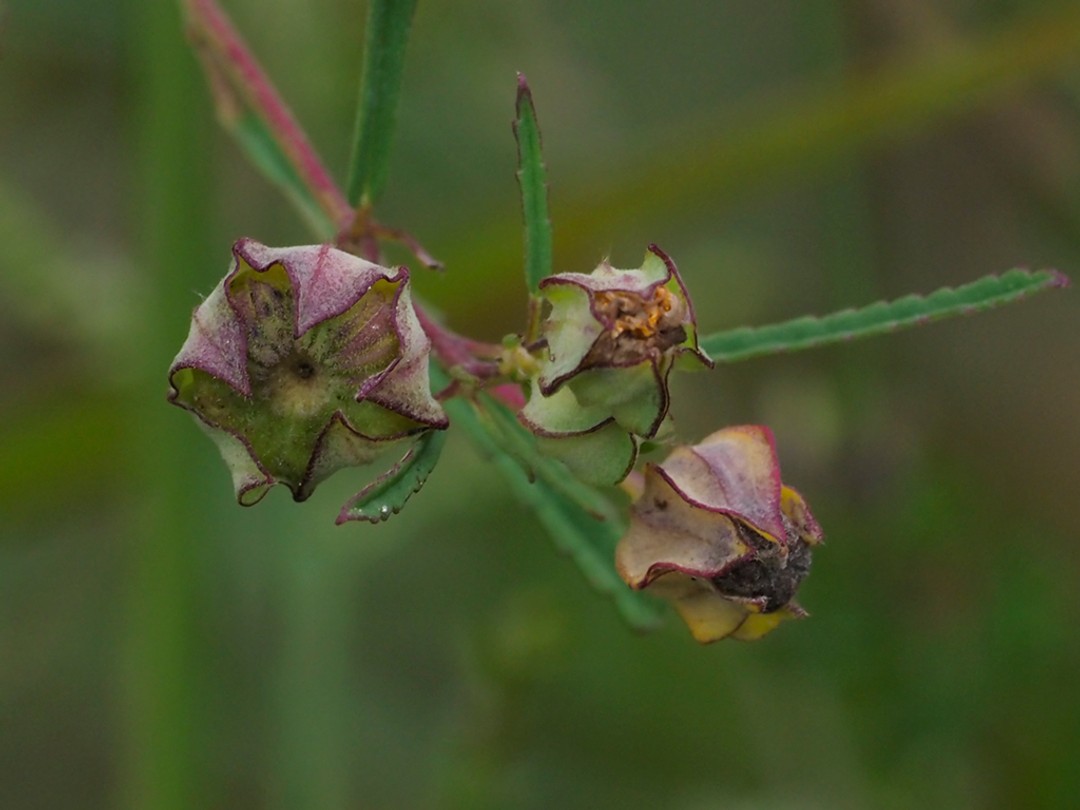
Developing fruit
So far, the only bees I’ve observed visiting the flowers of Sida elliottii are Agapostemon bees.
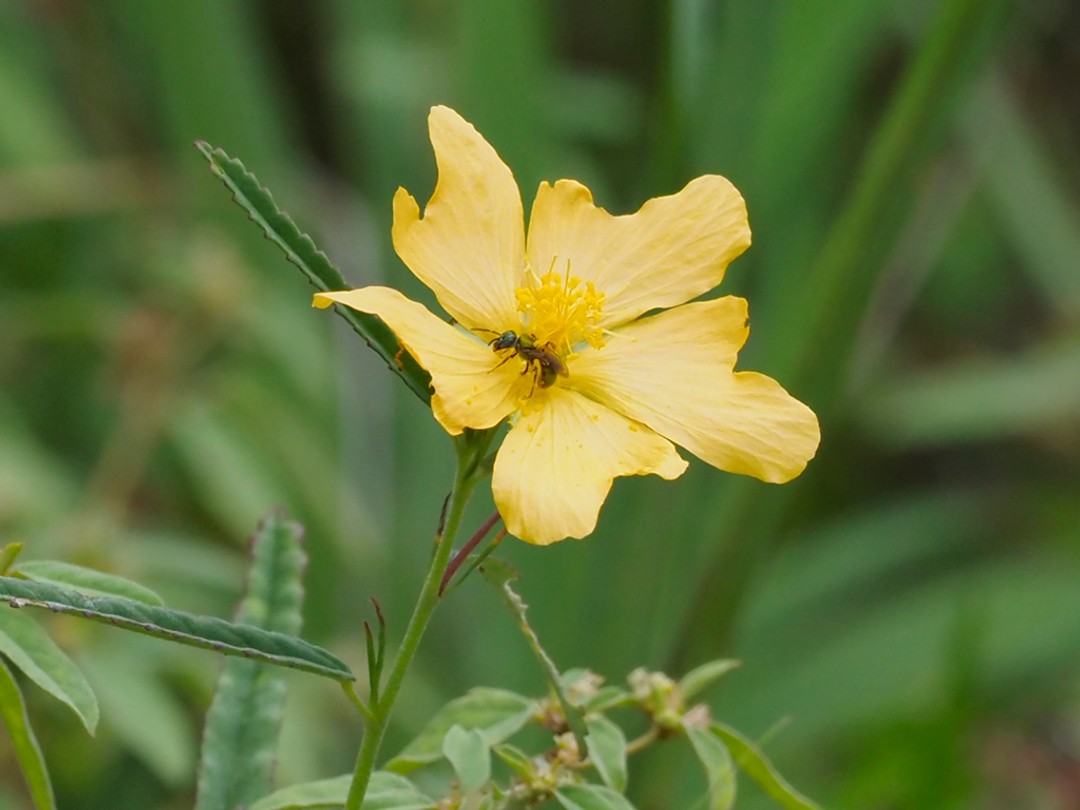
Agapostemon virescens 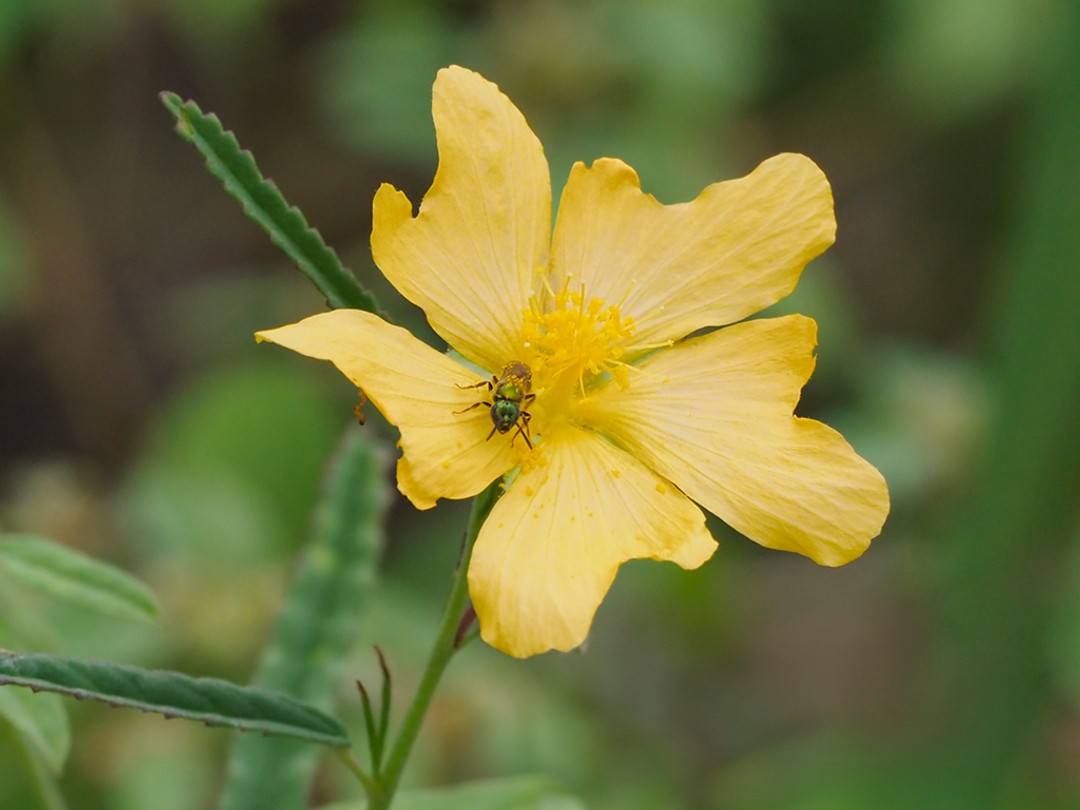
Agapostemon virescens
Sleepy orange butterflies and Fiery skippers also visit the flowers. They are seeking nectar and are likely pollinate the flowers.
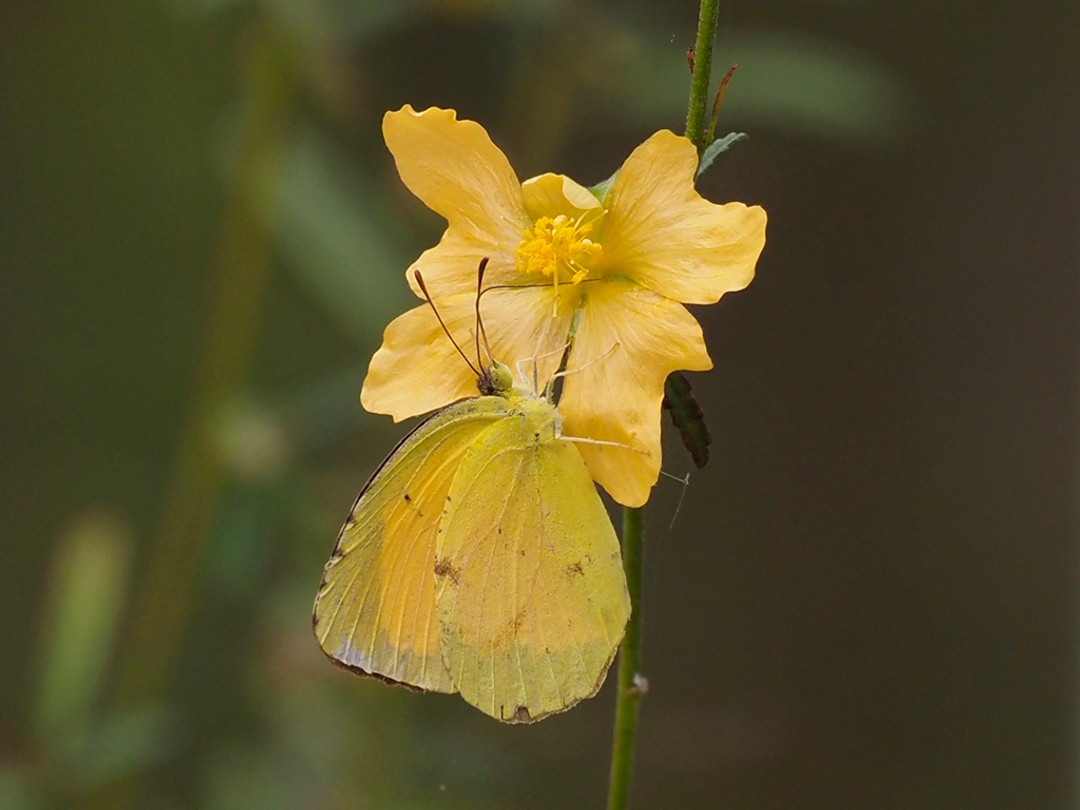
Sleepy Orange butterfly 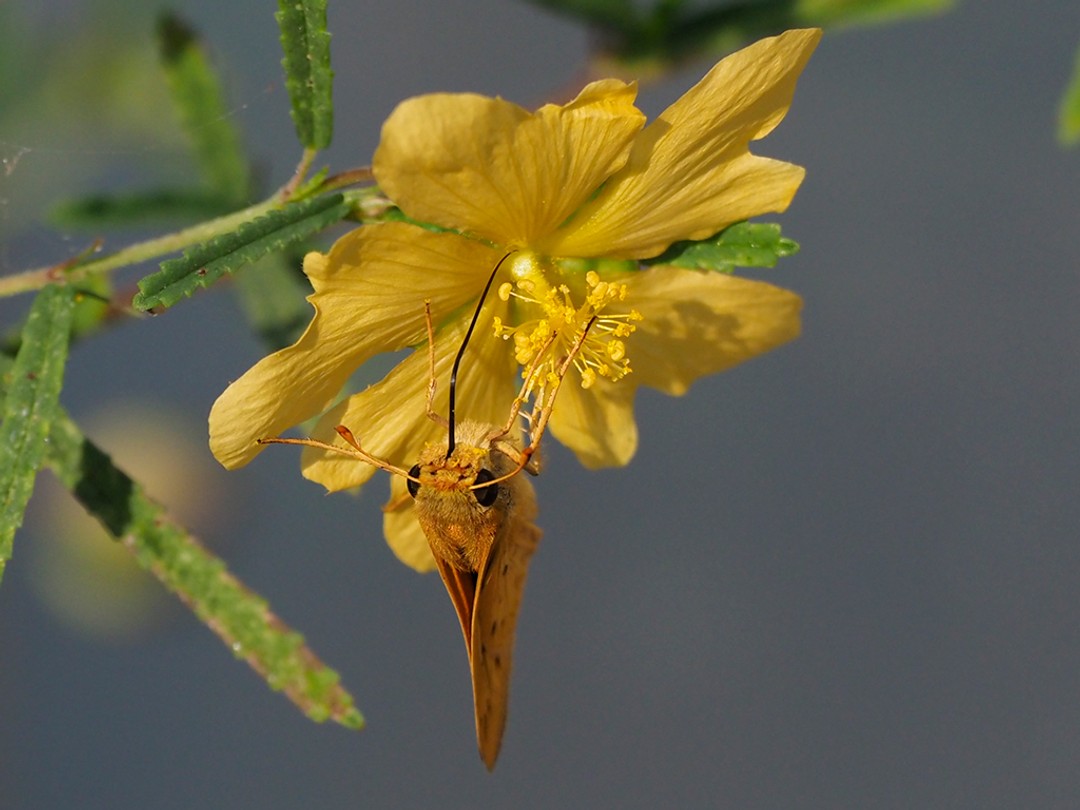
Fiery skipper
In addition, to the bees and butterflies, I've documented Katydids visiting the flowers. Katydids feed on flower parts and while doing so, they get pollen grains stuck to their antennae and legs facilitating pollination when they move to the next flower.
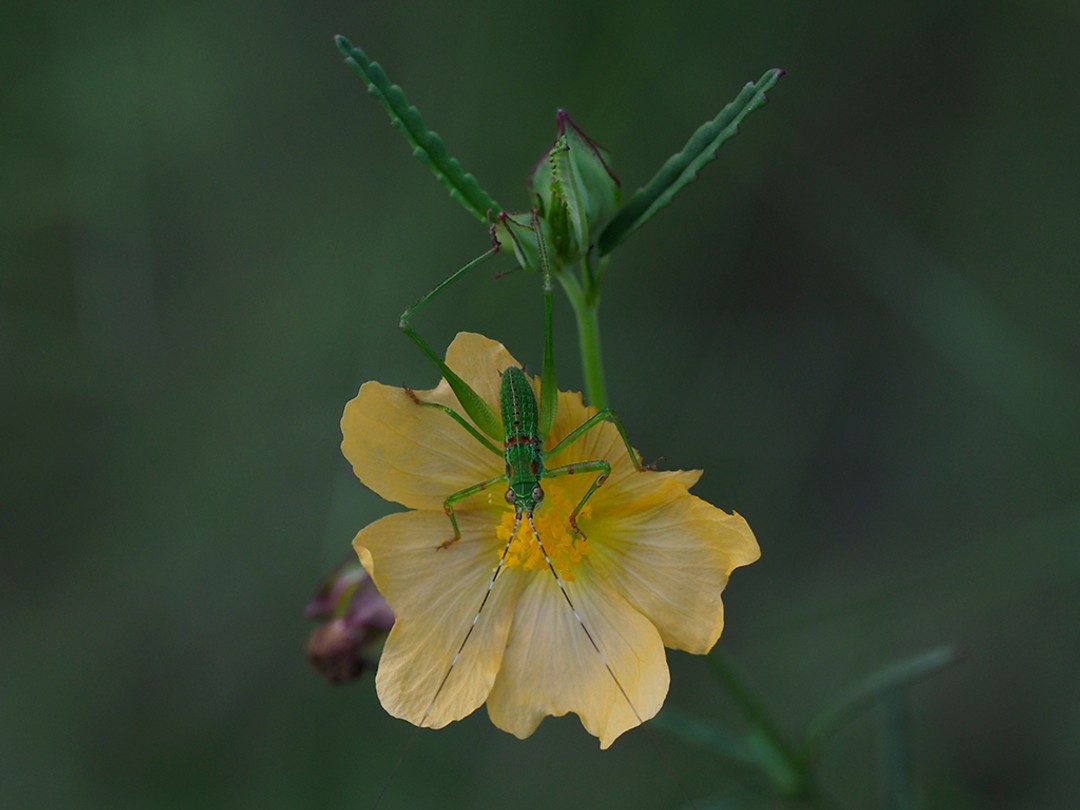
Katydid 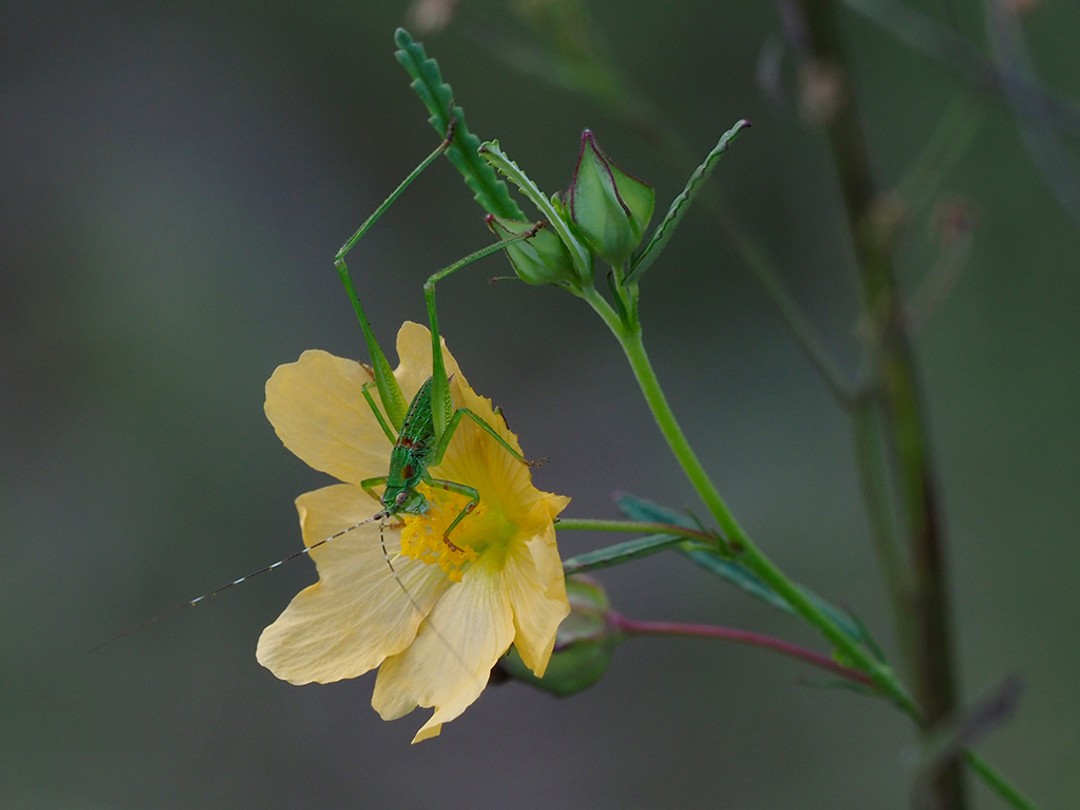
Katydid
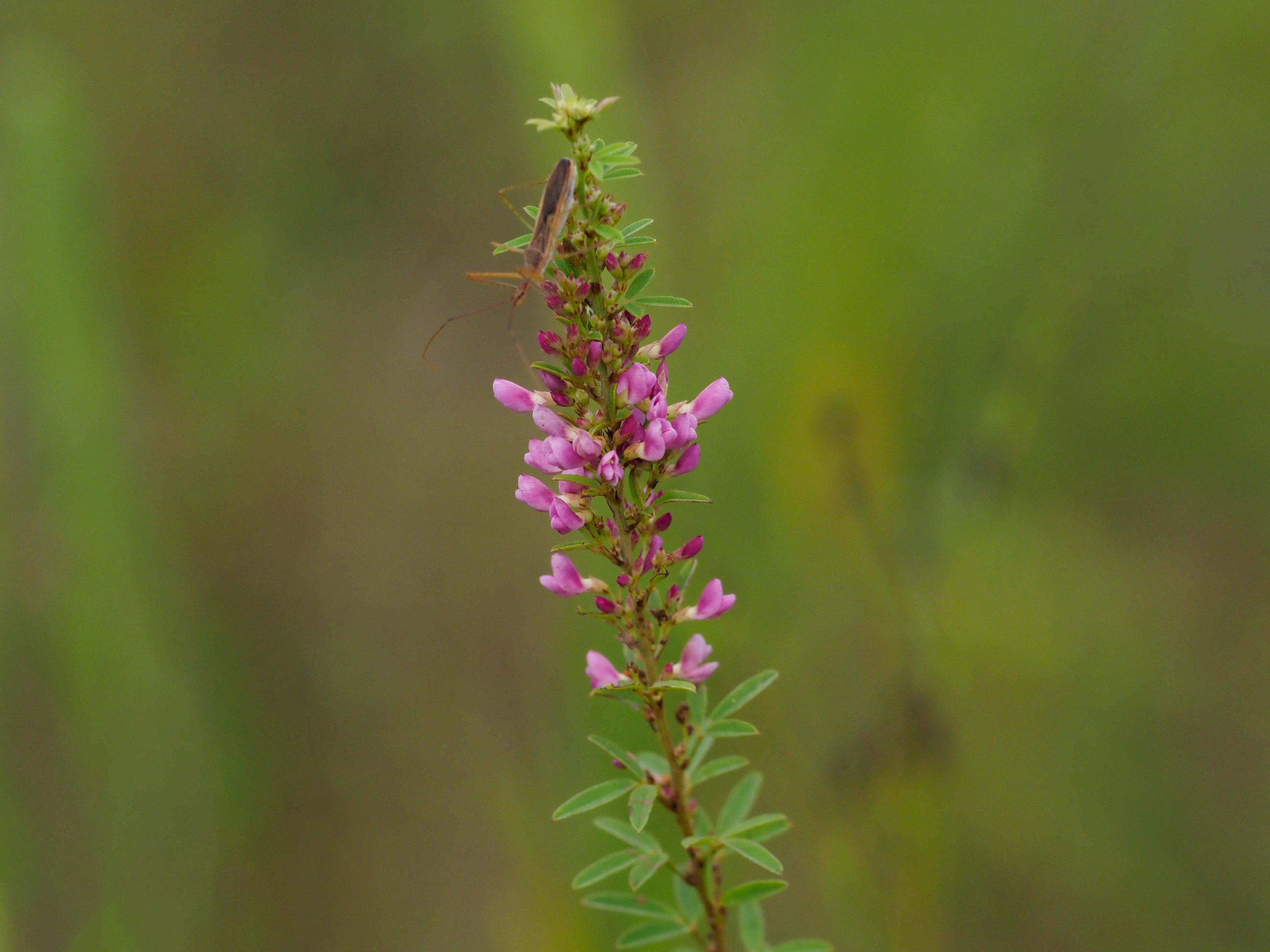
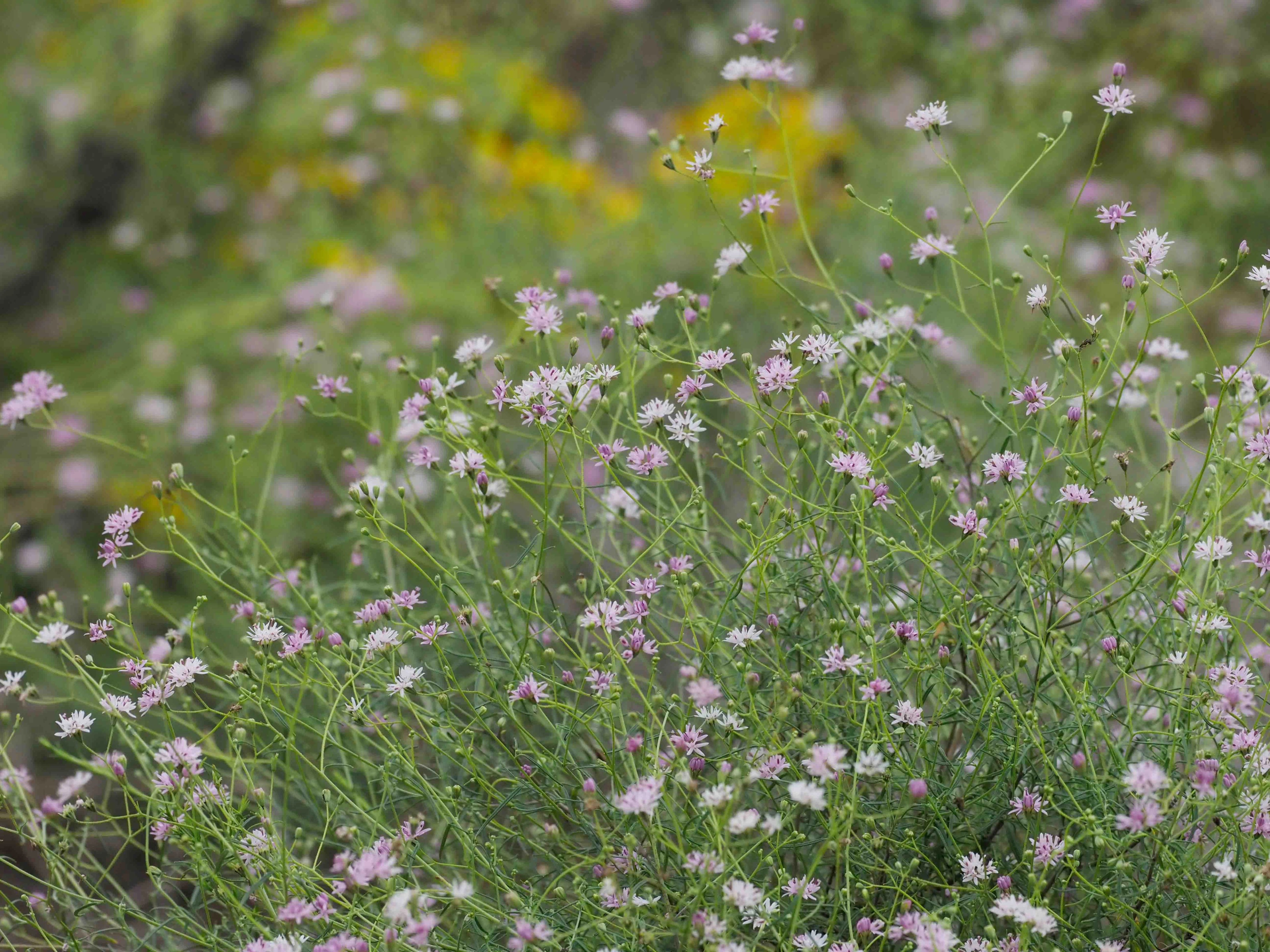
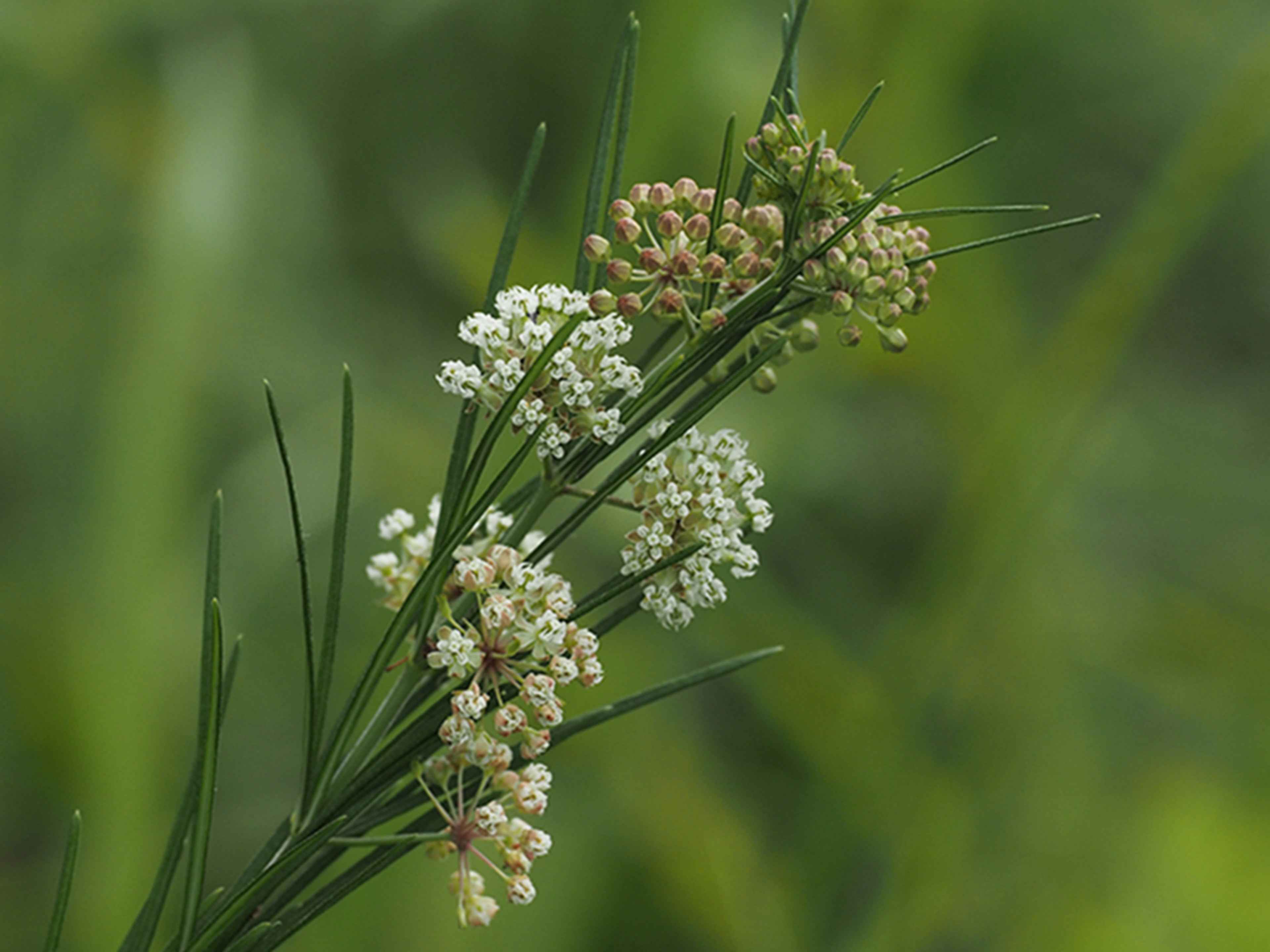
On Ozarkedge, I've found Sida elliottii in both grassland and glade habitat.
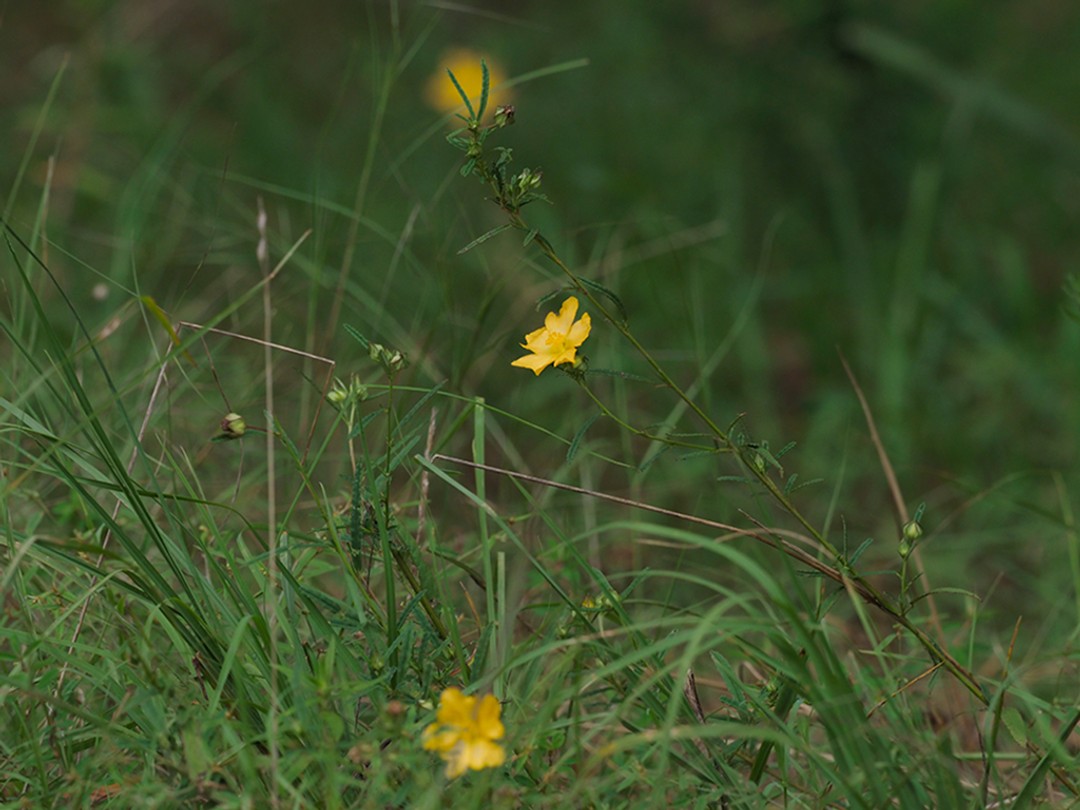
Grassland habitat 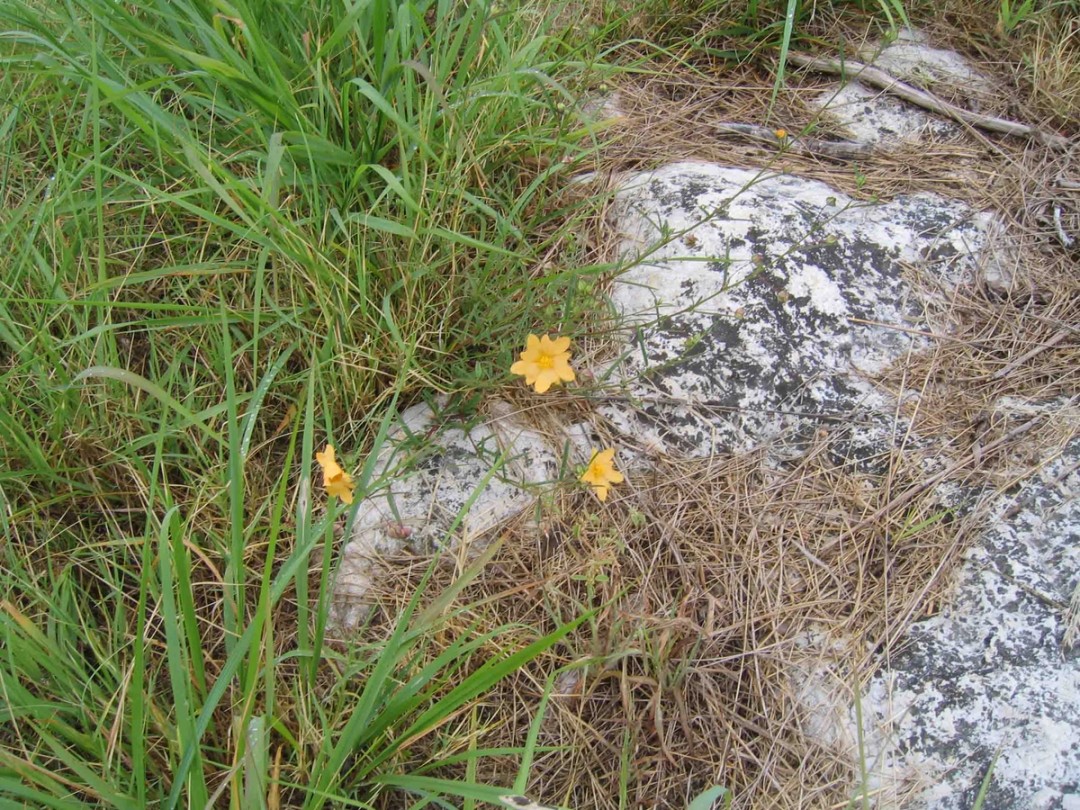
Glade habitat
CONSERVATION STATUS
In Arkansas, Sida elliottii has a Conservation Value of 9 (out of 10) meaning "Conservative taxa with strong fidelity to intact habitats. These taxa tend to exhibit late-successional characteristics like long lifespans with low seed sets and an inability for far ranging dispersal."
Natureserve shows Sida elliottii as overall Apparently Secure, however it is in trouble in many states. Take a look below:
- S1: Critically Imperiled in Missouri, Virginia
- S2?: Imperiled in Georgia
- S2/S3: Imperiled/Vulnerable in Arkansas
- S3: Vulnerable in Alabama, Mississippi
- SH: Possibly extirpated in Louisiana
- SNR: No Status Rank in Florida, Illinois, North Carolina, South Carolina, Tennessee, Texas
INTERESTING TIDBITS
Sida elliottii is a host plant for the Gray Hairstreak, Mallow Scrub-Hairstreak, and the Tropical Checkered-skipper. Links below.
Miami Blue Chapter of the North American Butterfly Association https://tinyurl.com/5n8j867v
Broward Butterfly & Native Plant Chapters (https://tinyurl.com/yc8ercrx)