PLANT NAME
The botanical name, Campanula is derived from the Latin word campana, meaning bell, which describes the bell shaped form of the flower. Americana simply means 'from America'.
The common name, Tall bellflower, aptly describes this tall wildflower with bell-shaped blossoms.
BLOOM
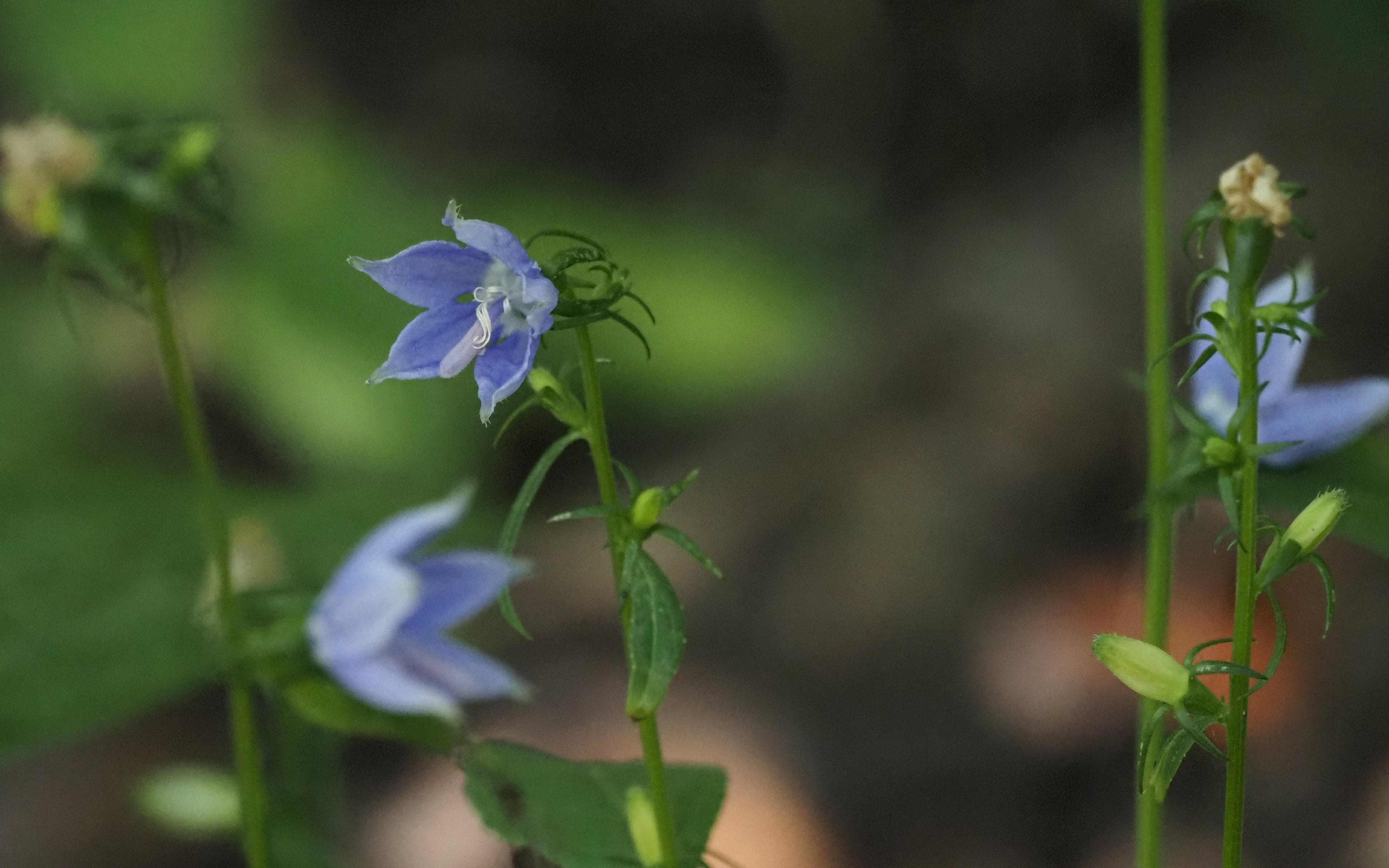
The blossoms of Tall bellflower come in varied shades of soft blue to violet and occasionally white. When the sun strikes the pretty flowers they sparkle!
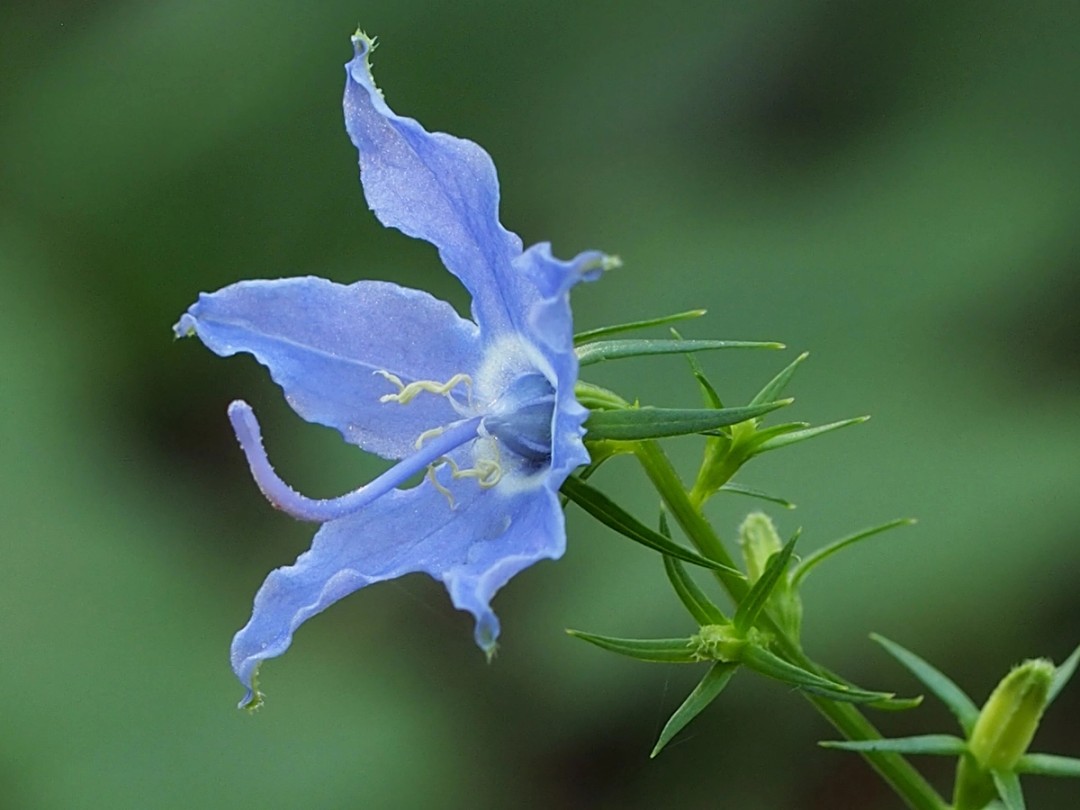
Blue flower 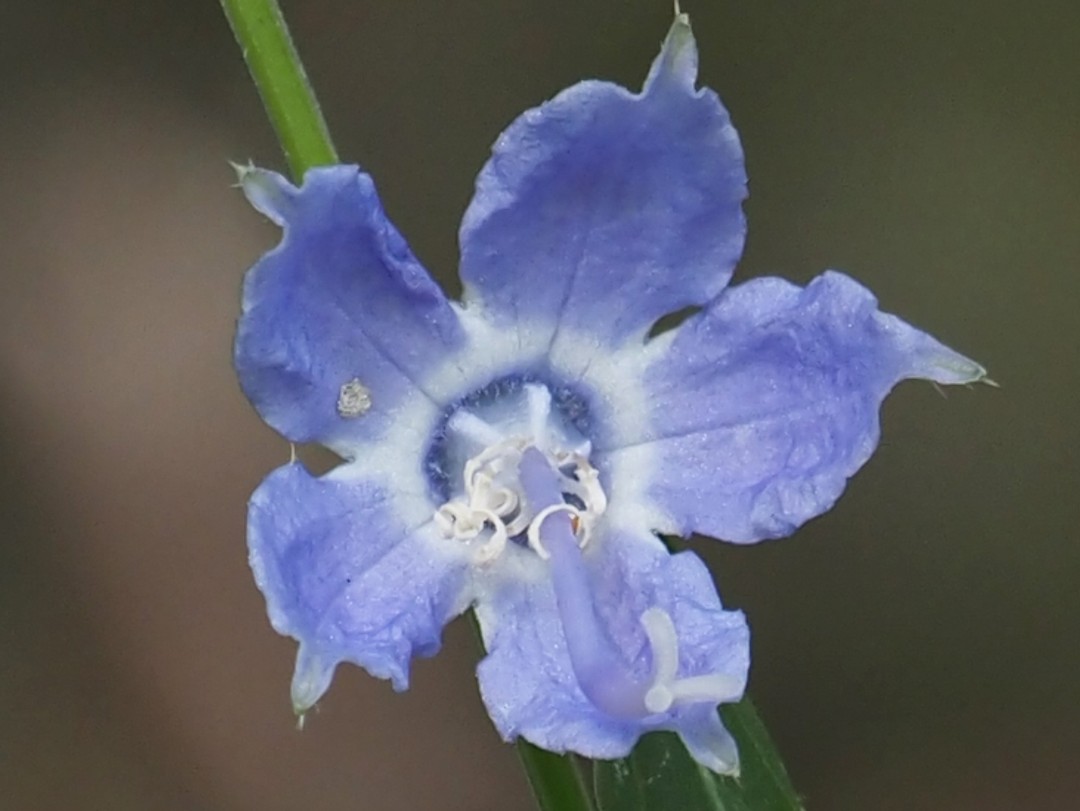
Blue flower 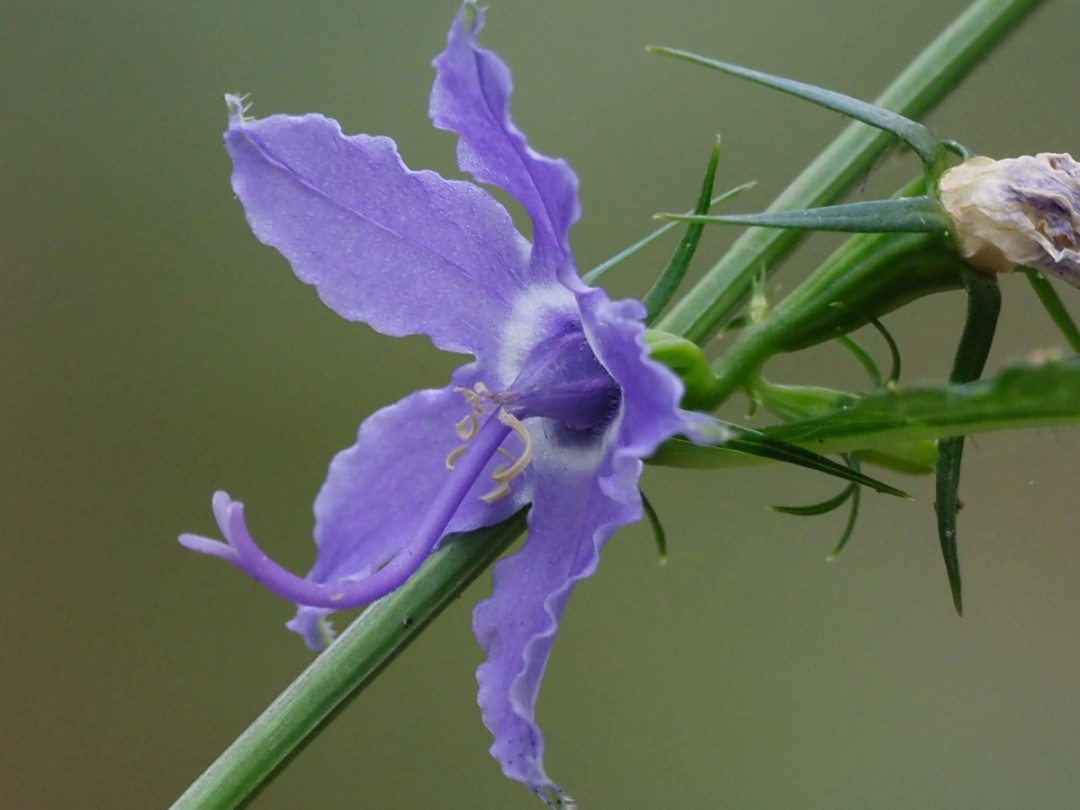
Violet flower 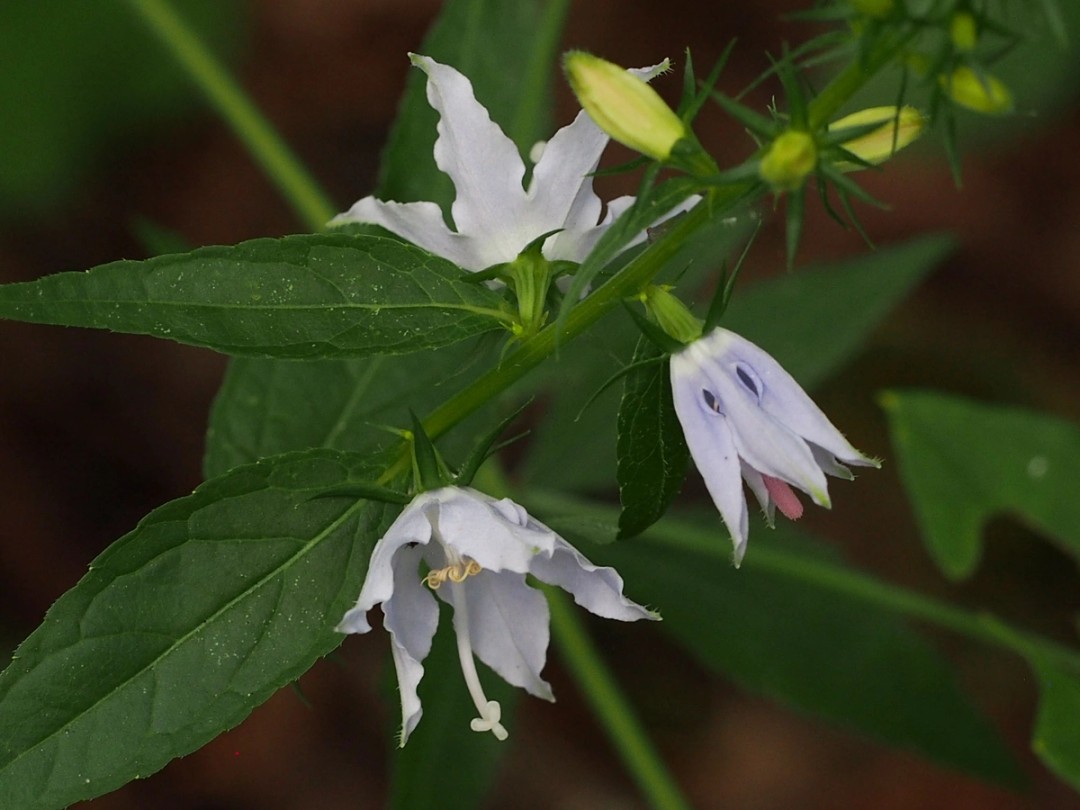
White flower
Flowers are 5 lobed, narrowed at their tips and joined at their base, which is typically white. The spike of flowers has a complex flowering sequence. Rather than flowering from top down or bottom up, flowers toward the center bloom first with flowering moving toward the top of the plant as well as downward. Later, axial flowers and those from branches bloom. This complexity allows for an extended flowering time.
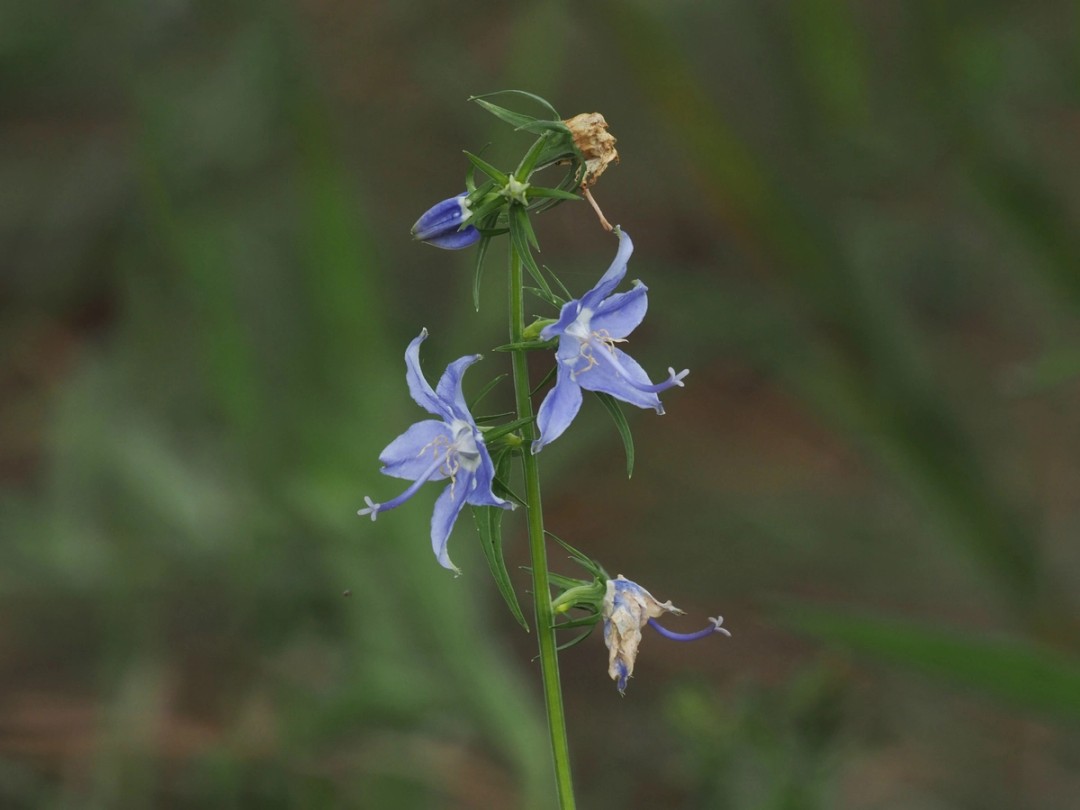
Blue flowers 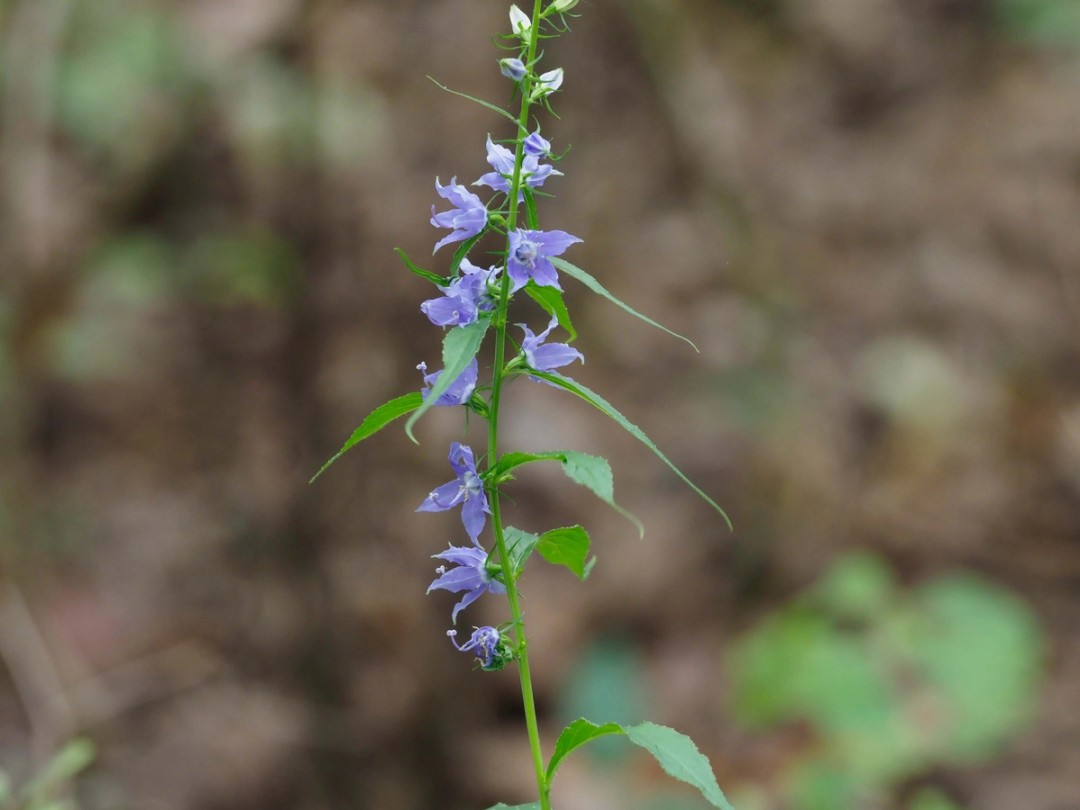
Flower spike 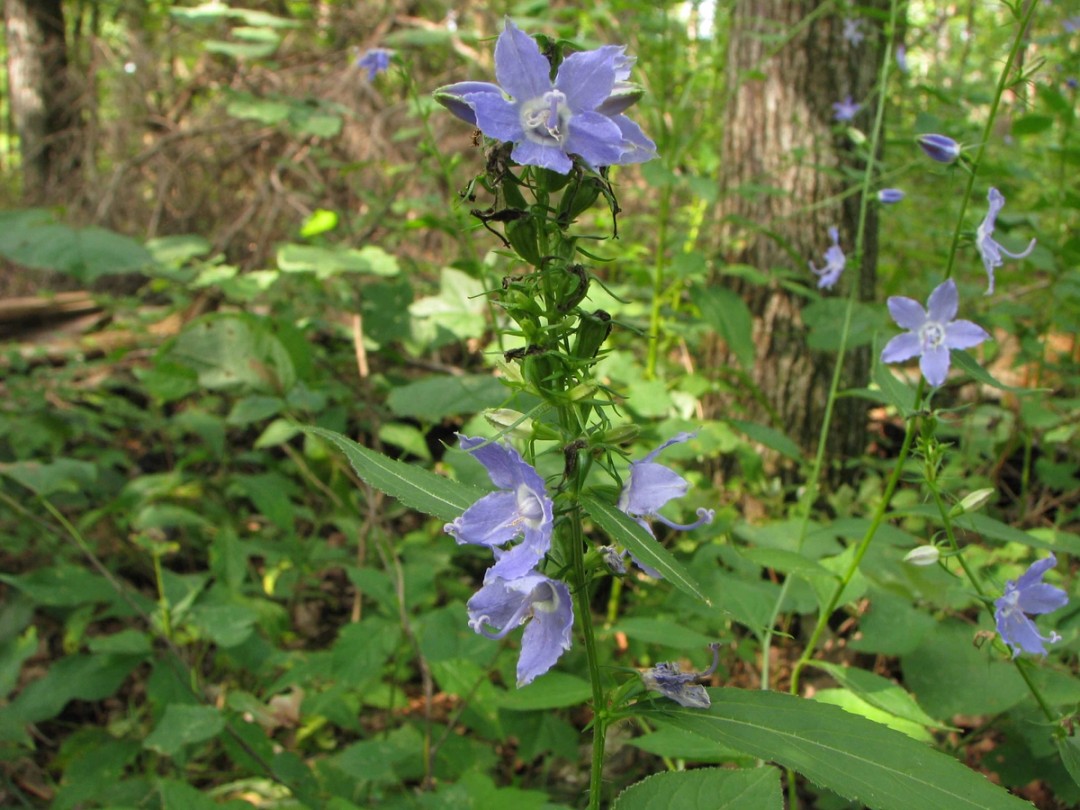
Complex flowering sequence 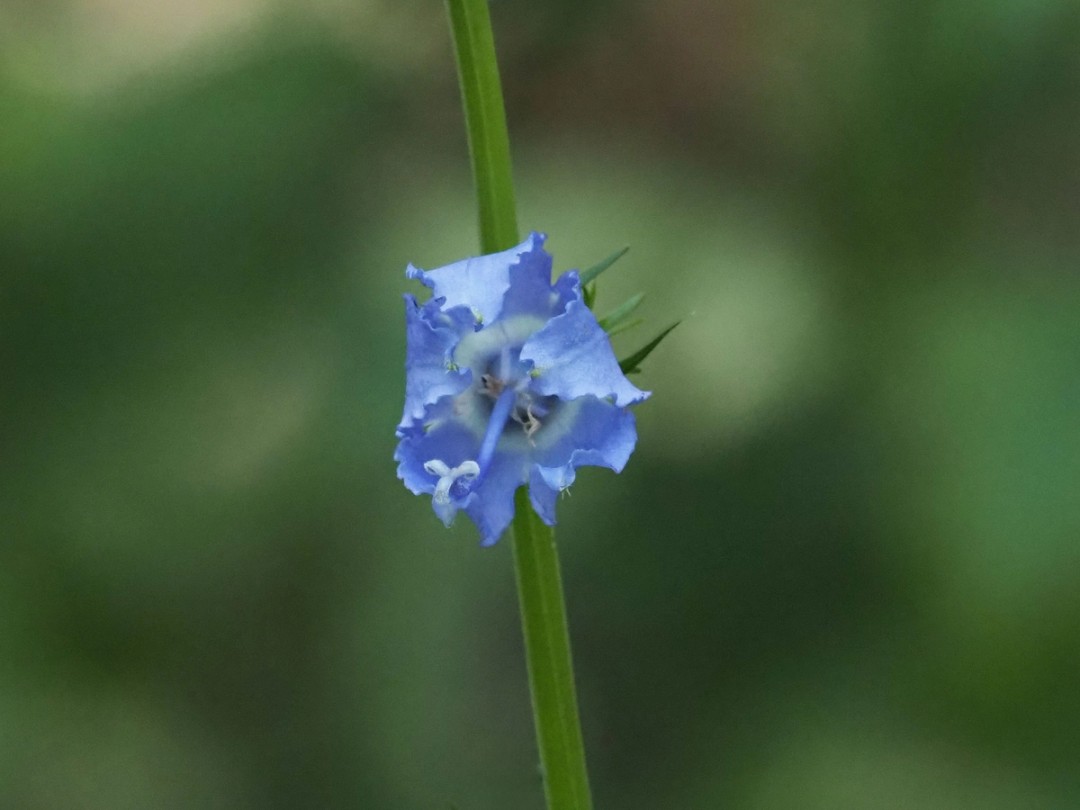
Petals closing
The 5- sided ovary is centered at the base of the flower. An extended style protrudes from the center of the ovary, providing a pathway for the pollen tube. To avoid self-pollination, the plant has a flowering sequence with the male phase occuring first, followed by the the female phase (protandry).
Initially the style is angled downward and covered in pink hairs that have a 'furry; appearance. These hairs are coated in pollen which is collected by pollinators (bees).
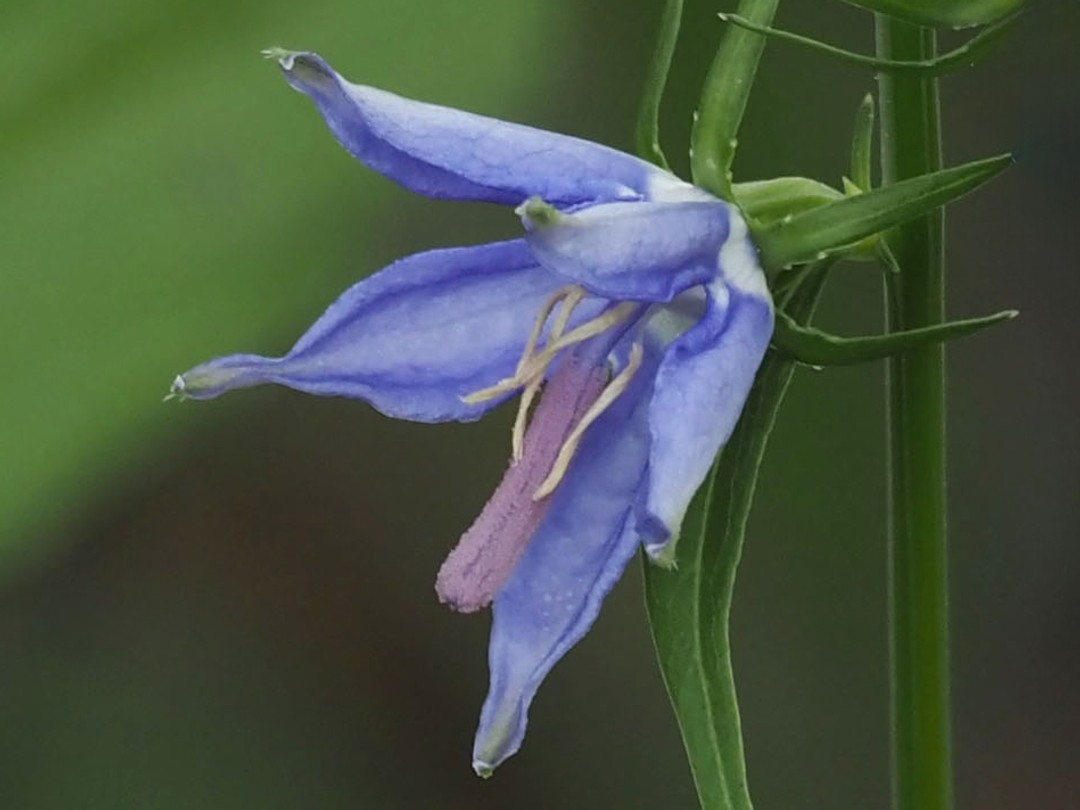
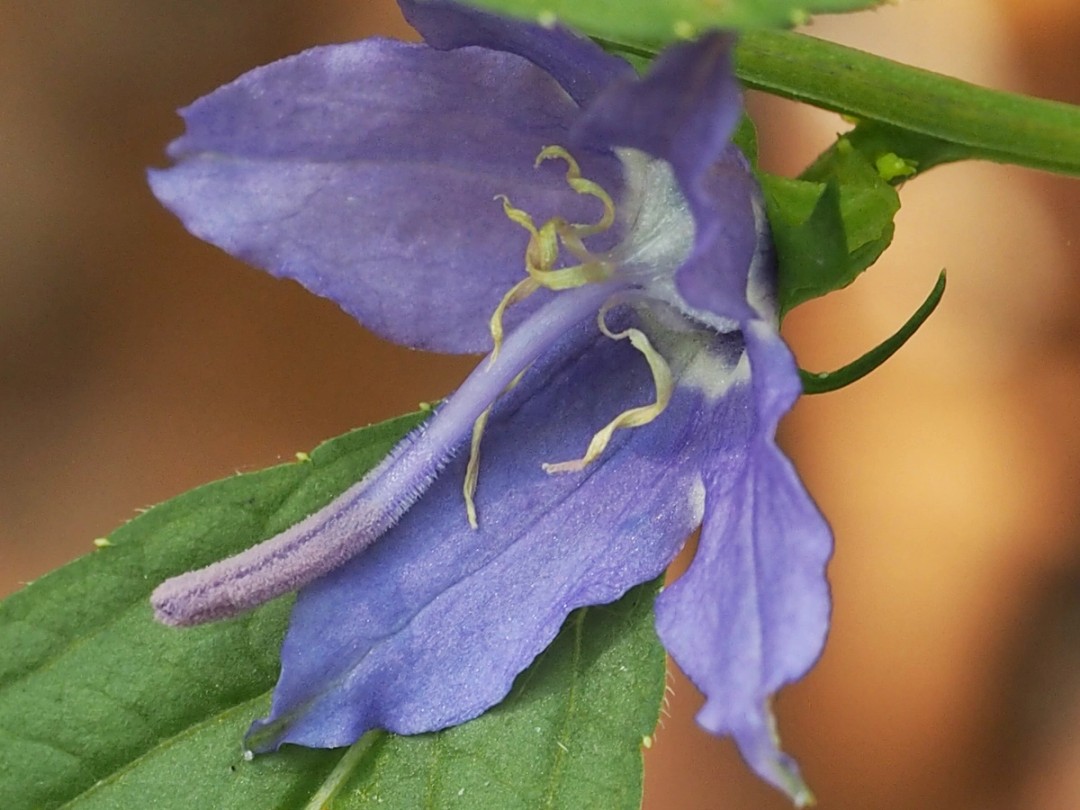
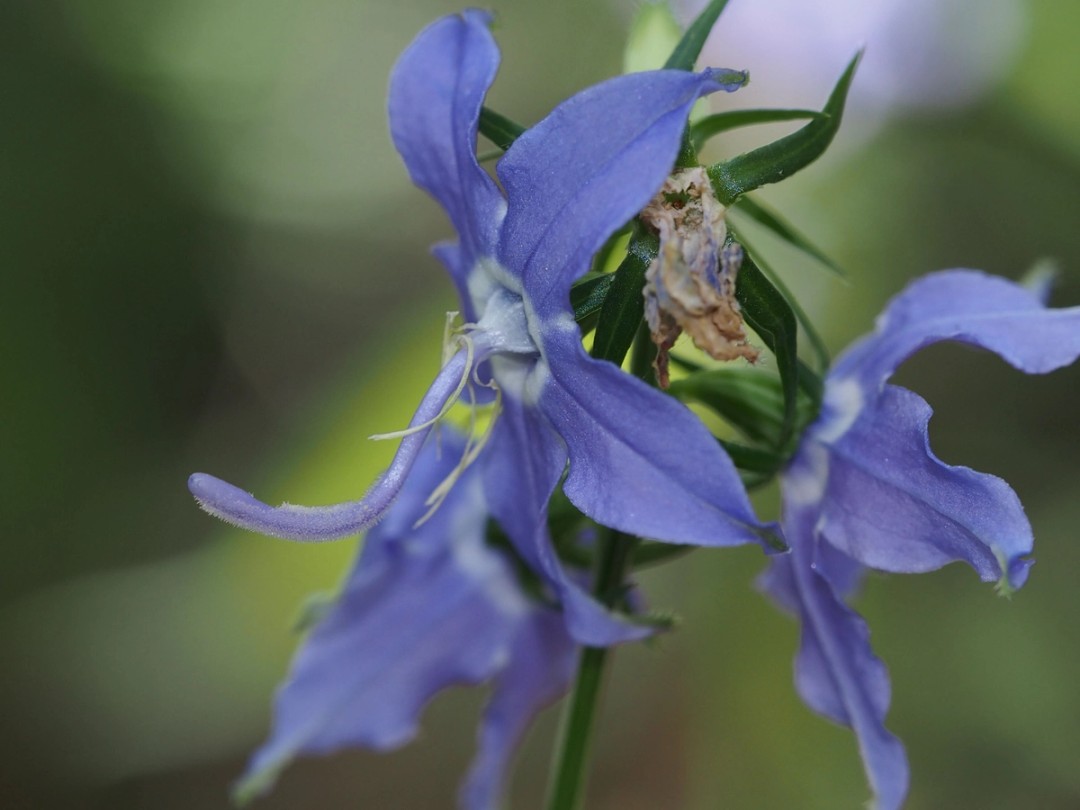
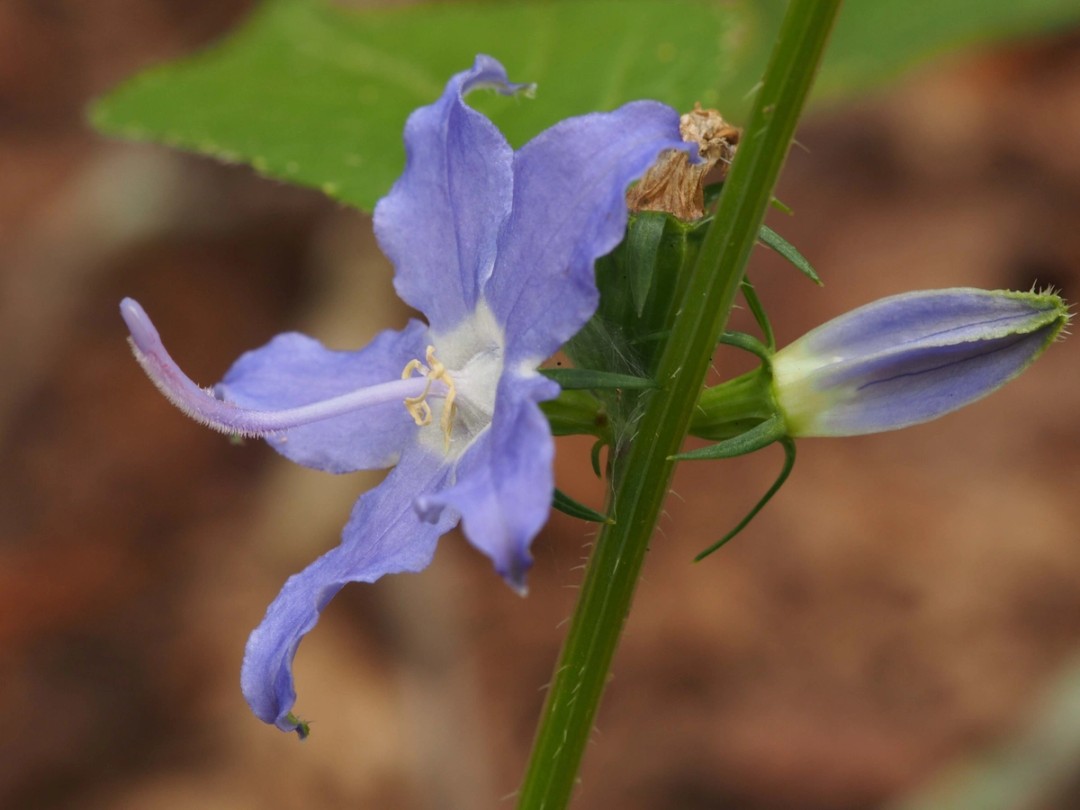
The female stage of the plant is delayed until the majority of pollen has been removed and the hairs have retracted into 'pockets' within the style. At this point, the 3 parted stigma (of the style) opens its white lobes and the style curves upward. Five stamens are located at the white base of the flower. The withered anthers are light yellow to gold and long and curly .
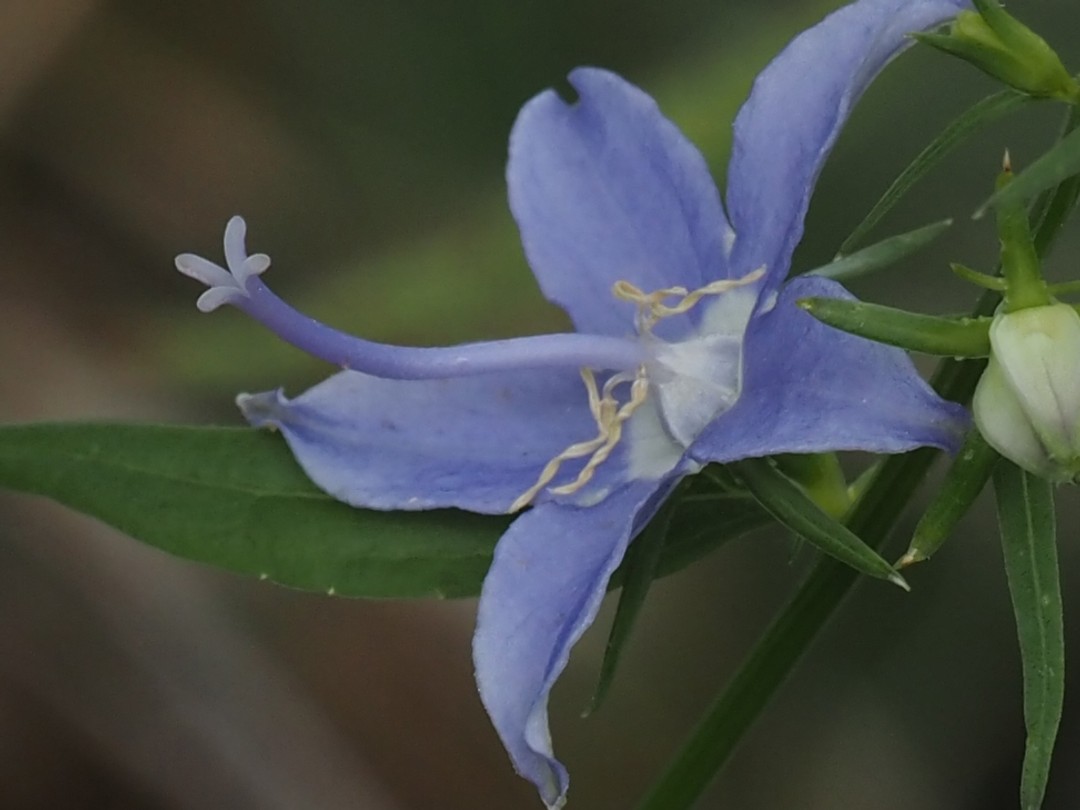
Divided style, gold colored stamens Style curved upward
DESCRIPTION
Campanula americana is an annual or biennial depending on when the seeds germinate (fall or spring). The plants readily self seed with germination somewhat erratic. Depending on soil, weather and other factors, plants can vary in height from 2 to 6 feet tall. While typically unbranched, secondary branches may occur. The lower stem is pubescent with decreasing pubescence toward the top. If cut or broken, the stem exudes a milky juice.
The large, alternate leaves vary in shape depending on their stem location. They may be up to 6 inches long.
After flowering, flattened seed capsules appear that eventually develop pores at their tip from which mature seeds spill.
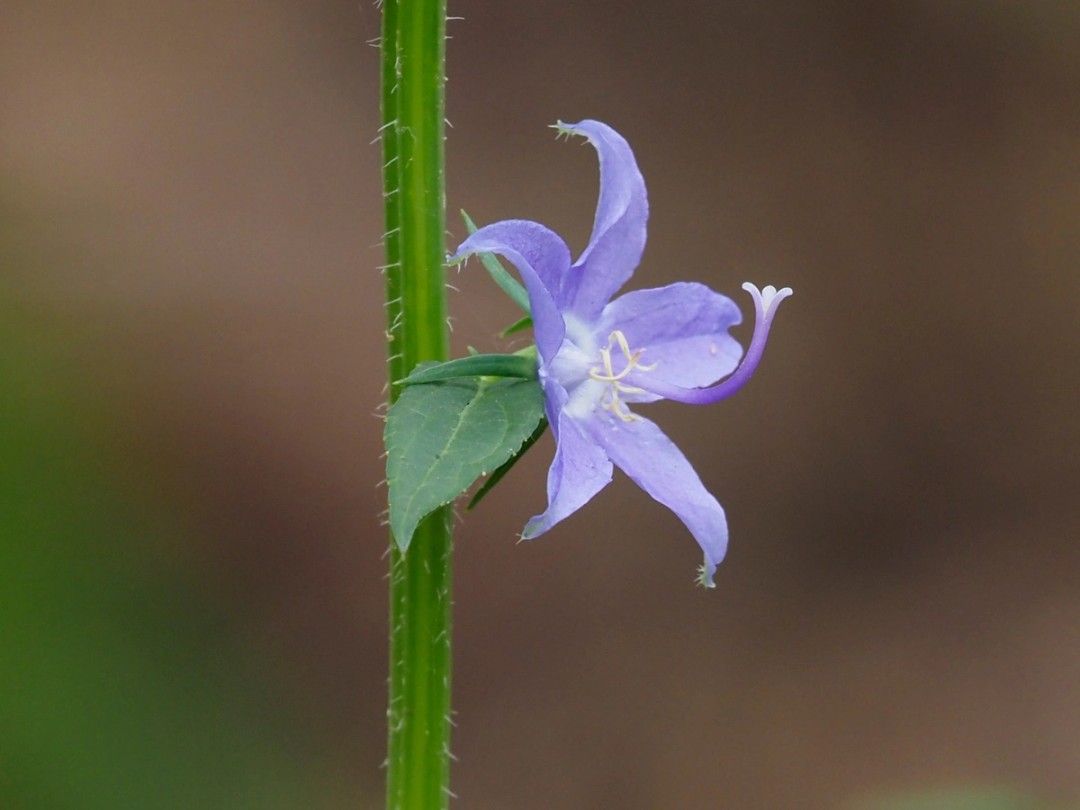
Hirsute stem 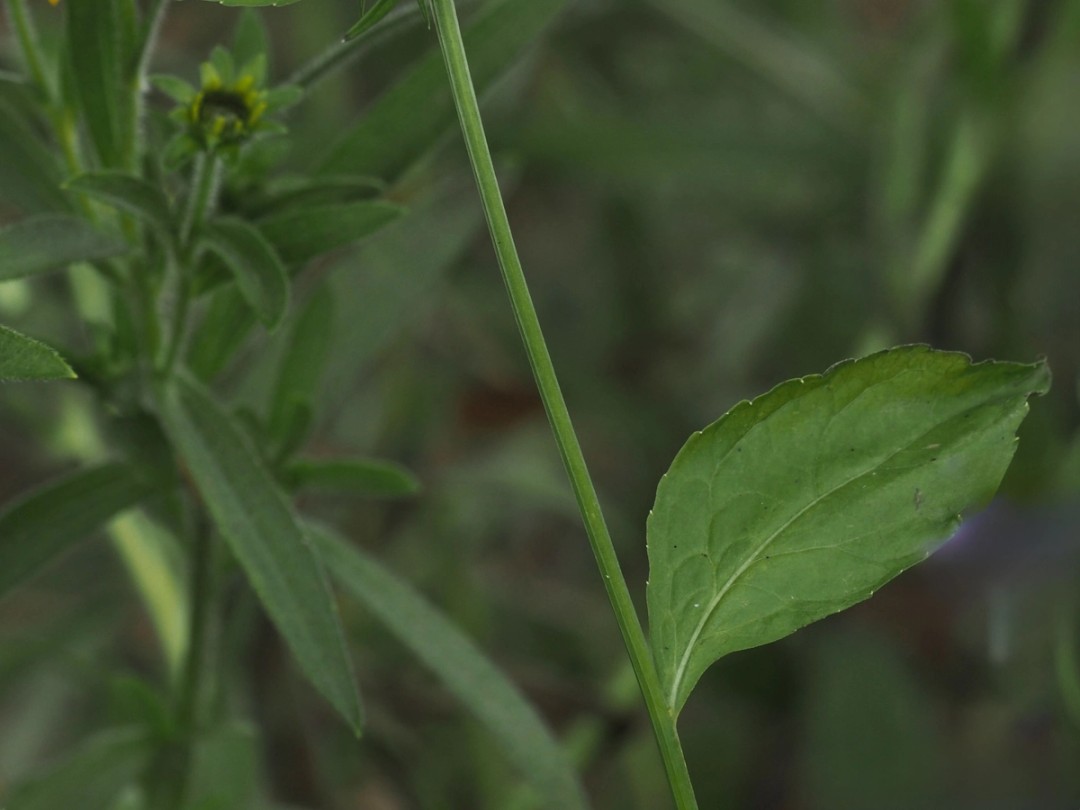
Stem and leaf 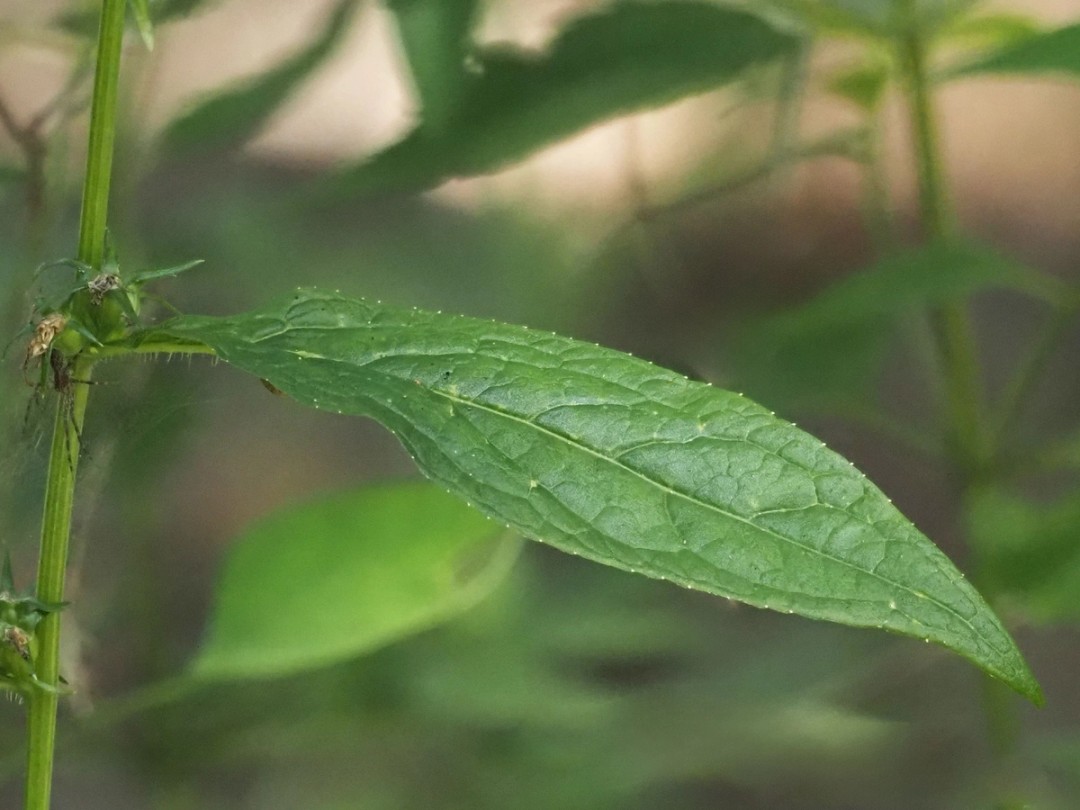
Leaf 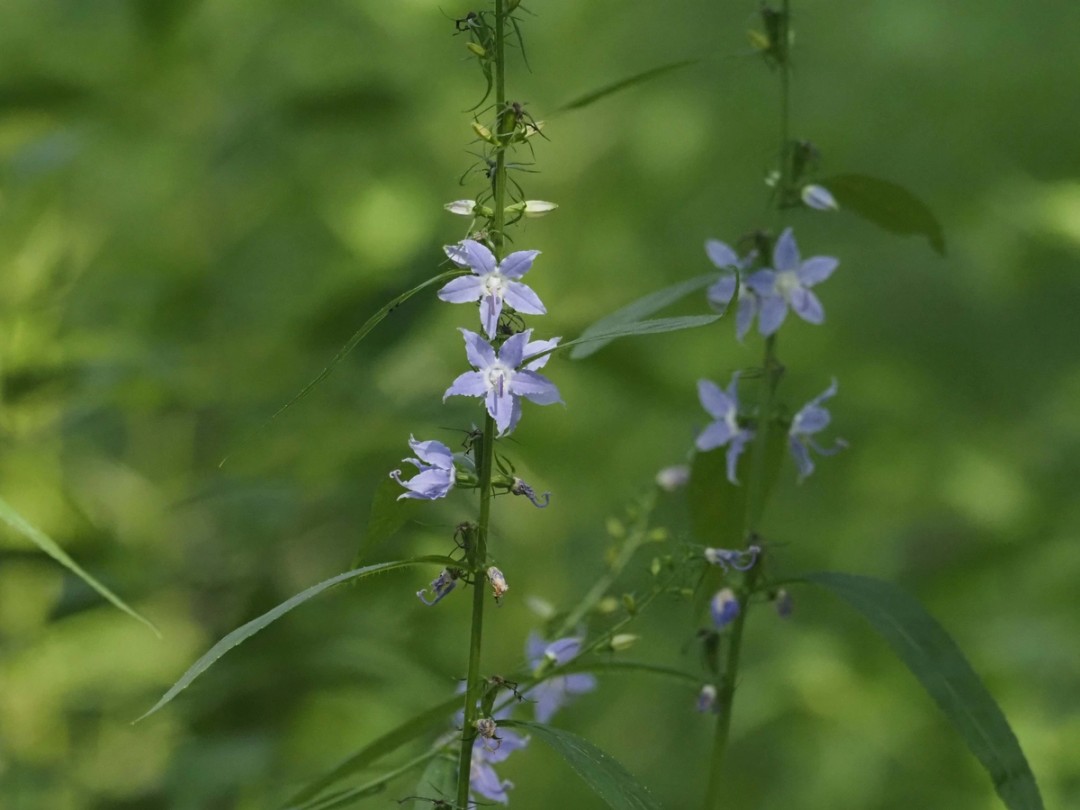
Flowers, stem and leaves
POLLINATORS
Campanula americana has a specialist bee (oligolectic) known as the Bellflower Resin Bee (Megachile campanulae).*
Long-tongued bees such as bumblebees and leaf-cutting bees are the key pollinators of Campanula americana.
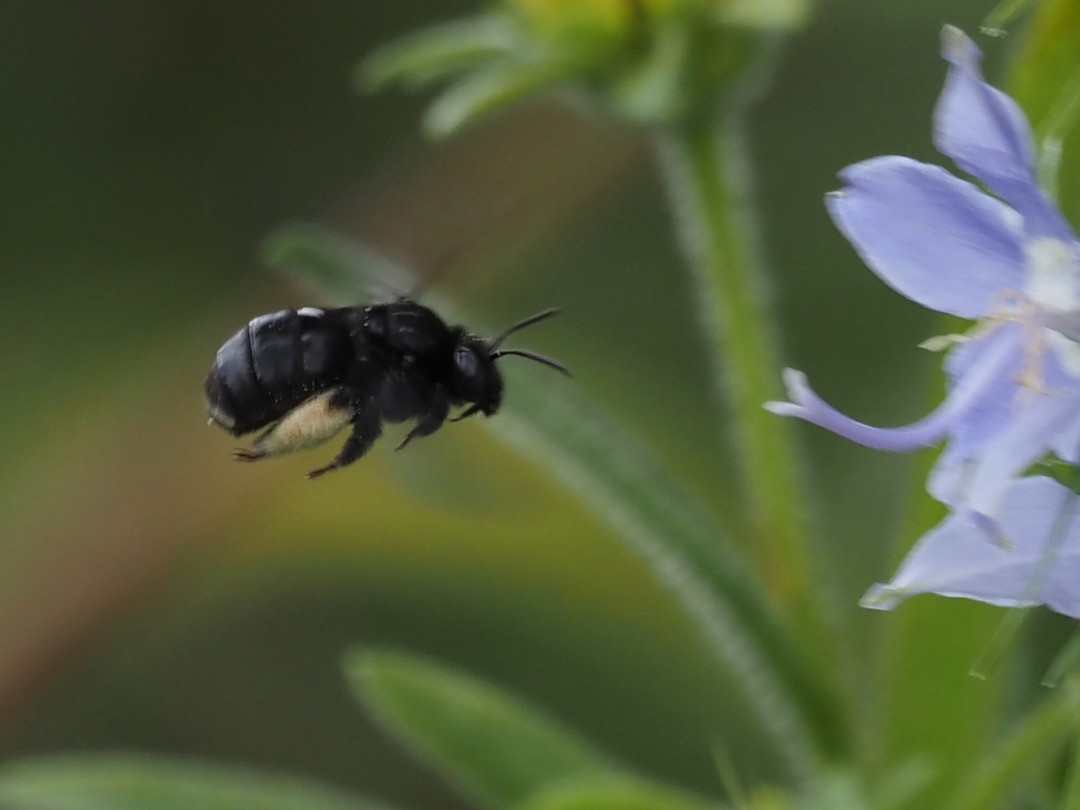
Long-horned bee 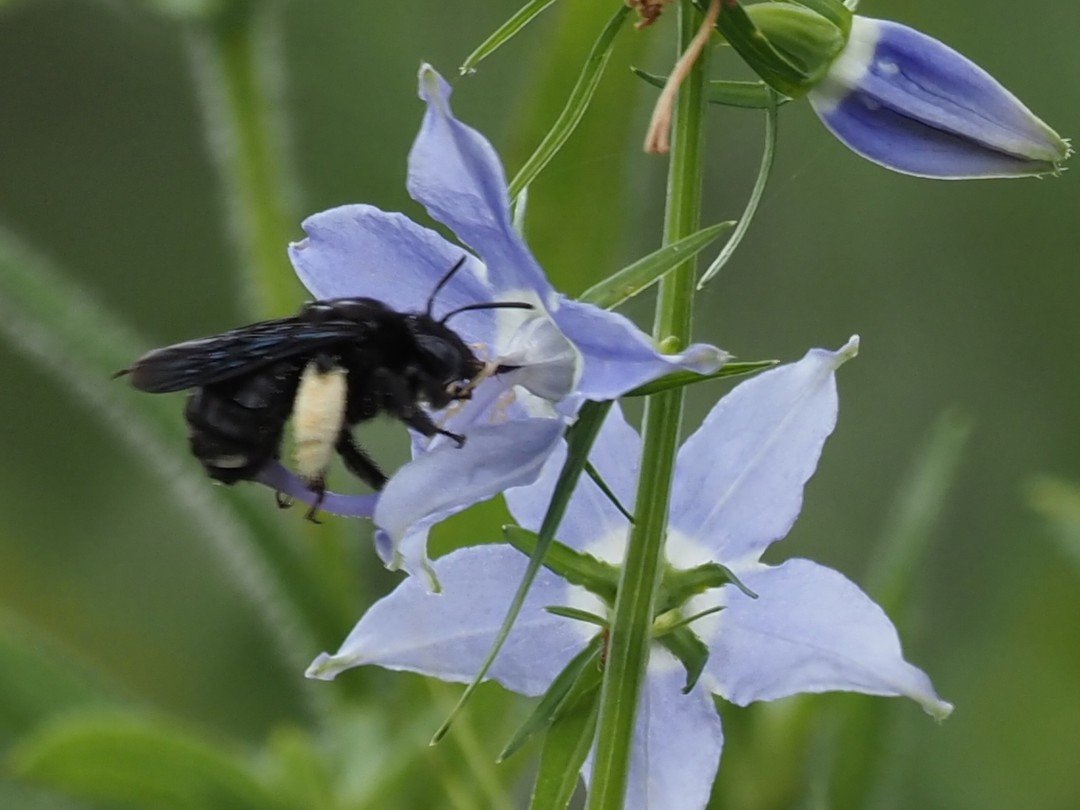
Long-horned bee
Halictid bees, butterflies and skippers also visit the flowers and may act as pollinators.
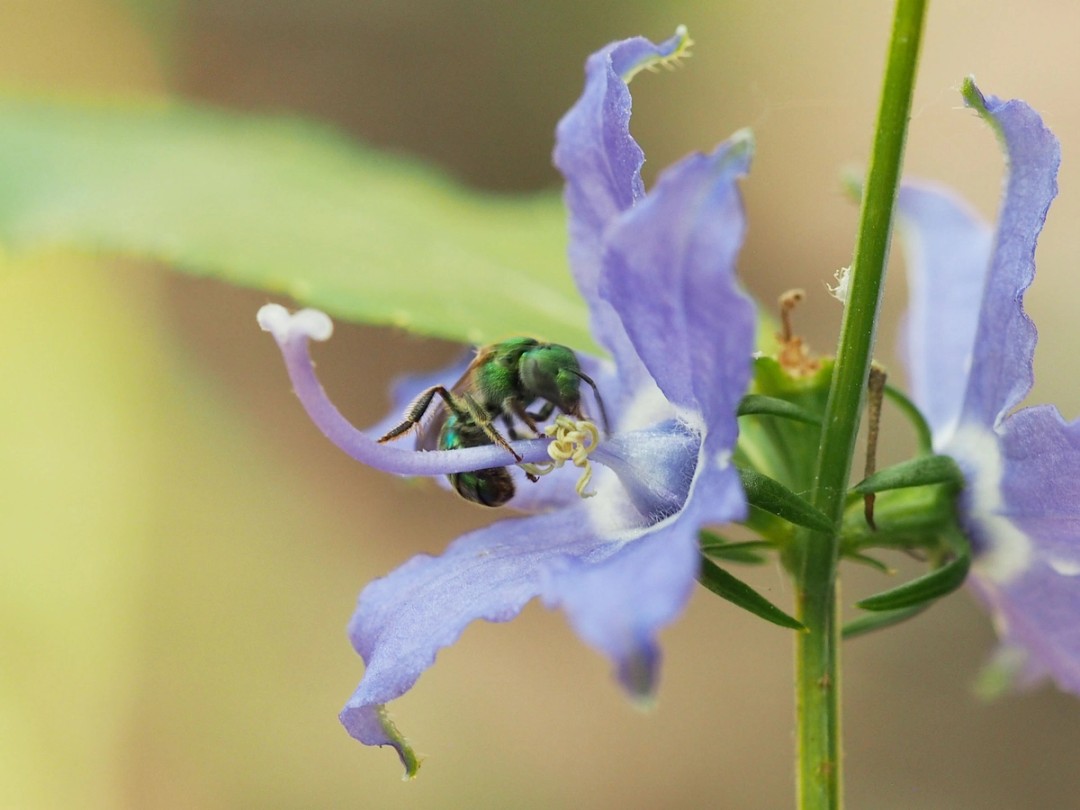
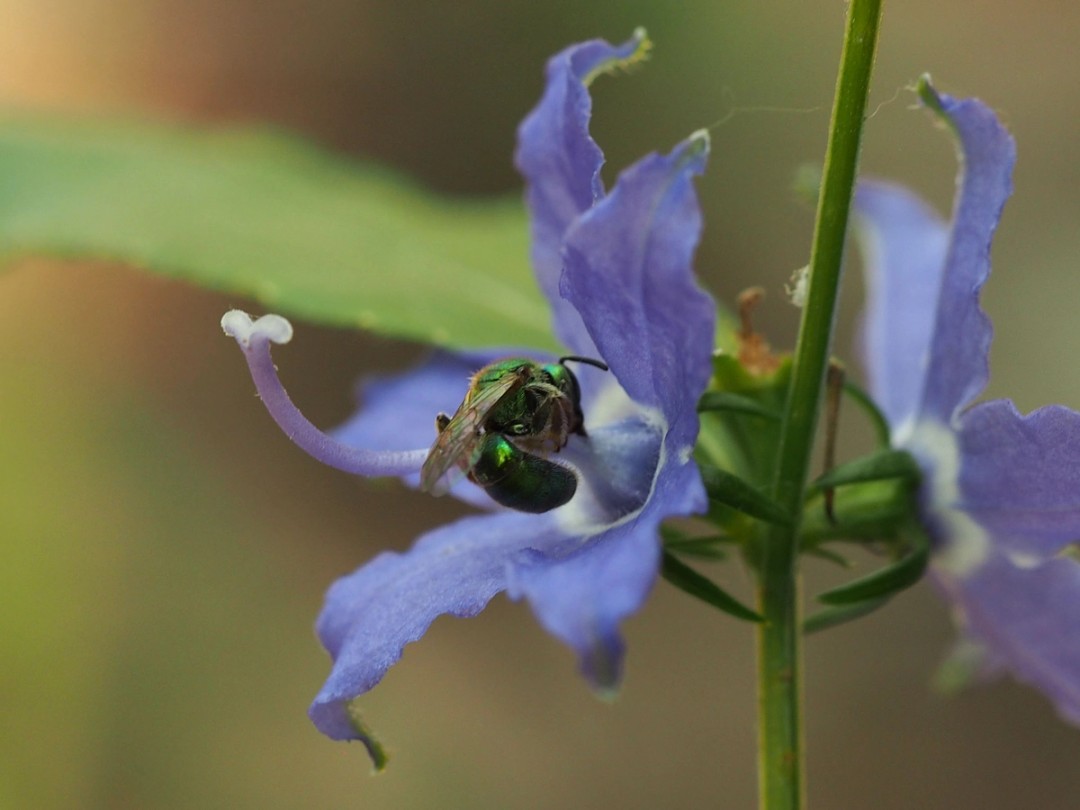
Syrphid flies visit American bellflowers but they are not effective pollinators, being too small.
* Specialist bees collect pollen from only one to a few plant species. Hence, they rely on those plants for survival.
PLANTS GROWING NEARBY
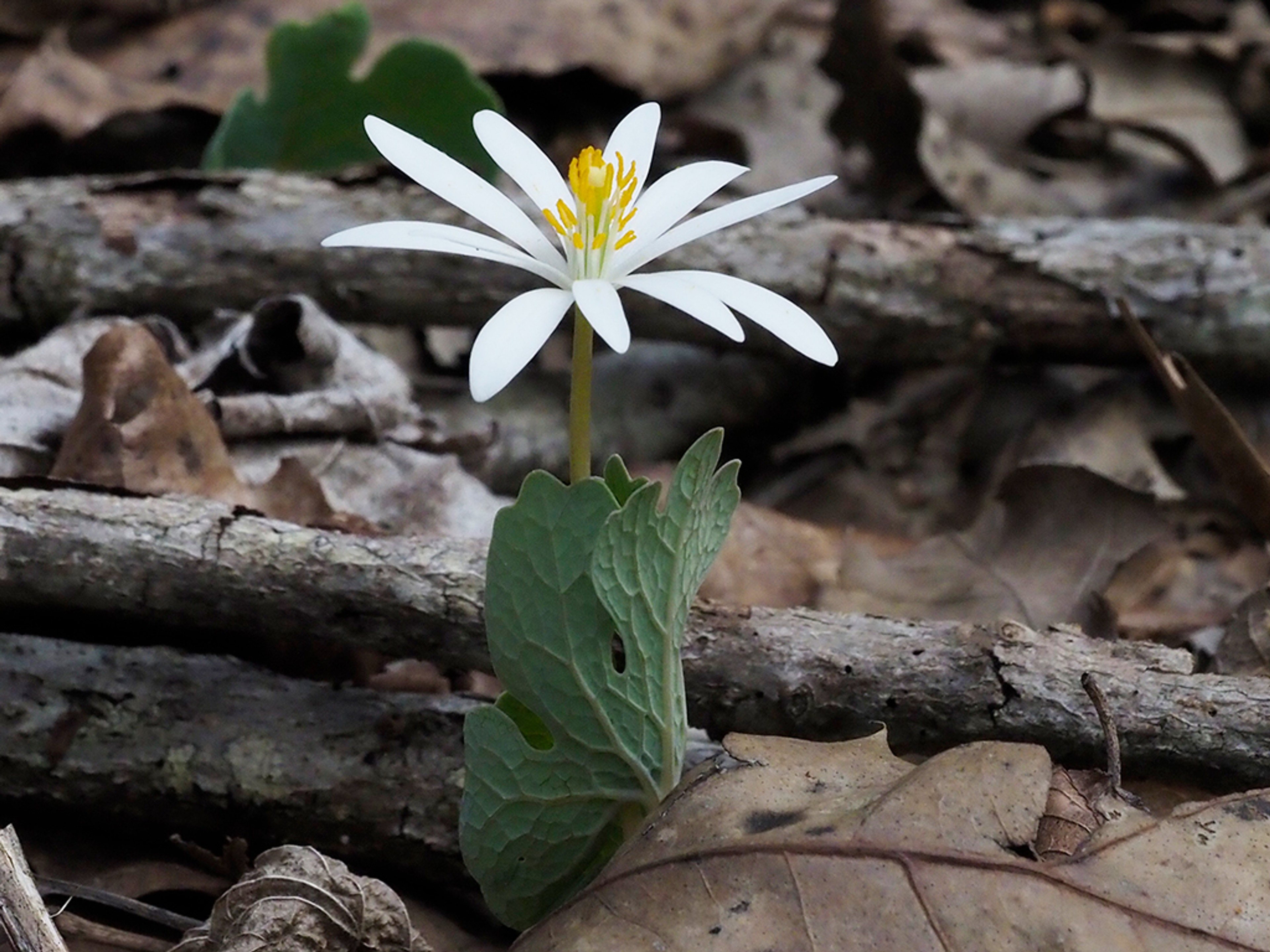
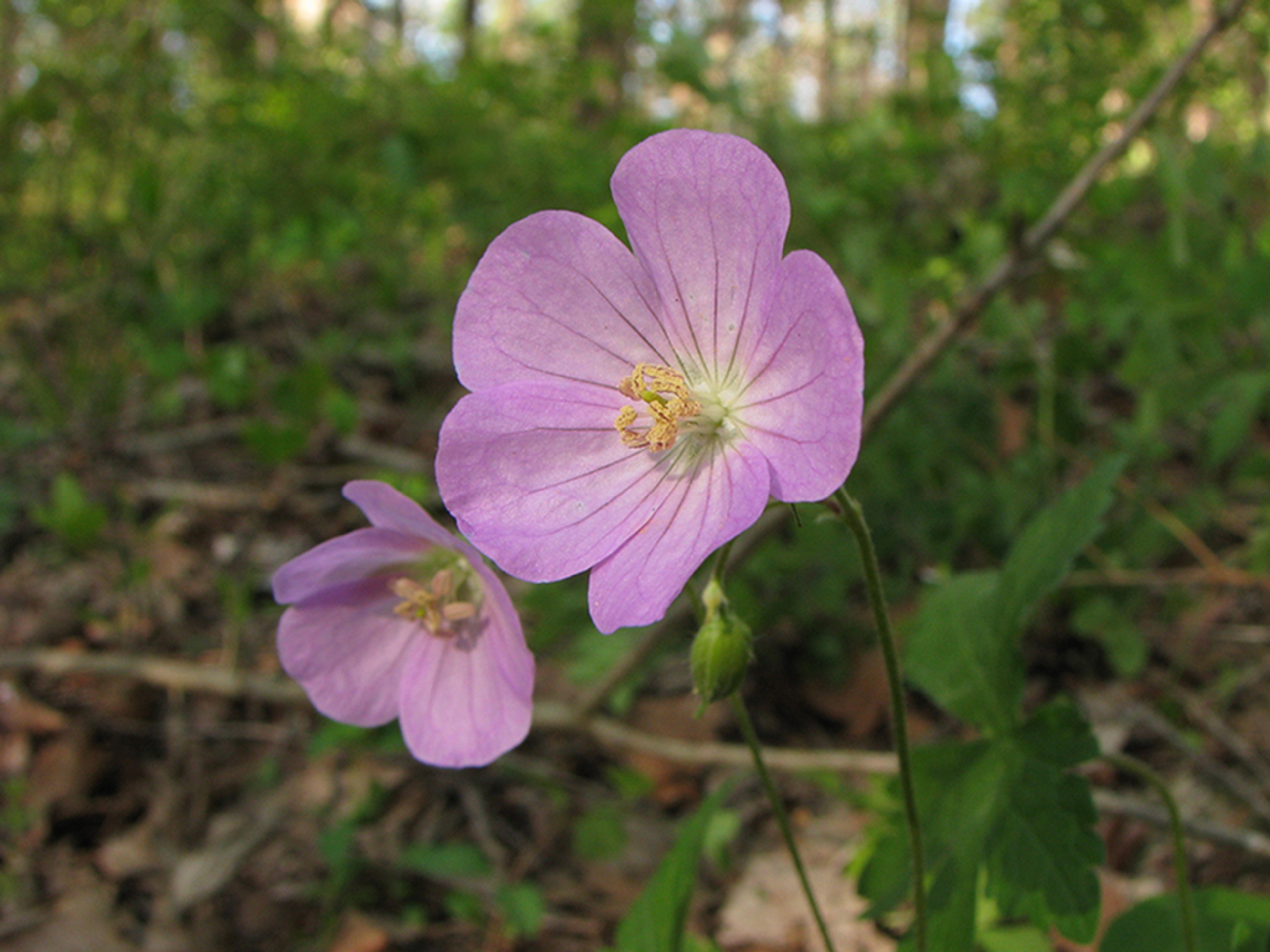
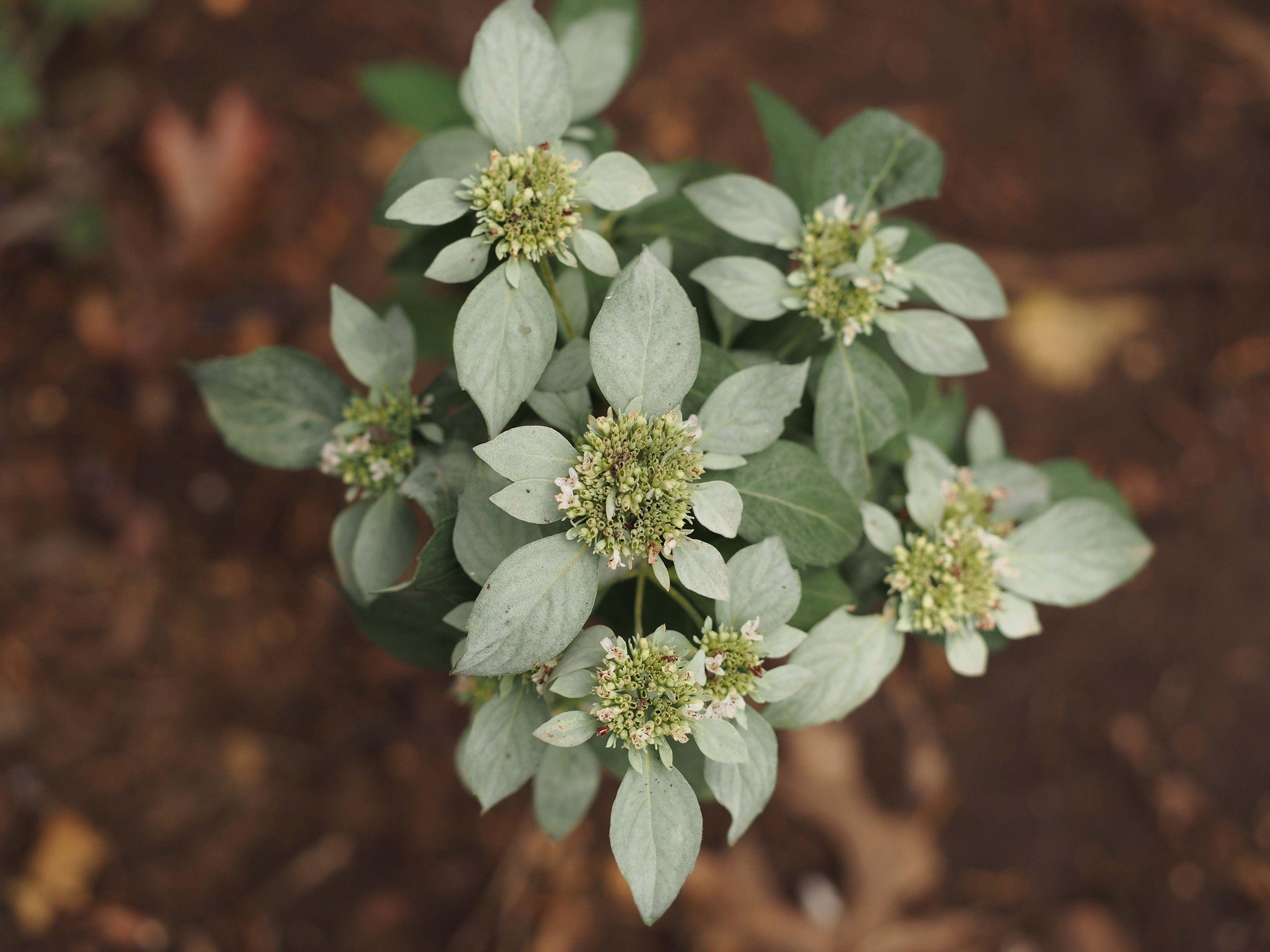
I often see Tall bellflower growing near White snake root or White leaf Mountain mint. Another common companion I've observed is Rudbeckia triloba.
Tall bellflower often appears in woodland habitat where spring ephemerals such as Bloodroot, Woodland phlox, Pale corydalis and Purple cress bloomed much earlier (March and April).
HABITAT
American bellflower is found in open woods, woodland edges and along creeks.
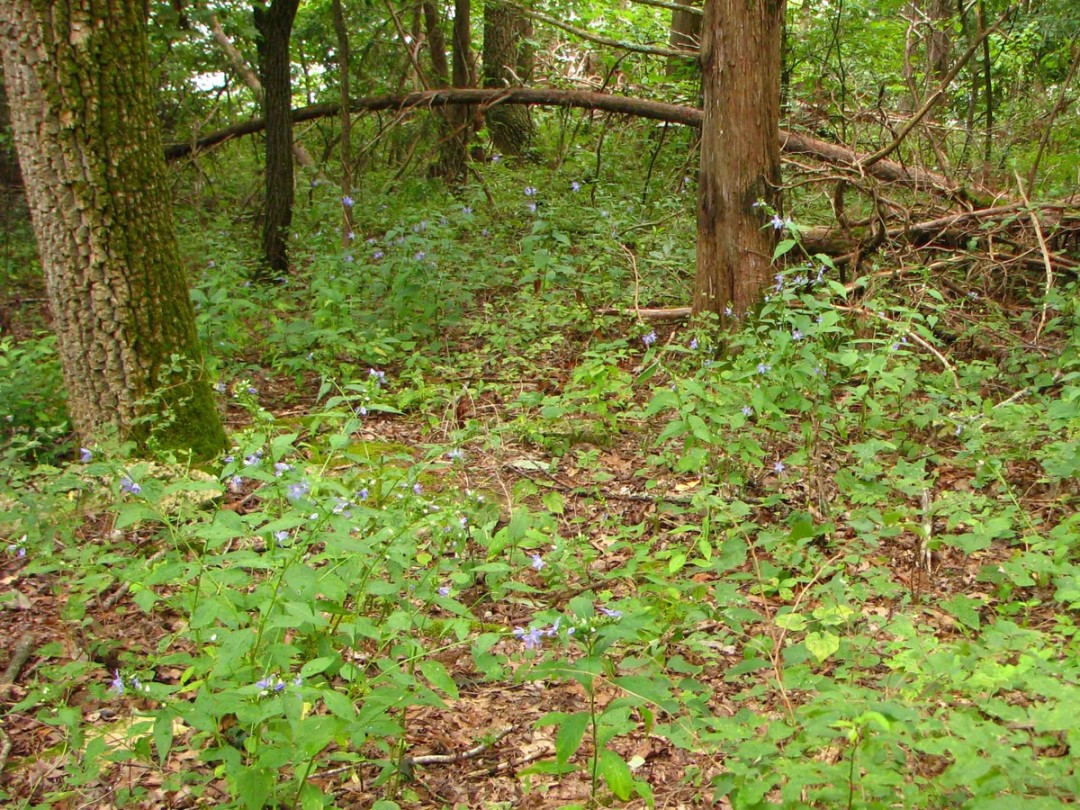
Open woods Woodland edge
CONSERVATION STATUS
It's great news that this beautiful blue native has an overall Secure status on Natureserve. However it is shown to be struggling in several states across its range. It is Critically Imperiled in 3 states (Louisiana, Mississippi and New York), Vulnerable in Mississippi and South Carolina and Apparently Secure in Georgia, North Carolina, Virginia and Kansas with Secure status in West Virginia, Pennsylvania, Kentucky, Indiana and Iowa. All other states within its range show No Status Rank.
In Arkansas it has a Conservation value of 6 meaning "Typical matrix taxa in intact, stable habitats, with some limited ability to respond to destabilizing forces and repopulate areas from which they have been extirpated."
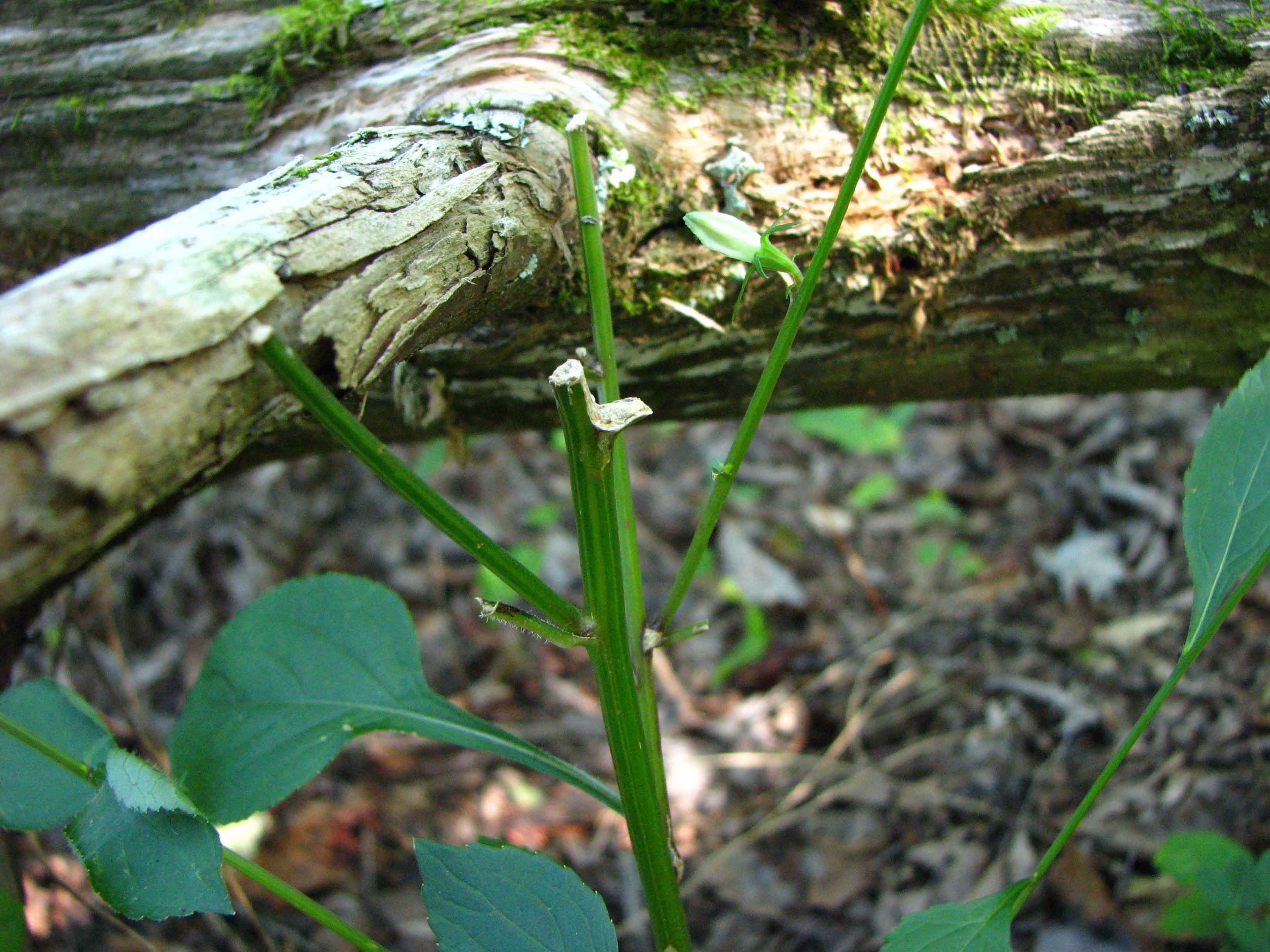
INTERESTING TIDBITS
I've read mixed information as to whether American Bellflower is browsed by deer with some sites stating it is deer resistant and others that its foliage is consumed by both deer and rabbits. Below is a photo of a deer broused plant on our property. That being said, I don't regularly find these plants being broused by deer. It must be fairly low on their list of favorites as we have a lot of deer on our property.