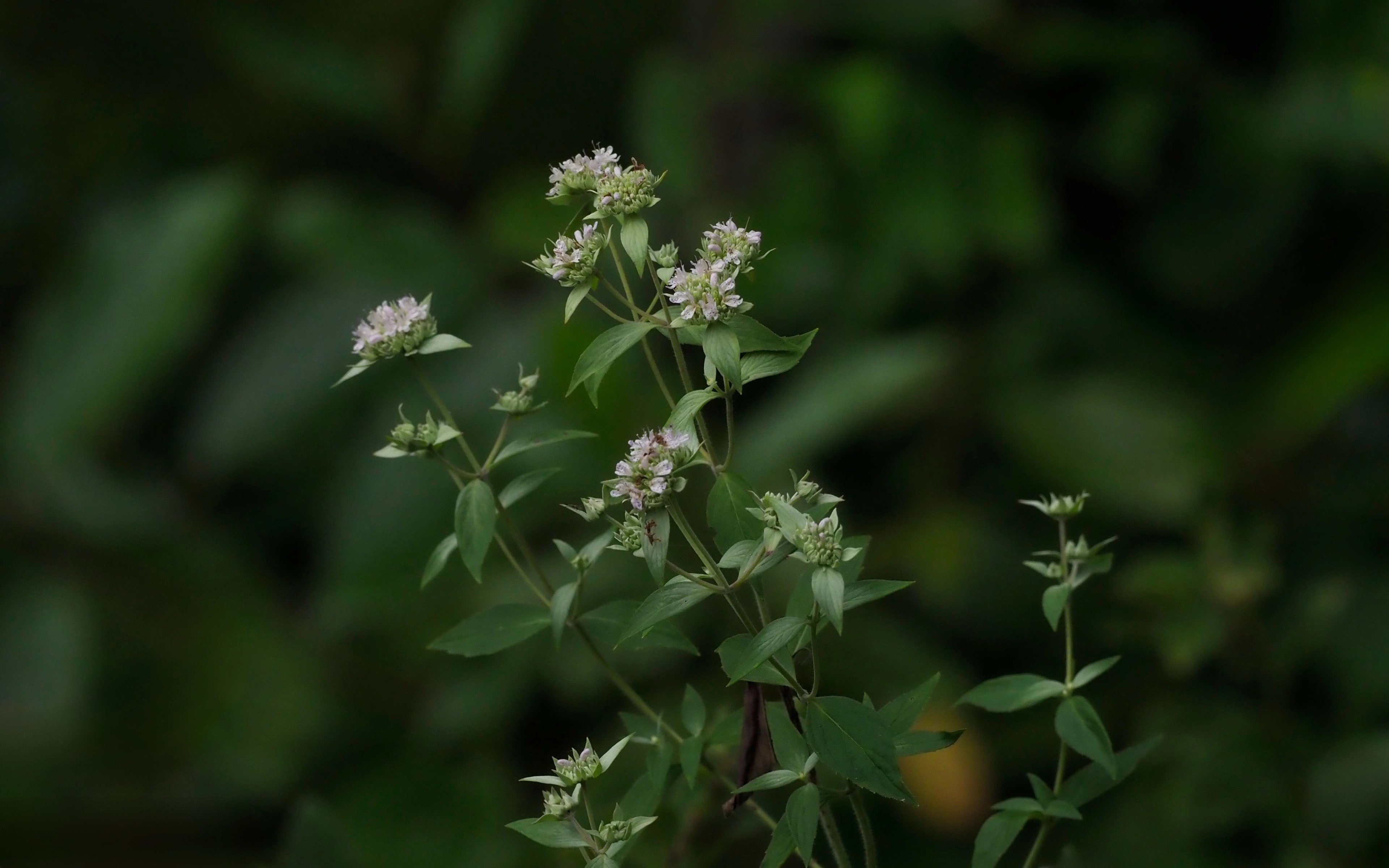
PLANT NAME
The word 'pycnanthemum' is derived from the Greek word 'pyknos' meaning dense and 'anthos' meaning flower. Altogether it refers to the dense clusters of flower found on Mountain mints. The specific epithet 'albescnes' refers to the whitish bracts and leaves of this Mountain mint.
The common name, White-Leaf Mountain Mint is straightforward, relating to the whitish bracts and leaves.
BLOOM
Pycnanthemum albescens buds first appear in clusters at the tips of stems and branches. They sit above the silvery leaf-like bracts. The bracts have dense hairs with a whitish cast. Each flower cluster consists of many, tiny individual flowers. The flowers are white with purplish speckles. Each flower has an upper and lower lip. The upper lip consists of 3 lobes while the lower lip is single-lobed. There are 4 stamens per flower with white filaments and dark reddish orange anthers. The style is white with a bi-lobed stigma.
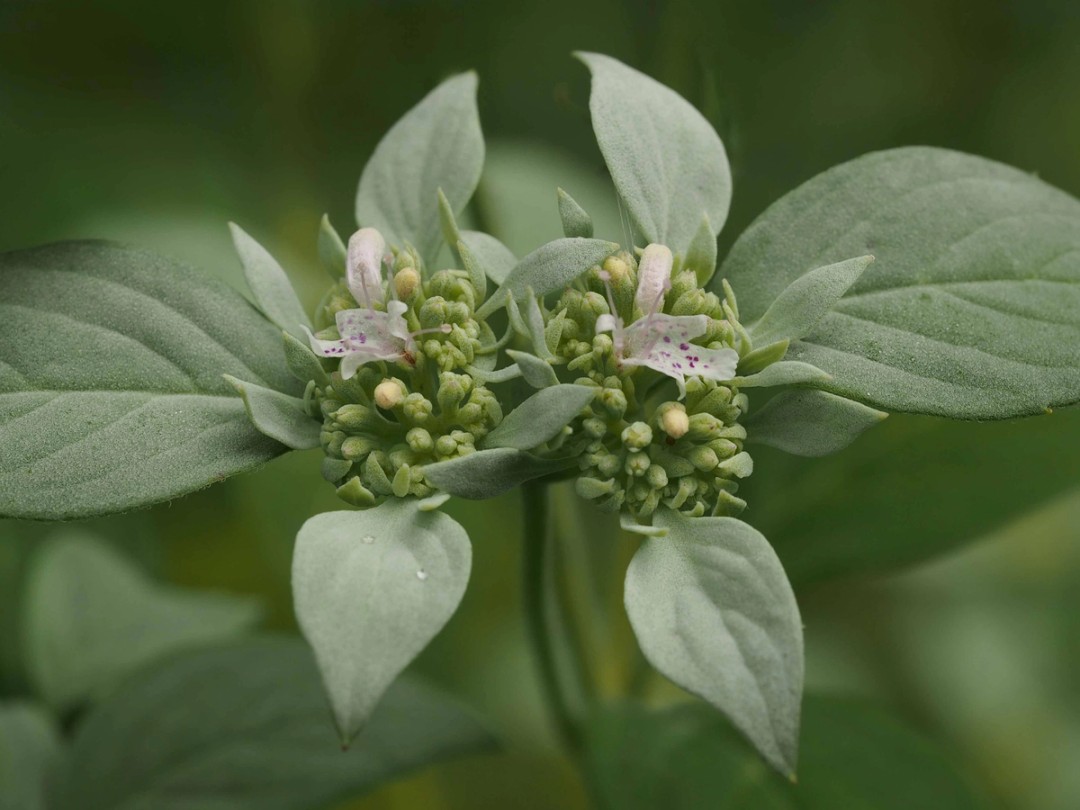
Leaves, bracts buds and new flowers 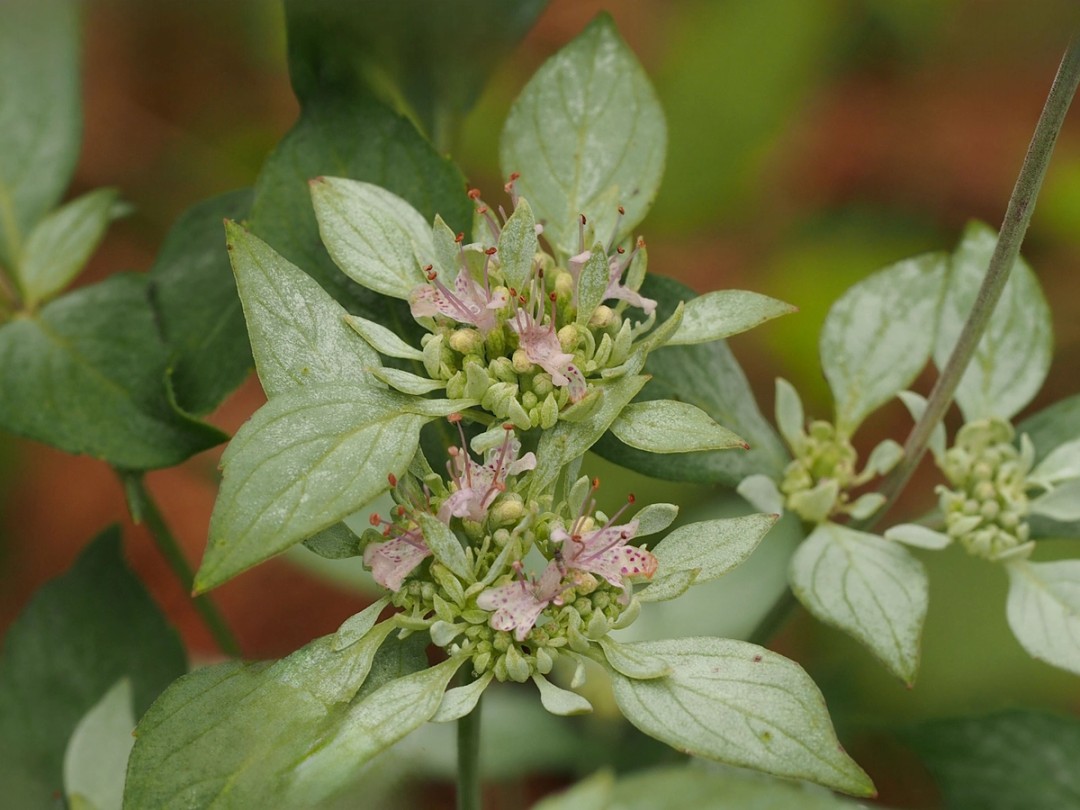
Flowers and stamens 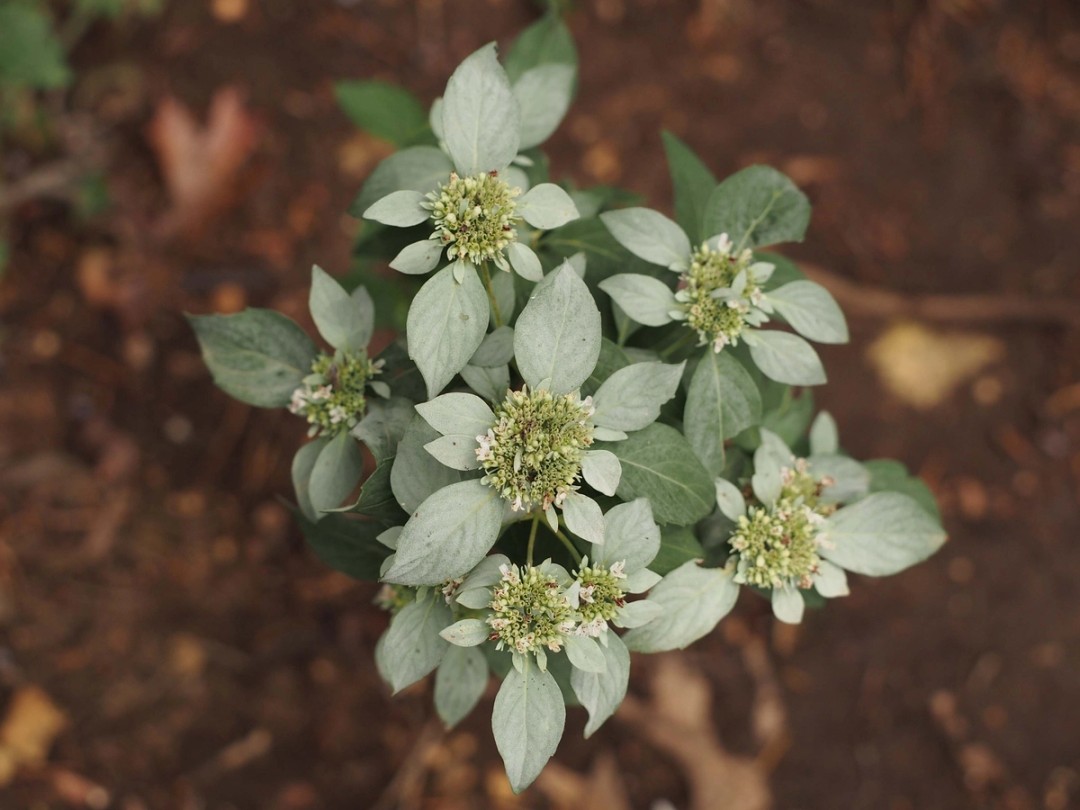
Whitened bracts and flowers 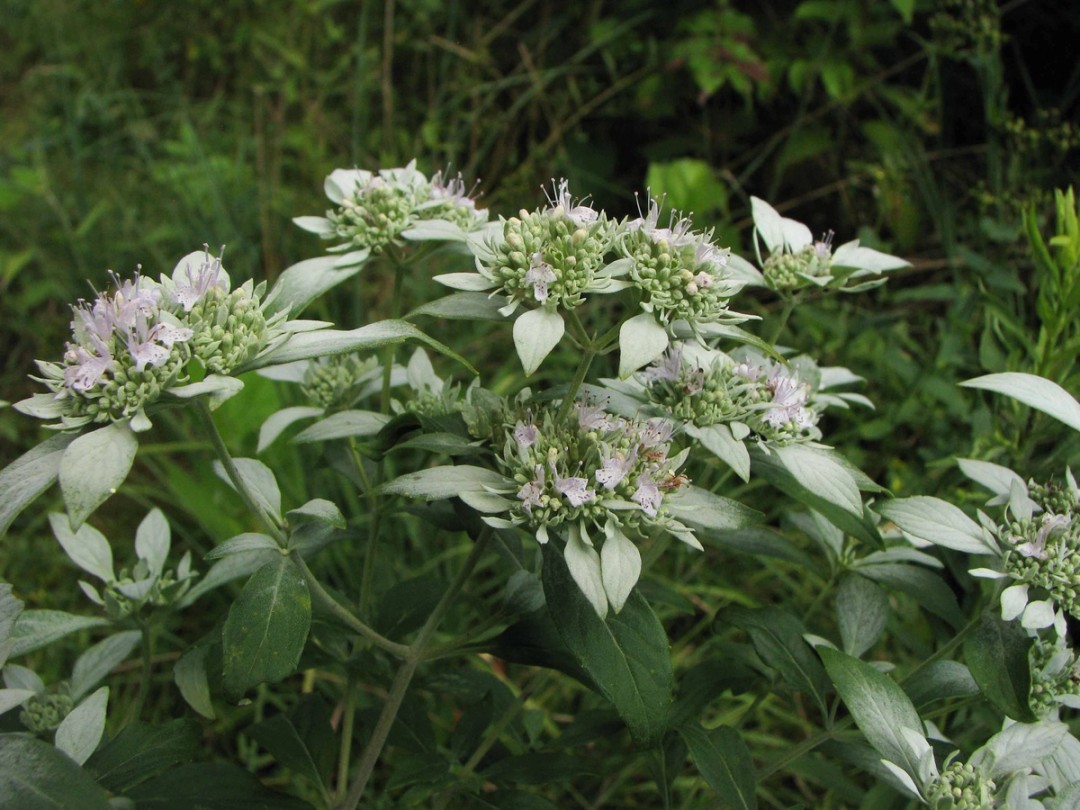
Buds and flowers
DESCRIPTION
Pycnanthemum albescens is a perennial native wildflower. It has multiple hirsute, square stems that support a mature plant up to a maximum height of about 4 feet with a spread of 3-4 feet. Stems are 4-angled and hollow with a heavy pubescence. This mountain mint has big fuzzy, light green leaves that are distinctive in having a whitish cast to the uppermost leaves (developing around the July timeframe). Stem leaves are opposite and lanceolate in shape with short petioles. They have a velvety softness to the touch. Branch leaves are about half the size of stem leaves. The underside of all leaves have whitish hairs giving the plant a downy texture. It only takes a slight squeeze of the leaves to fill the surrounding air with a lovely minty aroma.
The distinctive aroma persists through winter making the plant easy to identify during any season. In spring, the new leaves push up from the earth adjacent to the dried stems from the previous year. Eventually, the old stems fall and by late spring, the new growth has replaced them. The spring growth has a purple tinge to the veins and undersides of the leaves. These early spring leaves look a bit different than the mature summer leaves, but if you bruise one, the minty smell is right there to let you know you’ve got the right plant.
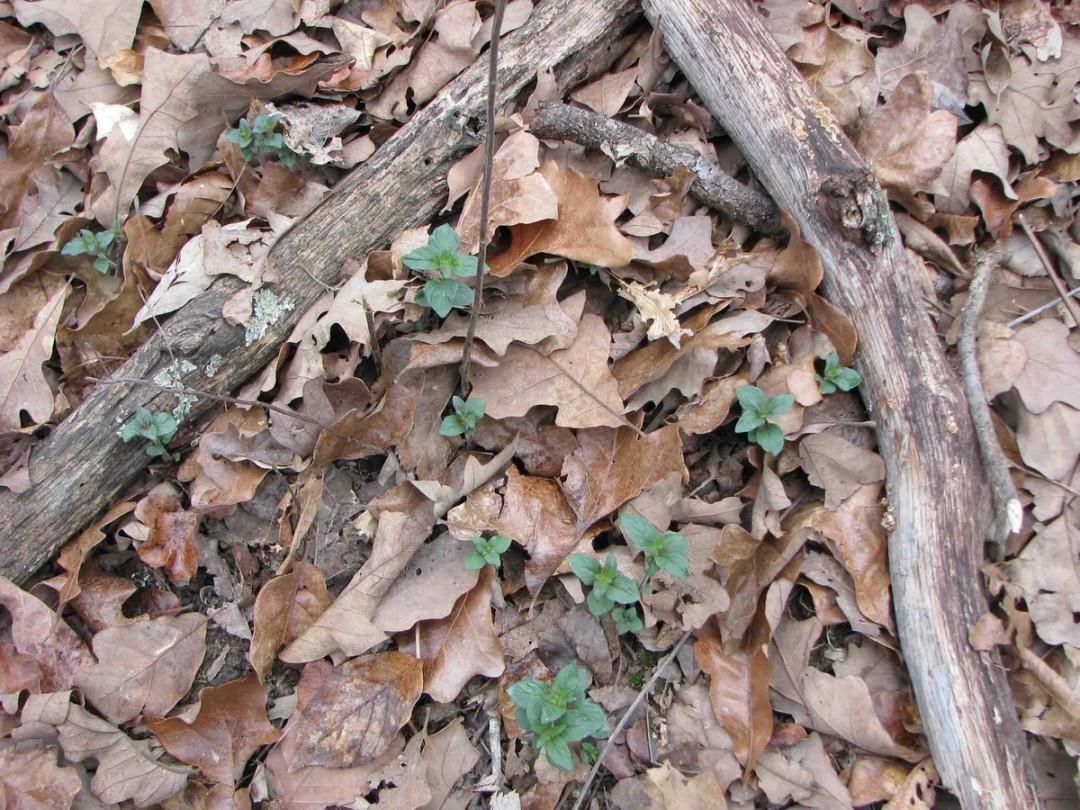
Emerging spring leaves 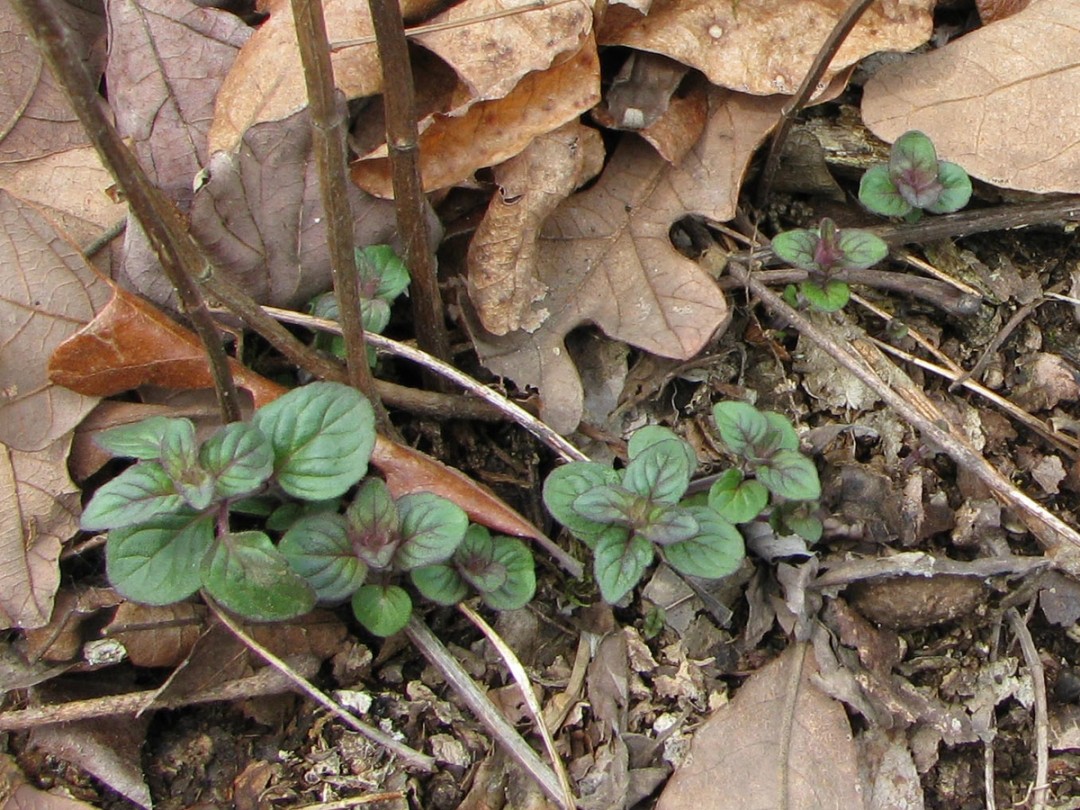
Spring leaves and previous year stems 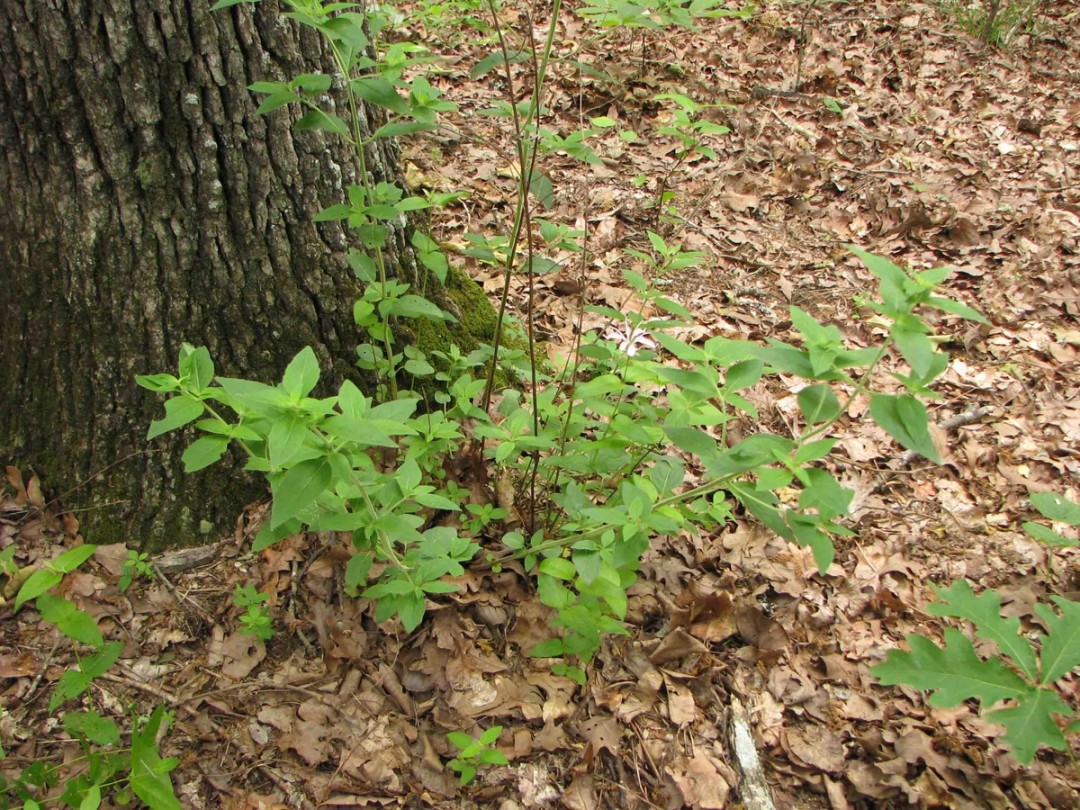
Fresh leaves in spring 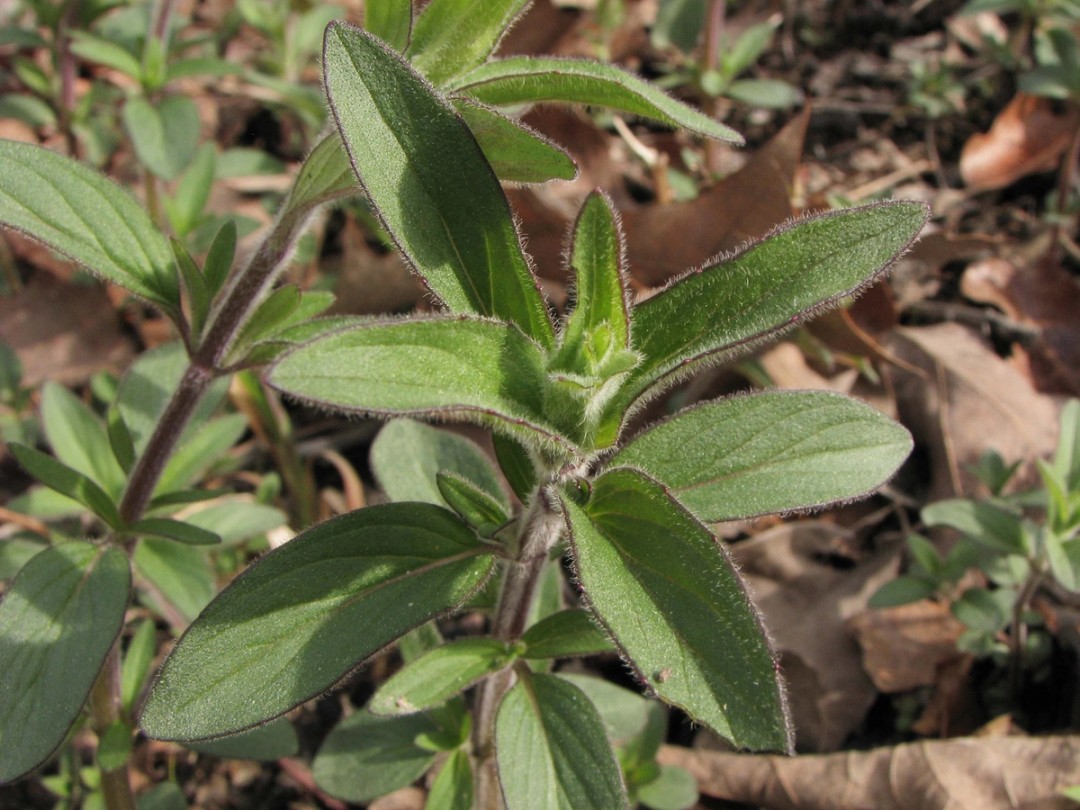
Hirsute leaves 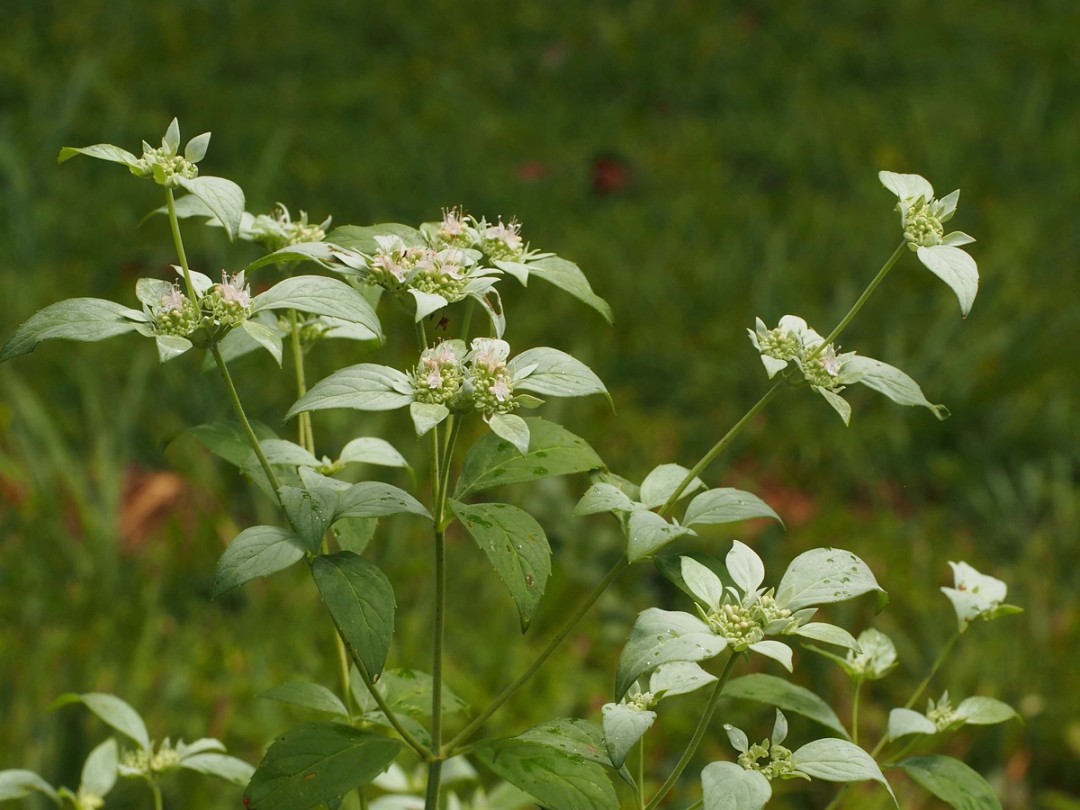
Branch and stem leaves 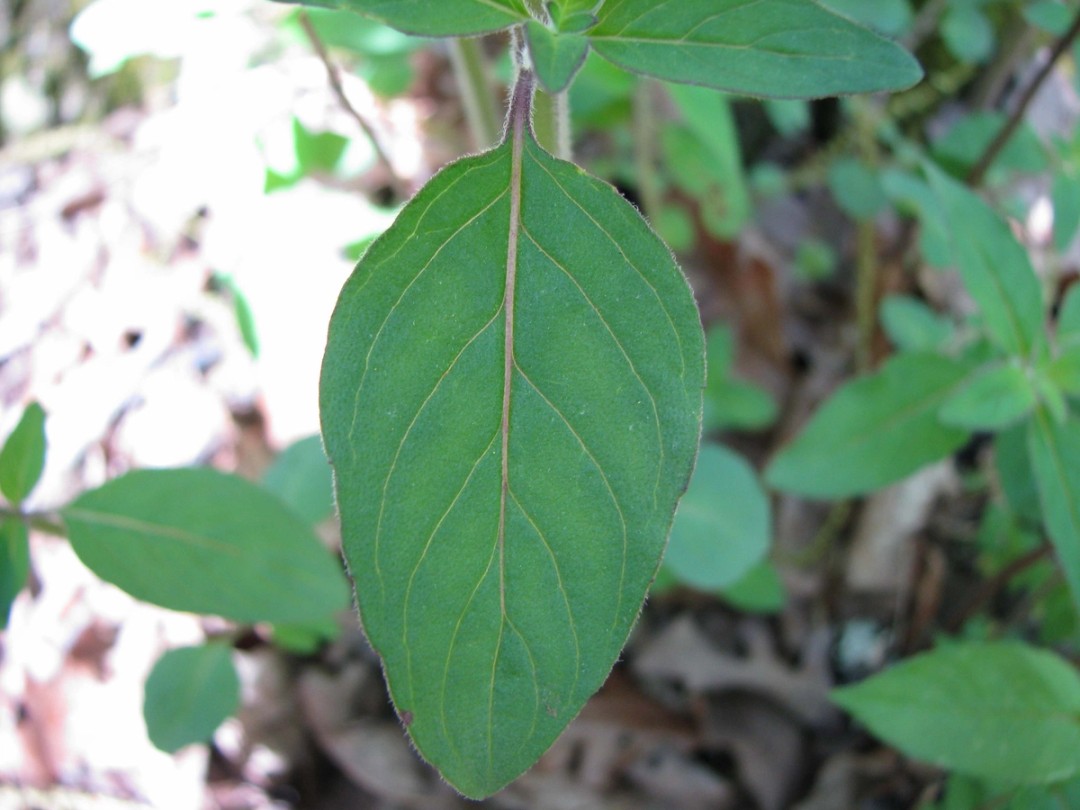
Leaf upper surface
If you would like to collect seed, clip off the late season, dry heads. The seeds can be 'shaken out' by putting the clipped heads in a paper bag and shaking them.
POLLINATORS
The fragrant flowers of White leaf mountain mint are pollinated by a variety of insects including bees, wasps, skippers, butterflies and flies.
Bees and Wasps
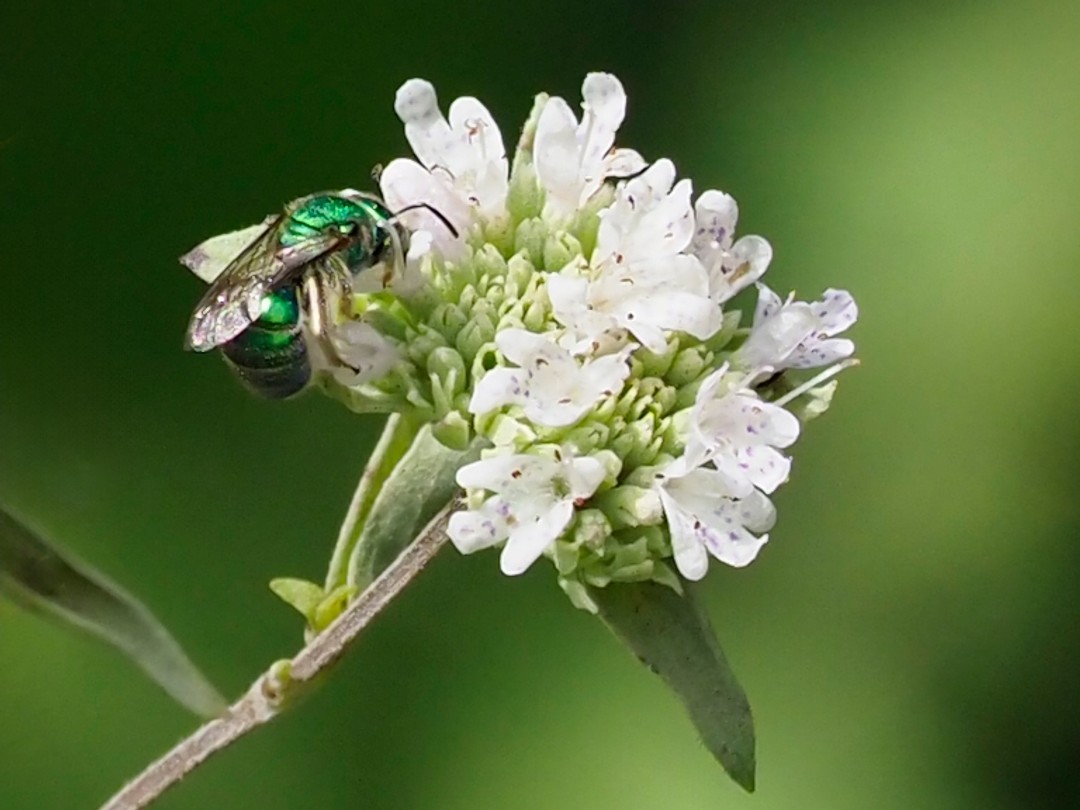
Agapostemon bee 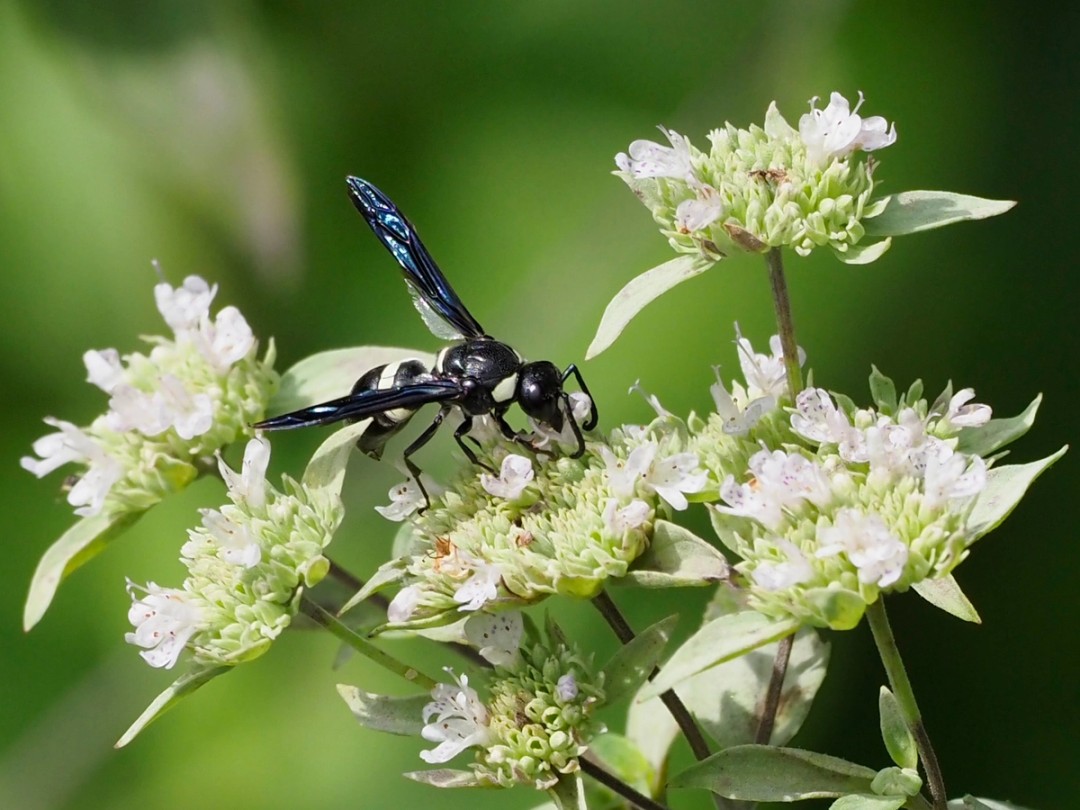
Four-toothed Mason wasp 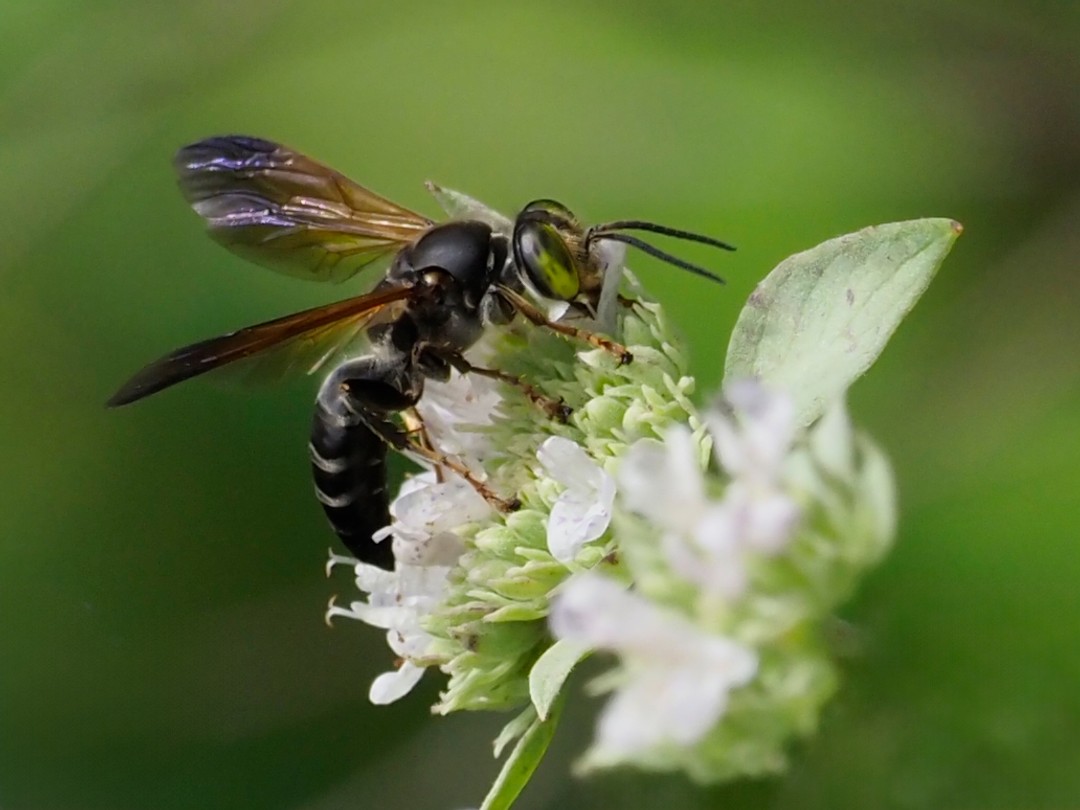
Dark Grasshopper-hunting wasp 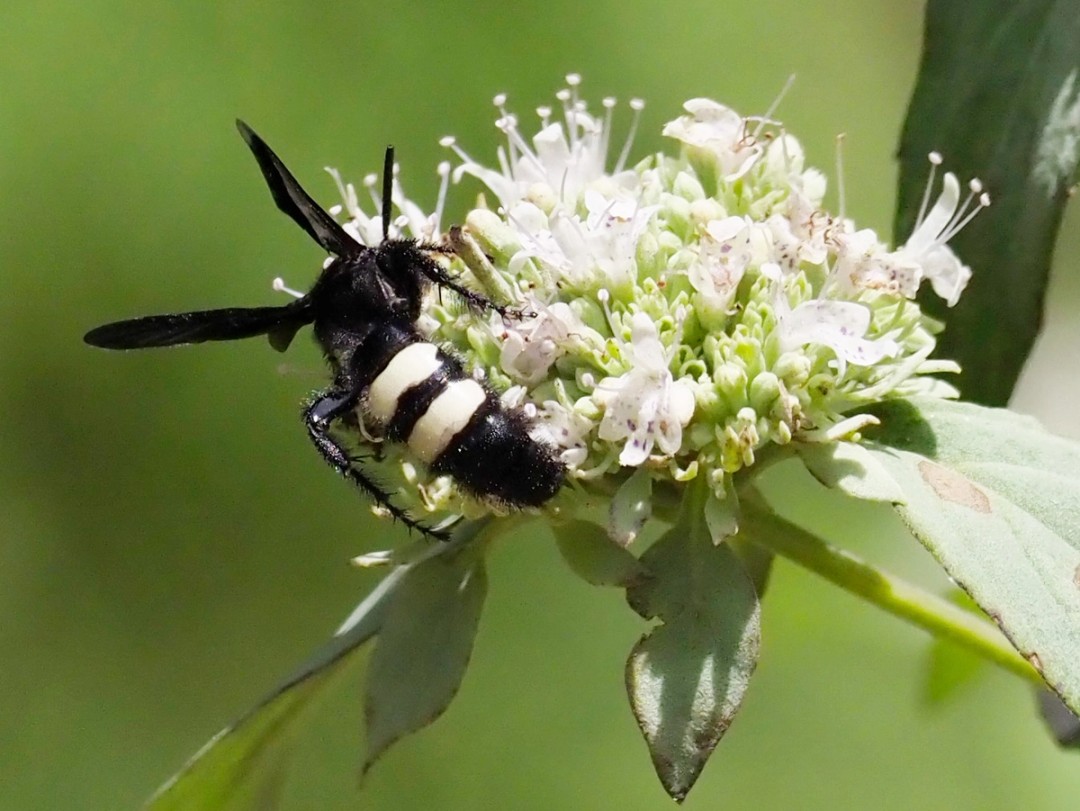
Double banded Scoliid wasp
Butterflies and Skippers
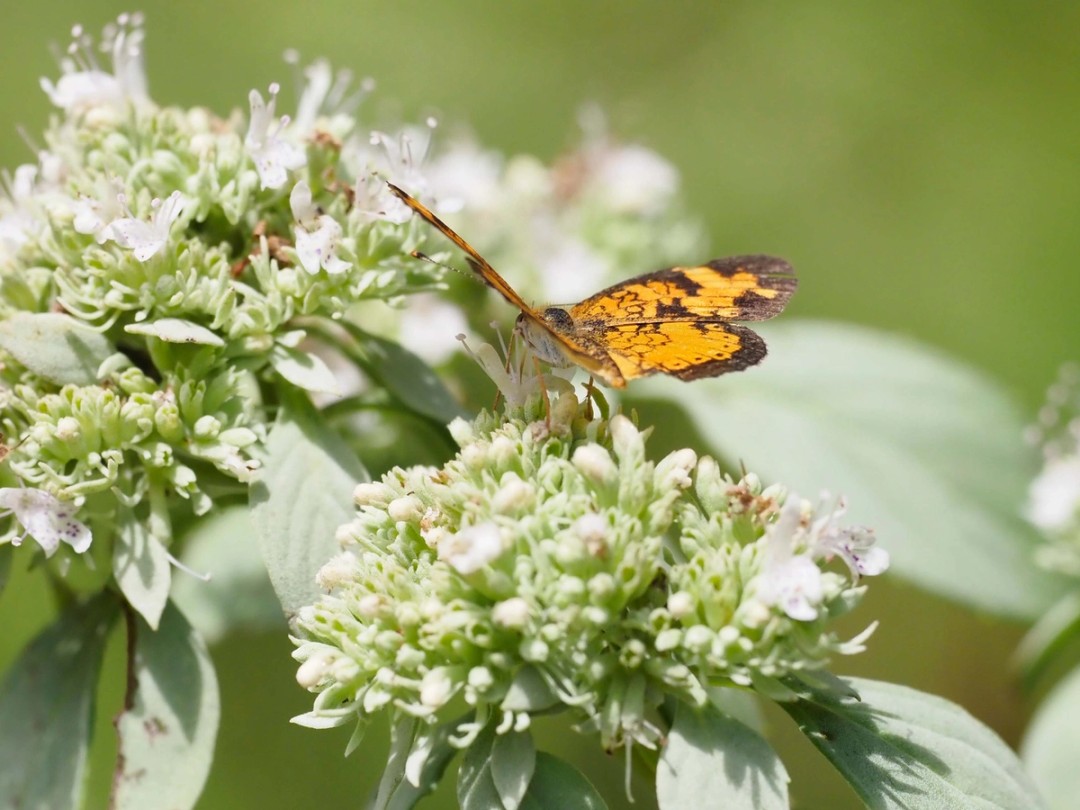
Pearl crescent butterfly 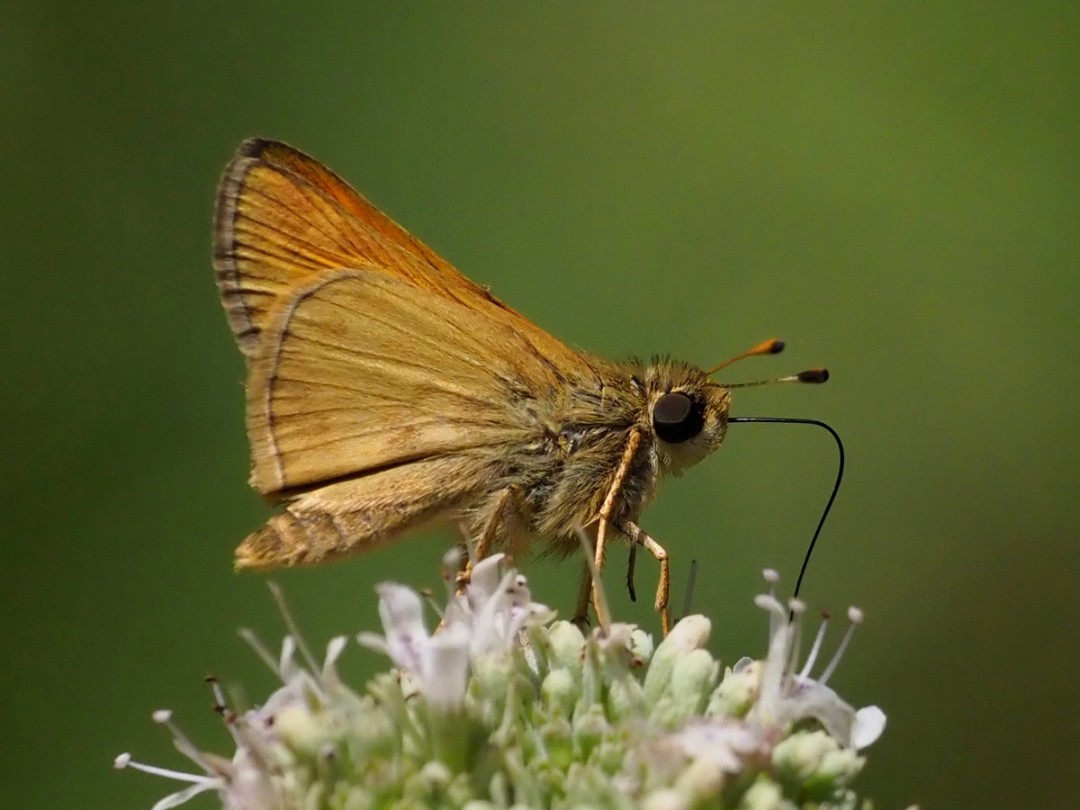
Sachem skipper
PLANTS GROWING NEARBY
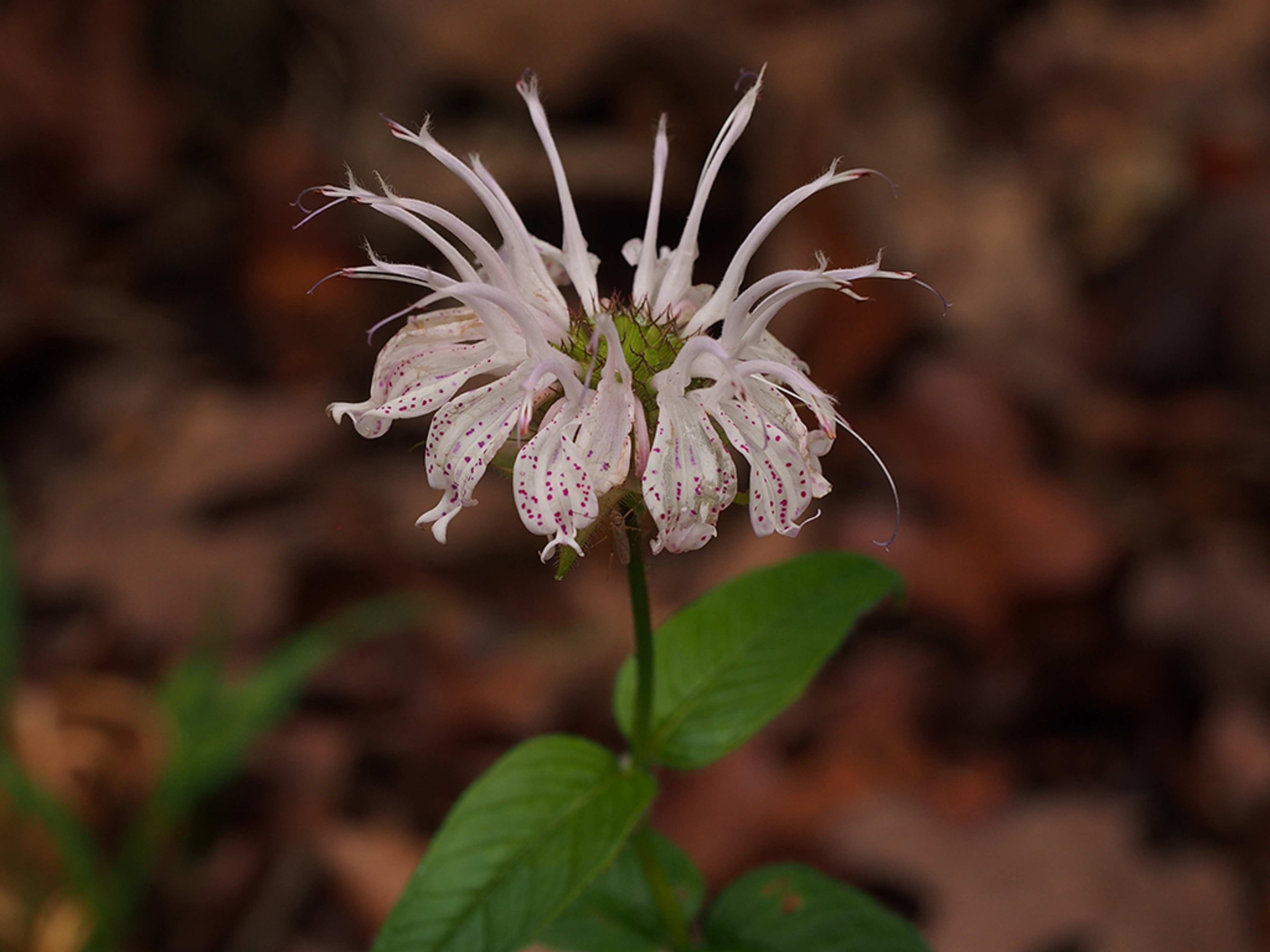
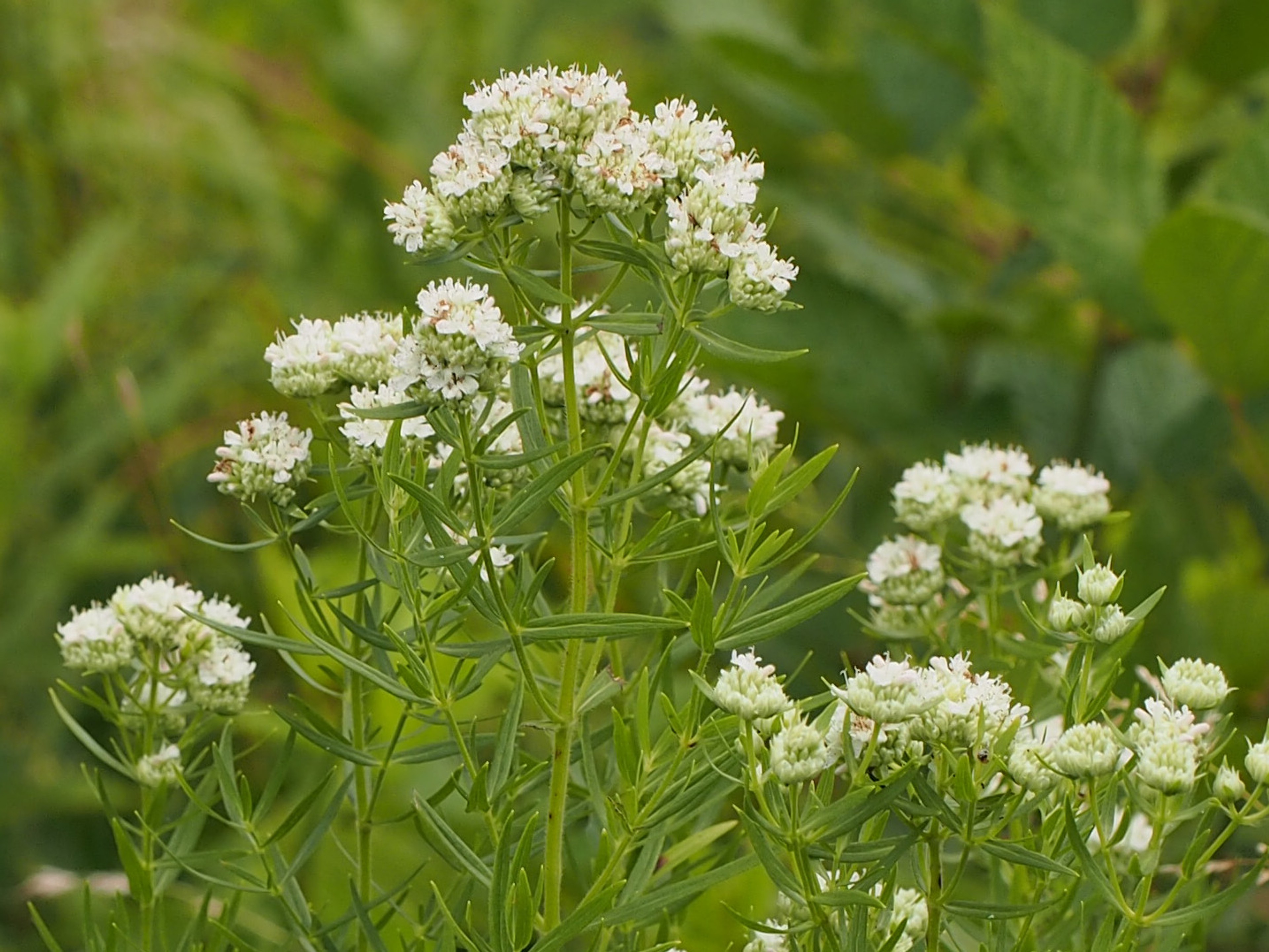
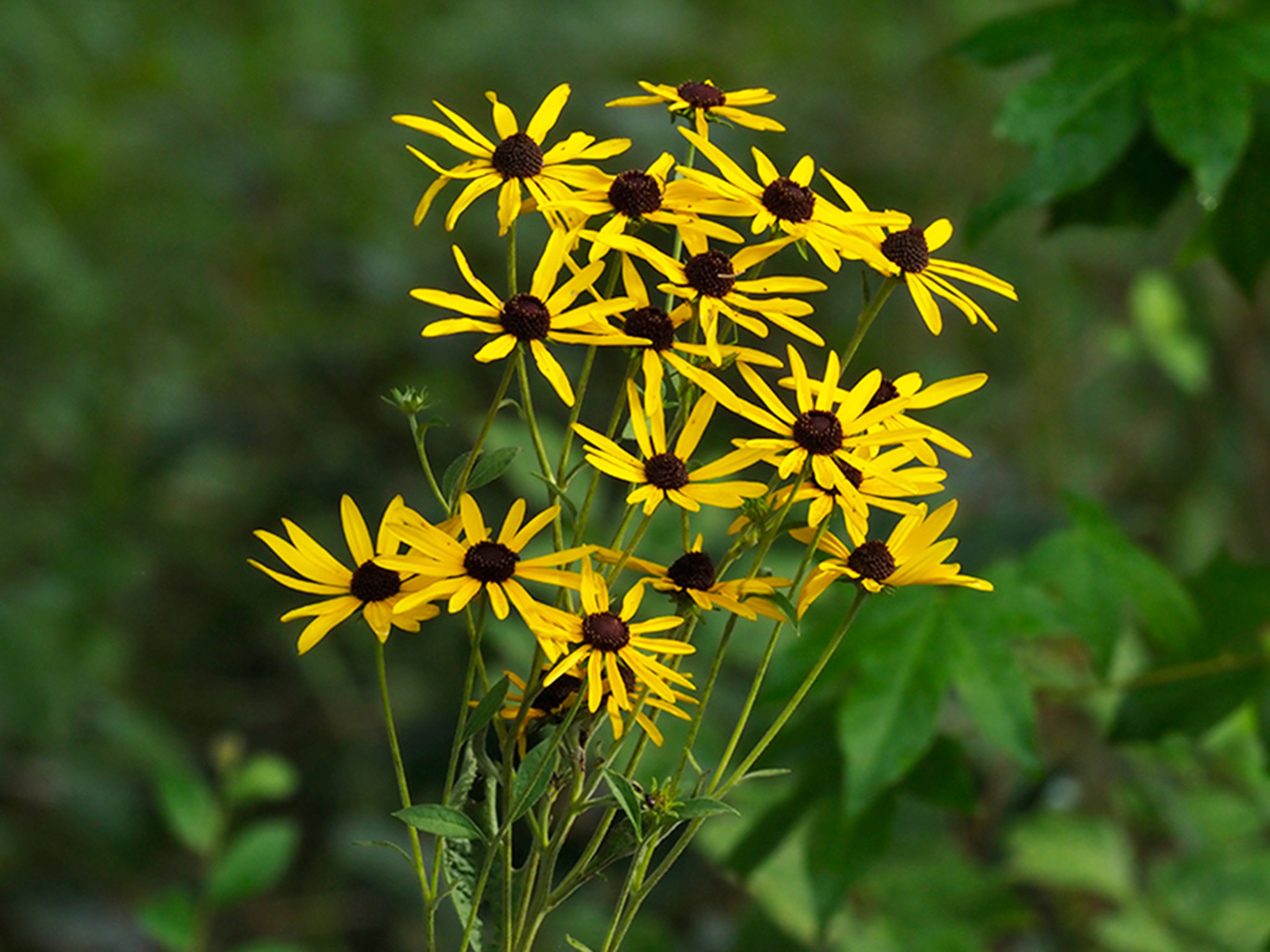
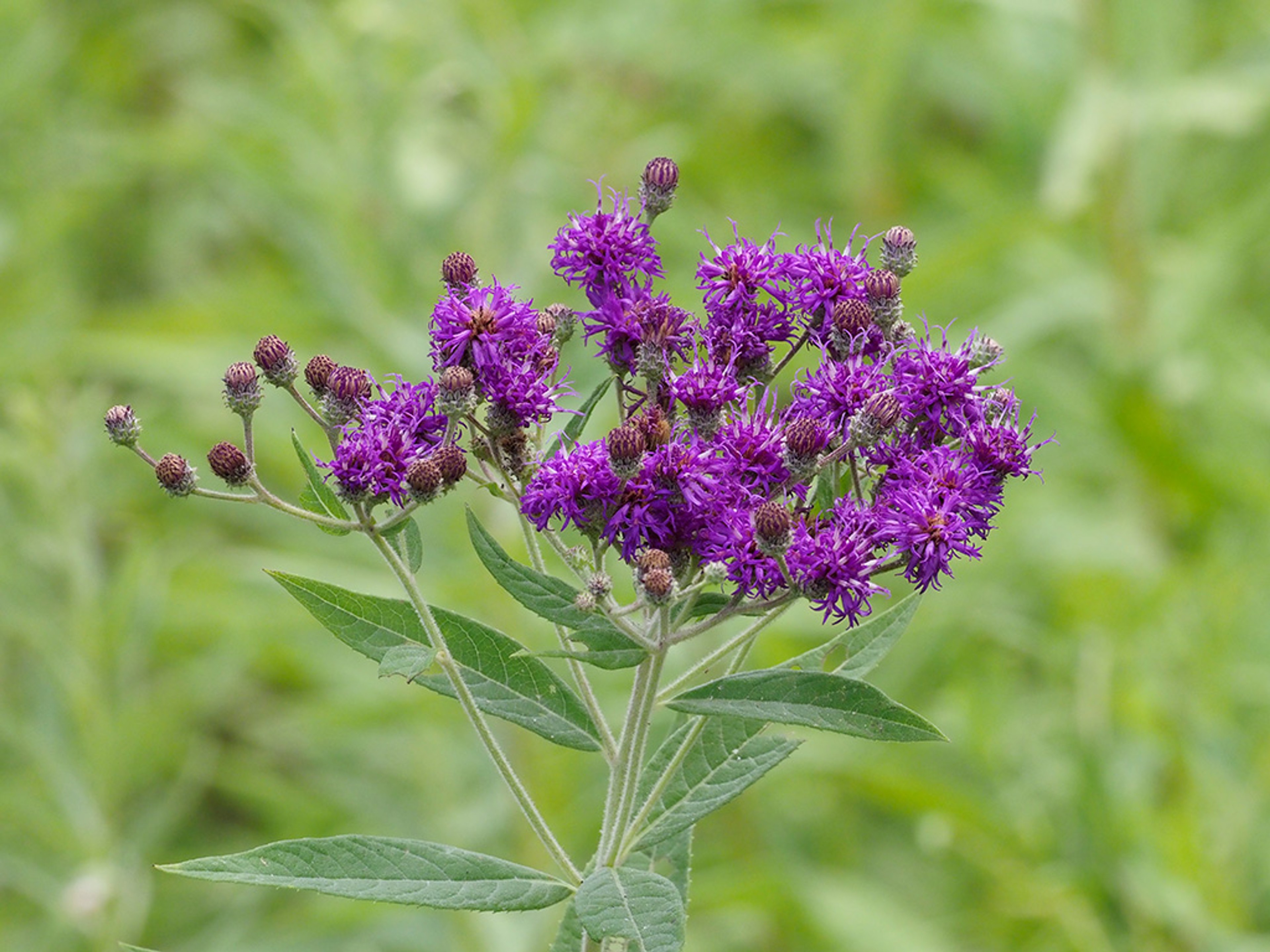
In the woodlands, White leaf mountain mint is often associated with Oak trees, but is also found near Cedar, Elm, Hickory, Walnut, and Rough dogwood. Native plants frequently found nearby include Alum root (Heuchera americana), Western wall flower (Erysimum capitatum), Elm-Leaved Goldenrod (Solidago ulmifolia), and Bee balm (Monarda bradburiana).
At the woodland edge, I often find Ironweed (Vernonia baldwin)ii, Late boneset (Eupatorium seritinum), Mist flower (Conoclinium coelestinum), Calico aster (Symphoricarpos orbiculatus), Coral berry (Symphoricarpos orbiculatus), White snake root (Ageratina altissima) and Canada Wild rye growing nearby.
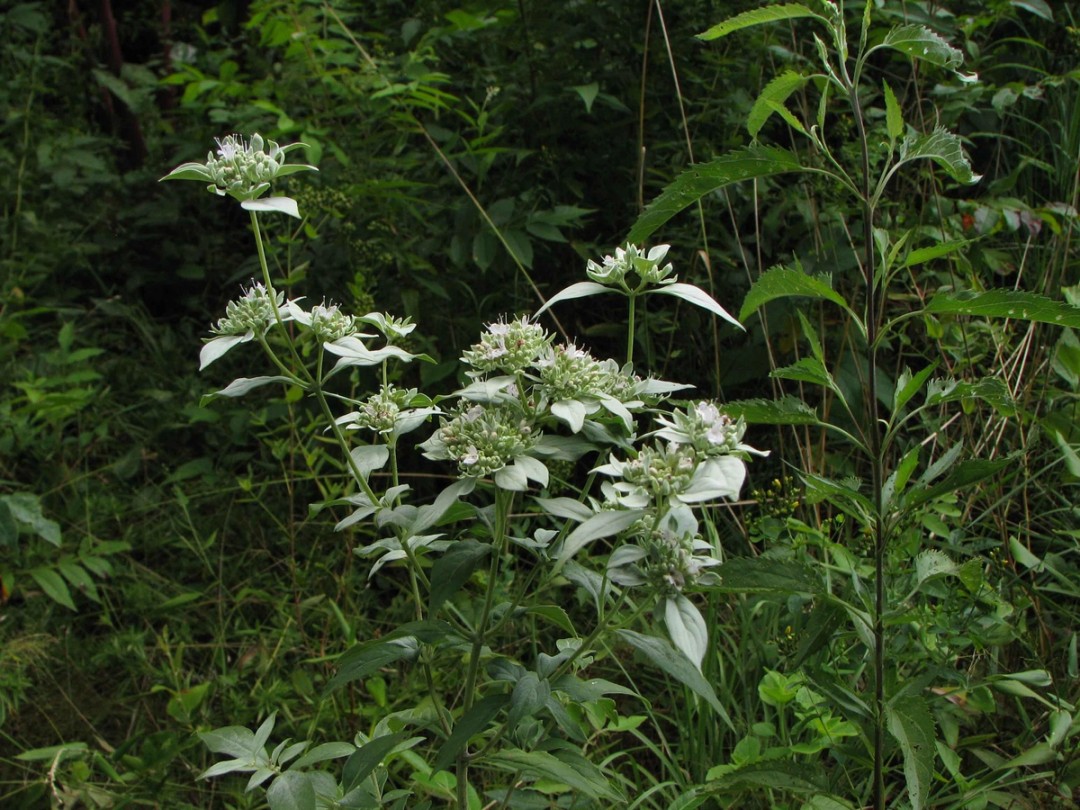
With Eupatorium serotinum 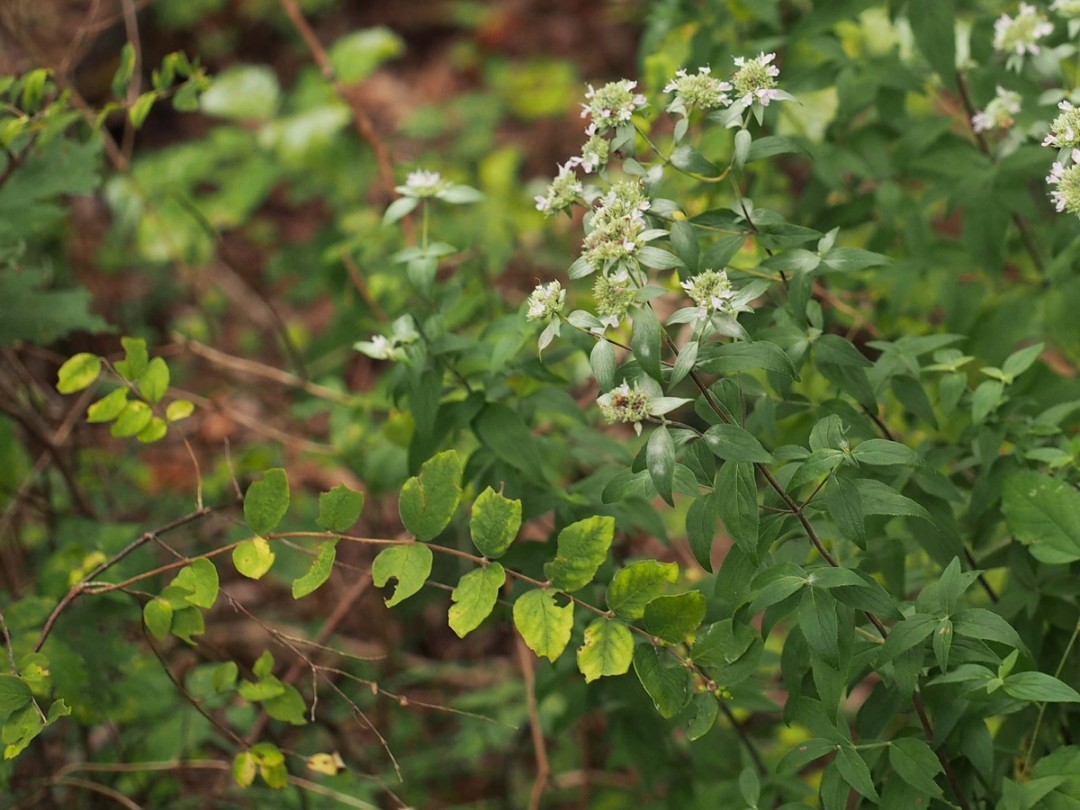
With Symphoricarpos orbiculatus 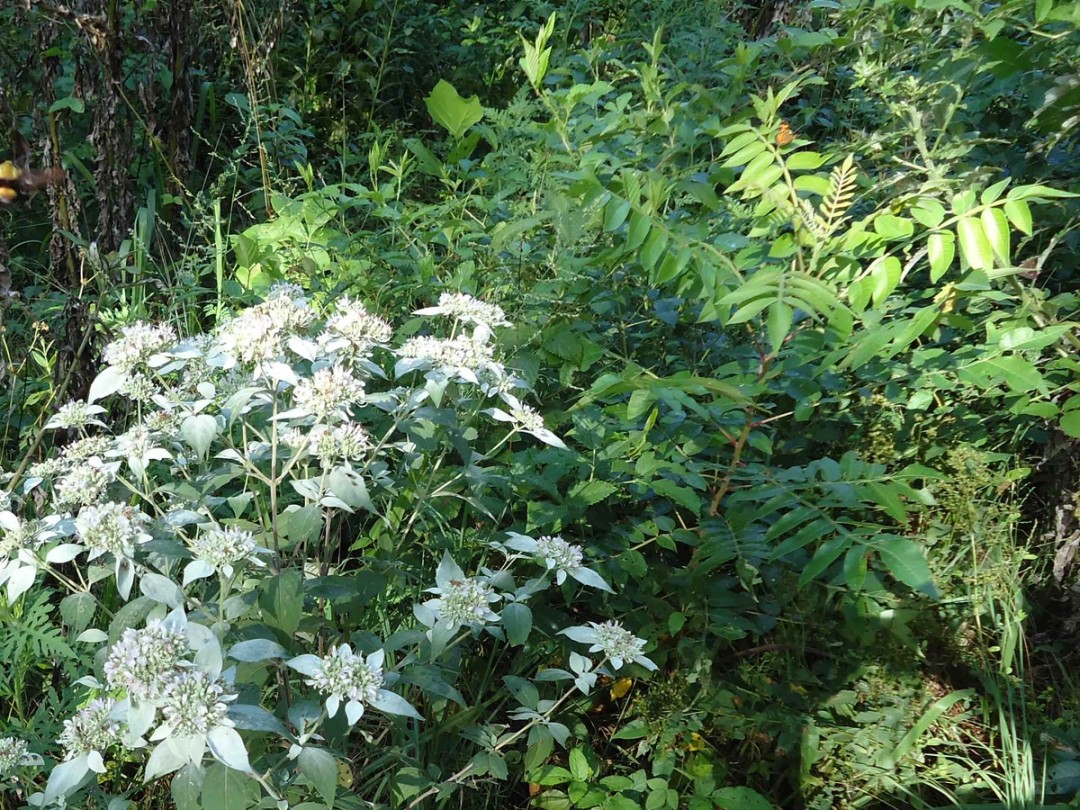
With Rhus copallinum 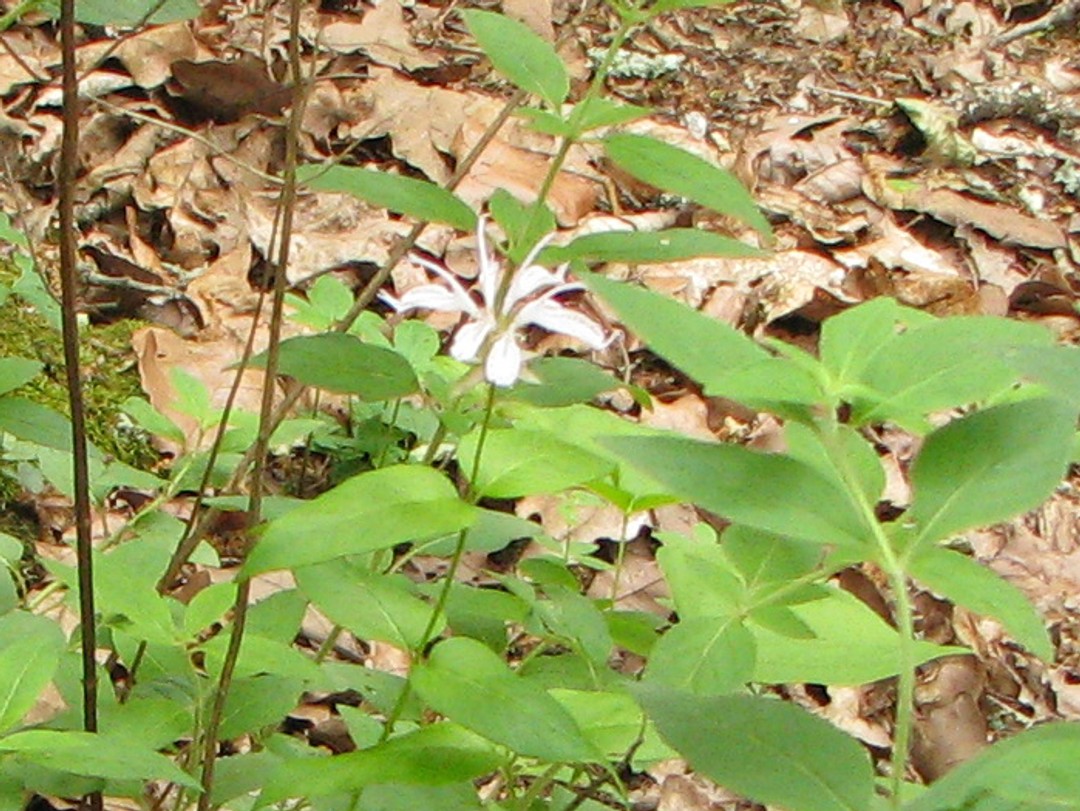
with Monarda bradburiana
HABITAT
This species of Mountain mint is often found in open woodlands (both upland and low woods) as well as bluffs, ledges, savannas, and fields. Well-drained soils and partial shade are its preferred conditions.
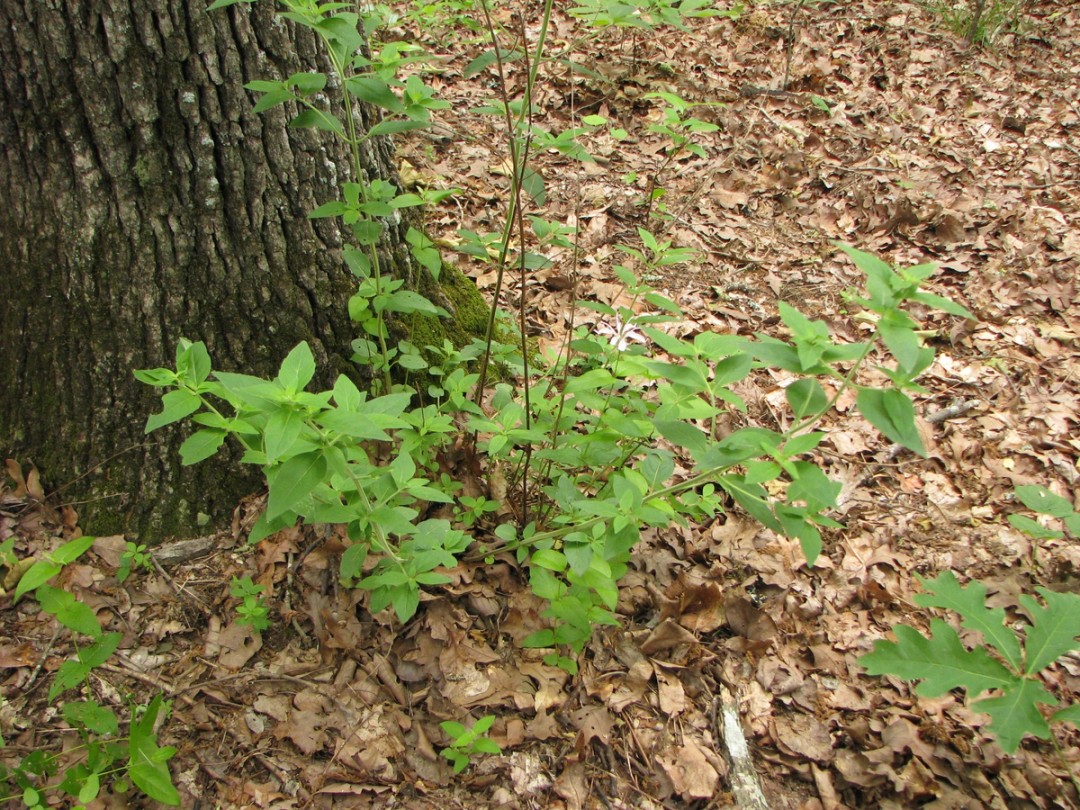
Woodland habitat Old field
CONSERVATION STATUS
Although Natureserve shows Pycnanthemum albescens as Secure, it is listed as Presumed Extirpated in Illinois, Possibly Extirpated in Kansas and Kentucky and Vulnerable in Georgia. All other states within its range show No Status Rank.
In Arkansas, it has a Conservation Value of 7 (in the group of 4-7) meaning "Typically matrix taxa in intact, stable habitats, with some limited ability to respond to destabilizing forces and repopulate areas from which they have been extirpated."
INTERESTING TIDBITS
This Mountain mint has a wonderful minty fragrance with hints of sage. I've read it can be used as a substitute for sage in cooking but I haven't tried it. Like other native plants in the mint family, it can be used to make a tea or added to coffee.
In general, Mountain mints are deer and pest tolerant and this one is no exception.