PLANT NAME
Andersonglossum virginianum (formerly Cynoglossum virginianum) is in the Boraginaceae family. The name was recently changed based on DNA sequencing that separated this plant from Old World Cynoglossum species.
The previous botanical name, 'Cynoglossum', is Greek for 'Hounds tongue' and still aptly describes the shape of this plants large basal leaves. The specific epithet, 'Virginianum' refers to the location where this plant was first studied.
In researching the common name, Wild comfrey, I found a nice explanation on the Missouri flora website, "The common name "wild comfrey" reflects that fact that herbalists have often confused this plant with true comfrey, Symphytum officinale, or have believed it to be a substitute for that Old World plant. Preparations made from the root have been used in traditional medicine to treat sores, itching, cancer, and respiratory infections. Cancer, gonorrhea, and genital itching were also thought to be helped by drinking a tea made from the roots. In more recent times the leaves were smoked like tobacco. However, many species in the genus contain pyrrolizidine alkaloids, which are liver toxins."
Other common names include Hounds tongue and Giant forget-me-not.
BLOOM
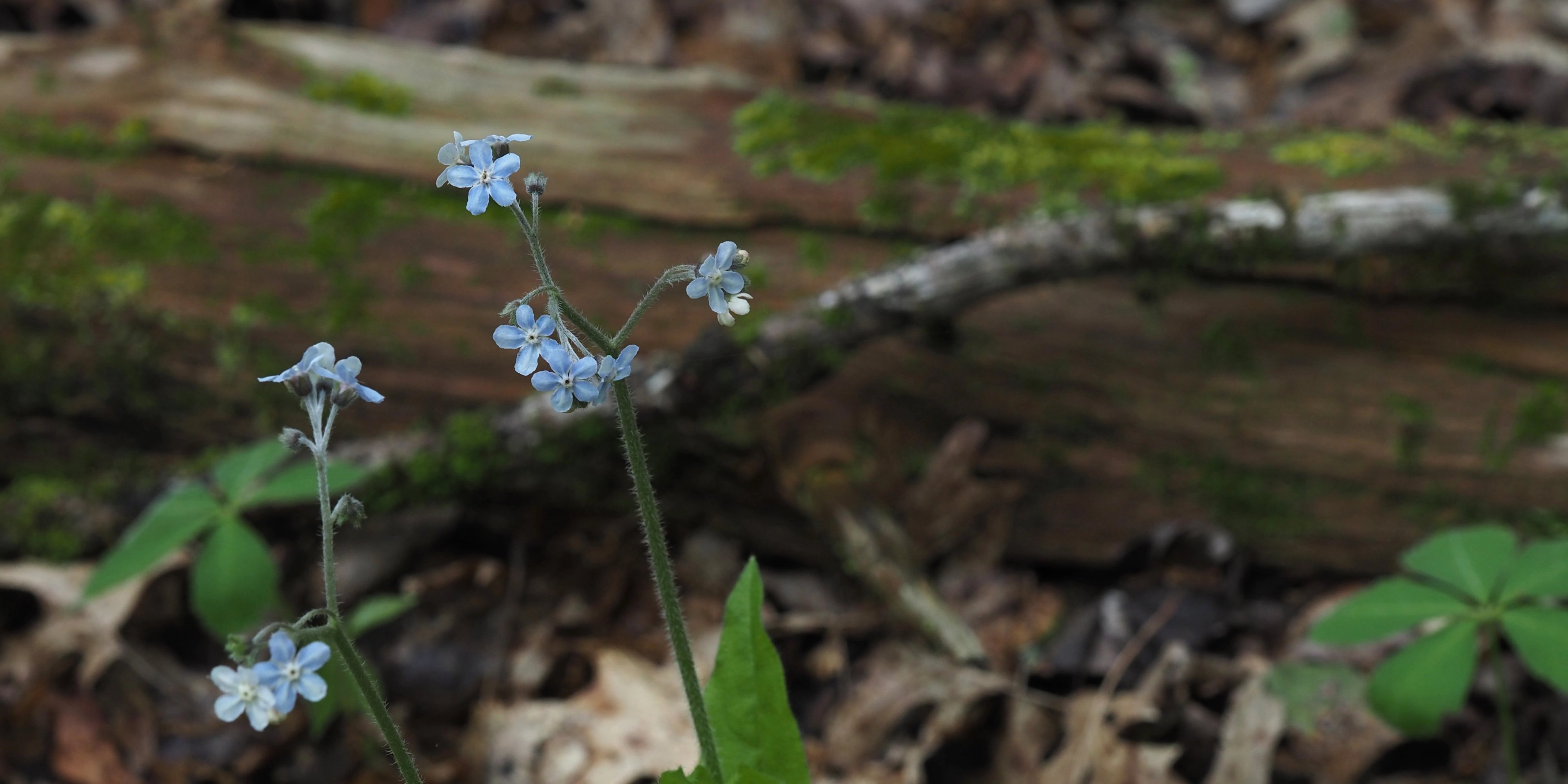
Flowers of light blue adorn the top of a single, tall stem that rises well above the fuzzy leaves of Wild comfrey. The stem terminates into coiled branches known as cymes. The flowers begin as soft white to pinkish buds that transition to pale blue as they open. Each flower has 5, fused petals with highly pubescent green calyces.
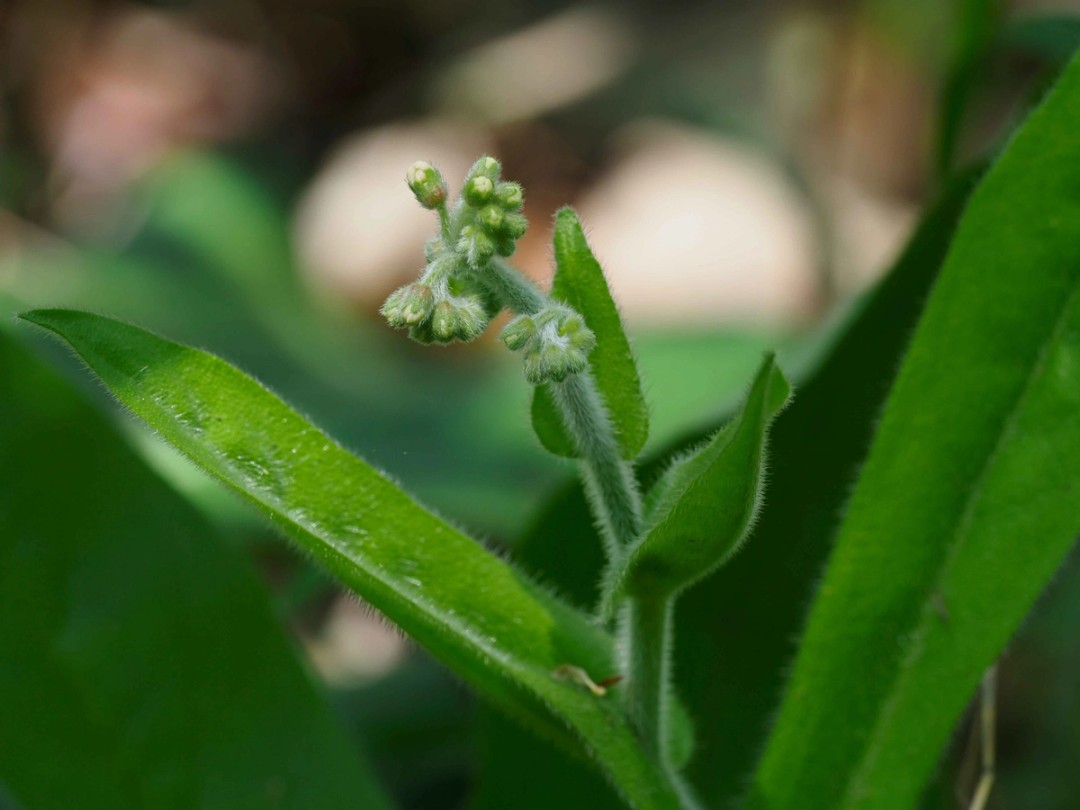
Fuzzy buds early April 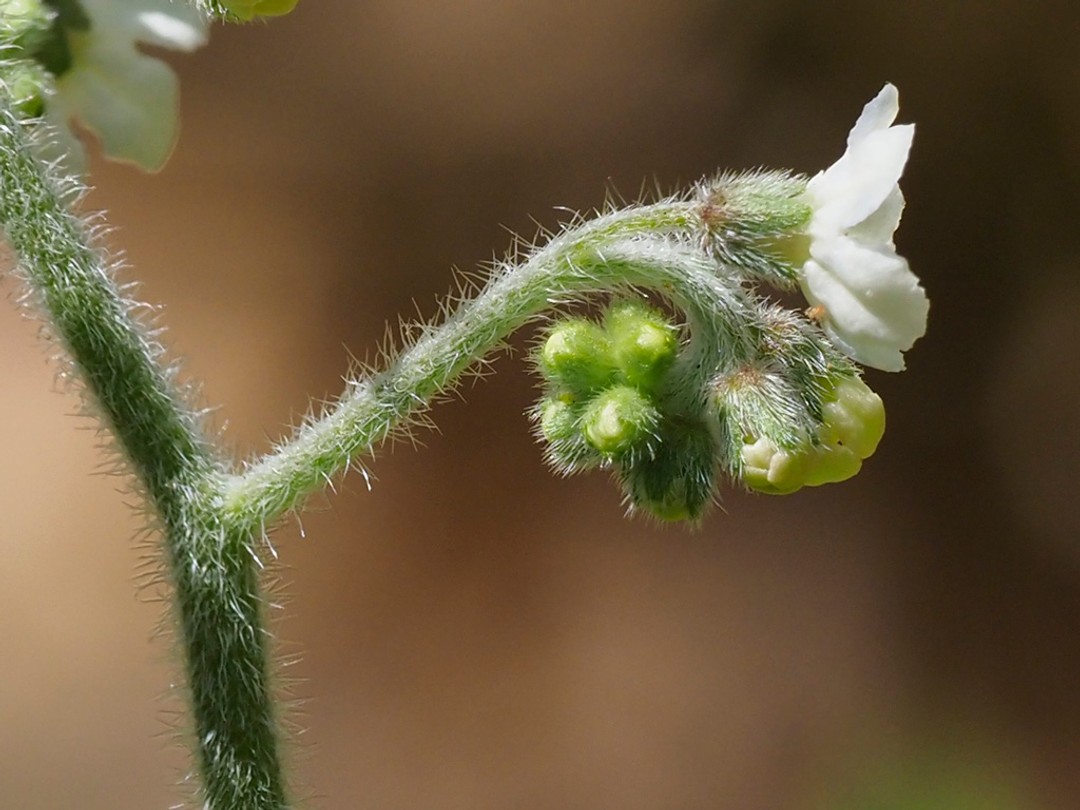
Close look at hirsute buds 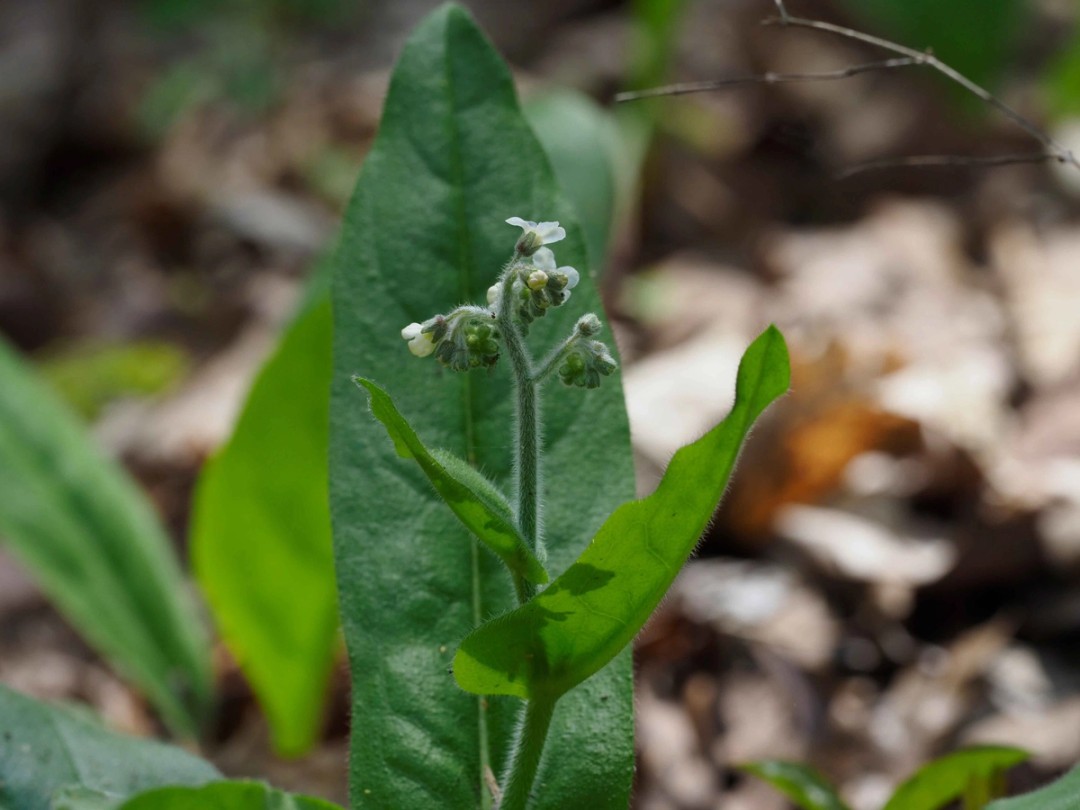
Flowers beginning to open 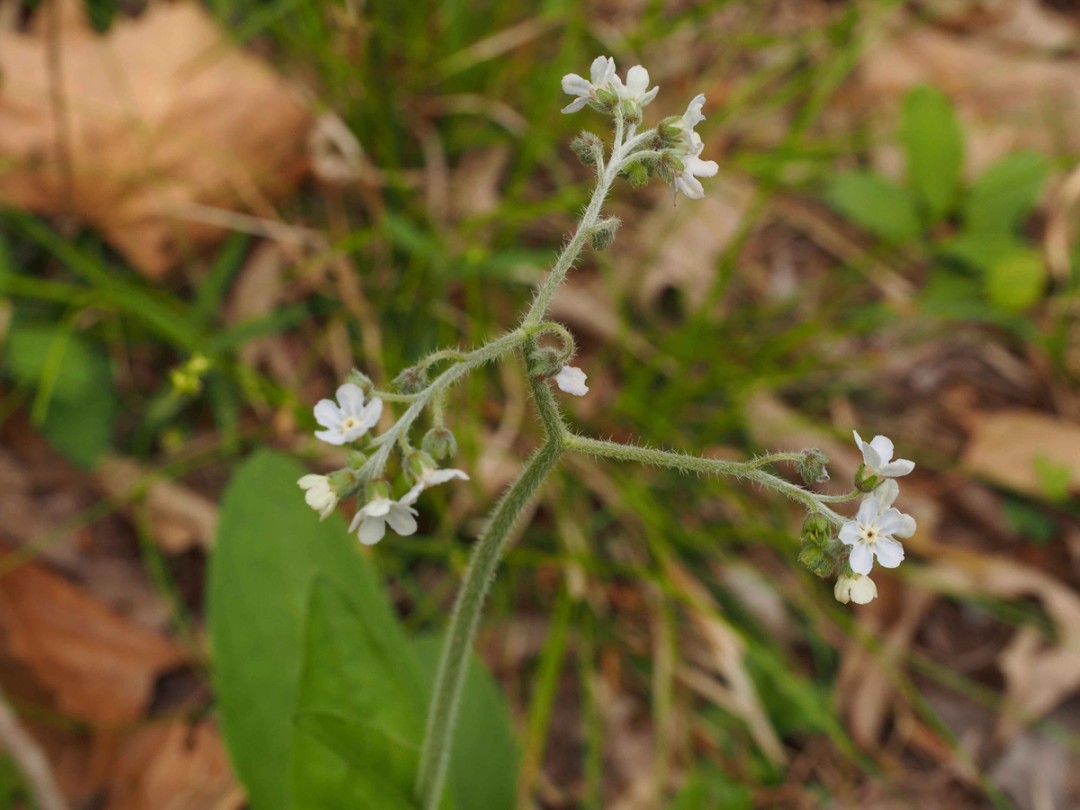
Scorpiod cyme
A central, raised whitish area is formed from the 5 corolla lobes at the center of the flower. At the base of the flower lobes is a dark throat where the 5 stamens are mostly hidden. The style is below the stamens and not visible.
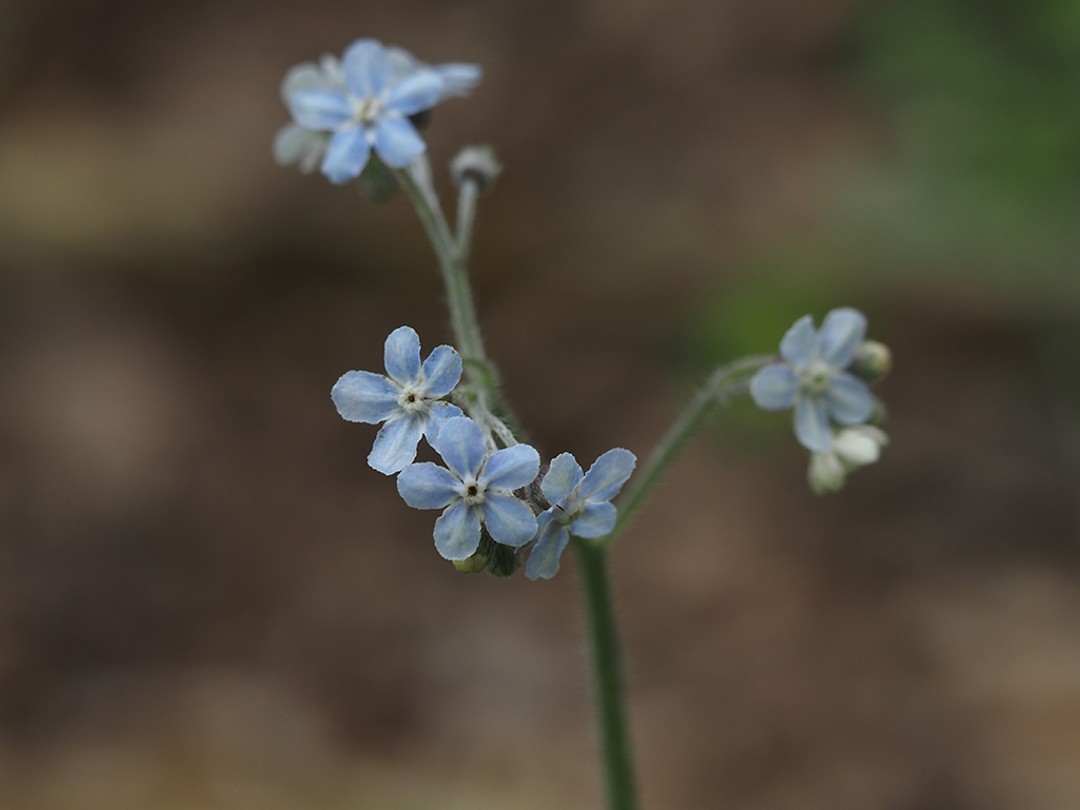
Raised white center 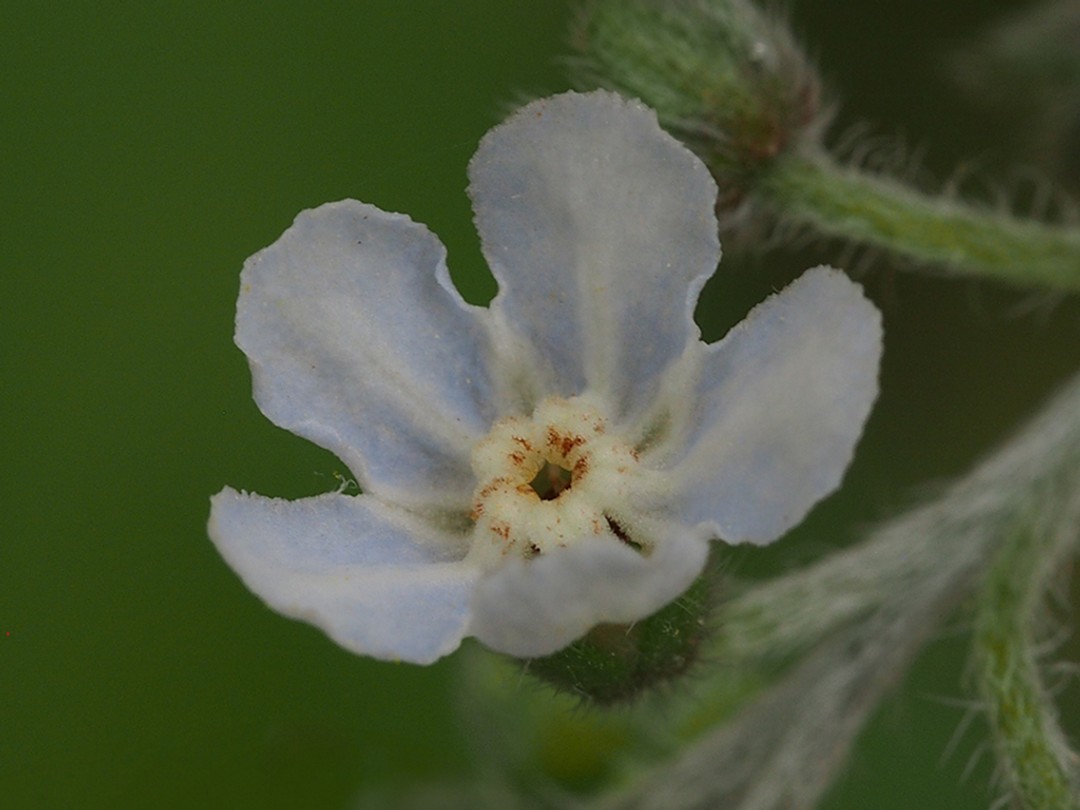
Stamens not visible
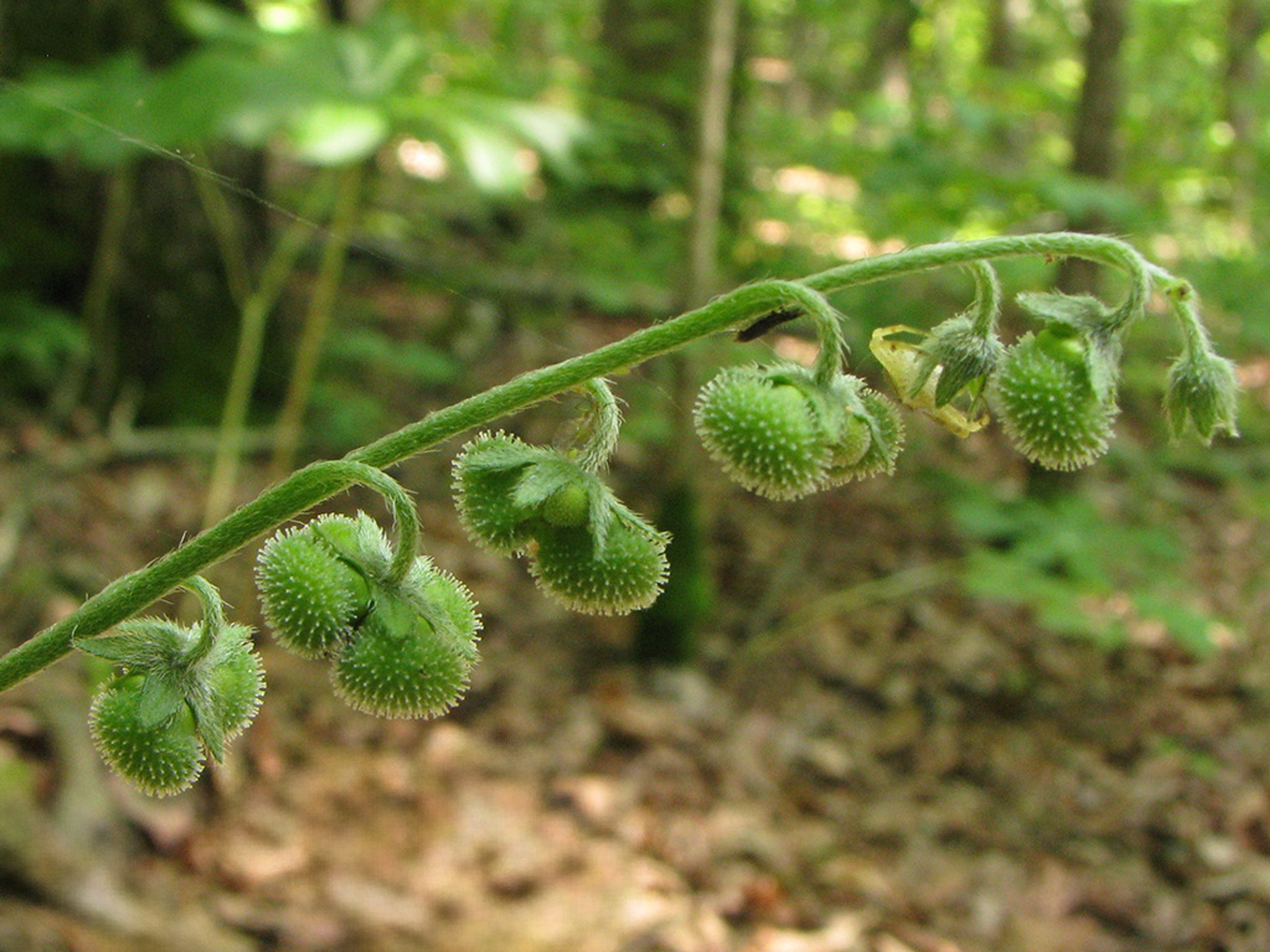
Seed pods from the first flowers begin developing before the plant has completed its flowering. The spiky fruits are schizocarps containing 4 nutlets. Initially green, the nutlets turn brown when ripe.
DESCRIPTION
Wild comfrey arises from a woody taproot in early spring. The large, hairy leaves are unique and easily recognized in the woodland. They are soft to the touch, grouped close together and lanceolate.
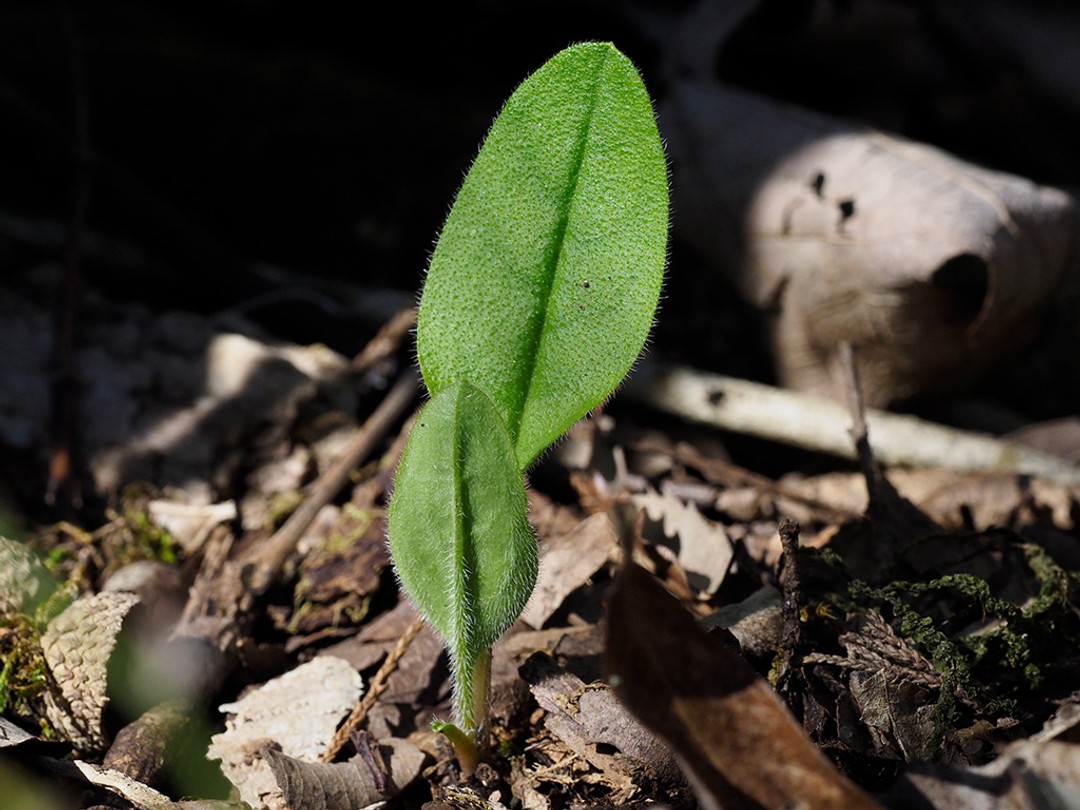
Early spring leaves 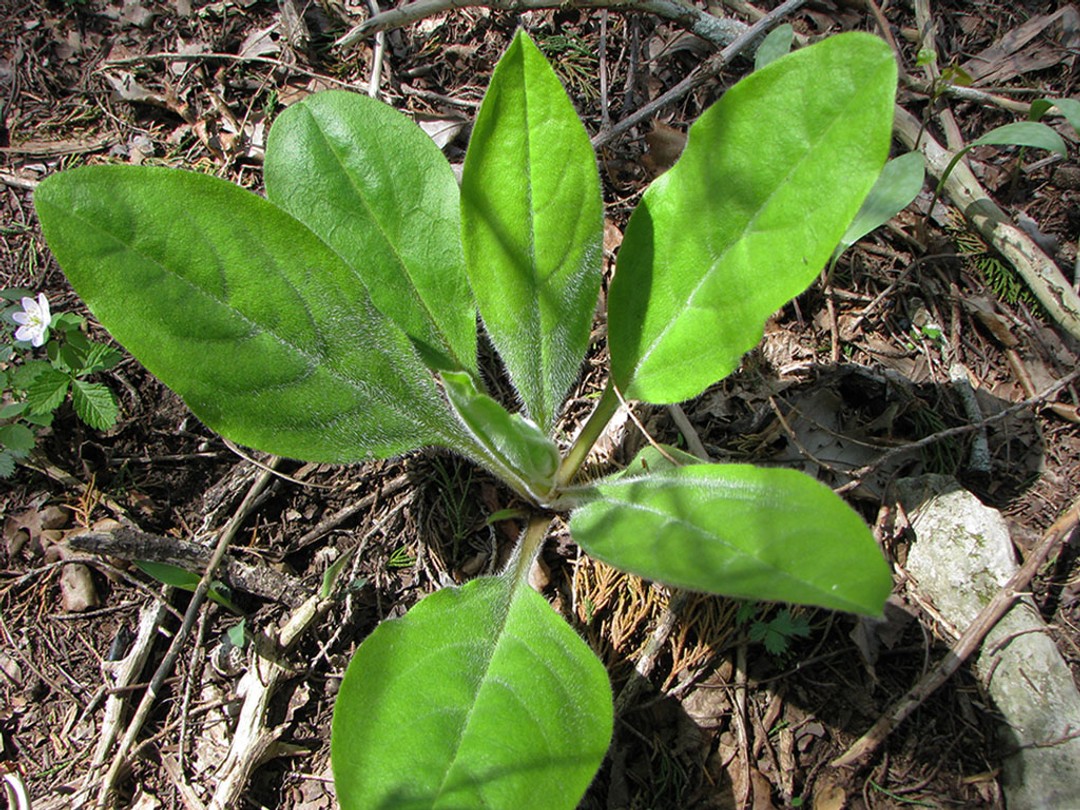
Basal leaves 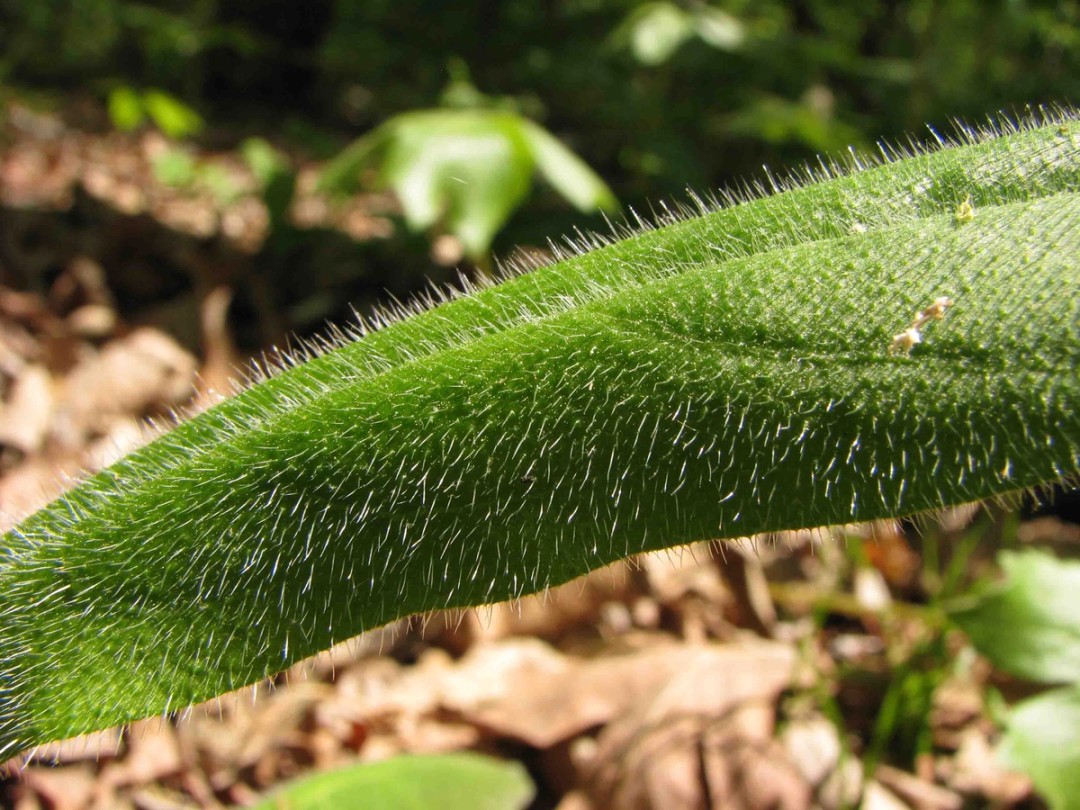
Side view of leaf 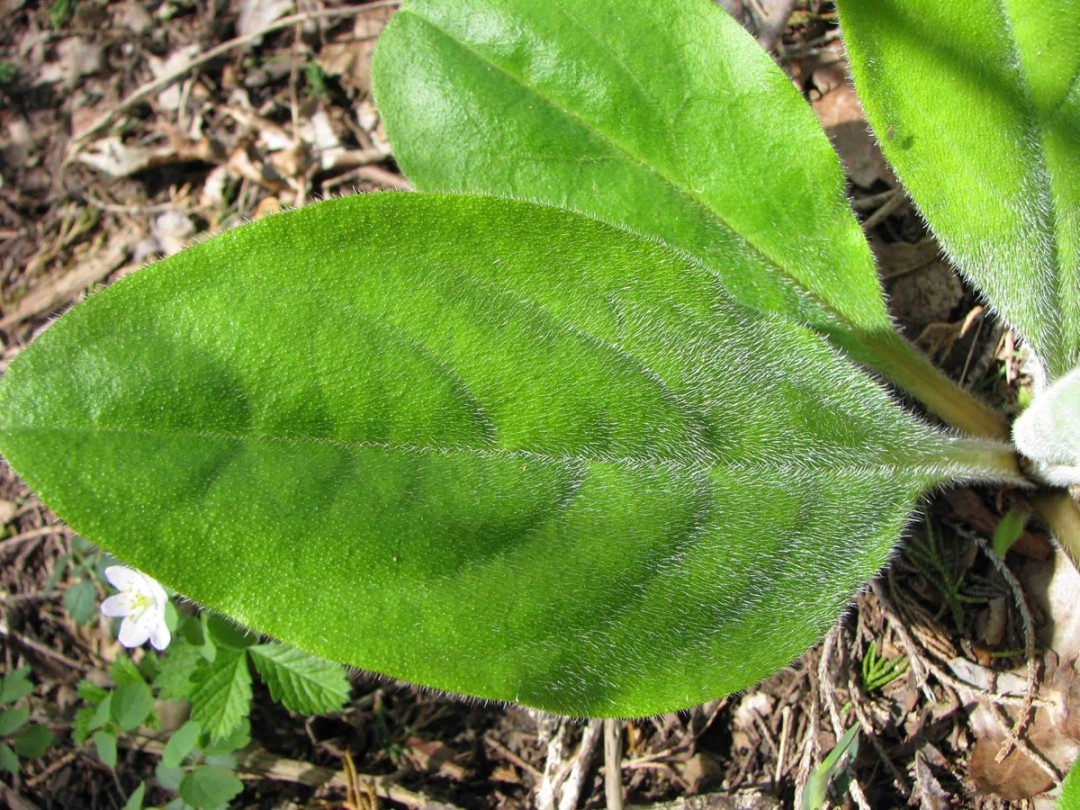
Leaf from above 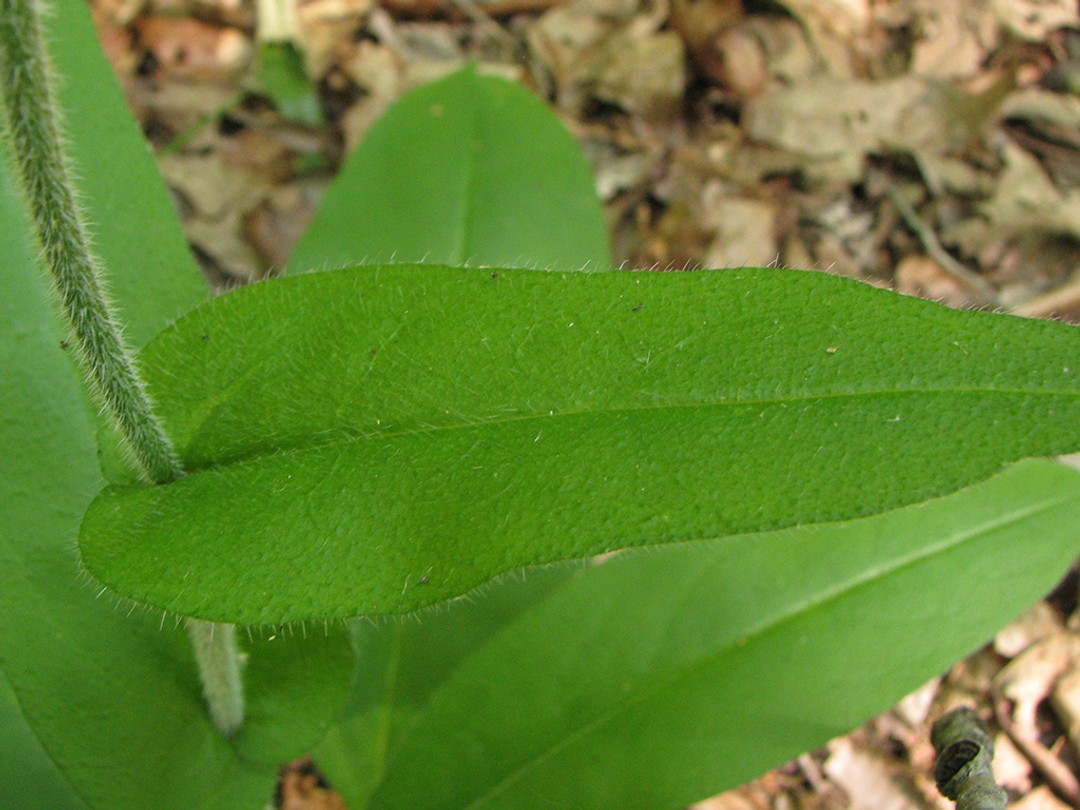
Leaf clasping stem 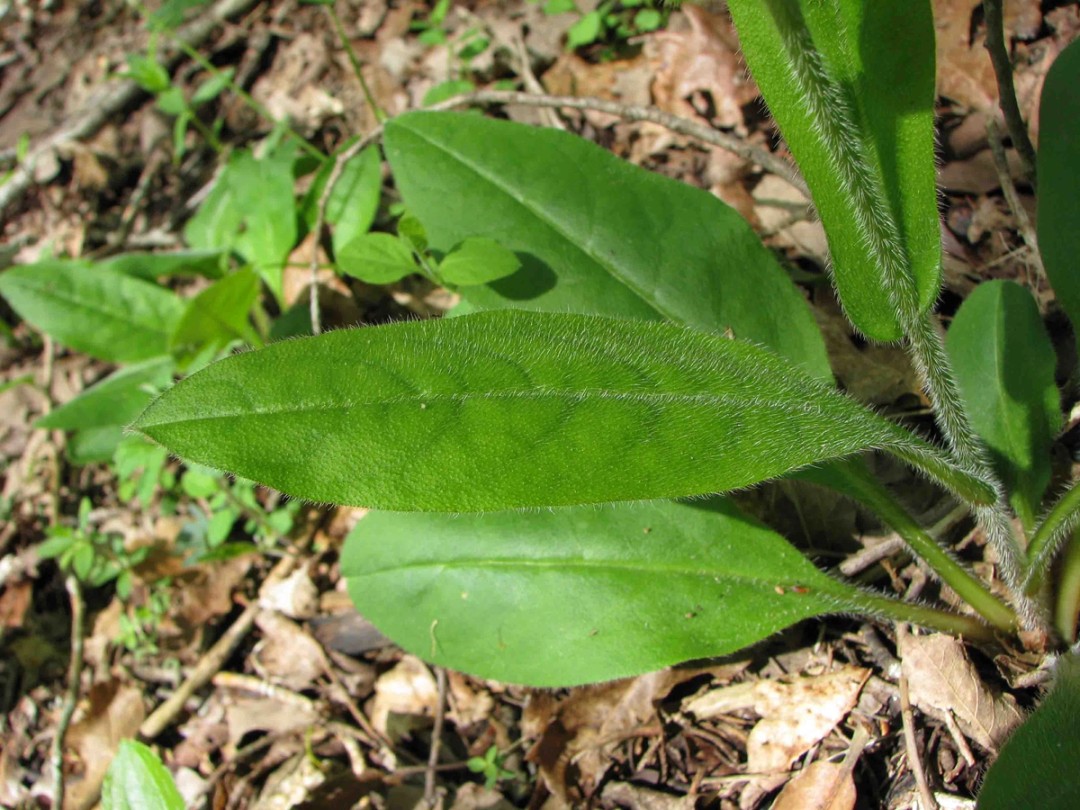
Stem and leaves
Mature plants send up a flowering stem. The stem is hirsute and rises to about 2 feet. Stem leaves are closely spaced at the base and further apart along the upper stem. Upper stem leaves are smaller than those at the base. The stem terminates into what is termed a scorpioid cyme, meaning the flowers occur in a curved cluster with each stalk terminating in a single flower.
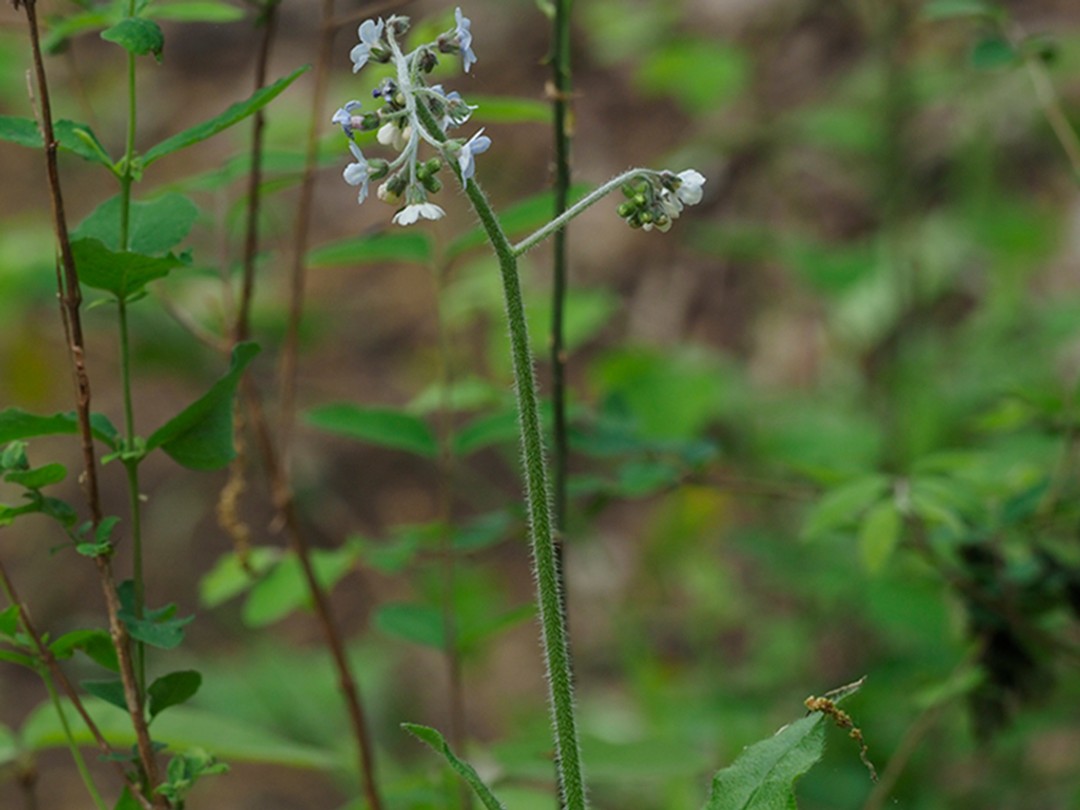
Hisuite flowering stem 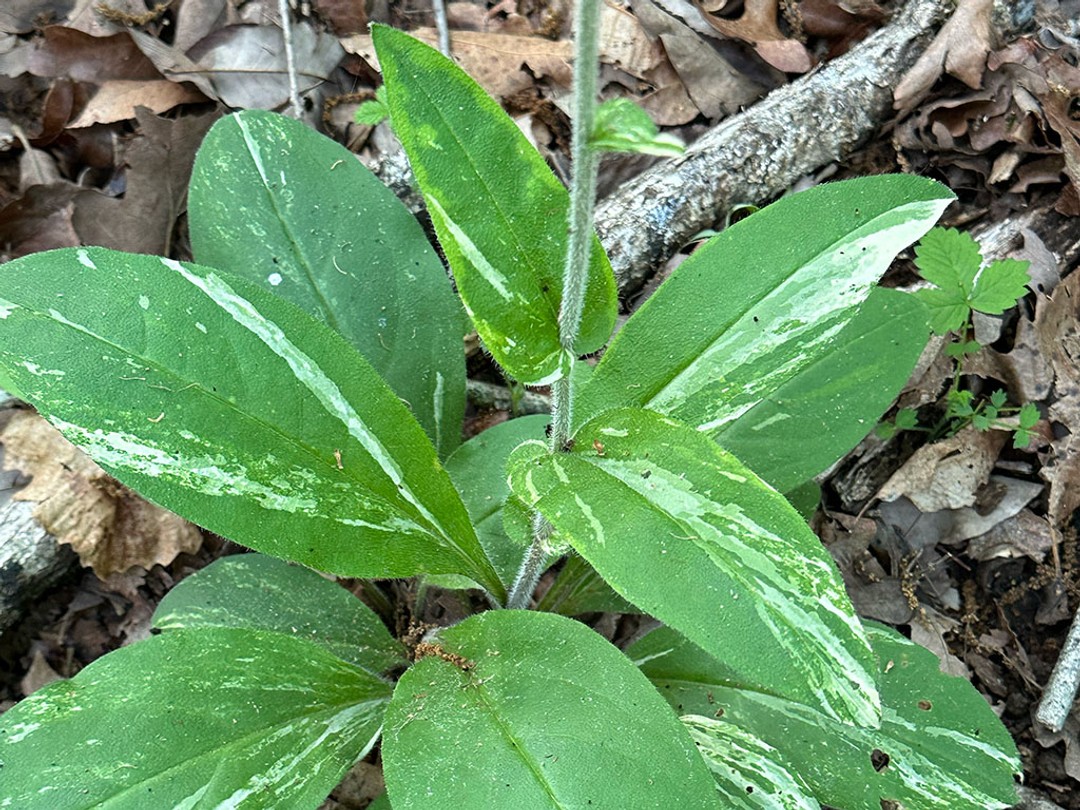
Uncommon variegated leaves
POLLINATORS
I have to admit it is a bit frustrating that my research didn't uncover much information regarding pollinators and insect visitors of Wild comfrey. My own documented observations include two bee species (Blue orchard bee and one unidentified bee), a Duskywing butterfly (Horace or Juvenal?) and the Acmaeodera tubulus beetle. Hopefully, I will be able to document more insect visitors in the coming spring.
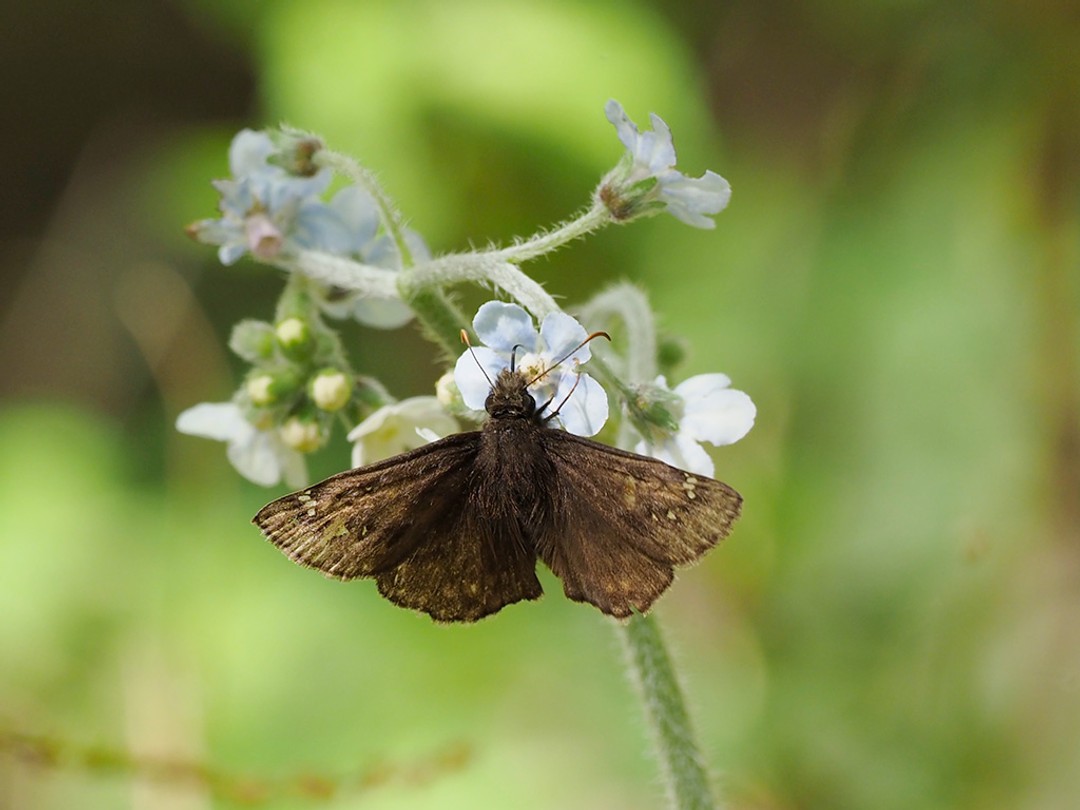
Duskywing 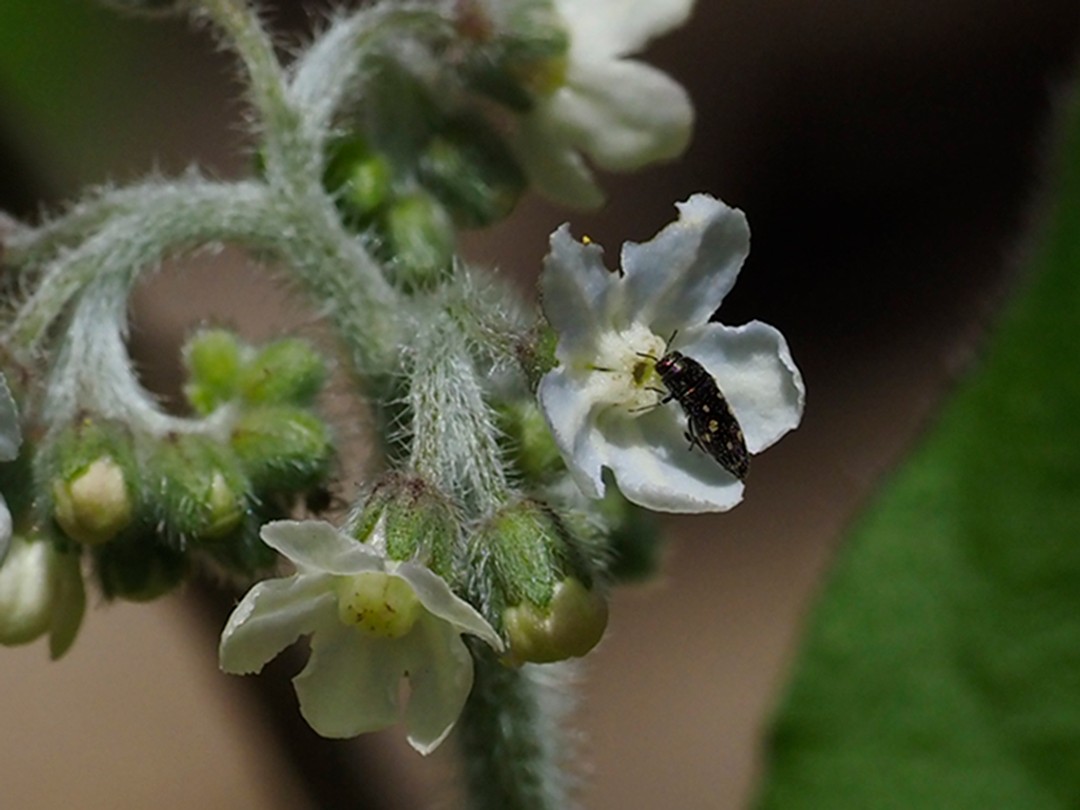
Acmaeodera tubulus beetle 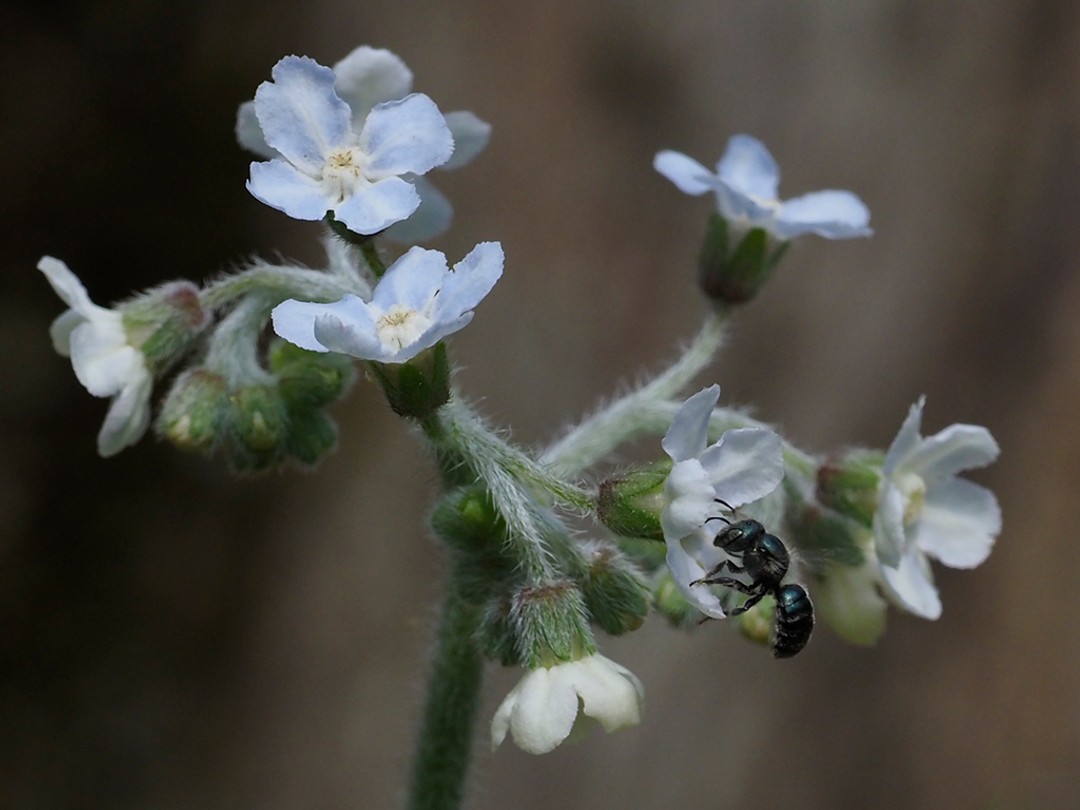
Blue orchard bee 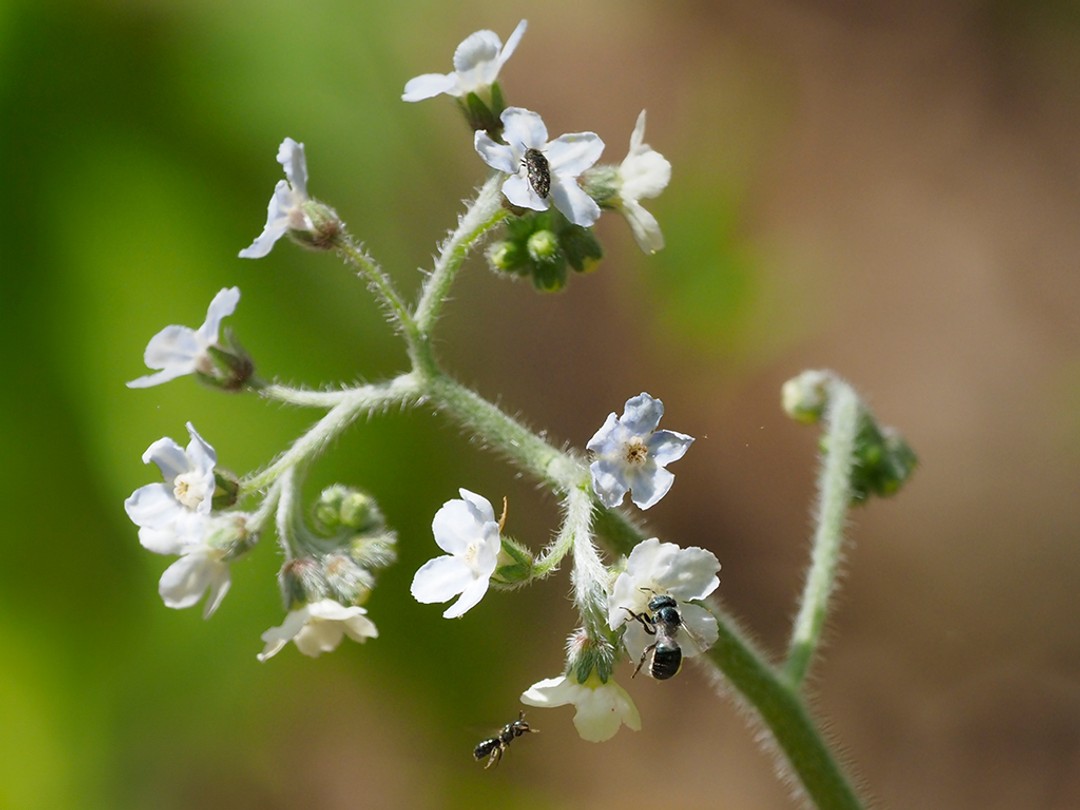
Two different bee visitors
PLANTS GROWING NEARBY
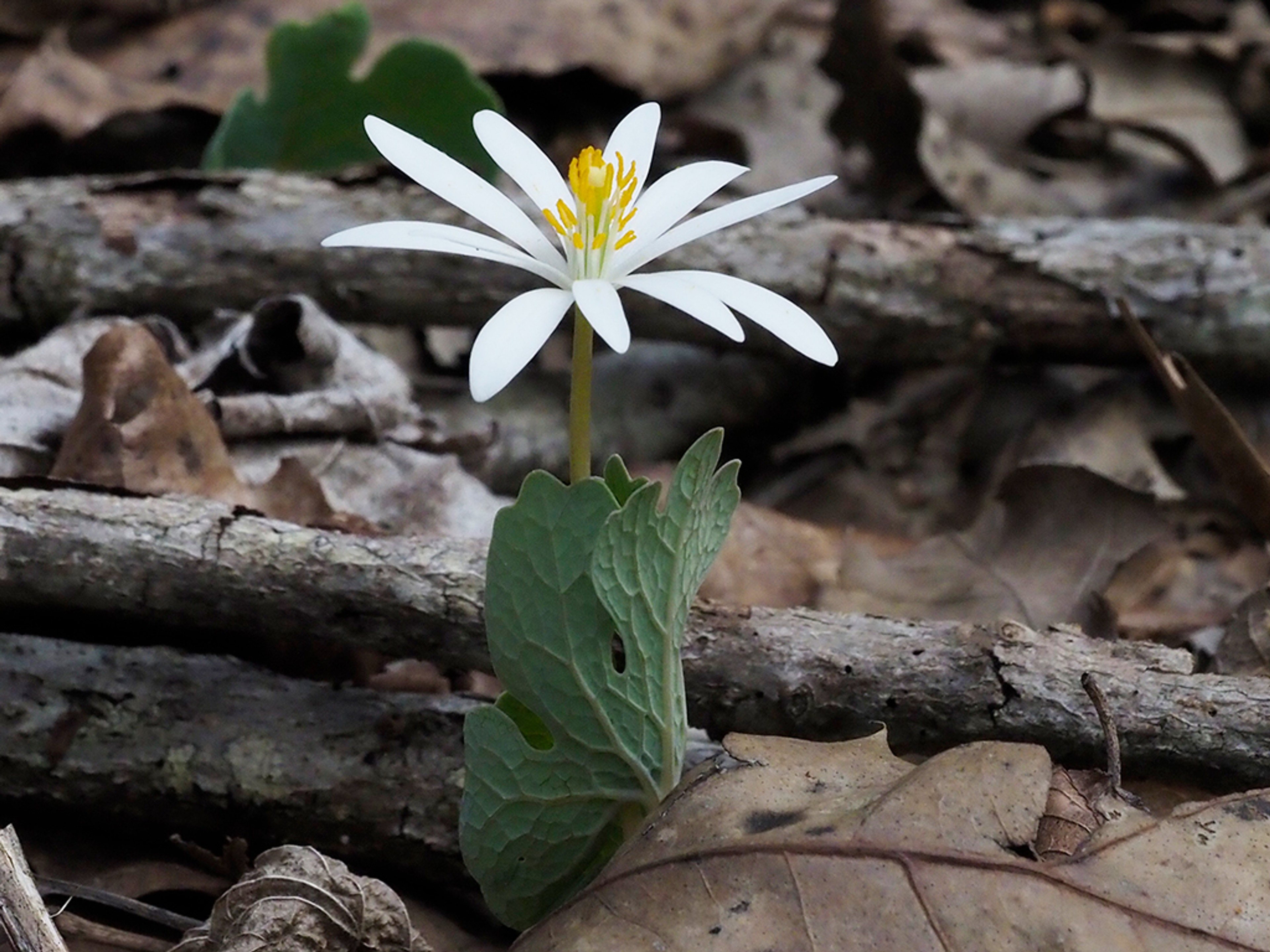
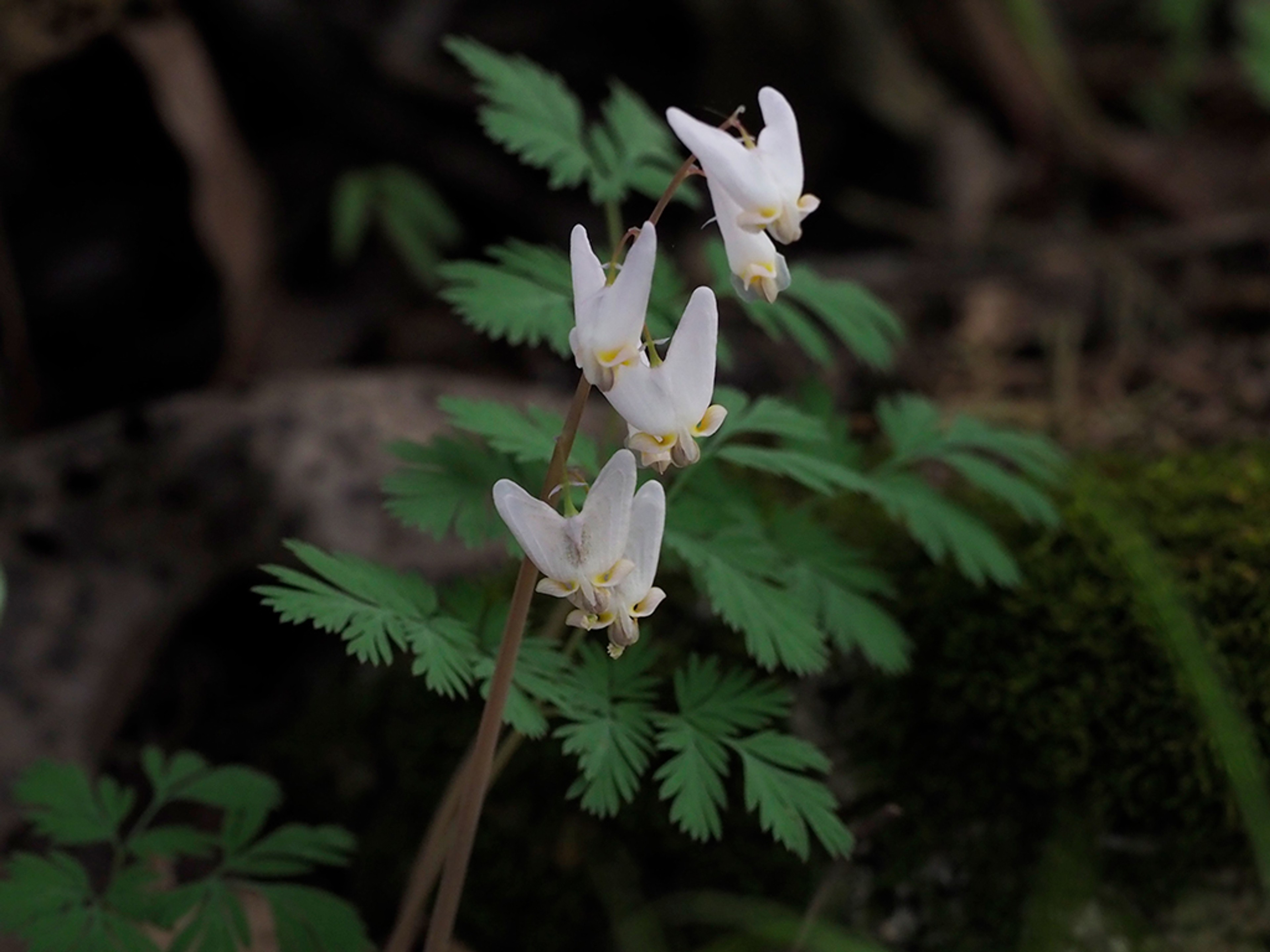
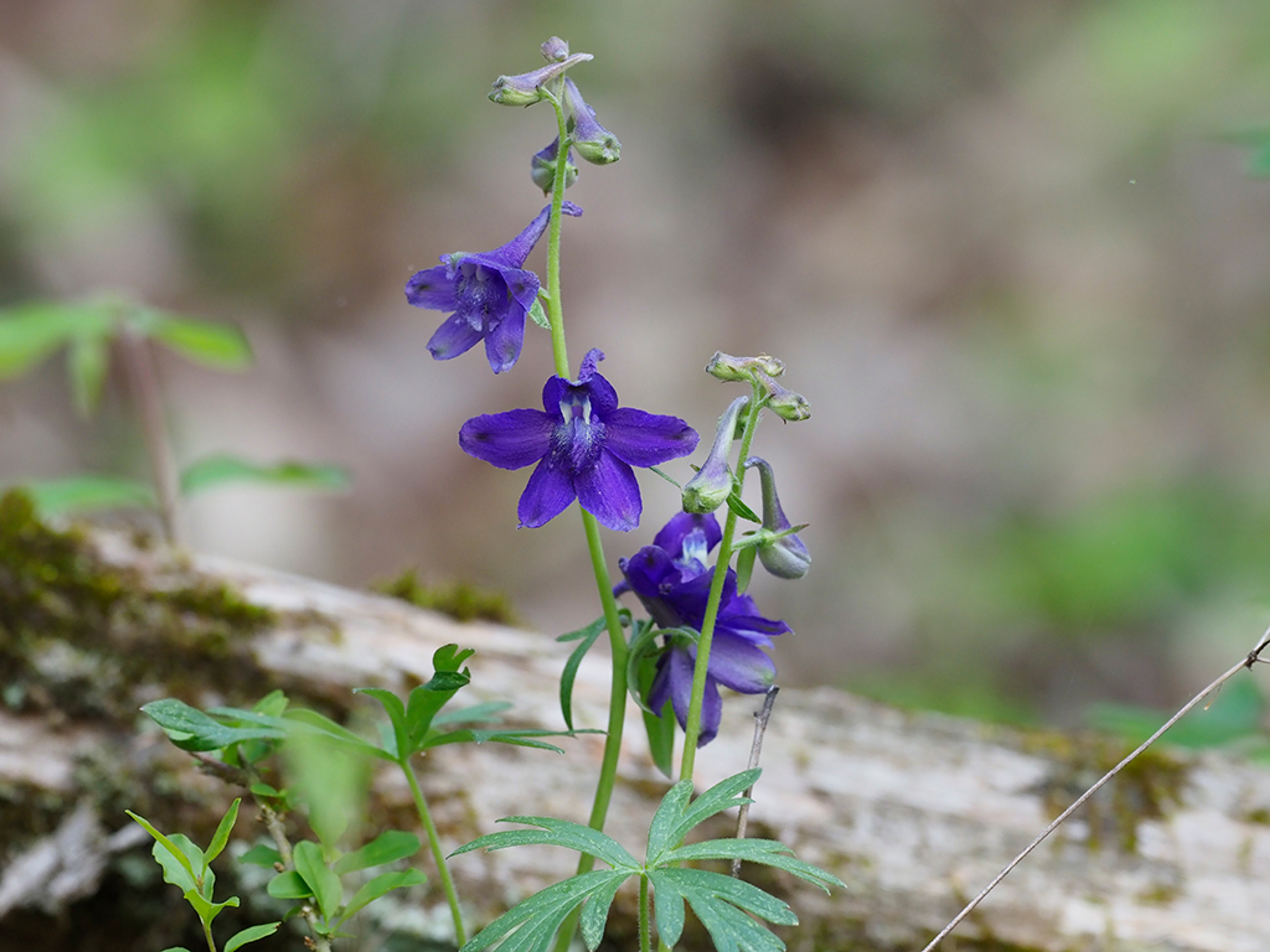
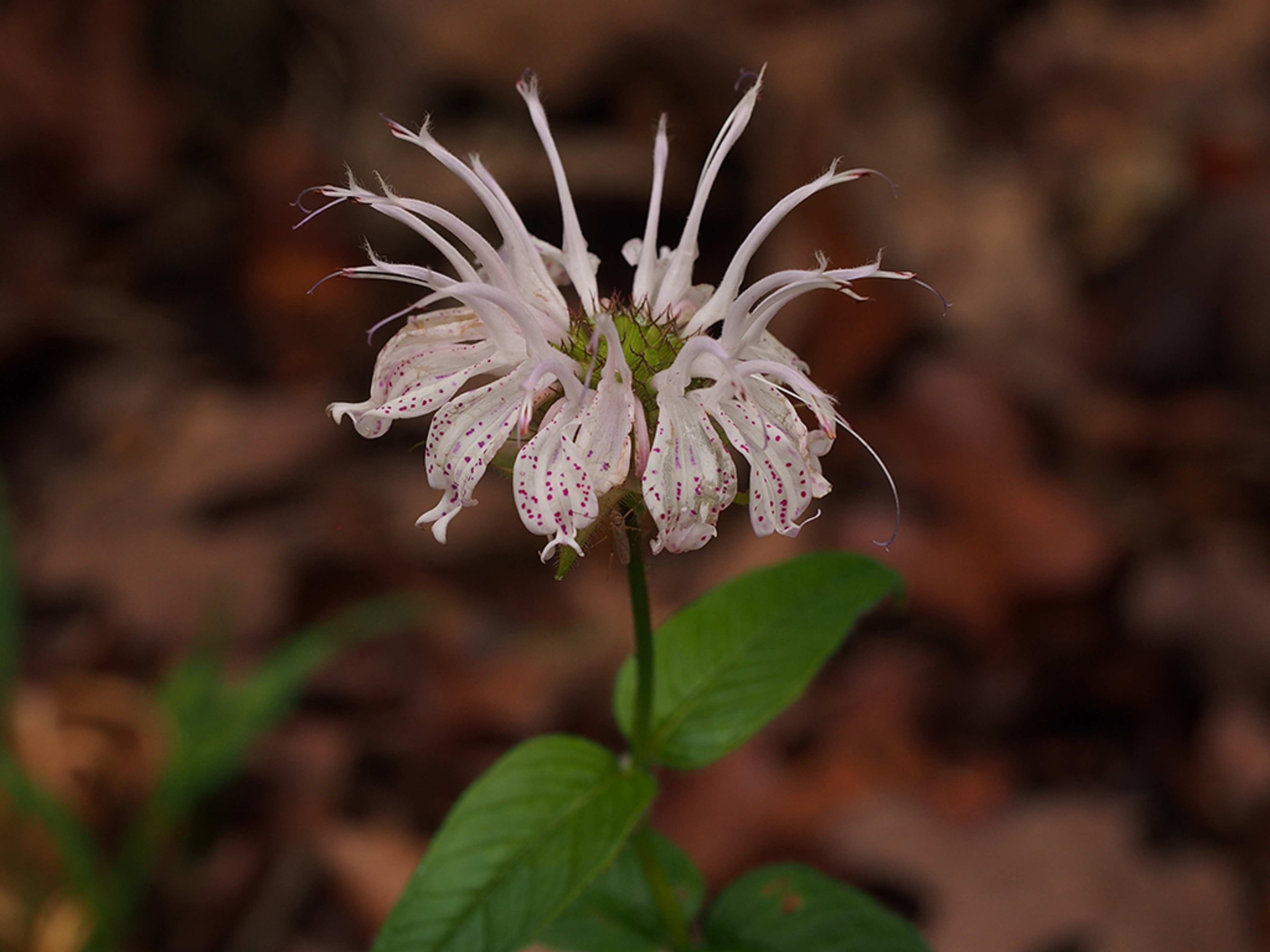
I find numerous woodland companions growing near Wild comfrey. By the time Wild comfrey blooms, the early spring ephemerals have already flowered and are going to seed, but their leaves and seed pods are still present. These include Bloodroot, Purple Trillium and Dutchman's breeches.
Woodland wildflowers that may be seen blooming simultaneously with Wild comfrey include Rue anemone (Thalictrum thalictroides), Dwarf larkspur (Delphinium tricorne), Horsemint (Monarda bradburiana), Mayapple (Podophyllum peltatum), Robin's plantain (Erigeron pulchellus), Sweet cicely (Osmorhiza longistylis), Yellow pimpernel (Taenidia integerrima), and Green violet (Hybanthus concolor).
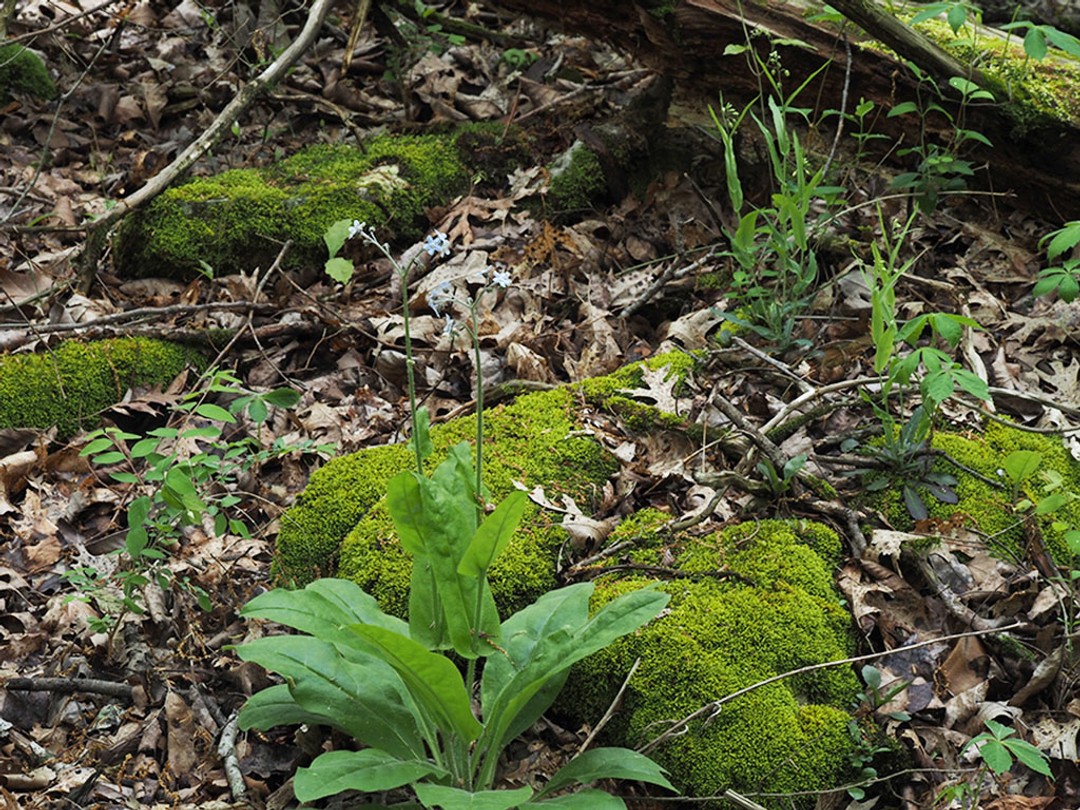
With Taenidia integerrima 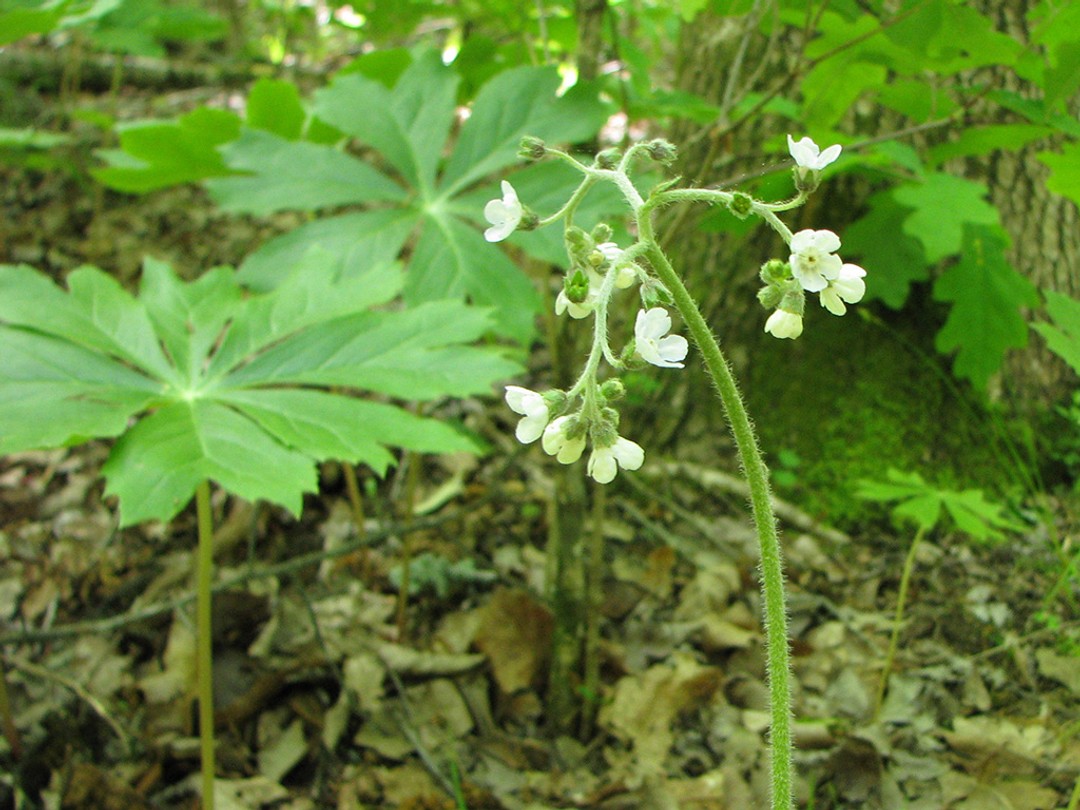
With Podophyllum peltatum 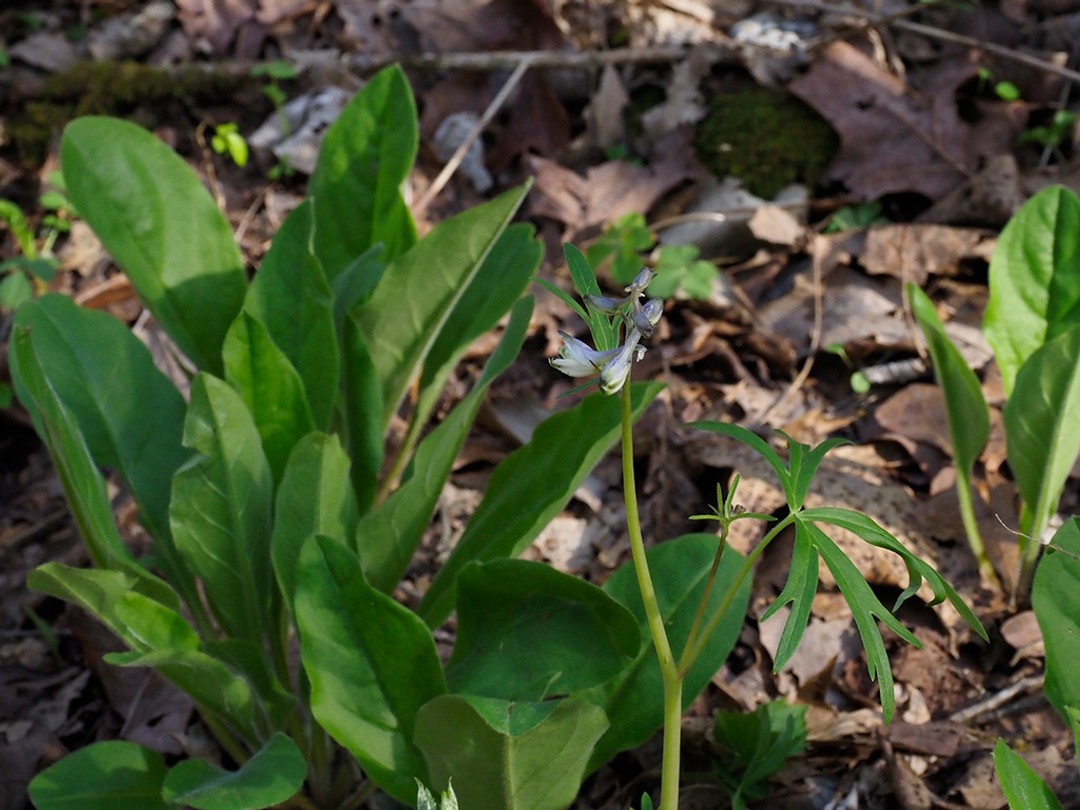
With Delphinium tricorne 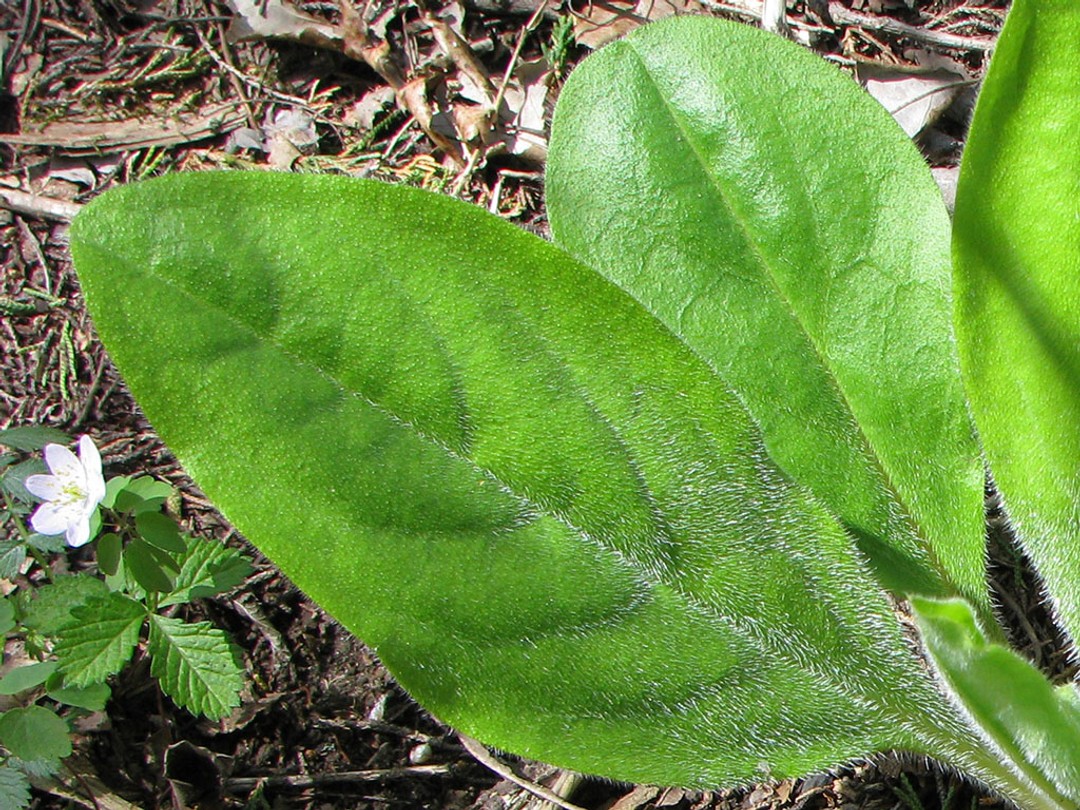
With Thalictrum thalictroides
HABITAT
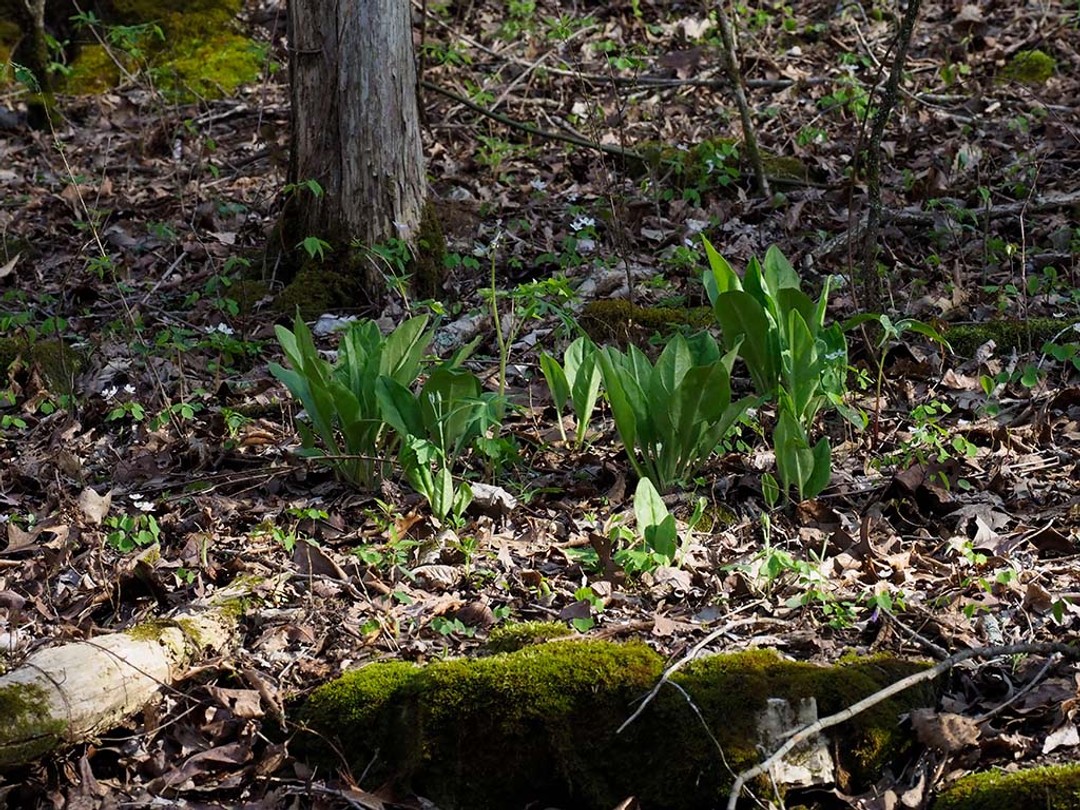
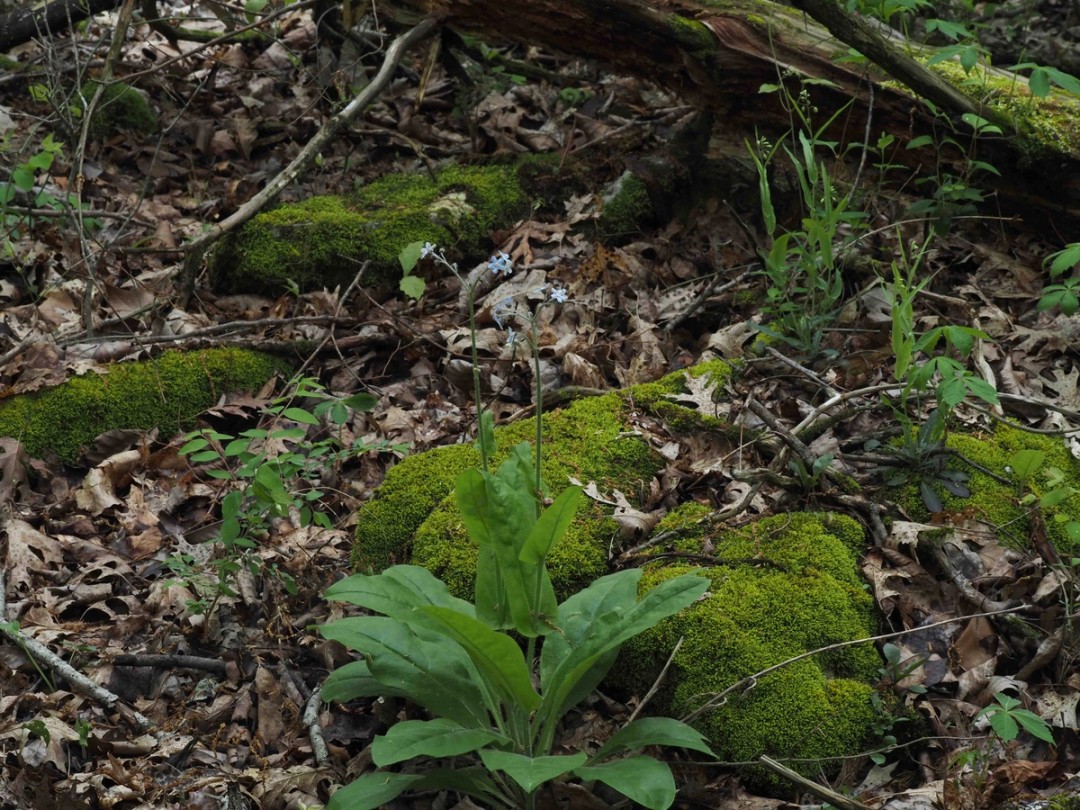
Wild comfrey is found in mesic forests of mixed hardwood, open rocky woods and along streambanks. It prefers rich soil with minimal competition and is often found on slopes.
CONSERVATION STATUS
In Arkansas, Cynoglossum virginianum has a Conservation Value of 6, meaning 'Typically matrix taxa in intact, stable habitats, with some limited ability to respond to destabilizing forces and repopulate areas from which they have been extirpated'.
Natureserve shows Wild comfrey is Possibly Extirpated in Connecticut, Critically Imperiled in Maine and New York and Imperiled in Delaware. In North Carolina it is Vulnerable. Pennsylvania and South Dakota have a status of Apparently Secure, with Virginia and West Virginia showing a status of Secure. All other states within its range show No Status Rank.
INTERESTING TIDBITS
WIld comfrey is a host plant, and the only documented host plant for the moth, Ethmia trifurcella. This moth is in the family Depressariidae.