PLANT NAME
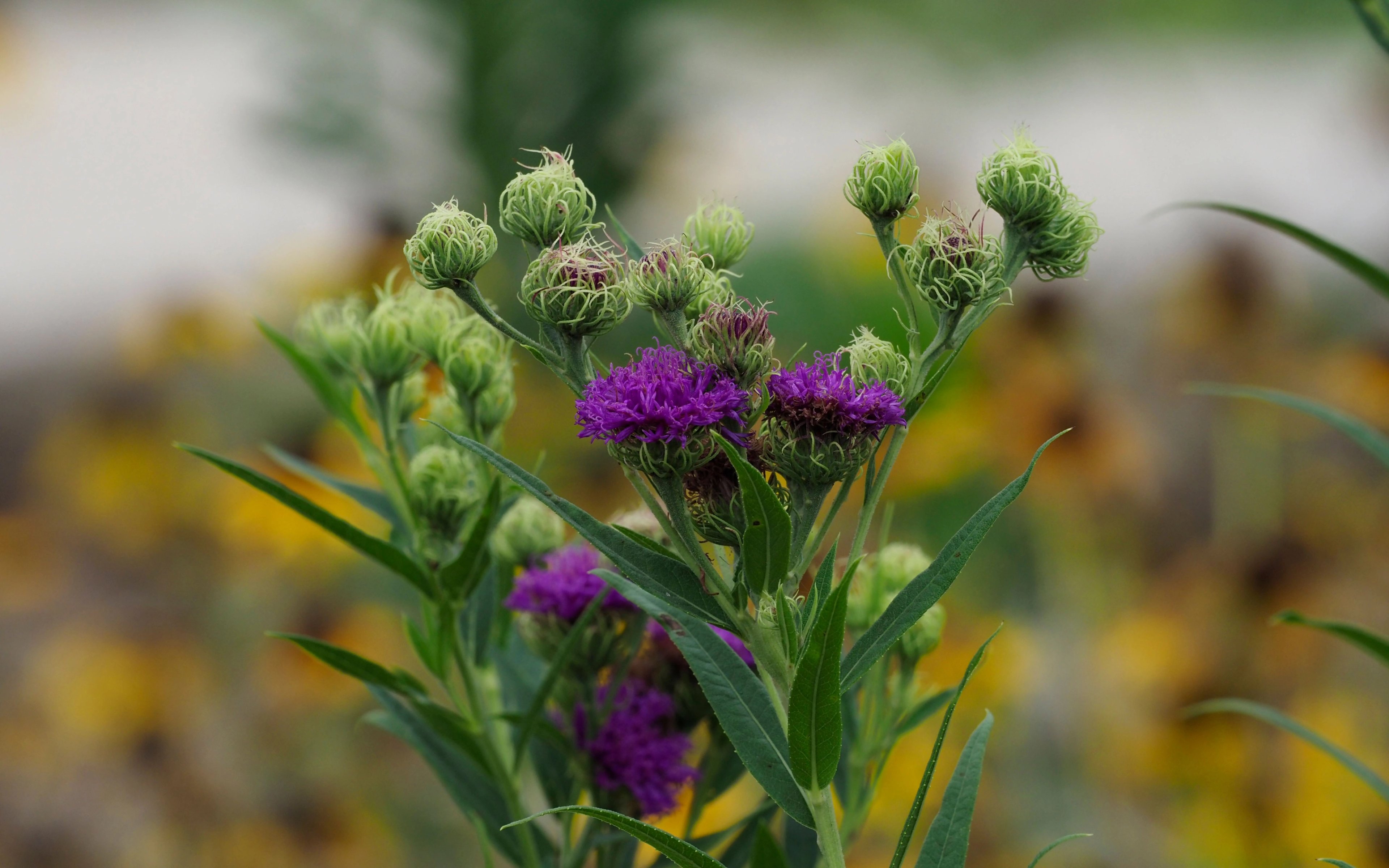
The genus Vernonia was named after William Vernon, an English botanist who traveled and collected plants in Maryland during 1698. The specific epithet arkansana, on the other hand, refers to the state of Arkansas, where this plant is particularly dominant, especially in the Arkansas Ozarks. Commonly known as Curlytop ironweed or Arkansas ironweed, this plant is characterized by its prominently curled, thread-like bracts found at the base of each flower. The name ‘Curlytop’ aptly describes this distinctive feature, while the common name ‘Arkansas’ ironweed highlights its widespread presence in the state.
BLOOM
Vernonia arkansana has large flowers, exceeding those of other ironweeds. Each flowerhead is about an inch wide (or more) and consists of 50 to 100 bright magenta florets. The florets have 5 lobes with long exserted, bifurcated styles brushed with white pollen.
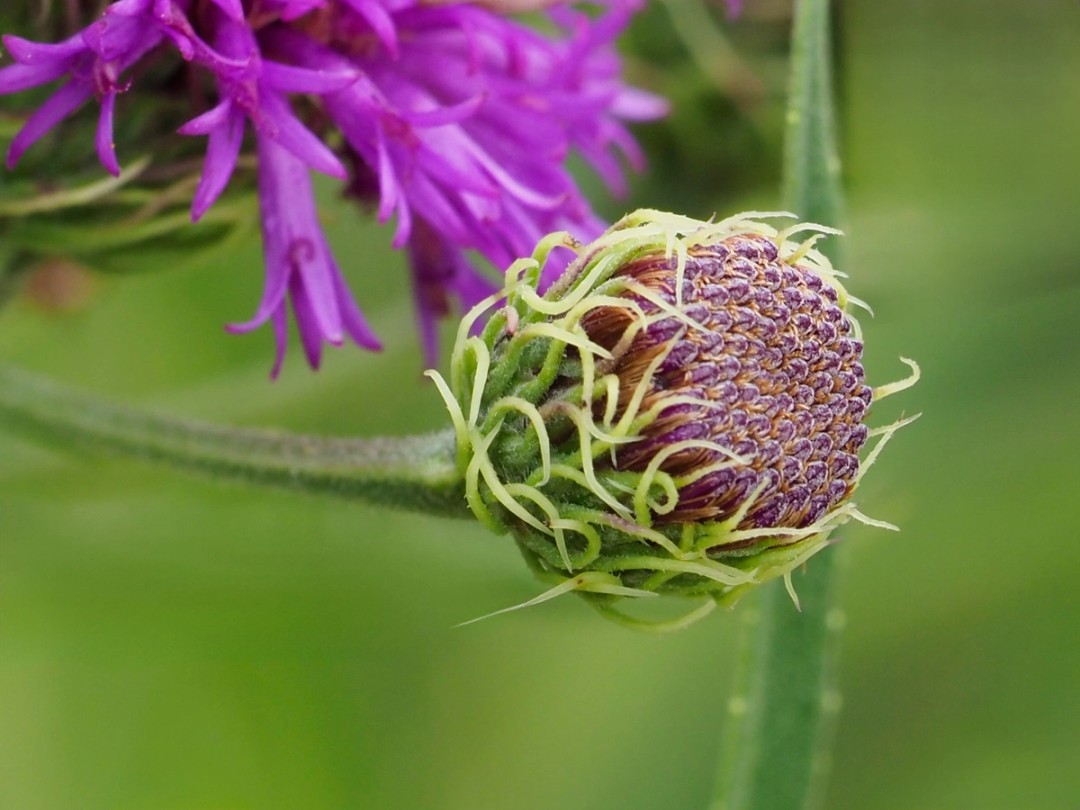
Curled phyllaries 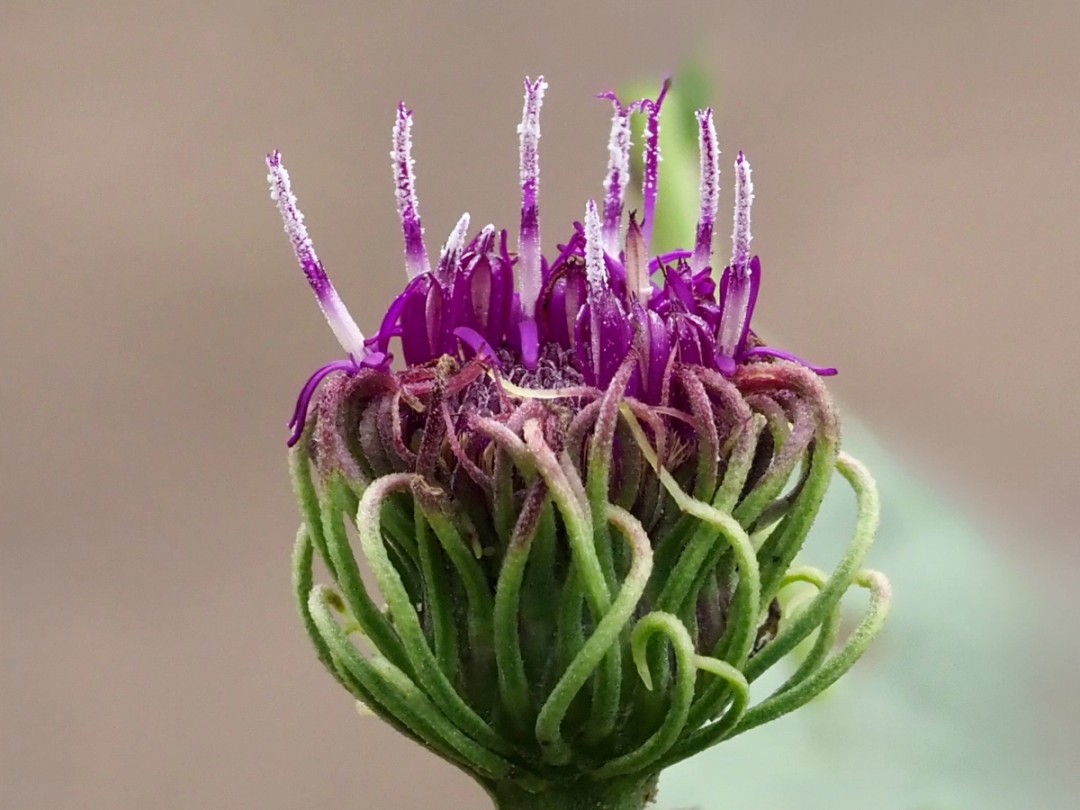
White pollen 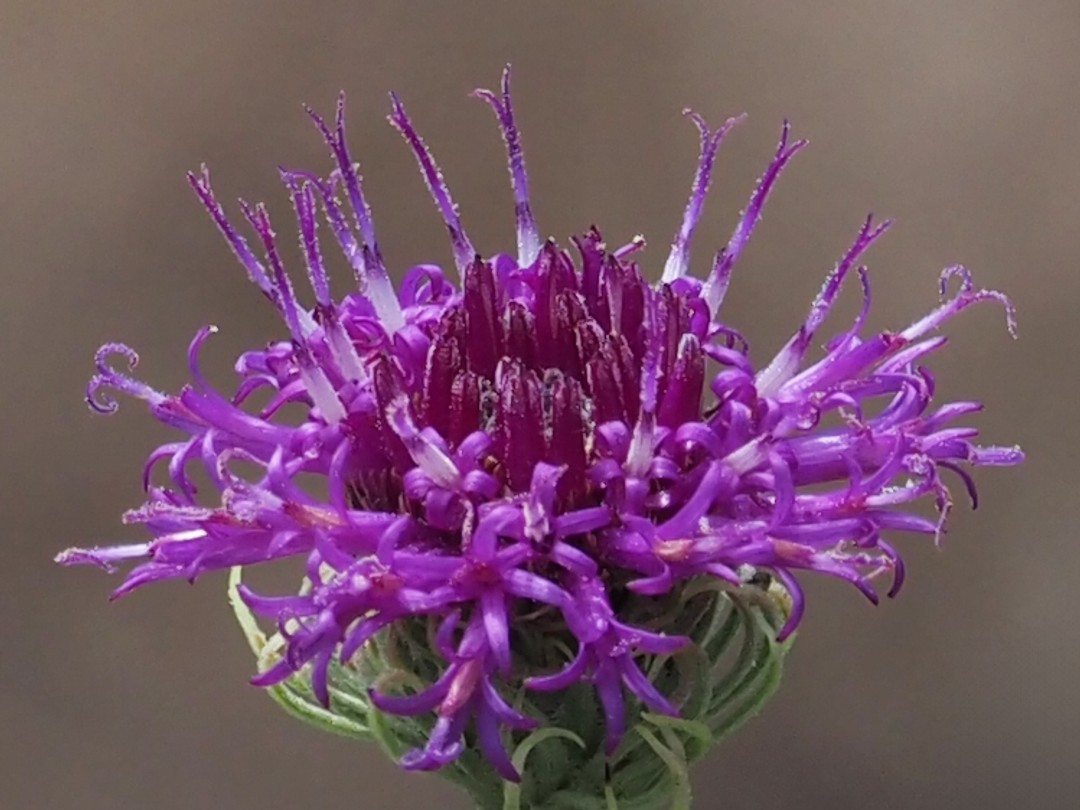
Style with 2 branches 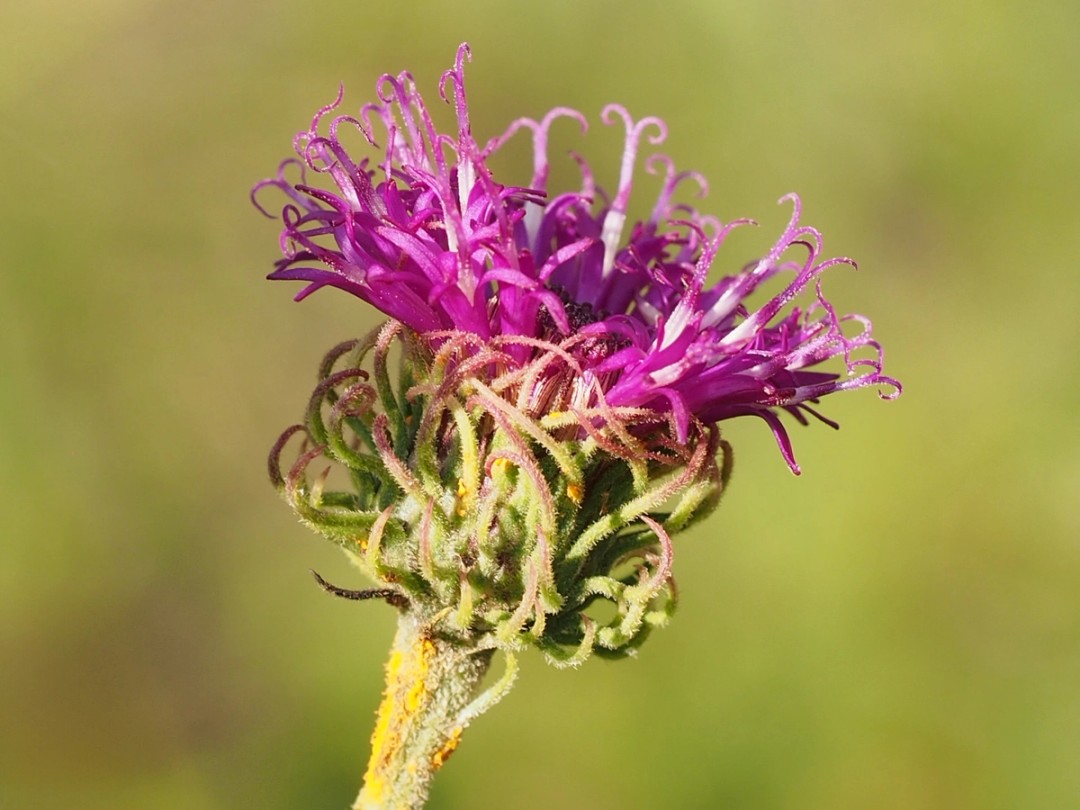
Styles and phyllaries 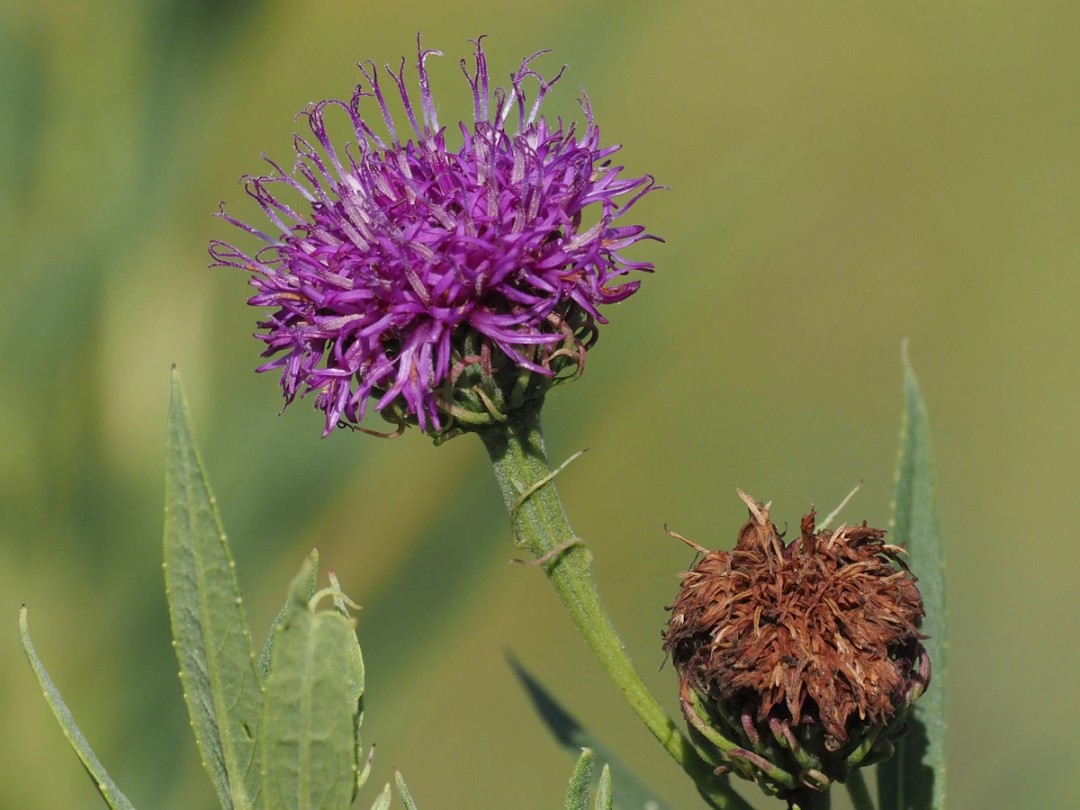
Flower head and spent flower 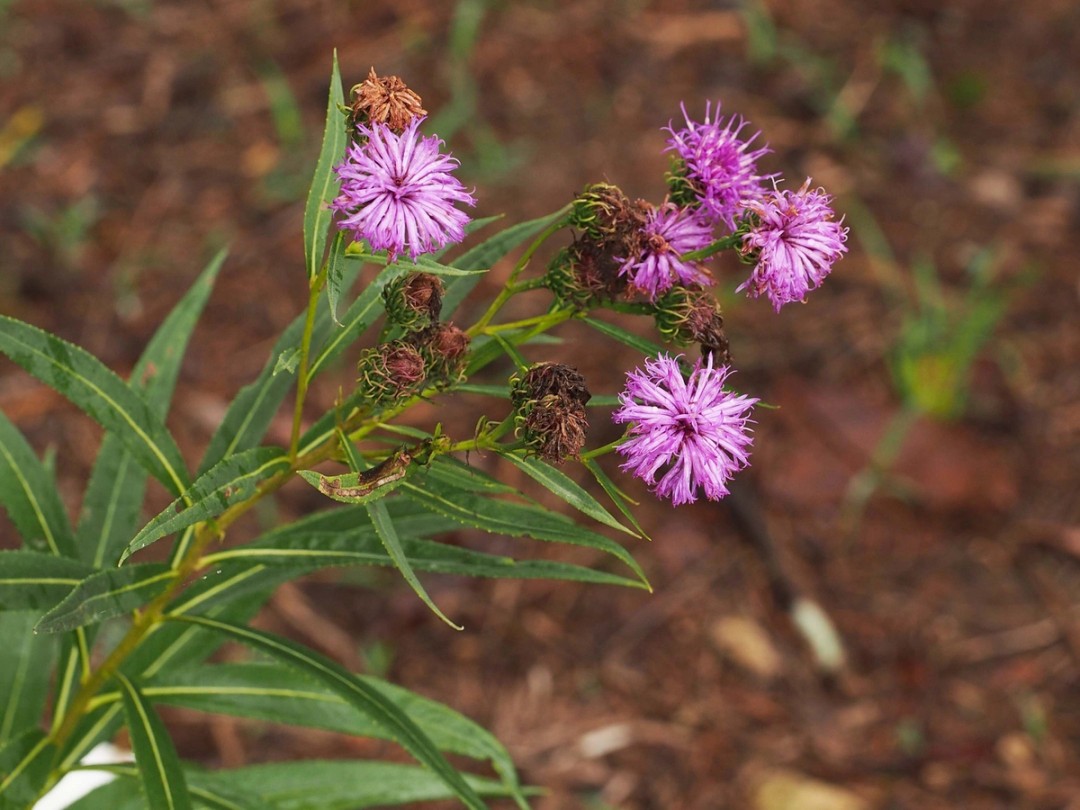
Late stage flowering
DESCRIPTION
Curlytop ironweed is a perennial native wildflower growing to about 4 to 5 ft tall. Like all ironweeds, it is prone to hybridize with other nearby ironweeds. The narrow leaves are alternate, oval and sessile (occasionally with short petioles). They are glabrous to slightly hairy. The stem is typically glabrous, occasionally with some hairs near the tip.
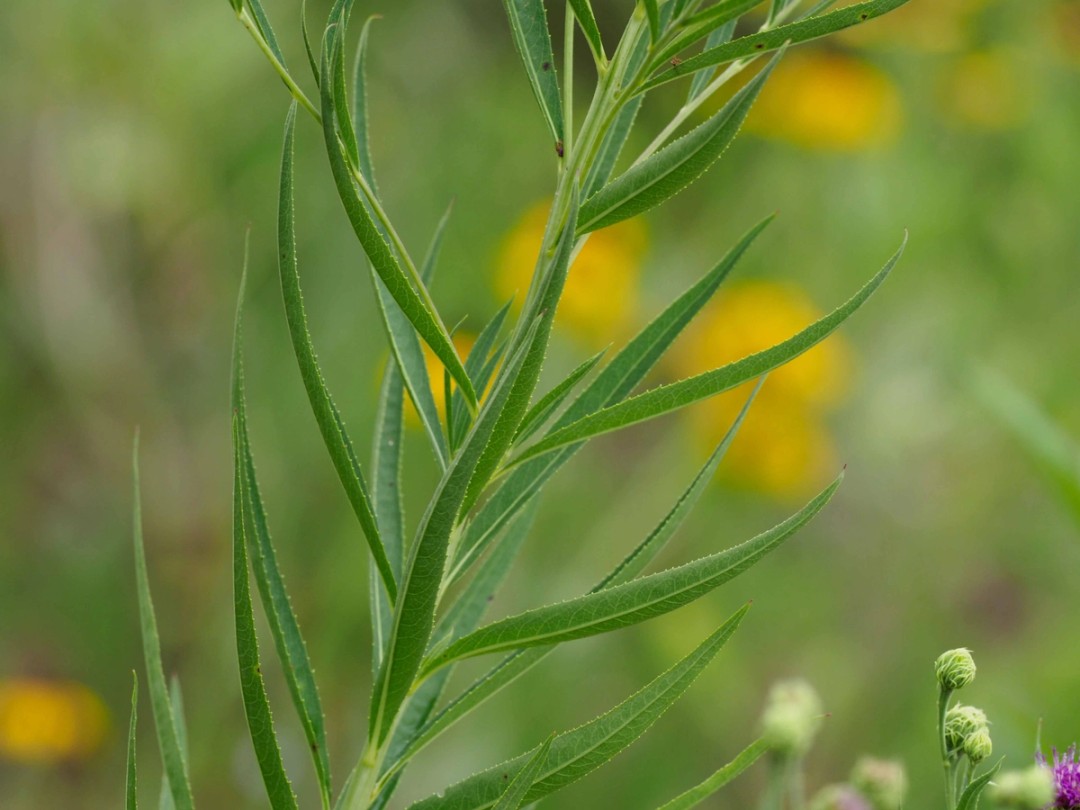
Graceful early leaves 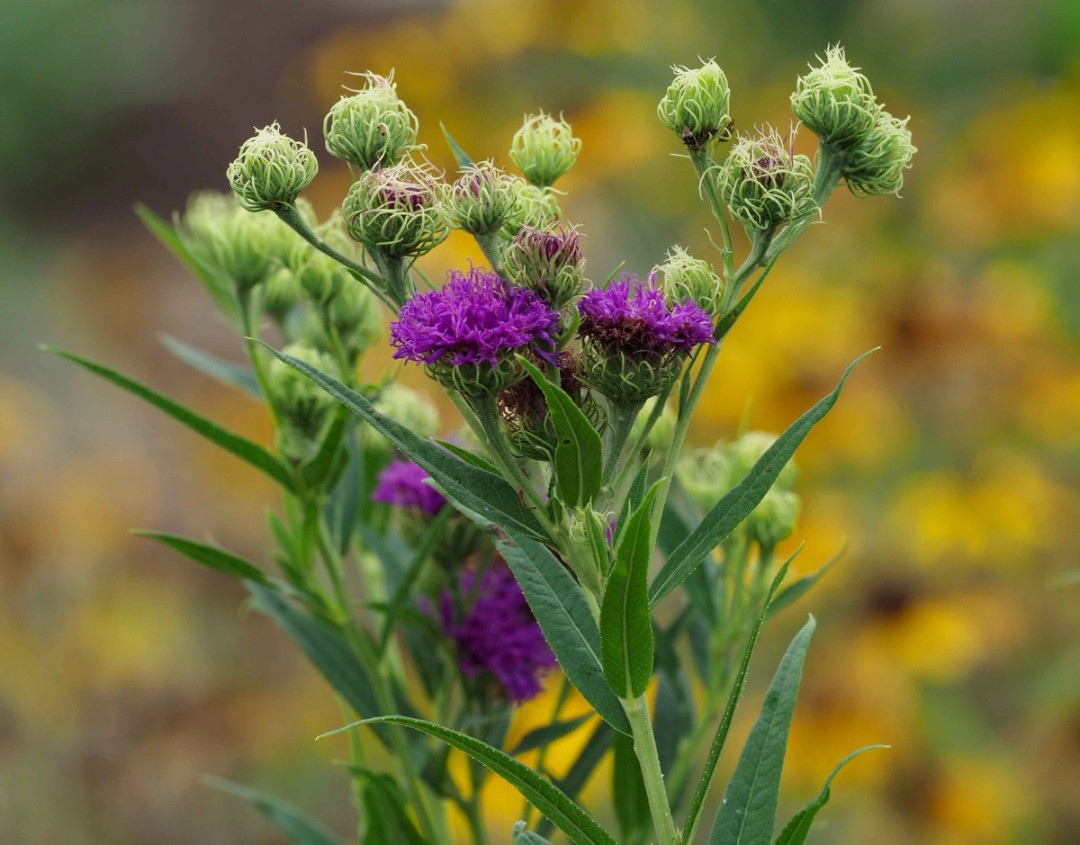
Stem, leaves, buds and flowers 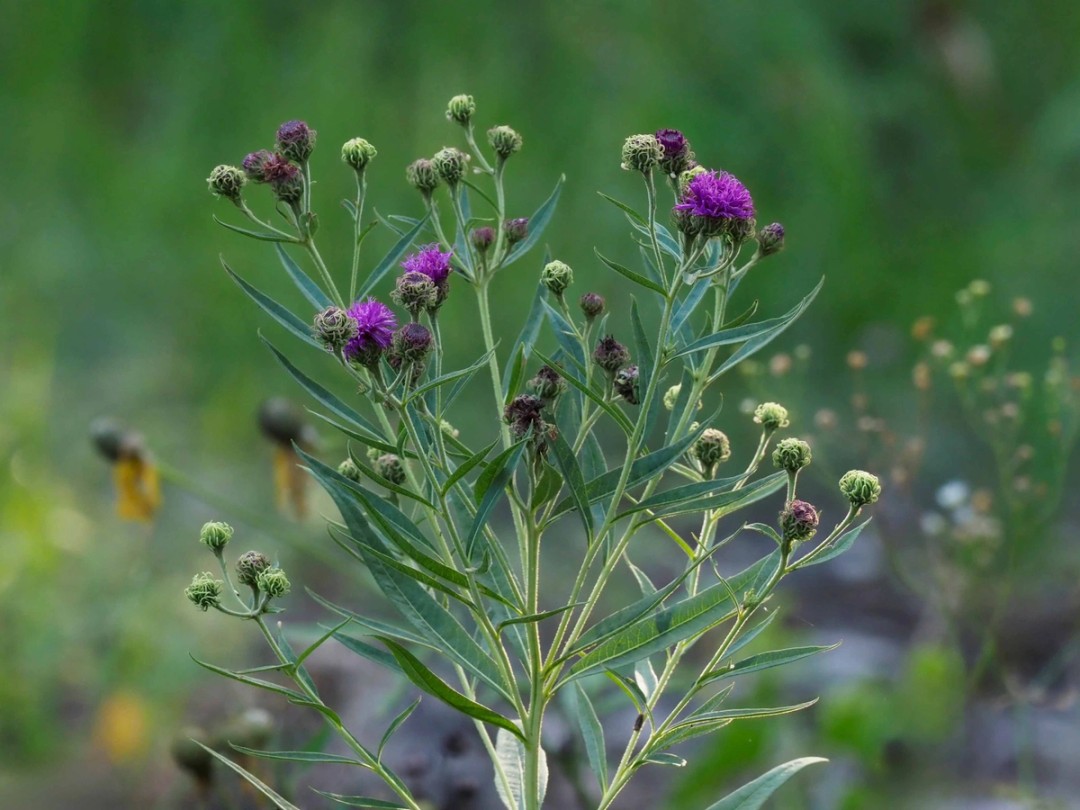
Flowers in many stages Slender leaves and spent flower heads
After flowering, fluffy, soft brown seed heads appear. The seed heads are quite beautiful and attract birds such as Goldfinches, Sparrows, and Juncos.
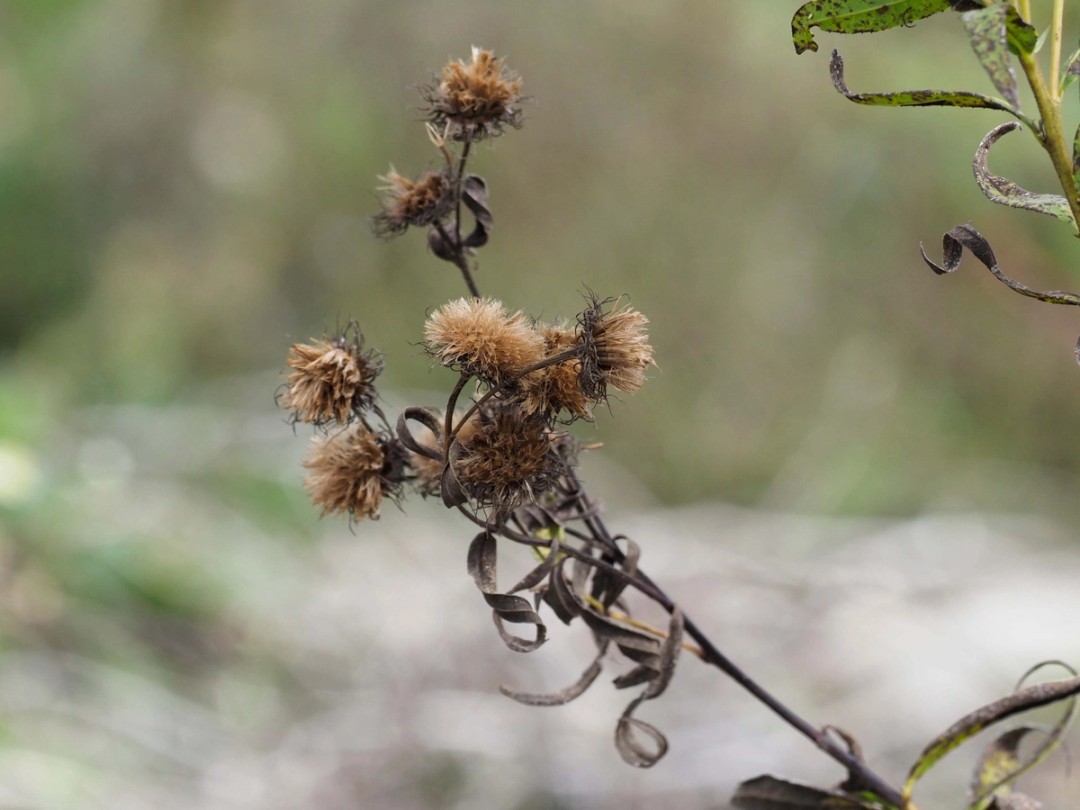
Ripe seed heads 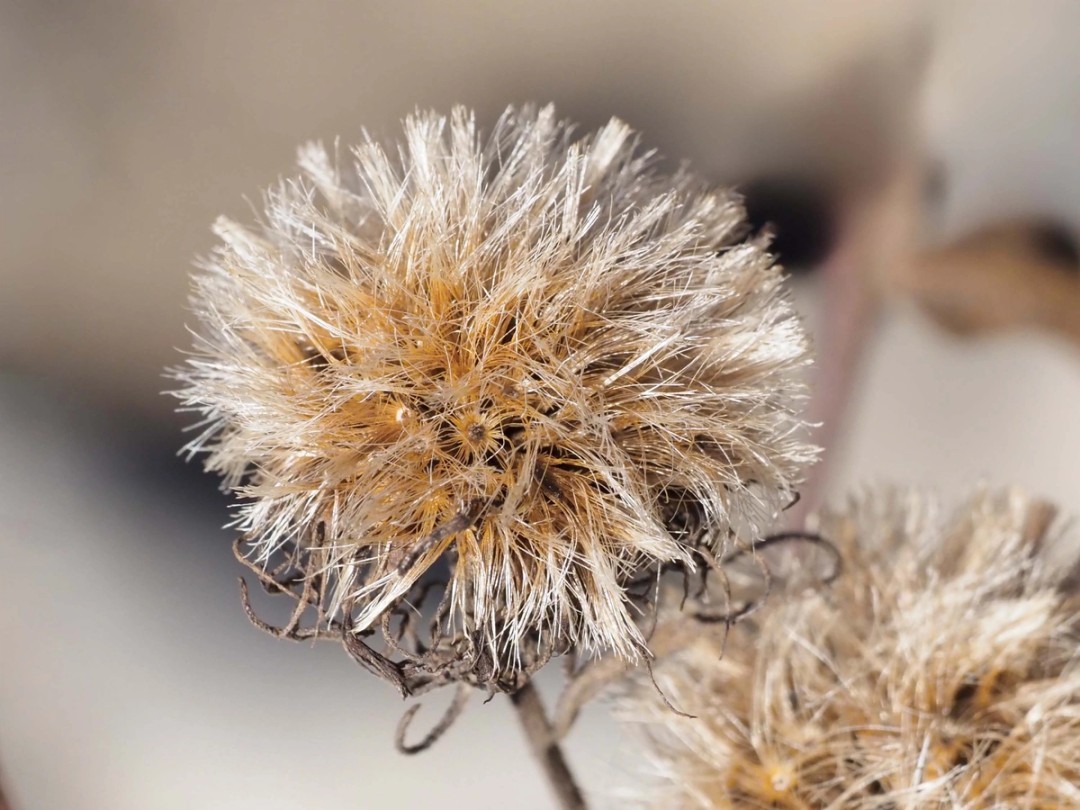
Fluffy seed head
POLLINATORS
Bees, wasps, butterflies and skippers are all visitors to these unique flowers.
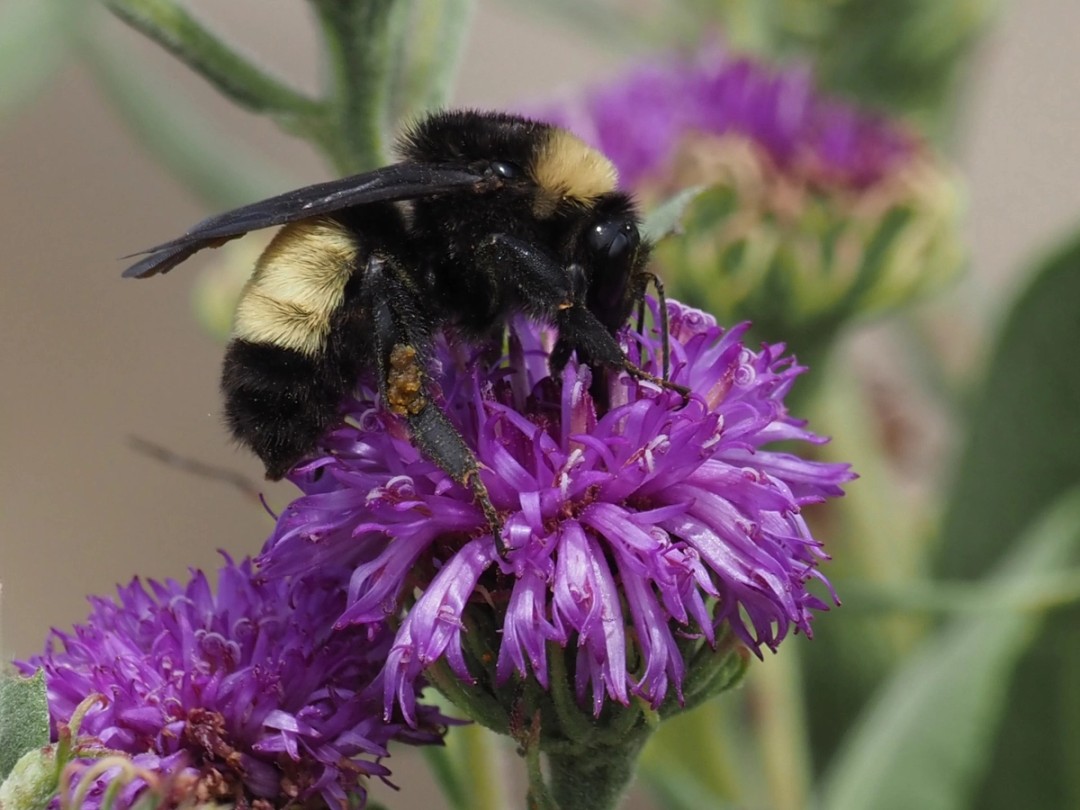
American bumble bee 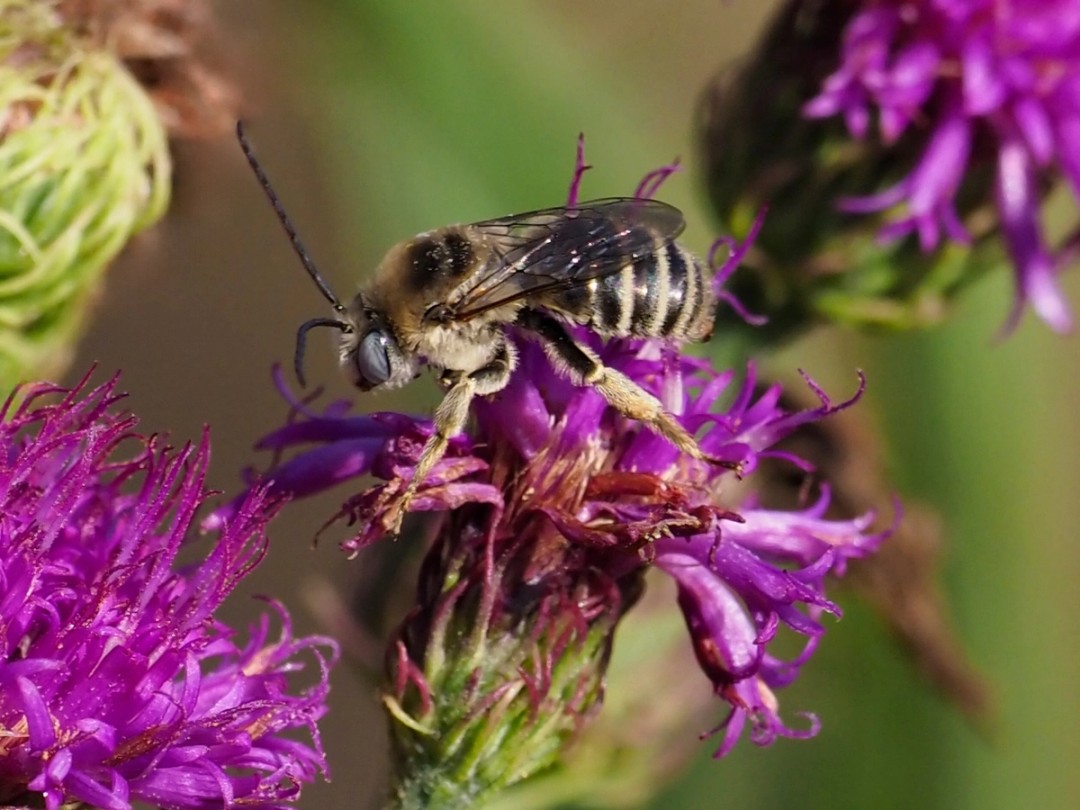
Melissodes bee 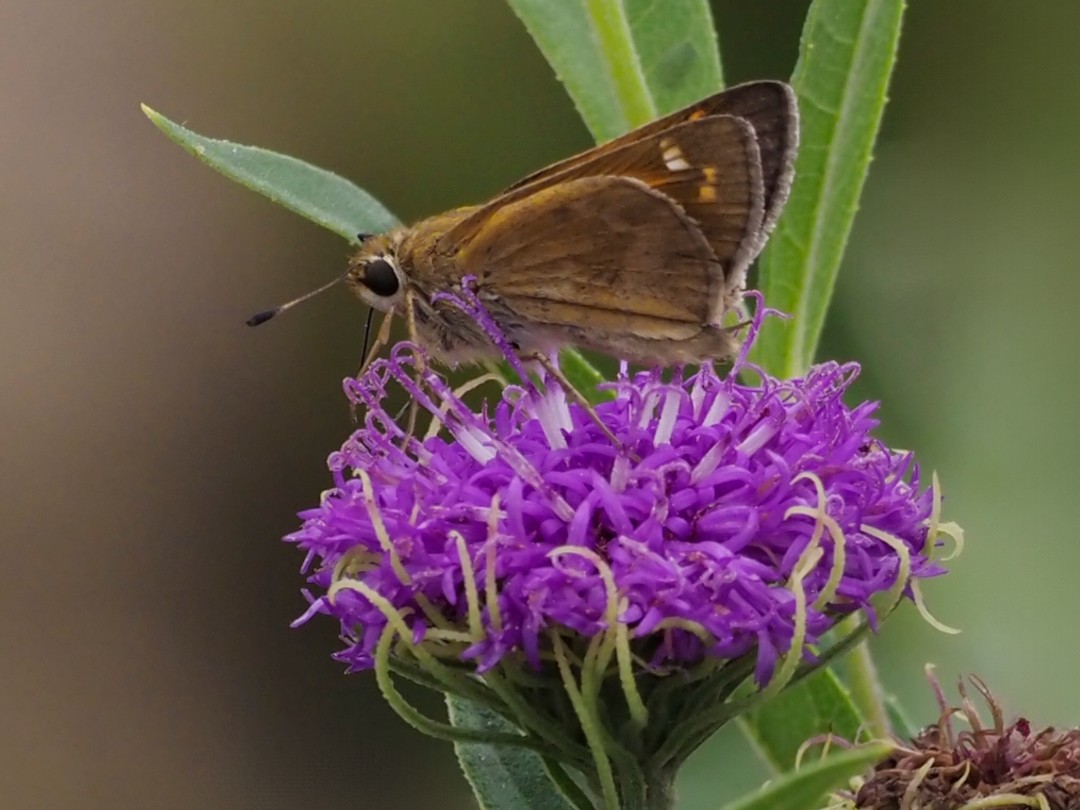
Sachem skipper 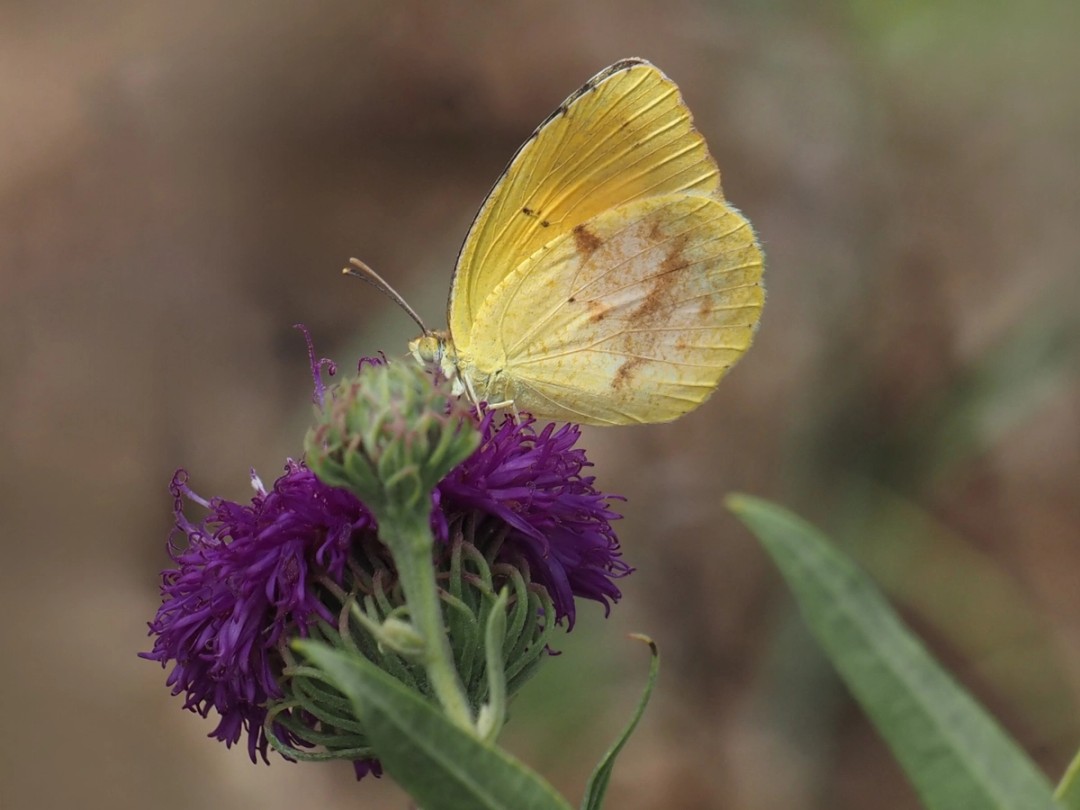
Sleepy orange butterfly
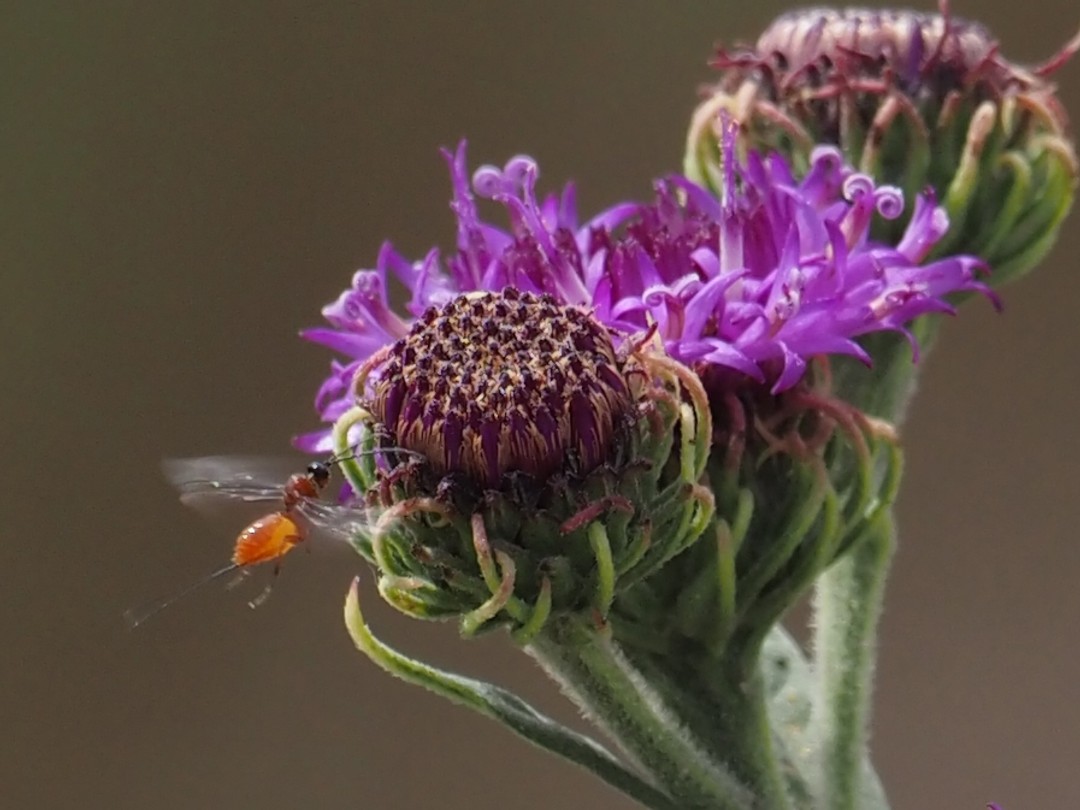
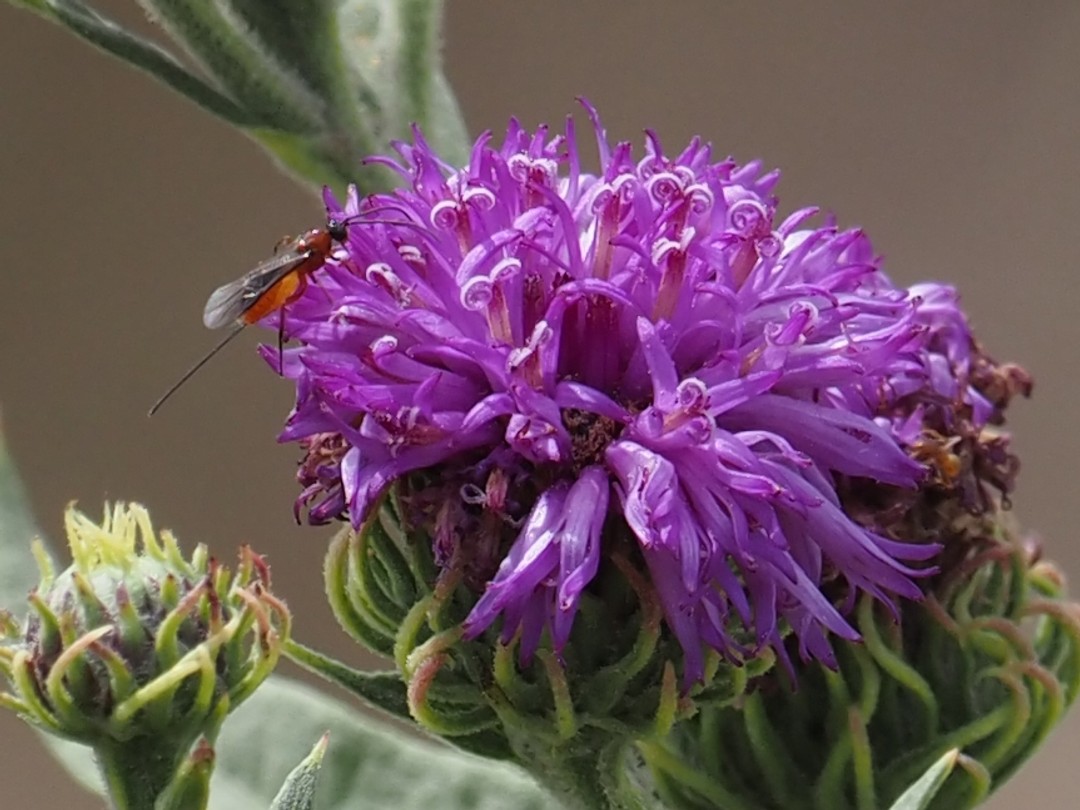
I've also noted a very tiny Braconid wasp visiting the flowers.
PLANTS GROWING NEARBY
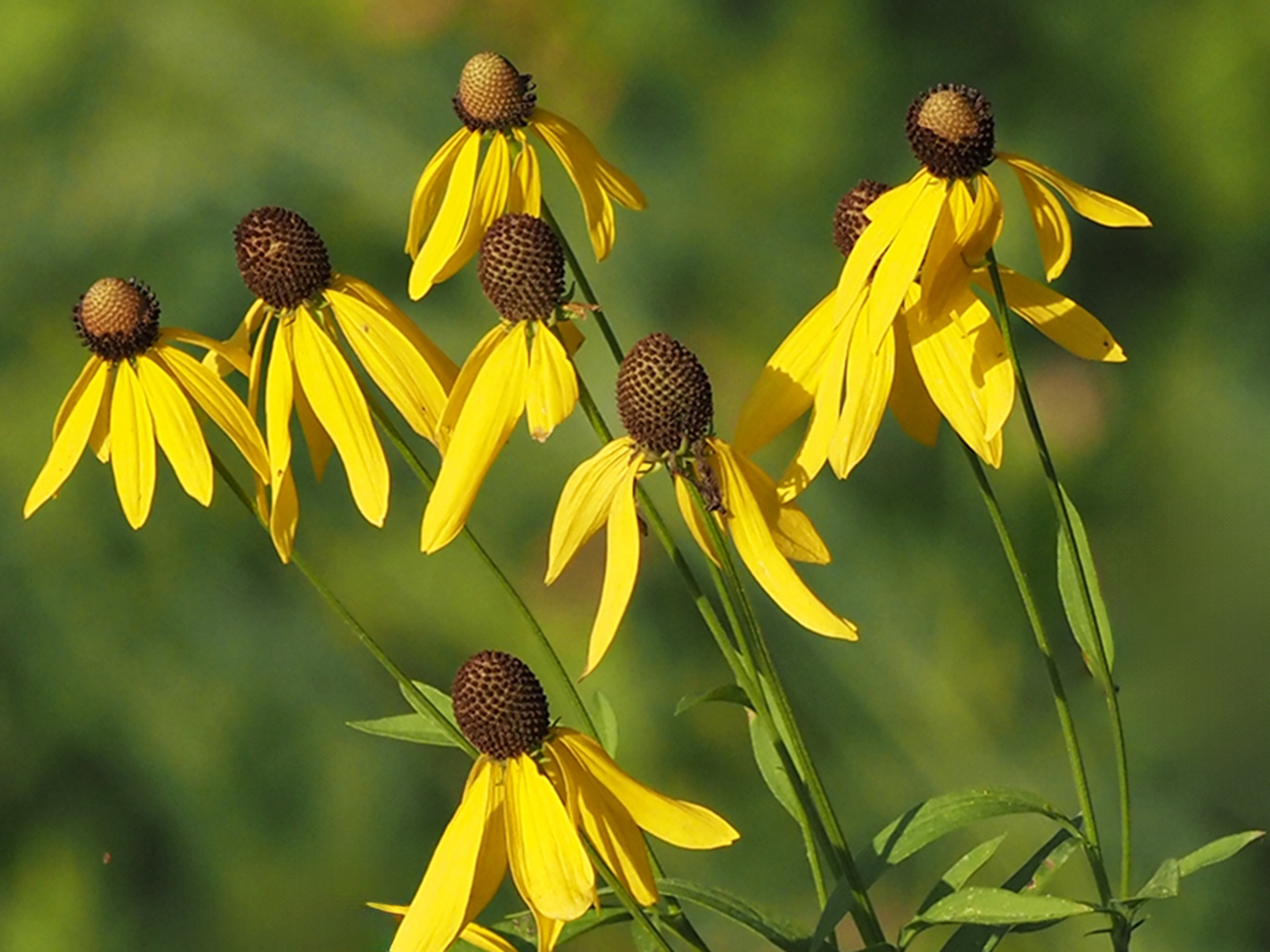
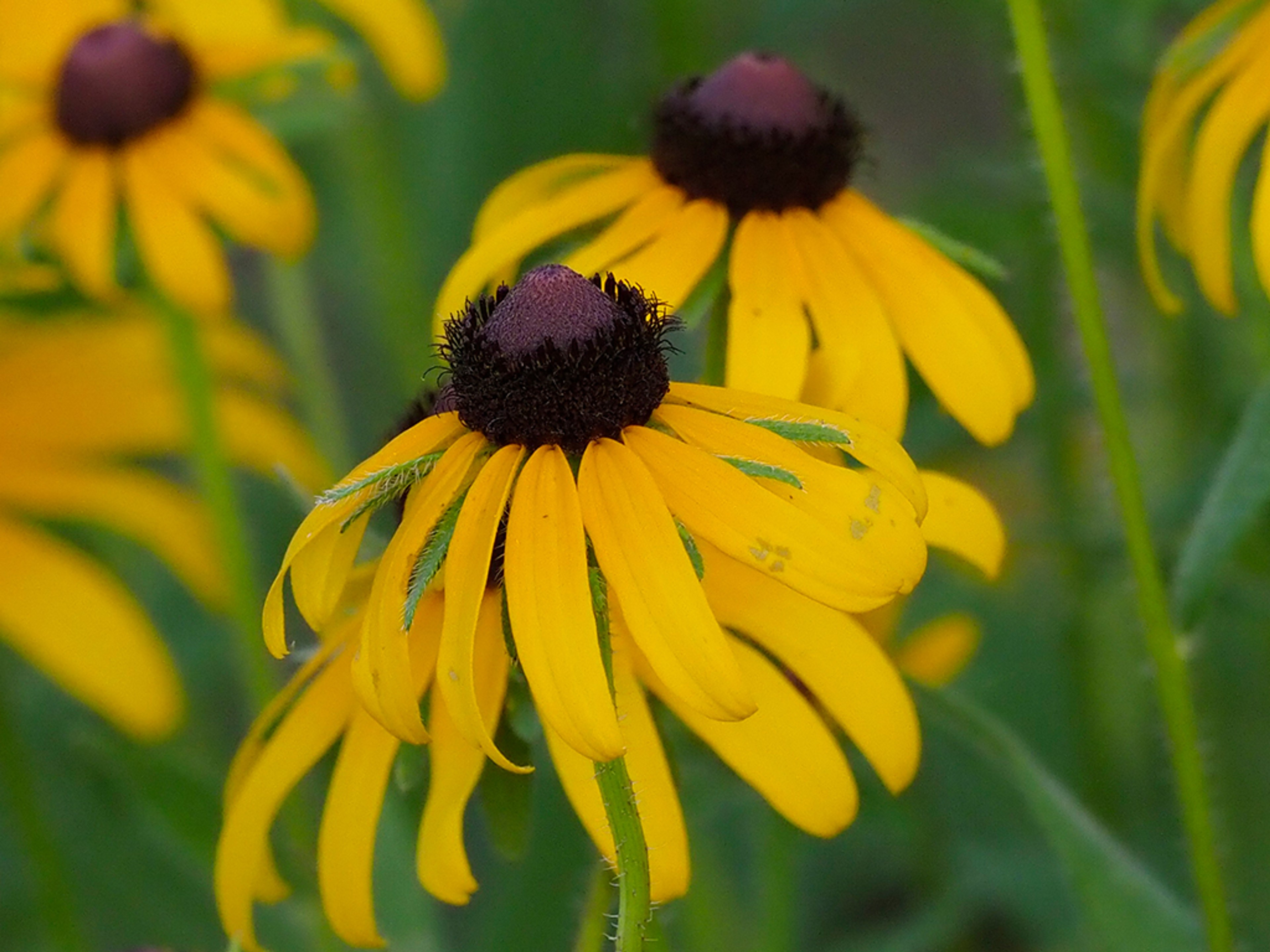
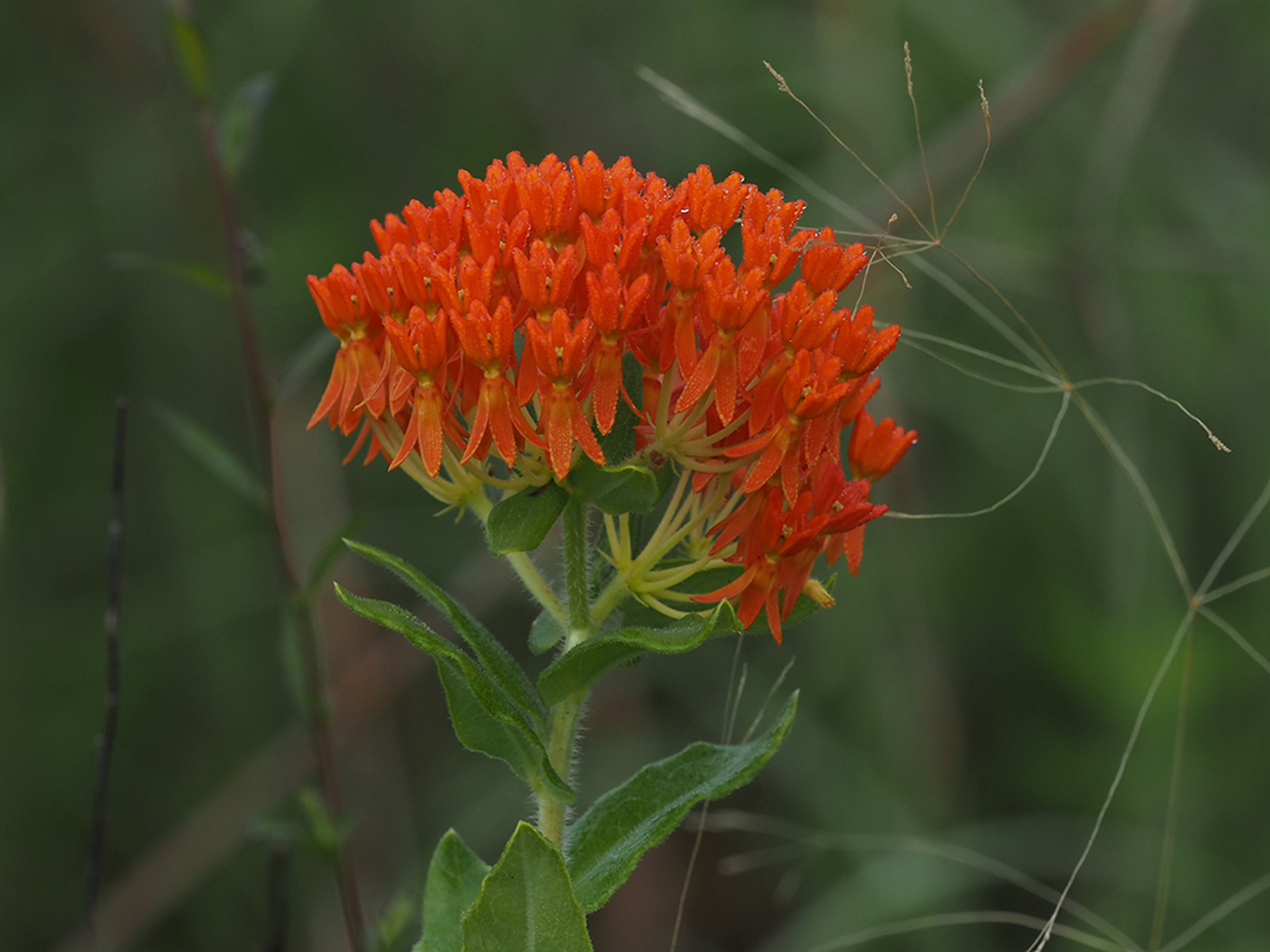
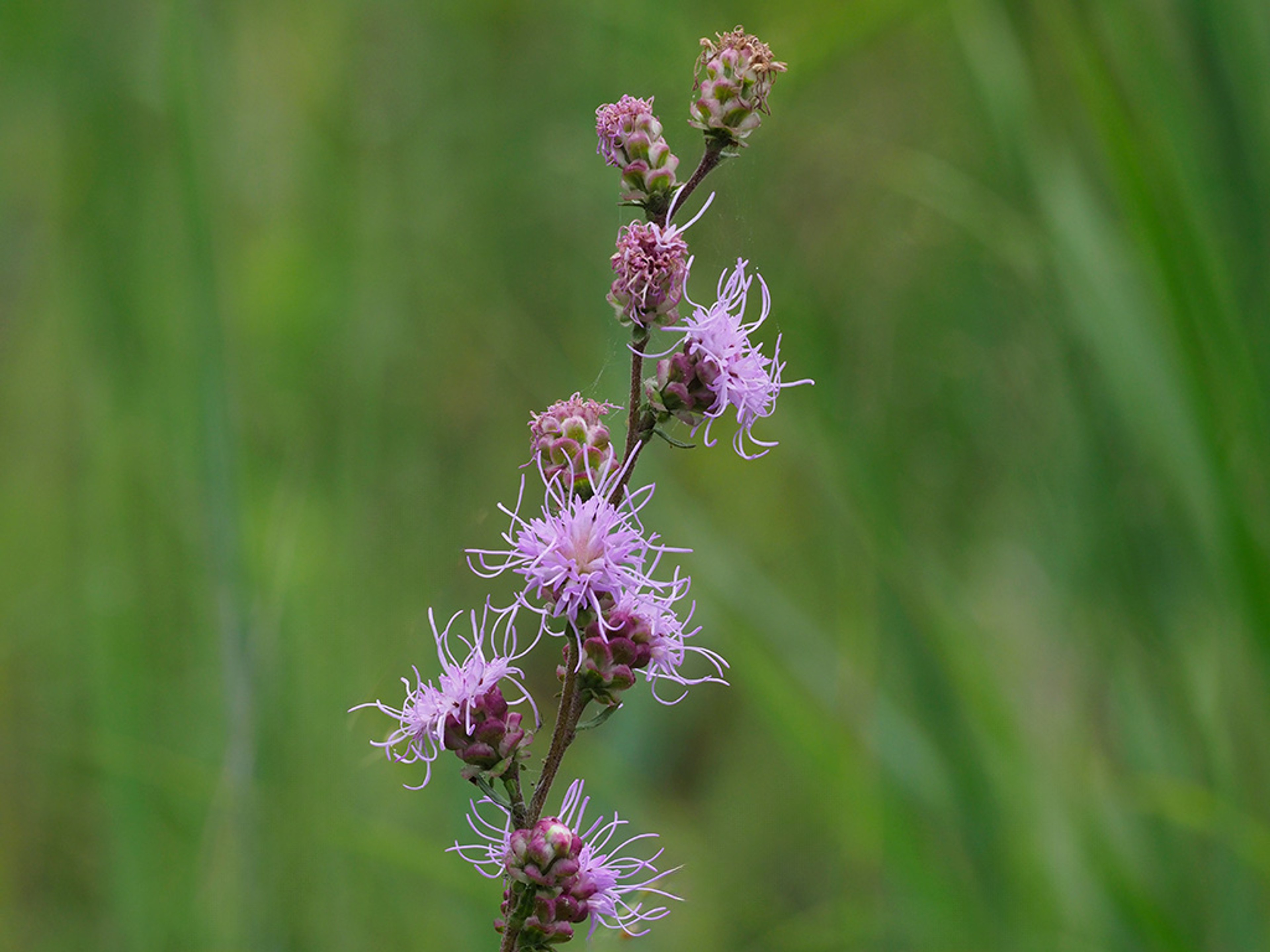
I often find Gray-headed coneflower (Ratibida pinnata) and Black-eyed Susan (Rudbeckia hirta) growing near Curlytop ironweed when it's growing in grassland habitat.
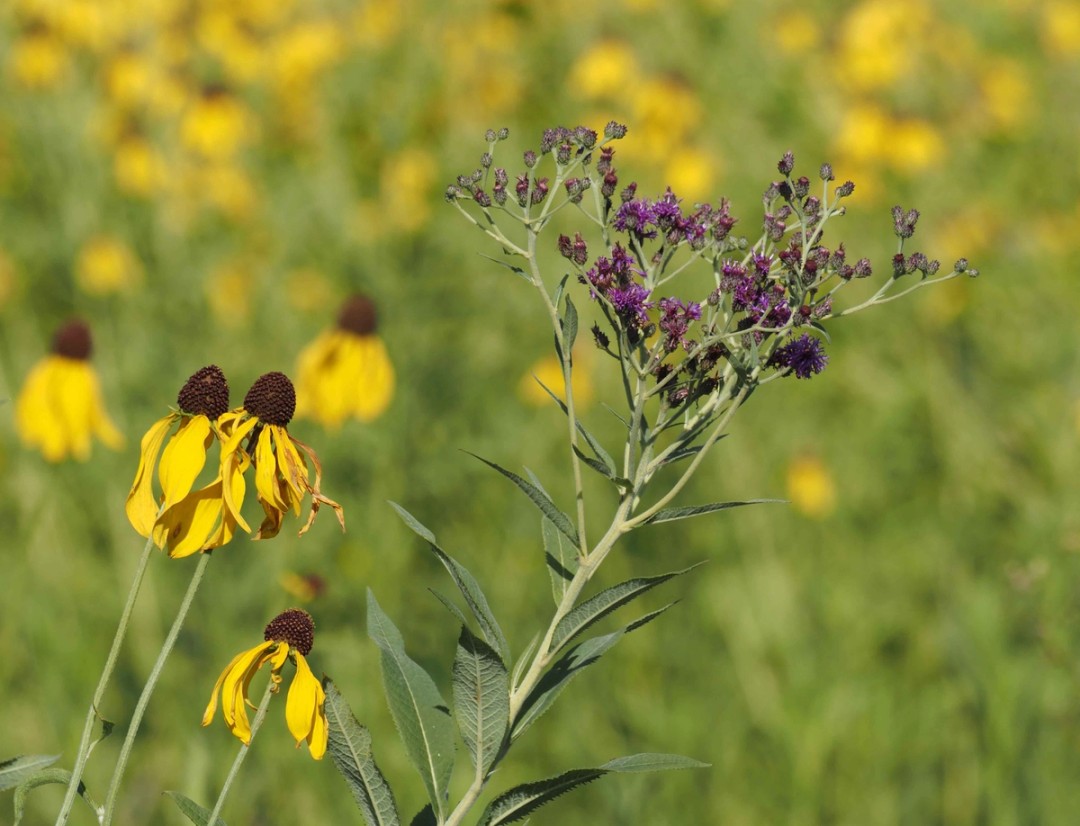
With Ratibida pinnata With Rudbeckia hirta
Take a look at the Growing Nearby section to see other native companions.
HABITAT
Vernonia arkansana is found in a variety of habitats from open woods, bottomland forests and prairies, gravel and sand bars along streams and fens, and occasionally glades.
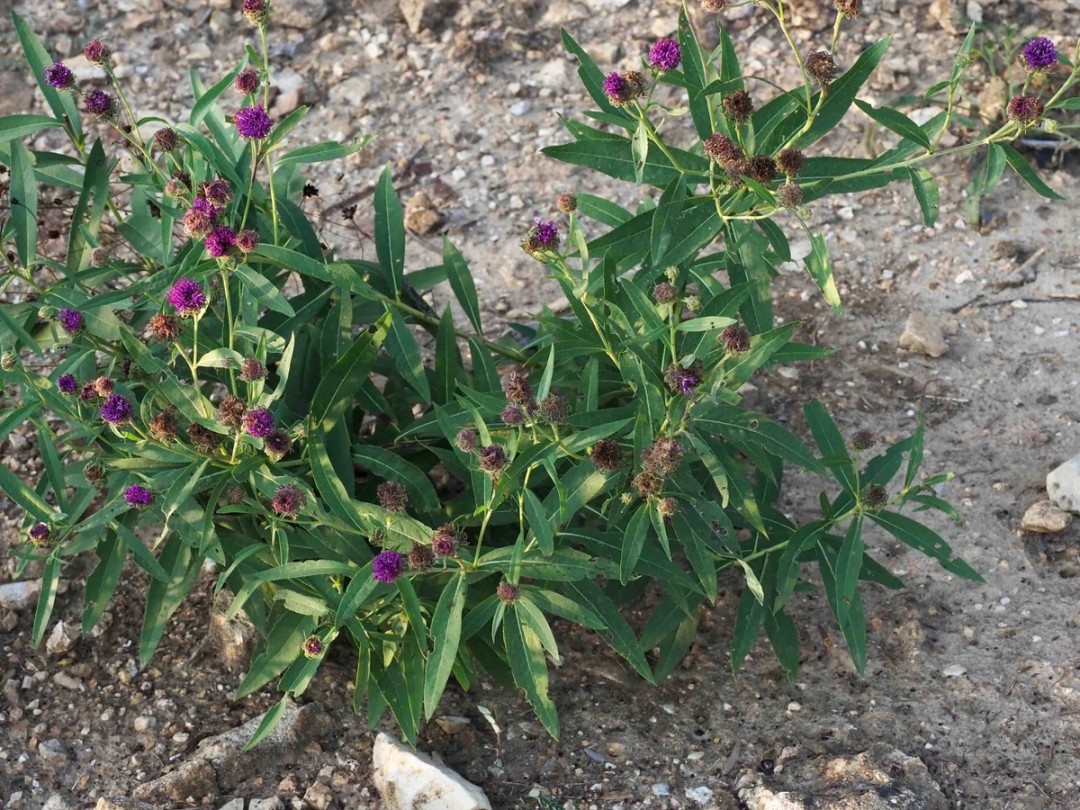
Gravel and sand bar 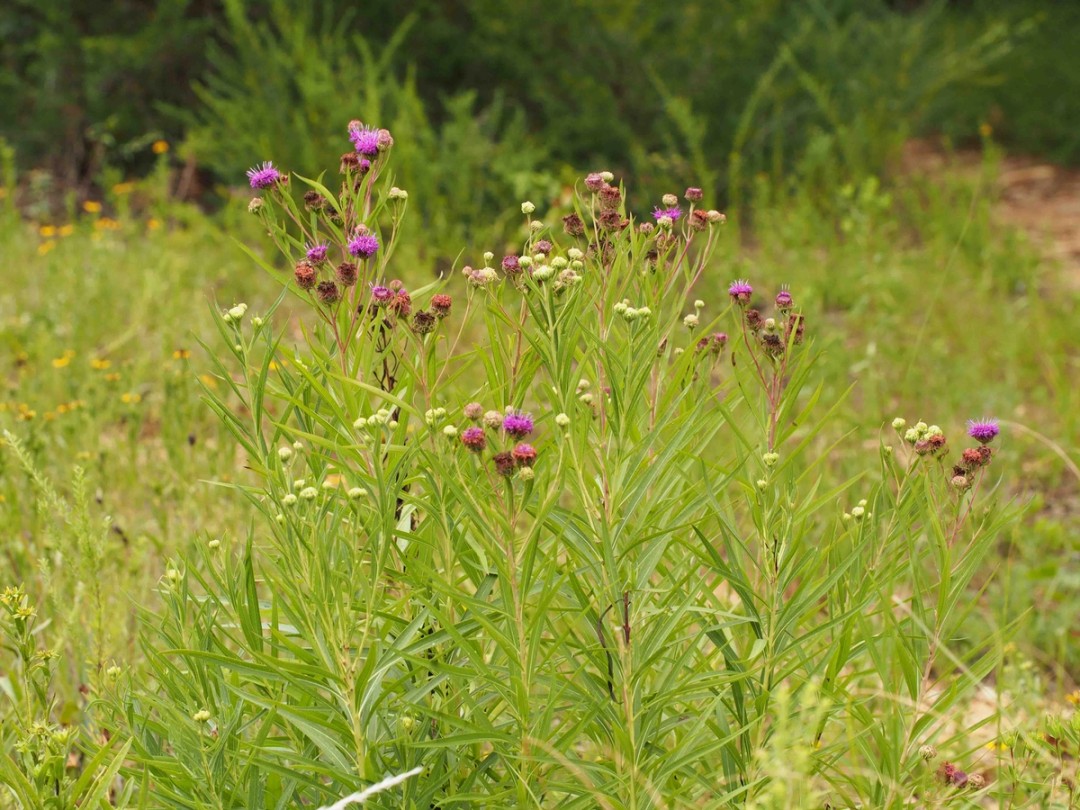
Woodland edge 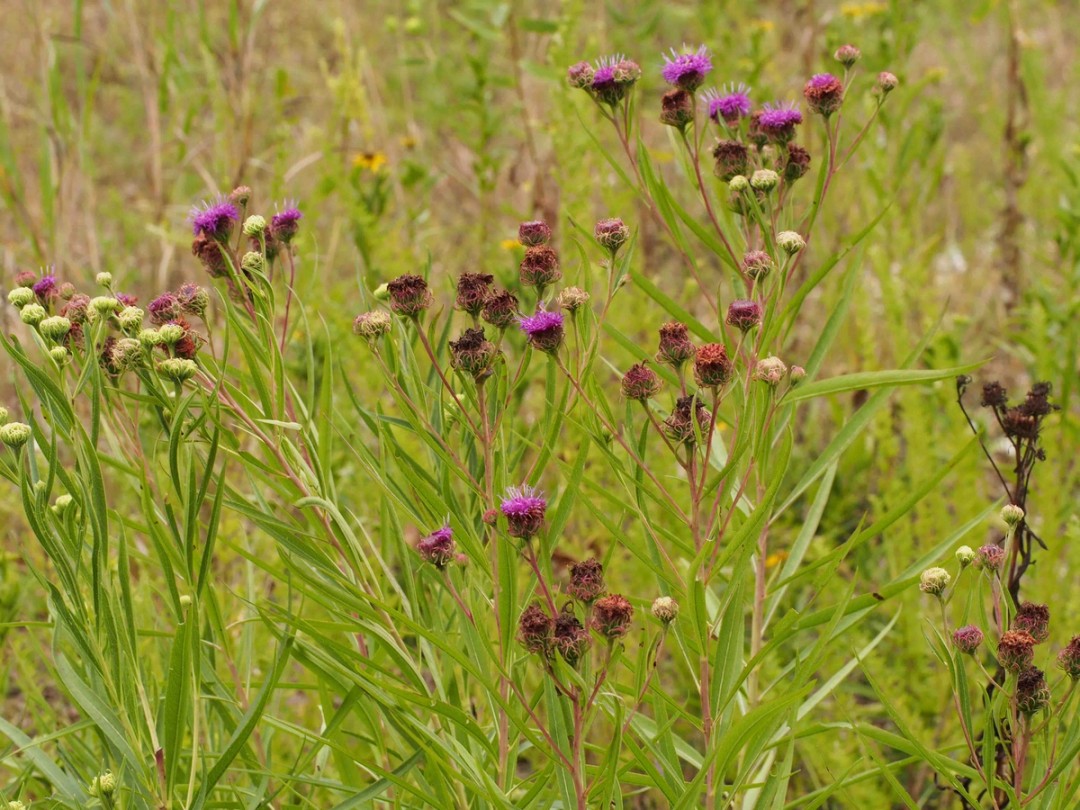
Prairie 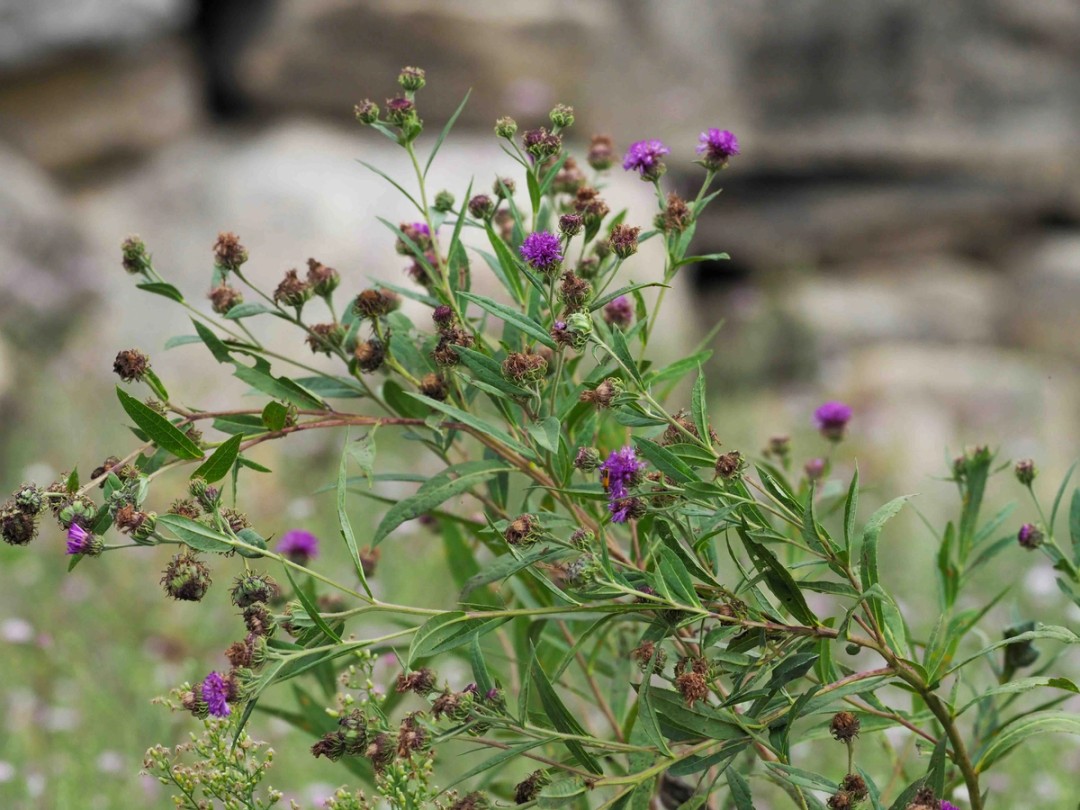
Glade
CONSERVATION STATUS
Arkansas ironweed is found in Arkansas, Missouri, Kansas and Oklahoma. It is not well documented on NatureServe. It is listed as Vulnerable in Kansas with all other states within its range showing No Status Rank.
In Arkansas, Vernonia arkansana has a C-value of 7 in the group of 4-7, meaning "Typically matrix taxa in intact, stable habitats, with some limited ability to respond to destabilizing forces and repopulate areas from which they have been extirpated."
INTERESTING TIDBITS
This is a terrific plant for a native garden as it rarely flops and invites many interesting insects. On top of that, it is not browsed by deer and other herbivores due to its bitter taste.