PLANT NAME
Verbena simplex belongs to the Verbenaceae family, which is a large family comprising over 1000 species of herbs, shrubs, and even trees. Common characteristics of the family include square stems, opposite leaves (or whorled), and small flowers that often occur in clusters or spikes. The common name for this species is Narrow-Leaved Vervain.
BLOOM
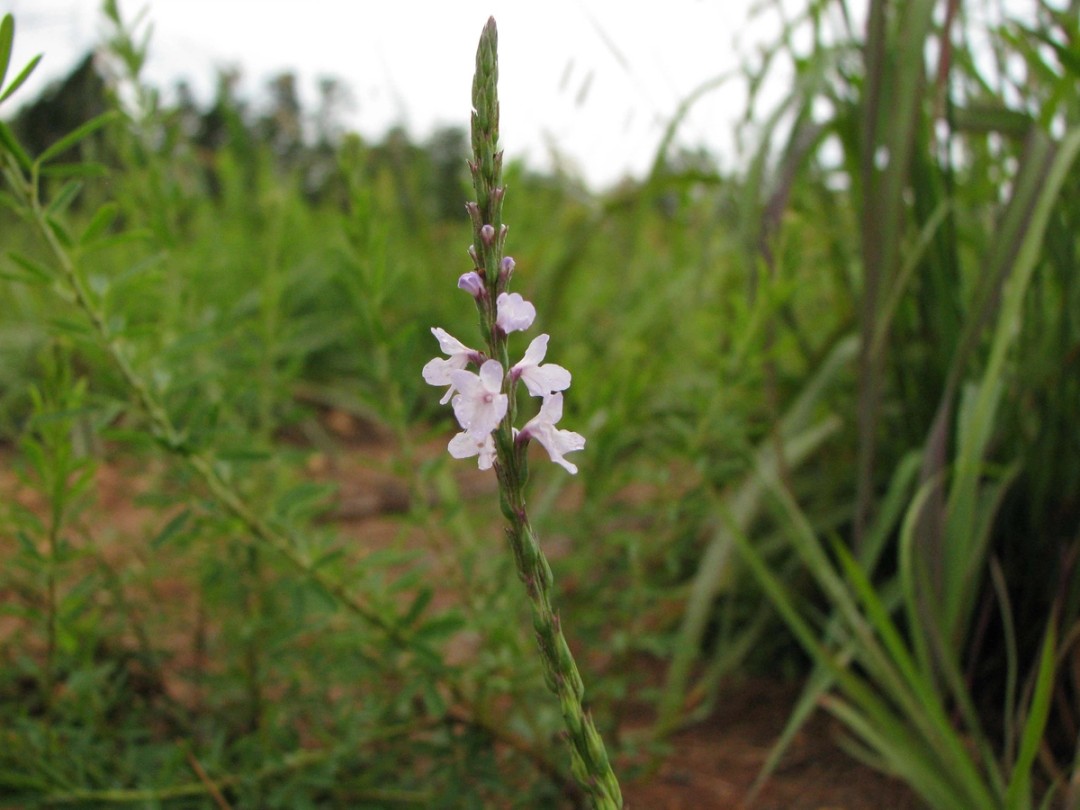
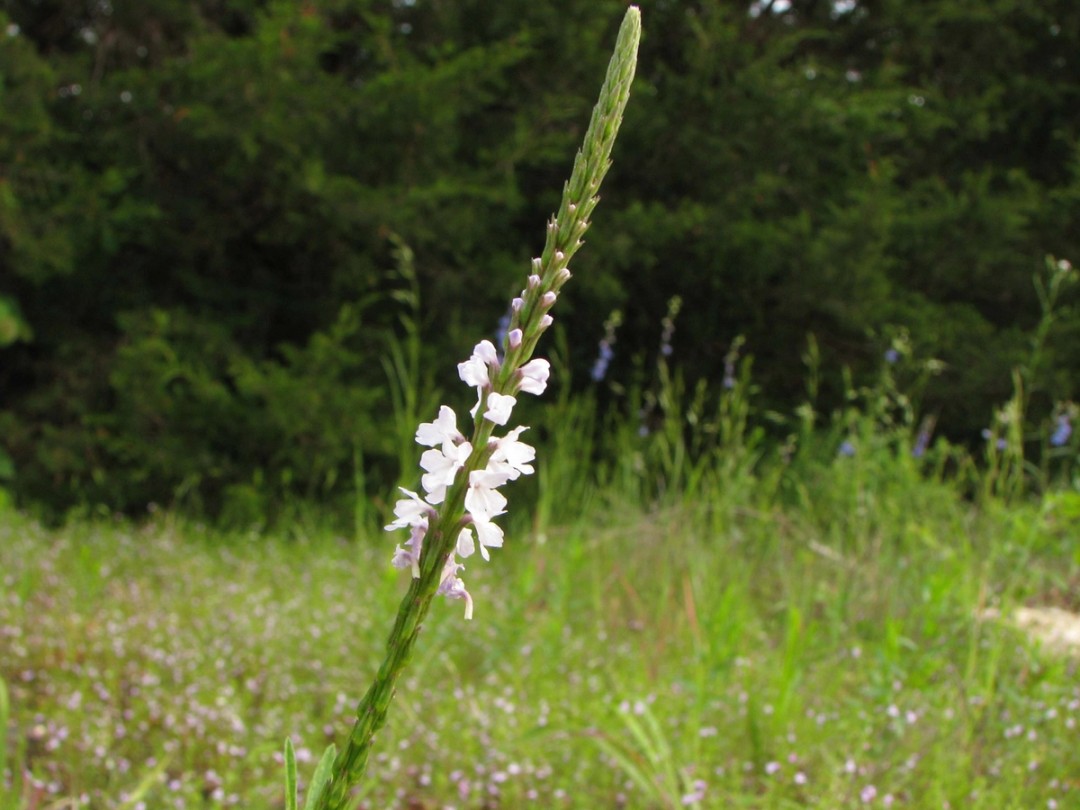
The flowers of Verbena simplex appear in racemes at the end of stems. These racemes can grow up to 12 inches long, but they are usually shorter. Flowering begins at the base of the raceme and progresses toward the tip. While individual flowers are small, many bloom simultaneously, creating small bouquets that ascend the stem. The color of the flowers varies from nearly white to a beautiful lavender.
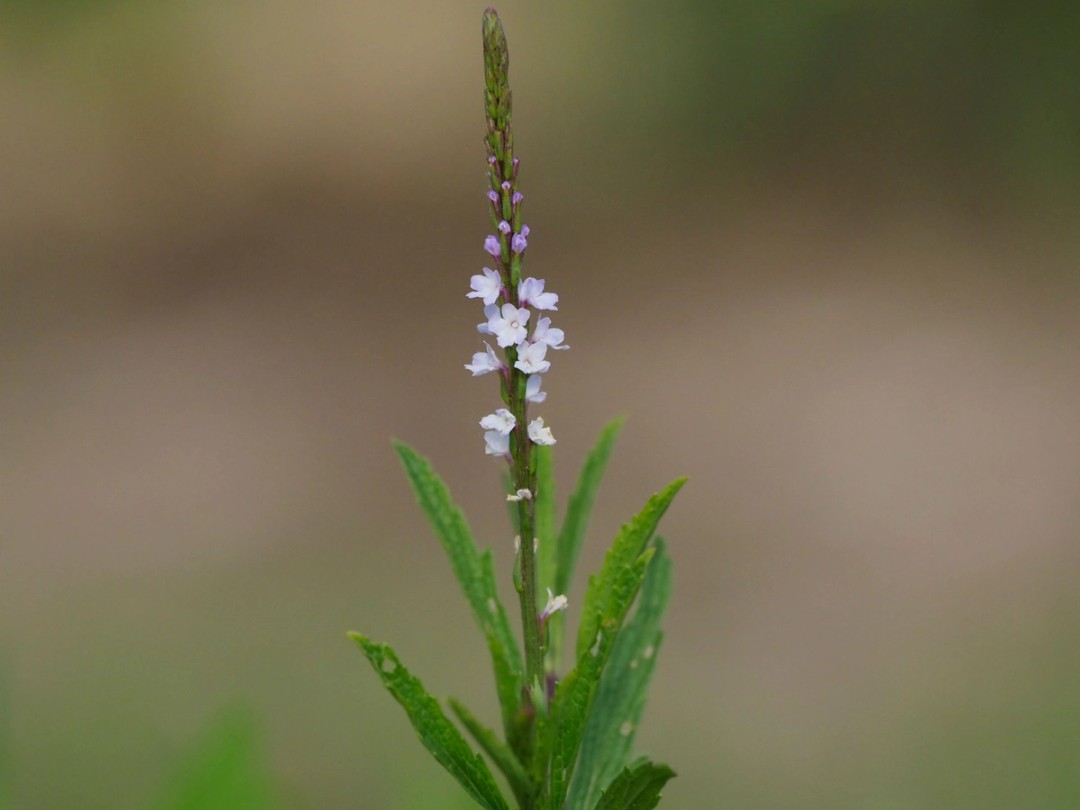
Flowering from base to tip 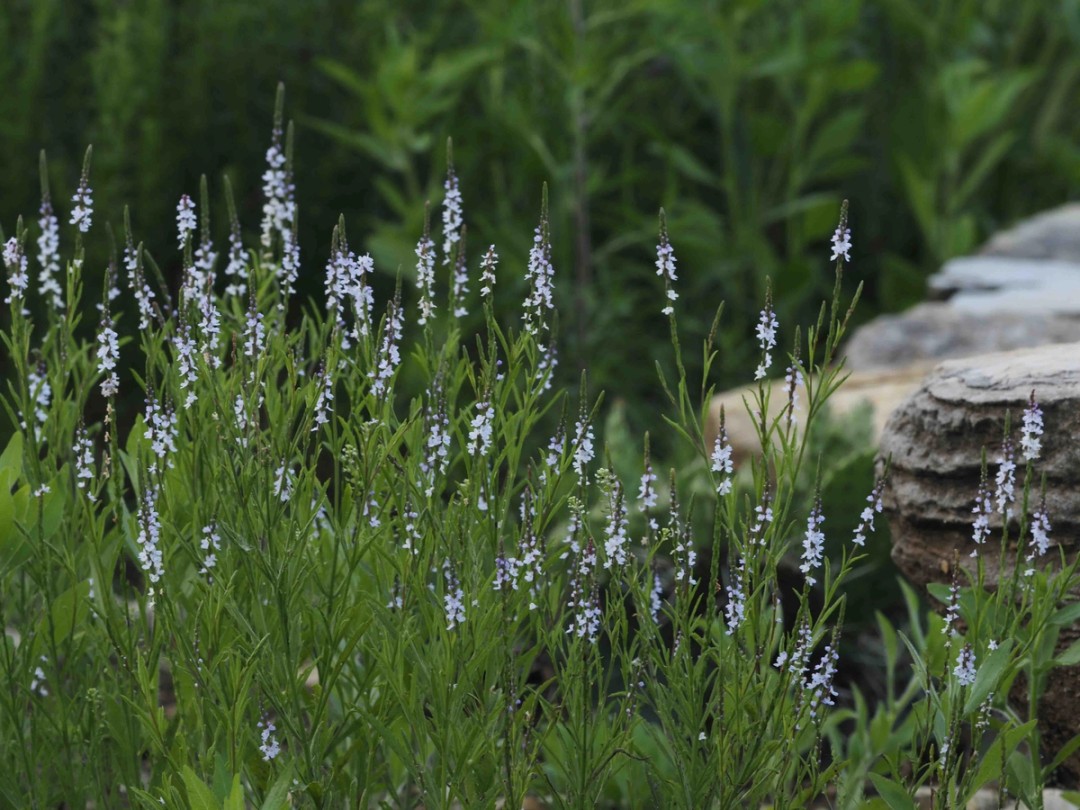
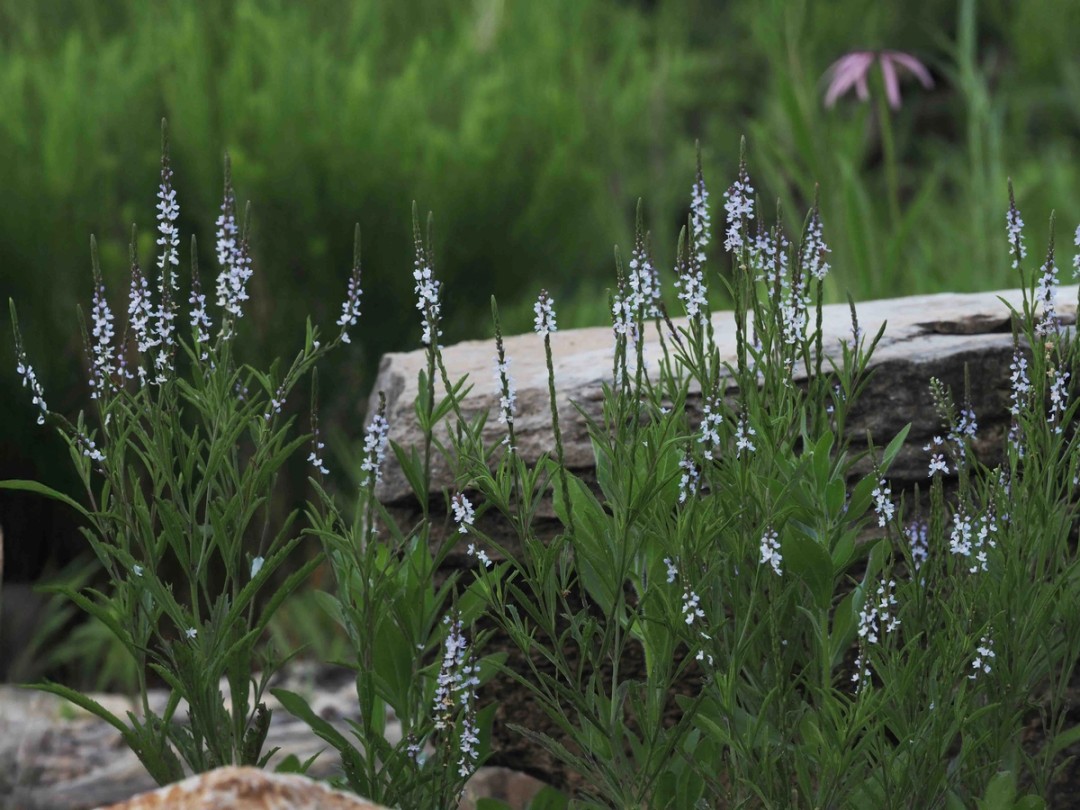
Many flowers per plant
DESCRIPTION
Verbena simplex is a hardy perennial plant, typically growing to a height of about 2 feet. It often develops multiple branches at its base. The stems vary in their level of pubescence, ranging from slight to moderate. The leaves are narrow and stalkless, directly attached to the stem. They occur opposite each other and have a lanceolate shape.
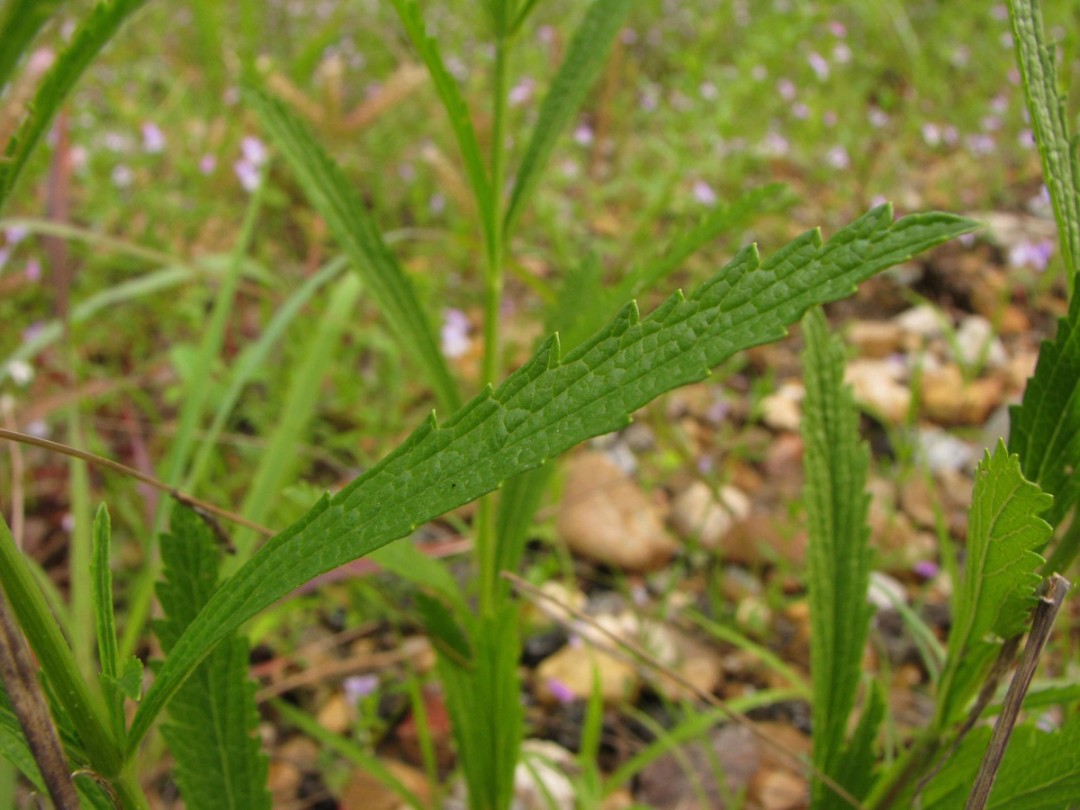
Toothed leaves 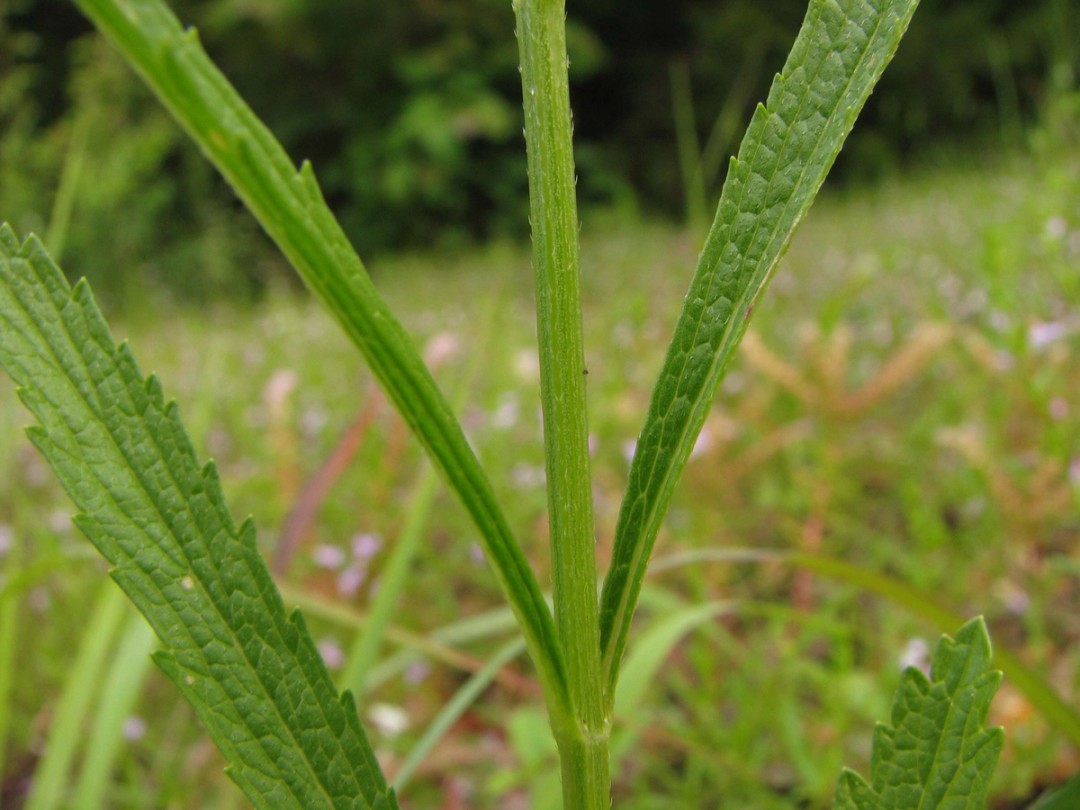
Stem and opposite leaves 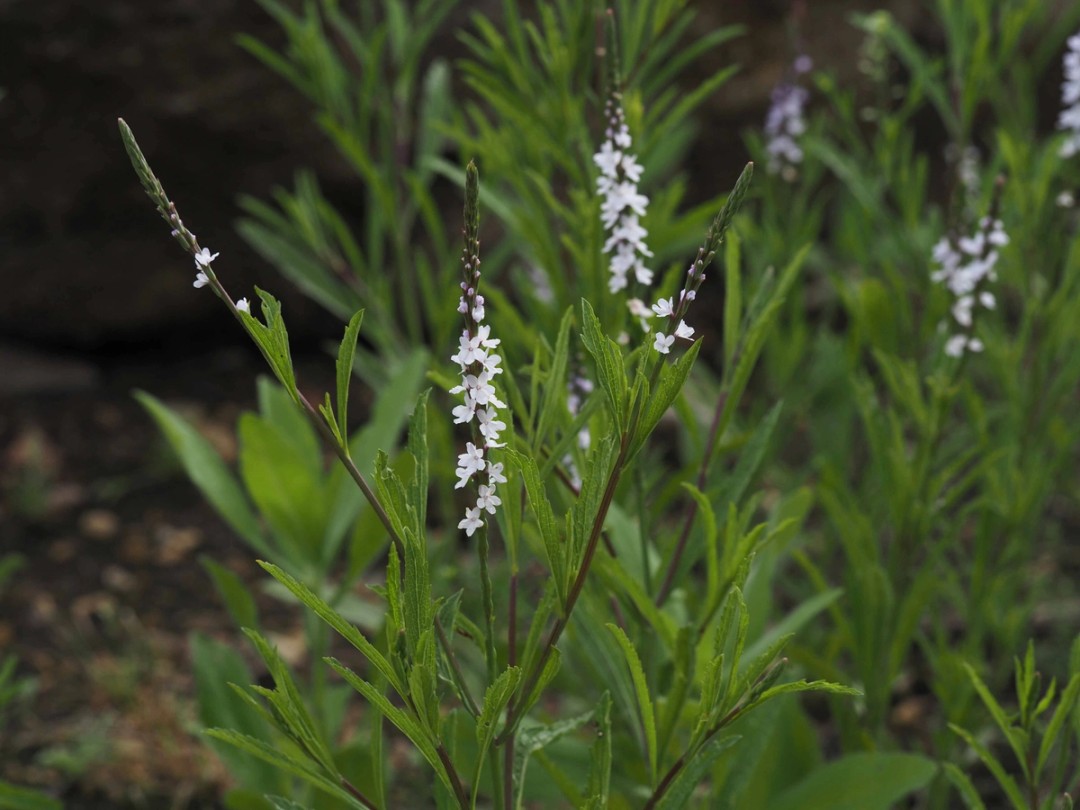
Leaves attach directly to stem 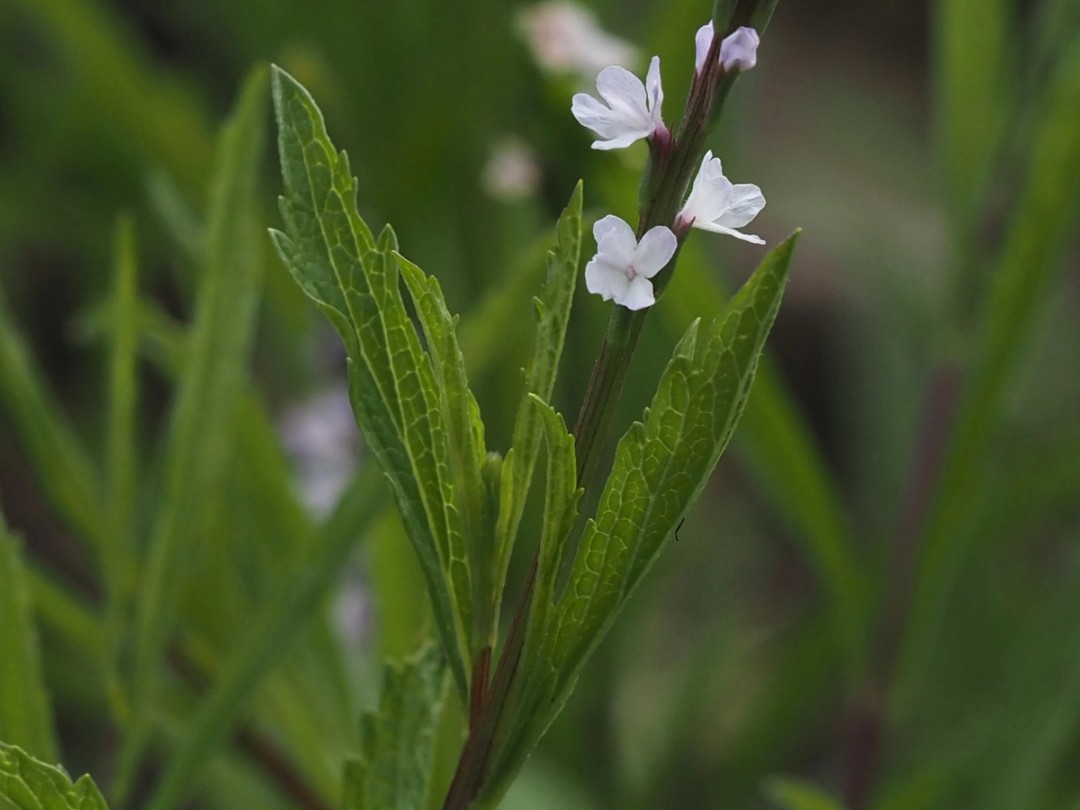
Serrated leaf eges
The root system of Verbena simplex is variable. Typically, a sturdy tap root occurs although the plant can also spread through underground rhizomes. The taproot allows it to thrive in dry, rocky habitats while the rhizomes enable the plant to spread.
POLLINATORS
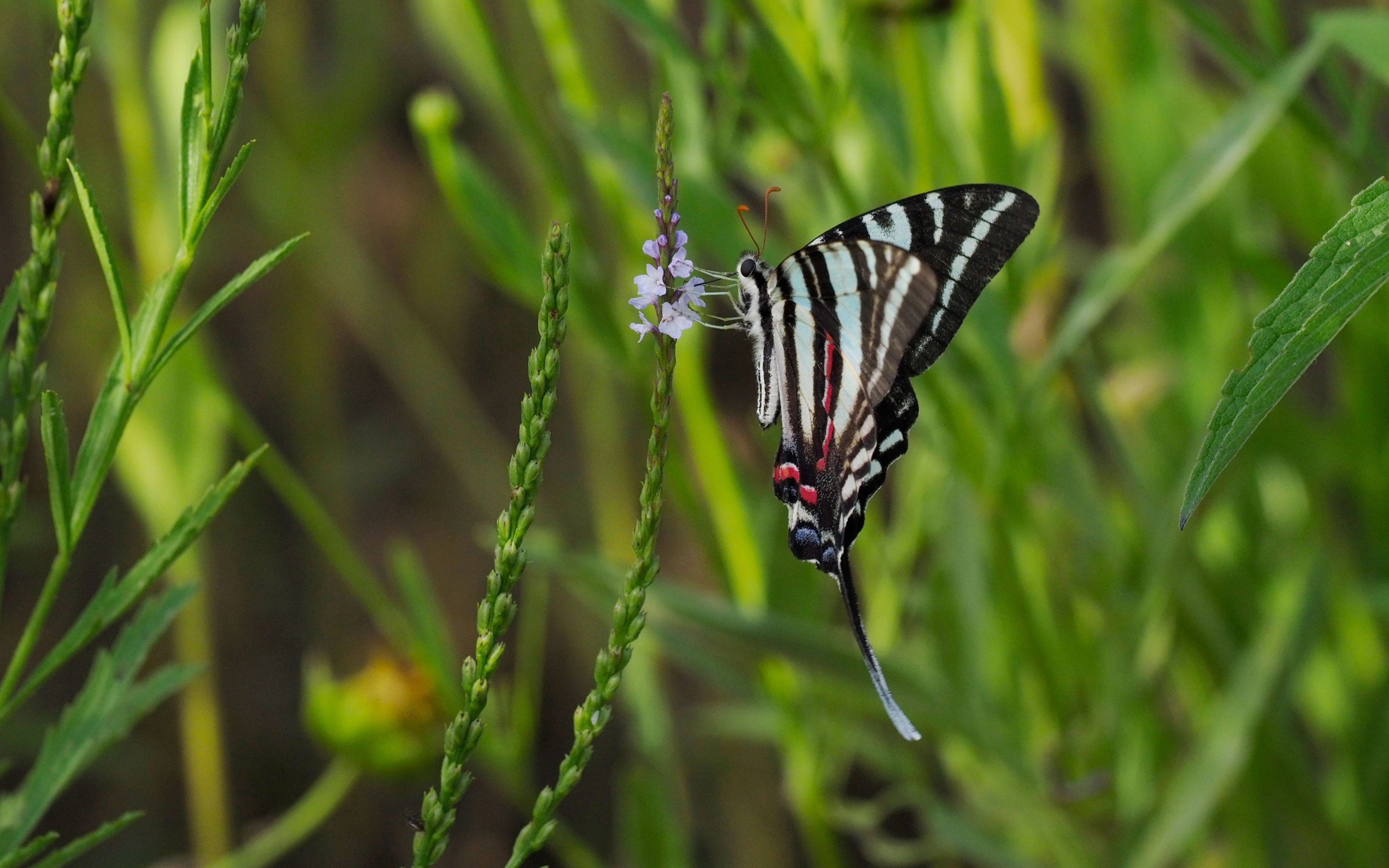
Bees, butterflies, skippers and wasps are the key pollinators of Verbena simplex. In particular, this plant is terrific for attracting butterflies. I've read that it is a host plant for the Common Buckeye butterfly.
Butterflies and Skippers
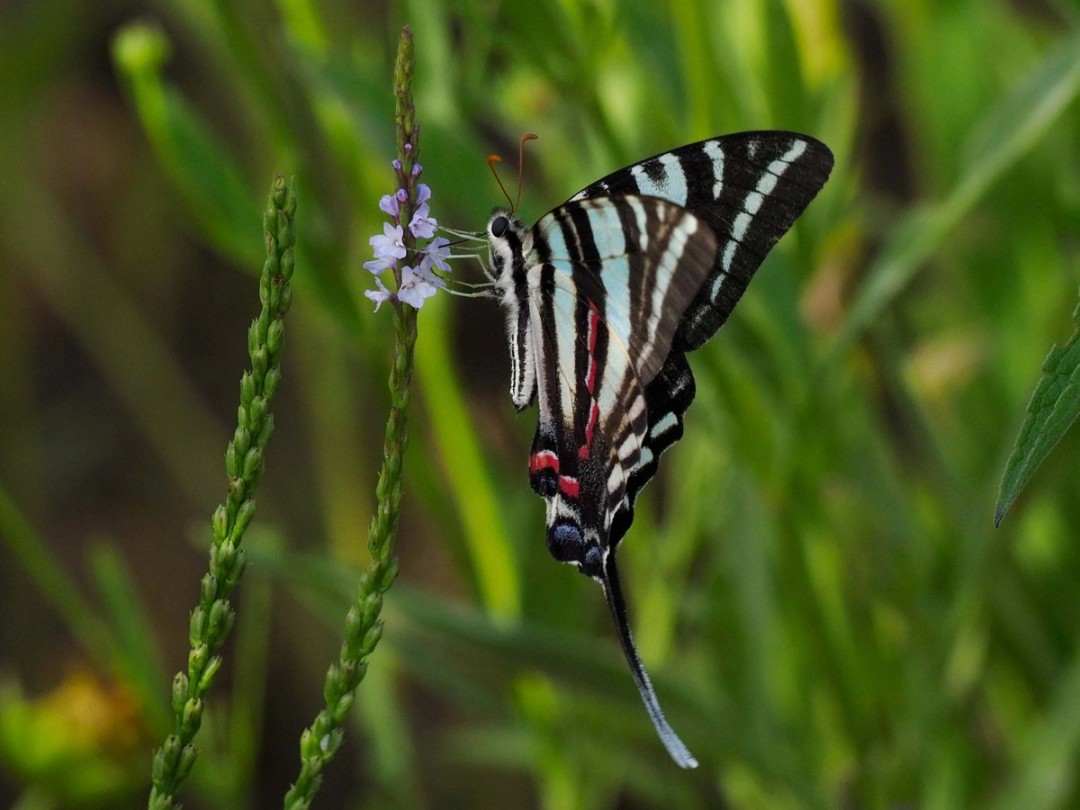
Zebra Swallowtail 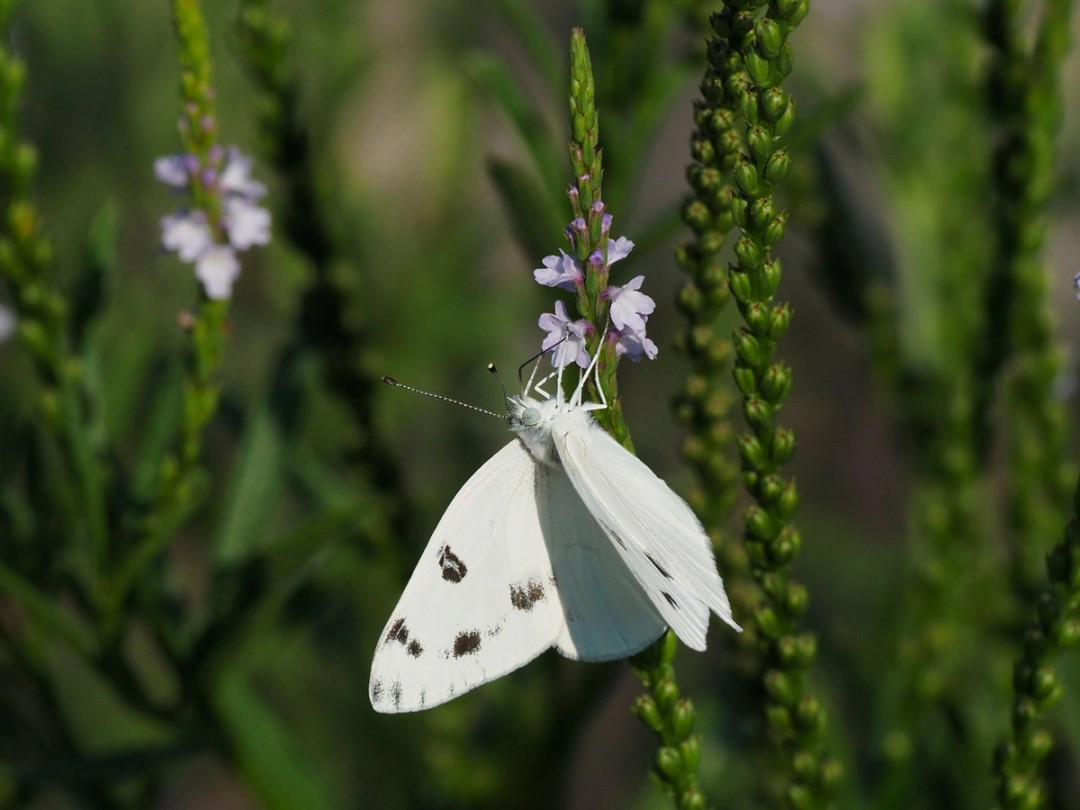
White Checkered 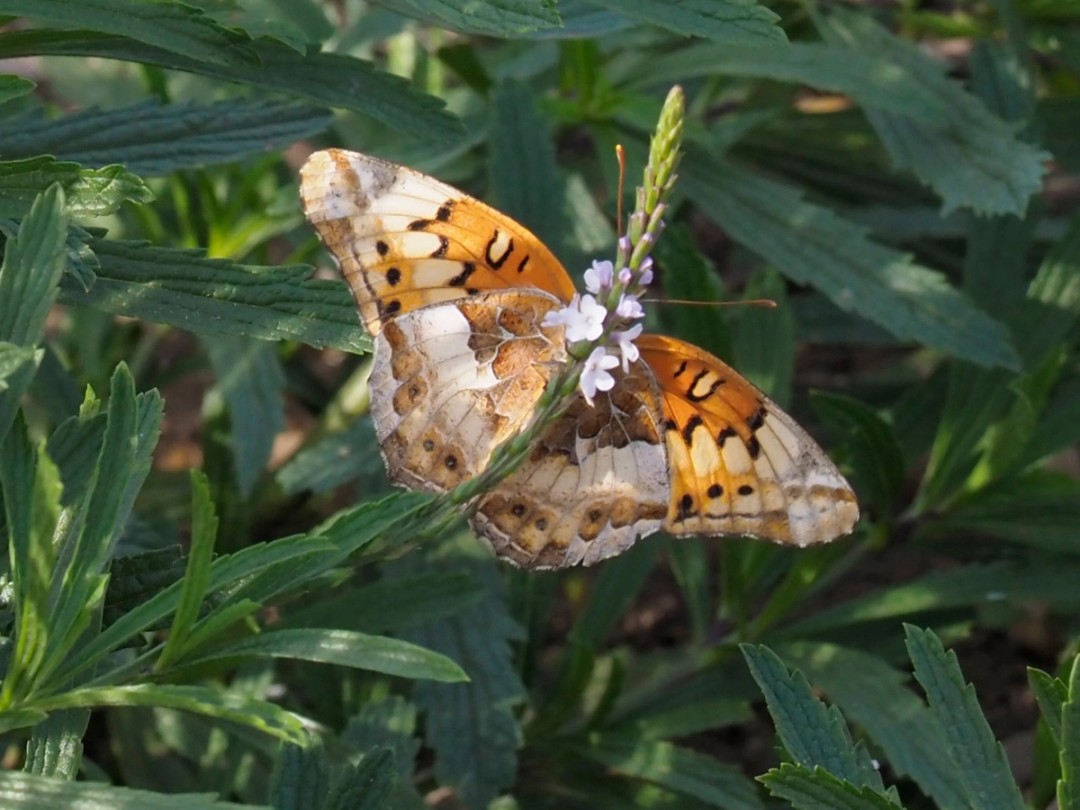
Variegated Fritilary 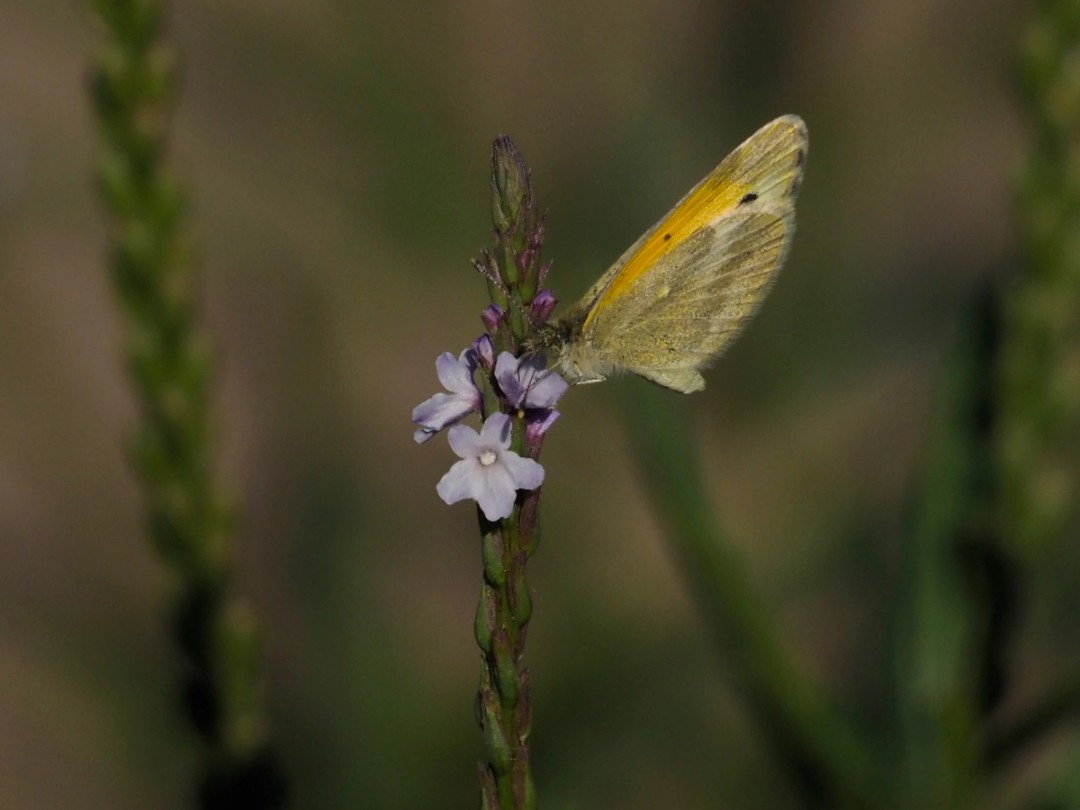
Dainty sulfur 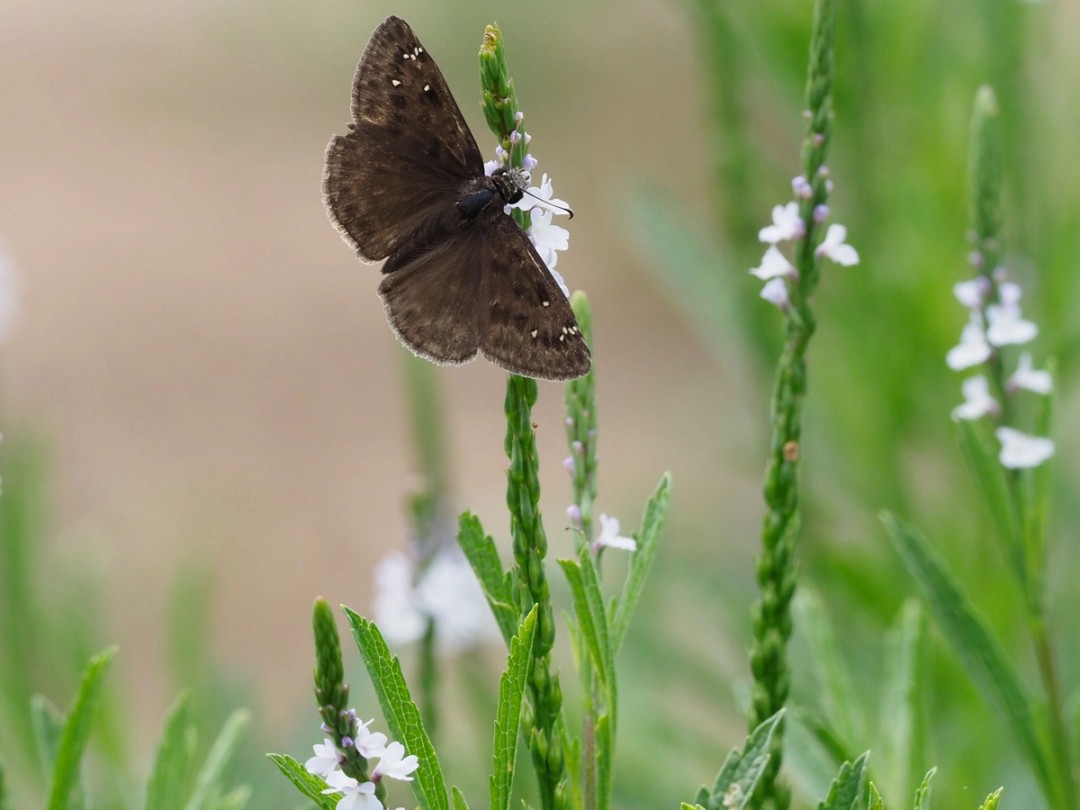
Horace's Duskywing 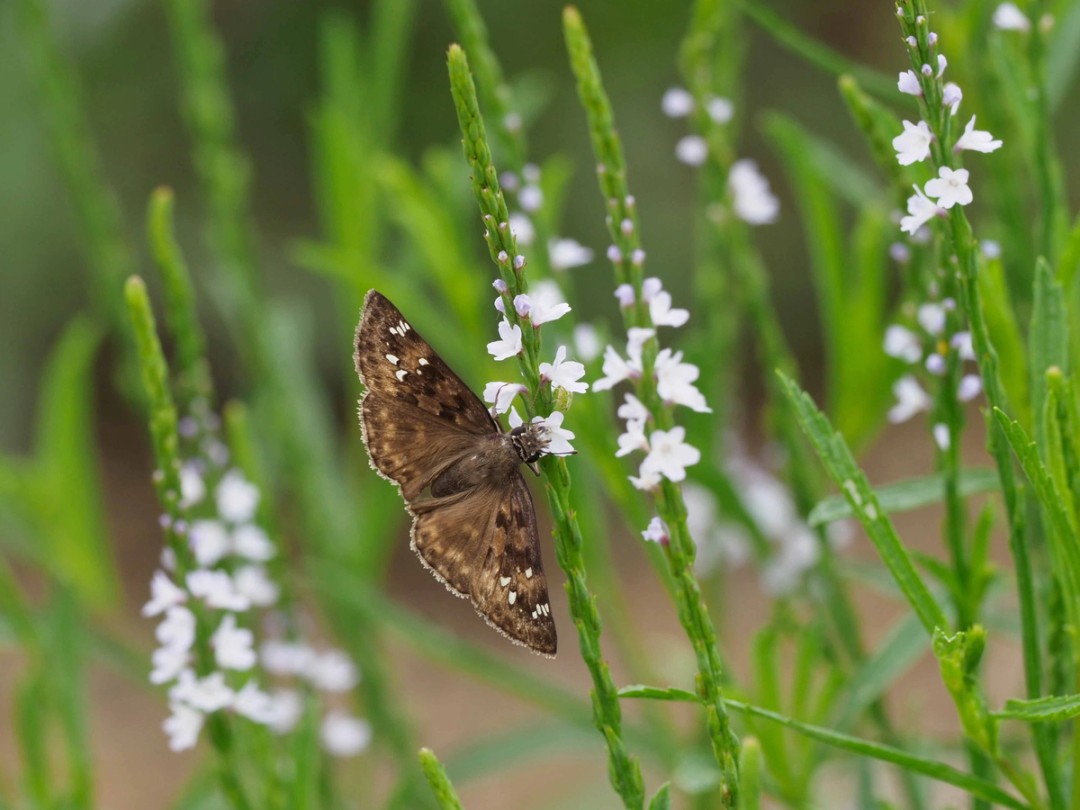
Juvenal's Duskywing 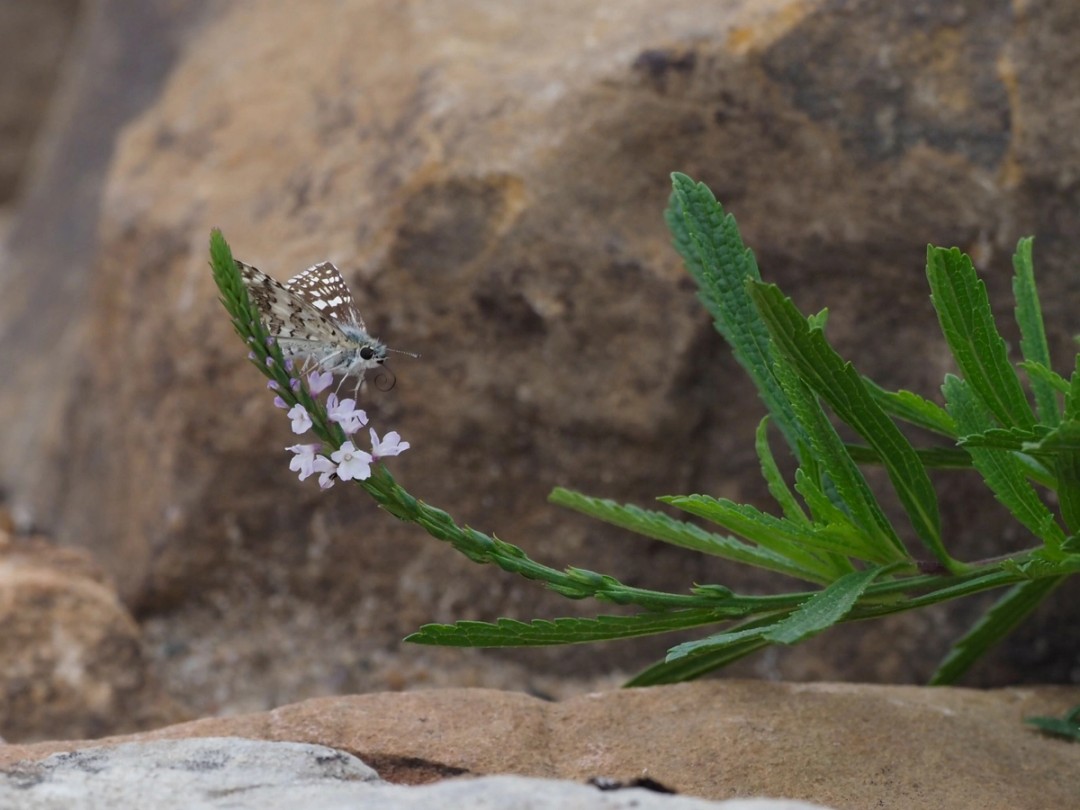
Common Checkered Skipper 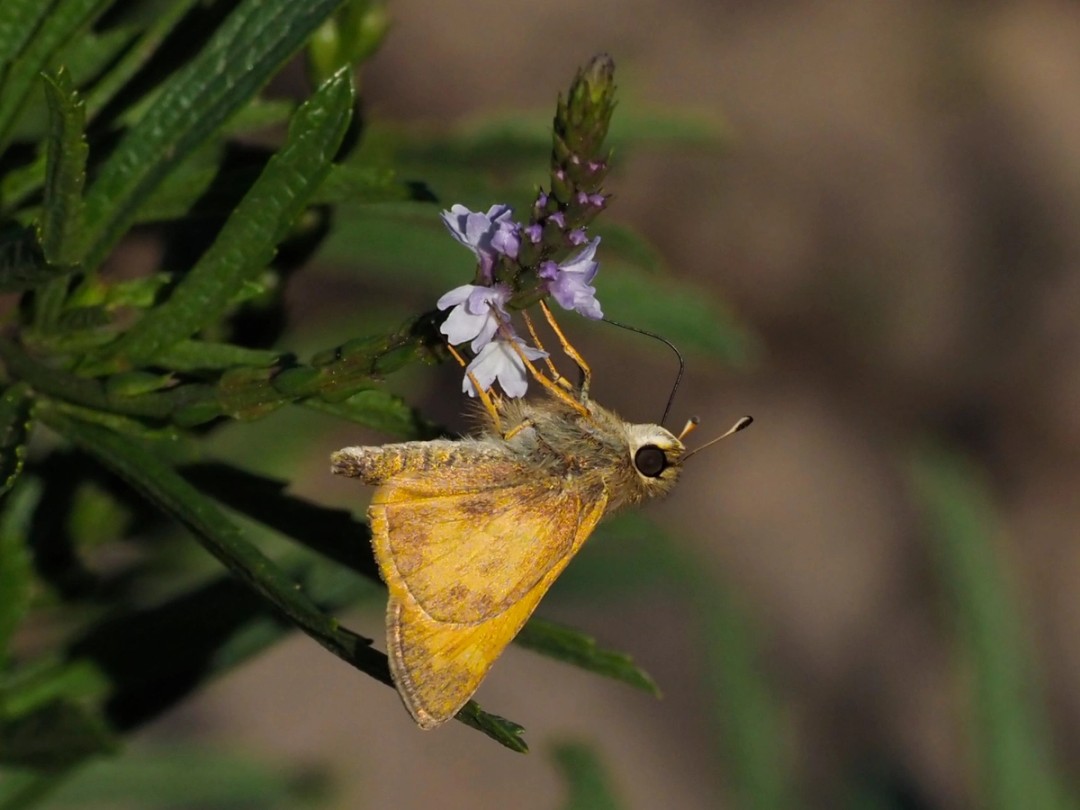
Sachem Skipper 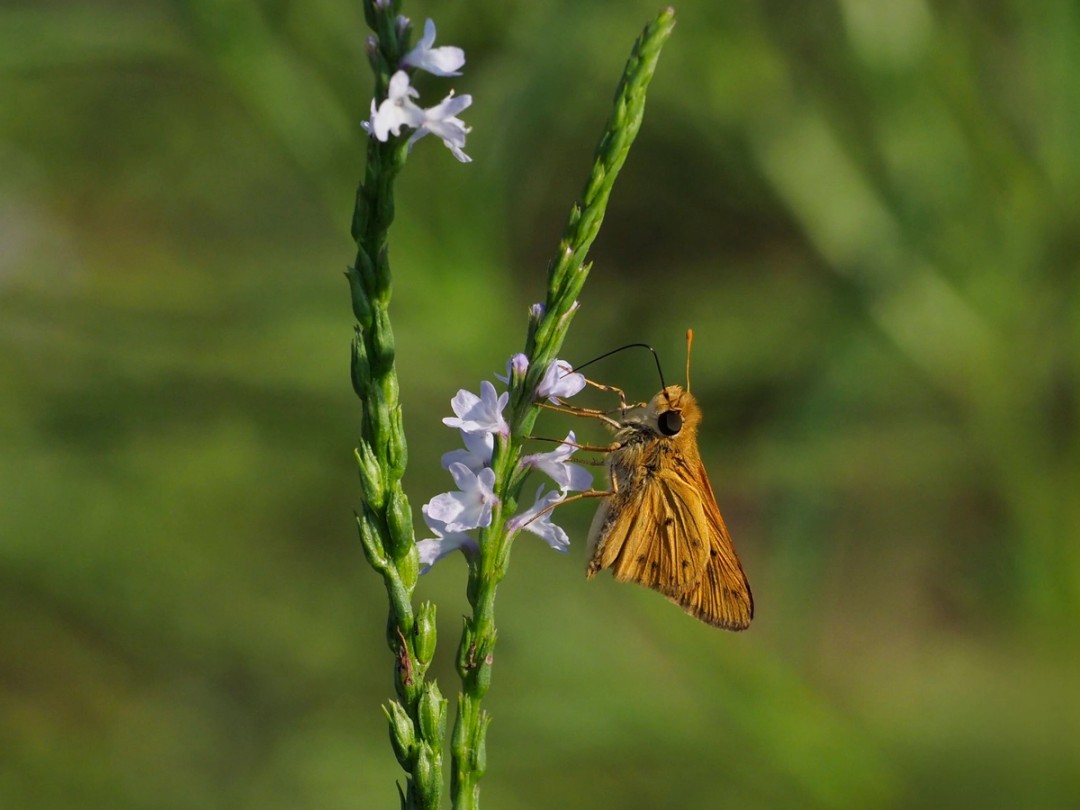
Fiery Skipper 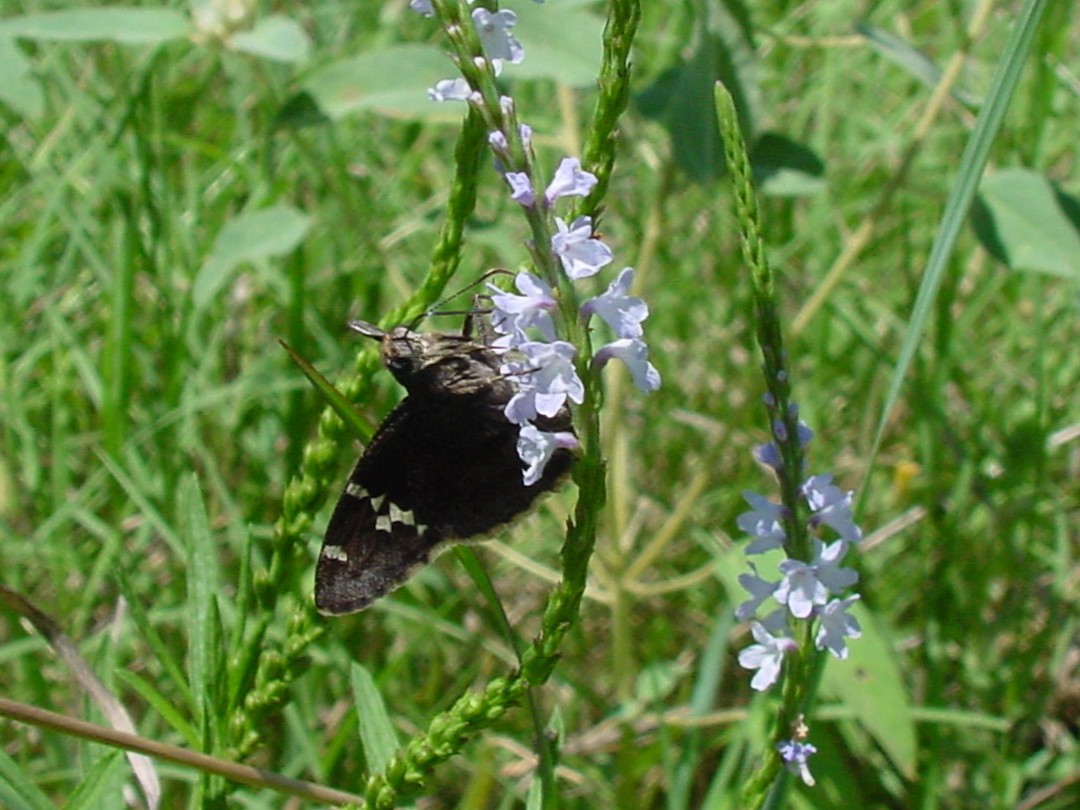
Southern Cloudywing
Bees
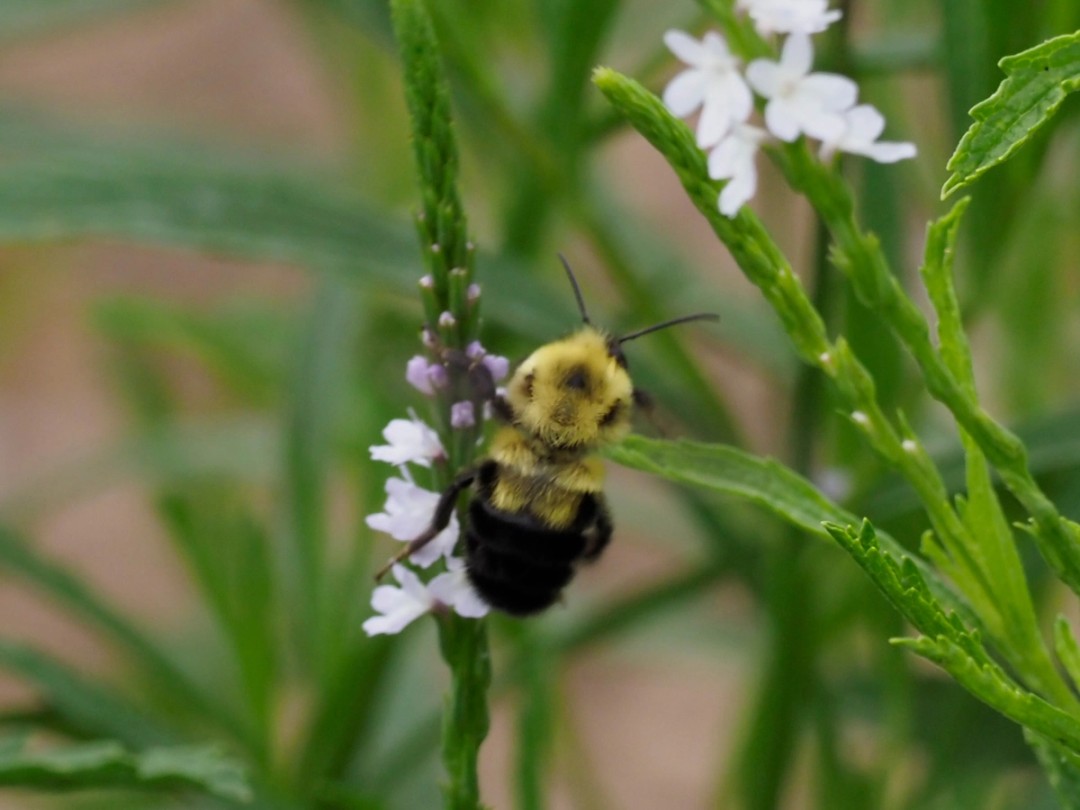
Two-spotted bumble bee 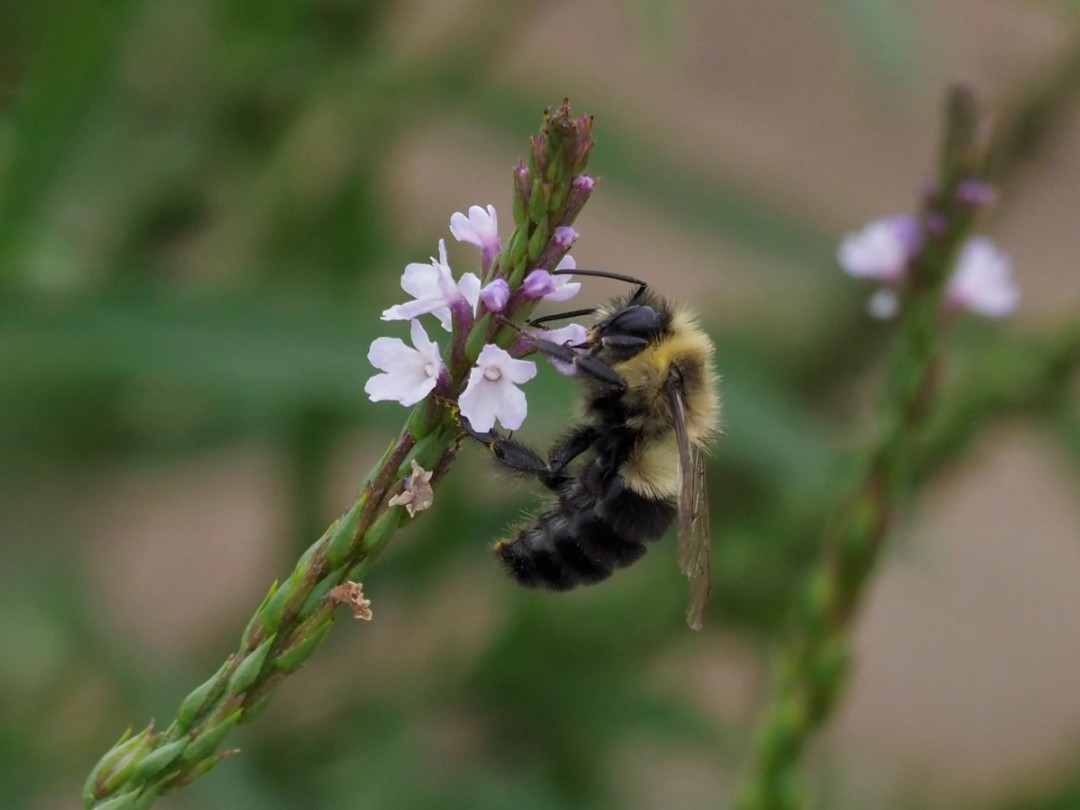
Common Eastern Bumblebee 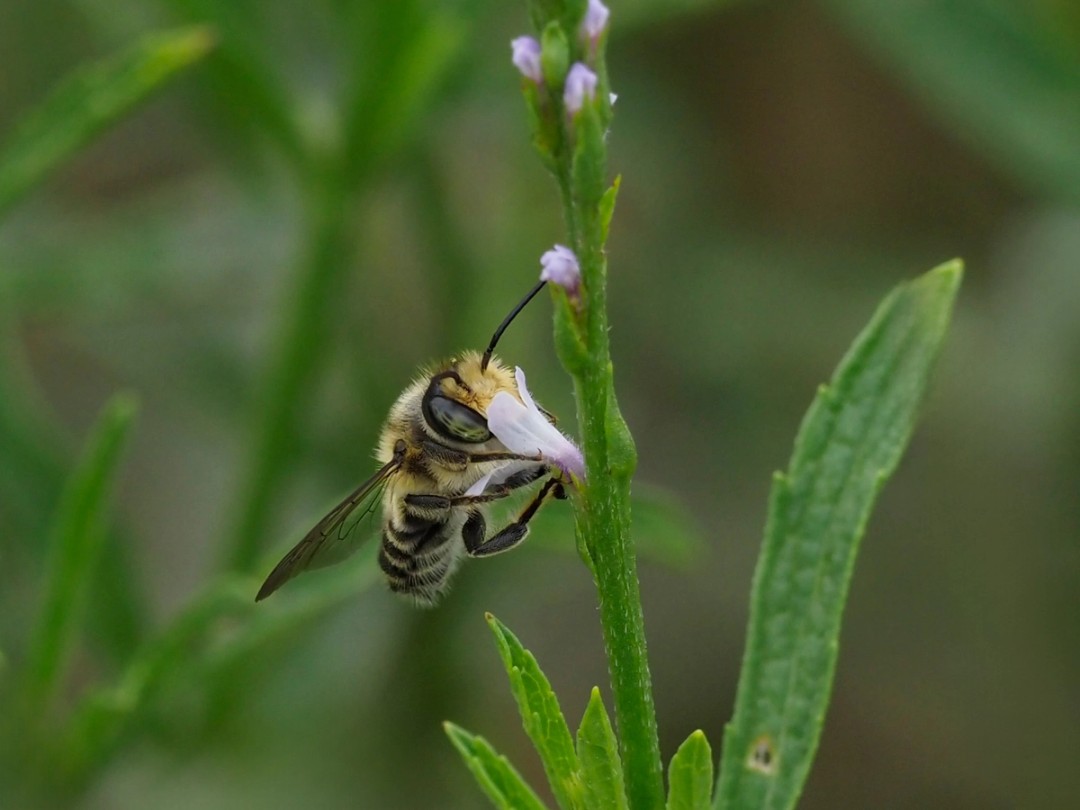
Megachile spp. 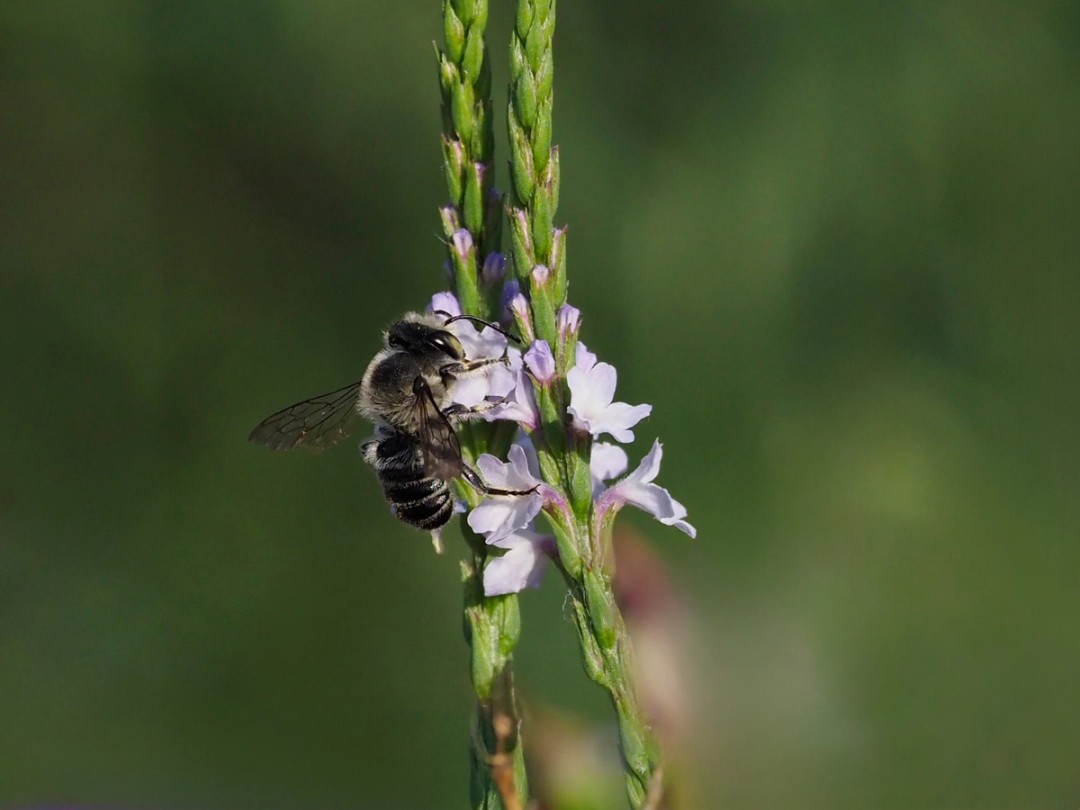
Genus Megachile
PLANTS GROWING NEARBY
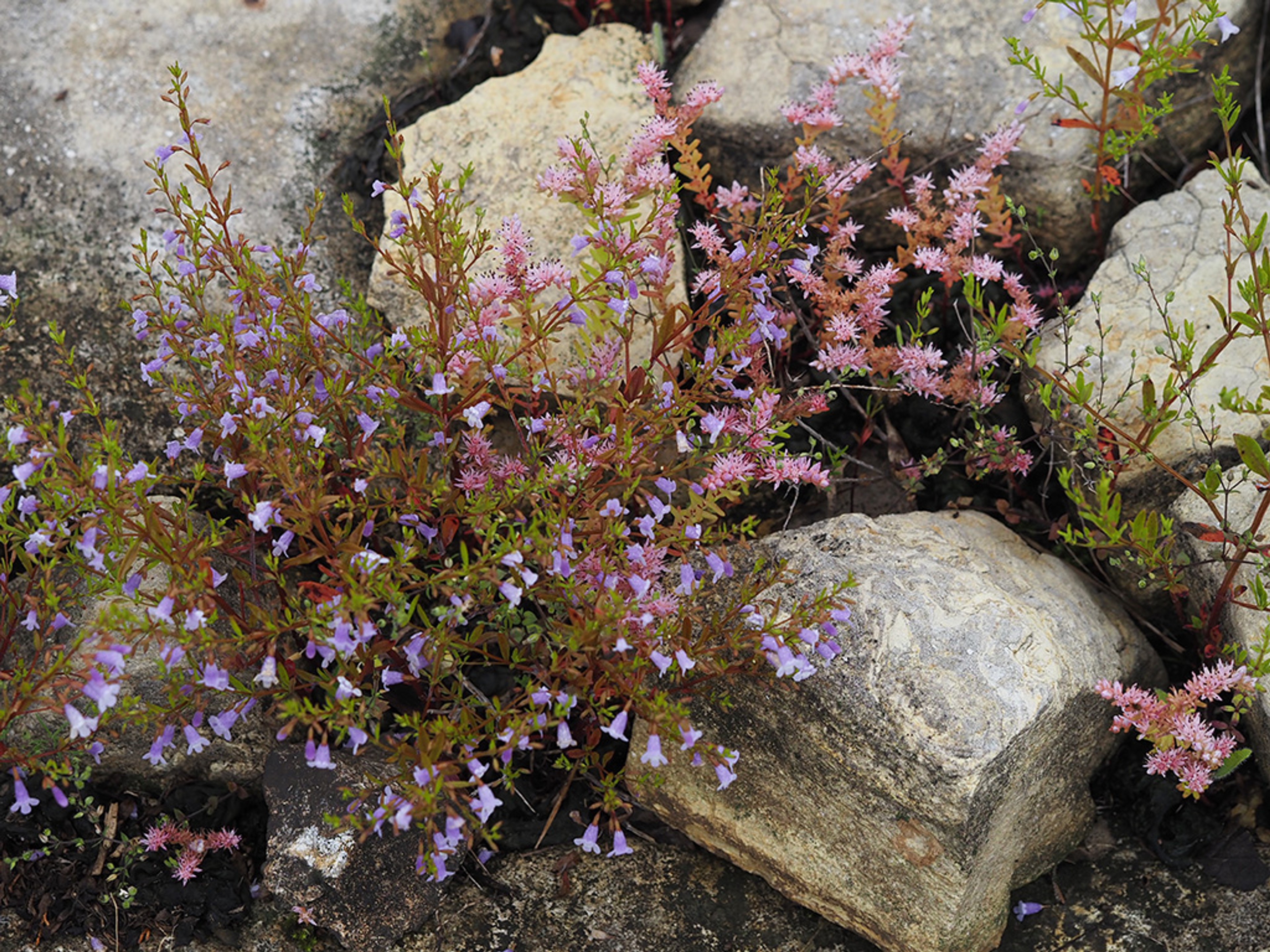
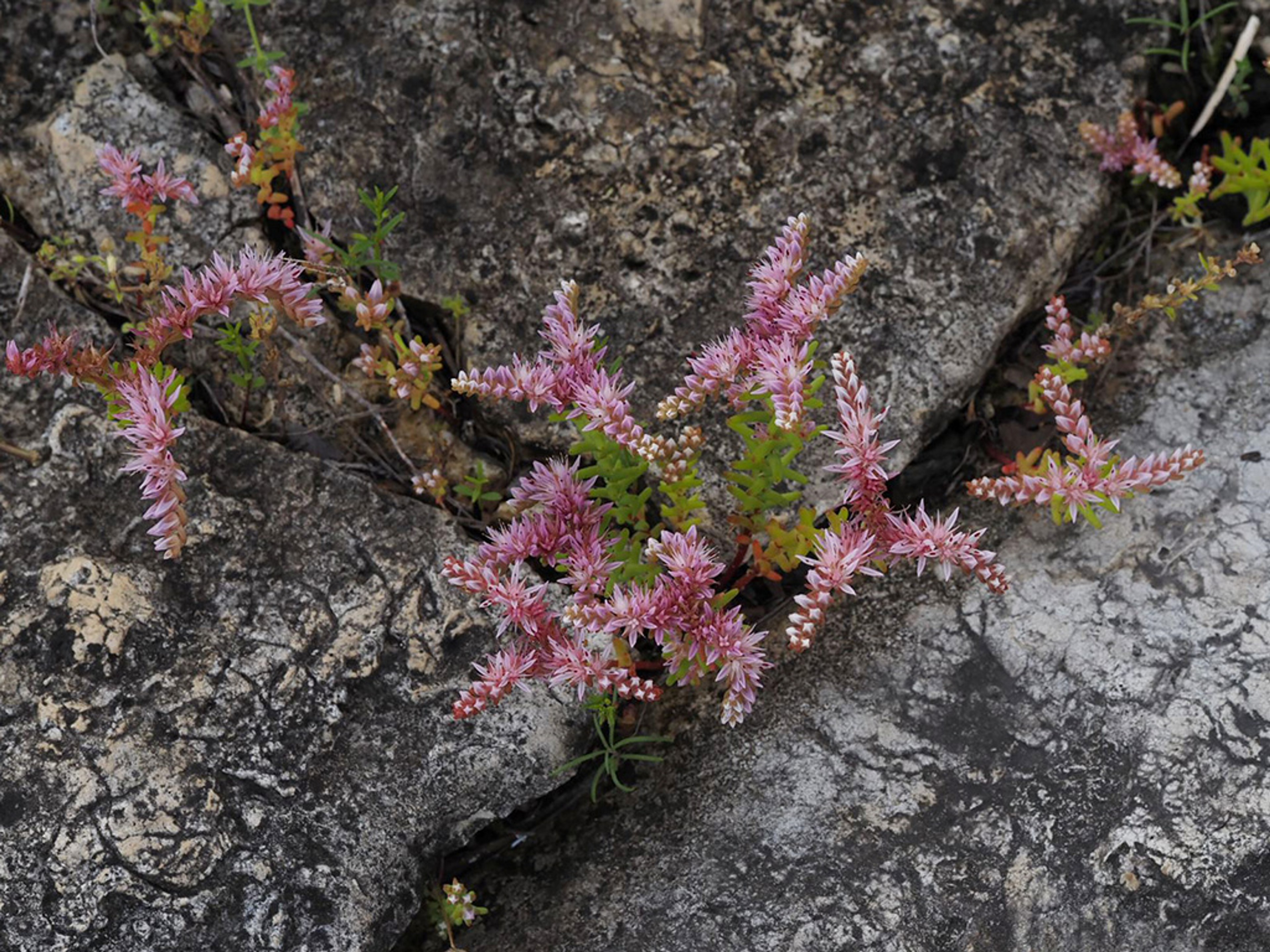
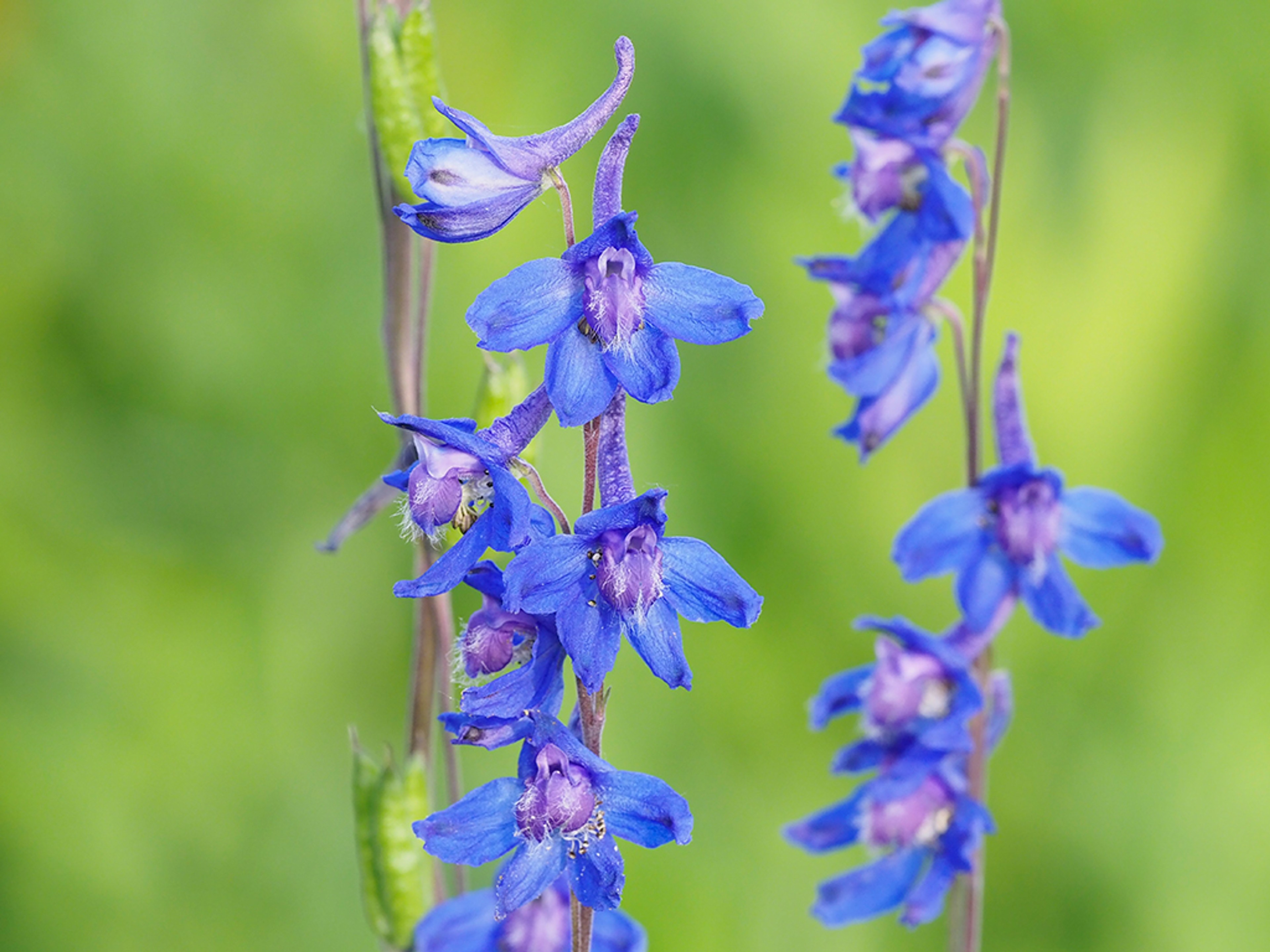
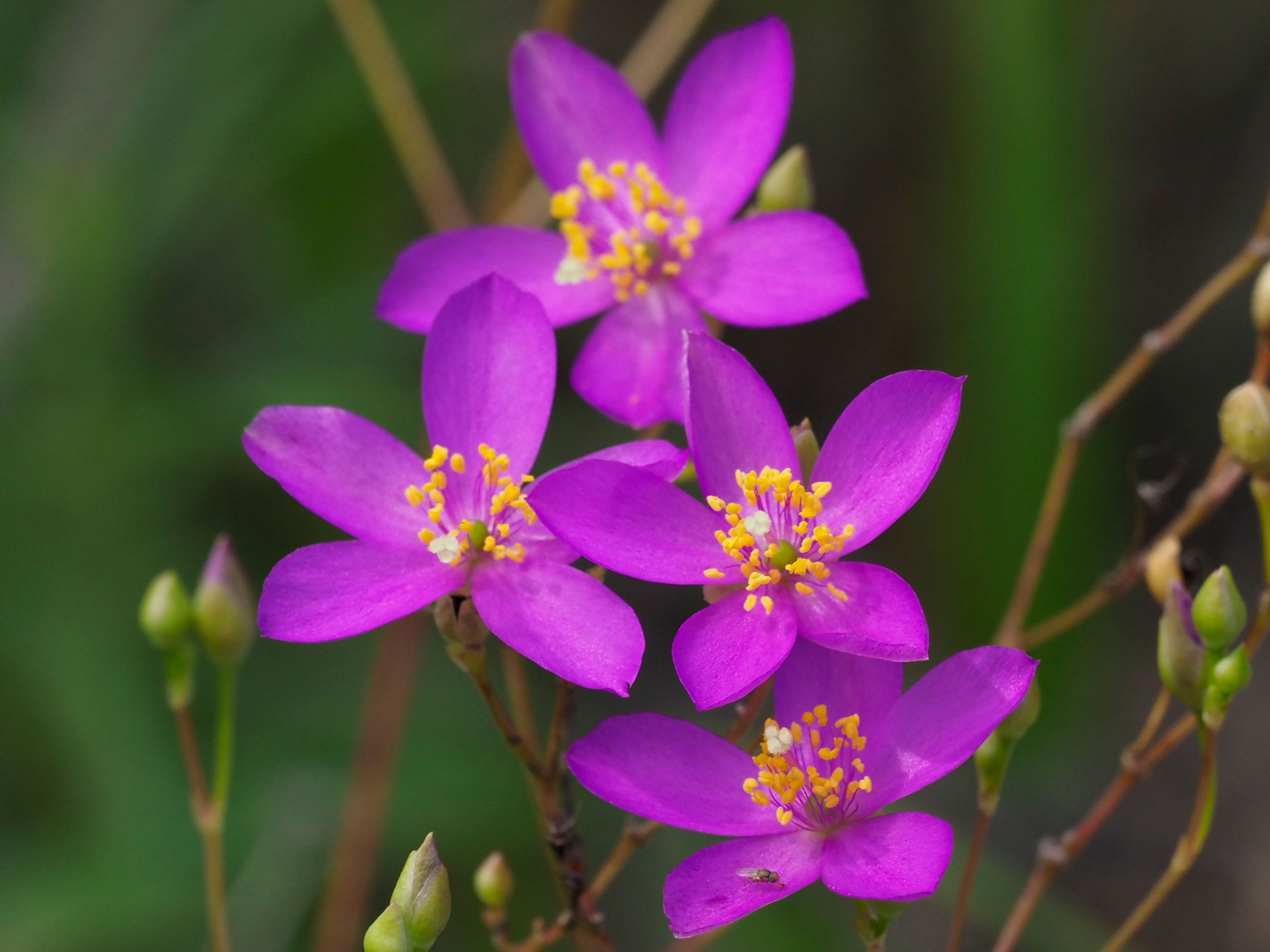
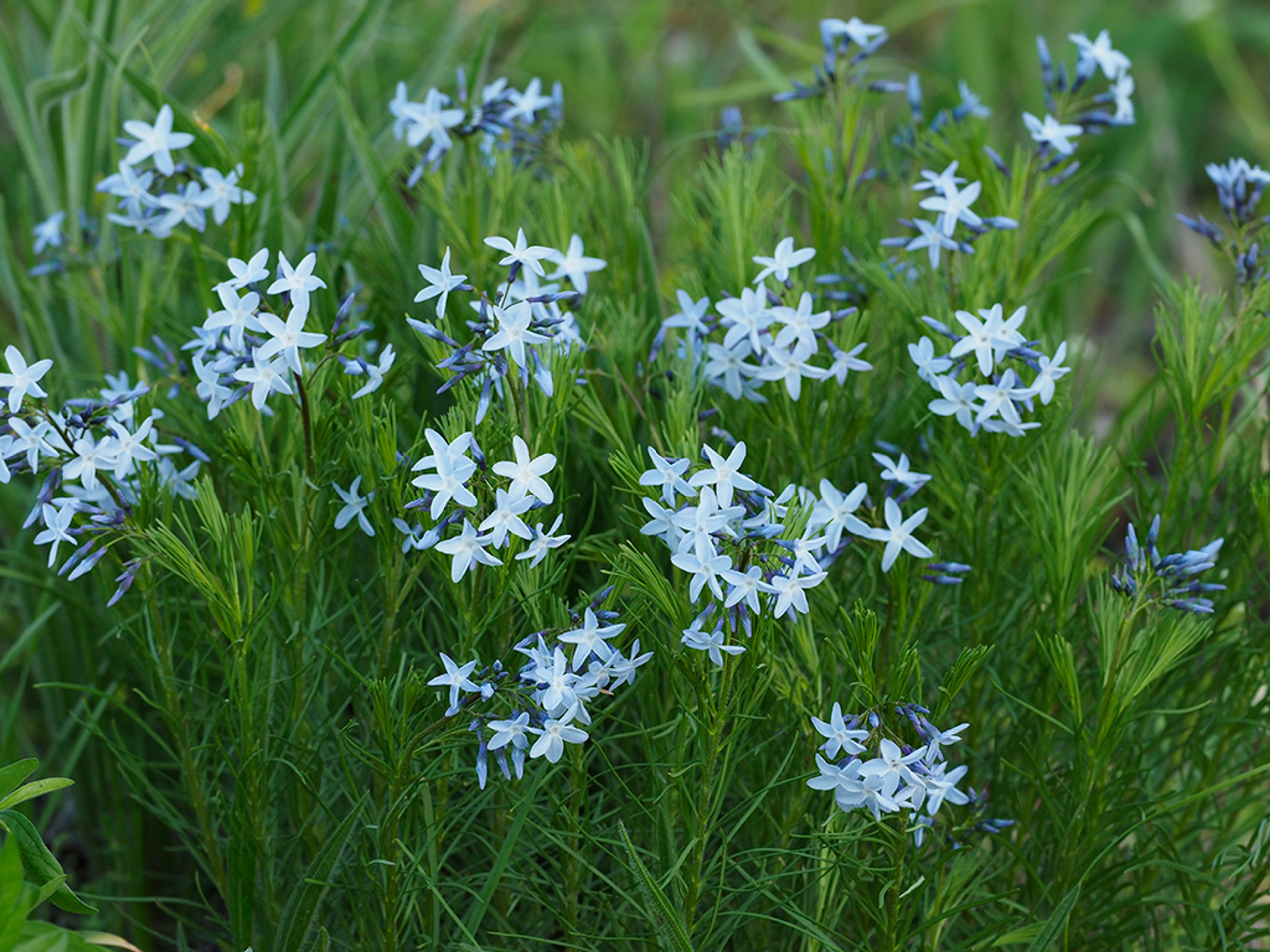
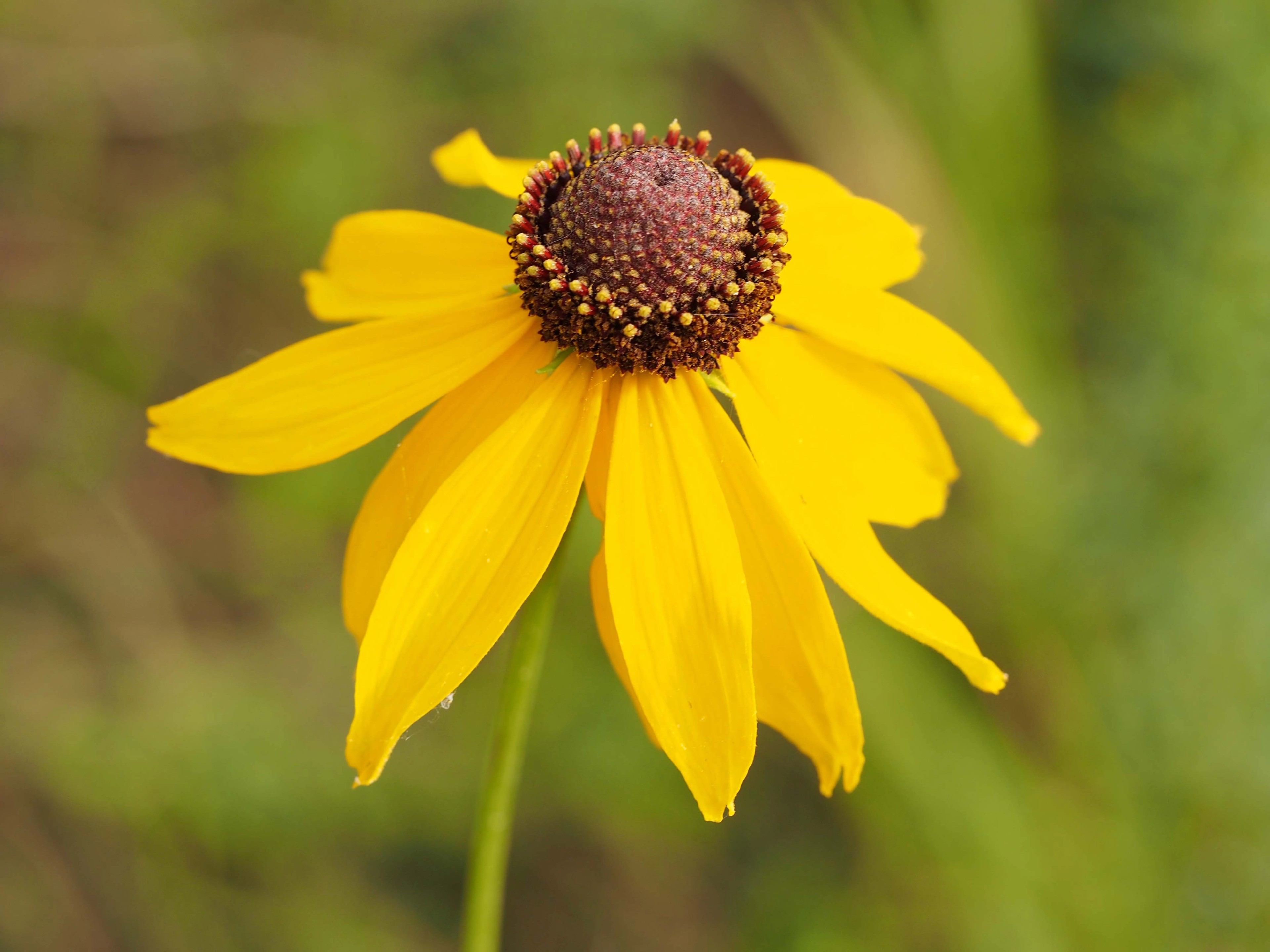
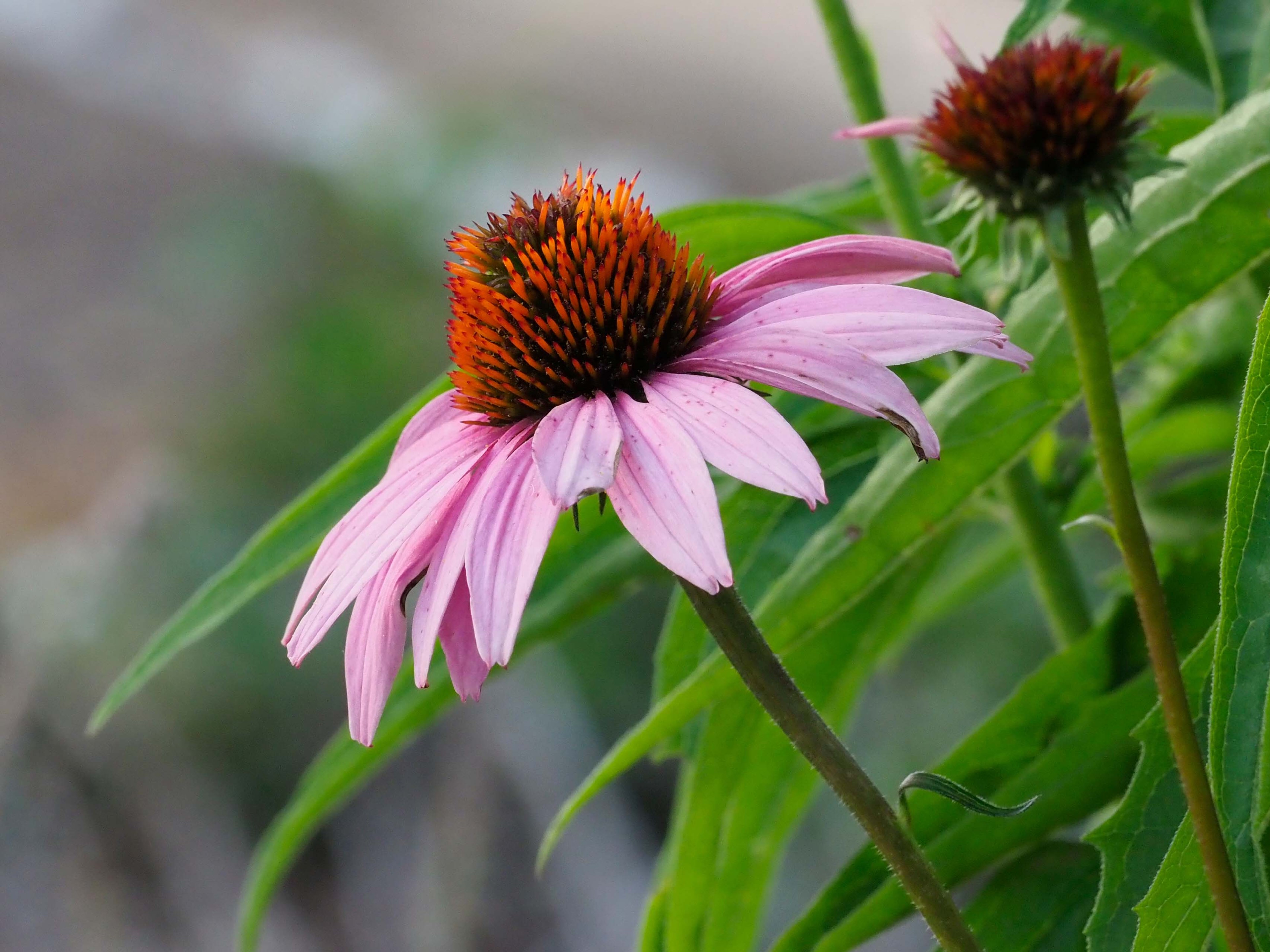
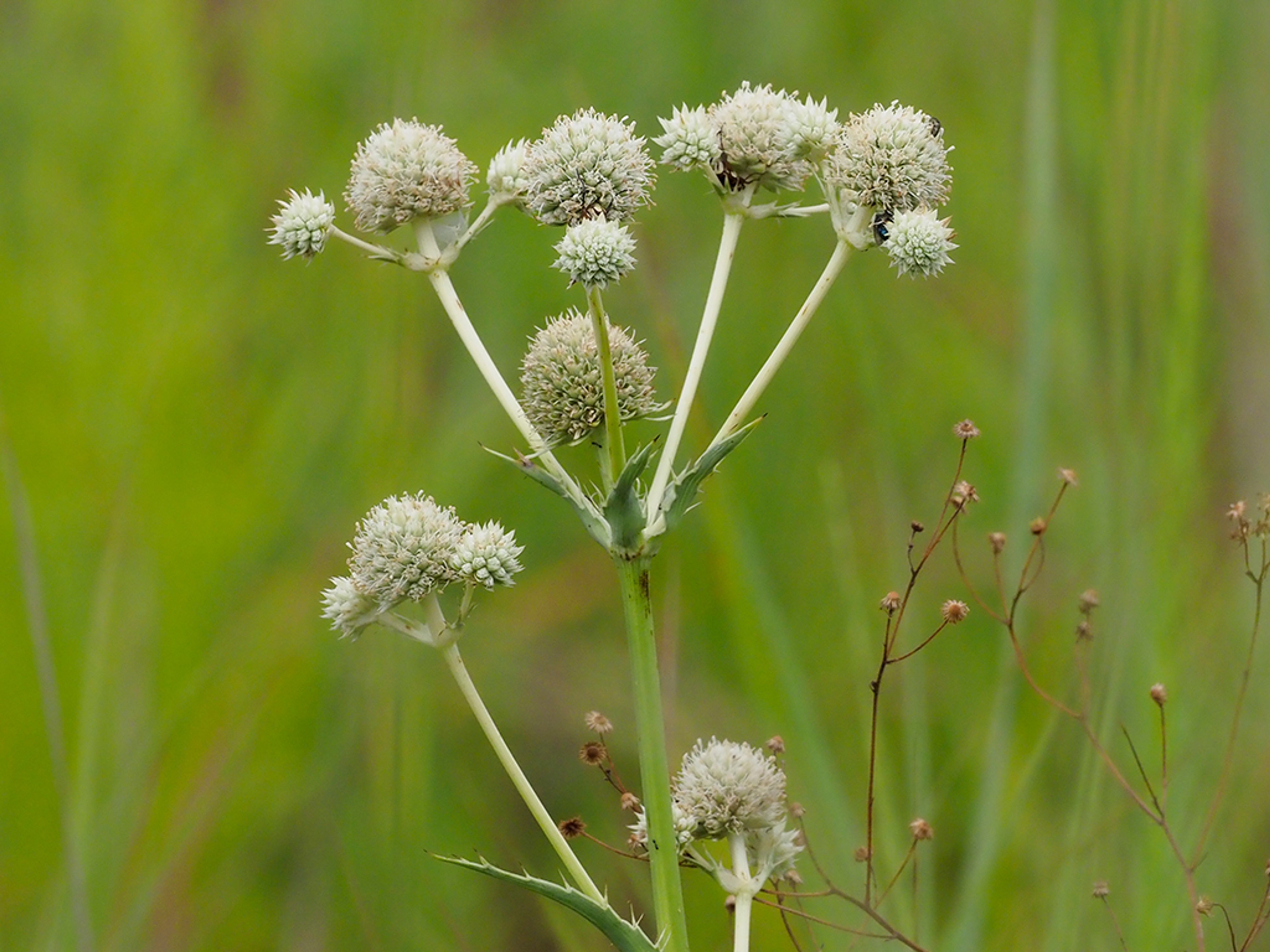
Narrow-Leaved Vervain typically thrives in disturbed, gravelly areas. However, it struggles to compete with other plants, which can lead to a decline in its population when they invade its territory. Rudbeckia hirta, a similar plant, can easily take over and dominate the area. In the vicinity of Verbena simplex, you may encounter other plants that can tolerate gravelly habitats, such as Sedum pulchellum (Widow’s cross), Phemeranthus calycinus (Fame flower), and Echinacea simulata (Glade coneflower). For more information on other plants that might be found growing near Verbena simplex, refer to the Growing Nearby section.
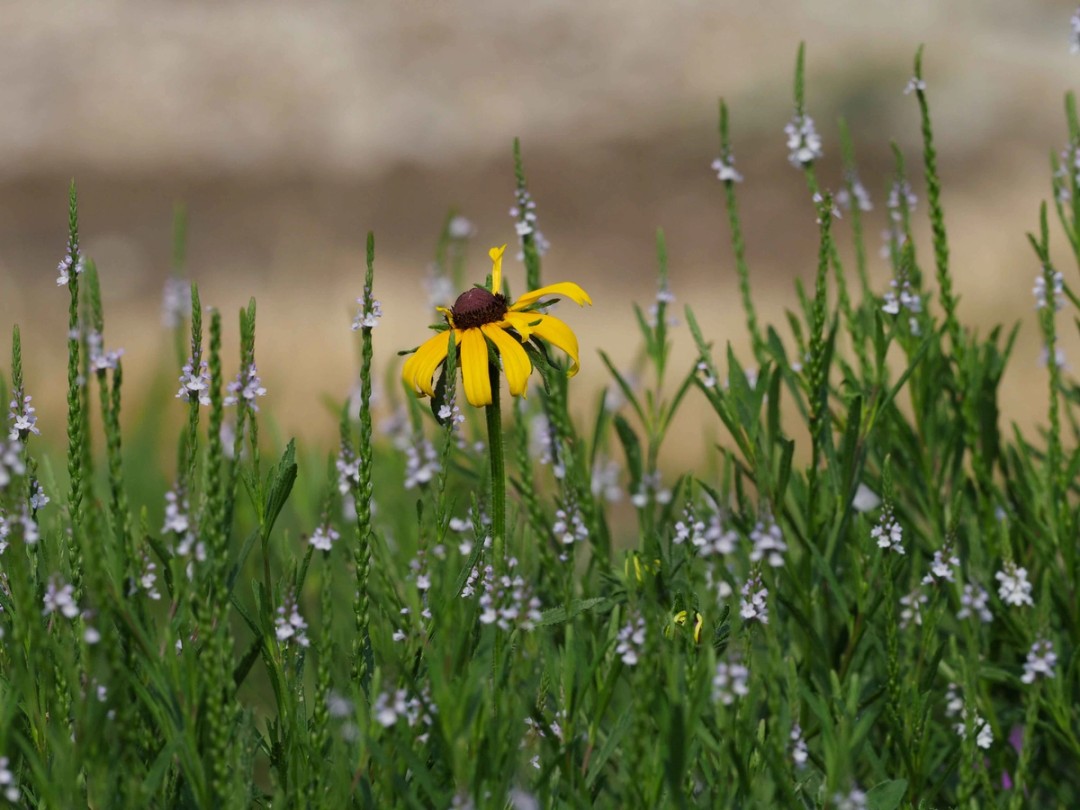
with Rudbeckia hirta 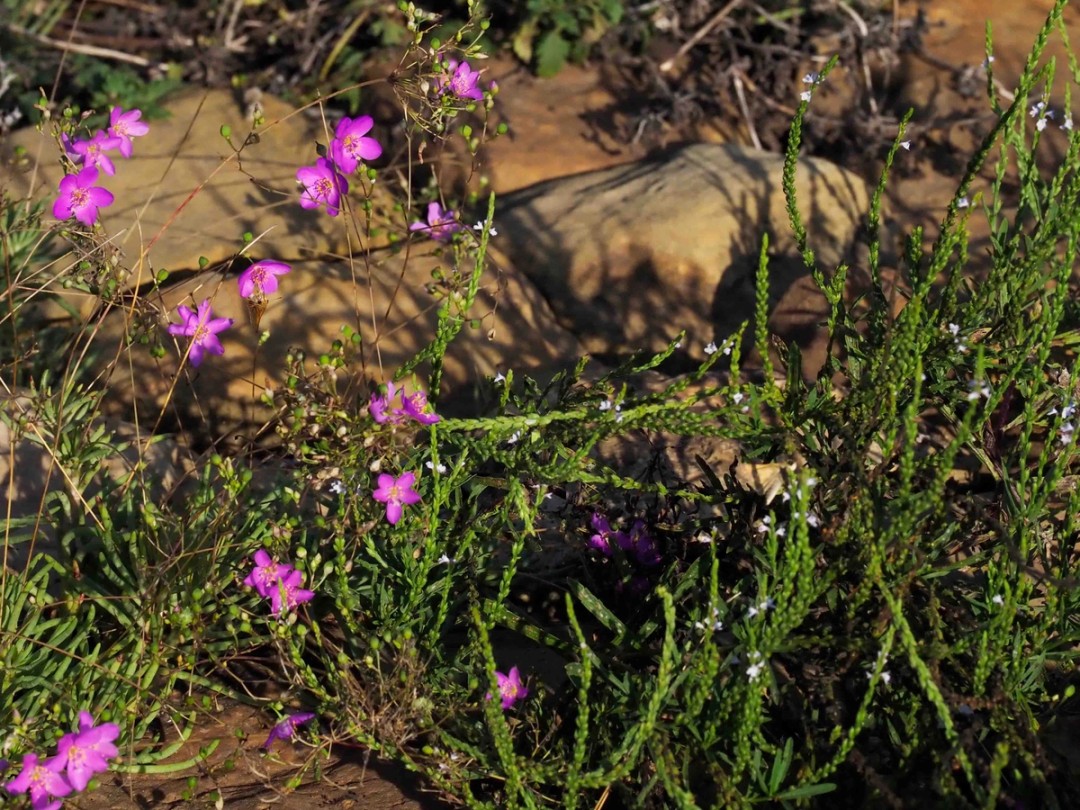
with Phemeranthus calycinus 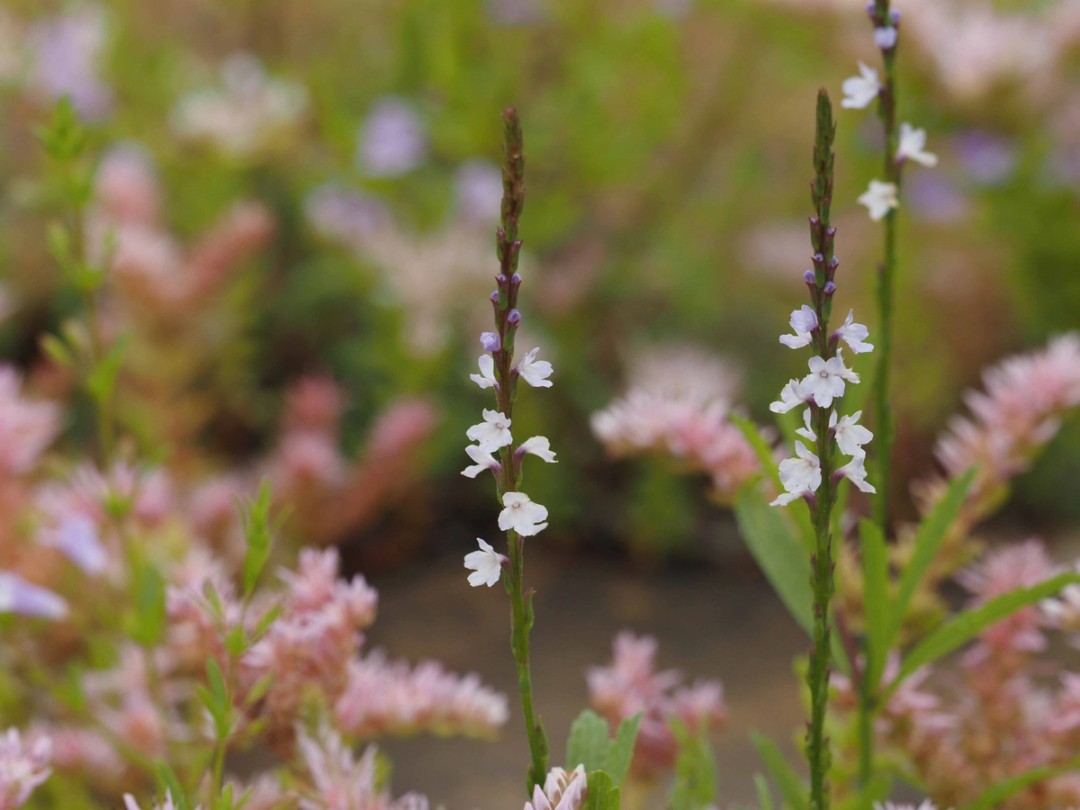
with Sedum pulchellum 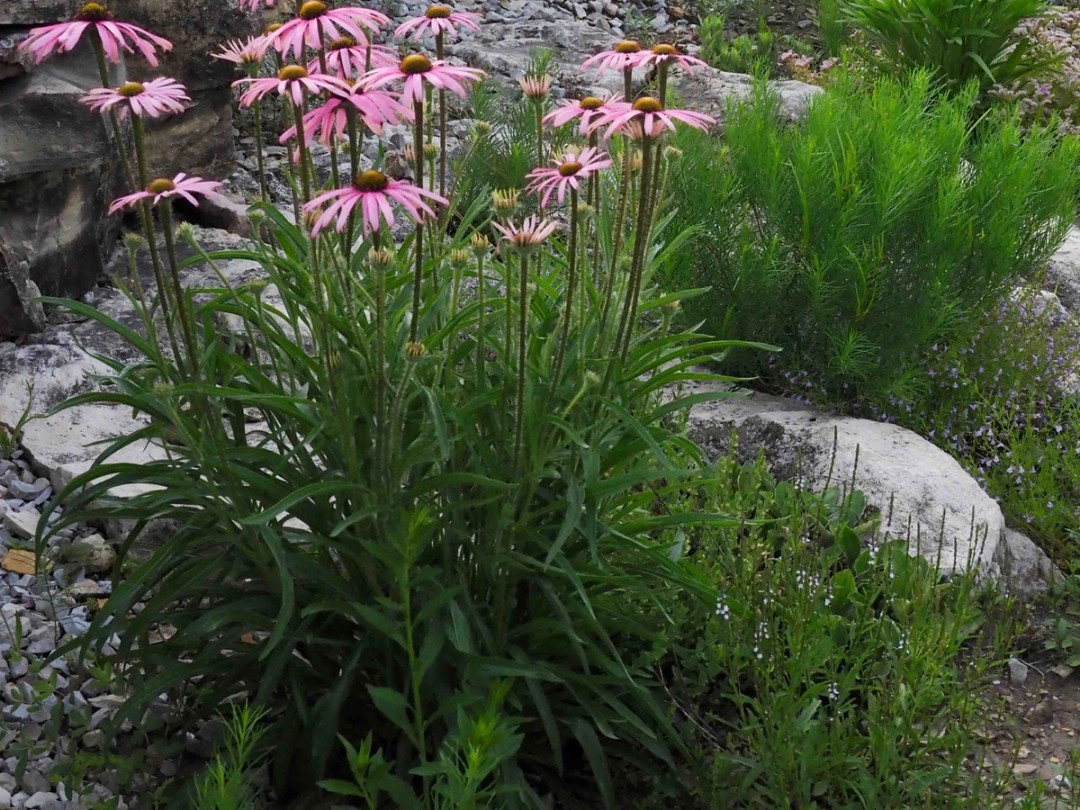
with Echinacea simulata
HABITAT
Verbena simplex is a tough plant, thriving in varied habitats including glades, prairies, bluffs, stream banks, pastures and roadsides. It prefers full sun and thrives in dry and gravelly conditions. It's often found in disturbed habitats.
CONSERVATION STATUS
In Arkansas, Verbena simplex has a Conservation value of 3, in the group of 1-3, meaning "Native weedy and early successional taxa, displaying high opportunistic potential for occupancy of destabilized sites. These taxa are typically well adapted to highly degraded areas of the contemporary environment or to lands that have been heavily altered in the past".
INTERESTING TIDBITS
If you appreciate this plant for its beautiful flowers or the diverse insects it supports, but notice its numbers are declining, burning or disturbing the ground can help re-establish the colony. This plant thrives on disturbance, such as burning or mowing. Another reason for its dwindling numbers could be the area becoming too shaded. It requires ample sunlight to sustain itself and bloom.