PLANT NAME
Coreopsis is the scientific name, which is derived from the Greek word ‘koris’ (which means “bug”) and ‘opsis’ (which means “like”). This is in reference to the similarity of the seeds to a small bug. The specific epithet ‘tripteris’ is a straightforward reference to the leaves being divided into three leaflets.
The common name, ‘Tall’ tickseed, clearly refers to the tall status of the plant compared to other members of the Coreopsis family. The ‘tickseed’ part of the name relates to the tiny, dark seeds that resemble a tick.
BLOOM
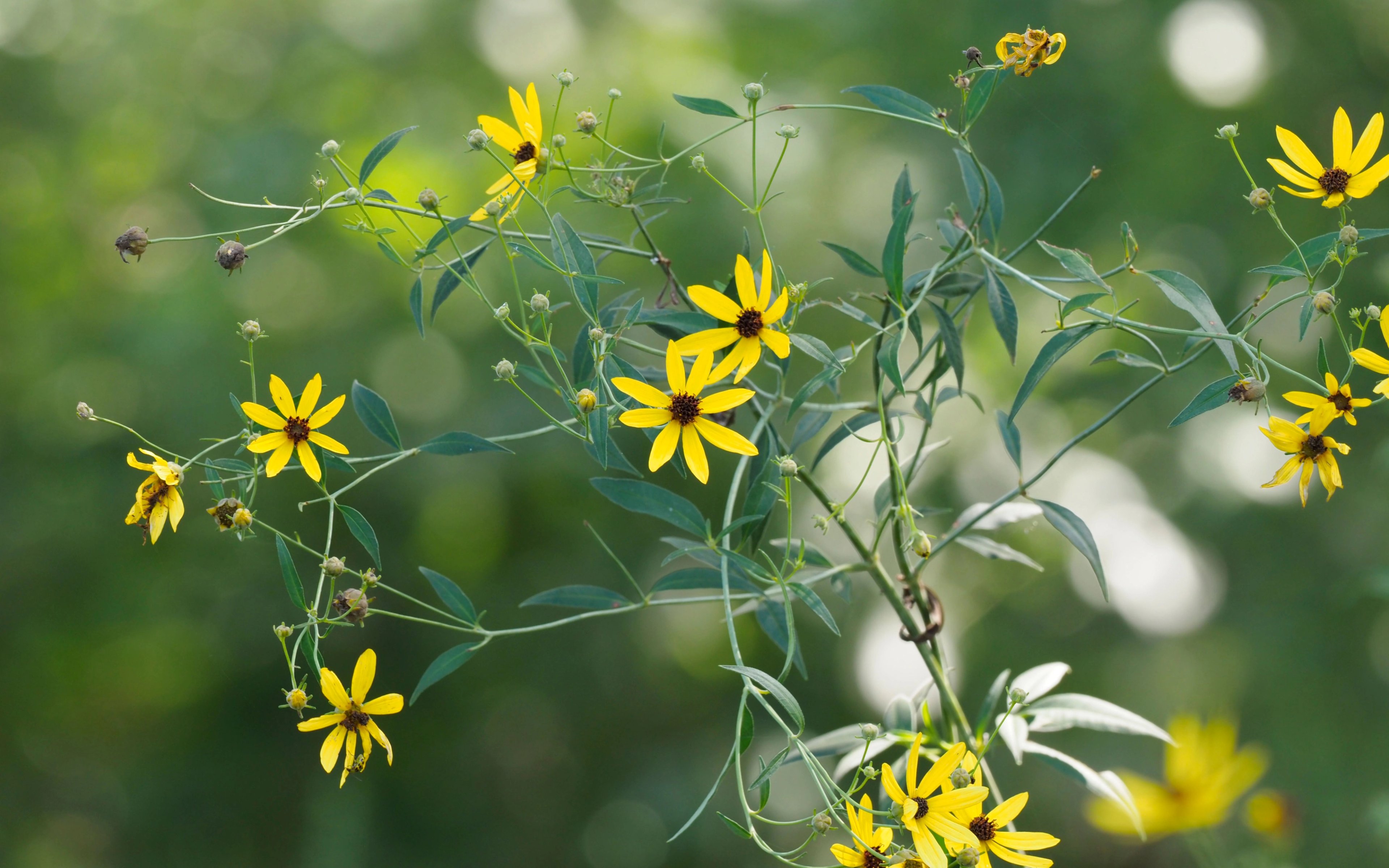
Each flower of Tall coreopsis has eight bright yellow, sterile ray florets and numerous fertile, reddish-brown disk florets.These daisy-like flowers can span up to 2 inches across. A mature plant often supports hundreds of individual flowers, with dozens per stem, creating a breathtaking bouquet in nature! Interestingly, these flowers have no scent. However the crushed leaves and stem have an anise, licorice -like scent.
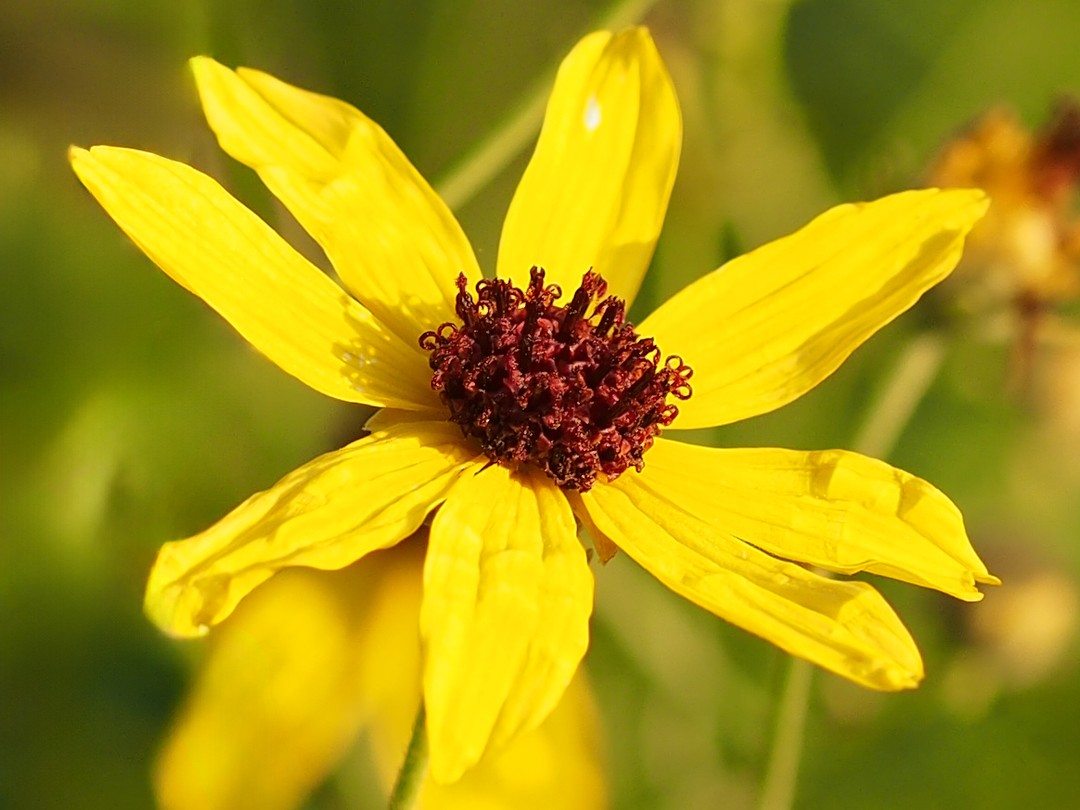
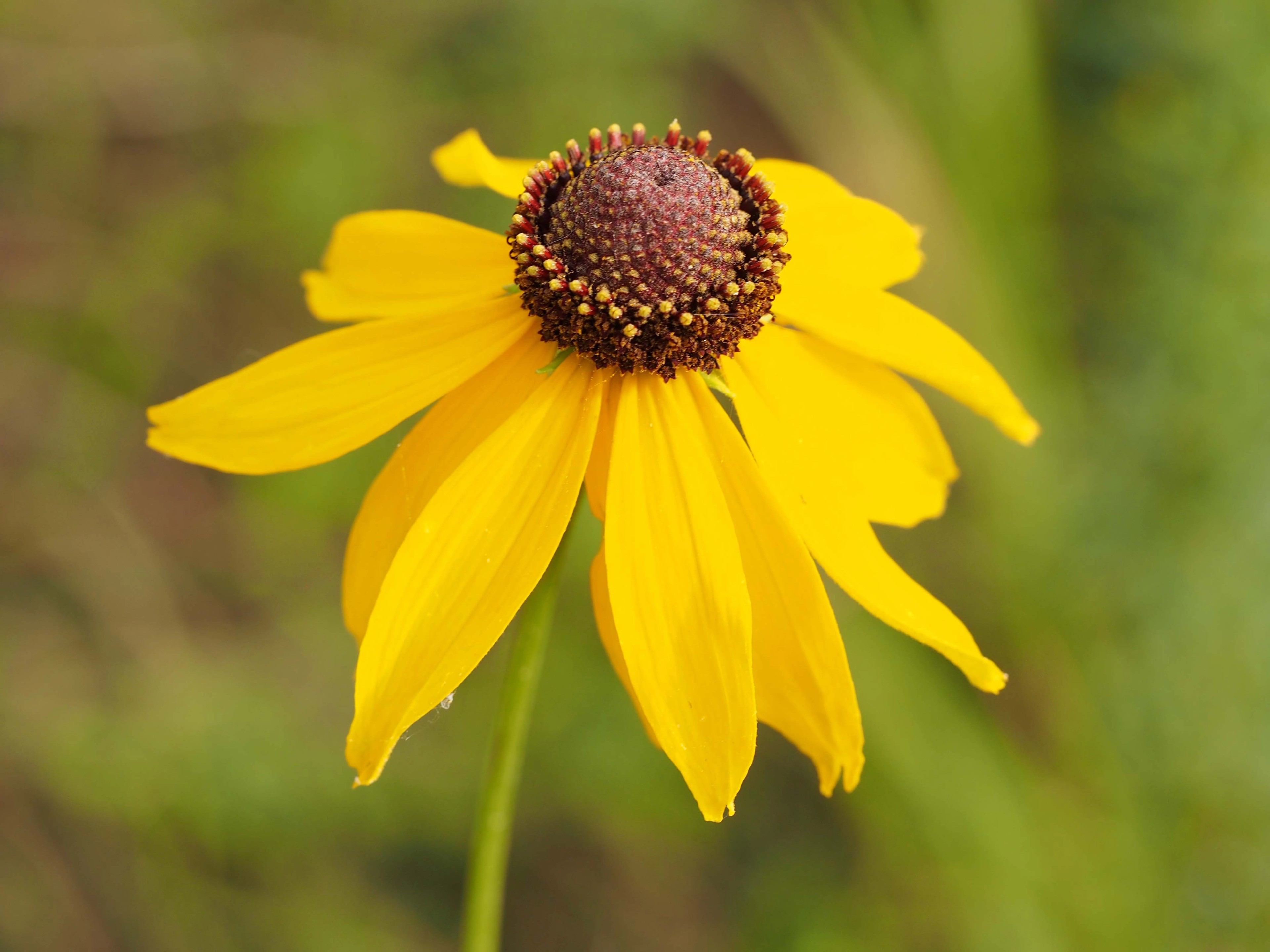
Close look at disc flowers 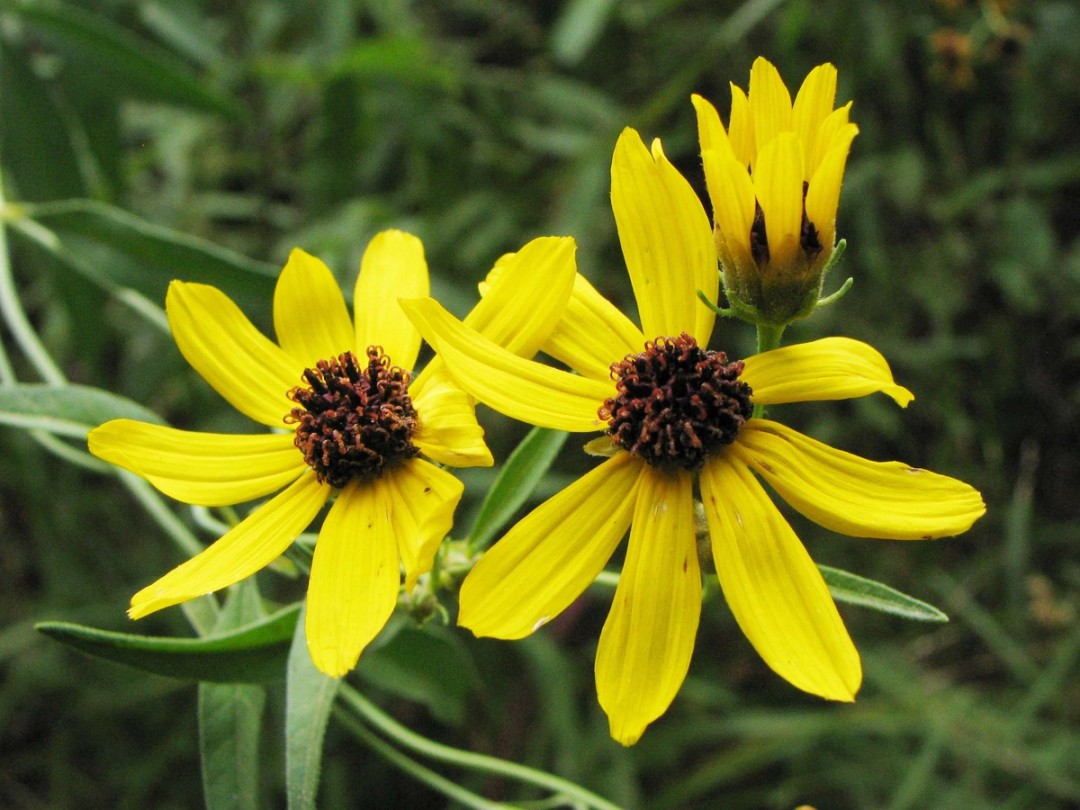
Yellow ray and reddish disc flowers 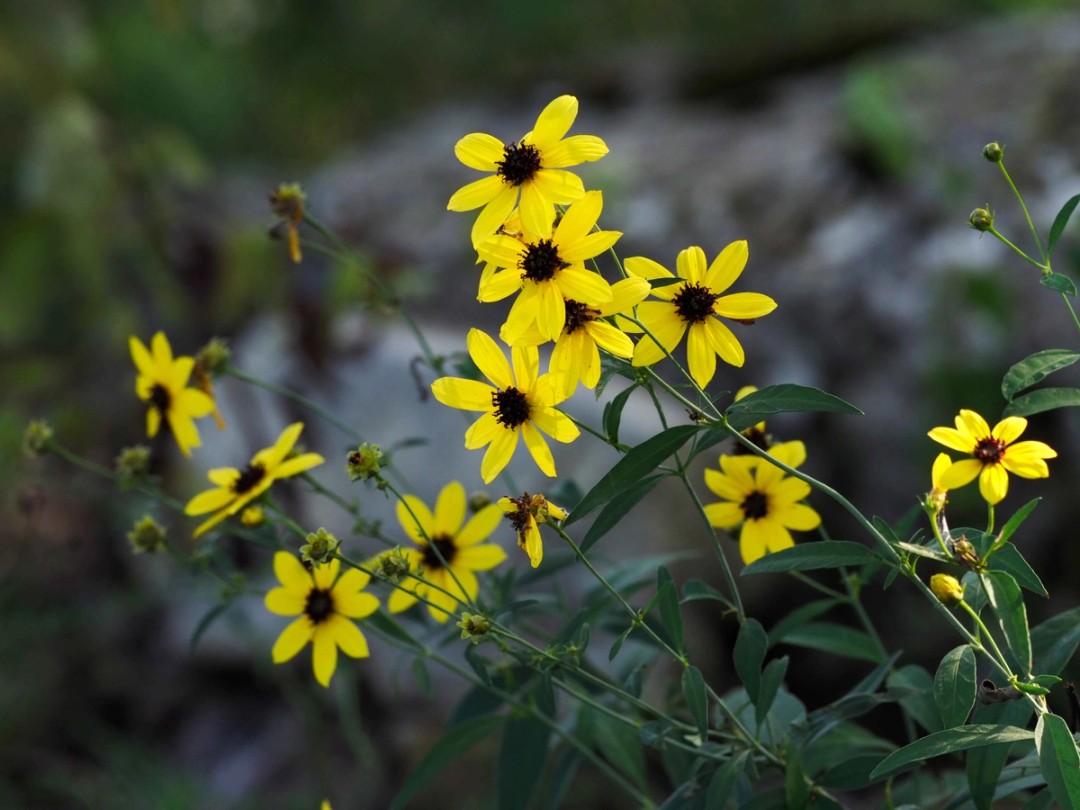
Vivid yellow flowers 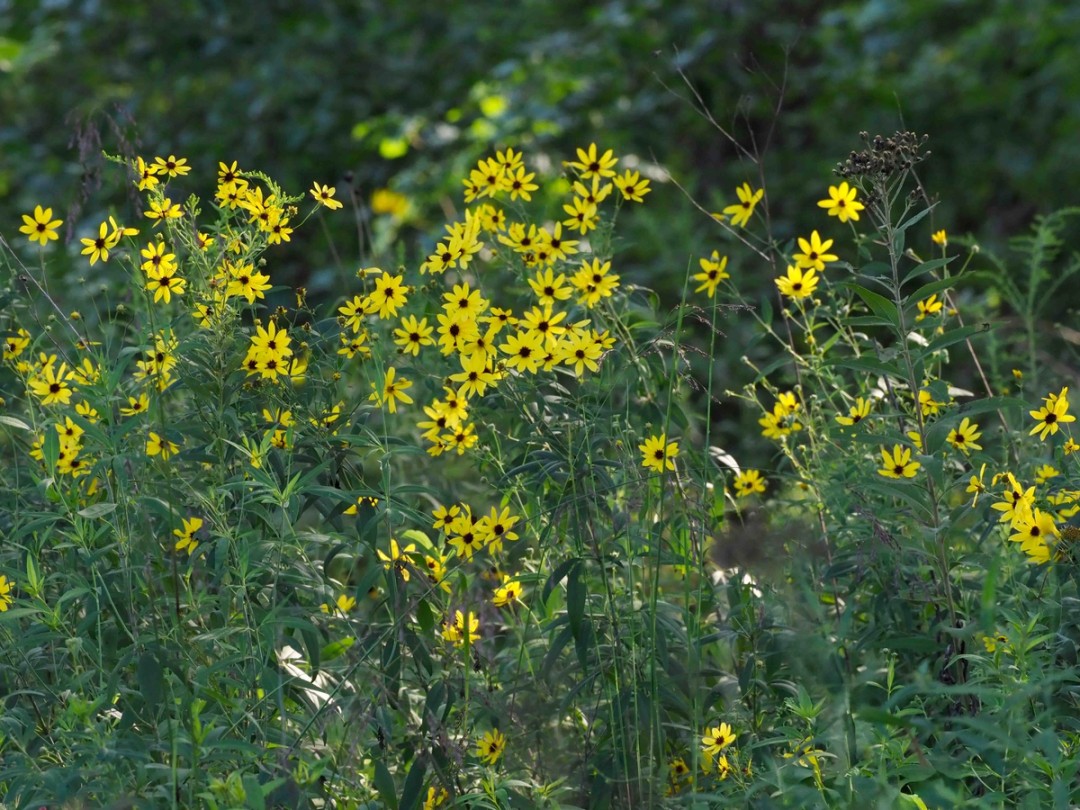
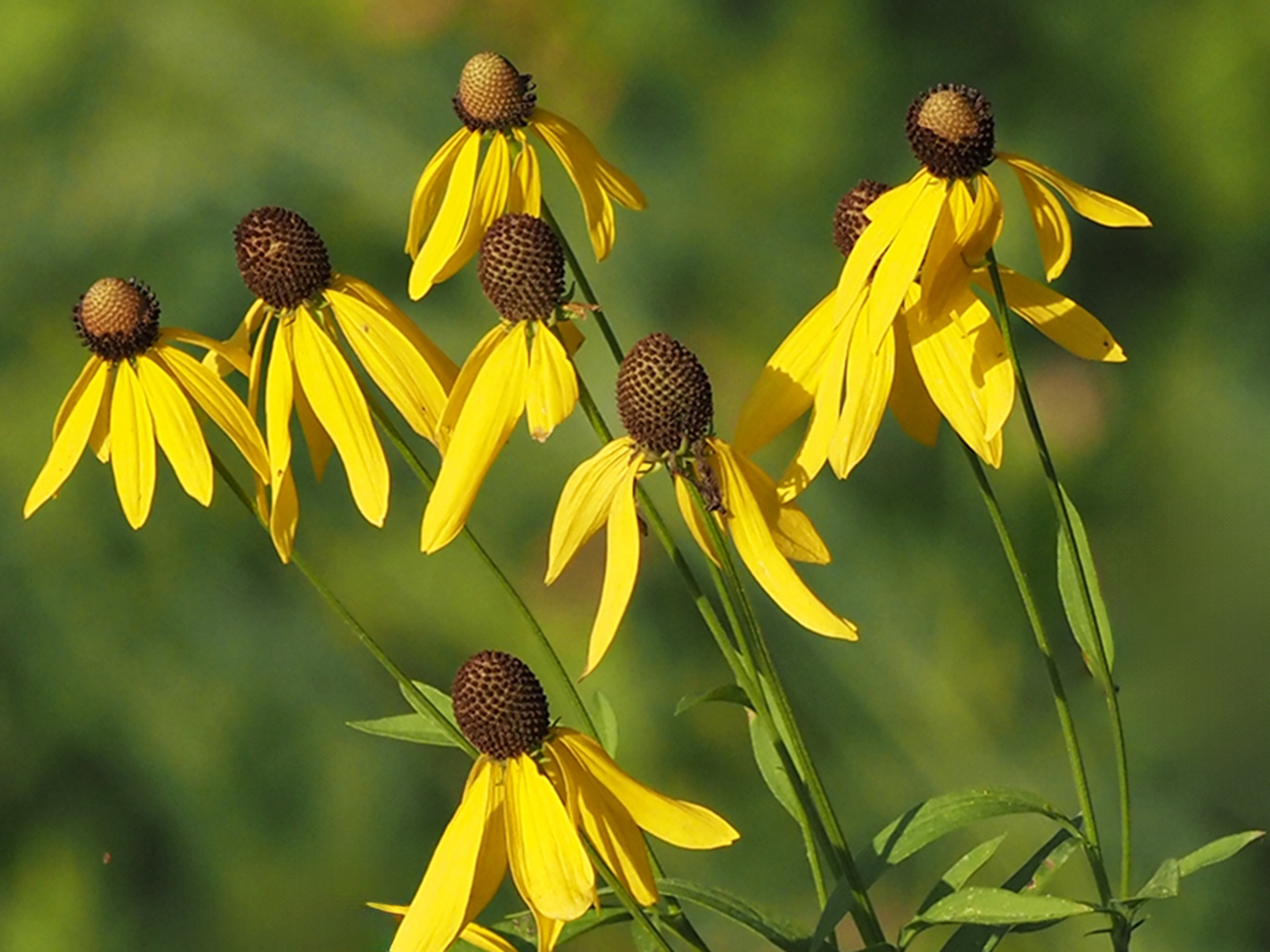
Many simultaneous blooms 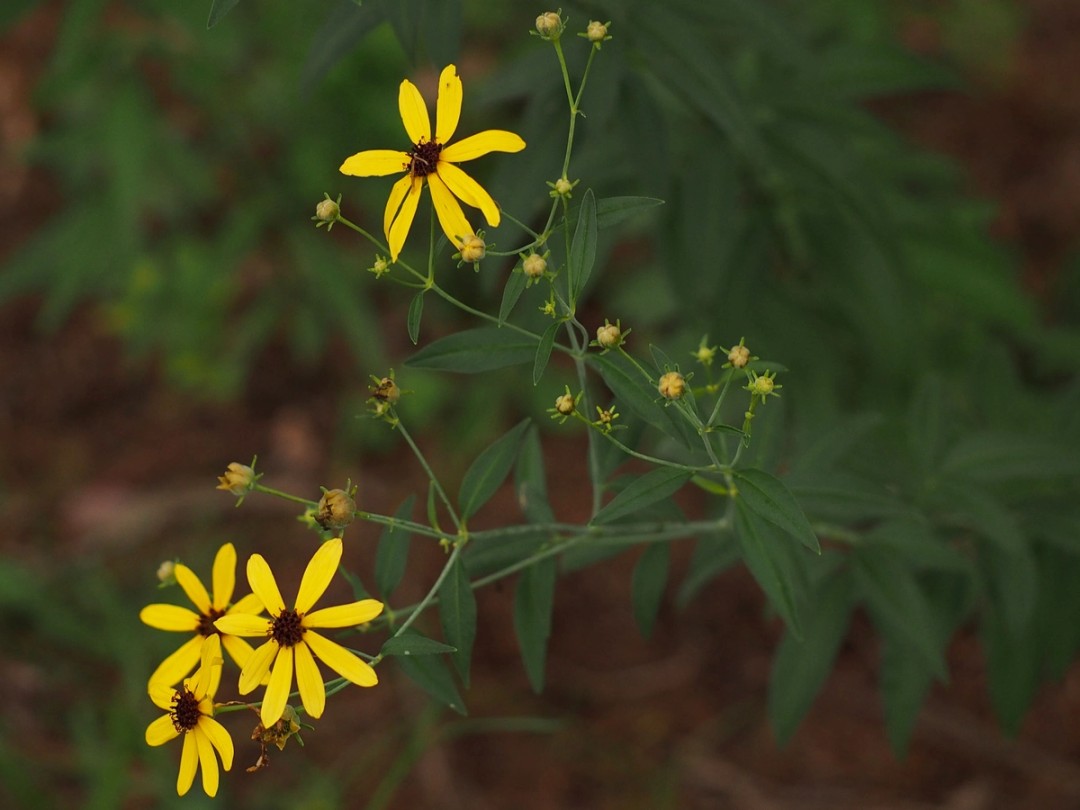
Buds and flowers 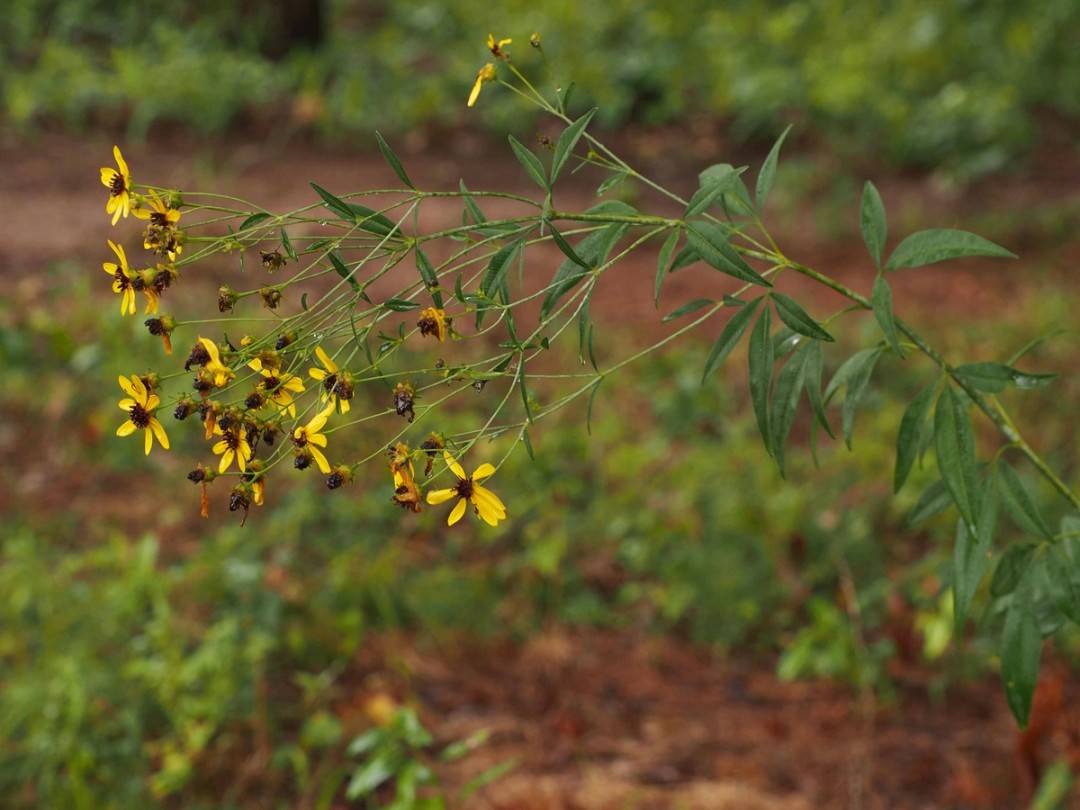
Spent blooms
DESCRIPTION
Coreopsis tripteris is a tall perennial plant that can grow up to 7 or even 8 feet tall. It typically remains unbranched at its base, branching into flowering stems in its upper half. The stem is smooth and hairless (terete). Opposite leaves are divided into three lobes. The lower portion of the plant has quite large leaves (up to 6 inches) with smaller leaves in the upper portion. After blooming, the disk florets are replaced by achenes. This wildflower spreads both by seed and underground rhizomes. The rhizomes allow clumps or even large colonies to form, while seeds are spread more widely by wind or birds, enabling the formation of new colonies.
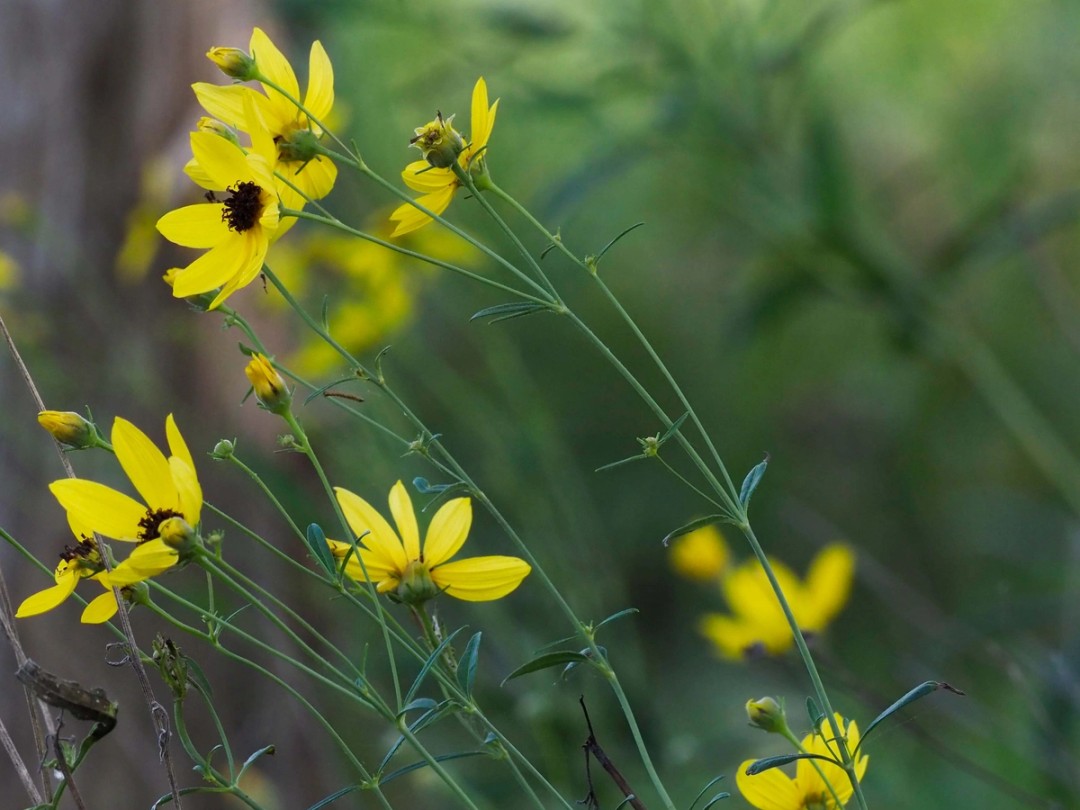
Stem and flowers 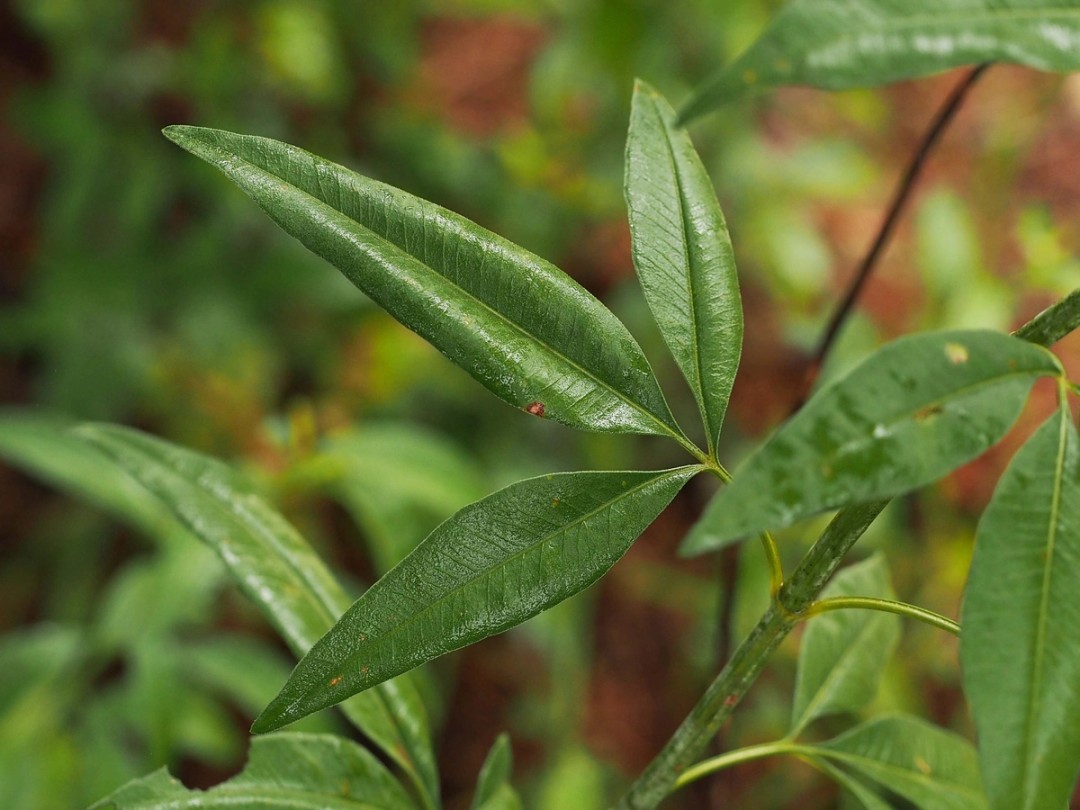
Trifoliate leaves 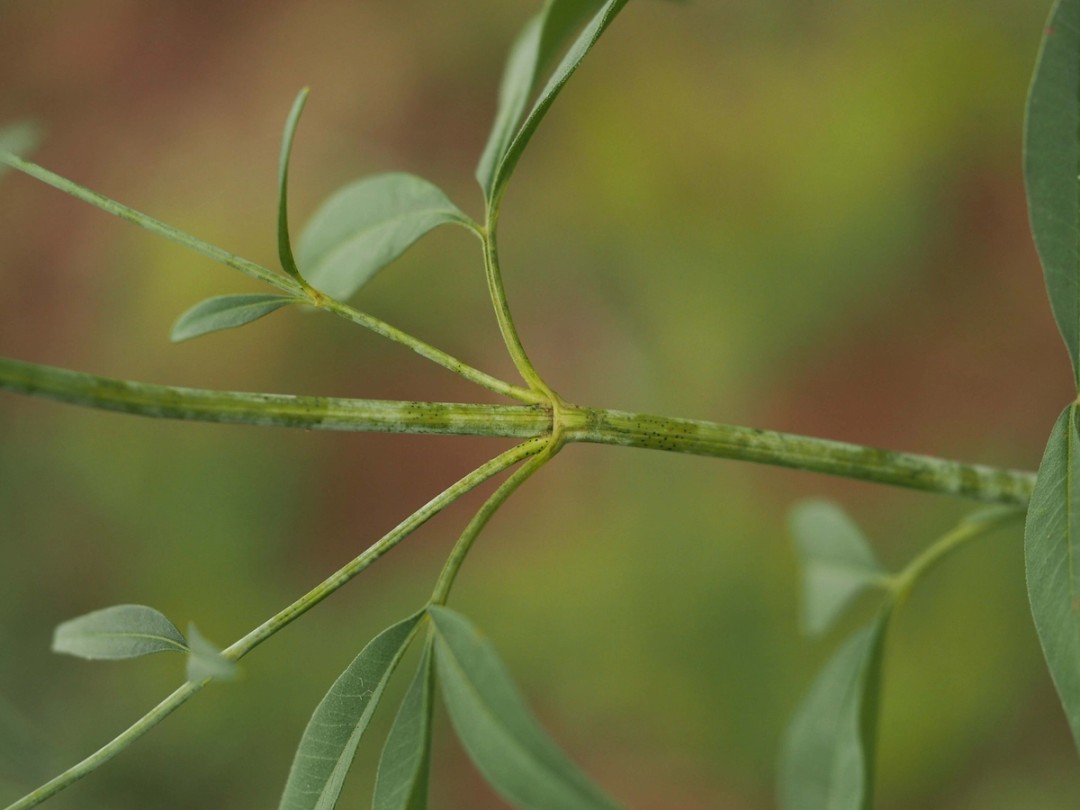
Terete Stem 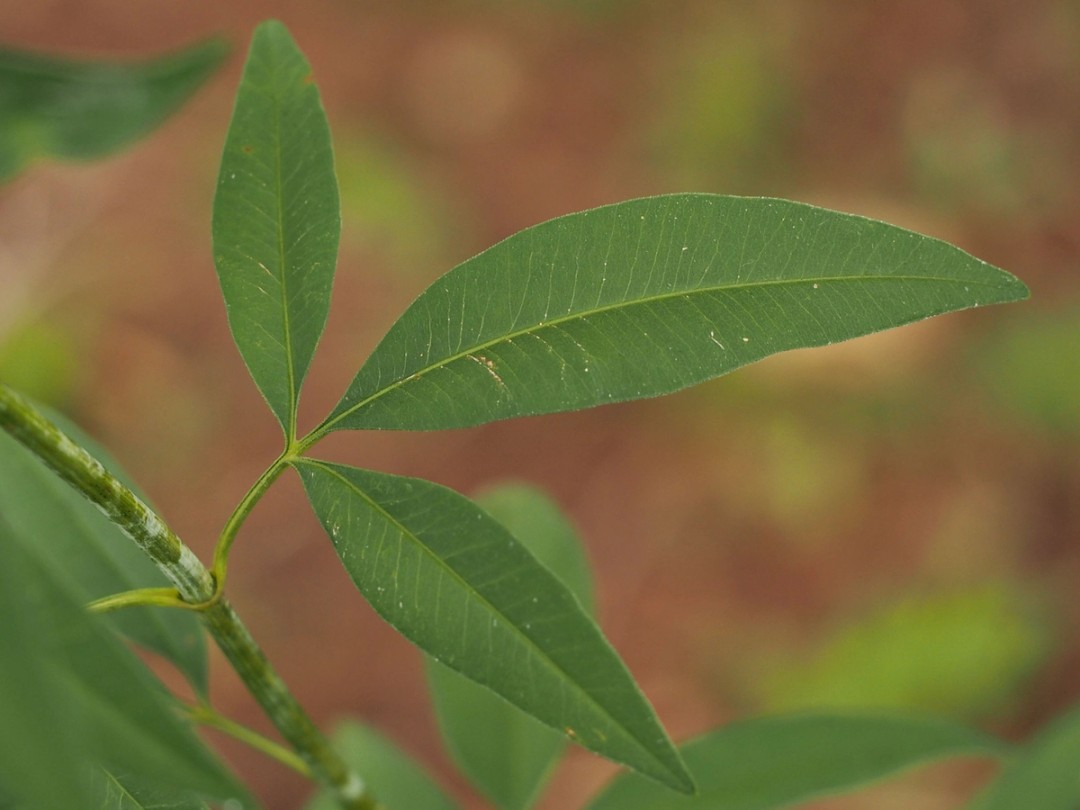
Opposite leaves and stem
Coreopsis tripteris (Tall coreopsis) is sometimes confused with Rudbeckia triloba (Brown-Eyed Susan). While they have similar habitats, they differ in in many ways.
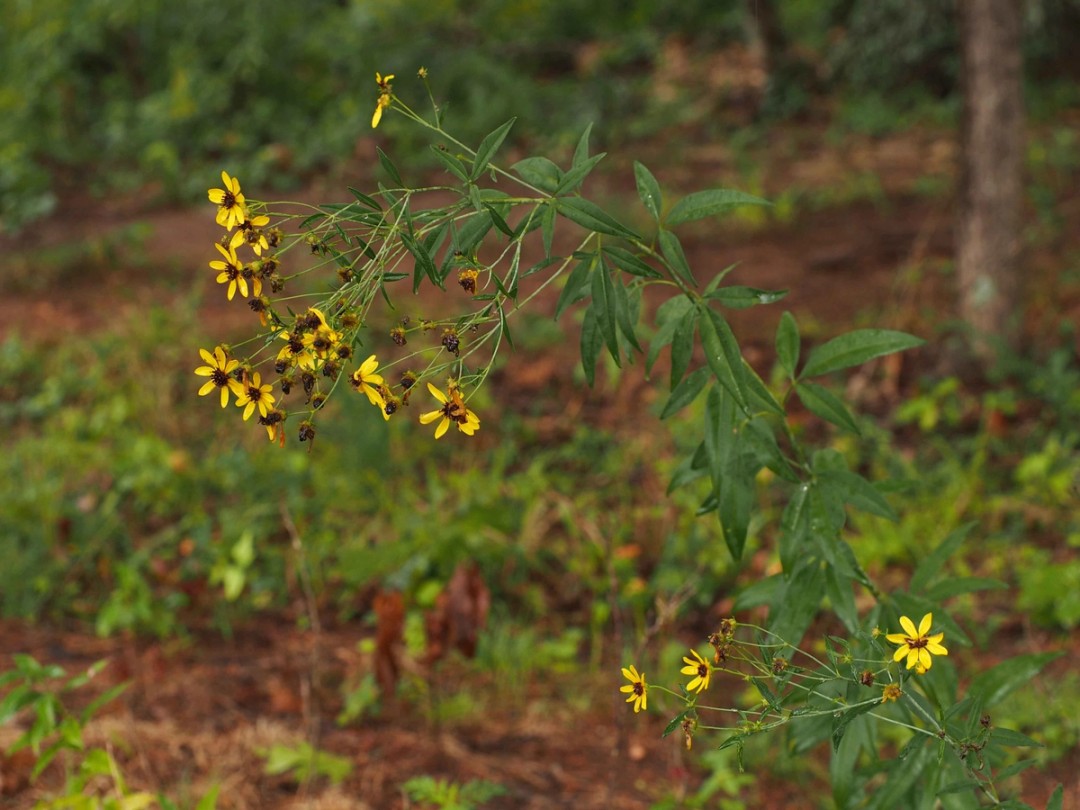
Coreopsis tripteris 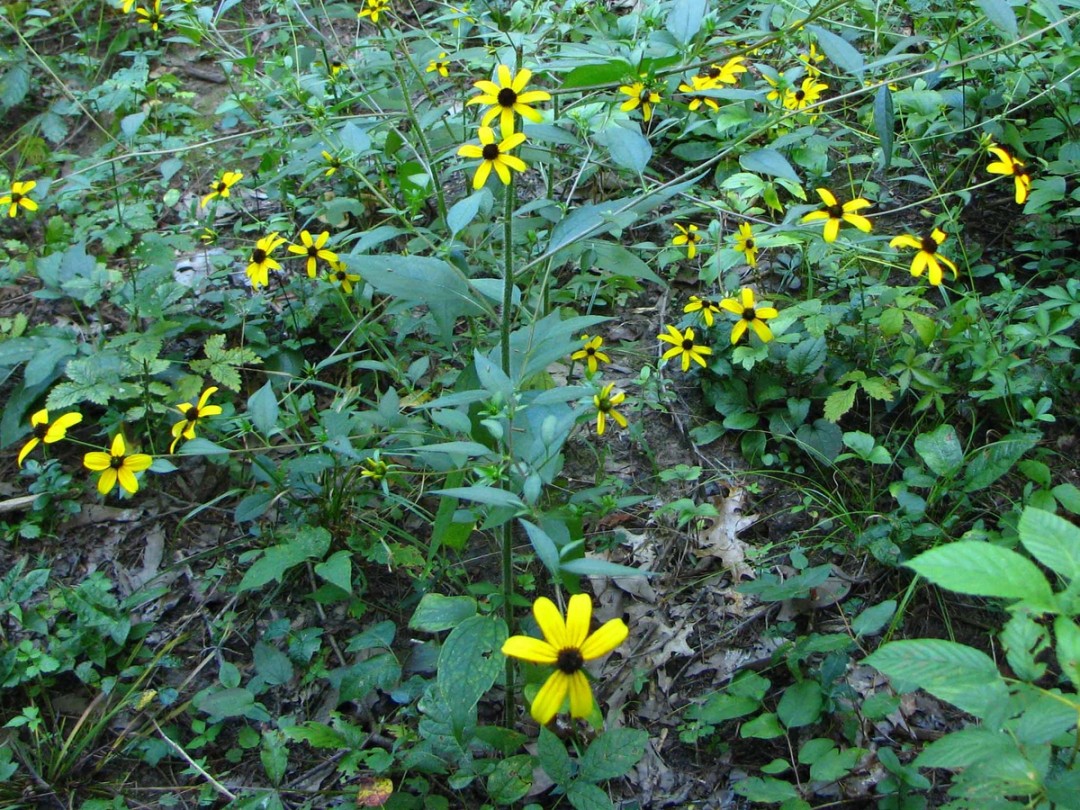
Rudbeckia triloba
- Height- Coreopsis tripteris 4-8 feet, Rudbeckia triloba 3-5 feet
- Center cone- Coreopsis yellow, brownish red, Rudbeckia dark purplish-brown
- Petals- Coreopsis 8, Rudbeckia 6-12
- Stems- Coreopsis hairless, Rudbeckia white hairs
- Leaves- Coreopsis hairless, Rudbeckia stiff hairs
POLLINATORS
Many varied insects are attracted to Coreopsis tripteris. The pollinators I see most often include syrphid flies, wasps, bees and butterflies. I often spot goldfinches perching on the stems as the the seed heads are a favored food source.
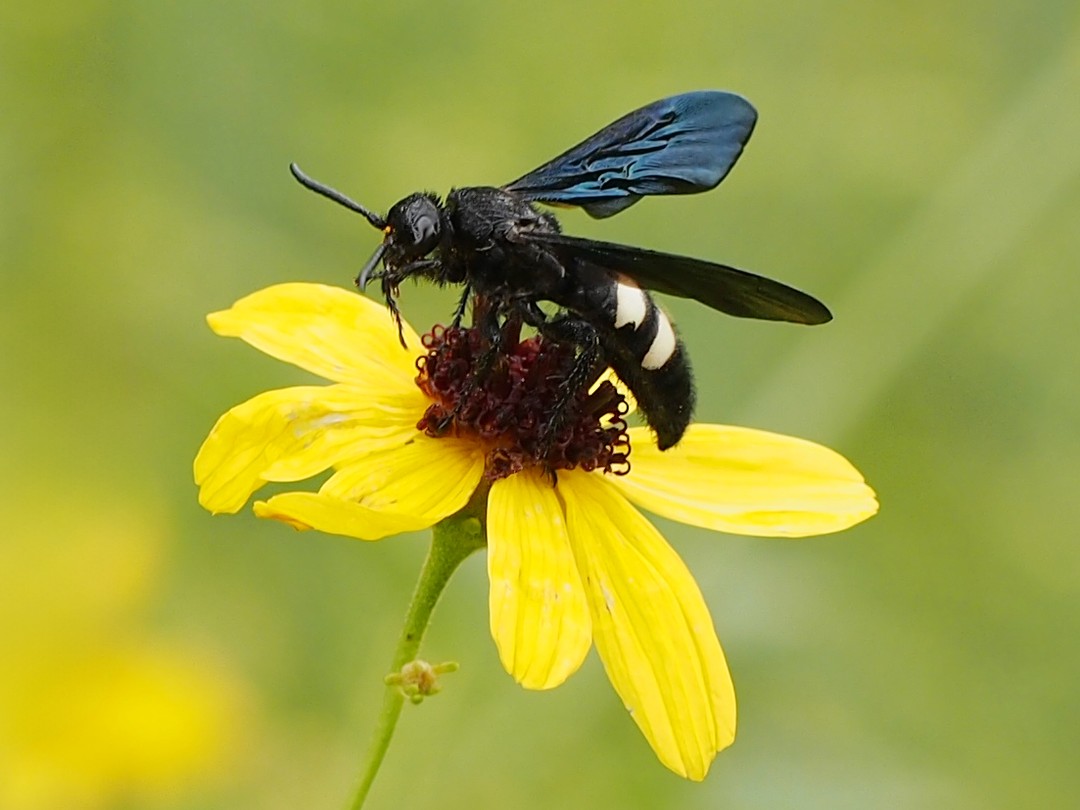
Double banded scoliid wasp 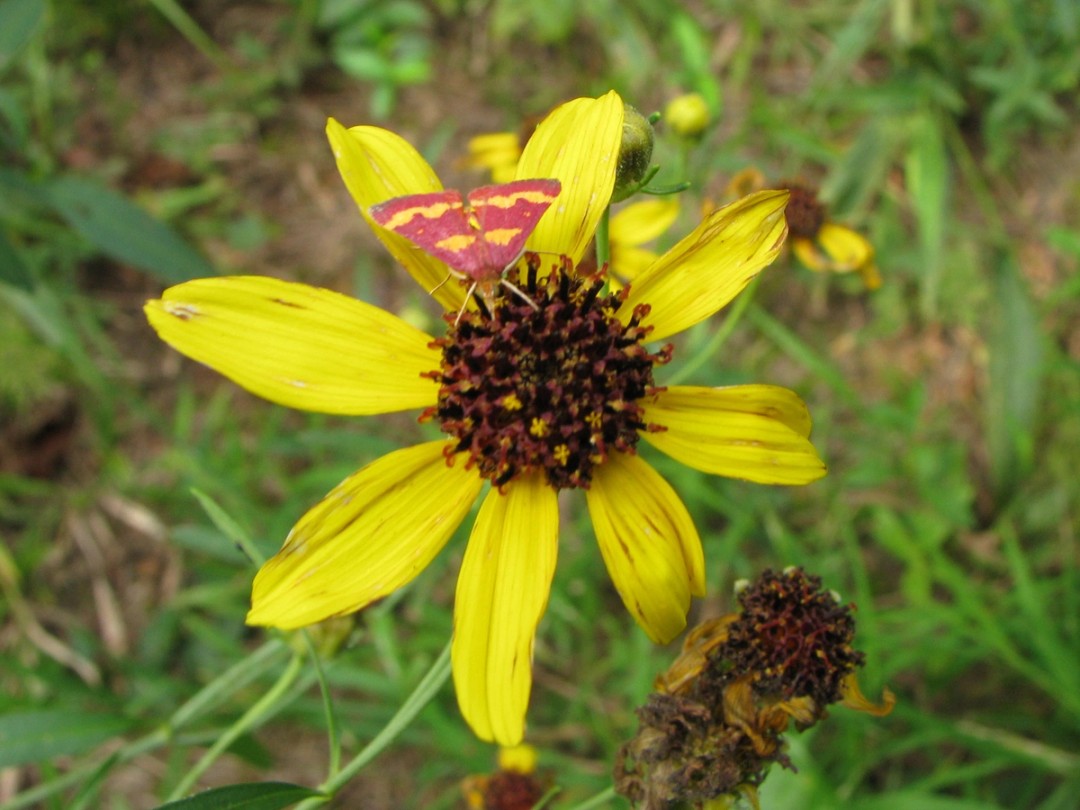
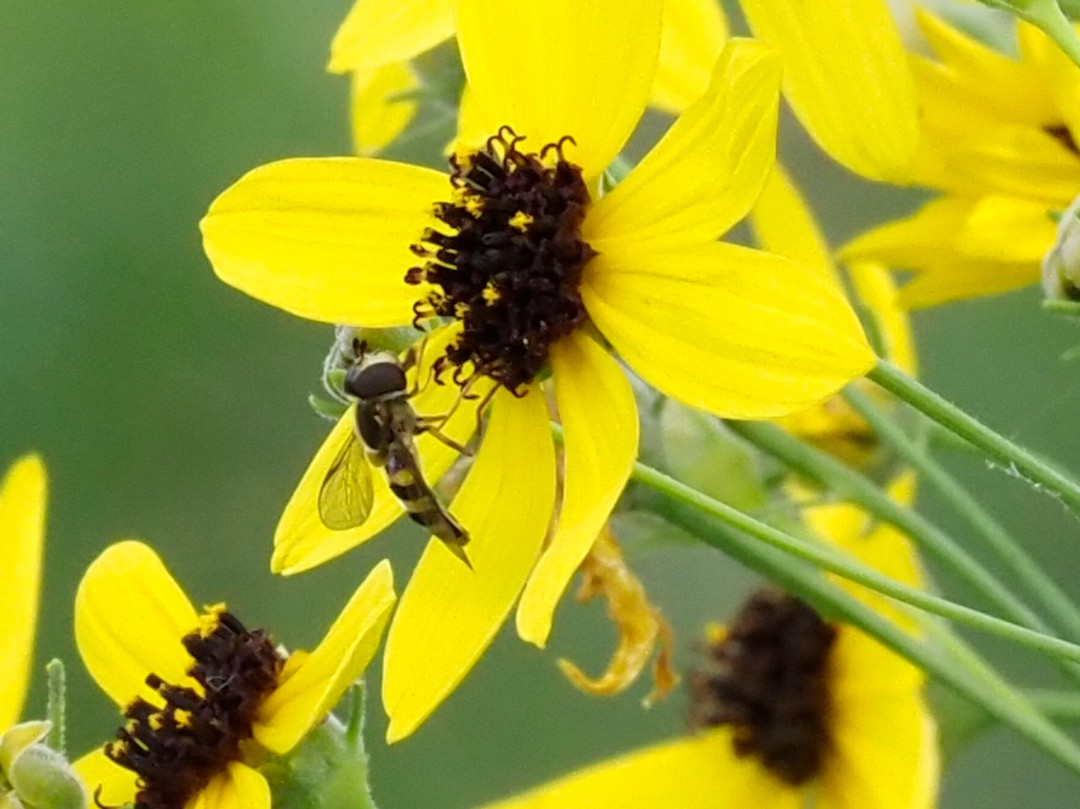
Syrphid fly 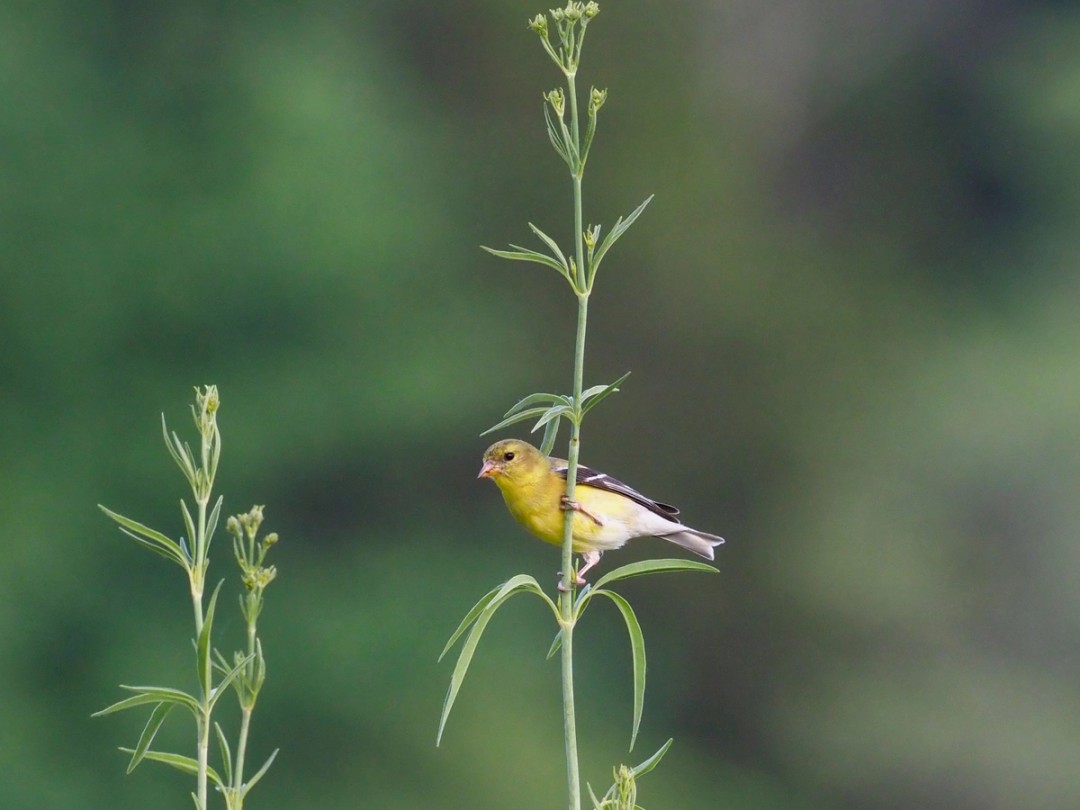
Goldfinch
PLANTS GROWING NEARBY
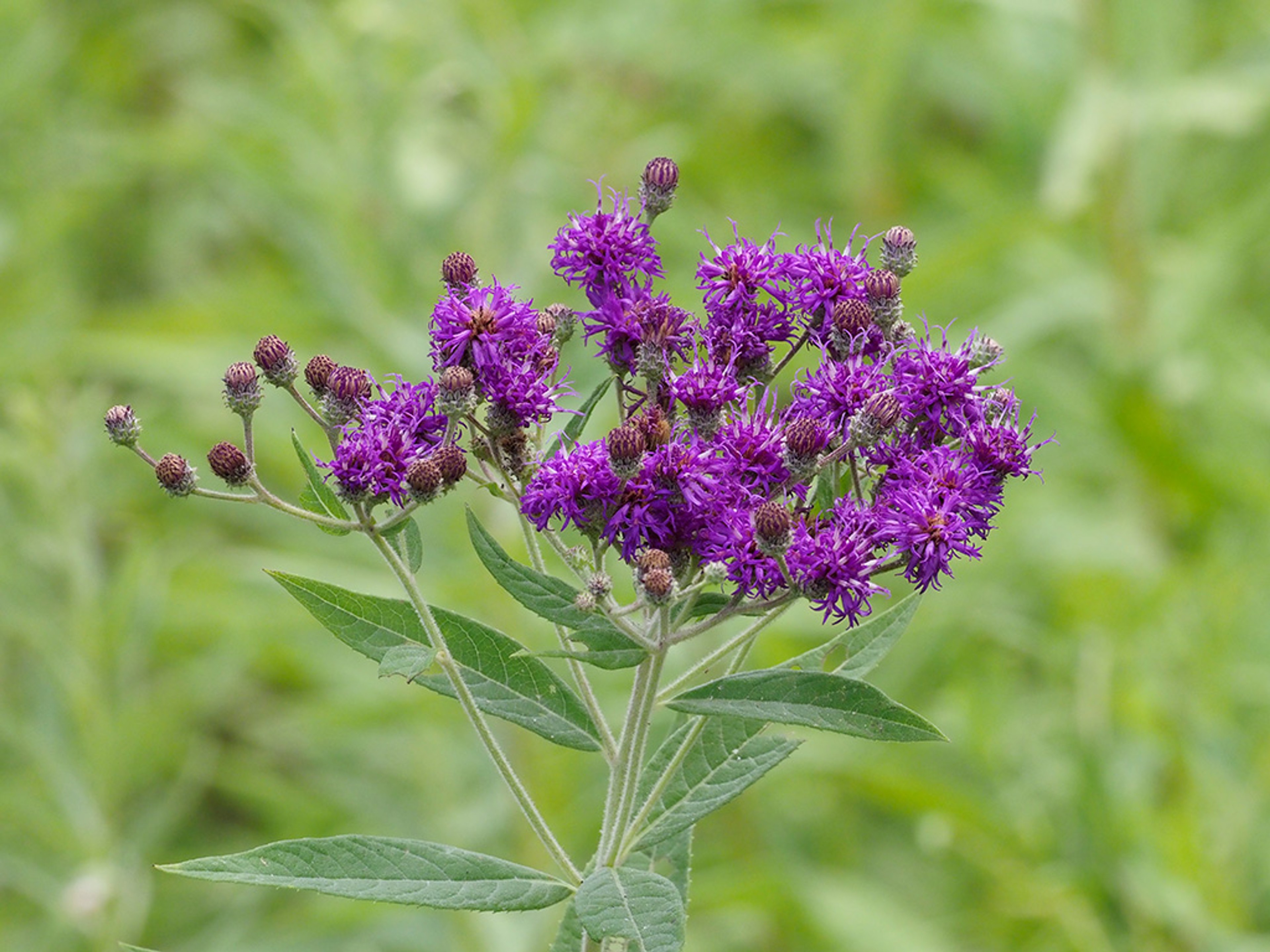
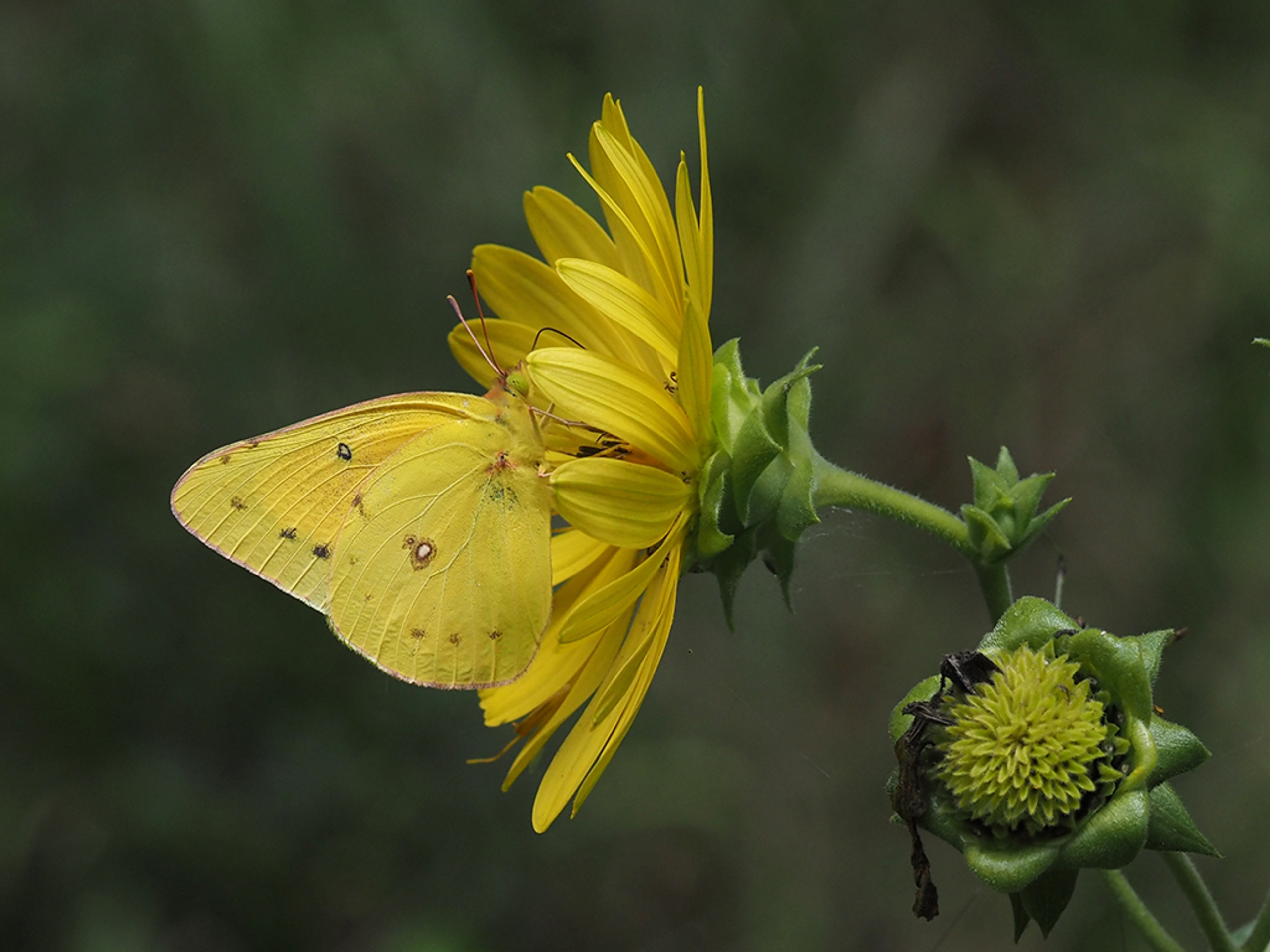
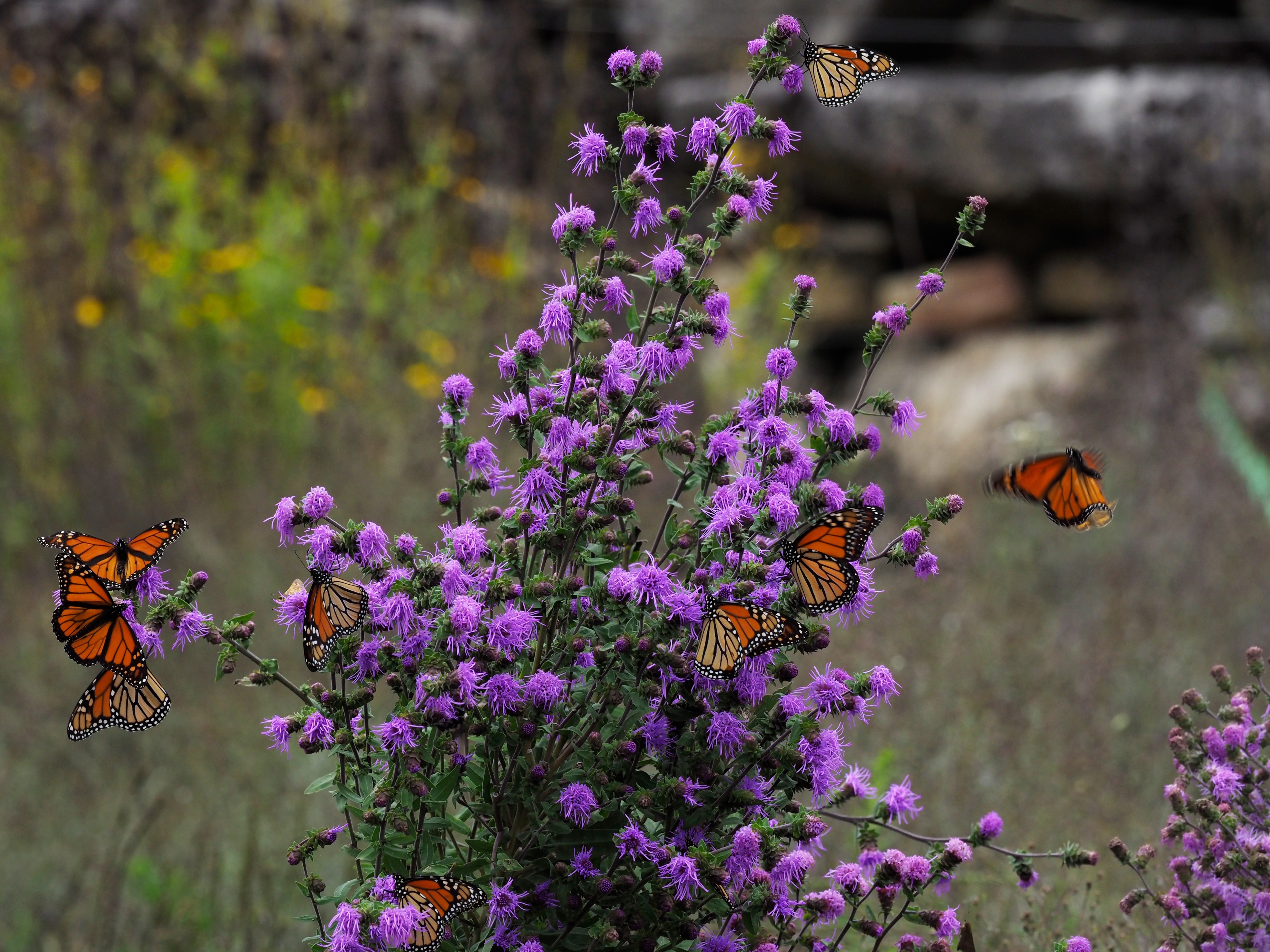
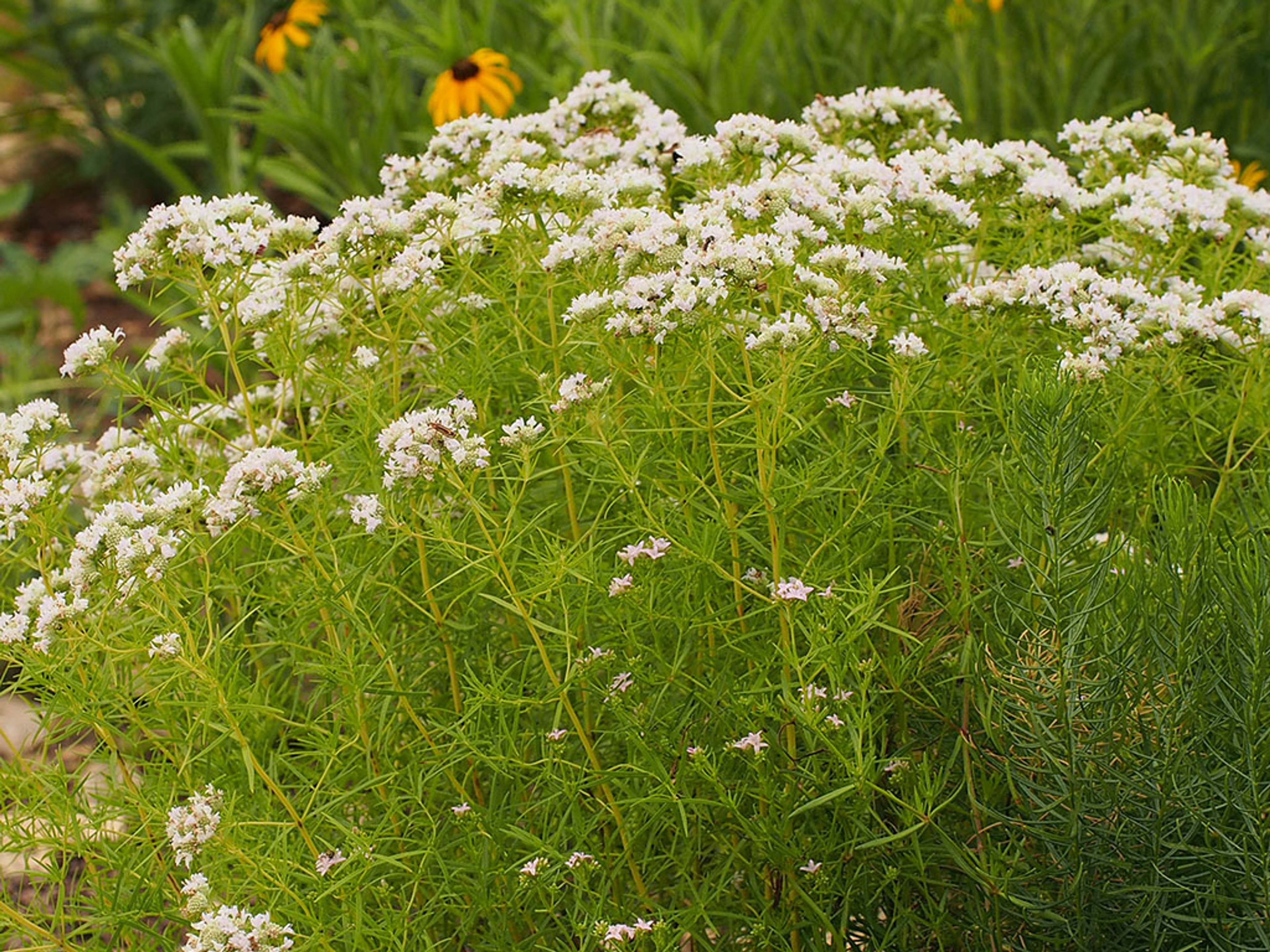
Many wonderful native wildflowers can be found growing near Coreopsis tripteris. I frequently notice Verbesina virginica (Frostweed) blooming nearby as well as Liatris scariosa (Savanna blazing star). Both of them are often flowering simultaneously with Tall coreopsis. Another common companions is Cirsium altissimum, commonly known as Tall thistle. As a caveat, I’m careful to ensure the thistles I tolerate on our property are native. A simple way to identify native thistles is to look at the underside of a leaf. Native thistles have a whitish appearance on their underside. Several native grasses can be seen growing nearby. In particular, I often notice Indian or Yellow prairie grass (Sorgastrum nutans) as a companion to Coreopsis tripteris.
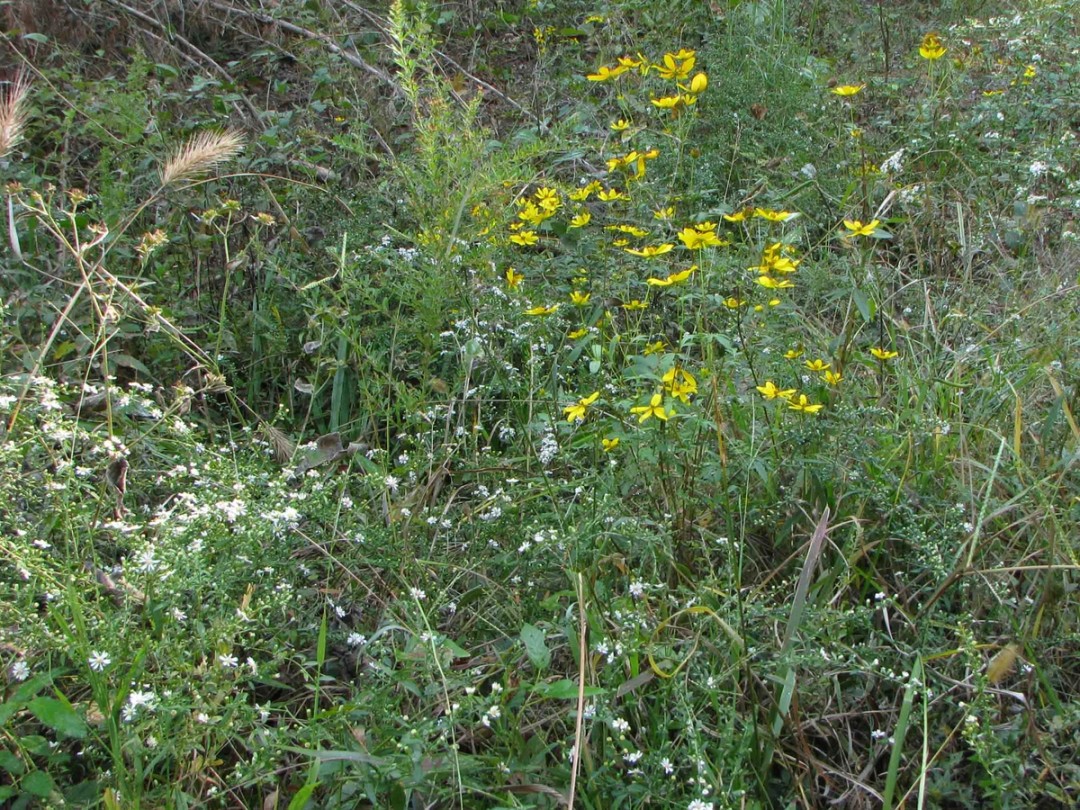
Frost weed, Canada wild rye 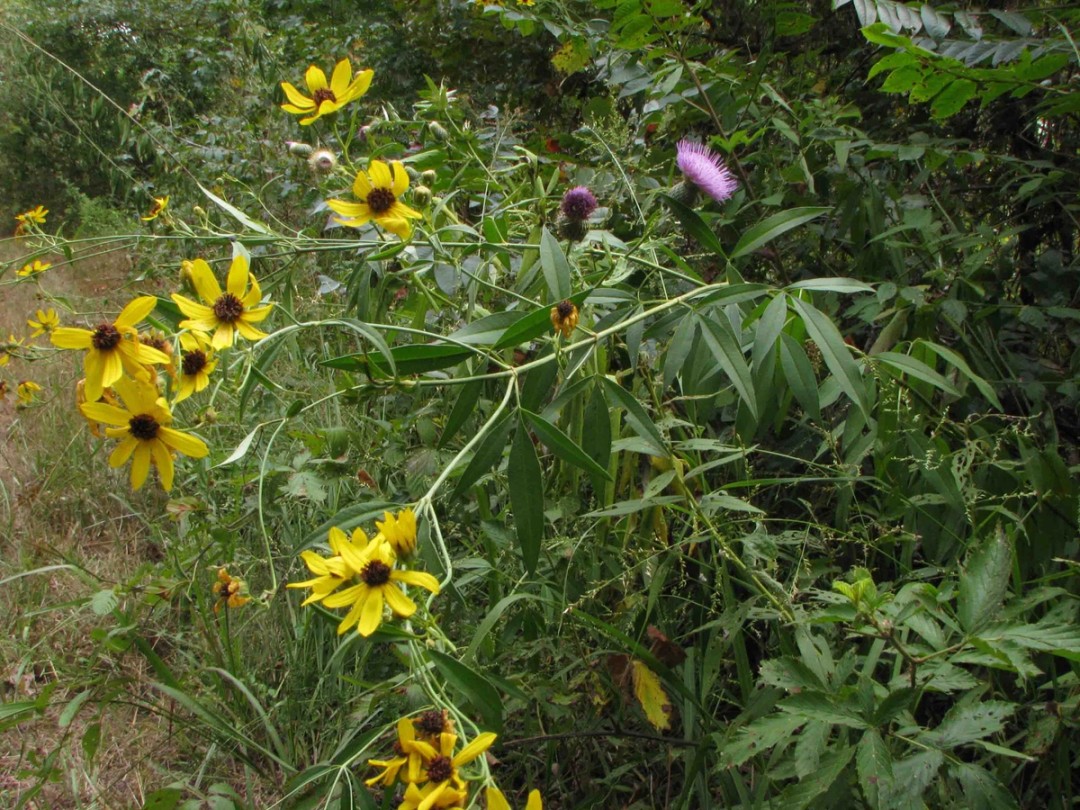
Tall thistle 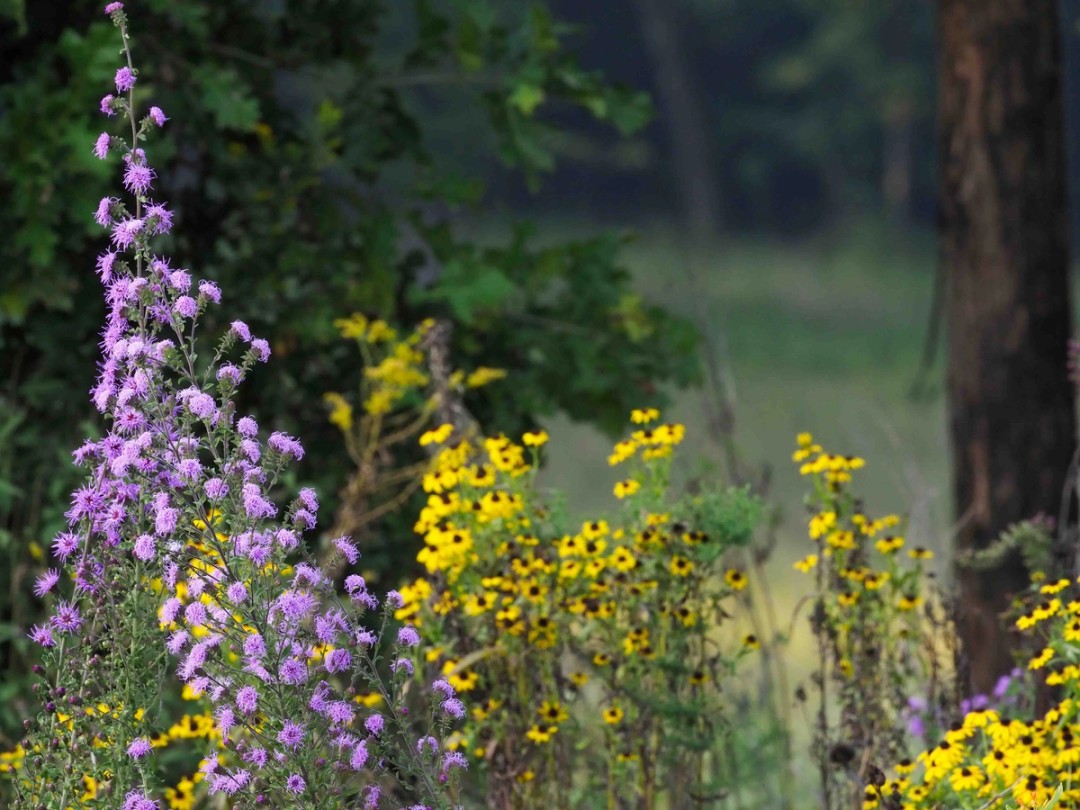
Savanna blazing star 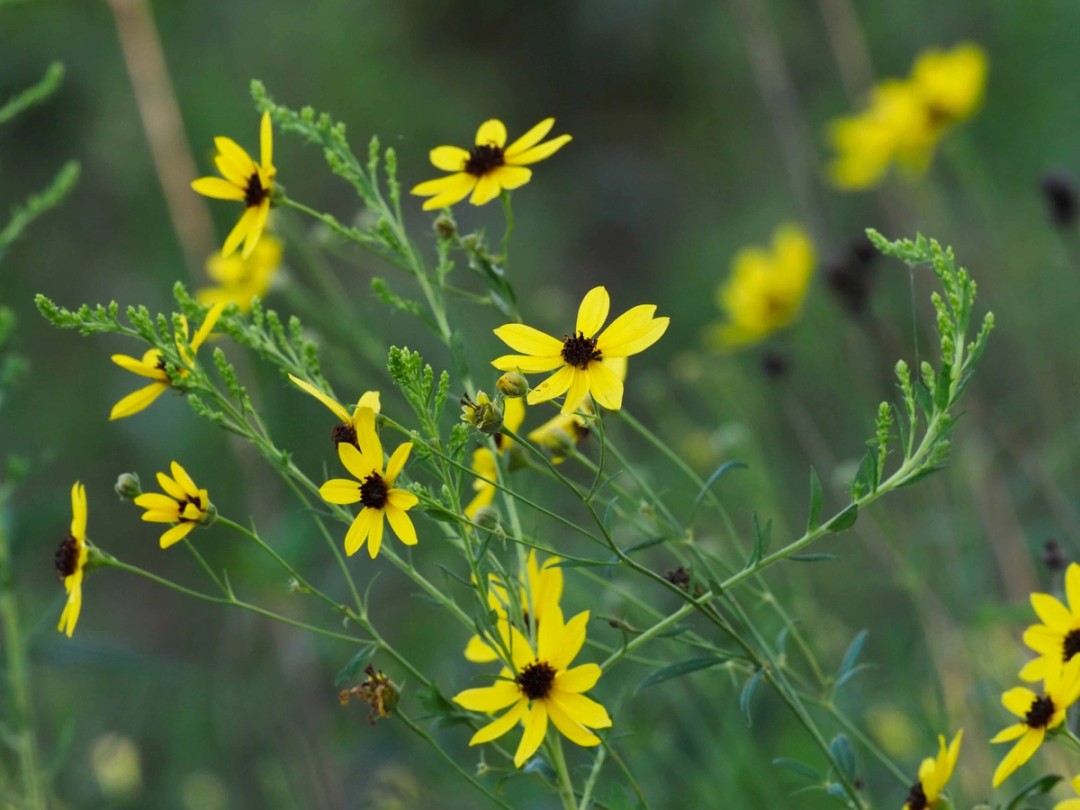
Canada goldenrod
I adore seeing it growing in the grasses, especially with the beautiful arching leaves of Indian/Yellow prairie grass (Sorghastrum nutans).
HABITAT
This native wildflower is adaptable and can thrive in various habitats, including prairies, grasslands, open woods, woodland edges, glades and disturbed areas. It is commonly found along railroad tracks and roadsides (where spraying has not occurred). This resilient plant can tolerate full sun to partial shade and is equally comfortable in clay, loam, gravelly, or even sandy soil. In most conditions, it behaves well, but it can become aggressive when planted in moist environments. To manage this behavior, deadheading before seeds are released, dividing clumps, or using ground cover materials can be effective.
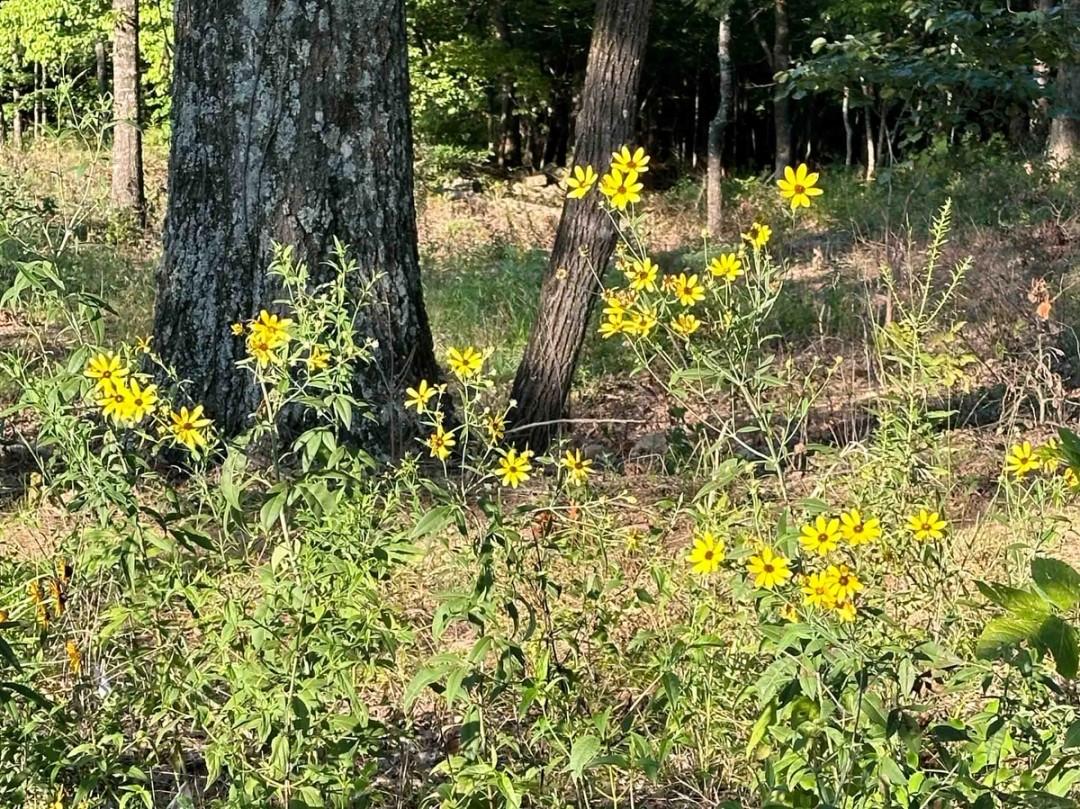
Open woods 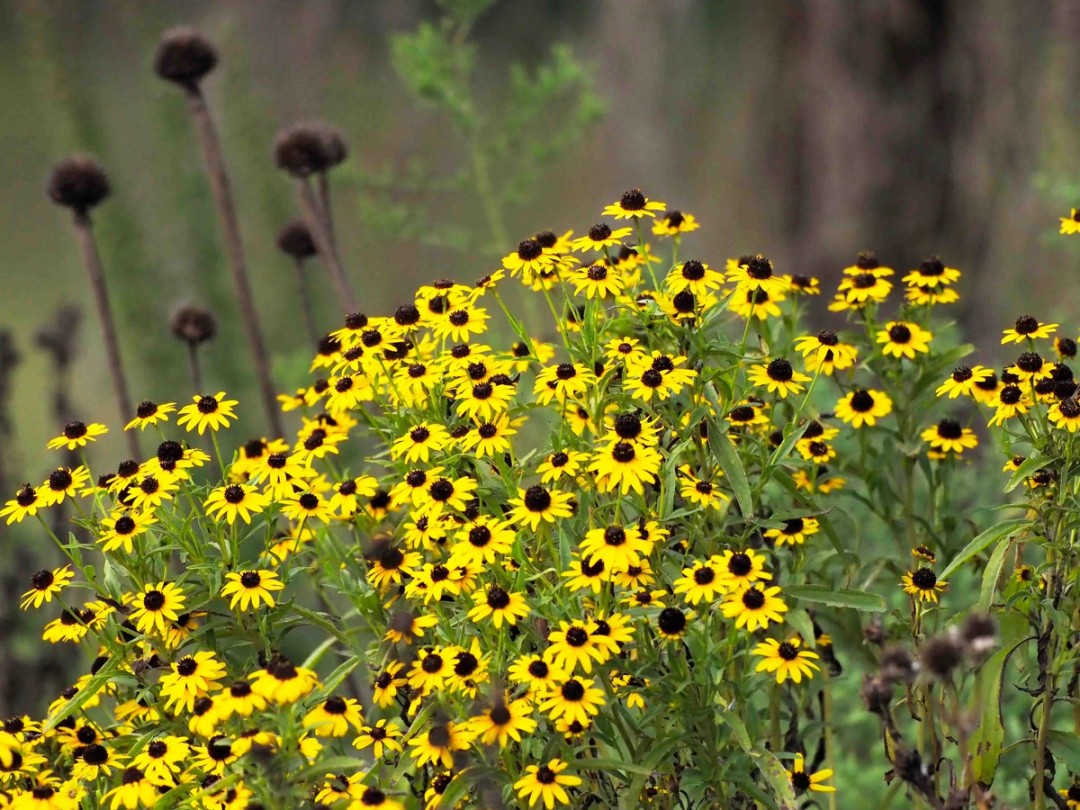
Prairie/grassland
CONSERVATION STATUS
Coreopsis tripteris is native throughout the eastern United states and as far west as Texas and Kansas. Natureserve lists it as overall Secure, however it is shown as Critically Imperiled (S1) in District of Columbia, Kansas, Maryland and Texas. It is Imperiled in South Carolina and Vulnerable in North Carolina and West Virginia. It is Apparently Secure in Iowa and Secure in Kentucky and Virginia. All other states within its range show No Status Rank on Natureserve.
In Arkansas, Coreopsis tripteris has a Conservation Value of C7 meaning “Typically matrix taxa in intact, stable habitats, with some limited ability to respond to destabilizing forces and repopulate areas from which they have been extirpated”.
INTERESTING TIDBITS
While the flowers of Coreopsis tripteris have a subtle scent, crushing the leaves emits a prominent, sweet, anise-like fragrance. The stems also emit also this lovely fragrance when crushed. Hence, the crushed leaves can be a nice addition to a potpourri.
Coreopsis tripteris is a popular choice in prairie/grassland restoration projects. Its adaptability to a wide range of soil types, tolerance of both sun and partial shade, and vigorous spreading via rhizomes and seed make it an effective and reliable component in restoration plantings. It establishes readily from seed and, once established, requires little maintenance. Its tall stature adds structural diversity to restored habitats, while its late-summer bloom fills an important gap in the flowering calendar when many other species have already finished.