PLANT NAME
The Genus name, Eupatorium, refers to Mithridates VI Eupator. He was a 1st-century king in ancient Anatolia. He was said to be very skilled with the medicinal properties of herbs. The species name, serotinum, comes from the Latin, meaning late blooming or ripening.
The common name, Late boneset, is pretty straightforward as this is the last boneset of the season to bloom.
BLOOM
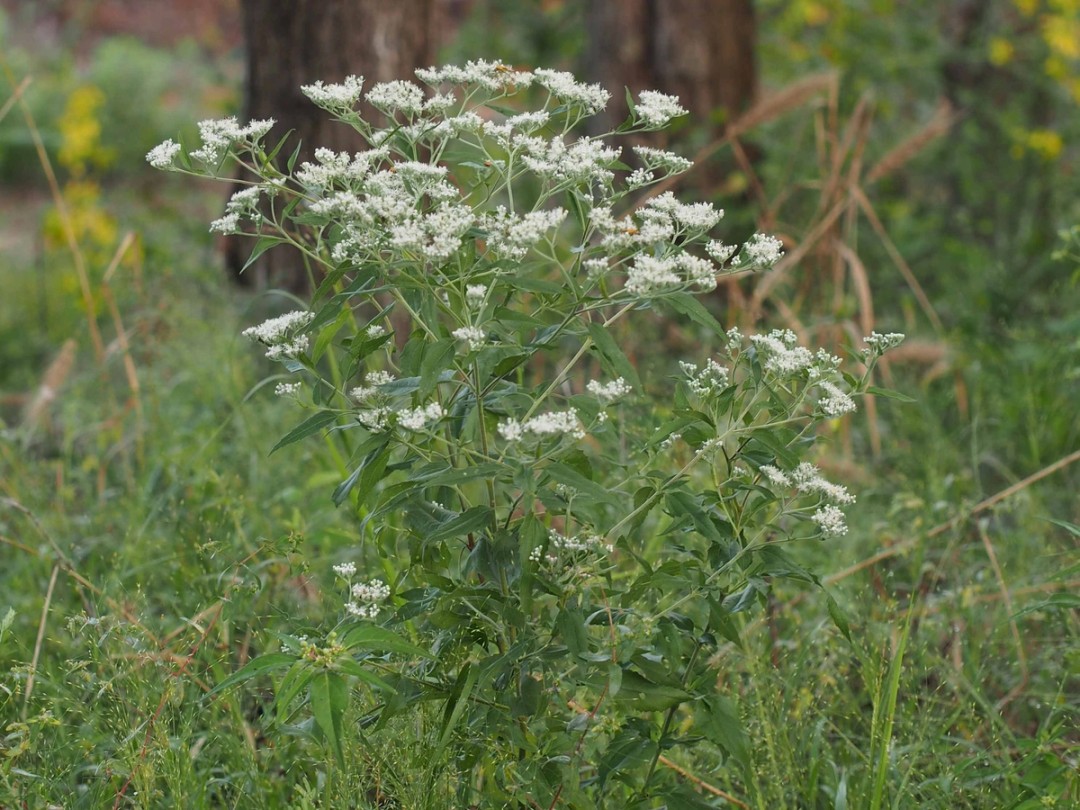
Late boneset flowers occur at the top of the plant, forming a somewhat domed, flat-topped bouquet of numerous bright white flowers. Each flowerhead is composed of approximately 12 disk florets. A white, divided style can be seen arising from each floret. In full bloom, this plant is a lovely sight, with its flowers blooming for several weeks. The showy blooms are well worth cultivating in a native plant garden.
White flowers atop plant 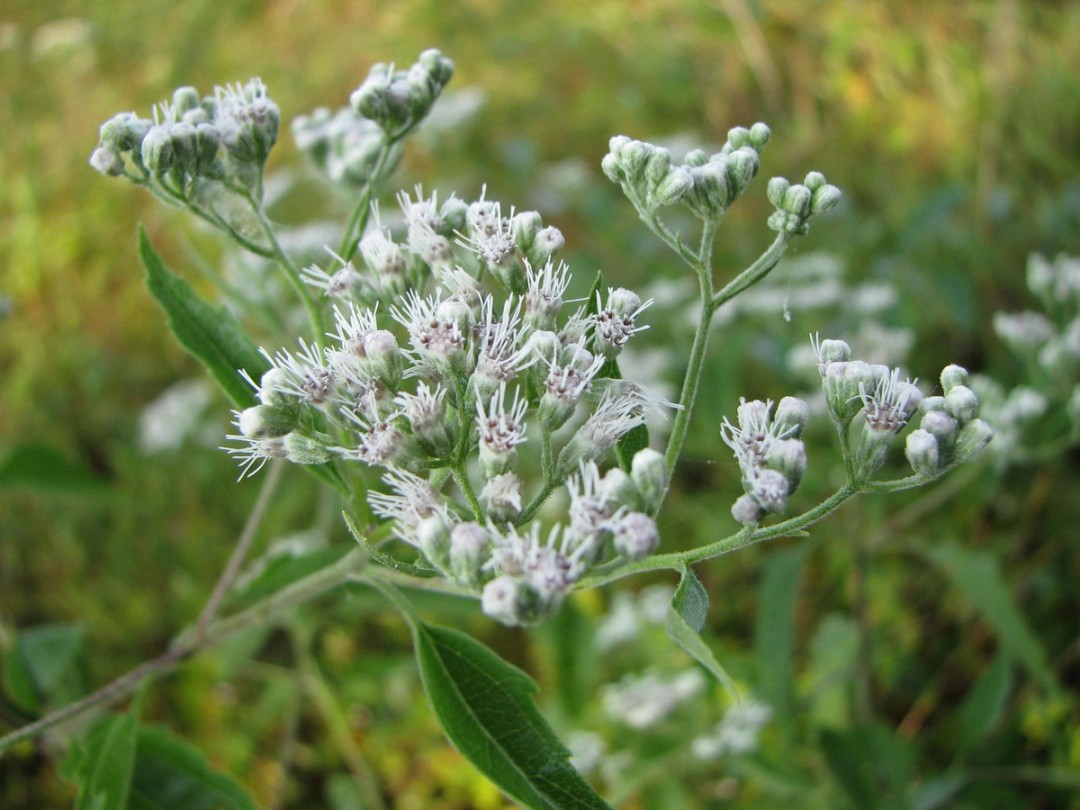
Buds and flowers
DESCRIPTION
Eupatorium serotinum is a perennial plant typically growing between 3 and 6 feet tall. It usually has a single main branch with occasional side stems near its top. The stems are pubescent, covered in white hairs. The opposite leaves have five veins and prominent serrations along their margins. They are quite large, measuring up to 7 inches in length and over 2 inches in width. These leaves typically dangle downward.
Eupatorium serotinum spreads through seeds and small underground rhizomes, often forming colonies. After flowering, small achenes develop and are dispersed by wind. Interestingly, deer and livestock generally avoid these plants.
Eupatorium serotinum plant 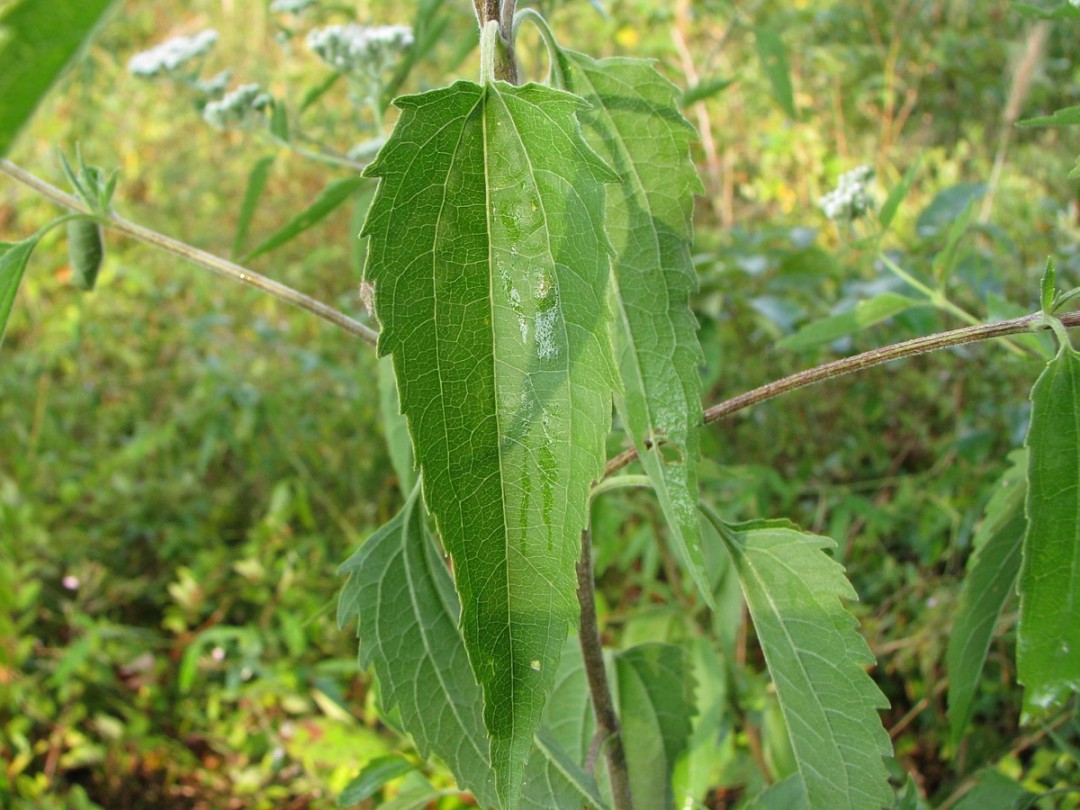
Serrated leaf 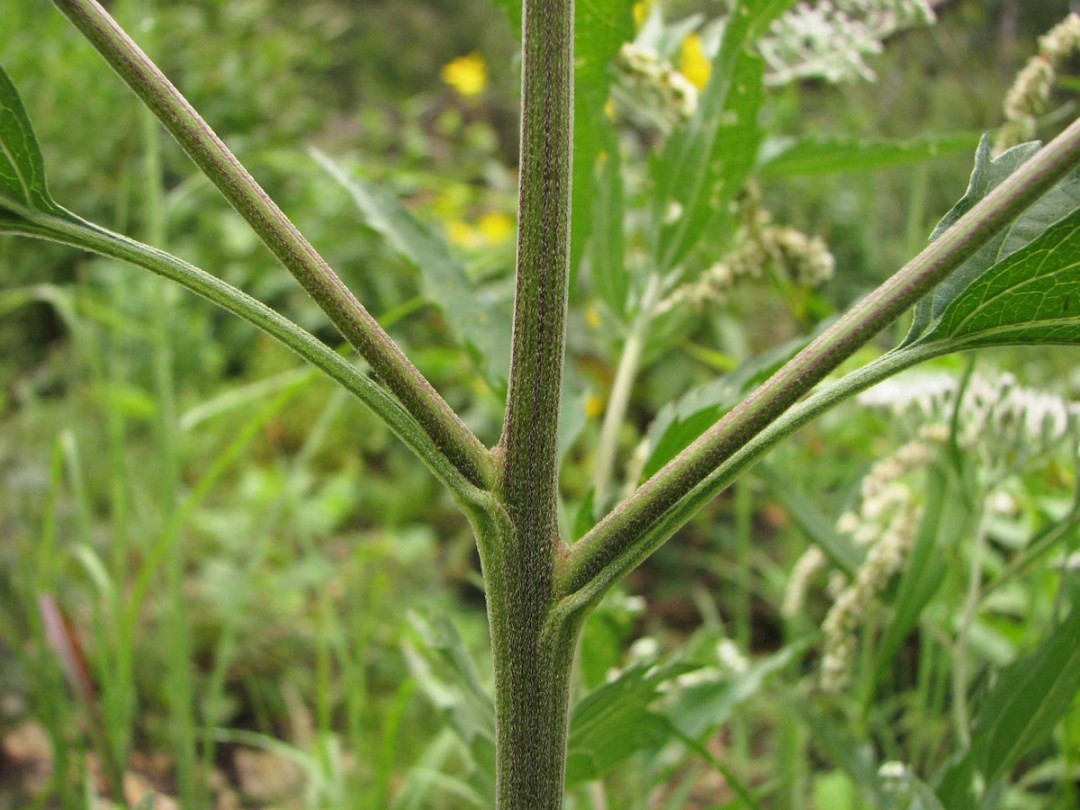
Pubescent stem 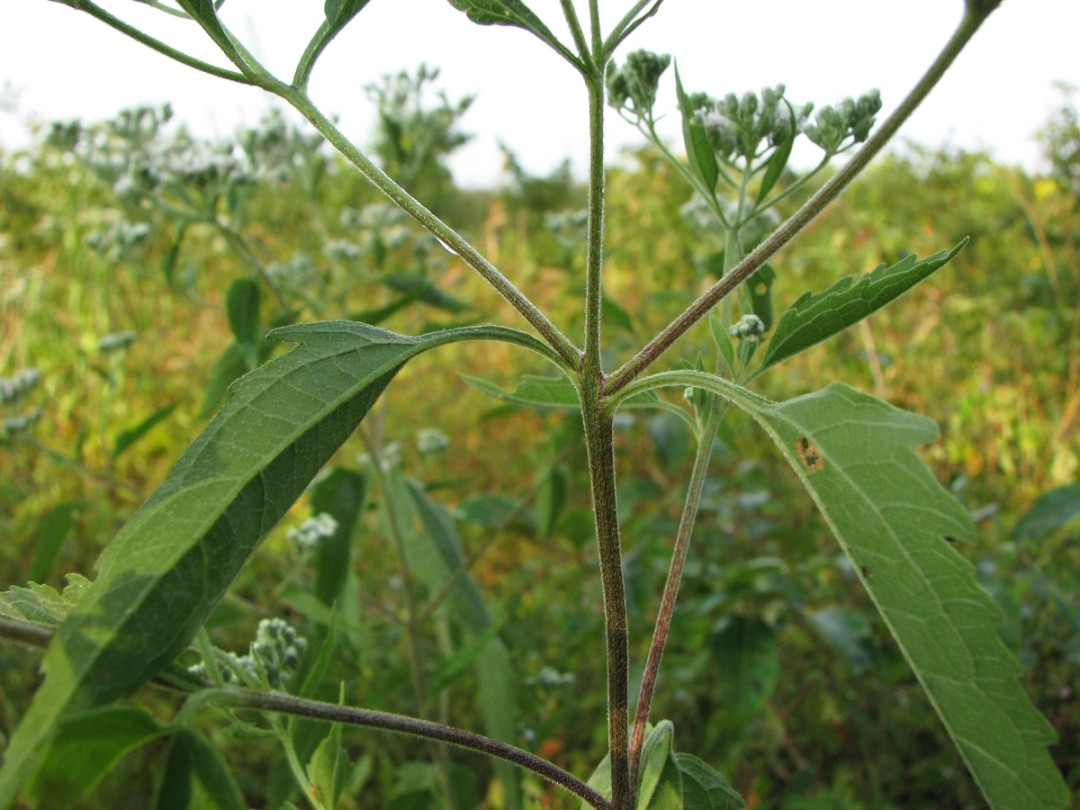
Stem and leaves
POLLINATORS
Late-blooming plants provide a rich source of nectar for a wide variety of insects, including bees, wasps, flies, butterflies, skippers, moths, and beetles. The plants are buzzing with activity, making it an enjoyable afternoon spent observing all the insect activity.
Butterflies and Skippers
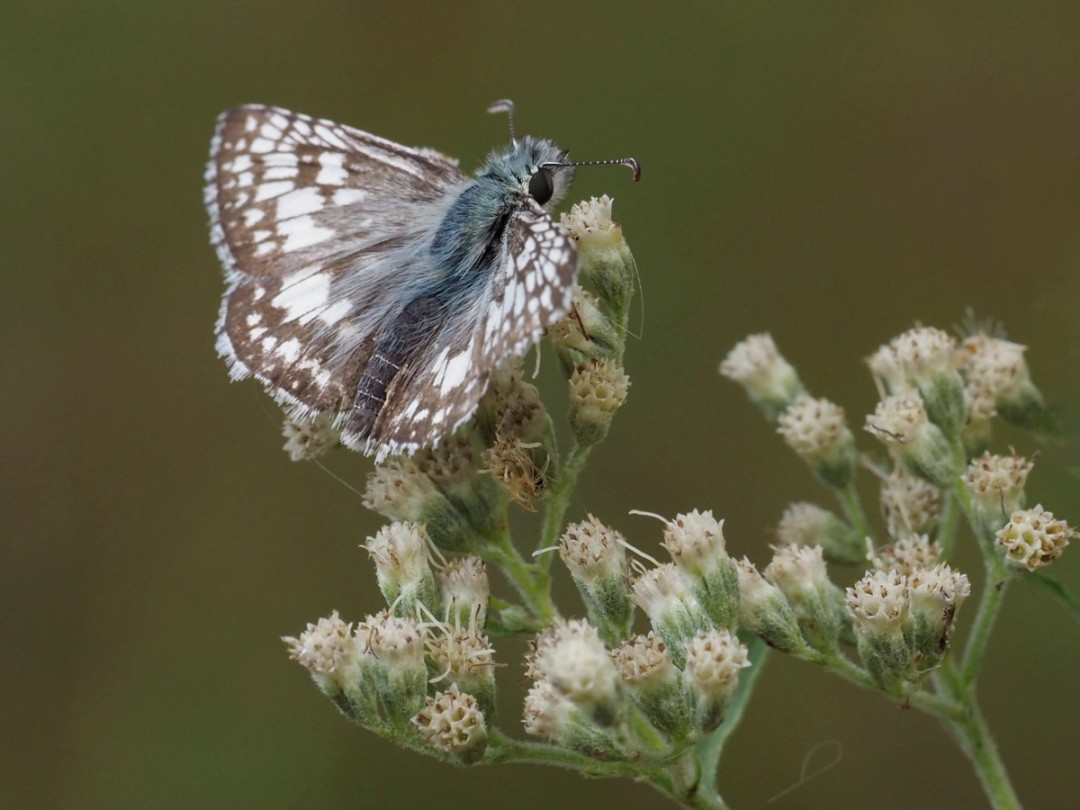
Common checkered skipper 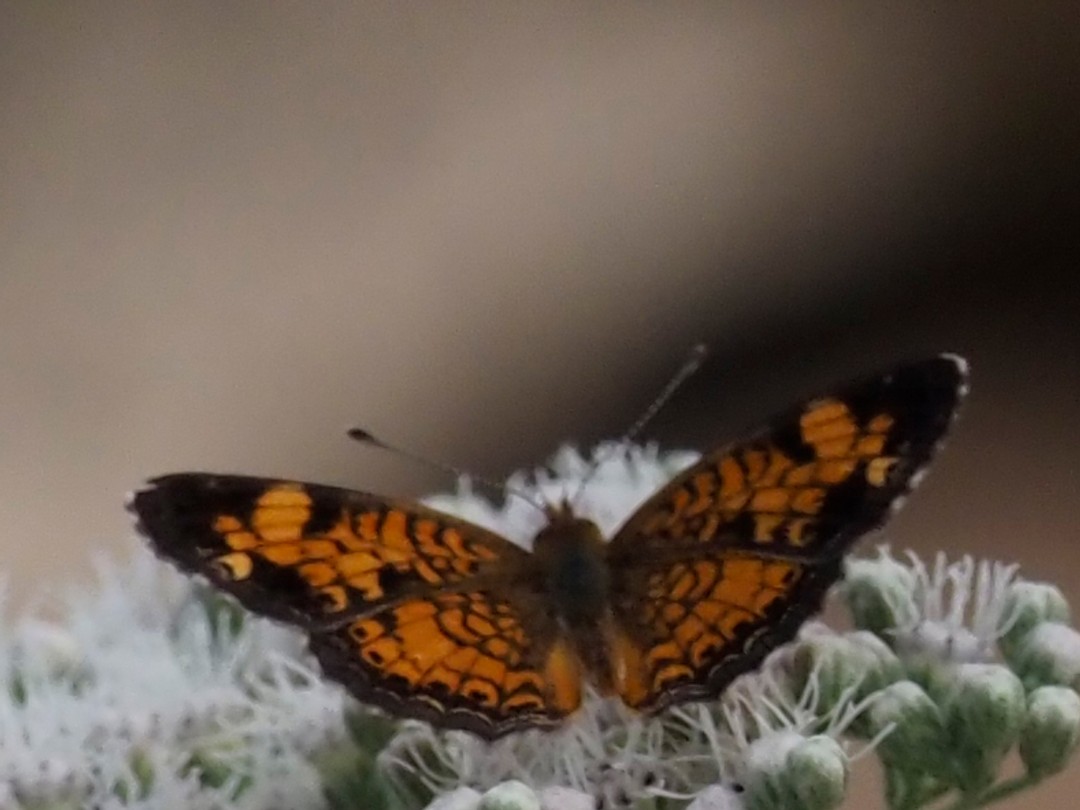
Pearl crescent 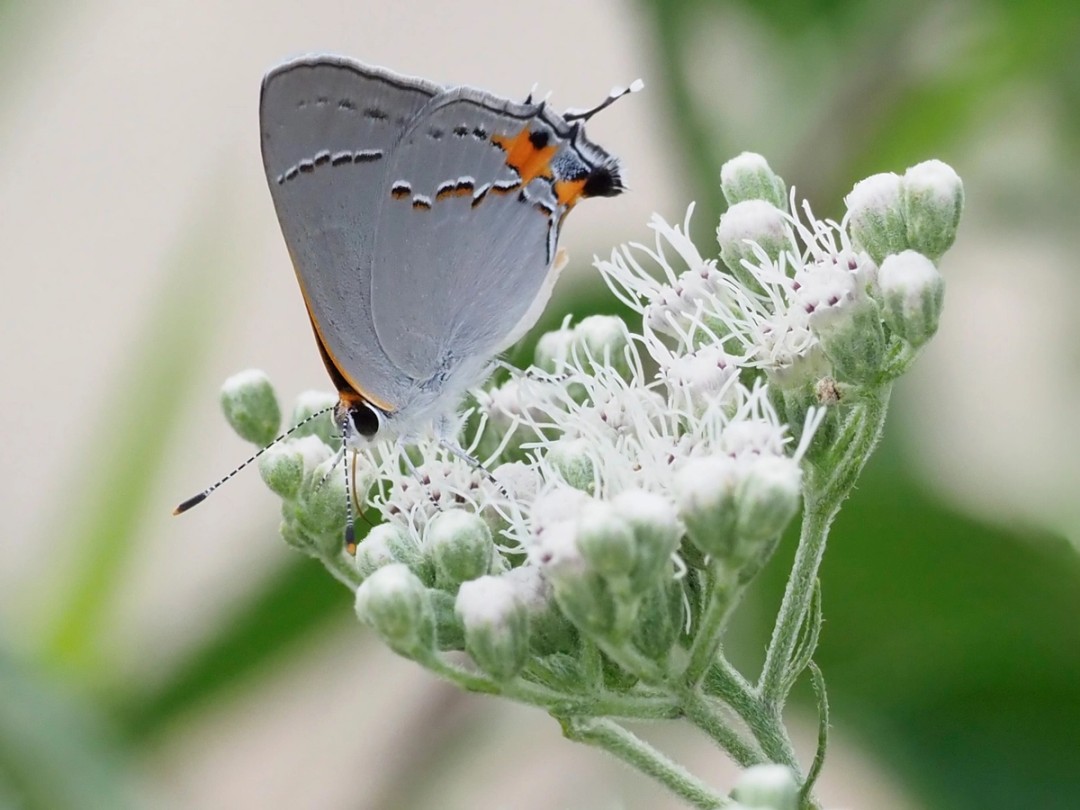
Gray hairstreak 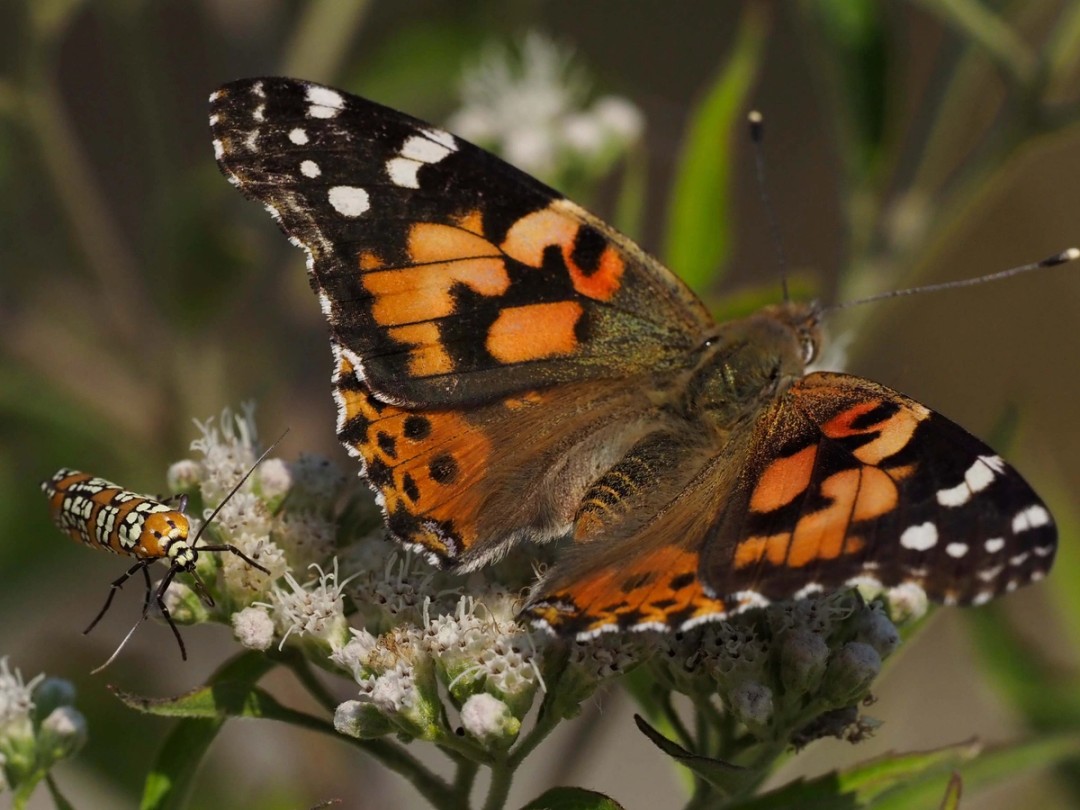
Painted Lady 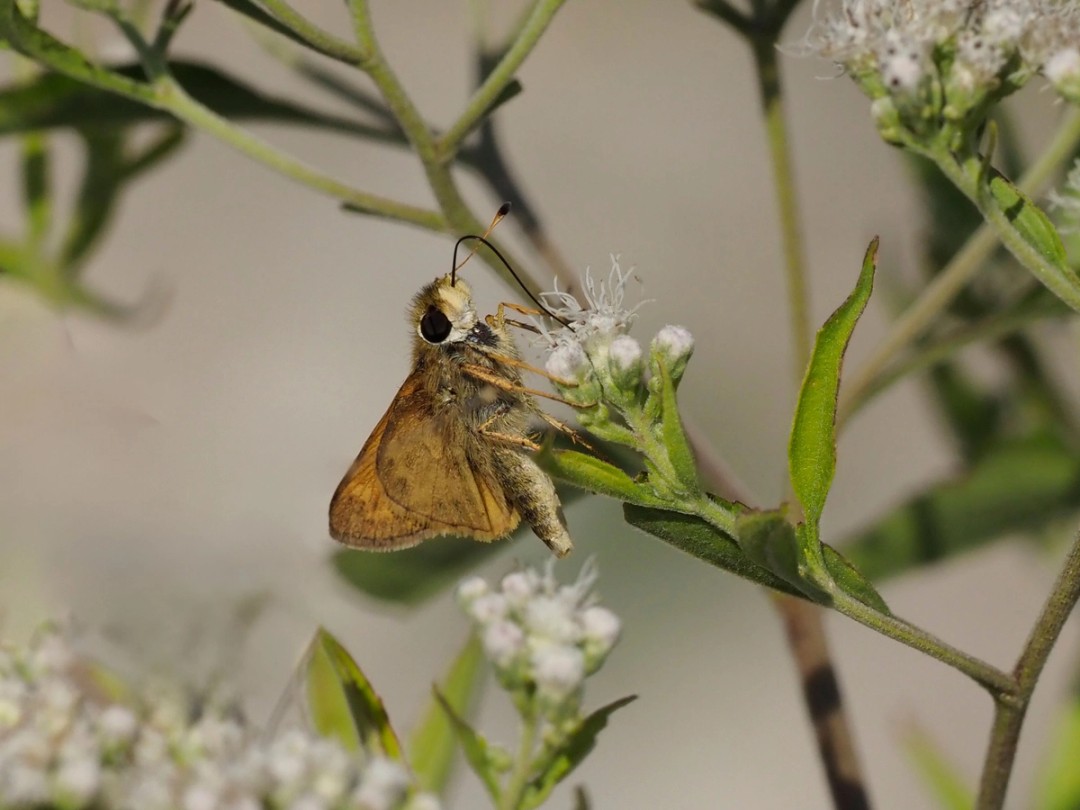
Sachem 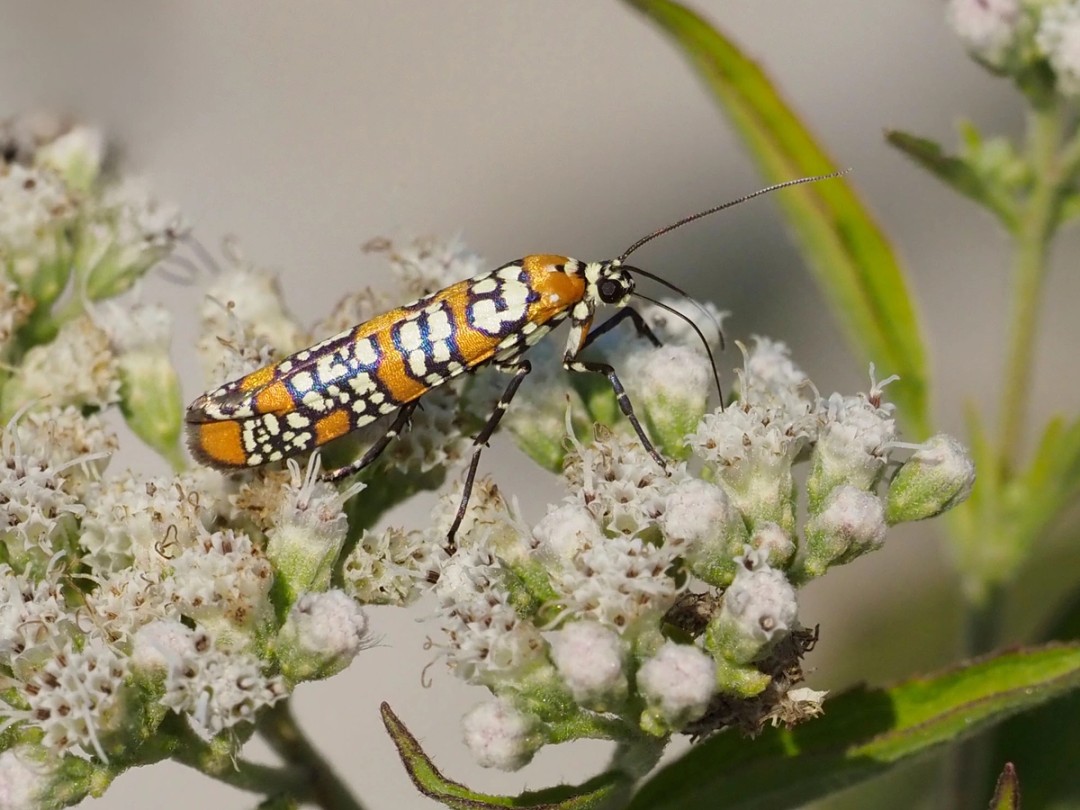
Ailanthus Webworm 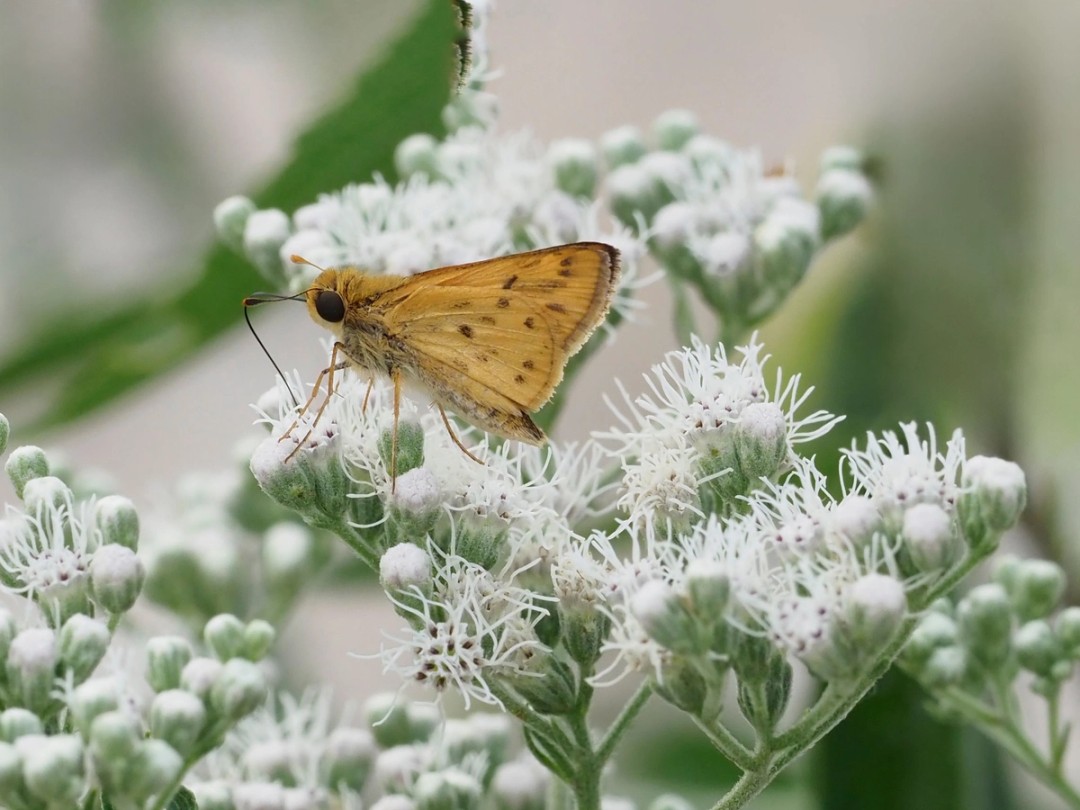
Fiery skipper 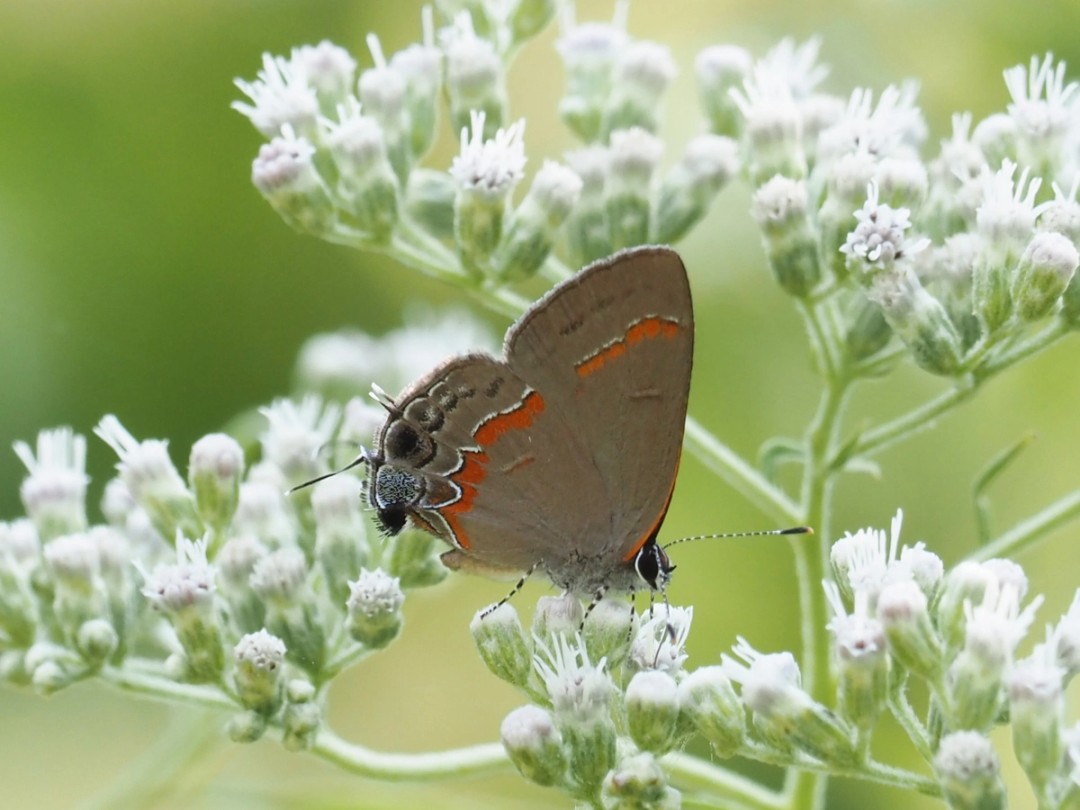
Red Banded Hairstreak
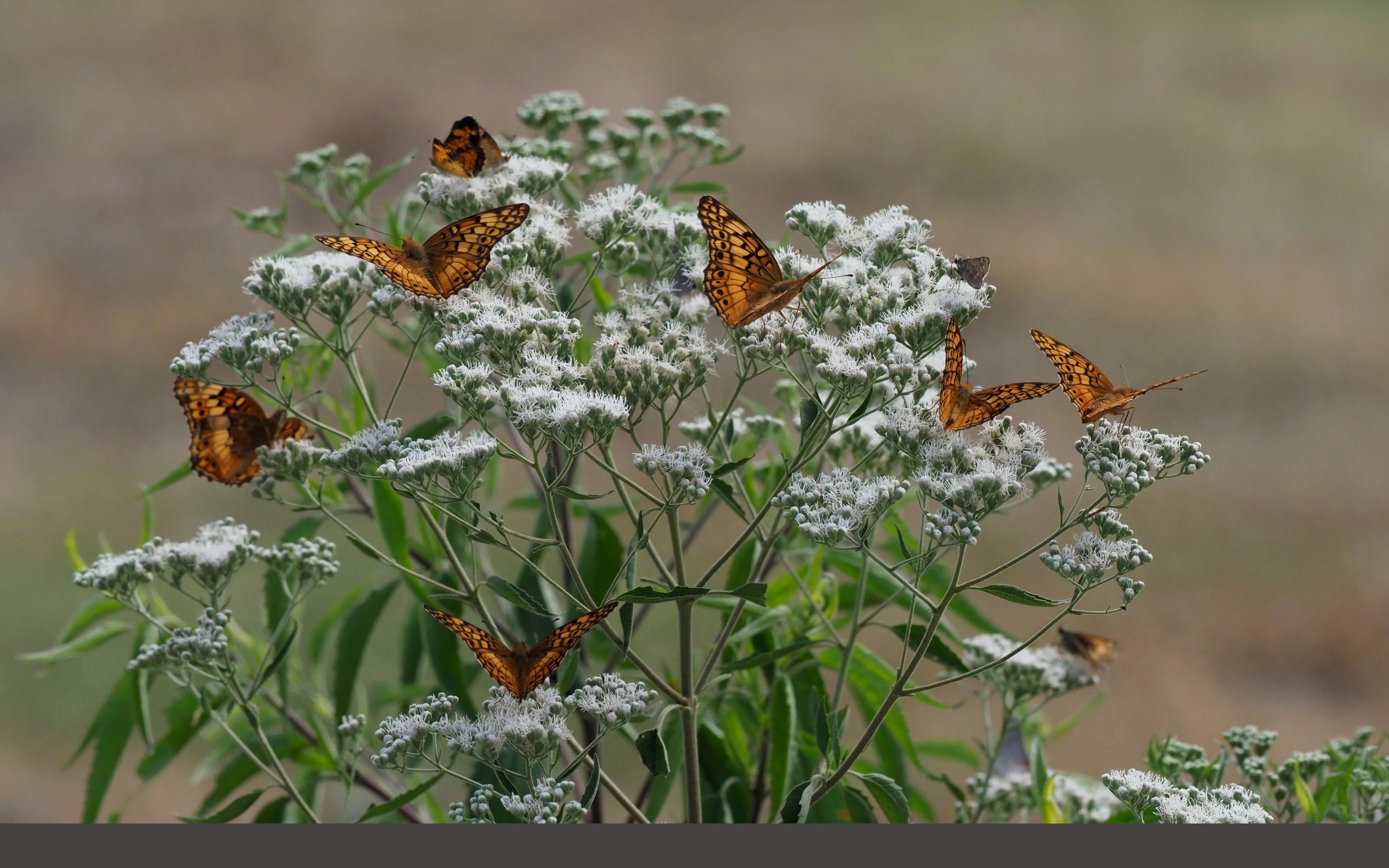
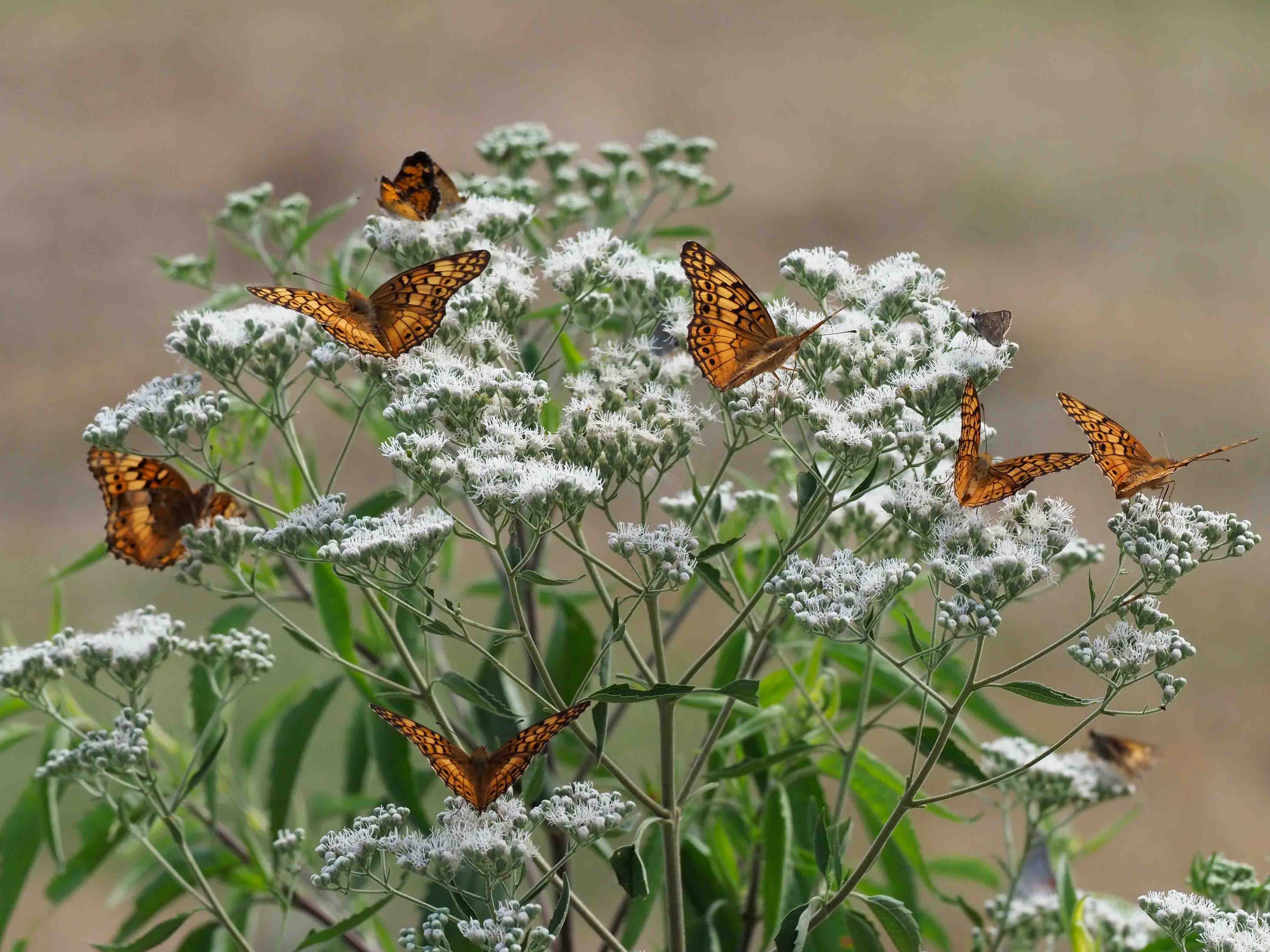
Variegated fritillaries are especially attracted to these flowers. Sometimes they appear in large colonies on a single plant. It’s fascinating to watch!
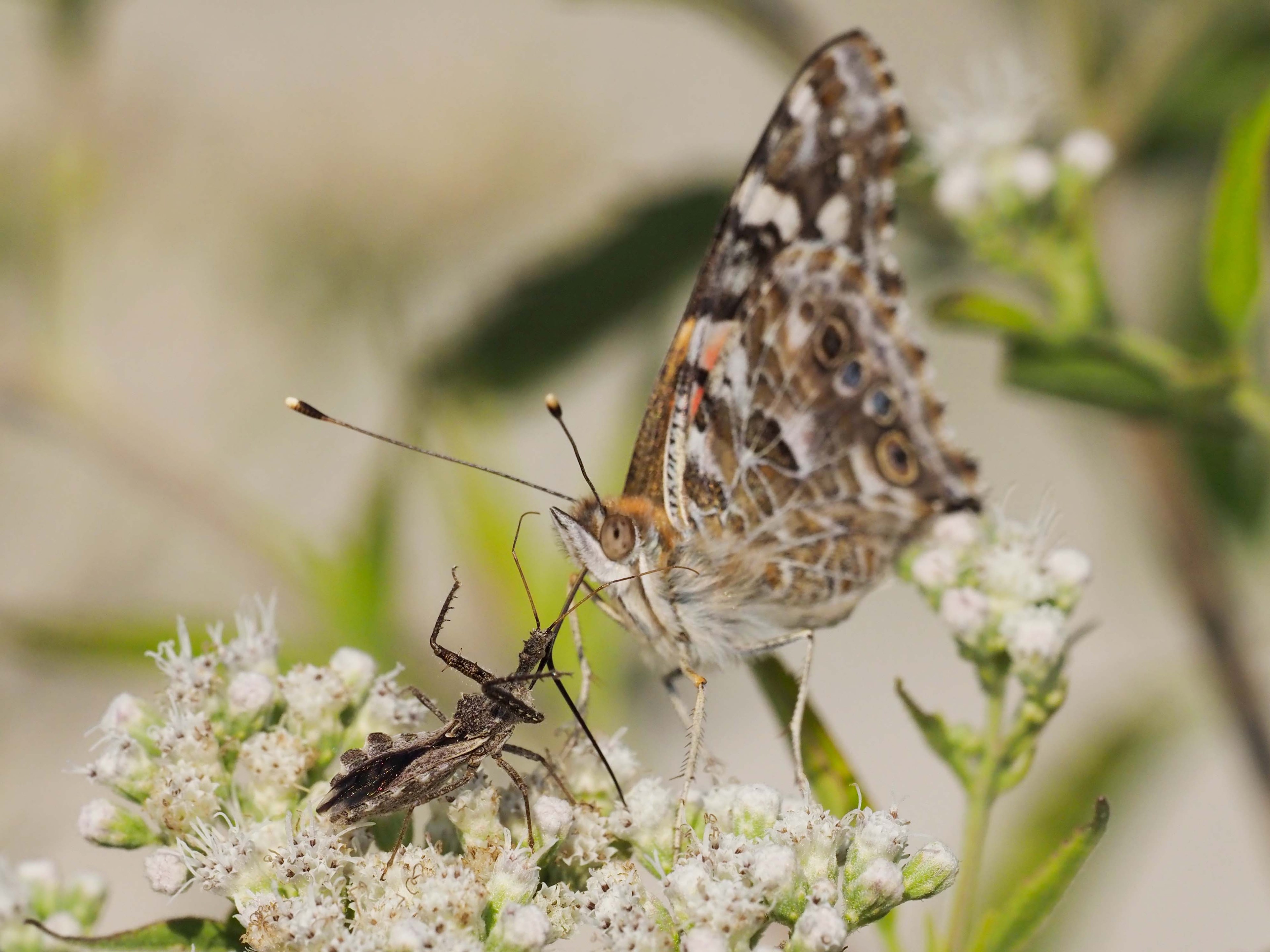
Sometimes interesting insect ‘battles’ can be observed. Check out this Assassin bug threatening a Painted Lady butterfly!
Wasps
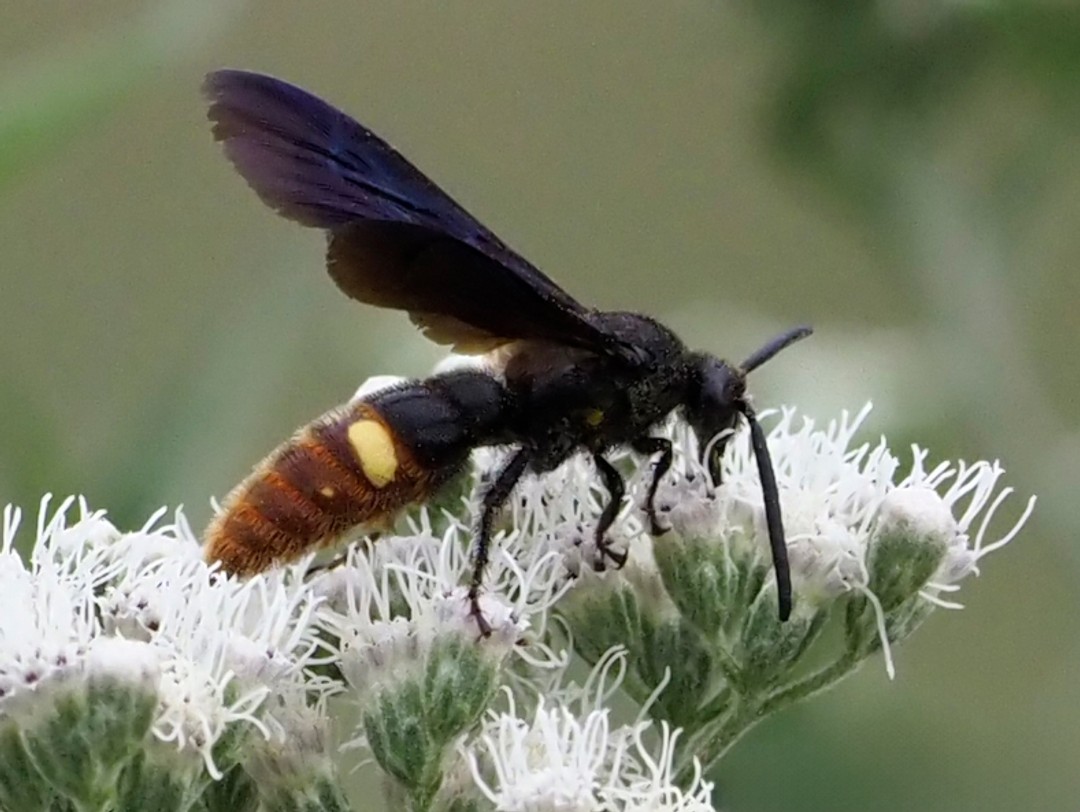
Scolia dubia 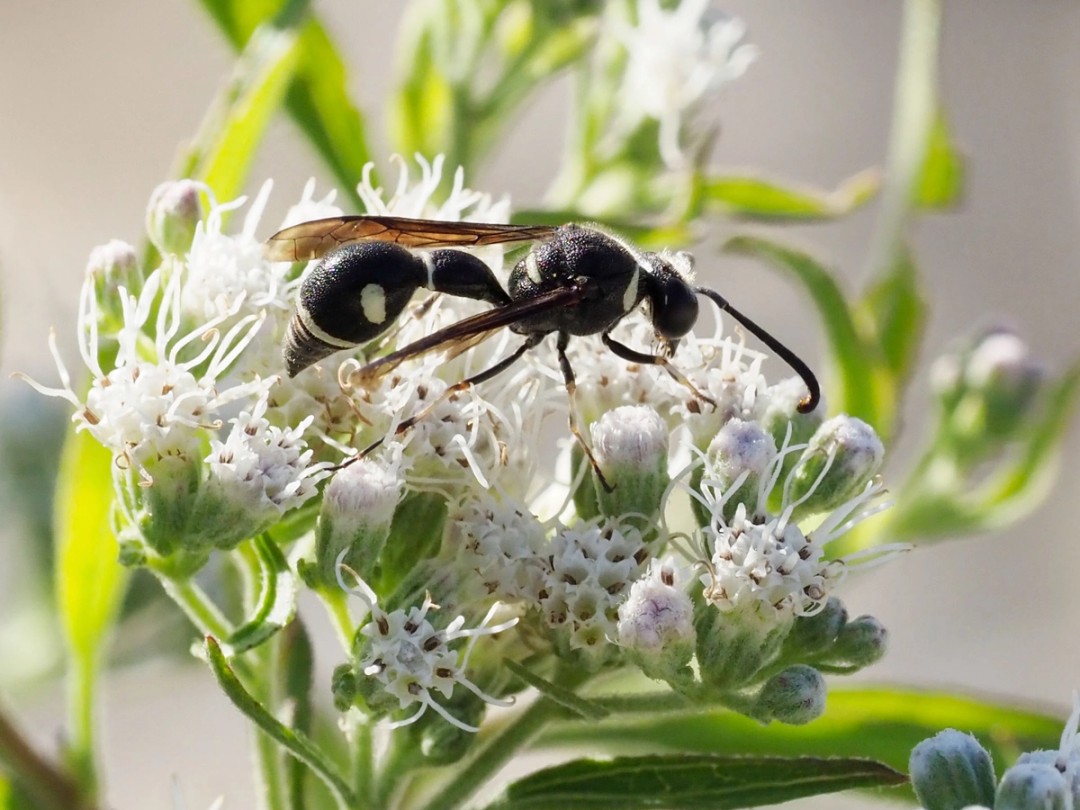
Fraternal potter
PLANTS GROWING NEARBY
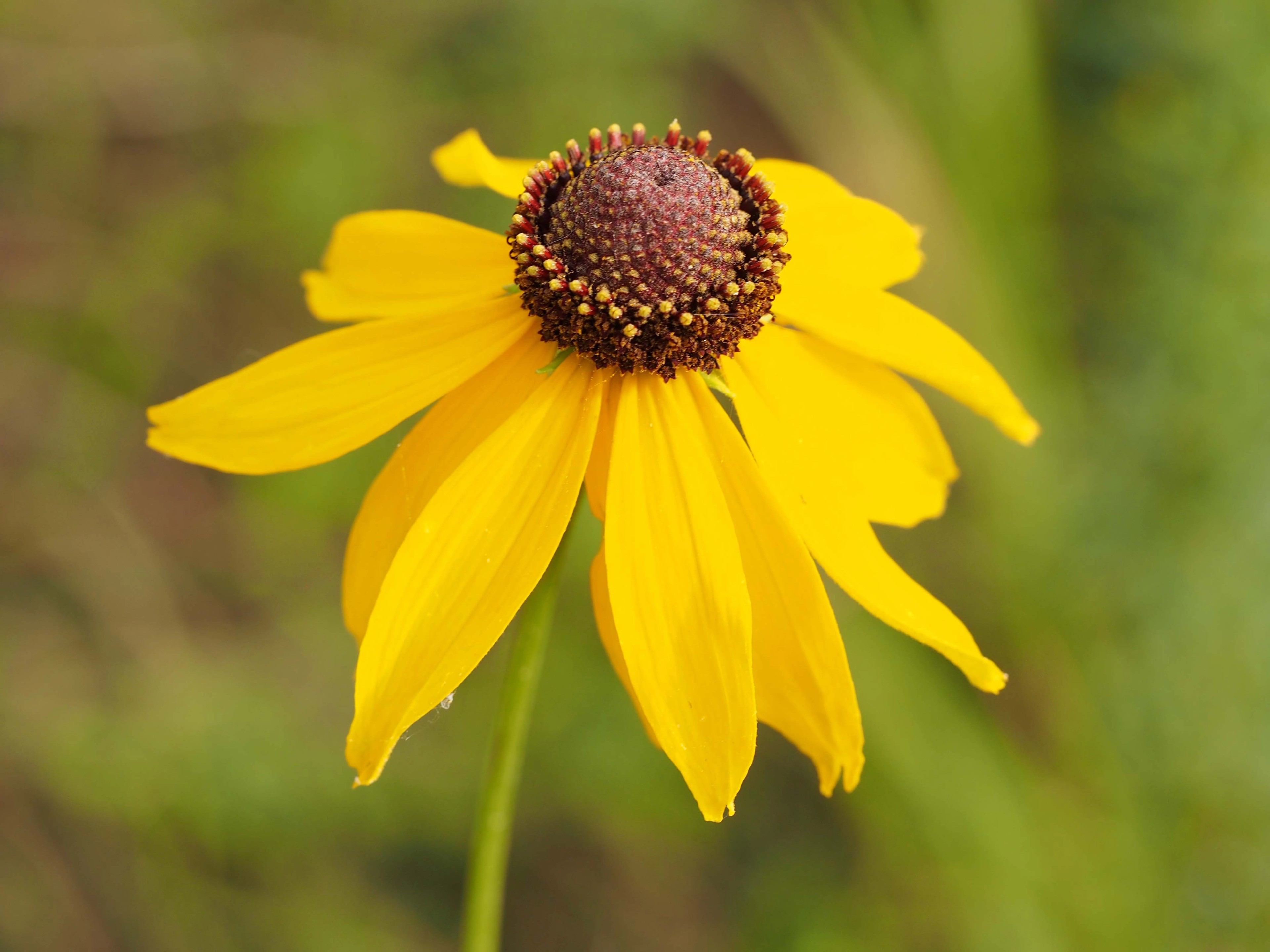
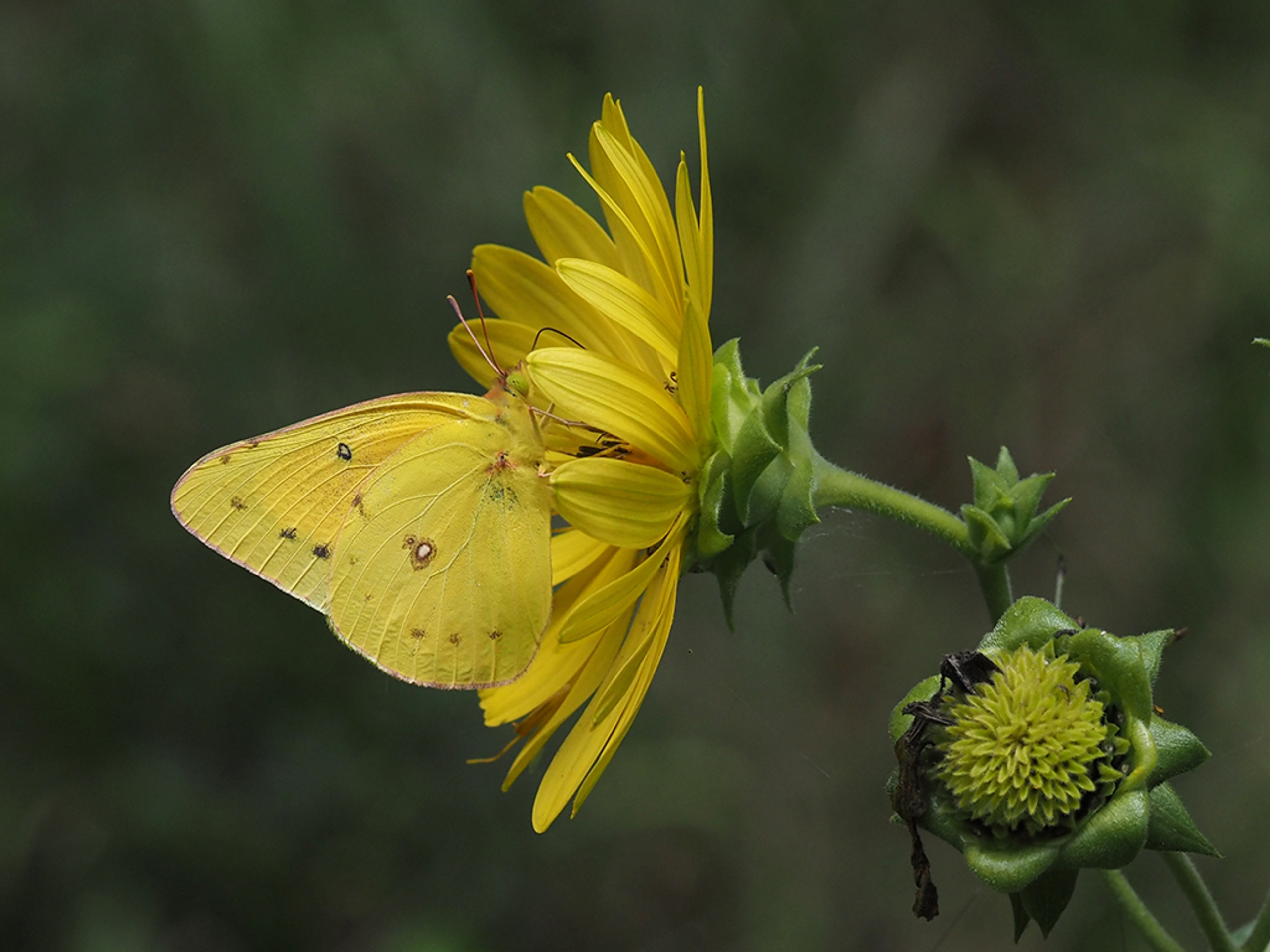
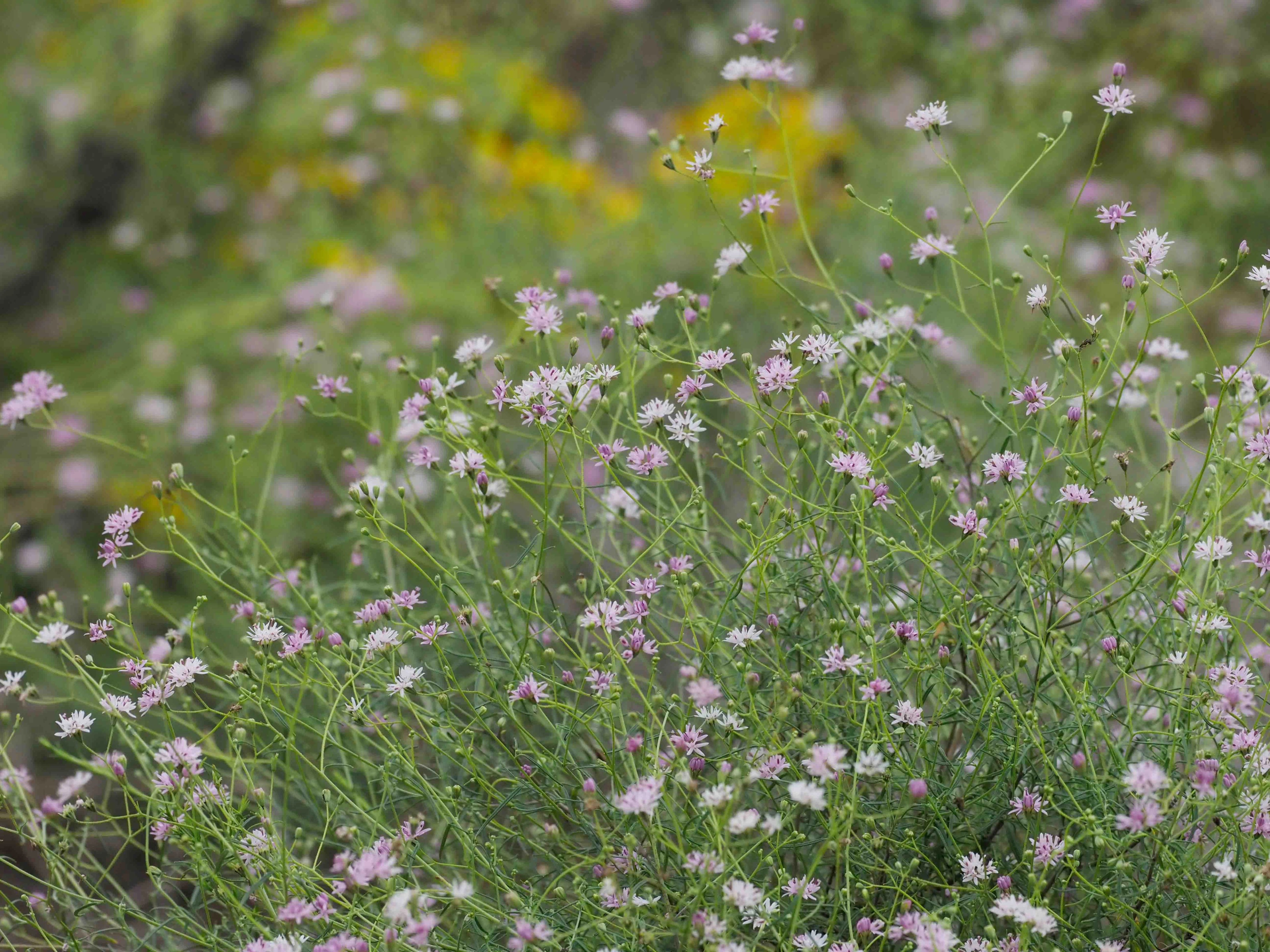
There are plenty of native plants to be found growing near Late boneset. One of the most beautiful combinations I’ve noticed is the bright pink flowers of Pale palafox (Palafoxia callosa) blooming simultaneously amidst Late boneset. Another nice combination I’ve observed is Black-eyed susan (Rudbeckia hirta) with Late boneset.
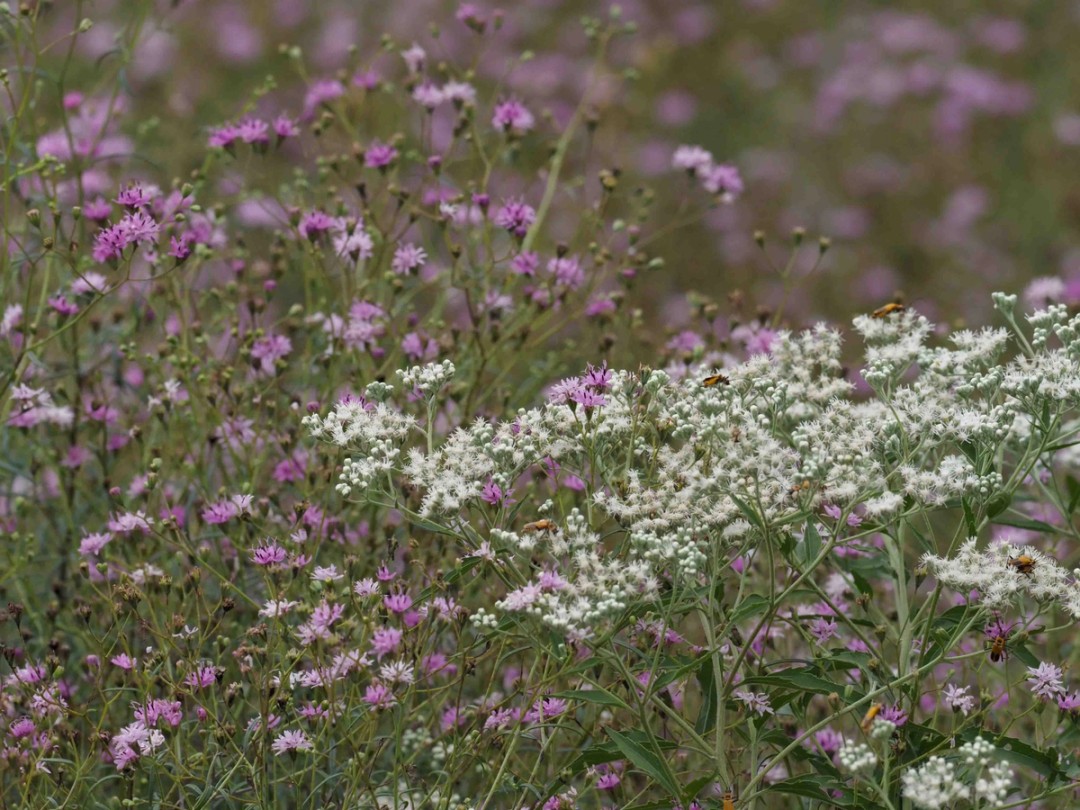
with Palafoxia callosa 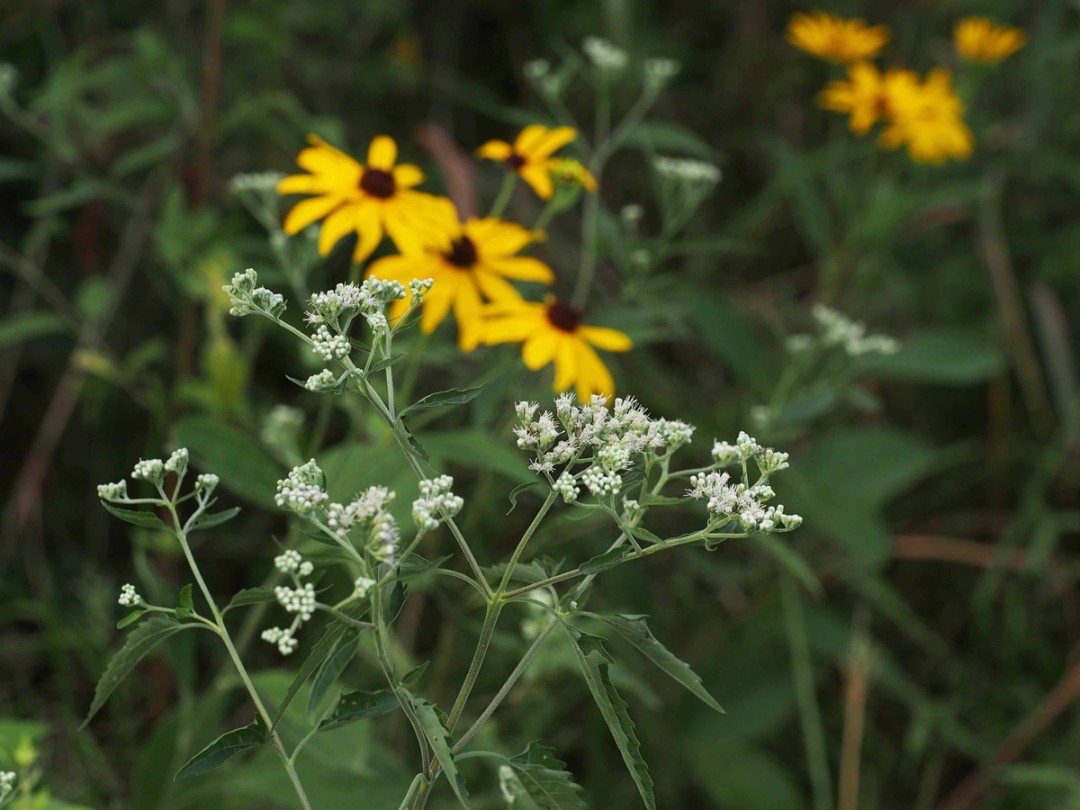
with Rudbeckia hirta
HABITAT
This flexible plant can be found in many varied habitats, especially disturbed areas, roadsides, old fields, and near railroads. In natural areas it's found in prairies, savannas, openings in woodlands, woodland edges, glade margins and around ponds, streambanks and pastures. Overall it prefers partial shade and somewhat moist environments.
Woodland edge 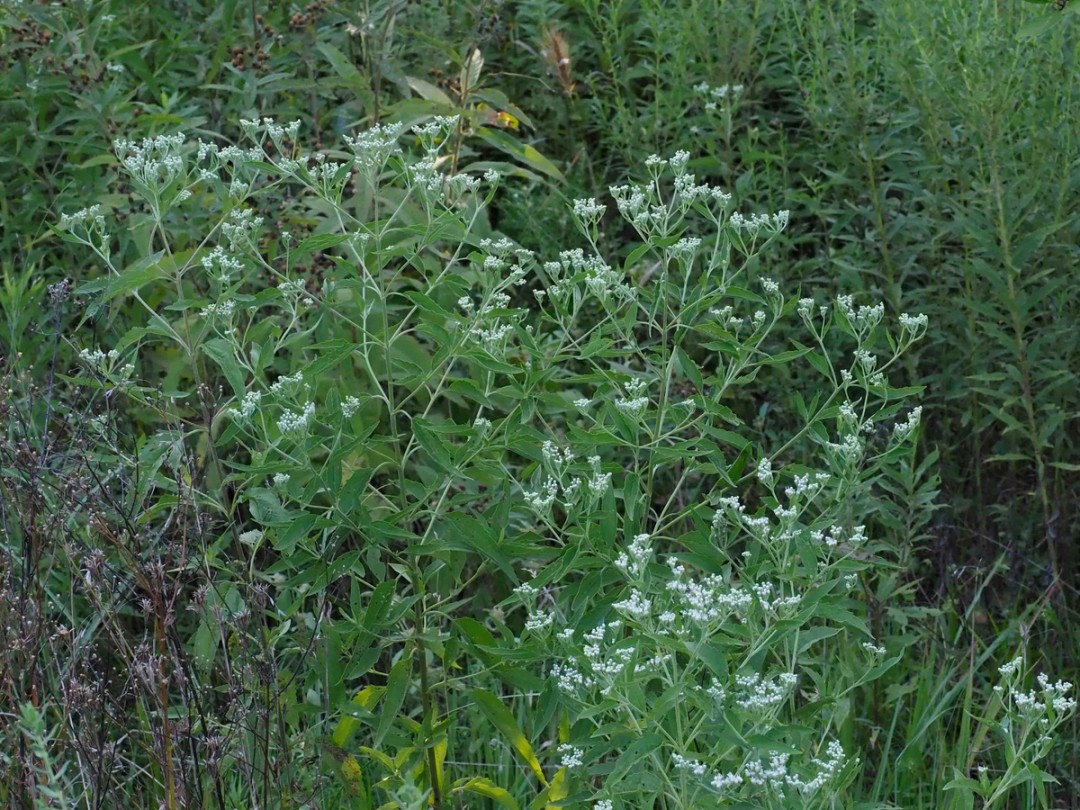
Grassland
CONSERVATION STATUS
Eupatorium serotinum is native to the eastern United States. It ranges from Nebraska in the west to New York in the north and Florida in the south. While Natureserve classifies it as G5, Secure, most states where it is native display No Status Rank.
It is listed as Vulnerable in Iowa and Apparently Secure in New York, Nebraska and Kansas. In Florida, Kentucky, New Jersey, North Carolina, South Carolina, Virginia and West Virginia it shown as Secure. In all other states where it is native, it is displayed as “No Status Rank”.
In Arkansas, Eupatorium serotinum has a Conservation status of 2, meaning ‘Native weedy and early successional taxa, displaying high opportunistic potential for occupancy of destabilized sites. These taxa are typically well adapted to highly degraded areas of the contemporary environment or to lands that have been heavily altered in the past.’
INTERESTING TIDBITS
There are several plants with the common name of Boneset, which can be quite confusing. Late boneset (Eupatorium serotinum), Common boneset (Eupatorium perfoliatum) and Roundleaf boneset (Eupatorium rotundifolium). While they all have white flowers, they are easily differentiated by plant height, leaves and time of flowering. Take a look at the chart below.
- Late boneset (Eupatorium serotinum)
- Leaves- Opposite, Distinct petioles, Lance-shaped, Coarse teeth, 3-5 Palmate veins
- Height- 4-6 ft
- Habitat- Moist to wet, handles some dryness
- Tall boneset (Eupatorium altissimum)
- Leaves- Opposite, Sessile (or very short stalks), oval shape, toothed margins, 3 distinct veins, teeth on upper half of leaf, leaves narrower and hairier than Late boneset
- Height- 3-6 ft
- Habitat- Dry habitats, Old fields, Roadsides, Higher PH soil
- Common boneset (Eupatorium perfoliatum)
- Leaves- Opposite, Connate-perfoliate (opposite leaves fused together across main stem)
- Height- 3-4 ft (occasionally taller)
- Habitat- Very wet soils, wetland margins, bogs, seeps, marshes
- Roundleaf bonest (Eupatorium rotundifolium)
- Leaves- Opposite, Sessile
- Height- 2-3 ft (occasionally taller)
- Habitat- Sandy, well-drained, acidic soils