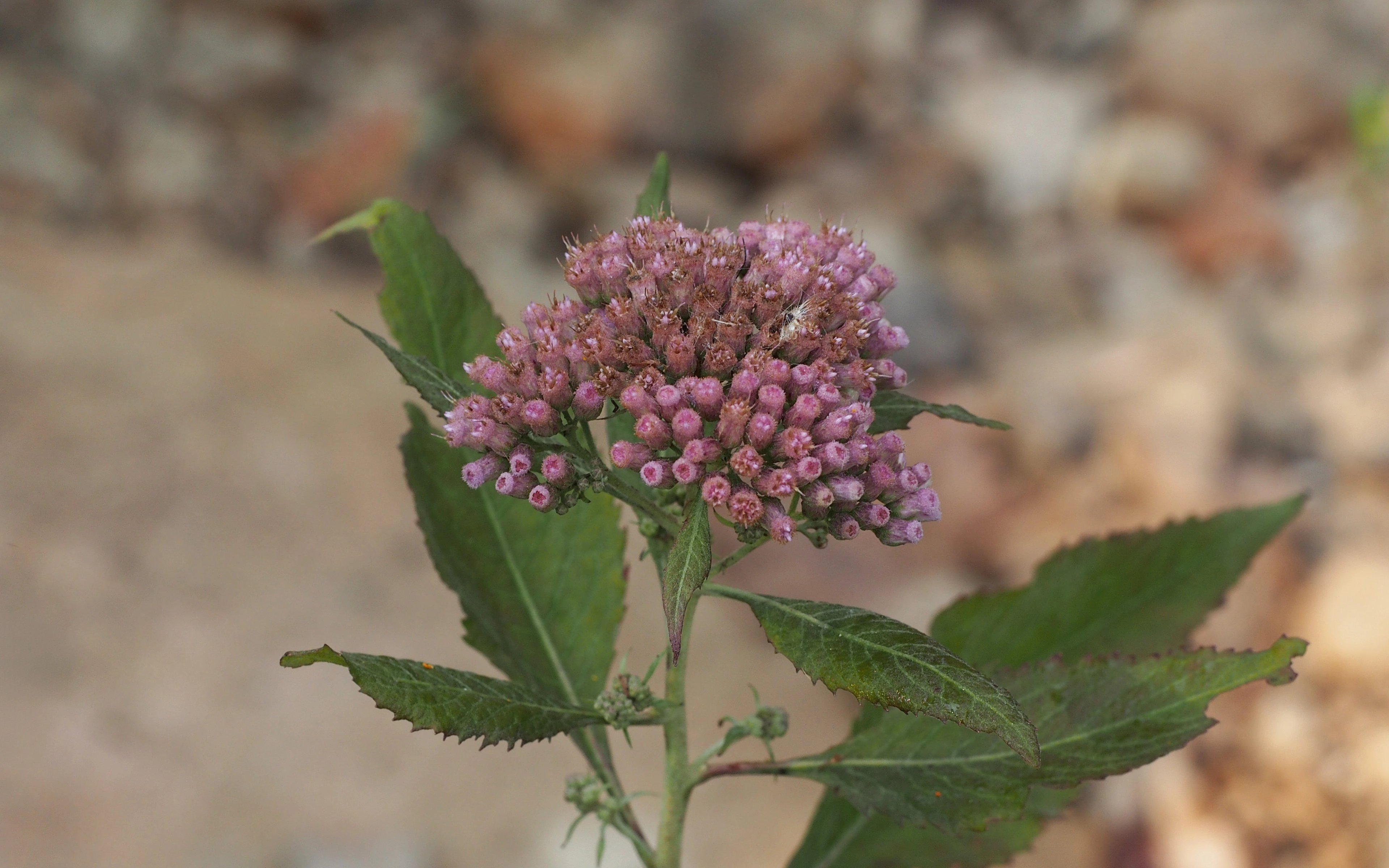
PLANT NAME
The genus Pluchea was named by French botanist Alexandre Henri Gabriel de Cassini in 1817. He selected the name to honor French priest, Noël-Antoine Pluche. Noël-Antoine Pluche published a masterpiece, multivolume natural history known as The Spectacle of Nature. This groundbreaking work was translated into numerous languages, inspiring countless readers to pursue careers in botany and nature during the 18th and 19th centuries.
The common name, Camphorweed, describes the interesting camphor aroma that emanates from its leaves.
BLOOM
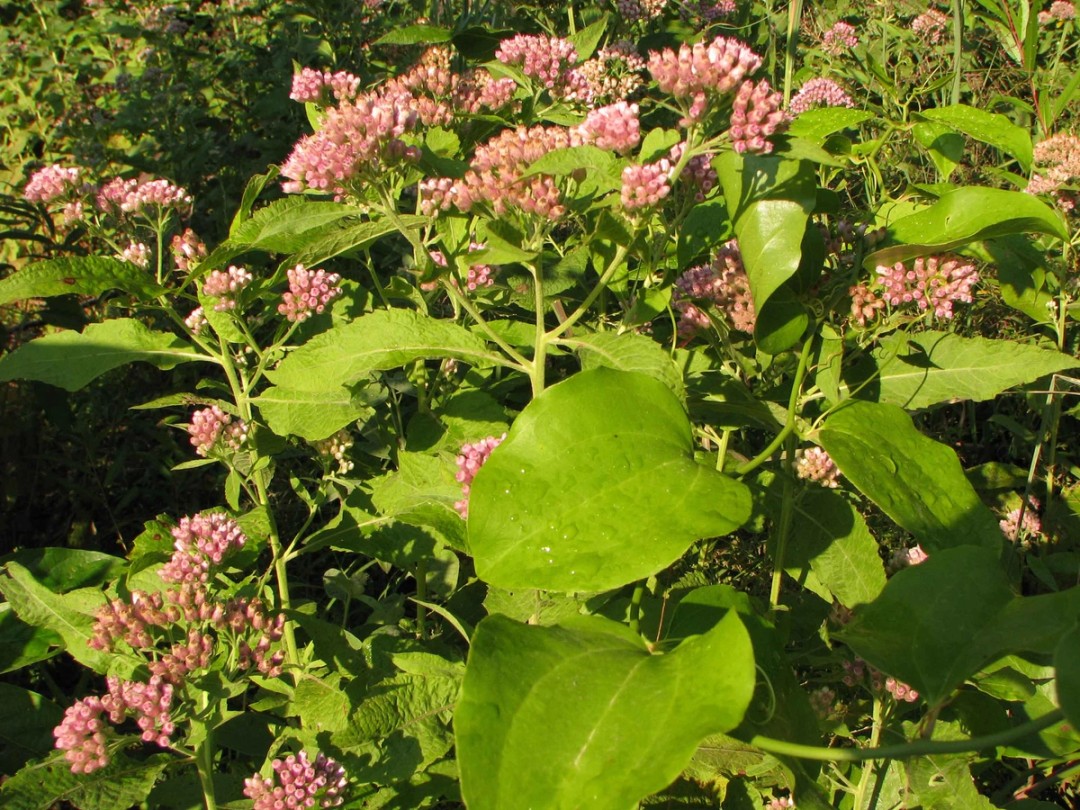
The flowers of Camphorweed are a beautiful mix of dusky to light pink and occasionally almost white. Unlike many plants in the aster family that bear petal-like ray florets (like the petals on a daisy), Camphorweed is a discoid flower, meaning it only has disk florets. Hence, it lacks the ray florets that form the typical ‘petals’ on many flowering plants.
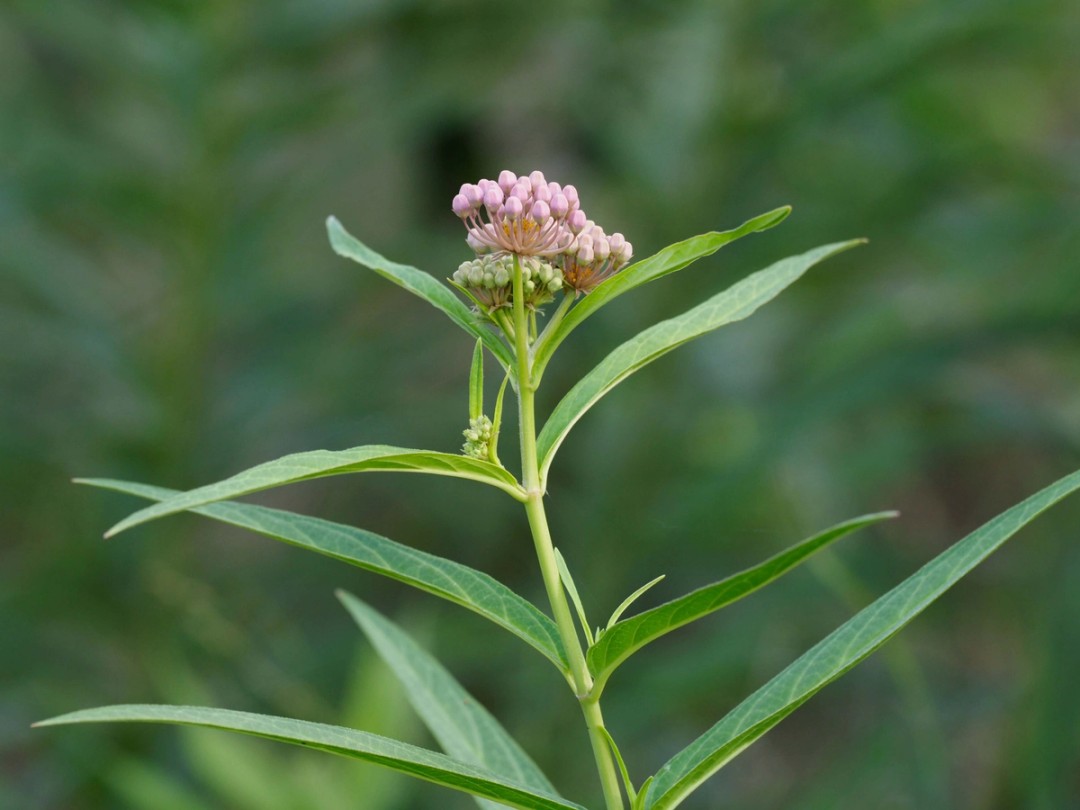
Early flower buds 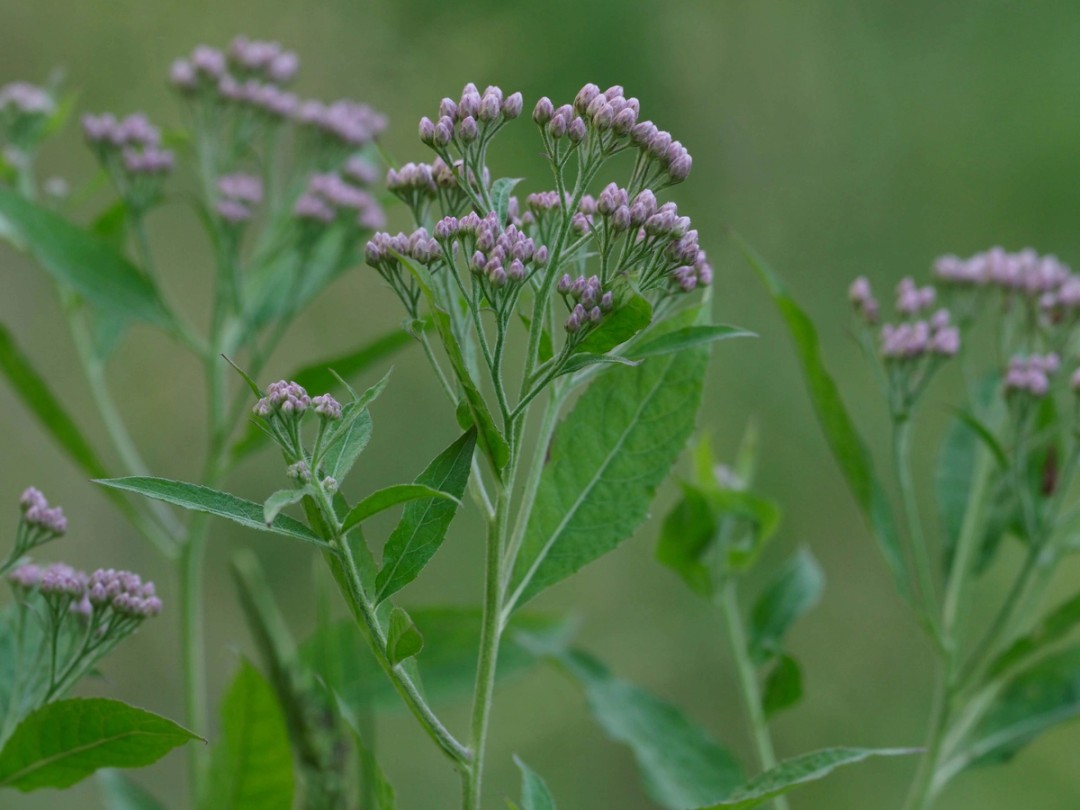
Developing flower buds 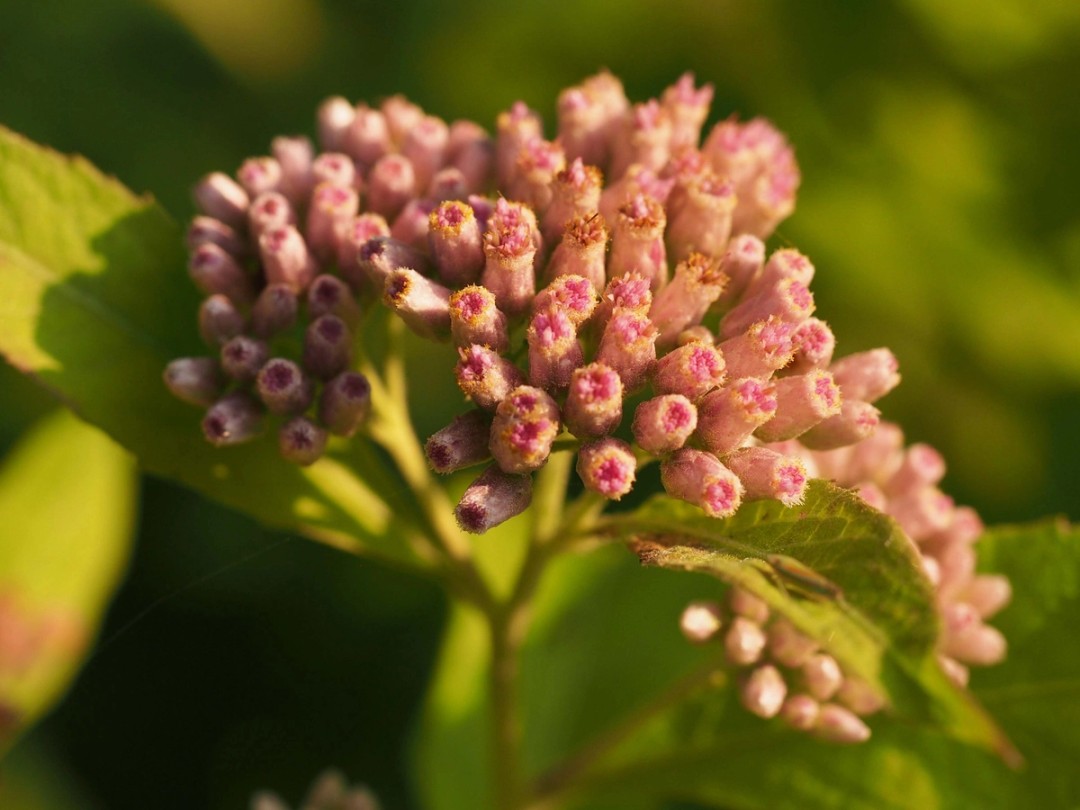
Disk flowers 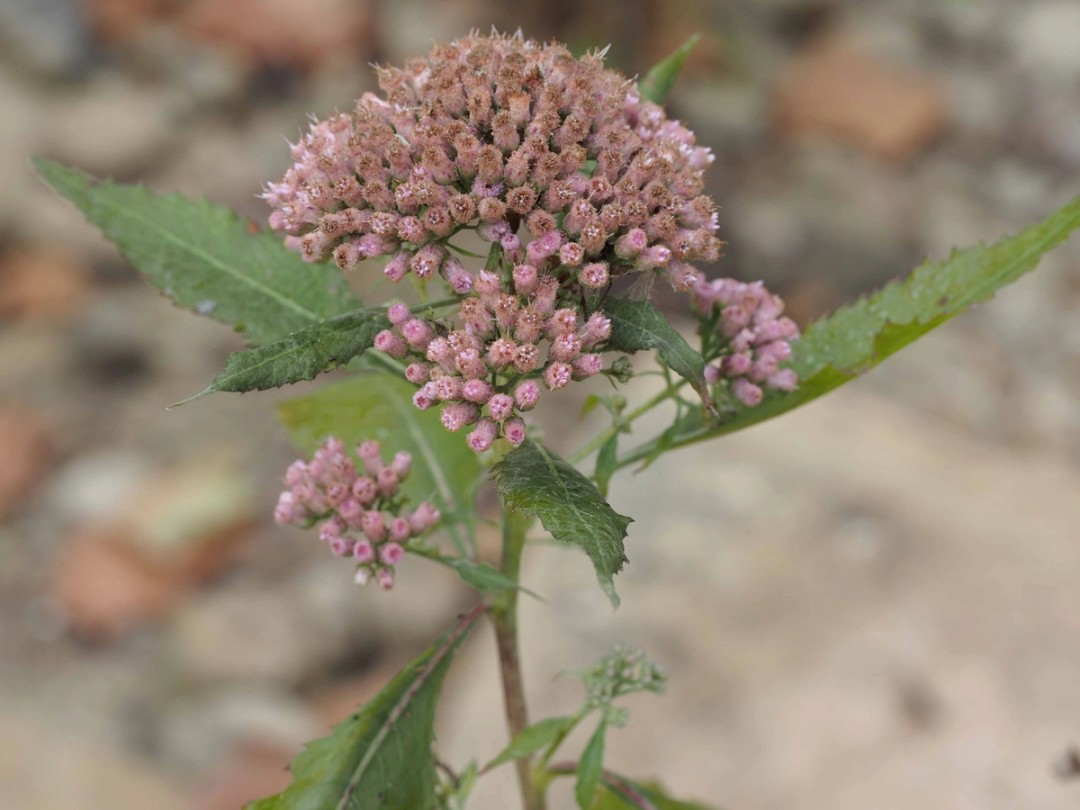
Disk flowers
DESCRIPTION
Pluchea camphorata is an annual or short-lived perennial native plant. Each year, new plants are established from seeds dropped by the previous year’s growth. The leaves are alternate with distinct petioles (leaf stalks), unlike those of the closely related Pluchea odorata, which have very short petioles or are sessile. Squeezing the foliage readily releases a strong camphor aroma produced by glandular secretions on the leaves. The upright stem is generally hairy, though it may become glabrous (smooth) near the base.
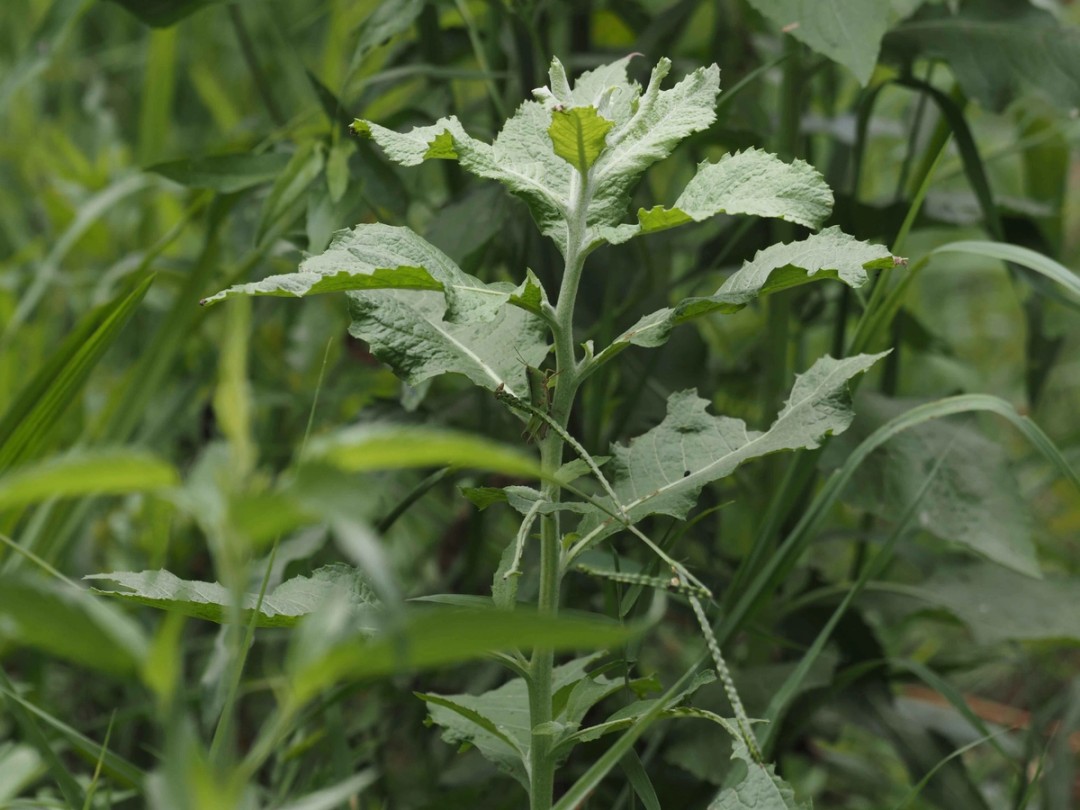
Young plant 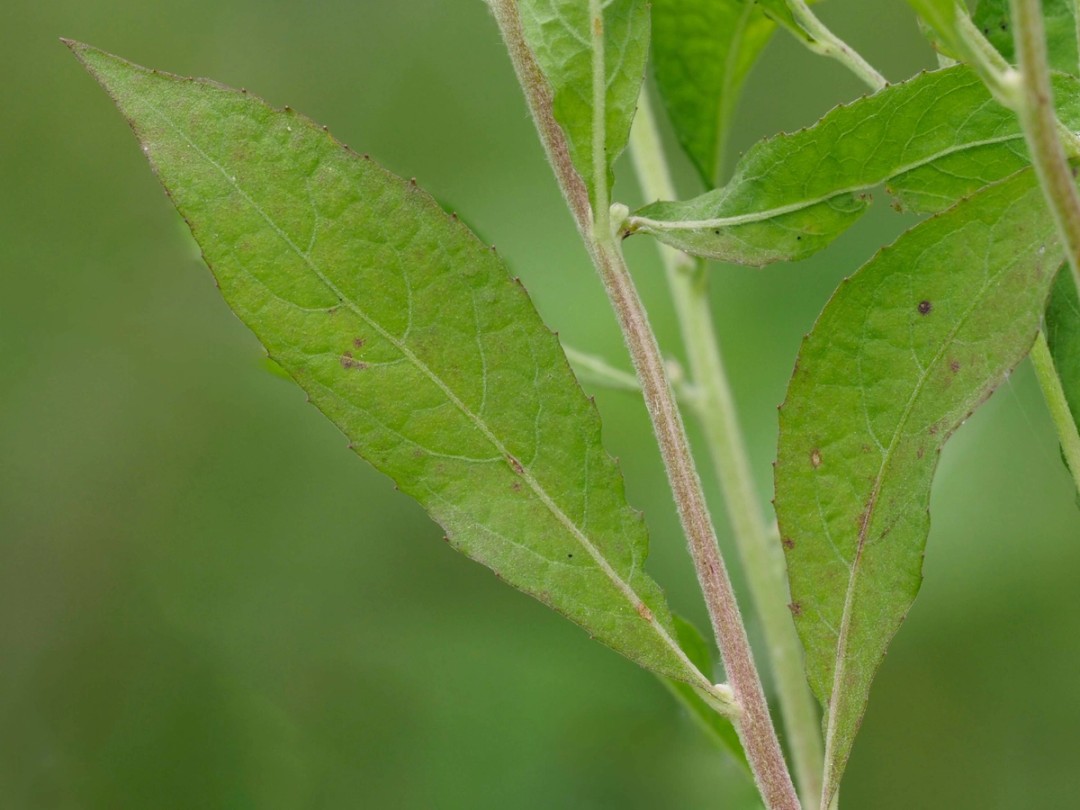
Leaf and stem 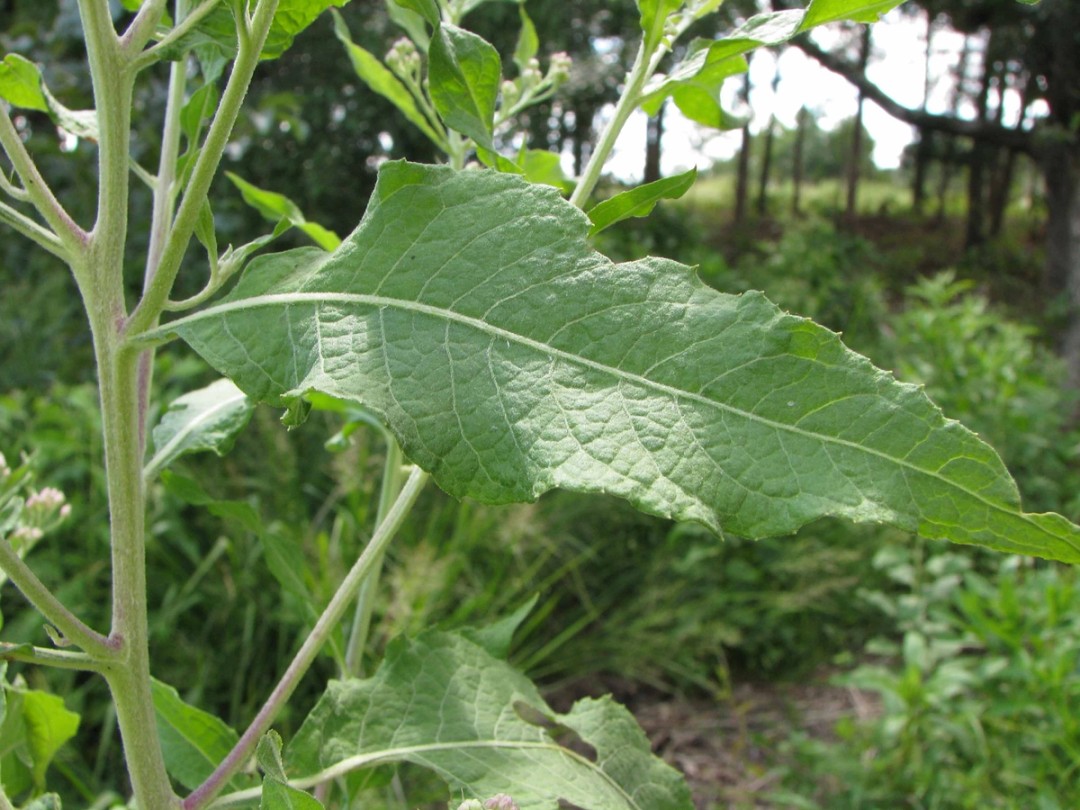
Hairy stem 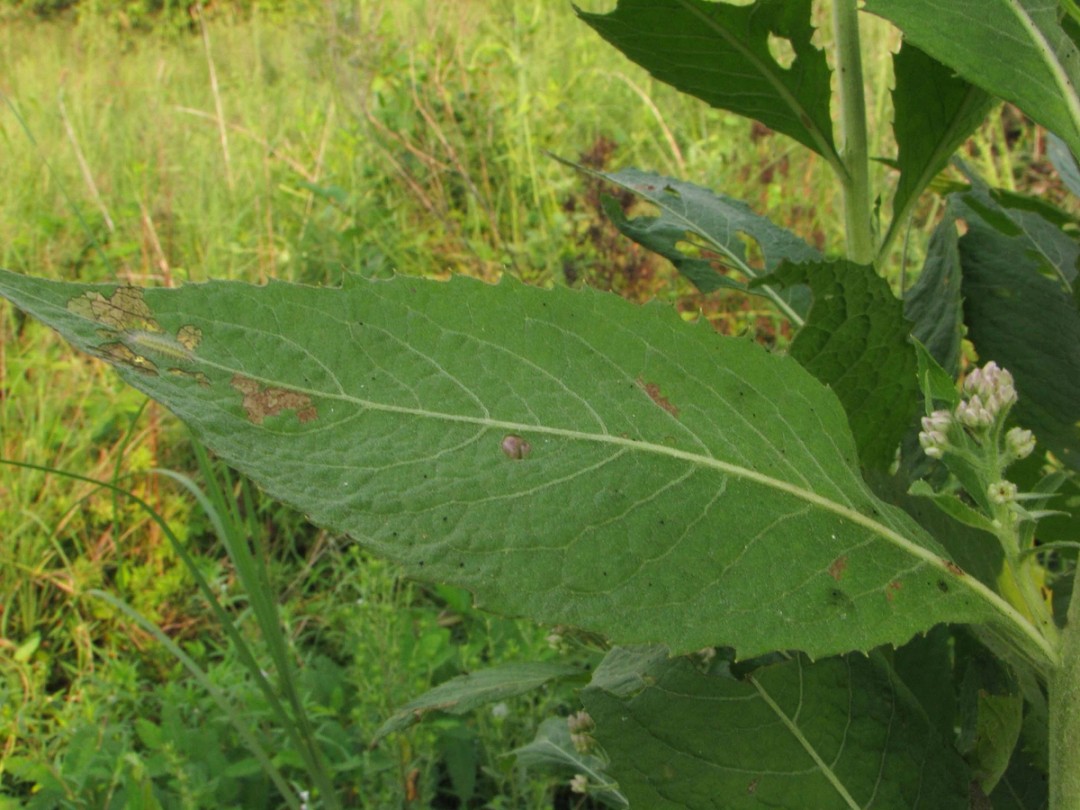
Serrated leaf 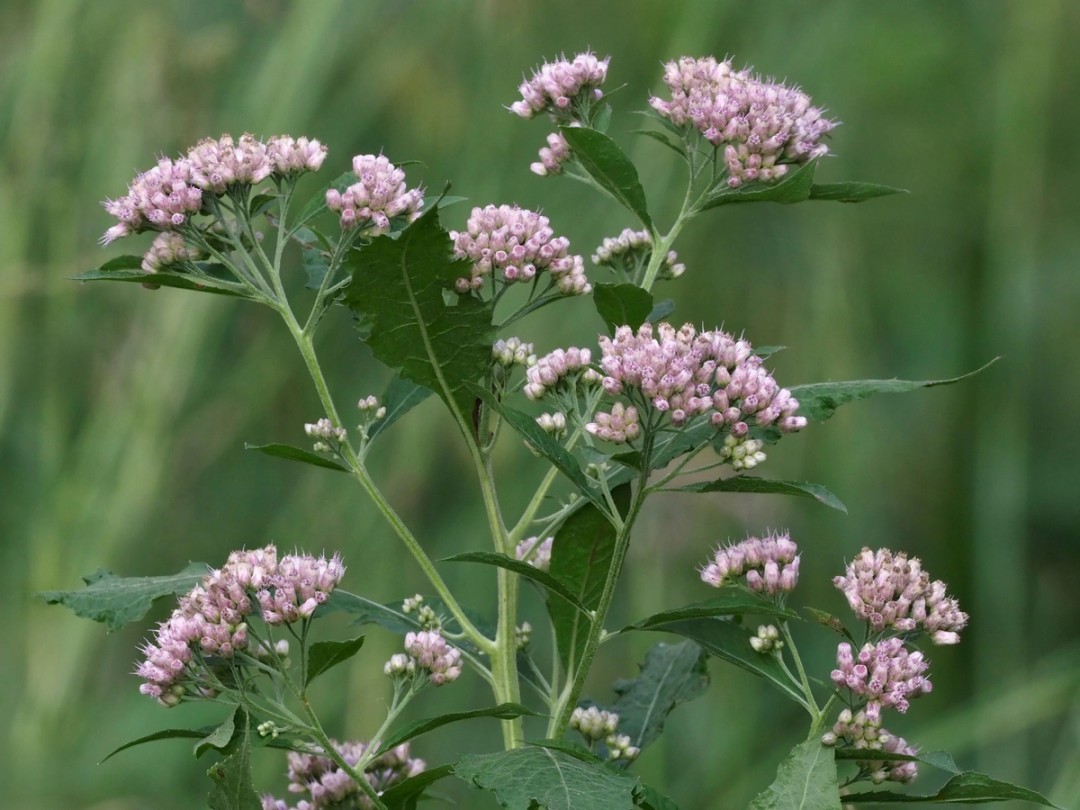
Flowers and stem 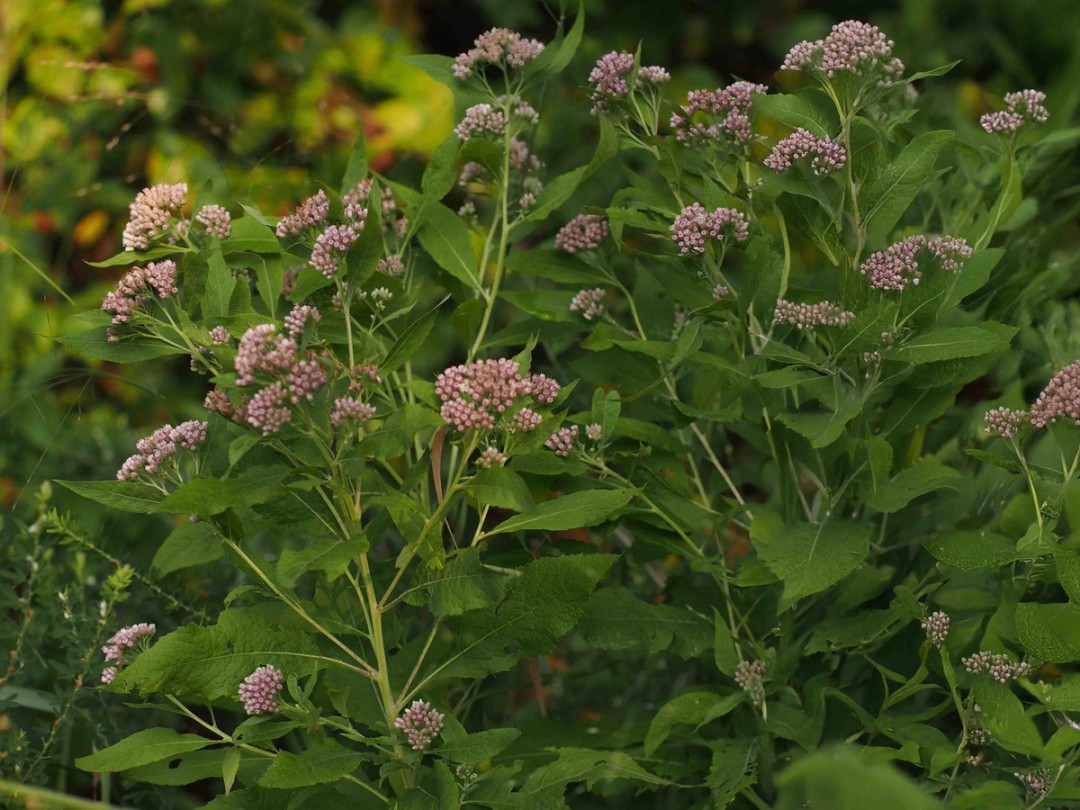
Peak flowering
POLLINATORS
The late season flowering of Pluchea camphorata along with its abundant nectar make it a powerhouse pollinator plant. It serves as an important plant for late season insects and a critical one for migratory pollinators needing energy for their travel. A wide range of insects are attracted to Pluchea camphorata including many bees, skippers, wasps, flies and moths. Large carpenter bees and Leafcutter bees are some of the most frequent bee visitors .
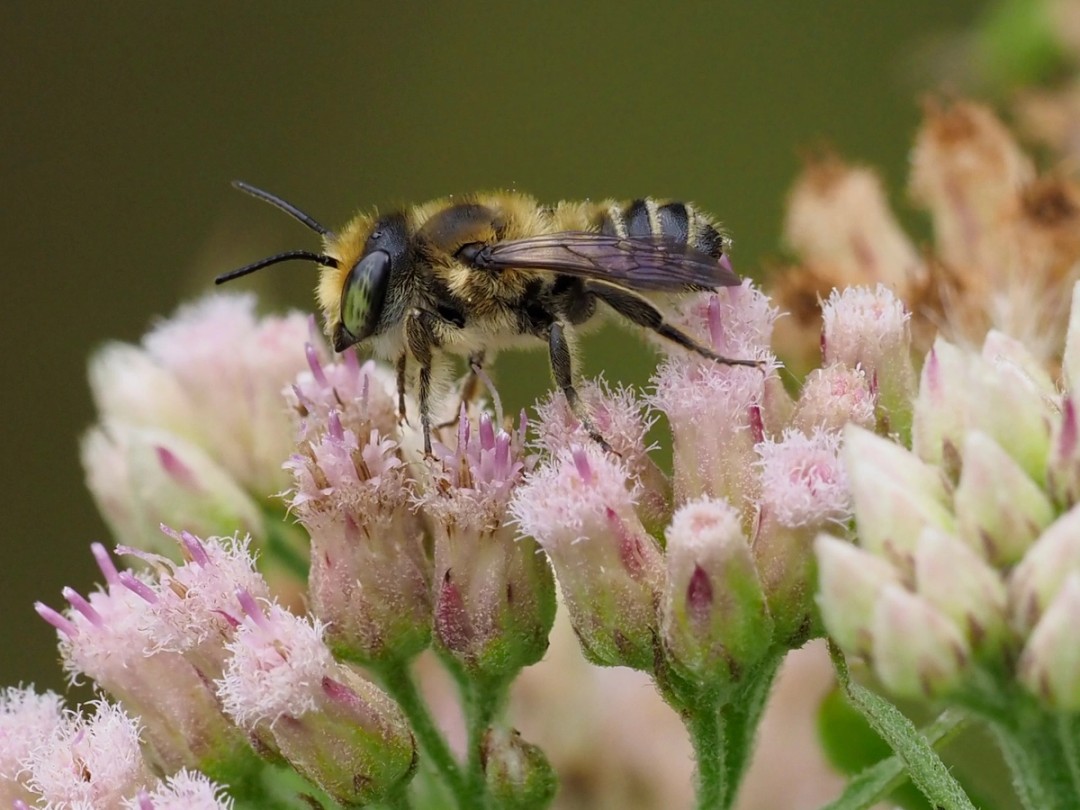
Megachile menda 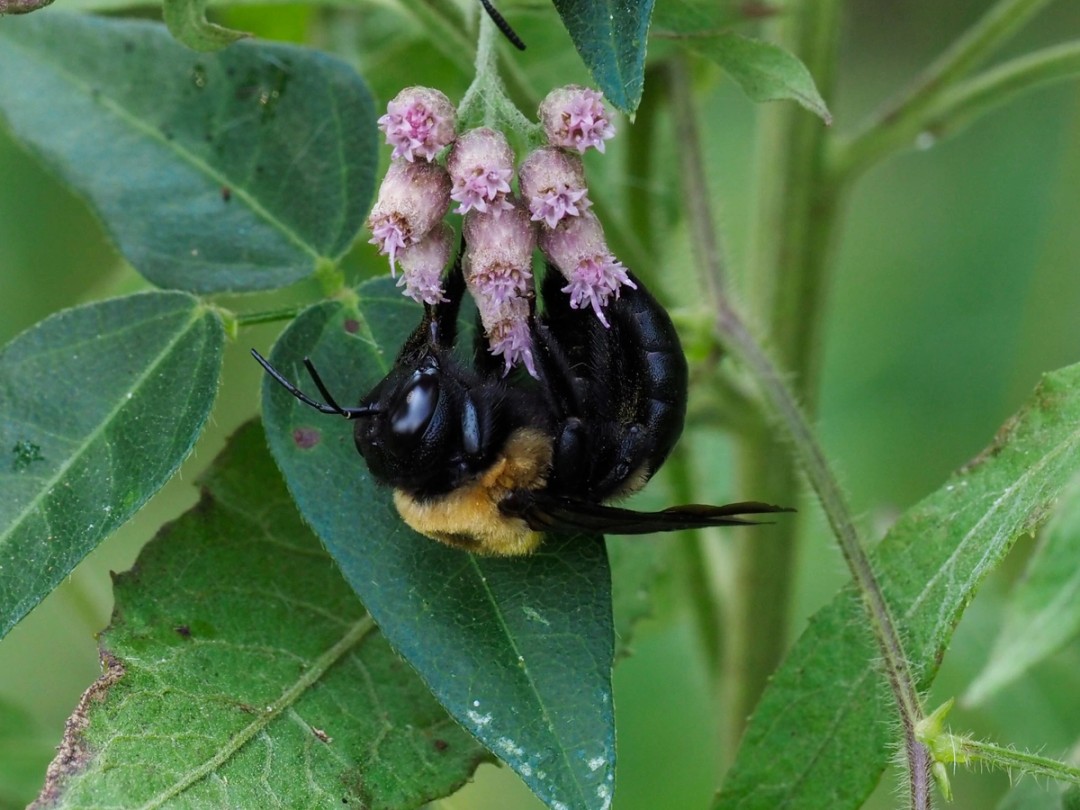
Xylocopa virginica
Several butterflies and skippers are known to visit these flowers including Pearl Crescent, Eastern Tailed-Blue, Gray Hairstreak, Silver Spotted Skipper, Least Skipper and occasionally Monarch and Common Buckeye butterflies.
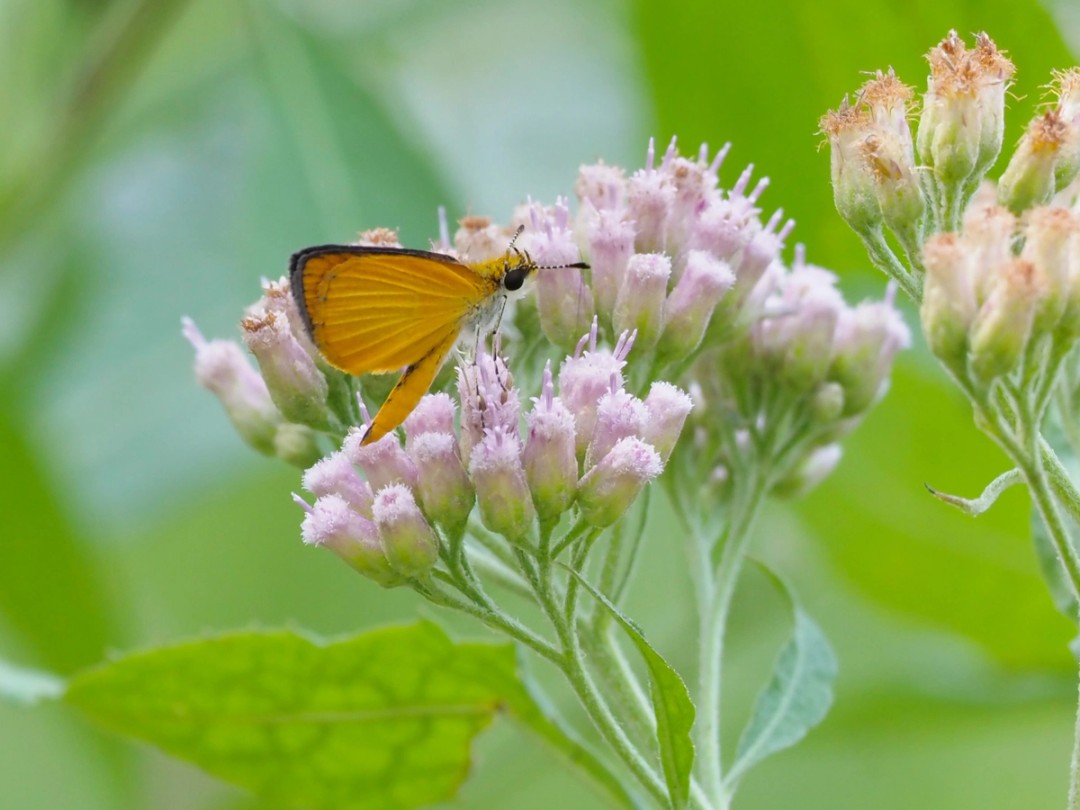
Least Skipper 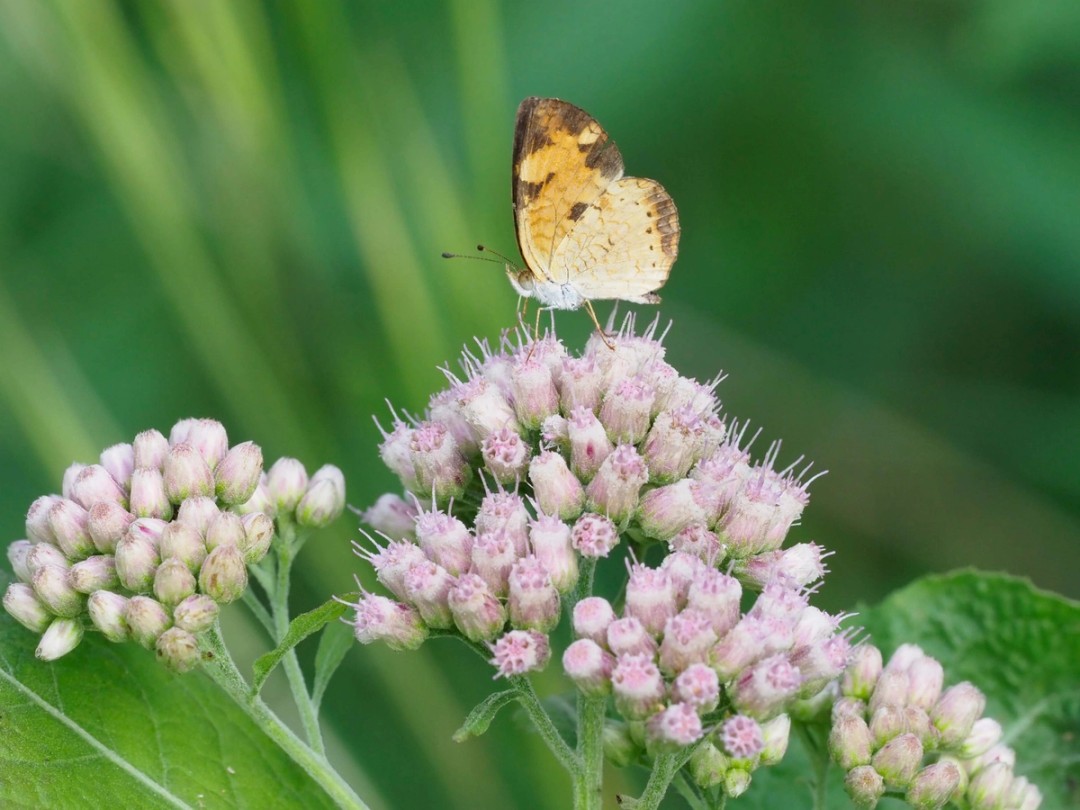
Pearl Crescent
A diverse group of wasps visit the flowers, attracted by their pungent nectar. While foraging for nectar, they come into contact with the flower heads, thereby contributing to the plant’s pollination.
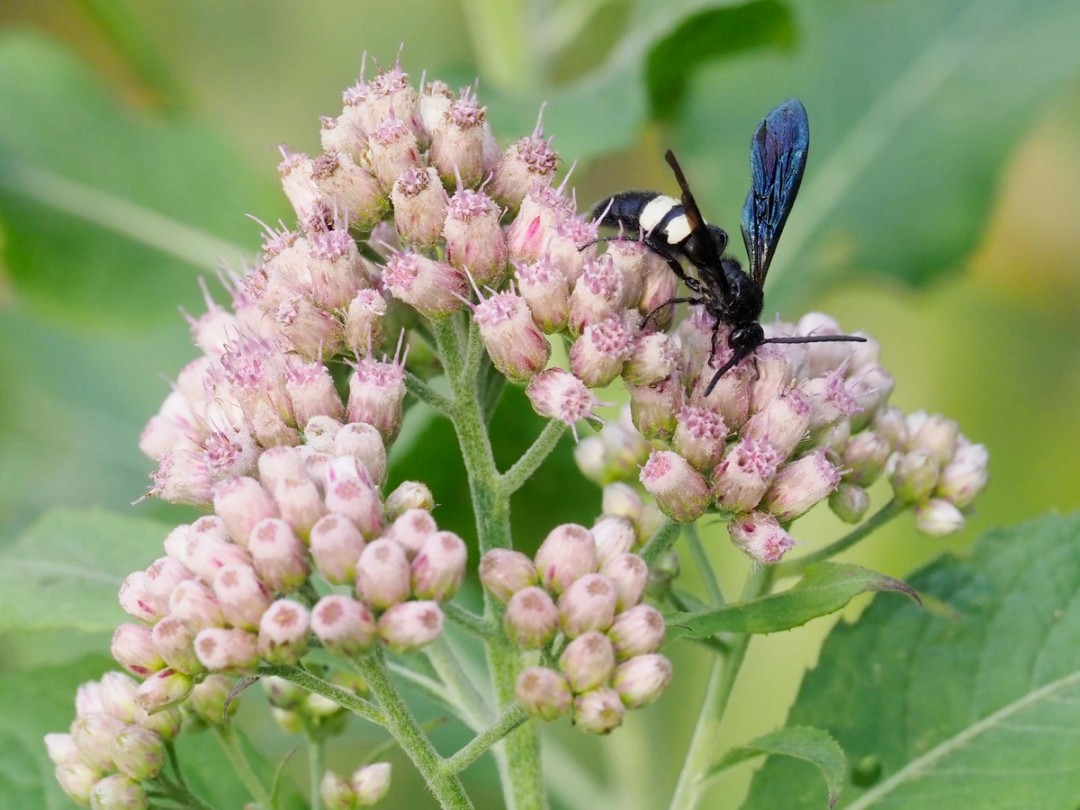
Double-banded Scoliid wasp 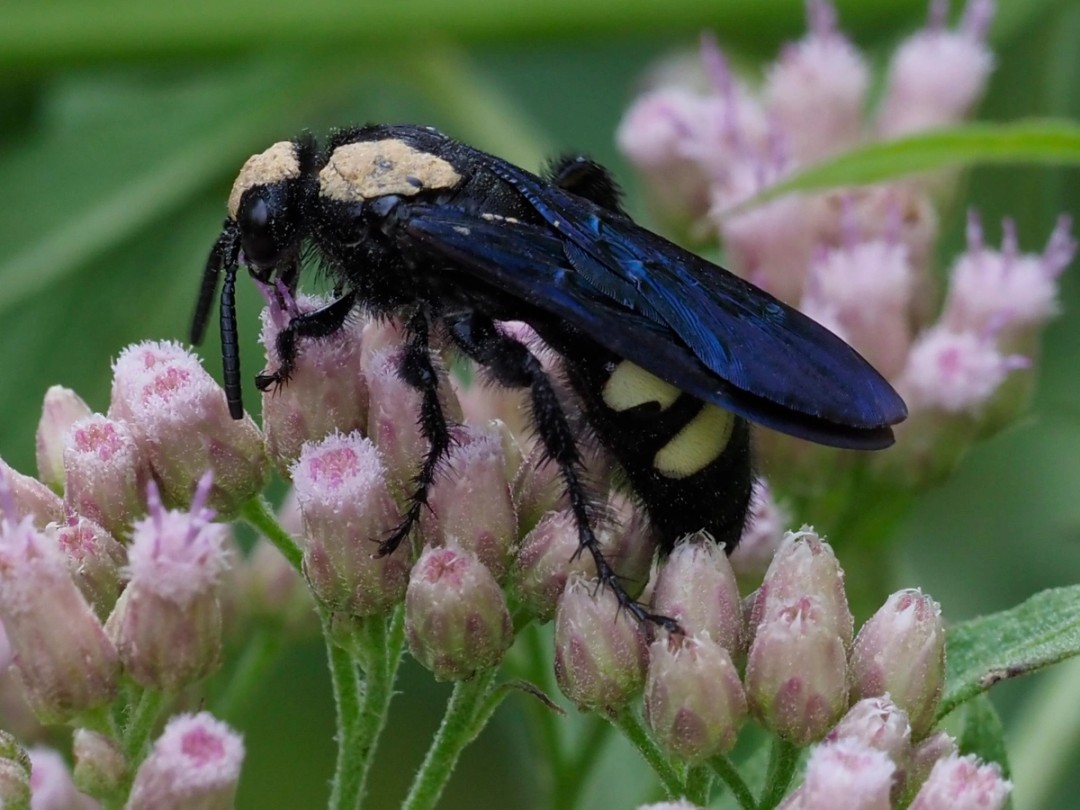
Double-banded Scoliid wasp 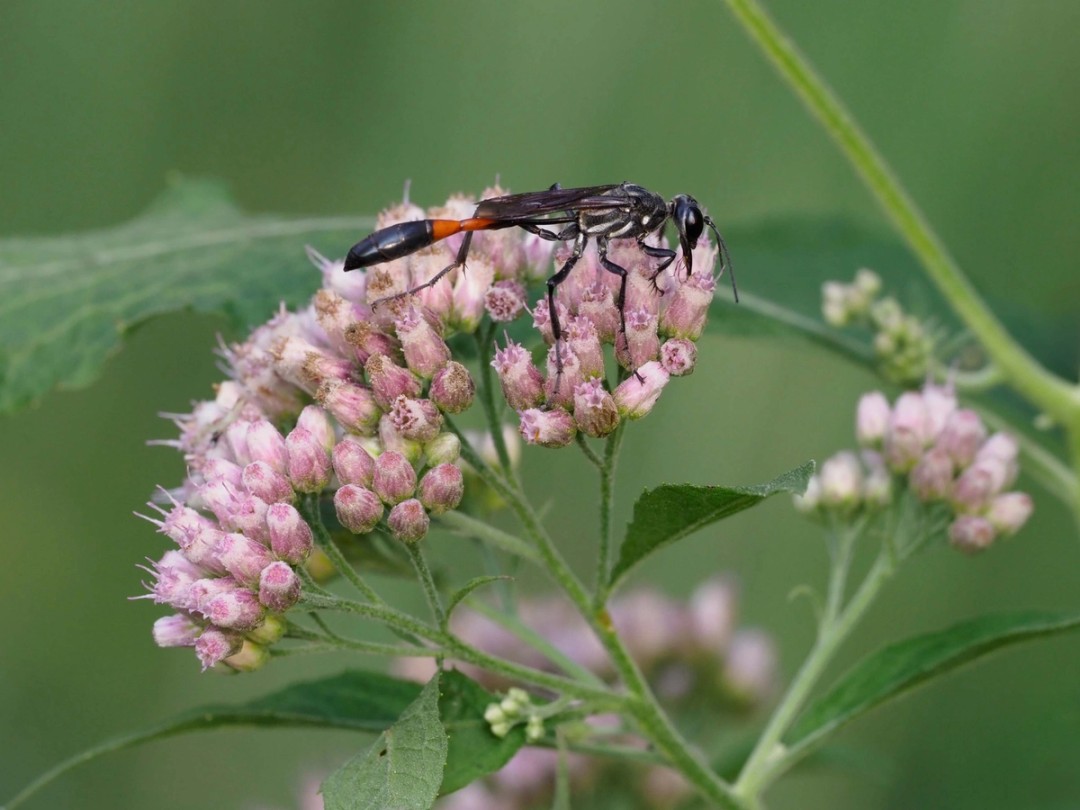
Ammophila wasp 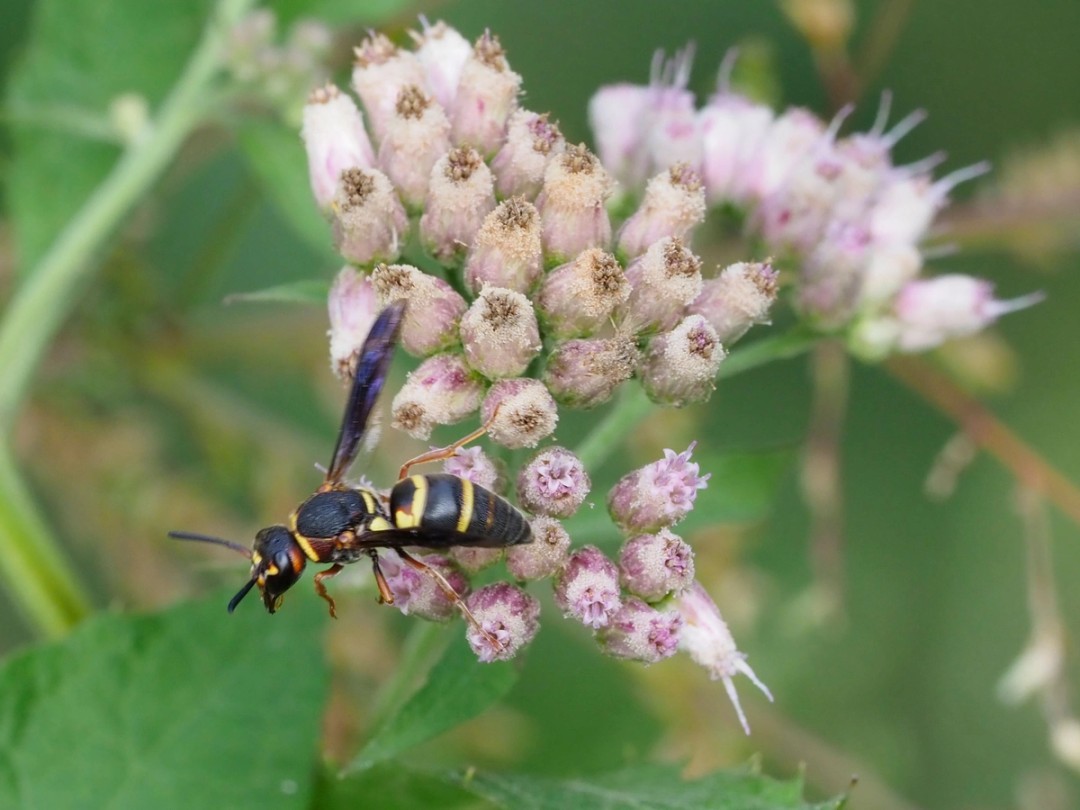
Genus Euodynerus 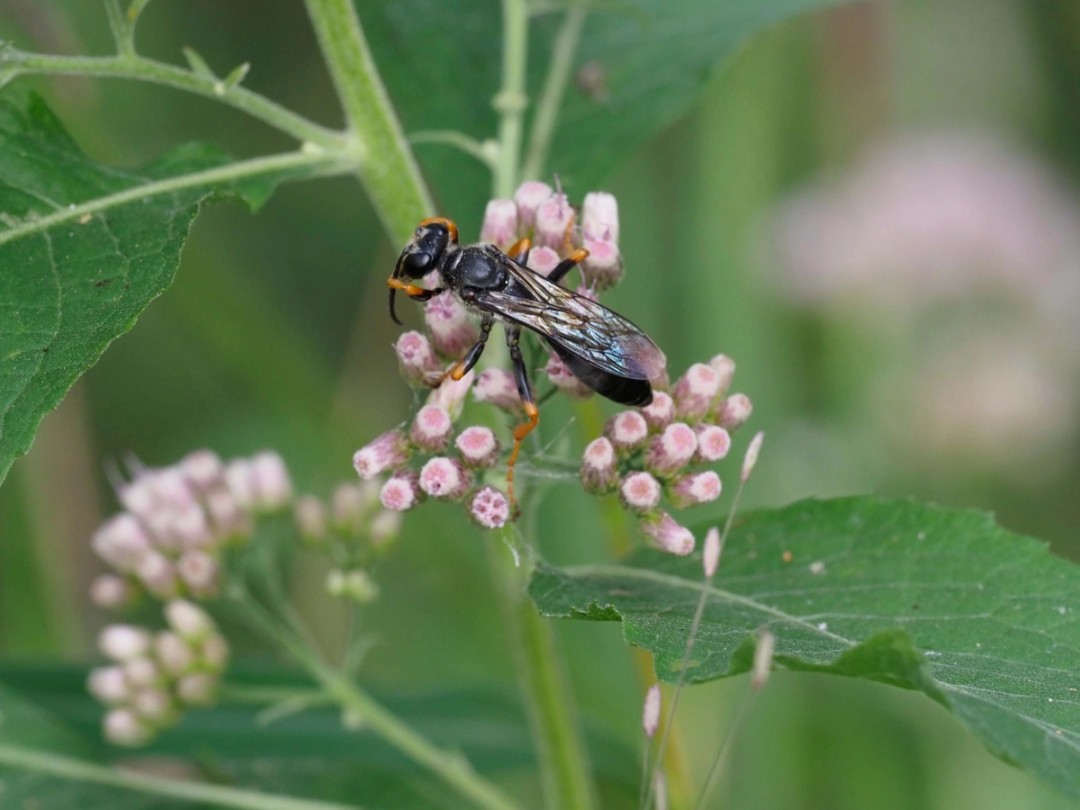
Katydid wasp 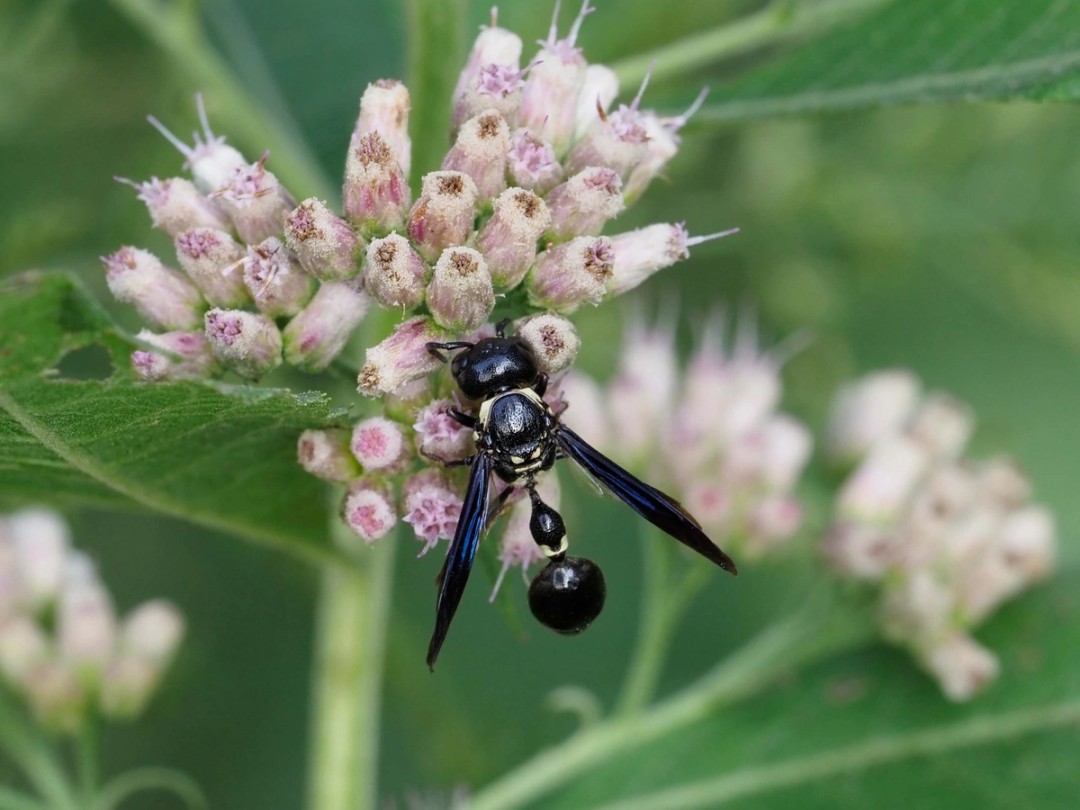
Black Thorn-footed Mason wasp
PLANTS GROWING NEARBY
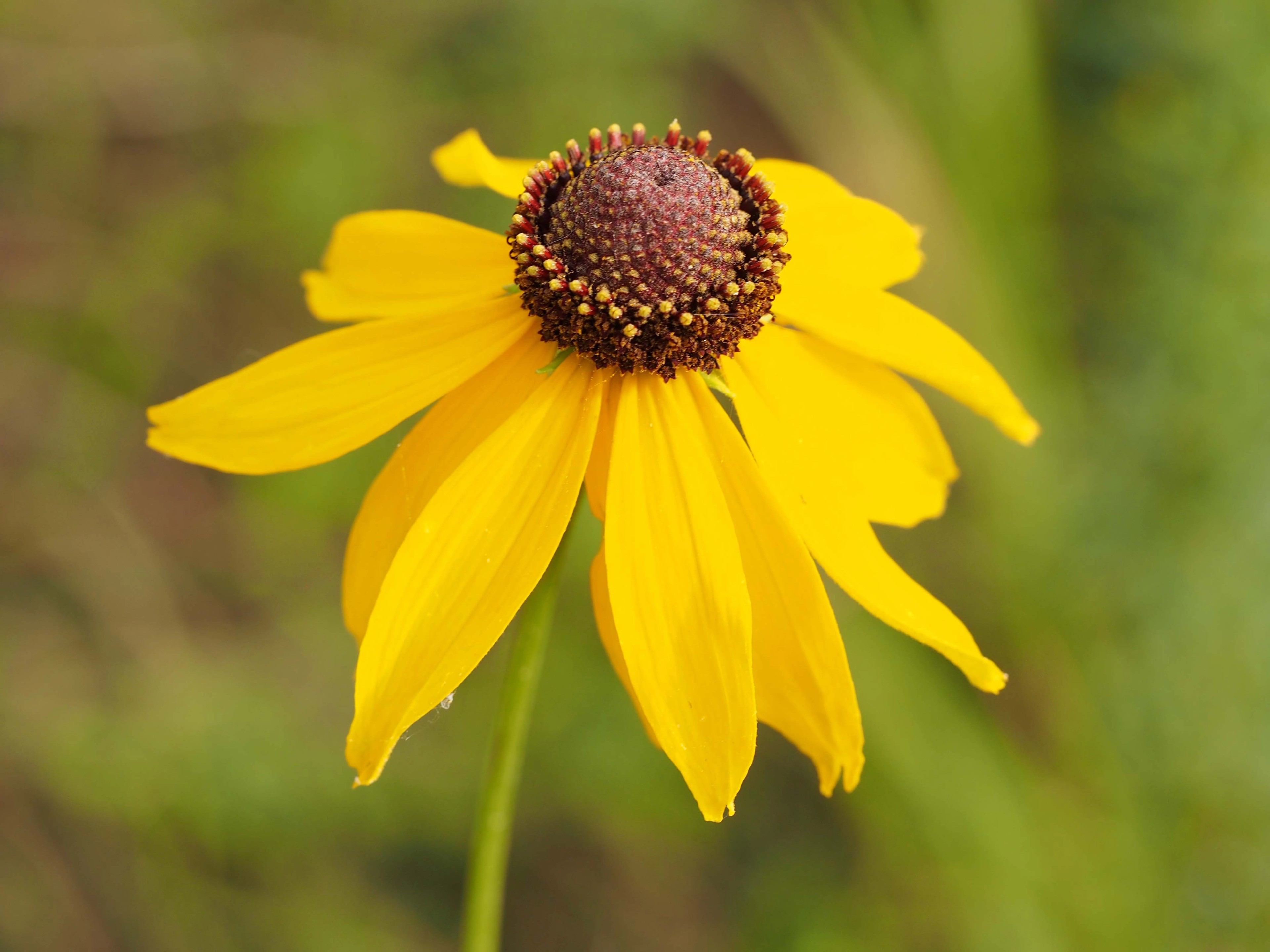
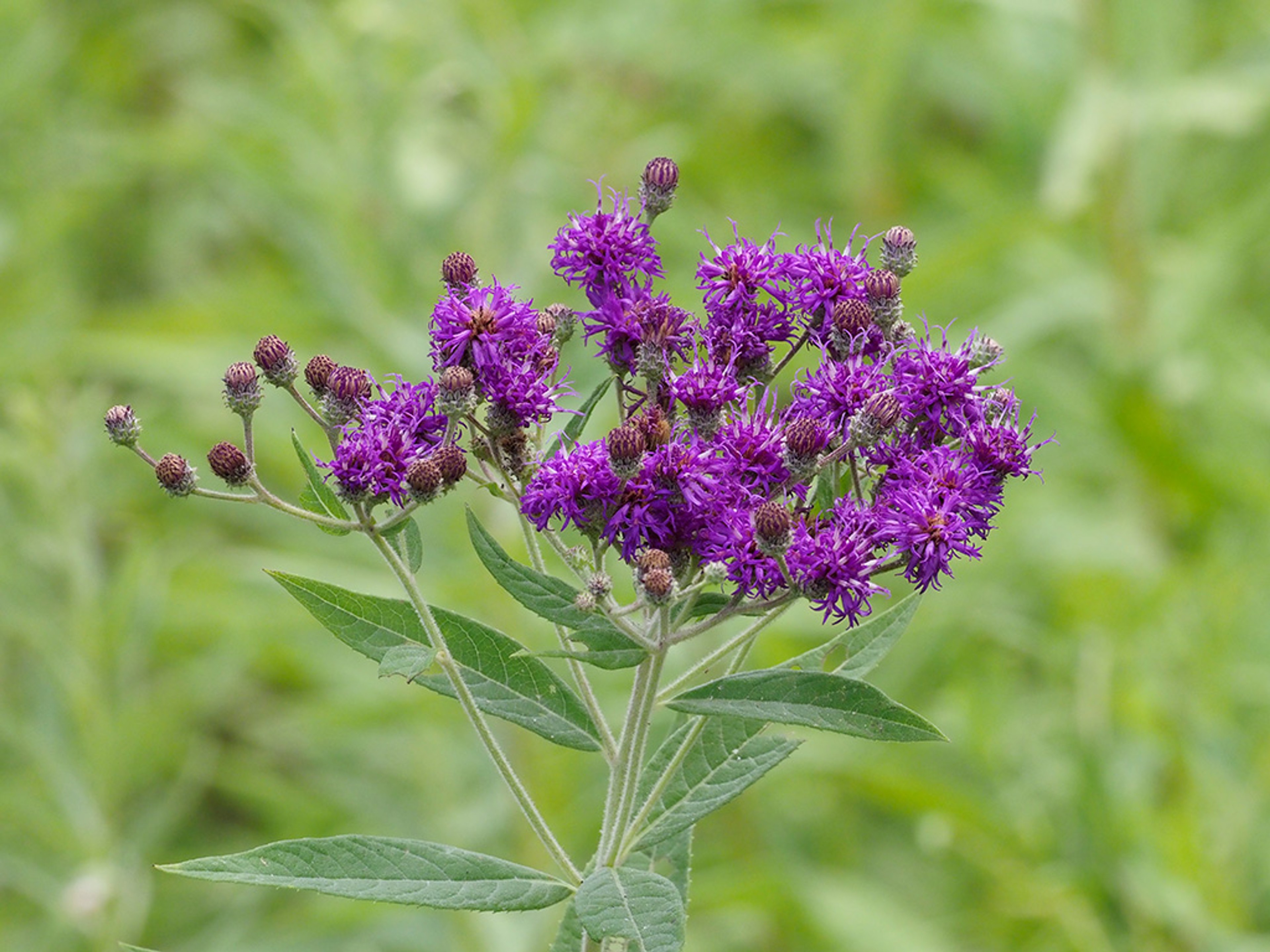
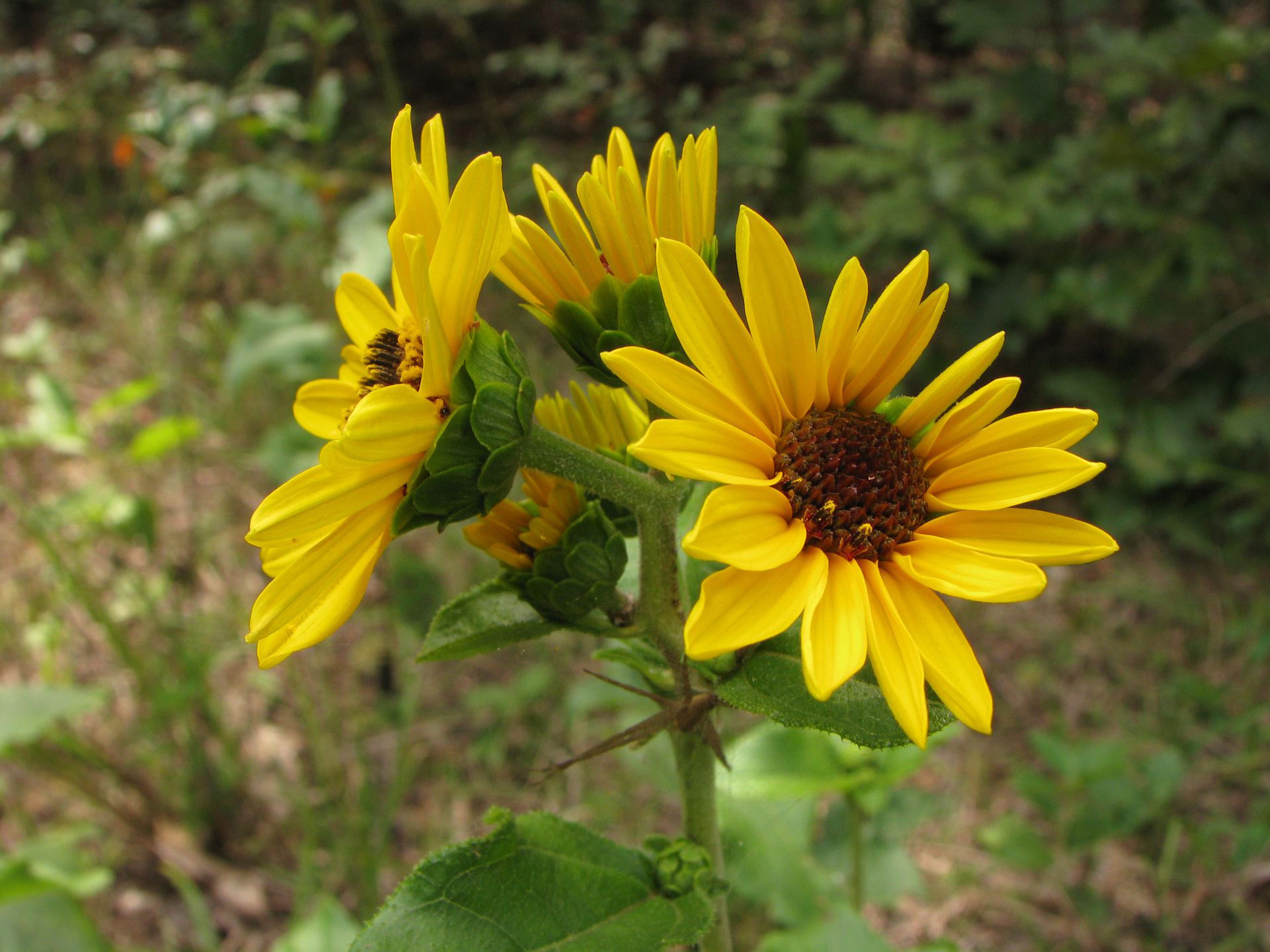
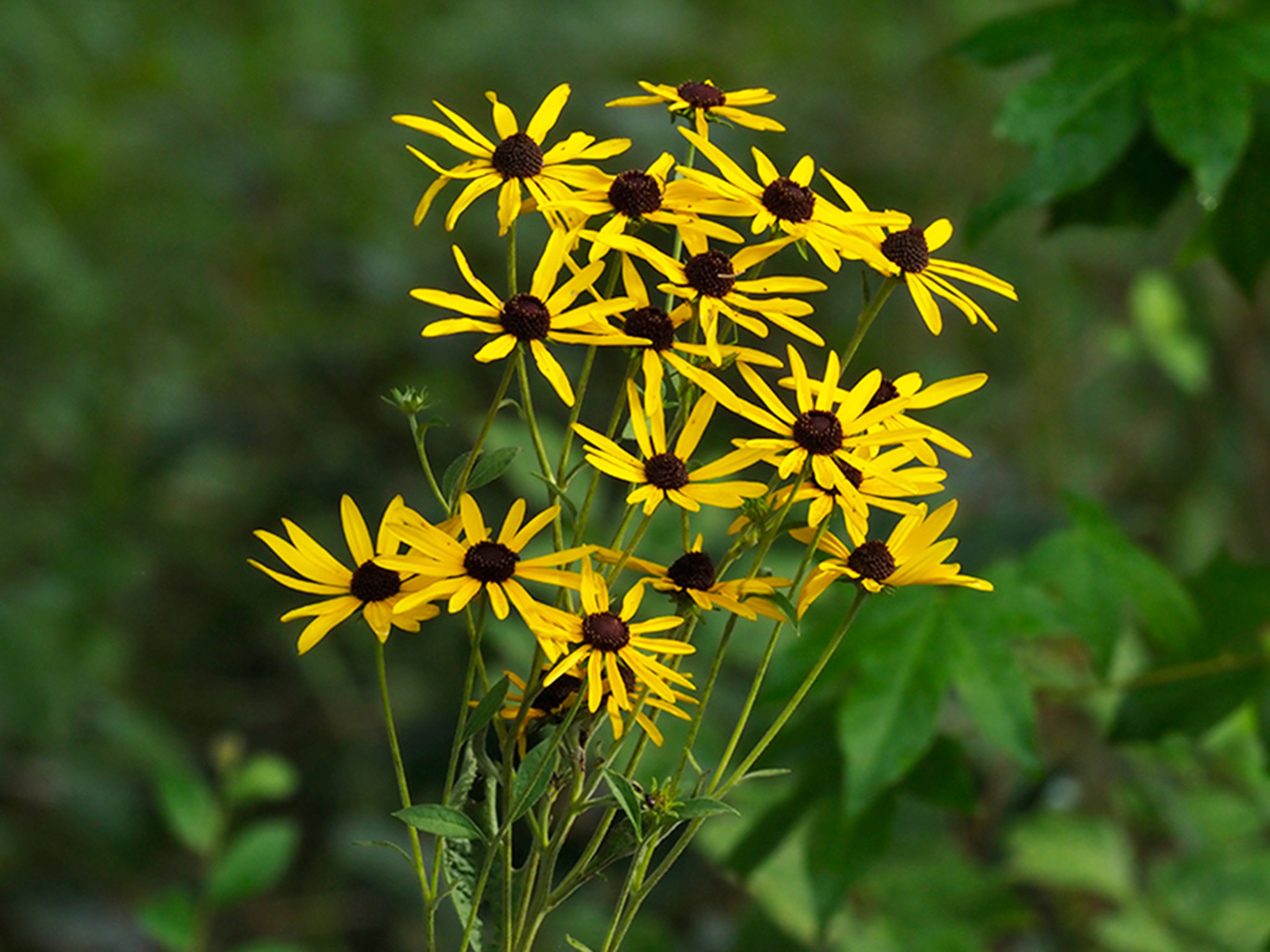
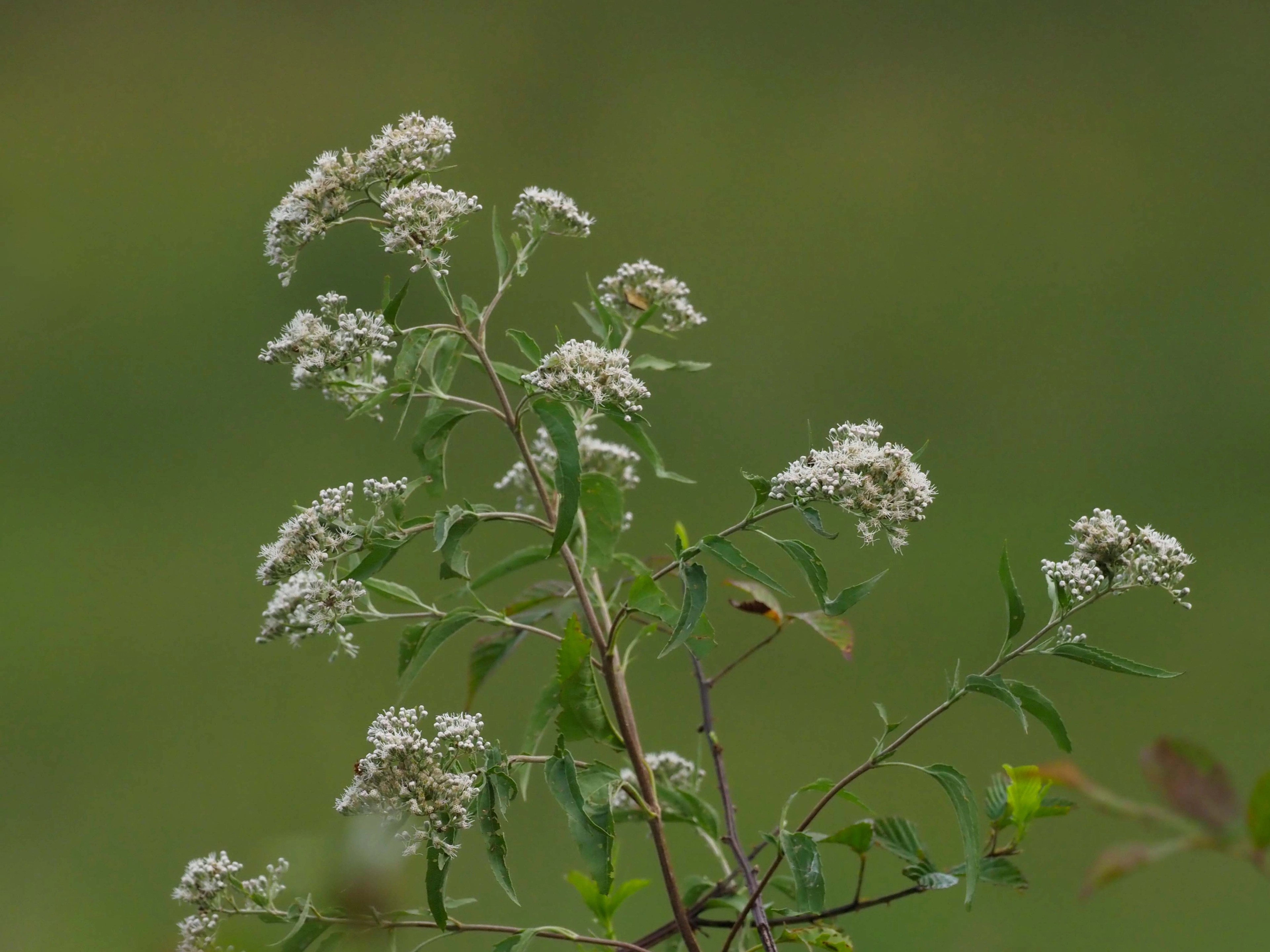
Pluchea camphorata thrives alongside diverse plant species, creating vibrant natural pairings. A stunning companion is the mist flower (Conoclinium coelestinum), whose striking blue flowers beautifully complement the pink blooms of camphorweed during their shared flowering period. Sweet coneflower (Rudbeckia subtomentosa) also makes an excellent companion, blooming at this exact same time.
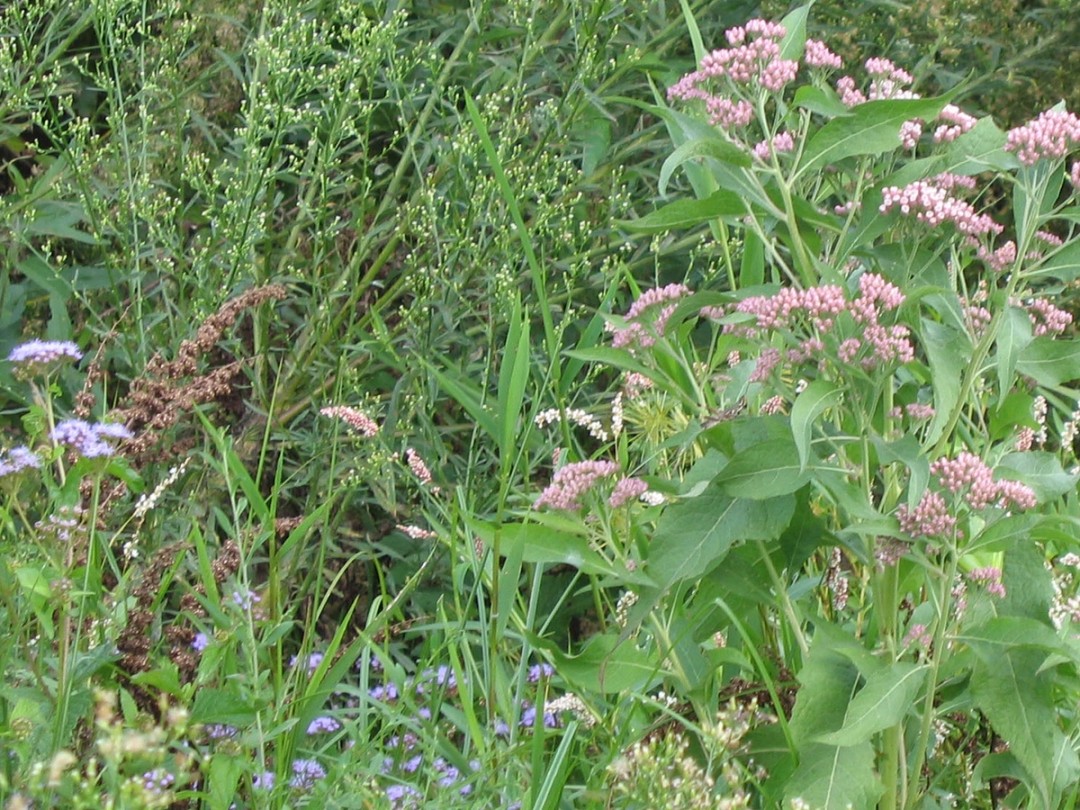
Conoclinium coelestinum 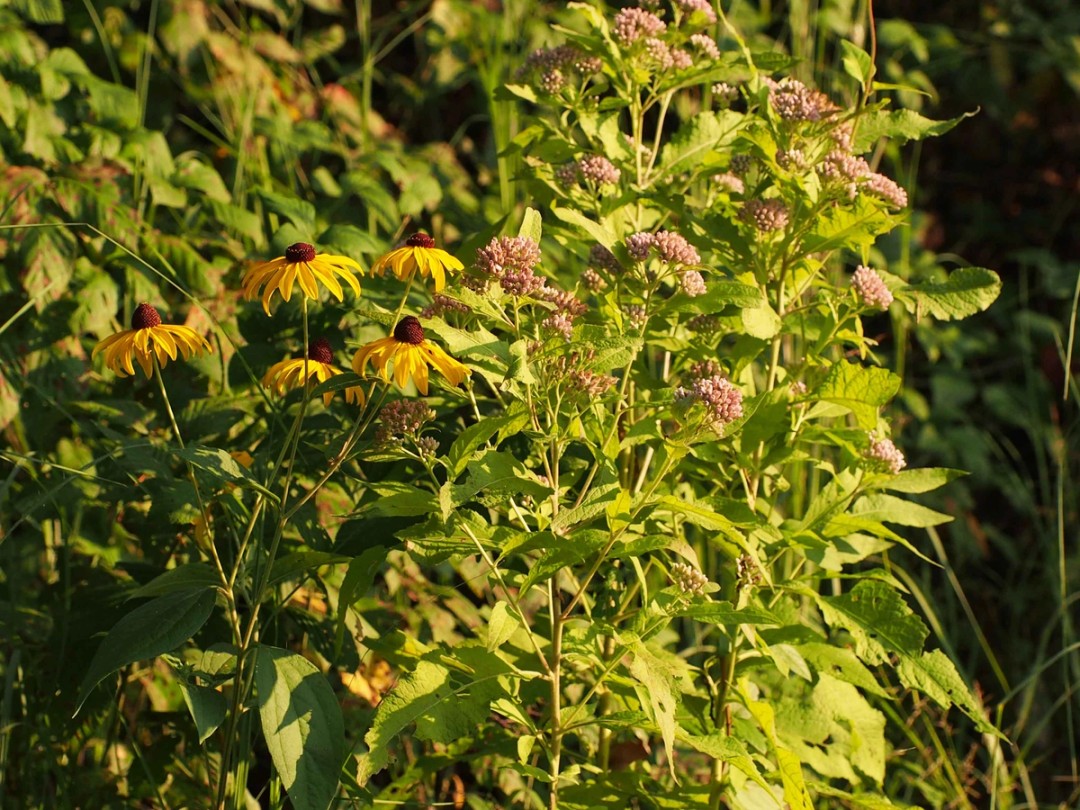
Rudbeckia subtomentosa
Additionally, camphorweed frequently grows alongside roundleaf greenbrier (Smilax rotundifolia), and Buttonbush (Cephalanthus occidentalis).
Smilax rotundifolia 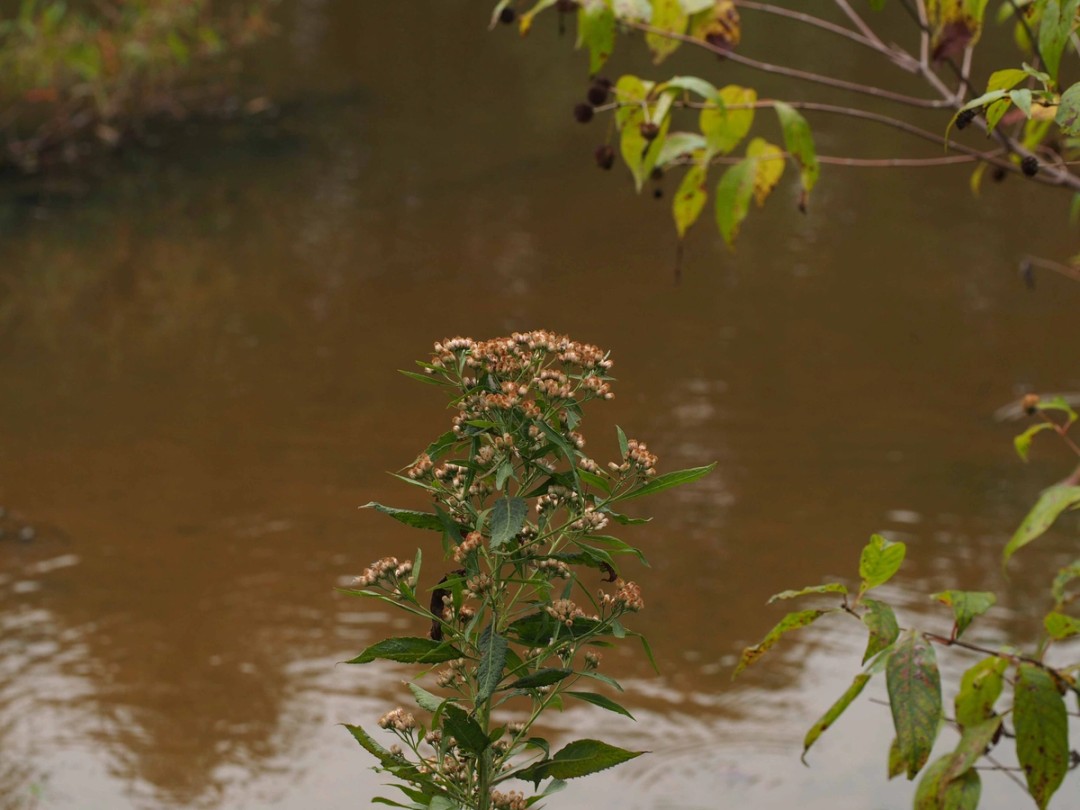
Cephalanthus occidentalis
Cattail is another interesting plant growing in wet habitats along with Camphor weed. These are flourishing adjacent to each other at the edge of a small pond.
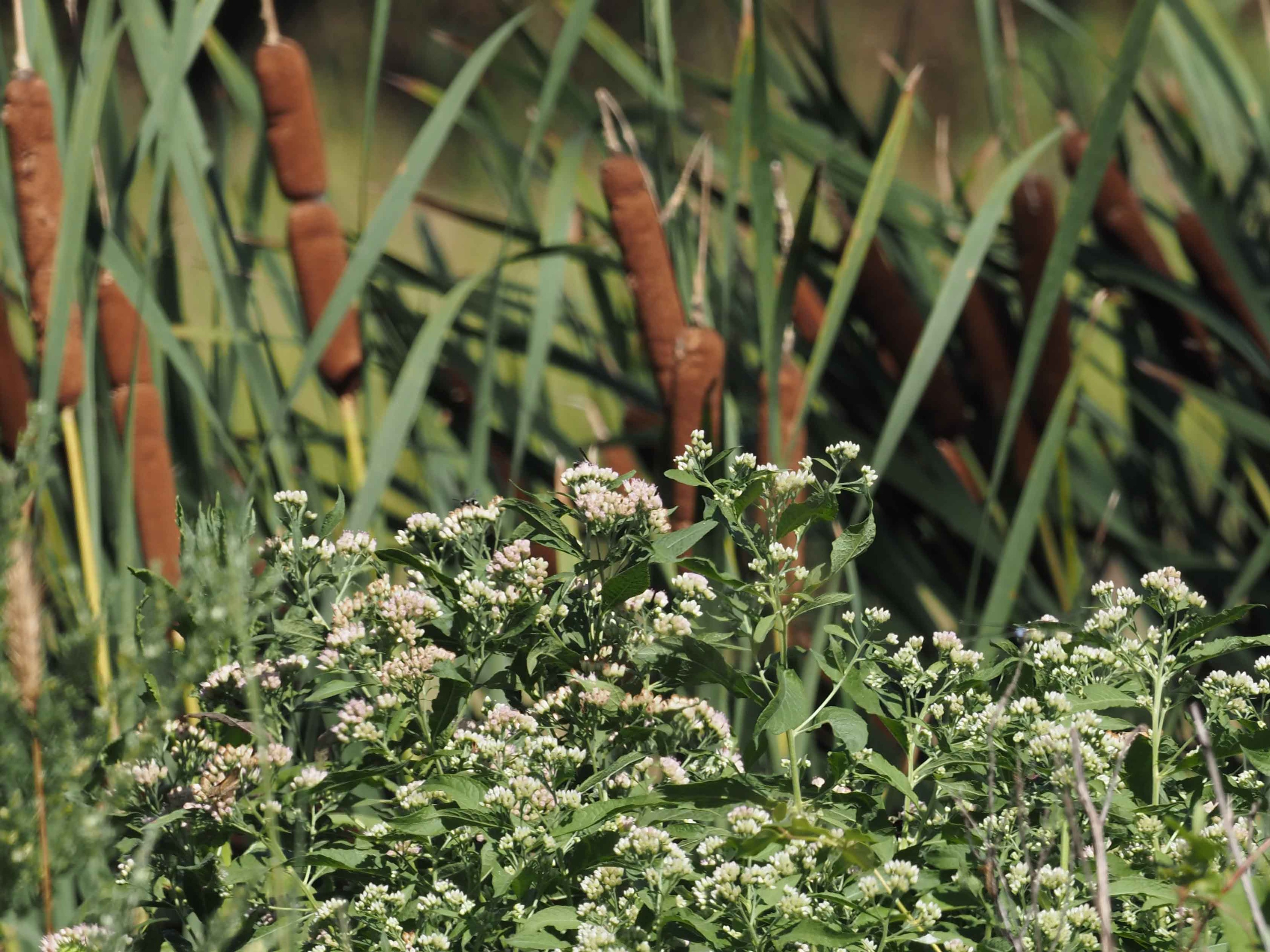
There are many plants that share the damp habitats of Camphorweed. Take a look at the list of Native Plants Growing nearby to see photos of many of them.
HABITAT
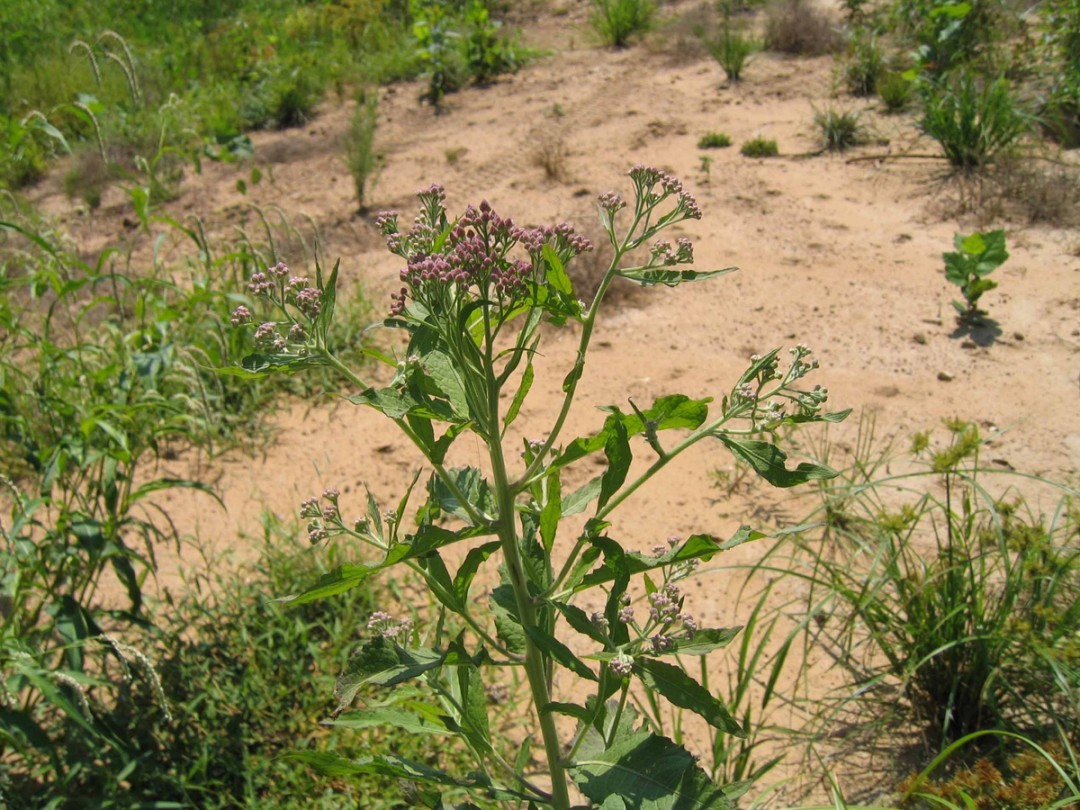
Camphorweed thrives in diverse moist environments, such as swampy areas, near ponds, lakes, marshes, streambanks, wet prairies, savannas and ditches. It can also be found along roadsides where water collects. However, it does not tolerate dry, arid environments, dense shade, or brackish areas, although it can nD tolerate mild coastal salinity, hence its additional common name of saltmarsh fleabane. Unfortunately, our wetlands are in trouble because they have often been drained due to agricultural expansions, urban development, and timber harvesting.
Drainage area near lake 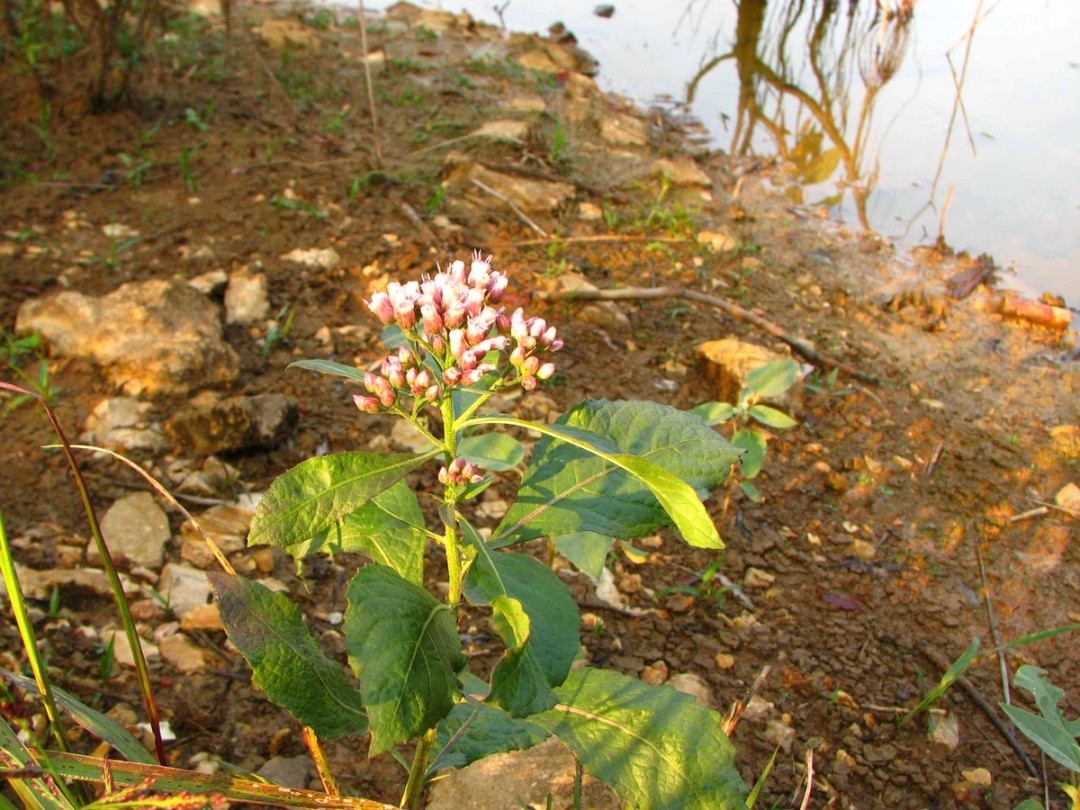
Lakeside 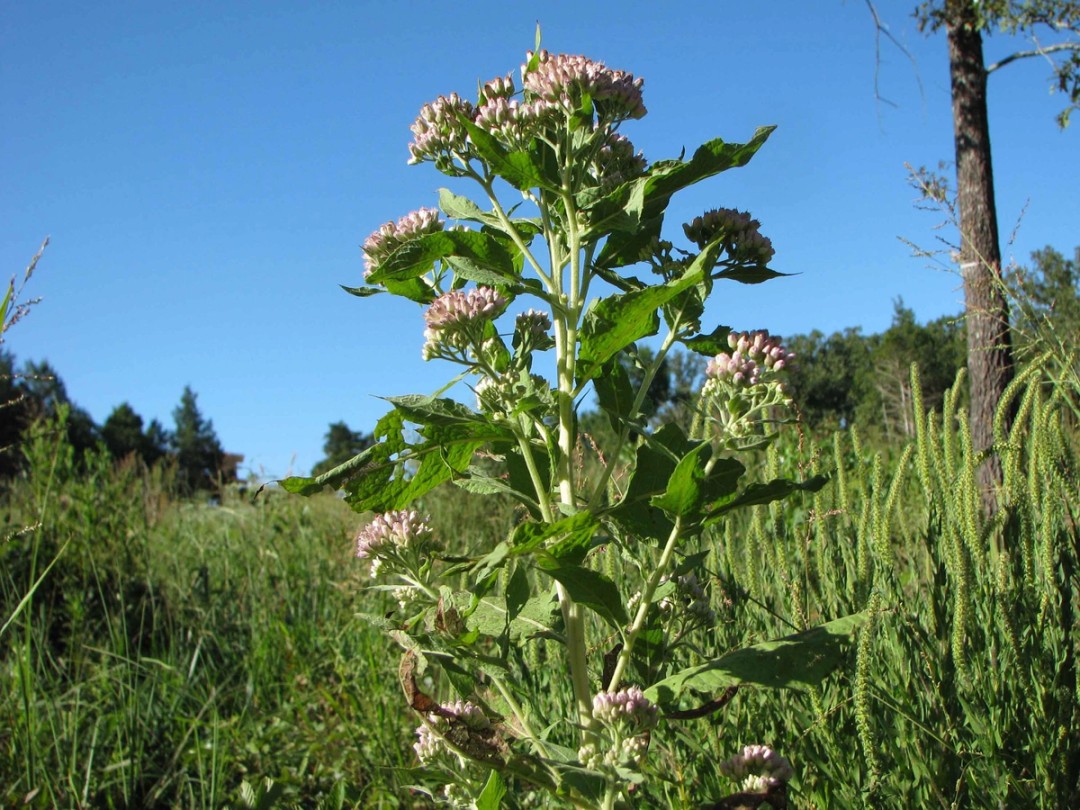
Wet grassland 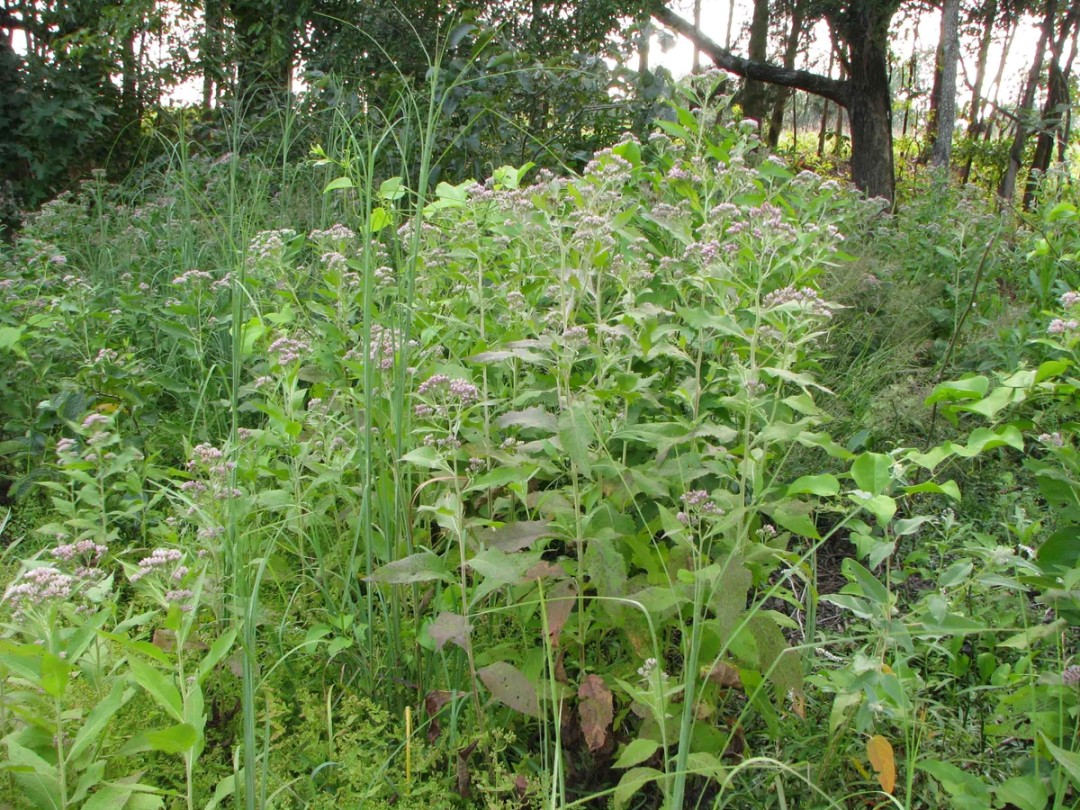
Damp woodland edge 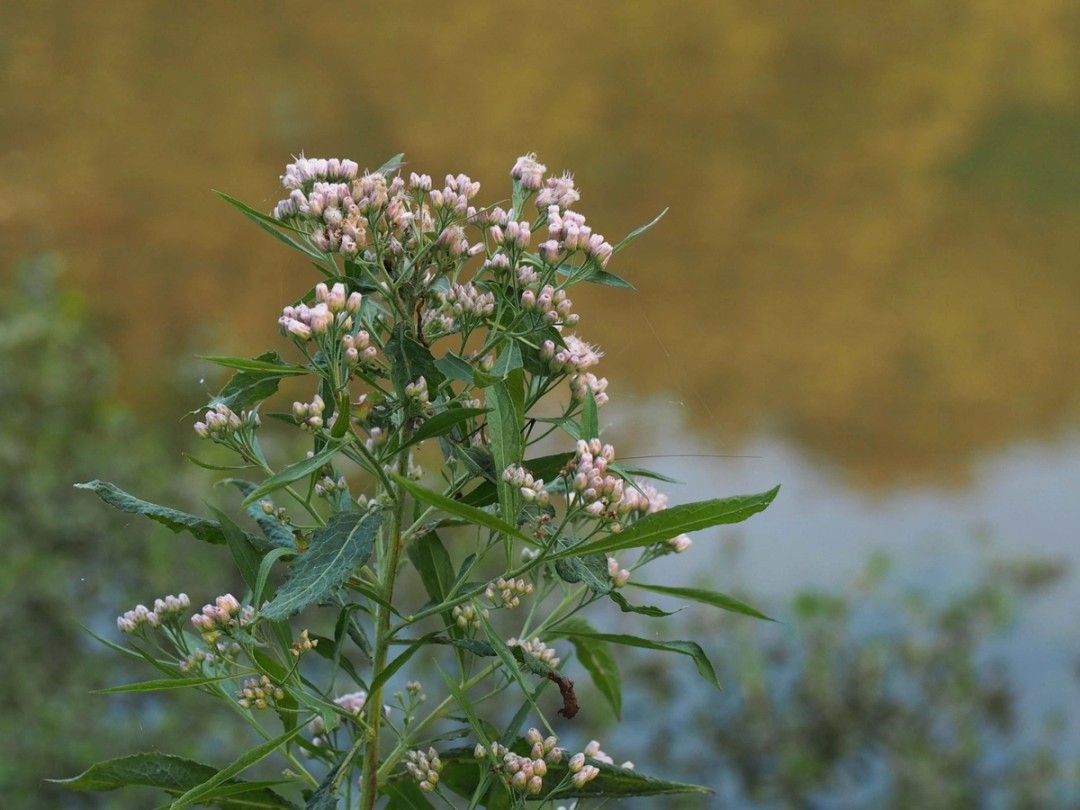
Pond bank 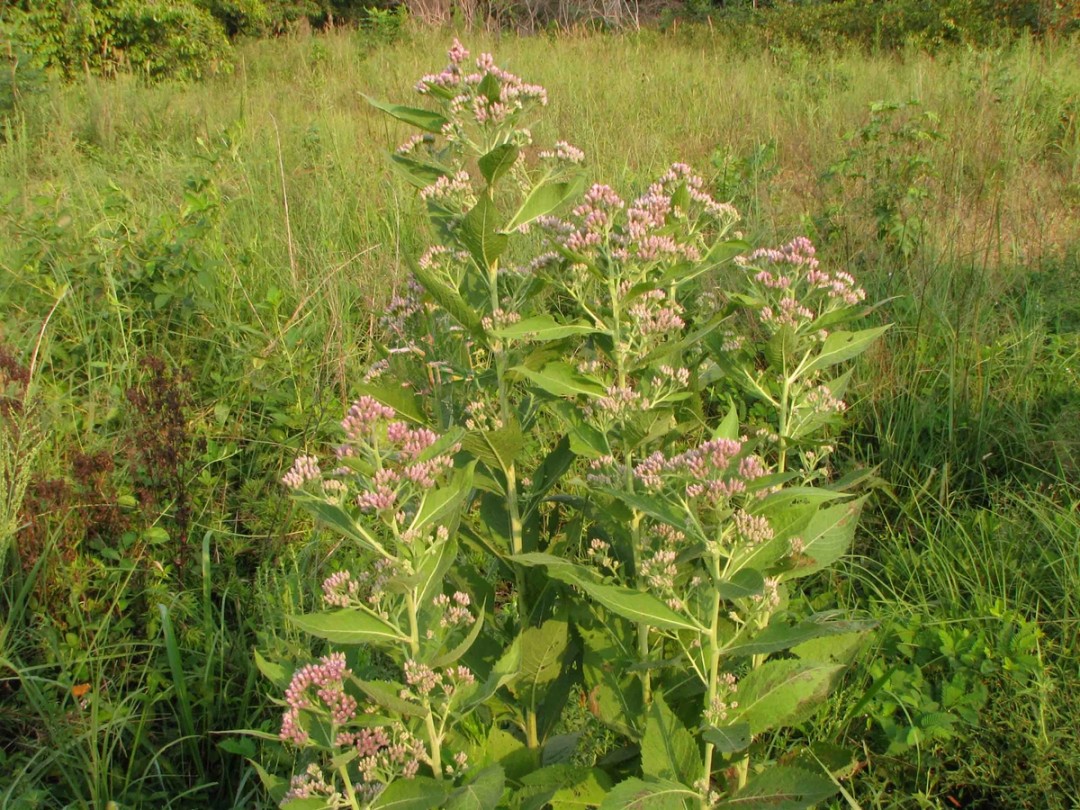
Wetland
CONSERVATION STATUS
Pluchea camphorata has an overall Secure status on NatureServe. It is found in 24 states and is native from the east coast to Texas and Kansas and includes Utah. While most states within its range display No Status Rank, it is listed as Secure in Kentucky, Virginia and South Carolina. It is Apparently Secure in Florida and North Carolina. Maryland lists it as Imperiled (S2) and Kansas, Ohio and Utah list it as Critically Imperiled (S1).
In Arkansas Pluchea camphorata has a C Value of 3 in the group of 1-3. This indicates “Native weedy and early successional taxa, displaying high opportunistic potential for occupancy of destabilized sites. These taxa are typically well adapted to highly degraded areas of the contemporary environment or to lands that have been heavily altered in the past.”
INTERESTING TIDBITS
During the first hard freeze of the year, Pluchea camphorata becomes one of the few native plants capable of developing frost flowers. These intricate ice formations occur when water, drawn up by the roots from the still-warm soil, expands and creates vertical fissures along the freezing stems. As this moisture escapes through the cracks, it freezes instantly upon contact with the cold air, forming delicate, ribbon-like ice sculptures. Enthusiasts must search for them early in the morning following a major freeze, as these fragile structures rapidly melt or sublimate as the sun rises.
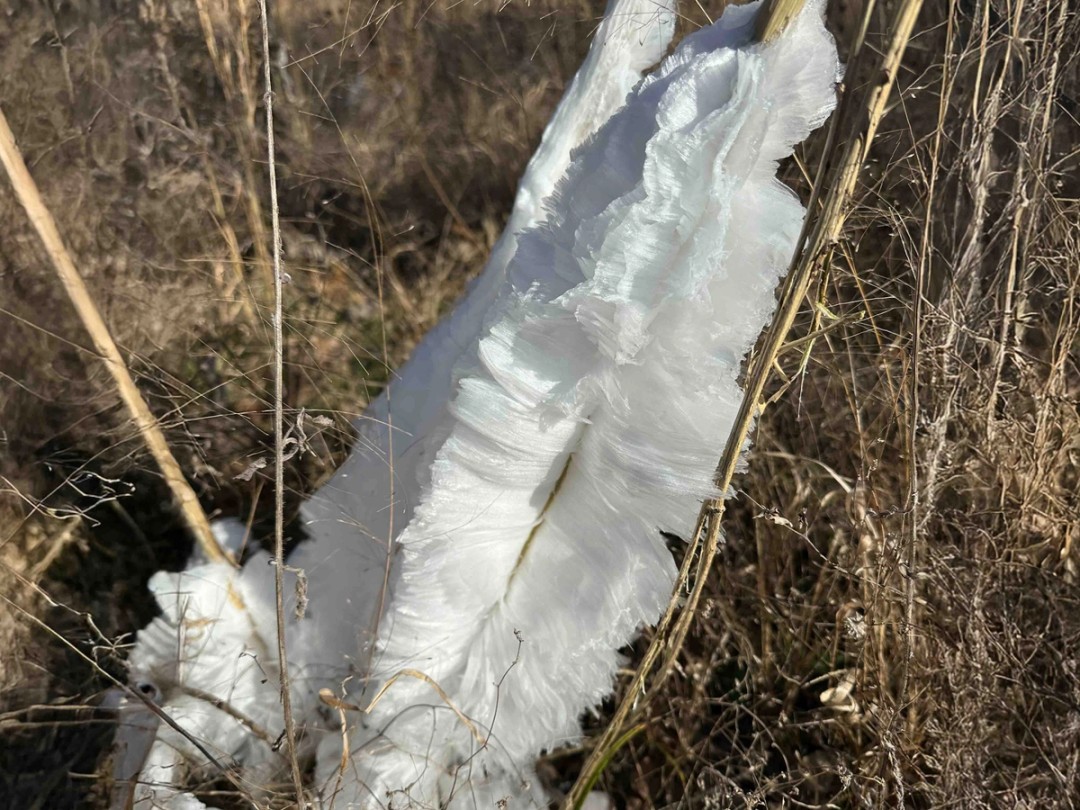
Frost flower 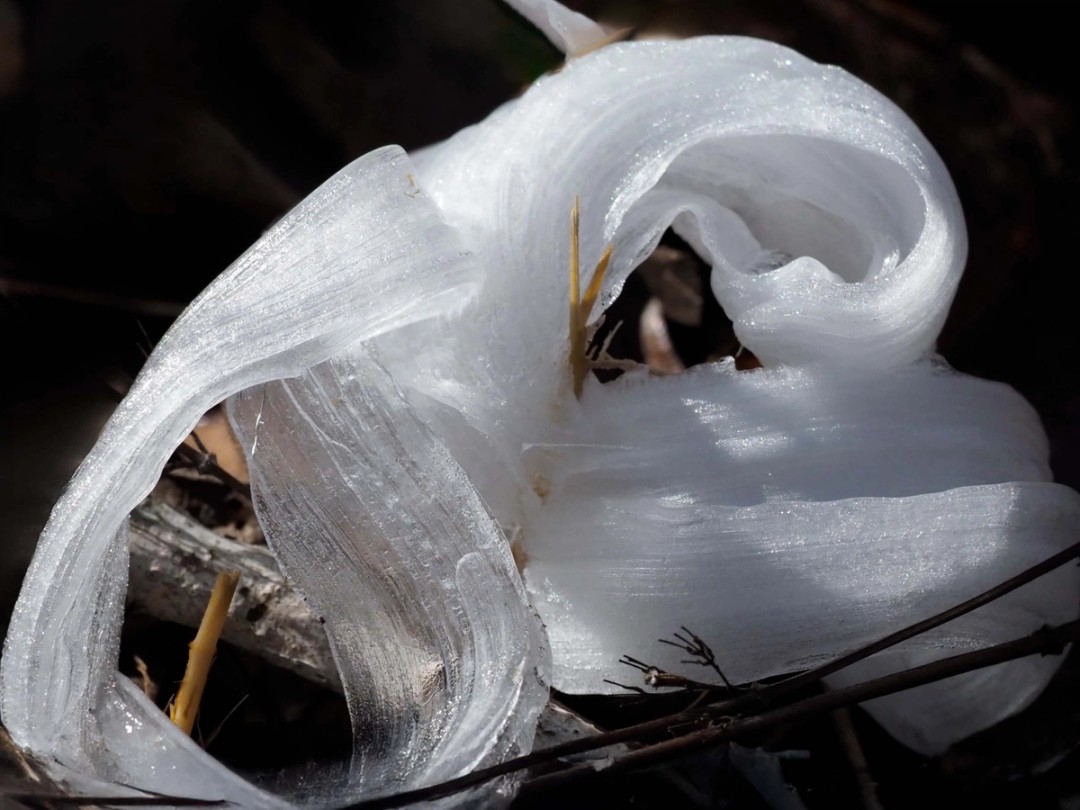
Frost flower