PLANT NAME
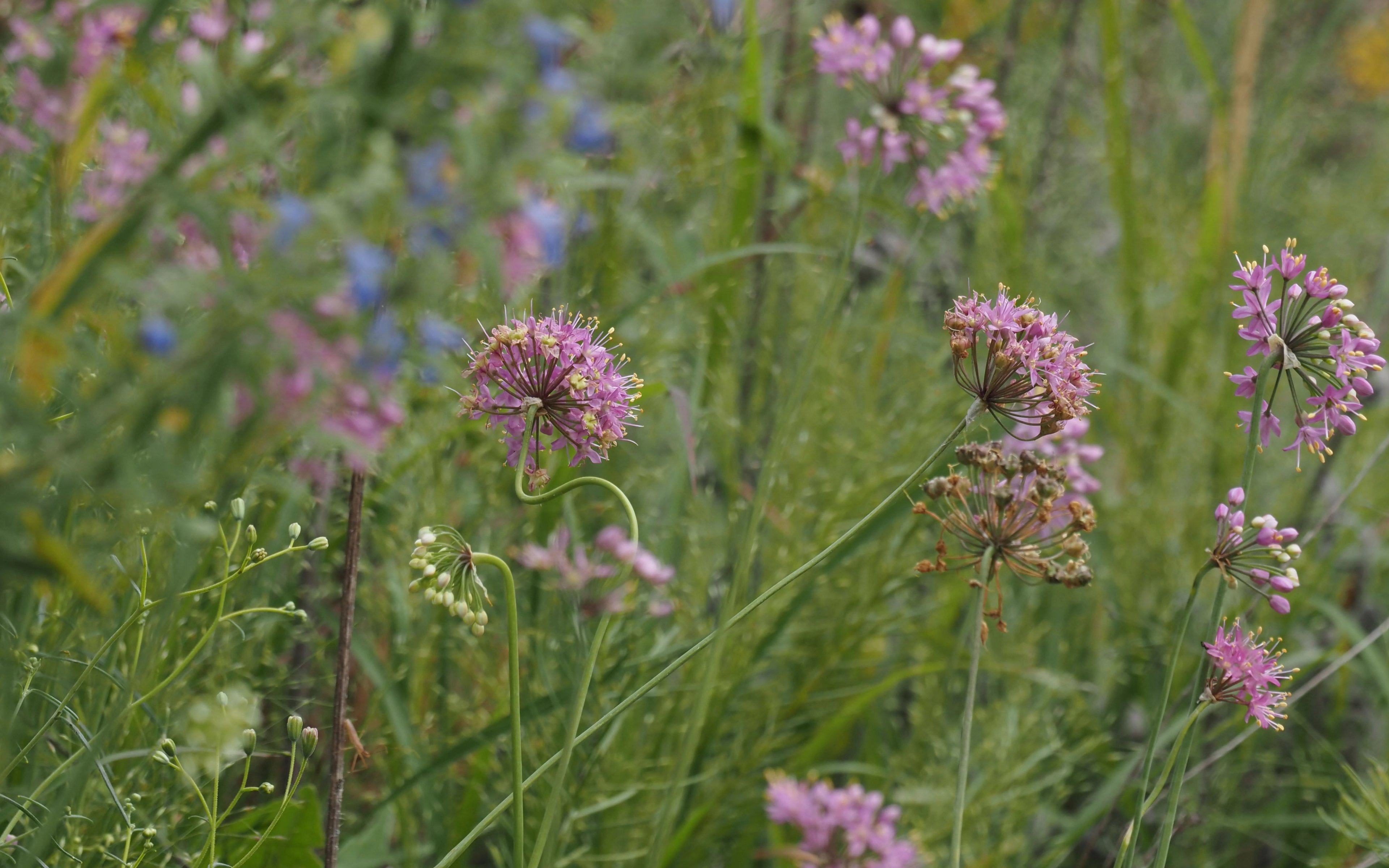
Allium stellatum belongs to the Amaryllidaceae family. It is named after the classical Latin word for garlic, Allium. The species name, stellatum, derives from botanical Latin, meaning “starry,” referring to the star-shaped appearance of its flowers.
It has several common names, including Glade onion, Prairie onion, and Cliff onion.
BLOOM
The flower umbels of Allium stellatum are a stunning sight, varying in shades from soft to hot pink. Early nodding buds are covered by a protective membranous cover called a spathe. As the buds develop, the spathe splits, revealing whitish buds that still nod. Gradually, the stem straightens, and beautiful pink flowers emerge. The flower clusters are large at about 2-3 inches across with individual clusters containing from 9-40 flowers. Each floret has 3 petals and 3 sepals. The flowers, stem and leaves all have an onion-like scent.
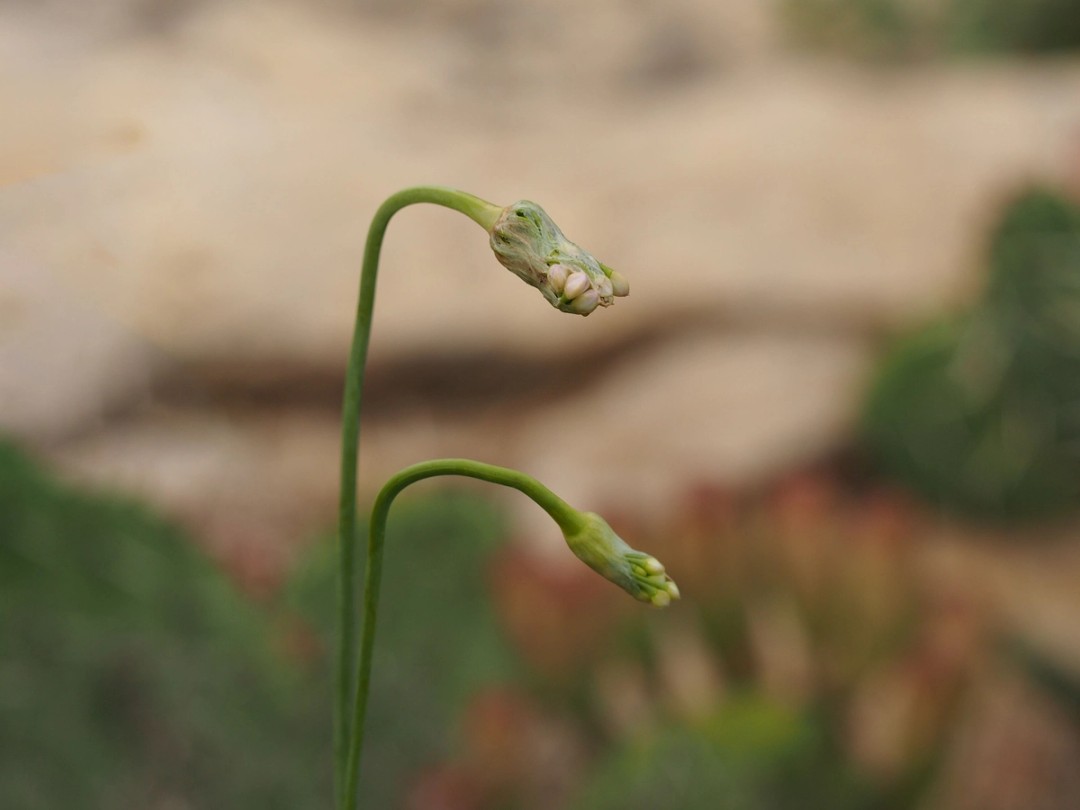
Early buds wrapped in spathe 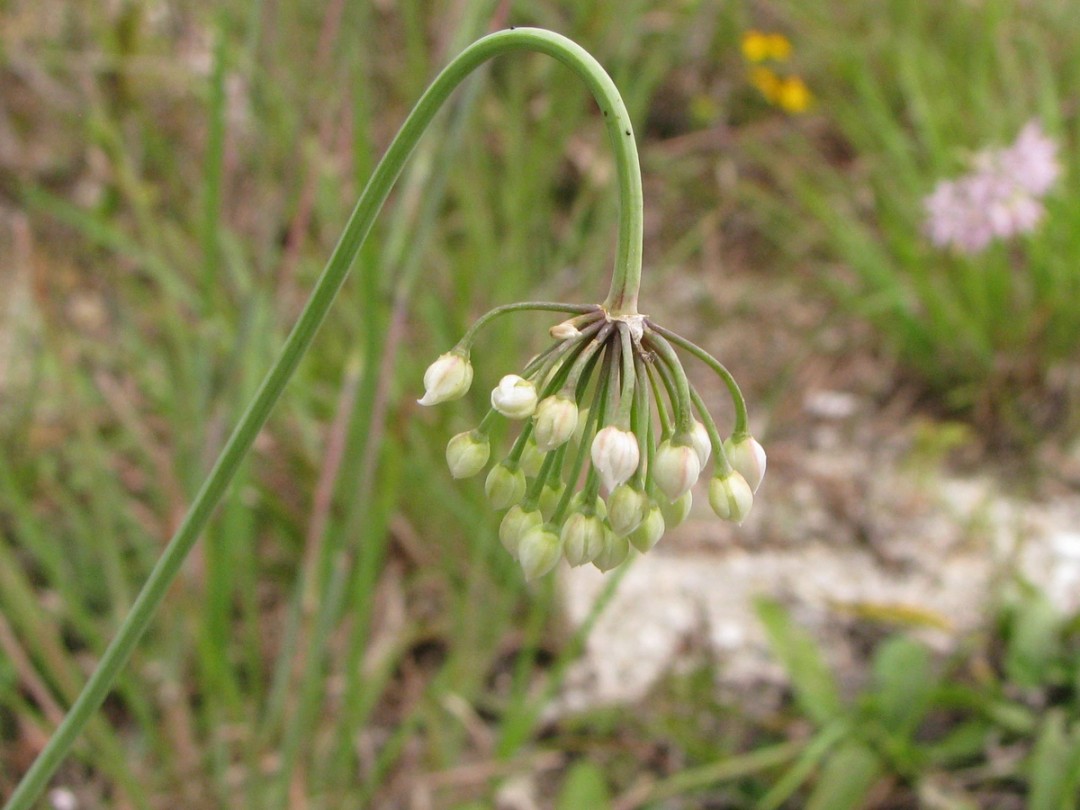
Nodding buds 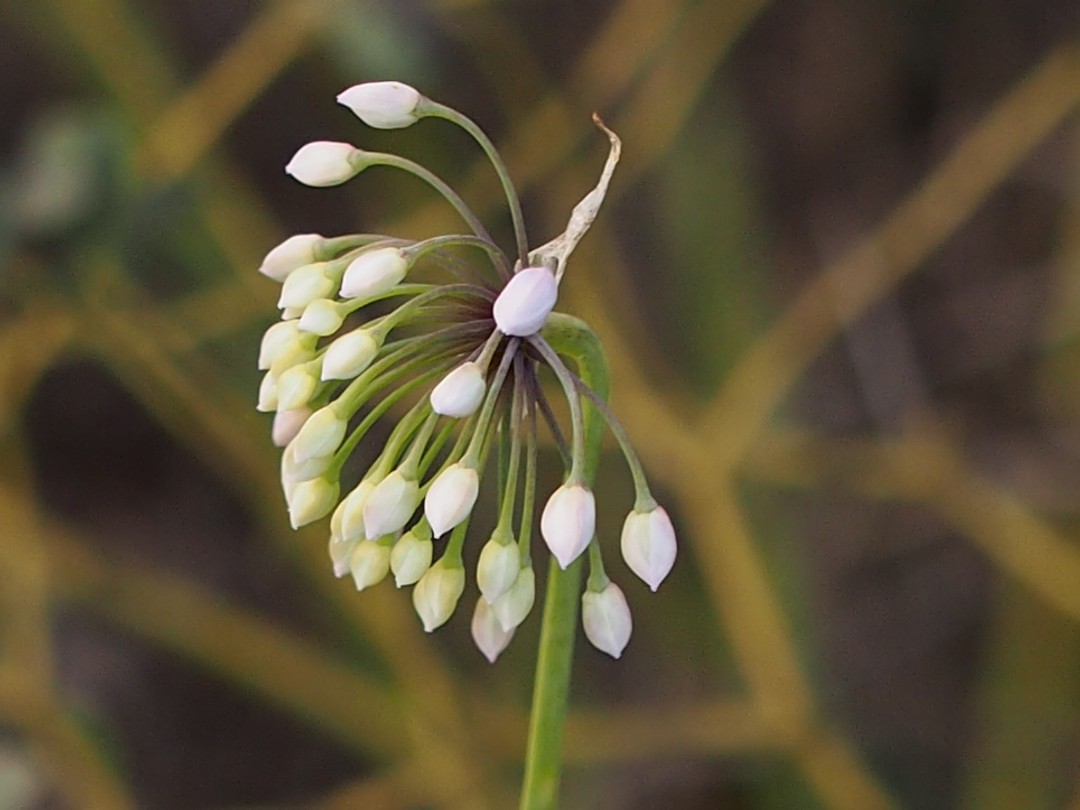
Developing buds 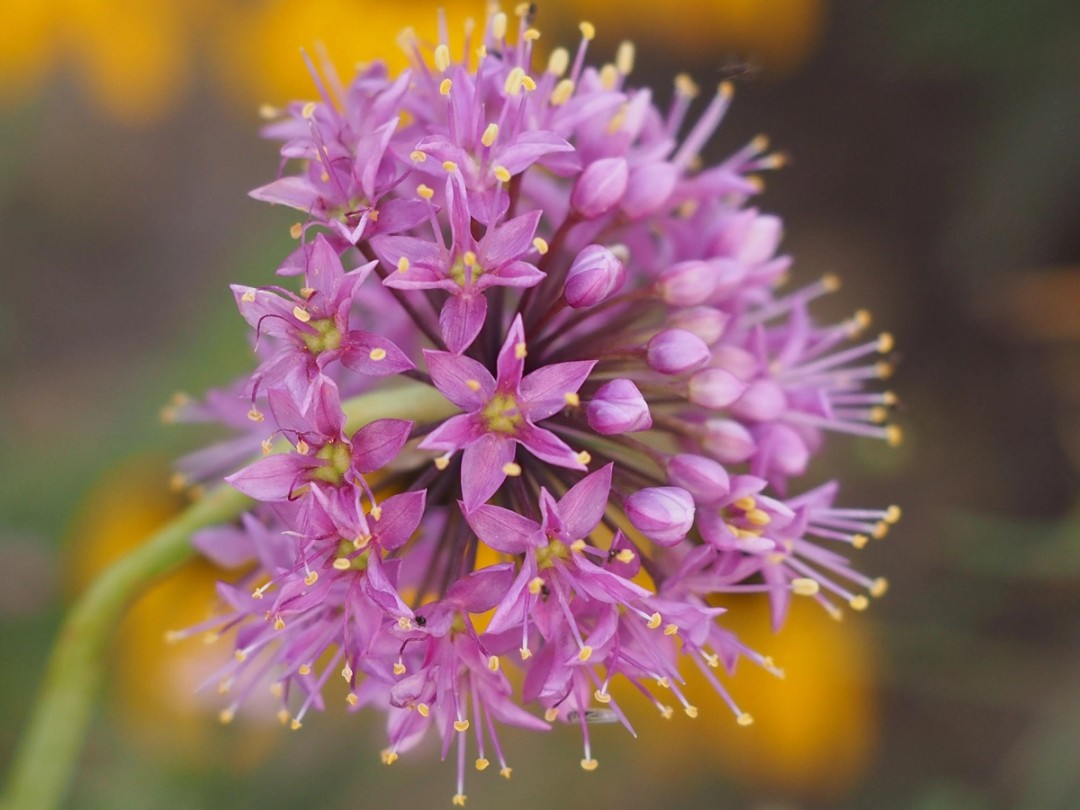
Peak flowering 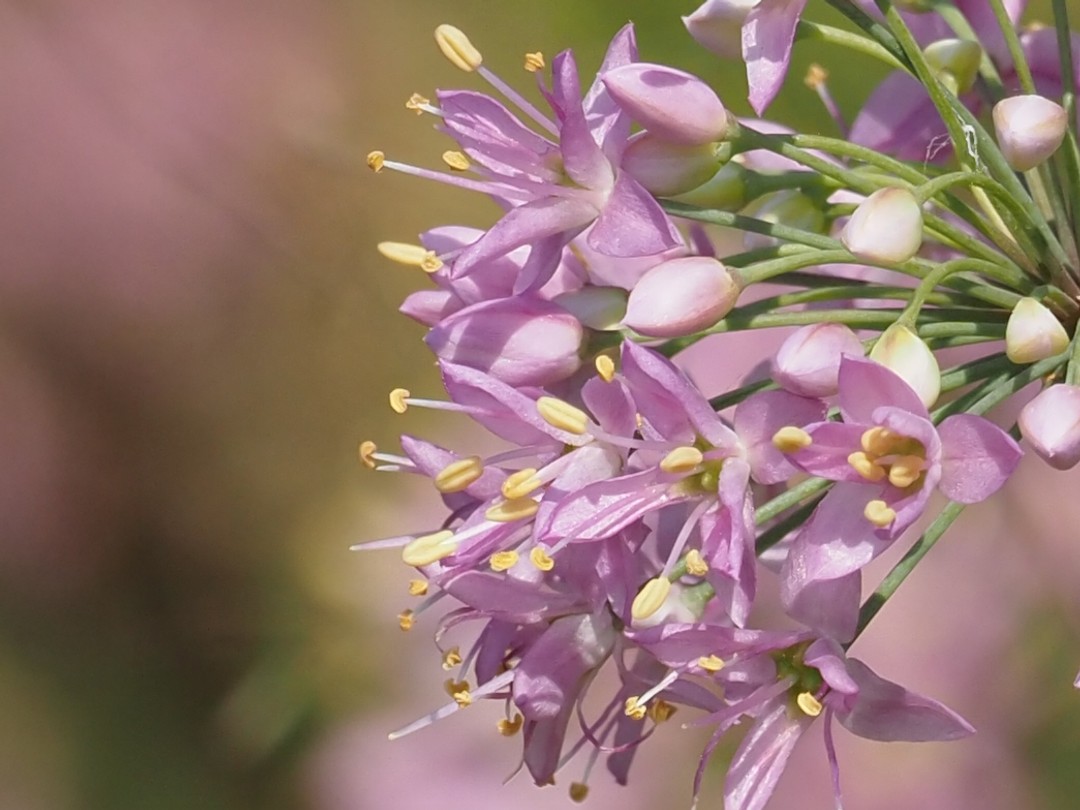
Style and stamens 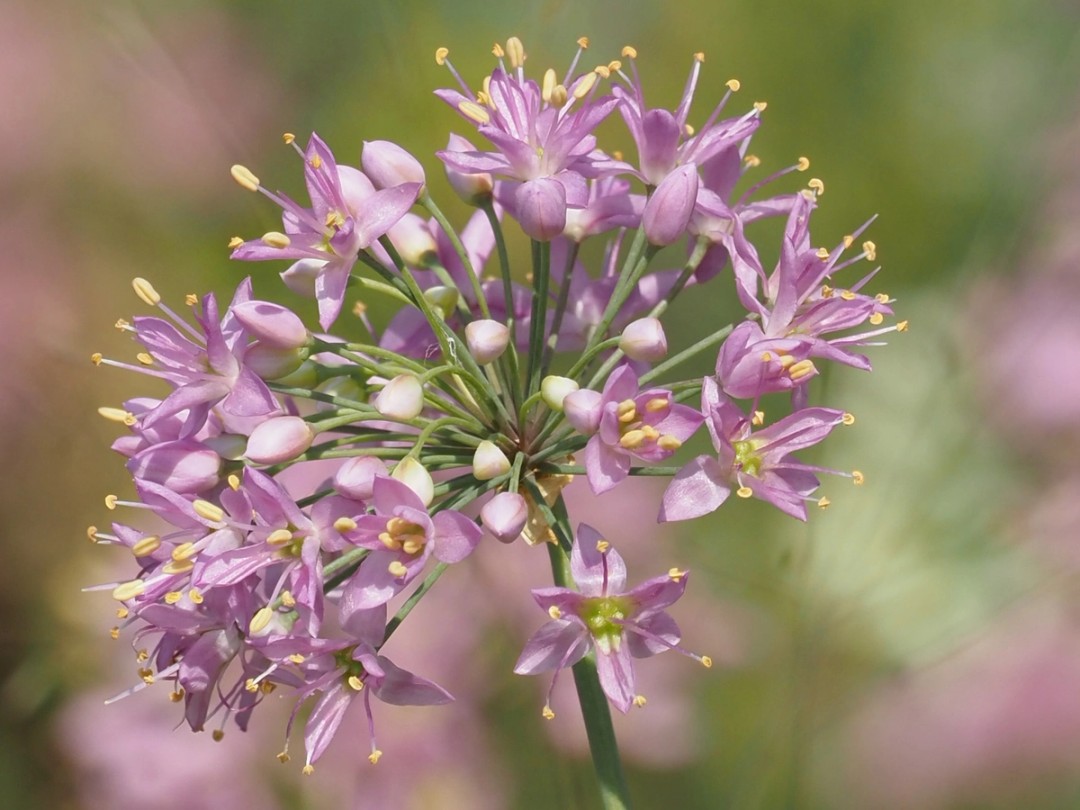
Buds, flowers, styles, stamens
DESCRIPTION
This beautiful wildflower grows to a height of about 1-1.5 feet. The erect stem is hairless. There are only a few flat, basal, linear leaves. These deteriorate and are often absent by the time the plant blooms, especially in hot and dry conditions. Paper-like bracts can be seen at the base of the flower. This perennial native plant originates from a bulb and has deep roots that enable it to survive and even bloom during droughts. Therefore, it’s an excellent choice for waterwise or xeriscape gardens. While not an aggressive plant, Glade onion will gradually spread when growing in favorable conditions. It multiplies both by seeds and bulblets (bulb offsets). The black seeds ripen by November and can be easily collected and dispersed, if desired.
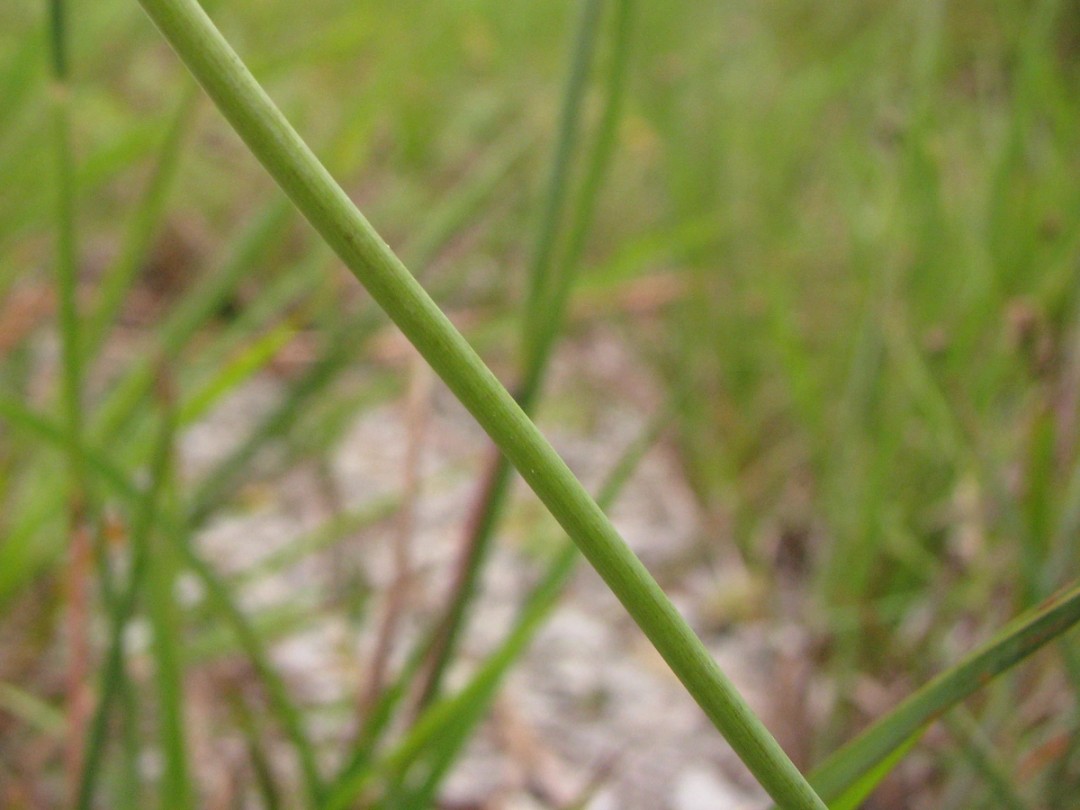
Hairless stem 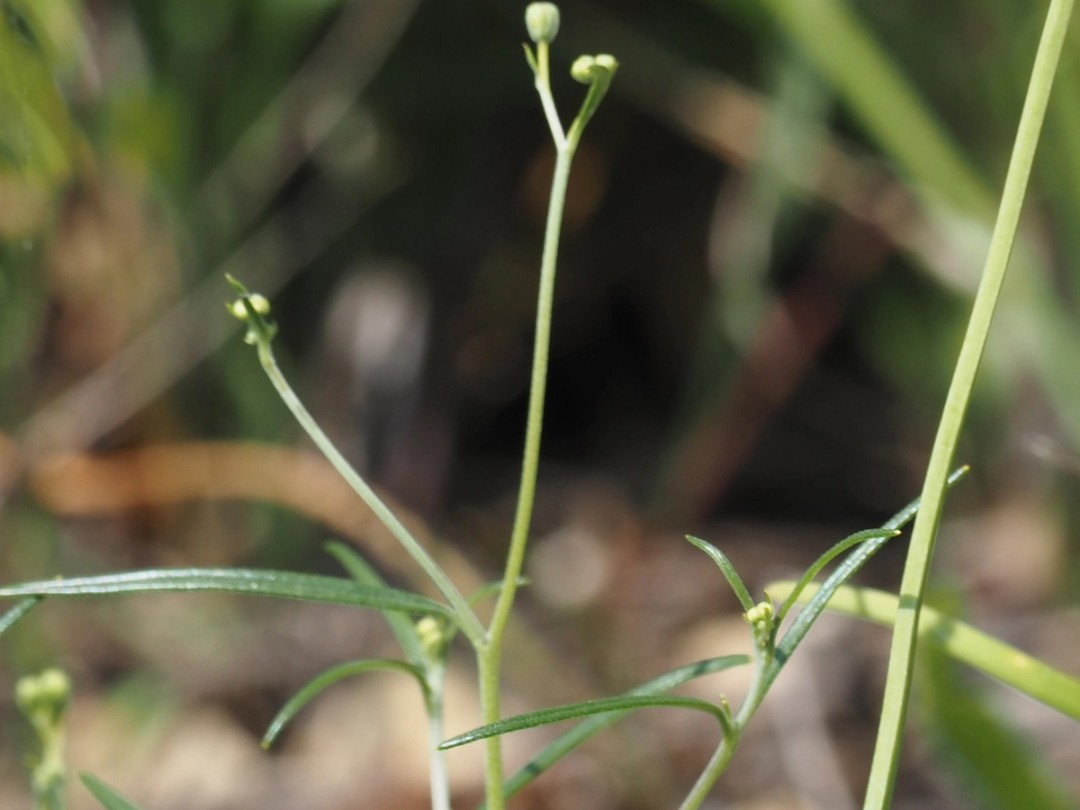
Early leaves 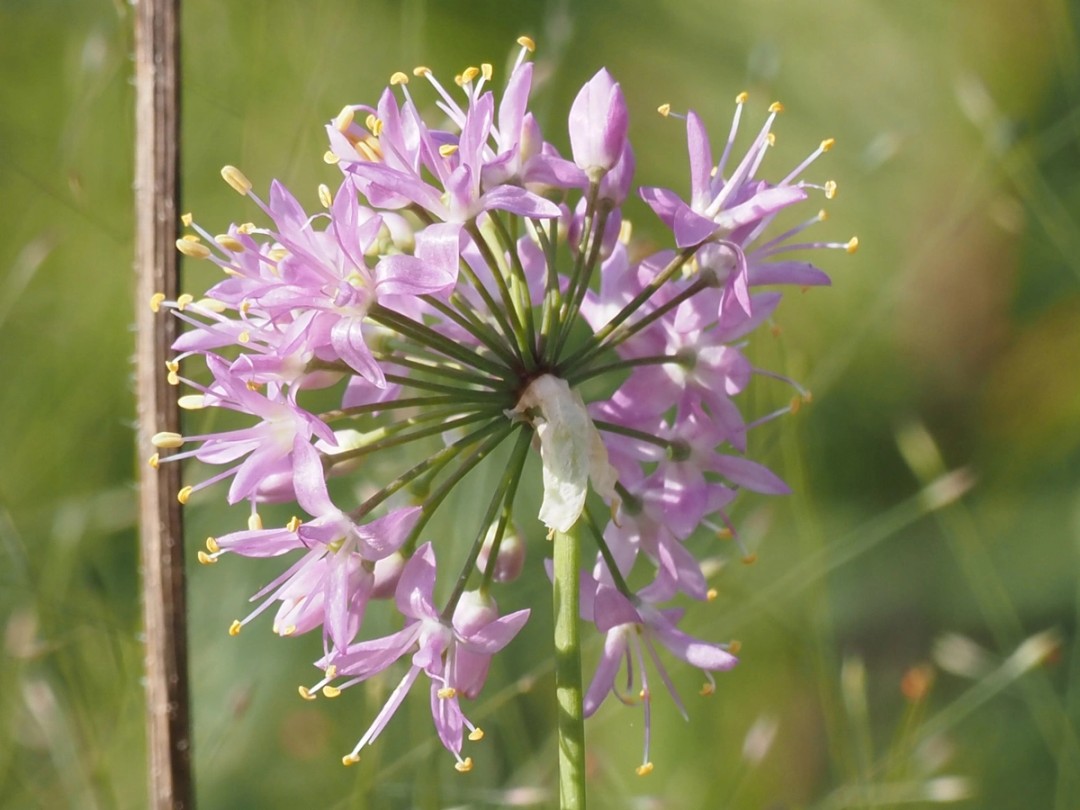
Papery bract 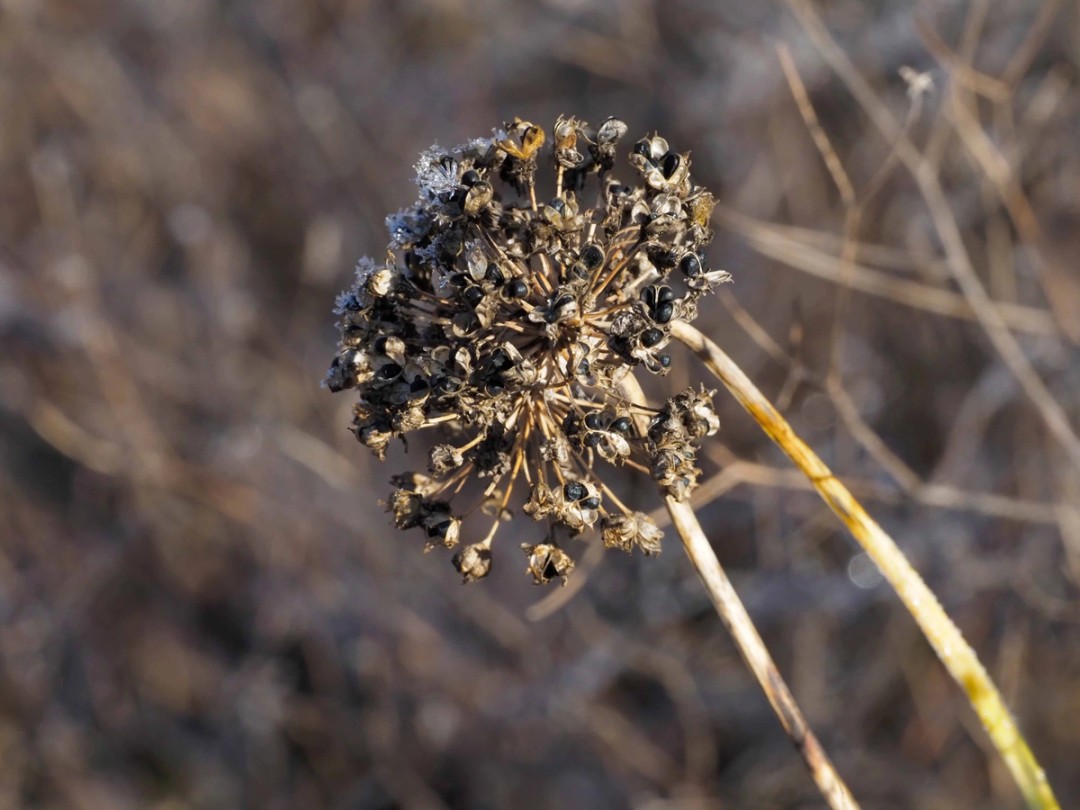
Ripe seeds
POLLINATORS
While I’ve read that Allium stellatum is primarily pollinated by small flying insects like flower flies and bees, I’ve also documented larger pollinators such as scoliid wasps,carpenter bees, and american bumblebees visiting the flowers. Additionally, I’ve noticed skippers nectaring on the flowers, including the southern broken-dash and fiery skippers.
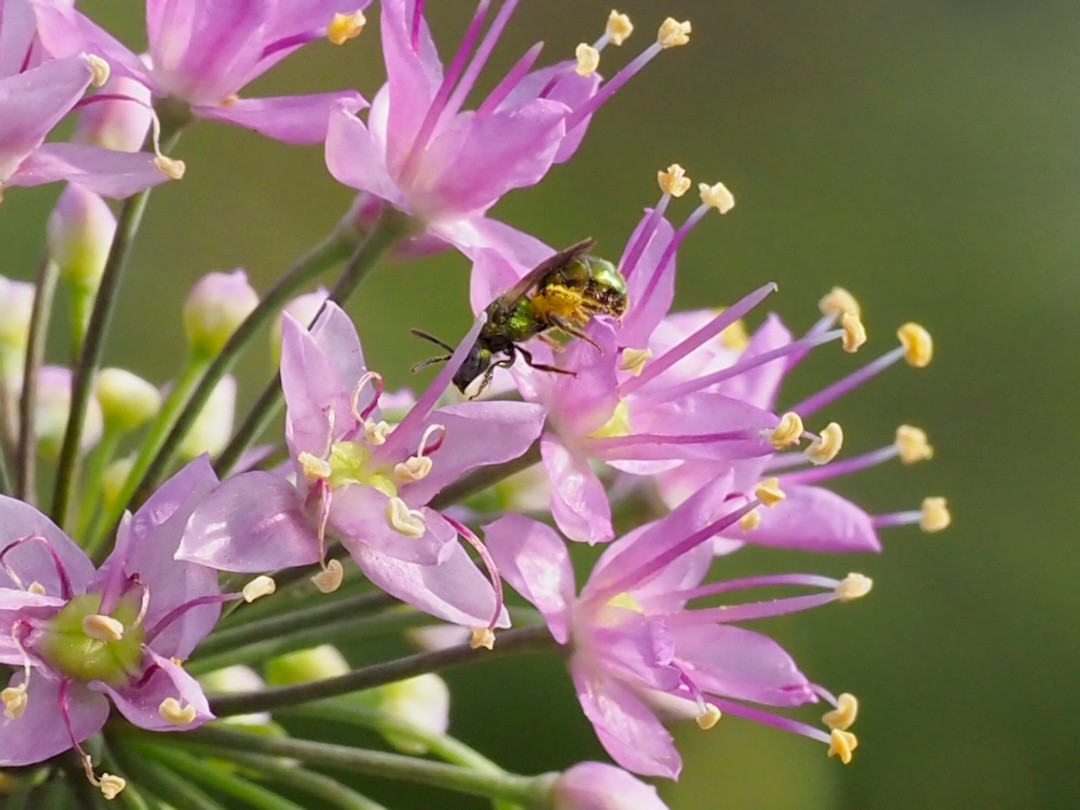
Metallic green sweat bee 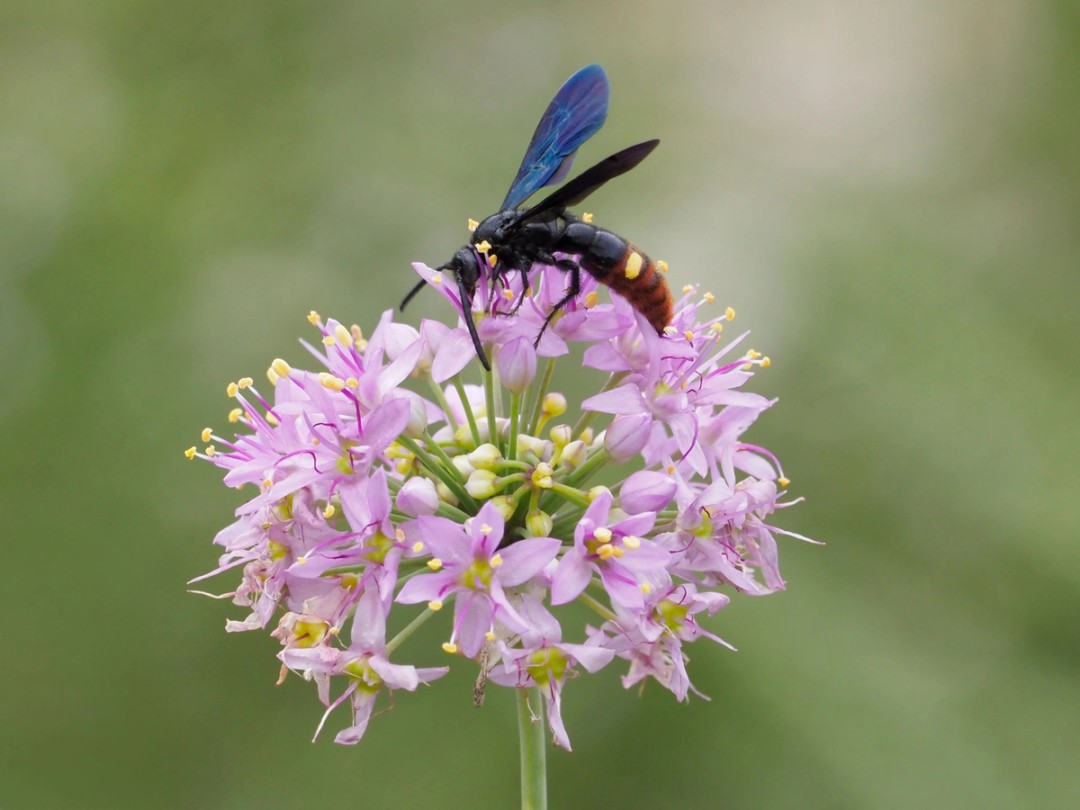
Blue-winged scoliid wasp 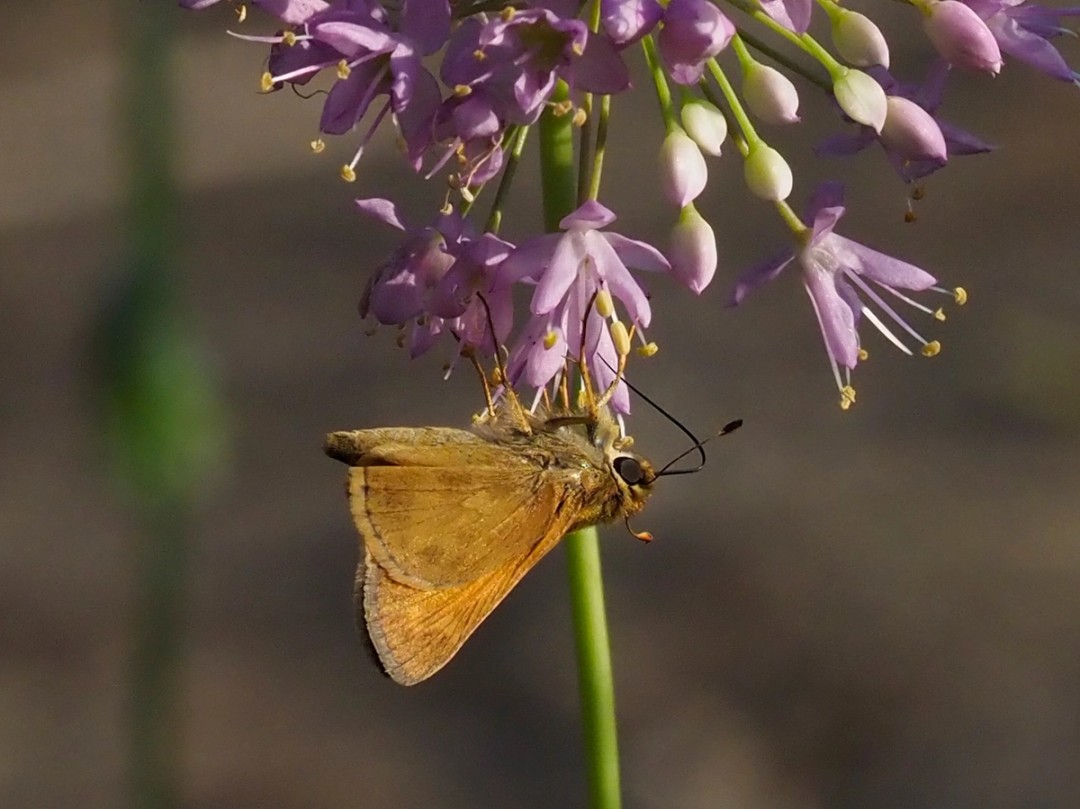
Huron skipper 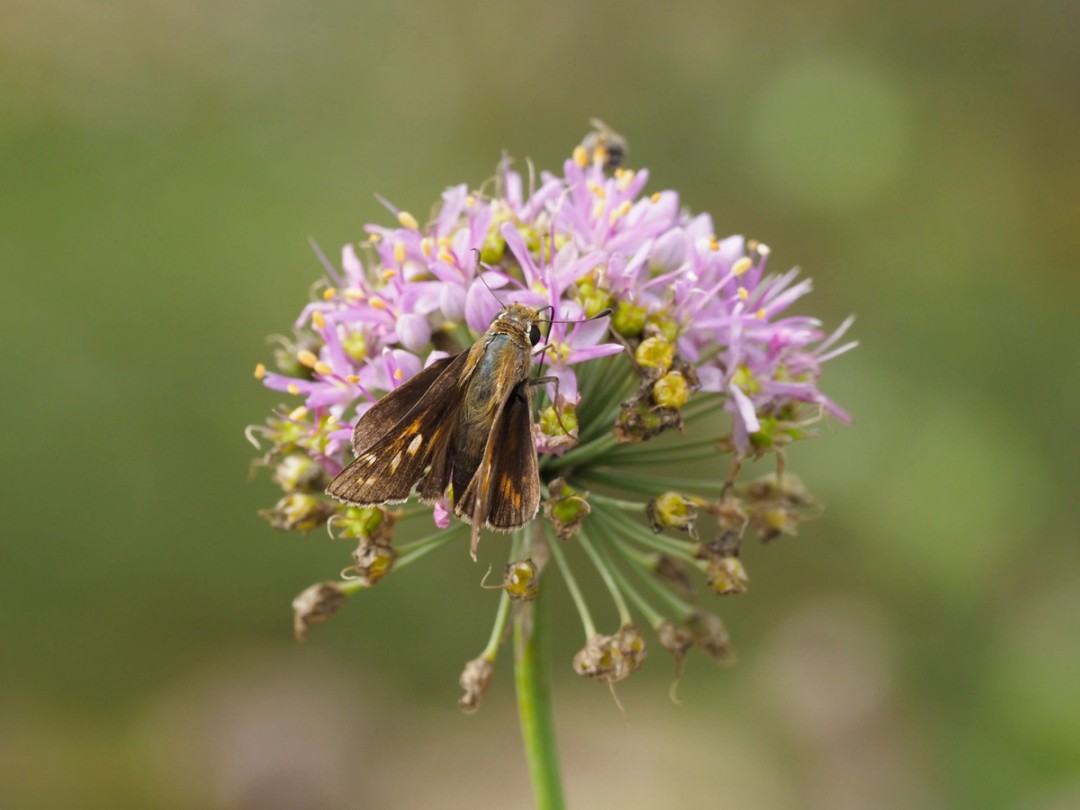
Sachem skipper 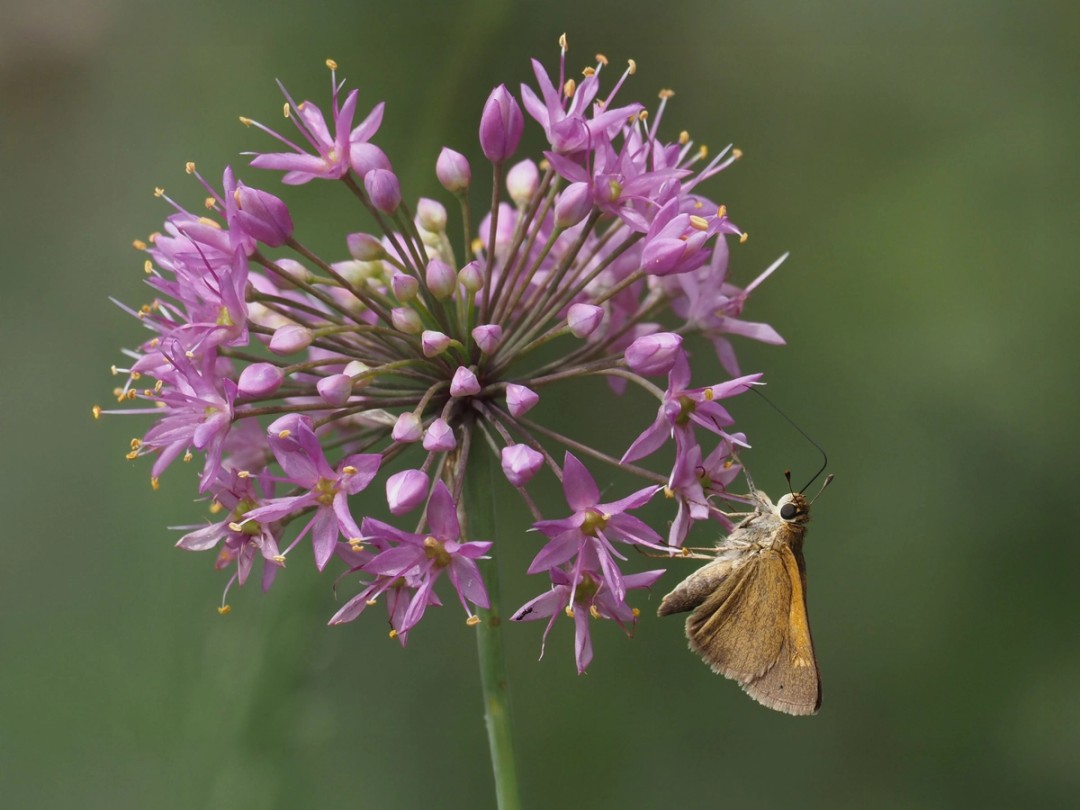
Tawny-edged skipper 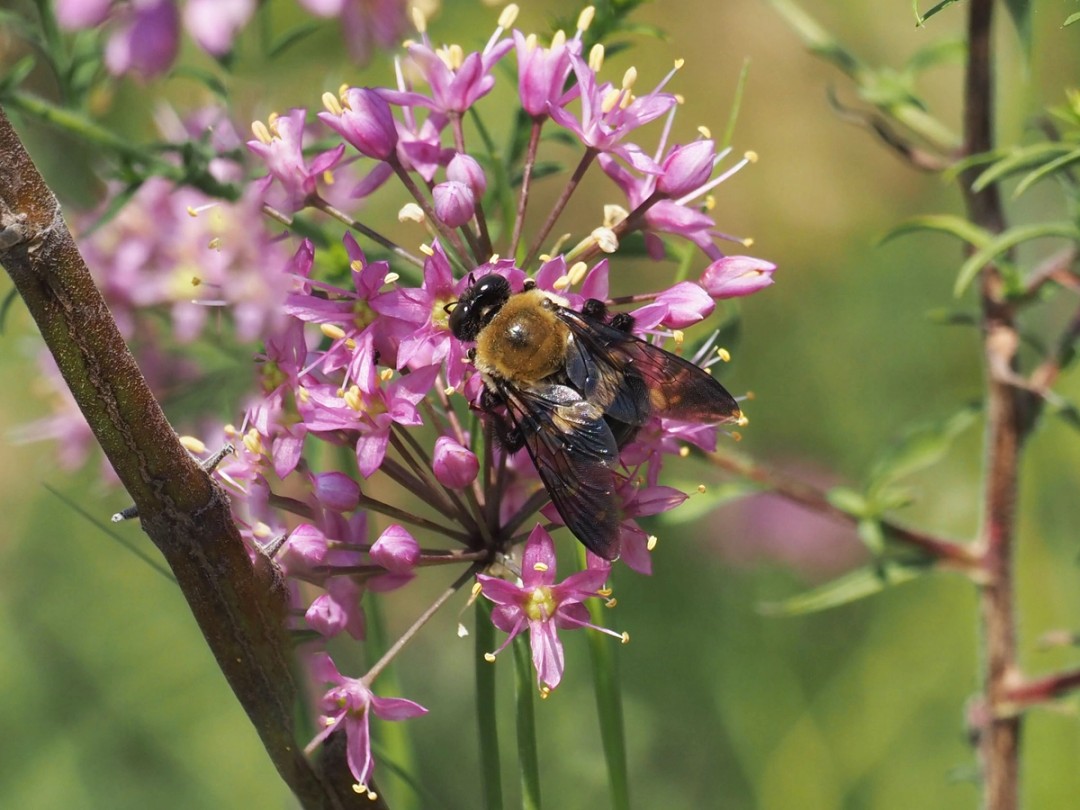
Large carpenter bee (Xylocopa virginica) 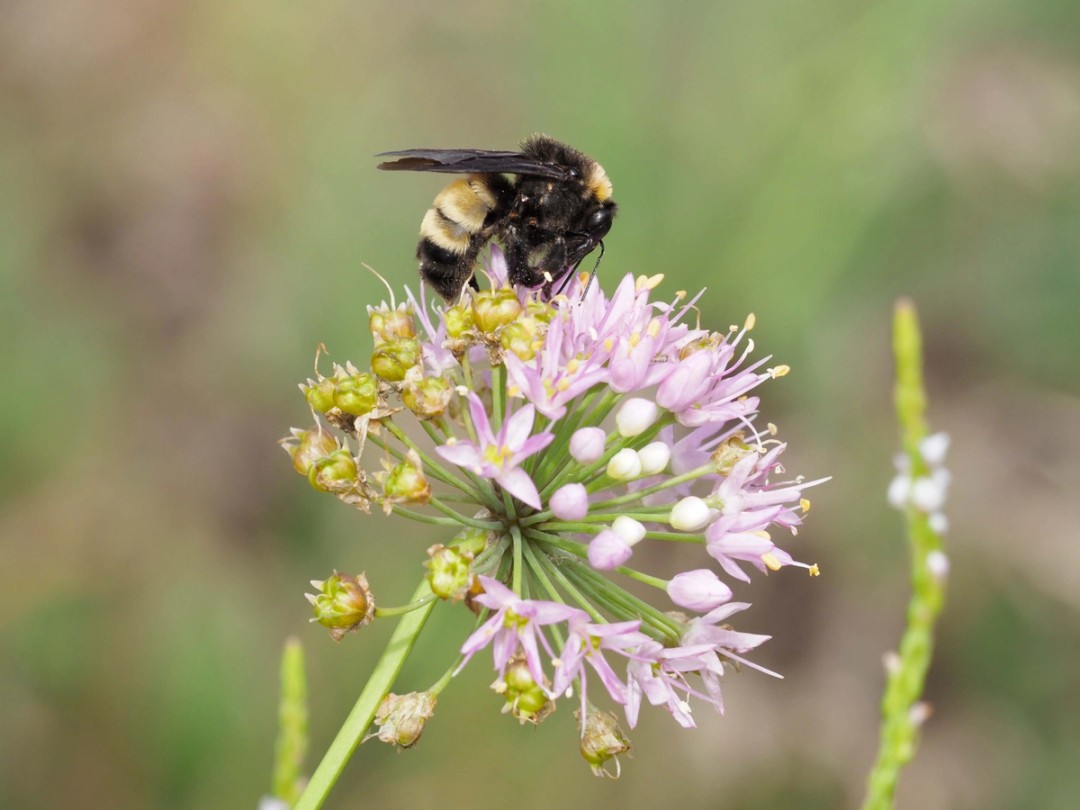
American bumble bee (female) 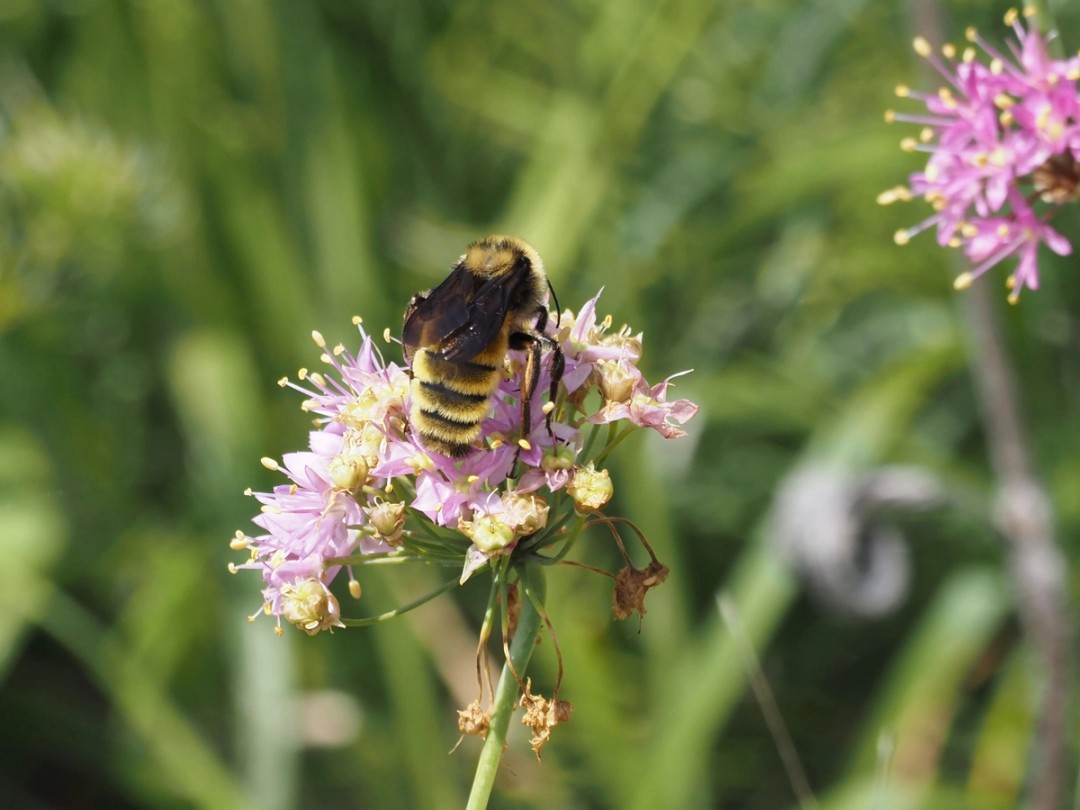
American bumble bee (male)
Blister beetles and cucumber beetles feed on the flowers and may inadvertently transfer pollen grains from one flower to another. Ants are occasionally seen visiting the flowers as well. They are primarily feeding on the nectar.
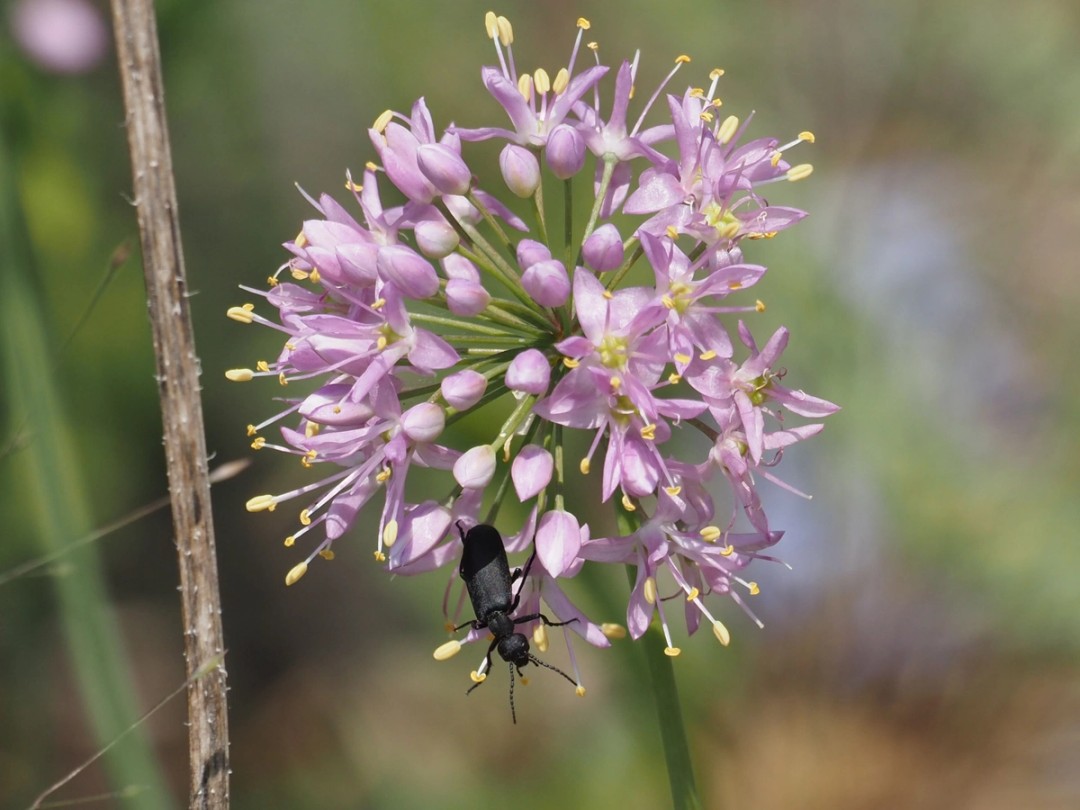
Blister beetle 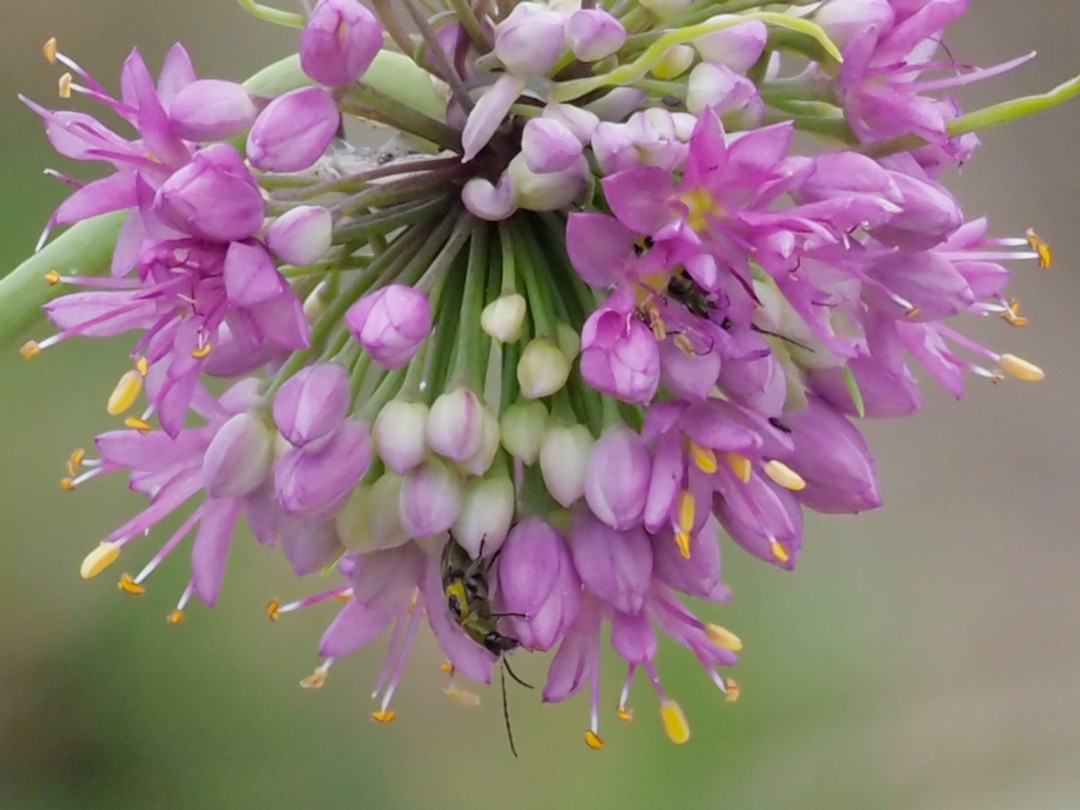
Spotted cucumber beetle
PLANTS GROWING NEARBY
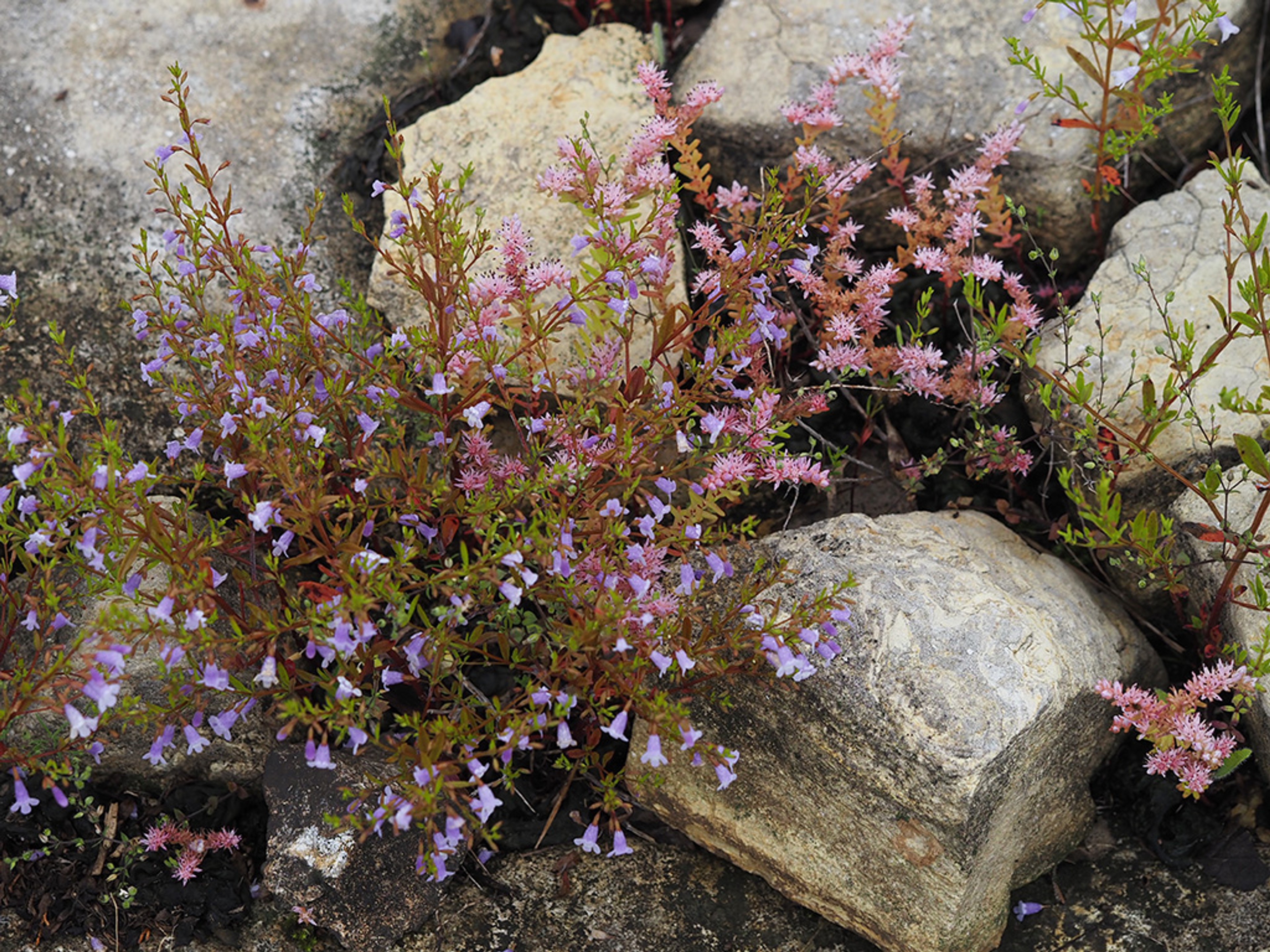
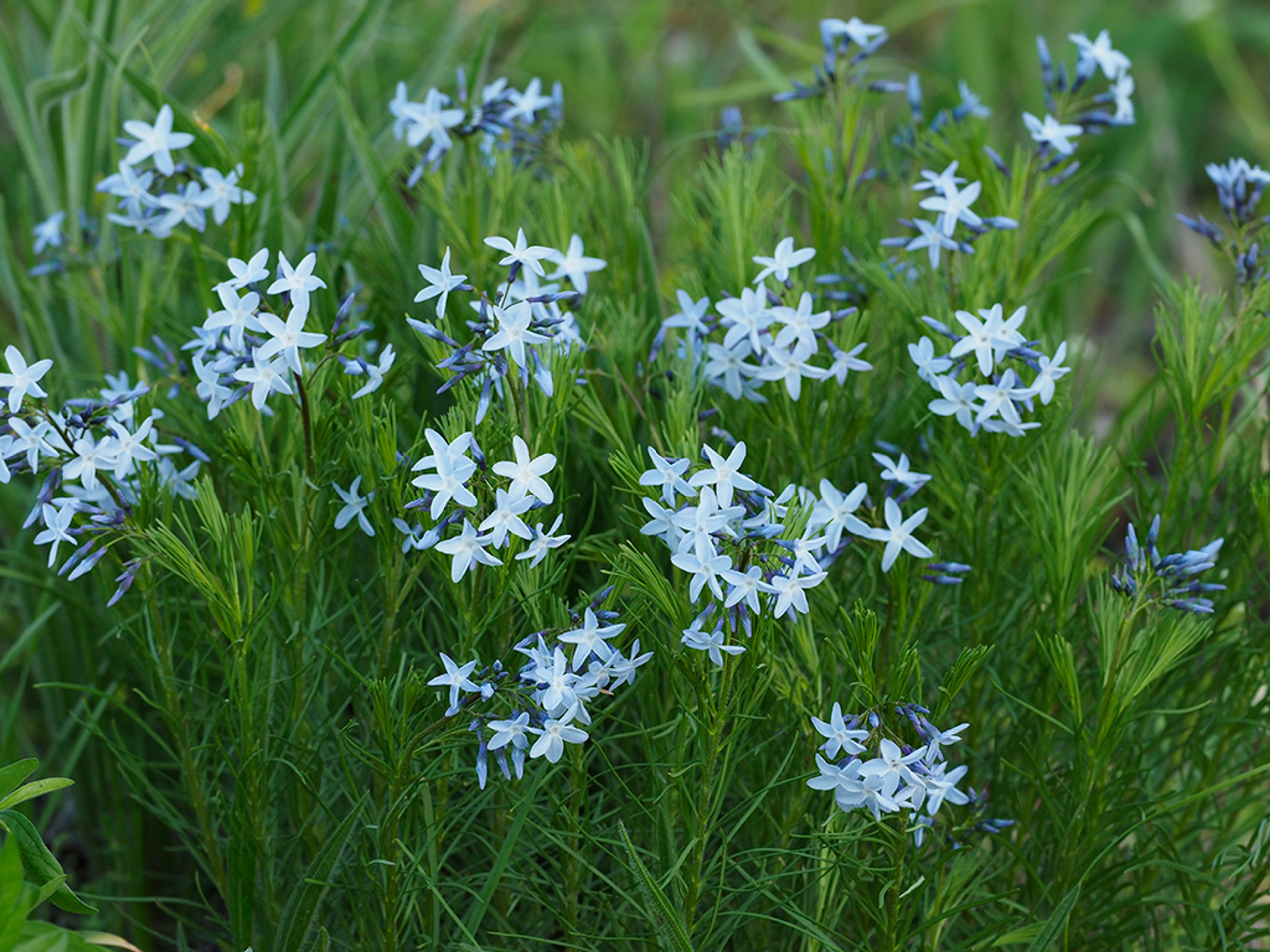
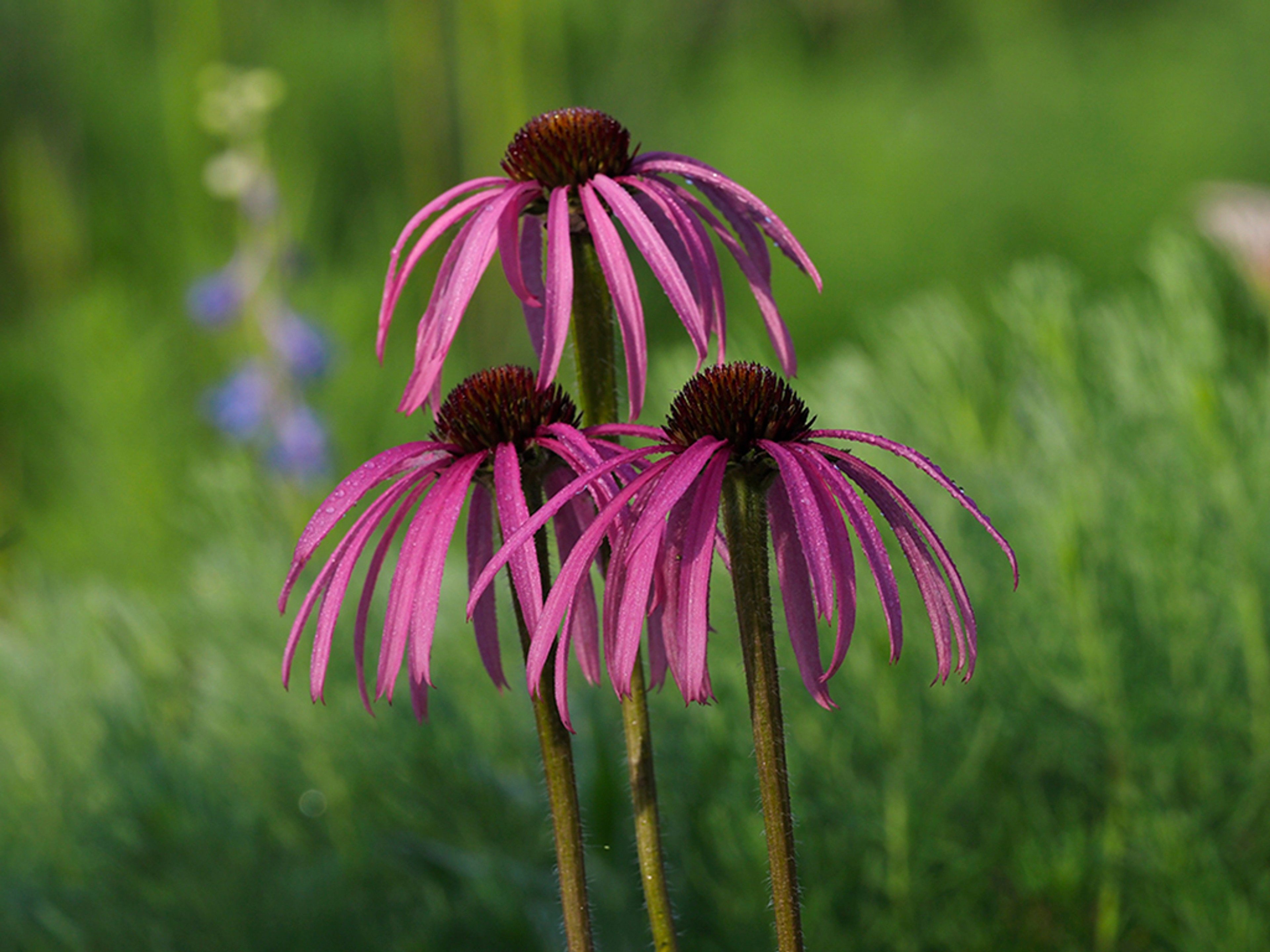
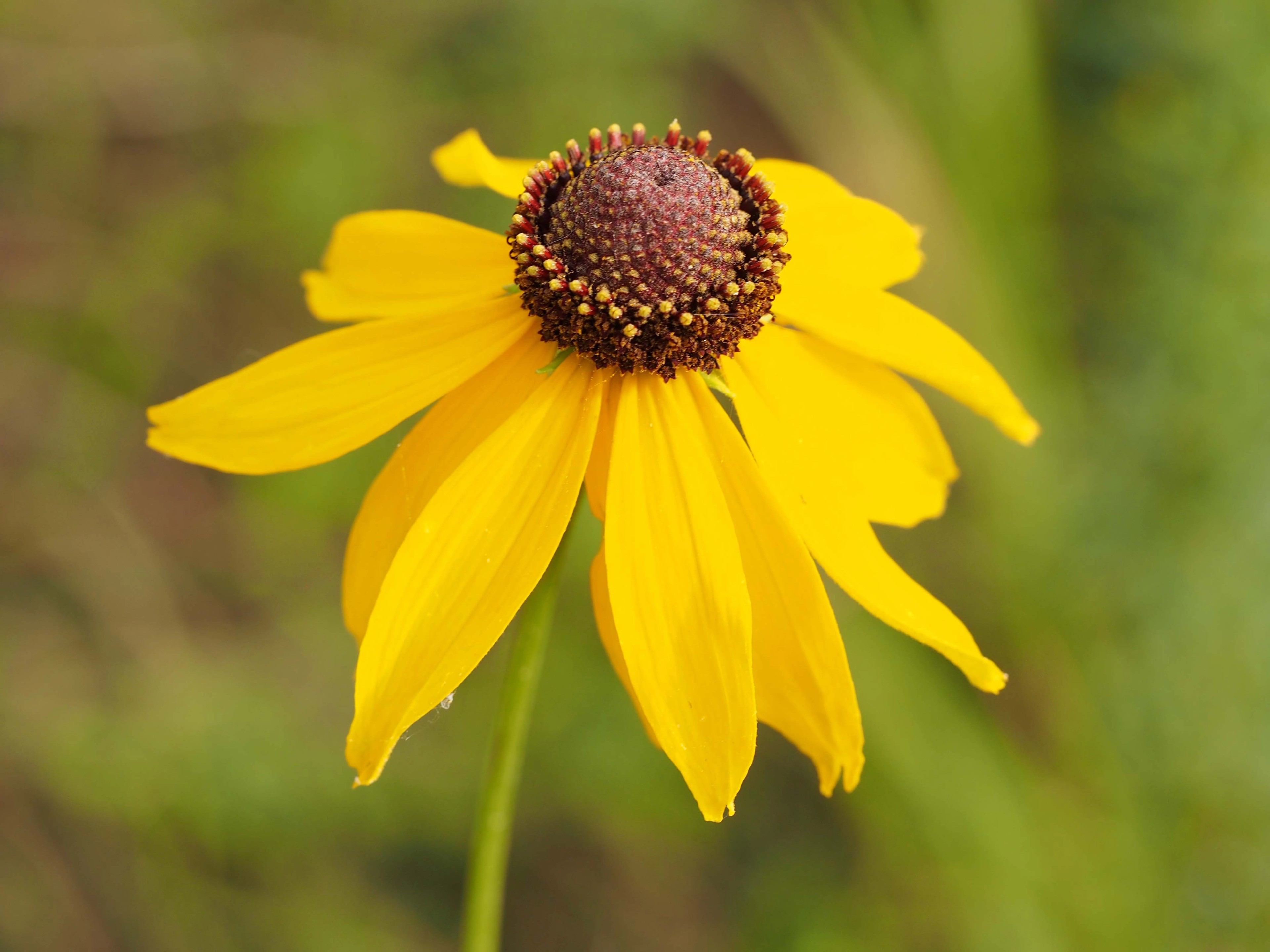
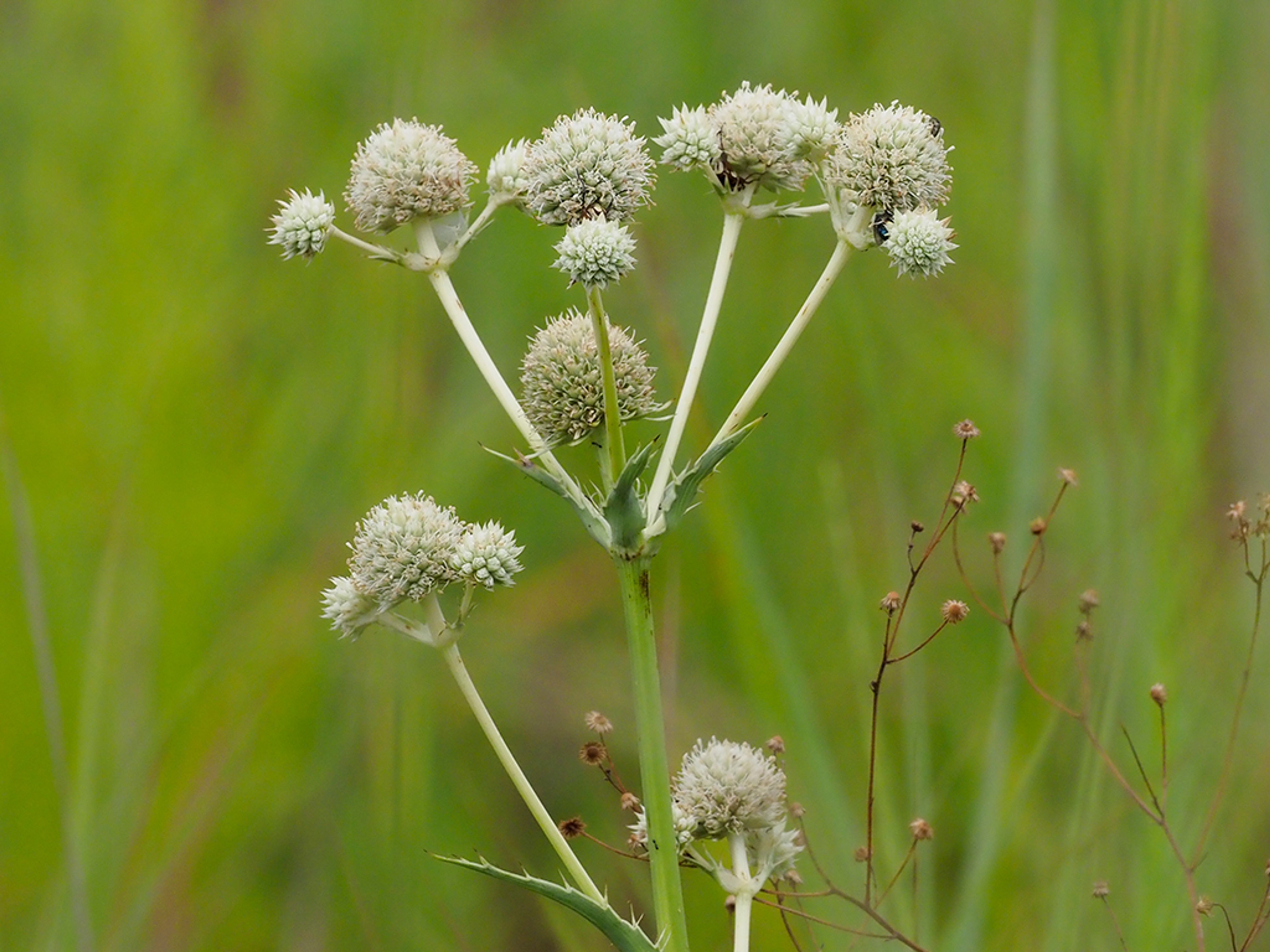
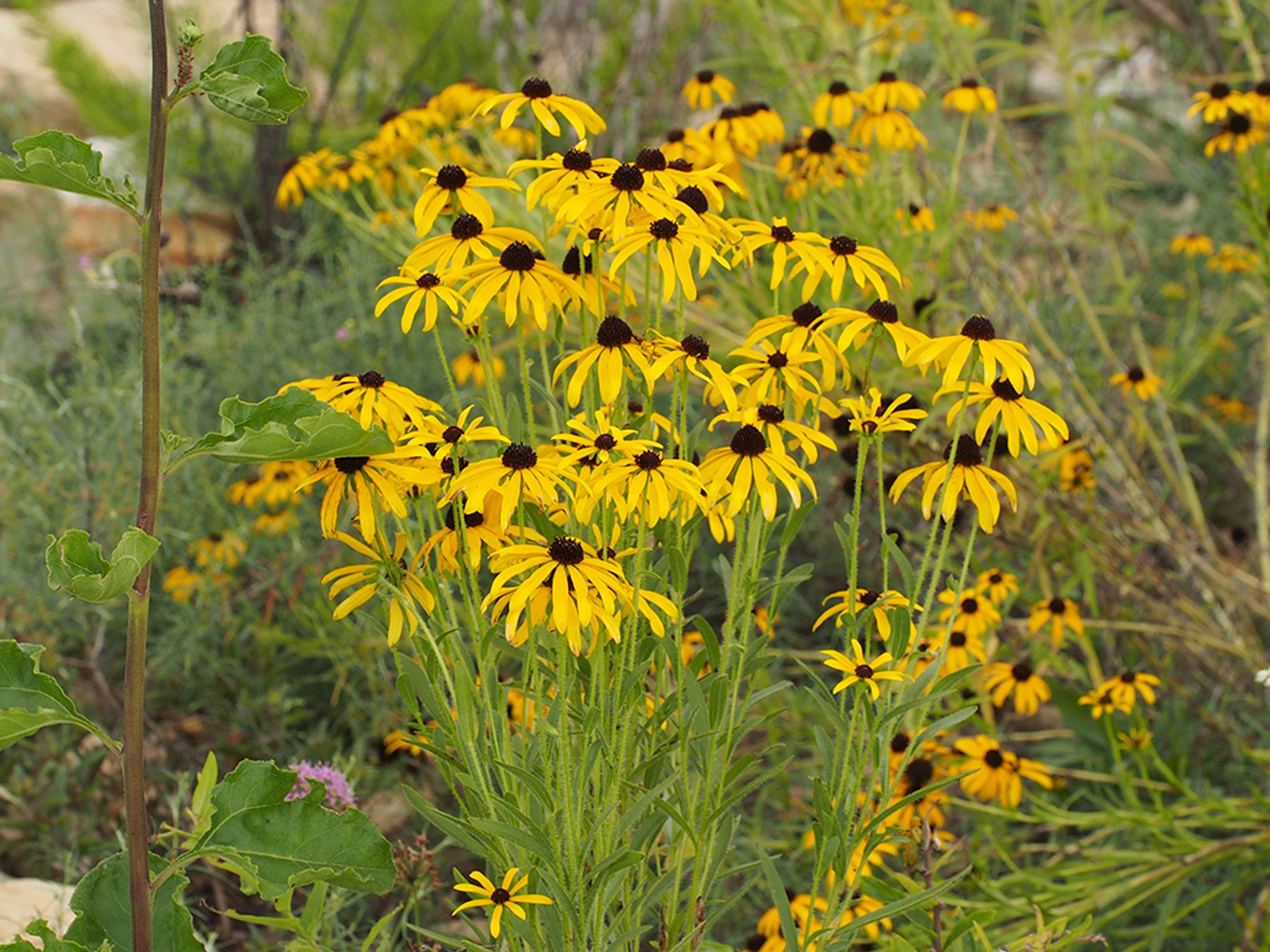
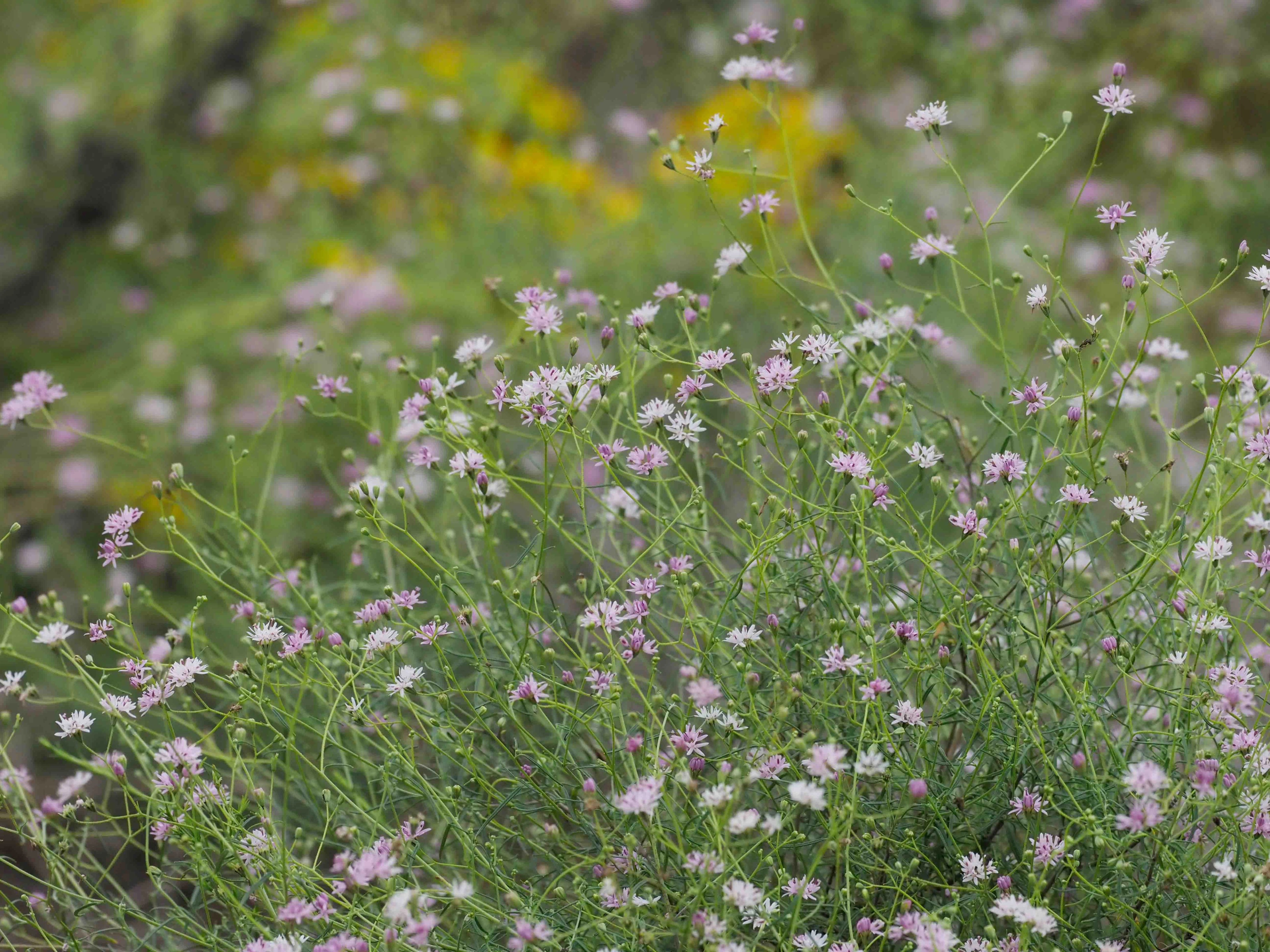
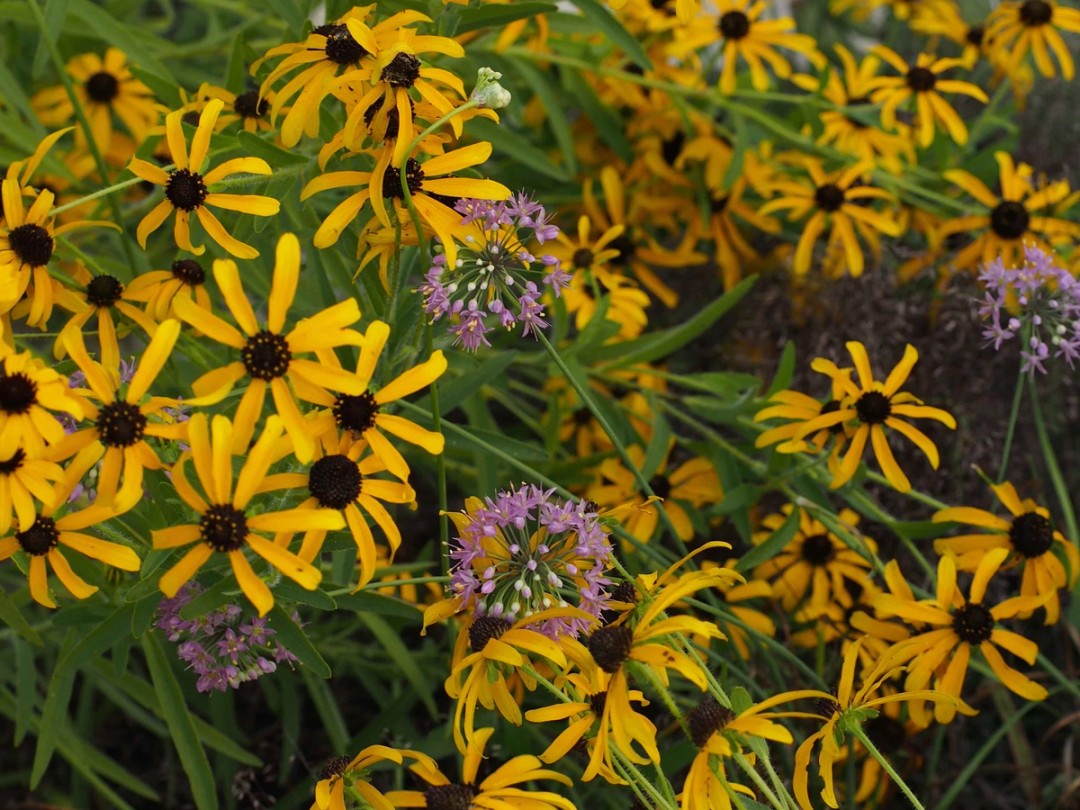
Numerous glade plants thrive in the sunny, rocky habitat near Allium stellatum. Rudbeckia missouriensis, commonly known as the Missouri coneflower, frequently occupies the same space. Its striking orange-yellow flowers create a visually appealing contrast to the vibrant pink of Glade onion.
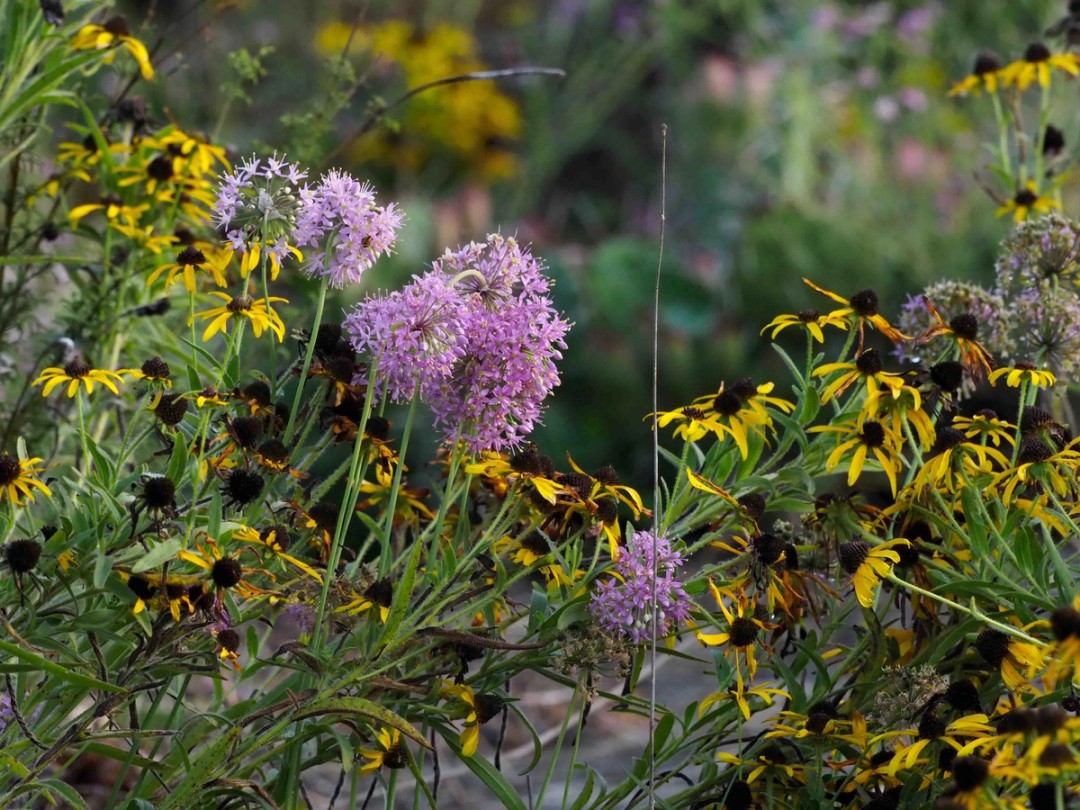
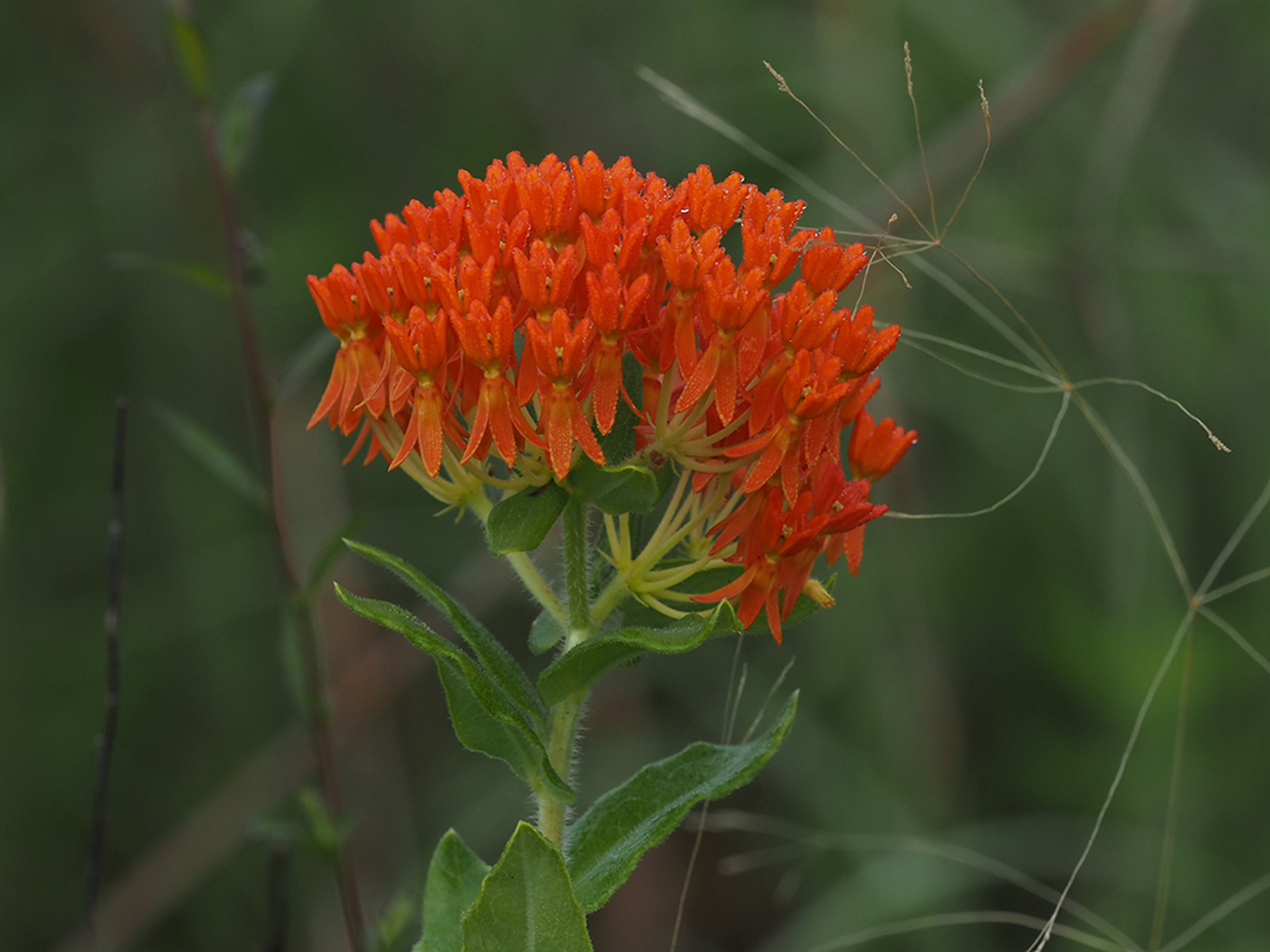
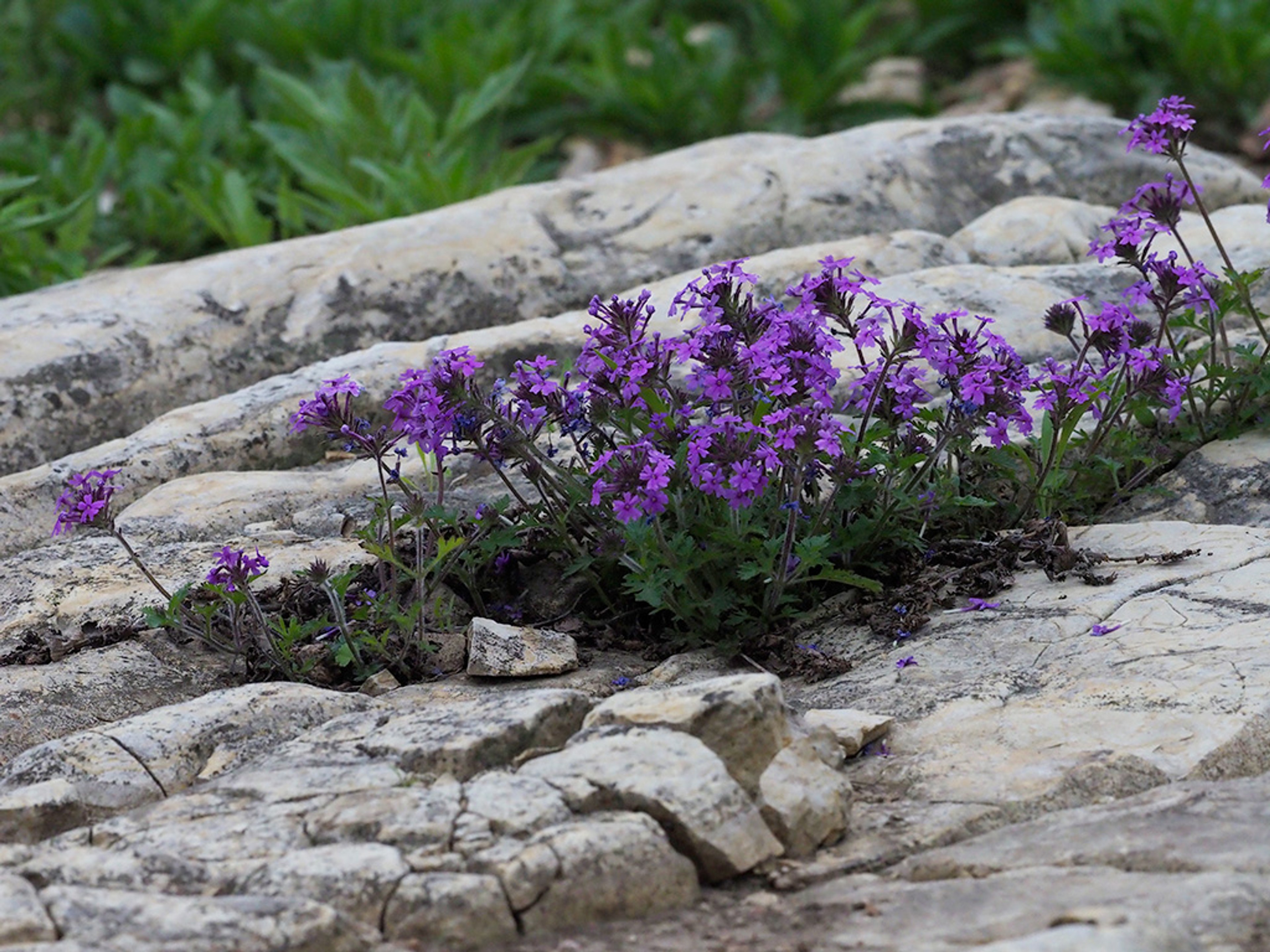
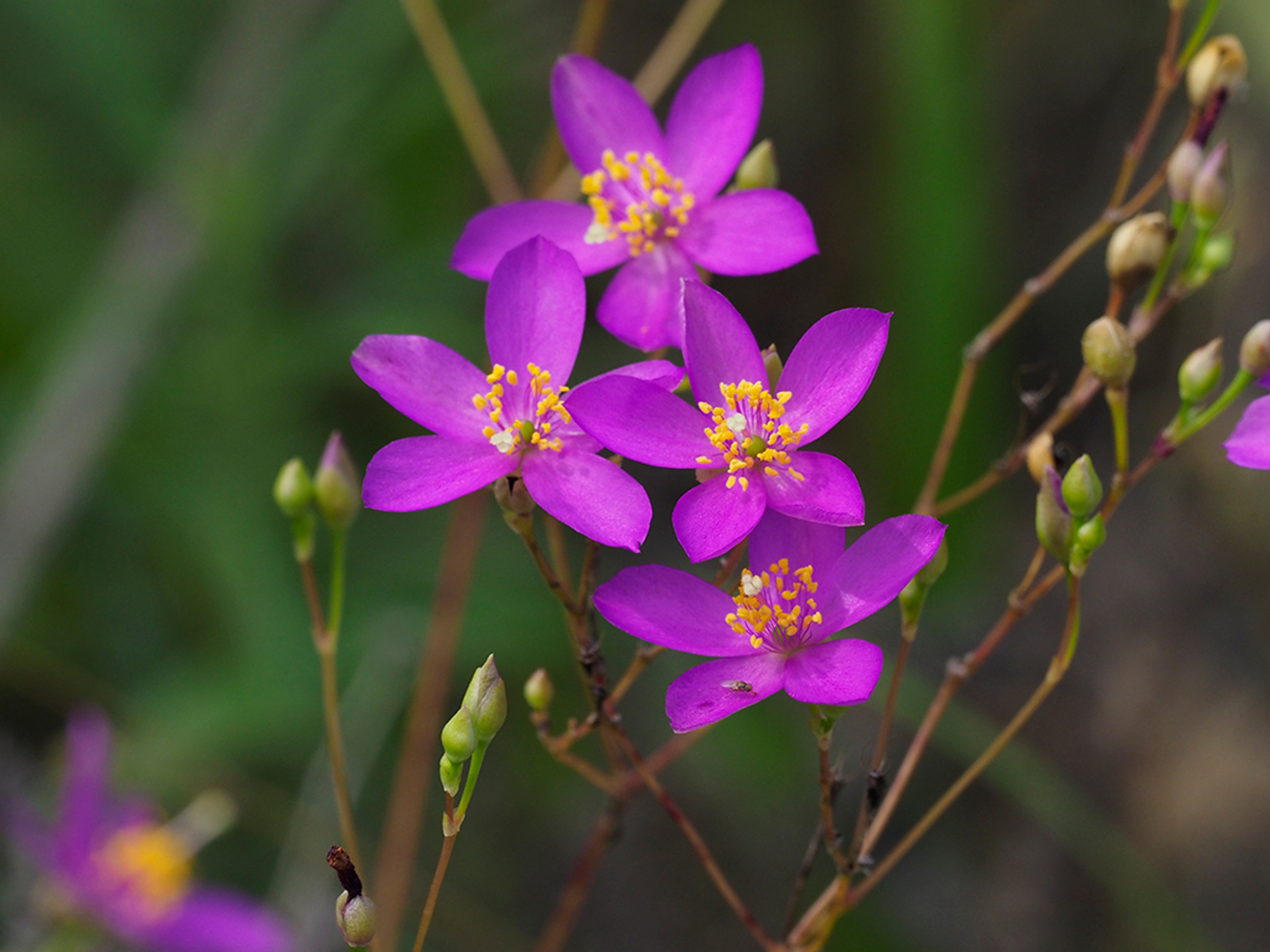
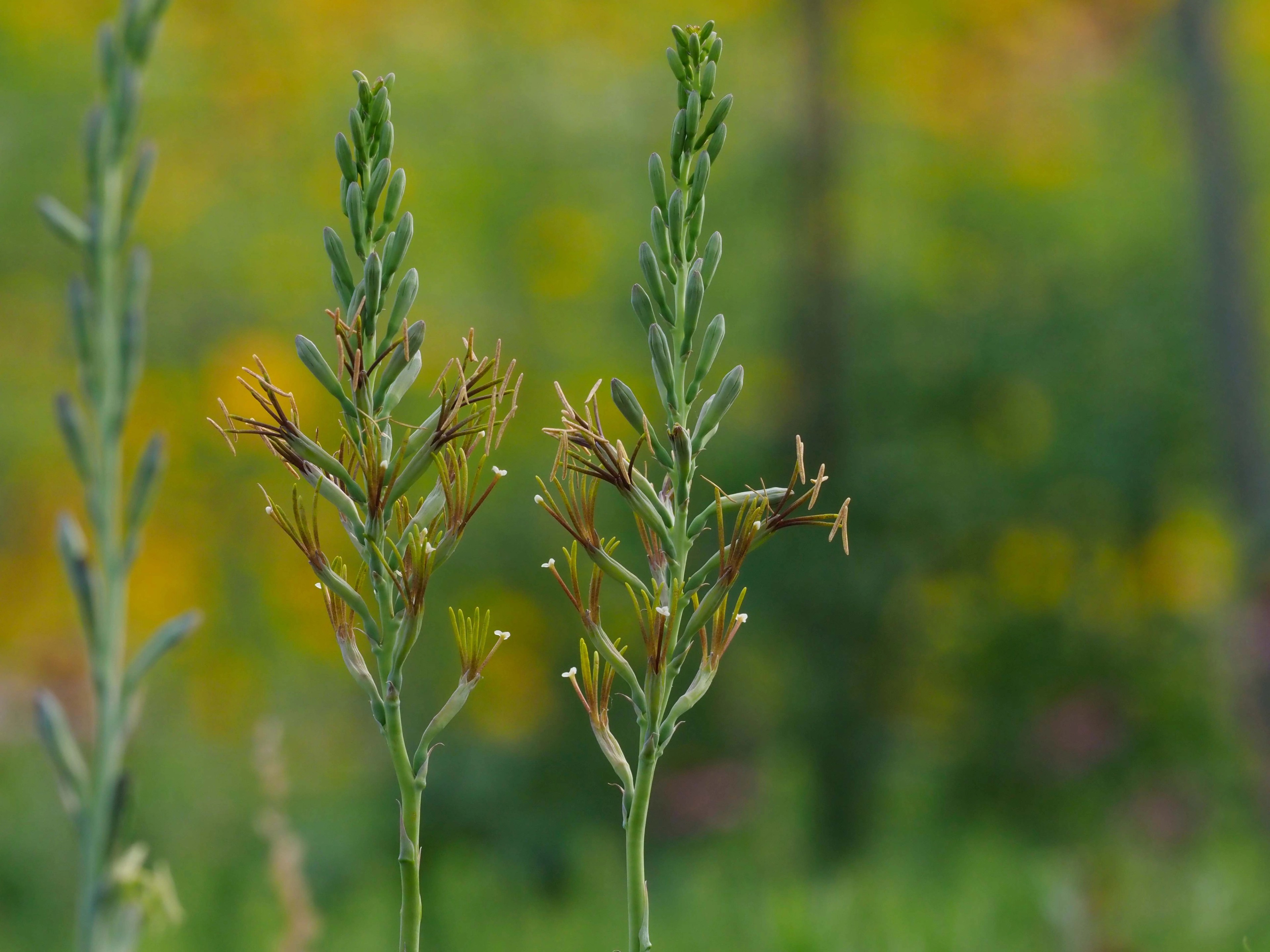
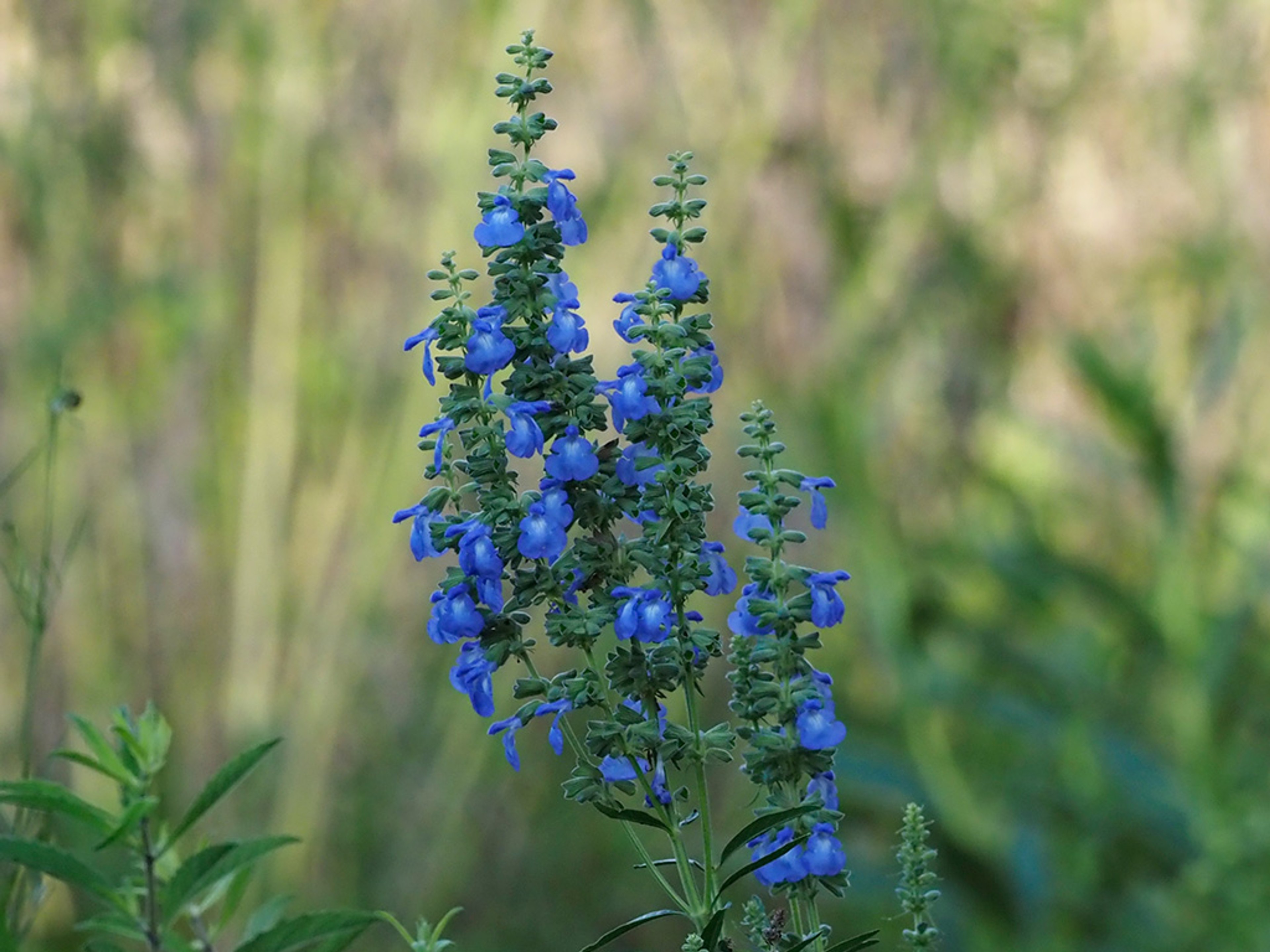
Fringed bluestar (Amsonia ciliata) has already finished flowering, but its leaves have turned a stunning golden shade that contrasts beautifully when growing near Allium stellatum. Butterfly milkweed (Asclepias tuberosa) sometimes blooms in sync with Glade onion, its bright orange flowers impossible to miss. Blue sage (Salvia azurea) is a beautiful companion and is occasionally found blooming near Glade onion, but overall, it requires more moisture and will wilt during droughts. Small Palafoxia (Palafoxia callosa) manages dry conditions well and sometimes blooms simultaneously with Glade onion.
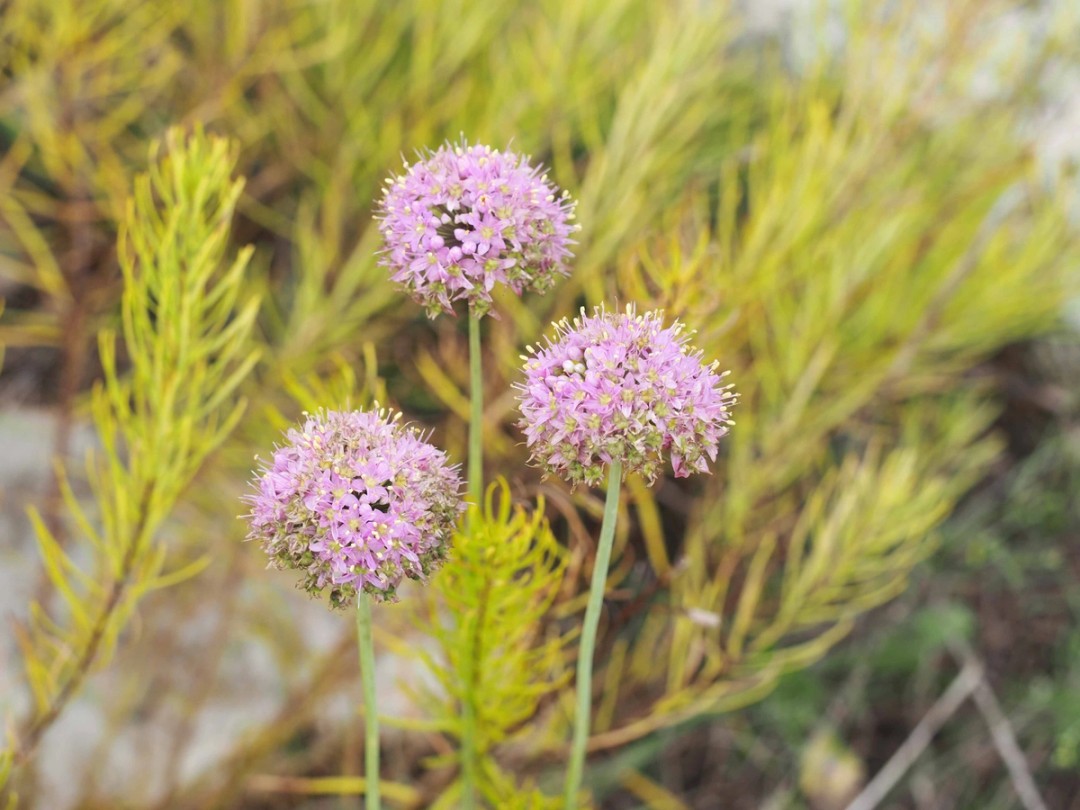
with Amsonia ciliata 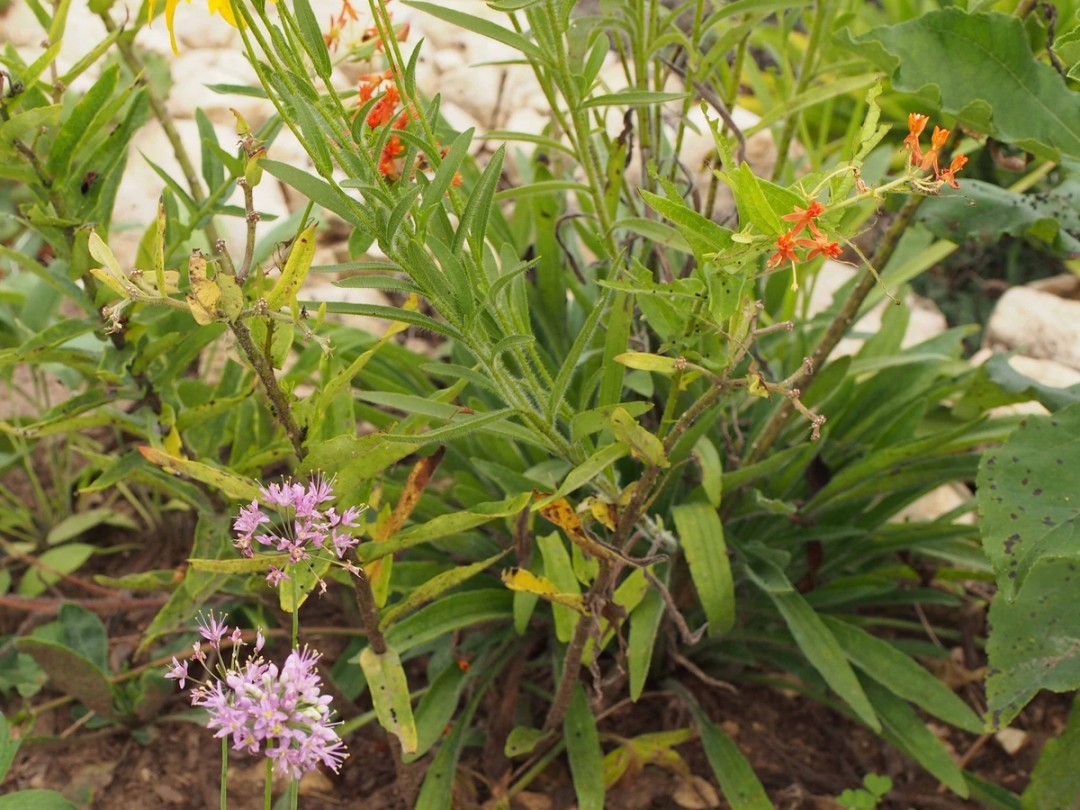
with Asclepias tuberosa 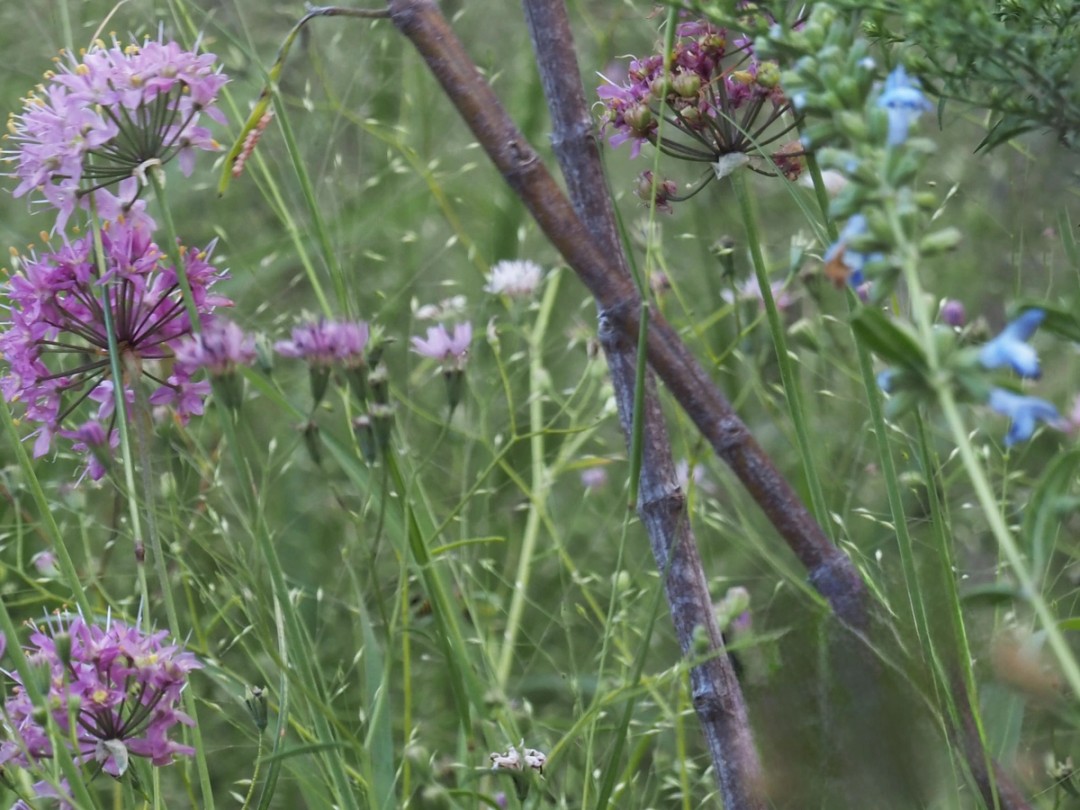
with Salvia azurea 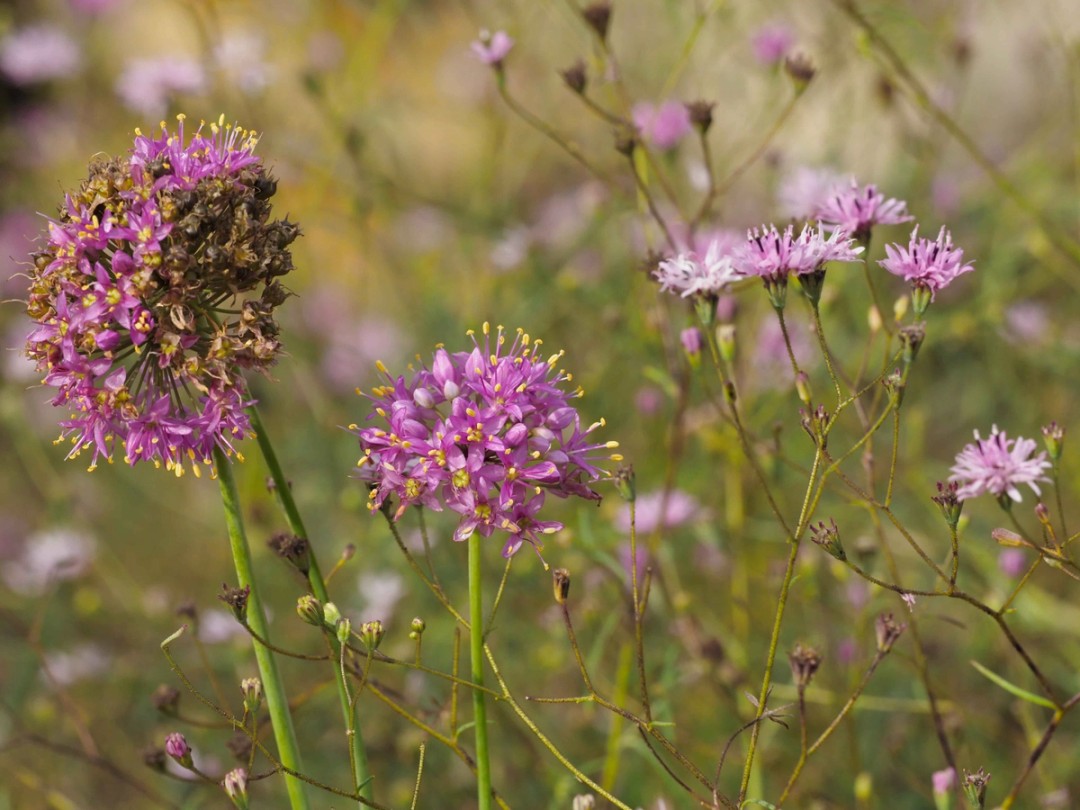
with Palafoxia callosa
HABITAT
Allium stellatum thrives in limestone glades, on bluffs, and occasionally in dry, open woods. With a bit of luck, you might catch a glimpse of its vibrant blooms along roadside glades that have been spared from mowing.
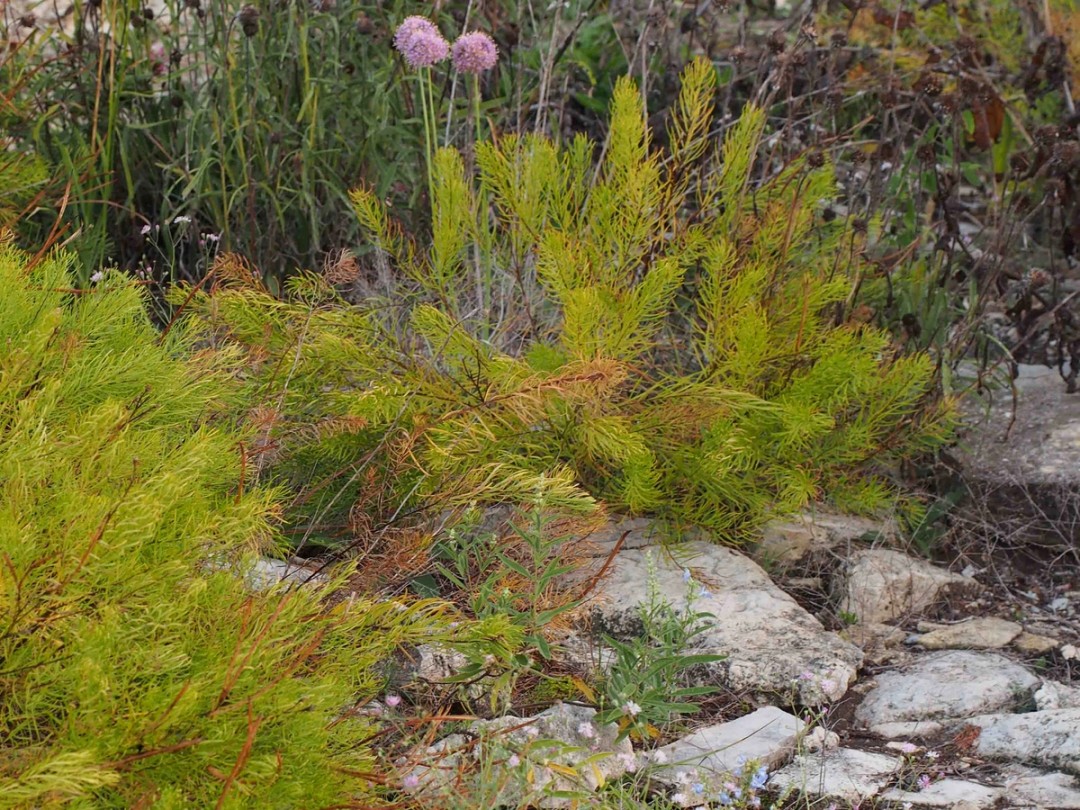
Glade habitat 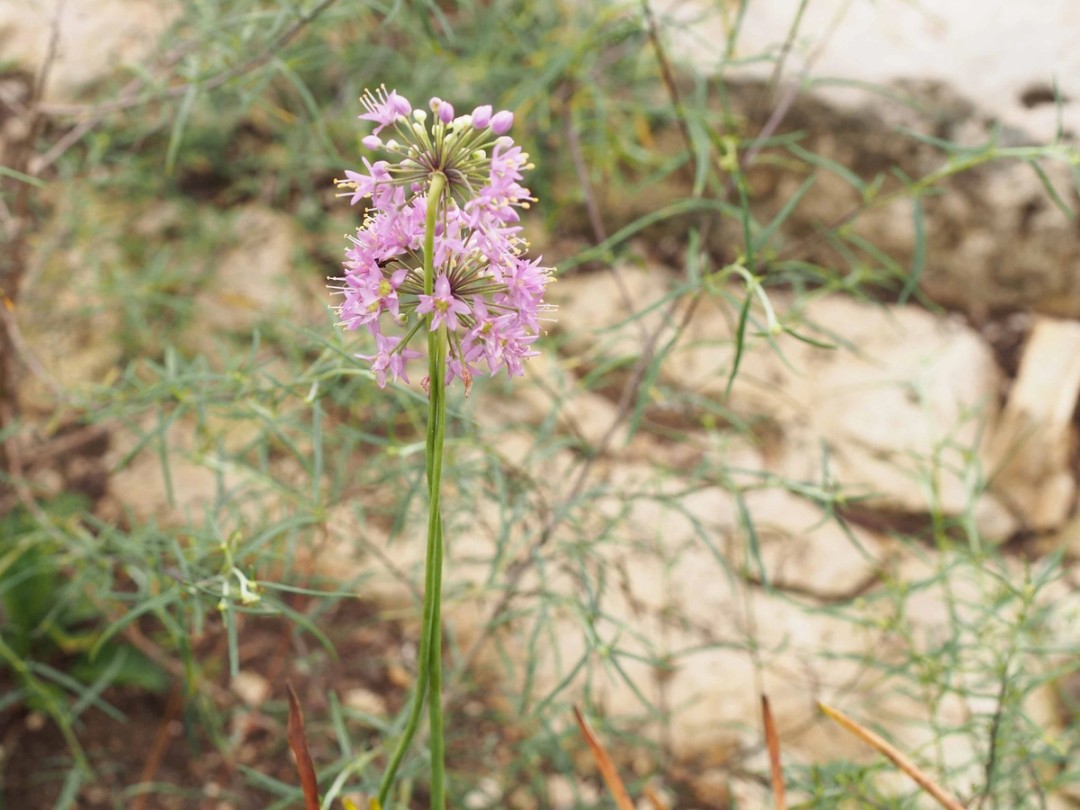
Glade habitat
CONSERVATION STATUS
NatureServe categorizes Allium stellatum as G5, indicating a secure status. However, within its range, it is listed as Critically imperiled in three states: Illinois, Kentucky, and Georgia. Additionally, it has Imperiled status in Kansas and Wisconsin. The only states that appear to have a Secure status for it are Arkansas and Iowa. All other states within its range are listed as having no status rank.
In Arkansas, Allium stellatum has a conservation value of 8 in the group of 8–10 meaning “Conservative taxa with strong fidelity to intact habitats. These taxa tend to exhibit late-successional characteristics like long lifespans with low seed sets and an inability for far ranging dispersal.”
INTERESTING TIDBITS
As mentioned earlier, this plant is an excellent choice for a xeriscape garden. Its deep roots allow it to flourish in challenging environments and even during droughts. Moreover, native herbivores avoid this plant because they dislike the onion scent and spicy leaves. Livestock rarely consume the foliage of native onions in pastures.
Native Americans consumed the bulbs and used the crushed plant as a poultice for treating coughs.