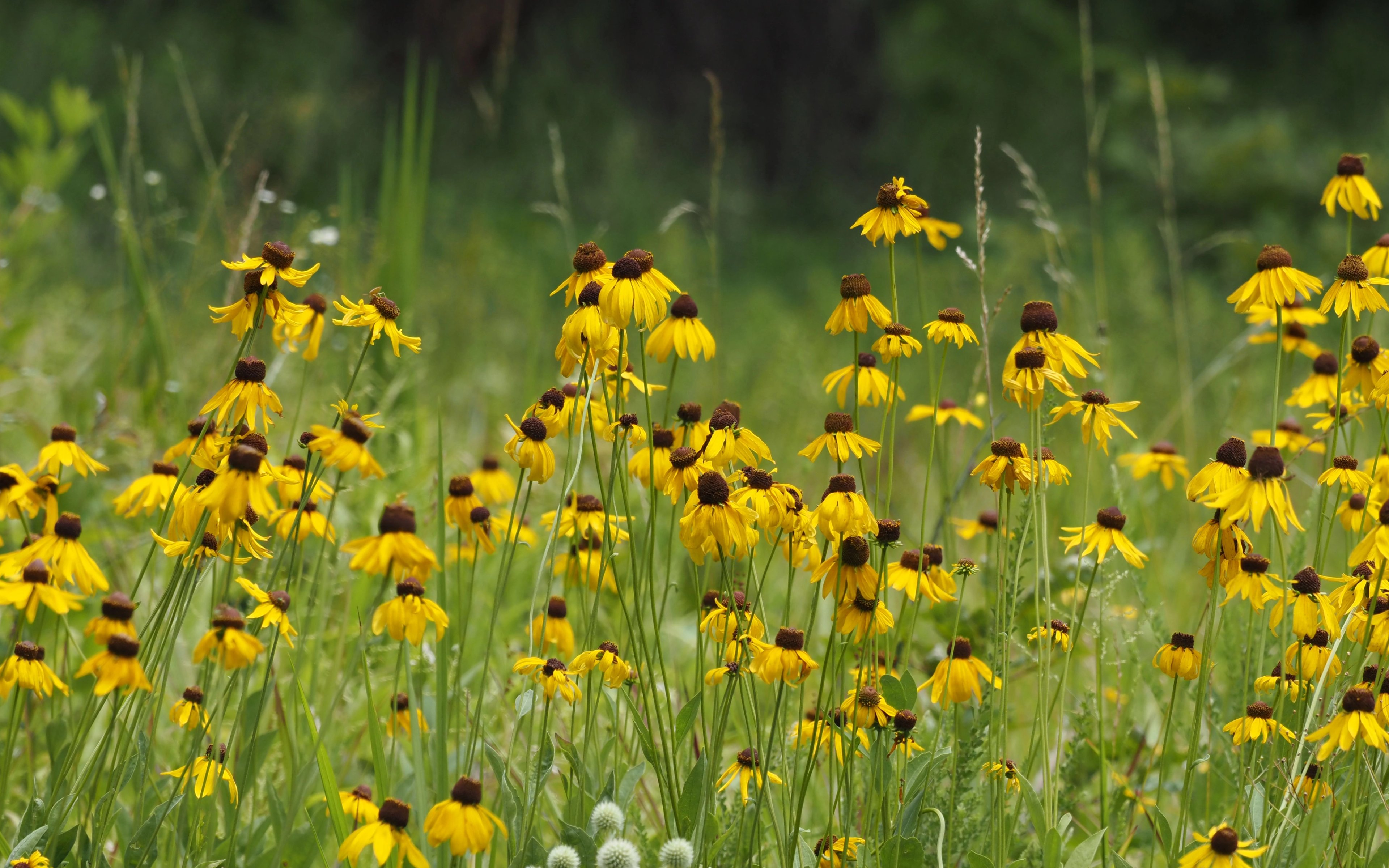
PLANT NAME
Latin Name/Common Name: The Swedish taxonomist, Carl Linnaeus assigned the scientific name, Rudbeckia in honor of his botany teacher, Olof Rudbeck.
The specific epithet grandiflora refers to the large size of these beautiful flowers.
Tall coneflower is the most used common name. This, of course, refers to the elevated height of this plant compared to its relatives.
BLOOM
Single flowers occur at the ends of branches. Once open, the flowers are quite large reaching up to 5 inches across. Take a look below at the stages of the flower from bud to fully open. At first the petals (ligules) are somewhat folded or rolled. As the flower opens, the beautiful petals unfold.
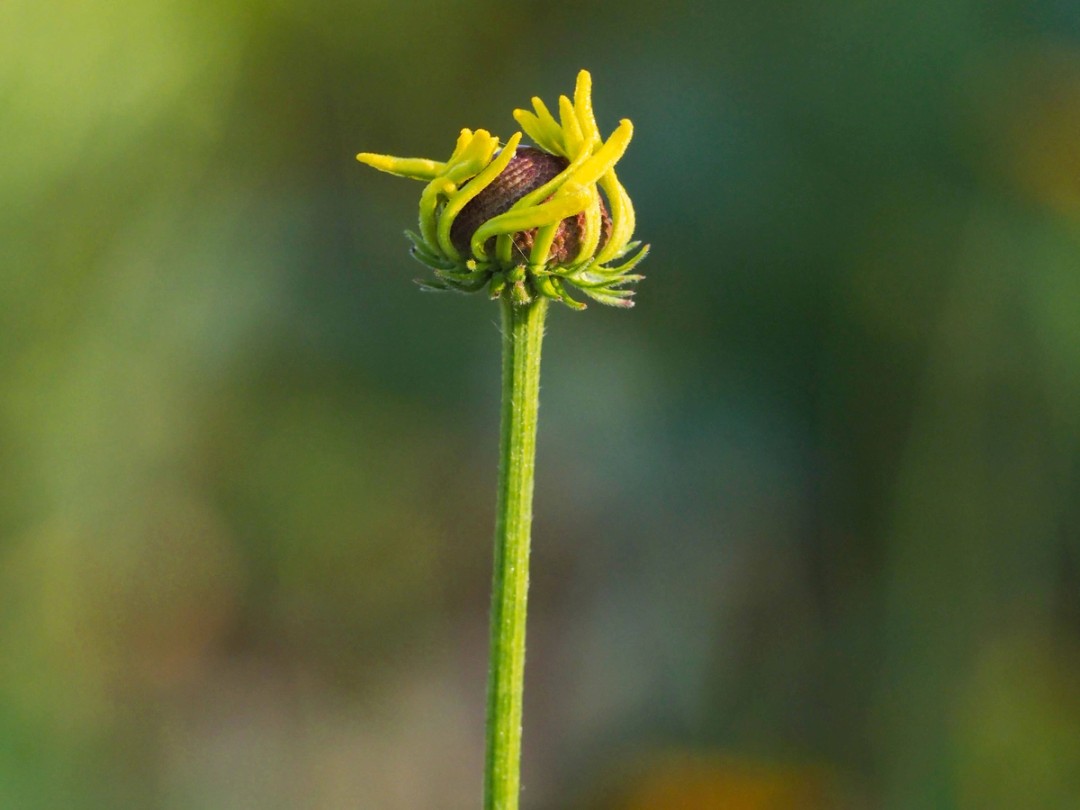
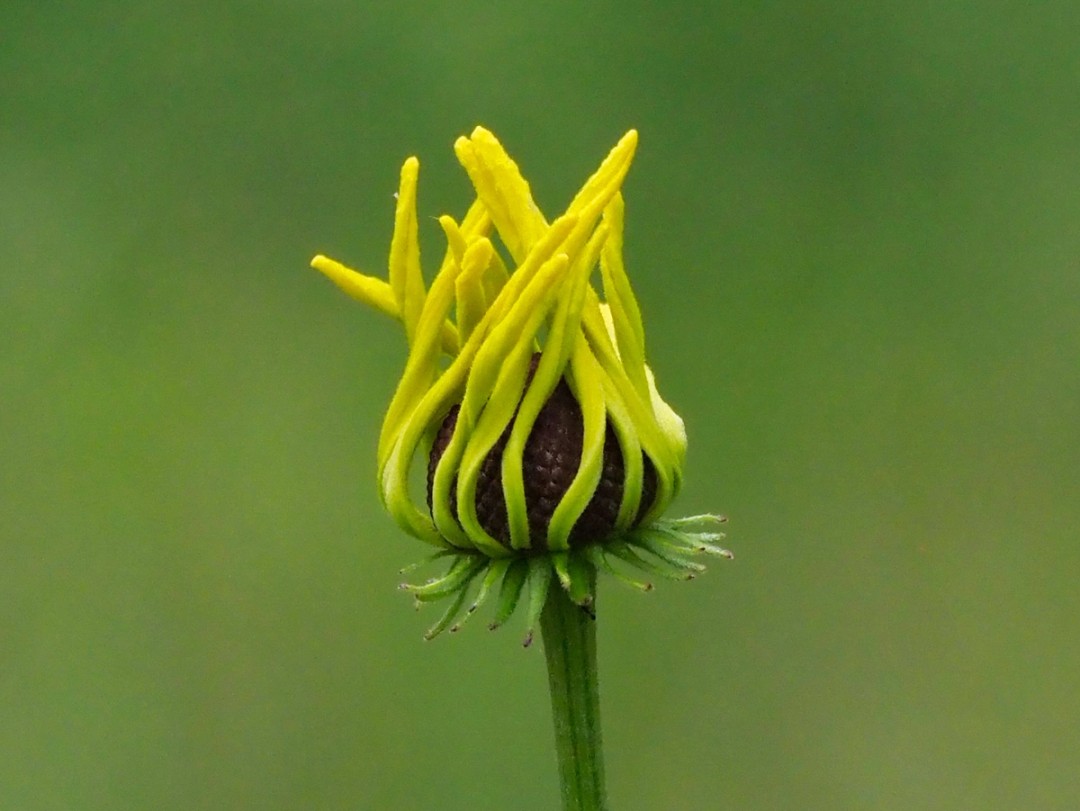
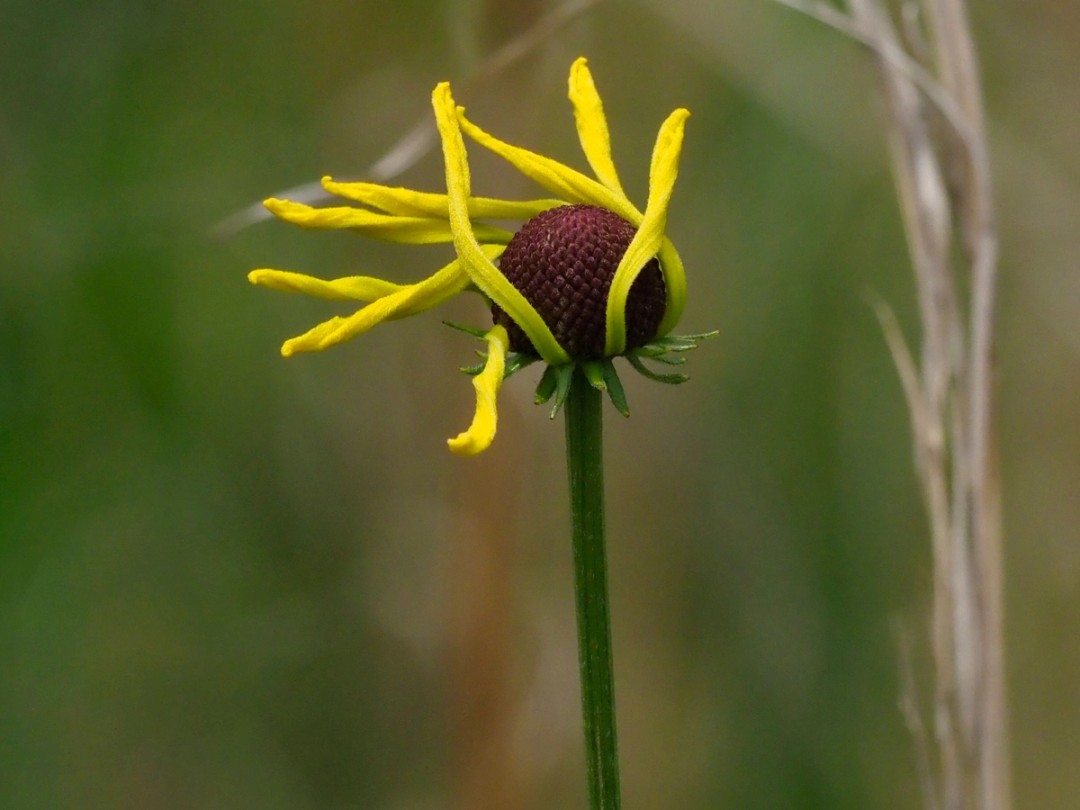
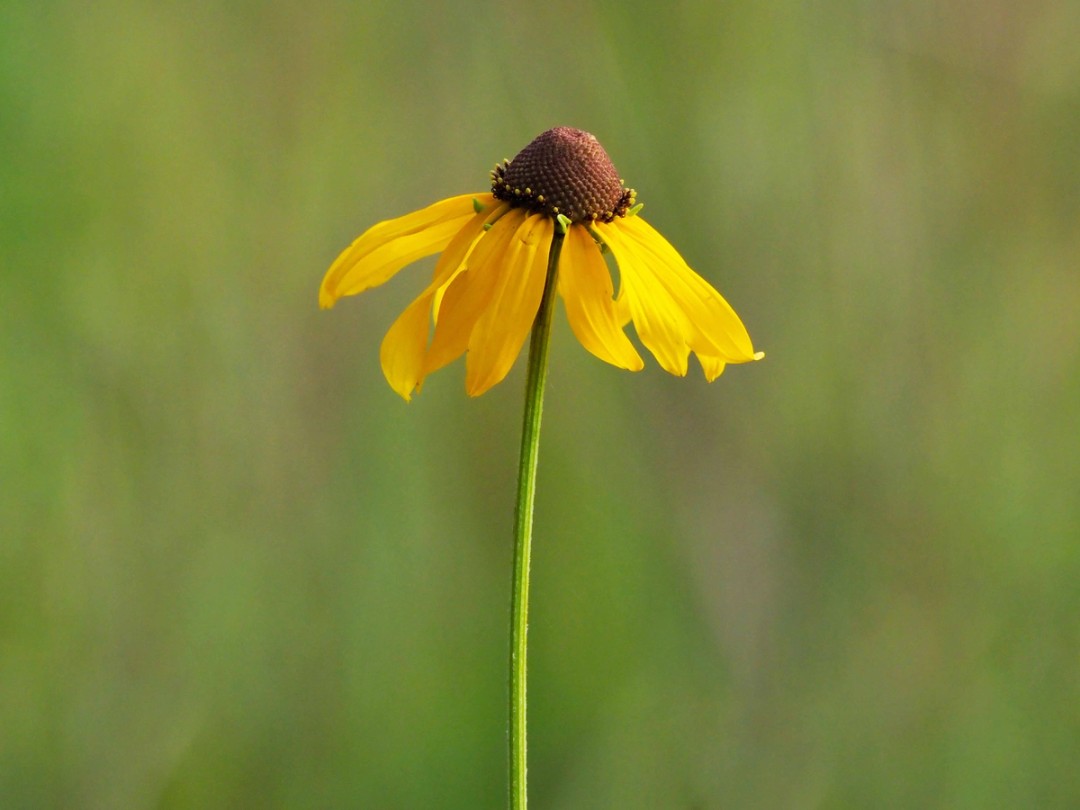
Look closely at the center of the flower and you'll see one of the most fascinating aspects of bloom development. The cone starts as a rounded, greenish dome and gradually elongates into a tall, dark brownish-purple column. The disk florets — tiny tubular flowers — open in successive rings around the cone, progressing steadily from the base upward toward the tip. Each open ring reveals deep purple-brown corollas tipped with yellow pollen, creating a striking two-toned halo that draws in bees and butterflies. This ring-by-ring opening can span several weeks, making each flower a long-lasting food source for visiting insects.
As blooming winds down, the ray petals reflex further and eventually drop. The cone darkens and hardens as the achene seeds ripen inside. Seed heads persist well into fall — a valuable food source for goldfinches and other seed-eating birds. To collect seed, wait until the cone feels dry to the touch and the individual seeds pull away cleanly. Sow them in fall for best germination results.
DESCRIPTION
The stem and leaves of tall coneflower have clearly visible spreading hairs. Stem leaves are sparse and alternate, becoming smaller and more widely separated toward the upper part of the plant. Below the midpoint of the plant, leaves are larger and more closely spaced. They are lanceolate in shape. Large basal leaves with long petioles occur in clusters at the plant base. These leaves have shallow teeth. Two veins are easily seen on each side of a leaf.
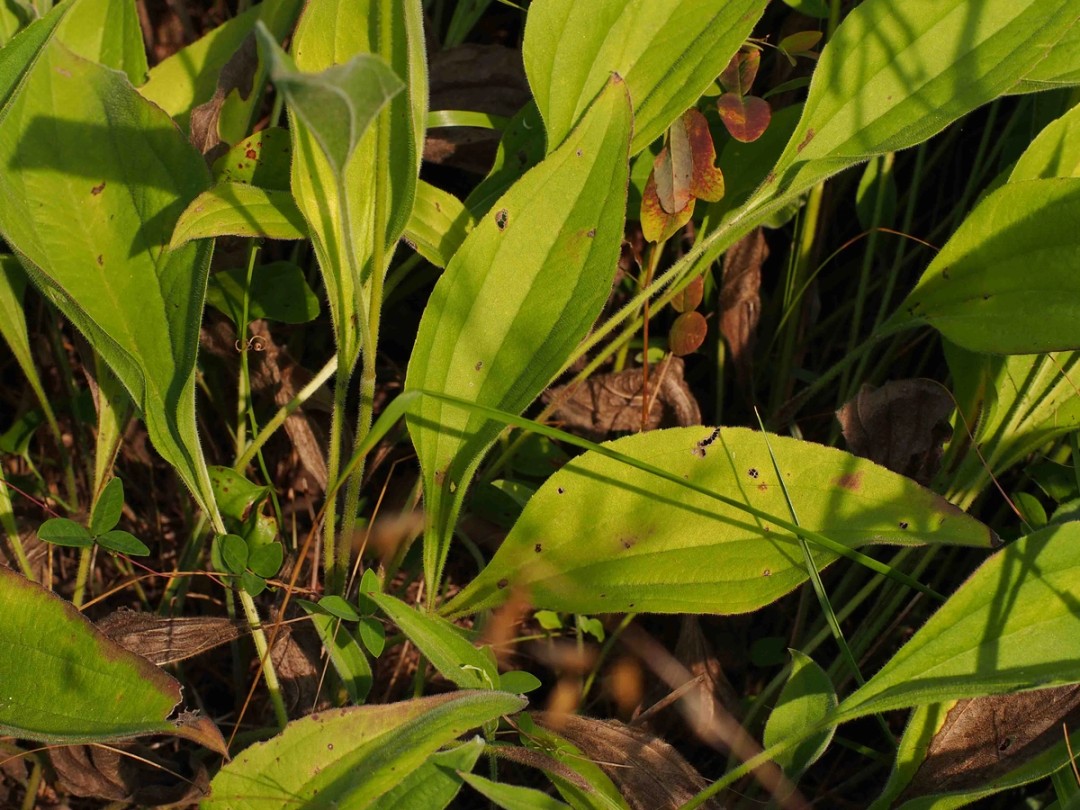
2 veins on each leaf side 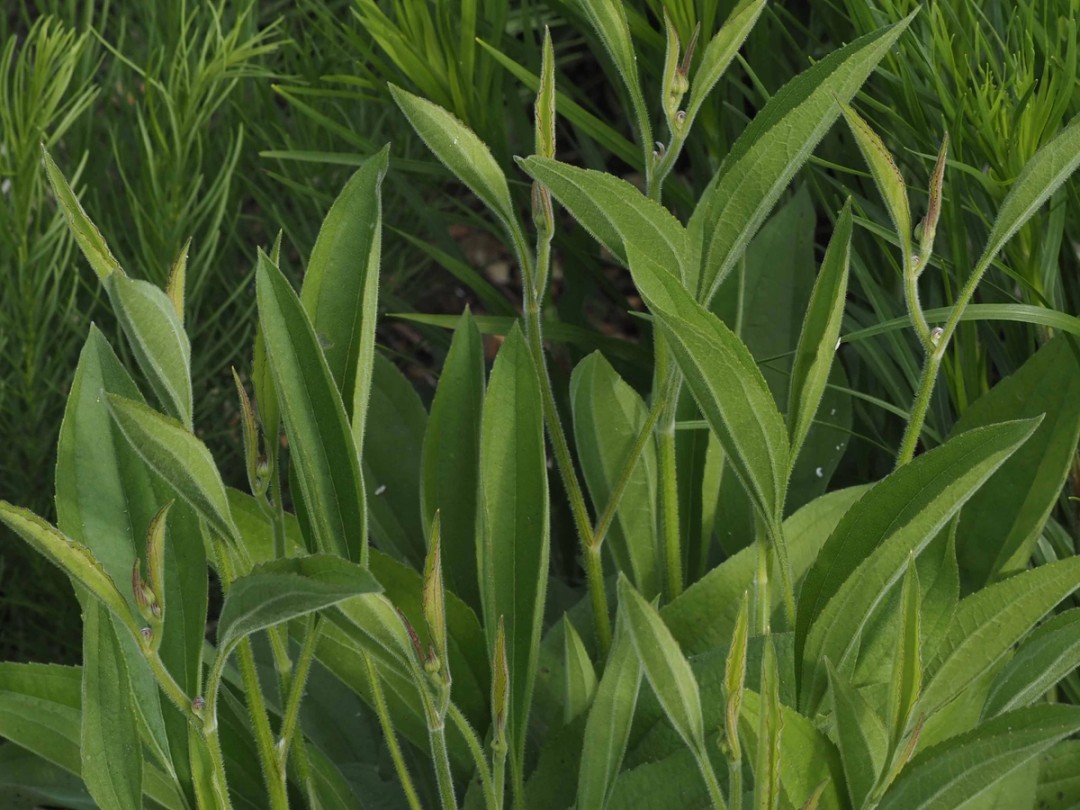
Spring leaves and stems 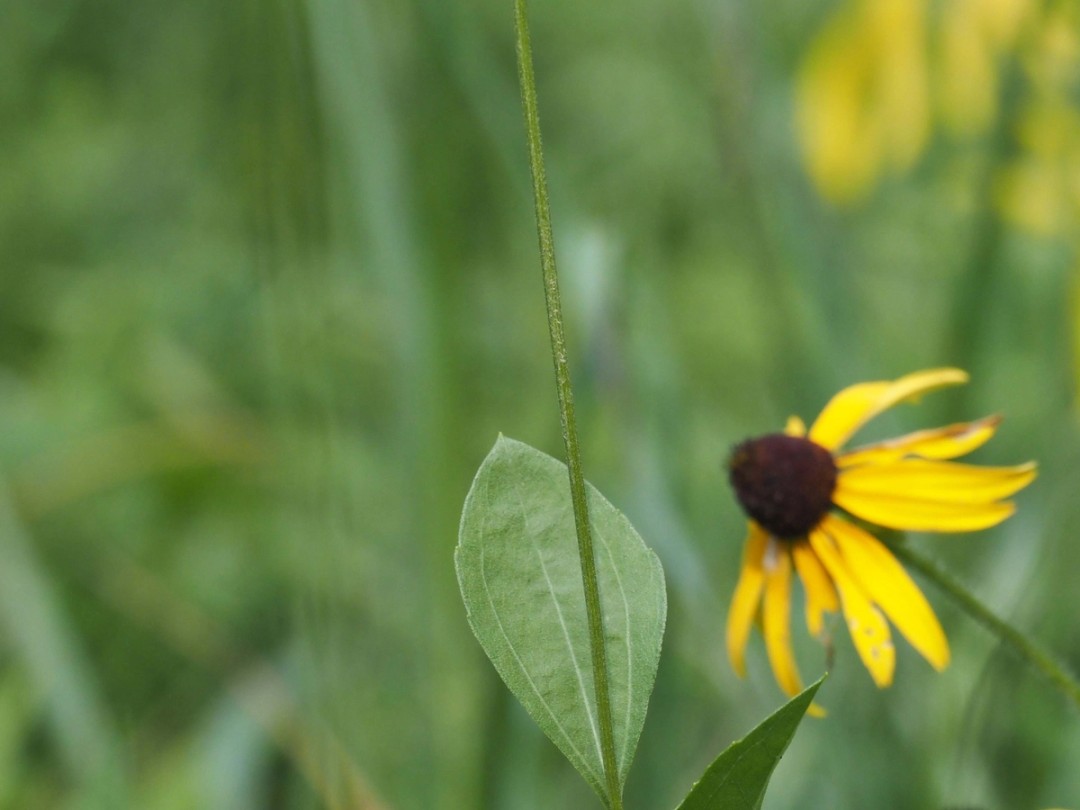
Stem leaf and distal stem 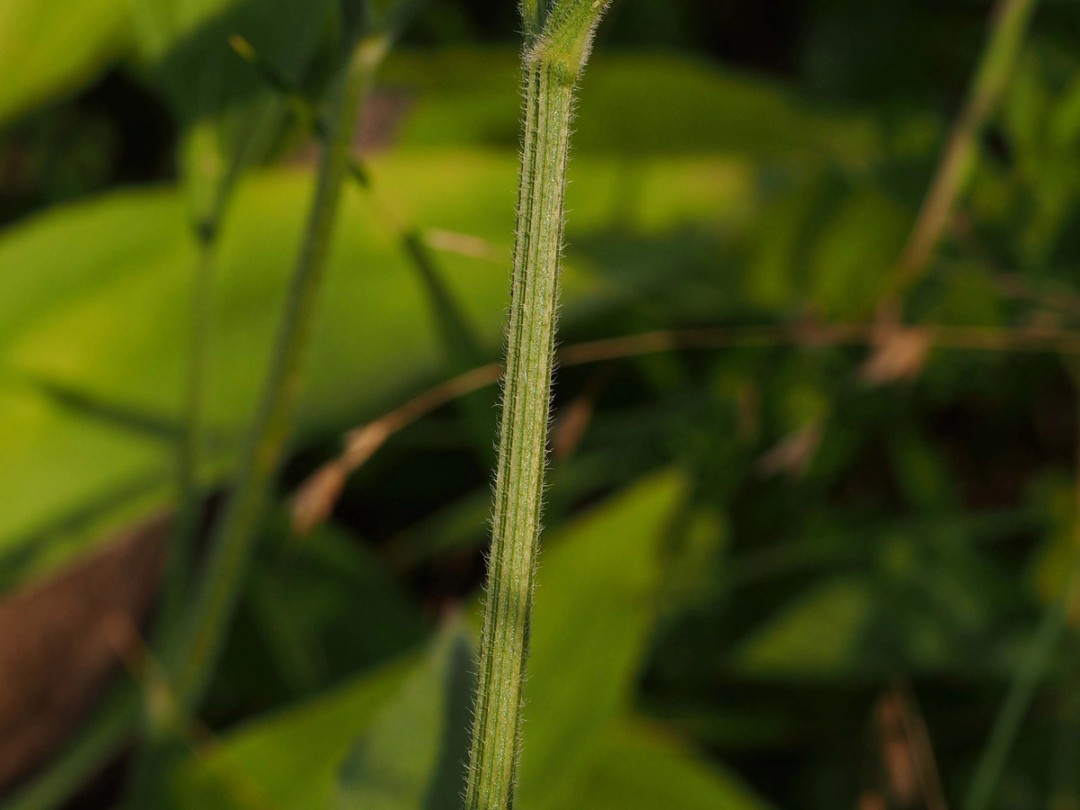
Hirsute stem
POLLINATORS
Rudbeckia grandiflora is visited by numerous and varied insects.
Bees and Wasps
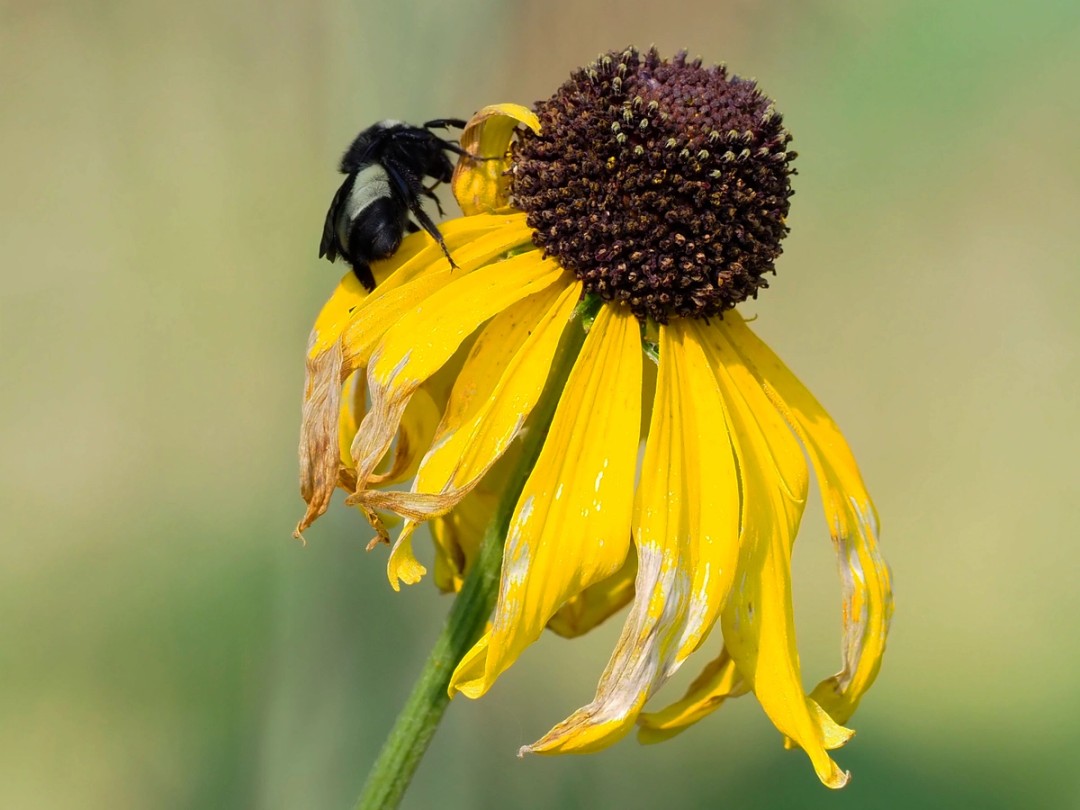
American Bumble Bee 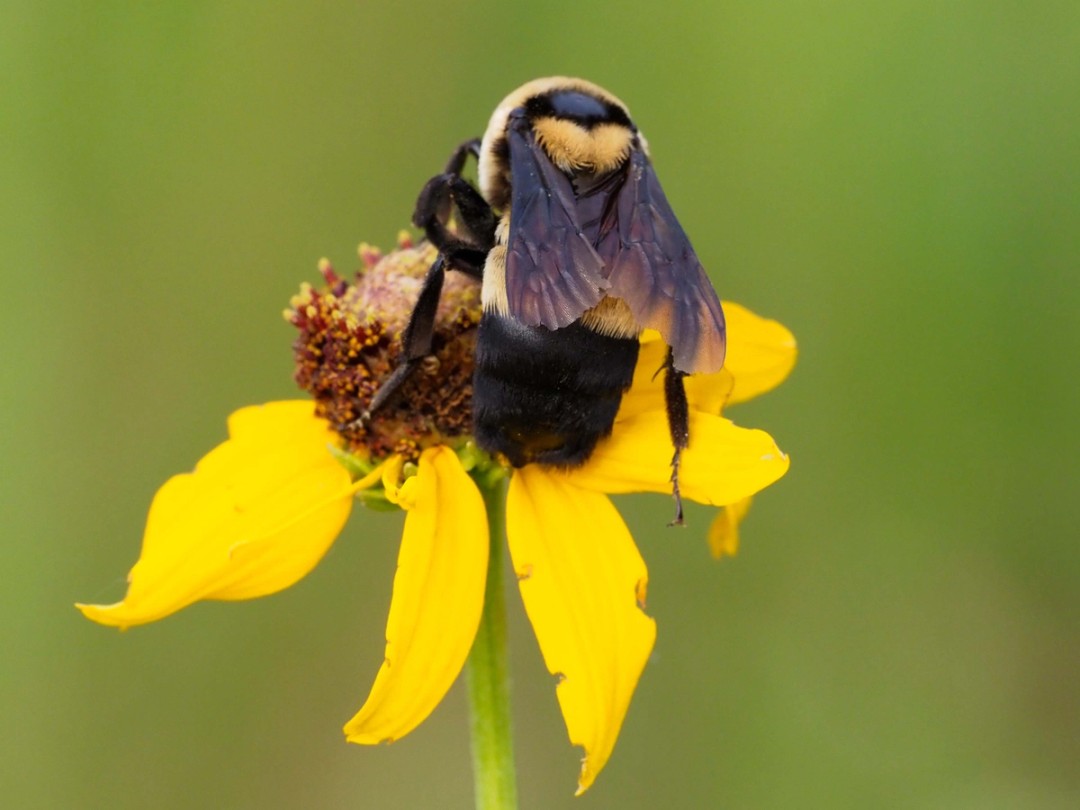
Southern Plains Bumble Bee 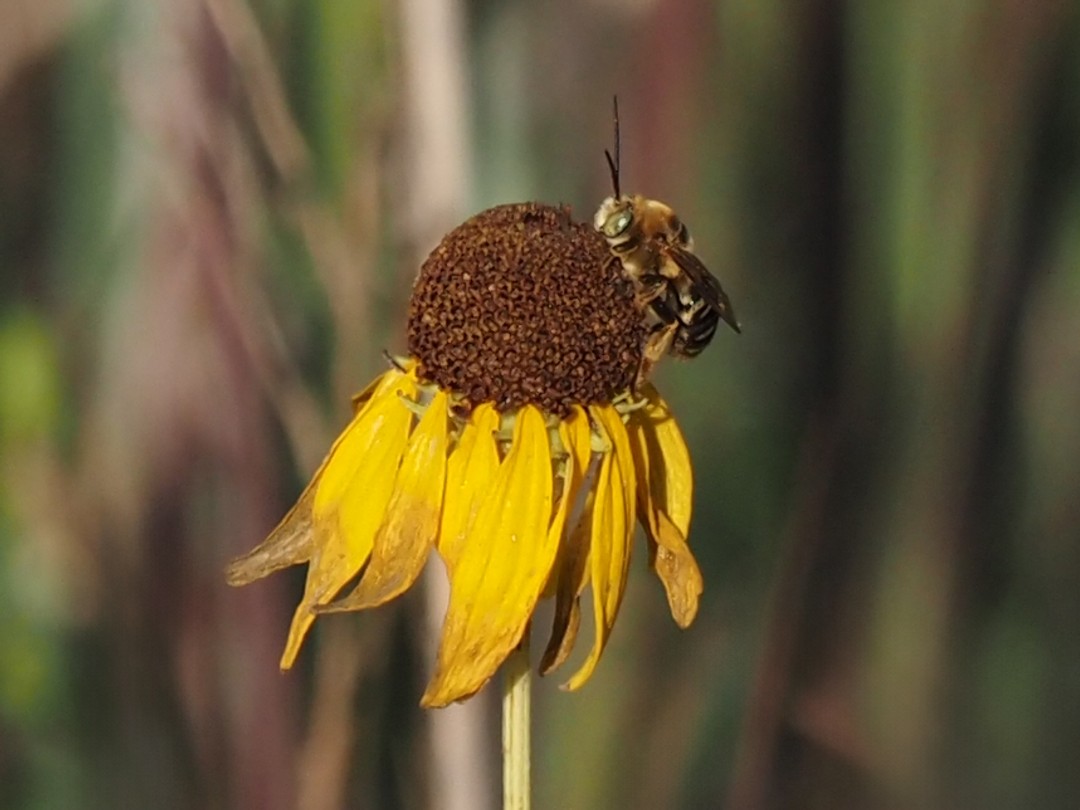
Genus Svastra 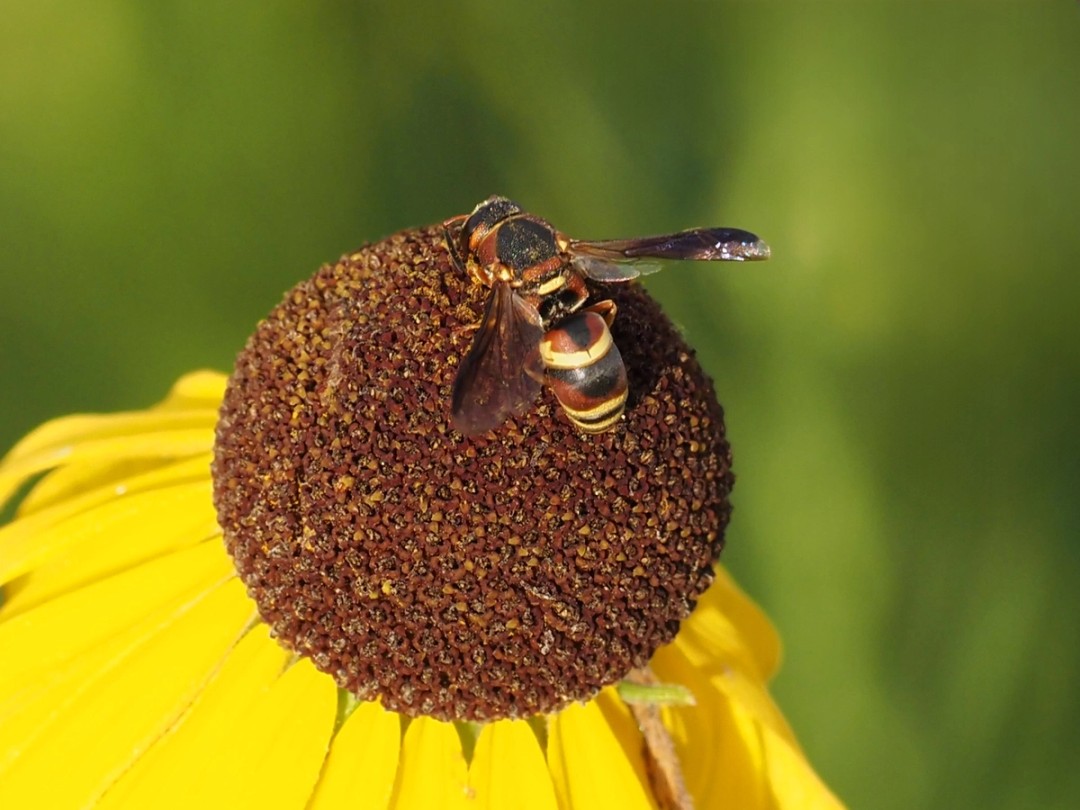
Hidalgo Mason Wasp
Butterflies & Skippers
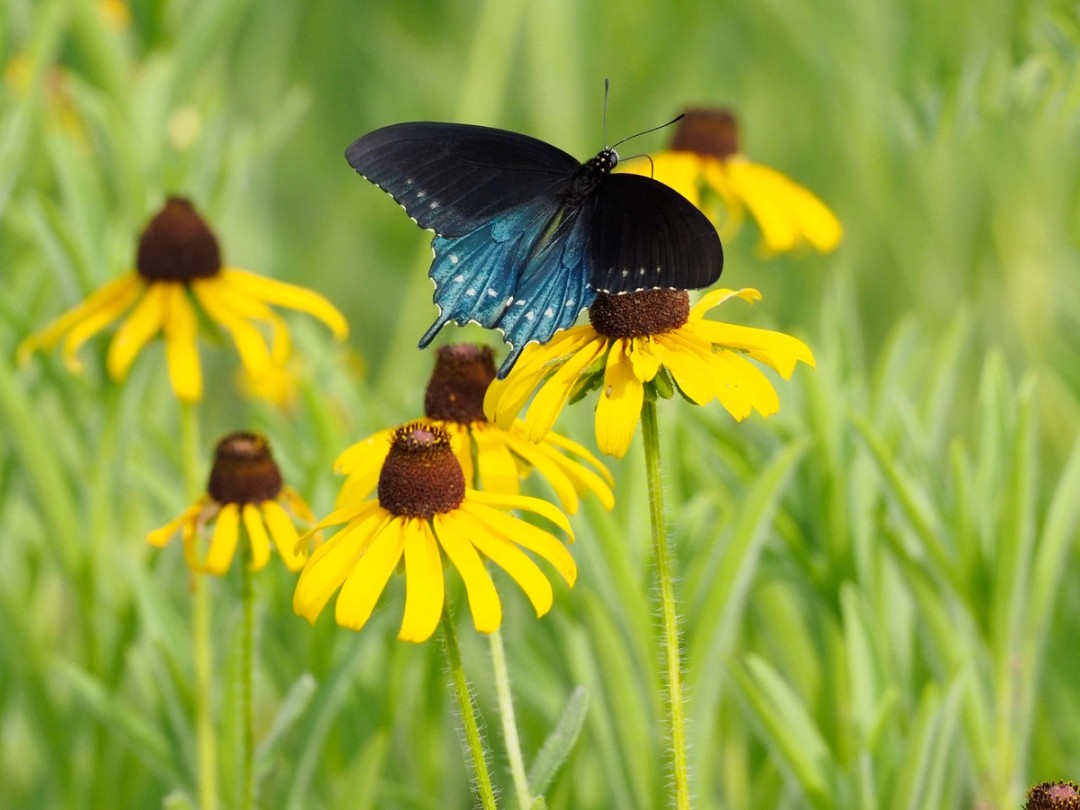
Pipevine Swallowtail 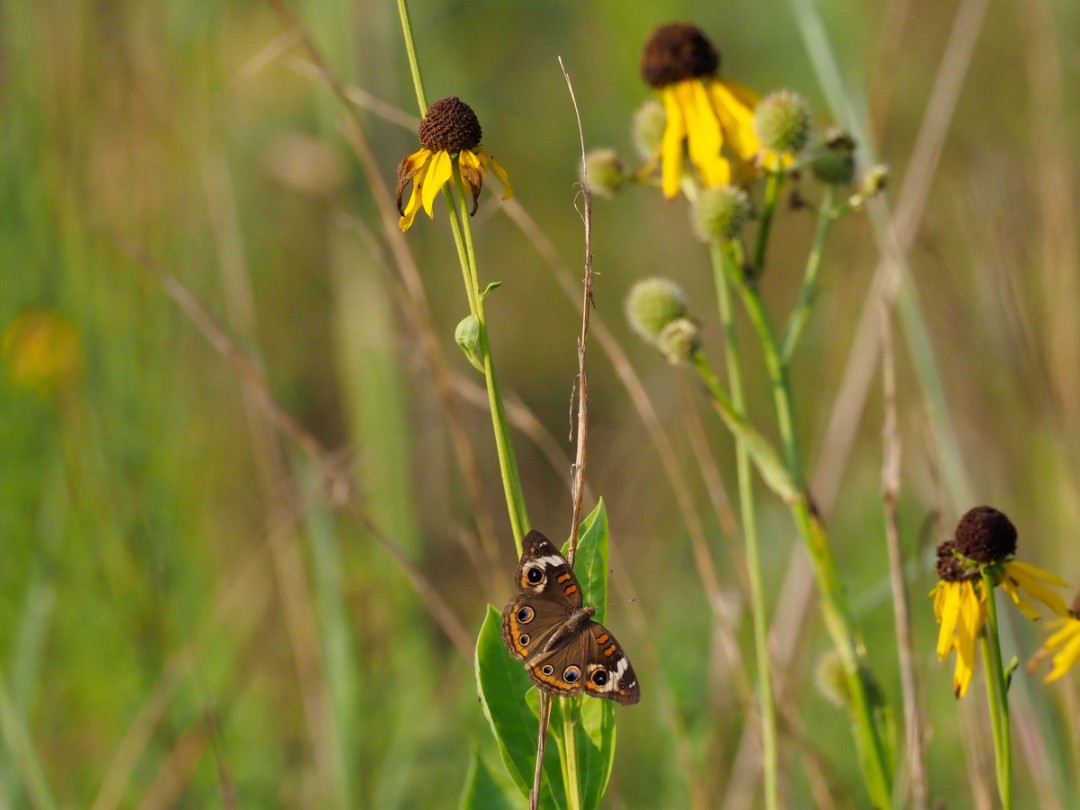
Common Buckeye 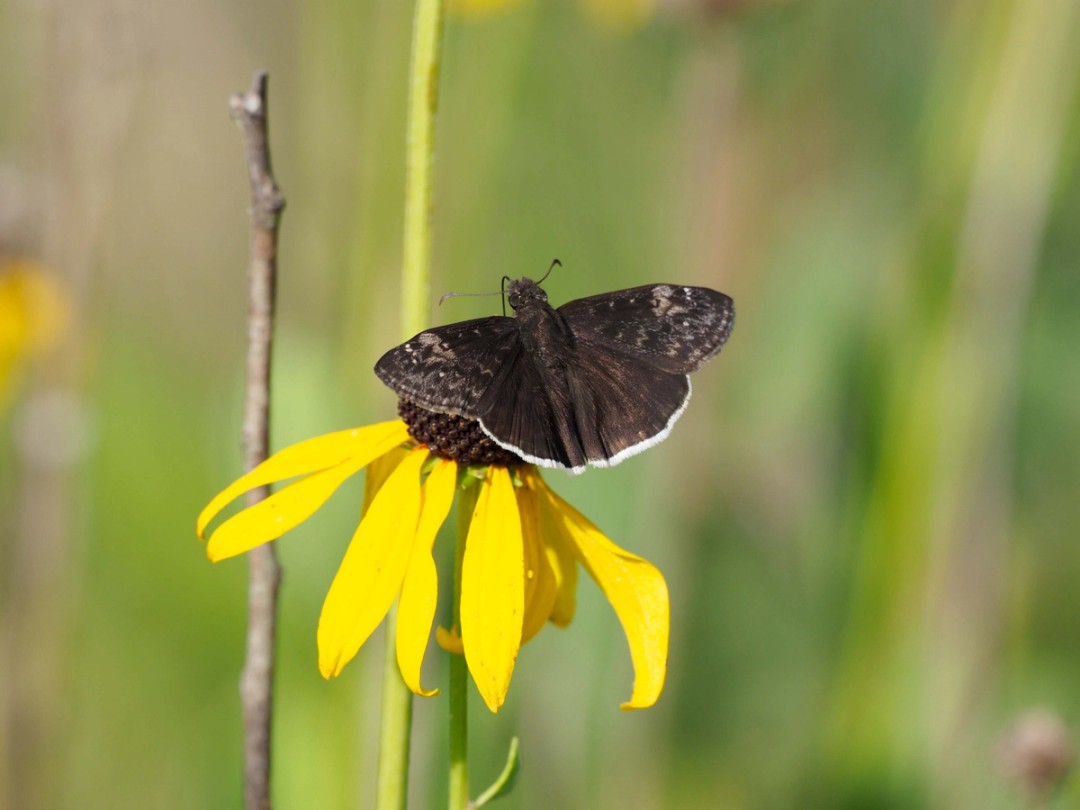
Funereal Duskywing 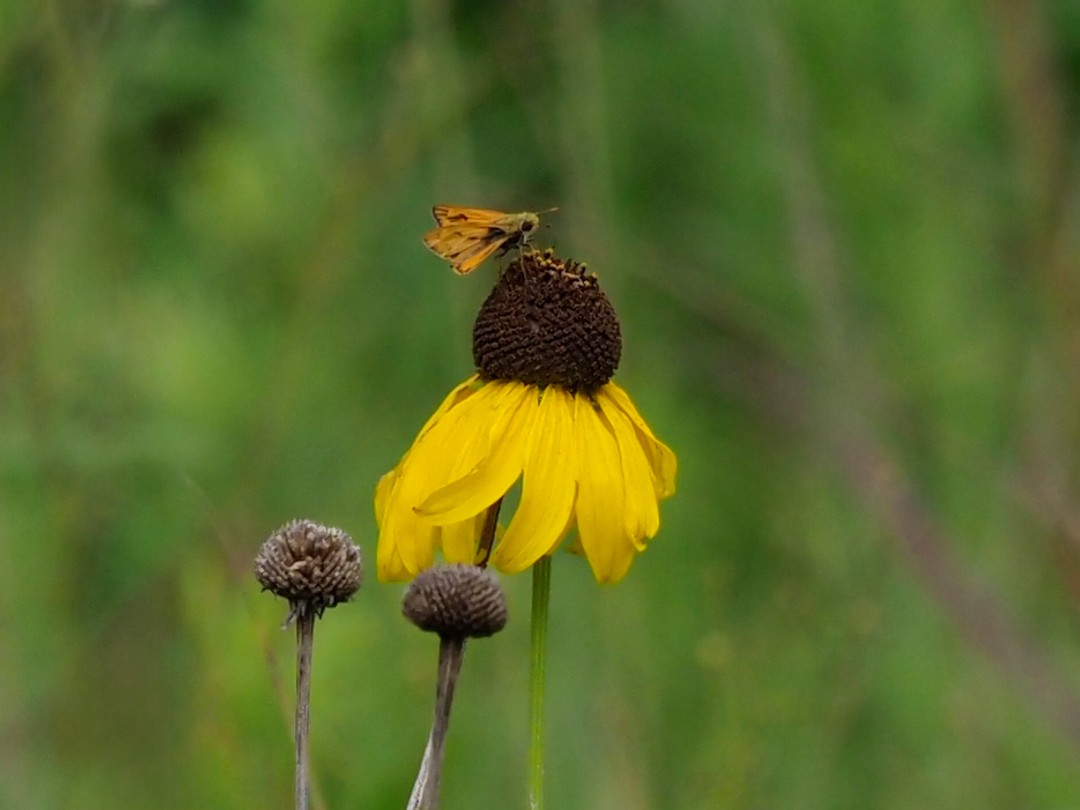
Fiery Skipper
Other Insect Visitors
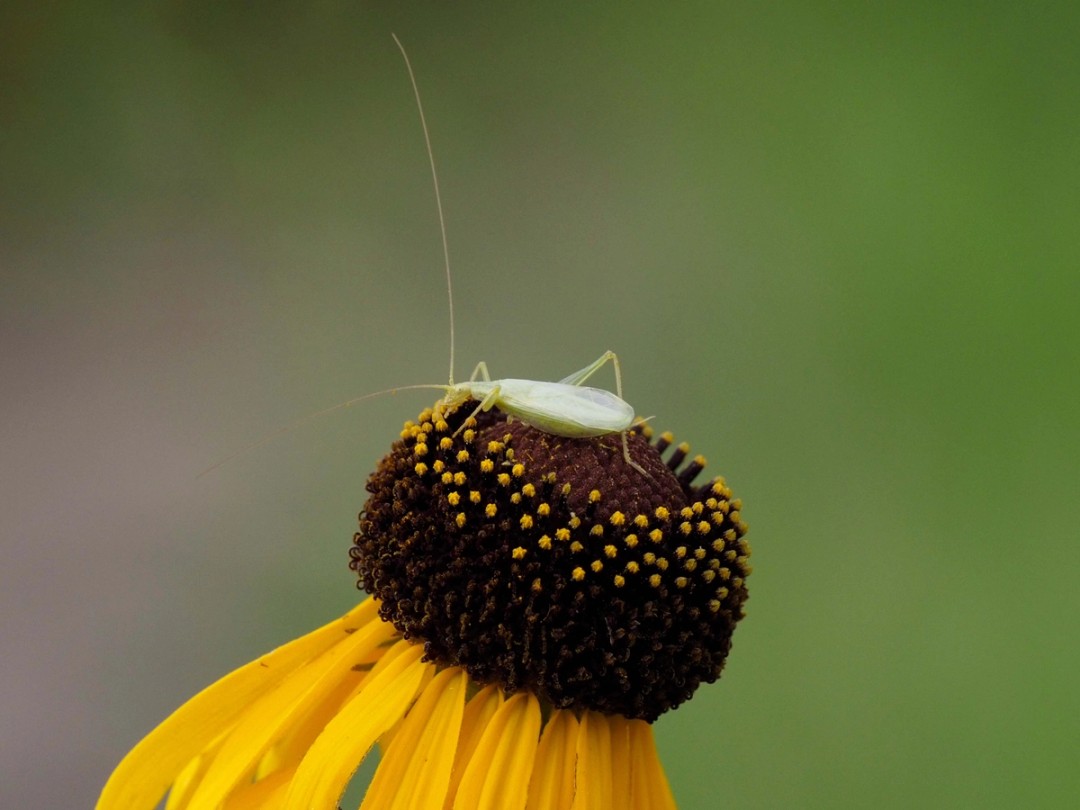
Common Tree Cricket 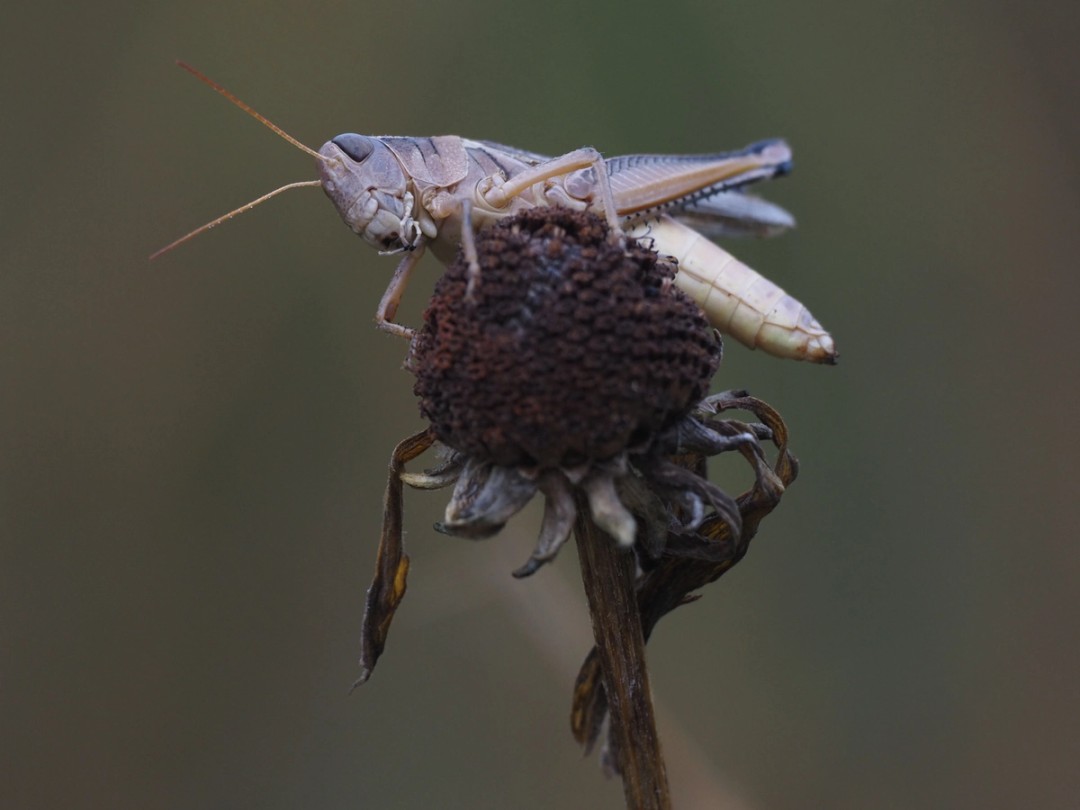
Grasshopper
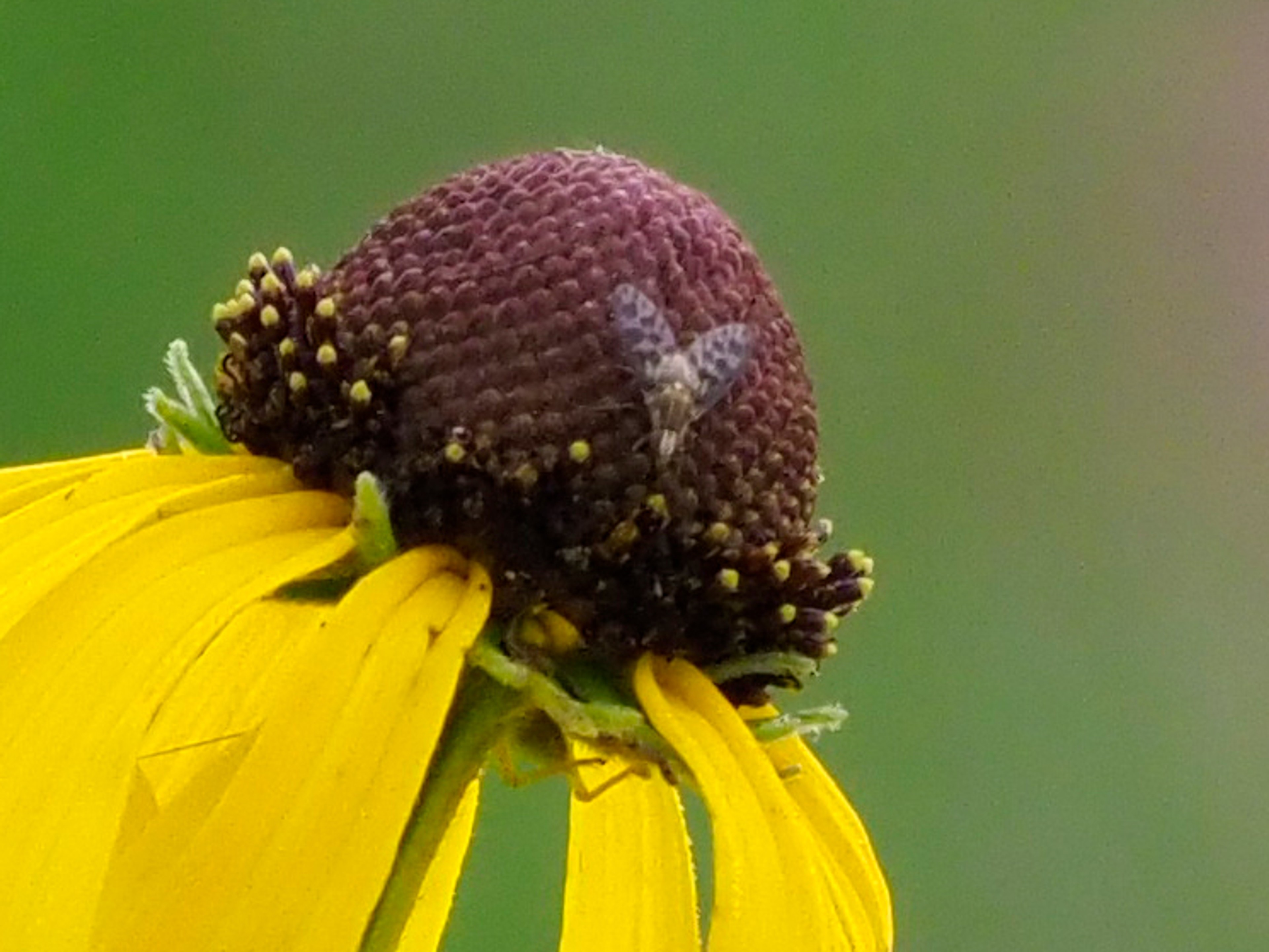
And lastly, here is a very well camouflaged and tiny Bee Fly.
PLANTS GROWING NEARBY
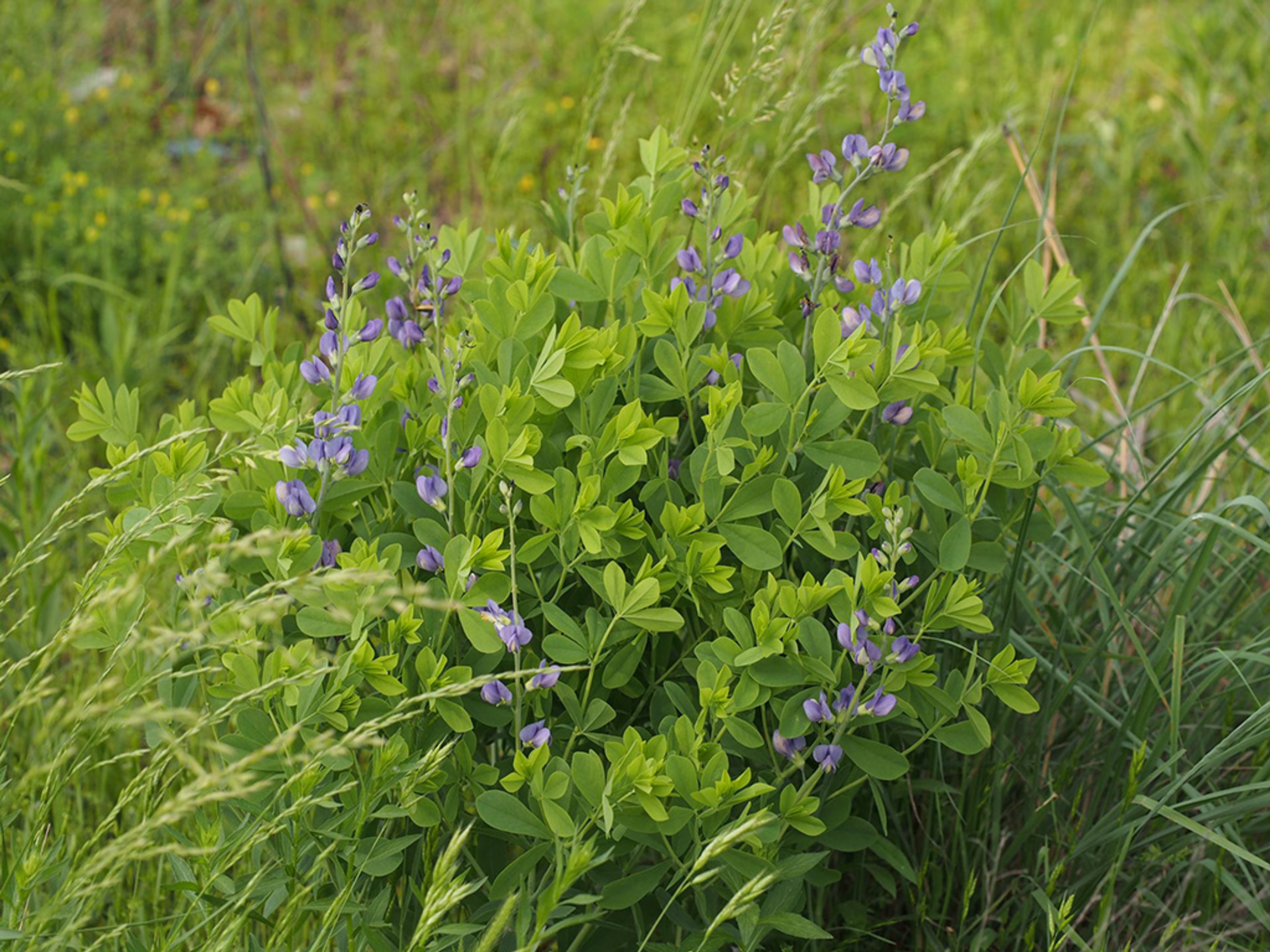
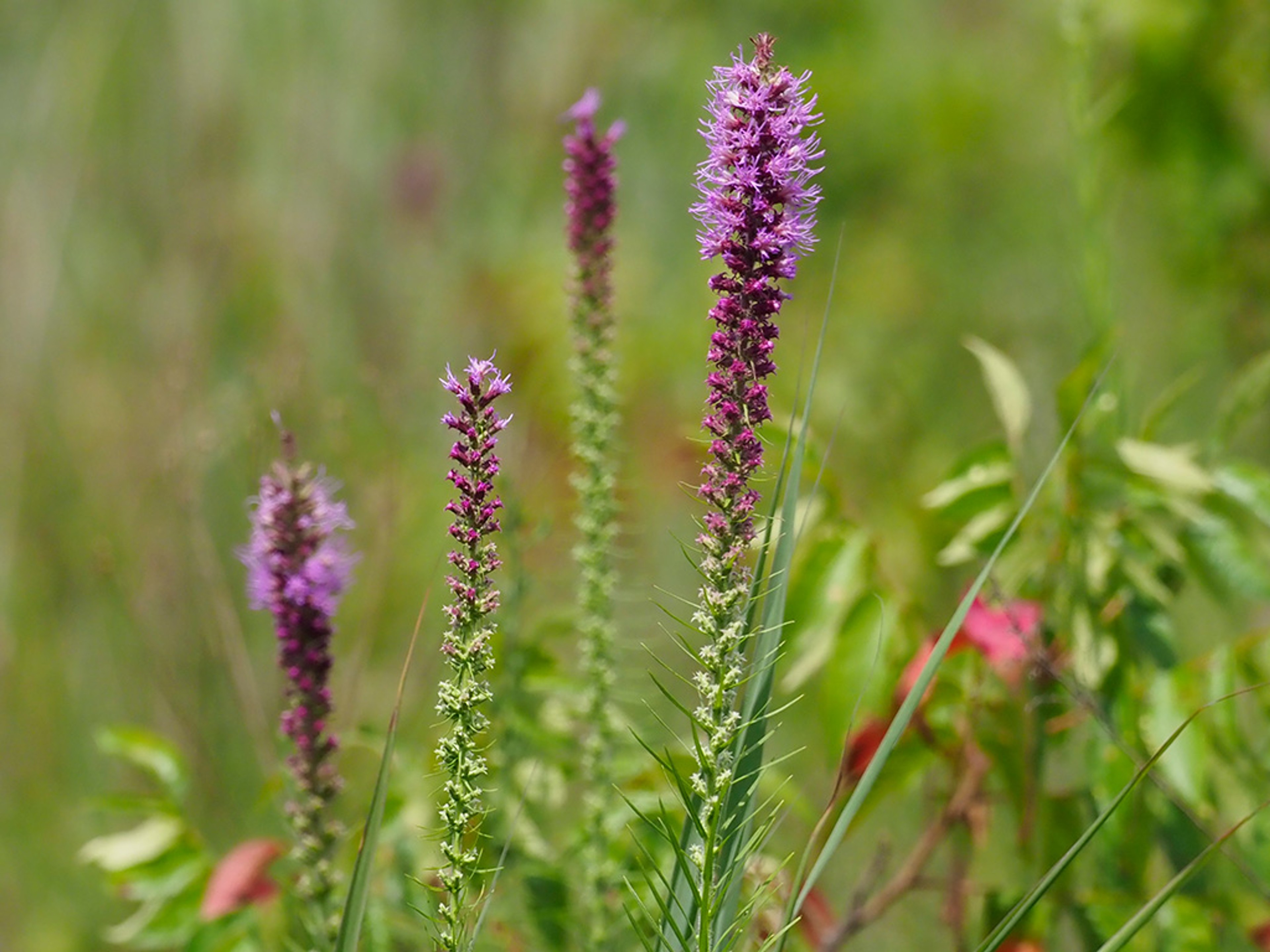
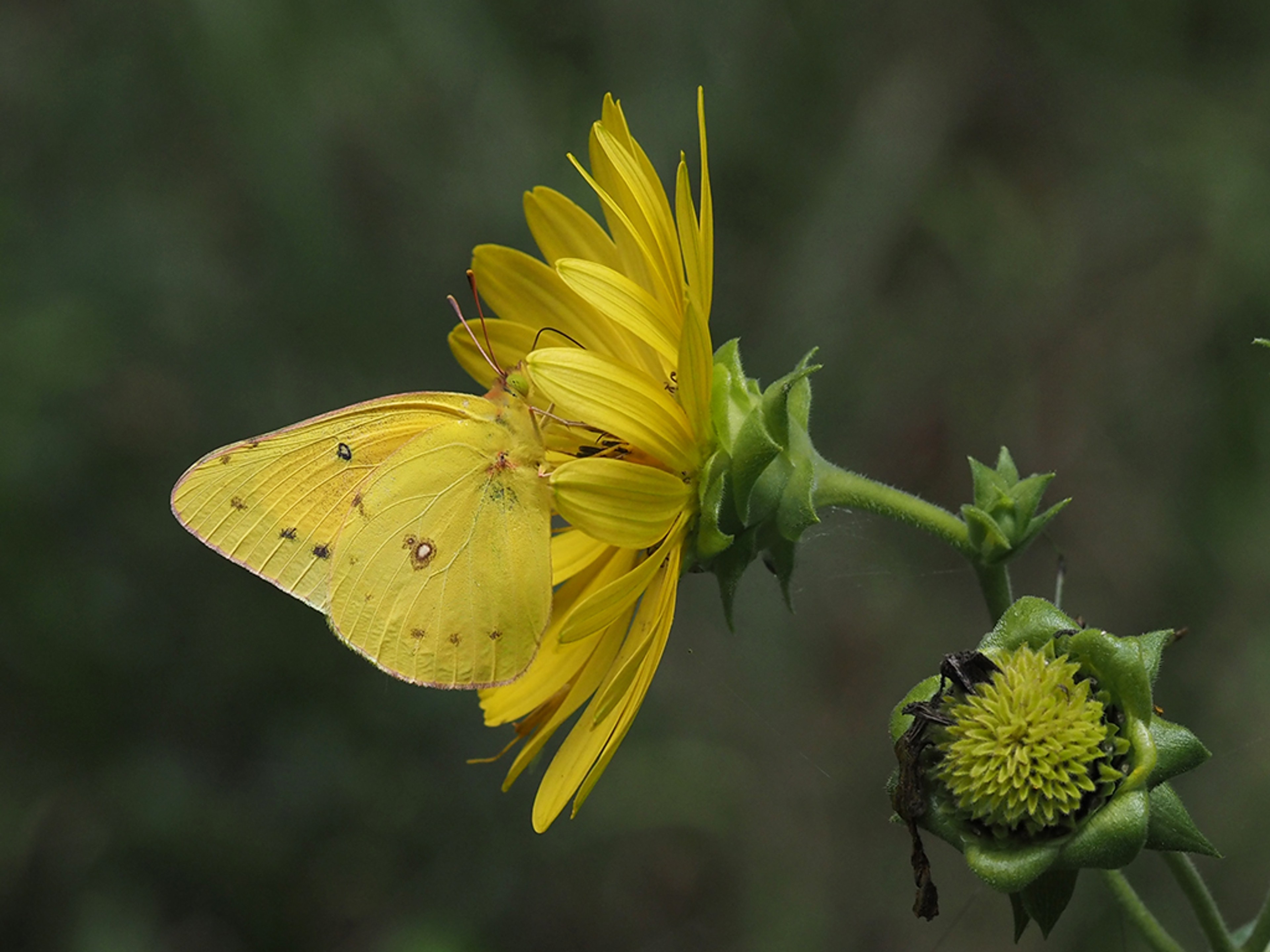
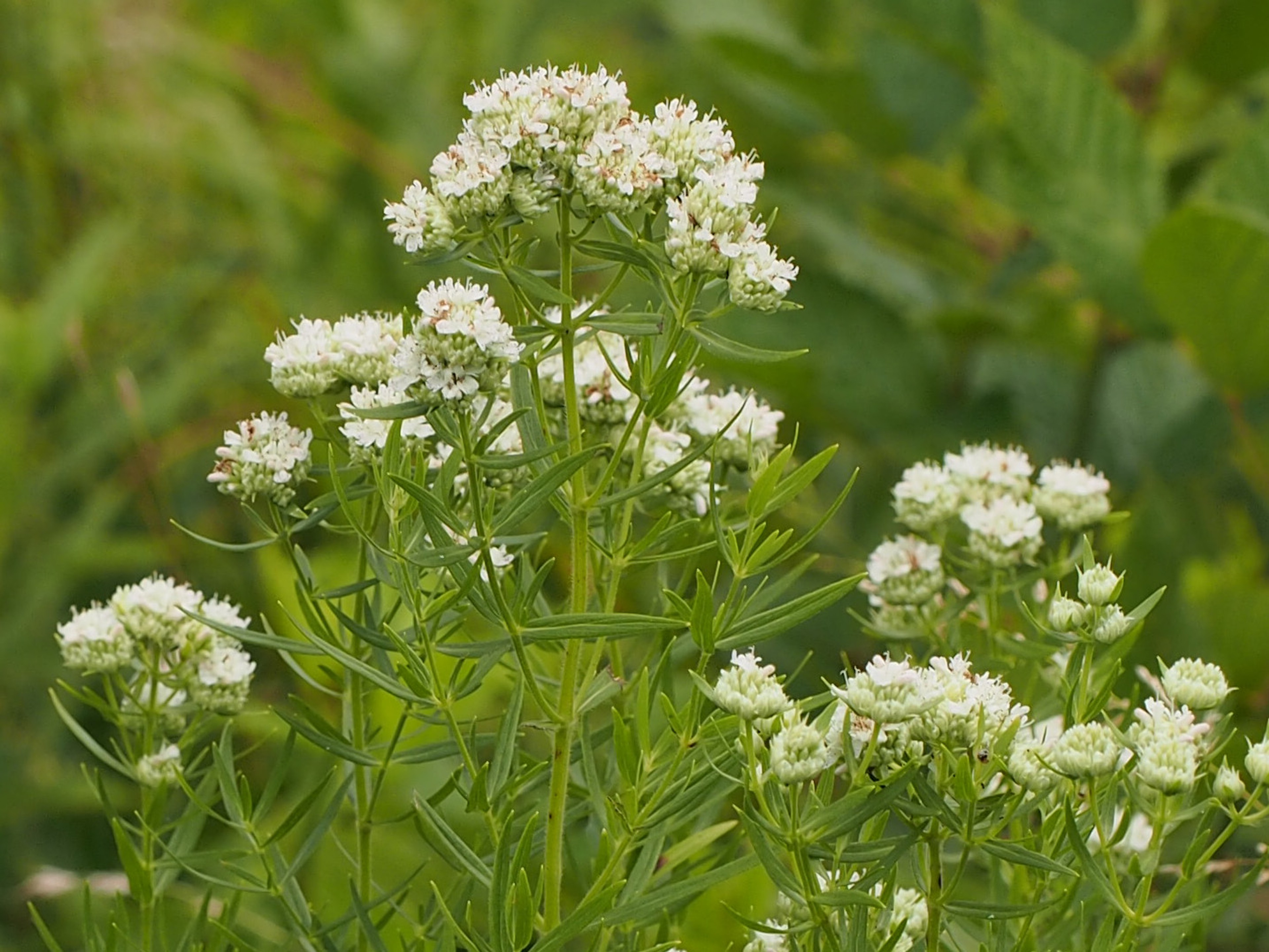
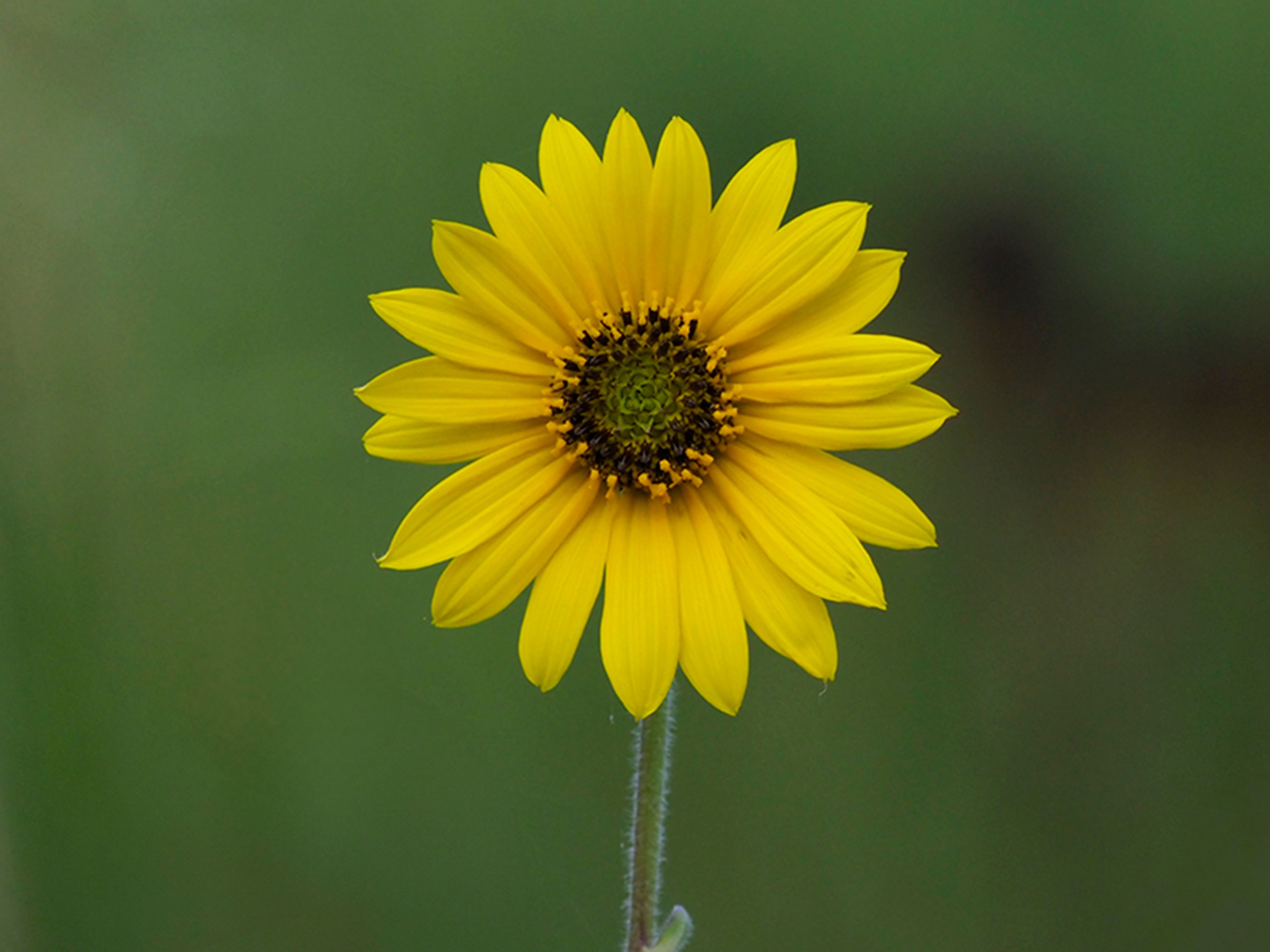
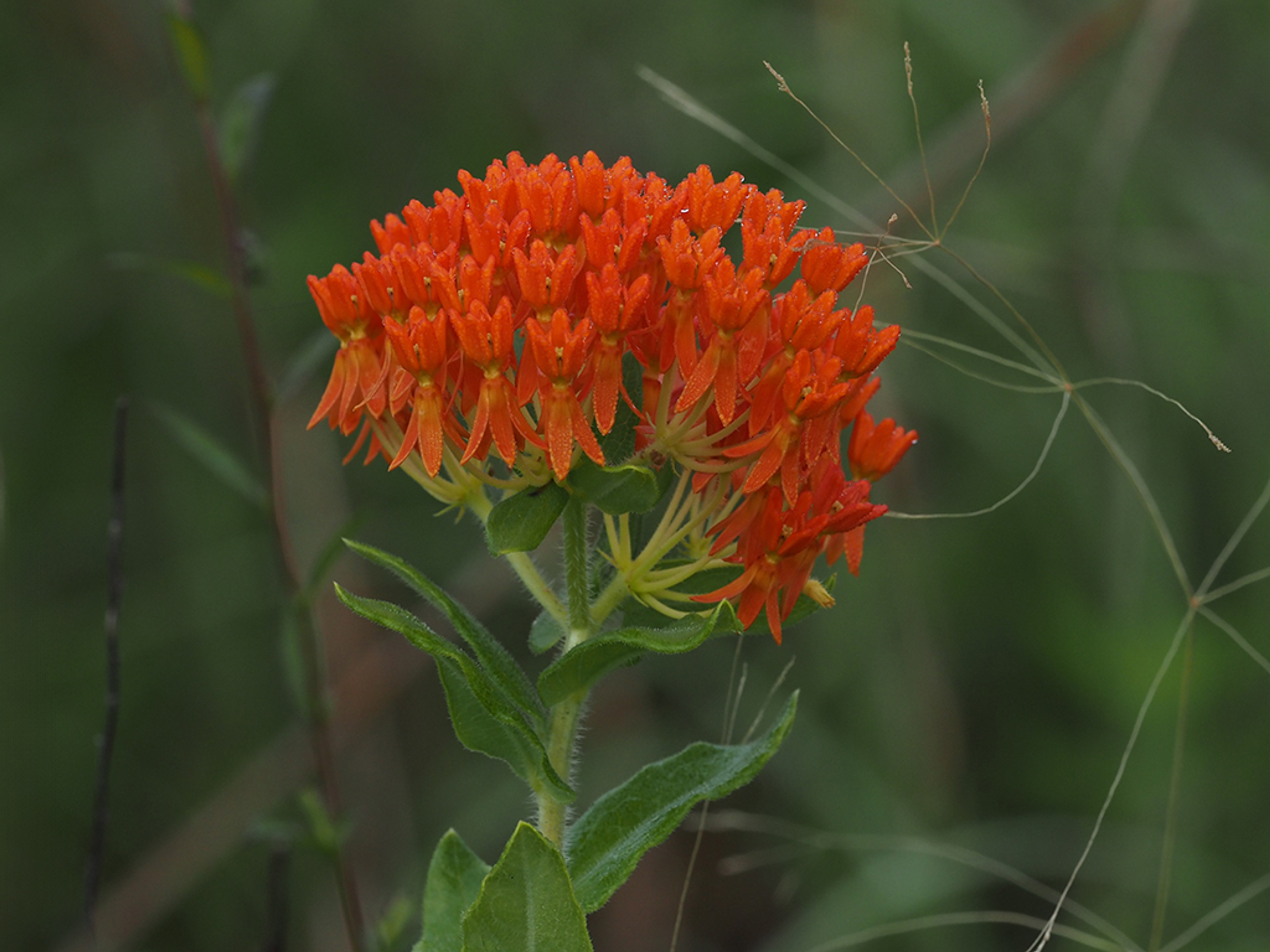
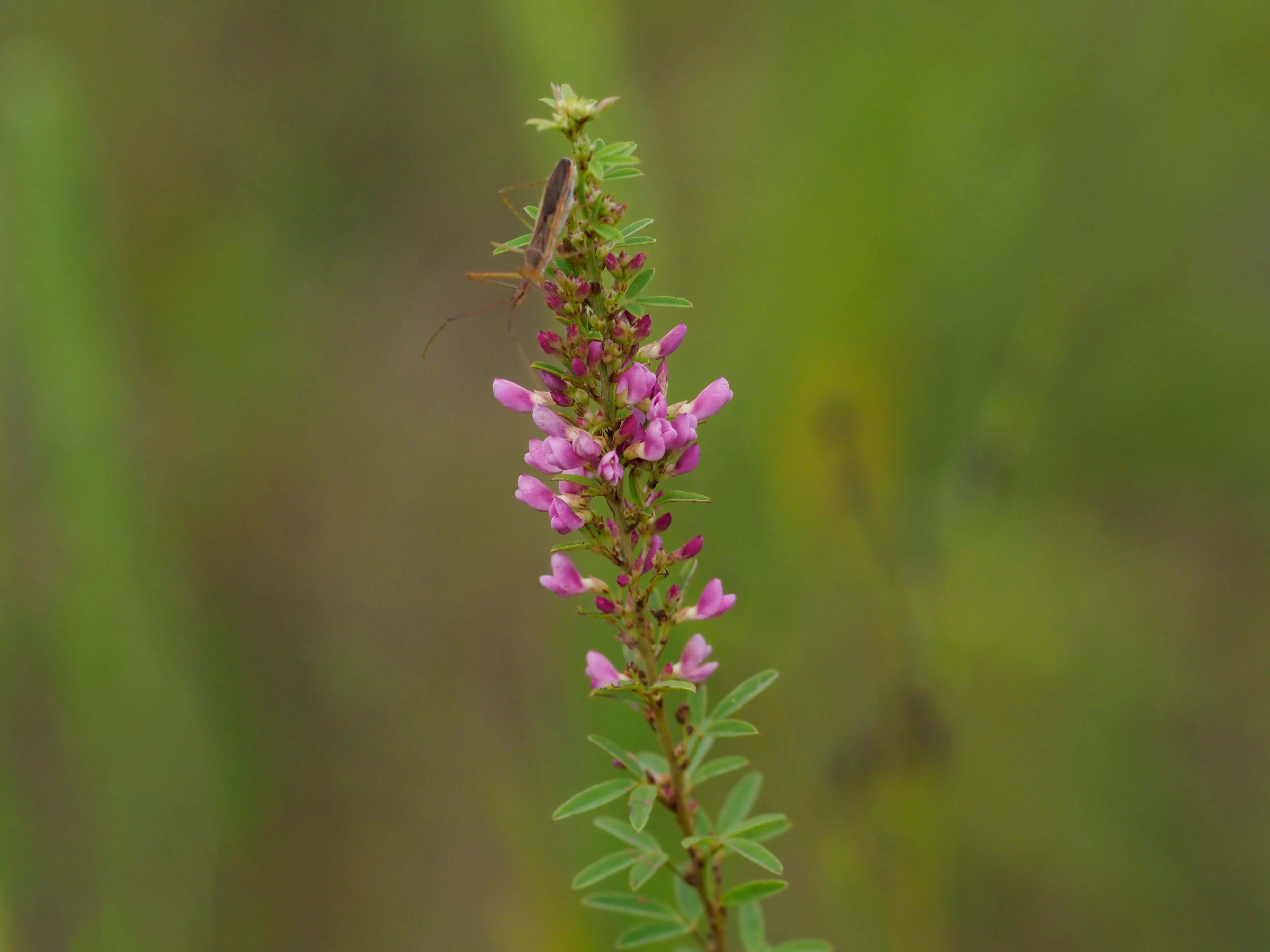
Liatris pycnostachya is frequently found growing alongside and blooming simultaneously with Rudbeckia grandiflora. It's so often nearby that I find it in the background of many, if not most, of my photos!
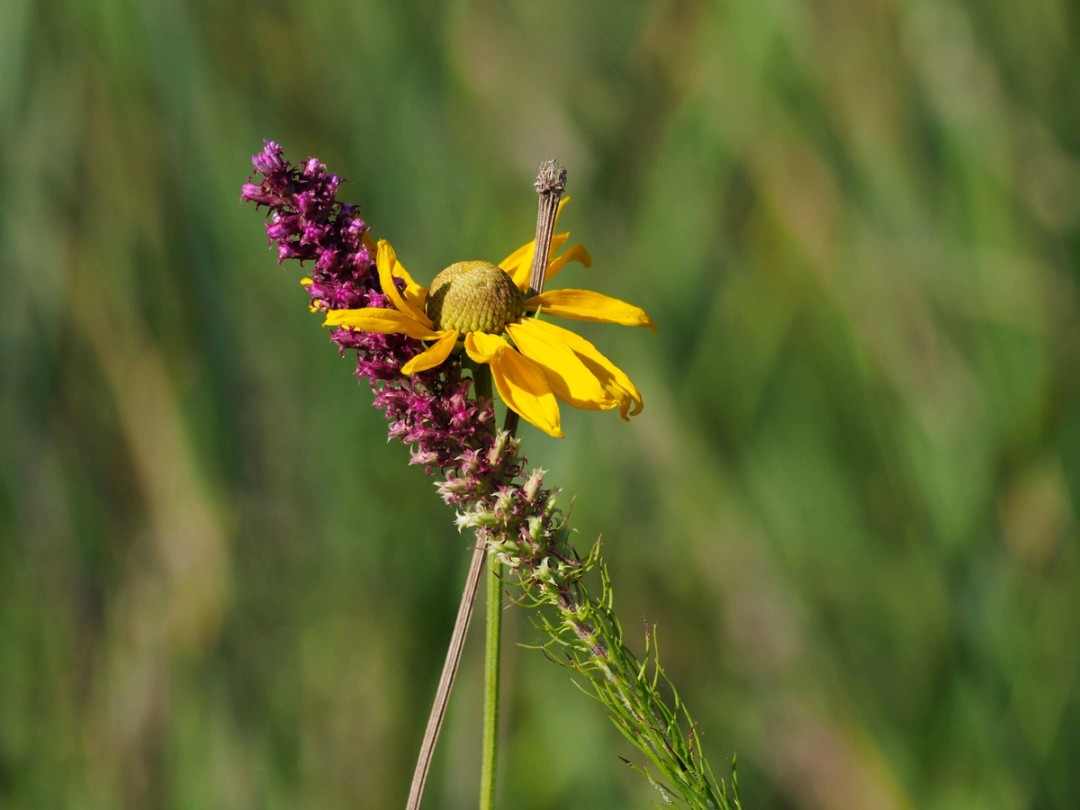
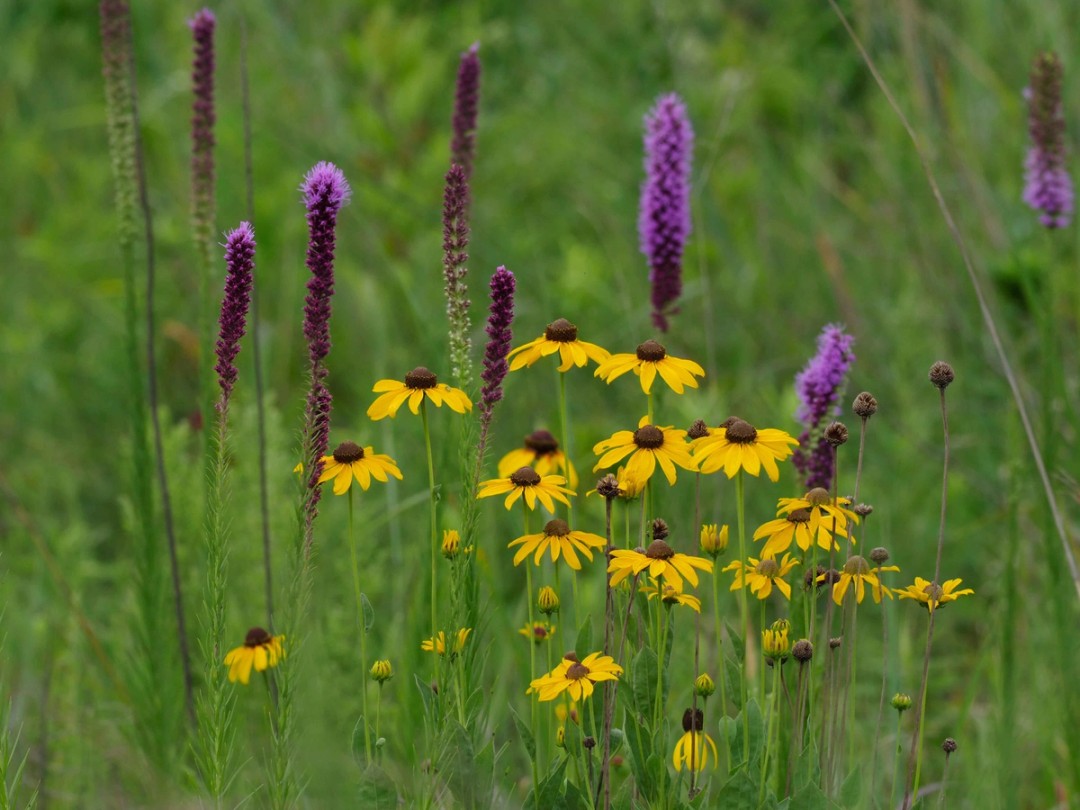
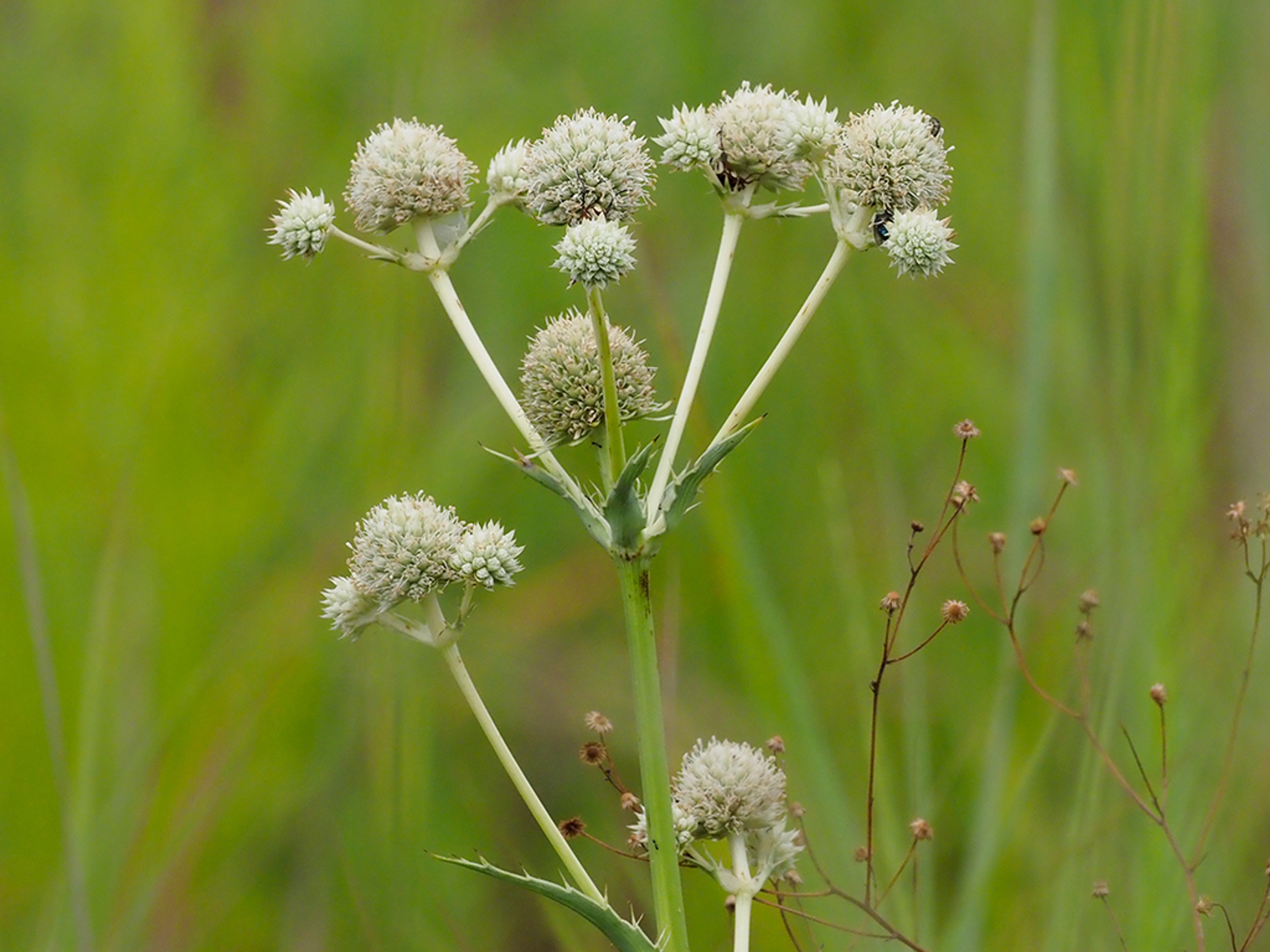
Additional common companions include Rattlesnake master (Eryngium yuccifolium), Rosinweed (Silphium integrifolium), Butterfly milkweed (Asclepias tuberosa), Slender mountain mint (Pycnanthemum tenuifolium) and Grassleaf rush (Juncus marginatus).
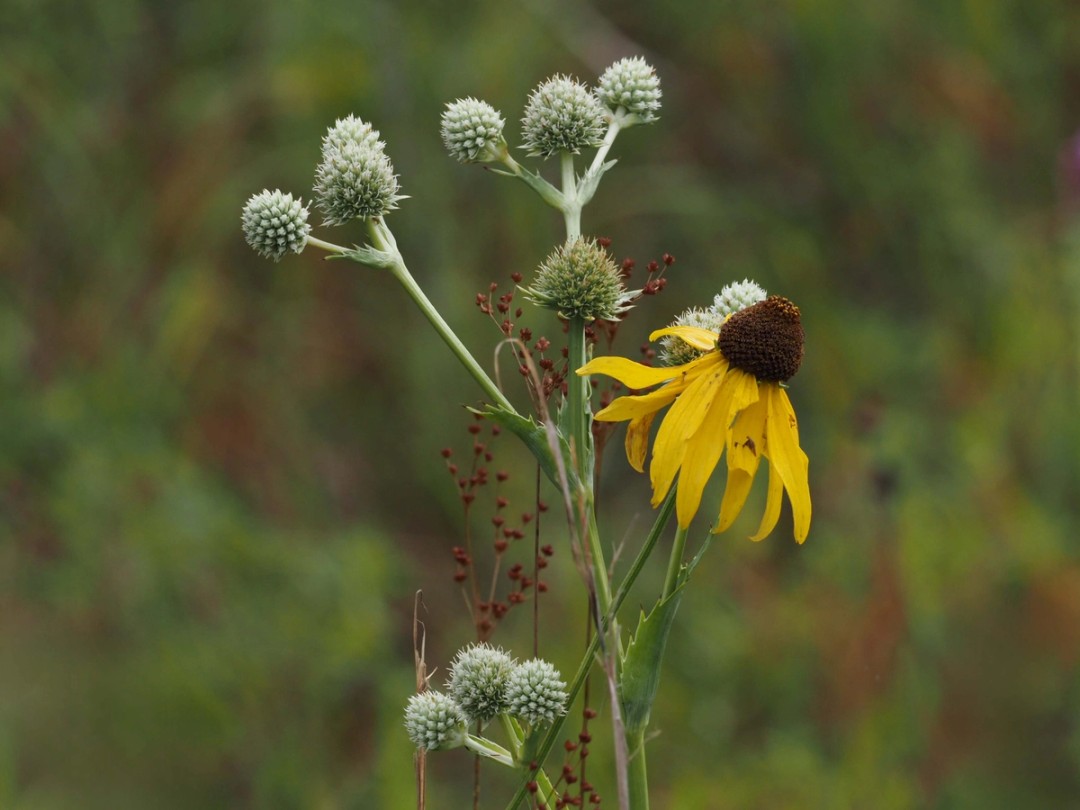
Eryngium yuccifolium and Juncus marginatus 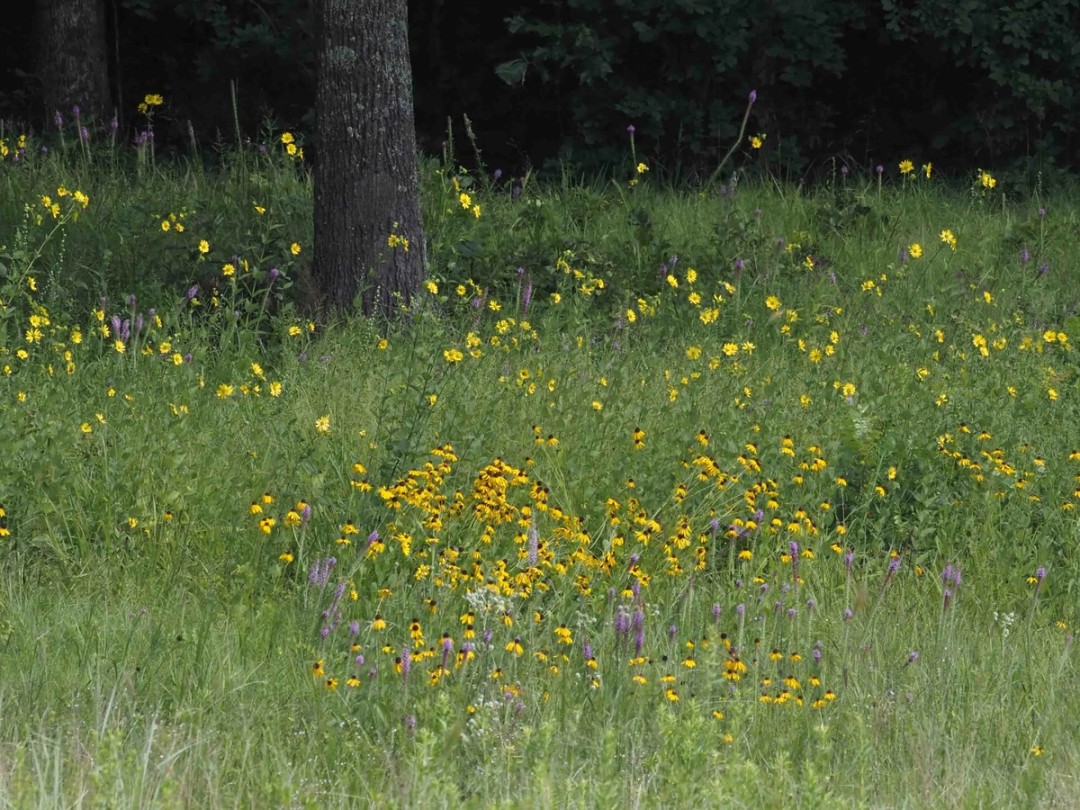
Silphium integrifolium, Eryngium yuccifolium, Liatris pycnostachya 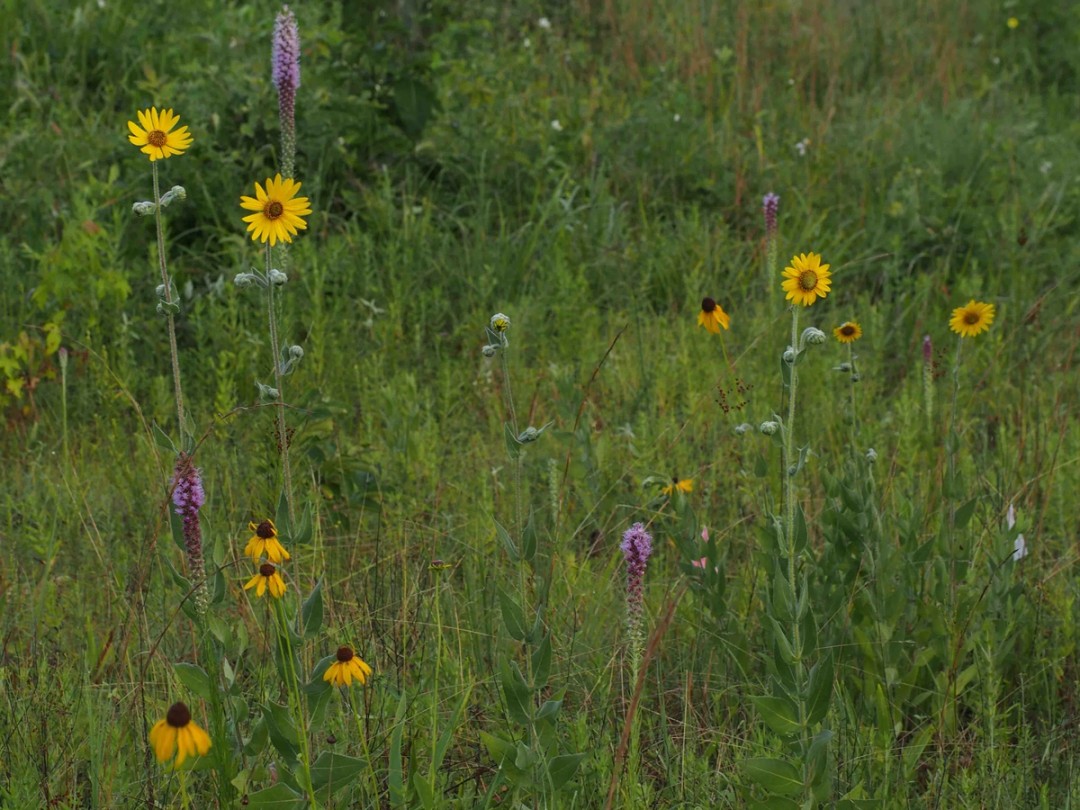
Helianthus mollis 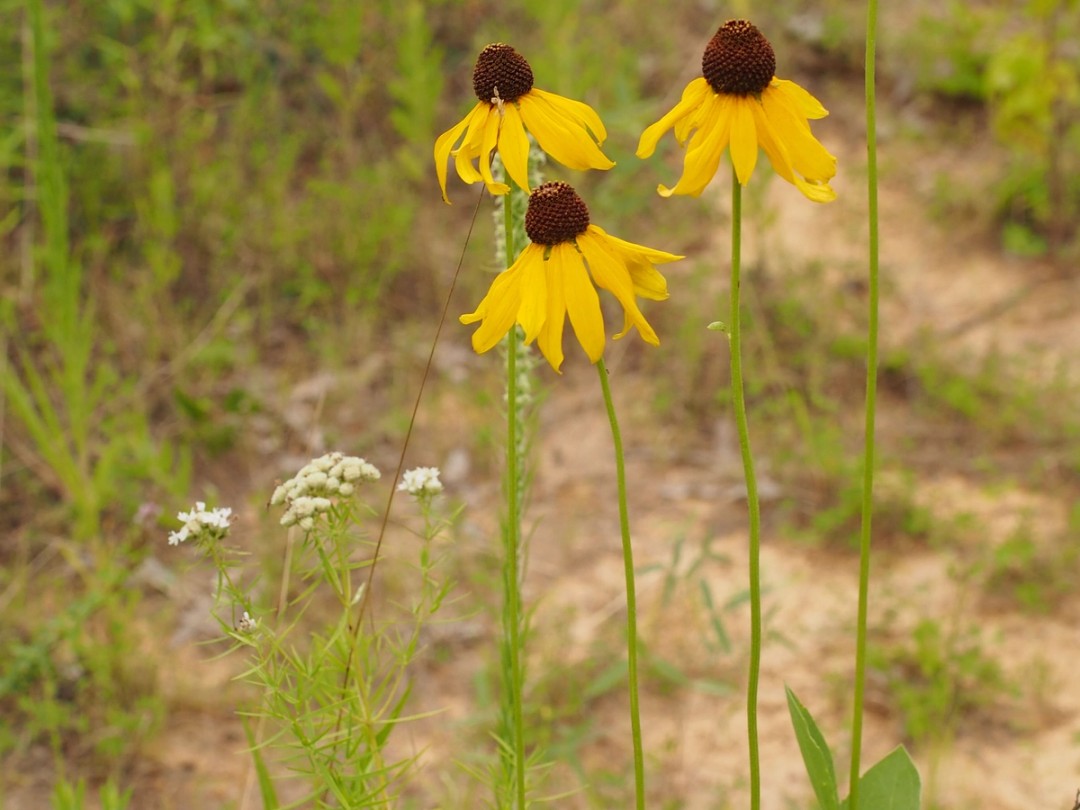
Pycnanthemum tenuifolium
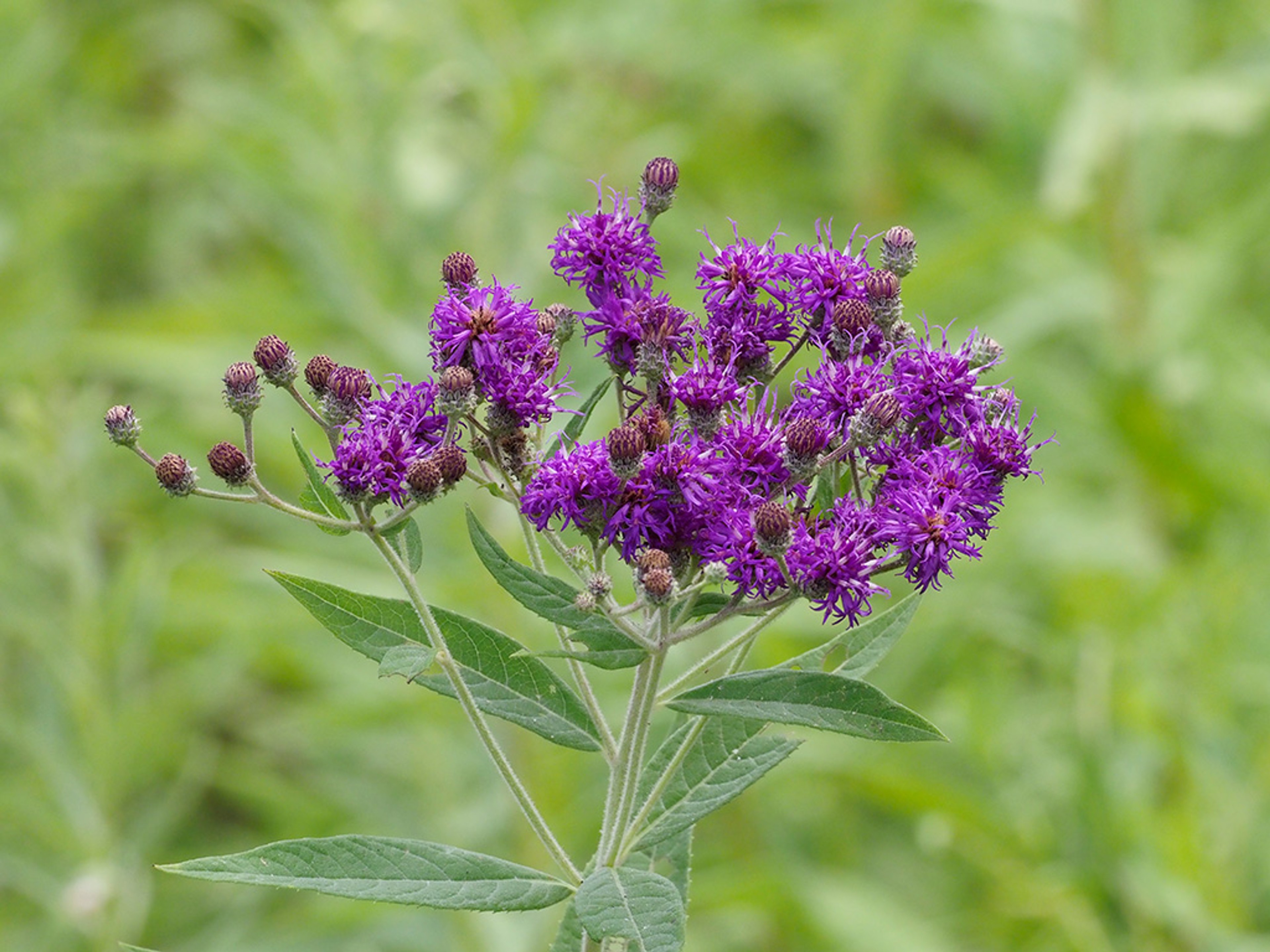
I’ve also documented Vernonia baldwinii, Echinacea purpurea and Elymus canadensis growing alongside Rudbeckia grandiflora.
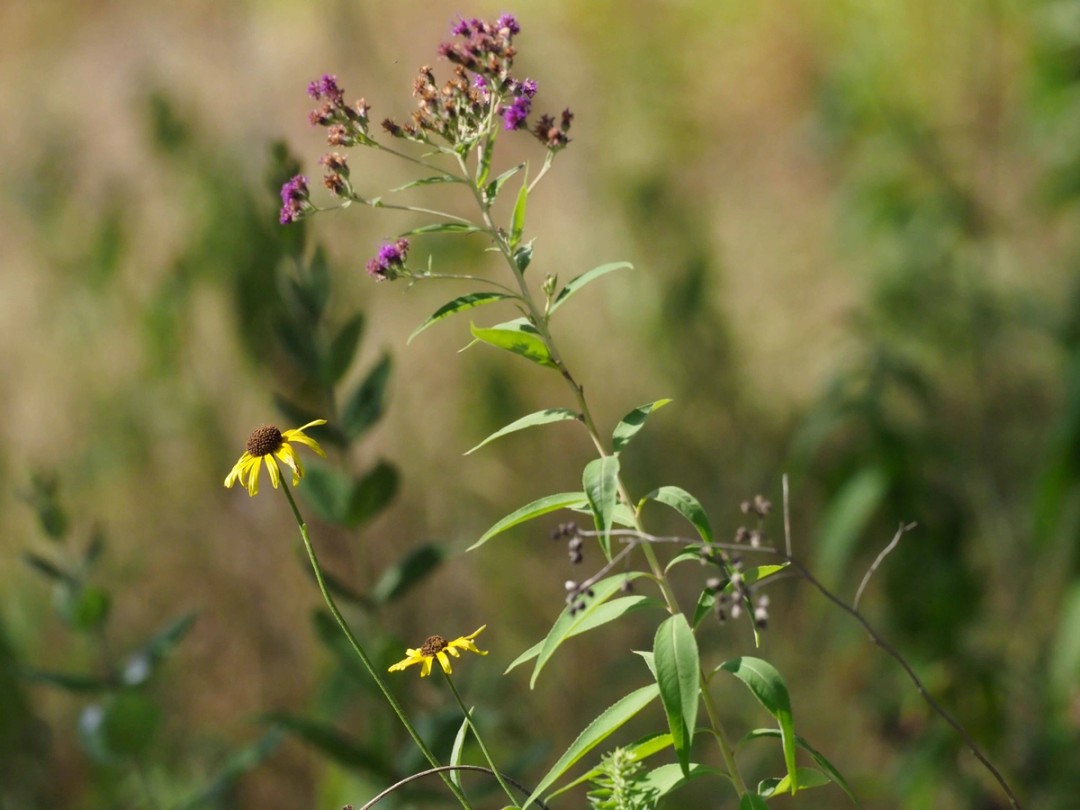
Vernonia baldwinii 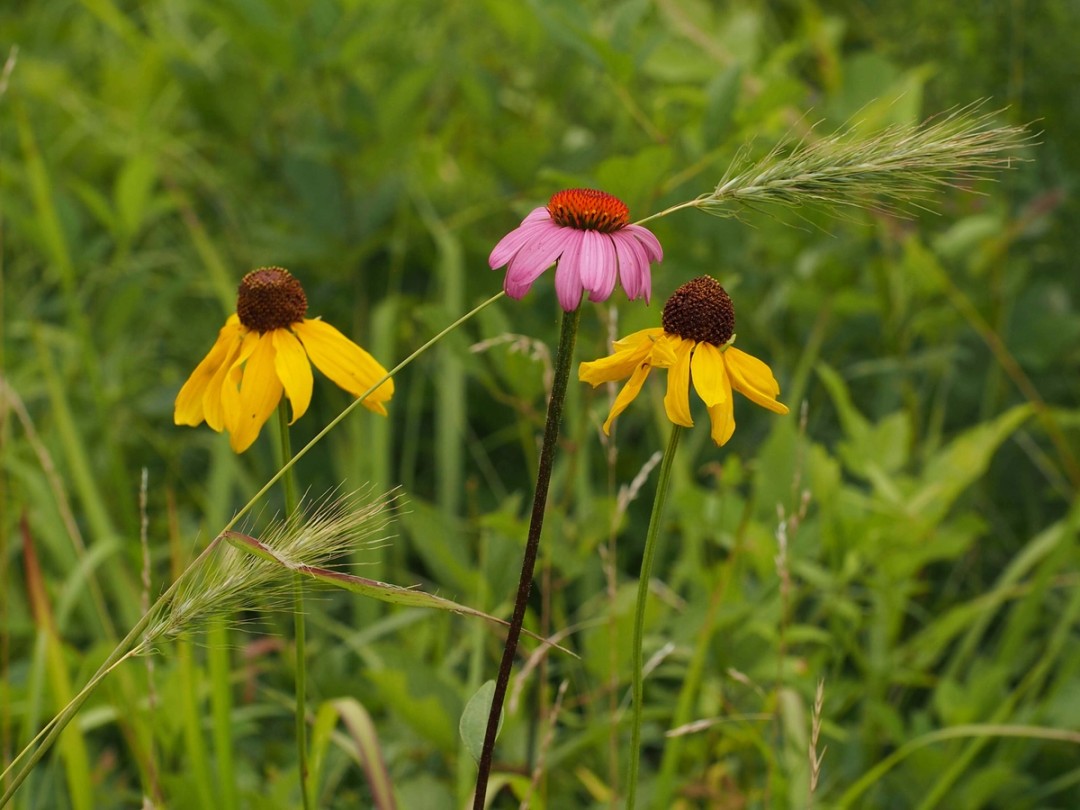
Echinacea purpurea and Elymus canadensis
HABITAT
You'll likely find Rudbeckia grandiflora growing in prairie and grassland habitat, where it often blooms in impressive drifts alongside other summer wildflowers. This hardy native handles both mesic and dry soils as well as full sun to partial shade — a versatility that lets it thrive across a wide range of Ozark landscapes. In mesic, moderately moist settings, plants tend to grow taller and more lush. In drier conditions, they stay shorter but bloom just as reliably.
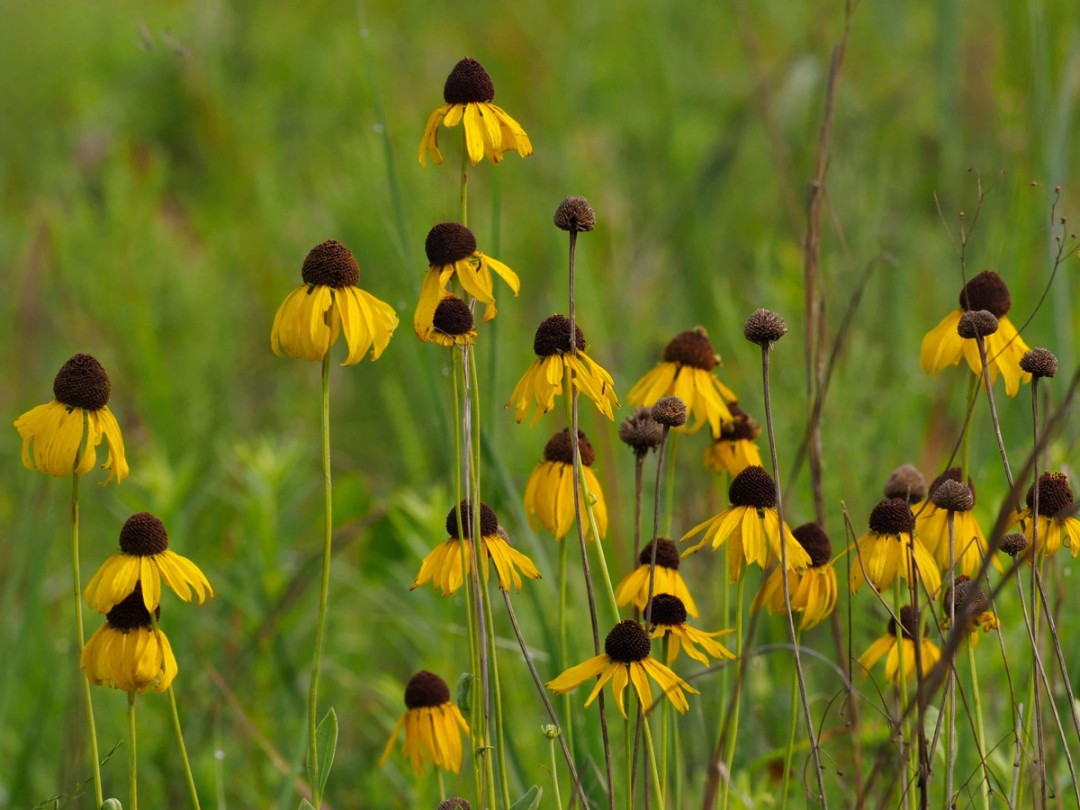
Prairie/Grassland 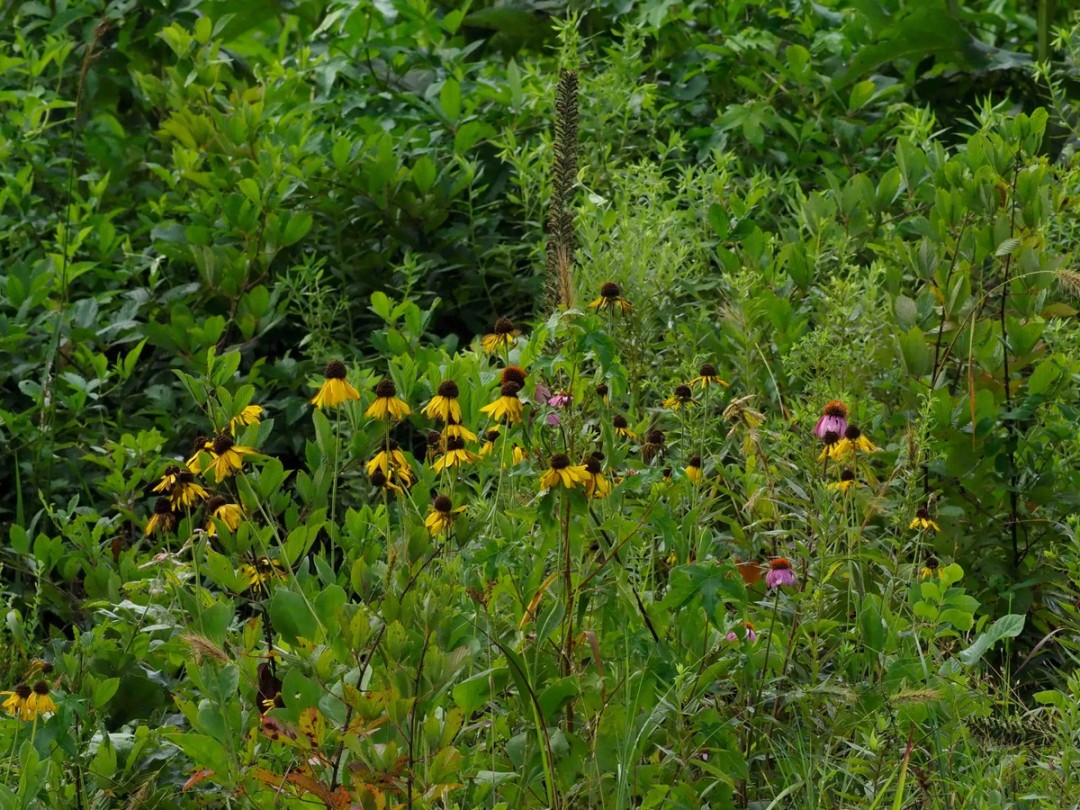
Disturbed habitat 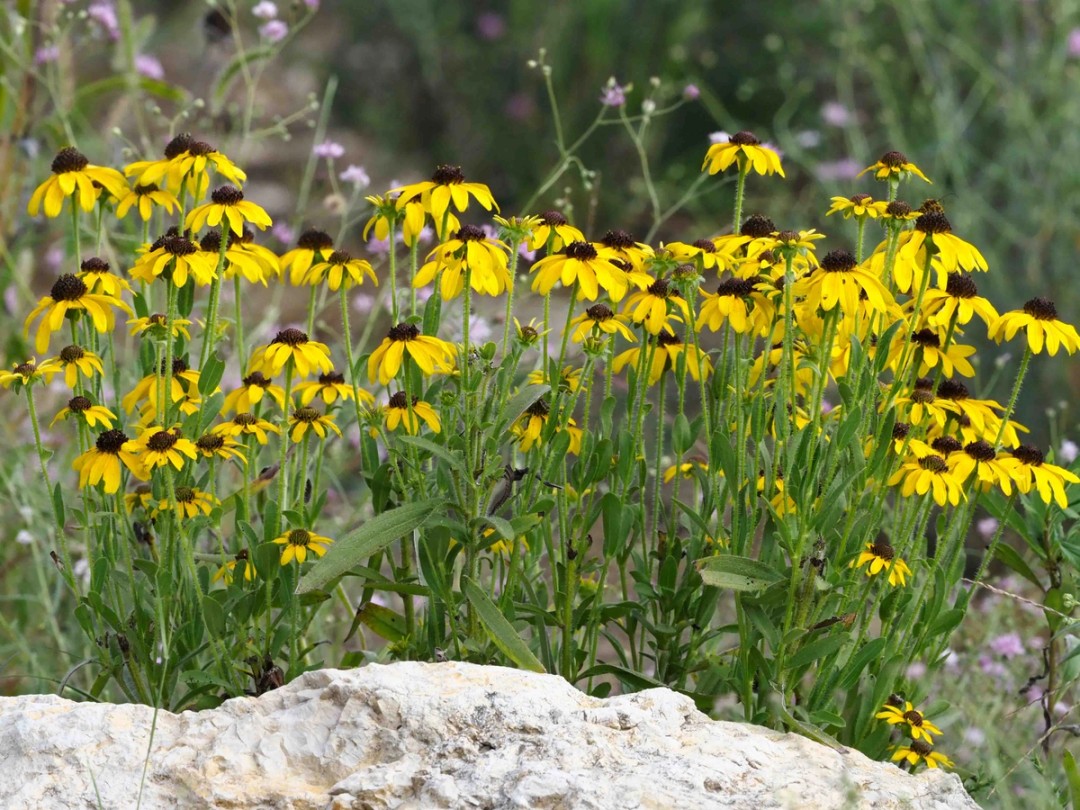
Glade 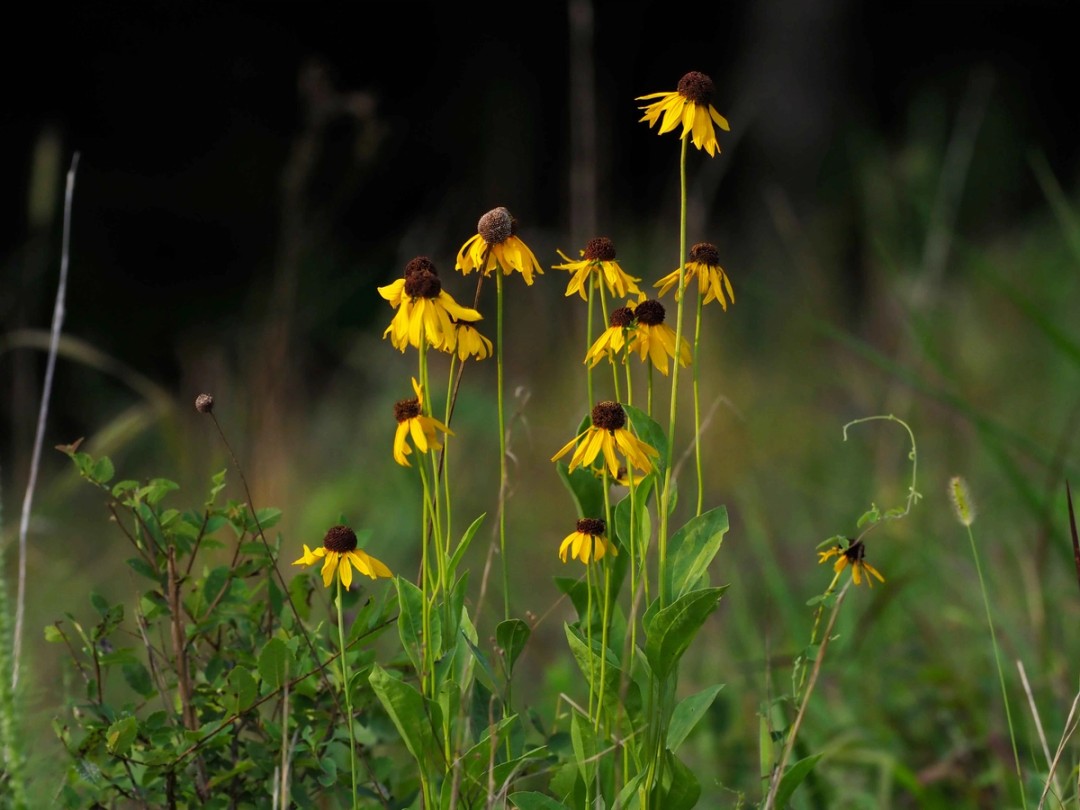
Woodland edge
Glades are another rewarding place to look. These rocky, open outcrops with thin, well-drained soils might seem inhospitable, but tall coneflower handles the heat and drought stress with ease. Woodland edges and open woods offer a shadier alternative — slightly richer soils and filtered light suit it just as well, though you'll typically find fewer plants there than out in the open.
Roadsides can be worth checking, especially where the ground has been disturbed but then left alone long enough for natives to reestablish. A thriving colony can turn up where you least expect it. That said, roadside populations here in the Ozarks are increasingly at risk — as I describe in my introduction, the plants I once found blooming along nearby roads have been badly hit by repeated mowing and herbicide spraying. If you spot a roadside colony, it may be worth collecting seed while you can.
CONSERVATION STATUS
Rudbeckia grandiflora var. grandiflora has a limited range from Texas to Kansas, Missouri, Illinois and south to Arkansas and Louisiana. It is absent from the eastern southern states except for Georgia. Natureserve lists it as No Status Ranking in all of these states except for Missouri, where it is Critically Imperiled and Kansas where it Imperiled. The rest of these states show No Status Ranking.
In Arkansas, Rudbeckia grandiflora var. grandiflora has a Conservation Value of 9 (out of 10), meaning "Conservative taxa with strong fidelity to intact habitats. These taxa tend to exhibit late-successional characteristics like long lifespans with low seed sets and an inability for far ranging dispersal".
INTERESTING TIDBITS
Arkansas has two varieties of Rudbeckia grandiflora.
- Rudbeckia grandiflora var. grandiflora (described on this page)
- Rudbeckia grandiflora var. alismifolia
They can be differentiated by the hairiness of their stems and leaves.
- R. grandiflora var. grandiflora - hairy stems and leaves
- R. grandiflora var. alismifolia - hairless or with sparse hairs
They have regional differences in Arkansas.
- R. grandiflora var. grandiflora > found across AR excluding the northern part of the Ozark plateaus & northern Mississippi Alluvial Plain
- R. grandiflora var. alismifolia > central eastern AR, Grand Prairie, Pinelands & Prairies of Gulf Coast Plain
They are found in different habitats.
- R. grandiflora var. grandiflora: Prairie/grasslands (both mesic and dry), Open woods
- R. grandiflora var. alismifolia: Prairies, Openings and Pinelands