PLANT NAME
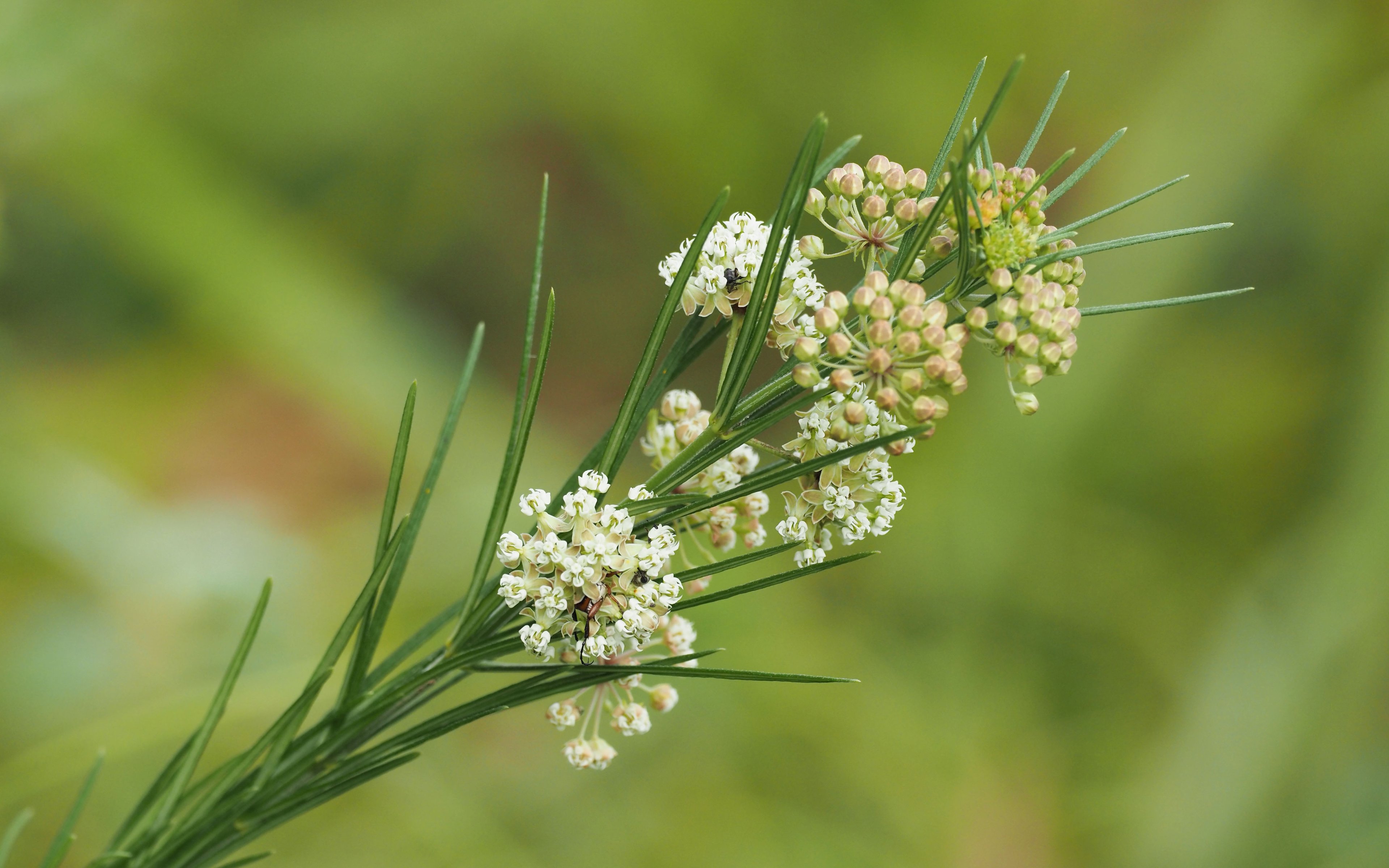
This perennial forb, scientifically known as 'Asclepias,' is named after the Greek god of medicine, Asklepios, reflecting its historical medicinal use. It is commonly referred to as Whorled milkweed. The Latin botanical term 'verticillata' means 'whorled' and describes the plant's distinctive leaf arrangement, where the leaves form rings around the stem.
The straightforward common name, Whorled milkweed, further emphasizes this distinctive feature.
BLOOM
Flowers arise from the axils of the middle to upper leaves. Initially, the tiny buds may have a reddish, pink or green hue.
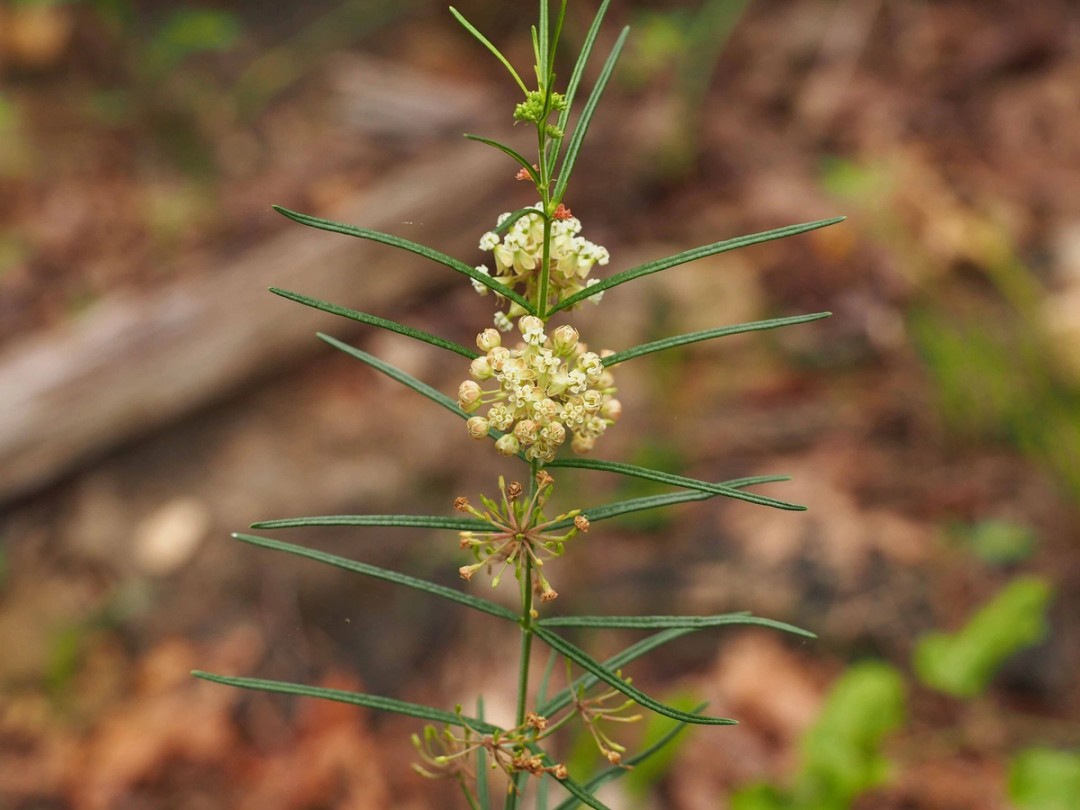
Green and pinkish buds 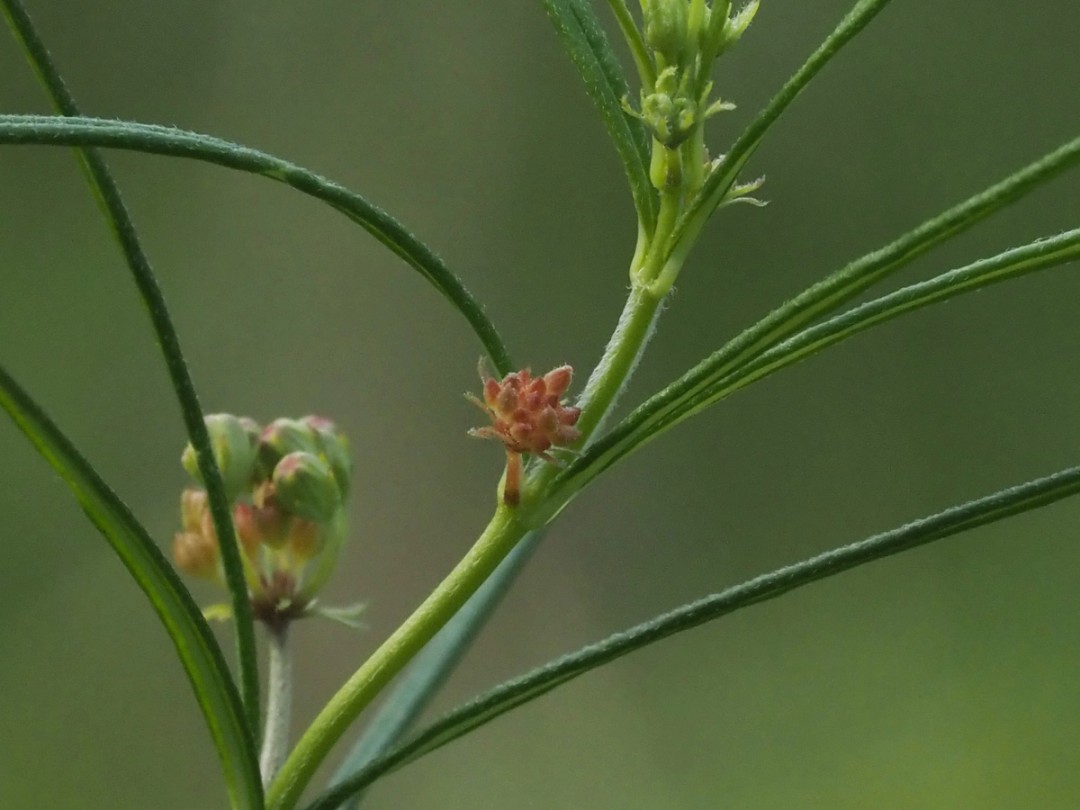
Close look at pinkish buds
The flowers occur in umbels on short stalks (peduncles). The umbels contain anywhere from 6-20 individual, bright white flowers. Blooming proceeds from the base to the top of the plant.
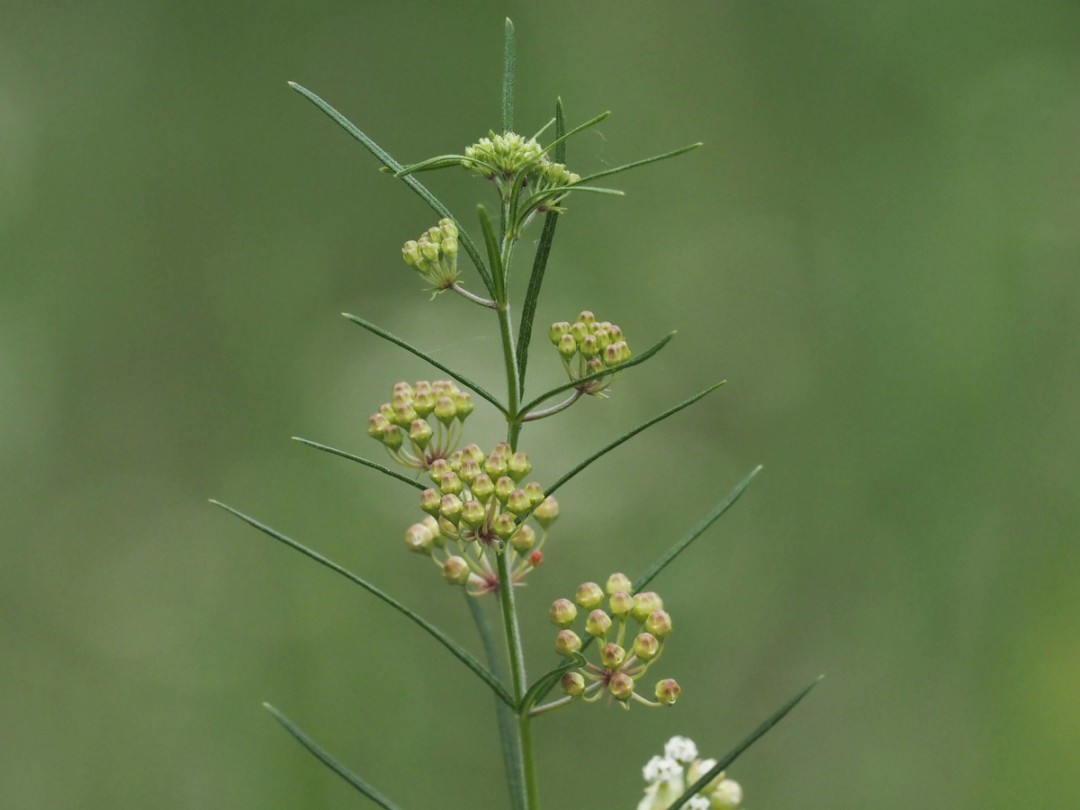
Buds at the top of the plant 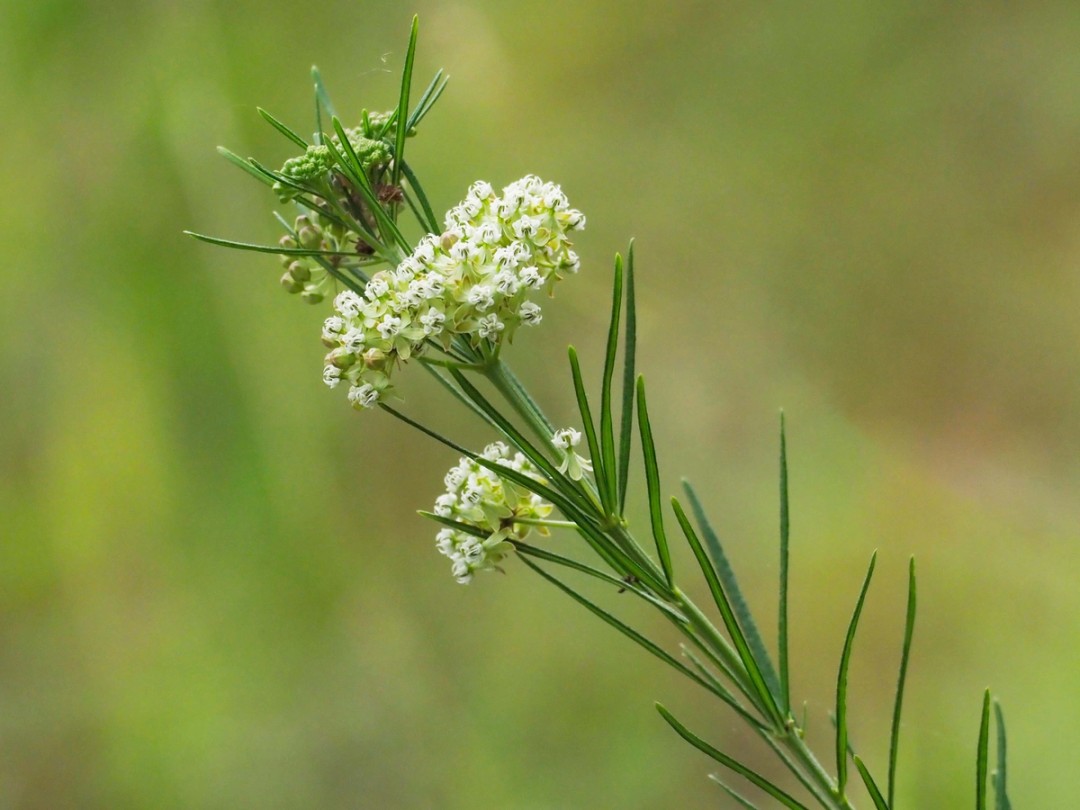
Umbels of white flowers 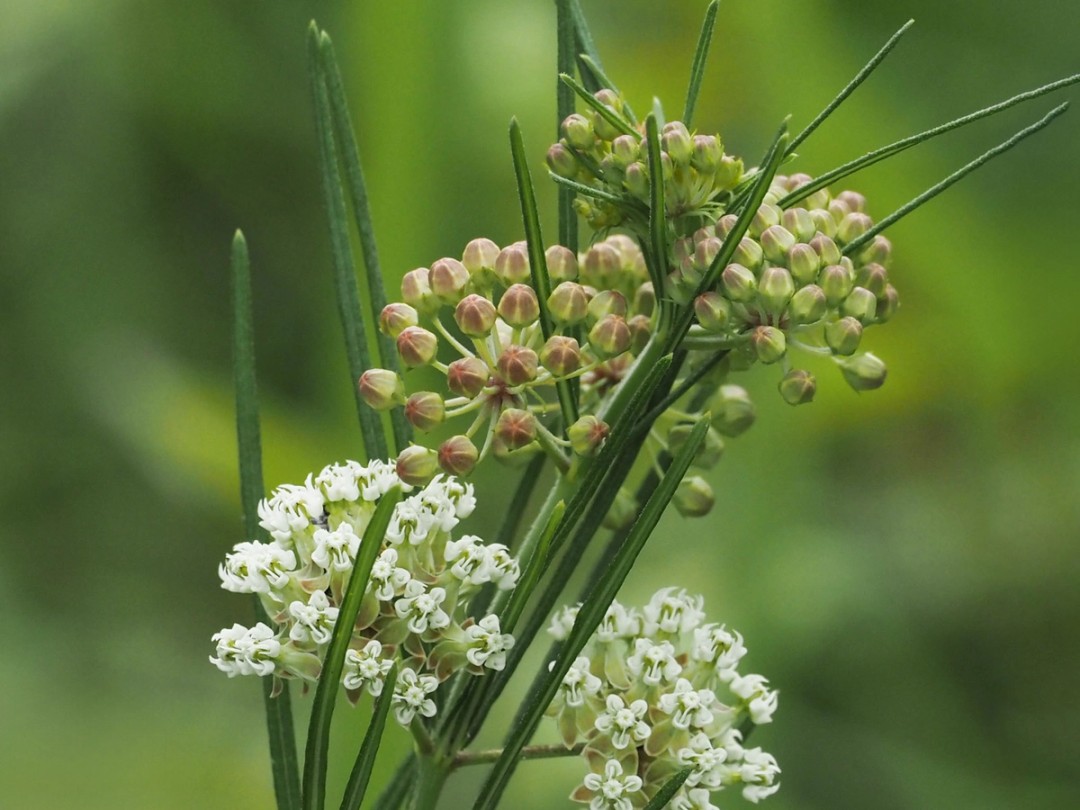
Flowering from base to top 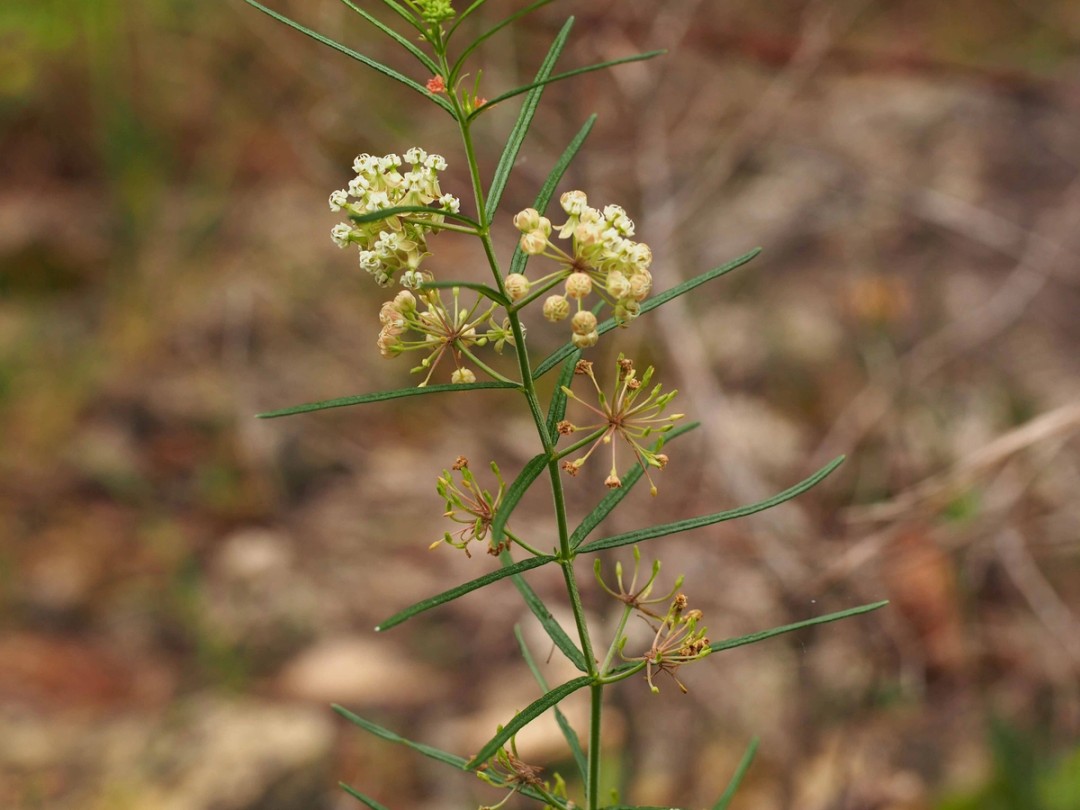
Spent flowers at base
DESCRIPTION
Whorled milkweed is a drought-tolerant perennial plant growing up to 2 feet. It is typically unbranched. The stem is pubescent with short hairs. The narrow leaves typically occur in whorls of 3-6 and dangle downward. They are sessile or may have short petioles.
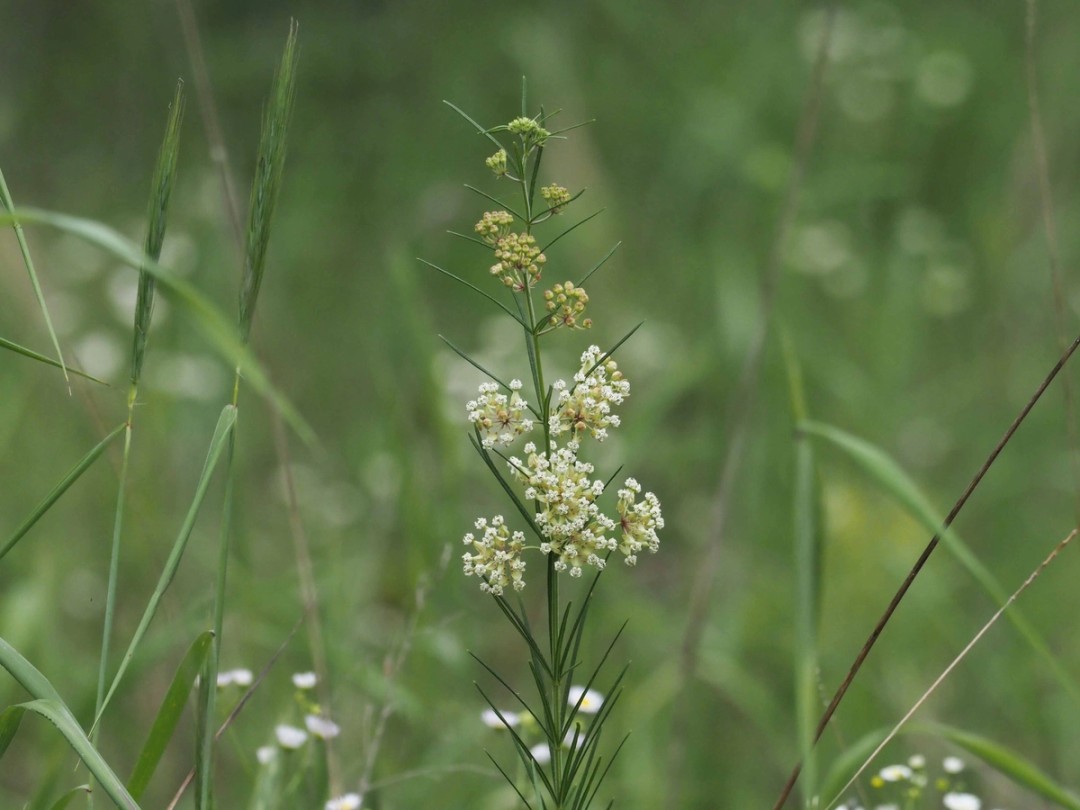
Leaves, flowers, buds 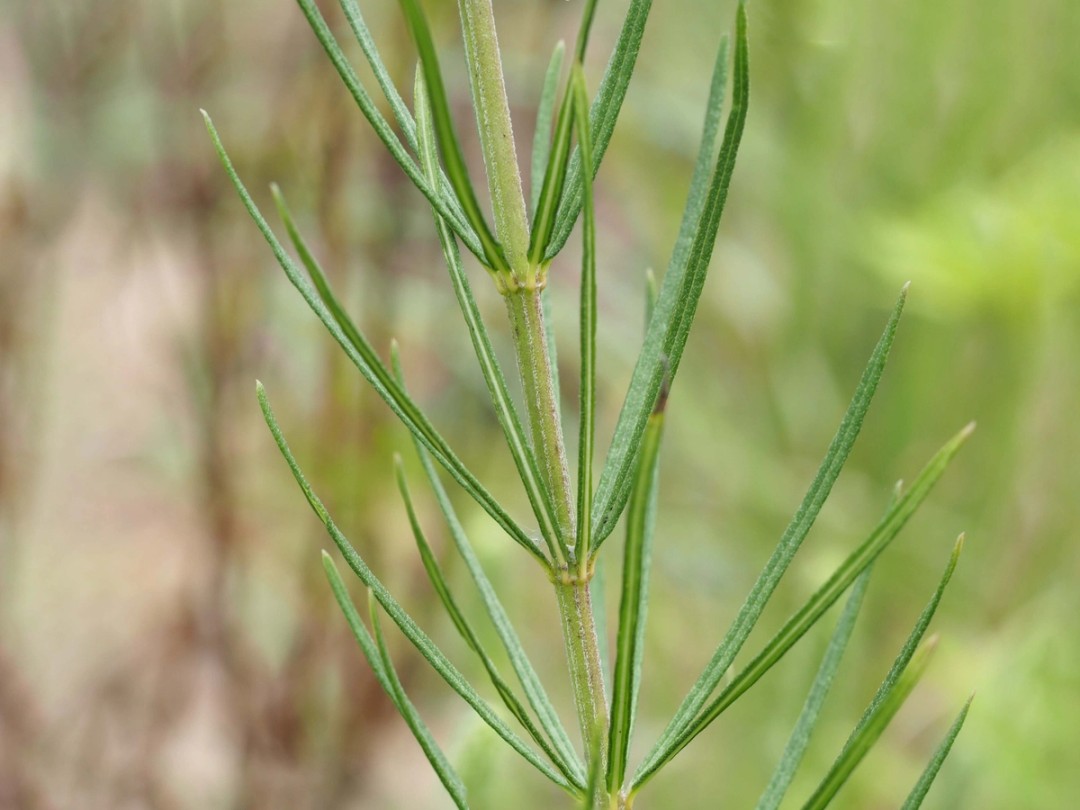
Stem and leaves 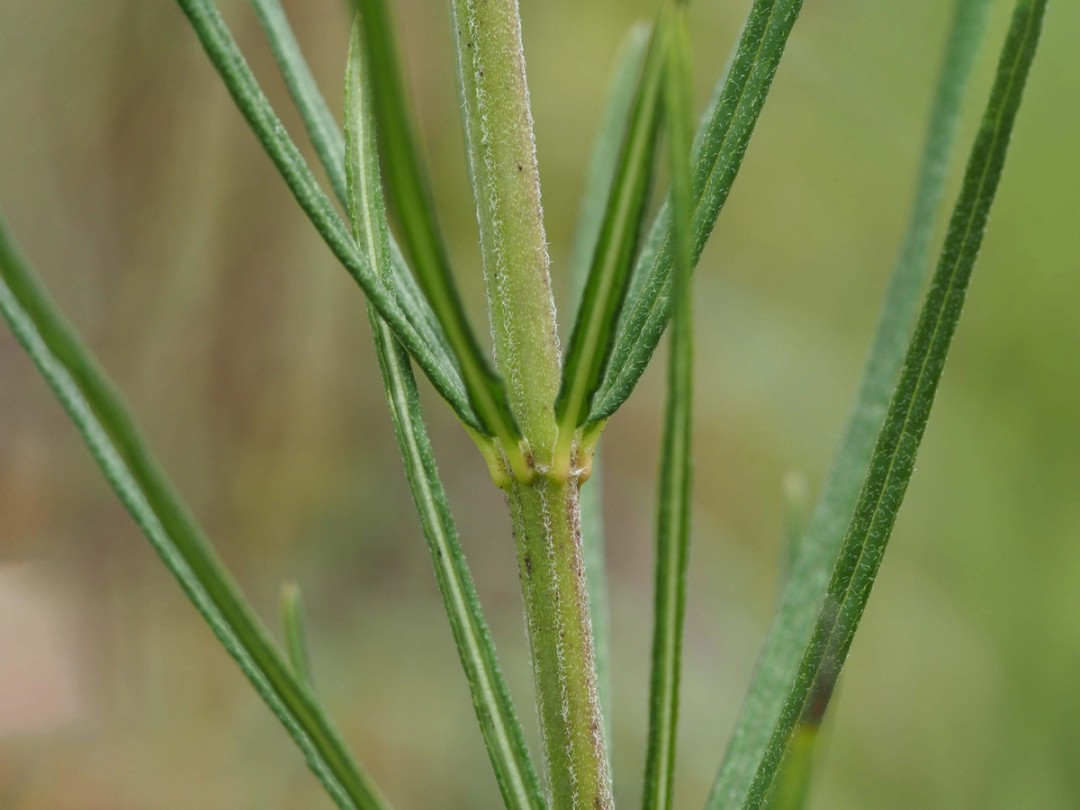
Pubescent stem 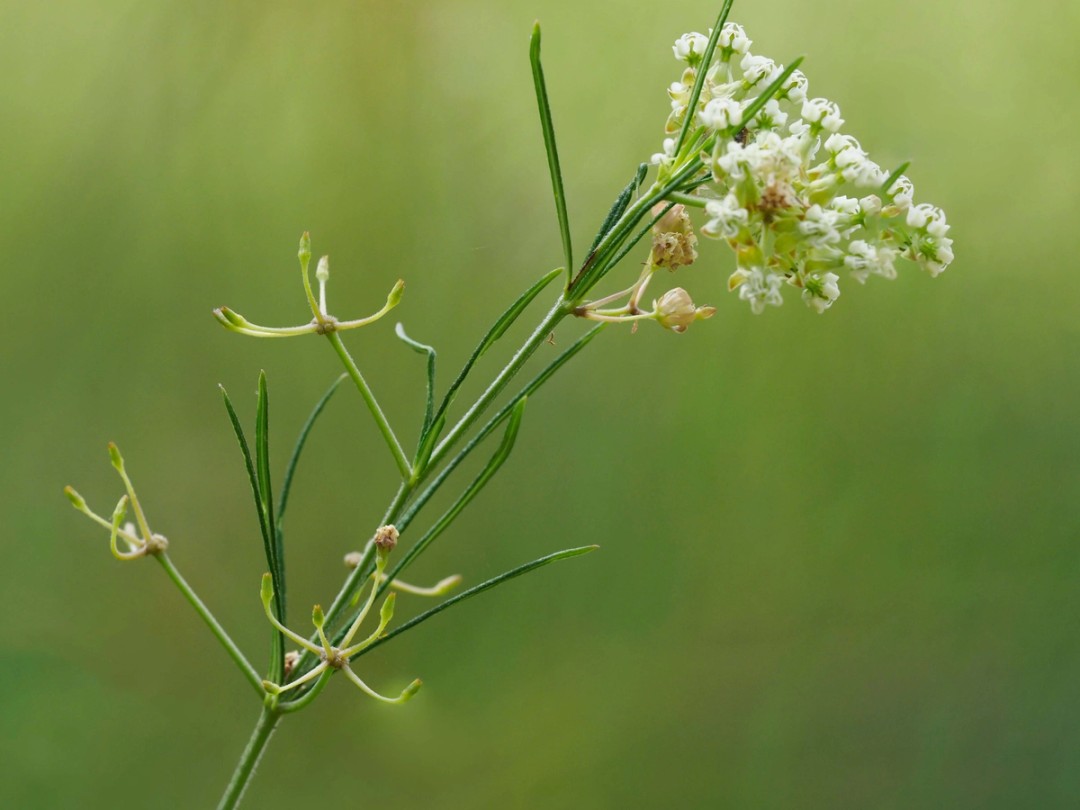
Developing seed pods
Like all milkweeds, the seed pods split open when ripe, releasing tufts of cottony seeds that are dispersed by wind.
POLLINATORS
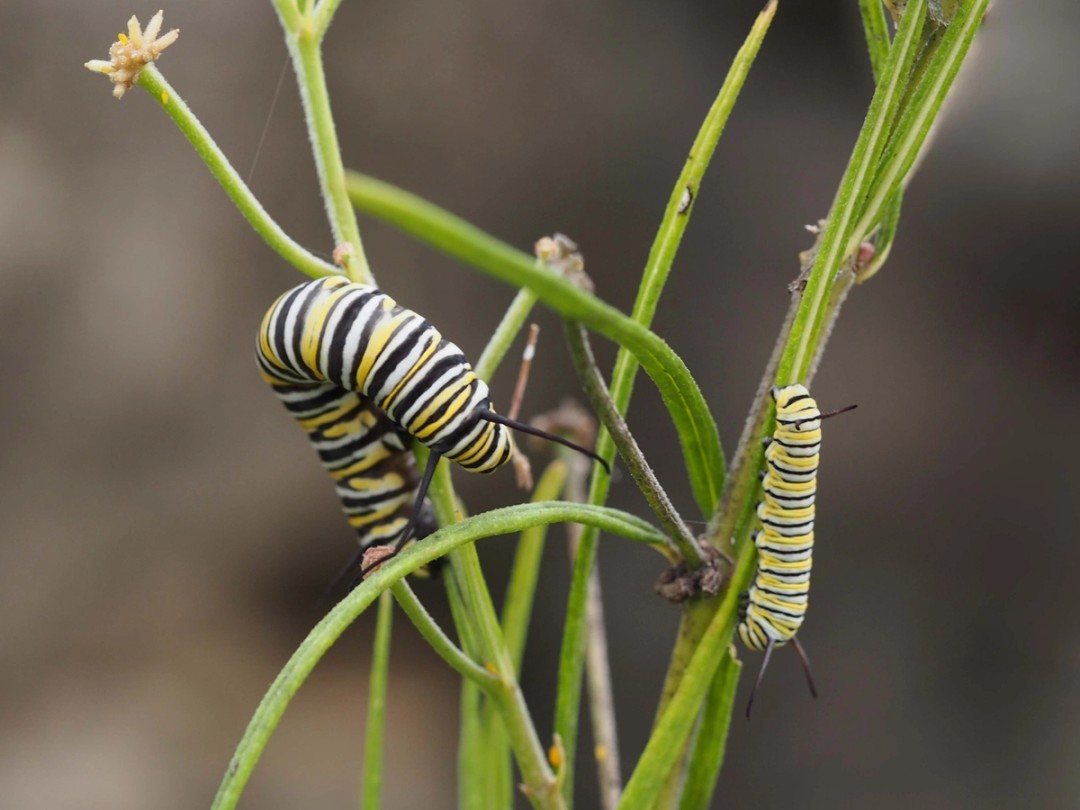
Whorled milkweed is an excellent choice for a pollinator garden because it supports a diverse range of insects, including various bees, butterflies, moths, and wasps. Monarch caterpillars are commonly found on Asclepias verticillata. The photos below depict Monarch caterpillars diligently munching on the leaves of Whorled milkweed (the second photo shows two!).
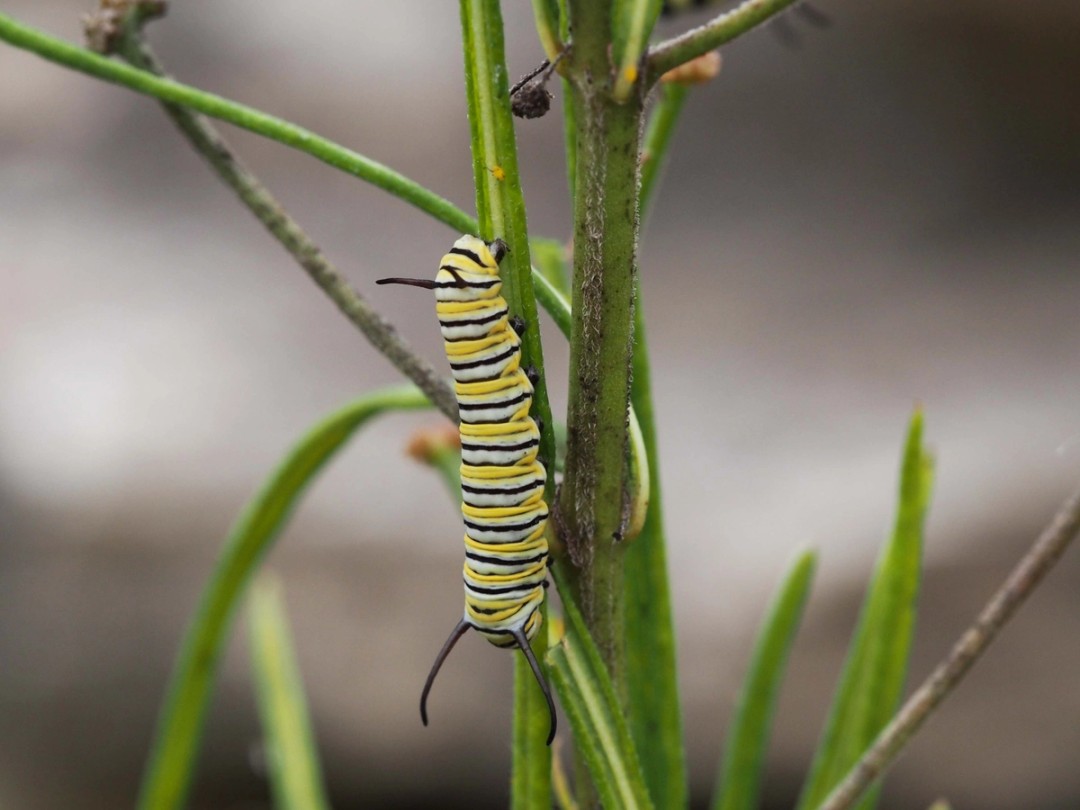
In addition to Monarch butterflies, I’ve observed Juniper hairstreaks and Common buckeye butterflies nectaring on the flowers of Whorled milkweed.
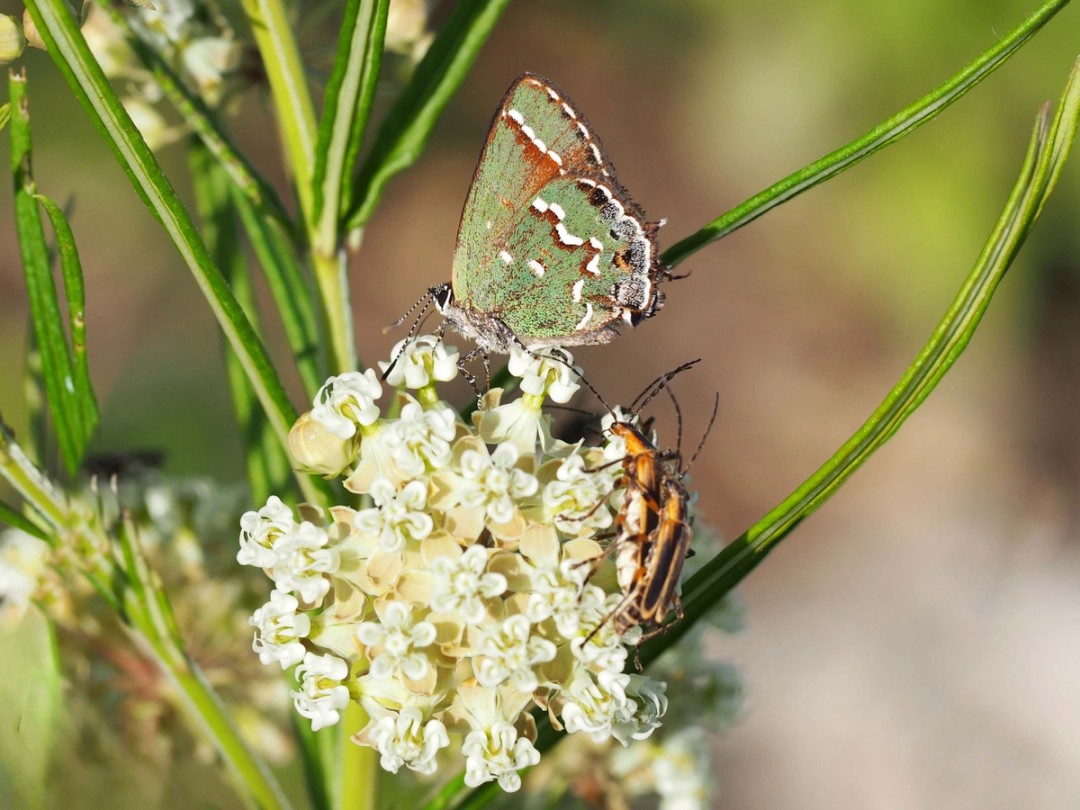
Juniper hairstreak 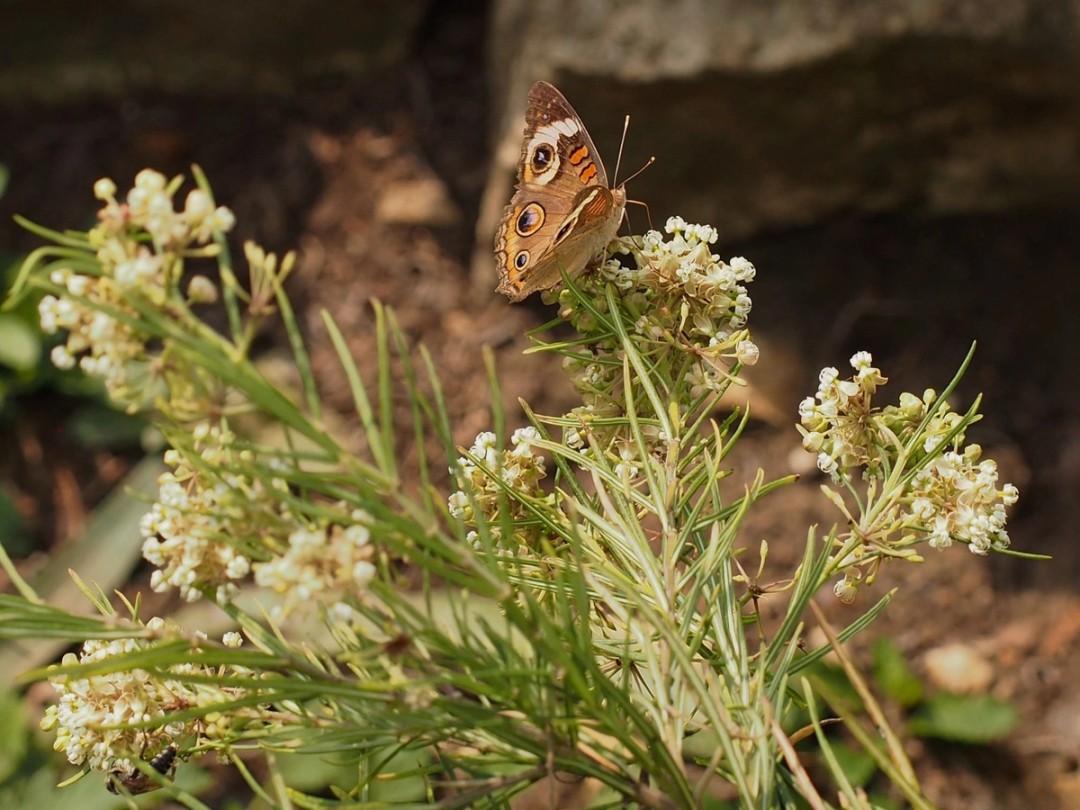
Common buckeye
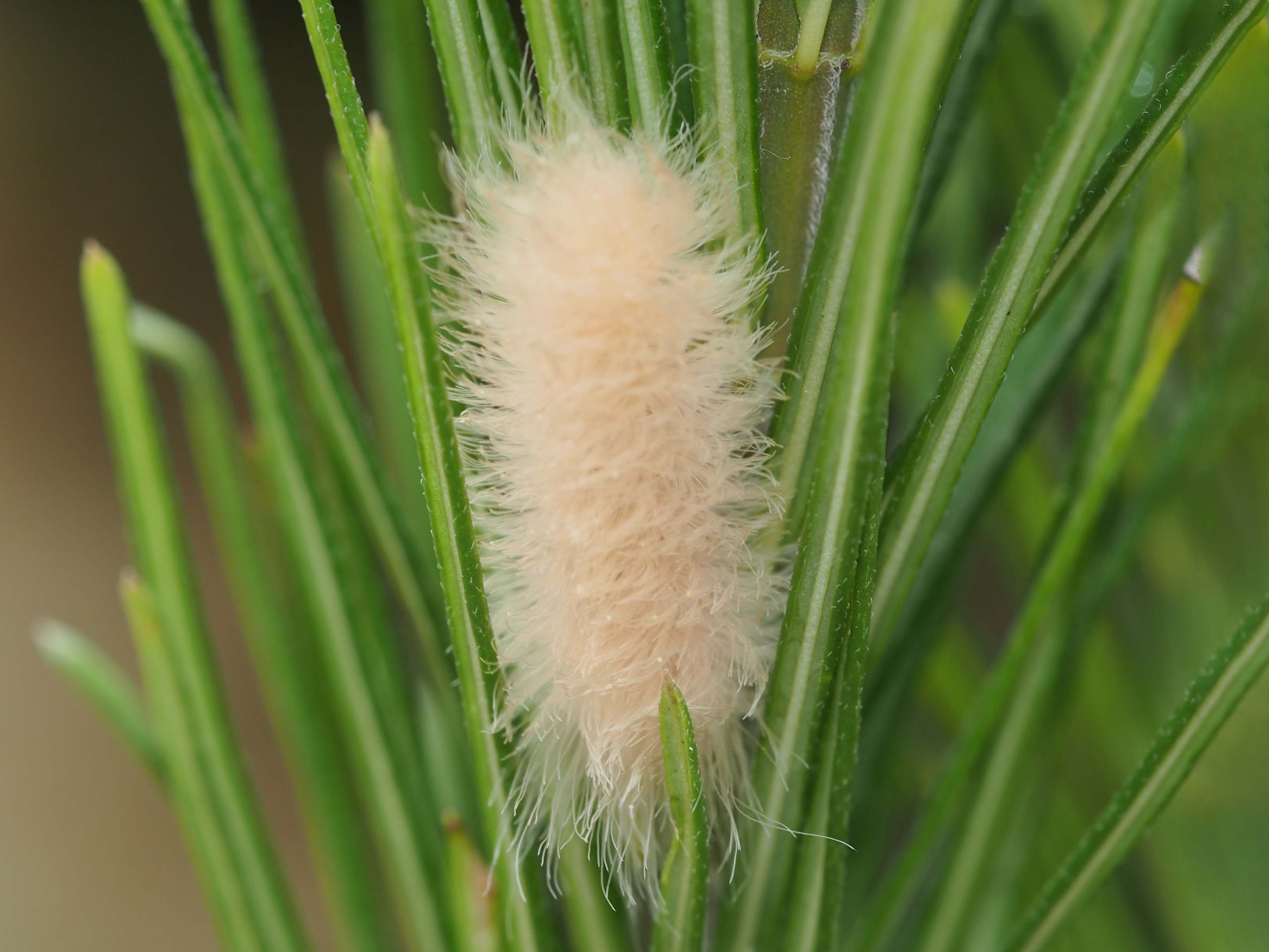
Whorled milkweed is a host plant for Cycnia tenera, the delicate cycnia moth, also known as the dogbane tiger moth.
Several bees and wasps can also be found visiting these flowers.
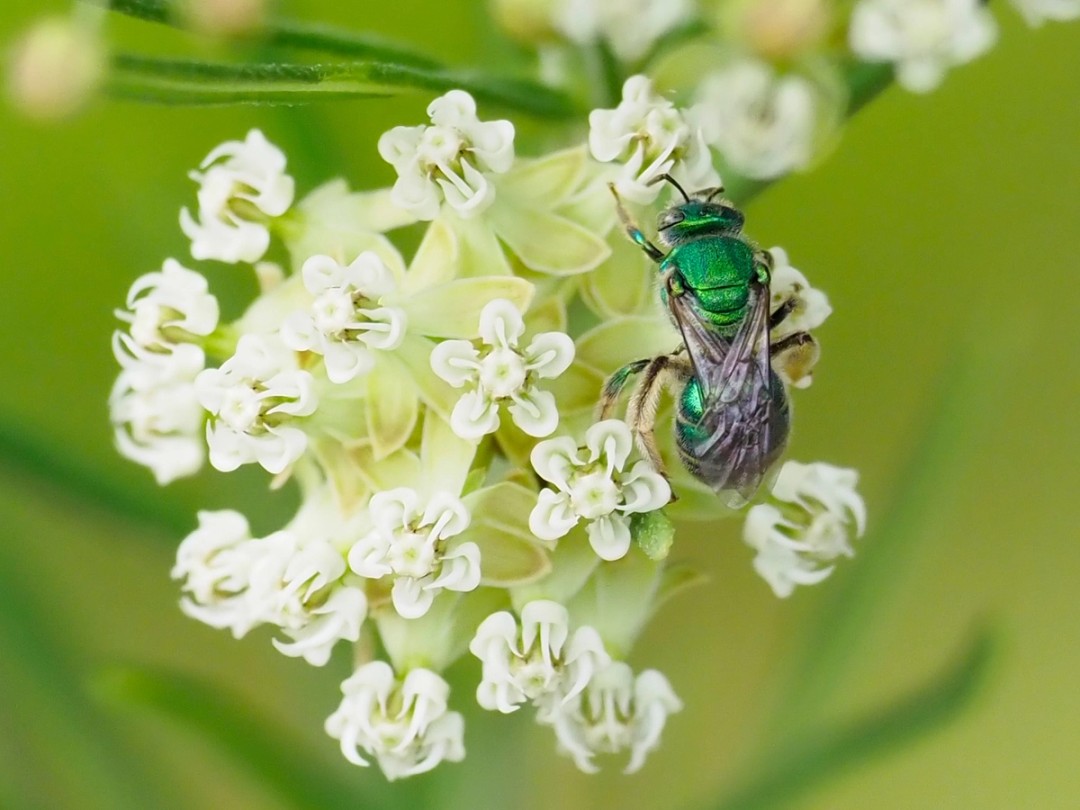
Augochloropsis bee 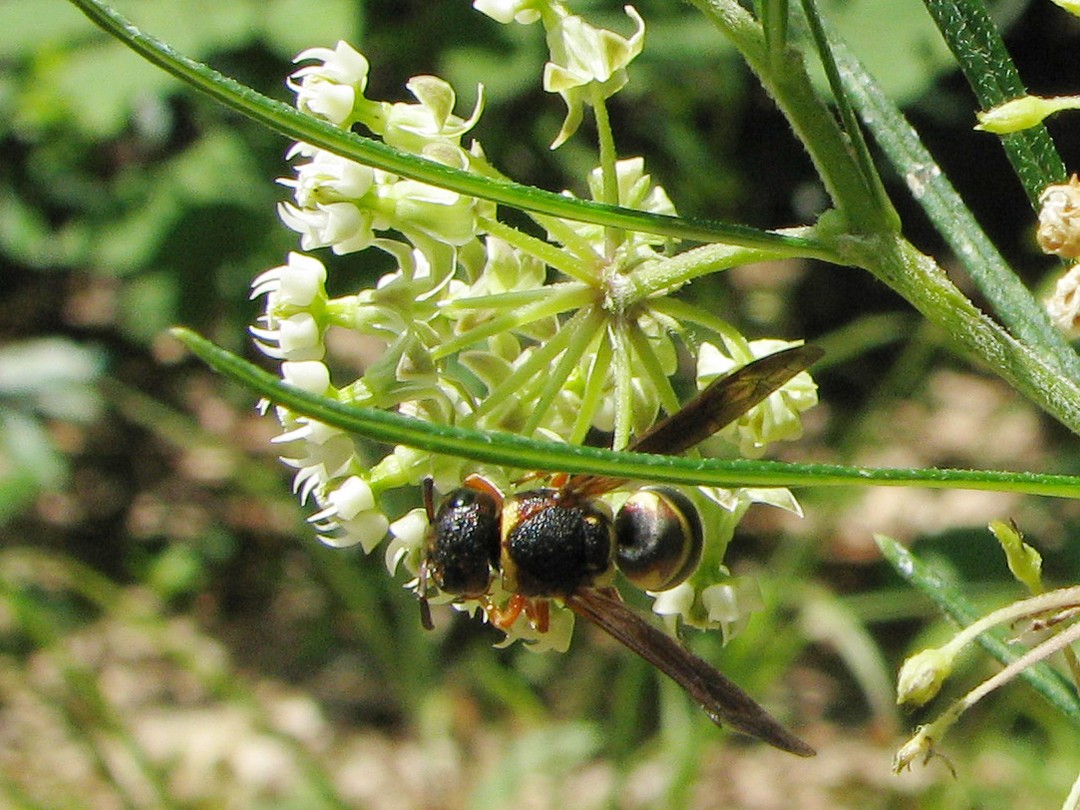
Genus Euodynerus wasp 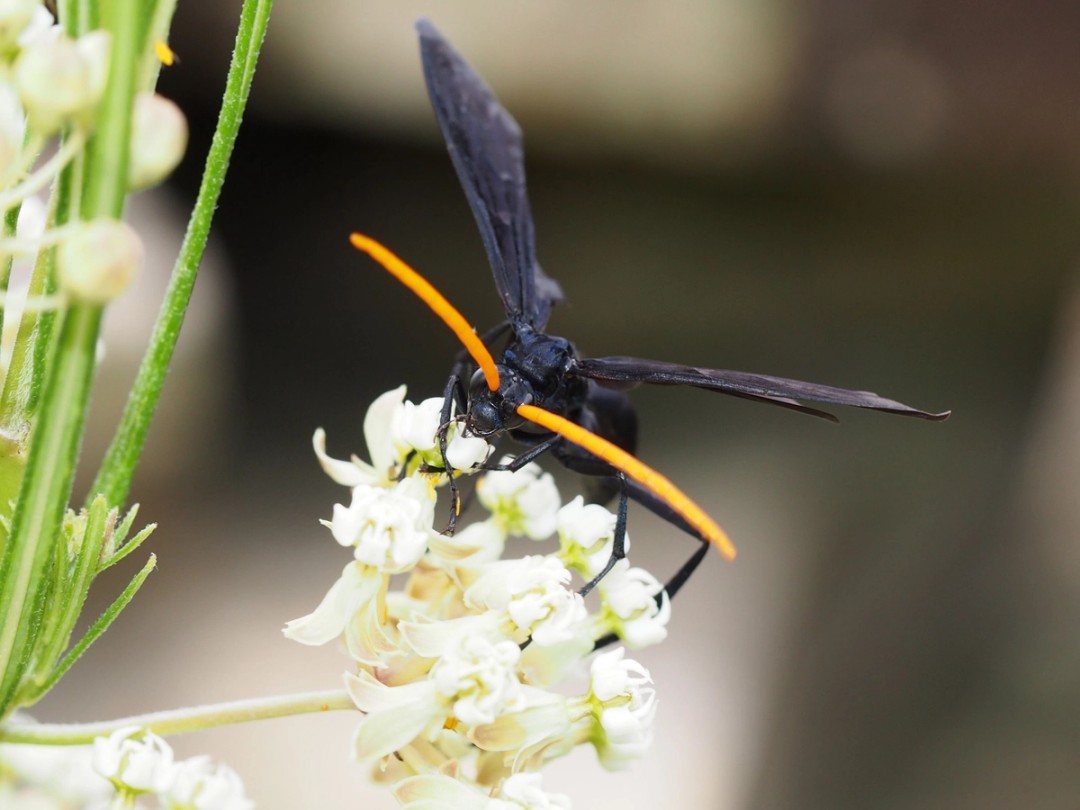
Genus Pepsis (New World Tarantula-hawk wasp) 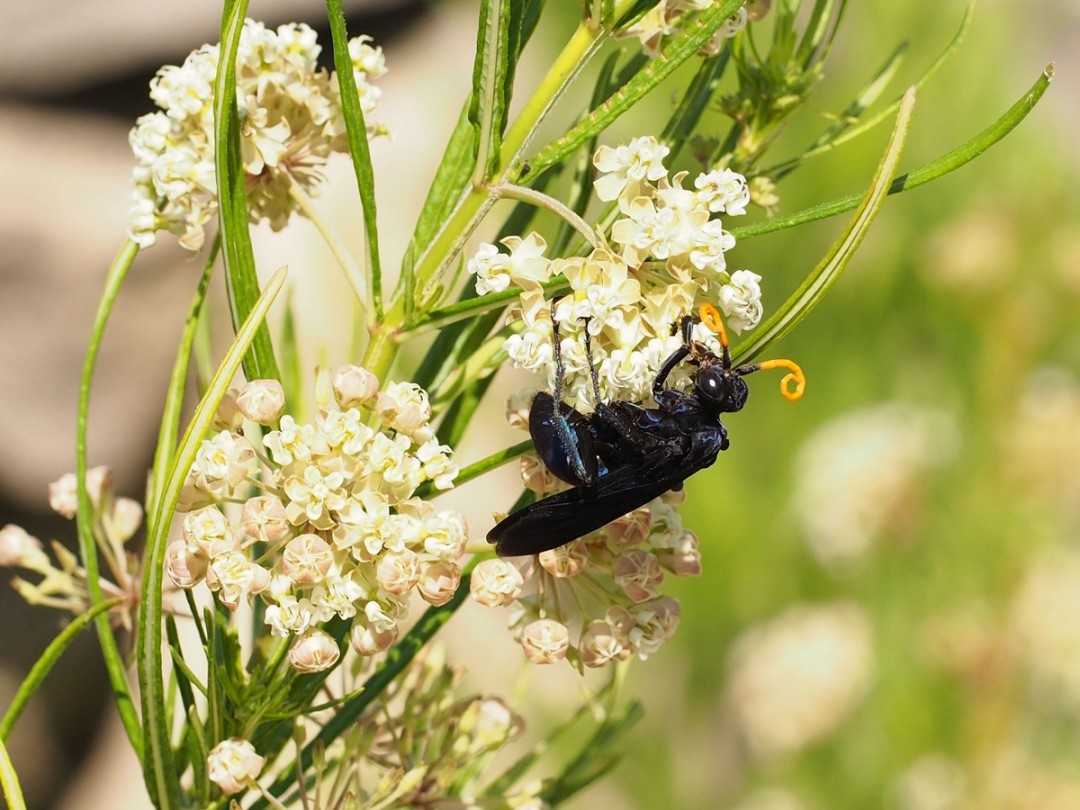
Genus Pepsis (New World Tarantula-hawk wasp)
Other interesting insect visitors I’ve observed are shown below.
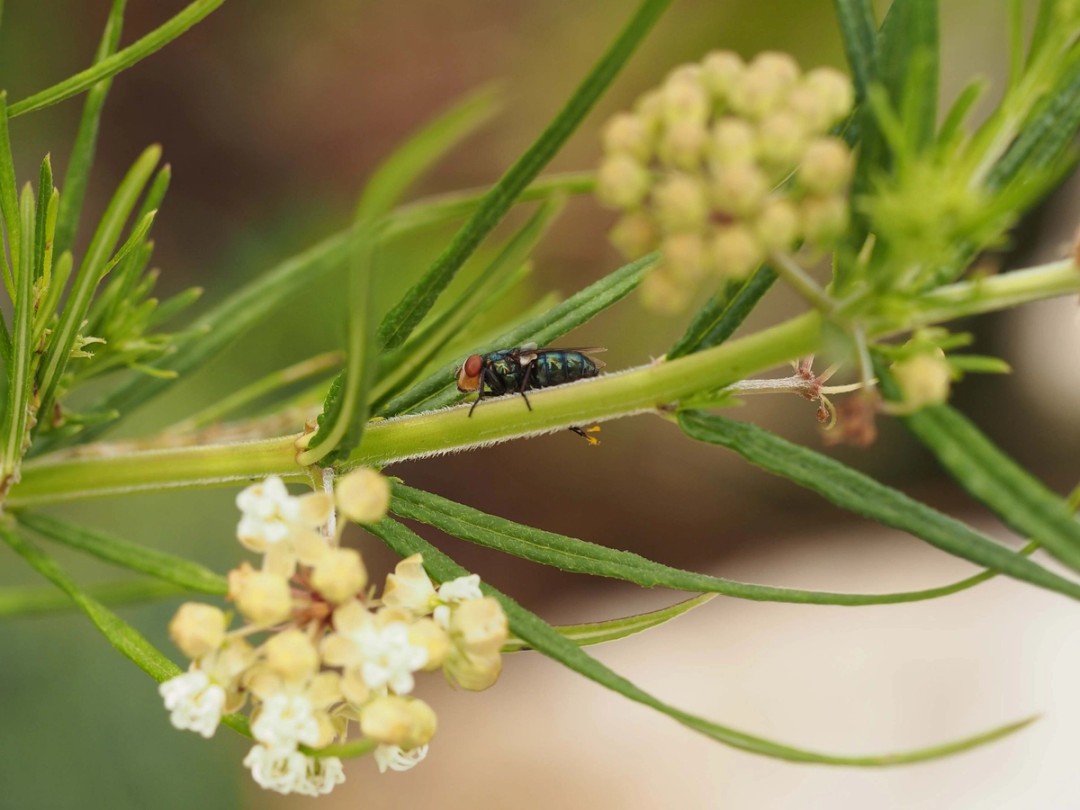
Secondary Screwworm Fly 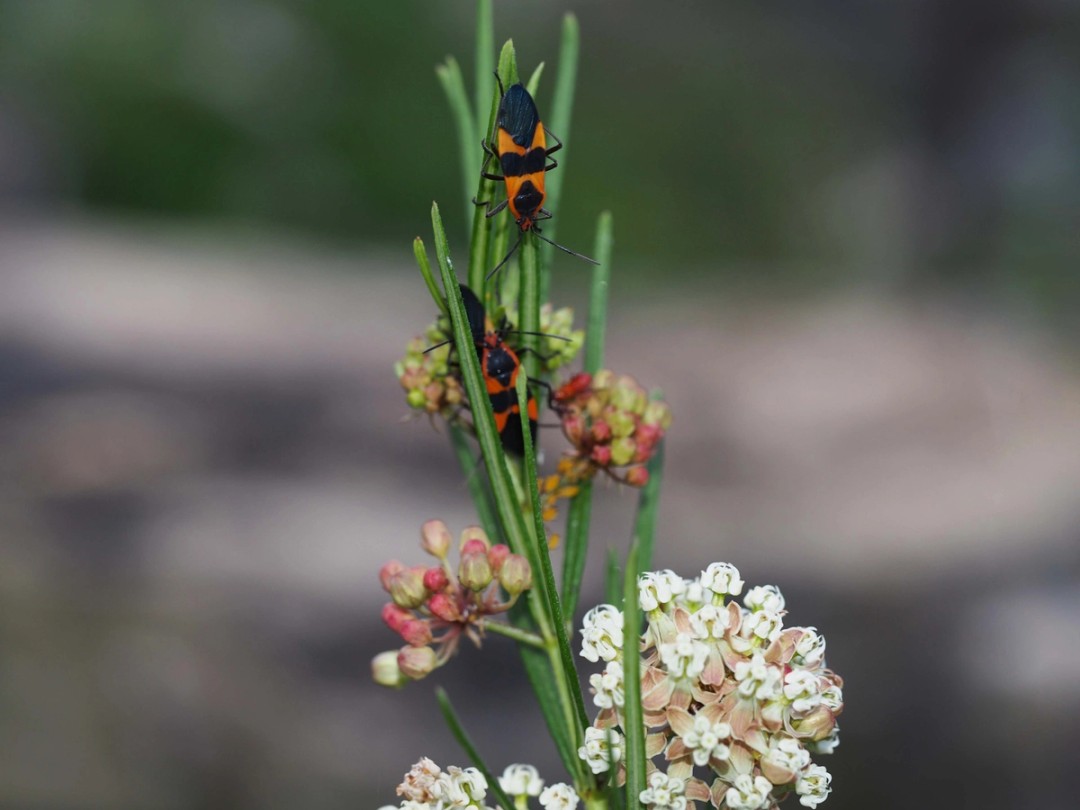
Oncopeltus fasciatus (Large milkweed Bug)
PLANTS GROWING NEARBY
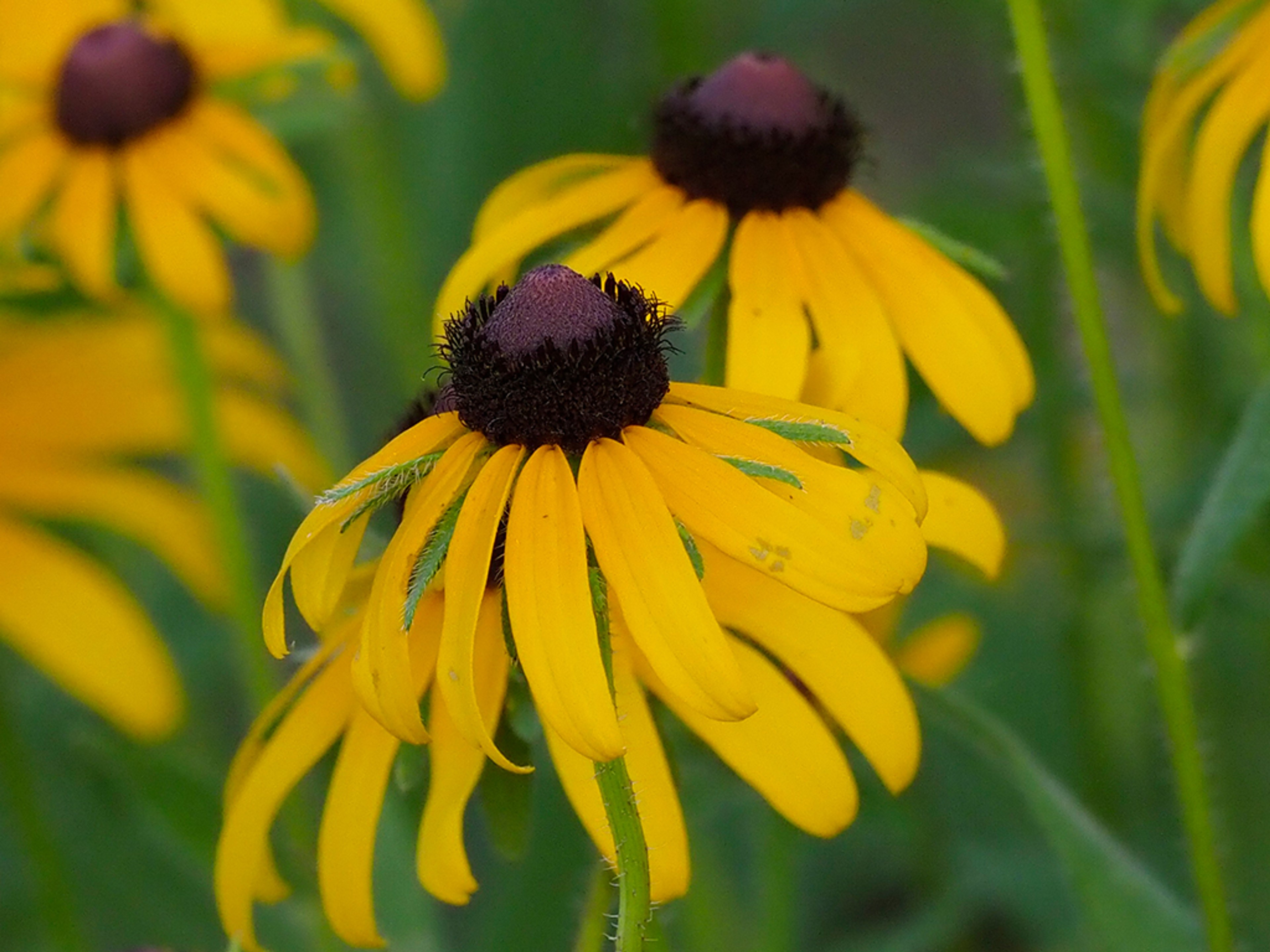
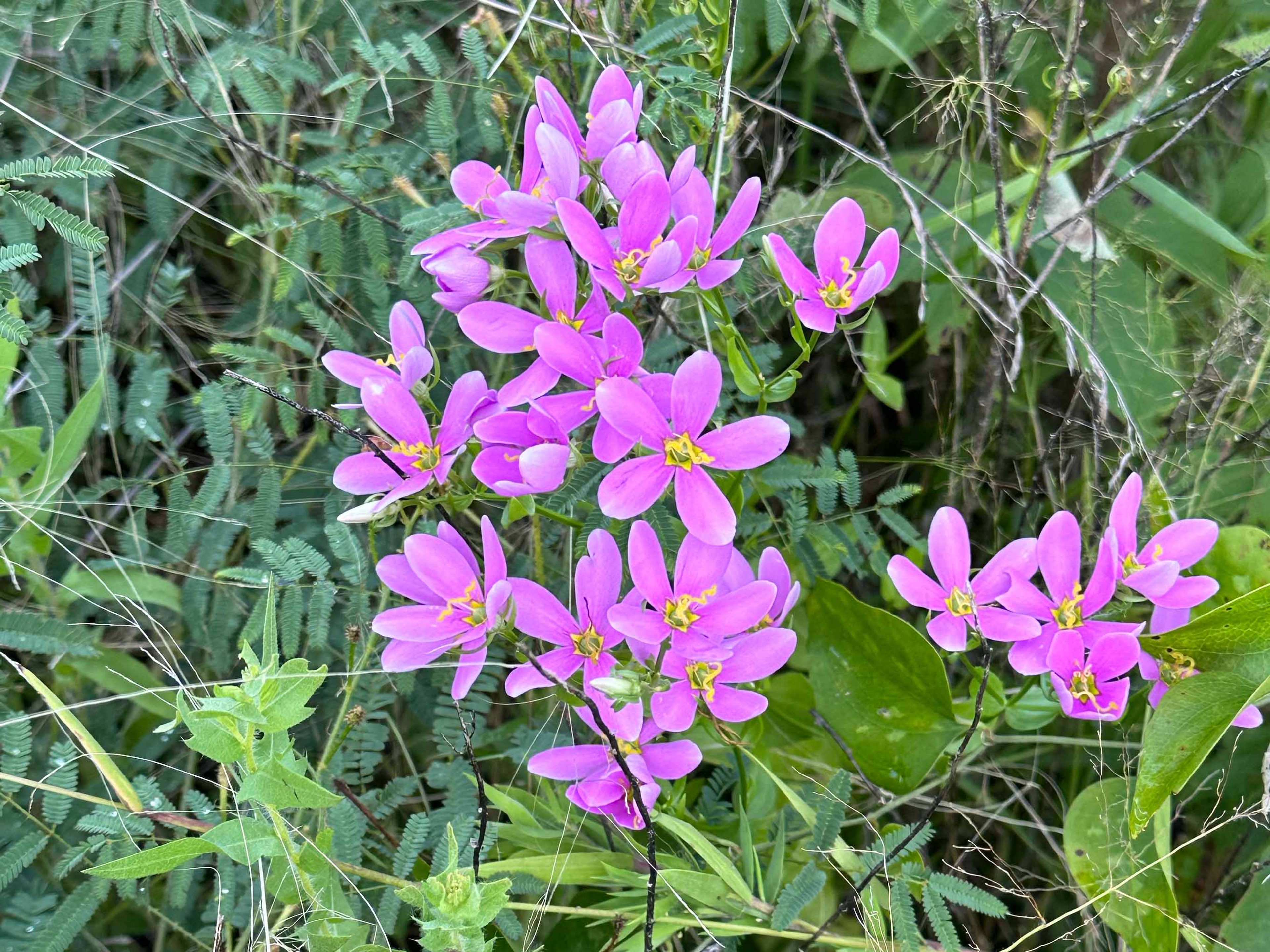
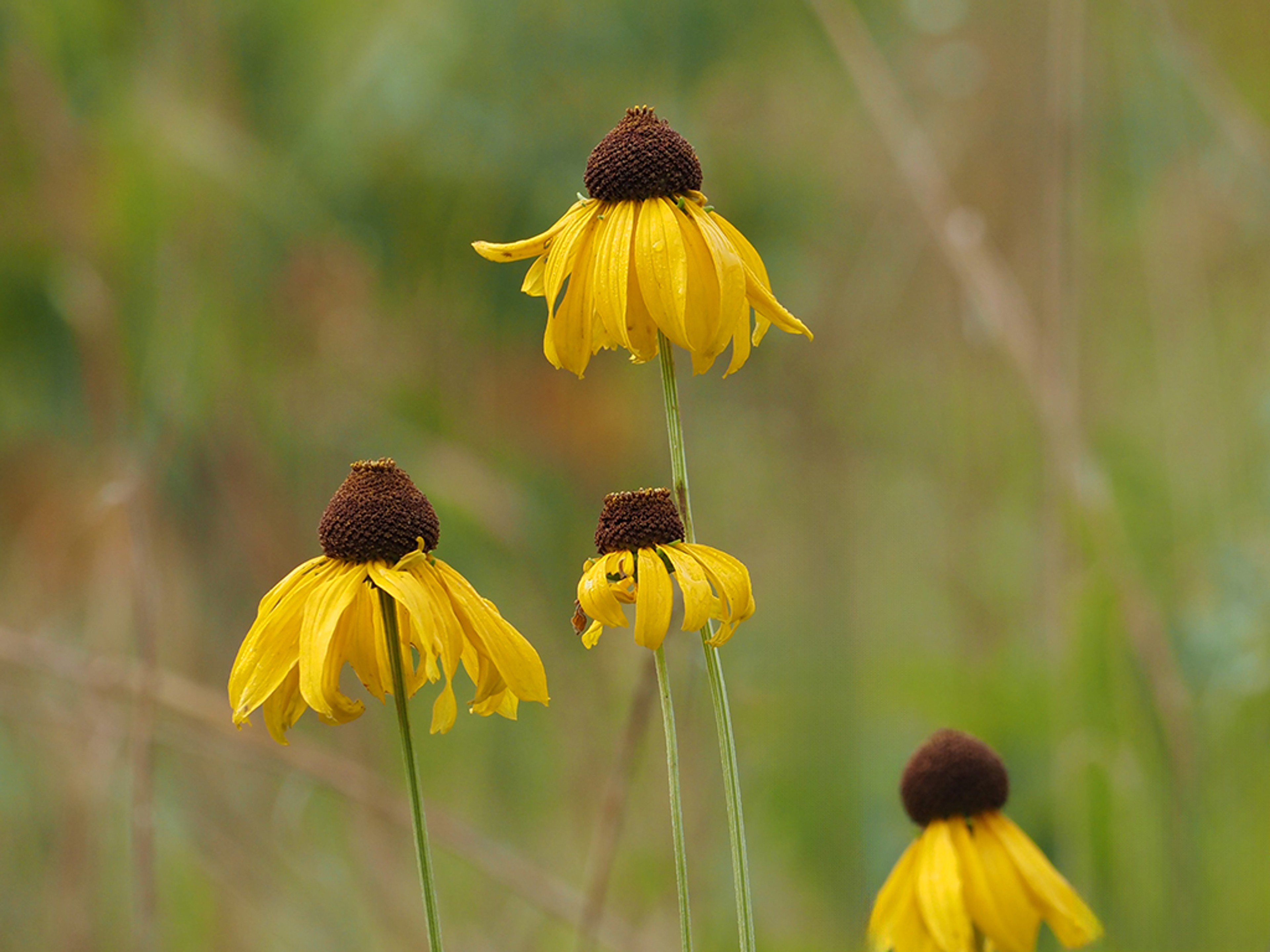
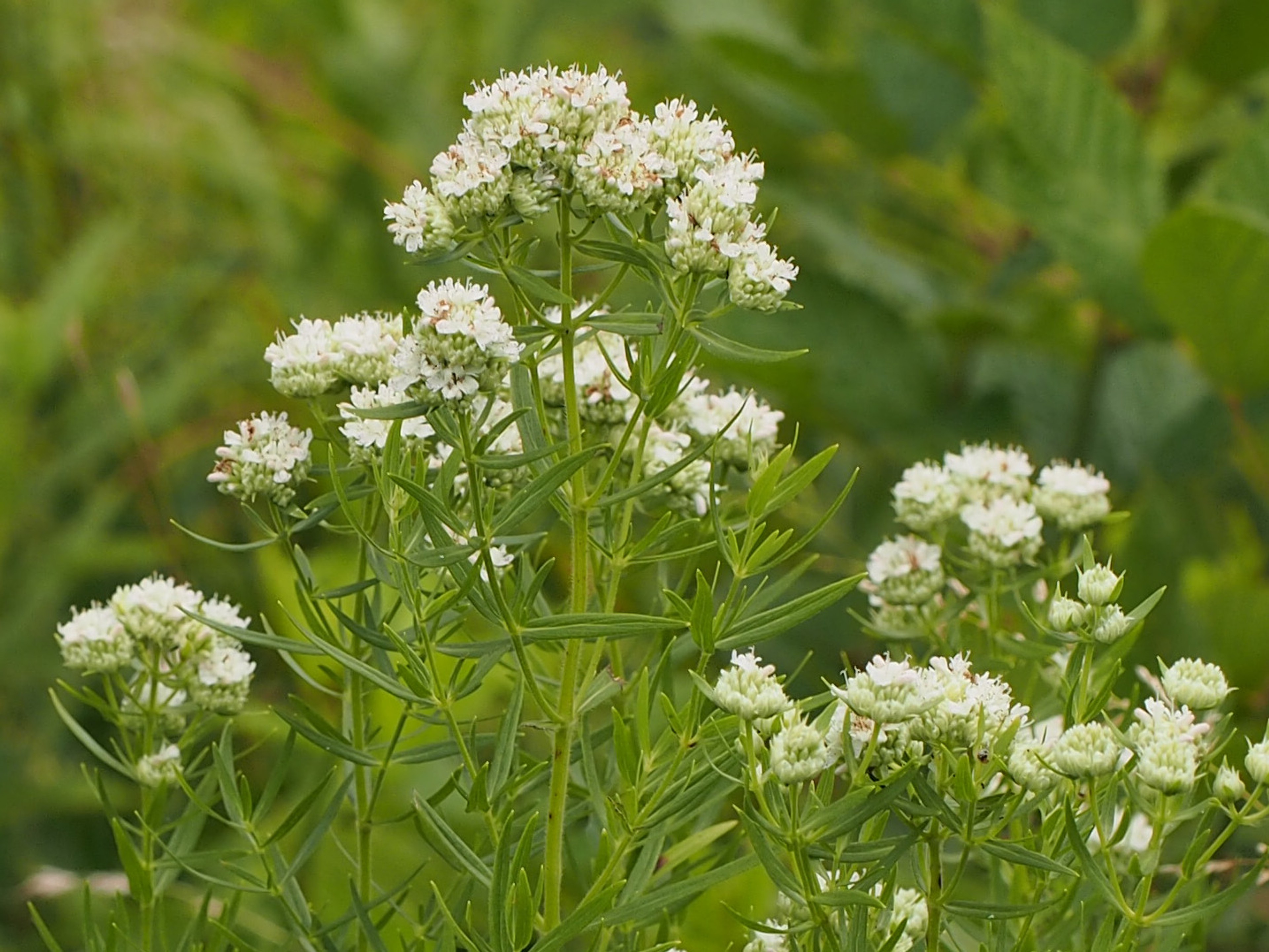
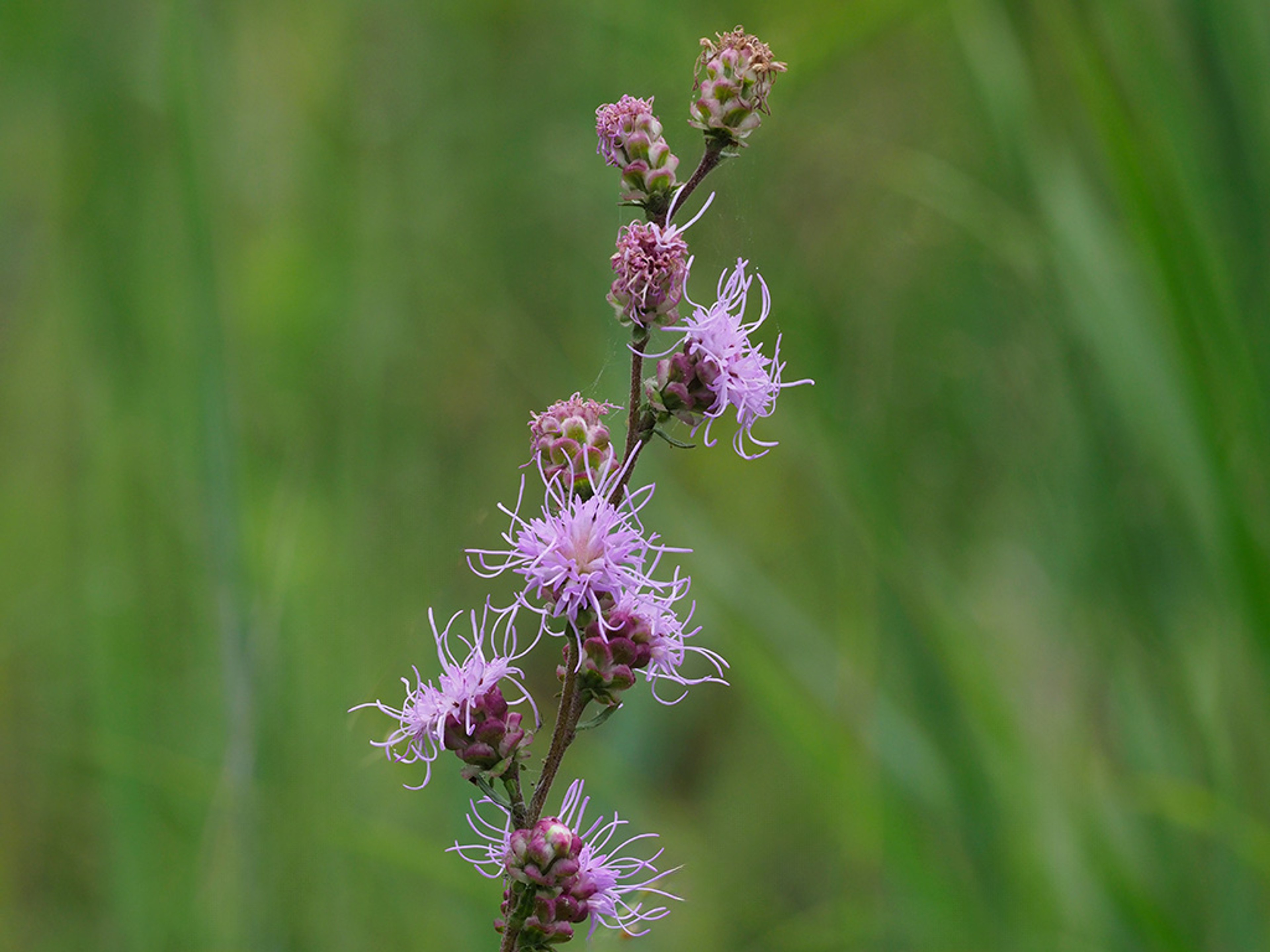
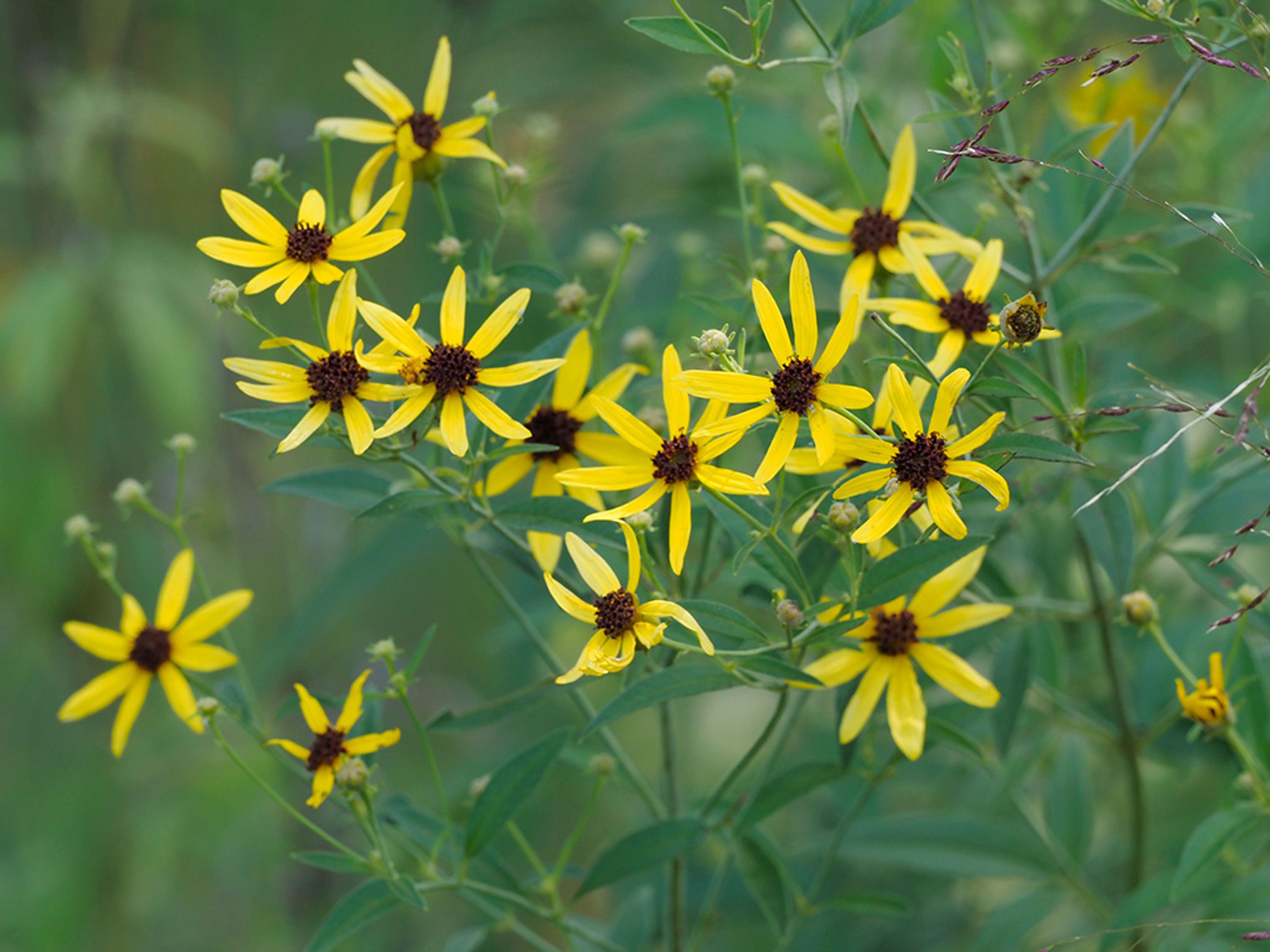
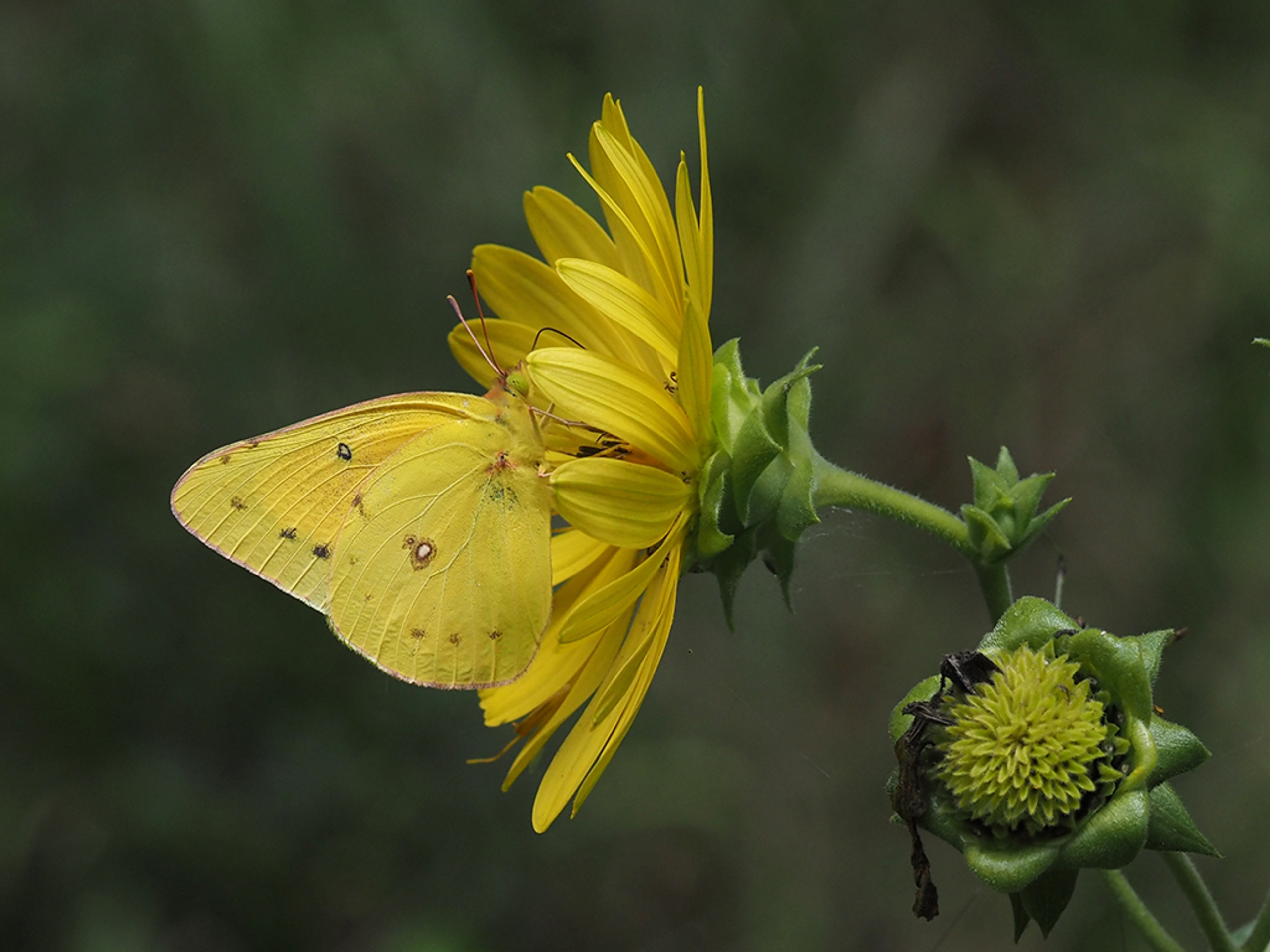
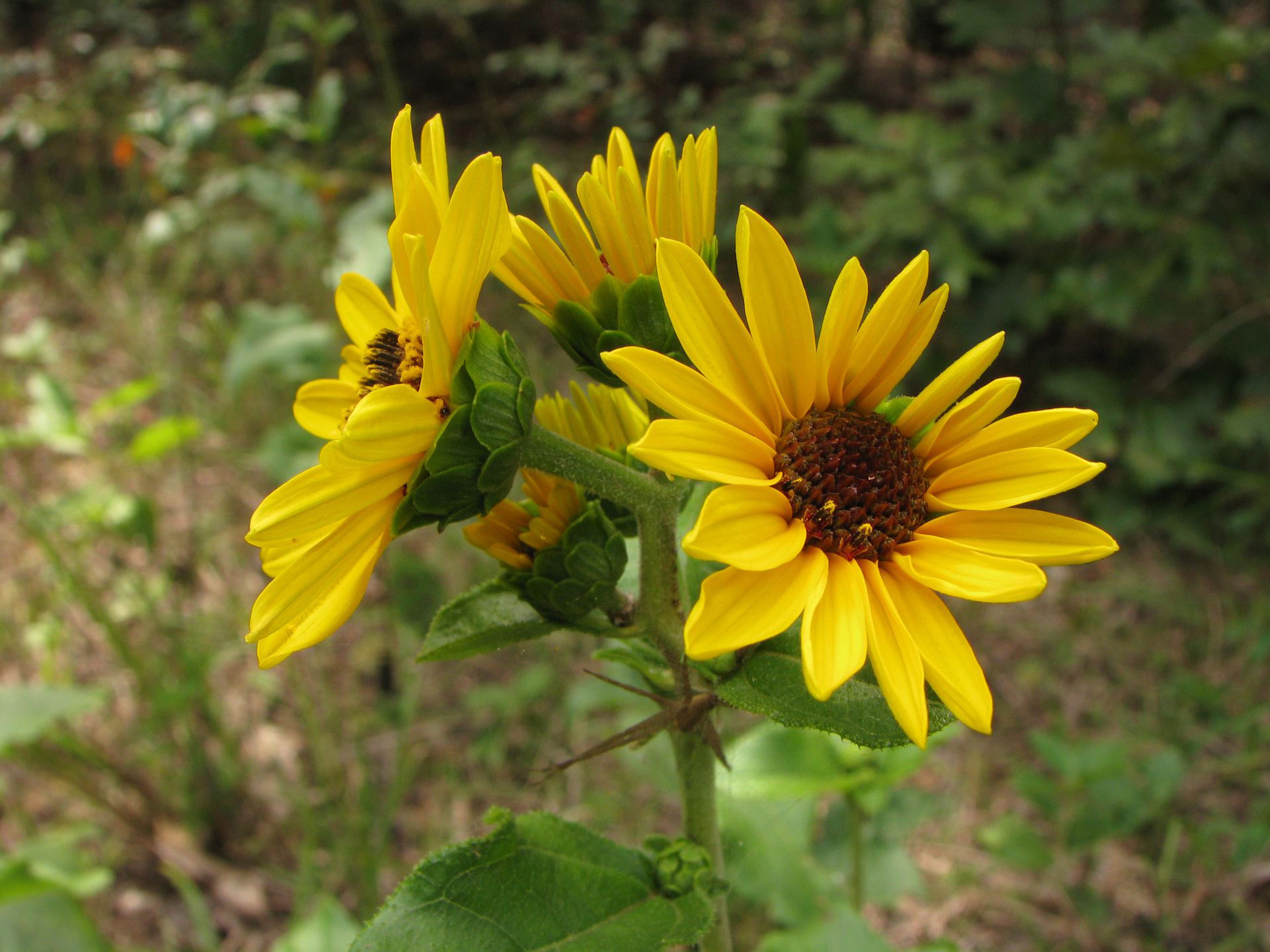
You’ll discover a diverse array of native wildflowers blooming near Whorled milkweed. Among my favorites are Senna marilandica, Rudbeckia grandiflora, Houstonia longifolia, and the beautiful grass, Sideoats grama. For more common companions, refer to the Growing Nearby section above.
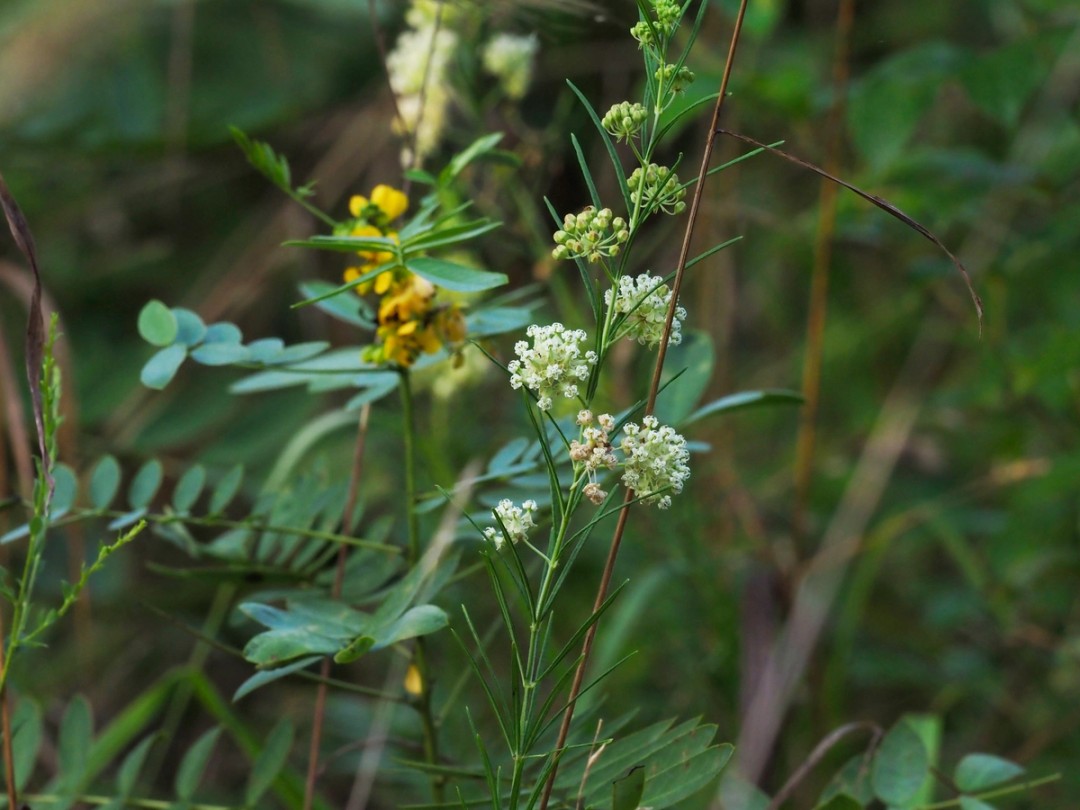
with Senna marilandica 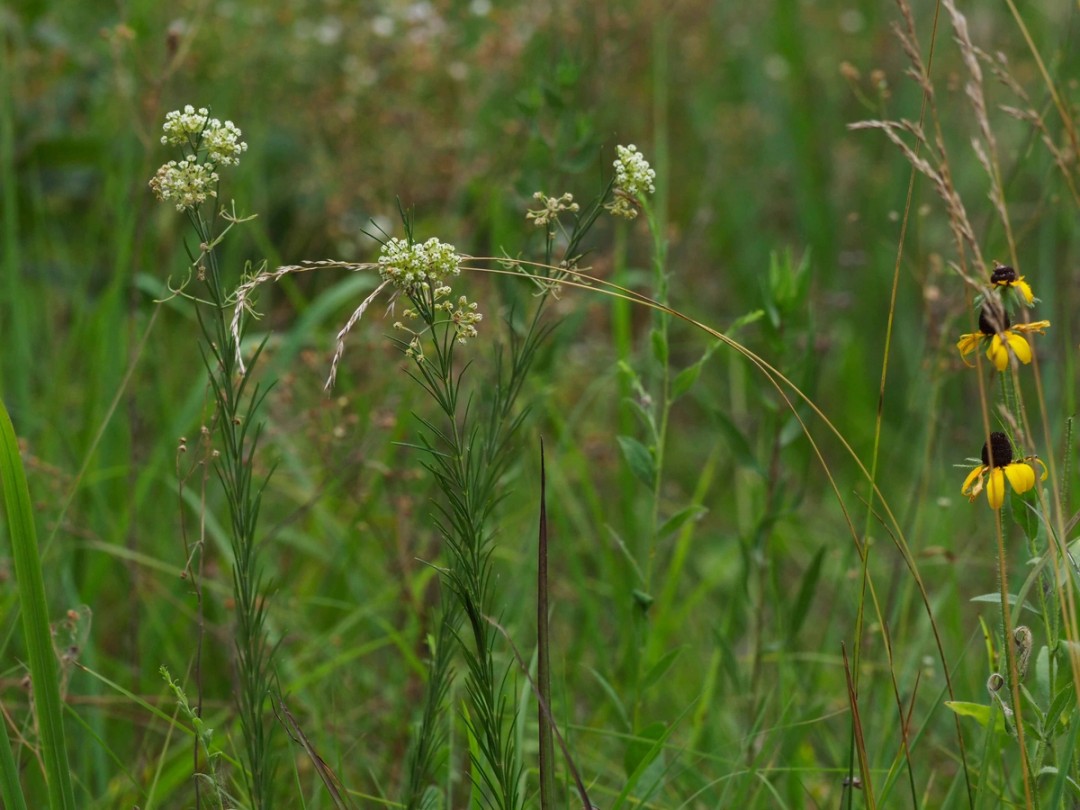
with Rudbeckia grandiflora 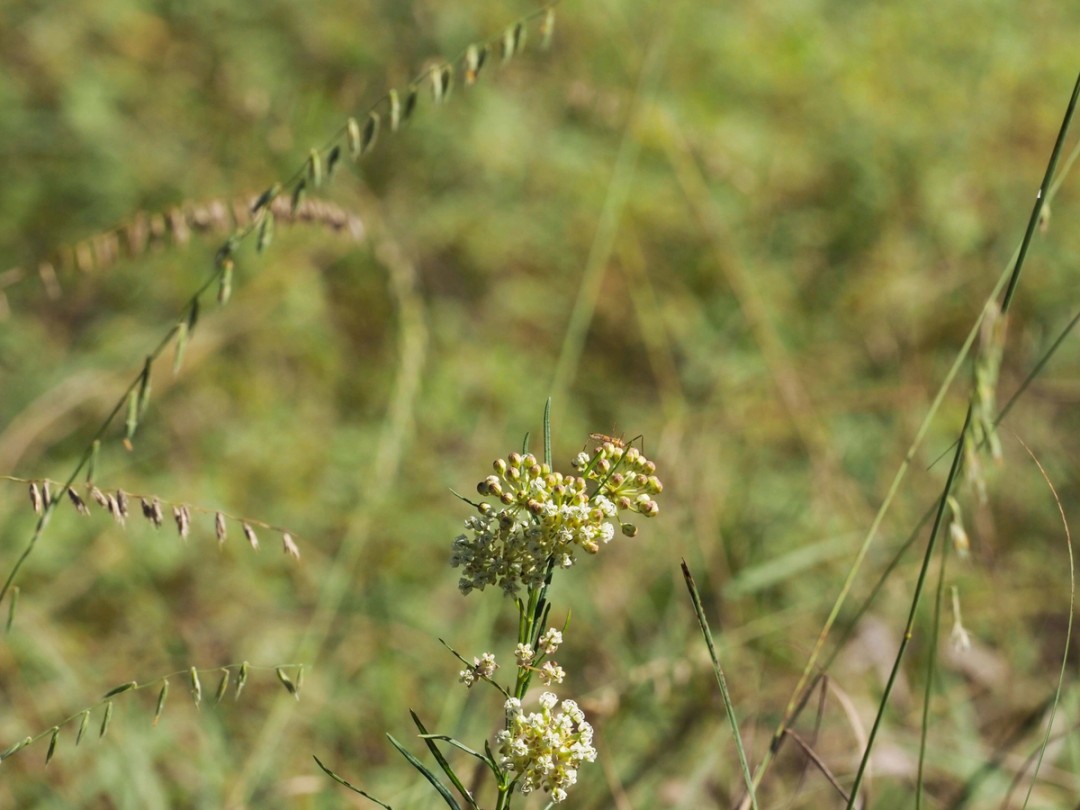
with Sideoats grama 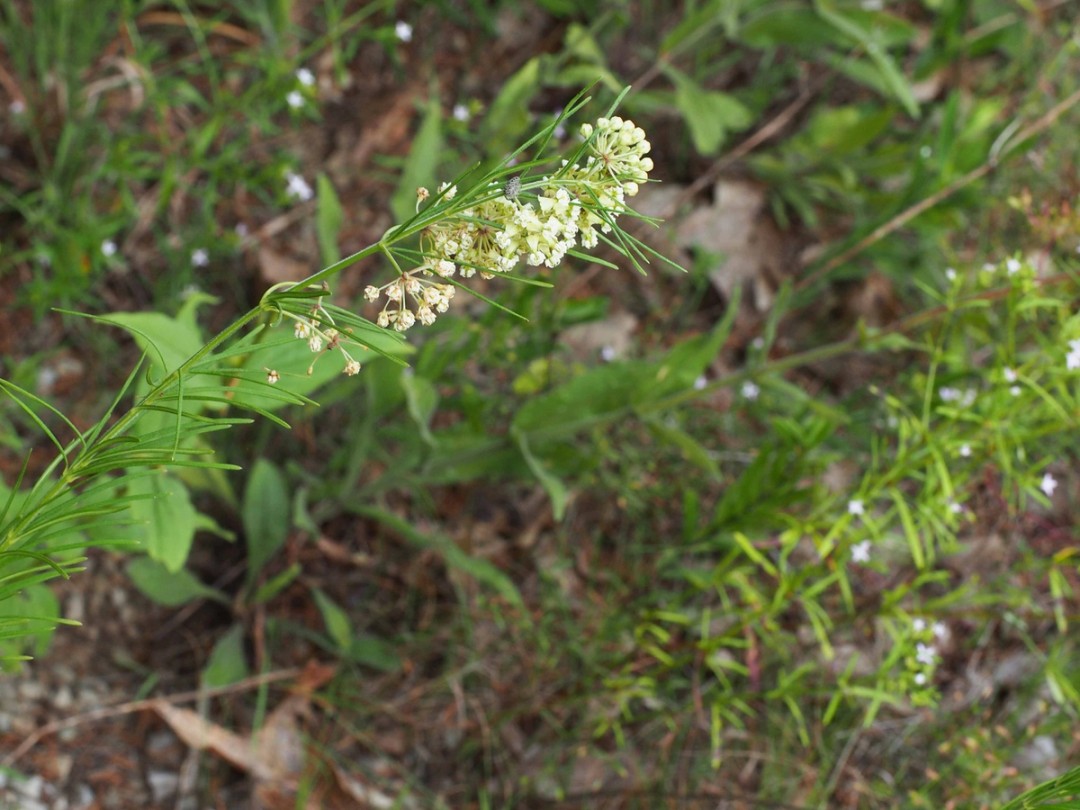
with Houstonia longifolia
HABITAT
Whorled milkweed favors dry prairie or grassland habitat, but is also found in glades, savannas, open woods and woodland edges.
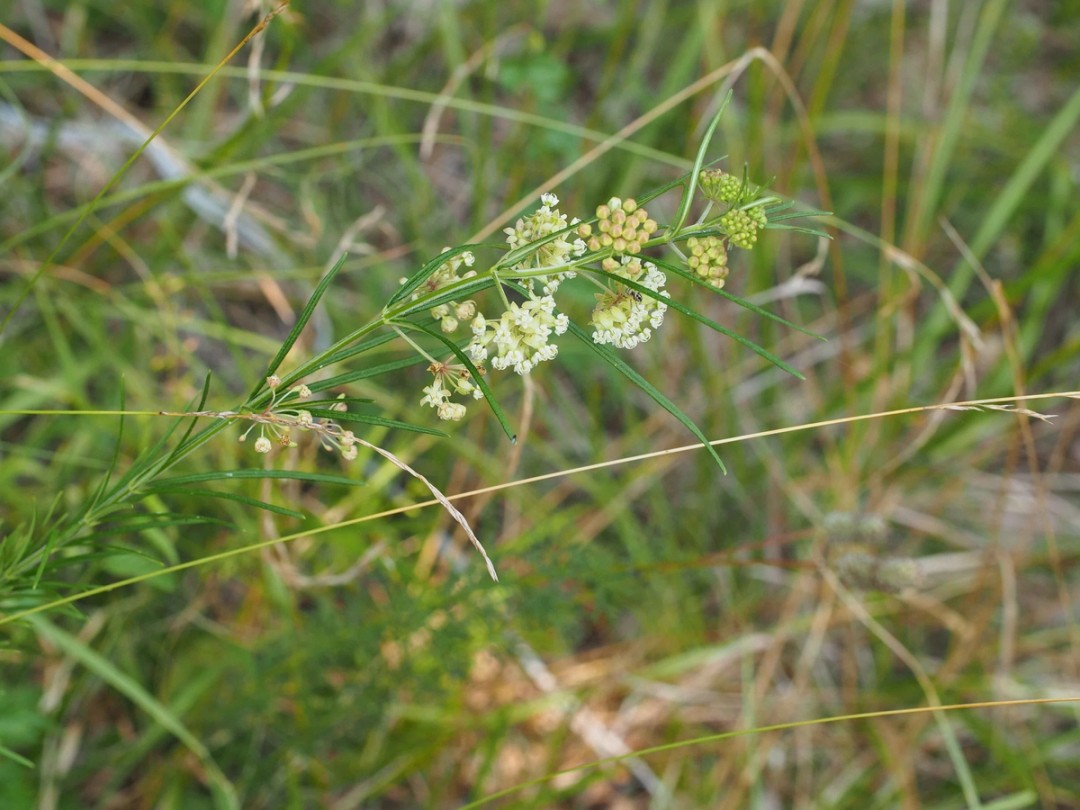
Grassland habitat 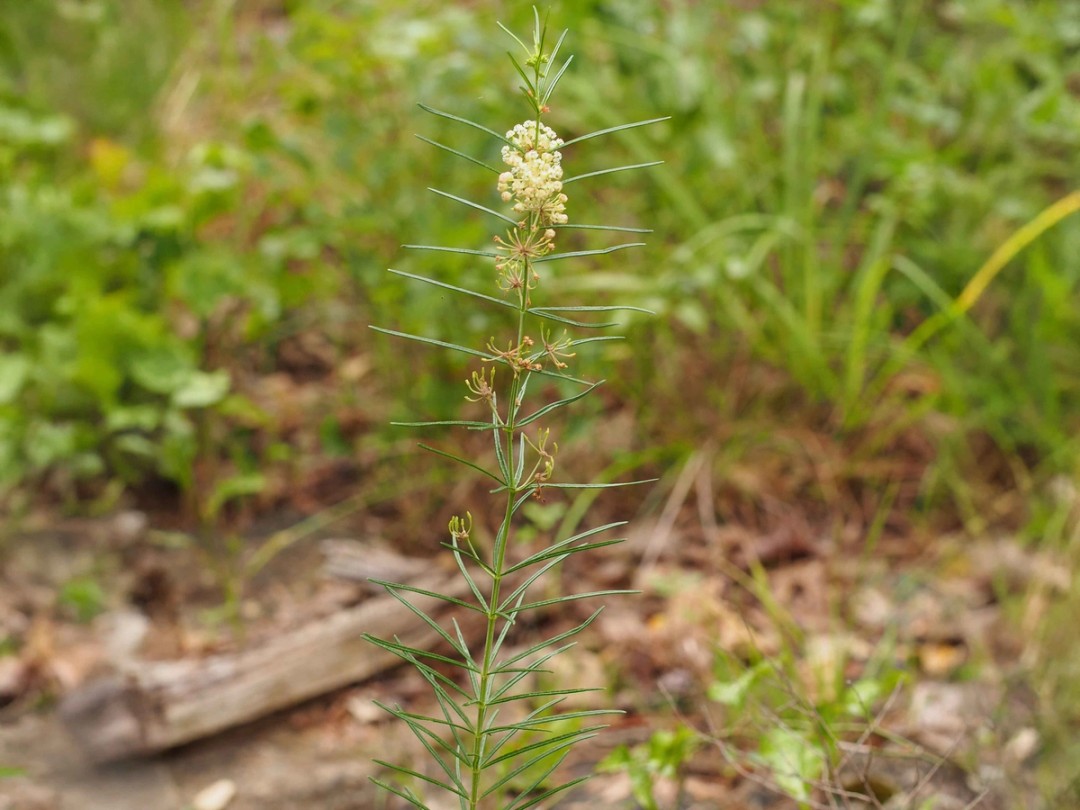
Glade habitat
CONSERVATION STATUS
In Arkansas, Asclepias verticillata has a Conservation value of 8 in the group of 8-10, meaning ‘Conservative taxa with strong fidelity to intact habitats. These taxa tend to exhibit late-successional characteristics like long lifespans with low seed sets and an inability for far ranging dispersal’.
Natureserve lists it overall as G5 Secure. It is native from Montana and New Mexico to the East coast. While most states show ‘No Status Rank’, it is documented as follows -
Critically Imperiled - Rhode Island, Vermont
Imperiled - Massachusetts, New Jersey, New York, Pennsylvania
Vulnerable - Maryland, West Virginia, Montana
Apparently Secure - Virginia, Kentucky, Florida
Secure/Apparently Secure - Indiana, Iowa, Kansas, North Carolina
Possibly Extirpated - Delaware
All other states within its range have no status ranking on Natureserve.
INTERESTING TIDBITS
While all milkweeds contain cardiac glycosides that are toxic to livestock and other animals (including pets), this milkweed has one of the highest concentrations. Of course, this helps to deter deer and rabbits from bothering this pretty wildflower!